
This post contains affiliate links. As an Amazon Associate, I earn from qualifying purchases at no extra cost to you.
There’s a moment every fall when the house is finally quiet… and the bedroom still looks like real life: yesterday’s laundry basket, a charger cord doing its best, and one lonely throw pillow that never stays put. Inspiration photos don’t show that part. They also don’t show the win: how a few small changes can make your room feel like a softer landing even when nothing else is “perfect.”
This guide focuses on practical, cozy autumn bedroom updates that actually hold up to busy mornings and tired evenings. You’ll find easy hygge decor moves—lighting, texture, scent, and a little nature—without requiring a full makeover or a matching set of anything.
This is for families, renters, and anyone who wants the calm of a Scandinavian fall bedroom vibe without turning their home into a museum.
The best ideas inside are the ones you’ll feel immediately: cozy bedroom candles that don’t look cluttered, a thick blanket fold-over that makes the bed feel made, and a simple birch-branch moment that adds “fall” without fake leaves everywhere.
Below are 25 Hygge Autumn Bedroom Ideas & Cozy Design that make your bedroom feel warmer, calmer, and more livable—one small step at a time.
Products I Recommend for This Project
Here are some of my favourite products to help you bring these ideas to life:
- Hyoola 100% Pure Beeswax Pillar Candles (Set) — Clean-burning pillars that look timeless on a bedside tray.
- Stonebriar Wood Serving Tray with Handles — An easy way to corral candles, a book, and a catchall so your nightstand feels calmer.
- Philips LED A19 Warm White Light Bulbs (2700K) — Instantly softens harsh lighting so the room feels more restful at night.
- Utopia Bedding Duvet Cover Set (Washed Microfiber) — A budget-friendly way to change the feel of your bedding for fall with easy washing.
- Yankee Candle Amber & Sandalwood (Large Jar) — A cozy, wood-toned scent option when you want that fall mood without sugary sweetness.
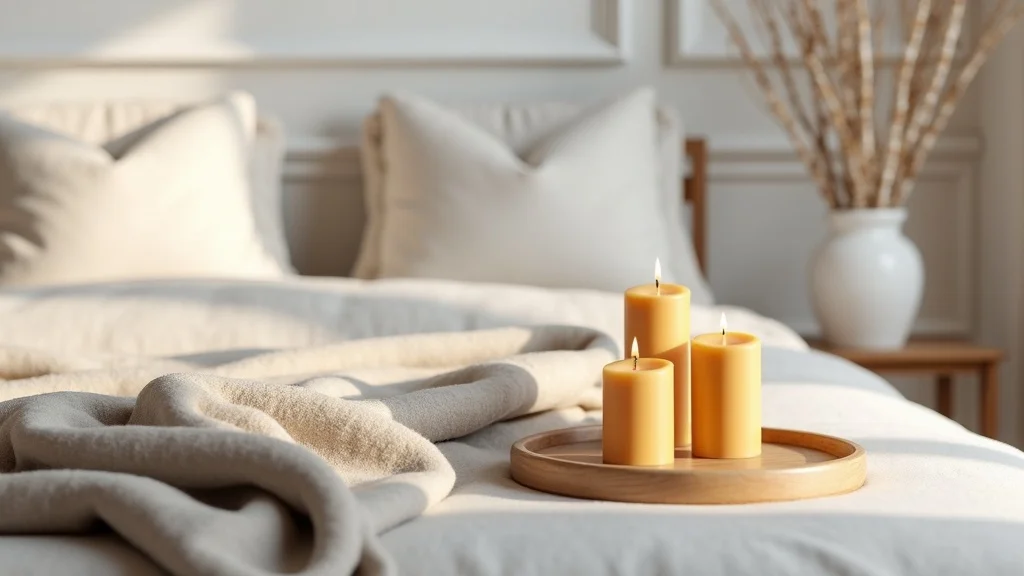
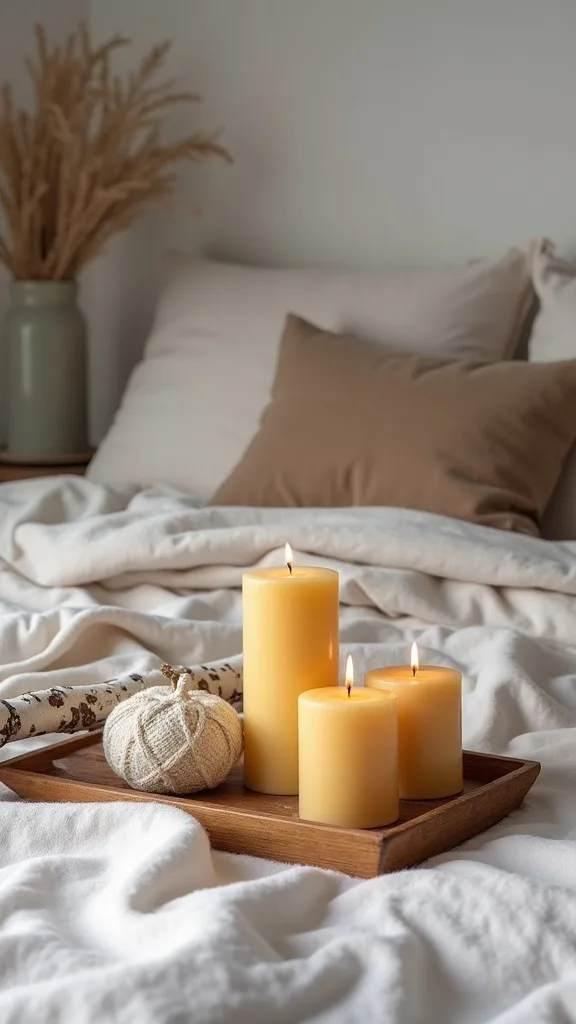
1. Build a bedside “hygge tray” with beeswax pillars, a wool fold-over, and birch branches
This is the fastest way to make your room feel intentional without pretending you don’t live there. A bedside tray creates a visual “home” for the little things, while beeswax pillar candles, a thick wool blanket fold-over, and a birch branch bedside vase deliver that cozy fall mood in three simple textures.
Start with a tray that’s about 10–14 inches wide—big enough for a candle and a book, small enough to move when you change sheets. Add two pillar candles in different heights (safer than tapers around bedding), then fold your wool blanket back at the foot of the bed so you see the texture even when the bed isn’t perfectly made. Clip 2–3 birch twigs to 10–12 inches and drop them into a small vase with water.
Stick to warm neutrals: oatmeal, cream, soft gray, and a hint of honey from the beeswax. If you’re sensitive to scent, beeswax is naturally low-fragrance but still feels special.
Pro tip: add one match striker jar so lighting candles feels like a tiny ritual—progress over perfection, every night.
2. How do I make my bedroom feel cozy for fall without buying new furniture?
You don’t need a new bed frame to get a cozy autumn bedroom—what you need is a “soft perimeter.” When the edges of the room feel warm (lighting, textiles, and one natural element), your brain reads the whole space as safer and calmer.
Swap only what touches you: put a thicker throw within arm’s reach, add one extra pillow you actually use, and change your bedside light to warm white light (2700K–3000K — the cosy, yellowish tone you see in most homes). If you can, move one chair or hamper so the path from bed to door is clear; that tiny functional win makes mornings feel smoother.
Choose two fall-friendly textures: chunky knit and brushed cotton, or wool and flannel. Keep colors simple—cream + camel + one deep accent like forest green.
Pro tip: before you shop, “shop your house” for one wooden bowl, tray, or basket—natural materials are instant hygge decor, and using what you have counts.
3. What colors create a Scandinavian fall bedroom without looking dark?
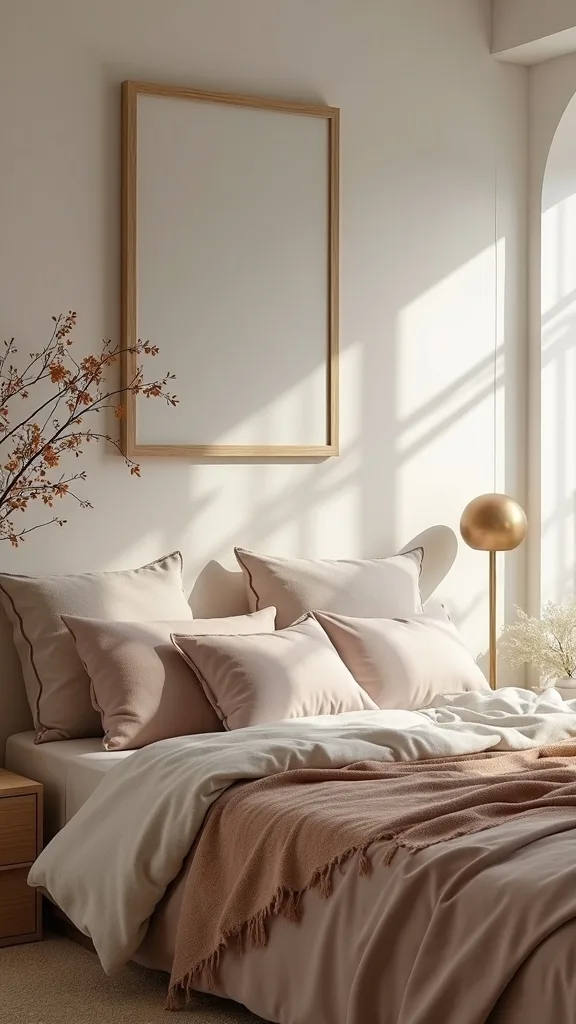
A Scandinavian fall bedroom isn’t about going gloomy—it’s about grounding. The trick is to keep the base light and add depth in small, repeatable touches so the room feels warm, not heavy.
Pick a light foundation: warm white walls, ivory bedding, or a pale gray duvet. Then repeat one autumn tone three times around the room (for example: rust in a pillow cover, a small art print, and a bedside book stack). If your room is small, keep the darkest color below waist height—think a deep throw at the foot of the bed or a darker rug.
Easy palette: creamy white + oatmeal + black accents + one fall shade (rust, pine, or tobacco). Matte finishes look calmer than shiny ones, especially by lamplight.
Pro tip: if you’re unsure, start with removable pillow covers first—color is easiest to “try on,” and you can still celebrate the progress even if you change your mind.
4. How can I layer bedding for hygge comfort without overheating at night?
Hygge comfort should feel breathable, not sweaty. Layering works when each layer has a job: one for warmth, one for weight, one for texture.
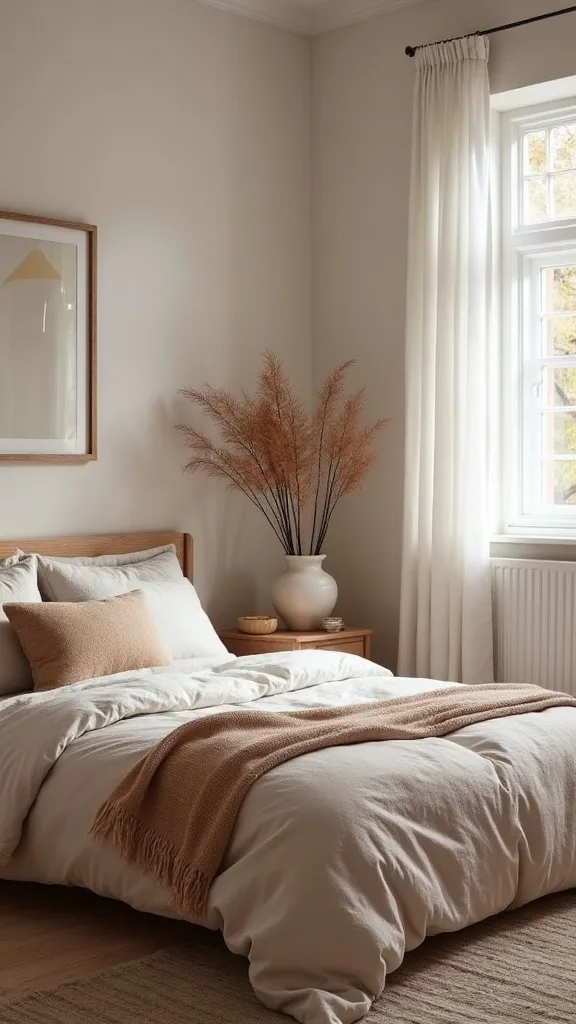
Use a cotton percale or linen sheet as the base (cool against skin), then add a mid-weight quilt or coverlet. Finish with one heavier throw—wool or a chunky knit—folded across the bottom third so you can pull it up only when you need it. If you share a bed, give each person their own throw; it reduces blanket tug-of-war and makes bedtime calmer.
For fall, try ivory sheets, a light gray quilt, and a caramel wool throw. If you like patterns, keep them small-scale (thin stripes, tiny checks) so the room stays restful.
Pro tip: the “fold-over” is your friend—your bed can look put together in 20 seconds, and that’s a real-life kind of peace.
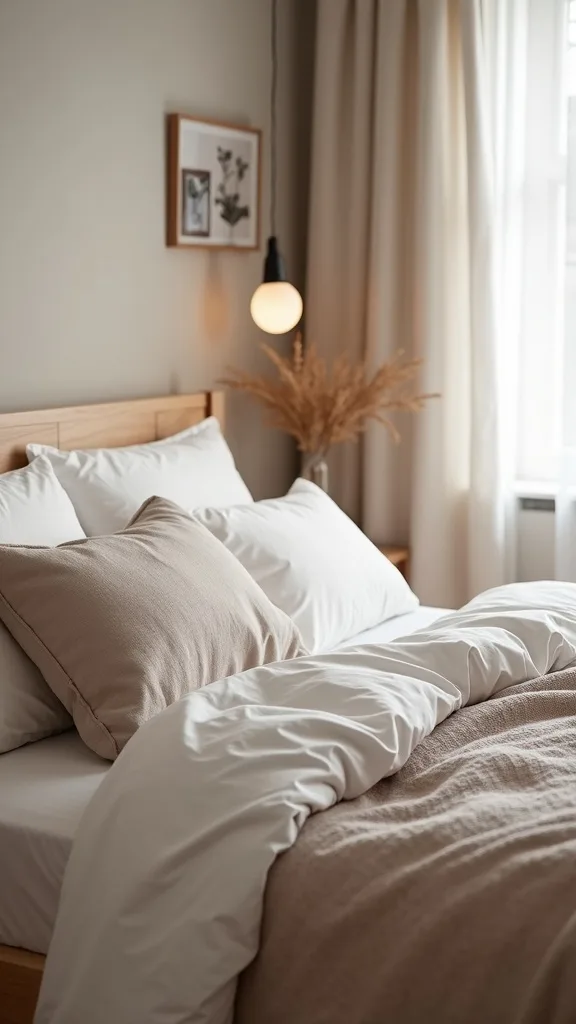
5. Where should I place cozy bedroom candles so they feel intentional (and not cluttery)?
Candles feel like hygge because they slow the room down visually. But scattered candles read as clutter fast—especially on a busy nightstand.
Group candles in one spot on a tray or shallow bowl, ideally on the far side of the nightstand away from where you set your phone or water glass. Use an odd number (3 looks natural), and vary height: two pillars plus one shorter jar candle works well. If you have kids or pets, consider flameless candles for daily use and save real flames for supervised evenings.
Beeswax and soy tend to burn cleaner than paraffin. Choose warm-toned containers—amber glass or matte ceramic—so the glow feels softer.
Pro tip: keep a tiny snuffer on the tray; it turns “blowing out candles” into a calmer habit and helps your hygge decor stay functional.
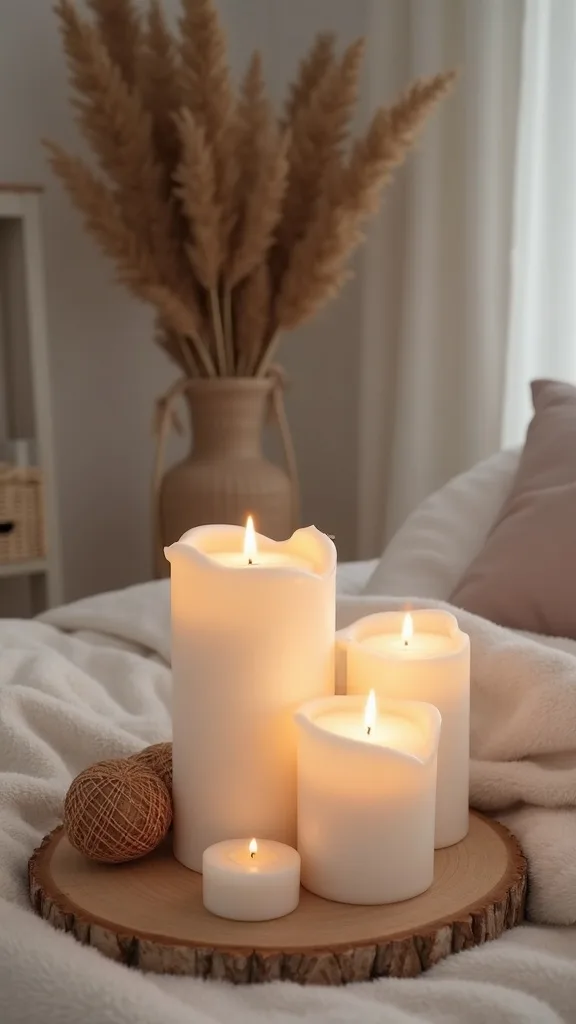
6. How do I add fall scent in a bedroom without it feeling overpowering?
Fall scent should whisper, not shout—especially where you sleep. The goal is a gentle cue that says “cozy season,” not a headache by bedtime.
Choose one scent family and stick with it: woods (cedar, pine), warm spices (clove, cinnamon), or clean sweet (vanilla, honey). Use the smallest tool that gets the job done: a single candle burned for 20–30 minutes before bed, or a linen spray misted once over a throw (not your pillow). Crack a window for five minutes afterward if you’re sensitive.
For a Scandinavian fall bedroom feel, lean toward cedar, birch, or subtle amber. Avoid mixing three different scented products in one small room.
Pro tip: if you want scent without flame, tuck a cedar sachet into a drawer—quiet, steady, and wonderfully low-maintenance.
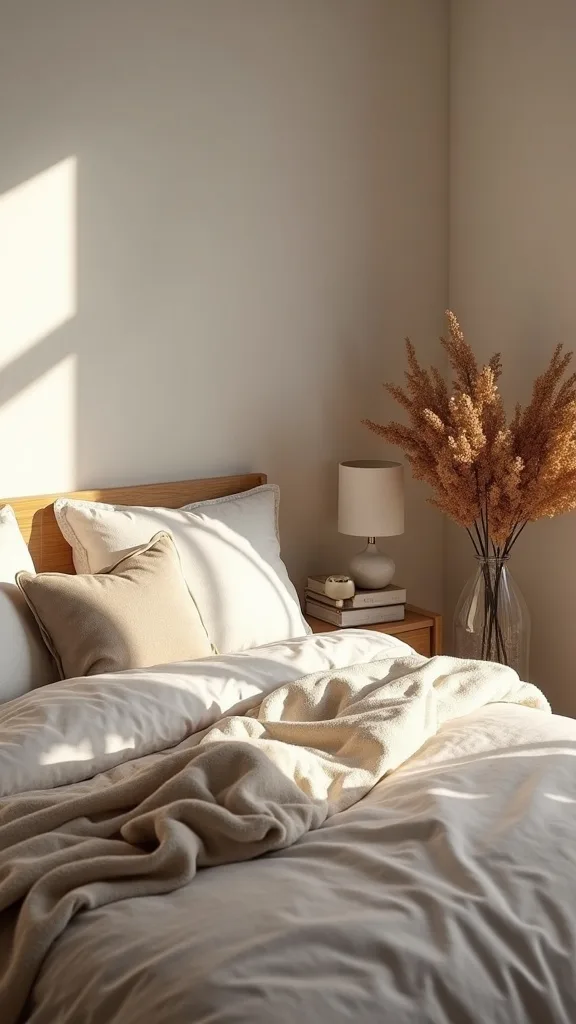
7. What’s the easiest way to make my nightstand look calm when it’s always in use?
A calm nightstand isn’t empty—it’s edited. Hygge bedroom ideas work in real homes when your essentials are visible but contained.
Use the “three-zone” setup: one zone for light (lamp or sconce), one zone for comfort (candle or small plant), and one zone for function (phone, glasses, water). Add a small catchall dish for rings and hair ties so they stop migrating across the surface. If cords bug you, use adhesive cord clips along the back edge and run the cable straight down.
Choose one material to repeat—wood, black metal, or ceramic—so it looks intentional even if the items change daily.
Pro tip: leave 20% of the surface empty on purpose; that little breathing room makes the whole bedside feel more peaceful.
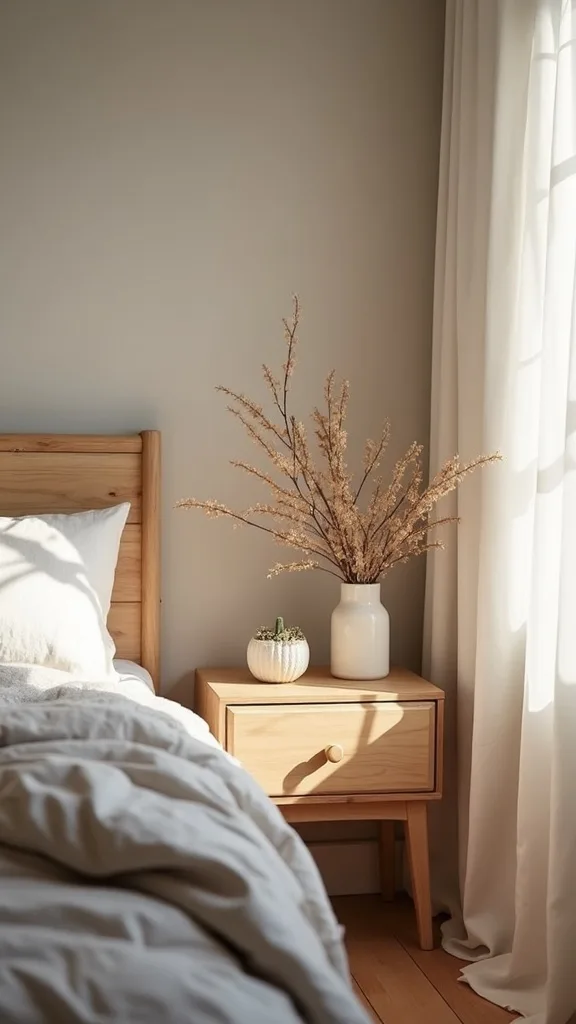
8. How can I create hygge lighting if I only have one overhead light?
Overhead lights are great for finding socks, not for winding down. Hygge lighting comes from layers—small pools of warm light that make the room feel safe and gentle.
Add one bedside lamp (or two if you share the bed) and put it on a plug-in dimmer. Swap the bulb to warm white light (2700K–3000K — the cosy, yellowish tone you see in most homes) so the glow feels like evening, not midday. If outlets are limited, use a power strip tucked behind the nightstand and label the plugs so you’re not fighting cords in the dark.
Fabric or frosted shades soften shadows better than clear glass. Amber bulbs can look pretty, but they sometimes make skin tones look odd in mirrors—test before committing.
Pro tip: set a “lights down” routine at the same time each night; your body learns the cue, and cozy becomes automatic.
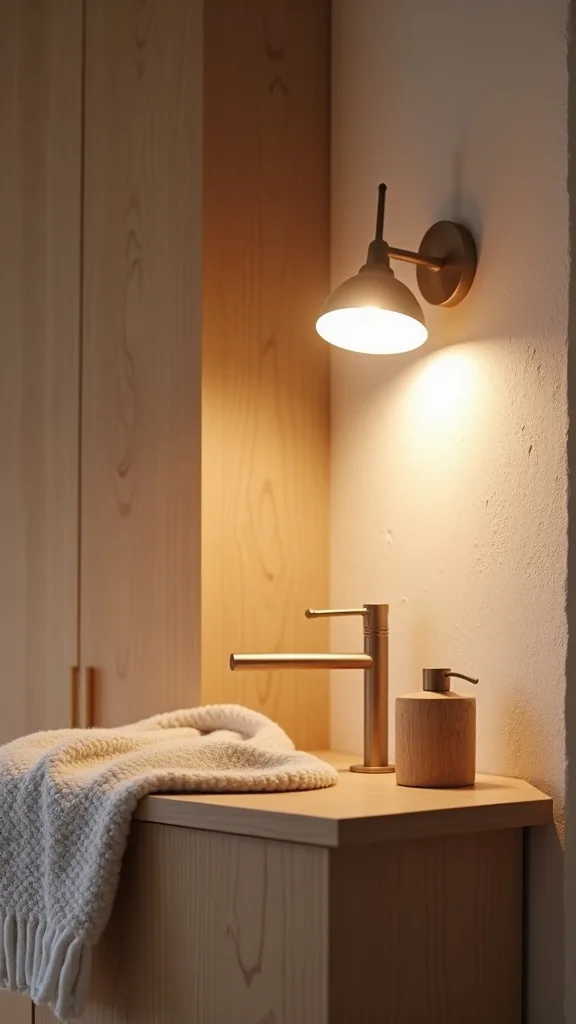
Cost & Materials Estimate
A cozy fall hygge refresh can cost as little as $40 if you use what you own, or around $150–$300 for a few key upgrades that change the feel of the whole room.
| Item | Estimated Cost | Where to Buy |
|---|---|---|
| Decorative bedside tray (wood or metal, ~12 in) | $14–$28 | Amazon |
| Beeswax pillar candles (set of 2–3) | $22–$45 | Amazon |
| Wool or wool-blend throw blanket | $35–$90 | IKEA |
| Small bud vase (ceramic or glass) | $10–$22 | Wayfair |
| Warm white LED bulbs (2700K–3000K, 4-pack) | $12–$20 | Home Depot |
| Woven basket for throws/laundry | $18–$40 | Target |
Total estimated cost: $111–$245 Save by foraging birch branches and reusing a tray you already own; splurge on the throw because you’ll feel it every day.
9. How do I make a small bedroom feel cozy, not cramped, in fall?
Small rooms can feel intensely cozy—unless every surface is filled. The sweet spot is warmth with clear pathways, so the room feels like a hug, not a squeeze.
Start by clearing the floor next to the bed on at least one side; even 18 inches of open space changes how you move and breathe. Use vertical space: hang one hook rail for robes or tomorrow’s outfit instead of piling it on a chair. Choose one statement textile (a thick throw or textured duvet) and keep everything else simple.
Light colors help, but texture does the real work—bouclé, knit, wool, and brushed cotton add fall depth without adding physical bulk.
Pro tip: limit yourself to two decorative items on the nightstand; the calm you feel is worth more than another “cute” object.
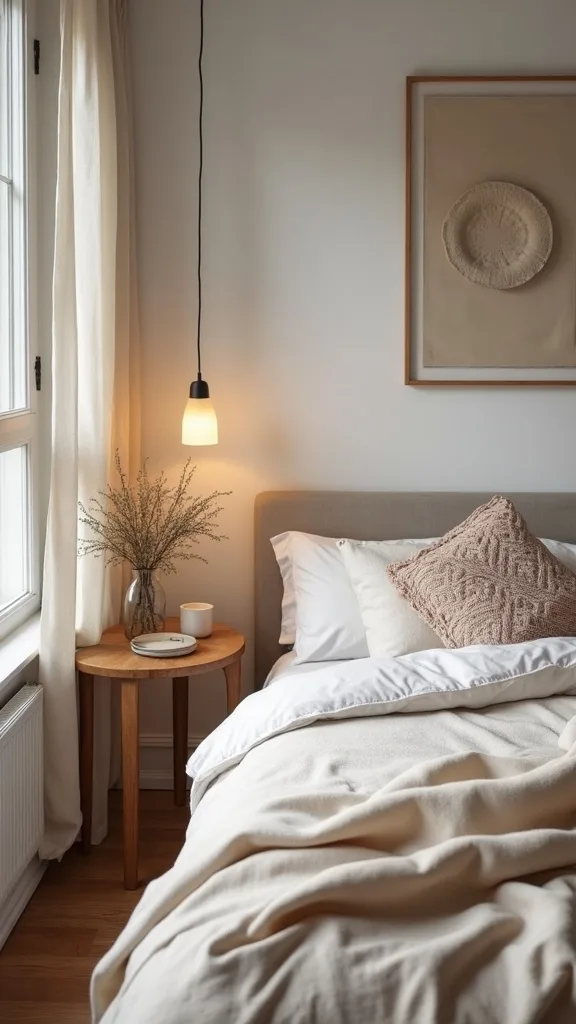
10. What kind of rug makes a bedroom feel warmer on cold mornings?
If you’ve ever stepped out of bed onto a cold floor in October, you already know: rugs are comfort you can feel. A rug also absorbs sound, which makes the whole room feel quieter—very hygge.
For under-bed placement, choose a rug that extends at least 18–24 inches beyond the sides of the bed so your feet land on softness. If you’re on a budget, use two runners—one on each side—especially in a small space. Add a non-slip pad so it doesn’t creep, because nothing ruins cozy like a rug that bunches up.
Look for wool blends or thick low-pile options in oatmeal, heather gray, or warm taupe. Subtle patterns hide lint and real-life crumbs better than solid cream.
Pro tip: vacuum lines are optional—comfort is the goal, and your mornings will feel kinder either way.
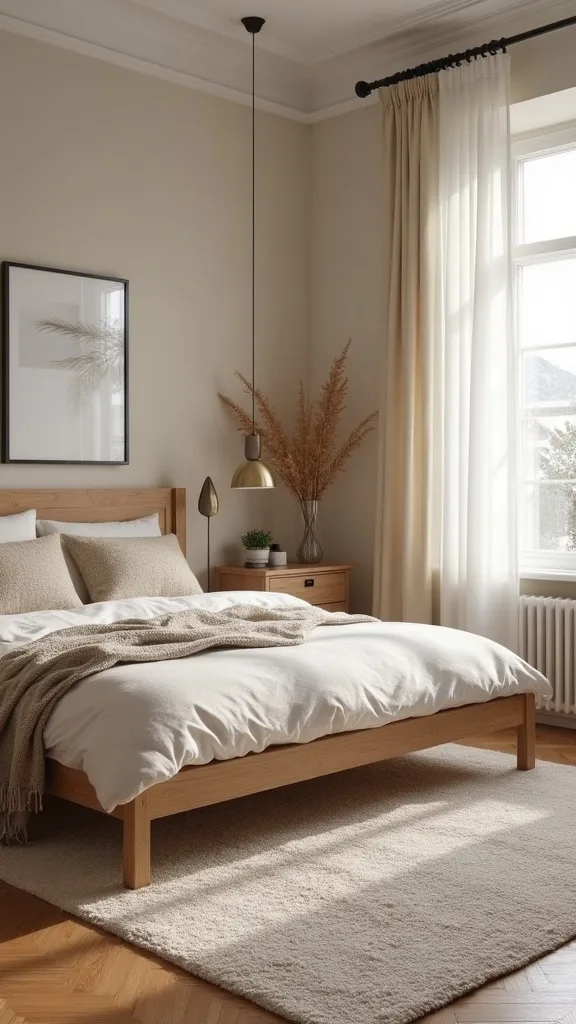
11. How can I add hygge decor using natural elements that won’t make a mess?
Nature details are the heartbeat of hygge, but nobody needs a bedroom full of shedding leaves. The best natural elements are simple, sturdy, and easy to refresh.
Try birch branches, dried eucalyptus (kept away from pets), pinecones in a bowl, or a single potted plant in a neutral pot. Keep it contained: one vase, one bowl, or one planter per surface. If you bring in branches, rinse them quickly, let them dry fully, and keep them in a vase with water so they don’t flake.
Stick to a neutral “forest” palette—birch, pine, and clay tones—so it reads Scandinavian rather than craft-store autumn.
Pro tip: replace natural elements every few weeks like you would flowers; that tiny refresh keeps the room feeling alive without adding clutter.
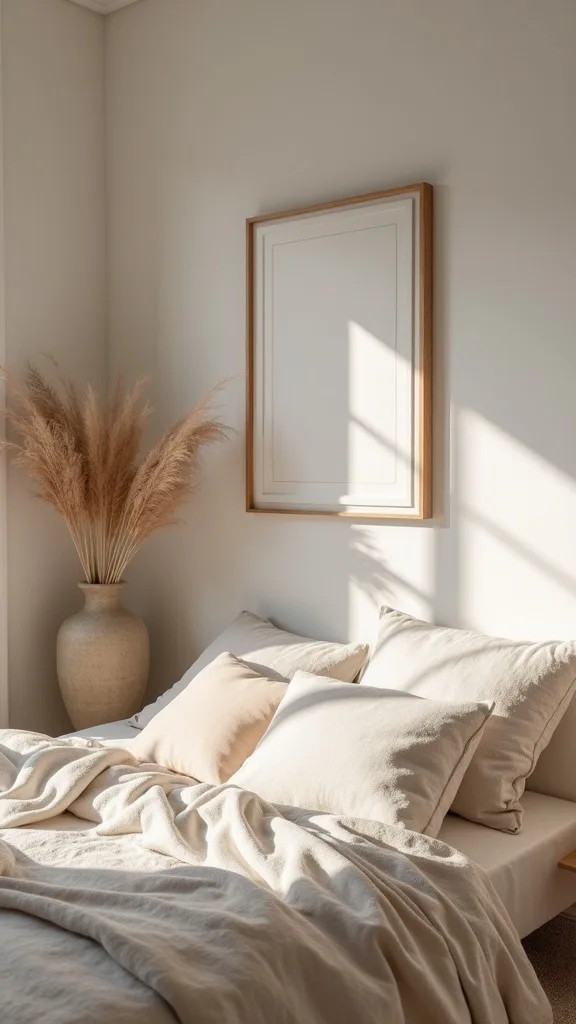
12. What’s one thing to avoid when styling a cozy autumn bedroom?
Avoid turning “cozy” into “crowded.” The most common fall styling trap is piling on extra pillows, throws, and decor until the room becomes another chore.
Instead, choose one hero comfort item (a wool throw, a quilt, or cozy bedroom candles) and let it lead. Then limit yourself to two supporting accents: maybe a birch vase and a small book stack, or a knit pillow and a tray. If you add something new, remove something old—especially on the nightstand and dresser top.
Color-wise, avoid mixing too many warm tones at once (rust + mustard + orange + red) unless your base is extremely neutral. One deep tone is usually enough.
Pro tip: if making the bed feels harder after you style it, you’ve added too much—hygge should make daily life easier, not fussier.
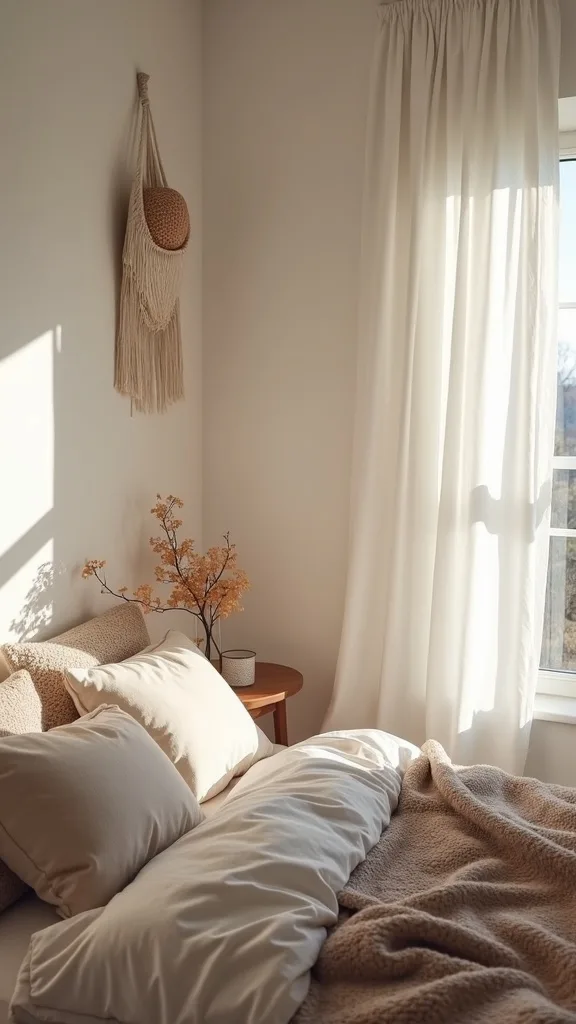
13. How do I make my bed look ‘done’ in 60 seconds on busy weekdays?
The “done” bed is a gift to your future self. It doesn’t need hotel corners—it needs one clean line and one soft texture that signals rest.
Use the two-step method: pull the duvet up and smooth it once, then add a folded throw across the foot (that thick wool fold-over works overtime here). Keep your pillows simple: sleeping pillows plus one lumbar or one square accent. If you have kids who jump on the bed, choose a washable coverlet as the top layer so you’re not constantly washing the duvet insert.
Choose calm solids or tiny patterns so wrinkles don’t scream. A slightly oversized duvet (one size up) looks fuller with less effort.
Pro tip: put a small basket in the closet for “bed-only” throws so they stay clean and feel special when you pull them out.
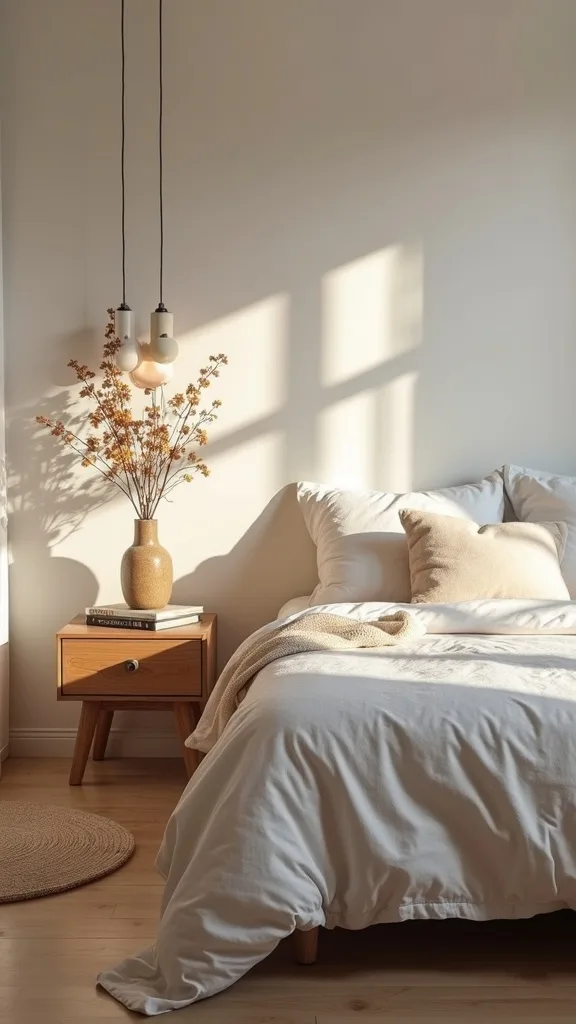
14. How can I use baskets to hide bedroom clutter without losing things?
Baskets are the unsung heroes of hygge because they turn visual chaos into quiet. The key is using them with categories, not as random catch-alls.
Assign each basket one job: extra throws, bedtime books, charging cords, or “things that belong elsewhere.” Place one lidded basket near the door for quick cleanups and one open basket near the bed for textiles. Label the inside rim with a small tag if your family shares the space—no shame, just systems.
Woven seagrass feels warm for fall, while felt bins look clean and Scandinavian. Stick to one basket style so the room reads cohesive.
Pro tip: the best basket is the one you’ll actually use with one hand while holding laundry—choose function first, always.
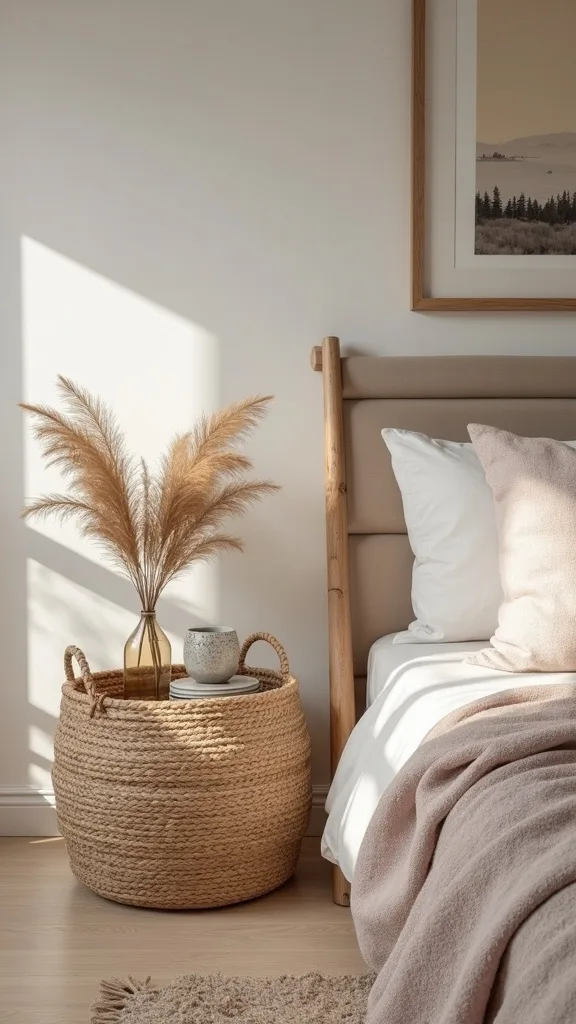
15. What wall art feels hygge for fall without going full pumpkin theme?
Hygge wall art is quiet and grounding. It should feel like a deep breath, not seasonal signage.
Choose prints with nature, line drawings, or soft landscapes—think foggy forests, simple botanical sketches, or minimalist abstracts in warm neutrals. If you want a fall nod, use one piece with muted rust or golden tones. Hang art so the center is roughly 57 inches from the floor (gallery standard), or align it with the top third of your headboard for a cleaner look.
Black frames feel Scandinavian and crisp; light oak frames feel warmer and more rustic. Either works—just repeat the frame finish once elsewhere.
Pro tip: if commitment feels big, start with one large print leaning on a dresser; it’s low-pressure, and cozy is allowed to evolve.
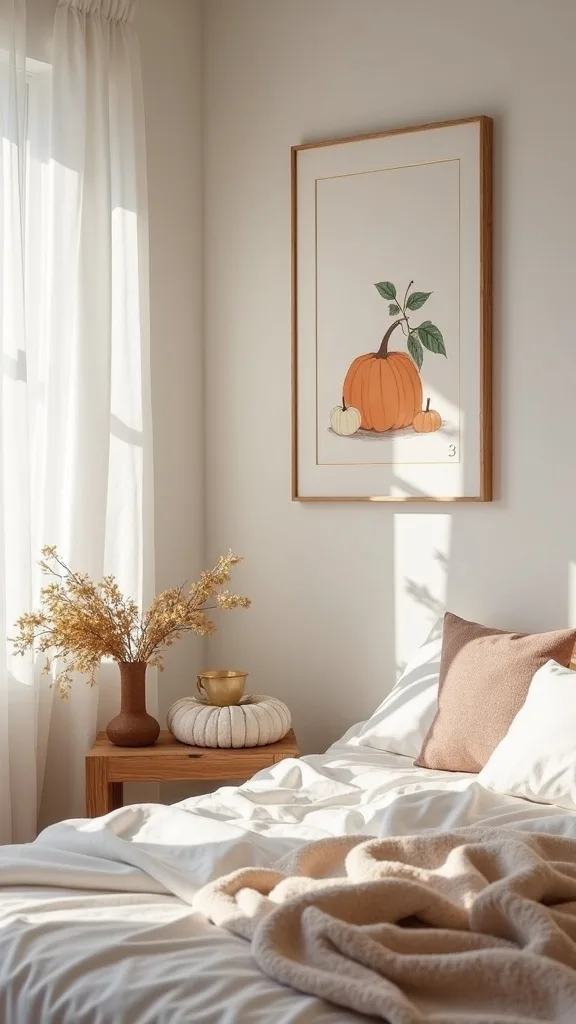
16. How do I style a dresser top so it feels cozy but still usable?
A dresser top can either calm you down or stress you out every morning. The secret is leaving space to set things down without creating a “stuff shelf.”
Use the 1–2–1 rule: one taller item (lamp or vase), two medium items (tray and candle), and one low item (small dish or book). Keep the center clear for daily use—hairbrush, folded clothes, whatever real life needs. If you have a mirror, anchor the setup by centering the tallest item under one side of the mirror; it looks intentional without being fussy.
For fall, add a shallow wooden tray and one beeswax candle in an amber holder. Keep surfaces matte to reduce visual noise.
Pro tip: if you can wipe the whole surface in under 10 seconds, you’ve nailed functional hygge.
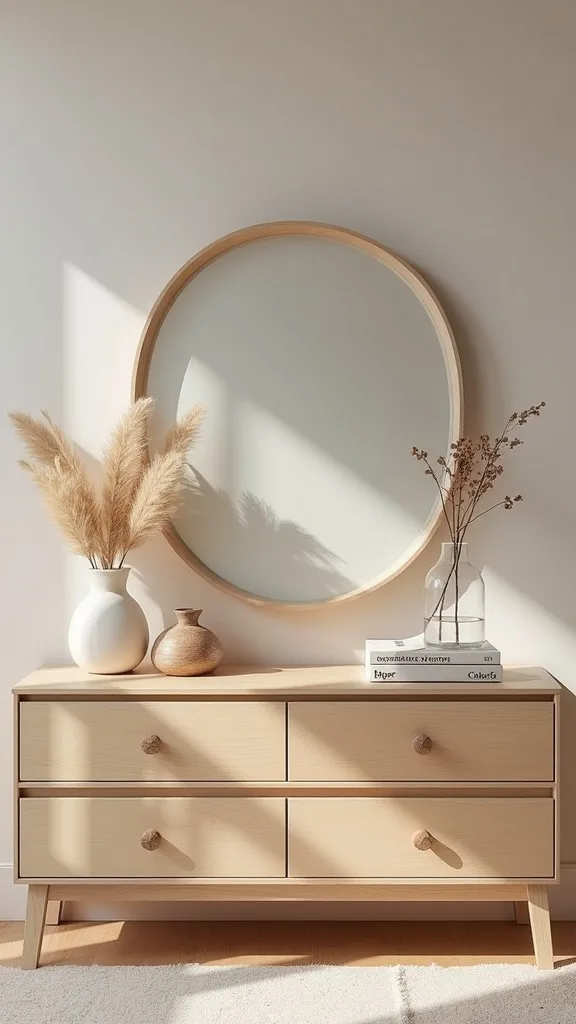
17. How can I make my bedroom quieter and more restful for better sleep?
Cozy is not only visual—it’s sensory. A quieter bedroom feels safer, and that helps your body settle faster at night.
Add soft sound absorbers: a rug, heavier curtains, and layered bedding. If outside noise is an issue, try a small white noise machine (it plays a steady sound that masks sudden noises) on the far side of the room. Also, reduce “visual noise” by closing one closet door, hiding cords, and keeping laundry contained; your brain reads fewer open loops.
Choose textiles in thicker weaves for fall—wool, velvet, and lined curtains help. Keep colors soft so your eyes relax.
Pro tip: pick one “closing shift” habit—tray reset, candle out, curtains closed—and let that be enough on busy nights.
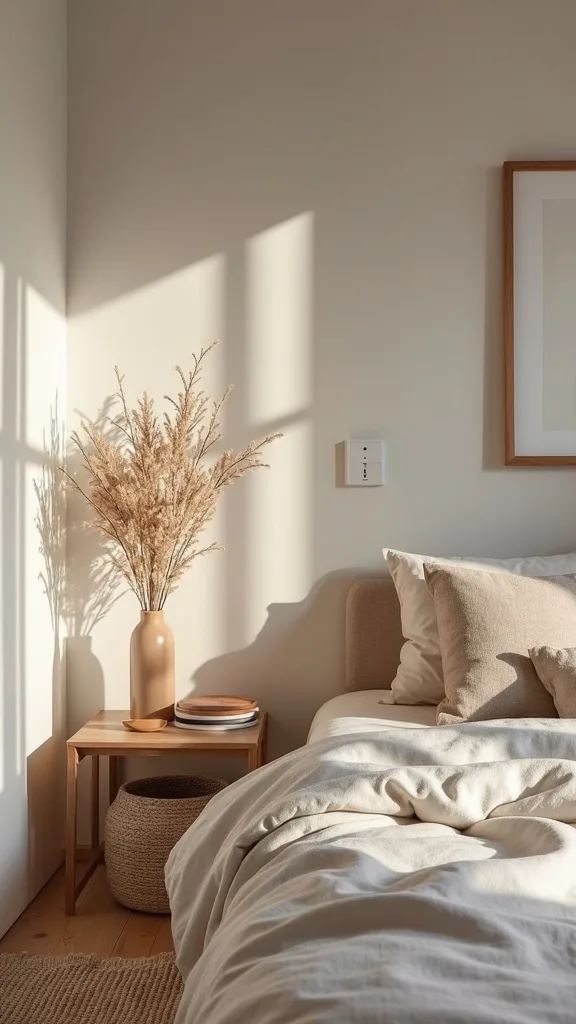
18. How do I create a reading nook that actually gets used in fall?
A reading nook only works if it’s comfortable enough for real bodies and real tiredness. Hygge is practical: a place to sit, a place to put your drink, and light you don’t have to fight.
Start with one chair (or even the corner of the bed) and add a small side table or stool. Place a lamp at shoulder height when seated, with warm white light (2700K–3000K — the cosy, yellowish tone you see in most homes). Add one throw and one lumbar pillow, then keep a small basket underneath for current reads.
Fall-friendly textures: boucle chair + wool throw, or a simple upholstered chair + chunky knit. Add a single candle on the table for evenings, but keep it away from pages and blankets.
Pro tip: make it easy to start—leave the book open to your place, and cozy becomes a habit, not a project.
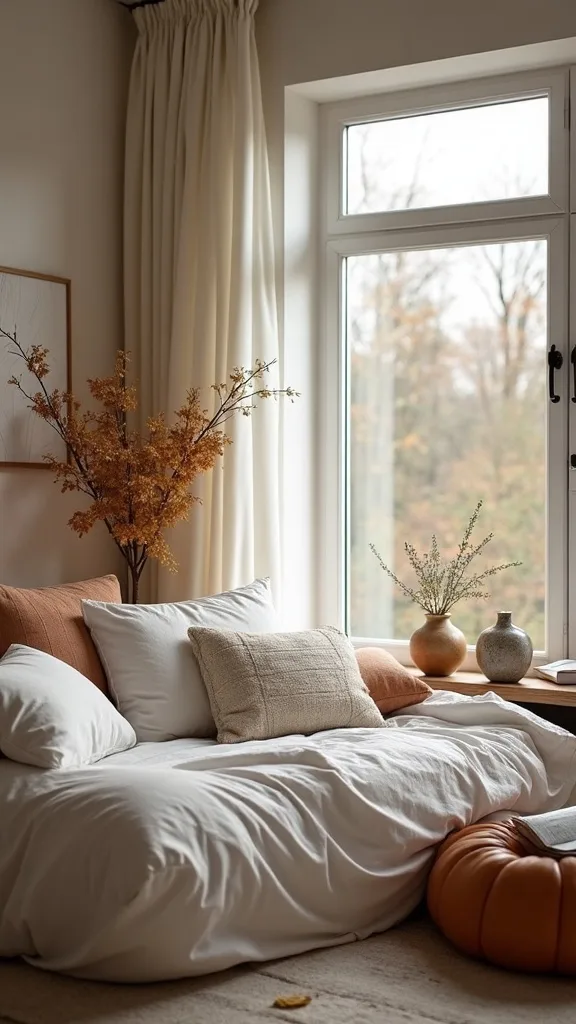
19. What’s the best way to use curtains for warmth and hygge?
Curtains are like a sweater for your windows. They cut drafts, soften light, and make a bedroom feel finished—especially in the cozy fall season.
Choose panels that reach close to the floor; that length creates calm vertical lines. Hang the rod 4–6 inches above the window frame to make the room feel taller, and go wider than the window so you can stack panels mostly off the glass during the day. If drafts are an issue, look for thermal-lined curtains.
For a Scandinavian fall bedroom look, pick textured linen-look panels in oatmeal, warm white, or light gray. Avoid super-shiny fabric; it can look harsh under lamplight.
Pro tip: even if you only replace curtains in one room this year, it’s a big emotional upgrade—progress counts, always.
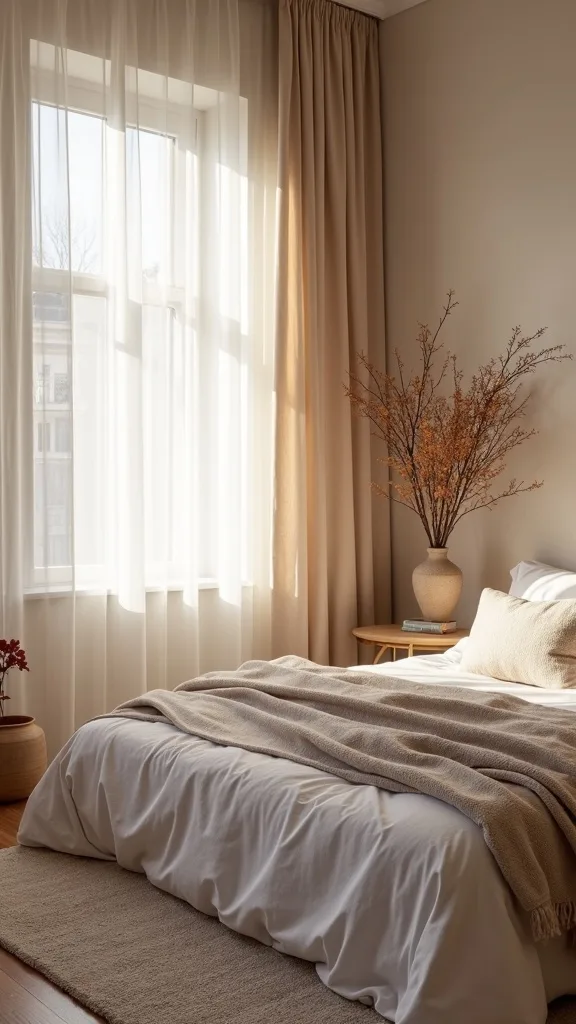
20. How do I incorporate black accents without making the bedroom feel cold?
Black accents are a classic Scandinavian move because they add definition. The room stays cozy when black is used like punctuation, not like a wall.
Use black in small, repeated touches: a picture frame, a lamp base, and a drawer pull—three is enough. Pair it with warm textures (wool, wood, linen) so the contrast feels grounded. If your bedding is white, black adds crispness; if your room is already dark, keep black to metal details only.
Matte black looks softer than glossy black. Combine with birch or oak tones for that fall forest feel.
Pro tip: if a black item feels too stark, place it on a wooden tray or next to a candle—warm materials soften the edge instantly.
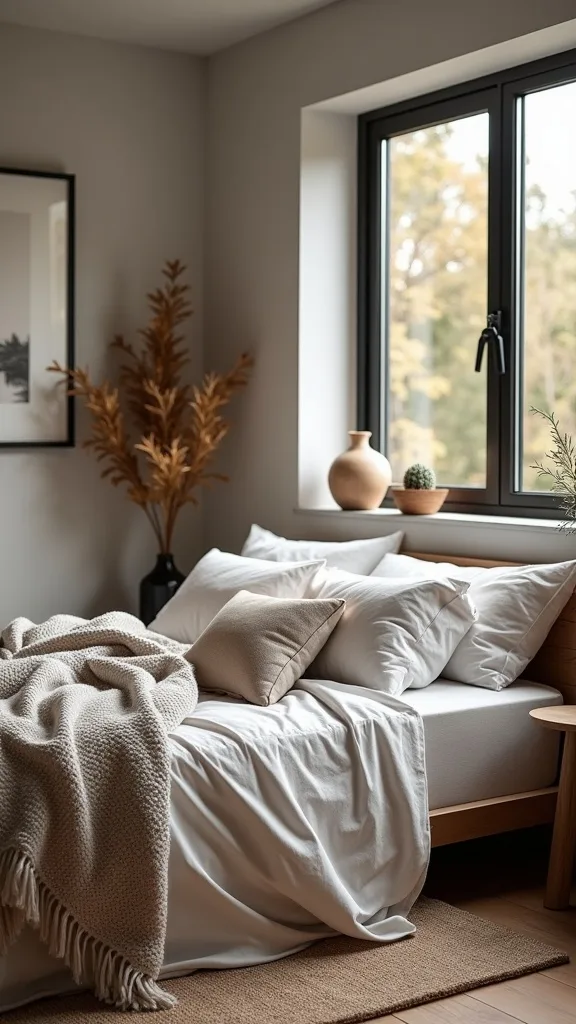
21. How can I make a shared bedroom feel hygge for two people with different tastes?
Sharing a room is real life, and hygge is flexible enough for that. The goal is comfort you both feel, not a style that only one person recognizes.
Choose a neutral base you both can live with—simple bedding in cream or gray—then give each person one “zone” on their nightstand. One might want a candle and a book; the other might want a charger and a water carafe. Keep the lighting matched (same bulb warmth), even if the decor differs, so the room feels unified.
Agree on one accent color for fall—deep green or rust works well—and let each person interpret it in their own way (pillow vs. throw vs. art).
Pro tip: the coziest shared bedroom is the one where nobody has to defend their preferences—comfort is the common ground.
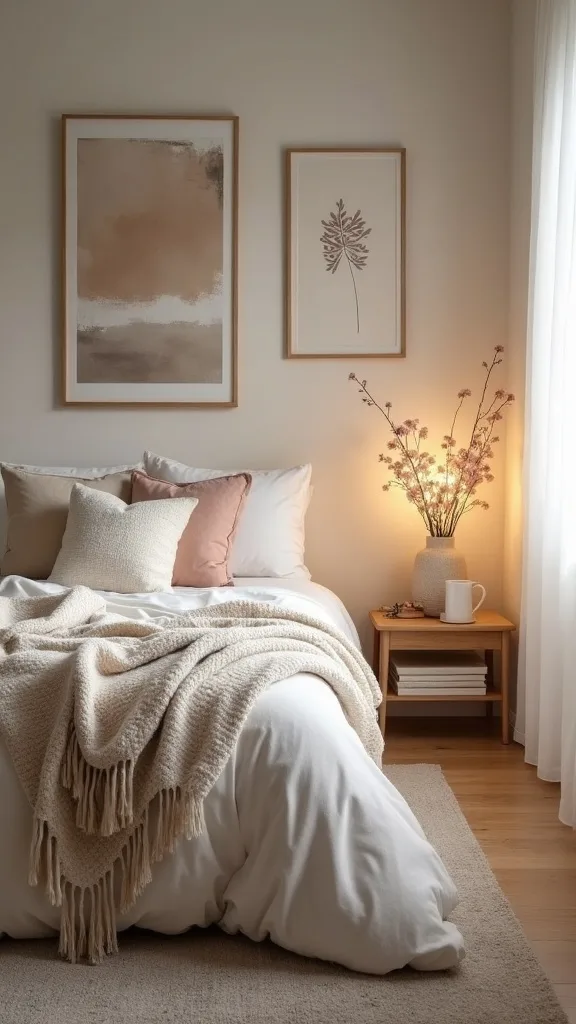
22. What are simple hygge decor swaps for renters who can’t paint walls?
You can get the hygge feeling without touching a paintbrush. Rent-friendly changes live in textiles, lighting, and removable layers—things you can take with you.
Start with bedding: add a textured duvet cover and one wool throw. Swap harsh bulbs for warm white light (2700K–3000K — the cosy, yellowish tone you see in most homes) and add plug-in wall sconces with adhesive hooks if you need bedside light without drilling. Use removable peel-and-stick hooks to hang a wreath-like bundle of birch branches or a simple woven wall hanging.
Choose natural materials—linen-look curtains, woven baskets, wood trays—to bring in that Scandinavian fall bedroom vibe.
Pro tip: keep a small “seasonal box” under the bed; rotating a few items is cheaper (and calmer) than storing a whole new decor collection.
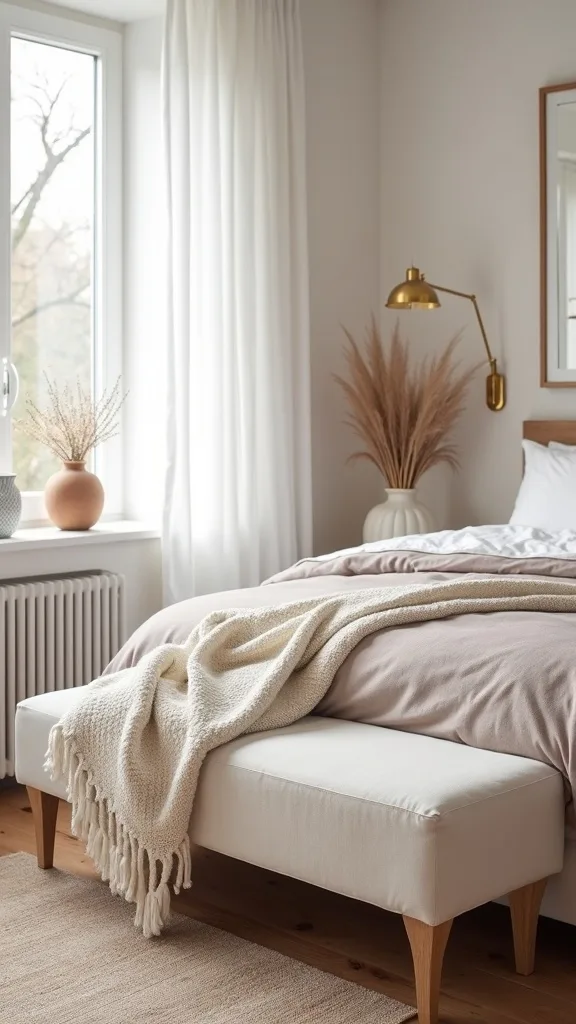
23. How do I style an end-of-bed bench (or ottoman) for fall without it becoming a dumping spot?
An end-of-bed bench is either a cozy moment or a clothes magnet. Hygge happens when it has a clear purpose and a clear surface.
Give it one job: holding tomorrow’s outfit, supporting a tray, or storing extra blankets. Add a basket underneath for “not clean, not dirty” clothes—real life needs that category. Style the top with one folded throw or one lumbar pillow, not a full pillow parade. If your bench has storage, keep only seasonal textiles inside so it doesn’t become a junk drawer.
For fall, choose a wool throw in a deep neutral and a simple wooden tray for a candle on weekends. Keep it minimal so it stays usable.
Pro tip: if you can clear the bench in 10 seconds, you’ll actually keep it cozy—because you won’t dread it.
24. How can I make mornings feel softer in a fall bedroom (not just bedtime)?
Most cozy bedroom advice is nighttime-focused, but fall mornings matter just as much. Hygge is also about making the first five minutes of the day less sharp.
Set up a “morning landing” on the dresser: a small tray for keys and watch, a brush, and your everyday lotion. Keep slippers within reach of the bed, ideally on a small mat so they’re not underfoot. If you drink coffee or tea, place a lidded mug on the nightstand only after you’re fully awake—no spills in the sheets. Open curtains right away to let natural light reset your body clock.
Choose a soft robe or cardigan in a warm neutral and hang it on a wall hook—easy, visible, and comforting.
Pro tip: cozy mornings aren’t about doing more; they’re about removing friction so your day starts gentler.
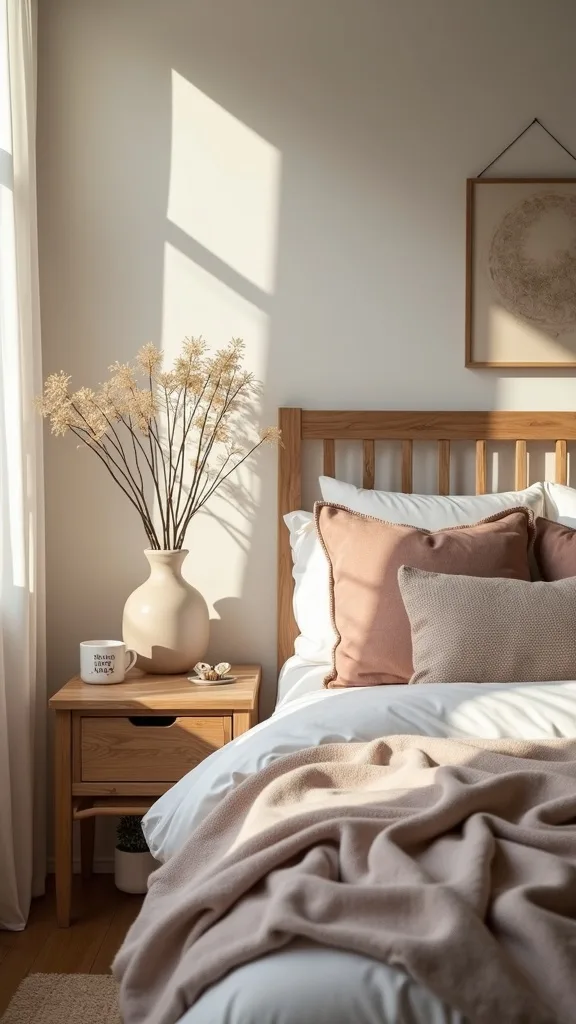
25. How do I keep hygge going all season when life gets messy?
Hygge isn’t a photoshoot—it’s a feeling you can return to, even when the week is loud. The most sustainable hygge bedroom ideas are the ones that survive laundry piles and late-night snack wrappers.
Create one “reset ritual” that takes two minutes: put cups in the kitchen, toss laundry in one basket, straighten the wool fold-over, and light a candle for five minutes while you brush your teeth. Keep a small bin in the closet for seasonal extras so surfaces stay clear. If you miss a day (or five), nothing is ruined—you just start again.
Choose durable, washable textiles and unscented or lightly scented candles so the room supports sleep. Keep decor minimal but meaningful: one tray, one vase, one soft throw.
Pro tip: the point is not a perfect room—it’s a kinder mood; every small reset is proof you’re building a home, not a showroom.
Final Thoughts
If your bedroom doesn’t look like the inspiration photos, you’re in very good company. Real homes have chargers, water glasses, and that one sock that appears out of nowhere. Hygge isn’t about erasing any of that—it’s about adding a few steady comforts so the room feels like it’s on your side.
Even one small “anchor” can change the whole season: a tray that gathers the clutter, a wool fold-over that makes the bed feel welcoming, or a candle you light while the house settles down. Celebrate progress over perfection, because the point is how your mornings and evenings feel—not whether everything matches.
Do one thing today: clear one nightstand, place a simple tray, and set one candle and one comforting item on it. That tiny reset is enough—and imperfect is not just acceptable, it’s the point.
What I’d Do Differently
When I first tried this, I made the classic mistake of treating “cozy” like “add more.” I piled on extra pillows, put candles on both nightstands, added a fall garland to the headboard, and somehow my bedroom felt smaller and harder to manage—especially on weeknights when I just wanted to brush my teeth and collapse. The worst part was that I started avoiding my own “cozy” setup because it felt like another task to keep pretty. What finally worked was choosing one anchor scene (a bedside tray with candles and a book) and one anchor textile (a wool fold-over at the foot of the bed) and letting everything else stay simple.
I wish I’d known sooner that hygge is more about friction-free routines than buying the right items. If your nightstand is always in use, design for that instead of fighting it: one tray, one dish, one lamp, done. Pick one small corner to make lovely, and let that be the calm you return to—then start tonight by resetting that one spot in two minutes.