
This post contains affiliate links. As an Amazon Associate, I earn from qualifying purchases at no extra cost to you.
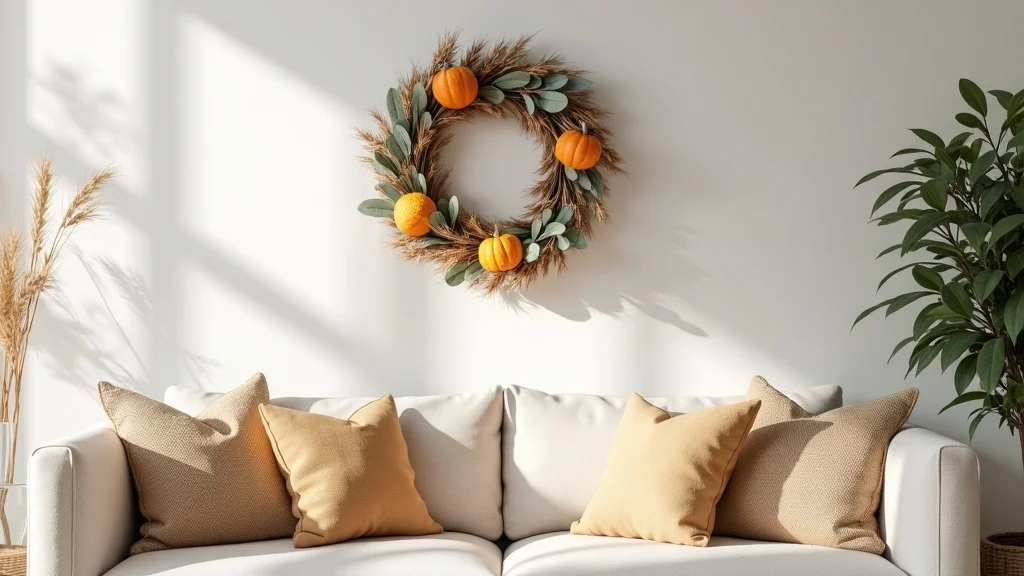
The living room can look finished in ten minutes, even when the rest of the house is chaos. One strong piece does it. A wreath on the door you see from the sofa becomes the room’s seasonal punctuation mark, crisp and intentional instead of scattered and fussy.
This guide covers autumn wreath ideas that work like real decor, not a craft table explosion. You’ll get a practical wreath making tutorial mindset: build the structure first, then add texture, then add color, then add one bold focal point.
This is for anyone who wants a fall door moment that feels timeless, especially if your living room leans neutral and you decorate with restraint.
Inside, you’ll find dried wheat and eucalyptus builds, a classic dried flower wreath, minimalist options, and a few Halloween-ready twists that still feel grown-up.
Below are 25 DIY Fall Wreath Ideas & Autumn Wreath Making that sharpen your living room’s “welcome” view, anchor your seasonal palette, and make Halloween decor prep feel calm and deliberate.
Products I Recommend for This Project
Here are some of my favourite products to help you bring these ideas to life:
- Darice Wire Wreath Frame, 14 Inch (2-Pack) — A sturdy base with plenty of wiring points for clean, airy designs.
- Panacea Products 22-Gauge Floral Wire (Green) — Holds stems and heavier accents securely without showing from the front.
- WORKPRO Wire Cutter / Diagonal Pliers — Makes fast, clean cuts so you’re not fighting thick stems and wire ends.
- Aleene’s Mini Hot Glue Gun Kit — Great for quick tack points on pinecones and ribbon backs (use wire for heavy items).
- Krylon Matte Finish Clear Sealer Spray — Helps protect dried orange slices and reduces shine on budget faux picks.
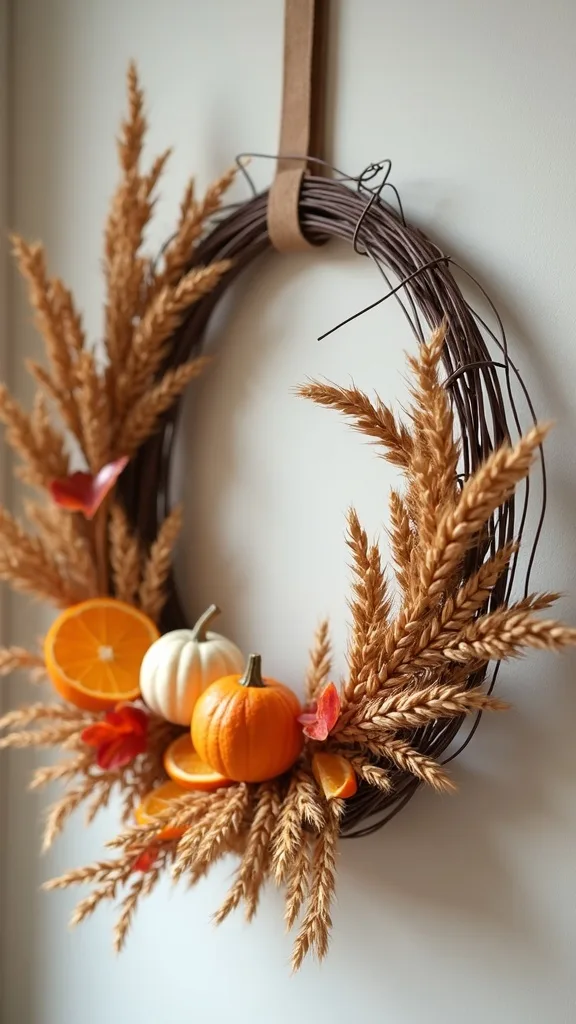
1. Wire Frame Wreath With Dried Wheat, Eucalyptus, Orange Slices, and Mini Gourds (Full Tutorial)
This is the wreath that makes a living room feel composed from the doorway. The wire frame wreath keeps the shape crisp, while wheat, eucalyptus, orange slices, and mini gourds deliver texture that reads warm from across the room.
Start with a 12–14 inch wire frame and wrap the bottom half with eucalyptus, securing stems with 22-gauge floral wire every 2–3 inches. Build three clusters: (1) dried wheat fan, (2) orange slice + cinnamon stick bundle, (3) mini gourd pair. Wire each cluster to the frame at 4 o’clock, 6 o’clock, and 8 o’clock so the weight sits low and the top stays airy.
Choose muted green eucalyptus, pale gold wheat, and deep orange slices for a controlled palette. Add one ribbon tail in linen or black velvet if you want a Halloween edge without going full spooky.
Pro tip: seal the orange slices with a matte clear spray so they don’t darken as quickly, and keep the cluster line slightly diagonal for a natural sweep that feels collected.
2. How Do You Make a DIY Fall Wreath Look Expensive (Not Crafty)?
An expensive-looking wreath has one clear idea and strict editing. It works because the materials read intentional, and the negative space feels designed instead of unfinished.
Pick one base texture—eucalyptus, grapevine, or pine—and commit to it across at least half the frame. Then add only two accent textures and one focal element. Work in odd numbers: three wheat stems, five berries, one bow. Step back every five minutes and check the silhouette from six feet away, the same distance you’ll see it from the sofa.
Choose colors that already live in your living room. If your room has oat-colored throws and a walnut coffee table, stay in wheat, rust, and deep green. Skip neon orange, shiny glitter, and anything with a plastic sheen.
Pro tip: hide mechanics. Twist wire ends to the back and cover the spine with a strip of greenery so the wreath reads like decor, not a project.
3. What’s the Best Base for a Fall Door Wreath: Wire, Grapevine, or Foam?
The right base decides whether your wreath holds its shape all season. It works because the base controls weight, attachment points, and how “full” the final look feels.
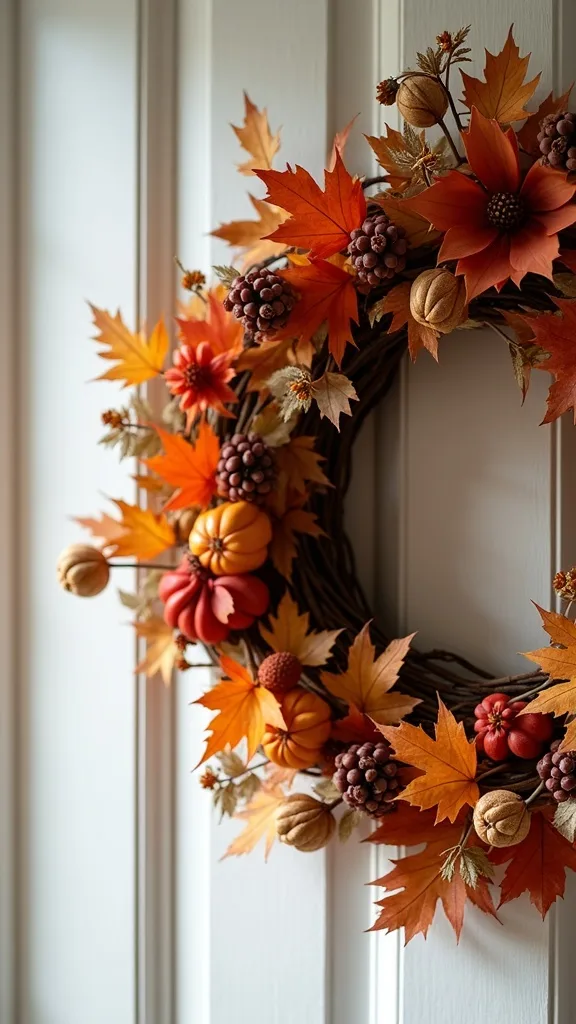
Use a wire frame when you want airy, modern spacing and easy wiring. Choose grapevine when you want rustic texture built in and you’re okay with a slightly heavier piece. Use foam only for fully packed designs, and wrap it first so it doesn’t crumble and shed.
For a living room view, wire and grapevine photograph better and look cleaner in natural light. Pair wire with eucalyptus and dried elements; pair grapevine with magnolia leaves, berries, and pinecones. Keep a 12–16 inch size for most standard doors so it doesn’t fight the door hardware.
Pro tip: if you’re unsure, buy a $6–$10 wire frame and a $10–$16 grapevine ring and test-styling stems before committing—your materials will tell you which base they want.
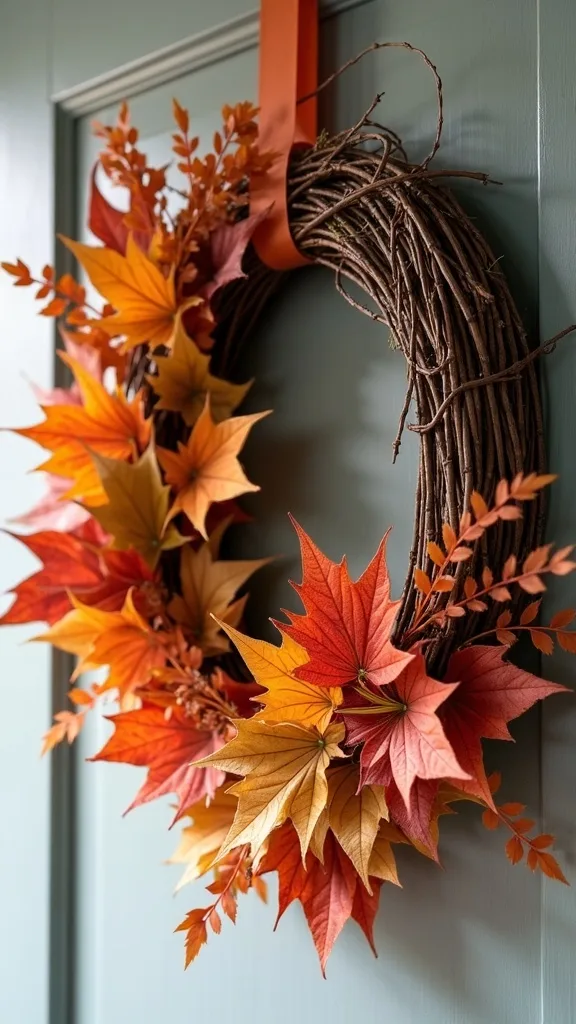
4. How Do You Keep Dried Orange Slices From Molding on a Wreath?
Dried oranges add color that feels like real autumn, not artificial fall. They work because the translucent slices catch light and echo candle glow in the living room.
Dry slices fully before they touch the wreath. Cut 1/4-inch slices, blot them dry, then bake at 200°F for 2.5–3.5 hours, flipping every 30 minutes. Cool completely, then mist both sides with a matte clear sealer and let them cure overnight. Attach with floral wire through the rind, not hot glue alone.
Pair orange slices with cinnamon sticks, bay leaves, and eucalyptus for a restrained palette. Avoid fresh citrus, or partially dried slices that still feel pliable.
Pro tip: keep your wreath under a covered porch if possible. Moisture is the enemy. Dry materials stay crisp when the environment stays steady, and your color stays bright longer.

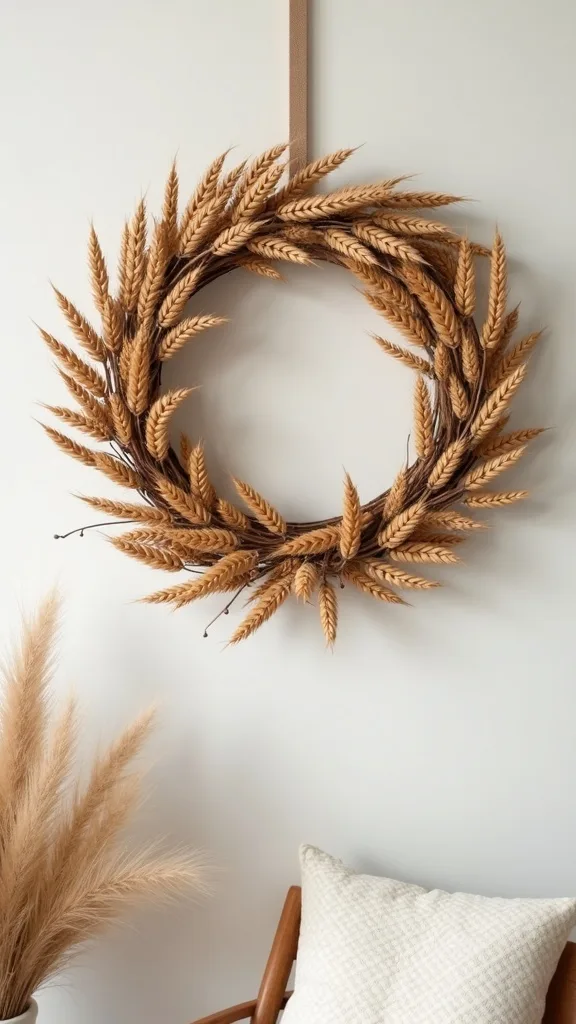
5. Minimalist Wheat and Eucalyptus Crescent Wreath
This crescent style looks calm from the couch and clean on the door. It works because the open space at the top keeps the shape modern, while the dried wheat adds a soft, tailored warmth.
Cover only the lower third of a wire frame with eucalyptus, wiring stems so they angle upward like a sweep. Add a small wheat fan on one side, then mirror with a smaller wheat accent on the other so the design feels balanced but not symmetrical. Keep all mechanics on the back and rotate the frame until the crescent feels intentional.
Use pale wheat, dusty eucalyptus, and one neutral ribbon—linen, raw cotton, or black grosgrain. Skip shiny satin; it reads craft-store fast.
Pro tip: hang it with a thin leather strap instead of a hook. That one detail makes the whole entry view feel like a styled object, not seasonal clutter.
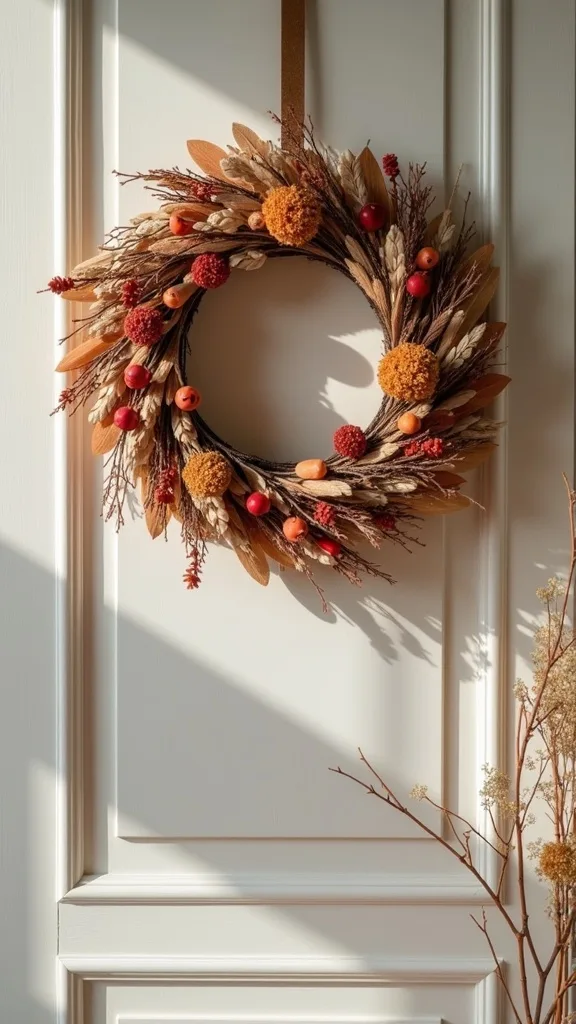
6. Dried Flower Wreath in Muted Rust, Cream, and Olive
A dried flower wreath brings softness to the hard lines of doors and trim. It works because dried petals hold their shape, and the muted palette blends with living room neutrals instead of shouting over them.
Start with a grapevine base for grip. Tuck in dried hydrangea first to create volume, then add strawflower and statice in small bunches, always pointing stems in the same direction. Work in sections—left, right, then bottom—so you don’t overfill one area. Secure hidden stems with short U-shaped floral pins.
Stick to three colors: rust, cream, and olive. Add one darker note, like burgundy amaranth, only at the base for depth.
Pro tip: mist lightly with unscented hairspray from 12 inches away to reduce shedding. The wreath stays crisp, and the room reads finished.
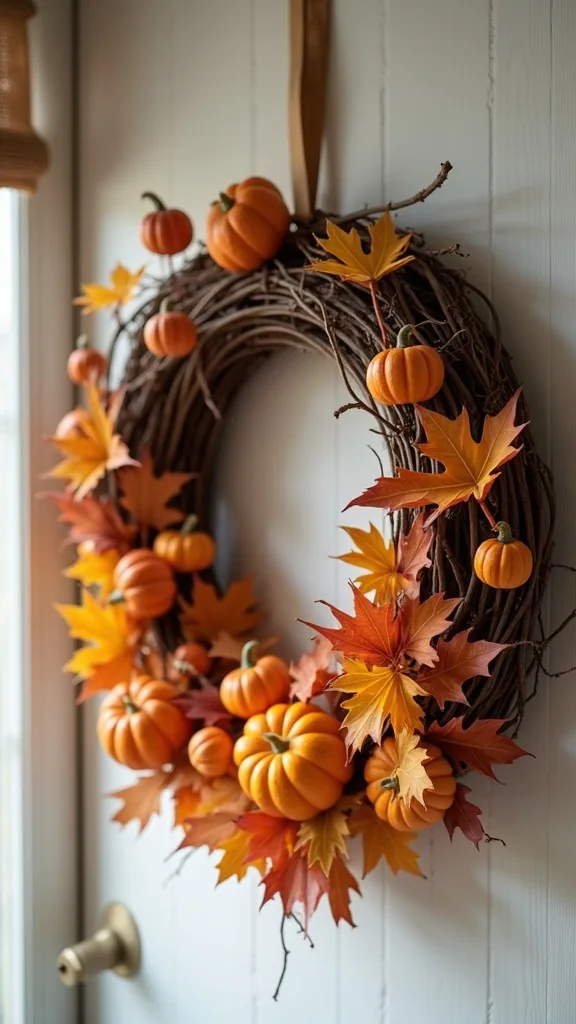
7. How Do You Add Mini Gourds Without Them Falling Off?
Mini gourds give your wreath a sculptural focal point. They work because the shape is instantly seasonal, and the matte skin looks natural against dried textures.
Choose lightweight faux gourds if your door gets sun or rain. If you use real mini gourds, pick fully cured ones with hard skins. Wire them using a gourd pick (a short stem pick you insert), then lash the pick to the frame with floral wire. Back it up with a small zip tie hidden under greenery.
Keep gourds in a tight cluster of two or three at the bottom. Pair with wheat, eucalyptus, and one ribbon tail. Avoid spreading gourds around the whole wreath; it turns busy.
Pro tip: angle gourds slightly outward so their curves catch light. The living room view gets dimension, and the wreath looks styled from every approach.
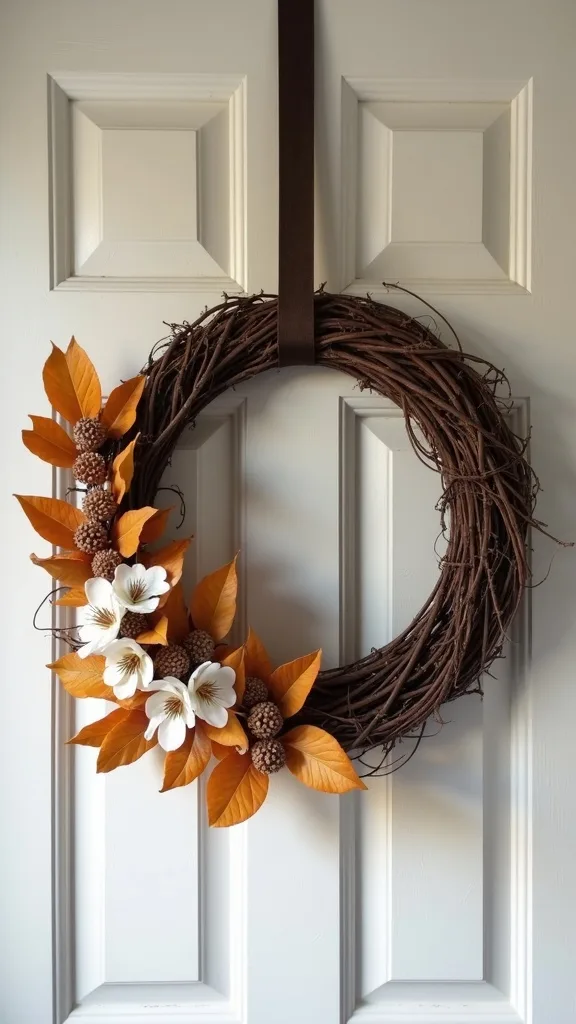
8. Rustic Grapevine Wreath With Magnolia Leaves and Pinecones
This is the deep, classic fall look that holds up through Halloween and into Thanksgiving. It works because magnolia leaves bring glossy structure, and pinecones add weight and shadow.
Anchor magnolia stems first, tucking them into grapevine pockets so the leaves overlap like shingles. Cluster pinecones at the bottom with hot glue, then reinforce by wiring through the cone scales. Add a small berry sprig only where you need color, not everywhere.
Choose warm brown pinecones, olive magnolia, and a single accent—rust berries or copper bells. Avoid glitter cones; they read seasonal aisle.
Pro tip: brush pinecones with a tiny bit of dark wax or coffee grounds for richer color. The texture looks aged and intentional, like it belongs with wood furniture and leather in the living room.
Cost & Materials Estimate
Most fall wreaths in this guide land between budget-friendly basics and longer-lasting materials, depending on whether you use faux stems or preserved/dried elements.
| Item | Estimated Cost | Where to Buy |
|---|---|---|
| 12–14 inch wire wreath frame (2-pack) | $8–$14 | Amazon |
| Preserved or faux eucalyptus stems (2–4 stems) | $12–$28 | Amazon |
| Dried wheat bundle | $7–$15 | Amazon |
| 22-gauge floral wire + wire cutters | $9–$18 | Home Depot |
| Mini faux gourds (set) | $10–$20 | Amazon |
| Matte clear sealer spray | $7–$12 | Lowe’s |
Total estimated cost: $18–$45 Save money by using grocery-store eucalyptus and drying your own orange slices; splurge on one high-quality preserved greenery bundle for the base.
9. Modern Monochrome Fall Wreath in Black, Wheat, and Smoke Green
This wreath suits a living room with black frames, iron hardware, or a modern fireplace. It works because the palette is restrained, and the contrast feels architectural.
Use a black metal hoop or paint a wire frame matte black. Wrap a narrow band of smoke-green eucalyptus around one side, then add wheat stems that extend slightly beyond the hoop for a spiky, modern edge. Finish with a short black velvet ribbon tied low, with ends trimmed at a sharp angle.
Choose materials with matte finishes. Think preserved eucalyptus, dried wheat, and a single black accent like feathers or painted pods. Avoid glossy faux leaves.
Pro tip: keep the design asymmetrical but weighted. When the bottom third has more mass, the top reads clean and intentional—like good furniture placement, but on a door.
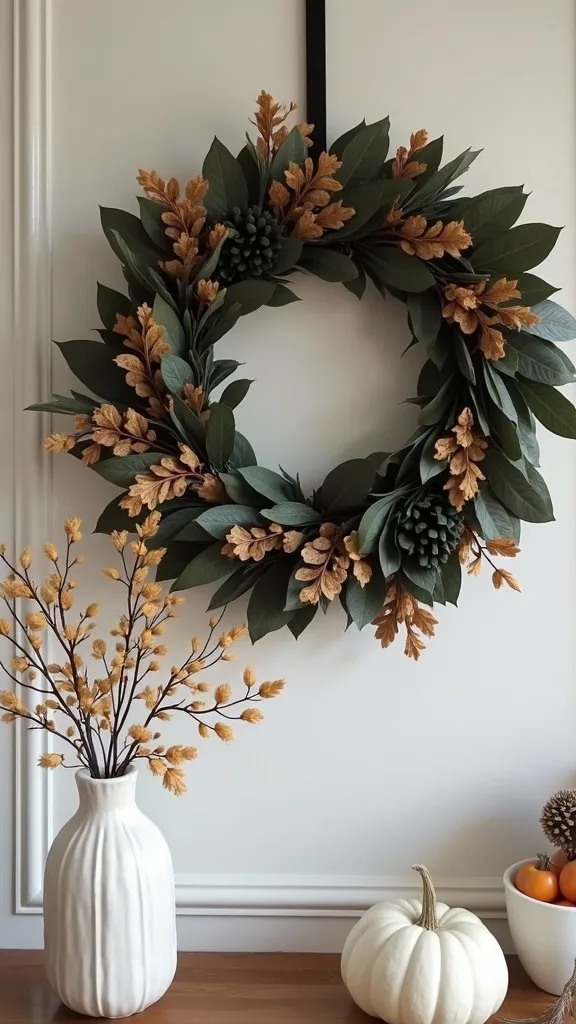
10. How Do You Make a Fall Wreath That Won’t Shed All Over the Floor?
A no-shed wreath keeps your entry and living room calm. It works because stable materials hold up to door movement, and reinforced attachments stop crumbling bits from raining down.
Choose preserved greenery and faux berries over brittle dried leaves if your door gets slammed often. If you love dried elements, use tougher pieces like wheat, dried palm, and orange slices sealed properly. Wire heavy pieces first, then glue only as a secondary hold. Finish by lightly spraying with a clear matte sealer to lock in fragile bits.
Avoid pampas grass on high-traffic doors; it sheds like crazy. Skip foam bases that break down and sprinkle dust.
Pro tip: add a felt pad behind the wreath where it taps the door. Less friction means less shedding, and your wreath stays crisp through the entire Halloween stretch.
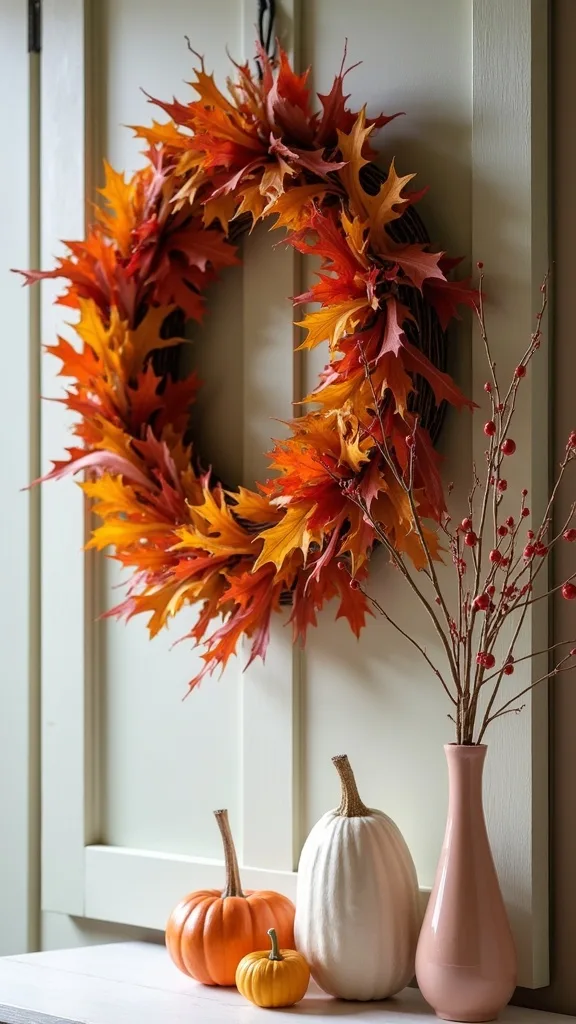
11. Cozy Plaid Bow Wreath With Warm Neutrals
A plaid bow can carry the whole seasonal story without needing a pile of extras. It works because textiles add softness, and the pattern reads from the curb and from the sofa.
Build a simple greenery base on a wire frame—think eucalyptus or faux cedar. Make a large bow with wired ribbon so it holds shape, then attach it with floral wire threaded through the bow’s center. Add two small wheat bundles on either side of the bow to frame it.
Choose cream-and-black plaid, tan-and-ivory checks, or muted rust plaid. Pair with dried wheat, beige berries, and a few matte black pods for Halloween prep.
Pro tip: trim ribbon tails to different lengths and cut crisp V-notches. The bow looks tailored, like a well-fitted throw blanket folded on the sofa arm.
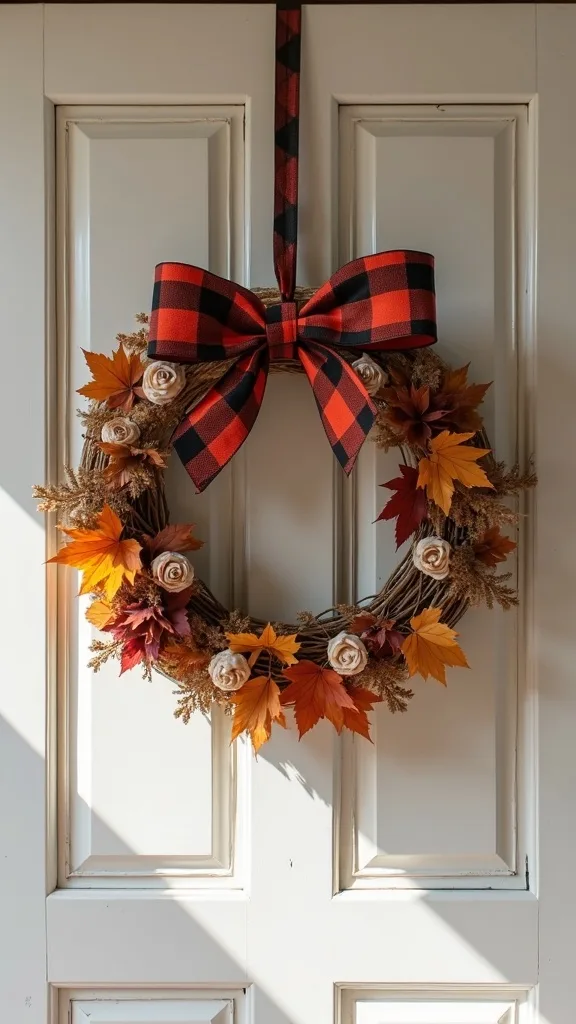
12. Small Space Apartment Fall Wreath (10–12 Inch Frame)
A smaller wreath looks intentional in a tight entry and doesn’t overwhelm a narrow door. It works because scale is part of good decorating, and a compact piece still delivers strong texture.
Use a 10–12 inch wire frame and cover only one quadrant with greenery to keep it light. Add one focal element—two orange slices or one mini gourd—plus a single wheat fan. Keep stems short so nothing pokes out and catches when the door opens.
Choose a tight palette: eucalyptus + wheat + one orange accent. Avoid oversized bows; they swallow the wreath.
Pro tip: hang it inside, on the wall you can see from the living room seating. A small wreath becomes art when it’s placed like art—at eye level with breathing room around it.
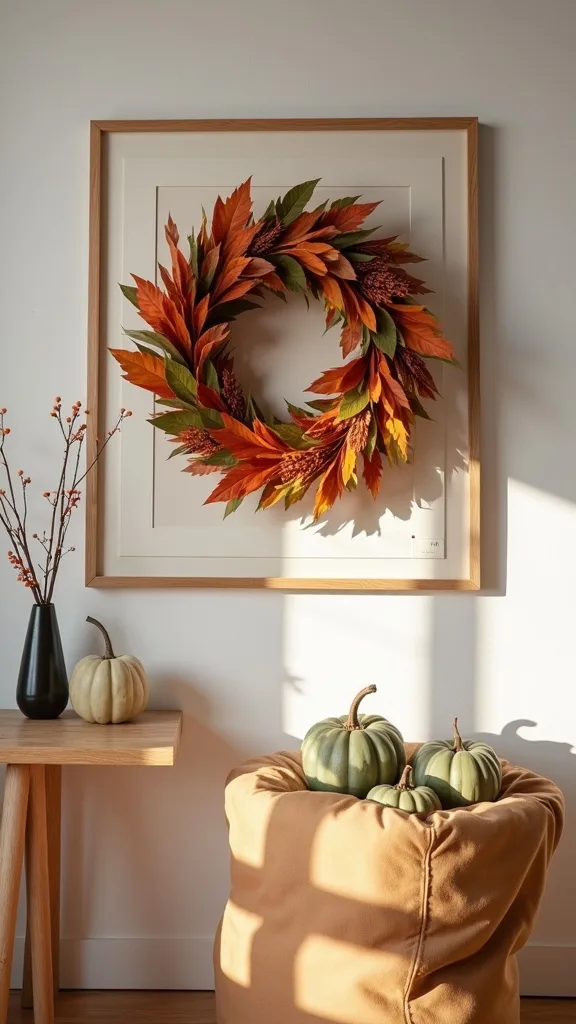
13. How Do You Secure Stems on a Wire Frame Without Seeing the Wire?
Clean mechanics make the wreath feel like decor, not a DIY. It works because hidden attachments let the materials read as one composed arrangement.
Lay your greenery stems along the frame and wire them from the back, twisting ends flat so they don’t snag. Overlap stems like roof shingles so each new piece covers the last wire point. For accent picks, create a small wired “bundle” first, then attach that bundle at one anchor point instead of wiring each stem separately.
Choose 22-gauge green floral wire for most stems and step up to thicker wire for gourds or pinecones. Avoid relying on hot glue alone; temperature swings can pop it loose.
Pro tip: finish the back with a simple strip of faux greenery or ribbon to cover twist points. The wreath looks polished every time you take it down and put it back up.
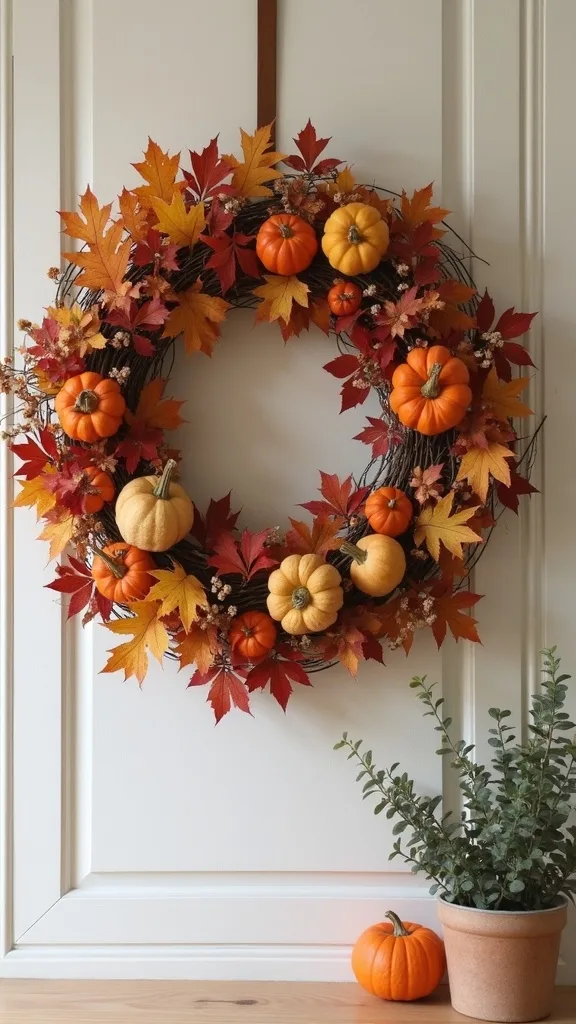
14. Eucalyptus and Copper Berry Wreath for Halloween-Adjacent Style
This is Halloween prep without plastic pumpkins and loud signs. It works because copper berries read like warm candlelight, and eucalyptus keeps the mood grounded.
Create a full eucalyptus base on a wire frame, then add copper berry picks in three small clusters. Keep the berries concentrated on the lower half so the top stays calm. Add one thin black ribbon loop for a subtle nod to Halloween.
Choose muted copper, not bright orange glitter. Pair with smoke-green eucalyptus and one touch of dried wheat for softness.
Pro tip: echo the copper inside the living room with one object—like a small metal tray on the coffee table. The door and the room feel connected, and the whole space looks considered.
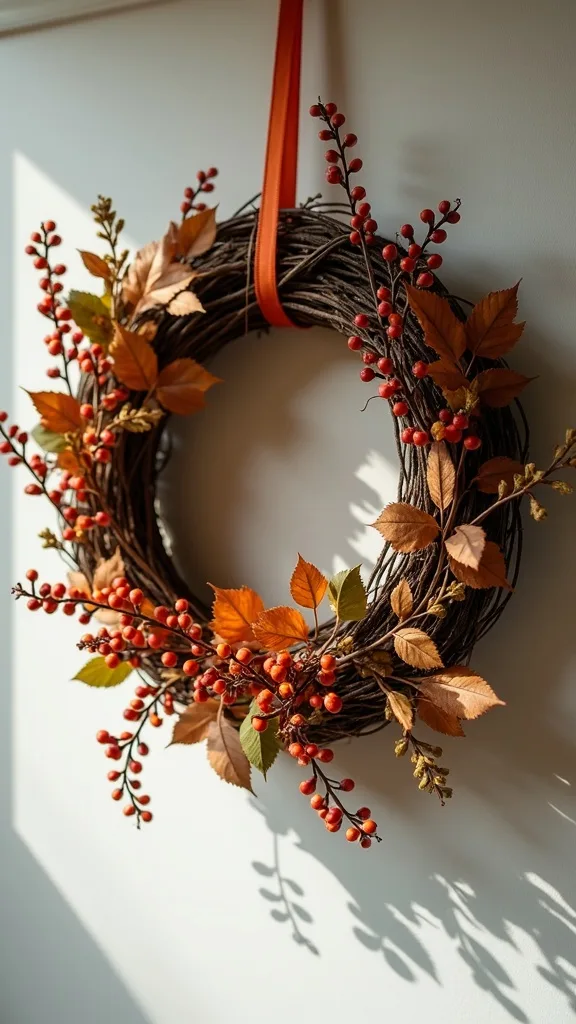
15. Farmhouse Cotton Stem Wreath With Wheat and Burlap
Cotton stems add a soft, quiet contrast to fall’s sharper textures. It works because the white cotton reads like a neutral textile, and the wheat brings the season in without shouting.
Use a grapevine base and tuck cotton stems into the vine gaps first. Add wheat in small bunches to frame the cotton, then tie a narrow burlap ribbon at the bottom. Keep the cotton clustered; scattered cotton can look messy.
Choose cream cotton, pale wheat, and warm burlap. Avoid bright white cotton with a plastic shine.
Pro tip: keep the bow small and let the cotton do the talking. When the materials are strong, restraint makes the wreath feel timeless—like a well-made slipcover that always works.
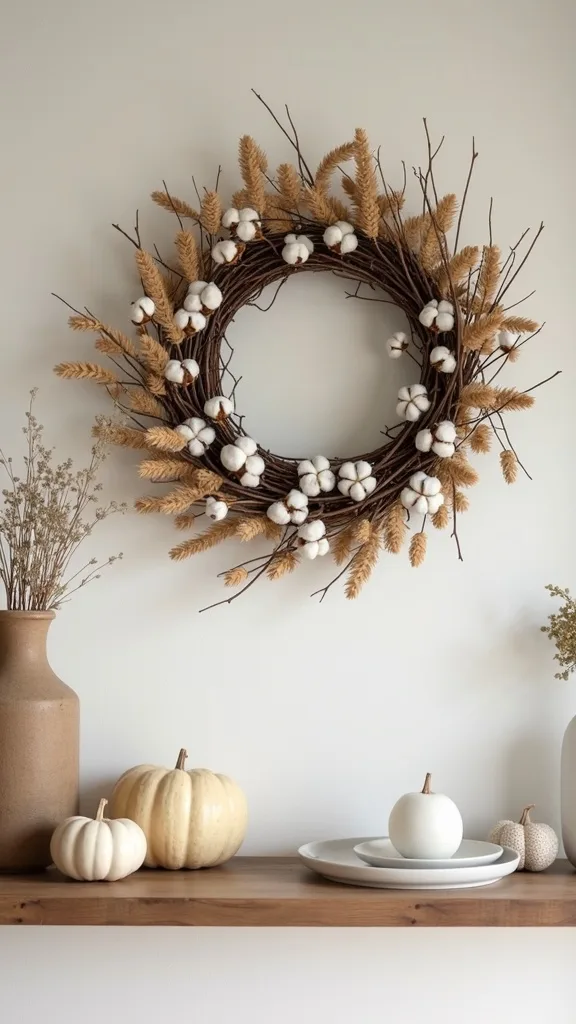
16. How Do You Balance Color on an Autumn Wreath So It Doesn’t Look Lopsided?
Balanced color is what makes a wreath feel designed. It works because your eye tracks the color first, then the texture, and imbalance reads like a mistake.
Place your strongest color at the bottom first—orange slices, rust flowers, or berries. Then repeat that color twice in smaller doses, moving upward on each side. Think of a triangle: big focal at the base, two small echoes at 3 and 9 o’clock. Step back and squint; if one side looks darker, add one small accent to the lighter side.
Choose one dominant color and two supporting neutrals. Avoid adding “just one more” shade; it turns muddy fast.
Pro tip: take a quick phone photo in black-and-white. If the light and dark values look even, the wreath will read balanced in real life too.
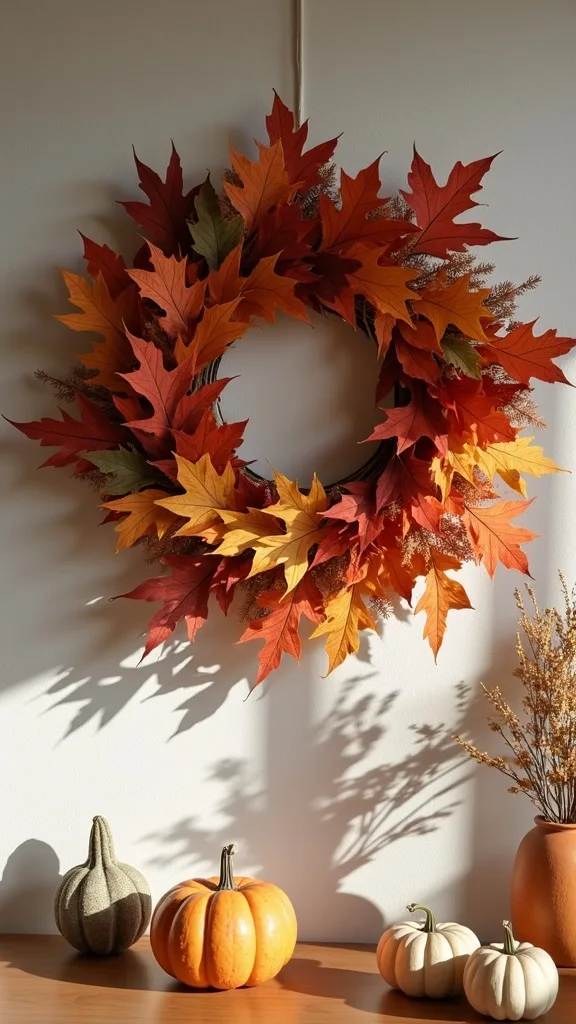
17. Neutral Pumpkin Wreath With Dried Grasses (No Orange Required)
This wreath suits a living room that already leans beige, cream, and wood. It works because the palette is quiet, and the textures do the heavy lifting.
Use a wire frame and build a base with dried grasses or faux pampas-style stems that don’t shed. Add two small neutral pumpkins at the bottom and a few dried palm spears for shape. Keep the top half open or lightly filled so the wreath doesn’t turn into a hay bale.
Choose ivory pumpkins, tan grasses, and a touch of brown seed pods. Avoid glitter pumpkins and metallic finishes that fight warm neutrals.
Pro tip: pair this wreath with a chunky knit throw in the living room in the same oatmeal tone. The door and sofa start speaking the same language, and the whole space feels cohesive.
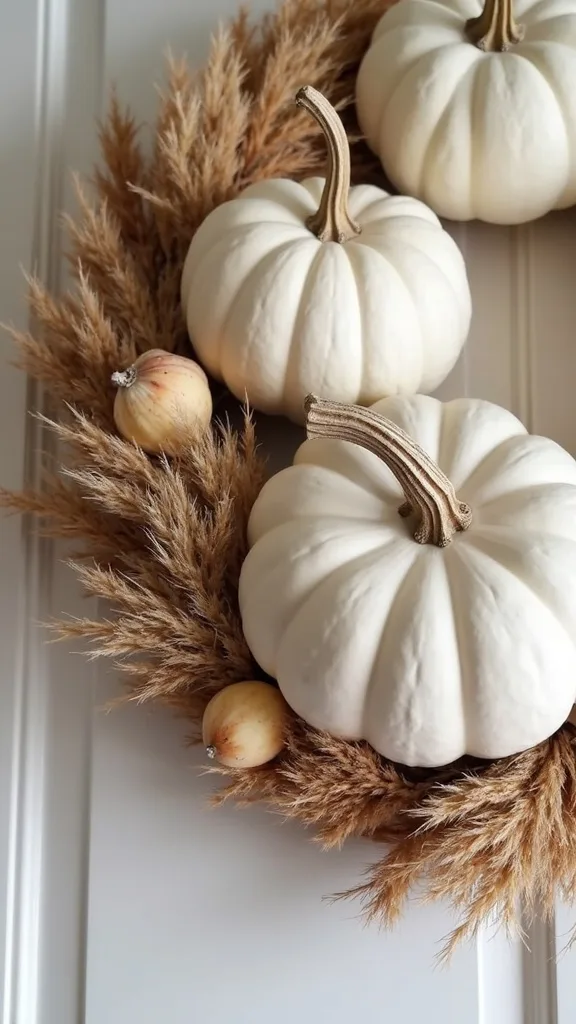
18. Classic Harvest Wreath With Apples, Leaves, and Cinnamon Bundles
This is the traditional harvest look, done with discipline. It works because the apple-red accent adds life, and cinnamon brings visual warmth even if you don’t add fragrance.
Start with a grapevine base and lay in faux maple leaves first to create coverage. Add small faux apples in a tight cluster at the bottom, then tuck cinnamon bundles beside them. Keep the leaf direction consistent so it feels like a single sweep.
Choose deep red apples, muted leaves, and natural cinnamon. Avoid leaves in neon tones; they look off under indoor lighting.
Pro tip: keep the apple cluster slightly off-center. That asymmetry feels more like a styled still life, the same way a coffee table looks better when the objects aren’t perfectly centered.
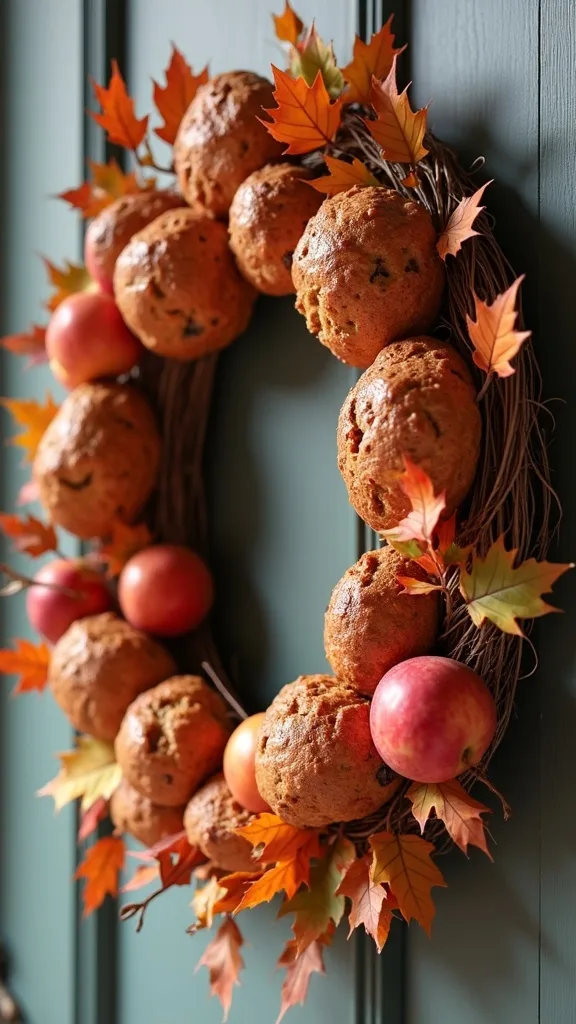
19. How Do You Hang a Heavy Fall Door Wreath Without Damaging the Door?
A secure hang keeps the wreath from shifting and keeps your door looking clean. It works because the right hanger spreads weight and prevents scratches.
Use an over-the-door wreath hanger rated for at least 10 pounds, or hang from a sturdy command-style hook if your door surface allows it. For heavy grapevine bases, add a ribbon loop and hang from the ribbon so metal doesn’t scrape paint. If the wreath swings, add two small felt bumpers on the back.
Choose hangers in matte black or brushed nickel to match your hardware. Avoid thin wire hooks that bend and tilt the wreath.
Pro tip: set the wreath center at about 57–60 inches from the floor—gallery height. That placement looks intentional from the living room sightline and instantly elevates the entry view.
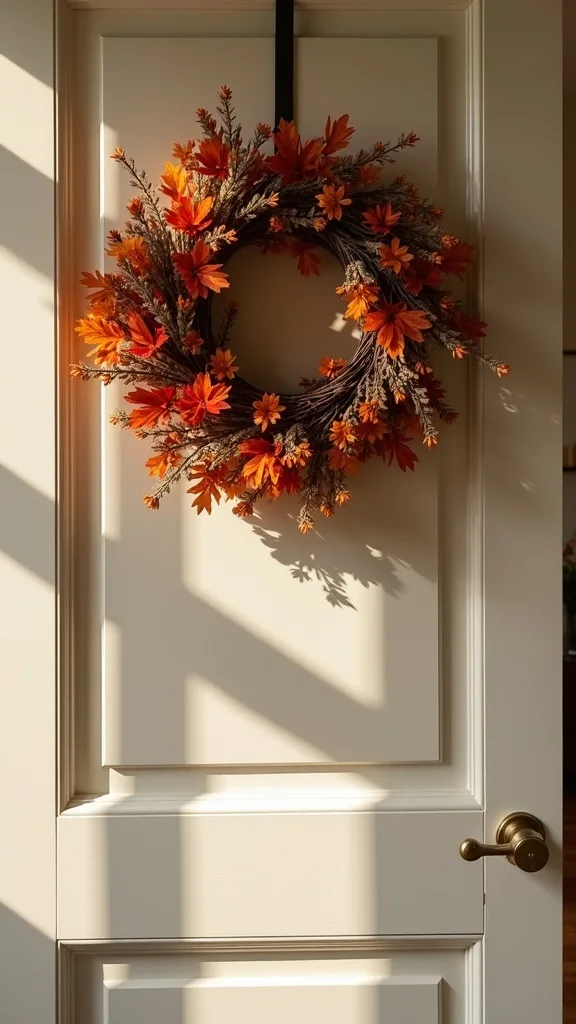
20. Boho Dried Palm and Wheat Wreath With a Slim Hoop
This is airy, textured, and calm—boho without the mess. It works because dried palm creates graphic shape, and wheat adds fine detail that reads elegant.
Use a slim metal hoop and attach dried palm spears at the bottom, fanning them like a sunburst. Add wheat stems and a few bleached ruscus pieces to soften the edges. Keep the design tight to one side so the hoop still shows.
Choose natural tan, bleached cream, and one warm accent like rust raffia. Avoid mixing too many dried textures; it turns dusty.
Pro tip: tie the hoop with a thin leather cord. That simple hang detail makes the wreath feel like a curated object, like a woven basket you’d keep out year-round.
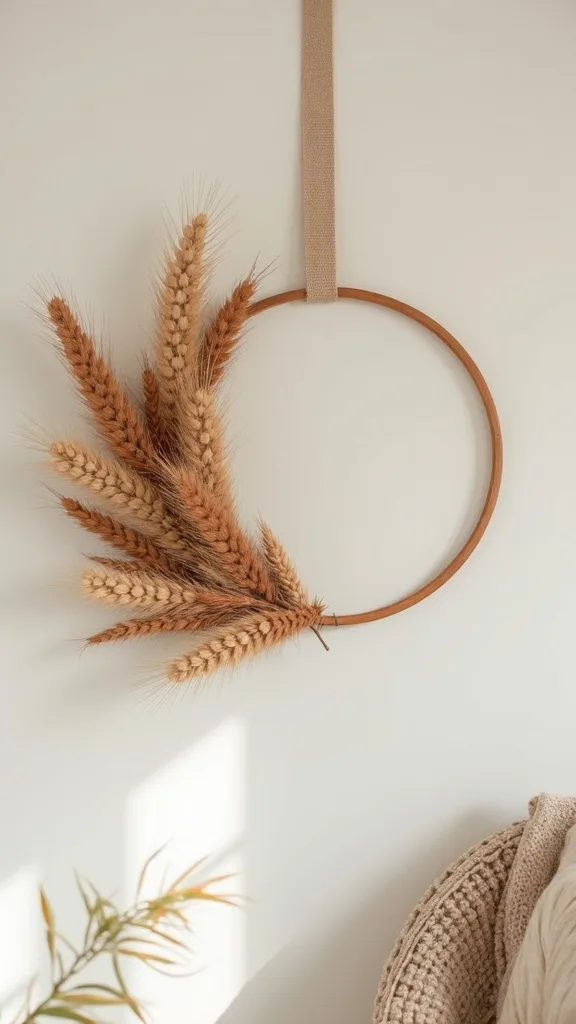
21. Scandinavian-Inspired Birch and Eucalyptus Wreath
This wreath feels clean and quiet, perfect for a living room with light walls and simple lines. It works because birch adds a pale wood note, and eucalyptus brings a restrained green.
Wrap a wire frame with birch twine or thin birch branch pieces secured with wire. Add eucalyptus in small, spaced clusters, leaving plenty of negative space. Finish with one small bundle of dried wheat at the base for warmth.
Choose pale birch, soft green, and a single neutral ribbon in flax. Avoid heavy berries; they break the minimal look.
Pro tip: repeat birch inside with one object—like a pale wood tray or a birch candle holder. The room feels designed as a whole, not decorated in pieces.
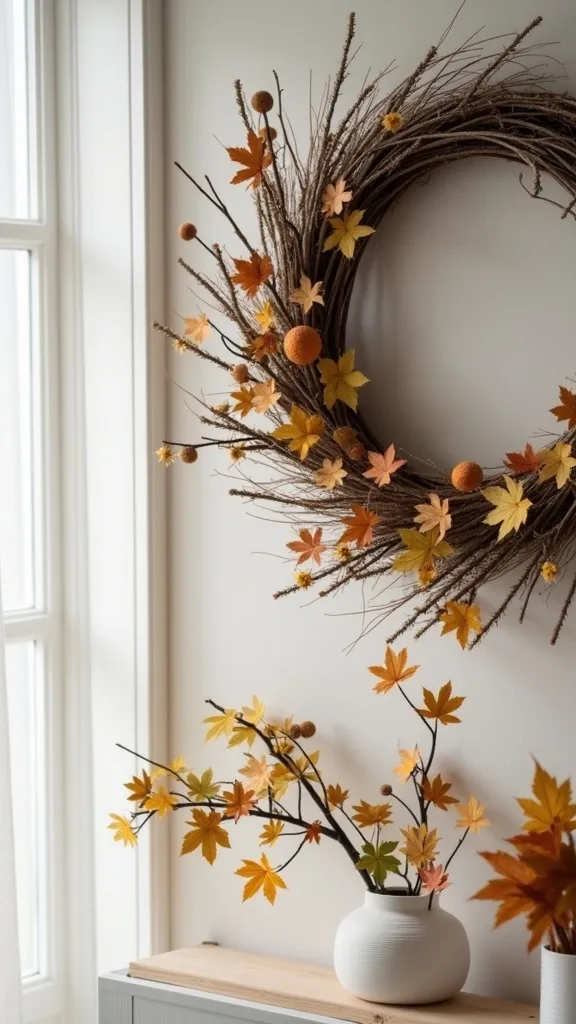
22. How Do You Make a Wreath That Transitions From Halloween to Thanksgiving?
A transitional wreath saves time and keeps your home from feeling like a theme park. It works because the base stays neutral, and the seasonal cue comes from one removable accent.
Build a base with eucalyptus, wheat, and dried oranges—classic autumn materials. For Halloween week, clip on a small black ribbon, a tiny faux raven, or matte black berry picks using floral wire loops you can undo. After Halloween, remove the dark accents and add a warm plaid bow or extra wheat instead.
Choose a base palette of green, gold, and natural orange. Avoid permanent glued-on Halloween icons if you want longevity.
Pro tip: create two small accent bundles and store them in a labeled zip bag. Switching the mood takes two minutes, and your living room stays seasonally sharp all month.
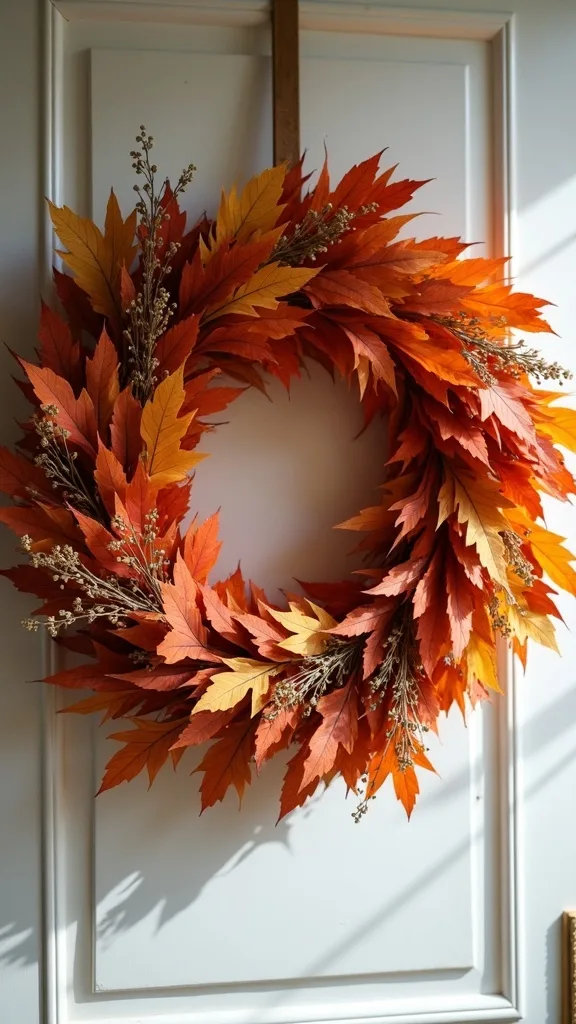
23. Budget-Friendly Dollar-Store Stem Wreath That Still Looks Real
A budget wreath can look elevated when you control color and finish. It works because “cheap” shows up most in shine and clutter, not in the price tag itself.
Buy stems in one tone family—olive greens, muted rust, and wheat—then strip off anything glittery. Use a wire frame and build a dense greenery base first so the cheaper picks disappear into a fuller foundation. Add one focal cluster at the bottom and stop.
Choose matte leaves, small berries, and one ribbon in linen-look fabric. Avoid metallic plastic leaves and neon orange pumpkins.
Pro tip: hit the whole wreath with a light dusting of matte spray to reduce shine. The finish reads more natural, and the wreath looks like it belongs with real wood furniture and woven textiles.
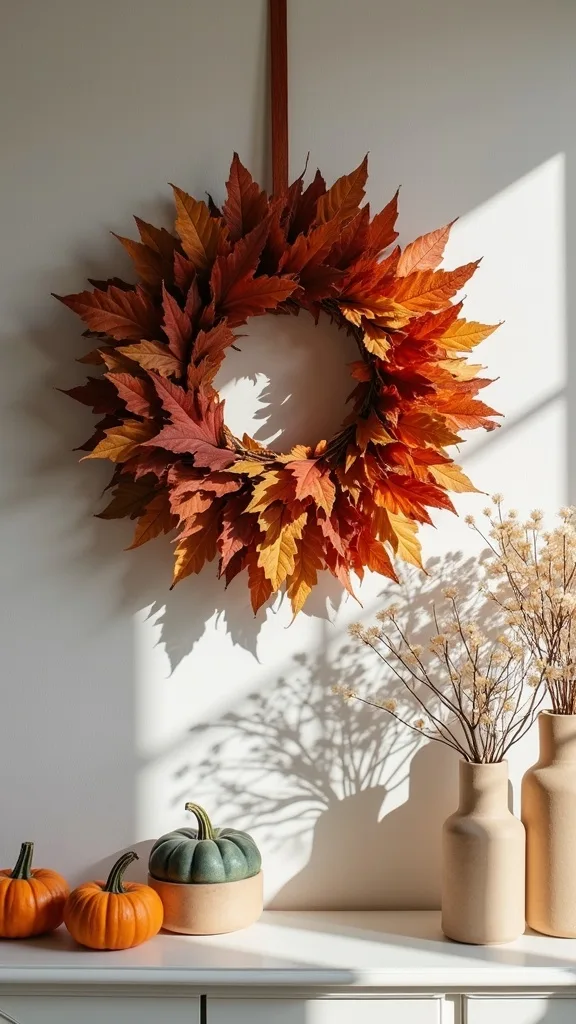
24. What Should You Avoid When Making an Autumn Wreath?
The fastest way to ruin a good wreath is to overfill it. It works best when each material has room to be seen, like a well-styled shelf with space around objects.
Avoid packing the entire circle with five different picks “just because you have them.” Avoid mixing too many bright tones; it turns into a candy bowl effect. Avoid hot-gluing heavy items as the only attachment—door heat and cold will loosen it. Avoid placing sharp stems where they’ll scrape the door every time it opens.
Choose a limited palette and repeat it: green + wheat + one warm accent. Choose one focal cluster and two supporting clusters.
Pro tip: set a timer for 10 minutes near the end and only remove things, not add. Editing is the move that makes the wreath feel timeless, the same way editing a room makes it feel calm.
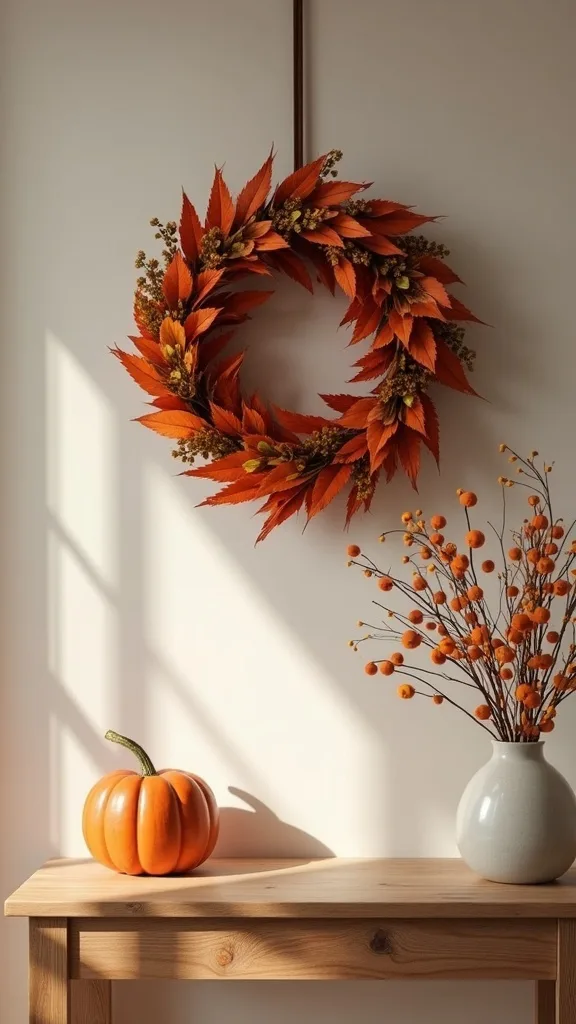
25. Living Room Tie-In: How to Style Your Entry View So the Wreath Feels Intentional
A wreath looks best when the living room supports it. It works because the eye connects the door view to what’s behind it, and repetition creates a quiet sense of design.
Pull the wreath colors inside with one textile and one object. Add a rust pillow on the sofa, then place a small bowl of mini gourds or a wood tray with two orange slices and a candle on the coffee table. Use warm white light (2700K–3000K — the cosy, yellowish tone you see in most homes) in a nearby lamp so the dried textures glow at night.
Choose linen, wool, and wood finishes. Keep the palette tight: olive, wheat, rust, and black.
Pro tip: keep one surface clear—either the entry table or the coffee table. That negative space makes the wreath read like a statement piece, not one more thing in a busy season.
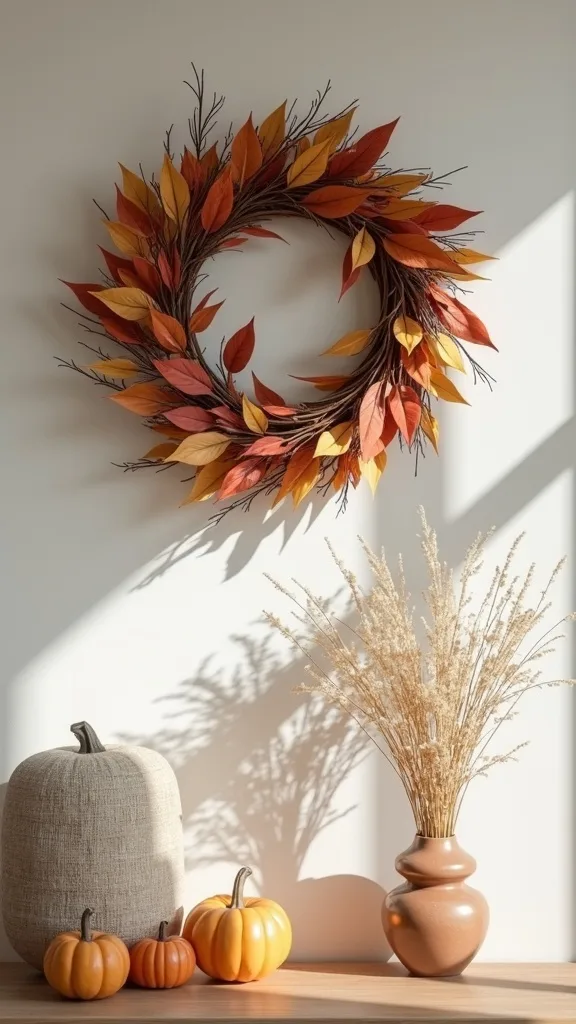
Final Thoughts
A fall wreath is not a craft project you tolerate. It’s a design decision you see every day, and it sets the tone for the living room behind it. Build the structure first. Add texture second. Add color last. Then stop.
If you make one choice today, make it this: pick a base and commit to a restrained palette. Your door will look sharper, your Halloween decor prep will feel calmer, and your whole home will read more intentional from the moment you walk in.
Do this today: set a 60-minute timer, grab a 12–14 inch wire frame, and build one bottom-heavy cluster with eucalyptus, wheat, and two dried orange slices—then hang it at 57–60 inches high and let the negative space do the work.
What I’d Do Differently
When I first tried this, I treated the wreath like a “fill the circle” project and kept adding stems until it looked bulky and oddly heavy at the top. I also relied on hot glue for a mini gourd cluster, and the first warm afternoon popped two pieces loose right onto the porch. The correct approach is to build a strong base with wire first, then attach weight at the bottom with a real mechanical hold—floral wire or a hidden zip tie—before you touch the glue gun. Once the bottom cluster is stable, everything else becomes styling, not structural panic.
I also wish I’d known how much better the wreath looks when you stop at three accent moments instead of seven. One focal cluster. Two supporting clusters. Space at the top. That negative space reads like confidence, and it makes the dried textures look richer. Lay your materials out, choose your palette, and start wiring one stem at a time—you’ll be surprised how quickly it comes together.