
This post contains affiliate links. As an Amazon Associate, I earn from qualifying purchases at no extra cost to you.
Nothing makes a living room feel colder than a too-bright bulb and a bare couch. Even if your furniture is fine, the room can still read “waiting room” until you give it something soft to land on—something that drapes, glows, and makes you want to cancel plans.
This roundup is a tight edit of under-$50 pieces—throws, candles, cushions, wall art, and a few sneaky texture upgrades—that change the mood fast without pretending you’re renovating. It’s built for Pinterest-trending cozy living: warm neutrals, touchable fabrics, and a little vintage energy without the thrift-store time commitment.
It’s perfect for renters, first apartments, new homeowners, and anyone who wants the room to feel done before the weekend.
Inside you’ll find the kinds of Amazon staples designers quietly reorder—linen-look pillow covers, rechargeable picture lights, and frames that don’t scream “college.” Expect lots of texture, a little warm light, and a few budget swaps that make everything else look nicer.
Below are 25 10 Cozy Living Room Decor Pieces Under $50 2026: Affordable Throws, Candles, Cushions & Wall Art for Budget-Friendly Warmth that…
Products I Recommend for This Project
Here are some of my favourite products to help you bring these ideas to life:
- MIULEE Pack of 2 Corduroy Throw Pillow Covers (20×20) — Adds instant vintage-soft texture without buying new inserts.
- EXQ Home Fleece Throw Blanket (50″x60″) — Drapes nicely and feels plush for the price, perfect for couch layering.
- Yankee Candle Large Jar Candle (Clean Cotton) — A classic “fresh home” scent that’s not too sweet and looks tidy on a tray.
- Philips LED Warm Glow A19 Bulbs (2700K) — Softens the whole room with warm white light (the cosy, yellowish tone you see in most homes).
- Kate and Laurel Sylvie Framed Canvas Wall Art — Easy, affordable wall art that makes a blank wall feel finished fast.
1. The “Amazon Cozy Cart” Edit that Changes a Room in One Delivery
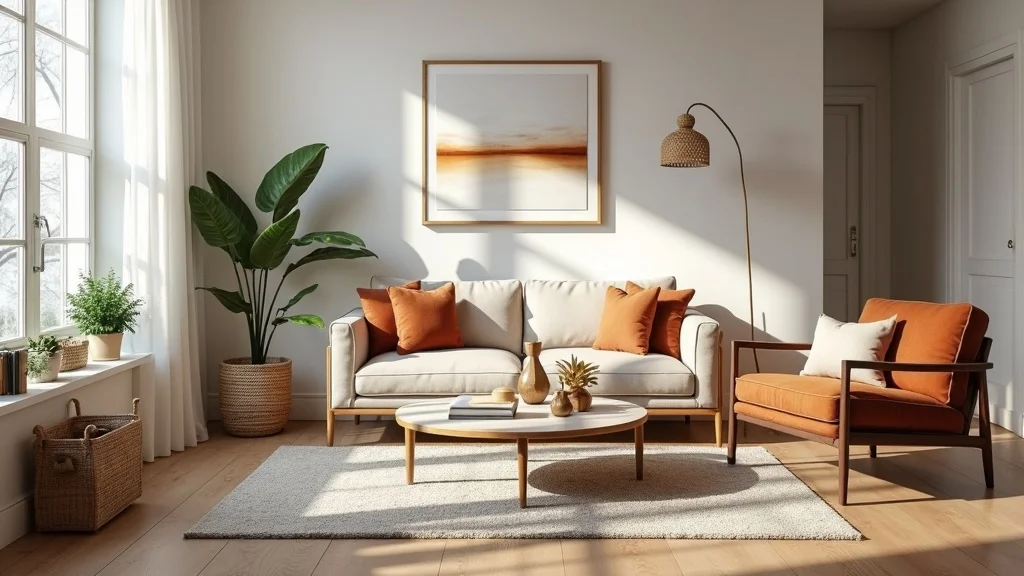
This is the cheat code: curate a few affordable yet stylish cozy decor items available on Amazon to transform a living room quickly and cheaply. You’re not redecorating—you’re adjusting the sensory temperature so the room feels like it’s been lived in, in the best way.
Start with three layers: one textile (throw or pillow), one glow (candle or lamp), and one “finish” (art or tray). Place the textile where your body actually lands—arm of the sofa, reading chair, ottoman. Then cluster the glow and the finish on a coffee table or side table so it reads intentional, not random.
Look for washed textures (faux linen, brushed microfiber, chunky knit) and matte finishes (stone-look, ceramic, black metal). Color-wise: oat, sand, tobacco, charcoal, and a single muted green works like a neutral.
Pro tip: add one “old-looking” element—an antique-style frame or a hammered tray—so the new stuff feels collected, not catalog. The room relaxes instantly.
2. Which throw blanket looks expensive under $50 (and doesn’t shed)?
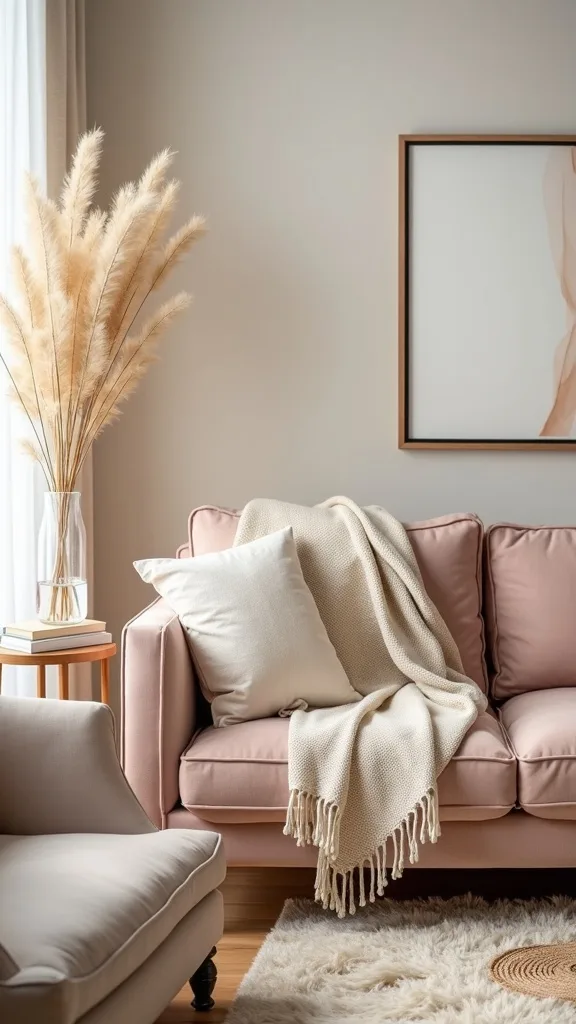
A throw is the fastest way to make a couch feel like a destination instead of a bench. The right one has weight, a soft brushed hand-feel, and a drape that puddles a little instead of sticking out like cardboard.
Go for a 50″x60″ microfiber or faux-mohair style throw with a stitched edge or subtle fringe. Drape it lengthwise over one cushion, then fold the tail once so it looks effortless—like you actually use it. If you have pets, choose a tighter weave (less snagging) and a darker oatmeal shade (it hides life).
Materials that read luxe for less: faux mohair, brushed microfiber, and lightweight waffle weave. Avoid shiny fleece—on camera it can look plasticky.
Pro tip: steam it for 30 seconds when it arrives. That little “fresh from the box” crease disappears, and suddenly your whole sofa looks upgraded.
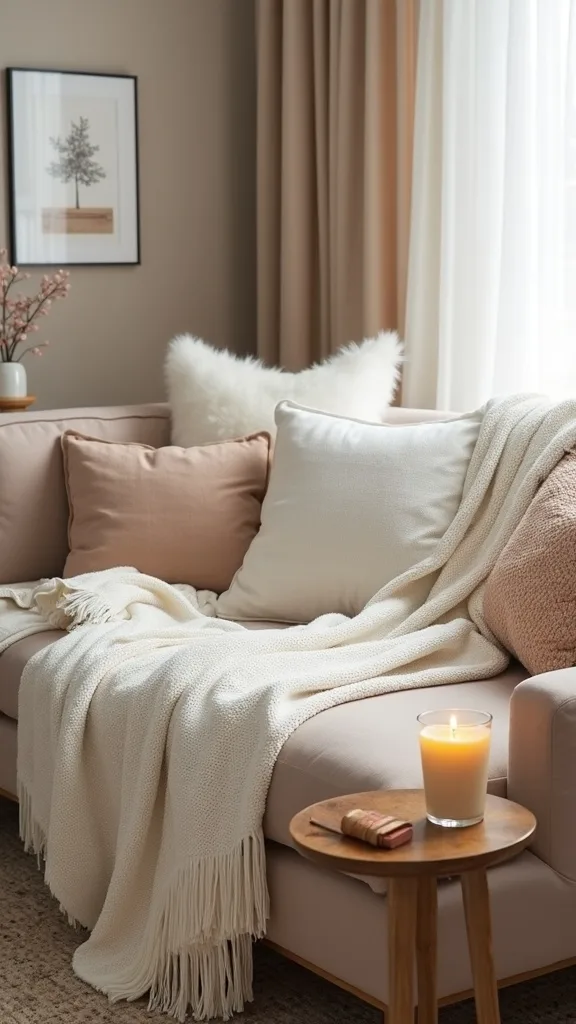
3. How do you make a basic sofa feel cozier with pillow covers (not new pillows)?
Pillow covers are the quiet MVP of cozy living because they let you change texture and color without storing a closet full of inserts. They also make even a budget sofa look styled, not accidental.
Use a simple formula: two 20″x20″ covers in a nubby neutral, plus one lumbar (12″x20″ or 14″x22″) in a deeper tone. Stick to hidden zippers and slightly oversized covers so they look plump. If you already have inserts, just swap the skins and call it a day.
Best under-$50 textures: faux linen for that relaxed, sun-faded look, bouclé for softness, and corduroy for subtle vintage depth. Keep the palette tight—cream, camel, and a dusty olive is an easy win.
Pro tip: mix one “messy” texture (bouclé) with one smoother one (linen-look). That contrast is what makes it feel curated.
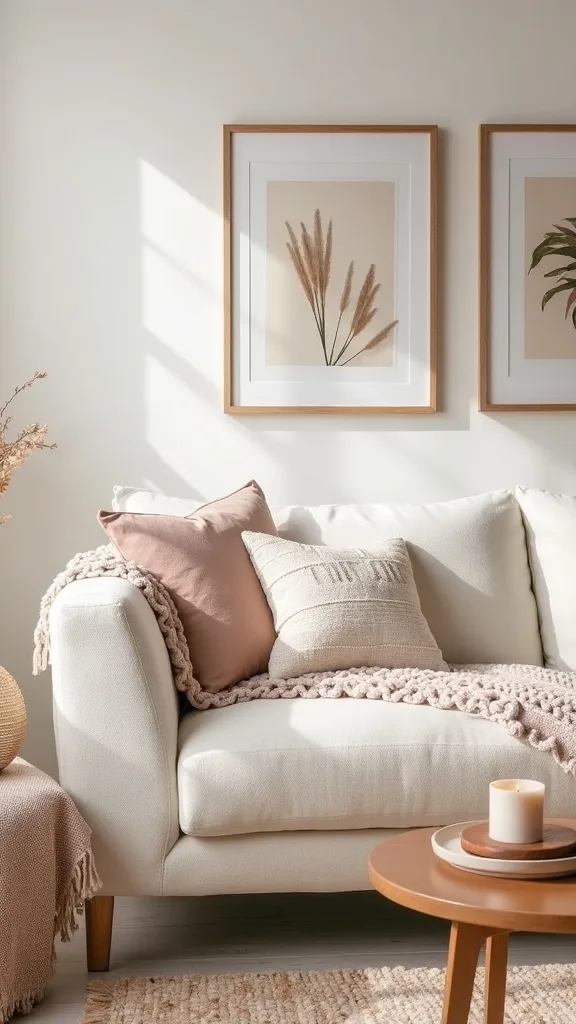
4. What candles actually make a living room feel warm (even unlit)?
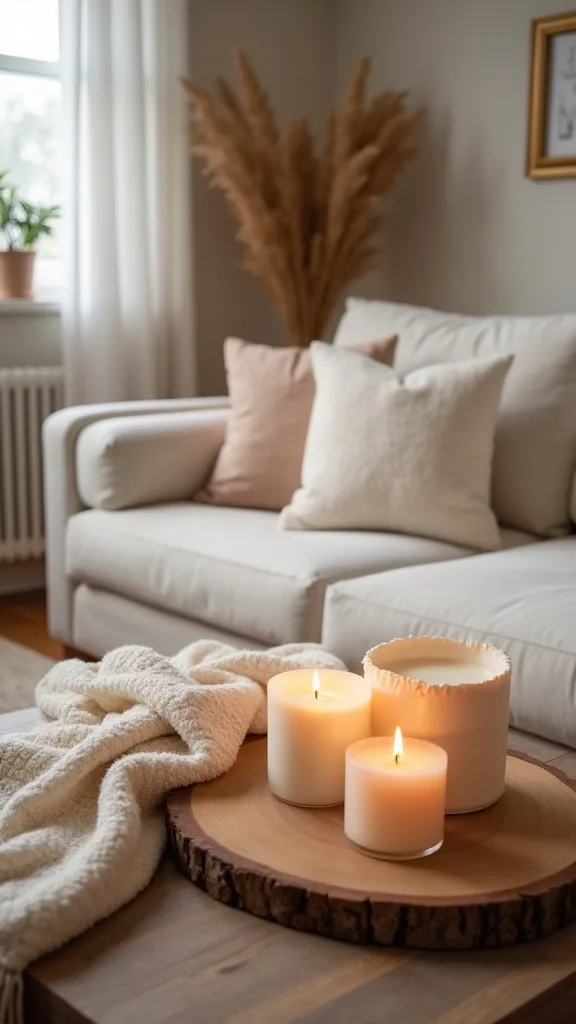
A candle is mood even before the wick ever meets a match. The trick is choosing one that looks like an object—ceramic, amber glass, or matte metal—so it reads as decor when it’s just sitting there.
Place one medium candle on a tray with a book and a small bowl, or do two candles at different heights on the mantel. If you burn candles often, keep a little snuffer nearby so the whole setup feels intentional. For scent, think soft and clean: vanilla + sandalwood, linen + amber, cedar + citrus.
Look for soy blends in tinted glass or a ceramic vessel you’d reuse. Skip anything neon-white in a glossy jar—it can feel bathroom-ish.
Pro tip: when the candle is done, clean the vessel and use it as a catchall for matches or remote controls. Cozy is also functional.
5. How can warm lighting change a living room without rewiring anything?
Lighting is the difference between “I should clean” and “I could stay here.” A single warm bulb can make your textures look richer and your walls look softer, like the room exhaled.
Swap harsh bulbs for warm white light (2700K–3000K — the cosy, yellowish tone you see in most homes) in your main lamp, then add one small accent light: a plug-in sconce, a tiny table lamp, or a picture light over art. Keep light sources at different heights—floor, table, wall—so it feels layered.
Go for linen lamp shades or frosted globes that diffuse glare. Matte black or antique brass bases read elevated without trying.
Pro tip: put your lamps on a simple outlet timer or smart plug. The room feels welcoming before you even walk in, like it’s been waiting for you.
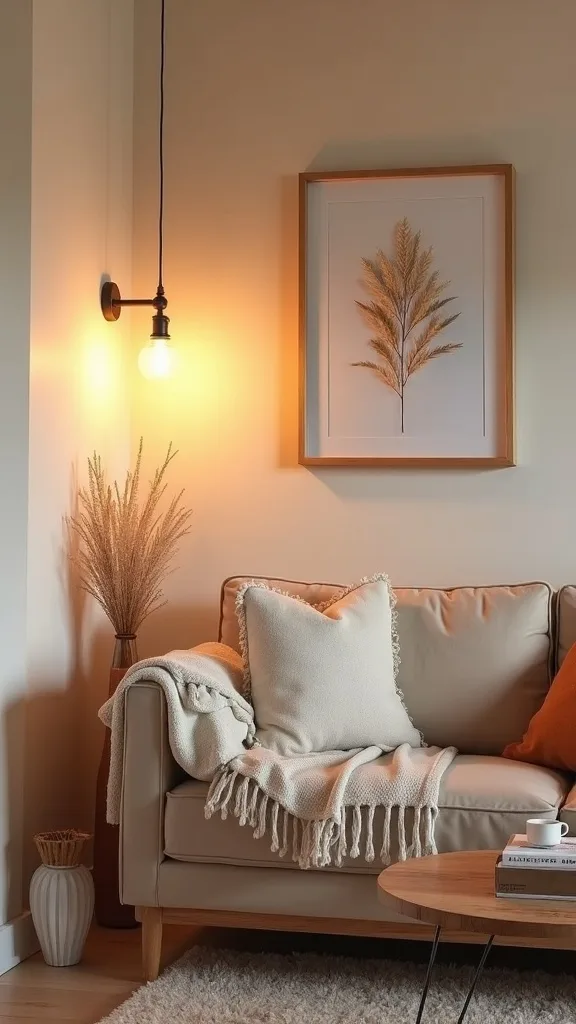
6. What’s the easiest wall art upgrade under $50 that doesn’t feel generic?
Blank walls aren’t minimalist—they’re unfinished. A single framed print can give your living room a point of view, even if the rest is simple.
Choose downloadable-style art prints or moody photography reproductions, then frame them in black, walnut-look, or thin brass. Hang the center of the art around 57–60 inches from the floor (that’s gallery height, and it just looks right). If you’re nervous, lean the frame on a console first and live with it for a day.
Look for sepia landscapes, abstract line art, or vintage botanical drawings—these play well with almost any sofa. Avoid tiny art floating alone; size up or group two.
Pro tip: a slightly imperfect frame finish (like “antique gold”) makes new art feel collected, like you found it on a side street in Palm Springs.
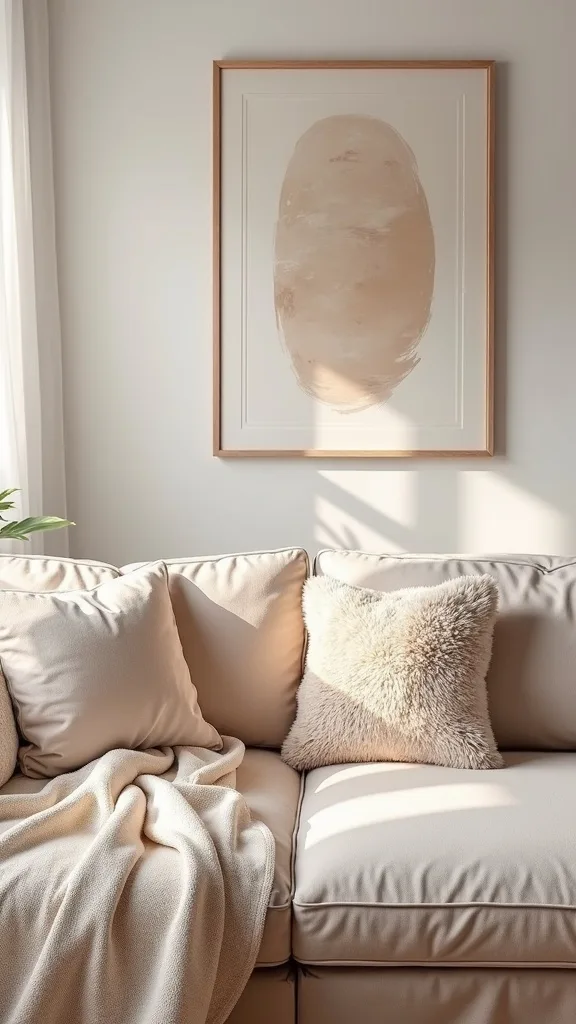
7. How do you make cheap frames look like vintage finds?
Frames are where budget decor either sings or gives itself away. The good news: you can fake vintage with the right finish and a little restraint.
Choose thin frames with a matte surface—black, walnut, or brushed gold. Add a wide white mat (or faux mat print) so the art breathes. If the frame looks too shiny, rub it lightly with a dry microfiber cloth and a tiny dot of dark wax (even brown shoe polish works) on corners to mute the newness.
Materials that age well visually: wood-look resin, brushed metal, and anything with a slightly imperfect patina tone. Skip overly ornate scrollwork unless you’re committing to it.
Pro tip: mix one frame that looks “older” with one super simple modern frame. That tension feels like real life—and it photographs ridiculously well.
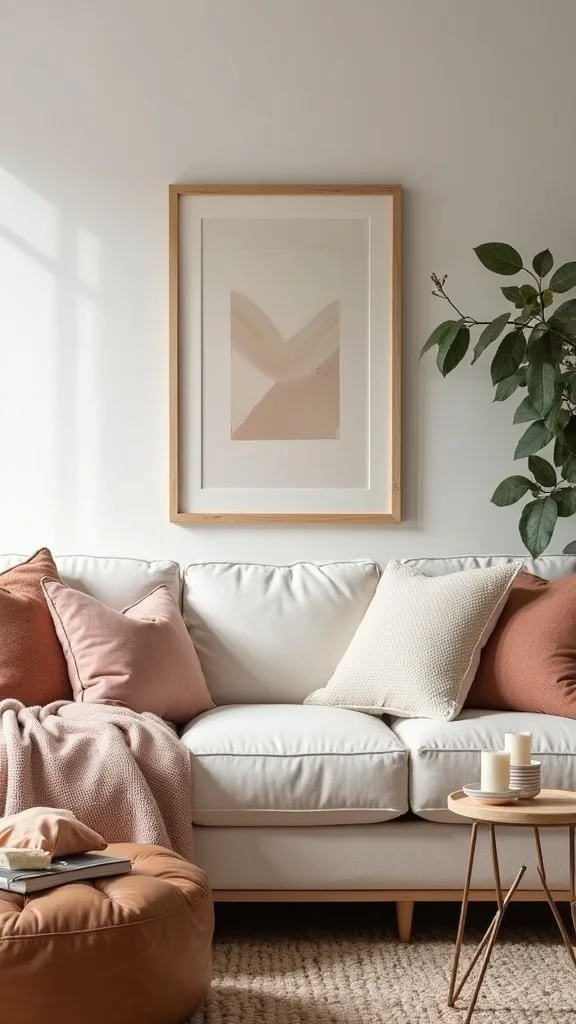
8. What coffee table tray makes clutter look styled (not messy)?
A tray is basically permission for your stuff to exist without looking like it’s taking over. It corrals remotes, coasters, and candles into one composed moment.
Pick a tray that’s at least 12–16 inches wide so it doesn’t look like a coaster pretending to be furniture. Style it with three things: one low (matches), one tall (candle), one textured (small bowl or bead garland). Leave negative space so it feels calm.
Great under-$50 options: hammered metal for a vintage vibe, faux marble for clean contrast, or warm acacia wood for softness. Avoid glossy plastic—your eyes clock it instantly.
Pro tip: if your table is glass, choose a solid tray. It grounds everything and makes the room feel less “see-through.”
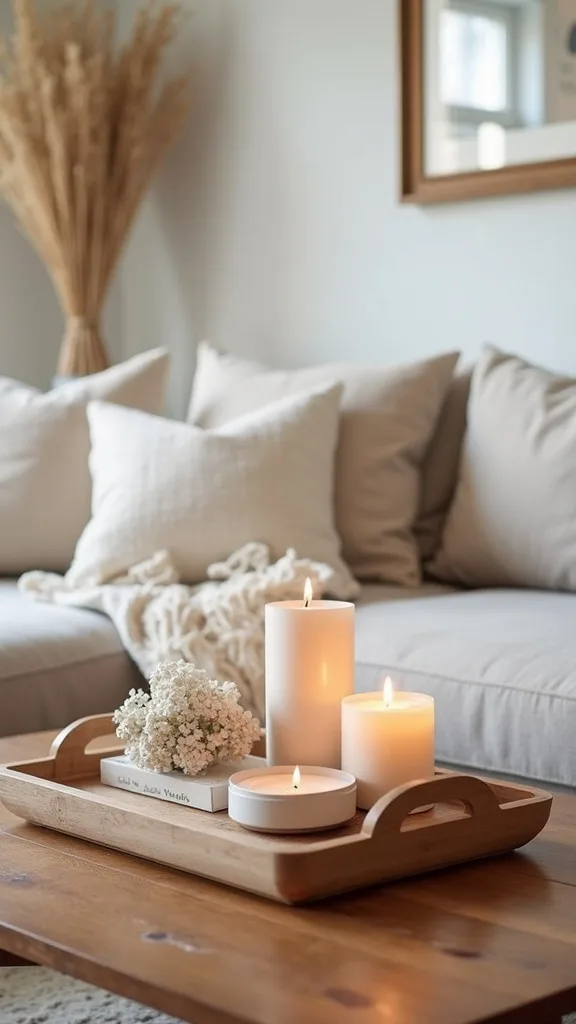
Cost & Materials Estimate
If you’re building a cozy refresh from scratch, most living rooms can get the “soft + warm + finished” feel for about the cost of a nice dinner out—especially if you focus on a few high-impact pieces.
| Item | Estimated Cost | Where to Buy |
|---|---|---|
| Soft throw blanket (50″x60″) | $18–$35 | Amazon |
| Set of 2 pillow covers (20″x20″) | $14–$28 | Amazon |
| Warm white LED bulbs (2700K–3000K) | $10–$18 | Home Depot |
| Framed art print (11″x14″ frame + print) | $22–$45 | Amazon |
| Coffee table tray (wood or metal) | $16–$32 | Amazon |
| Candle or reed diffuser | $12–$28 | Amazon |
Total estimated cost: $92–$186 Save by reusing pillow inserts and frames you already own; splurge (slightly) on the throw because you’ll touch it every day.
9. How can you add cozy texture without adding more stuff?
Cozy isn’t always more. Sometimes it’s swapping one surface so your hand meets something softer—like a woven basket instead of a plastic bin.
Replace one visible storage item with a lidded seagrass basket, a felt bin, or a knit basket for throws. Slide it next to the sofa or under a console table so it looks built-in. If you’re short on space, choose a tall basket footprint (less floor sprawl, more storage).
Look for seagrass, jute, or felted fabric in warm, sandy tones. These materials age nicely—more relaxed over time, not worse.
Pro tip: line scratchy baskets with a cheap cotton pillowcase so your blankets don’t snag. It’s a small move that makes the whole thing feel considered.
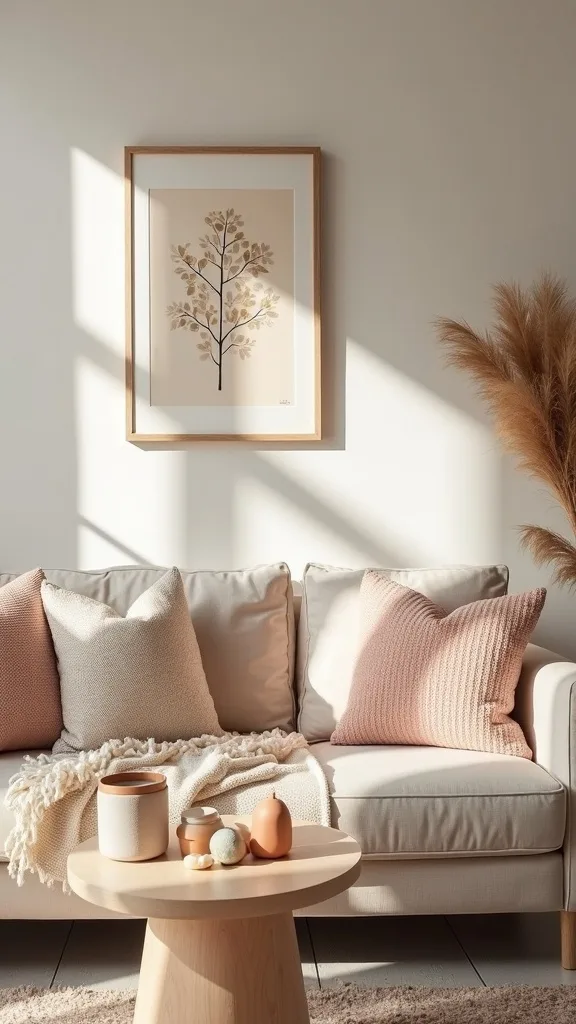
10. Which area rug trick makes a living room feel warmer on a tight budget?
If your living room feels echo-y or visually chilly, it’s usually the floor. A rug brings hush and softness, even if it’s not a giant investment piece.
If a full-size rug isn’t in the cards, try a smaller accent rug layered under the coffee table or in front of a reading chair. Choose a low-pile vintage-style print so it hides spills and still feels cozy. Aim for at least the front legs of the sofa touching the rug if possible—this is what makes the seating area feel “connected.”
Best looks for less: faded Persian-style patterns, neutral geometric prints, and anything with warm rust or tobacco tones.
Pro tip: add a thin rug pad. It makes even an inexpensive rug feel thicker underfoot, like you upgraded more than you did.
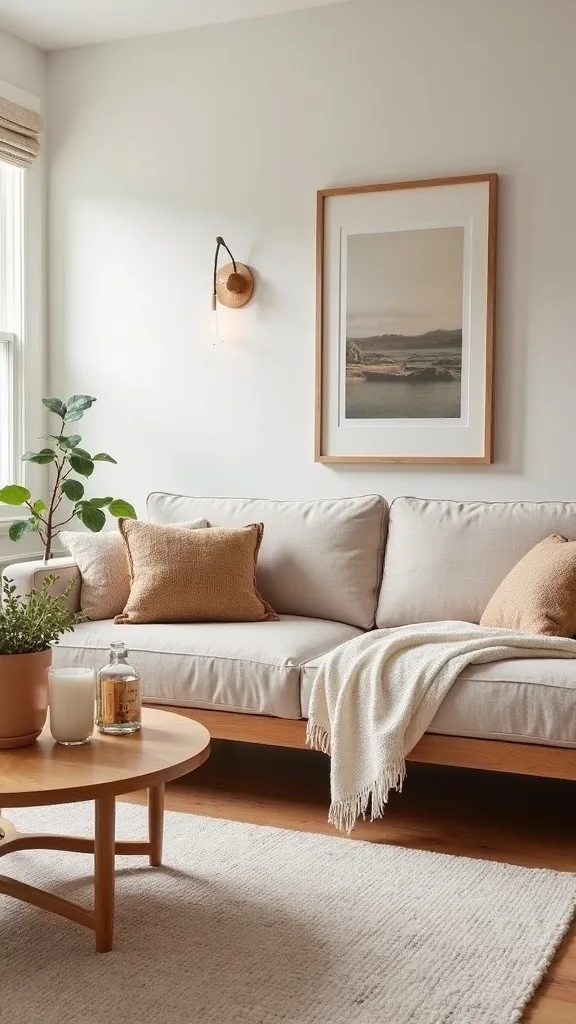
11. How do you style a knit pouf or ottoman under $50 without it looking small?
A pouf reads cozy because it’s soft architecture—something casual you can move with your foot. It also adds that loungey, “come hang” energy without buying a whole chair.
Place it slightly off-center from the coffee table, like it wandered there naturally. If it’s lightweight, tuck it under the console when not in use. For a small space, a pouf doubles as a footrest, extra seat, and styling object.
Look for chunky knit in oatmeal or warm gray, or faux leather if you want a more vintage edge. Avoid super bright white unless you’re okay with it aging fast.
Pro tip: top it with a small tray when you need a stable surface. It’s the kind of flexible piece that makes a room feel easy to live in.
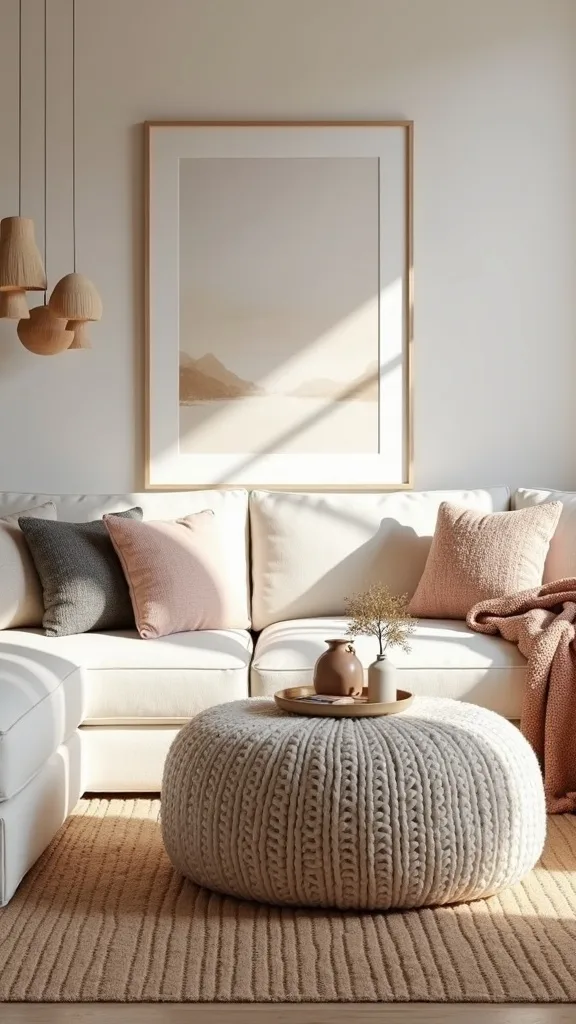
12. What’s the best under-$50 faux plant that doesn’t look fake up close?
Greenery makes a living room feel alive, but not everyone wants a weekly plant guilt spiral. A good faux stem solves it—especially in summer when you want that fresh vibe without the maintenance.
Choose one larger faux olive branch or eucalyptus bundle and put it in a simple vase. One statement arrangement beats five tiny plastic-looking things. Keep it slightly asymmetrical—real plants are never perfectly even.
Look for matte leaves (no shine), wire stems you can bend, and muted green tones. Pair it with a ceramic or smoked glass vase so the whole thing feels like an object, not a craft project.
Pro tip: dust faux plants with a microfiber cloth every couple weeks. When they’re clean, they pass the “is it real?” test way more often.
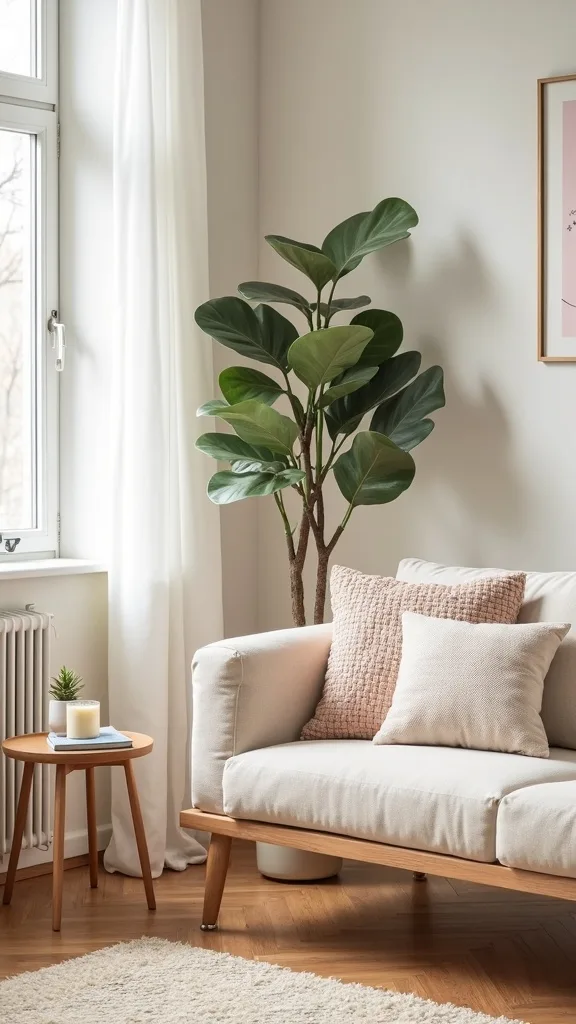
13. How can a single vase make your living room feel styled year-round?
A vase is the easiest “always works” decor piece. It holds nothing and still does something—especially when the shape is good and the finish is tactile.
Go for one medium vase (8–12 inches tall) in a matte ceramic, stone-look, or smoked glass. Place it on a stack of books or on a tray so it has a little stage. Swap what’s inside seasonally: dried pampas, fresh grocery-store eucalyptus, or just leave it empty.
Best finishes: matte white ceramic, sandstone texture, or amber glass that catches late light. Avoid overly glossy bright colors unless that’s the whole vibe.
Pro tip: if you do stems, keep them low and loose. The living room should feel relaxed, not like a hotel lobby arrangement.
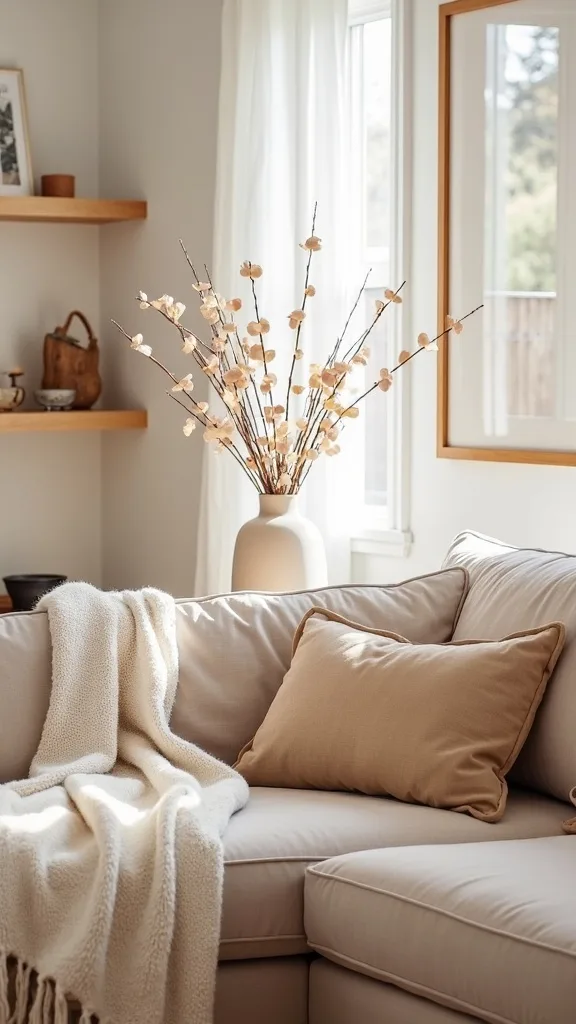
14. What book styling actually looks natural (not staged)?
Books are cozy living in object form—proof of taste, time, and real life. But the trick is making them feel like you actually read, not like you bought them for the spine color.
Stack two to three books horizontally on the coffee table, then add one small object on top (a candle, a stone bowl, a tiny frame). Keep one book slightly askew so it feels human. If you don’t have “pretty” books, remove dust jackets or use neutral slipcovers.
Look for linen-bound covers, warm neutrals, and oversized art or travel books. Mix one vintage paperback for texture.
Pro tip: choose books you love, even if the colors clash a little. When styling has a story, the whole room feels more like you.
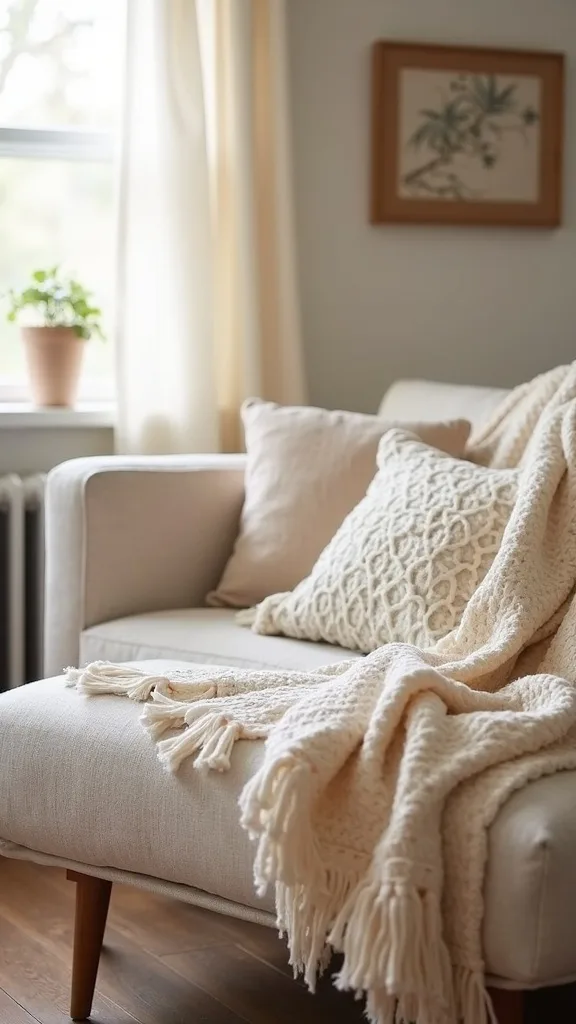
15. How do you add a cozy scent without making it overpowering?
Scent is the invisible layer that makes a living room feel like home. The goal isn’t “perfume store”—it’s a soft background note that makes the space feel clean and warm.
Use one reed diffuser in a corner or on a console, not three competing scents. Flip reeds once a week, and start with fewer reeds than the bottle suggests. If you’re scent-sensitive, keep it near an entryway so it lightly greets you instead of sitting right next to the sofa.
Look for amber glass diffusers and scents like sandalwood, cedar, vanilla, or clean linen. Avoid anything aggressively sweet—it can feel sticky.
Pro tip: pair scent with texture (throw + candle + diffuser) and you get that “I could stay here all night” feeling without turning it into a fragrance war.
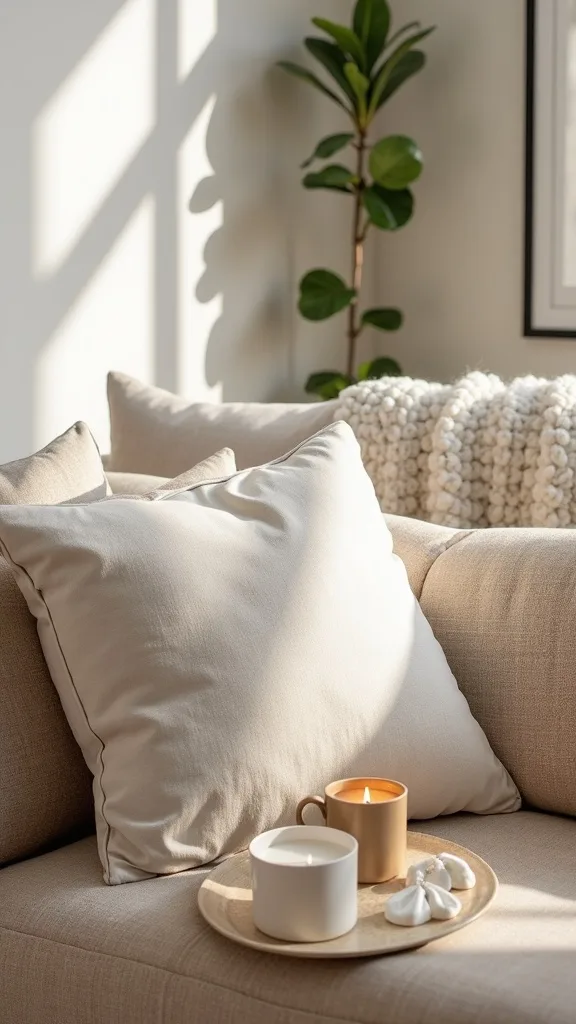
16. Which wall hooks or racks look stylish and solve the ‘stuff pile’ problem?
Cozy living rooms fall apart when jackets and bags start living on chairs. A simple hook moment keeps the room calm without adding another piece of furniture.
Install a small set of wall hooks near the entry side of the living room or behind a door. Keep it at a height that makes sense—around 60 inches up for adult coats, lower if kids use it. Choose matching hardware so it reads intentional.
Go for matte black, antique brass, or warm wood pegs. Avoid shiny chrome unless the rest of your room is already in that lane.
Pro tip: hang one woven tote or basket on a hook for mail and sunglasses. When everything has a home, the room feels instantly more peaceful.
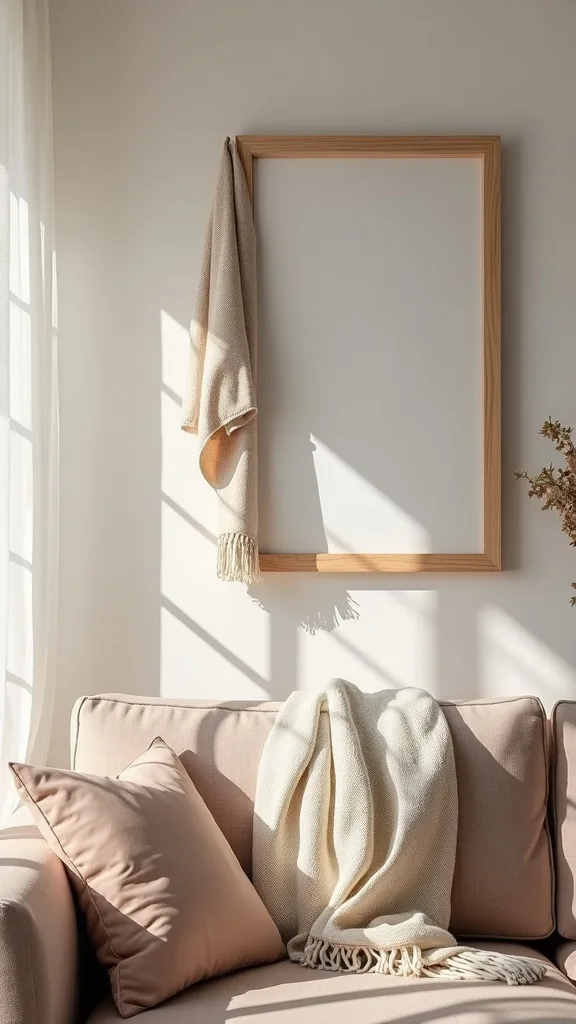
17. How can peel-and-stick wallpaper make a living room cozier without commitment?
An accent wall can do a lot of heavy lifting, especially in rentals where you can’t change much. Peel-and-stick wallpaper adds depth—like the wall has a texture story instead of just being there.
Choose one small zone: behind the sofa, inside a bookcase back panel, or a nook. Go slow with a level and a smoothing tool, and start from the least-visible corner so any tiny mismatch hides. Stick to patterns that feel timeless in photos.
Look for linen texture prints, subtle grasscloth look, or muted stripe patterns. Avoid super high-contrast trendy prints unless you’re okay with them dating fast.
Pro tip: use wallpaper in a smaller area first. It gives you that transformation rush without the full-wall pressure.
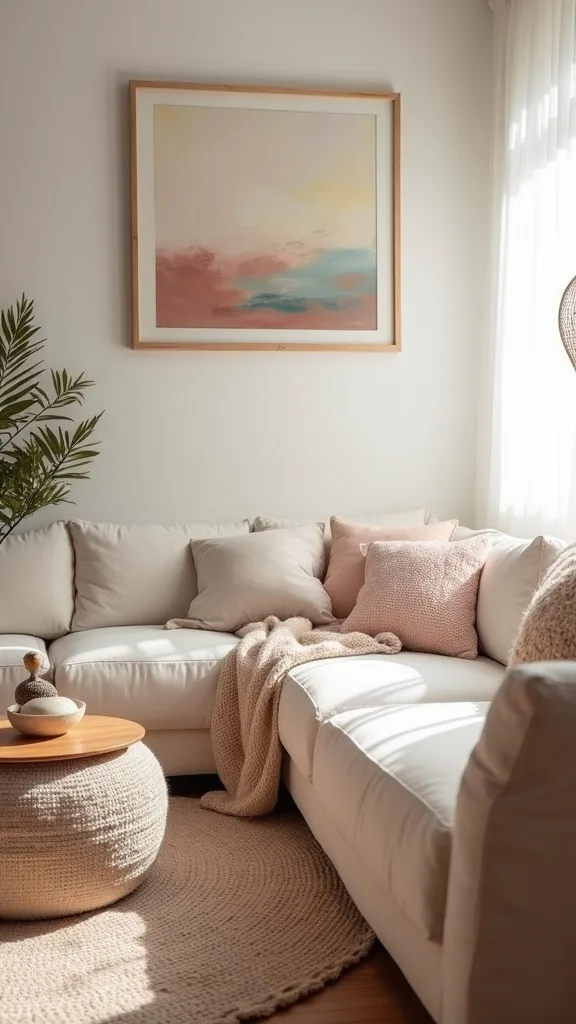
18. What’s the best budget-friendly way to make a gallery wall feel cohesive?
Gallery walls look effortless when there’s a unifying thread—same frame finish, same color story, or a shared mood. Without that, it turns into visual noise.
Pick one frame color (black is foolproof), then mix sizes: two 11″x14″ and three 8″x10″ is an easy five-piece start. Keep spacing consistent—about 2 inches between frames. Lay it out on the floor first, snap a quick photo, then replicate on the wall.
Use neutral art prints, a couple vintage-style sketches, and one personal photo in black-and-white. That mix feels collected.
Pro tip: add one unexpected piece—like a small woven wall basket—so the wall doesn’t look like it came as a kit.
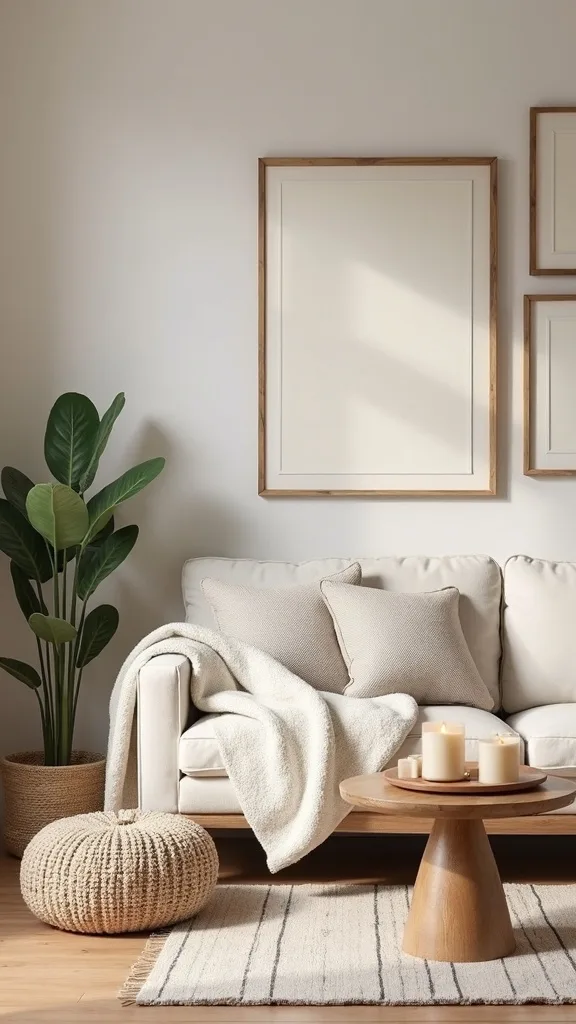
19. How do you make a small living room feel cozier without shrinking it?
Small spaces don’t need more decor—they need smarter scale and softer edges. Cozy is about intimacy, not clutter.
Use fewer, slightly larger accents instead of many tiny ones. One big throw, two solid pillows, one framed print, one warm lamp. Keep the floor as open as possible so the room breathes, and choose pieces that do double duty (basket storage, pouf seating).
Stick to warm neutrals with one deeper accent like tobacco or charcoal. Add texture through fabric rather than extra objects.
Pro tip: avoid pushing every piece to the wall. Pull the sofa out even 2–3 inches if you can—it makes the layout feel more intentional and surprisingly more spacious.
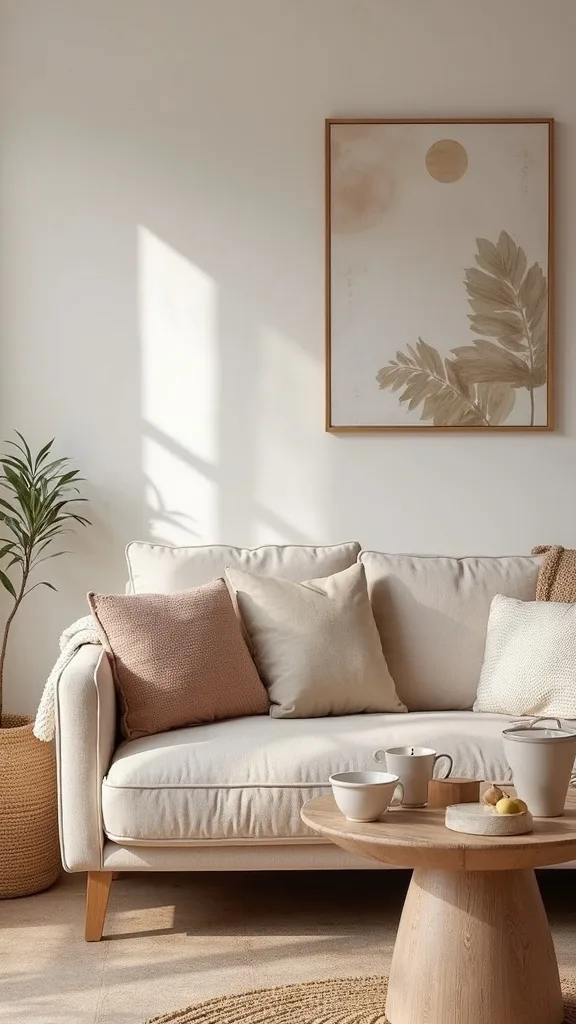
20. What decor should you avoid if you want a cozy look (not clutter)?
The fastest way to kill cozy is too many small, unrelated objects. When every surface has a little thing on it, your eye never gets to rest—and the room feels busy, not warm.
Avoid scattershot “filler” decor: tiny word signs, miniature figurines, and overly shiny plastic accents. Instead, edit down to a few pieces with presence: one tray, one candle, one textured bowl, one art moment. If you love collecting, group similar items together so they read as a collection, not a mess.
Choose natural textures and matte finishes that age well visually. Keep color repetition going (same warm metal, same neutral family).
Pro tip: do a five-minute sweep—if an item doesn’t add function or texture, it goes in a drawer. The room instantly feels calmer and more grown.
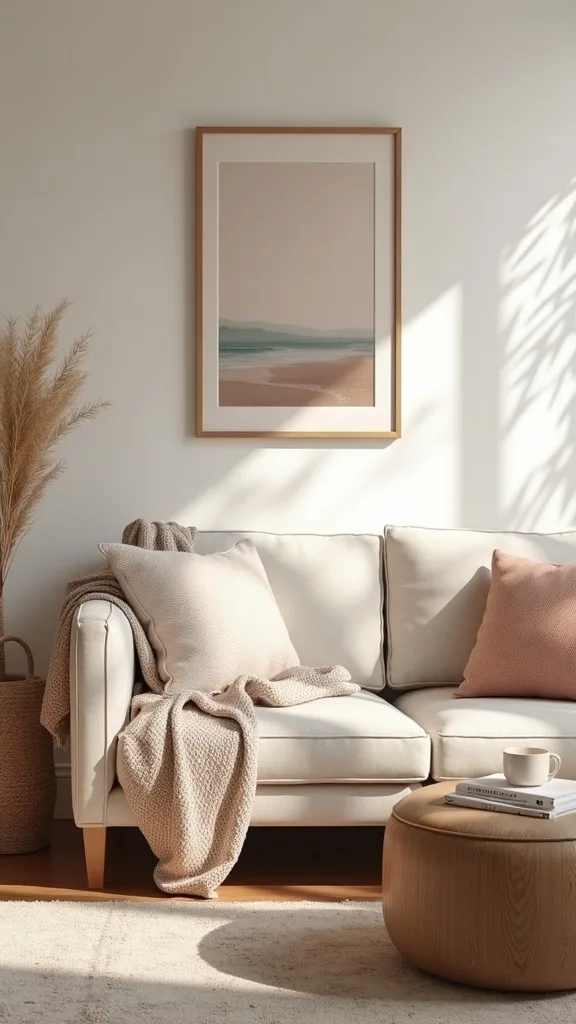
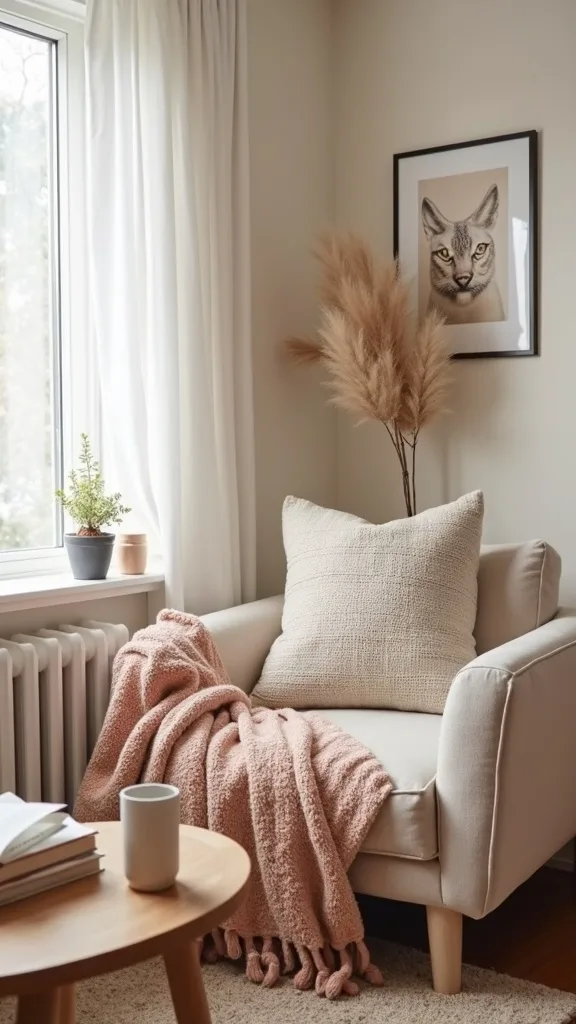
21. How do you create a cozy reading corner under $50?
A reading corner is less about the chair and more about the little rituals around it. One soft light, one soft layer, and somewhere to set a mug—suddenly the corner has purpose.
Start with a warm lamp (or clip-on reading light) and a throw draped over the chair. Add a small side table moment: coaster, candle, and a tiny catchall dish. If you don’t have a side table, stack two sturdy books and top with a tray.
Go for soft, touchable textiles and warm metals or black accents. Keep the palette simple so it feels restful.
Pro tip: place the chair so you can see the room and the window. Cozy isn’t hiding—it’s feeling held while still being part of the space.
22. What’s the easiest way to make your TV wall feel less… TV?
TV walls can feel stark because the screen is a big dark rectangle with no softness. The goal is to give it context so it feels like part of the room, not the whole point.
Add two elements: a low console styling moment (tray + vase) and one vertical element (tall faux plant, floor lamp, or framed art leaned nearby). If you can, add a picture light over art on the side—not over the TV—so the wall has a glow point.
Use black frames or walnut tones to echo the TV screen without making it heavier. Keep accessories matte.
Pro tip: hide the remotes in a lidded box on the console. Tiny win, huge visual calm.
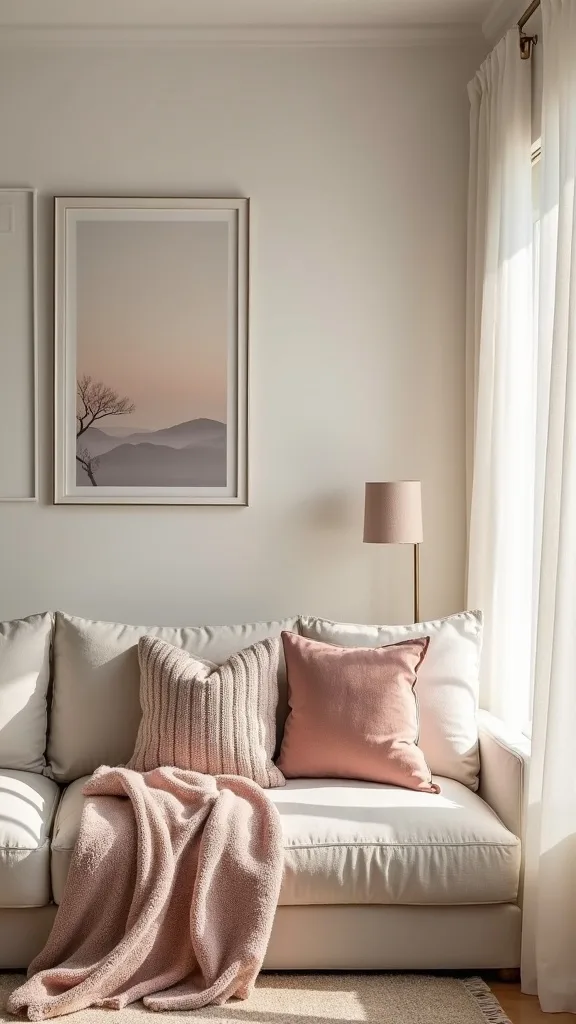
23. How can you use mirrors to make a living room feel warmer (not colder)?
Mirrors can read glam or sterile, depending on the frame and placement. For cozy, you want a mirror that looks like it’s been around—something with warmth and a little character.
Choose a mirror with an arched top or a thin antique-gold frame. Place it where it reflects something nice: a lamp glow, a plant, or a piece of art—not the clutter corner. Even a small mirror over a console can double the light in late afternoon.
Look for antique-finish frames and slightly softened shapes. Avoid super sharp chrome frames if you’re chasing warmth.
Pro tip: treat the mirror like art—hang it at the same height you would a frame. When it’s placed thoughtfully, it feels like a design choice, not a trick.
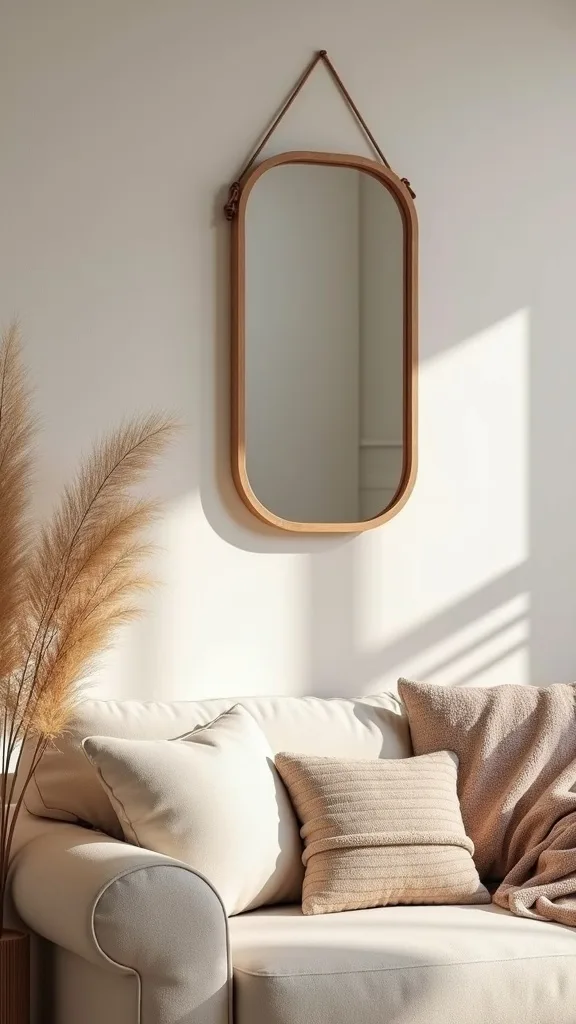
24. What’s a simple way to add vintage vibes without thrifting all weekend?
Vintage energy is what makes a room feel collected. You don’t need a truckload of antiques—you need one or two pieces that suggest history.
Add an antique-style frame, a brass-look candlestick, or a vintage-inspired wall sconce (plug-in). Mix it with your modern basics so it feels natural, not themed. Keep the “vintage” piece slightly imperfect-looking—patina tones, worn edges, warm metals.
Search for antique brass, aged gold, and vintage-inspired in product titles, and read reviews for finish realism. Pair with linen, wool-look, and wood tones.
Pro tip: don’t match everything. The charm is in the near-miss—the way real collections happen over time.
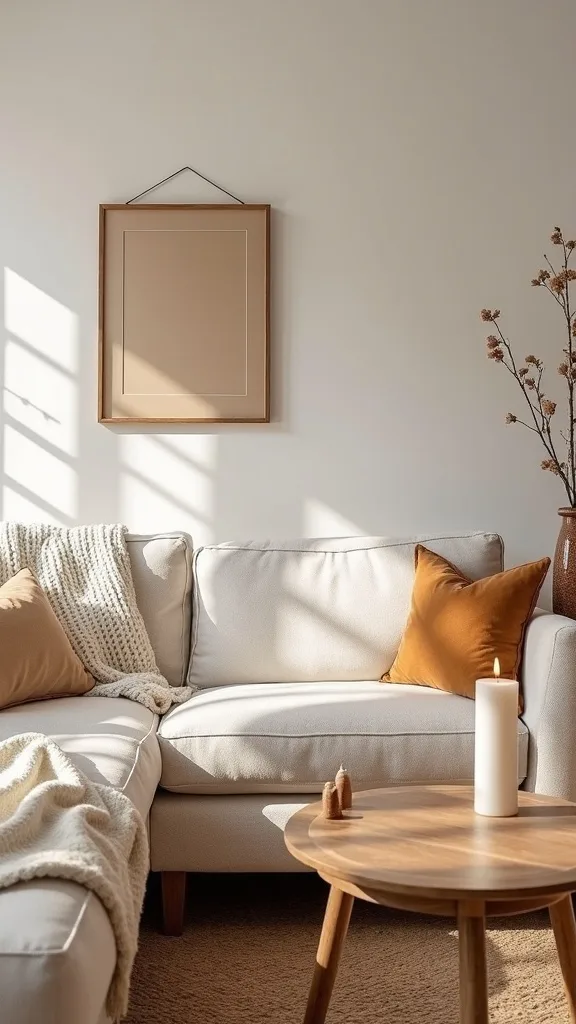
25. How do you pull it all together so it feels like one cozy story?
Cozy doesn’t come from one hero item. It comes from repetition: the same warm tone showing up in a few places, the same soft texture echoing across the room, the same gentle light making everything look kinder.
Pick a three-color palette (cream + camel + charcoal, or sand + olive + black) and repeat it in pillows, art, and one accessory. Layer textures: one nubby pillow, one smooth pillow, one drapey throw. Then add glow at two heights—table and floor—so the room feels dimensional at night.
Stick to matte finishes, warm neutrals, and a touch of aged metal. That’s the formula that reads expensive without trying.
Pro tip: do one last edit—remove one item from every surface. The space feels calmer, and you feel like you can actually breathe in it.
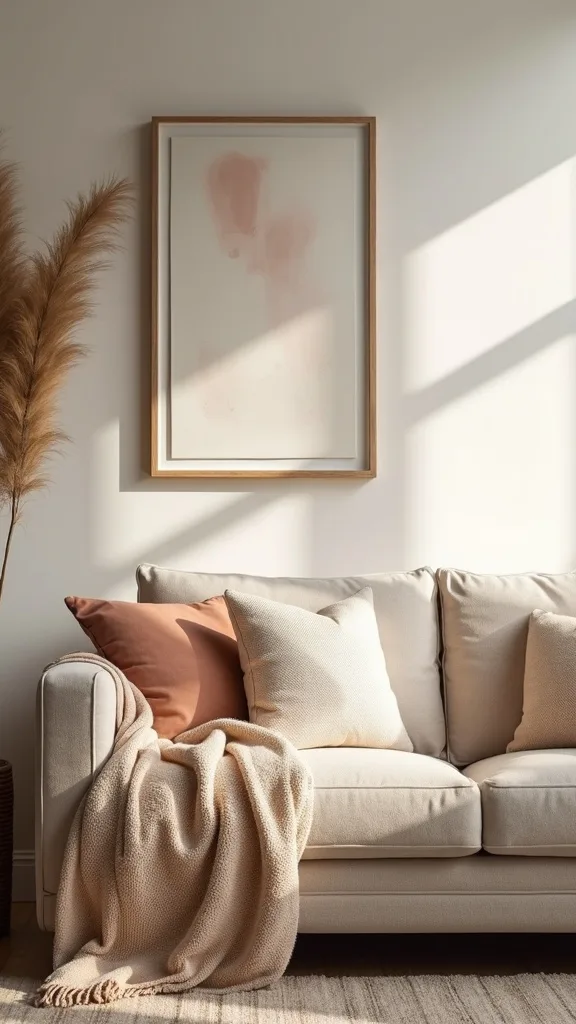
Final Thoughts
Once you get a few of these pieces in place, the living room stops feeling like a pass-through and starts feeling like a landing. The textures do the work: a throw that slouches over the arm, pillows that look broken-in, a candle vessel you’d keep even when it’s empty.
Keep the edit tight. Repeat one warm tone, commit to warm lighting, and let one “vintage-ish” piece throw a little shadow on the too-new stuff. That’s how you get that Pinterest-trending cozy living mood without buying a whole new life.
Do one thing today: swap your brightest bulb for warm white light (2700K–3000K — the cosy, yellowish tone you see in most homes), then add a throw where you actually sit. When you walk back into the room tonight, it feels softer—like the space is finally on your side.
What I’d Do Differently
When I first tried this, I bought a bunch of small “cute” decor pieces—tiny signs, mini vases, little knickknacks—because they were cheap and I wanted fast results. My coffee table ended up looking like a clearance shelf, and somehow the room felt less cozy, not more. The mistake was thinking quantity = warmth. What actually works is choosing fewer items with better texture and scale: one throw that drapes, two pillow covers with real-looking weave, one candle in a vessel you’d keep, and one piece of art big enough to hold the wall. The room needs places for your eyes to rest, not a constant scroll of objects.
I also wish I’d started with lighting before anything else. The same pillow looks totally different under harsh overhead light versus a warm lamp glow, and that one change makes every other purchase feel smarter. Pick your warm white light (2700K–3000K — the cosy, yellowish tone you see in most homes), then layer in textiles, then art—start tonight with just that order.