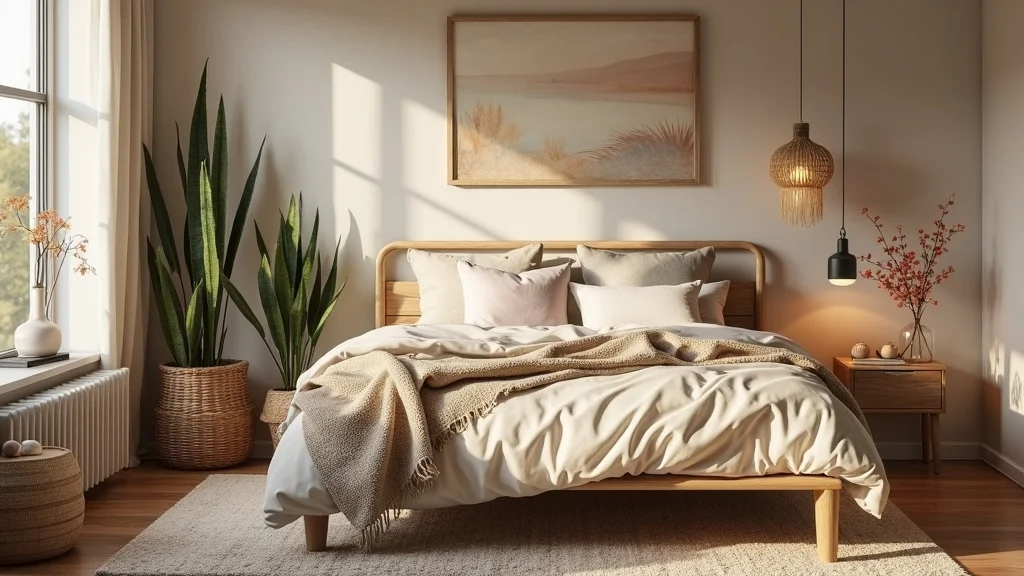

This post contains affiliate links. As an Amazon Associate, I earn from qualifying purchases at no extra cost to you.
The best cozy bedroom doesn’t announce itself the second you open the door—it softens your shoulders before you even notice why. Morning light hits a matte wall, not a shiny one. At night, the room glows like a hotel suite that’s been lived in for years, not a showroom that’s afraid of fingerprints.
This guide breaks the retreat feeling into choices you can actually make: layered textures that breathe, mood lighting that follows your circadian rhythm (without getting clinical), aromatherapy that doesn’t smell like a mall candle aisle, and art that feels like your life. It’s Pinterest Trending for 2026 for a reason—people are done with “perfect” and craving “restful.”
If you want to design cozy bedroom retreat comfort without buying an entire matching set, this is built for you.
Inside, you’ll find practical swaps—like the exact curtain length that makes ceilings feel taller, the one lamp placement that instantly relaxes a room, and a simple scent ritual that becomes your nightly exhale. You’ll also see what to avoid, because nothing kills a cozy bedroom faster than glare, clutter, and scratchy “decor” pillows you secretly hate.
Below are 25 How to Design a Cozy Bedroom Retreat 2026: Layered Textures, Mood Lighting, Aromatherapy, & Personalized Art for Relaxation that quiet the room, elevate everyday comfort, and make your space feel like it was designed around you.
Products I Recommend for This Project
Here are some of my favourite products to help you bring these ideas to life:
- Philips LED Warm Glow A19 Dimmable Bulbs (2700K–2200K range) — Dims warmer so your bedroom light naturally shifts into a sleepier mood.
- Govee Smart Plug — Lets you automate lamps to turn on at sunset and off at bedtime without rewiring.
- URPOWER 2nd Gen Essential Oil Diffuser (300ml) — A simple, quiet diffuser for a short pre-bed scent routine.
- REED & BARTON or similar Marble/Stone Vanity Tray (Amazon options) — Corral nightstand essentials so the surface stays visually calm.
- NICETOWN Linen Texture Blackout Curtains (2 Panels) — Softens daylight and blocks streetlight glare for deeper sleep.
1. A step-by-step sensory plan (so you don’t overbuy and still sleep better)
This idea is simply treating your bedroom like a sensory space, not a shopping list. It works because calm is built in layers—touch, light, scent, and meaning—so you can feel the difference even if nothing “major” changes. Start with a 4-step loop: (1) clear one surface, (2) soften one touchpoint, (3) dim one light source, (4) add one personal cue (photo, object, art). Do it in that order so your room flows and your upgrades don’t fight each other. Choose one “anchor” texture (washed linen duvet), one “warmth” texture (wool throw), and one “lush” texture (velvet lumbar) so the bed reads as inviting without getting messy. Keep finishes matte or brushed—think brushed brass over shiny chrome, and stonewashed cotton over slick microfiber. Pro tip: set a 20-minute timer and only work within arm’s reach of the bed; a retreat is built where you actually land at night, and the rest can follow.
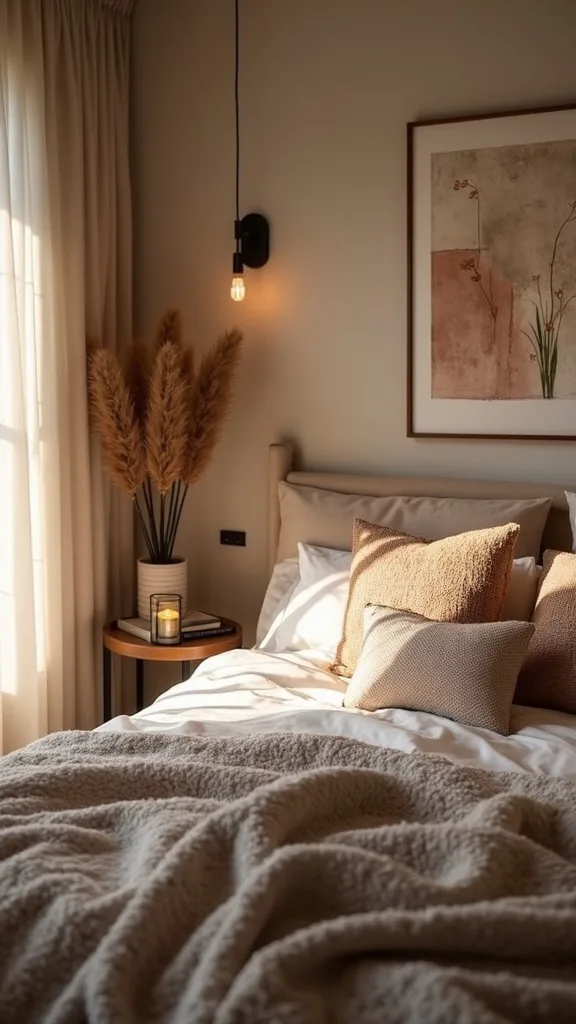
2. How do you choose a calming color palette that still feels warm in natural light?
A calming palette works when it cooperates with your daylight, not when it matches a paint chip online. The goal is warmth without heaviness—colors that look creamy at noon and still cozy after sunset. Pick one base neutral (warm white, oatmeal, or soft greige), then add a sun-washed accent (clay, muted olive, or dusty blue) that feels like it belongs near an open window. Test paint with two 12″ x 12″ swatches: one by the bed, one by the window, because light shifts across the room and can turn “neutral” unexpectedly icy. For materials, pair matte paint with natural oak or walnut tones and textiles in underdyed linen—they catch light softly. Avoid stark bright-white walls if your room faces north; they can read blue and make the whole space feel restless. Pro tip: repeat your accent color exactly three times (pillow, art detail, small vase) so the room feels intentional, then let the rest stay quiet.
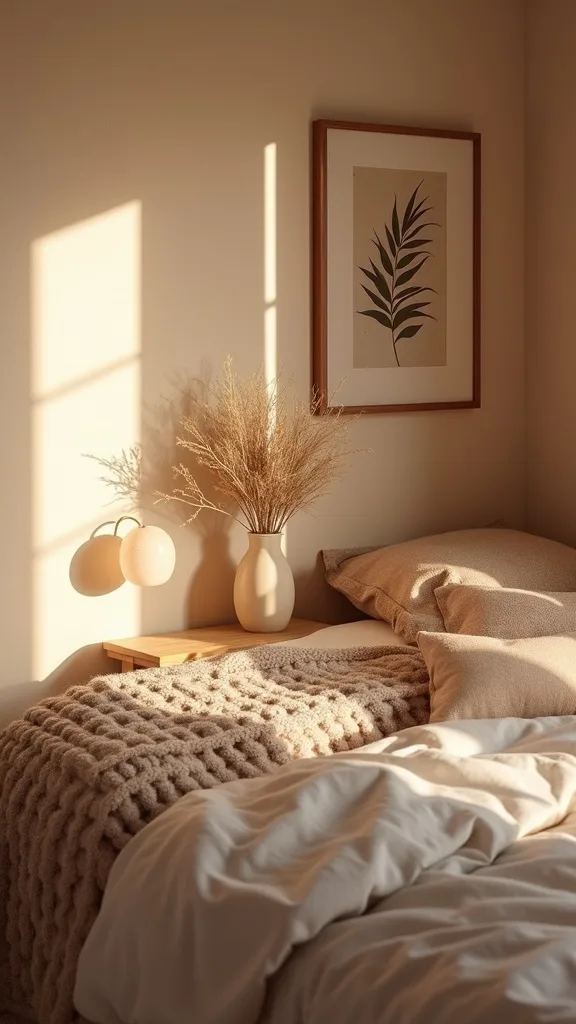
3. What bed layering actually feels good (not just looks fluffy)?
Real comfort comes from breathability and weight balance, not from stacking ten decorative pillows. It works because your body relaxes when temperature and texture stay consistent through the night. Start with sheets you’ll want against your face: percale cotton for crisp-cool sleepers, or linen for that airy, beach-house drape. Add a medium-weight duvet insert, then a duvet cover in washed linen or cotton sateen (sateen feels smoother and slightly warmer). Finish with one throw you can actually pull over your shoulders—wool-blend or cotton knit—folded at the foot for easy reach. For color, keep the first two layers tonal (ivory on oatmeal) and let the throw be the mood (camel, rust, deep sea). Avoid super-plush polyester blankets if you run warm; they trap heat and can make you wake up sweaty. Pro tip: one lumbar pillow is the sweet spot—supportive for reading, minimal for sleeping, and it keeps the bed feeling uncluttered.
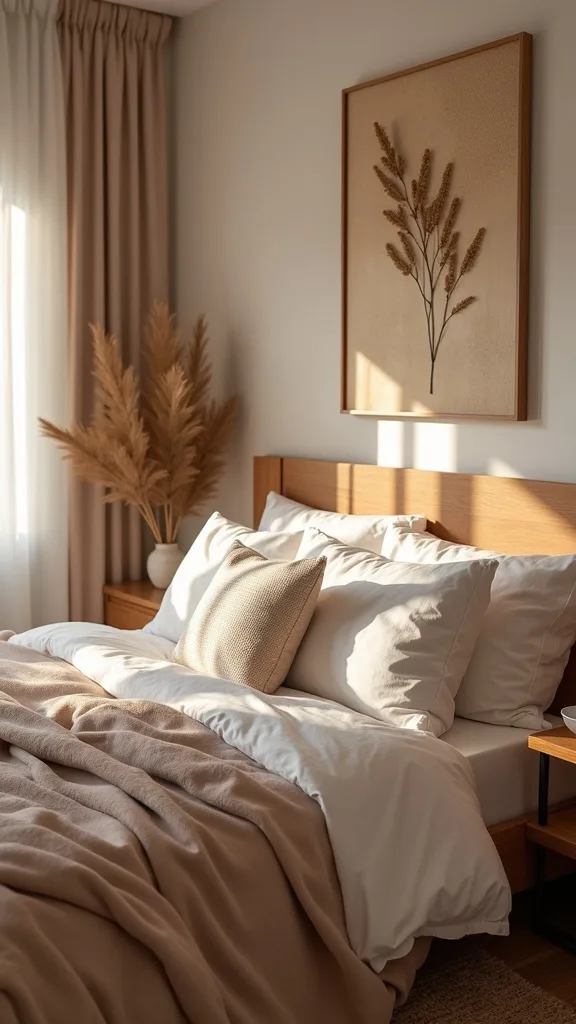
4. How do you add texture without making the room feel messy?
Texture reads as cozy when it’s controlled—different hand-feels, similar tones. It works because your eye relaxes when there’s variety without visual noise. Use the “three texture rule” on each zone: bed (linen + knit + velvet), floor (low-pile wool rug + leather or boucle bench), and window (linen curtain + woven shade). Keep patterns subtle and oversized—think wide stripes or a small herringbone—so the room doesn’t buzz. Materials that always land well: burl wood or oak nightstands, boucle on a chair, and a hand-thrown ceramic tray to corral the little stuff. Avoid tiny busy prints across multiple items; they fragment the space and make it feel like you can’t exhale. Pro tip: pick one “hero texture” (boucle headboard or chunky knit throw) and let everything else be the supporting cast—cozy is a feeling, not a pile.
5. Where should a rug go in a cozy bedroom (and what size works)?
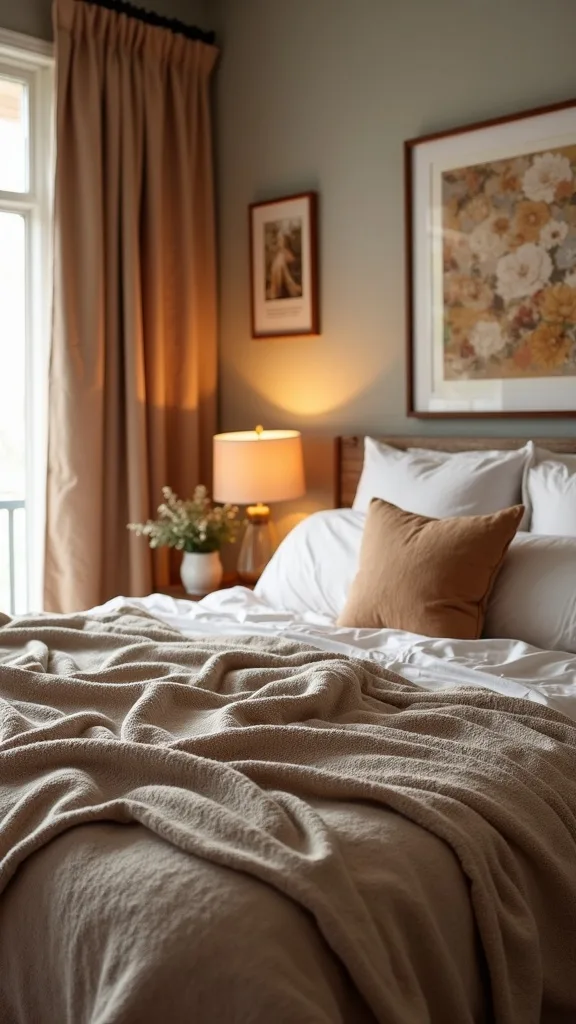
A rug makes a bedroom feel finished because it buffers sound and softens that first step out of bed. It works especially well in homes with hard floors where the room can feel echo-y at night. For most queen beds, an 8′ x 10′ rug is the comfort-first move: it extends beyond the sides so your feet land on warmth, not cold plank. Place it so the rug starts a few inches in front of the nightstands and runs under about two-thirds of the bed, keeping the headboard area stable. Choose a low-pile wool or wool-blend for easy vacuuming and that subtle, luxe density; jute can look great but feels scratchy barefoot and isn’t very “retreat.” Avoid placing a tiny rug only at the foot—it reads like an afterthought and doesn’t help where you actually step. Pro tip: if you’re on a budget, layer a larger natural base rug with a smaller soft wool accent near the bed for quiet luxury you feel every morning.

6. How do you set up mood lighting that doesn’t feel harsh at night?
Mood lighting works when it comes from multiple low points instead of one bright ceiling blast. It’s effective because your brain reads soft, warm pools of light as safety and wind-down time. Aim for three sources: a bedside lamp on each side (or one lamp plus a wall sconce), and one ambient light across the room like a floor lamp or picture light. Choose bulbs in warm white light (2700K–3000K — the cosy, yellowish tone you see in most homes) and make at least one source dimmable so you can slide from “get ready” to “read” to “sleep.” Use shades that diffuse—linen, paper, or frosted glass—so you don’t see the filament glare. Avoid cool white bulbs in the bedroom; they can feel like an office and make scrolling feel even more wired. Pro tip: put lamps on smart plugs and set an automatic “sunset” routine—your room starts relaxing you before you remember to.
7. What’s the best bedside lighting height for reading without eye strain?
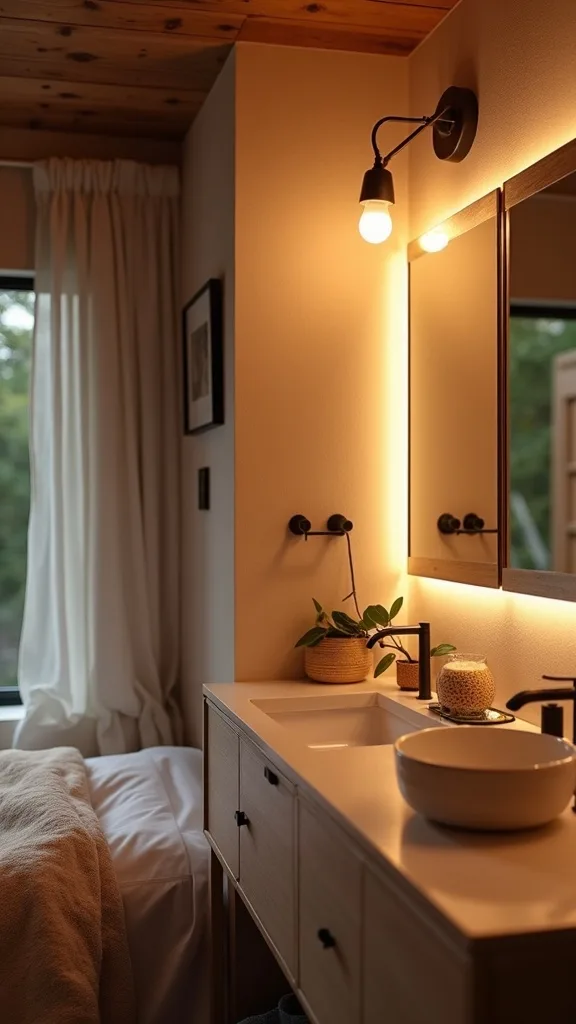
Bedside lighting feels right when the light hits your book, not your face. It works because glare is the silent reason bedrooms feel irritating at night. If you’re using lamps, the bottom of the shade should sit roughly at shoulder height when you’re seated in bed; that keeps the bulb out of your direct line of sight. For wall sconces, mount them about 50–60 inches from the floor (adjust slightly based on bed height) and angle them toward the page. Pick bulbs with enough brightness (measured in lumens) to read comfortably—around 400–800 lumens per side depending on shade opacity. Materials-wise, I love antique brass or matte black finishes because they disappear into the room instead of screaming “fixture.” Avoid clear glass shades right by the bed; they look cool but can throw sharp light. Pro tip: add a dimmer even if you keep it brighter for reading—your eyes should feel soothed, not challenged.
8. How can you use candles safely for a cozy bedroom vibe?
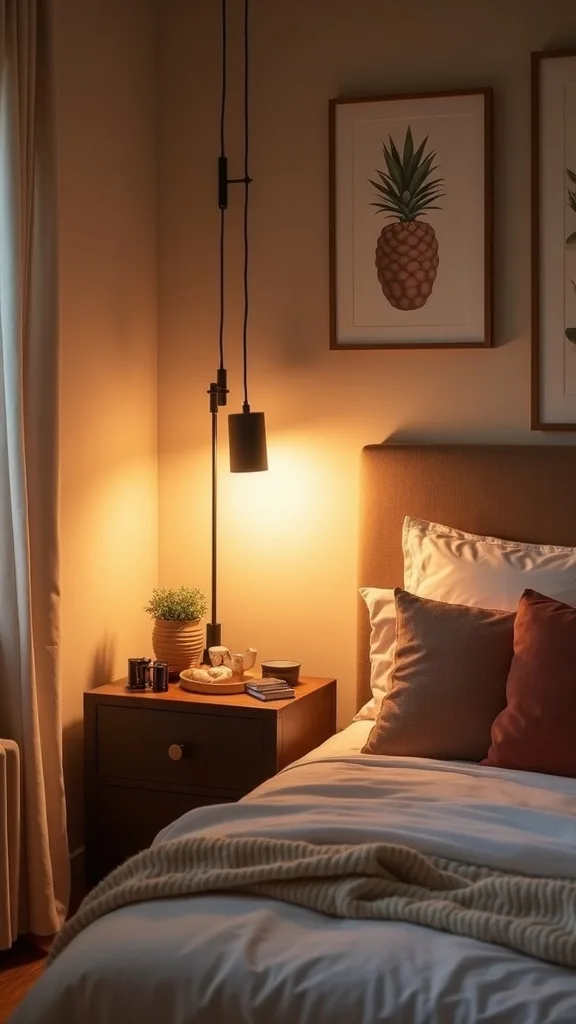
Candles bring instant calm because flame is primal—soft movement, soft light, slower breathing. They work best when they’re a moment, not an all-night habit. Use candles for your wind-down window (10–30 minutes) while you’re still awake, then blow them out as part of your “lights down” ritual. Place them on a ceramic or stone tray on a dresser, never on the nightstand next to tissues, books, or curtains. Choose scents that feel clean and grounded—cedar, lavender, bergamot—rather than sugary blends that can feel overstimulating. If you want the look without the worry, use high-quality flameless pillars with a warm flicker; they can be surprisingly convincing. Avoid leaving a real candle burning while you read in bed—sleepiness happens fast, and safety isn’t negotiable. Pro tip: match candle vessels to your hardware finish (brass, black, or ivory) for quiet cohesion that feels luxurious day to day.
Cost & Materials Estimate
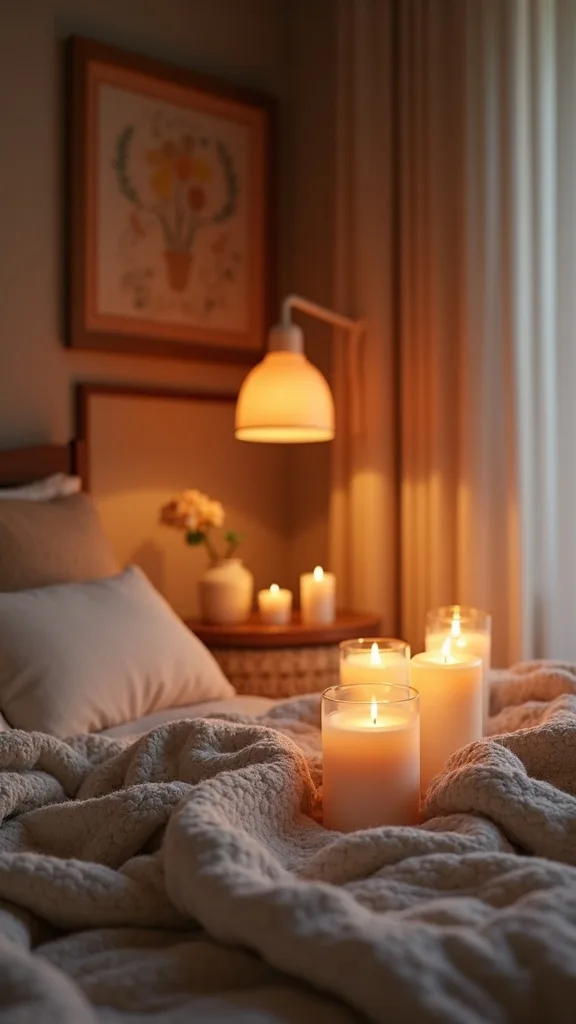
A realistic cozy bedroom refresh typically lands between a few small swaps and one “anchor” upgrade, depending on what you already own.
| Item | Estimated Cost | Where to Buy |
|---|---|---|
| Linen-look blackout curtain set (2 panels) | $45–$120 | Wayfair |
| Dimmable table lamp (linen shade) | $35–$90 | Amazon |
| Warm white LED bulbs (2700K–3000K) | $12–$28 | Home Depot |
| Washed linen duvet cover (queen) | $60–$180 | IKEA |
| 8′ x 10′ area rug (wool or wool-blend) | $180–$650 | Lowe’s |
| Essential oil diffuser + oils starter set | $25–$75 | Amazon |
Total estimated cost: $357–$1,143 Save by swapping bulbs and adding curtains first; splurge on the rug or duvet cover because you’ll feel those upgrades every single day.
9. How do you create a ‘hotel’ bed feel without replacing your mattress?
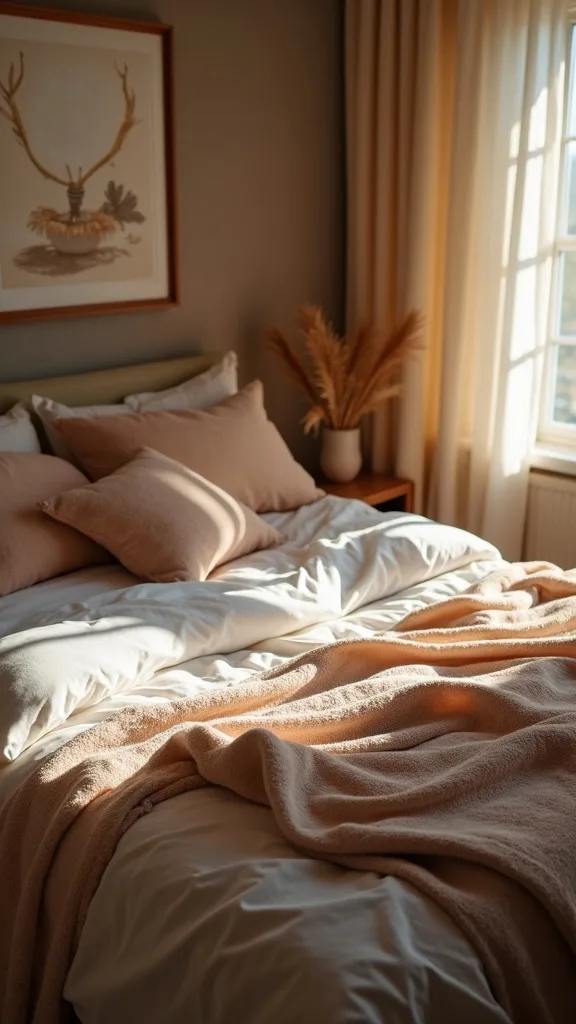
The hotel feeling is mostly about top layers and discipline—crisp edges, breathable comfort, and a bed that’s easy to remake. It works because your brain associates order with rest, especially in a room you see first thing in the morning. Add a 2″–3″ mattress topper if your bed feels too firm, then use a simple white or ivory duvet cover with texture (matelassé, waffle, or linen) so it doesn’t feel flat. Keep pillow count functional: two sleeping pillows per person, plus one supportive down-alternative (or feather) back pillow for reading. Finish with a single throw folded cleanly, not draped like laundry. Avoid overfilling the bed with decorative pillows you have to move every night; it becomes a chore and the room starts feeling performative. Pro tip: keep a slim lidded basket nearby for your throw and reading pillow—resetting the room becomes a 30-second habit that keeps the retreat energy alive.
10. What window treatments make a bedroom feel softer (and sleep darker)?
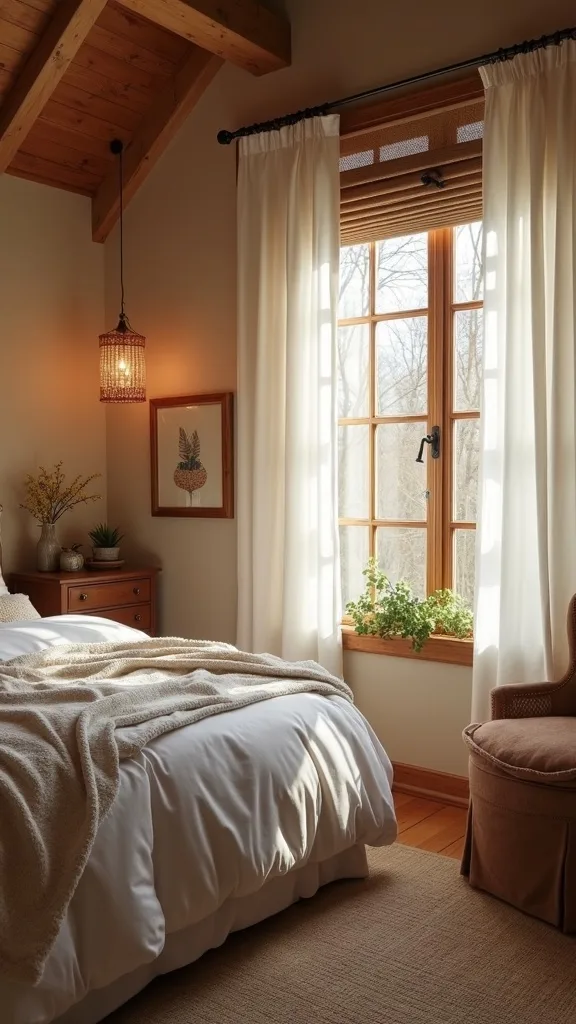
Window treatments control both light and privacy, which is basically the nervous system of a bedroom. They work when they filter daytime glare and block streetlight sparkle at night. Hang curtain rods high—about 4–6 inches below the ceiling—and extend them 8–12 inches past the window frame so curtains stack off the glass and let in maximum daylight. Use linen-look blackout curtains or layer a woven shade with drapery for that indoor-outdoor California softness. Choose warm neutrals (flax, sand, fog) that glow in morning light rather than turning gray and flat. Avoid short curtains that stop at the sill; they visually chop the wall and can make the room feel smaller. Pro tip: if you love waking with the sun, use blackout curtains on a double rod and keep them open during the day—your room stays bright, but sleep stays protected when you need it.
11. How do you set up aromatherapy that feels subtle, not overpowering?
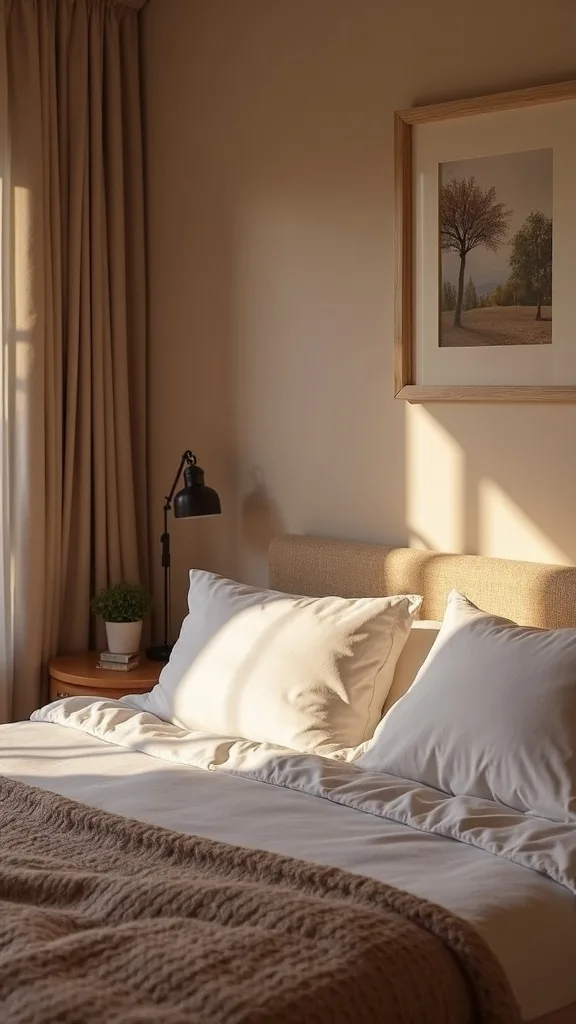
Aromatherapy should feel like walking past a jasmine vine, not like being trapped in a scented store. It works because scent is tied directly to memory—your brain learns “this smell means sleep.” Use one delivery method at a time: a diffuser for 20 minutes before bed, a linen spray on the duvet, or a candle during your evening reset. Keep blends simple: lavender + cedar for grounding, bergamot + sandalwood for spa-clean, or eucalyptus + mint if you like a fresh inhale (but go lighter). Place the diffuser across the room, not on the nightstand, so the scent drifts instead of hitting you head-on. Avoid running a diffuser all night—too much moisture and fragrance can irritate sensitive sleepers. Pro tip: create a signature scent for your cozy bedroom retreat and use it only there; the association becomes instant, like flipping a switch inside your body.

12. Which essential oils are most relaxing for a bedroom (and how much to use)?
The most relaxing oils are the ones that feel steady and clean—nothing too sharp, nothing too sweet. They work because they encourage slower breathing and signal “safe, quiet, done for the day.” Start with lavender for classic calm, cedarwood for depth, and bergamot for a soft lift that doesn’t feel like caffeine. In a standard diffuser, begin with 3–5 drops total; more isn’t better, it’s just louder. If you prefer linen spray, use a pre-made formula designed for fabrics so you’re not experimenting with oil ratios on your bedding. Look for oils packaged in dark glass and stored away from the window so they stay true. Avoid “fragrance oils” marketed as essential oils—they often smell intense and can trigger headaches. Pro tip: keep a tiny bedtime blend by the door and do one slow inhale before you step into the room—your body starts unwinding before your head hits the pillow.
13. How do you reduce clutter fast so the room feels instantly calmer?
Clutter is visual noise, and bedrooms don’t forgive it. This works because a clear surface tells your brain there’s nothing left to manage tonight. Start with the “three-surface reset”: nightstand, dresser top, and the floor path from door to bed. Put a small tray on the nightstand for just three things—water, lip balm, book—then everything else leaves. Use a lidded box in a drawer for chargers and earbuds so they’re accessible but invisible. On the dresser, keep one ceramic catchall and one lamp; that’s it. Avoid open baskets overflowing with “soft clutter” (extra cords, receipts, random skincare) because it reads like unfinished business. Pro tip: keep a slim hamper with a lid—laundry is inevitable, but it doesn’t need to be part of your bedroom’s mood.
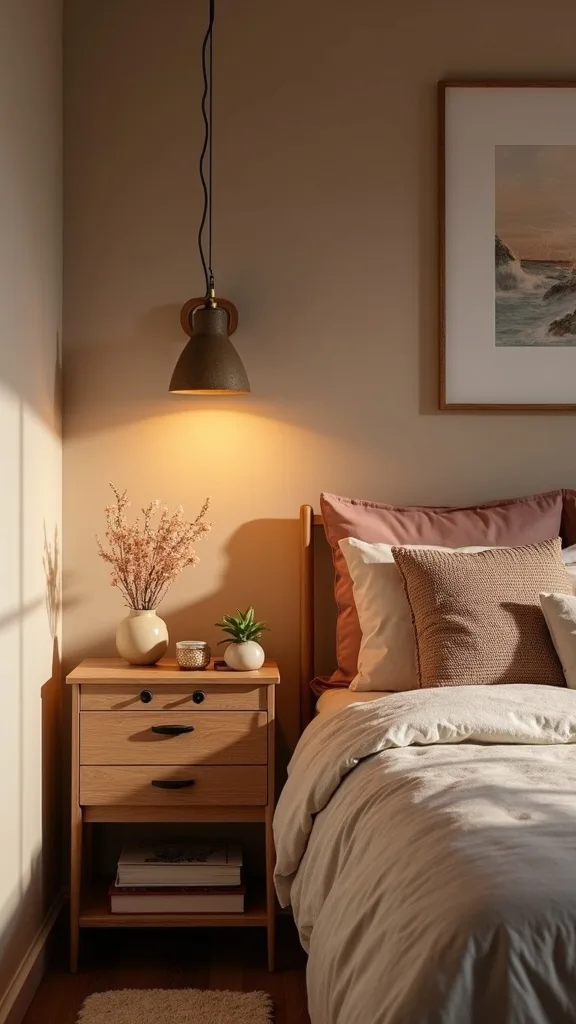
14. What’s the best nightstand setup for a cozy bedroom (without losing function)?
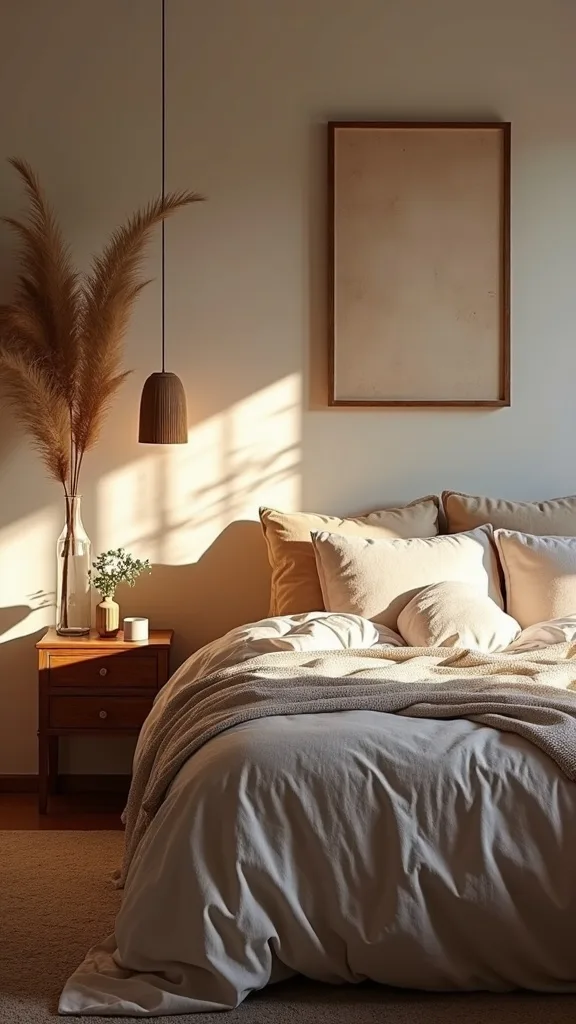
A nightstand should feel like a landing pad, not a storage unit. It works because bedtime becomes simpler when you aren’t making micro-decisions in the dark. Choose a nightstand with one drawer or a shelf so essentials can disappear; if your space is tight, a wall-mounted option keeps the floor airy. Style it with a lamp, a coaster, and a small dish for rings—done. If you need charging, use a hidden cable box behind the nightstand and a 6-foot cord so nothing pulls tight. Materials that read warm and calm: light oak, travertine, or a painted matte finish in the same tone as your walls. Avoid mirrored or high-gloss nightstands; they reflect light and feel busy at night. Pro tip: add a tiny bowl of hand cream and actually use it—comfort is built in small rituals that make your room feel like it cares about you.
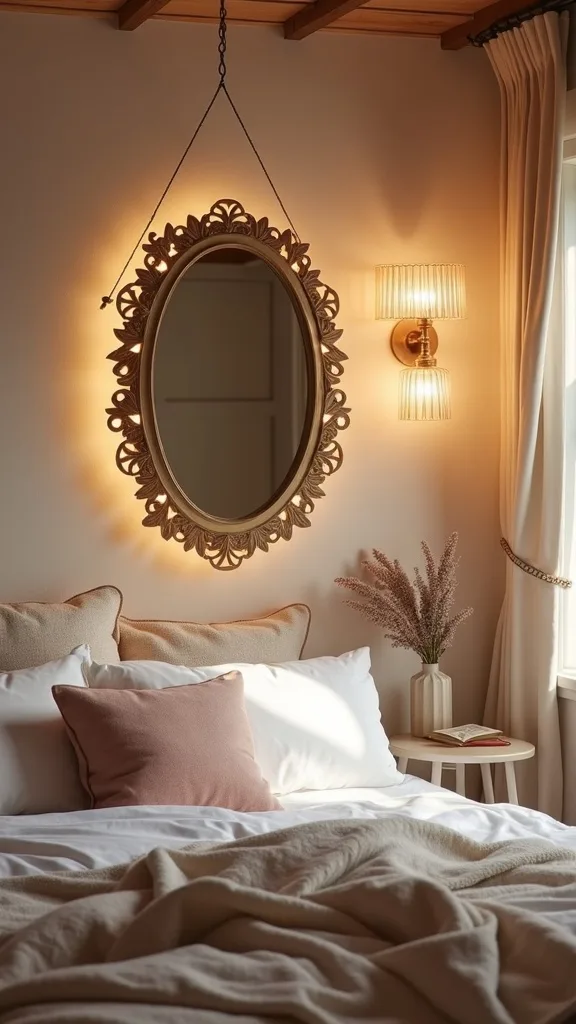
15. How do you use mirrors in a bedroom without bouncing harsh light?
Mirrors can expand a bedroom, but only if they reflect something you want more of. It works because the reflection becomes part of the room’s visual “flow,” like an extra window when placed thoughtfully. Position a mirror to catch soft daylight—across from a window at an angle—rather than reflecting the bed straight-on if that feels visually active. Choose frames in warm finishes: thin brass, pale wood, or matte black for a clean edge. If you have a dresser, leaning a tall mirror (secure it) can add that relaxed indoor-outdoor vibe, like a dressing space in a breezy guest suite. Avoid placing a mirror where it reflects a bright lamp bulb; you’ll create glare and the room will feel sharper at night. Pro tip: if you’re sensitive to reflections while sleeping, hang a textile wall piece opposite the bed and put the mirror on a side wall—same openness, more calm.
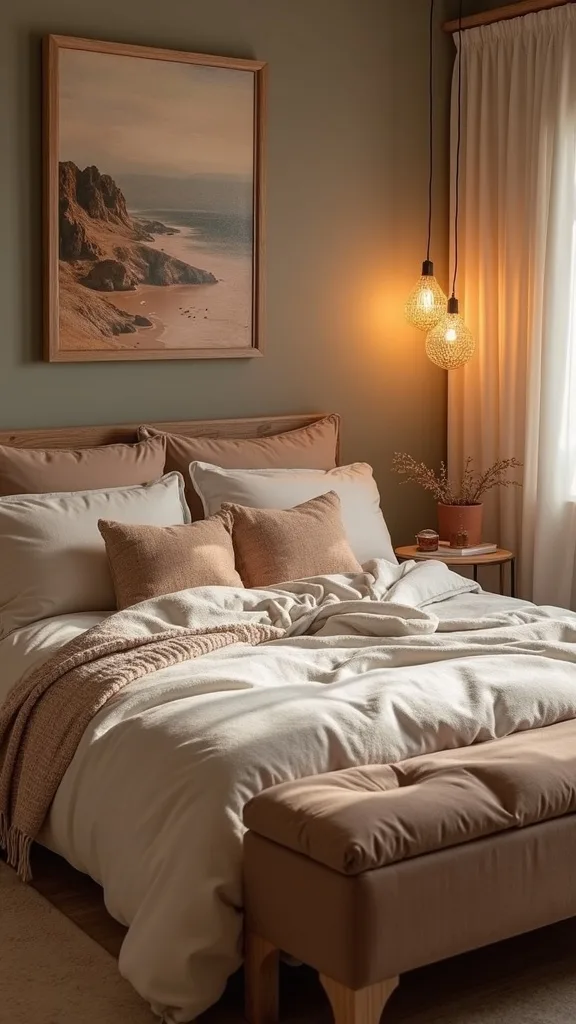
16. What personalized art makes a bedroom feel restful (not like a gallery)?
Personalized art works when it’s emotionally quiet—pieces that feel like your life, not like a trend you’re trying on. It works because the bedroom is intimate; you see it when you’re tired and when you’re waking up. Choose one large piece above the bed or a pair of medium pieces that share a palette; keep subject matter calming—coastal landscapes, abstract shapes, soft photography, or a meaningful line drawing. For personal touch, frame a photo from a real moment: a hike, a garden, a trip where you actually breathed slower. Use matte frames and non-glare acrylic if the room gets strong daylight. Avoid hyper-contrasty art with aggressive typography; it can feel like visual caffeine. Pro tip: pick art that echoes your outdoor world—sand tones, eucalyptus greens, ocean blues—so the room feels connected to nature even when the door is closed.
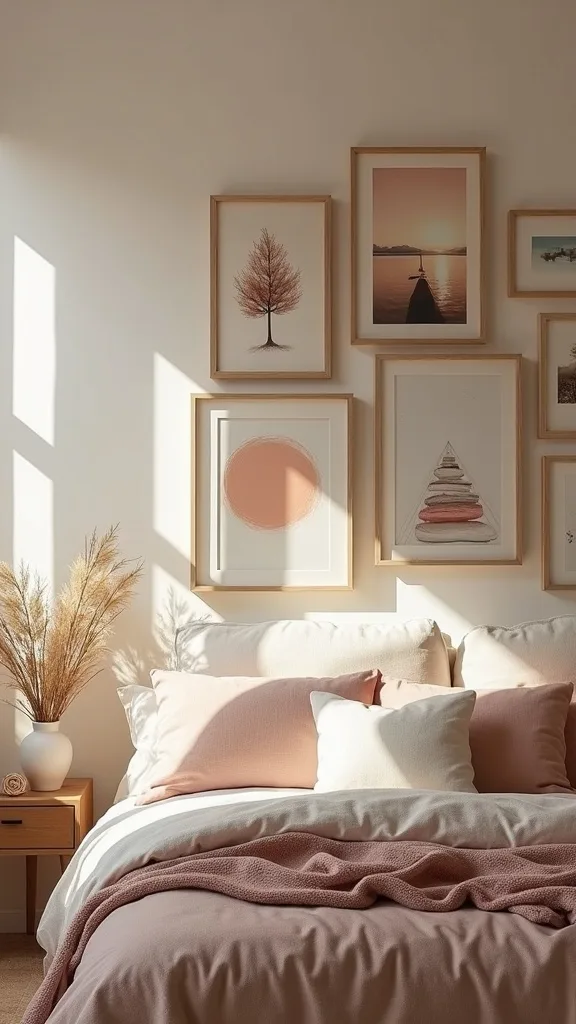
17. How do you build a simple gallery wall that still feels calm?
A calm gallery wall is about spacing and restraint, not filling every inch. It works because repetition—same frame finish, similar mat size—gives your eye a rhythm to follow. Start with 5–7 frames and lay them out on the floor first; aim for 2–3 inches between frames so it breathes. Keep frames consistent (all light oak or all matte black) and vary only the art inside. Use a mix of personal photos and one or two textured pieces like a linen mat or minimalist sketch. Hang the center of the arrangement at about 57 inches from the floor (gallery standard), then adjust slightly if you’ll view it mostly from bed. Avoid mixing too many frame colors and sizes in a small bedroom; it can feel like clutter on the wall. Pro tip: add one soft spotlight or picture light above the grouping—at night it becomes a gentle focal point, like a quiet corner of a boutique hotel.
18. How can you bring indoor-outdoor calm into a bedroom without a renovation?
Indoor-outdoor energy isn’t about sliding doors—it’s about materials and air. It works because natural textures and living elements cue your body to relax the way it does outside. Add one plant that thrives in indirect light, like a snake plant or pothos, and place it where you’ll see it from bed. Choose woven textures—rattan tray, seagrass basket with a lid, linen curtains—to mimic that breezy patio feeling. If you can, crack the window for 10 minutes in the morning and again at night; fresh air is the cheapest luxury upgrade. Avoid fake plants that collect dust near your bed; they can look fine but don’t contribute to the feeling of clean, alive space. Pro tip: keep a small carafe and glass on a tray like a guest suite—hydration and ease are part of that resort-at-home vibe.
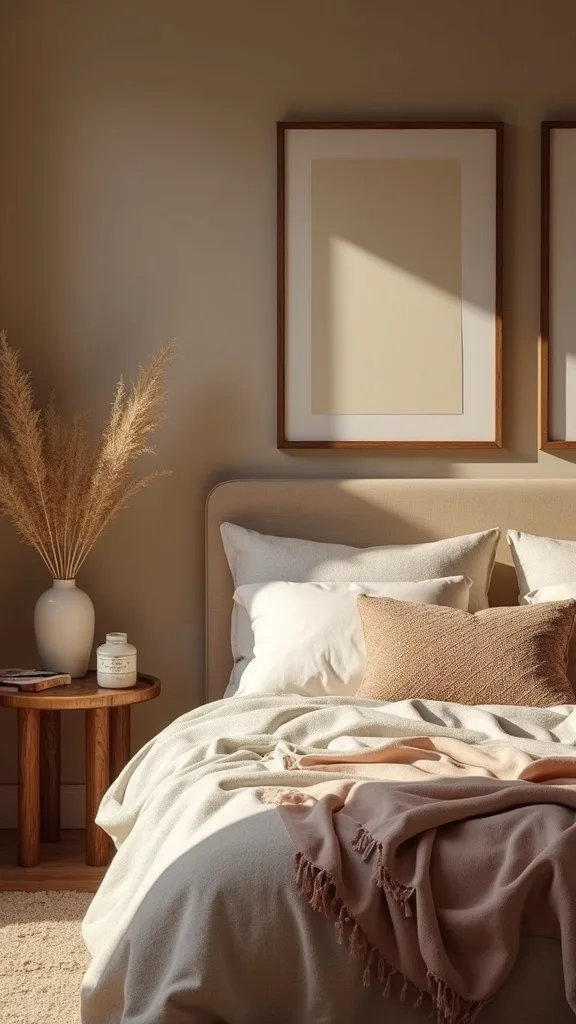
19. What’s the easiest way to make a small bedroom feel cozy, not cramped?
Small bedrooms feel cozy when the negative space is intentional. It works because a tight room needs fewer visual interruptions and more soft edges. Start by pulling bulky furniture away from the door path—clear flow makes the room feel bigger instantly. Use wall-mounted sconces or a plug-in pendant to free up nightstand space, and choose a low-profile bed frame so the ceiling feels taller. Keep bedding tonal and let texture do the work; too many contrasting colors can chop up the room. Add one oversized pillow and one throw instead of multiple small accessories. Avoid placing a tall dresser right next to the bed if possible; it can feel like a wall and steal the retreat feeling. Pro tip: use one large mirror on a side wall and one light, full-length curtain—your room will feel airy in daylight and snug at night, which is the ideal cozy bedroom balance.
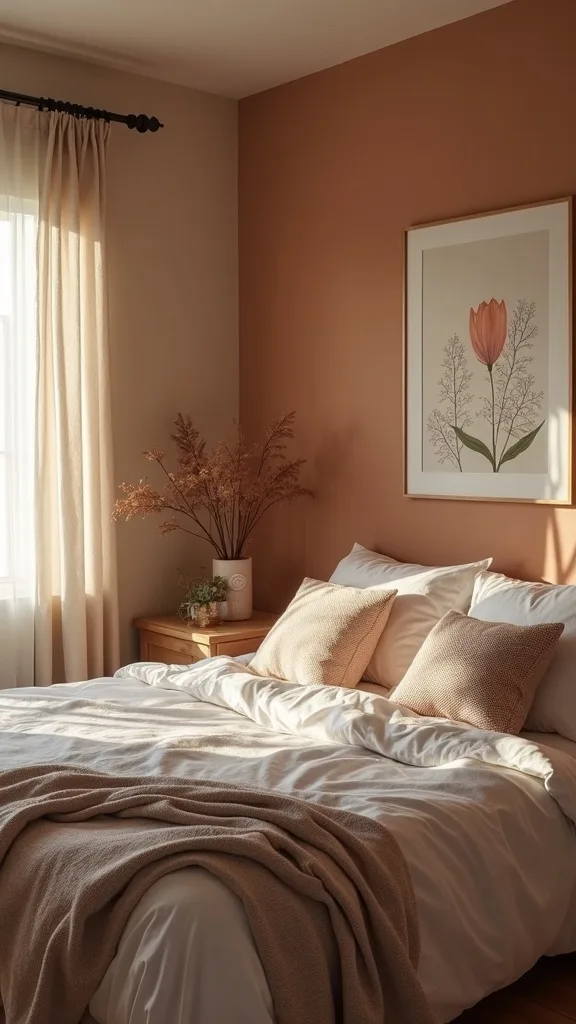
20. How do you choose a headboard that adds comfort and quiet?
A good headboard changes the acoustics and the mood, like a soft horizon line behind the bed. It works because upholstered or textured surfaces absorb sound and make the bed feel anchored. If you read in bed, pick a padded headboard in linen or performance fabric so it’s comfortable against your back. For a more natural look, a light wood headboard in oak or ash brings that coastal, sunlit warmth without feeling rustic. Keep the color close to your wall tone for a calmer silhouette, or go slightly deeper to create a cocoon effect. Avoid ornate, high-contrast headboards in busy bedrooms—they become the loudest thing in the room. Pro tip: if you can’t replace the headboard, hang a large textile (like a neutral woven wall hanging) behind the bed; it creates softness and presence with almost no effort.
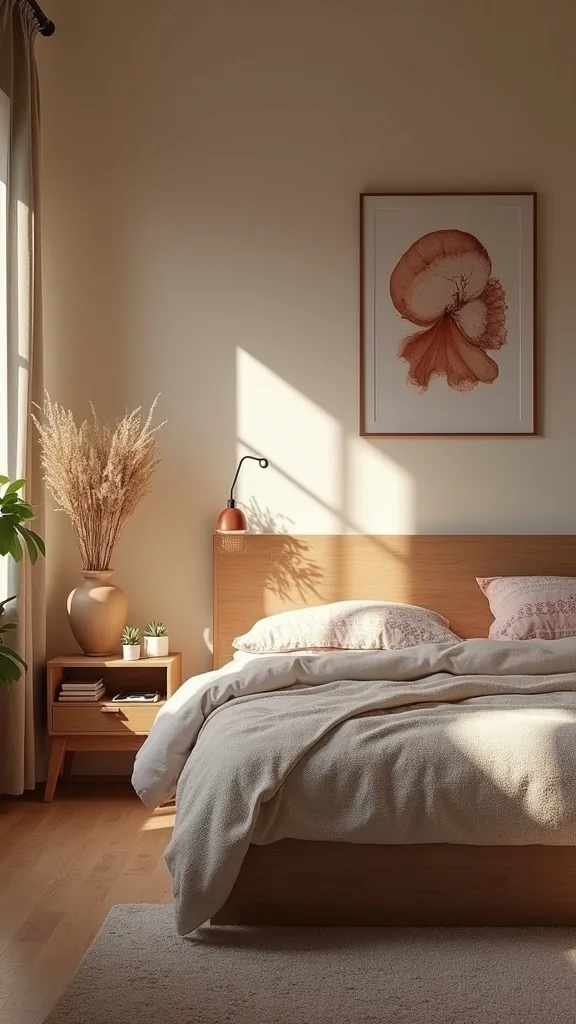
21. Where should you put a chair or bench so it’s useful (not a laundry magnet)?
A chair or bench is only cozy if it has a job. It works because giving items a “home” prevents the slow creep of piles. Place a bench at the foot of the bed if you have at least 18–24 inches of clearance to walk around it; otherwise, tuck a small accent chair near a window for morning coffee or evening reading. Choose materials that invite touch: boucle for softness, leather for wipeable ease, or a woven seat with a cushion. Add a small side table so the chair becomes a real moment, not a random object. Avoid putting the chair in a dark corner with no light—then it becomes a coat rack by accident. Pro tip: keep one beautiful basket nearby for your throw; the chair stays intentional, and your room stays calm.
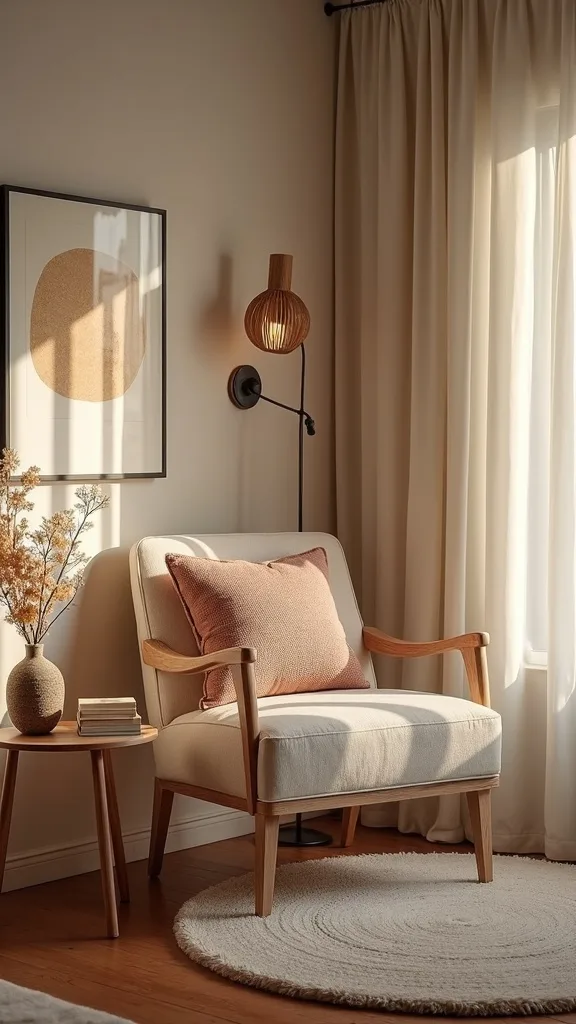
22. What’s one thing to avoid when you design a cozy bedroom retreat?
Avoid a single, ultra-bright overhead light as your main source at night. It works against you because it flattens texture, creates glare, and signals “task mode,” not rest. If you have overhead lighting, put it on a dimmer and treat it like daytime-only or quick-cleaning-only. At night, rely on lamps and sconces with warm white light (2700K–3000K — the cosy, yellowish tone you see in most homes) so shadows stay soft and your eyes relax. If you can’t change the fixture, swap the bulb and add two plug-in lamps—this alone can completely shift the mood. Choose shades that diffuse light (linen, frosted glass) and keep reflective surfaces minimal. Avoid placing a lamp where you see the bulb directly from bed; it’s like staring at a tiny sun. Pro tip: once you fix lighting, everything else—textures, art, even your paint—suddenly feels more expensive and more you.
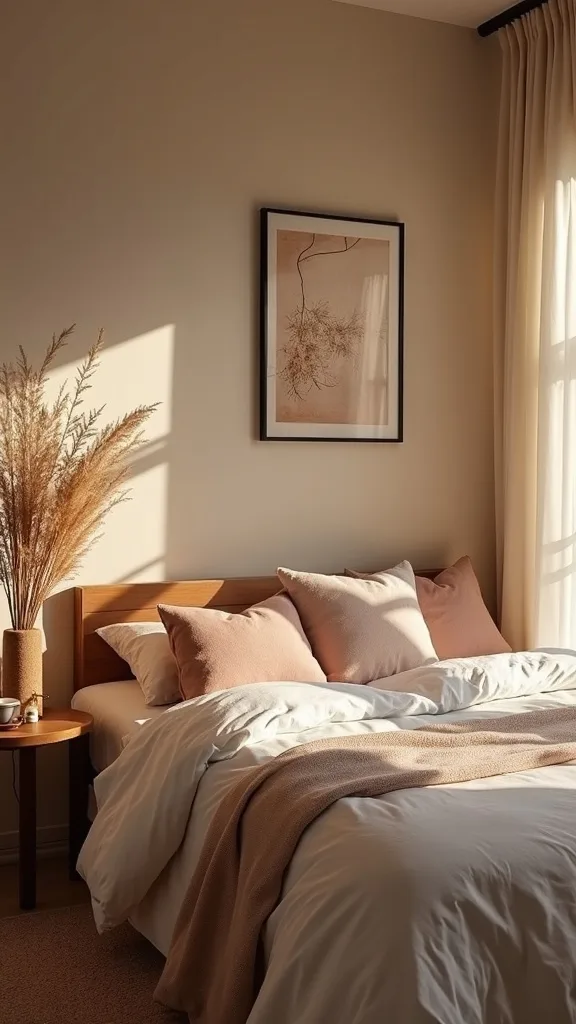
23. How do you make your bedroom sound calmer (without buying expensive panels)?
Sound is part of cozy, even if you don’t think about it until it’s gone. It works because softer rooms reduce echo, which makes your body feel less on alert. Add textiles strategically: a wool rug, lined curtains, and upholstered elements like a padded headboard or a fabric bench. If street noise is an issue, layer blackout curtains over a shade to create an extra barrier. Keep a small fan or white-noise machine on a low setting if you like consistent sound; it can mask sudden outside noise and make sleep more continuous. Avoid leaving hard, bare surfaces everywhere—empty walls plus hardwood floors can make every tiny sound feel louder. Pro tip: even one large woven wall piece or tapestry can reduce that “hollow” feel, turning the room into a soft cocoon that supports deeper rest.
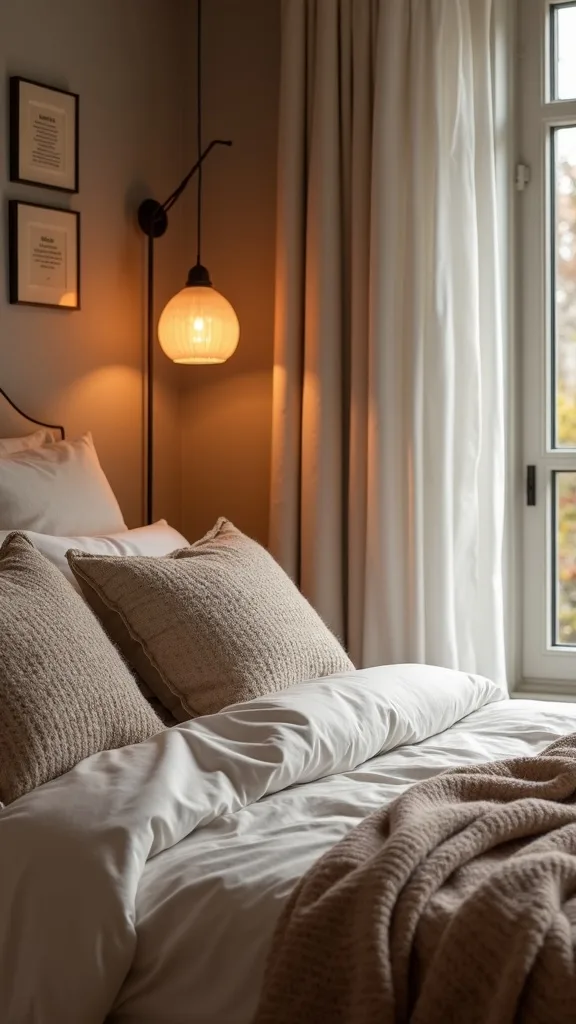
24. How do you create a nightly wind-down ritual using light + scent + one surface reset?
A wind-down ritual turns your bedroom into a cue for sleep, not just a place you collapse. It works because repetition trains your brain to switch gears with less effort. Try a 7-minute routine: dim lamps to low, spritz linen spray once over the duvet, and clear the nightstand back to “three items only.” Then sit on the edge of the bed and take five slow breaths—yes, it’s simple, and that’s why it sticks. Keep the ritual tools visible but tidy: a small tray for spray, hand cream, and matches (or a diffuser remote). Choose scents like lavender-cedar or bergamot-sandalwood for a spa-clean vibe. Avoid doing this routine while scrolling; screens hijack the calm you’re building. Pro tip: when you repeat the same steps nightly, your cozy bedroom starts feeling like it’s actively taking care of you.
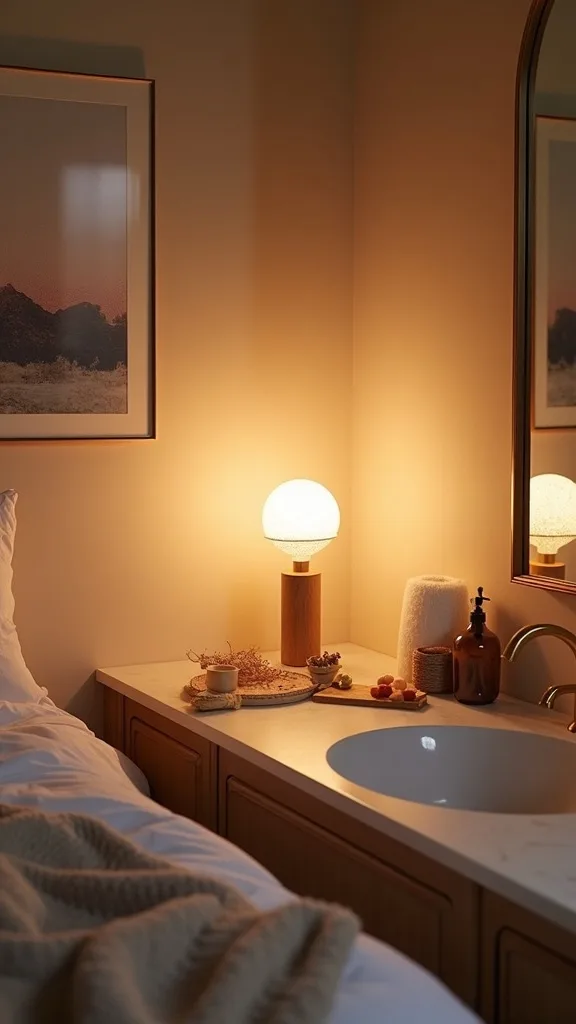
25. How do you keep the space personal over time instead of ‘decorated’?
A bedroom stays special when it collects meaning slowly, like a well-loved beach house. It works because personalization isn’t a one-time styling moment—it’s a living edit that reflects your actual days. Leave one small “open spot” on a dresser or shelf for rotating objects: a shell from a weekend trip, a framed note, a pressed garden bloom. Keep the palette consistent so new pieces blend in without turning into clutter. Choose storage that hides the not-pretty stuff so the meaningful items can breathe—lidded boxes, drawers, and a clean-lined basket. Avoid buying art and decor in one big haul; it can make the room feel like a catalog instead of a home. Pro tip: when every item has a reason to be there, you don’t just have a cozy bedroom—you have a retreat that feels like it grew out of your life, one calm choice at a time.
Final Thoughts
A retreat-level bedroom isn’t built with a perfect set—it’s built with decisions that make your body feel safe. Soft light that doesn’t glare. Textures that don’t itch. A scent that tells your brain, “We’re done for the day.”
The best part is how quickly the room starts giving back. When the nightstand stays clear and the lighting stays warm, your mornings feel less frantic and your evenings feel less like you’re catching up with life. That’s the point of learning how to design cozy bedroom retreat comfort in 2026: not to chase a trend, but to create a place where rest comes naturally.
Do one thing today: swap one bulb to warm white light (2700K–3000K — the cosy, yellowish tone you see in most homes), put a tray on your nightstand, and clear it down to three items—then notice how different the room feels tonight.
What I’d Do Differently
When I first tried this, I made the classic mistake of chasing “cozy” with more stuff—extra pillows, extra decor, extra everything—while keeping the same harsh overhead light. The room looked fuller, but it didn’t feel calmer. The turning point was realizing that lighting is the emotional thermostat of a bedroom. I swapped in warm white light (2700K–3000K — the cosy, yellowish tone you see in most homes), added one dimmable lamp, and suddenly the same bedding felt softer and the walls looked richer. Only then did textures and art start working together instead of competing.
I also wish I’d set one non-negotiable rule from day one: the nightstand stays clear except for three items. That tiny boundary kept the room from sliding back into “catch-all” mode and made my wind-down routine automatic. Start with one lamp and one surface reset tonight—momentum shows up fast once the room finally supports your rest.