
This post contains affiliate links. As an Amazon Associate, I earn from qualifying purchases at no extra cost to you.
The most luxurious outdoor spaces don’t feel big—they feel edited. You know the vibe: a warm glow against clean furniture lines, a drink within reach, and a flame that flickers like you booked a private terrace instead of stepping onto a 6-foot balcony.
This post breaks down the formula behind a high-end fire pit setup in a small footprint: scale (right-size the flame), symmetry (pair seating so it feels balanced), layering (light + texture + a hard surface), and contrast (matte/shine, black/linen, fire/stone). You’ll get 25 specific ideas that work for apartments, patios, and tiny backyards—without swallowing your square footage.
This is perfect for renters, first-time homeowners, and anyone who wants evening ambiance without a full outdoor renovation.
Inside, you’ll find compact tabletop flames, storage-friendly chimineas, multi-use fire tables, and smart styling tricks—like the exact candle grouping that makes a small space look intentional and the one “anchor” piece that keeps everything from feeling temporary.
Below are 25 7 Small Space Backyard Fire Pit Ideas 2026: Compact, Portable, Modern, & Multi-Purpose Solutions for Apartments and Patios that bring hotel-lobby warmth to real-life outdoor square footage—with portable options, modern silhouettes, and details that make the whole corner feel finished.
Products I Recommend for This Project
Here are some of my favourite products to help you bring these ideas to life:
- Outland Living Firebowl 893 Cypress Portable Propane Fire Pit — A compact, reliable propane option that creates a clean flame without a permanent install.
- Solo Stove Ranger 2.0 Smokeless Fire Pit — Great for small patios when you want real wood ambiance with less smoke in close quarters.
- FLASLD Fire Pit Mat (36 inch round) — Protects decking and patio surfaces while visually “grounding” the fire feature.
- TomCare Metal Lantern Set (2-pack) — An easy way to add layered light around the fire so the space feels finished.
- Homemory Flameless LED Candles (warm white) — Adds consistent glow in lanterns without wind or wax mess, perfect for balconies.
1. Balcony-first portable fire pit setup (the small-space visual theme)
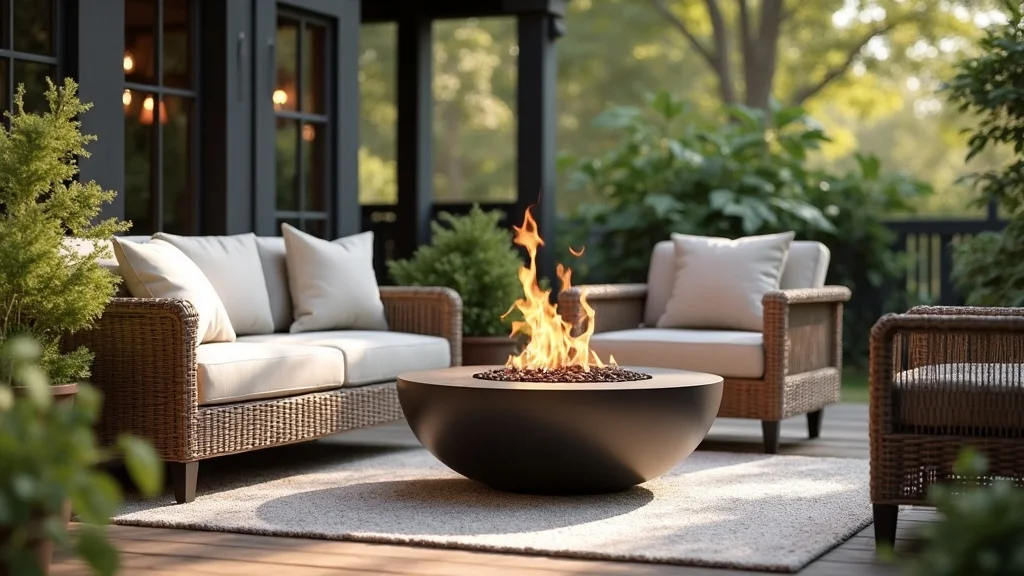
This idea is a compact, portable fire pit moment designed specifically for small patios or balconies, where every inch has to earn its keep. It works because it treats the flame like a styled centerpiece—scaled down, stable, and intentionally framed by furniture rather than floating in the middle of chaos.
Start with a tabletop propane fire bowl on a heat-resistant mat, then “bookend” it with two slim chairs to create instant symmetry. Add a 12–16 inch round tray beside it (or under it, if the base is flat) for a lighter, matches, and a small bowl for spent matchsticks so nothing looks improvised.
For a luxury version, go matte black metal with a pale stone-look surface and linen-look cushions; for an accessible version, choose a simple black bowl and add contrast with a sand-colored outdoor pillow. Keep the palette to two neutrals plus one warm accent (camel, rust, or olive).
Pro tip: Place one throw folded lengthwise over the chair arm—never bunched—so the whole setup reads like a deliberate outdoor lounge.
2. Tabletop fire bowl styled like a coffee-table vignette
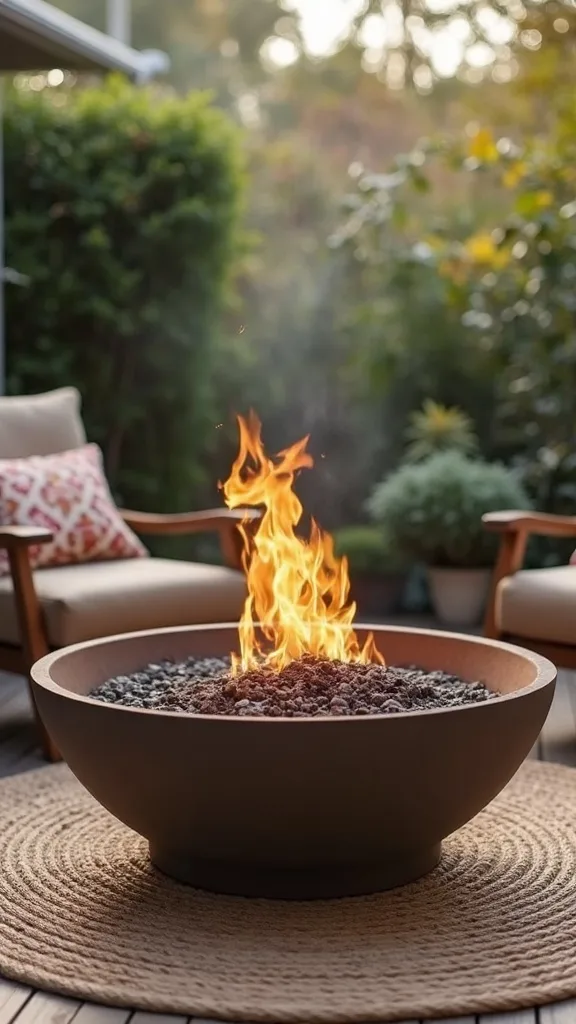
A tabletop fire bowl is the fastest way to get that “evening terrace” feeling without committing to a permanent build. It works because the flame sits at eye level when you’re seated, creating intimacy—especially in tight outdoor rooms.
Implement it like a designer: center the bowl on a small bistro table, then layer a hard-surface moment next to it. Do one slim tray (oval reads softer in small spaces), a low succulent or rosemary pot, and a lidded jar for matches. Leave negative space—at least 30% of the tabletop—so it doesn’t feel crowded.
Luxury version: a stone or concrete-look bowl with glass wind guards and a brass-toned tray. Accessible version: a simple metal bowl and a melamine “stone” tray that wipes clean. Add two glasses and stop there.
Pro tip: Repeat the bowl’s shape once (round bowl, round coaster set) to make the styling feel intentional, not accidental.
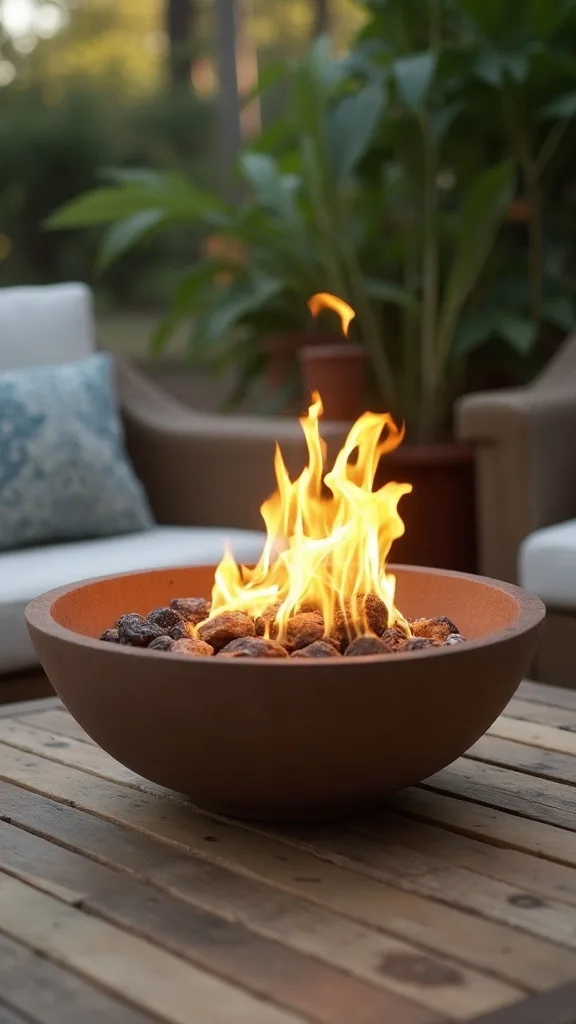
3. Slim rectangular fire table that doubles as a console
A narrow rectangular fire table gives you the drama of a longer flame without stealing walking space. It works because the footprint is “hallway-friendly,” and when the burner is covered, it behaves like a console for serving and styling.
Place it parallel to a railing or wall, leaving a clear path—think of it as a hotel corridor: you want flow. Use the included lid (or a fitted cover) so you can set a tray on top when the flame is off. Keep the tray long and low, with one pitcher, two tumblers, and a small bowl of citrus to add contrast against dark finishes.
Luxury version: a black or charcoal table with a clean glass wind guard and matching side chairs. Accessible version: a smaller steel table with a fitted cover and outdoor-safe faux-stone accessories.
Pro tip: Use one tall item only (like a pitcher). Multiple tall pieces make small patios feel like a crowded shelf.
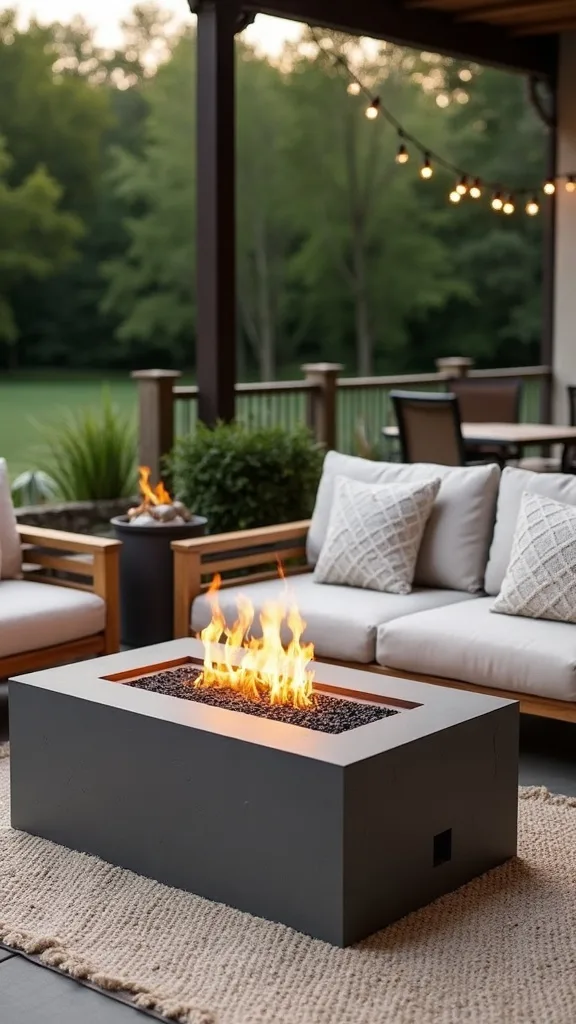
4. Smokeless fire pit on a rolling plant caddy (portable + renter-friendly)
This is a portable smokeless fire pit placed on a sturdy rolling plant caddy so you can move it for wind, guests, or storage. It works because it turns a bulky object into something you can “park” neatly—like furniture—without dragging it across your patio surface.
Choose a caddy rated for the pit’s weight, then add a heat-safe pad on top for stability. Roll it into the center only when you’re using it, then slide it back to a corner when you want floor space for yoga, kids, or a small dining setup. Create layering by adding two lanterns behind the pit at different heights—one tall, one short.
Luxury version: a stainless smokeless pit with matte black lanterns and a wool-look outdoor throw. Accessible version: a smaller steel smokeless pit with simple LED lanterns in warm white light (2700K–3000K — the cosy, yellowish tone you see in most homes).
Pro tip: Keep your wood in one lidded bin—visible stacks read rustic, but in tiny spaces they read messy.
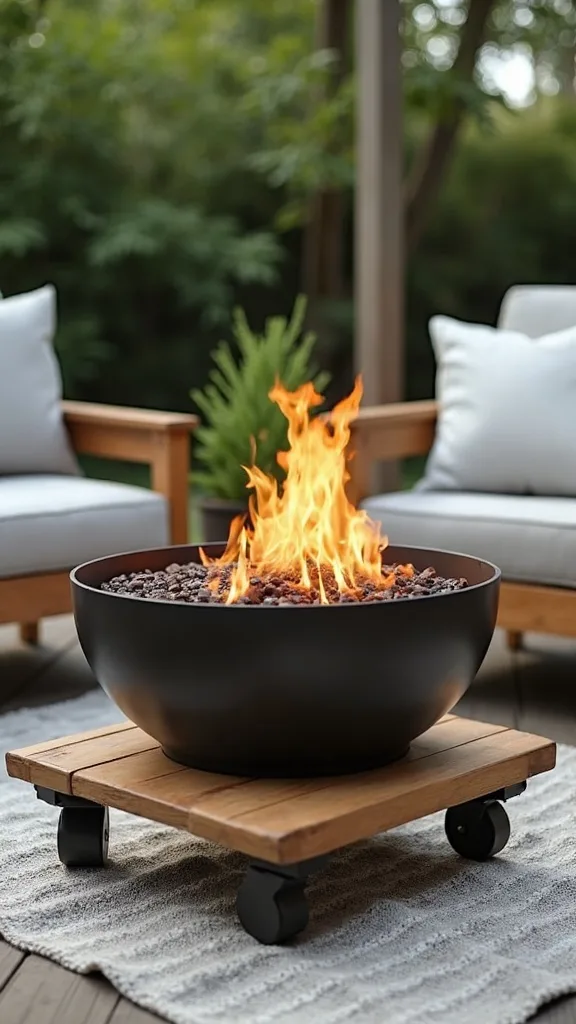
5. Wall-facing fire pit layout (so the center stays open)
Most small patios fail because everything gets shoved into the middle. A wall-facing fire pit layout works because it keeps the center open, making the space feel larger while still giving you that gathered-by-the-fire feeling.
Place the fire pit 18–24 inches from the wall (enough breathing room for safety and cleaning), then float two chairs facing it rather than facing each other. Add a narrow side table between the chairs for drinks—this is your “luxury hotel” move. Use a single outdoor rug to define the zone, sized so the front legs of both chairs sit on it for clean scale.
Luxury version: matching chairs and a low fire bowl centered on the wall. Accessible version: two different chairs in the same color family, unified with matching cushions.
Pro tip: Hang one outdoor mirror or framed weather-safe art above the pit line to bounce light and make the whole corner feel designed.
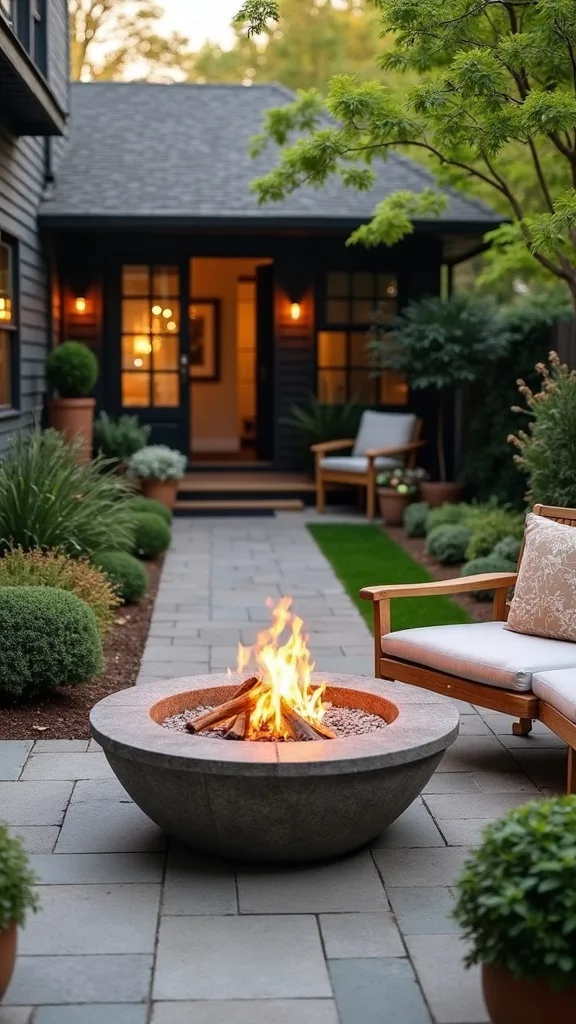
6. Corner fire pit nook with two chairs (the symmetry shortcut)
A corner nook is the easiest way to make a tiny outdoor area feel like a destination. It works because corners naturally “hold” a scene, and two chairs instantly create symmetry—your brain reads it as finished.
Set a small round fire pit or tabletop flame at the corner’s center point, then angle two chairs toward it like you’re in a boutique courtyard. Add one small lumbar pillow per chair, then one shared throw—folded and placed across the back of the chair closest to your door for easy grabbing. Finish with a small side table on the outside edge so traffic doesn’t cut through the seating zone.
Luxury version: identical low-profile chairs in a textured neutral with a concrete-look fire feature. Accessible version: simple resin wicker chairs with crisp ivory cushions and a compact metal fire bowl.
Pro tip: Keep the “corner triangle” tight—too much distance makes it feel like furniture waiting for a purpose.
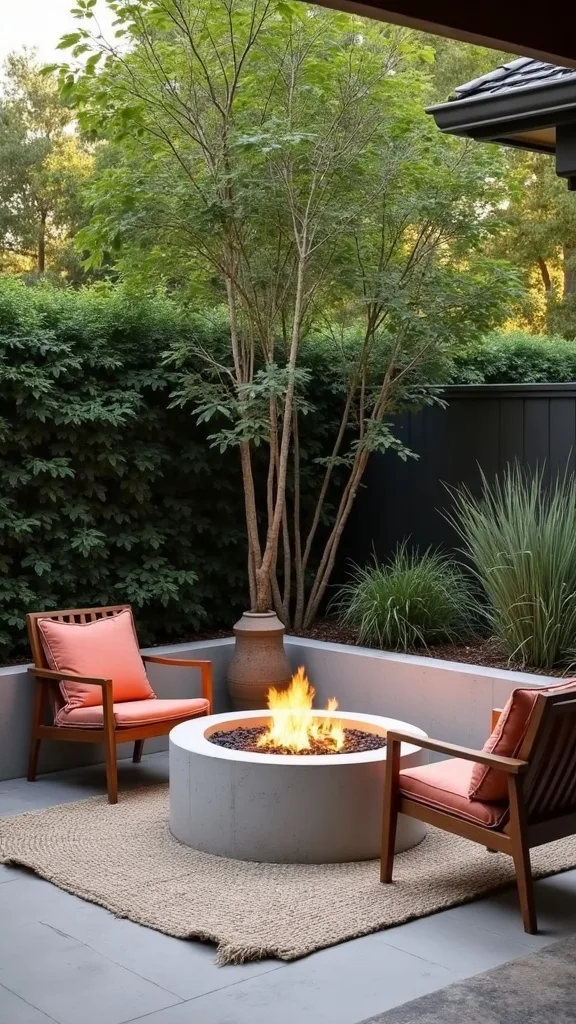
7. Fire pit + storage bench combo (multi-purpose seating that hides clutter)
This idea pairs a compact fire pit with a storage bench so your seating also solves the mess. It works because small spaces can’t afford “single-use” pieces; hidden storage keeps the scene calm and elevated.
Place the bench along the longest wall, then position the fire pit opposite it with one accent chair to complete a three-point seating plan. Style the bench like an interior: one outdoor pillow on each end, and a throw folded into thirds and draped over one corner—clean, not casual. Store a fire blanket, lighter, and extra cushion covers inside so you can reset fast after weather changes.
Luxury version: a slatted teak-style bench with tailored striped cushions. Accessible version: a resin deck box with a fitted cushion top and two matching pillows to disguise it.
Pro tip: Add a low, heavy tray on the bench seat (off to one side) as a “drop zone” so guests don’t balance drinks on cushions.
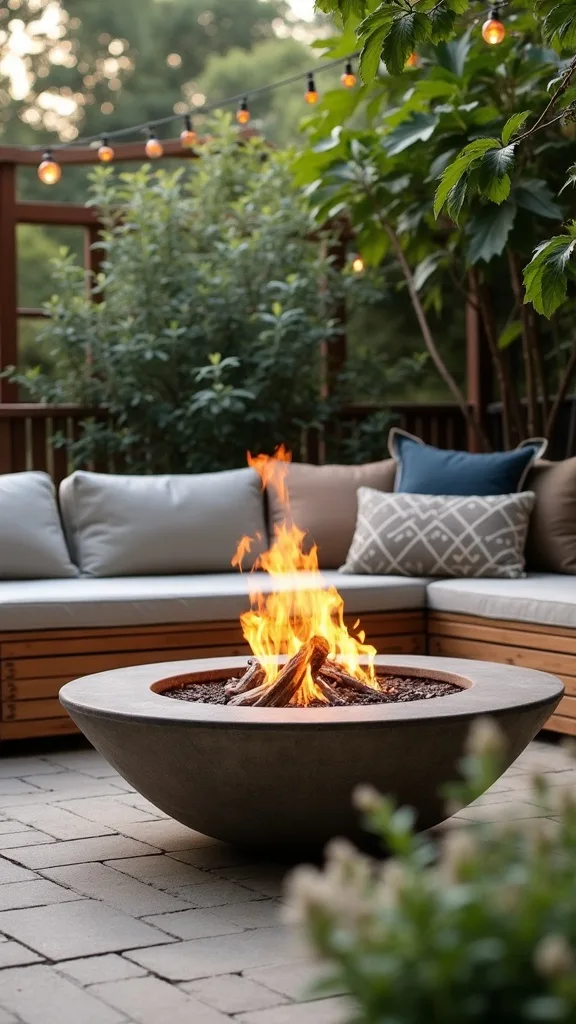
8. Bistro set + tabletop flame (for patios under 60 sq ft)
If your patio is tiny, leaning into a bistro footprint can look more intentional than forcing a lounge set. This works because it respects scale: a small table, two chairs, and a flame element reads Parisian—never cramped.
Choose a 24–28 inch bistro table and add a compact tabletop fire bowl in the center. Keep chairs armless or slim-armed so they tuck in. Add one outdoor cushion per chair and skip anything bulky. For layering, hang string lights overhead in warm white light (2700K–3000K — the cosy, yellowish tone you see in most homes) and place one lantern on the floor near the wall to create depth.
Luxury version: black metal bistro set with a stone-look bowl and linen napkins. Accessible version: a simple folding set with a metal fire bowl and a small tray for matches and coasters.
Pro tip: Use matching coasters. Tiny spaces magnify tiny mismatches.
Cost & Materials Estimate
A small-space fire pit setup can be done thoughtfully for a modest spend, or upgraded into a true “outdoor living room” with a few high-impact pieces.
| Item | Estimated Cost | Where to Buy |
|---|---|---|
| Tabletop propane fire bowl (compact) | $45–$120 | Amazon |
| Heat-resistant fire pit mat (24″–36″) | $18–$45 | Home Depot |
| 20 lb propane tank (empty + first fill) | $55–$85 | Lowe’s |
| Pair of slim outdoor chairs | $120–$320 | IKEA |
| Outdoor tray + candle lantern set | $35–$110 | Wayfair |
Total estimated cost: $273–$680 Save by choosing a tabletop flame and upgrading with pillows; splurge on the chairs because comfort is what keeps you outside.
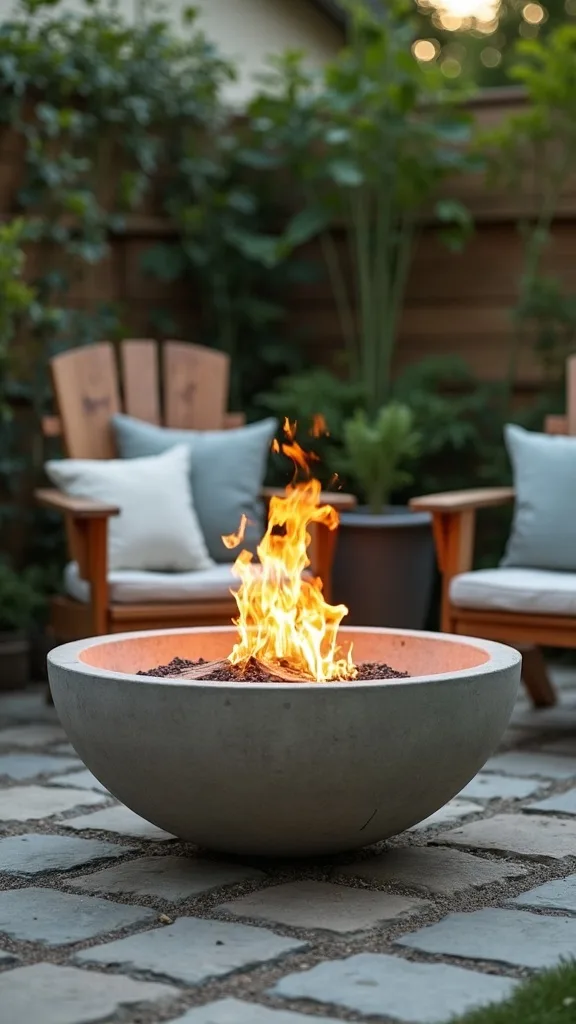
9. Concrete-look bowl on pavers (a modern look without a full build)
A concrete-look fire bowl paired with a mini paver pad gives you the “architectural” outdoor look—without pouring anything. It works because contrast (smooth bowl, textured pavers) makes even a small patio feel designed.
Create a 3×3-foot paver square using thin concrete pavers or large stepping stones, then center your bowl. Keep furniture slightly pulled back so the bowl has a clear visual boundary. Add two low planters flanking the paver area to frame it; that’s your symmetry cue. Finish with a black tray on a nearby side table to hold a lighter and a small candle snuffer.
Luxury version: a minimalist bowl with crisp edges and black gravel accents. Accessible version: a lightweight “concrete-look” composite bowl and standard gray pavers from a big-box store.
Pro tip: Repeat the paver color in one other place—like a gray cushion—so the whole scene feels cohesive, not like a random DIY patch.
10. Fire pit coffee table with a cover (daytime table, nighttime glow)
A fire pit coffee table is the ultimate multi-purpose piece for small outdoor living. It works because when the flame is off, you still have a functional surface—no awkward “what do we do with this bowl” problem.
Choose a table with a flush-fitting lid, then style it like an indoor coffee table: one tray, one book (outdoor-safe or a decorative object), and one small plant. Keep the tray centered and leave room for plates. When it’s time to light it, lift the tray off in one move and set it on a side table—this is why the tray matters.
Luxury version: a low-profile rectangular table in matte charcoal with a glass wind guard. Accessible version: a smaller square table with a simple metal lid and neutral accessories.
Pro tip: Keep your “fire accessories” in one pouch inside the table (if it has storage) so setup feels effortless—and effortless always reads expensive.
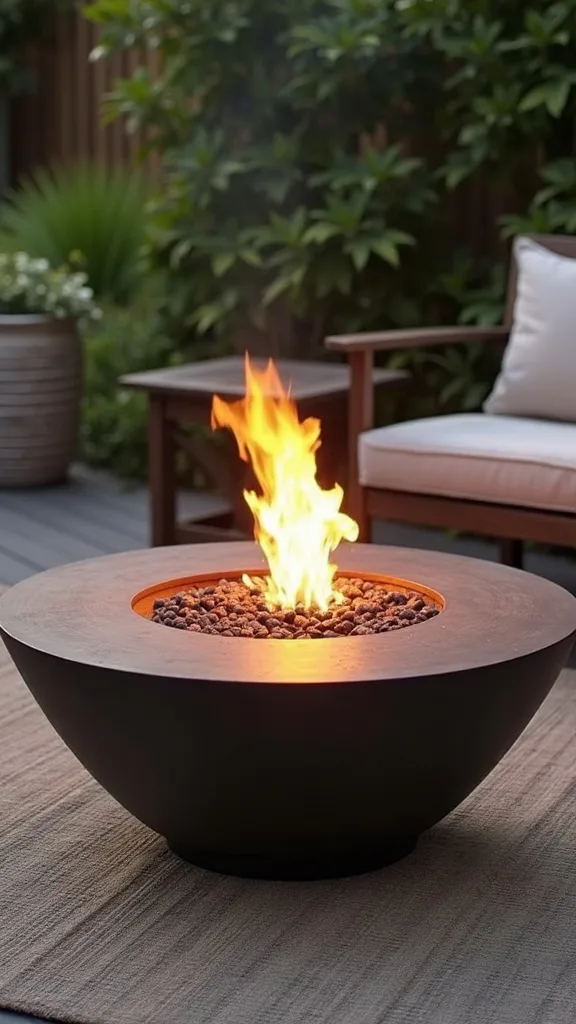
11. Café-lounge layering: fire pit + lantern trio + one throw
This is less about buying more and more about staging light like a designer. It works because a backyard fire alone can look harsh; layered warm light softens edges and makes small spaces feel intimate.
Set your fire pit as the anchor, then add three lanterns: one tall, one medium, one small—clustered off to one side, not evenly spaced everywhere. Use flameless candles inside for consistent glow and safety. Finish with exactly one throw placed with intention: folded into a long rectangle and laid over the seat back so it reads tailored. Add a small side table with a coaster stack and a lidded match jar.
Luxury version: black lanterns with real glass panels and ivory candles. Accessible version: budget lanterns plus LED candles in warm white light (2700K–3000K — the cosy, yellowish tone you see in most homes).
Pro tip: Keep all candle heights within two “families” (short and tall). Too many sizes look like you’re decorating, not styling.
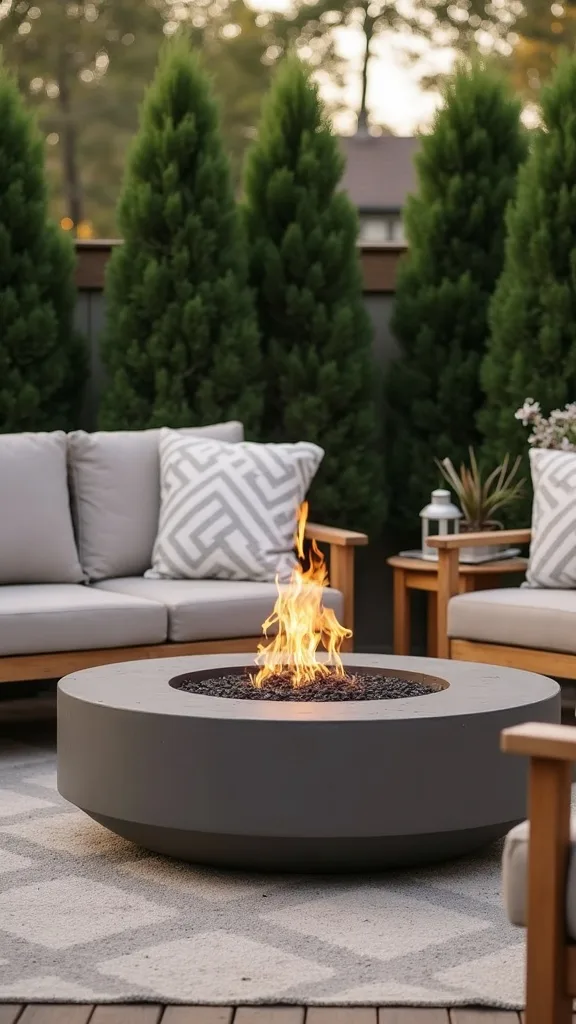
12. Minimalist black-on-black fire pit moment (small space, big impact)
A monochrome black setup looks modern and intentional, especially on tiny patios where visual clutter is the enemy. It works because reducing color variation increases perceived calm—and calm reads luxurious.
Choose a matte black fire pit and pair it with black chairs or a black bistro set. Then add contrast with texture, not color: a woven outdoor rug, ribbed planters, and a single creamy cushion. Keep accessories minimal—one slim tray in black or smoked acrylic, and one clear carafe for water so the flame remains the focal point.
Luxury version: powder-coated metal furniture with a concrete-look floor lantern. Accessible version: budget black chairs upgraded with thicker seat pads and one high-quality pillow cover.
Pro tip: Add one “shine” element (a stainless lighter, a glass wind guard). That tiny contrast makes the whole monochrome scene feel designed rather than flat.
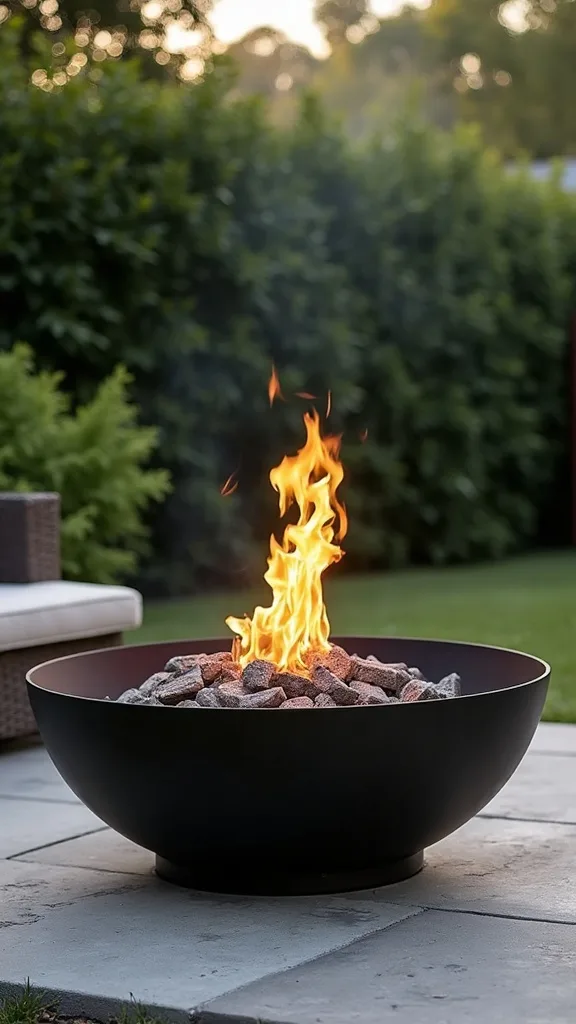
13. Foldable fire pit for renters (store it like luggage)
A foldable fire pit is a smart pick when you can’t leave anything out—or you simply want your patio back during the day. It works because it gives you real flame with zero permanence and minimal storage footprint.
Pick a foldable model that packs into a carry bag, then designate one storage spot: a shelf in the coat closet or a slim deck box outside. Set it up on a fire-resistant mat, and keep your wood in a second bag so setup feels like a ritual, not a scavenger hunt. For styling, add two identical chairs and a small side table—symmetry keeps it polished even if everything is temporary.
Luxury version: a clean-lined foldable pit with a structured wood tote and matching black accessories. Accessible version: a simple foldable pit with a canvas log carrier and two outdoor cushions to soften the scene.
Pro tip: Don’t “decorate” with extra stools. In small spaces, extra seating often reads like clutter unless you truly need it.
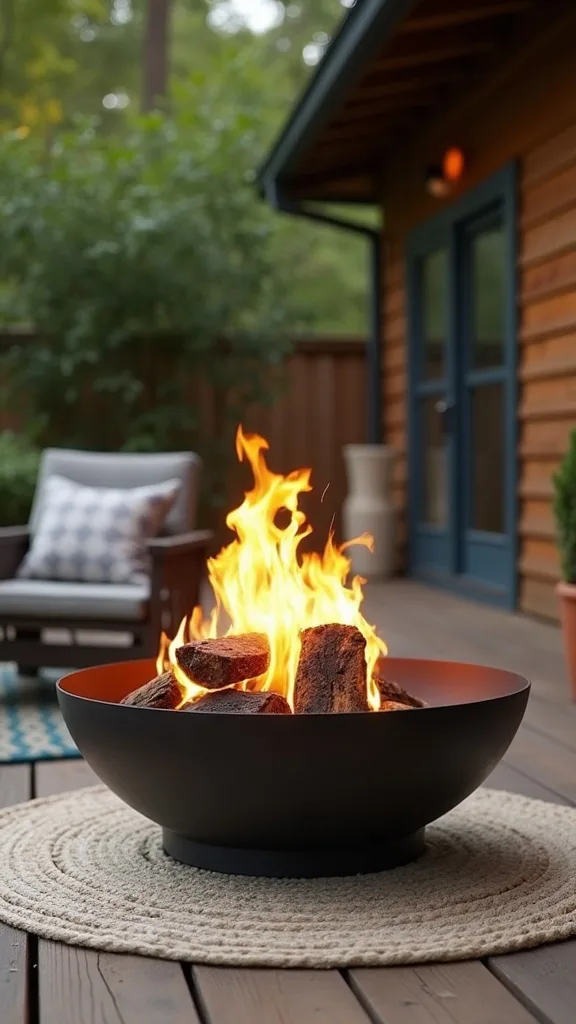
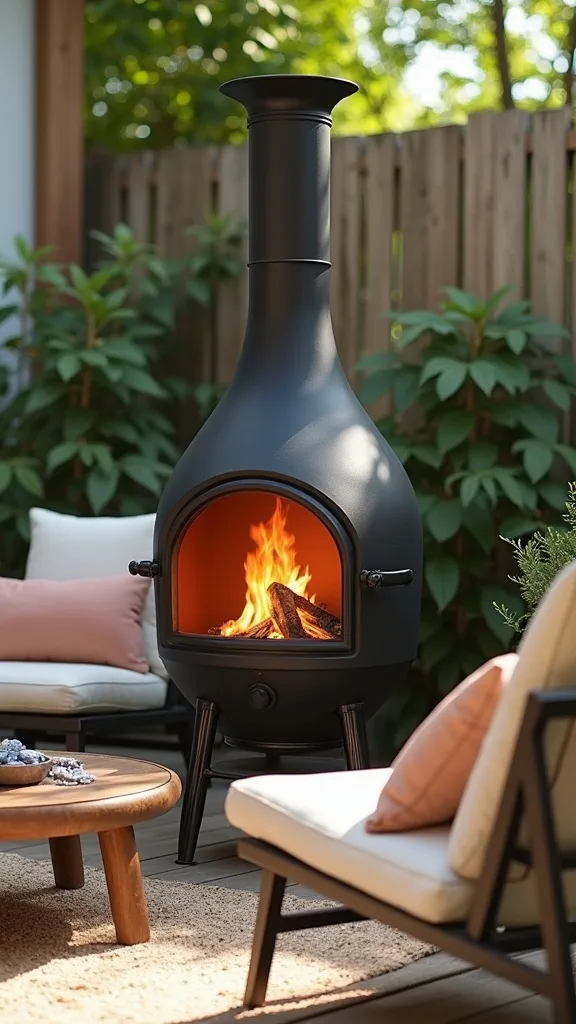
14. Chiminea on a small patio (vertical heat, smaller footprint)
A chiminea is a vertical fire feature, which means you get warmth and presence without needing a wide bowl. It works beautifully on narrow patios because the shape draws the eye up, making the space feel taller.
Place the chiminea on a heat-safe pad and position seating slightly off-center so you keep a clear walking lane. Style around it with a low basket (for gloves or a fire blanket) and one tall plant to balance the height—this is contrast in form, not color. Keep the palette earthy: charcoal, clay, and sand.
Luxury version: a matte black chiminea paired with a slim teak side table and tailored cushions. Accessible version: a cast-iron look chiminea with a simple metal side table and neutral outdoor pillows.
Pro tip: Avoid tiny scattered decor around the base. One basket and one lantern look intentional; five small items look like yard-sale styling.
15. Fire pit + outdoor bar cart (entertaining without a dining set)
If you want to host in a small outdoor area, a bar cart is often smarter than cramming in a full dining table. It works because the cart adds a functional surface and “room” energy while the fire provides the anchor.
Place the cart against a wall, then set your fire pit 4–6 feet away so guests naturally gather between the two. Style the cart with restraint: one tray for glasses, one ice bucket, and one small vase with greens. Add two stools only if they tuck fully under the cart; otherwise, keep seating to your main chairs for better flow.
Luxury version: a slim metal cart with a marble-look tray and cloth cocktail napkins. Accessible version: a basic cart upgraded with matching acrylic glasses and a woven runner.
Pro tip: Put a small lidded bin on the bottom shelf for trash and bottle caps—hidden utility is what makes entertaining feel effortless.
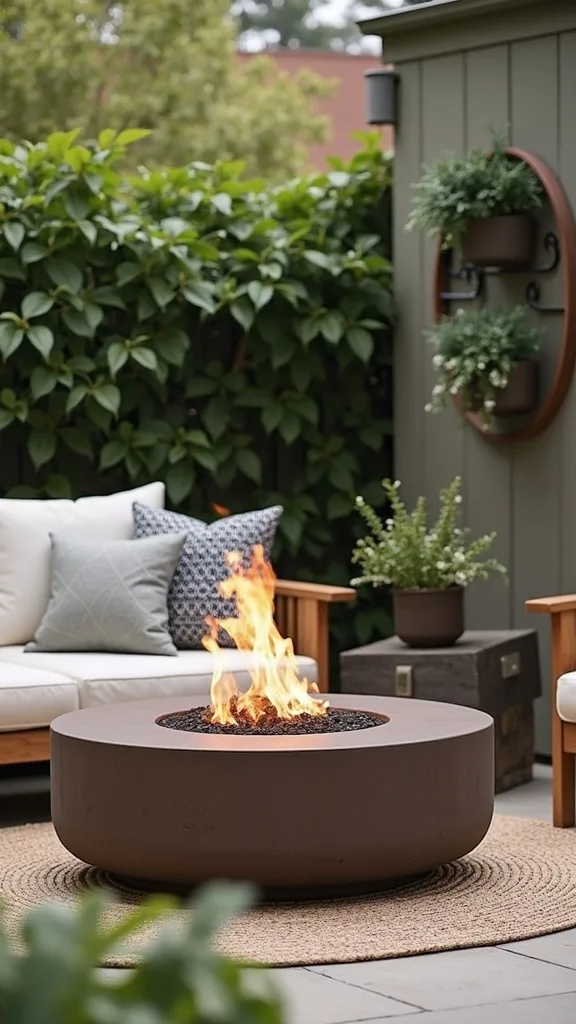
16. Built-in look using a fire pit surround (without construction)
This idea creates a “built-in” visual by surrounding a portable pit with a low, modular border. It works because the surround makes the fire feature look permanent and upscale—even if it’s completely removable.
Use interlocking outdoor edging blocks or a low planter box system to form a square around the pit, leaving safe clearance. Top the surround with a narrow ledge for drinks (stone-look pavers work well), then keep the styling minimal: two matching coasters and one small dish for a lighter. Frame the area with two identical planters for symmetry and instant architecture.
Luxury version: dark stone-look surround with pale gravel and structured boxwood-style planters. Accessible version: standard retaining blocks with pea gravel and simple black planters.
Pro tip: Keep the surround height low. Once it gets tall, it starts to feel like a barrier and shrinks the space visually.
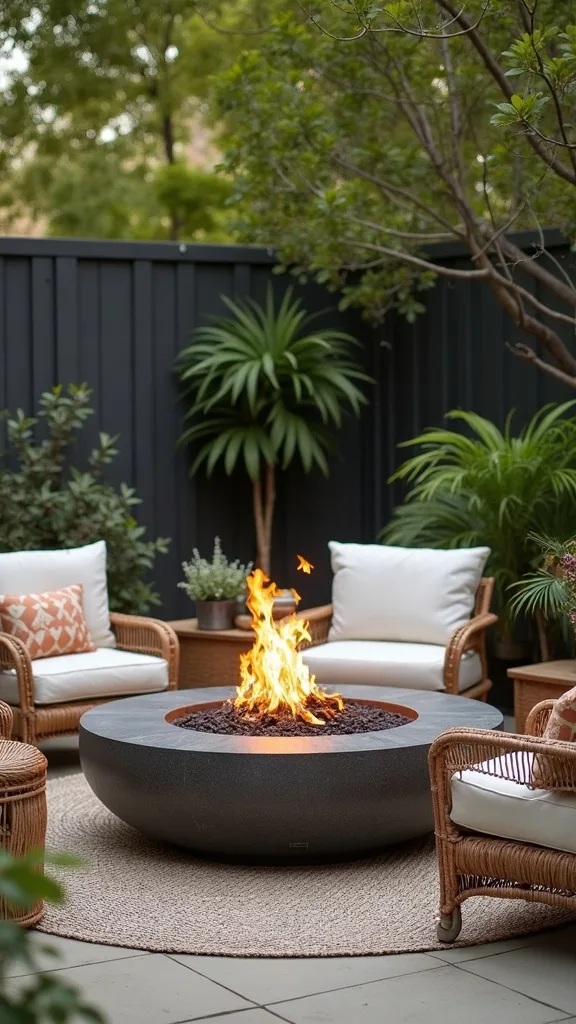
17. Sunset-facing seating plan (use the view as your “third wall”)
In small outdoor areas, your best design move is often orientation, not more furniture. This works because placing your fire pit so you face the sunset (or the best view) makes the space feel expansive—even if it’s a tiny slab of concrete.
Set the fire pit slightly to the side of your sightline so the flame becomes ambiance, not an obstacle. Create a simple two-chair setup with a shared side table, then add a low outdoor rug that extends beyond the chairs to “fake” a larger room. For contrast, pair a soft-texture pillow with a sleek metal chair frame.
Luxury version: matching lounge chairs with a slim fire table and one sculptural planter. Accessible version: two affordable chairs unified by matching cushion covers and one good-looking tray.
Pro tip: Avoid putting the fire pit dead center unless you have walking space on both sides—center placement can make a small patio feel like an obstacle course.
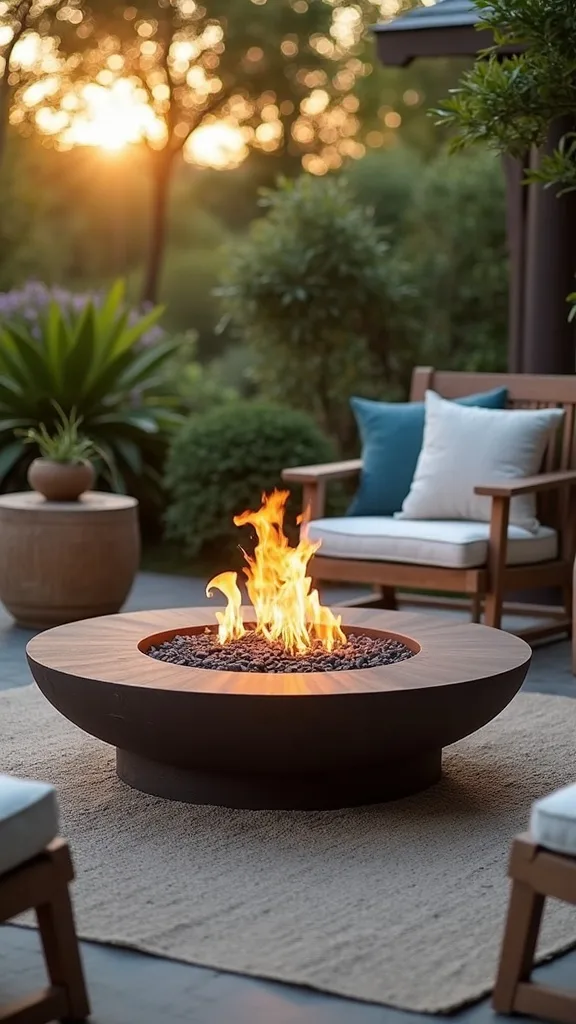
18. Micro gravel zone for a fire pit (clean lines, low cost)
A small gravel zone gives you that modern courtyard texture and helps visually separate the fire area from the rest of the patio. It works because texture creates “rooms,” and rooms make small spaces feel planned.
Outline a 3×4-foot rectangle with edging, add landscape fabric, and pour pea gravel. Place a compact fire bowl in the center and add two stepping stones leading into the zone—instant intention. Keep seating on the solid surface and let the gravel be your visual stage. Add a single lantern on the gravel’s corner and a tray on the side table for a lighter and citronella (if needed).
Luxury version: pale gravel with a black bowl and minimal planters. Accessible version: standard pea gravel with inexpensive edging and a simple metal pit.
Pro tip: Don’t mix gravel colors. One tone looks curated; multiple tones look like leftovers.
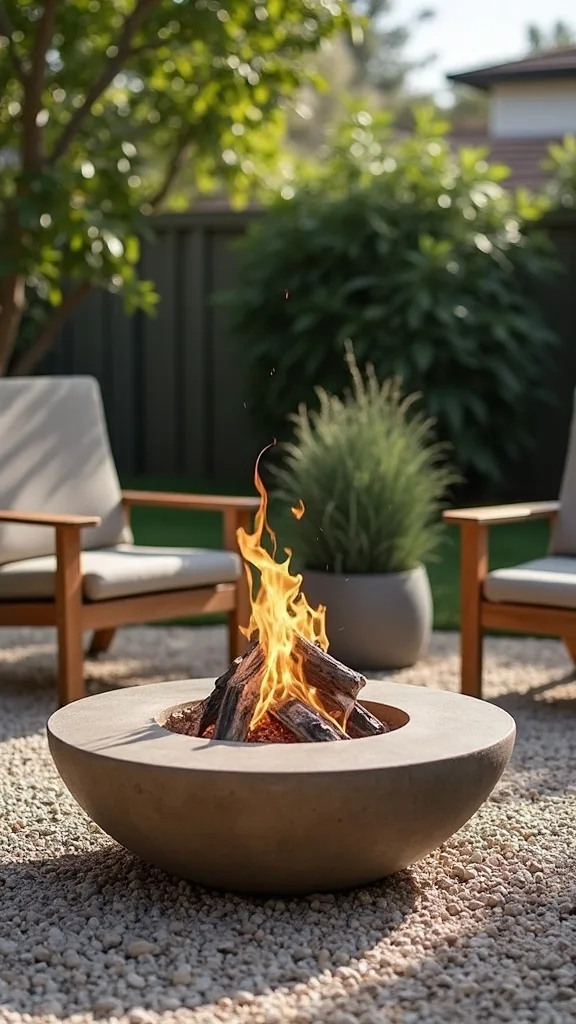
19. Planter + fire pit pairing (greenery makes the flame feel softer)
Fire can feel stark on a small balcony unless you soften it with greenery. This works because plants add depth and a “garden” feeling, making the flame look like part of a lifestyle instead of a gadget.
Place two planters behind the fire pit to create a backdrop—think of them as your outdoor headboard. Choose one tall plant (like a dwarf olive or ornamental grass) and one medium, then keep the fire pit low in front. Add a small side table with a tray in a warm wood tone for contrast against black metal.
Luxury version: matching tall planters in matte black with sculptural greenery and a concrete-look bowl. Accessible version: resin planters in the same color, upgraded with a top layer of decorative stones to hide nursery soil.
Pro tip: Avoid too many small pots. Two or three larger planters look intentional; seven tiny ones look like a plant swap meet.
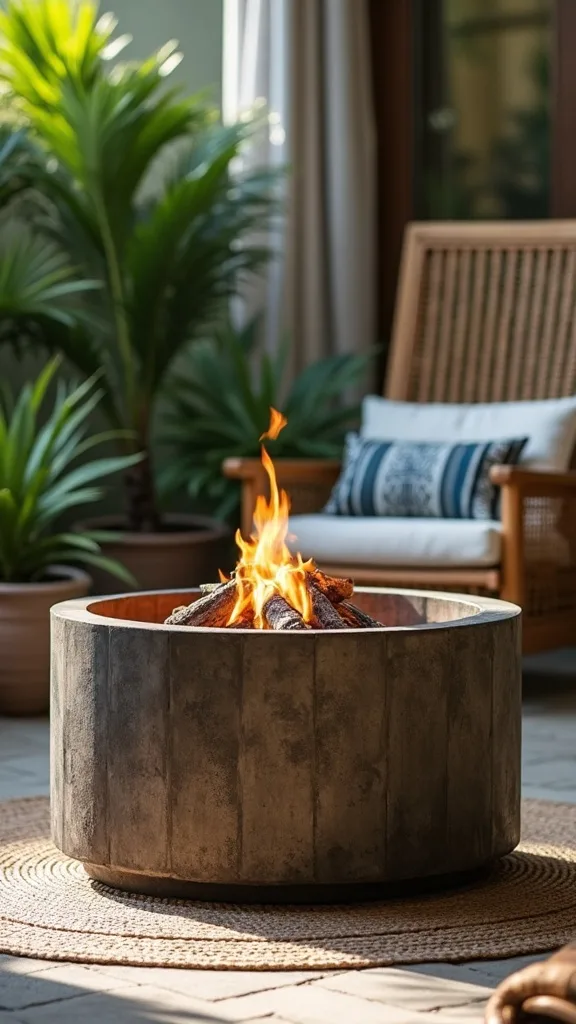
20. Compact sectional “L” with a small square fire table
A compact “L” seating arrangement can work in small backyards if the fire table is scaled correctly. It works because the L creates enclosure—luxury’s secret ingredient—without needing walls.
Choose a small square fire table and tuck it into the inside corner of the L so everyone has access. Keep the sectional low-profile and avoid oversized arms. Style with one throw placed on the outer corner seat (folded, not draped), and add a tight candle grouping on a side table: three candles in the same color, two heights, one tray.
Luxury version: neutral upholstered outdoor sectional with a slim black fire table and stone coasters. Accessible version: modular resin seating with upgraded cushion covers and one elevated tray.
Pro tip: Leave at least one “open” edge. When seating wraps fully around a tiny area, it can feel boxed in rather than cozy.
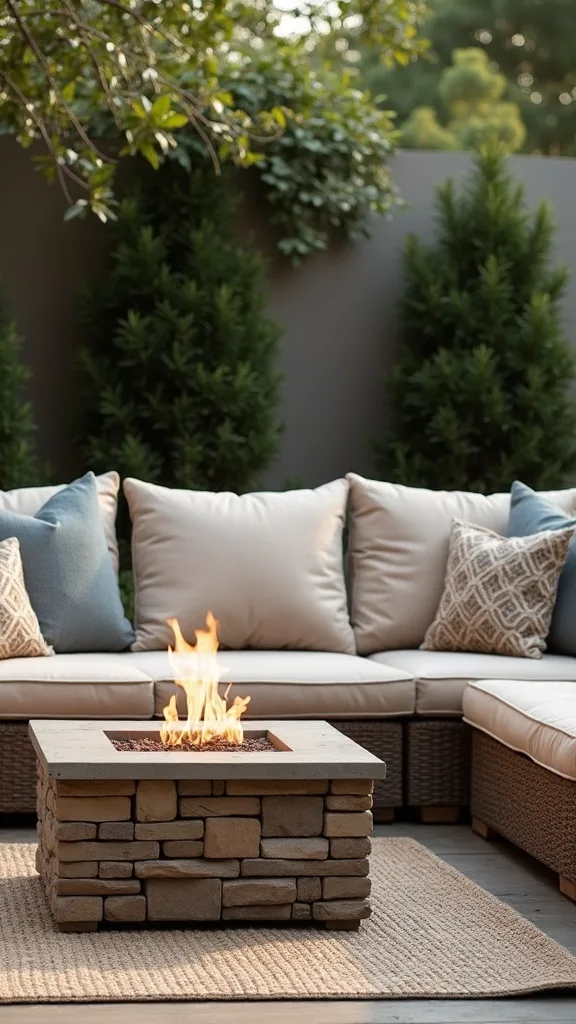
21. Solo chair + side table + tabletop flame (the one-person ritual)
Not every fire pit moment needs to be a party. A solo chair setup works because it turns a small patio into a personal ritual space—morning coffee, evening wind-down, a good book, and a contained flame.
Place one comfortable chair at a slight angle to the railing (so you get a view), then add a small side table and a tabletop fire bowl. Keep the styling quiet: one coaster, one small dish for a ring or tea bag, and one lantern on the floor. Choose a single accent color—like tobacco leather or deep olive—to add contrast without making the space busy.
Luxury version: a sling lounge chair with a stone-look bowl and a brass-toned lighter. Accessible version: a simple outdoor chair upgraded with a thicker cushion and a woven lumbar pillow.
Pro tip: If you only buy one “extra,” make it the side table. A stable surface is what makes the whole scene feel livable.
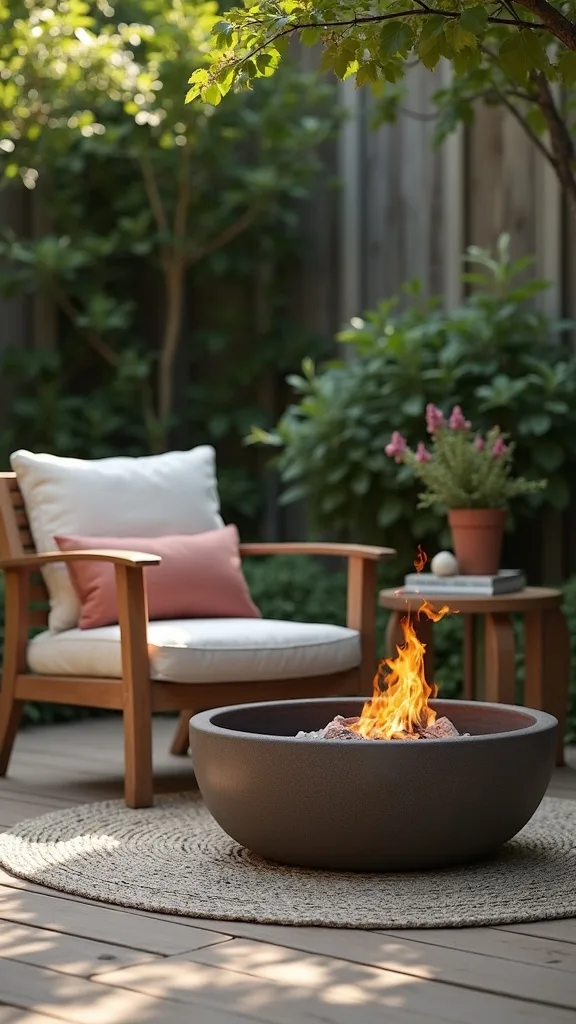
22. Wind-friendly setup with a glass wind guard (steady flame on breezy balconies)
Breezy balconies can make flames flicker unevenly or go out—frustrating and not exactly relaxing. This works because a glass wind guard protects the flame, letting you enjoy the ambiance without constant relighting.
Choose a fire feature that supports a wind guard, then position it so the prevailing wind hits the guard’s flat side rather than a corner. Add two chairs and keep textiles minimal so nothing flaps around the flame. For layering, use two lanterns with flameless candles instead of multiple loose votives.
Luxury version: clear glass guard with a minimalist burner and tailored seat cushions. Accessible version: a smaller tabletop burner paired with a compatible guard and a simple heat-safe mat.
Pro tip: Avoid lightweight décor near the flame—paper napkins, thin throws, and dangling string lights. In wind, “cute” becomes “chaotic” fast.
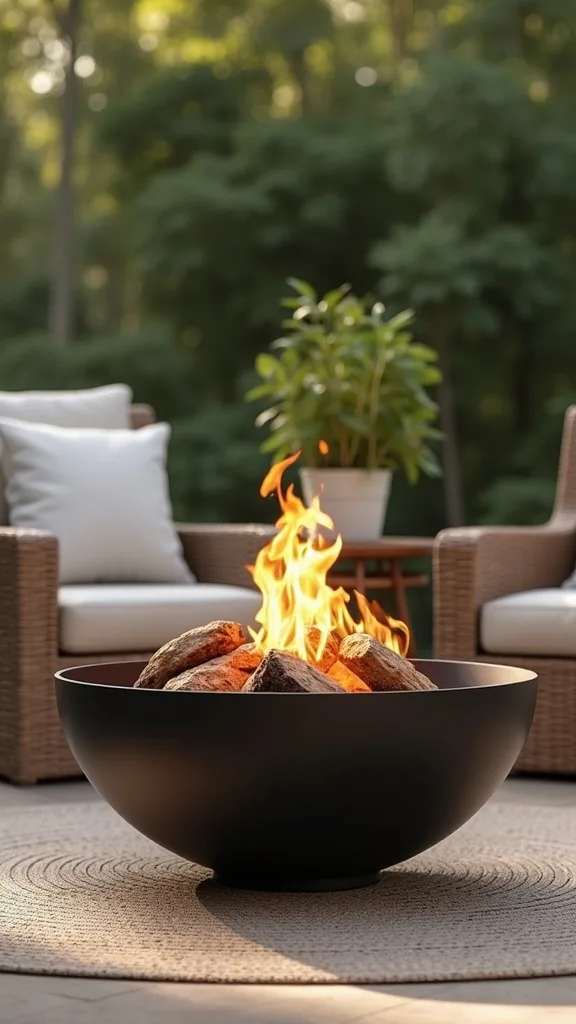
23. No-grill balcony alternative: a clean propane tabletop flame + s’mores tray
Many apartments restrict charcoal or open wood burning, but you can still create the ritual of a fire night. This works because a propane tabletop flame gives you that glow, and a styled s’mores tray turns it into an experience.
Build the moment with one tray: graham crackers, chocolate, marshmallows, and skewers—arranged in neat rows like a boutique snack board. Place the tray on a side table, not the same surface as the flame. Keep seating symmetrical with two chairs, and add one shared throw for softness.
Luxury version: a stone-look tray with matching ceramic ramekins and linen napkins. Accessible version: a simple metal tray with paper-lined ramekins and a lidded container for leftovers.
Pro tip: Don’t set food packaging out. Decant into small bowls—this single step is what makes the whole setup feel elevated.
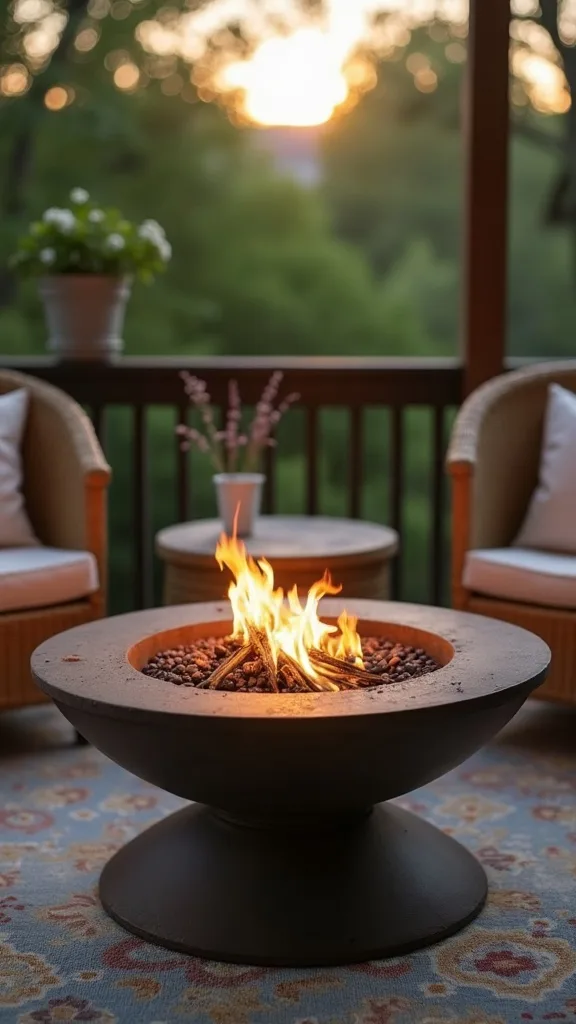
24. Fire pit as the anchor for an outdoor “entry moment” (tiny patio by the door)
If your only outdoor space is a small pad right outside the door, treat it like an entry vignette—just outdoors. It works because the fire feature becomes an anchor, and anchoring is what stops small areas from looking like leftover space.
Place a compact fire bowl to one side, then add a slim outdoor mat at the threshold and one tall planter to frame the doorway. Use a narrow bench or single chair opposite the bowl to create balance. Add a small hook or wall-mounted caddy for a lighter and grill gloves so you’re not running inside mid-moment.
Luxury version: matching planters flanking the door and a minimalist black bowl. Accessible version: one statement planter and a budget fire bowl, unified with black hardware and a clean tray.
Pro tip: Keep the threshold area clear. Shoes and packages instantly downgrade the scene—store them inside so the outdoor moment stays calm.
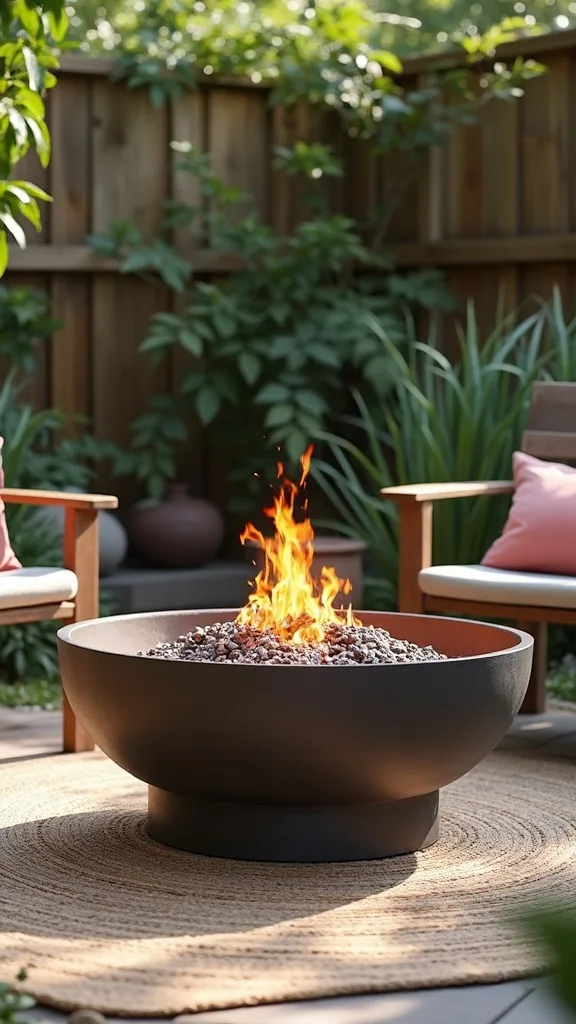
25. The “intentional finish” checklist: tray, textiles, and one repeating shape
This isn’t a single product—it’s the styling move that makes every small patio fire pit look designed. It works because repetition and restraint create luxury: one tray to corral, one textile to soften, and one repeating shape to tie it together.
Choose your repeating shape first (round: bowl, coasters, lantern; or rectangular: fire table, tray, rug). Then add one tray for the practical pieces—lighter, matches, snuffer—so nothing floats. Finish with one throw positioned with intention (folded, placed, not tossed) and two cushions max per seat. Keep colors tight: two neutrals plus one accent.
Luxury version: a weighted stone or metal tray and textured performance fabric pillows. Accessible version: a simple melamine tray and upgraded pillow covers in a rich neutral.
Pro tip: Take one step back and remove one item. The edit is what makes the backyard fire feel like a destination.
Final Thoughts
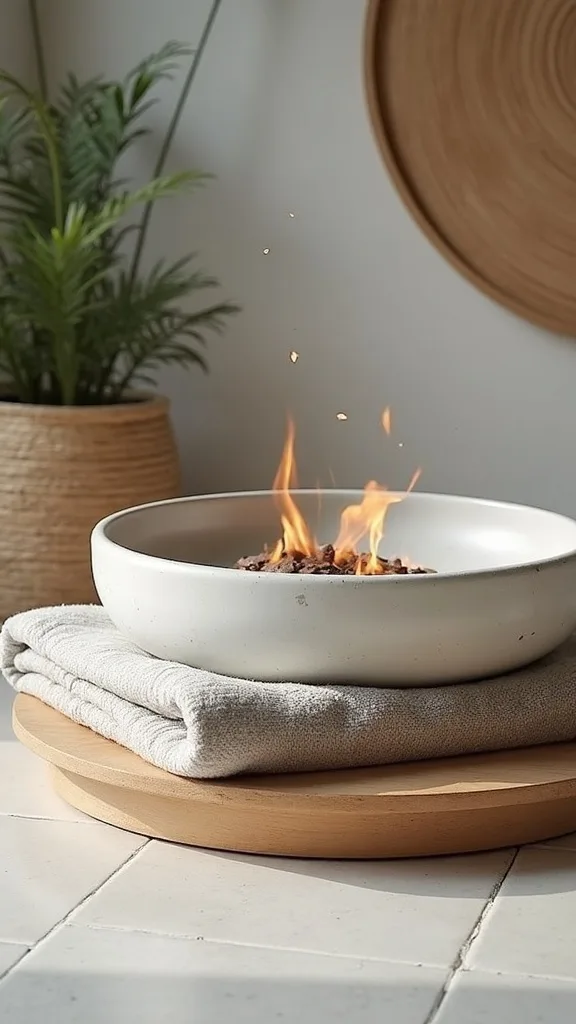
A small outdoor space doesn’t need more furniture—it needs clearer decisions. When your fire feature is properly scaled, your seating is symmetrical, and your lighting is layered, the whole patio reads like a room instead of a leftover slab.
One thing to avoid: treating the fire pit like décor you sprinkle into an already-busy corner. Fire is a focal point. Give it breathing room, give it a companion surface (a side table or covered fire table), and keep accessories corralled so the scene stays calm.
Do this today: measure your usable patio/balcony footprint, then set two chairs in a balanced pair and mark a 24-inch-wide “fire zone” between them with painter’s tape—once you see the layout, choosing the right compact fire pit becomes simple, and the space instantly feels intentional.
What I’d Do Differently
When I first tried this, I made the classic small-patio mistake: I bought the fire feature first, then tried to “fit” everything else around it. The result was a cramped layout where the fire pit sat dead center like a coffee table nobody could walk past, and I kept moving chairs every time someone stepped outside. It looked fine in a quick photo, but in real life it felt like a constant shuffle. The correct approach is to choose the seating plan first—two chairs with a clear path to the door—then pick a fire pit that matches that footprint. Once I treated the flame as an accent (not the entire floor plan), the whole space finally felt calm and usable.
I also wish I’d known how much a single tray changes the vibe. Corral the lighter, matches, and coasters in one place and suddenly nothing feels temporary. Pick your repeating shape (round or rectangular), commit to it across two or three items, and then start—today—by moving your chairs into a balanced pair and measuring the open space between them.