
This post contains affiliate links. As an Amazon Associate, I earn from qualifying purchases at no extra cost to you.
The first time I tried to “organize” my garage, I proudly installed shelves… and immediately blocked the freezer door. Nothing says summer reading like a popsicle hostage situation. (Also, why are garage doors so dramatic about space?)
Here is the thing: a garage can be more than a place where folding chairs go to retire. This guide is a design-forward, real-life plan for turning a sliver of your garage into a home library + reading nook without pretending you don’t own a leaf blower.
This is perfect for anyone who wants a cozy reading corner for Summer Reading but needs it to coexist with storage, tools, and the general chaos of American adulthood.
Inside you’ll find a floor-to-ceiling built-in moment with a rolling ladder (yes, even in a garage), smarter shelf spacing, lighting that flatters paper pages, and styling tricks that make your home bookshelf look curated—not like a library book sale.
Below are 25 Home Library & Reading Nook Ideas that turn garage “organization” into a genuinely elegant room you’ll use all season.
1. Go full library: floor-to-ceiling built-ins + rolling ladder (yes, in a garage)
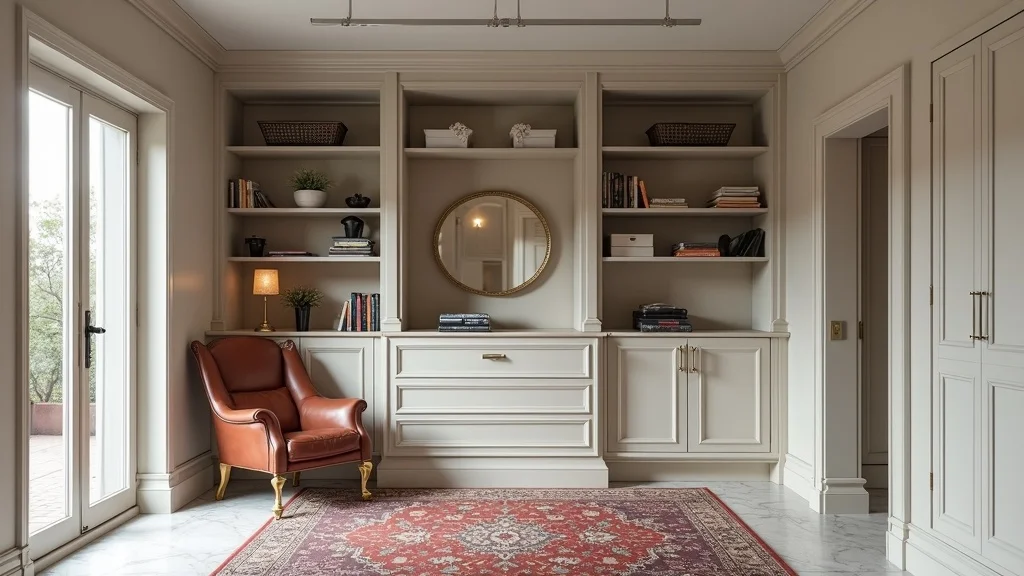
This is the cinematic version: built in bookshelves from floor to ceiling, a rolling ladder, a chesterfield chair, a brass reading lamp, and a Persian rug that makes the whole thing feel like a private club. It works because height creates grandeur, and grandeur makes you forget you’re ten feet from a rake.
Implement it by claiming one uninterrupted wall (ideally 8–12 feet wide) and keeping a minimum 36-inch walkway so you’re not shimmying past the ladder. Build a base of closed cabinets for garage-y clutter, then add adjustable shelves above for books and baskets; mount ladder hardware into studs (or a properly installed header) so it’s stable.
Paint the wall unit a deep, inky color—navy, espresso, or olive—for instant sophistication, then add warm white light (2700K–3000K — the cosy, yellowish tone you see in most homes) so pages don’t look like tax forms.
Pro tip: splurge on the brass lamp and rug, then go budget on the ladder (a basic rolling kit looks expensive once it’s installed) and you’ll get that “estate library” feeling without the estate.
2. What’s the easiest garage layout for a reading nook that still lets you park?
The easiest layout is a “library strip” along one side wall: shelves, then chair, then a slim side table—all in a single line. It works because you keep the center bay clear, and your garage doesn’t become a hostage negotiation between books and bumpers.
Start by marking a 24-inch-deep zone along the wall with painter’s tape. Place your home bookshelf at the far end (so it doesn’t get dinged by car doors), then a chair in the calmest corner, angled 30–45 degrees toward the shelves; add a narrow table (10–14 inches wide) to hold a drink and a stack of summer paperbacks.
Choose a rug that’s at least 5′ x 7′ so the chair’s front legs sit fully on it—this is what makes it feel like a room, not a pit stop. For color, go moody shelves + a lighter rug to balance the garage’s hard surfaces.
And look: avoid oversized recliners here. They sprawl, they block, and they make parking feel like a sport.
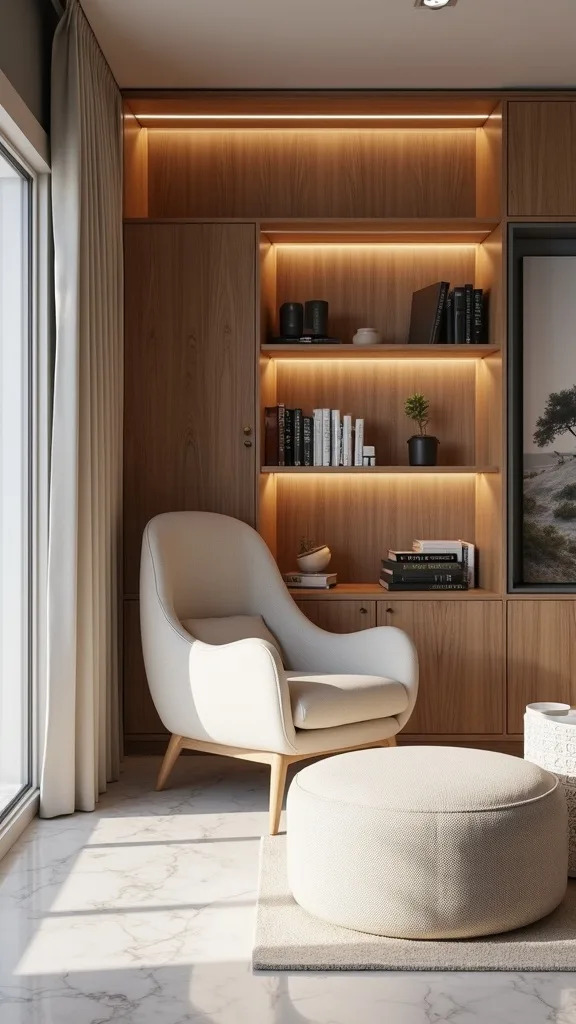
3. How do you design built-in bookshelves without making them look bulky?
Built-ins look bulky when they’re too deep and too visually flat. They look tailored when they’re proportional and have shadow lines—aka little moments where light can breathe.
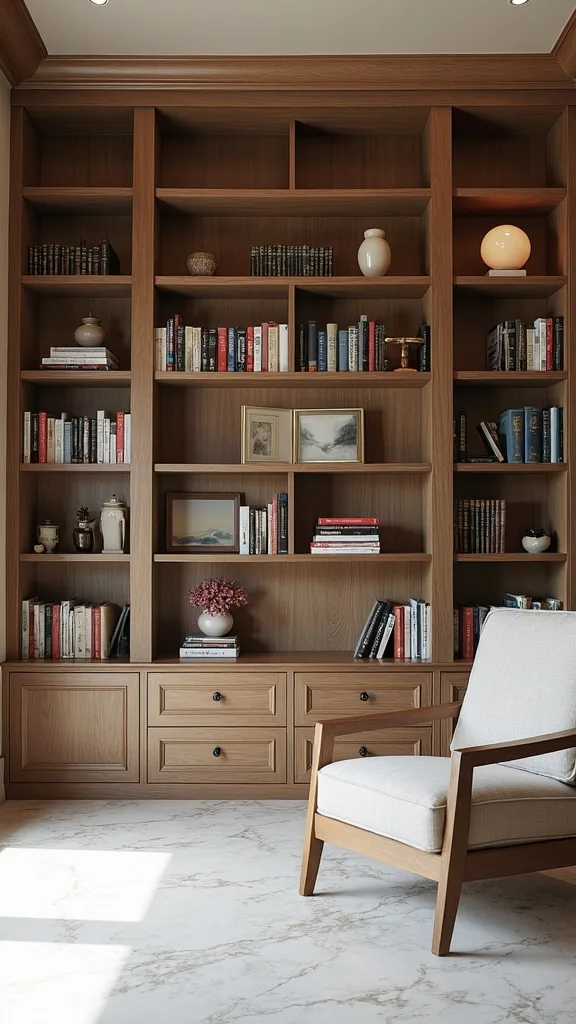
Keep most shelves around 10–12 inches deep (enough for novels and baskets) and reserve one deeper bay for oversized art books. Add face trim (even simple 1x2s) to create a subtle frame, and leave a 1–2 inch “reveal” around cabinet doors so the lower section reads furniture-like, not storage-unit-like.
Paint everything one color for an editorial finish, then mix in closed storage below so your garage essentials aren’t photobombing your Tolstoy. If you’re styling, group books by height in 3–5 clusters and break them with a ceramic bowl or framed print.
Pro tip: add puck lights or slim LED bars under a few shelves for soft, layered lighting—it’s the difference between “organized” and “intentional.”
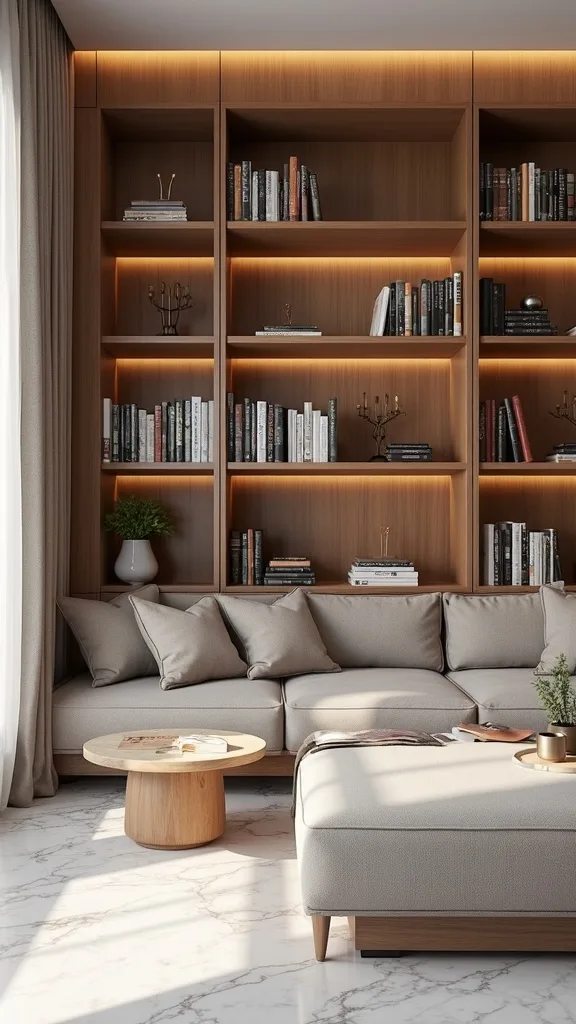
4. What’s the best shelf spacing for real books (not just decor objects)?
Shelf spacing is where good intentions go to die. Too tight and your books jam; too tall and everything slumps like it’s had a long day.
For most novels, aim for 10–12 inches of vertical clearance; for taller hardcovers, plan one or two shelves at 13–14 inches. Make shelves adjustable whenever possible—because your taste will change, and also because children’s books multiply like rabbits.
Use sturdy shelves (solid wood or quality plywood) and add a front edge band if you’re DIYing; it prevents sag and looks finished. Color-wise, darker shelves hide scuffs in a garage environment, while a lighter back panel (even peel-and-stick wallpaper) gives depth.
Pro tip: avoid cramming shelves full to the edges. Leave 10–15% breathing room so your cozy reading corner feels curated, not like a storage locker with a literature degree.
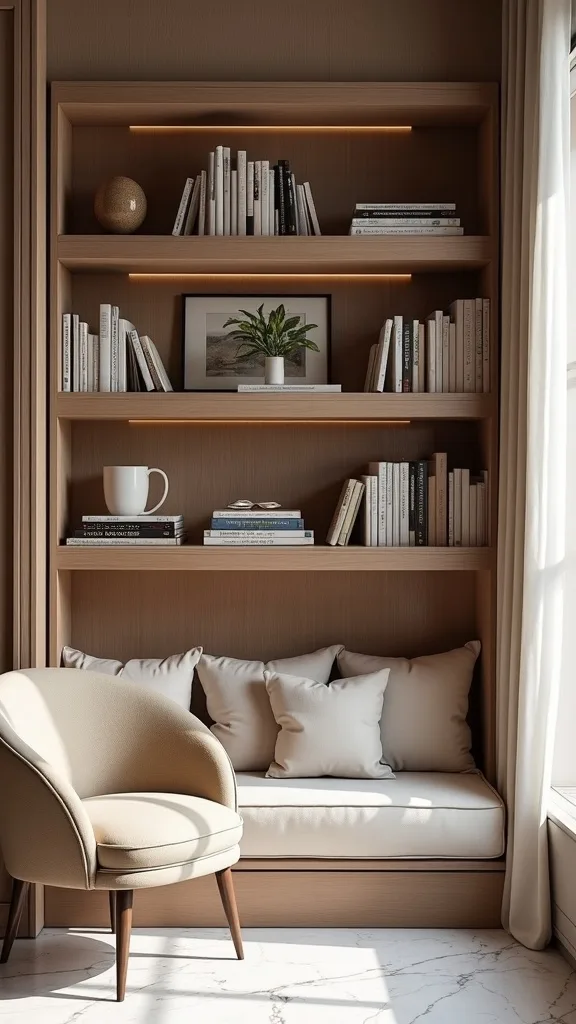
5. How do you keep garage dust off books without ruining the vibe?
Garage dust is undefeated—until you design for it. The goal is to protect spines without turning your nook into a display case at a museum.
Put your most-loved books on upper shelves and reserve the lowest shelves for baskets or closed cabinets. Add cabinet doors (even just on the bottom half) to create a “clean zone” for paperbacks and journals; if you can, choose doors with simple Shaker panels so they feel classic, not utilitarian.
Consider a small air purifier near the nook and a washable rug—Persian-style patterns are brilliant because they hide life. For finishes, satin or semi-gloss paint wipes down more easily than dead-flat.
And look: avoid open shelving all the way to the floor in a garage. That bottom 12 inches collects grime, and your library will start to smell like cardboard boxes and regret.
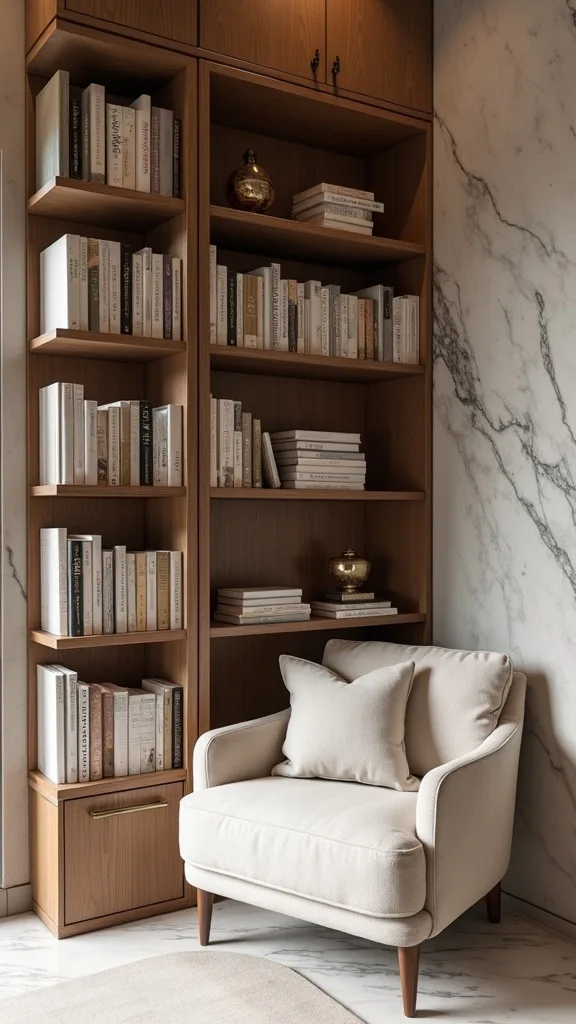
6. What lighting actually makes reading comfortable in the evening?
Reading comfort is less about “bright” and more about targeted, warm light where your eyes need it. Overhead garage lighting is usually harsh, and harsh lighting makes even a great novel feel like a spreadsheet.
Start with a dedicated reading lamp placed slightly behind your shoulder so it lights the page without glare. Choose warm white light (2700K–3000K — the cosy, yellowish tone you see in most homes) and look for enough brightness (measured in lumens) that you’re not squinting—around 800 lumens in a lamp is a solid target.
Then add a secondary glow: a picture light over the shelves, LED strip tucked under a shelf lip, or a small table lamp on a lower cabinet. Brass finishes play beautifully with dark paint and make the whole wall feel collected.
Pro tip: put your lamps on smart plugs. The nook becomes a ritual—tap, glow, read—and suddenly Summer Reading feels like an event.
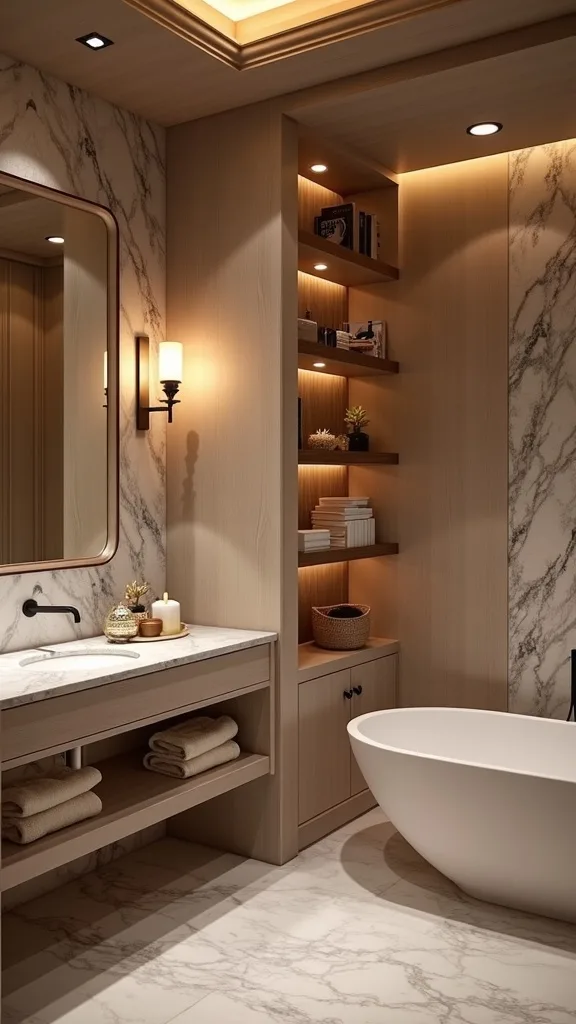
7. How do you make a garage reading nook feel cool (temperature-wise) in summer?
Summer reading in a garage can be delightful… until you realize you’re basically sitting in a warm shoebox. The fix is airflow plus materials that don’t trap heat.
Place the chair away from the garage door opening so hot air isn’t blasting directly onto you. Add a slim oscillating fan or a quiet tower fan positioned to move air across the seating zone; it’s not glamorous, but neither is sweating onto a vintage book.
Choose breathable textiles: linen pillow covers, a cotton throw, and a rug that isn’t high-pile shag (shag in a garage is a lifestyle choice, and not the fun kind). Keep colors grounded—camel leather, navy shelves, and a red/blue Persian-style rug reads classic and hides wear.
Pro tip: if you’re insulating one thing, insulate the garage door first. It’s the biggest surface and the biggest mood-killer when it radiates heat.
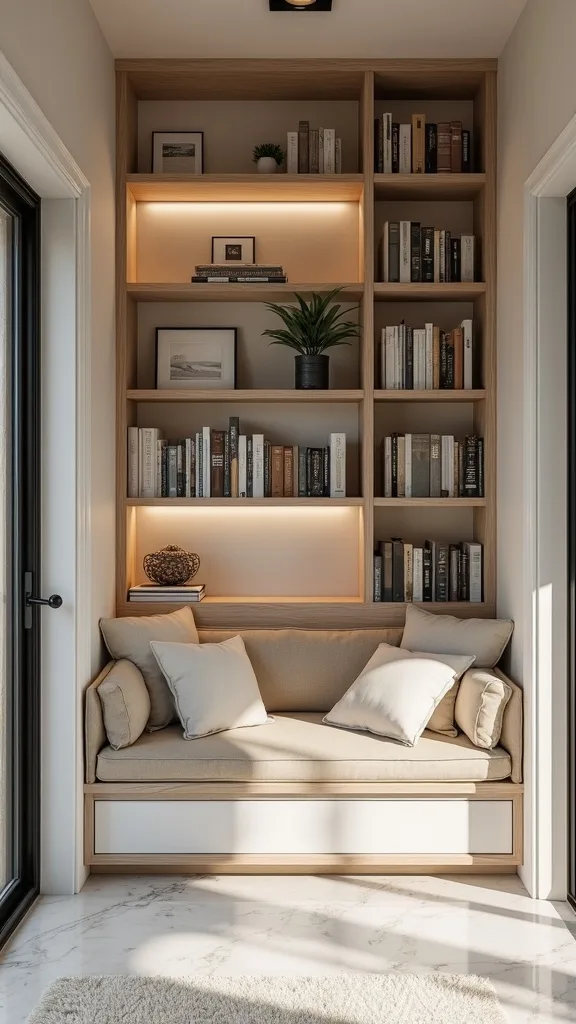
8. Can a reading nook work next to storage bins and tools?
Yes—if you create a visual boundary. The nook fails when your eyes land on a wall of mismatched bins before they land on the books.
Use lower cabinets with doors for ugly storage and reserve open shelves for books and a few handsome objects. If cabinets aren’t in the budget, use matching lidded baskets on the bottom shelf and label them discreetly (inside the lid if you’re feeling fancy).
Create a “library zone” with a rug and a sconce or lamp so it reads like a room-within-a-room. A chesterfield chair helps because its silhouette says “library” even if your drill is three feet away.
And look: avoid clear plastic bins in your direct sightline from the chair. They’re practical, but they scream “basement.” Tuck them behind doors or at least corral them on a single shelf so the rest can breathe.
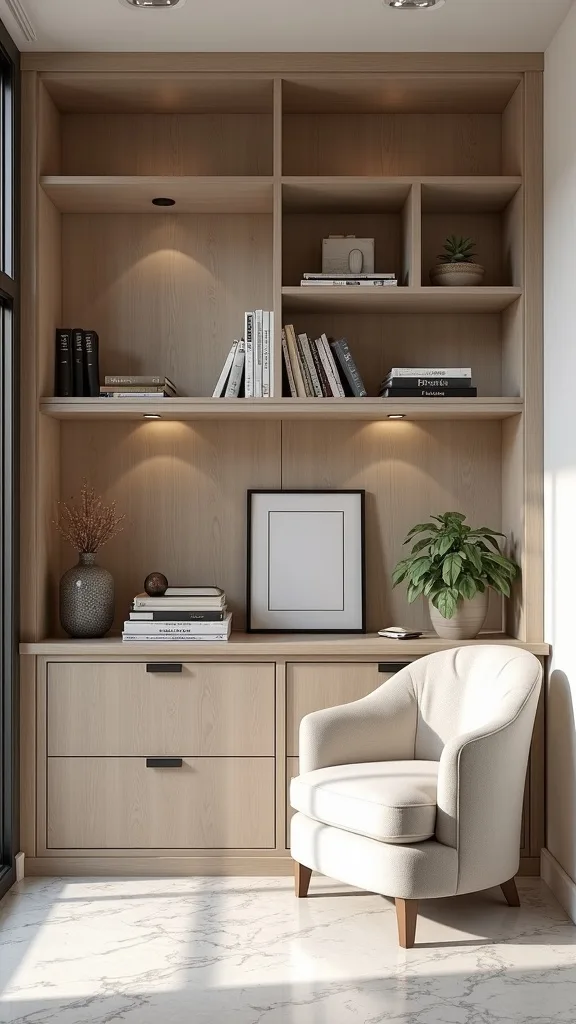
Cost & Materials Estimate
Depending on whether you DIY a “library wall” or go full custom, expect a realistic total range that spans budget-friendly to heirloom-level.
| Item | Estimated Cost | Where to Buy |
|---|---|---|
| Bookcases or cabinet bases (2–4 units) | $180–$800 | IKEA / Wayfair |
| Trim, crown molding, caulk, fasteners | $80–$220 | Home Depot / Lowe’s |
| Paint + primer (1–2 gallons total) | $60–$140 | Home Depot / Lowe’s |
| Brass reading lamp + warm white bulbs | $45–$180 | Amazon / Wayfair |
| Vintage-style Persian rug (5′ x 7′ to 8′ x 10′) | $120–$650 | Wayfair / Amazon |
| Optional rolling ladder kit + ladder | $250–$900 | Home Depot / Amazon |
Total estimated cost: $485–$2,890 Save by trimming out standard bookcases; splurge on the chair-or-rug pairing because that’s what makes the garage feel like a room.
9. How do you choose the right chair for long reading sessions?
The right chair is the difference between “I read for an hour” and “I scrolled for an hour.” It works when it supports your back, holds you at a comfortable angle, and gives your arms somewhere to land.
If you’re going classic, a chesterfield (or chesterfield-inspired) chair brings structure and instant editorial polish. On a budget, look for a used leather club chair and spend $40 on leather conditioner—suddenly it looks intentional, not rescued.
Pair it with a small ottoman so your feet can come up; that’s what turns a chair into a reading nook. Add a lumbar pillow in a durable fabric (performance velvet is shockingly forgiving).
Pro tip: test seat height. If your feet don’t touch the floor comfortably, you’ll fidget and quit. Comfort is not optional; it’s the whole point.
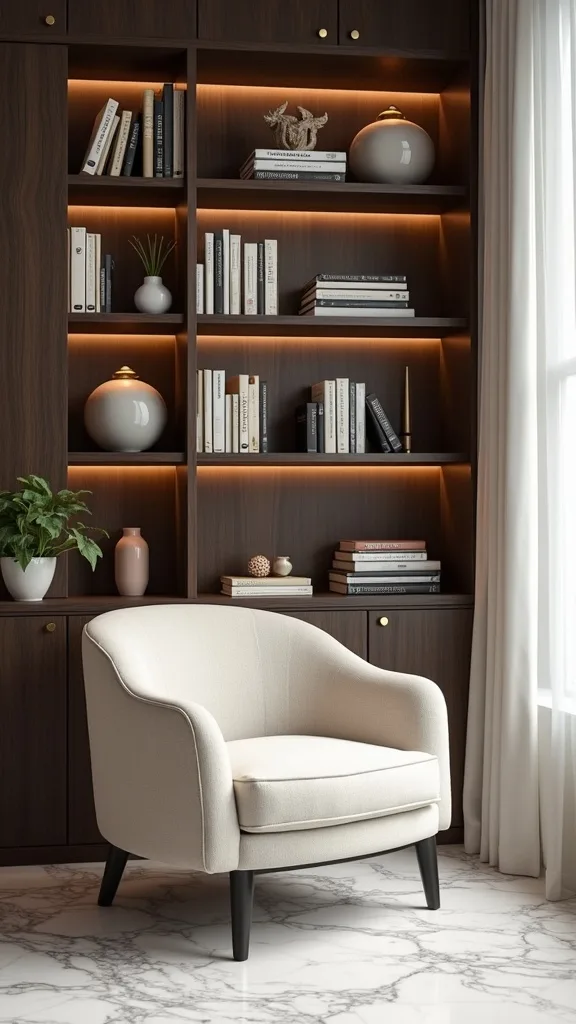
10. What rug size and pattern makes a garage nook feel luxurious?
A rug is your credibility. Without one, the garage wins. With one, your brain accepts the fantasy that you live in a place where people casually read in the afternoon.
Go bigger than you think: 5′ x 7′ minimum, 8′ x 10′ if you have the space. The chair should sit fully on the rug or at least have the front legs anchored; floating furniture reads temporary.
Pattern matters in a garage—Persian and vintage-style rugs hide dust, small stains, and the occasional mystery scuff. Choose rich tones (rust, indigo, wine) to complement brass and dark painted shelves.
And look: avoid fluffy white rugs in a garage. Unless you enjoy laundering your design decisions weekly. Pro tip: add a rug pad; it stops shifting and makes the floor feel warmer underfoot, which is quietly luxurious.
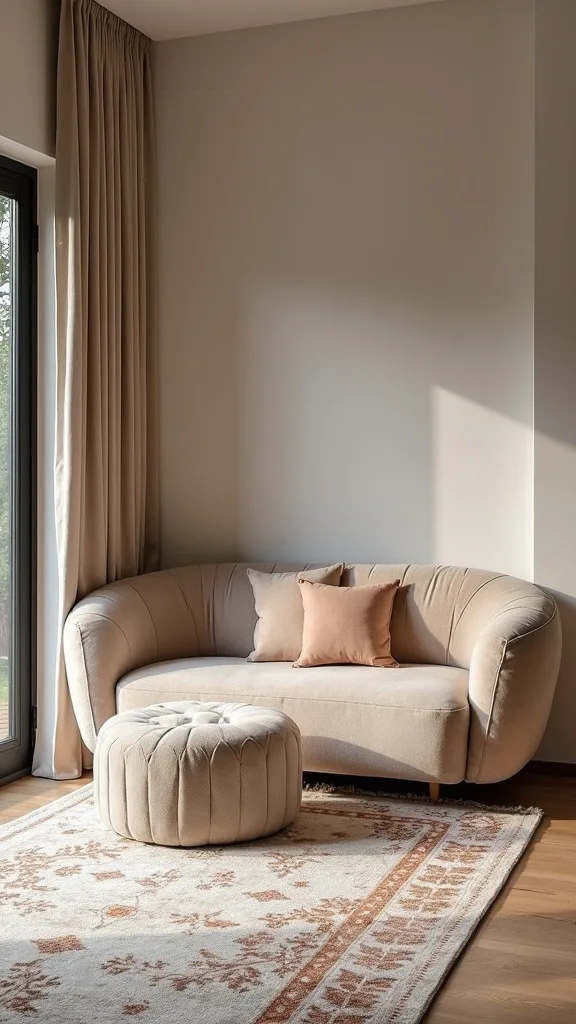
11. How do you style a home bookshelf so it looks curated, not cluttered?
Curated shelves have rhythm: vertical stacks, horizontal piles, and breaks for the eye. Cluttered shelves are all the same height, all the same density, and all screaming at once.
Start by editing—yes, even if you’re a book dragon. Group books by height and create 3–4 “zones” per shelf with a small gap between them. Add one sculptural object per shelf (a bowl, a framed photo, a brass bookend) and keep it to a tight palette.
Use bookends that feel substantial—stone, brass, or wood—so stacks don’t slump. If you want color, do it intentionally: one shelf of bright spines, the rest neutral.
Pro tip: place your prettiest covers at eye level. That’s where the design lives, and it makes the whole wall feel like an editorial spread, not a dumping ground.
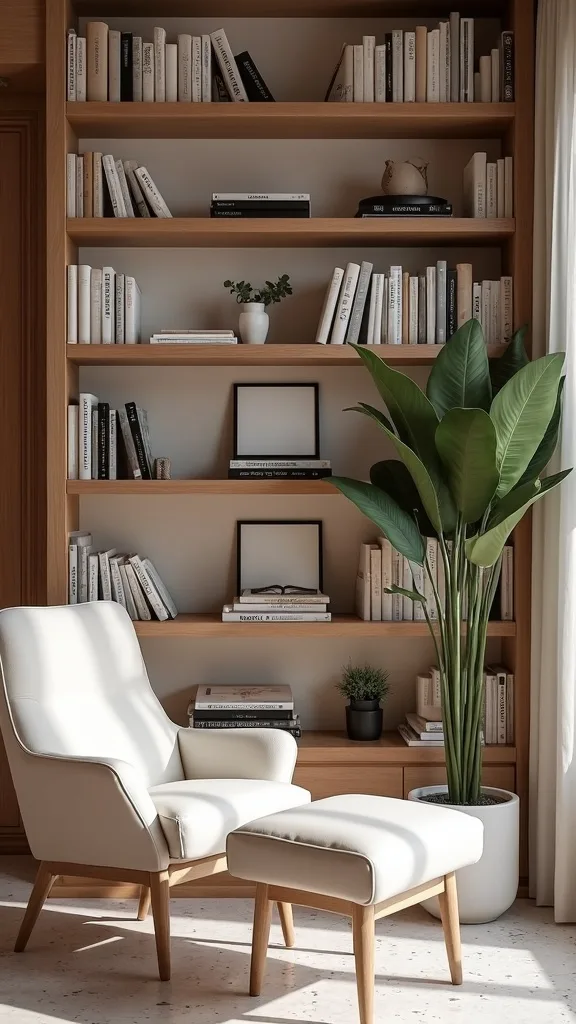
12. What’s the best way to add a library ladder safely on a budget?
A rolling ladder is pure romance—also, it needs to be safe because concussions are not a design trend. It works because it adds vertical drama and makes upper shelves usable.
Budget approach: buy a ladder hardware kit and pair it with a solid wood ladder. Install the rail into studs; if studs don’t align, add a properly anchored header board first. Keep the ladder’s “parking spot” at one end so it doesn’t block the chair.
Finish the ladder in a contrasting stain (walnut against navy shelves is a classic) or paint it to match for a seamless look. Add felt pads where it meets the floor so it glides quietly.
And look: avoid cheap, wobbly ladders meant for decor only. Pro tip: when the ladder feels stable, you’ll actually use those top shelves—your library becomes functional, not just photogenic.
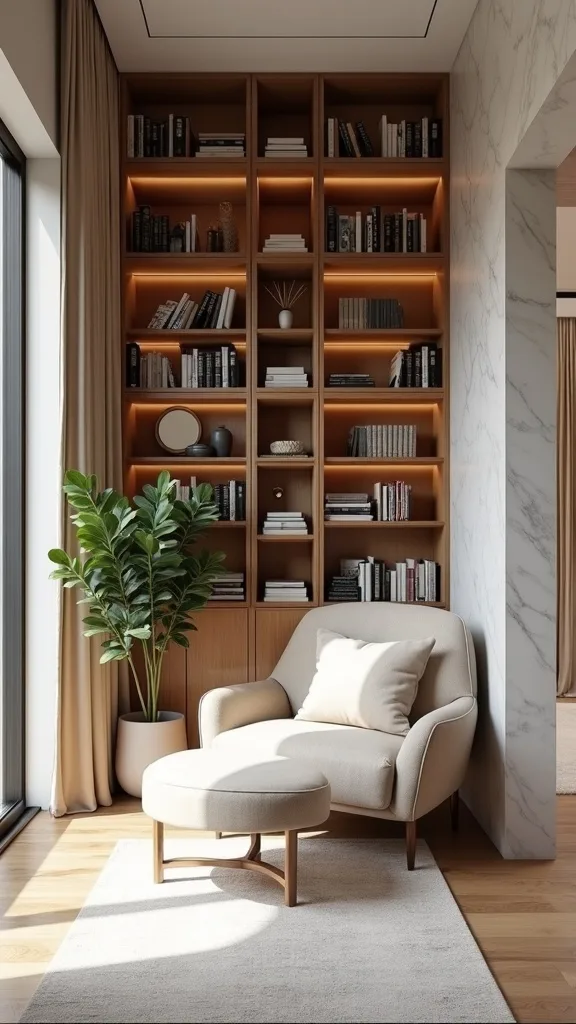
13. How do you create a reading corner in a tiny garage (single-car reality)?
In a small garage, the move is vertical and narrow. You’re not building Versailles; you’re building a jewel box.
Use tall, slim shelving (12–14 inches deep) and a compact chair—think a tufted slipper chair or a small club chair. Mount a swing-arm wall lamp so you don’t need a floor lamp footprint, and choose a narrow side table that can tuck under the chair arm.
Go light on the floor: a 2′ x 6′ runner can still define the zone without swallowing the parking area. Paint shelves the same color as the wall to visually “compress” them so they feel built-in.
Pro tip: add one piece of art above the chair. It pulls your gaze upward and makes the corner feel finished. Small spaces don’t need more stuff—they need better hierarchy.
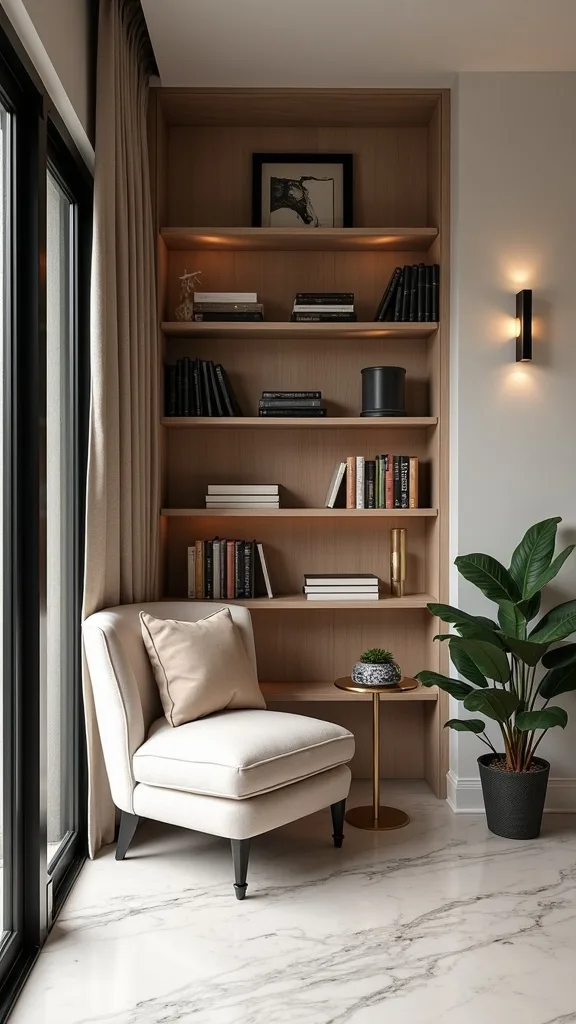
14. How do you hide kids’ books and still keep them accessible?
Kids’ books are wonderful. Kids’ book covers are… loud. The solution is a system that respects both childhood and your eyeballs.
Use lower cabinets with baskets labeled by category: “picture books,” “chapter books,” “summer reads.” Keep a single open shelf at kid height for current favorites, so they can grab independently without emptying the entire library onto the rug.
Choose baskets in woven textures or canvas—durable, soft, and forgiving. Keep the upper shelves for adult books and a few grown-up objects so the overall wall reads sophisticated.
And look: avoid overstuffed bins. They tear spines and make cleanup impossible. Pro tip: rotate books monthly in summer; it keeps interest high and the space feeling calm.
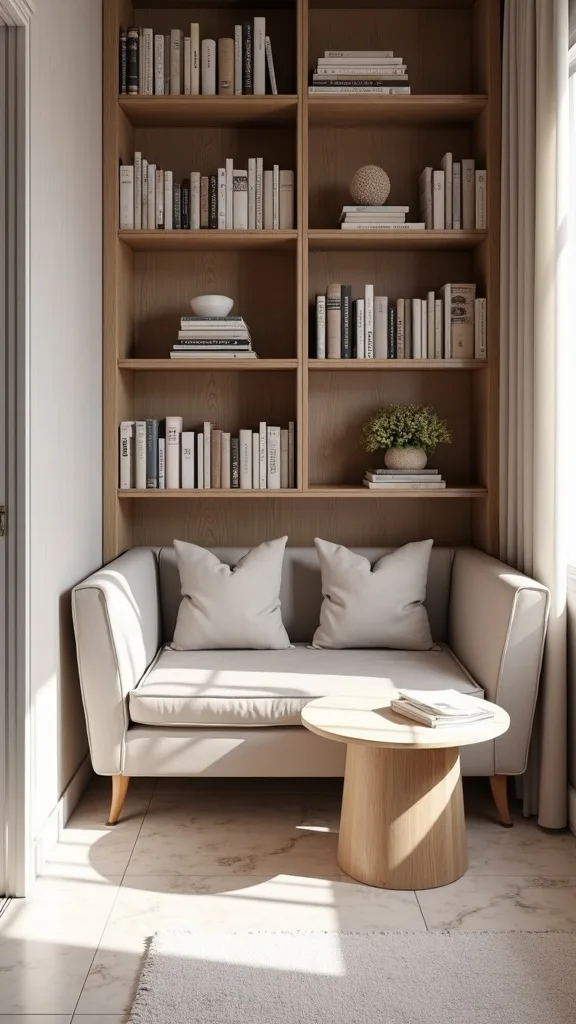
15. What paint colors make a home library feel rich, not gloomy?
Dark paint can feel rich or depressing—your lighting and contrast decide. In a garage, dark shelves are practical because they hide scuffs, but you need a counterbalance.
Try deep navy, charcoal, or olive on the shelving, then keep the surrounding walls a softer neutral (warm white or greige) to prevent the space from turning into a cave. Add brass accents—lamp, picture light, hardware—because brass warms up cool colors instantly.
Bring in contrast with a Persian-style rug and a camel or oxblood leather chair. Those tones are classic for a reason: they create a library palette without trying too hard.
Pro tip: test paint in the garage at three times of day. Garage light is weirdly honest. The right color will look intentional even next to a lawnmower, which is the ultimate test of sophistication.
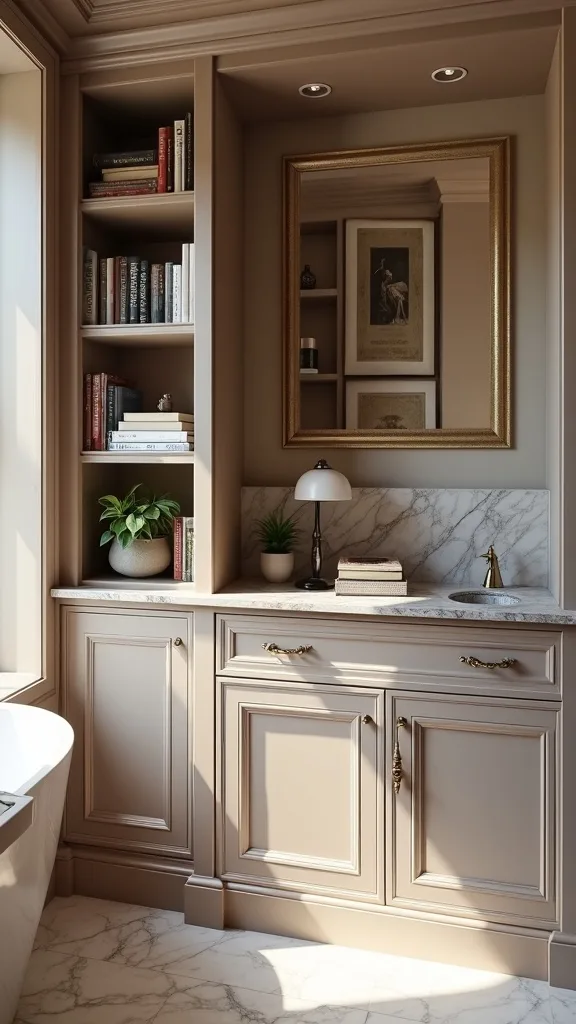
16. How do you add sound softness so the garage doesn’t echo?
Garages echo. It’s their hobby. A reading nook needs hush, or at least the illusion of it.
Layer soft materials: a rug pad + rug, upholstered chair, and curtains or a fabric panel if you have a window. Even a simple curtain on a tension rod can dampen sound and make the space feel “indoor.”
Books themselves help—full shelves absorb sound better than empty ones, another reason to go floor-to-ceiling if you can. Add a throw blanket (cotton or linen for summer) to soften the chair visually and physically.
And look: avoid leaving the walls completely bare. A large framed print or a cork board wrapped in fabric adds absorption and polish. Pro tip: once the echo drops, you’ll want to linger—and lingering is the whole point of Summer Reading.
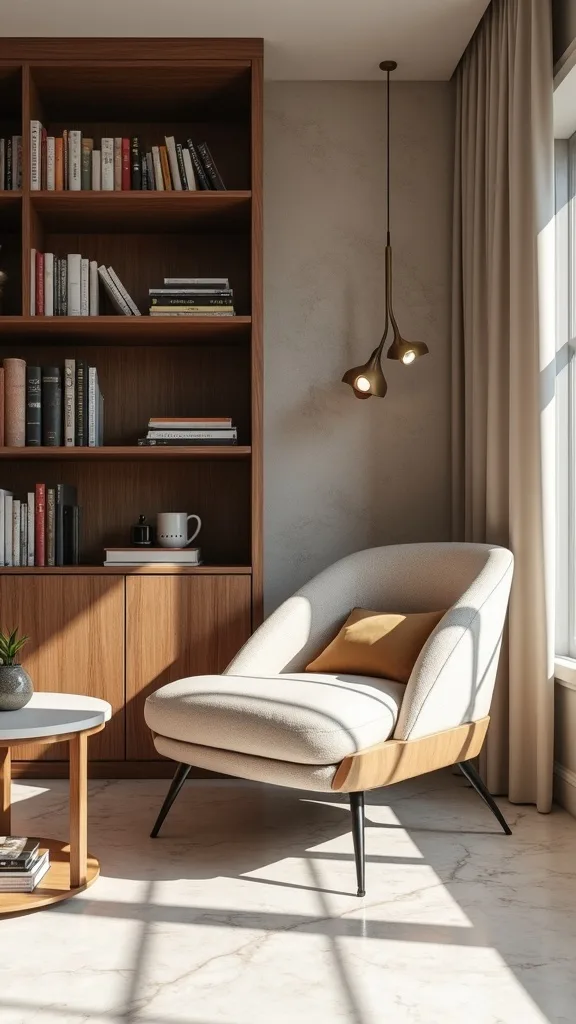
17. Where should you put outlets and cords so the nook doesn’t look messy?
Cords are the quickest way to turn “library” into “charging station.” It works when power is present but visually quiet.
Place a power strip inside a lower cabinet and drill a small grommet hole in the back for lamp cords. If you’re not doing built-ins, use a cord cover painted the wall color; it’s not glamorous, but it’s dramatically better than a black snake on the baseboard.
Keep your side table simple—one lamp, one coaster, one small tray for bookmarks. Choose a table with a drawer if you’re realistic about clutter (I am; my “bookmark” is often a receipt).
Pro tip: add a dedicated spot for your phone that’s not the chair arm. When the tech has a home, your brain relaxes—and reading becomes the default again.
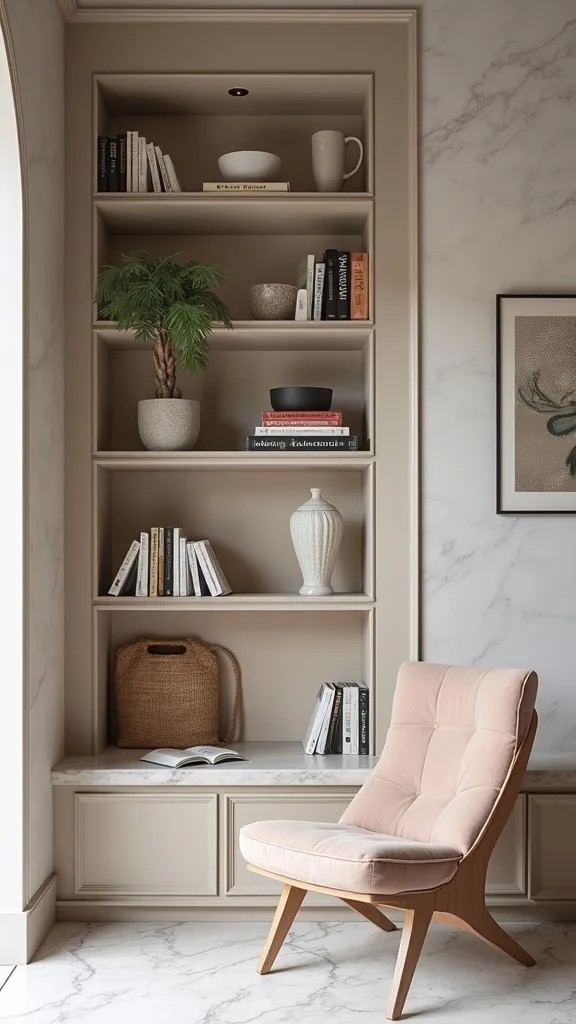
18. How do you make a garage library feel like part of the house?
A garage library feels like part of the home when it borrows the home’s design language. Same metals, similar colors, and a sense of finish.
Match hardware finishes to your interior—if your house leans brass, keep brass in the nook (lamp, cabinet pulls, picture light). Repeat a color from inside—maybe the navy from your living room pillows—on the built-ins.
Add one “house” detail: framed art, a mirror, or a small sideboard-style cabinet. These are cues that tell your brain this space is for living, not storing.
And look: avoid using leftover mismatched paint “because it’s the garage.” That’s how garages stay garages. Pro tip: a single, consistent paint color across shelves and trim is the cheapest way to make it feel intentional.
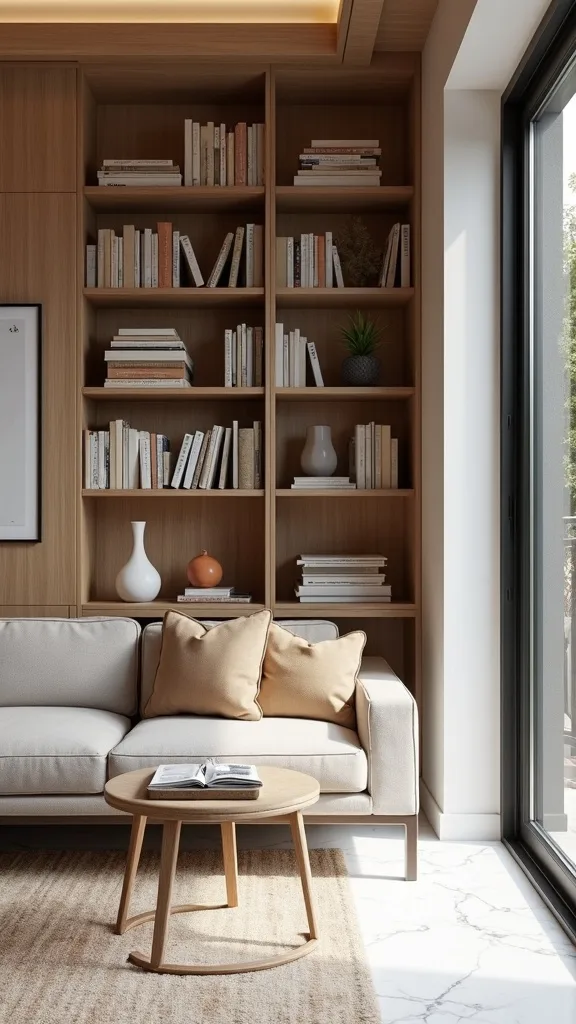
19. What’s a smart way to incorporate a mini beverage station for summer reading?
A beverage station is the grown-up version of a snack drawer, and it makes the nook feel like a destination. It works because it reduces trips back into the house—and interruptions are the enemy of a good chapter.
Use a lower cabinet bay or a small bar cart tucked beside the shelves. Add a tray with a glass carafe, a couple of tumblers, and a small bowl for tea bags; if you’re doing iced coffee, keep it simple with a lidded bottle so you don’t invite garage dust into your latte.
Choose materials that wipe clean: brass tray, sealed wood, or melamine that looks like ceramic. Keep the palette tight so it doesn’t start looking like a break room.
Pro tip: add one tiny luxury—fancy sparkling water or a $12 jar of lemon cookies. Small rituals make reading feel special, which is the entire summer vibe.
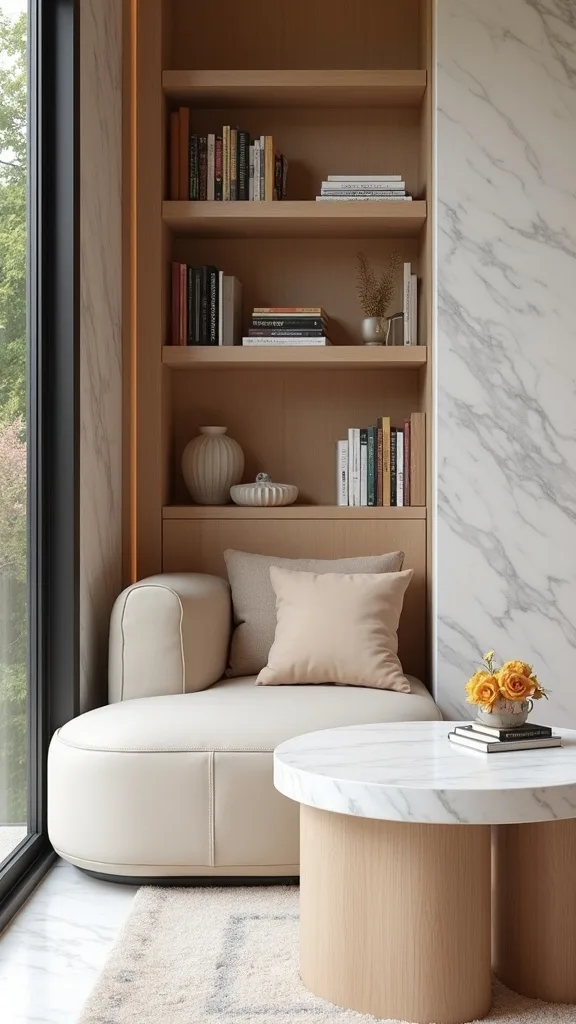
20. How do you blend expensive-looking details with a budget build?
The trick is to spend where your eye lands and save where your hand doesn’t. That’s how designers fake luxury without the luxury invoice.
Go budget on the structure: IKEA cabinet bases, plywood shelves, or standard bookcases trimmed out to look built-in. Then spend on the “jewelry”: a brass reading lamp, substantial cabinet pulls, and a rug with pattern and depth.
Paint is your best friend—one saturated color across the whole unit makes even inexpensive materials look cohesive. Add a simple crown molding at the top to “finish” the ceiling line.
And look: avoid buying a bunch of small decor to compensate. It reads cluttered and costs more than one good lamp. Pro tip: one hero chair + one great rug can carry the entire space and make your home library ideas feel fully realized.
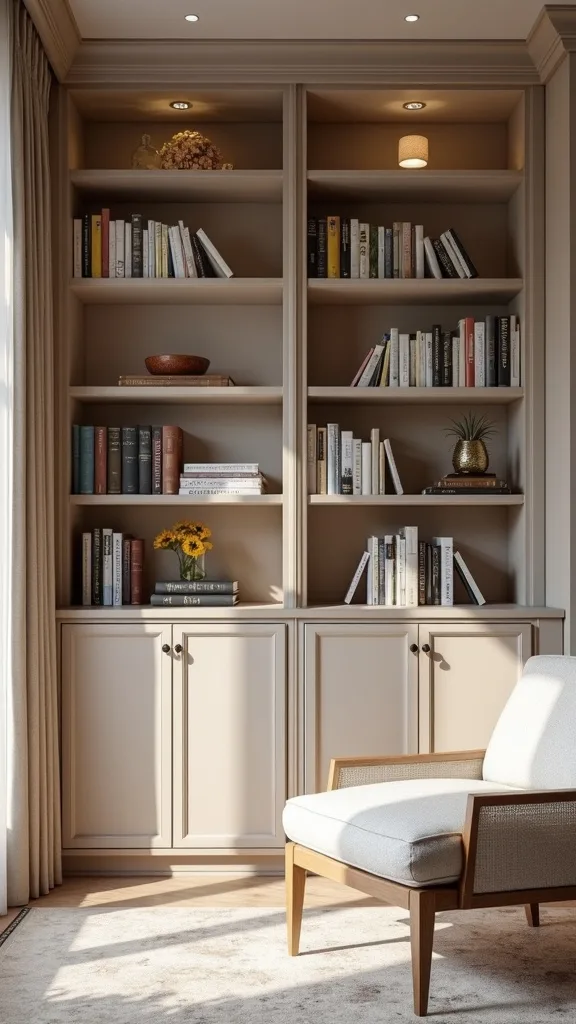
21. What should you avoid when placing bookshelves in a garage?
Avoid putting your shelves where they’ll get hit, soaked, or baked. It’s not dramatic; it’s physics.
Keep shelving away from spots where rain blows in when the garage door is open, and don’t place it directly under a leaky HVAC line or near chemical storage. If you have to share space, store paint and gasoline in sealed bins far from the reading zone—books absorb smells like they’re auditioning for it.
Choose materials that can handle life: sealed wood, painted surfaces, and hardware that won’t rust. Add a small threshold mat at the garage entry to reduce dirt tracked onto your rug.
Pro tip: if you’re unsure, sit in the chair for five minutes with the garage door open on a hot day. Where the breeze and sun hit is where books will suffer. Design for reality, not fantasy.
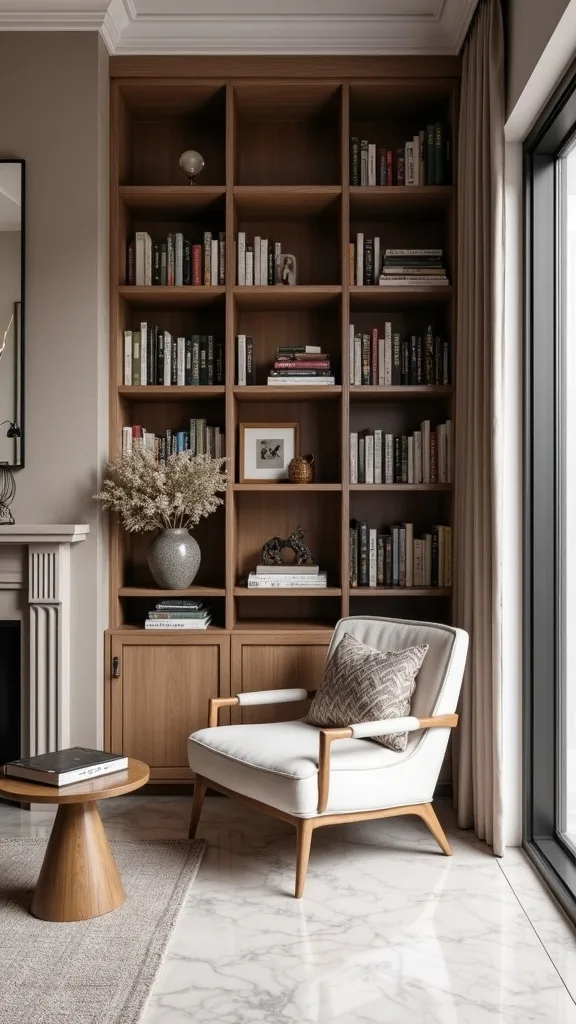
22. How do you build a ‘library wall’ using standard bookcases?
This is the classic “looks custom, costs less” move. It works because repetition creates a built-in effect, especially when you add trim and paint everything one color.
Line up two to four identical bookcases along a wall, anchor them securely, and add a base platform so they sit flush and sturdy. Then trim the seams with vertical molding and finish the top with crown molding to the ceiling; caulk gaps, sand, and paint.
Use lower doors or add baskets to create visual calm at the bottom. For color, choose something with depth—deep green or navy reads expensive and disguises the fact that it started as flat-pack.
Pro tip: add a picture light centered above the “wall.” That one detail makes the whole thing feel like a home library, not a row of shelves.
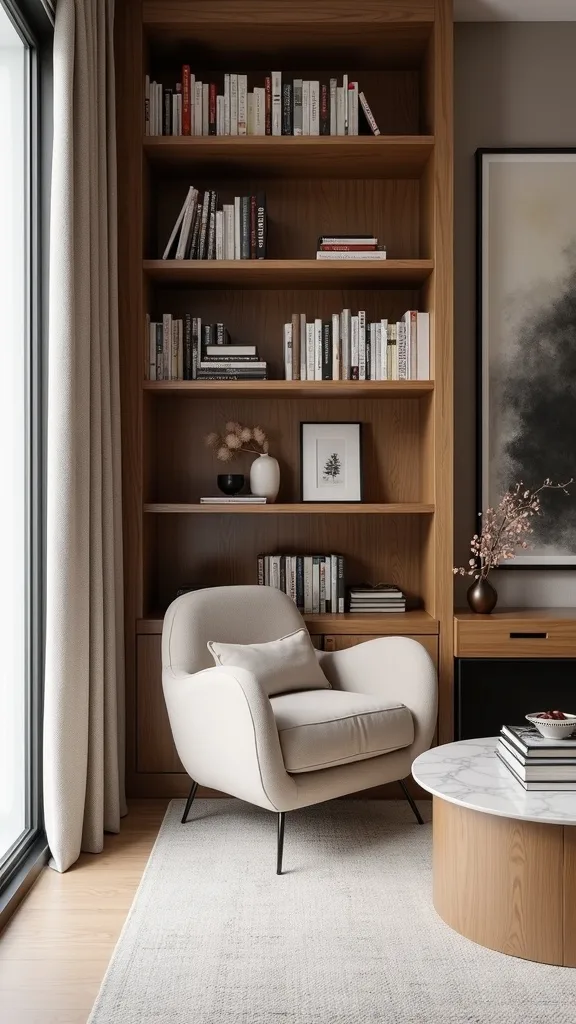
23. How do you create a cozy reading corner without built-ins at all?
No built-ins? Fine. We’re not canceling Summer Reading over carpentry. A cozy reading corner works when it has three things: a seat, a light, and a boundary.
Use a tall freestanding bookcase or two, angled slightly to create a nook effect. Add a floor lamp with a warm white bulb (2700K–3000K — the cosy, yellowish tone you see in most homes) and a rug that visually “holds” the chair.
Choose a chair with presence—tufted, leather, or a structured upholstered style—so it doesn’t feel like you dragged patio furniture indoors. Add one small side table and a tray for your current reads.
And look: avoid scattering books across multiple small shelves around the garage. Consolidation is what makes it feel intentional. Pro tip: one strong corner beats five half-finished ones every time.
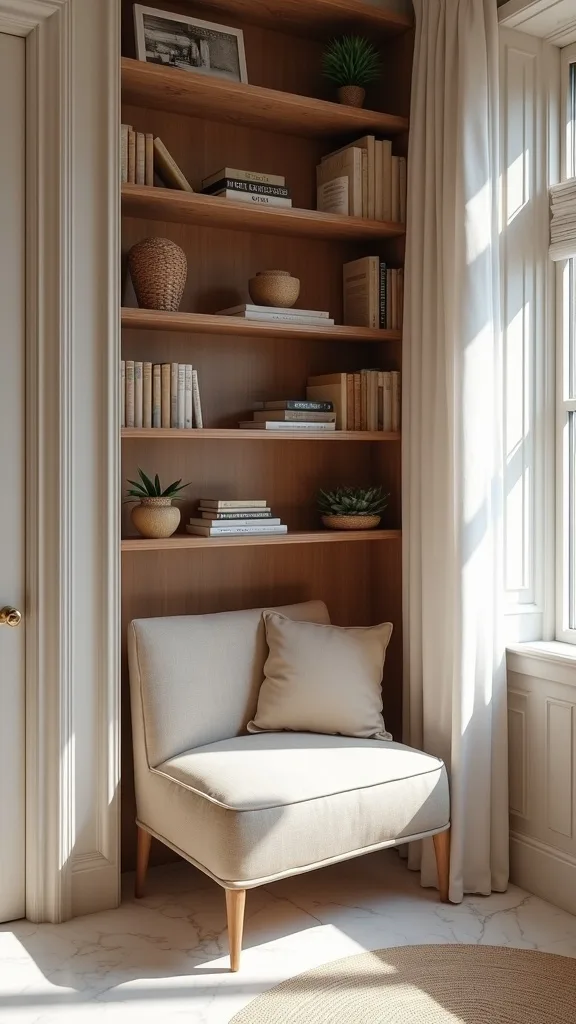
24. How can you make your home bookshelf feel ‘Summer Reading’ ready?
Summer reading isn’t just a list—it’s a mood. Your shelves should invite you in like a boutique hotel lobby, not remind you of homework.
Create a dedicated “summer shelf” at eye level: current reads facing out, a small vase (real or faux), and a shallow bowl for bookmarks. Swap heavy winter throws for a light cotton blanket and add a citrusy candle (or a reed diffuser if you’re worried about open flame in the garage).
Keep colors breezy against the moody built-ins: whites, soft blues, and warm rattan accents look fresh next to dark paint and brass.
Pro tip: set a timer for 20 minutes and read in the nook daily for a week. Once the habit forms, the space stops being “an idea” and becomes part of your life—arguably the best design outcome.
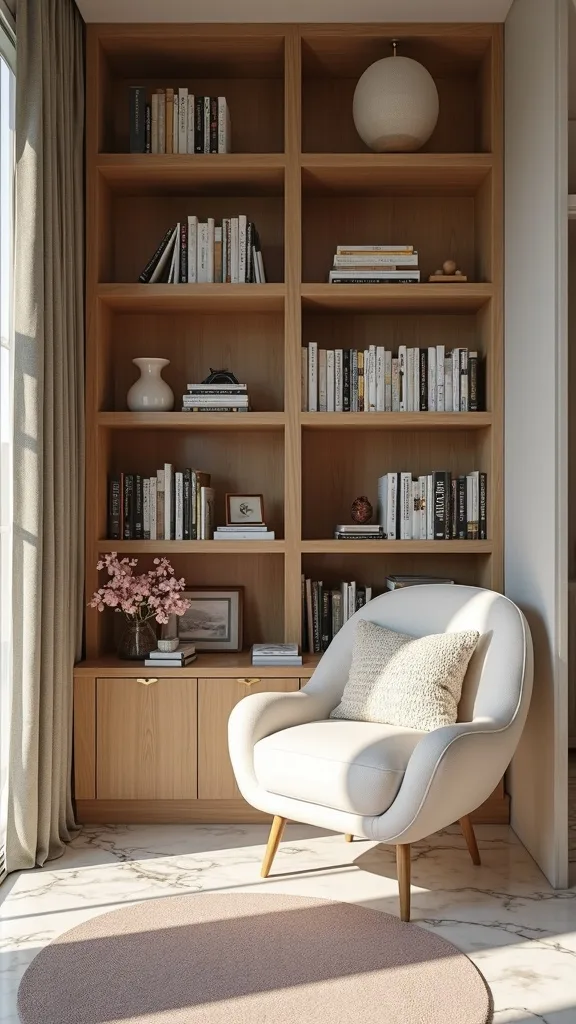
25. What’s the one finishing touch that makes a garage library feel truly polished?
The finishing touch is a focal point that says, “This was planned.” In a library wall, that’s often art, a centered lamp moment, or a deliberate negative space.
Leave one shelf bay slightly emptier and style it with a framed print, a brass object, and a small stack of oversized books. Place your reading lamp so it visually connects chair to shelves—this triangle is what makes the nook feel composed.
Add matching hardware to lower cabinets and keep the metal consistent (brass, ideally, because it flatters nearly everything). If you’re using a Persian-style rug, echo one rug color in a pillow or throw so the palette feels intentional.
And look: avoid the temptation to fill every inch. Empty space is not wasted space; it’s what makes the whole installation feel expensive. Pro tip: step back, squint, and adjust until your eye moves calmly—then you’re done.
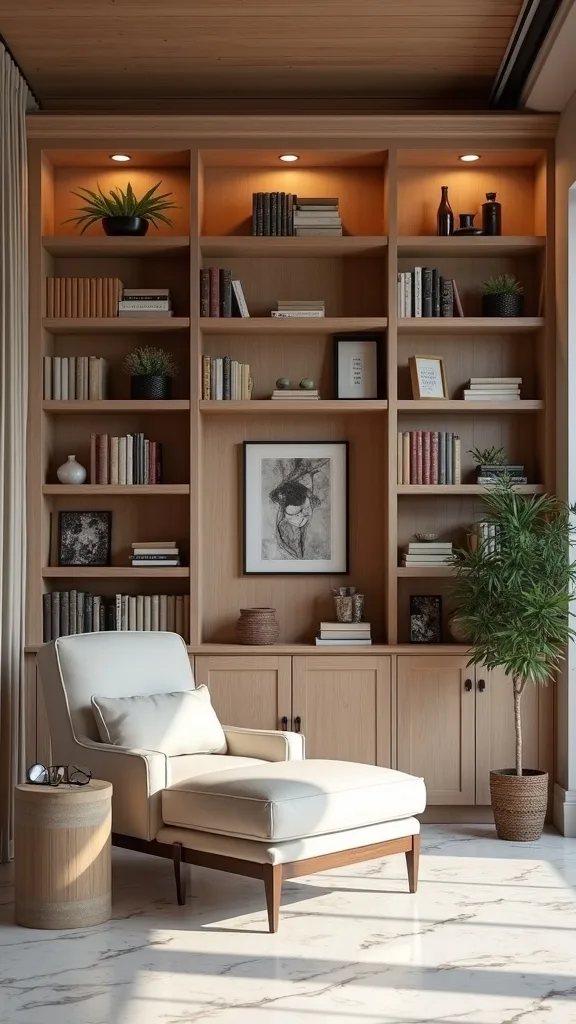
Final Thoughts
Garages are famously unromantic, which is exactly why a library wall in one feels so deliciously subversive. You’re taking the most practical space in the house and giving it a private, quiet purpose—one that doesn’t require a renovation show budget, just some clear decisions.
Here is the thing: the difference between “I have books” and “I have a home library” is almost always the same trio—built in bookshelves (or a convincing faux version), a chair you actually want to sit in, and lighting that makes you look forward to the next chapter. Add a rug, hide the ugly stuff behind doors, and suddenly your summer reading habit has a home.
Today, pick your garage wall and tape out a 24-inch-deep zone, then move one chair and one lamp into it. That single rearrangement makes the project real—and once it’s real, you’ll finish it.
What I’d Do Differently
When I first tried this, I treated the garage library like a storage project instead of a room. My big mistake: I built open shelves all the way down to the floor because it looked “maximally efficient.” Within a month, the bottom shelves were a dust museum, and the books closest to the ground looked tired—like they’d been commuting. Worse, I kept my lawn chemicals on the same wall (sealed, but still), and the whole nook had a faint “hardware store” vibe that no Persian rug could fully romance away. The correct approach is to design a clean zone: closed cabinets on the bottom, books above, and anything smelly stored on the opposite side of the garage.
The other thing I wish I knew: lighting is not an afterthought. One overhead fixture will never make a reading nook feel cozy; you need a dedicated lamp with warm white light (2700K–3000K — the cosy, yellowish tone you see in most homes) aimed at the page. Pick your wall, tape out a 24-inch-deep strip, and start with the cabinet base this weekend—you’ll be shocked how quickly it turns into a real room.
Products I Recommend for This Project
Here are some of my favourite products to help you bring these ideas to life:
- Globe Electric Pratt Floor Lamp (Antique Brass) — A classic brass reading lamp look with an easy footprint for a garage nook.
- Philips LED Warm Glow A19 Bulbs — Gives that warm white light (2700K–3000K — the cosy, yellowish tone you see in most homes) that makes pages and paint colors look richer.
- VASAGLE Industrial Bookshelf (Tall, Metal + Wood) — A sturdy, budget-friendly stand-in when built-ins aren’t happening this month.
- Rug Pad USA Basics Felt + Rubber Rug Pad — Keeps a Persian-style rug from sliding on concrete and adds underfoot comfort.
- Command Cord Hider / Cord Cover Kit — The simplest way to hide lamp cords so your reading corner stays polished.