
This post contains affiliate links. As an Amazon Associate, I earn from qualifying purchases at no extra cost to you.
I once brought home a “cute little” flea-market chair that looked charming in the booth lighting… and then in my living room it read as “Victorian dentist waiting area.” (If you’ve never had a piece bully the whole room, congratulations on your emotional stability.) That moment taught me the difference between random and curated—and look, the line is thinner than we’d like.
Here is the thing: a truly collected home decor look isn’t about owning more stuff; it’s about making your stuff cooperate. This guide breaks down the exact moves that make a vintage and modern mix feel like an eclectic interior with taste, not a mixed styles home in crisis.
This is perfect for you if you love designer pieces and thrift-store dopamine in equal measure, and you want your living room to feel personal without feeling busy.
Inside you’ll get practical layouts, summer-friendly color tricks, and the “glue” details (woods, metals, and repeats) that make flea market finds sit happily next to modern art and a very smug sofa.
Below are 25 Eclectic Collected Living Room Design Ideas that pull off mixed styles home energy with actual logic (and a little personality).
1. Style a mid-century sideboard under modern art (then let the sofa do the bragging)
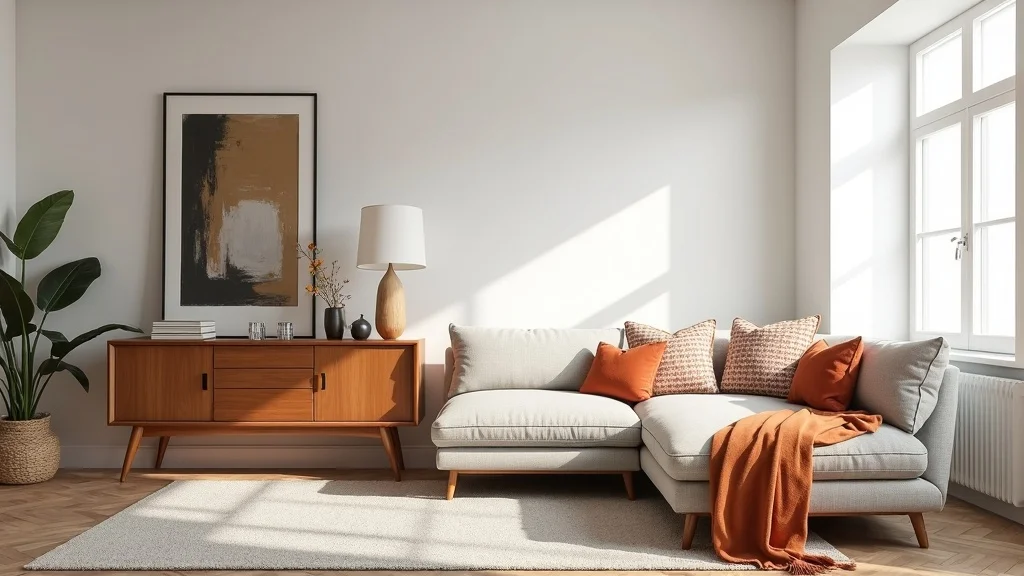
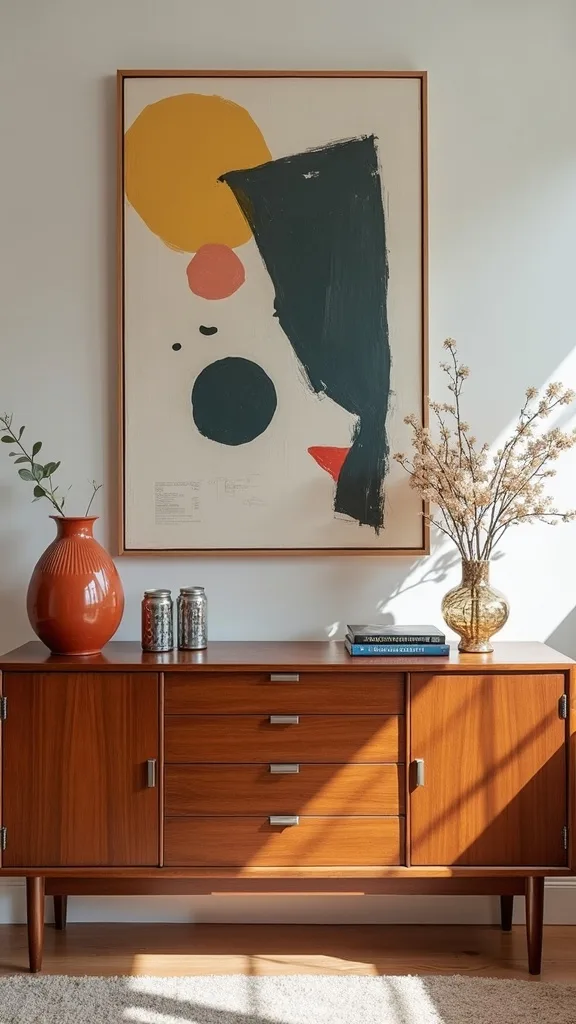
This is the summer eclectic shortcut: a mid-century sideboard grounds the room while a big piece of modern art keeps it from feeling like a time capsule. Then you add flea market finds and designer cushions on one sofa, and suddenly your “random” becomes a plan. It works because you’re giving the eye a clear hierarchy: long low wood, bold art, soft layers.
Pick a sideboard around 60–72 inches long so it visually anchors the wall. Hang the modern art so the center sits about 57 inches from the floor (gallery standard, and yes it matters). On the sofa, mix two higher-end pillows (think textured linen or embroidery) with one budget solid and one vintage textile—four is the sweet spot for looking styled without looking staged.
Materials that play nicely: walnut or teak tones, black metal frames, and a summer palette of warm white, terracotta, and a hit of ultramarine. Add one flea-market brass bowl to echo the warm wood.
Pro tip: Keep sideboard styling to three objects max—one tall, one sculptural, one practical—because negative space is the secret ingredient that makes eclectic feel expensive.
2. How do you keep an eclectic living room from looking cluttered?
You keep it from looking cluttered by choosing a few rules and being mildly bossy about them. The idea is still playful, but the boundaries are what make a collected home decor vibe feel intentional. It works because the brain loves variety, but it needs repeats to feel calm.
Pick 2–3 “connectors” and repeat them: one wood tone (like walnut), one metal (aged brass or matte black), and one color (say, deep green). Then make sure those connectors show up in at least 5 items—frame, lamp base, pillow piping, vase, and a tray. Corral small items on trays or inside baskets so your surfaces read as styled moments, not a pawn shop.
Colors to consider for summer eclectic style: warm white walls, sand-toned rug, and pops of citron or cobalt in smaller accessories. Products that help: a large tray, two matching frames, and one big plant pot that can take visual weight.
Pro tip: Avoid “tiny object confetti.” If it’s smaller than your fist, it lives in a bowl, a tray, or a drawer—your future self will thank you.
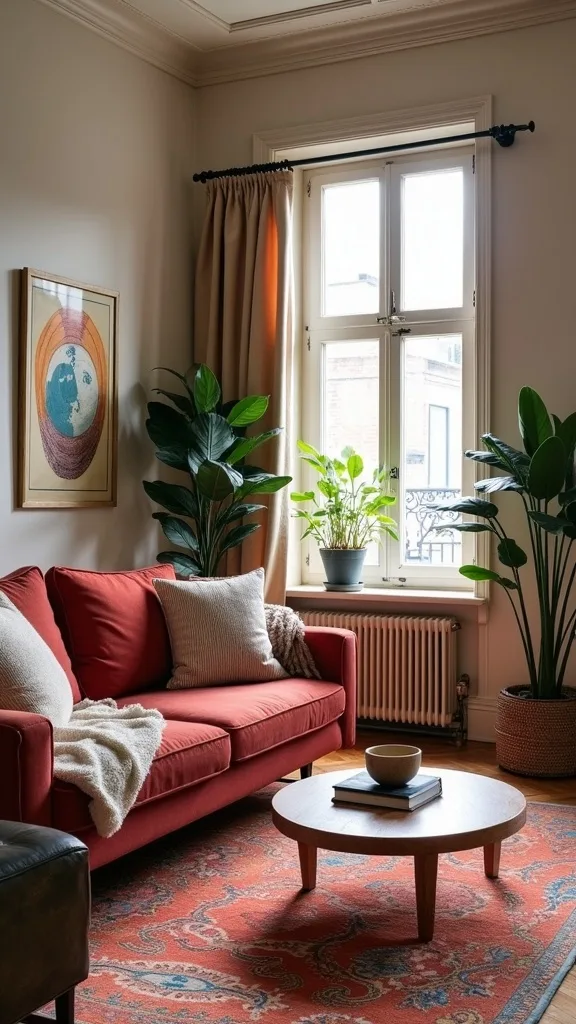
3. What’s the easiest vintage and modern mix that always works?
The easiest vintage and modern mix is: vintage wood + modern lighting. It works because older pieces bring patina (instant character), and contemporary lighting adds crispness and function, so the room feels current instead of dusty.
Start with one vintage anchor: a side table, an armoire, or a worn-in coffee table with real grain. Then choose a modern floor lamp with a clean silhouette and aim for warm white light (2700K–3000K — the cosy, yellowish tone you see in most homes) so the vintage wood glows instead of looking muddy. Keep the lamp shade simple—white linen or off-white—so it doesn’t compete with the old piece’s detail.
Materials that sing together: oak + black steel, walnut + white linen, brass + smoked glass. In summer, add a light throw in cotton or linen to keep the mix breezy.
Pro tip: If your vintage piece is ornate, go extra-minimal on the modern lamp. Think “line drawing,” not “statement sculpture,” and the whole room will feel curated.
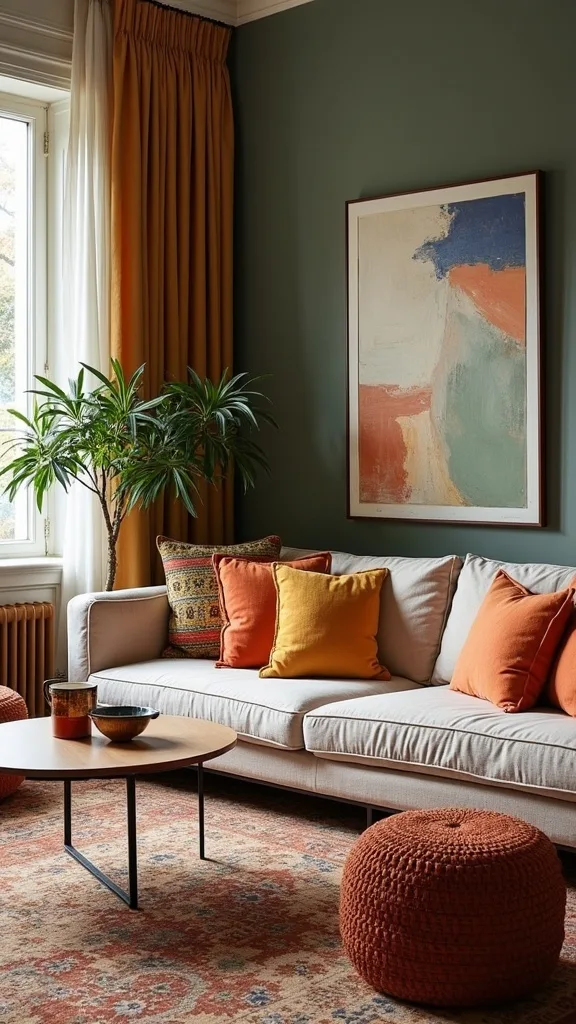
4. How can you choose a color palette for a mixed styles home?
A mixed styles home needs a palette that acts like a translator between eras. It works because color is the fastest way to create continuity when your furniture is speaking different design languages. Here is the thing: you don’t need more colors, you need better distribution.
Use a 60/30/10 approach: 60% neutral base (warm white walls, oatmeal rug), 30% mid-tone (camel leather, olive, soft terracotta), 10% accent (cobalt, chartreuse, or black). Then repeat the accent in three places minimum—art, pillow, and a small accessory—so it reads as a deliberate choice, not a mistake you’re trying to justify.
Summer-friendly picks: warm white + sand + ink blue. Or warm white + clay + citron. Keep wood tones within one family (all warm, or all cool) so your palette doesn’t fight itself.
Pro tip: Avoid pairing two loud accent colors at equal volume. One gets to be the star; the other can be a background extra. That’s how you keep eclectic from becoming chaotic.
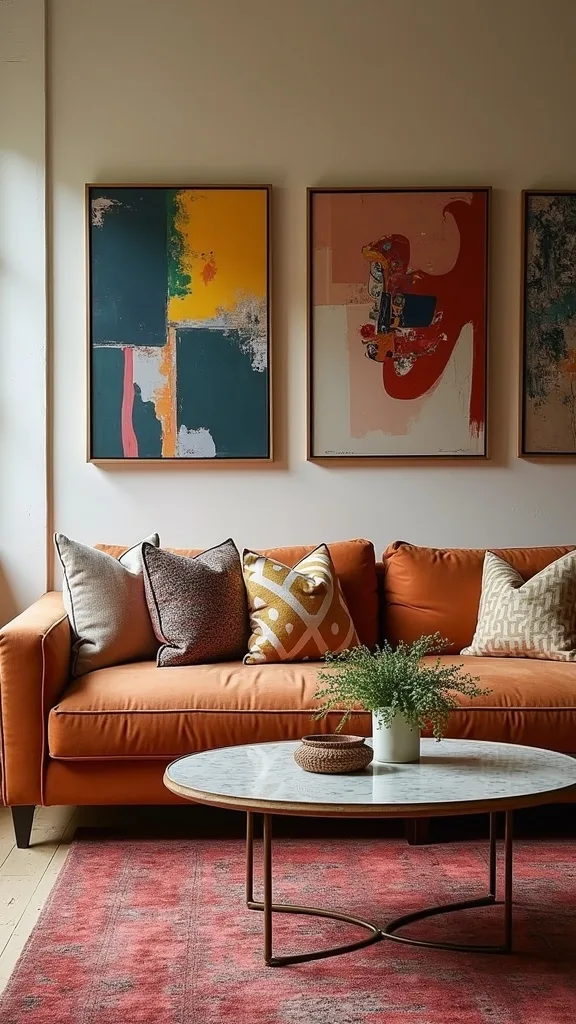
5. Where should you thrift, and what should you buy new?
Thrift for soul; buy new for comfort and safety. That’s the rule that keeps your eclectic interior charming instead of itchy (or wobbly). It works because the pieces you touch daily—sofa, rug pad, lighting—need to perform, while the decorative layers can be delightfully imperfect.
Thrift: side tables, frames, ceramic bowls, lamps (rewire if needed), and baskets. Buy new: sofa, rug (or at least a new rug pad), pillow inserts, and any upholstered chair you’ll sit in for more than 10 minutes. If you find a vintage chair with great bones, budget for reupholstery and treat it like a long-term relationship.
Materials to hunt: solid wood, real brass, woven cane, heavy ceramic. Colors: stick to your connectors so your flea market finds don’t wander off-theme.
Pro tip: Avoid thrift-store “sets.” One matching pair is fine, but a full matching trio screams “I bought this in one aisle,” not collected over time.
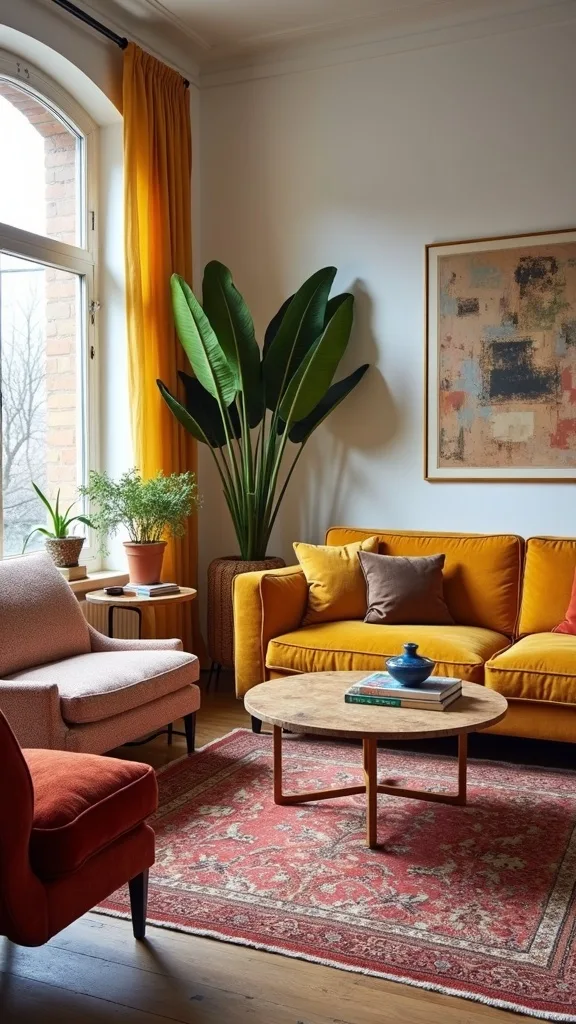
6. How do you mix patterns without giving yourself a headache?
You mix patterns by varying scale and keeping one color thread consistent. It works because the eye can handle a lot of variation if the patterns aren’t all shouting at the same volume. And look, you don’t need a PhD in textiles—you need a system.
Choose one large-scale pattern (rug or curtains), one medium (a throw or a big pillow), and one small (a lumbar pillow or a vintage scarf framed as art). Keep at least one shared color across all three—navy, rust, olive, whatever your connector is. If your rug is busy, make the sofa pillows simpler and textural (linen, velvet, bouclé) so the room breathes.
Summer eclectic style loves light, so consider a striped pillow, a faded floral, and a nubby solid in warm white. Add a designer cushion if you want—then balance it with a $12 linen cover so it doesn’t feel precious.
Pro tip: Avoid using the same pattern scale on everything. Three medium prints read as “I got overwhelmed and clicked add to cart.”
7. What’s the best rug choice for a collected look in summer?
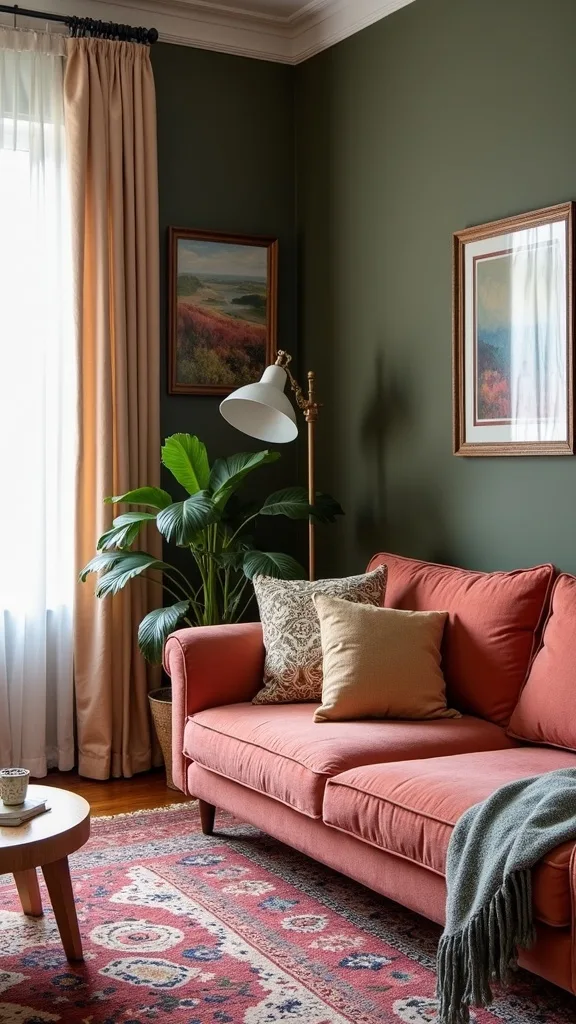
The best rug for a collected look is one with a slightly faded pattern—vintage-style, Persian-inspired, or a low-contrast geometric. It works because it adds history underfoot, even if your furniture is a mix of decades. Bonus: it hides summer foot traffic and iced-coffee incidents (ask me how I know).
Go big. For most living rooms, an 8’×10′ rug is the minimum if you want the front legs of the sofa and chairs on it. Choose a low pile so it layers well with furniture and doesn’t fight your sideboard lines. If budget is tight, invest in a thick rug pad first; a $250 rug can look twice as good with the right foundation.
Colors: warm neutrals with hints of your accent color. Materials: polypropylene can be practical; wool feels luxe. Both can work in an eclectic interior if the pattern is right.
Pro tip: Avoid tiny rugs floating in the center like an island. That’s not eclectic—that’s “I measured with vibes.”
8. How do you style a coffee table with flea market finds (without overdoing it)?
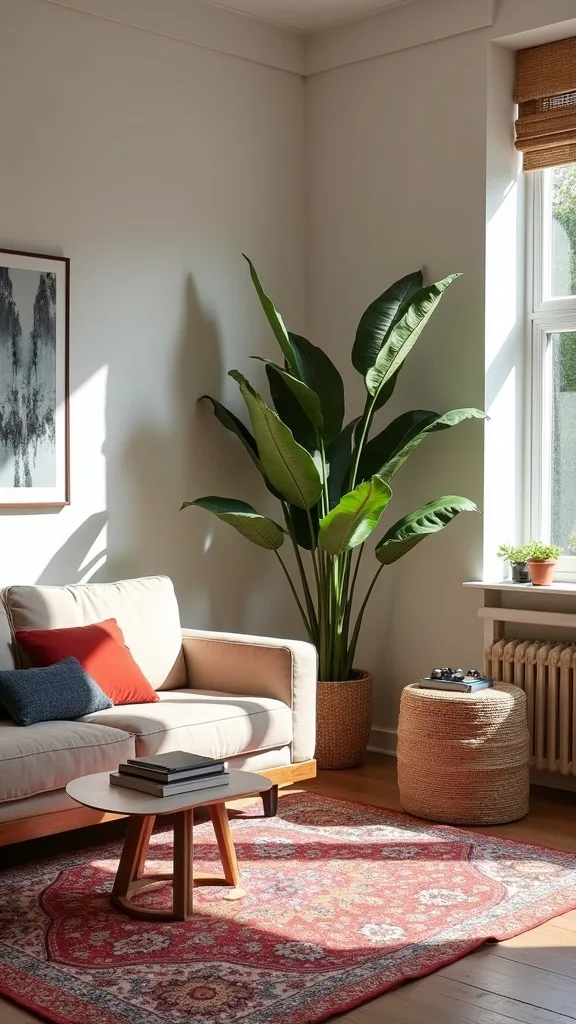
A coffee table should look lived-in, not like a museum display of your impulse buys. It works because the table is the room’s “pause point”—your eye lands there constantly, so it needs calm structure with a little personality.
Use a simple formula: tray + books + one organic shape. Put small flea market items (matchbooks, tiny ceramics, shells) into a bowl on a tray so they read as one intentional cluster. Add two coffee table books stacked, then finish with something organic like a small branch in a bud vase or a low plant. Keep at least 30% of the surface empty so you can actually set down a drink.
Materials: a wood or stone tray, art books with bold spines, and one vintage brass or ceramic piece. Colors: tie back to your connectors—this is where you repeat them.
Pro tip: Avoid more than one “conversation object” at a time. One weird little sculpture is charming; three is a cry for help.
Cost & Materials Estimate
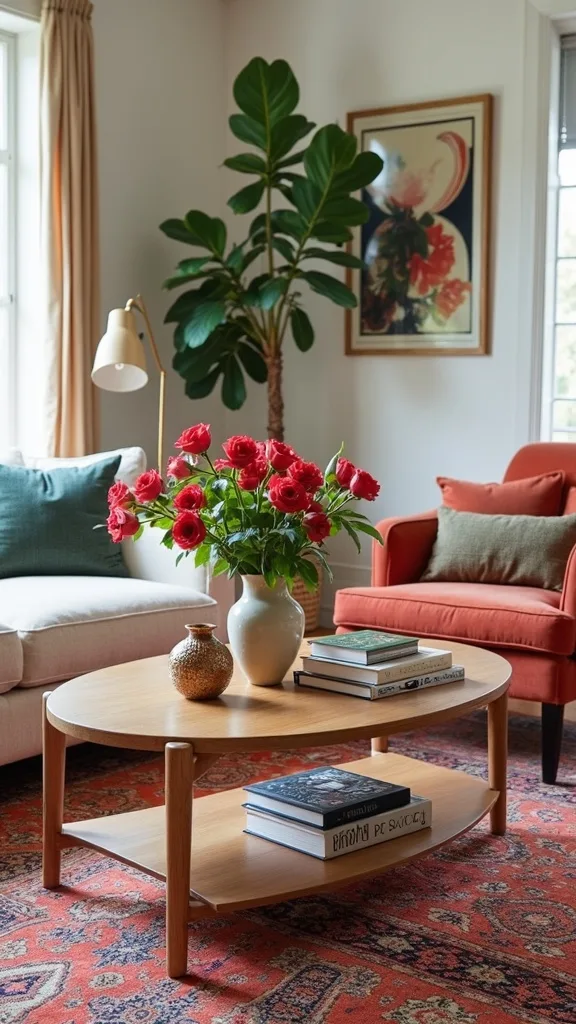
A summer eclectic refresh can run from a smart-accessory swap to a full furniture-and-rug reset, depending on what anchors you already own.
| Item | Estimated Cost | Where to Buy |
|---|---|---|
| Vintage-style 8’×10′ area rug | $180–$450 | Wayfair |
| Rug pad (8’×10′) | $45–$90 | Home Depot |
| Set of 2 linen pillow covers (18″×18″) | $22–$55 | Amazon |
| Warm white LED bulbs (2700K–3000K) | $10–$22 | Lowe’s |
| Tray + vase (coffee table styling) | $28–$85 | IKEA |
| Modern floor lamp | $60–$160 | Amazon |
Total estimated cost: $345–$862 Save by thrifting trays/frames and splurge on the rug pad + one excellent lamp for instant “designed” lighting.
9. What lighting makes eclectic interiors look intentional at night?
Layered lighting is what makes eclectic interiors feel designed after dark. It works because mixed styles can look scattered in harsh overhead light, but warm, layered pools of light pull everything together and make your textures look rich.
Aim for three light sources in the living room: one floor lamp, one table lamp, and one ambient source (a plug-in sconce or a second table lamp). Choose bulbs in warm white light (2700K–3000K — the cosy, yellowish tone you see in most homes) so woods and vintage metals glow. Put lamps on dimmers or smart plugs so you can shift from “daytime energetic” to “summer evening chill” in two taps.
Materials: a modern arc floor lamp, a vintage ceramic table lamp, and a linen shade. Keep metal finishes consistent with your connectors—brass with brass, black with black.
Pro tip: Avoid relying on one ceiling light. It flattens everything and makes your carefully curated corners look like a waiting room.
10. How do you create a gallery wall that doesn’t feel random?
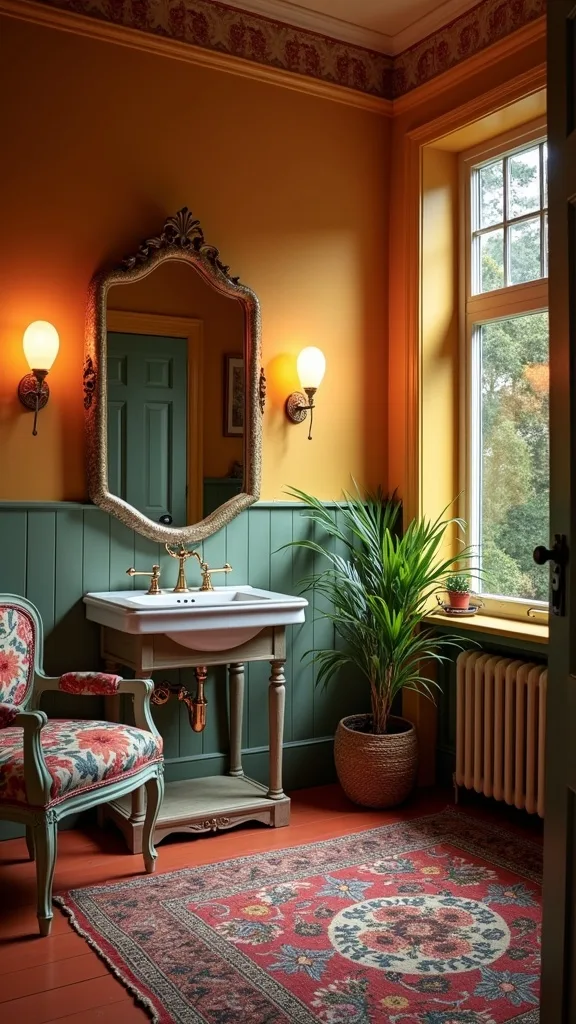
A gallery wall becomes “collected” when it has a clear boundary and a repeat. It works because the frames act like punctuation—without them, the art reads as noise. And look, random is fine in your sock drawer; not on your main wall.
Pick a layout shape first: a rectangle over the sofa, or a staircase along a wall. Use at least two matching frames to create rhythm (black wood or light oak are easy). Mix art types—one modern abstract, one vintage print, one photo, one small textile—then repeat one color in at least three pieces so the wall feels cohesive.
For summer eclectic style, add one bright, sun-washed piece (think lemon yellow or coastal blue) to lift the whole arrangement. Include a flea market frame even if the art inside is new—patina is the point.
Pro tip: Avoid spacing that changes wildly. Keep gaps around 2 inches so the collection reads as one statement, not a bunch of separate decisions.
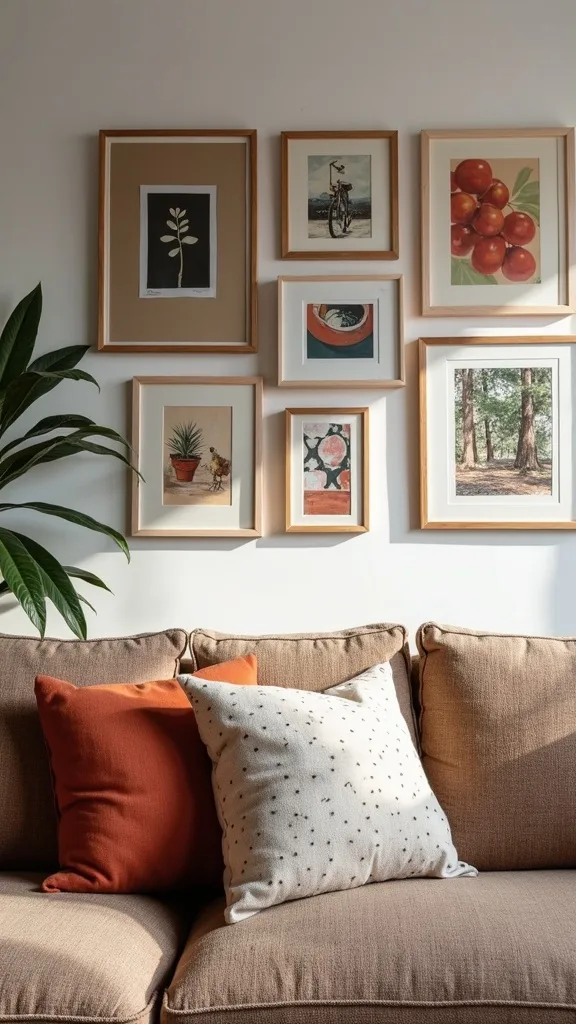
11. Can you mix wood tones in an eclectic interior?
Yes, you can mix wood tones, but you need a “majority wood” and a “supporting wood.” It works because too many competing undertones (orange, red, gray) make the room feel unsettled, especially when styles are already mixed.
Choose one dominant wood tone for the big pieces—sideboard, coffee table, shelving—and let smaller items vary. If your sideboard is walnut, keep other large woods in the warm family (teak, oak) and avoid adding a big gray-washed piece that feels like it wandered in from a different Pinterest board. Use a rug and textiles to soften transitions if the woods aren’t identical.
Materials to bridge: rattan, cane, and woven seagrass—these act like neutral woods. Metals also help: black steel or brass can “reset” the palette between wood tones.
Pro tip: Avoid mixing more than three distinct wood tones in one sightline. Variety is great; visual whiplash is not.
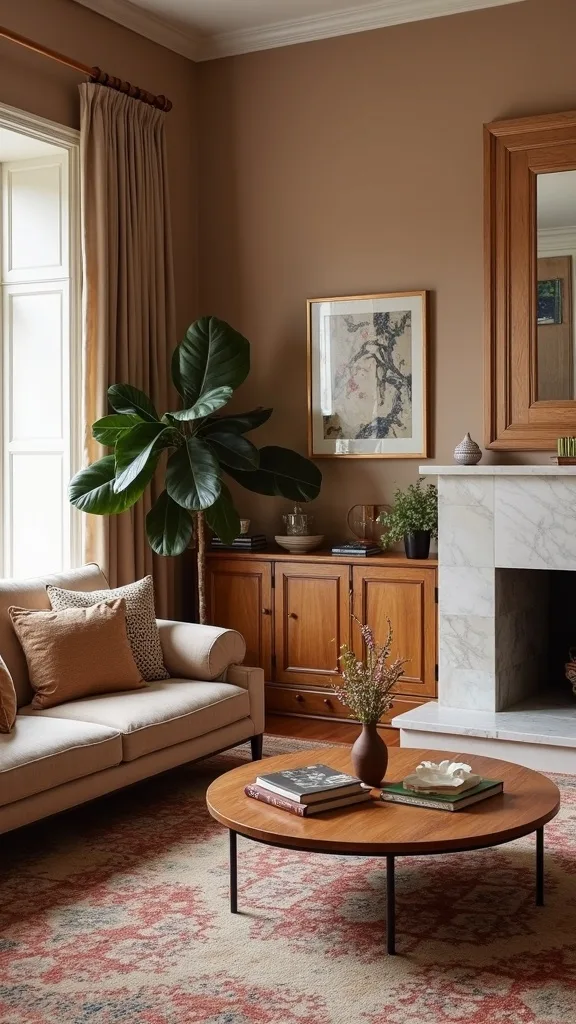
12. How do you add summer eclectic style without repainting?
You add summer eclectic style by swapping the soft layers, not the hard finishes. It works because textiles are the room’s mood ring—change them and everything else feels newly intentional, even if nothing big moved.
Start with pillow covers in lighter fabrics: linen, cotton, or a thin woven. Add one throw in a breathable texture (waffle weave or lightweight knit) and retire the heavy winter blanket to a closet where it can’t judge you. Bring in one bright accent—like citron piping or a cobalt stripe—then echo it in a small vase or art print so it feels integrated.
Colors: warm white, sand, and one juicy color. Materials: linen covers, rattan tray, a glass vase that catches light. Budget move: swap just two covers and one thrifted vase.
Pro tip: Avoid adding summer color everywhere at once. One or two bright notes feel fresh; five feels like a beach rental trying too hard.
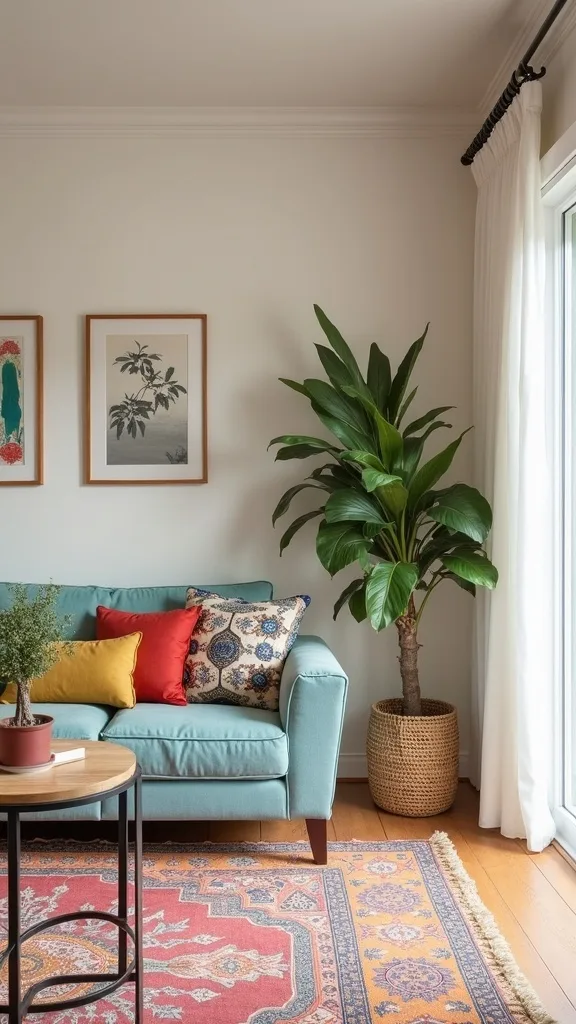
13. What’s the best way to use designer cushions without looking precious?
Designer cushions look best when they’re not surrounded by other “look at me” items. It works because a single elevated textile provides contrast—your eye reads it as intentional luxury inside an otherwise relaxed, collected mix.
Put the designer cushion on the sofa corner where it’s most visible, then pair it with two simpler companions: a solid linen and a subtle stripe. Use good inserts (down-alternative is fine) so the pillows don’t look like sad pancakes. Keep the palette tied to your connectors so the fancy cushion doesn’t feel like it arrived from a different home.
Materials: embroidered linen, vintage kilim, or a high-quality woven. Colors: pick one with your accent color so it can “talk” to your art or rug.
Pro tip: Avoid matching all pillows from the same brand. The whole point of collected home decor is that it feels accumulated, not purchased in one checkout session.
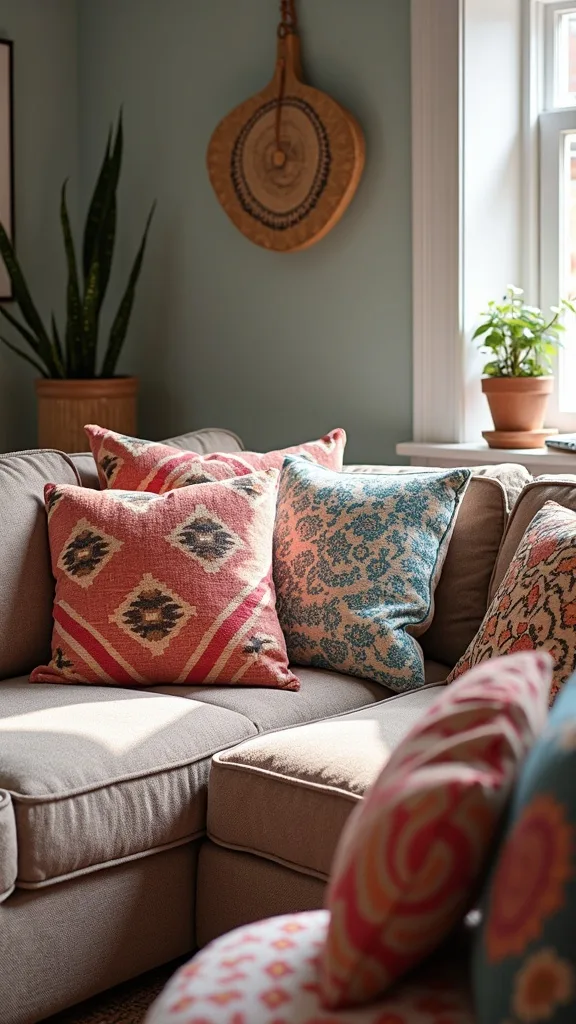
14. How do you decorate with books in a way that feels curated?
Books are the easiest credibility boost in an eclectic interior—instant story, instant texture. It works because spines create repetition and scale, and they make modern pieces feel warmer and vintage pieces feel smarter.
Stack two to three books on the coffee table and one to two on the sideboard. Mix subjects: art, travel, design, cooking—whatever you actually like (novel concept, I know). Turn one book outward with the cover showing for color. If your shelves look chaotic, group books by color in small sections, not the entire shelf, so it feels intentional instead of staged.
Materials: matte dust jackets, woven bookmarks, a small brass object as a paperweight. Colors: tie stacks to your palette—navy spine near your blue vase, cream spine near your lamp.
Pro tip: Avoid fake books. If you need a riser, use a real book you’ll open—your room should be collected, not cosplay.
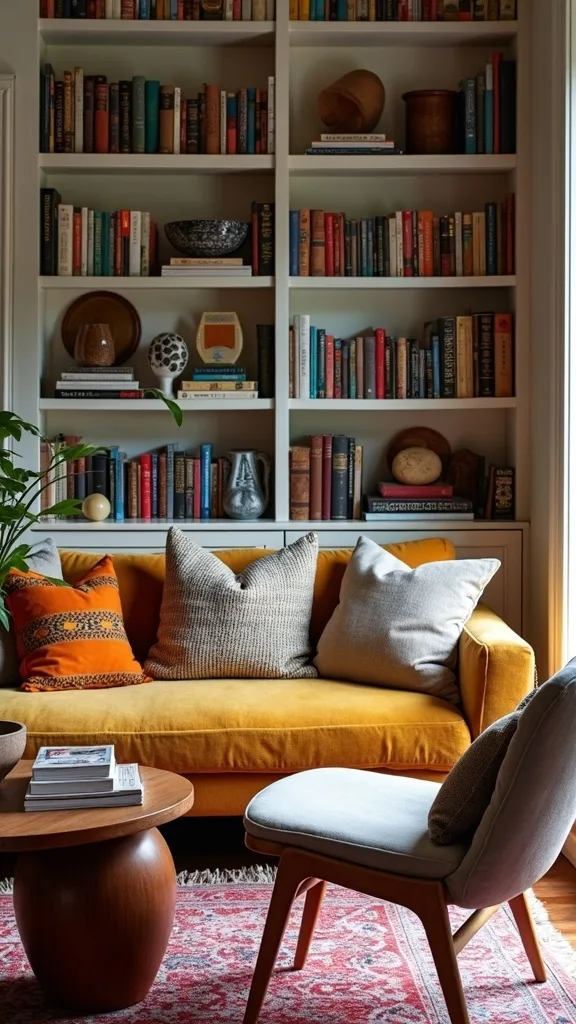
15. What furniture layout makes mixed styles feel cohesive?
The layout that makes mixed styles feel cohesive is one clear conversation zone with a defined center. It works because eclectic rooms can handle visual variety, but they can’t handle spatial confusion. People should know where to sit without reading a map.
Anchor with a rug big enough for at least the front legs of all seating. Place the sofa facing the focal point (fireplace, TV, or your big art wall), then add two chairs that don’t match each other—but do share a connector (both have wood arms, or both have black legs). Keep a 16–18 inch gap between coffee table and sofa so it’s comfortable, not cramped.
Materials: one upholstered sofa, one leather chair, one woven accent chair. Colors: keep the largest pieces neutral; let accents do the talking.
Pro tip: Avoid pushing all furniture against the walls “to make space.” It makes the room feel like a dentist waiting area (speaking of) and kills the collected coziness.
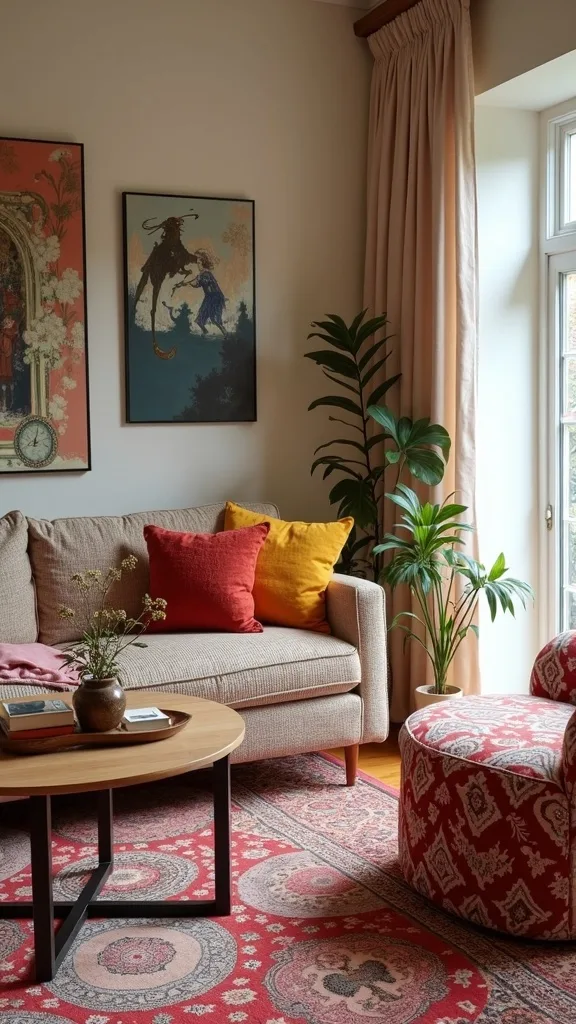
16. How do you mix metals (brass, black, chrome) without chaos?
Mixing metals works when one metal leads and the others support. It works because metals are like jewelry—too much and the outfit starts wearing you. In a mixed styles home, metal finishes are one of your easiest unifiers.
Pick a primary metal for 70% of visible hardware and lighting (aged brass is especially forgiving). Add a secondary metal for contrast (matte black is classic) and, if you must, a tiny hit of a third (chrome on a vintage lamp, for example). Repeat each metal at least twice: brass in the lamp and frame, black in the curtain rod and side table legs.
Materials: brushed brass, matte black, a touch of polished nickel. Colors: metals read best against warm neutrals and deep accents like green or navy.
Pro tip: Avoid mixing metals with wildly different “shine levels” everywhere. Keep most finishes brushed or matte so the room feels relaxed, not sparkly and tense.
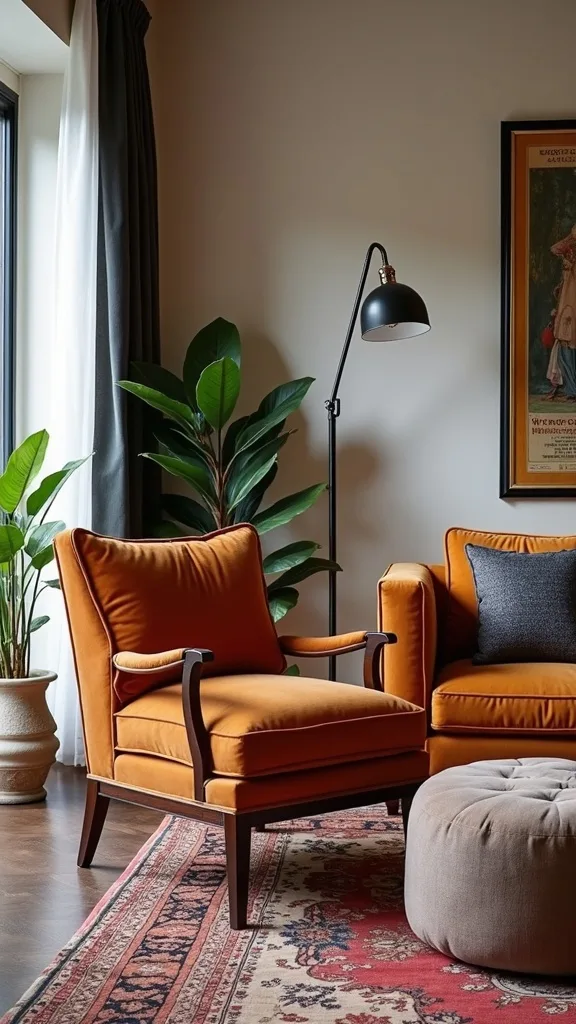
17. What window treatments fit a collected eclectic living room?
Simple, textural curtains are the secret to making an eclectic room feel finished. It works because curtains create a calm backdrop that lets your art, sideboard, and flea market finds do their thing without competing with busy fabric at the windows.
Choose linen or linen-blend panels in warm white or oatmeal, and hang them high—about 4–6 inches above the window frame—to make ceilings feel taller. Make sure the panels kiss the floor or hover a half-inch above it; puddling can look romantic, but it also looks like it’s collecting dust bunnies for sport. If privacy is an issue, add a simple woven shade under the curtains.
Materials: linen panels, matte black rod, natural woven shade. Colors: keep it neutral, then repeat your accent in the tie-back or nearby art.
Pro tip: Avoid grommet-top curtains unless your vibe is “college apartment 2011.” Rings or back tabs look instantly more tailored.
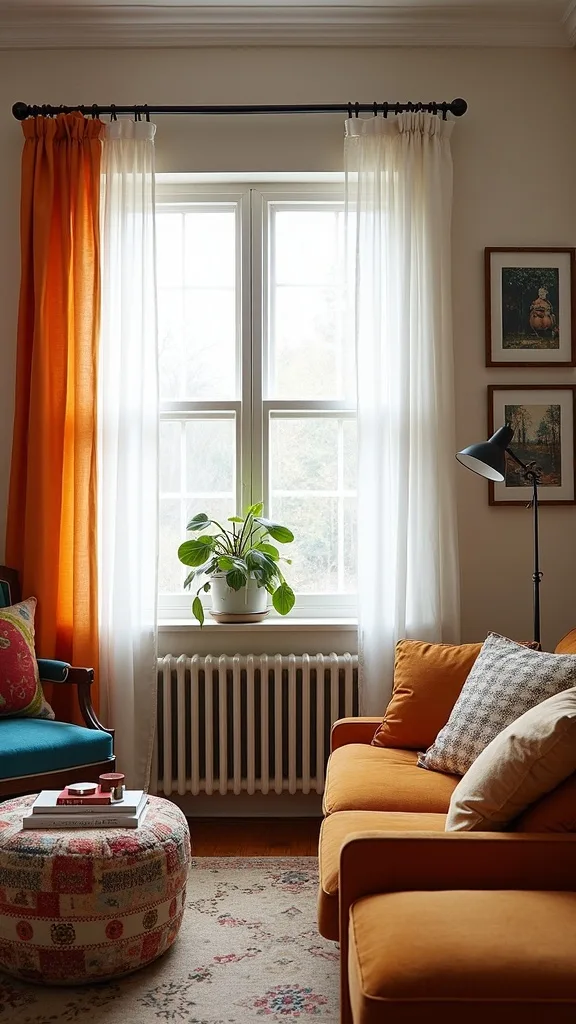
18. How do you use plants to tie vintage and modern pieces together?
Plants are the ultimate mediator between vintage and modern. It works because greenery is timeless—no decade owns it—and the organic shapes soften hard lines from mid-century case goods and contemporary art.
Use one big plant for structure (like a fiddle leaf fig or rubber plant) and two smaller ones for layering. Put the big plant near the sideboard to balance that long horizontal line. Choose planters that echo your connectors: a matte white ceramic for modern, a woven basket for vintage warmth, or a brass stand to bridge both.
Summer tip: add a vase of grocery-store stems weekly. $12 worth of eucalyptus makes the room smell like you have your life together (even if you absolutely do not).
Pro tip: Avoid scattering tiny plants everywhere. One large, a couple medium—done. Too many small pots read as clutter, not lush.
19. What should you avoid when trying to create a collected look?
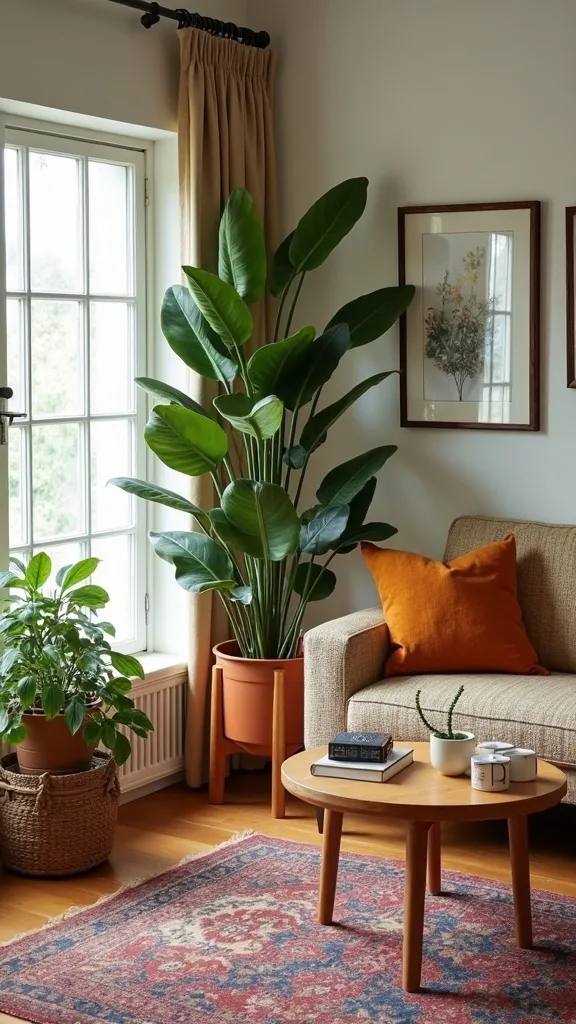
Avoid buying a full “eclectic set” in one weekend. It works against you because collected style is about contrast and time—pieces that look like they came from different chapters of your life, not one frantic online binge. And look, I love a cart checkout as much as the next person, but restraint is the flex.
If you’re tempted to buy everything at once, limit yourself to one new “hero” and two supporting items. Then live with it for a week and see what the room actually needs: a lamp? a bigger rug? less stuff? Use painter’s tape to map out art sizes before you commit—your walls will forgive you, your budget will too.
Materials to prioritize: one solid wood anchor, one quality light, one great rug pad. Colors: keep to your connectors so each new addition has a job.
Pro tip: The best collected rooms have editing. Leave one shelf half-empty on purpose—it reads confident and gives you space for the next great find.
20. How do you make an eclectic interior feel grown-up (not messy)?
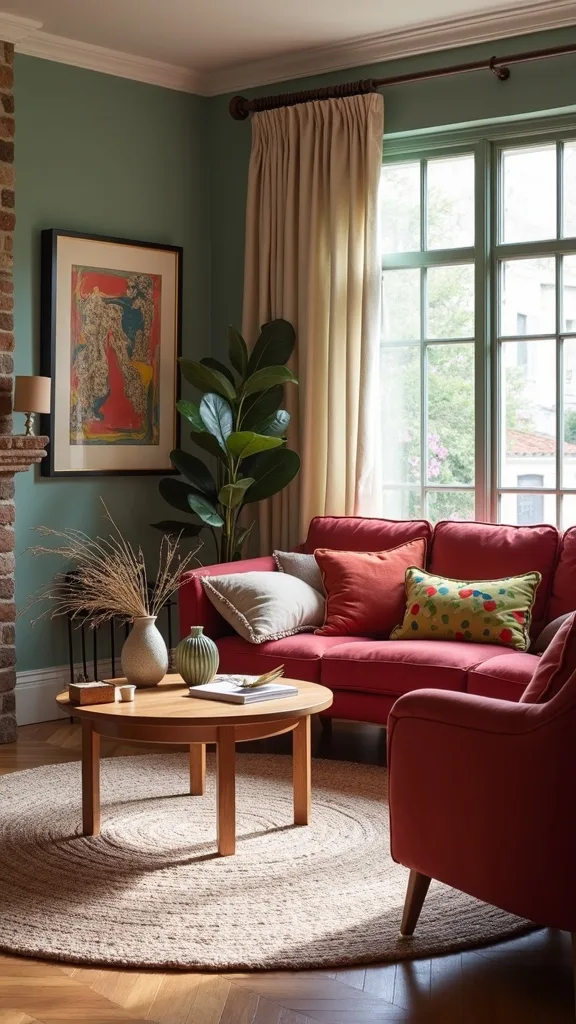
An eclectic interior feels grown-up when it has tailored elements: symmetry, clean lines, and a little negative space. It works because the playful mix needs a “responsible adult” in the room to keep it from turning into dorm-core.
Add one symmetrical moment—matching lamps on a sideboard, or a pair of frames flanking a central artwork. Keep upholstery shapes simple (a streamlined sofa) and let the vintage pieces bring the detail. Choose one “quiet luxury” material—linen, wool, or solid wood—and repeat it so the room has a polished baseline.
Colors: neutrals with one deep accent like forest green or ink. Materials: linen curtains, a wool rug, a brass picture light if you’re feeling fancy.
Pro tip: Avoid novelty decor with words on it. Your room can be funny because you are funny; it doesn’t need a sign that says “Gather.”
21. How can you use mirrors to amplify summer light in a collected room?
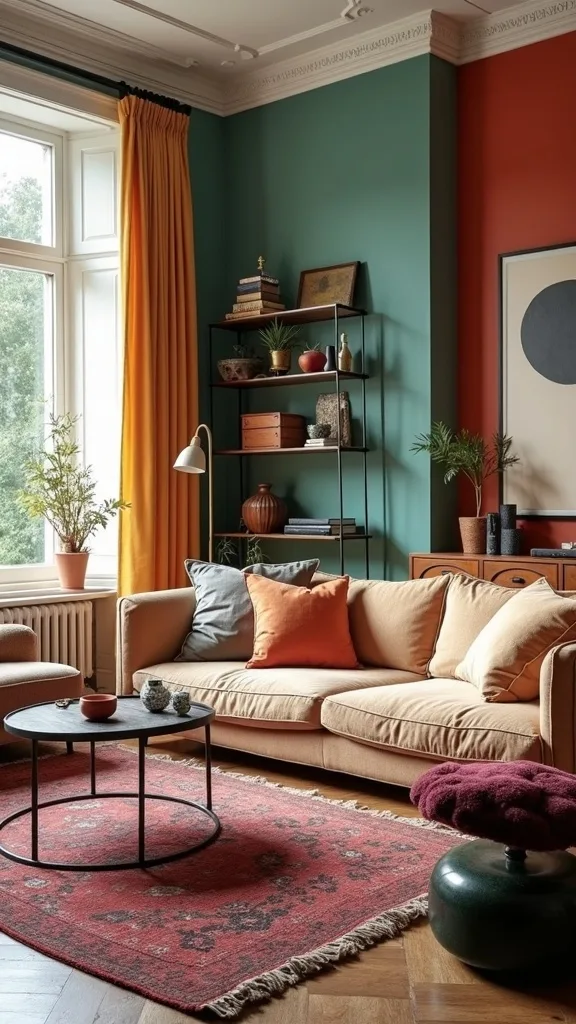
Mirrors are an underrated power move for summer—more light, more depth, and a little sparkle without adding clutter. It works because eclectic spaces already have visual interest; a mirror doubles that interest and makes the room feel airy.
Place a mirror across from a window or at a slight angle to bounce daylight deeper into the space. Choose a frame that supports your mix: an antique gilt frame for warmth, or a thin black frame for modern edge. Keep the mirror size substantial—at least 24×36 inches—so it reads as a design choice, not an afterthought.
Materials: vintage gold leaf, black metal, or warm wood frames. Colors: mirrors love warm white walls and darker accents because the contrast feels crisp.
Pro tip: Avoid a bunch of small mirrors scattered around. One great mirror looks intentional; many look like a funhouse.
22. What’s a smart way to display collections (ceramics, records, travel finds)?
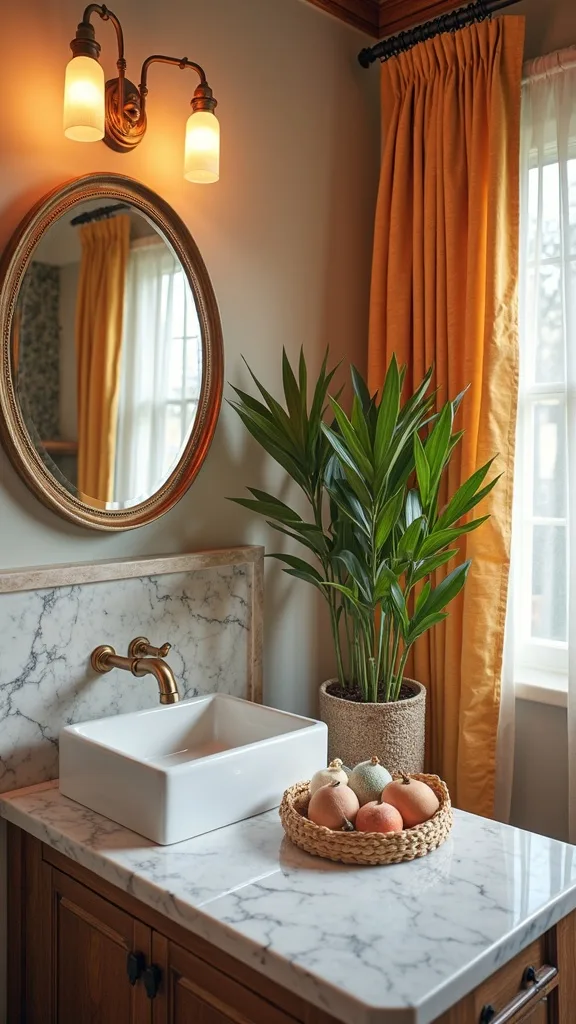
Collections are the heart of collected home decor—if they’re displayed like a collection, not like a pile. It works because grouping similar items creates impact and tells a clear story, which is exactly what eclectic design needs.
Pick one surface or shelf for your collection and commit. Display ceramics in odd numbers (3, 5, 7) and vary heights so the arrangement has rhythm. For records, use a slim record stand and show one cover at a time—rotating it becomes part of the room’s “living” feel. Leave breathing room around the collection so it feels curated.
Materials: open shelving, a low bowl, bookends, and a small riser. Colors: keep the display mostly within your palette, then let one wild card piece steal the show.
Pro tip: Avoid displaying every souvenir you’ve ever owned. Edit ruthlessly. The best collections include absence—space is what makes the objects feel special.
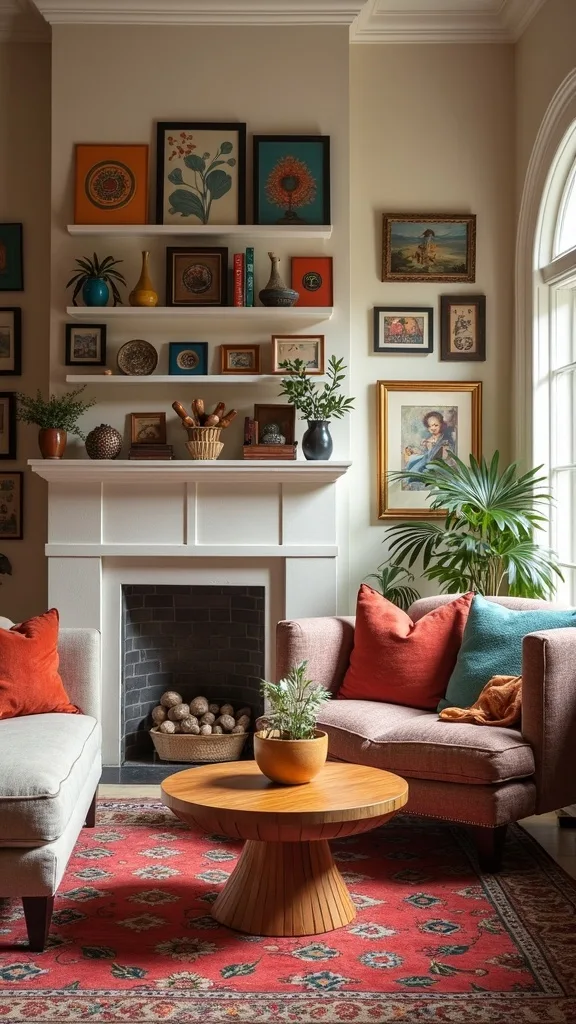
23. How do you blend a TV into an eclectic living room?
You blend a TV by giving it friends and a frame of reference. It works because a lone black rectangle looks harsh in a layered, eclectic room—but when it’s part of a larger wall composition, it behaves.
Mount the TV or place it on the sideboard (if proportions allow), then flank it with art or shelves so the wall feels intentional. Choose a media console with character—mid-century lines, cane doors, or vintage wood—and keep cables hidden with simple covers. If you can, add a picture light above nearby art to pull attention away from the screen when it’s off.
Materials: wood console, black or brass accents, matte frames. Colors: keep the wall around the TV lighter so the screen isn’t a visual hole.
Pro tip: Avoid putting the TV too high. Your neck is not a sacrifice the eclectic gods require—eye level when seated is the goal.
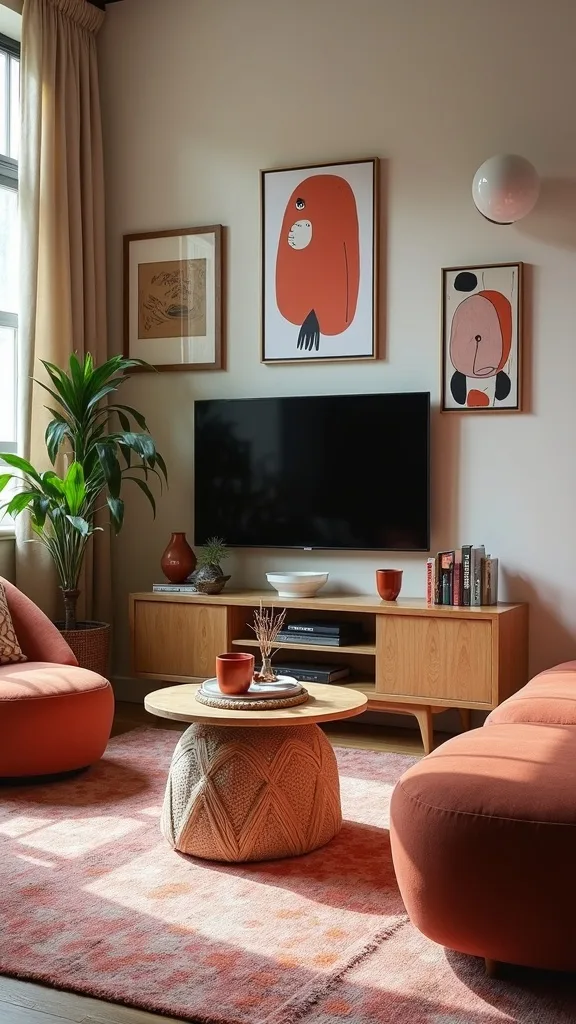
24. What small-space tricks help eclectic style feel airy?
In a smaller living room, eclectic style needs breathing room and visible floor. It works because too many heavy pieces at once can make the room feel crowded, even if every item is cute on its own (rude, but true).
Choose at least one piece with legs—sofa, chairs, or sideboard—so light passes under it. Use a round coffee table to improve flow, and pick one large artwork instead of many small ones to reduce visual noise. Keep your color palette tighter in small spaces: neutrals plus one accent, repeated.
Materials: glass or acrylic side table, light-toned rug, linen curtains. Colors: warm white, sand, and one deep note like navy for grounding.
Pro tip: Avoid oversized accessories in a tiny room. One big vase can work, but three big objects will make the space feel like it’s shrinking in real time.
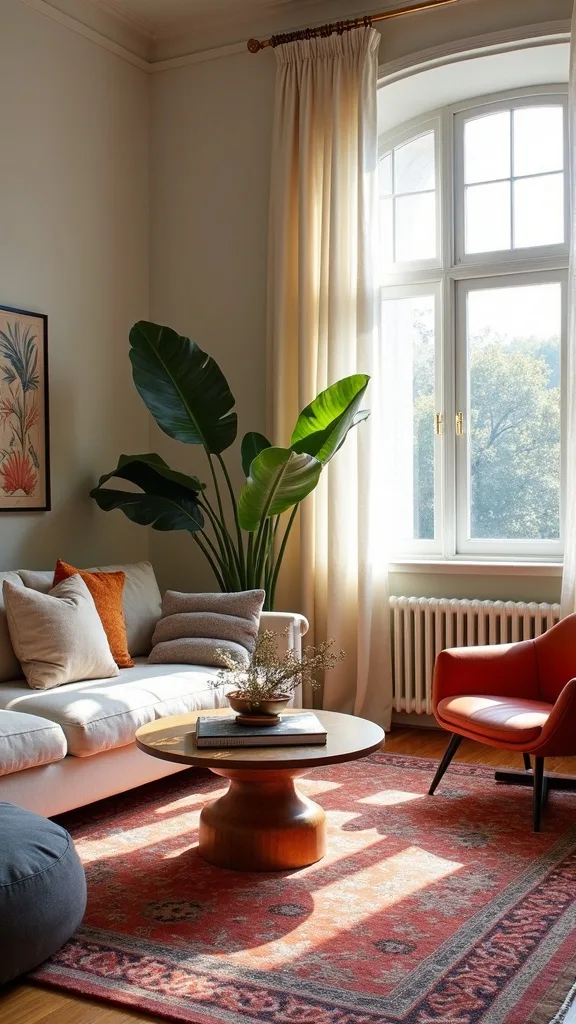
25. What’s the one weekend refresh that makes everything feel collected?
The one weekend refresh is: edit, then restyle one focal surface. It works because the collected look isn’t about adding—it’s about curating what you already have so it reads as intentional. And look, this is the part where I admit I’ve tried to “fix” a room by buying more stuff. It did not fix the room. It fixed my mood for twelve minutes.
Start by clearing your coffee table and sideboard completely. Put back only what supports your connectors: one tray, two books, one sculptural object, and one organic element (plant or stems). On the sofa, swap in two summer pillow covers and fluff your inserts like you mean it. Finally, adjust art height or spacing if anything feels “off”—small tweaks create big calm.
Materials: tray, vase, stems, two pillow covers, one candle in a simple vessel. Colors: repeat your accent once on each surface so the room feels tied together.
Pro tip: Take a quick photo before and after. Seeing the edit on your phone is proof you’re building an eclectic interior with intention—and that’s the whole point.
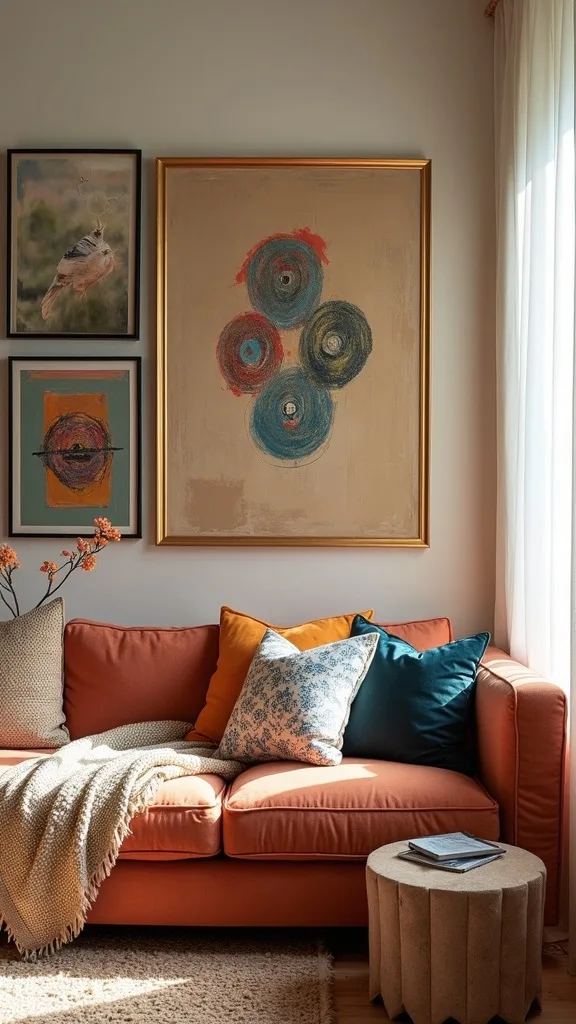
Final Thoughts
An eclectic room isn’t a license to be chaotic—it’s a commitment to making your favorite things look like they belong in the same story. When the connectors repeat (wood, metal, color), your flea market finds stop feeling like strays and start feeling like a collection. That’s when the room gets that relaxed, summer-ready confidence.
If you take nothing else: anchor with one strong piece, keep your soft layers seasonal, and don’t let tiny objects multiply unchecked. The “collected” part comes from editing and spacing as much as it comes from shopping. (Annoying, I know. I also wish the answer were “buy one more pillow.”)
Today, clear one surface—coffee table or sideboard—then restyle it with the tray + books + one sculptural object formula, and swap in two lighter pillow covers. You’ll feel the whole room click into place before your iced coffee melts.
What I’d Do Differently
When I first tried this, I treated “eclectic” like a scavenger hunt: I brought home anything charming—tiny brass animals, mismatched frames, three different vases, a lamp that looked like it belonged in a noir film—then I placed it all out at once. The result wasn’t a collected living room; it was a surface-by-surface yard sale. The specific mistake: I didn’t pick connectors first, so nothing repeated. Once I chose one wood tone (walnut), one metal (aged brass), and one accent color (deep blue), I could immediately see what stayed, what moved to another room, and what needed a tray to stop becoming “object confetti.”
I also wish I’d known to start with the biggest visual decisions—rug size and art scale—before fussing with accessories. A too-small rug and undersized art will make even expensive pieces look accidental. Choose your anchors, then let the smaller finds orbit them, and you’ll get that relaxed, collected feeling faster than you think—start with one wall and one surface this weekend.
Products I Recommend for This Project
Here are some of my favourite products to help you bring these ideas to life:
- nuLOOM Vintage Medallion Area Rug (8′ x 10′) — Adds that “already lived a life” pattern layer that makes mixed eras feel cohesive.
- Ruggable Rug Gripper (non-slip rug pad) — Keeps your rug flat and anchored so the room feels finished (and safer).
- Philips LED A19 Warm Glow Bulbs (2700K–3000K) — The easiest way to make vintage wood and brass look rich instead of harsh.
- DEKORASYON Linen Pillow Covers (18×18 set) — A budget-friendly summer swap that instantly lightens a sofa without buying new furniture.
- Kate and Laurel Decorative Tray (wood or metal finish) — Corral flea market finds into one styled moment so “collected” doesn’t turn into cluttered.