
This post contains affiliate links. As an Amazon Associate, I earn from qualifying purchases at no extra cost to you.
The fastest way to make a porch look “Halloween ready” isn’t a giant inflatable. It’s plants. Three pots by the front door can make even a tired welcome mat and dusty sidelights look like you tried.
Here’s the honest part: my “before” porch was bad. One sun-bleached plastic pot with a half-dead fern, a random cracked saucer, and a sad little pile of pine straw that kept blowing into the walkway. It didn’t look spooky or cozy—just neglected.
This article covers affordable fall flower pots, quick plant combos that survive real weather, and easy ways to make mismatched containers look cohesive without buying a whole new set.
It’s perfect for budget-smart decorators who love the hunt—thrift store aisles, clearance racks, grocery-store mums, and the satisfaction of making “not much” look like a plan.
Expect terracotta trios, thrifted baskets, painted rescue pots, and a few porch fall flowers swaps that keep your display looking fresh through Halloween. Below are 25 Fall Front Porch Planter & Pot Ideas that…
Products I Recommend for This Project
Here are some of my favourite products to help you bring these ideas to life:
- Fiskars Bypass Pruning Shears — Clean snips make deadheading mums fast and keep your pots looking fresh.
- Miracle-Gro Potting Mix — A reliable potting soil that drains well in containers so roots don’t sit soggy.
- Bloem Terra Plastic Planter (14-inch, Terracotta color) — Lightweight “terracotta look” when you need the vibe without the weight or breakage.
- Rust-Oleum Painter’s Touch 2X Ultra Cover Spray Paint (Matte Black) — The quickest way to unify mismatched pots for a Halloween-ready porch.
- Homemory Flameless LED Tea Lights (Battery Operated) — Adds safe, cozy glow inside lanterns without wind headaches.
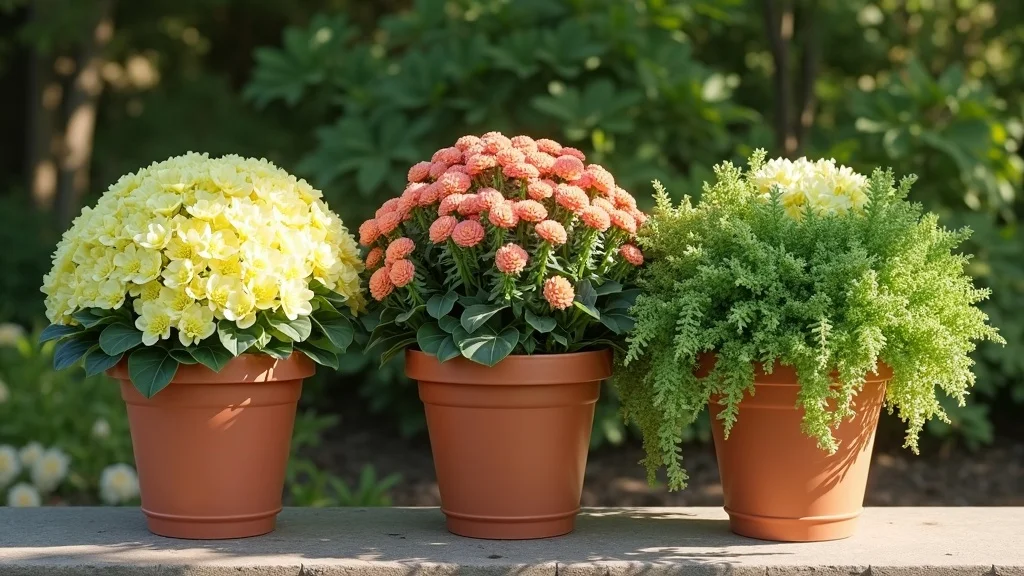
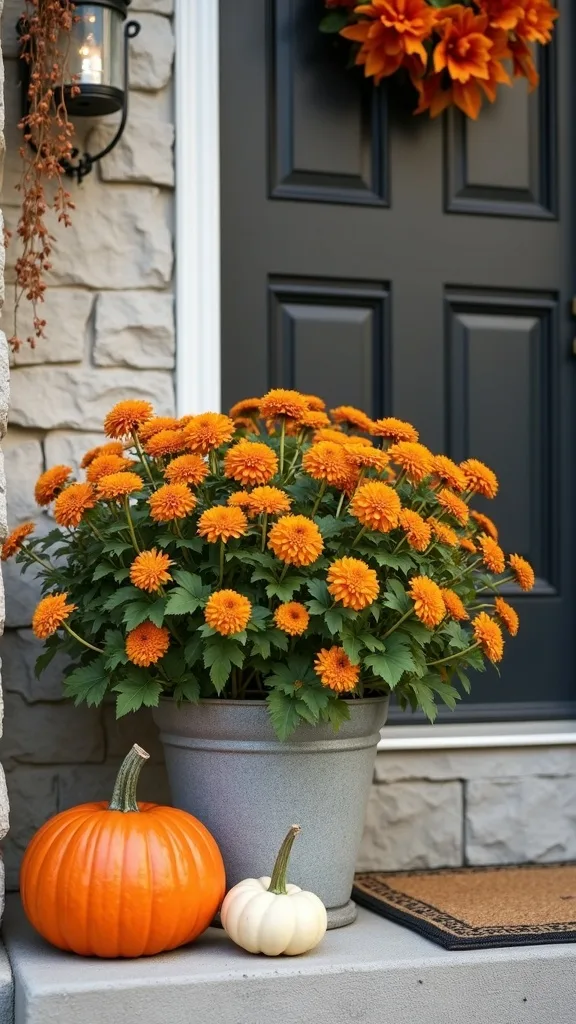
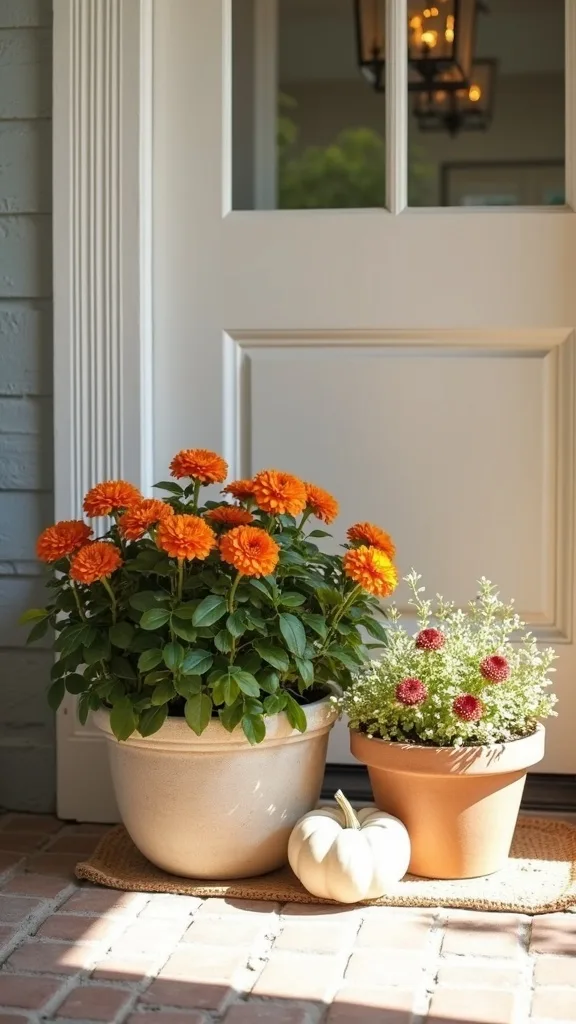
1. Mums, ornamental kale, and trailing sweet potato vine in a terracotta trio (under $40)
This is the look that makes neighbors slow down: three warm terracotta pots with bold mums, ruffled kale, and a vine spilling over the rim. It works because the colors scream fall without needing extra décor, and terracotta instantly reads “classic.”
Grab three pots in two sizes (I like one 14-inch, one 12-inch, one 10-inch) and cluster them tight near your door hinge side so the door swing stays clear. Plant one mum per pot, tuck in ornamental kale as your texture, then add trailing sweet potato vine so at least one pot has movement. Water deeply right after planting and keep them in bright shade for a day to recover.
Color picks that never fail: burnt orange mums, purple kale, and chartreuse vine. If orange mums are gone, go burgundy + cream and let the vine be the “pop.”
Pro tip: if your terracotta is mismatched, rub a little yogurt on the sides and leave it outside for a week—cheap “aged patina” that looks like you collect pots on purpose.
2. What can I do if my porch pots are ugly mismatched plastic?
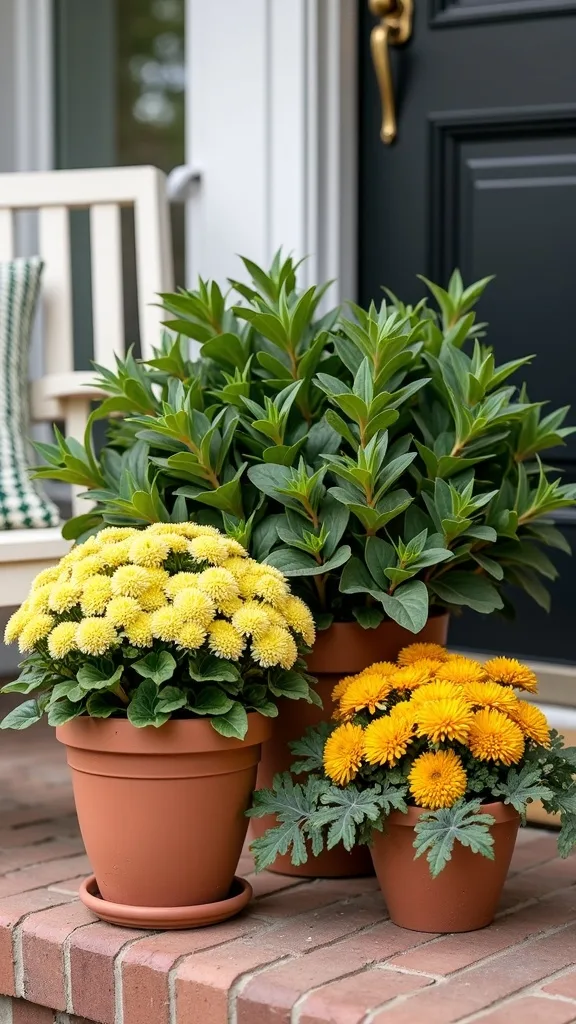
Ugly mismatched pots can still look intentional if you give them one unifying finish. This works because the eye reads “set” when the color is consistent, even if the shapes aren’t.
Wash the pots (dish soap + scrub brush), let them dry, then hit them with one paint color—matte black is the easiest Halloween-porch win. For plastic, use a spray paint made for plastic so it doesn’t scratch off the first time you bump it. If you’re painting clay, a cheap craft acrylic works, then seal with a clear outdoor spray if you have it.
Pair the new “set” with plants that carry the theme: burgundy mums, white pumpkins, and trailing ivy or sweet potato vine. Even one painted pot can anchor the whole grouping if it’s the largest.
Pro tip: avoid glossy paint on sunny porches—it shows every drip and scuff. Matte hides your real life and lets the plants be the star.
3. How do I build an autumn planter arrangement that looks full (not skimpy)?
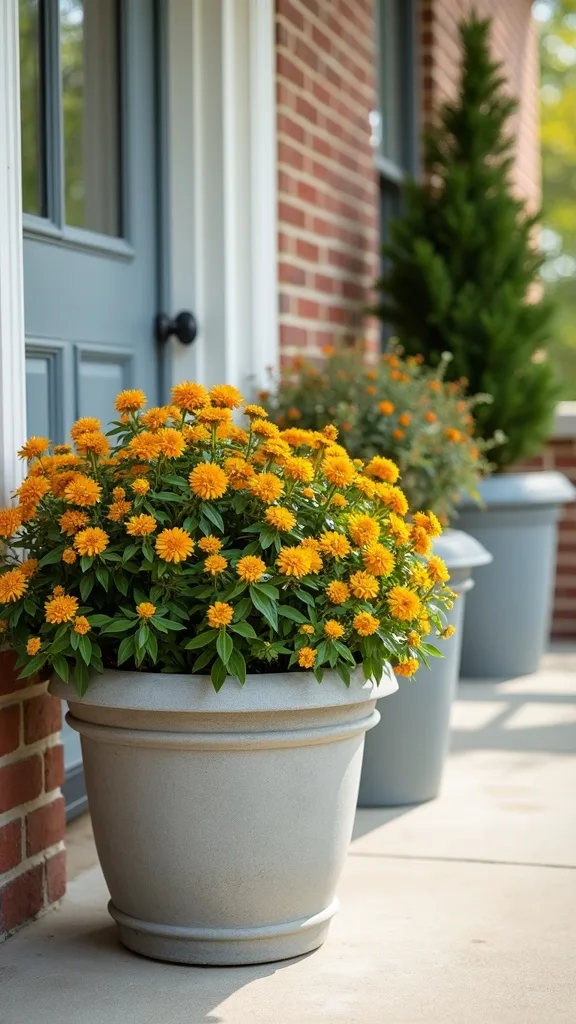
A full-looking autumn planter arrangement is mostly about pot size and plant count, not fancy skill. It works because crowded fall annuals read lush immediately, and mums actually prefer being snug in cool weather.
Start with a pot at least 12 inches wide. For that size, plan on 1 mum + 2 “support” plants (kale, pansies, dusty miller) + 1 spiller vine. If your budget is tight, buy the mum full-sized and the rest in 4-inch nursery pots—those little guys fill in fast in September and October.
Stick to 2–3 colors: orange/cream, burgundy/white, or yellow/purple. Add texture with ornamental kale or heuchera (coral bells) if you find it on clearance.
Pro tip: avoid leaving visible soil at the top. A $3 bag of pine bark mulch or even fallen leaves tucked neatly around the base makes the pot look finished in five minutes.
4. Where can I find cheap planters fast (without ordering online)?
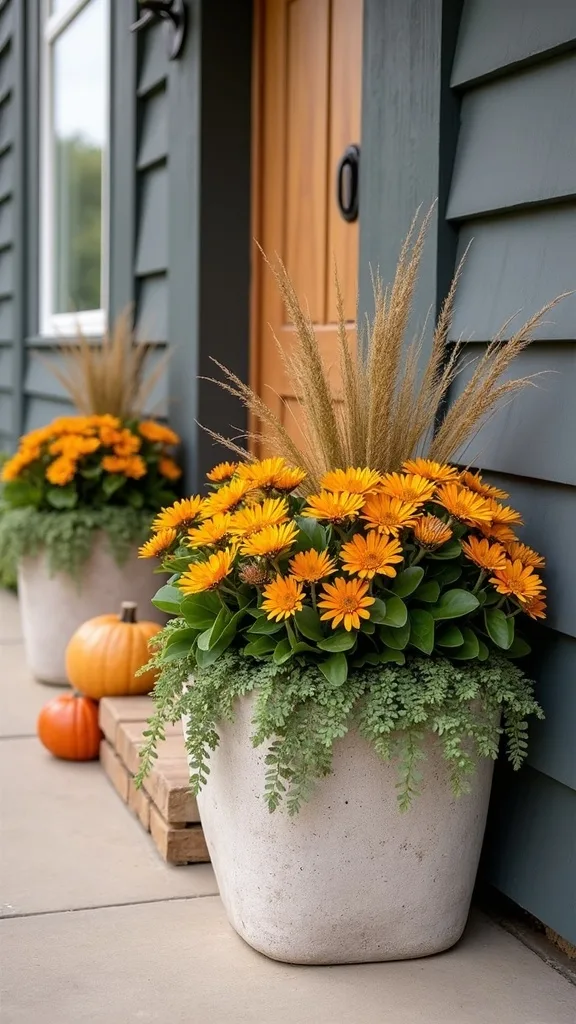
The fastest cheap planters are hiding in places people forget to check. This works because seasonal turnover makes containers show up constantly on shelves—especially right before Halloween porch prep kicks in.
Hit thrift stores first: Goodwill, Savers, and local church thrifts often have ceramic pots for $3–$8. Check for cracks by tapping the rim and looking underneath. Then try discount stores: Dollar Tree for basic plastic, Walmart for end-cap clearance, and Aldi for occasional terracotta dupes. If you have a Home Depot or Lowe’s, walk straight to the clearance garden rack—it’s usually near the outdoor register doors.
Color-matching tip: if you can’t find three identical pots, buy two that match and make the third one a different material (basket, galvanized bucket) so it looks intentional.
Pro tip: avoid anything without a drainage hole unless you’re willing to drill. Soggy roots are the quickest way to turn porch fall flowers into porch sadness.
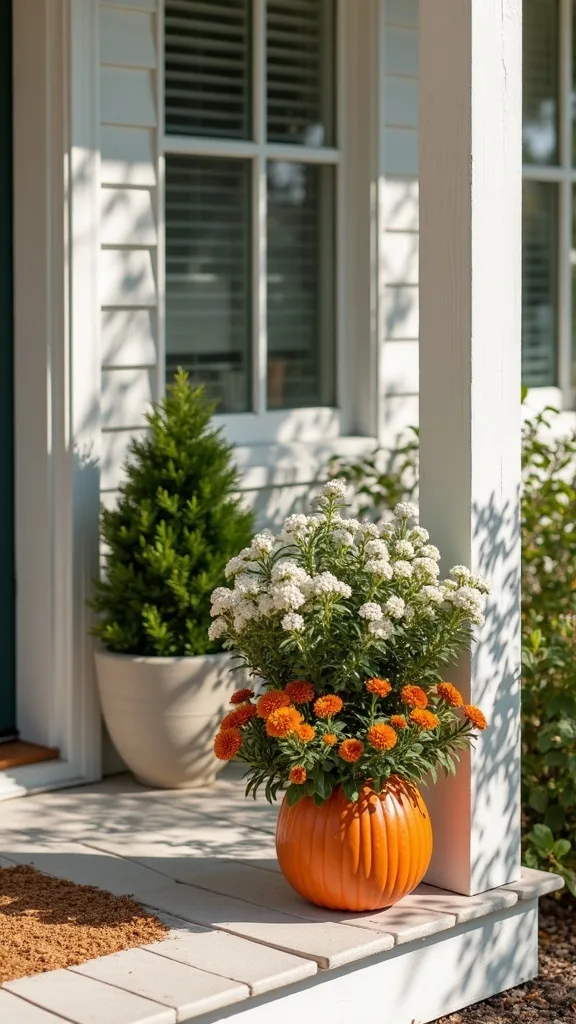
5. What are the best front door fall planters for small porches?
Small porches need vertical height and narrow footprints, not giant floor pots that block the path. This works because you get the “wow” at eye level while keeping your walkway usable.
Use one tall, slim planter (or a thrifted urn) and one smaller pot. In the tall one, do a single statement plant like a mum on top of a riser (an upside-down nursery pot hidden inside) so it sits higher. In the smaller pot, do kale + trailing vine for movement. Keep both tucked to one side of the door so packages still fit.
Colors that read from the street: bright yellow mums with deep purple kale, or orange with dark green. Add a mini pumpkin on the step instead of another pot.
Pro tip: avoid placing planters right against the door frame where they get slammed by the handle. One chipped pot turns into a constant annoyance.
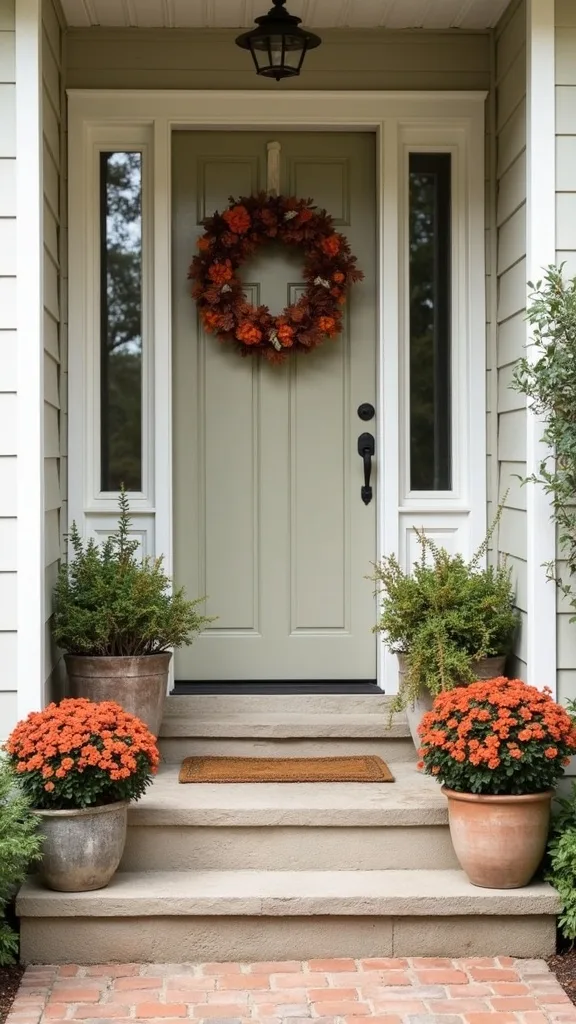
6. How do I make fall flower pots look taller without buying bigger plants?
Height is the secret to expensive-looking porch styling, and you can fake it. It works because the container’s “visual height” matters more than plant height, especially from the curb.
Use the “pot-in-a-pot” trick: put an upside-down bucket, brick, or empty nursery pot inside the planter, then set your plant (still in its nursery pot) on top. Fill around it with soil and your fillers. This saves soil, saves money, and gets your mum closer to eye level where it looks fuller.
Choose a trailing sweet potato vine or English ivy to soften the rim so nobody notices the lift. Add a handful of pinecones or mini gourds on top of the soil for instant finish.
Pro tip: avoid stacking loose rocks as a riser. They shift, they trap water, and you’ll be re-leveling your pot every time it rains.
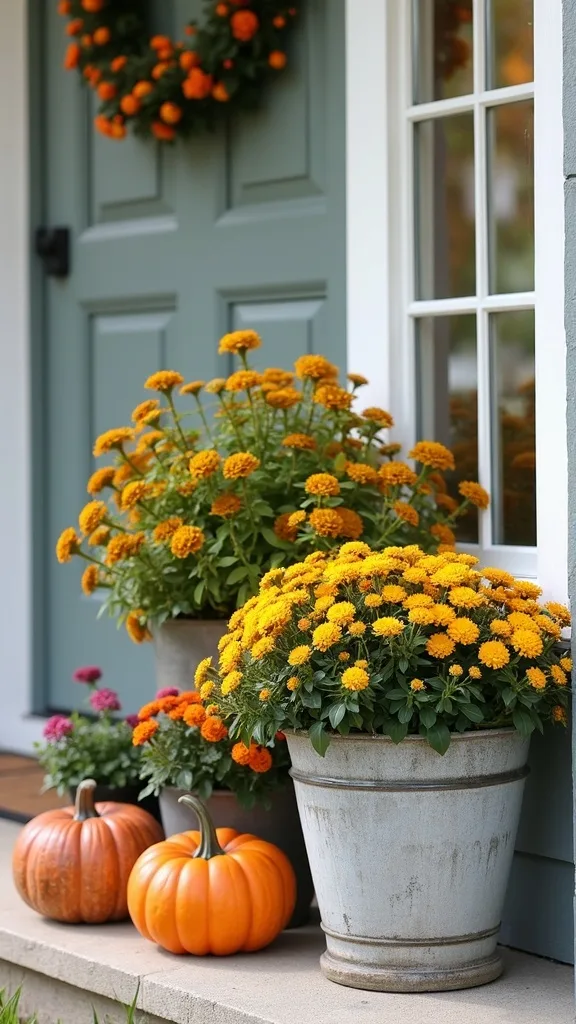
7. Can I do porch fall flowers with grocery-store plants?
Yes—and grocery-store plants are often the best value per bloom. It works because supermarkets buy mums in bulk, and you get big, full pots without the garden-center price tag.
Look for mums with more closed buds than open flowers so they last longer. Pop them out of the nursery pot, loosen the roots, and plant them in a container with drainage. If you only have one pot, add a $4–$6 pack of pansies around the edge and one trailing vine to make it feel custom.
Good grocery finds: 6-inch mums, small ornamental peppers (they look Halloween-ish), and tiny ivy. If the store has sad-looking plants, ask for a discount—many managers will mark them down on the spot.
Pro tip: avoid mums that look “perfect” but have lots of brown petals inside. That usually means they’re already past peak and will crash fast.
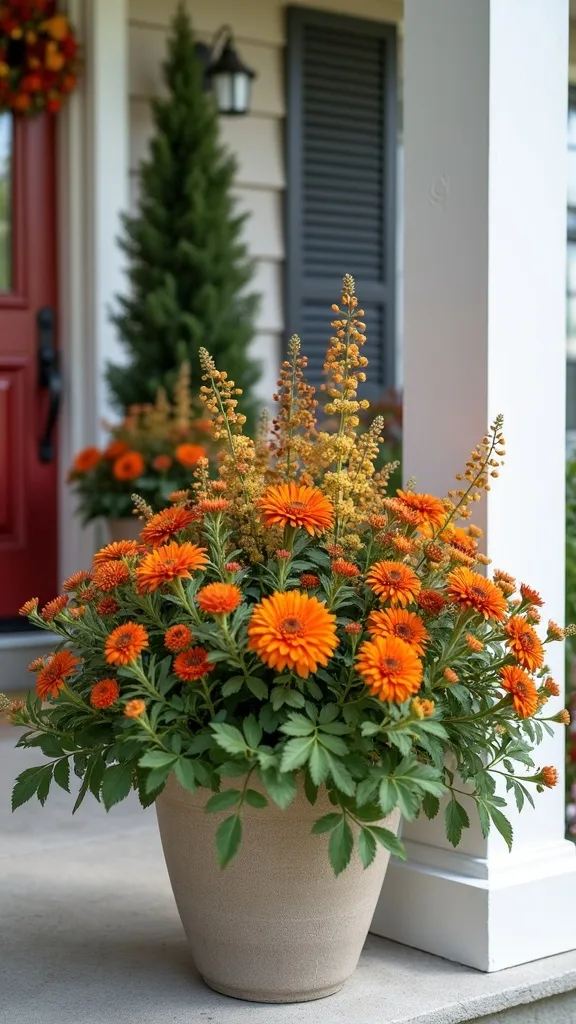
8. How do I decorate a porch for Halloween without it looking like a party store?
A Halloween-ready porch can still feel like home when the base is natural. This works because plants and terracotta read timeless, and you can layer spooky touches lightly instead of going full plastic graveyard.
Start with two planters in fall colors (mums + kale) and add one “spooky” accent: a black ribbon bow on the pot, a small faux crow tucked into the foliage, or a mini skeletal hand peeking from the mulch. Keep it to one or two props per grouping so it feels curated.
Color palette: black + orange with green as your neutral. If you hate orange, go white mums + purple kale and add a black pumpkin.
Pro tip: avoid fake spider webs on living plants. They trap moisture, catch every leaf, and look grimy after one windy day.
Cost & Materials Estimate
Most front-porch fall planter setups land between a quick $25 refresh and a fuller $90 layered display depending on how many containers you thrift vs. buy new.
| Item | Estimated Cost | Where to Buy |
|---|---|---|
| Terracotta pots (10–14 inch, set of 3) | $18–$35 | Home Depot |
| Mums (6–8 inch pots, 3 count) | $15–$30 | Lowe’s |
| Ornamental kale/cabbage (4–6 inch, 2–3 count) | $10–$18 | Home Depot |
| Trailing sweet potato vine (2 count) | $8–$16 | Amazon |
| Potting mix (16–32 qt bag) | $7–$14 | Walmart |
| Battery LED candles (set) | $12–$22 | Amazon |
Total estimated cost: $70–$135 To save money, thrift the containers and buy one full-size mum plus smaller filler plants instead of multiple big mums.
9. What plants last the longest in fall planters?
Long-lasting fall planters rely on cool-weather workhorses. This works because some plants actually thrive when nights get chilly, while others sulk and drop leaves.
Choose mums for color, ornamental kale/cabbage for texture, and pansies for extra bloom power. Add trailing sweet potato vine if temps are still mild; swap to ivy if you’re already getting frosty nights. Water in the morning, and pinch off dead blooms so the pot keeps looking fresh.
For a sturdier base, tuck in a small evergreen (like a dwarf spruce) if you find one on clearance—then you can keep it going into winter. That’s a two-season win.
Pro tip: avoid planting summer leftovers (coleus, begonias) in your front door fall planters just to “use them up.” The first cold snap turns them into mush and your porch looks tired again.
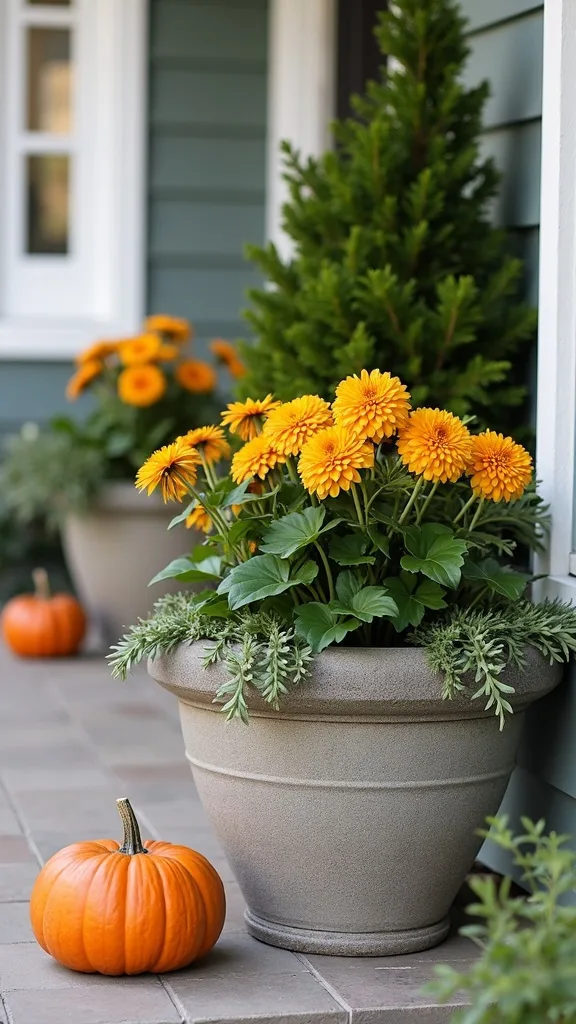
10. How do I keep mums from drying out on the front porch?
Mums are thirsty, especially in terracotta. It works because terracotta breathes (great for roots) but it also lets moisture evaporate faster, so you need a simple system.
Water deeply until it runs out the bottom, then check again the next day—if the top inch of soil is dry, water. On sunny porches, that can be every other day. Add a thin layer of mulch (pine bark or shredded leaves) to slow evaporation and keep the soil from crusting.
Budget hack: set your pot on a deep saucer and water from the top until the saucer fills, then dump any standing water after 20 minutes. It helps roots soak without staying swampy.
Pro tip: avoid watering with a quick splash. Shallow watering trains roots to stay near the surface, and your mum wilts the second you miss a day.
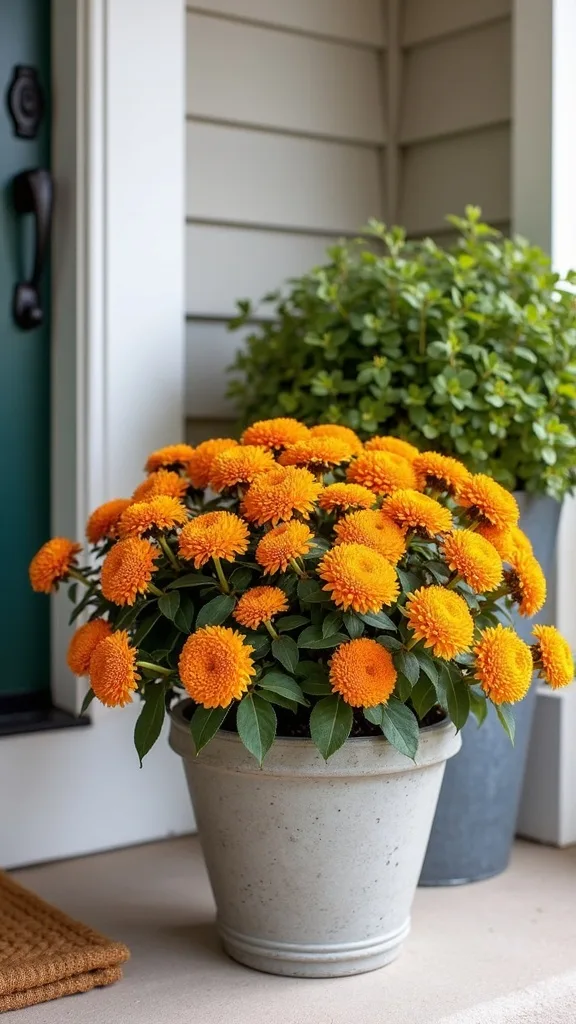
11. What’s the easiest thrifted container to turn into a planter?
A basket is the easiest thrift flip for fall. It works because the woven texture screams cozy season, and you don’t have to drill anything if you plant smart.
Find a sturdy basket (handles optional) for $3–$7. Line it with a cheap plastic trash bag or a cut-up shower curtain, then poke 4–6 small drainage holes near the bottom. Drop your plants in their nursery pots inside, then hide the rims with moss, pine straw, or leaves so it looks planted but stays easy to swap.
Fill it with mini mums, pansies, and a trailing vine. If you’re doing Halloween, tuck a small orange pumpkin right into the basket corner.
Pro tip: avoid flimsy baskets with cracking weave. One rainy week and the bottom sags—then you’re carrying soil soup across your porch.
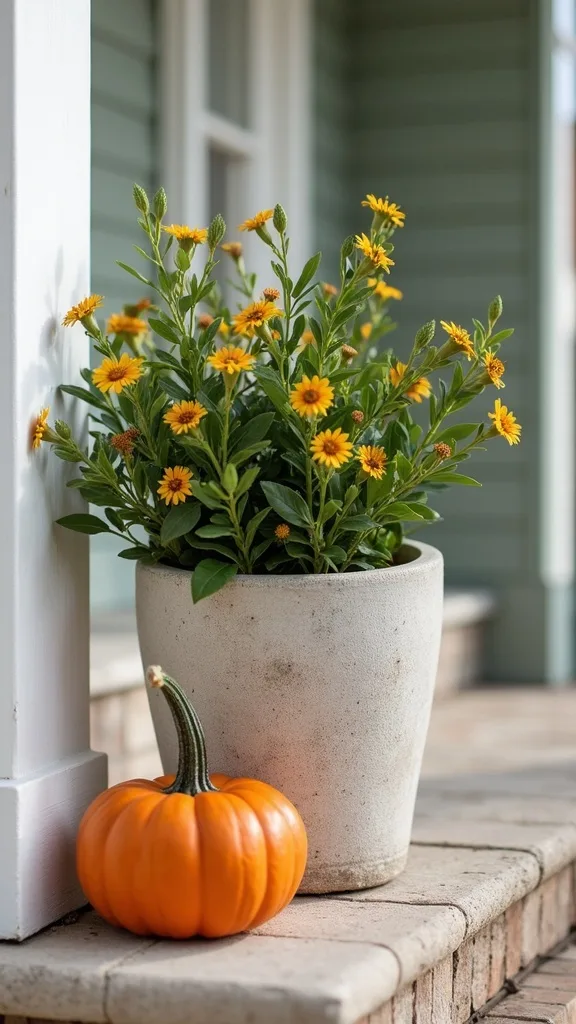
12. How can I create symmetry with front door fall planters on a budget?
Symmetry looks expensive because it feels intentional and “designed.” It works because matching shapes frame the door and make even a plain entry look finished.
To do it cheap, match the silhouette, not the exact pot. Use two similar-height containers (two thrifted urns, or two 12-inch pots) and plant the same “recipe” in each: mum + kale + spiller. If you can only find one matching pair, place them tight to the door and use a third odd pot off to the side as a bonus accent.
Stick to one mum color—deep burgundy is my favorite for Halloween porch prep because it looks moody without being cheesy.
Pro tip: avoid buying two tiny pots just because they match. Small planters disappear next to a front door; you’ll spend money and still feel underwhelmed.
13. What’s the best way to use hay bales with planters (without the mess)?
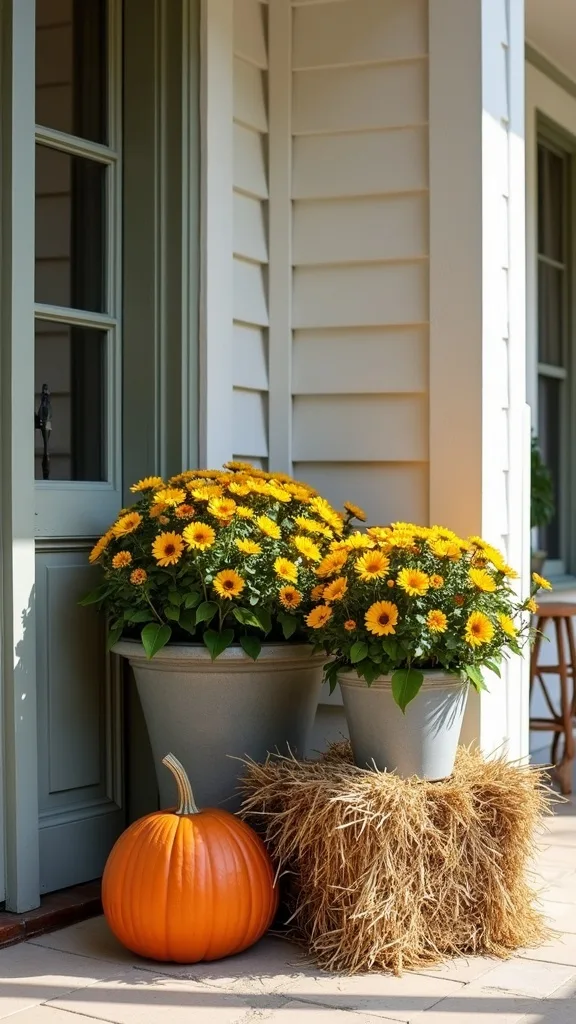
Hay bales can add instant height, but they get messy fast. This works when you treat hay like a stand, not a permanent décor piece that sheds all over your steps.
Place one small bale off to the side (not in the main walkway), then set a single pot on top—preferably one with a saucer so the bale doesn’t stay wet. Keep it for 2–3 weeks max, then toss it in the garden or compost. If you want a cleaner alternative, use a wood crate instead (thrifted or from a liquor store).
Top the bale with a pot of orange mums and tuck mini pumpkins around the base for Halloween. Keep the rest of your pots on the ground so it doesn’t look like a farm display exploded.
Pro tip: avoid watering directly onto the hay. Wet hay smells weird, molds, and looks tired before October is even over.
14. How do I make one big statement planter for under $25?
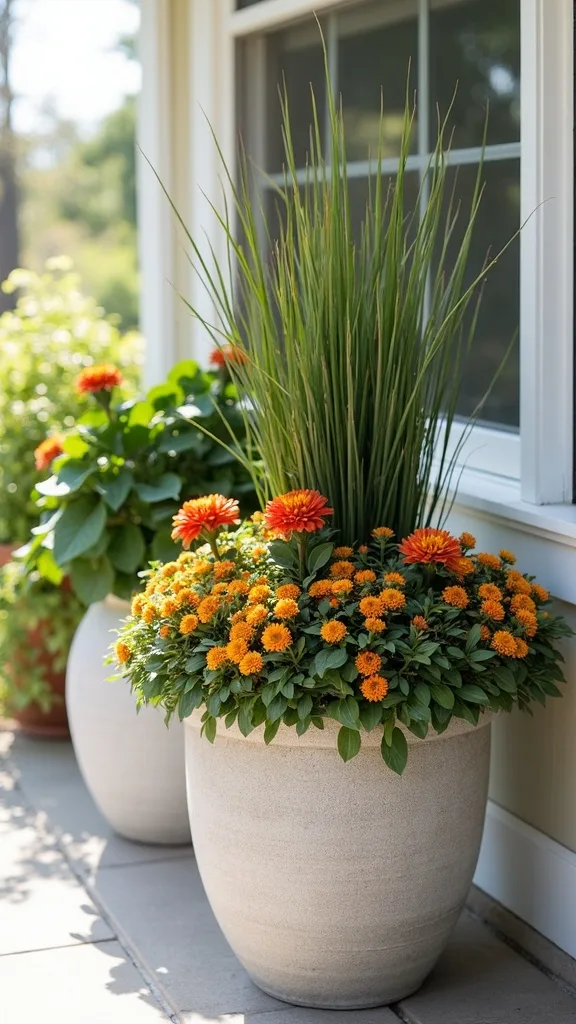
One big planter can carry your whole porch if it’s packed right. It works because a single focal point reads bold and deliberate, even if the rest of the porch is simple.
Start with a large container you already own (or a $10–$15 thrifted ceramic pot). Buy one full 8-inch mum as your centerpiece, then fill around it with two 4-inch kale plants and one vine. If you have leftover pansies from another pot, tuck them in front for extra color. Finish with a ring of leaves or mulch to hide gaps.
Choose a mum in golden yellow for maximum visibility from the street. Pair with purple kale for contrast.
Pro tip: avoid buying three medium mums for one pot. You’ll blow your budget fast and end up with a top-heavy blob that’s hard to keep watered.
15. Can I use faux plants in fall flower pots and still look real?
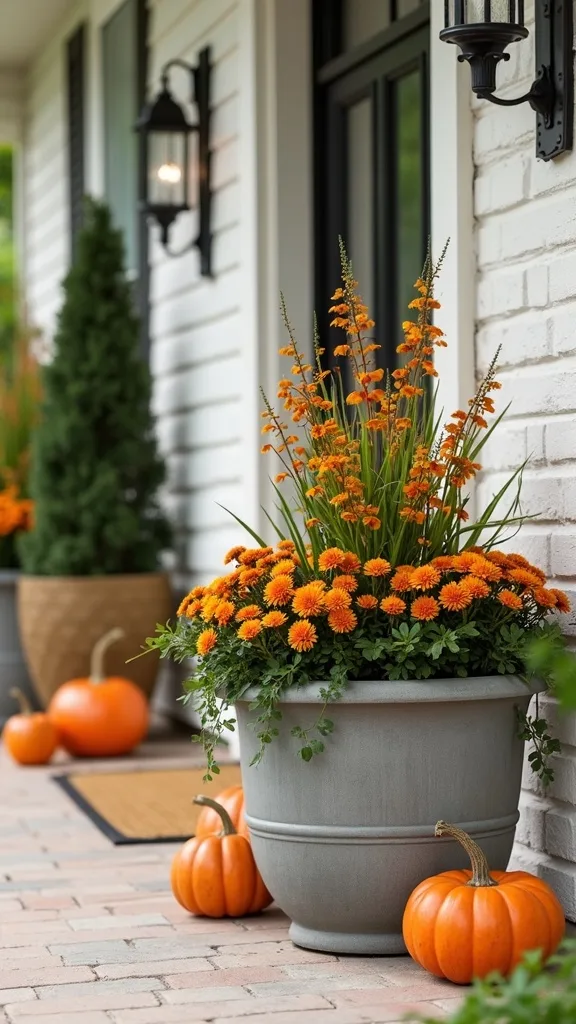
Faux can look convincing if it’s used as support, not the whole show. This works because the real plant movement and natural irregularity distracts from the faux pieces.
Use one real mum as your anchor, then add faux stems (maple leaves, berry picks, wheat) around the edge to bulk it up. Dollar Tree and Walmart both have decent seasonal picks—just bend the stems so they don’t stand straight up like antennas. Tuck stems low and angled outward like they grew that way.
Stick to matte faux foliage. Shiny leaves are the giveaway. Add a little real mulch on top so the base looks believable.
Pro tip: avoid mixing too many faux colors. If you use fake leaves, keep your real flowers in one color family so it doesn’t turn into a craft store explosion.
16. How do I keep squirrels from digging in my porch planters?
Squirrels treat fresh soil like a personal sandbox. This works because you can block the digging without hurting your plants or buying anything fancy.
After planting, cover the soil surface with pinecones, a layer of small river stones, or even a grid of chicken wire cut to fit (hidden under mulch). The goal is to make it annoying to dig. If they’re relentless, sprinkle a little cayenne pepper on the top layer—reapply after rain.
Use sturdier plants like kale and pansies near the edges since they can handle a bit of disturbance better than delicate blooms.
Pro tip: avoid leaving loose potting soil exposed. That’s basically an invitation. A finished top layer makes the pot look better and keeps critters out—win-win.
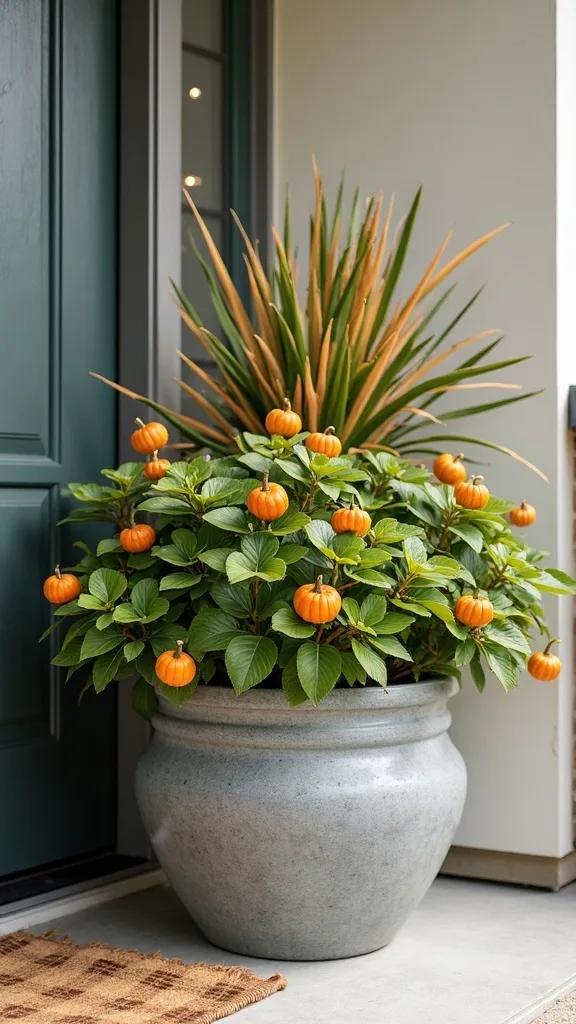
17. What’s a no-fail color palette for fall porch planters?
If you want “done” without overthinking, pick a palette and stick to it. It works because your porch reads cohesive even if your containers are thrifted and your plants are clearance finds.
My no-fail combo is rust + cream + green. Use orange or bronze mums, white pumpkins, and greenery like ivy or sweet potato vine. Another easy palette is purple + lime + white (purple kale, chartreuse vine, white mums) for a slightly moodier Halloween vibe.
Keep accessories neutral: terracotta, black, galvanized metal, or baskets. Let the plants do the talking with two main colors and one accent.
Pro tip: avoid adding bright blue or hot pink seasonal décor “because it was on sale.” Cheap doesn’t help if it breaks the palette and makes the whole setup look accidental.
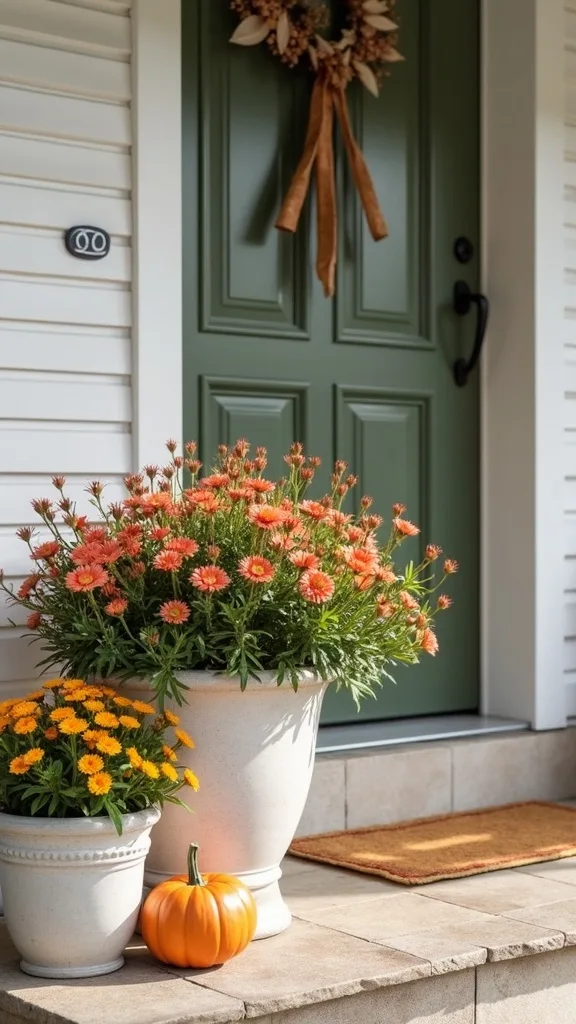
18. How can I use lanterns with planters for Halloween porch prep?
Lanterns + planters is the easiest “styled” look that doesn’t require more furniture. It works because the lantern adds height and glow, while the plants add softness and color.
Place a lantern between two pots, or set a smaller lantern in front of a larger planter so you get layers. Use battery candles so you’re not dealing with wind. If you want the cozy vibe, choose candles with warm white light (2700K–3000K — the cosy, yellowish tone you see in most homes).
For Halloween, add a tiny faux crow on the lantern handle or tie on a black ribbon. Keep it subtle so it feels like a porch, not a haunted house aisle.
Pro tip: avoid glass candles with real flames on a windy porch next to dry leaves or hay. The vibe isn’t worth the risk.
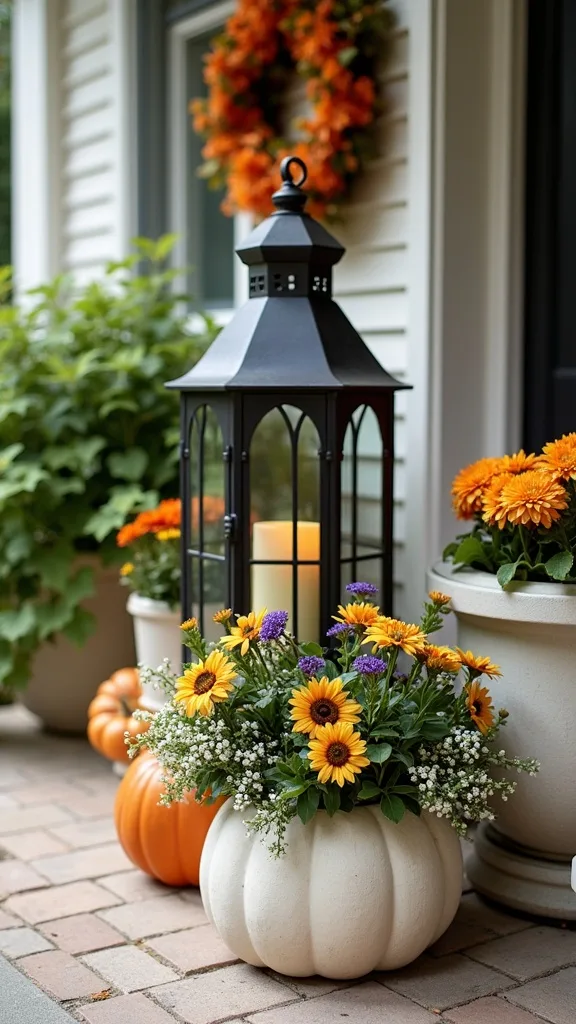
19. What should I put in planters when it’s too cold for sweet potato vine?
Once nights get really cold, some spillers give up. This works because swapping the trailing plant keeps the arrangement looking alive without redoing the whole pot.
Replace sweet potato vine with English ivy, creeping jenny (if it’s still available), or even cut evergreen sprigs tucked along the rim. You can also use faux trailing greenery as a placeholder until winter greens take over. Keep the mum and kale in place and just refresh the edges.
Add texture with small pumpkins or pinecones on the soil line so the pot still looks full even if the spiller is smaller.
Pro tip: avoid ripping out the whole arrangement when one plant declines. Fall pots are meant to evolve—swap one piece and keep going.
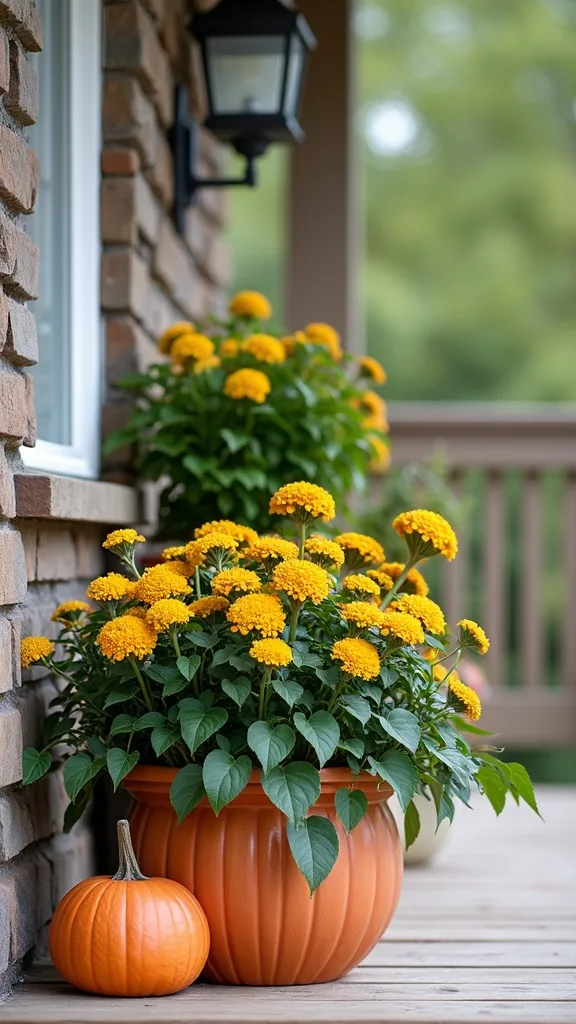
20. How do I make cheap terracotta pots look higher-end?
Terracotta already looks good, but you can make it look collected instead of brand-new. This works because small surface details add age and character fast.
Use a diluted chalk paint wash (light gray or white) and wipe it back so it settles into the texture. Or do the yogurt trick for natural-looking aging. For a cleaner modern porch, paint just the bottom third of each pot matte black for a dipped effect—super simple and very “designer.”
Pair with simple plants (mums + kale + vine) so the pot finish reads intentional, not busy. Group pots in threes for that styled look.
Pro tip: avoid sealing terracotta with a glossy finish. It kills the natural vibe and can make the pot look like plastic from the street.
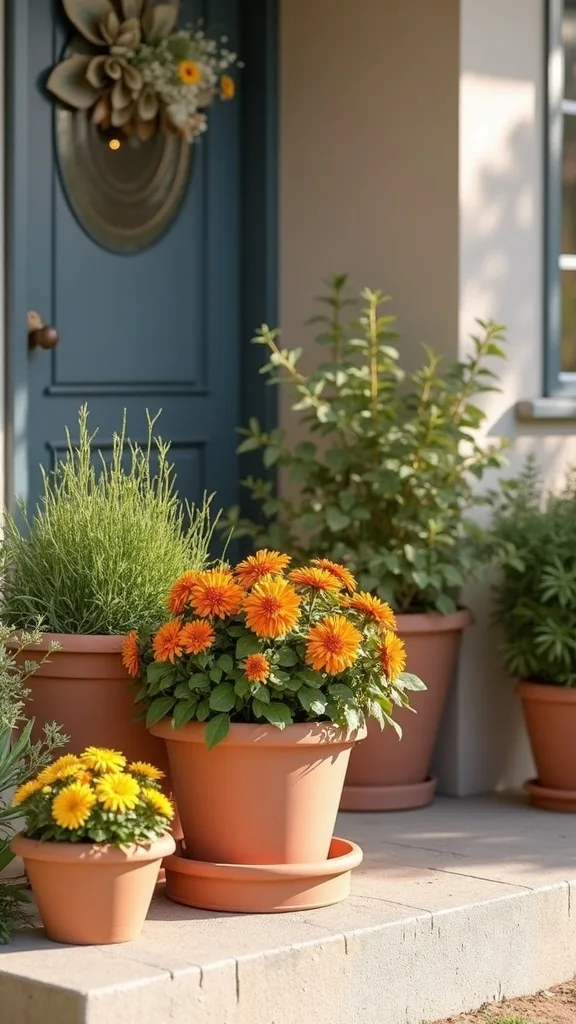
21. What are the best dollar-store add-ons for fall flower pots?
Dollar-store add-ons are the secret weapon when your plants look a little sparse. This works because small accents add texture and theme without the cost of more live plants.
Look for: faux leaf picks, mini pumpkins, black ribbon, and small signs (but keep wording minimal). Use floral wire or zip ties to attach picks to the inside rim of the pot so they don’t flop. Tuck mini pumpkins into the foliage instead of lining them up like a parade.
Choose one accent style—either berries or leaves, not both plus glitter plus owls. Let the plants stay the main event.
Pro tip: avoid glitter picks outdoors. They shed, they look messy on concrete, and you’ll be finding sparkles in your doormat until Thanksgiving.
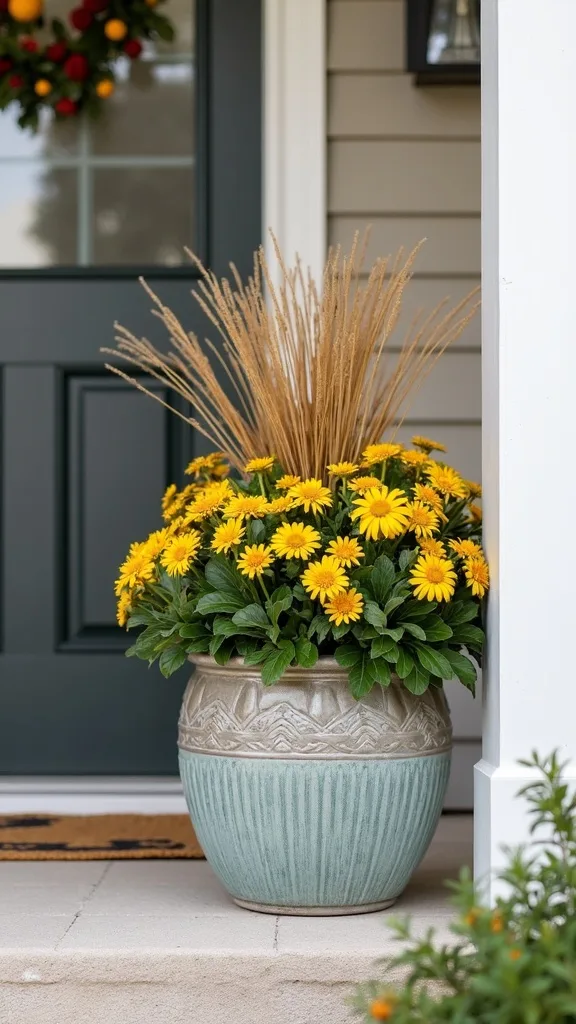
22. How do I style planters on porch steps without blocking the walkway?
Steps look amazing with planters, but safety comes first. This works because you can create a layered look while still keeping a clear path for actual humans carrying actual groceries.
Keep at least 24 inches of clear walking space. Place pots on the outer corners of steps, and vary height by using one taller pot and one shorter. If you want more layers, add a small pumpkin or lantern instead of another planter. On narrow steps, use one pot only and add décor beside it, not behind it.
Plants that hold shape: mums and kale. Avoid floppy plants right at foot level where they’ll get kicked.
Pro tip: avoid placing pots on the top step where people pivot to unlock the door. That’s where ankles go to die—and where planters get knocked over.
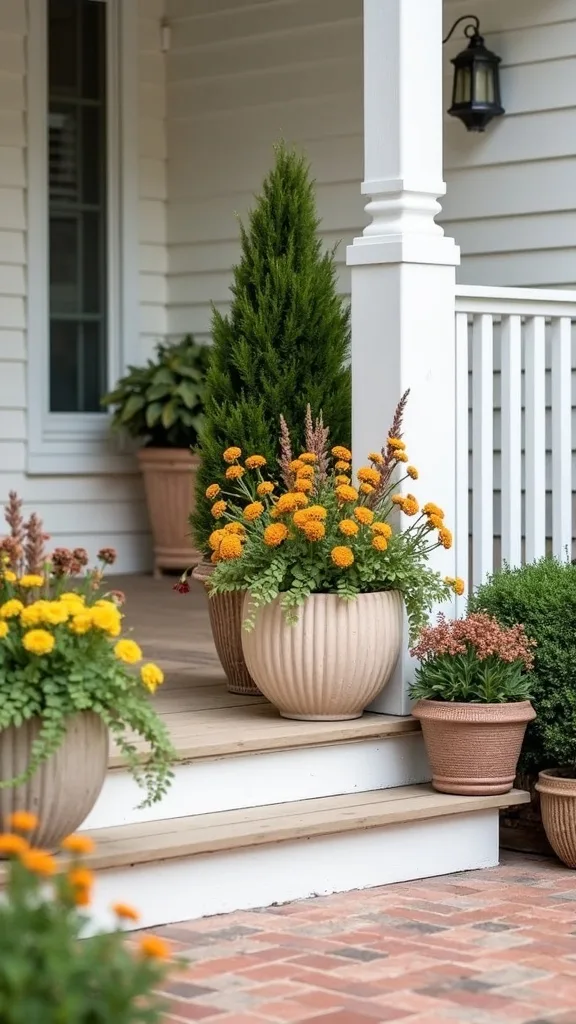
23. Can I pull off fall planters if my porch gets almost no sun?
Low-light porches can still do fall—just choose the right plants. This works because some cool-season options tolerate shade, and your porch is often brighter than you think (especially if it faces east or west).
Go for pansies, ivy, heuchera, and ferns if temps are mild. Mums can work in bright shade but won’t bloom as long in deep shade, so use them as a short-term color hit for Halloween week. If it’s truly dark, use one real plant and bulk with faux stems.
Stick with lighter colors like cream or yellow so the arrangement reads from the street. Dark burgundy disappears in heavy shade.
Pro tip: avoid overwatering shaded planters. Soil stays wet longer, and root rot sneaks up fast when the sun isn’t drying things out.
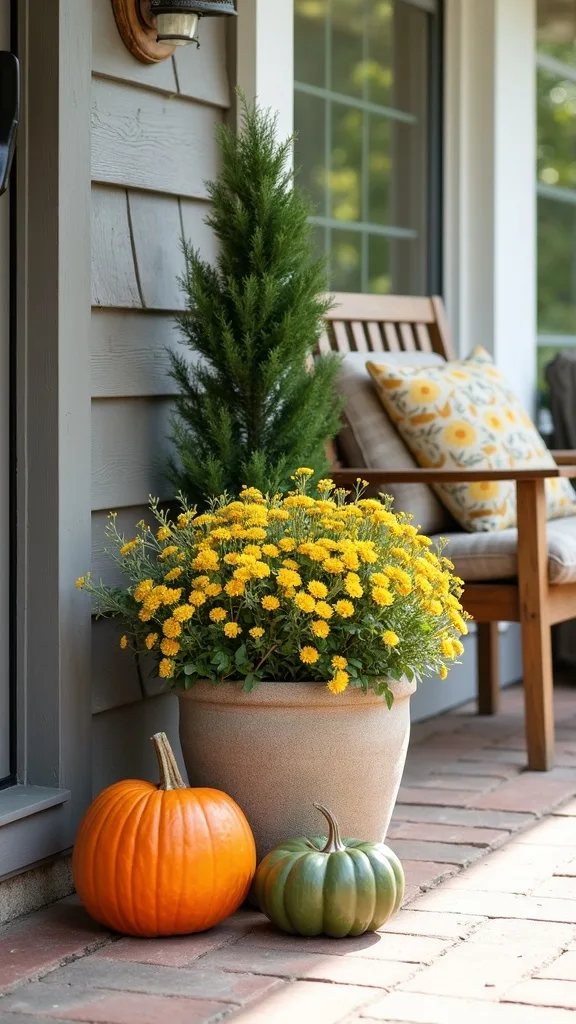
24. What’s the easiest way to refresh fall porch planters mid-season?
Mid-season refresh is about swapping small pieces, not starting over. This works because you keep your base plants and containers, then update the “top layer” for a whole new look.
Pull out anything crispy, add a fresh 4-inch pansy or two, and replace your mulch layer. Then change the accent: switch from early-fall leaves to Halloween elements (black ribbon, tiny pumpkins), and after Halloween swap to pinecones and plaid ribbon. It’s the same pot, three moods.
Keep a few extra picks in a bin so you can do this in 10 minutes without shopping again.
Pro tip: avoid letting dead blooms pile up on mums. It makes the whole pot look tired even if the plant is still healthy underneath.
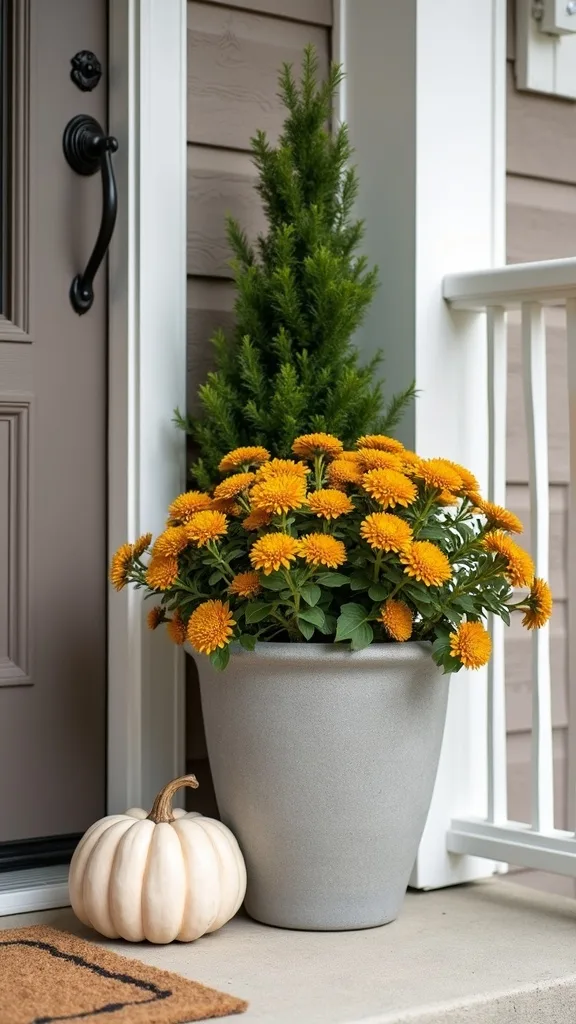
25. How do I make a thrifted urn look like a designer front door planter?
A thrifted urn is the shortcut to “estate sale porch” energy. It works because tall urn shapes feel architectural, and they frame the entry like built-in décor.
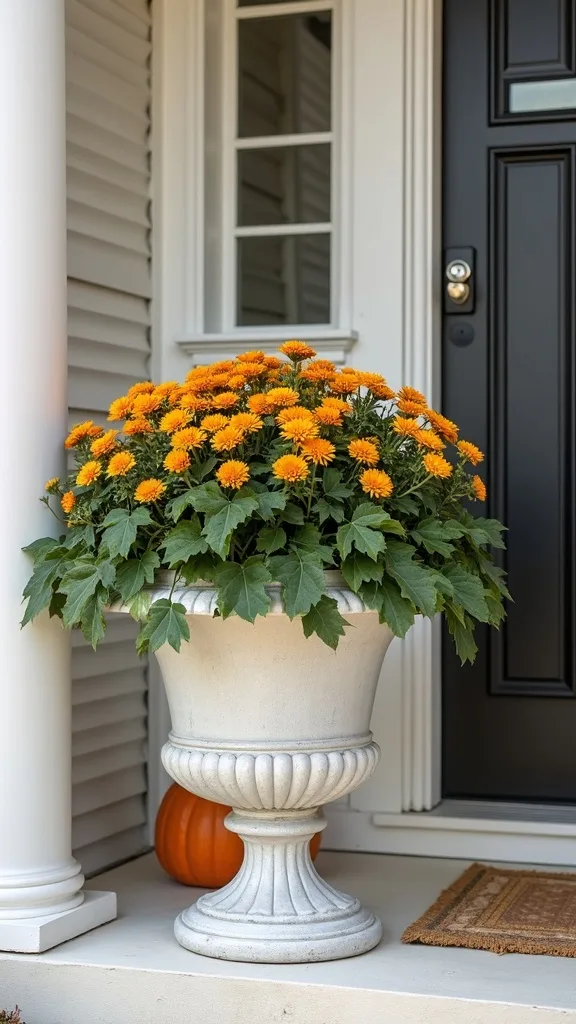
Look for a sturdy urn at thrift stores or Facebook Marketplace (chips are fine). Clean it, paint it matte black or stone gray, and add a simple planting: one mum as the centerpiece, kale around it, and ivy trailing. If the urn is shallow, keep plants in nursery pots and disguise with moss so you don’t need a mountain of soil.
Add one accessory at the base—like a stack of two heirloom pumpkins—and stop. The urn is already doing the heavy lifting.
Pro tip: avoid tiny urns. If it’s shorter than your knee, it won’t read as grand; it’ll read as “random pot I found,” even if it’s cute.
Final Thoughts
The biggest porch upgrade I know is still the cheapest: living color at the door. When you cluster pots, repeat a palette, and let texture (kale, vines, baskets) do the work, your entry stops looking like “whatever survived summer” and starts looking like you planned for fall.
If you only do one thing, do the trio. Three containers—two similar, one different—plus mums, kale, and a spiller will carry you through Halloween with almost no extra decorating. And if your porch is truly a mess right now, that’s not a character flaw. It’s just a starting point.
Do this today: check your local thrift store for two matching pots, grab one grocery-store mum and one ornamental kale, and build a simple cluster by your door before sunset—then take your own before/after photo so you can actually see the change.
What I’d Do Differently
When I first tried this, I made the classic mistake: I bought the plants first because they were “on sale,” then tried to make my containers work. I came home with three bright orange mums and exactly zero pots that looked good together—so I crammed them into whatever I had, including one cracked plastic planter that leaned like a tired shopping cart. From the street, it didn’t read like fall. It read like I was storing plants on my porch. The correct approach is backward: choose (or unify) the containers first, decide your palette, then buy plants that fit the pot sizes you actually own. It takes ten extra minutes up front and saves you from the panic re-potting session on your driveway.
I also wish I’d known how much terracotta dries out in early fall sun, especially on breezy porches. Now I always mulch the top and I water deeply on a schedule for the first week so the mums settle in. Pick your pots, pick your colors, then build the trio—start today with what you can thrift and you’ll be shocked how fast your entry changes.