
This post contains affiliate links. As an Amazon Associate, I earn from qualifying purchases at no extra cost to you.
Are you looking for a black and white bathroom that feels fresh for summer without committing to a full renovation? Do you want to bring in bold contrast—like matte black hardware and bright white tile—without making your bathroom feel dark or overly trendy?
I always start by choosing one “anchor” finish (usually matte black) and one “workhorse” surface (usually white tile) so every decision afterward feels simple. In this post, I’m sharing my go-to monochrome bathroom ideas—from quick swaps like accessories and lighting to bigger moves like tile layouts and paint pairings.
From my experience, this is perfect for anyone who wants a classic bathroom design that still feels current, especially if you’re refreshing a primary bath, guest bath, or even a tiny powder room before summer guests arrive.
When I design this look, I find that the magic is in the details: dark grout that stays practical, a floor pattern that hides everyday dust, and a thoughtful mix of black and chrome so the room feels layered instead of flat. I’ll also show you where I like to use black fixtures, where I prefer chrome, and how I keep the whole palette feeling bright.
Below are 25 Black & White Bathroom Design Ideas that help you create a clean, high-contrast space that’s easy to maintain, comfortable to live with, and effortlessly pulled together.
1. Start with the signature mix: matte black + white subway + dark grout + hex tile + chrome
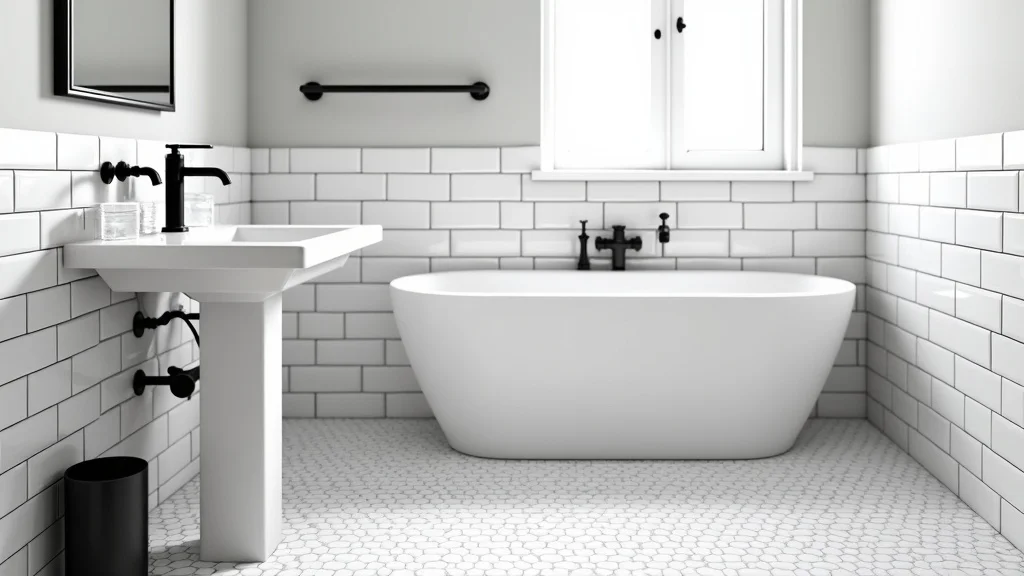
I always start by building a “signature recipe,” and my favourite one for a black and white bathroom is matte black fixtures, white subway tile with dark grout, a hexagonal floor tile, and a few purposeful chrome accessories. It works because the contrast feels crisp and graphic, while the mixed finishes keep it from looking like a showroom.
To implement it, I pick one wall (often the shower or vanity wall) for the subway tile and run it either to the ceiling or to a consistent height for a tailored look. Then I choose a small-to-medium hex tile on the floor so the pattern reads as texture, not clutter. I finish by repeating matte black at least three times (faucet, shower trim, towel bar) so it feels intentional.
For colours, I stick to bright white tile, charcoal or black grout, and a soft white paint that doesn’t look icy. Chrome works best for accents like a tray or small container.
Pro tip: I like adding one warm element—like oak, rattan, or a creamy bath mat—so the contrast feels welcoming and summer-ready.
2. Use dark grout as your summer-proof “low-stress” tile choice
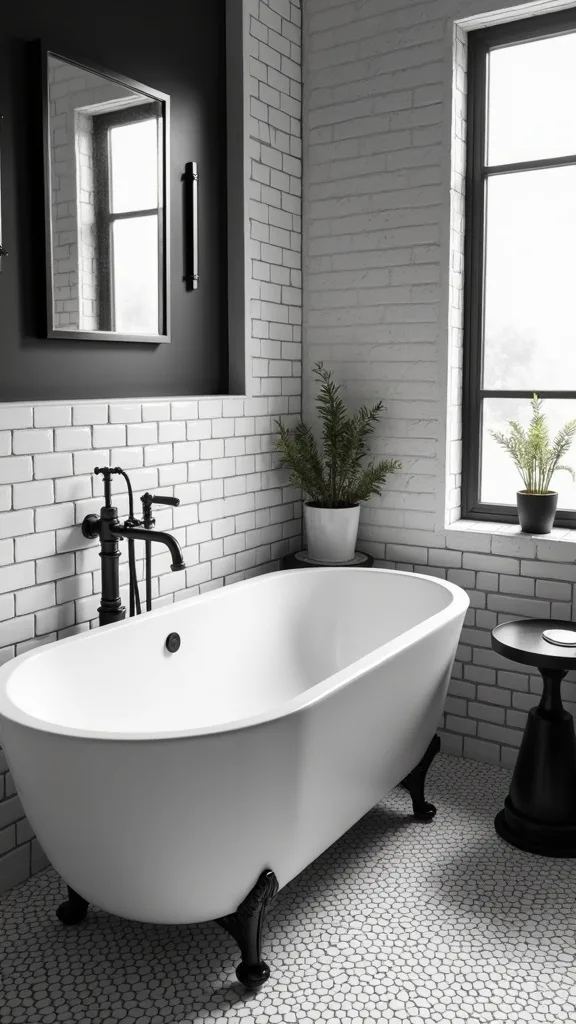
From my experience, dark grout is one of the easiest upgrades that instantly makes a monochrome bathroom feel sharper—and it’s surprisingly practical during a summer bathroom refresh. It works because it outlines the tile pattern and helps hide everyday splashes and makeup smudges that show up fast in bright light.
I implement this by choosing a grout colour that’s clearly darker than the tile (think charcoal rather than light grey), then repeating that tone elsewhere so it looks planned. I’ll echo it in a matte black mirror frame or a black soap pump. If I’m nervous about it feeling too bold, I keep the tile classic subway and let the grout do the styling.
Material-wise, I prefer a sealed grout and a satin-finish white tile so cleaning stays easy. I also like pairing the dark lines with white walls so the room stays airy.
Pro tip: I always recommend testing a grout sample board in your bathroom lighting—those lines can read softer or stronger depending on your bulbs, and a tiny tweak makes the whole room feel just right.
3. Choose a hex floor that hides dust and adds instant texture
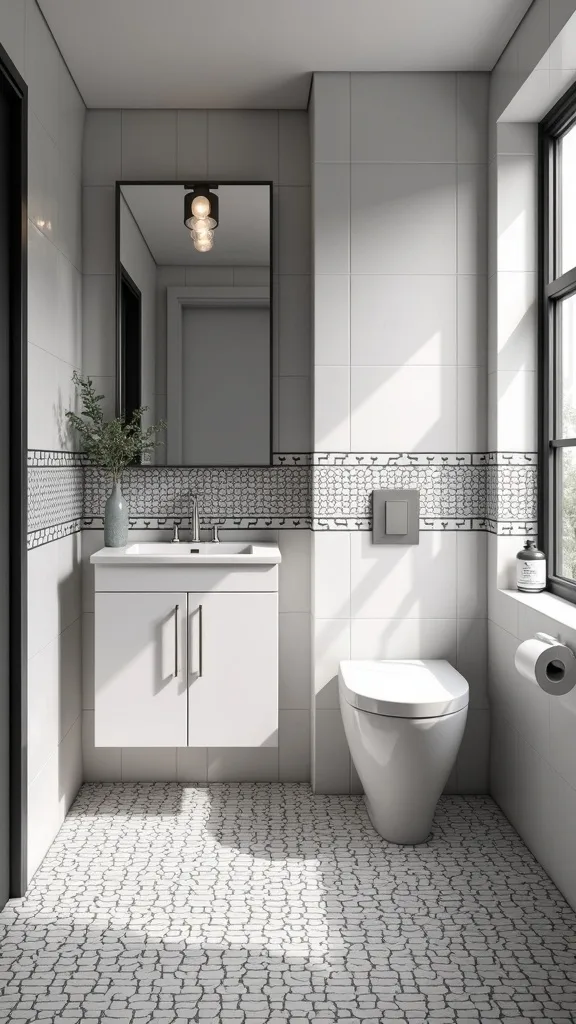
I find that hexagonal floor tile is the quiet hero of a black and white bathroom, especially in summer when sand, sunscreen, and extra foot traffic show up uninvited. It works because the small pattern breaks up visual “noise,” so the floor looks tidy even between cleanings.
When I design this look, I pick a white or off-white hex tile with medium grey grout for a softer contrast, or I go bolder with black grout for a graphic vibe. In small bathrooms, I like smaller hex tiles because they curve around tight corners and look custom. In larger baths, medium hex feels less busy.
For products, I look for a matte or lightly textured finish so it’s less slippery when wet. If you want a stronger statement, a black hex floor with white walls can be a great entry into black bathroom ideas without painting everything dark.
Pro tip: I always recommend a plush white or striped runner-style bath mat to soften the geometry and make the room feel like a retreat.
4. Anchor the room with a matte black faucet and matching hardware
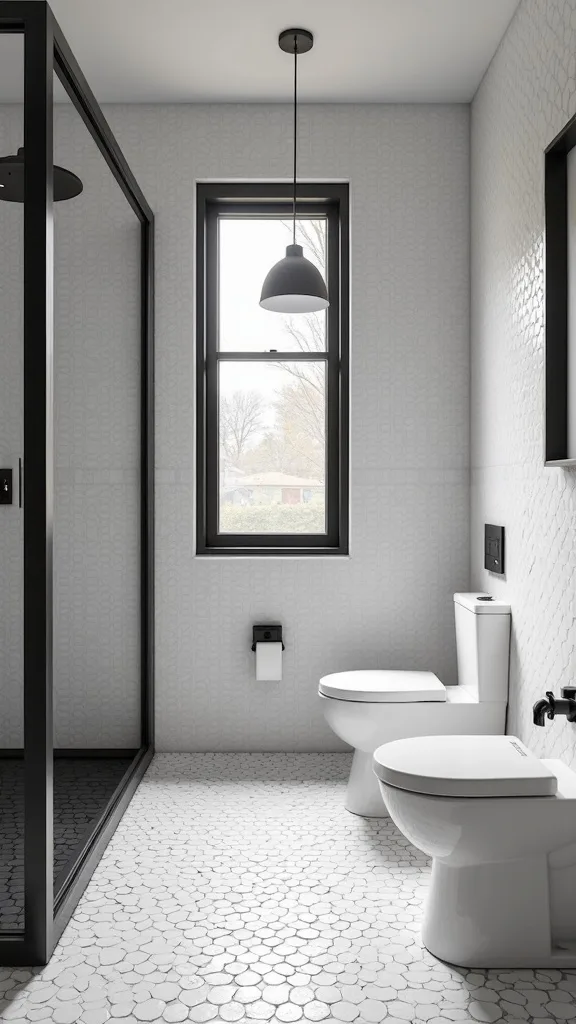
I always start by anchoring the vanity area because it’s what I see most often, and a matte black faucet instantly sets the tone for a classic bathroom design with a modern edge. It works because the faucet is a small object with huge visual impact—like jewelry for your sink.
To implement it, I match the faucet to at least two other items: cabinet pulls and a towel ring or bar. If I’m replacing more pieces, I’ll also coordinate the shower trim for a cohesive look. I keep the rest of the palette simple—white countertop, white tile, and a mirror that doesn’t compete.
For a black fixtures bathroom, I prefer matte finishes because they feel softer and show fewer fingerprints than shiny black. I’ll pair them with white ceramic accessories so the contrast stays crisp.
Pro tip: If you’re not ready to swap everything, I like starting with the faucet and one accessory—once you see the effect, the rest of the decisions become easy and exciting.
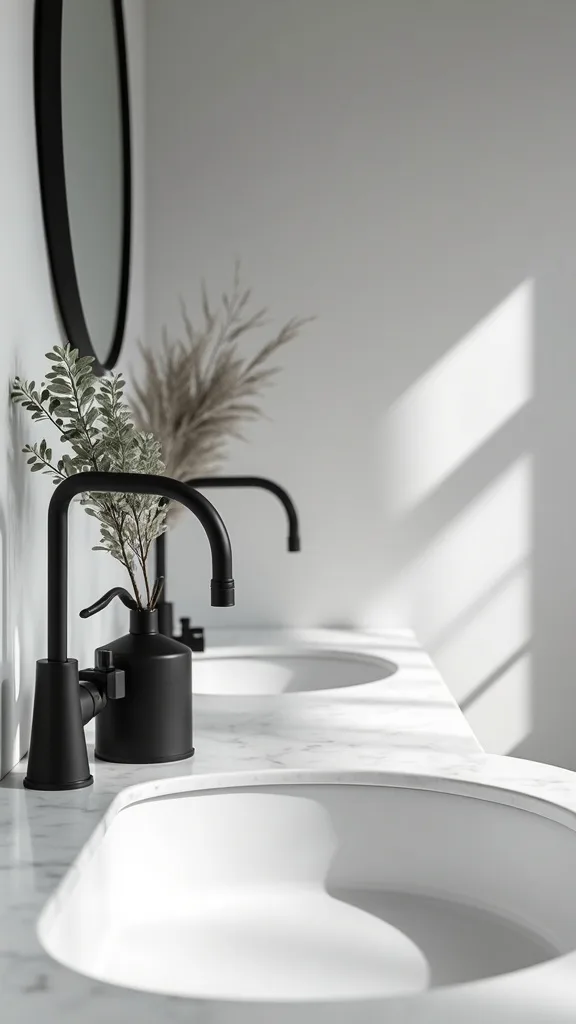
5. Mix chrome accessories to keep black-and-white from feeling flat
In my opinion, the secret to a layered monochrome bathroom is mixing metals—carefully. Chrome accessories work because they bounce light around, which is perfect for a summer refresh when you want the room to feel brighter and cooler without changing the whole design.
I implement this by keeping the “fixed” items consistent (like matte black faucet and shower trim), then using chrome for smaller, swappable pieces: a vanity tray, a canister, a tissue box cover, or a small waste bin. I also like chrome on lighting if the room feels visually heavy—one reflective element can lift everything.
Colour-wise, I keep chrome paired with white and clear materials (glass, white ceramic) so it reads clean, not busy. If you have brushed nickel already, I treat it similarly and just avoid adding too many different finishes at once.
Pro tip: I always recommend repeating chrome at least twice—one near the vanity and one near the shower—so it feels intentional and polished.
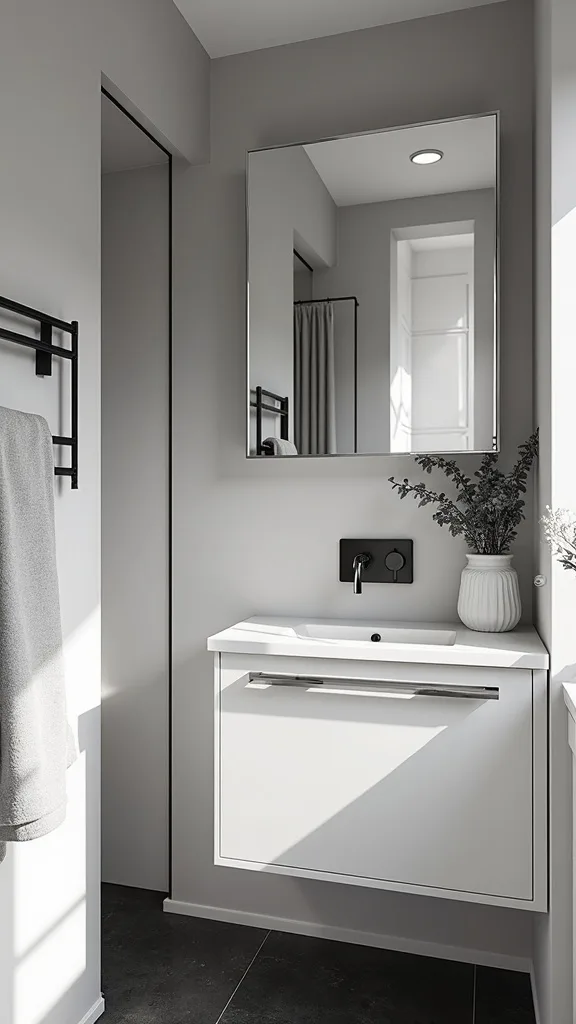
6. Try a black-framed mirror to sharpen the vanity wall
I find that a black-framed mirror is one of the fastest ways to make a black and white bathroom feel designed, not accidental. It works because the mirror sits at eye level and creates a strong outline that ties into matte black fixtures without requiring any plumbing changes.
When I design this look, I choose a frame shape that matches the vibe: rounded corners for softer, spa-like energy; a slim rectangle for a more modern feel. I hang it so the top aligns with the top of any nearby tile or lighting to keep the wall looking orderly. If you’re refreshing for summer, I like pairing it with a brighter bulb so the mirror area feels crisp.
Materials I love: thin metal frames in matte black, or black-stained wood if you want warmth. I keep the wall colour a clean white so the frame looks intentional.
Pro tip: I always recommend adding one small black detail on the countertop (like a soap pump) so the mirror doesn’t look like it’s floating alone.
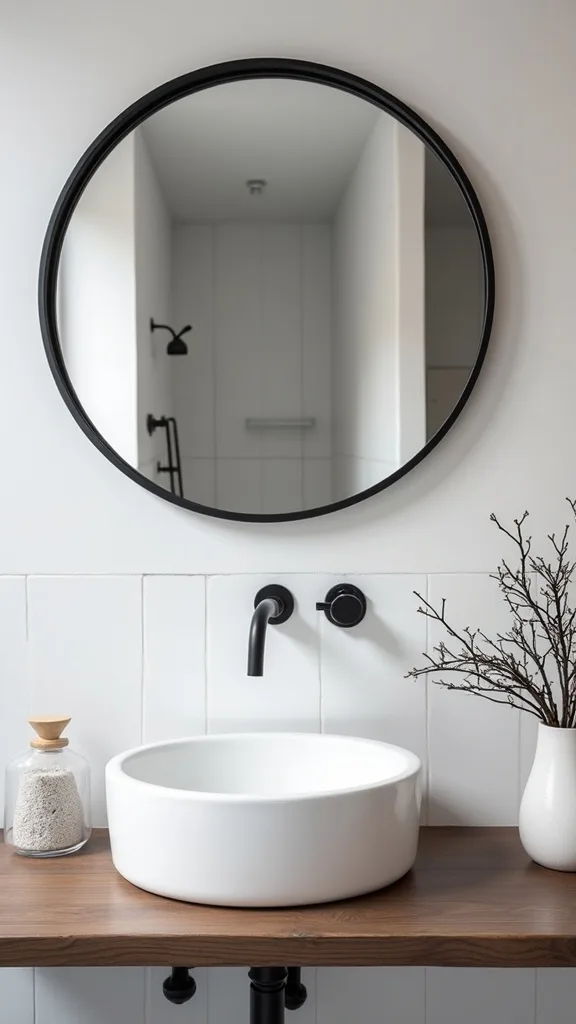
7. Use warm white light to keep the contrast cozy, not clinical
From my experience, lighting is what makes or breaks a classic bathroom design in black and white. It works because high contrast can feel stark under cool lighting, but the right tone makes white tile look creamy and inviting instead of blue.
I always start by choosing bulbs that give warm white light (2700K–3000K — the cosy, yellowish tone you see in most homes). Then I layer lighting: a vanity light for faces, plus a ceiling light for overall brightness. If your bathroom has a window, I position the mirror lighting to balance daylight so the space feels consistent morning to night.
For finishes, I like matte black or chrome vanity lights depending on what needs repeating in the room. Clear glass shades keep the look light; opal glass softens shadows.
Pro tip: I find that adding a dimmer is the easiest “luxury” upgrade—bright for cleaning, softer for evenings—and it makes the monochrome palette feel effortlessly livable.
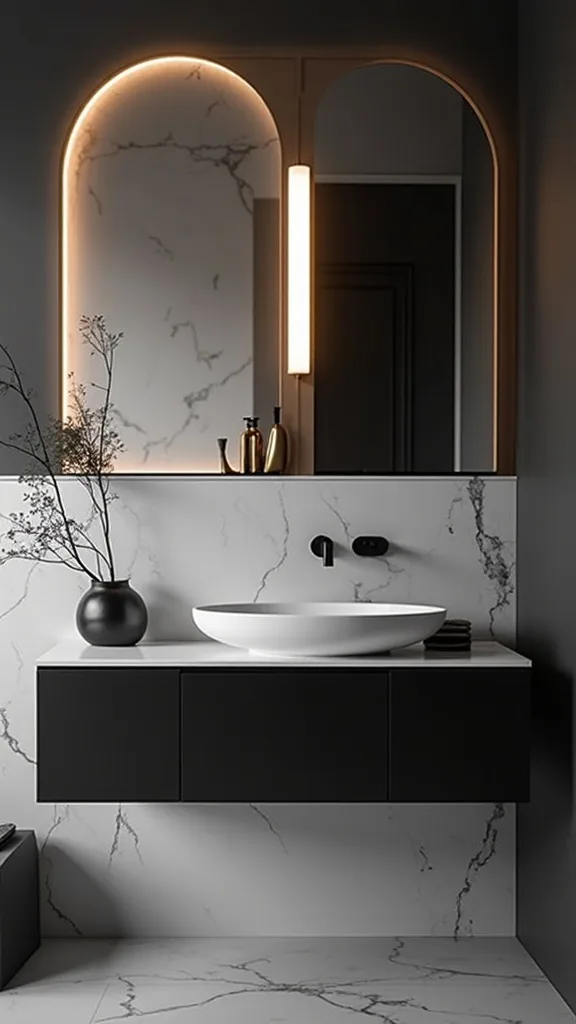
8. Go half-wall tile to save budget and still look custom
One of my favourite approaches is using a half-wall tile installation to get that tailored, designer feel without tiling every inch. It works because the tile creates a durable splash zone while the painted upper wall keeps the room lighter and more budget-friendly—perfect for a summer refresh.
I implement this by running white subway tile to about 48–54 inches high (or aligning with the top of the vanity mirror for a clean line). I finish the top edge with a simple trim piece so it looks intentional. Dark grout adds definition, and I repeat black in the faucet and hardware so the palette feels cohesive.
For paint, I choose a soft white with a wipeable finish so it stands up to humidity. If you want to lean into black bathroom ideas, I’ll paint the upper section a very deep charcoal instead—just on one wall.
Pro tip: I always recommend continuing the tile height around the whole room if possible; that wraparound line makes even small bathrooms feel more expansive.
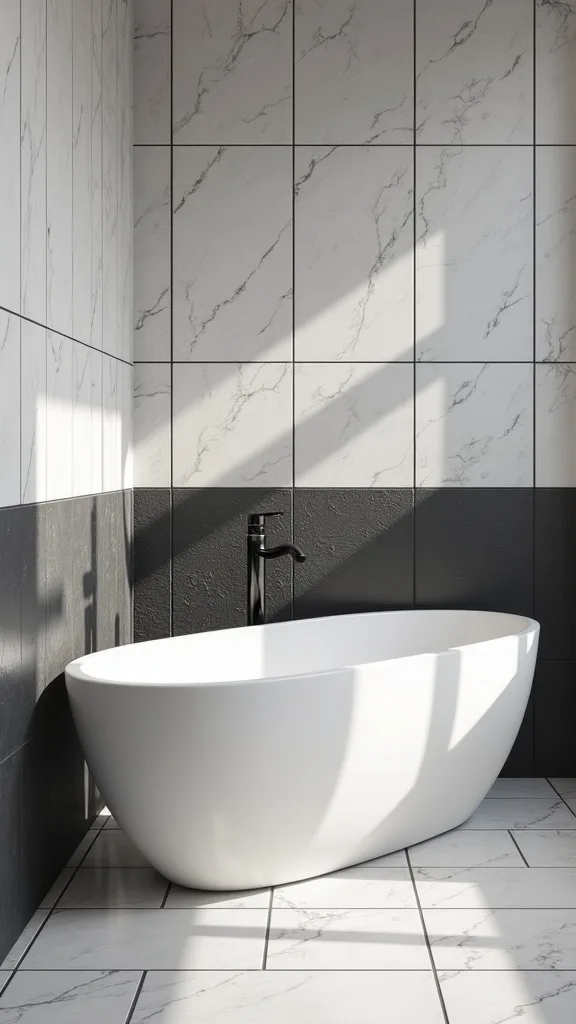
9. Create a “white shell” and let black details do the talking
I find that the easiest way to keep a black and white bathroom feeling bright for summer is to treat white as the background “shell.” It works because white walls and tile reflect light, and the black elements read as crisp accents instead of taking over.
To implement it, I keep the largest surfaces white: shower tile, most walls, and even the vanity countertop if possible. Then I add black in controlled doses—faucet, mirror frame, towel bars, and maybe a black-and-white shower curtain. If I want a little more drama, I’ll add one black feature like a sconce or a framed print.
Materials that help: glossy or satin white tile for bounce, matte black metal for contrast, and a touch of chrome to sparkle. This approach also makes cleaning feel easier because you can “read” the room quickly.
Pro tip: I always recommend choosing one black tone (true black or soft black) and sticking to it—consistency is what makes the look feel expensive and calm.
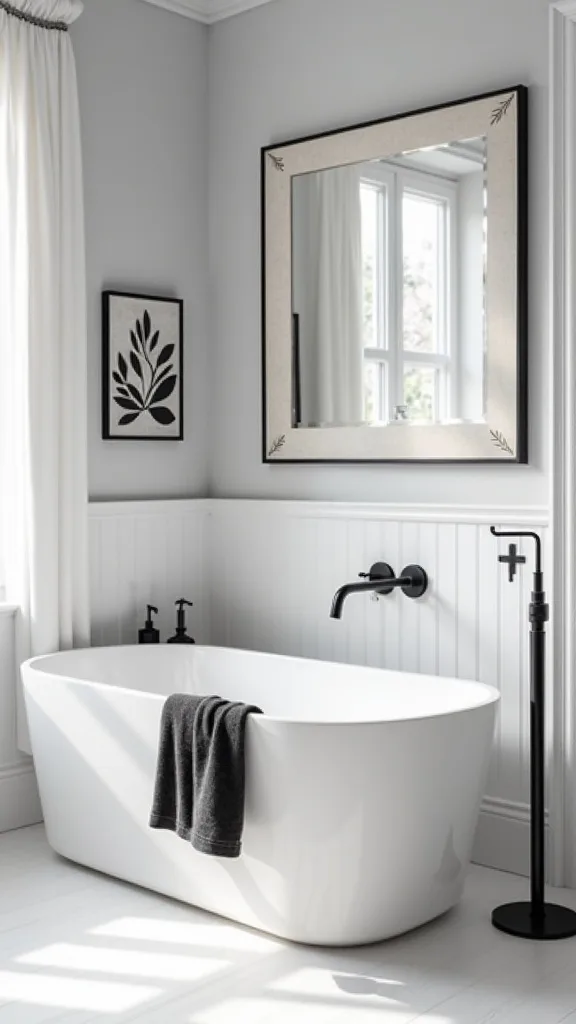
10. Flip it: try a black accent wall behind the vanity
When I want a bolder summer refresh, I’ll flip the balance and use a black accent wall behind the vanity. It works because it creates instant depth and makes white fixtures and tile pop, giving you that high-contrast monochrome bathroom look without redoing the whole space.
I implement this by choosing a moisture-friendly paint and keeping the rest of the room bright—white subway tile, white ceiling, and light floors (or a white hex). I also make sure the mirror and lighting are strong enough to stand out against the dark wall. Matte black fixtures look seamless here, while chrome accessories add a little shine so the wall doesn’t feel heavy.
For colours, I like a soft black or charcoal rather than a harsh pitch black, especially in small bathrooms. It feels more forgiving and still dramatic.
Pro tip: I always recommend bringing in one warm texture—like a wood stool or woven basket—so the black wall feels inviting, not intense.
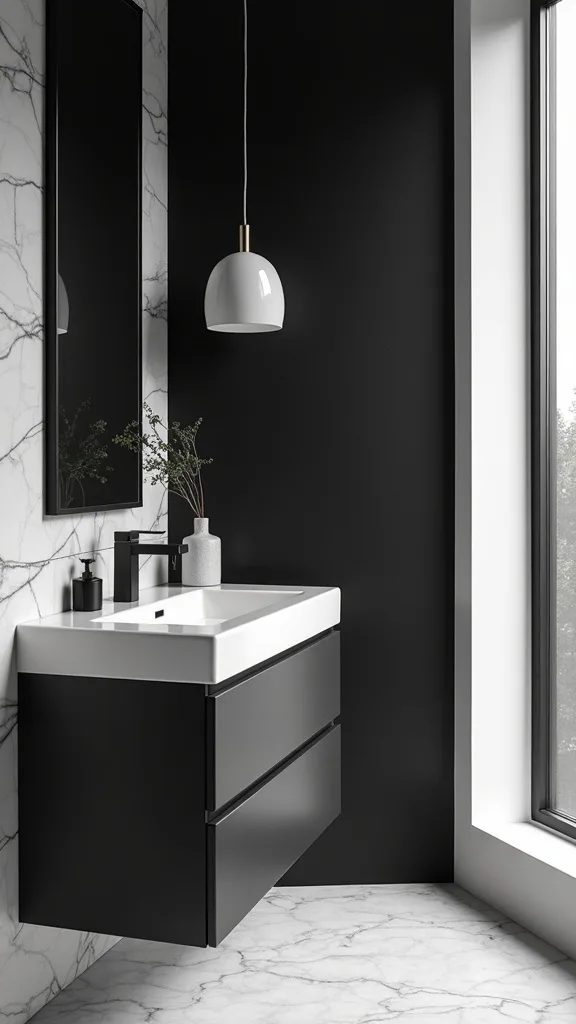
11. Choose a shower curtain that reads graphic, not busy
I always start by treating the shower curtain like a big piece of wall art in a black and white bathroom. It works because it’s a large vertical surface, and the right pattern can reinforce the palette without adding more materials or renovations.
To implement it, I choose simple, oversized patterns: wide stripes, a grid, or a minimal abstract print. If you already have dark grout lines, I like a quieter curtain so the room doesn’t compete with itself. If your tile is plain white, a bolder curtain can do the heavy lifting and make the space feel styled for summer guests.
Materials matter: I prefer a fabric curtain with a good liner so it hangs nicely and feels less “plasticky.” For hardware, matte black rings tie into a black fixtures bathroom instantly.
Pro tip: I find that hanging the curtain higher and wider (if your setup allows) makes the ceiling feel taller and the whole bathroom feel more airy and intentional.
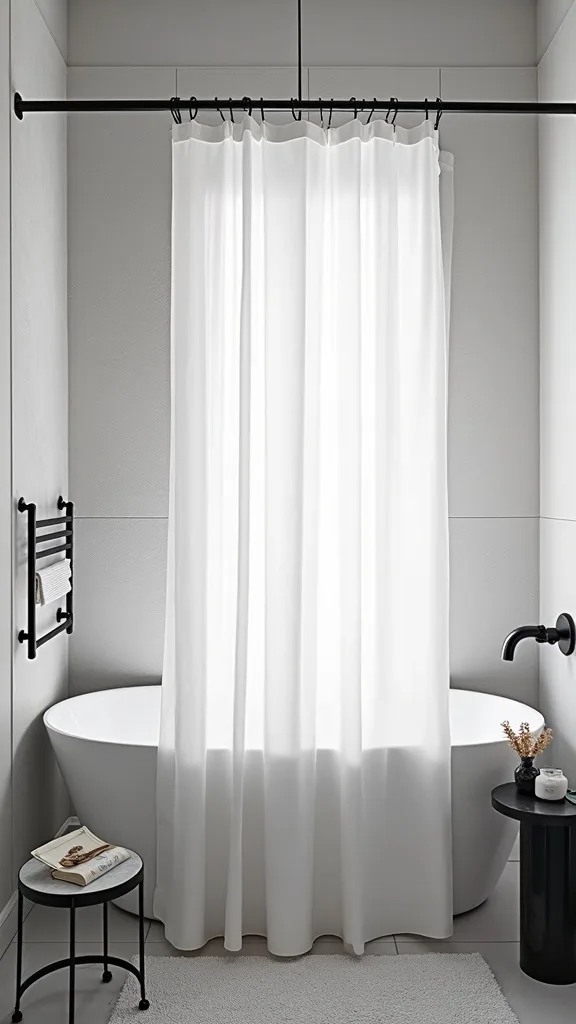
12. Add a black vanity (or paint one) for instant contrast
From my experience, a black vanity is the quickest way to make a classic bathroom design feel updated, especially if the rest of the room is white. It works because the vanity is a visual anchor, and black grounds the space in a way that still feels crisp and clean for summer.
I implement this by either choosing a ready-made black vanity or painting an existing one in a durable, wipeable finish. Then I keep the countertop light—white quartz look, white solid surface, or even a clean laminate—so the contrast stays fresh. I like matte black pulls if you want a seamless look, or chrome pulls if you want a little sparkle.
For styling, I keep the countertop minimal: one tray, one soap pump, and a small plant or vase. This keeps the monochrome vibe calm, not cluttered.
Pro tip: I always recommend swapping the vanity light at the same time—new lighting makes the “new vanity” moment feel complete and elevated.
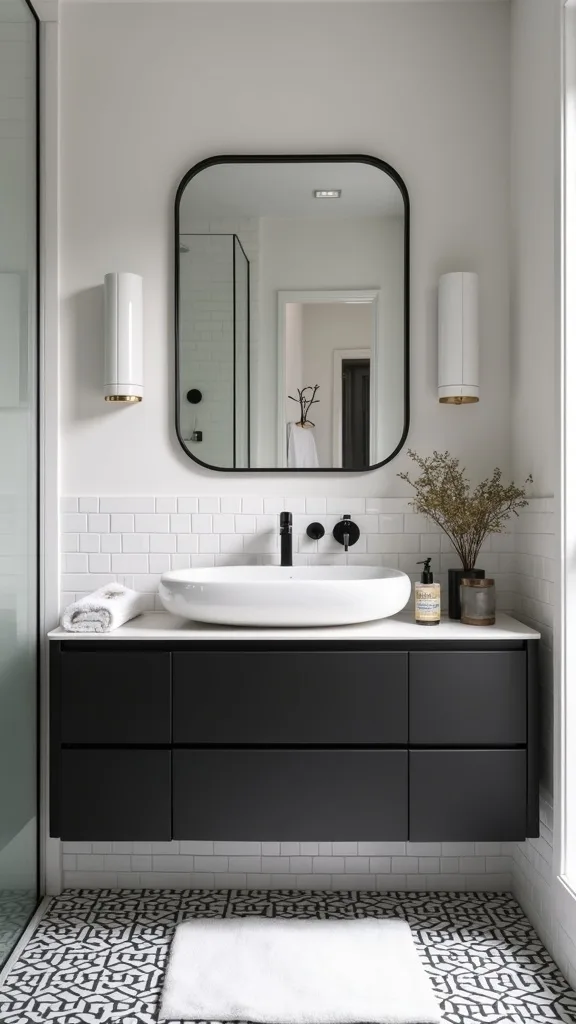
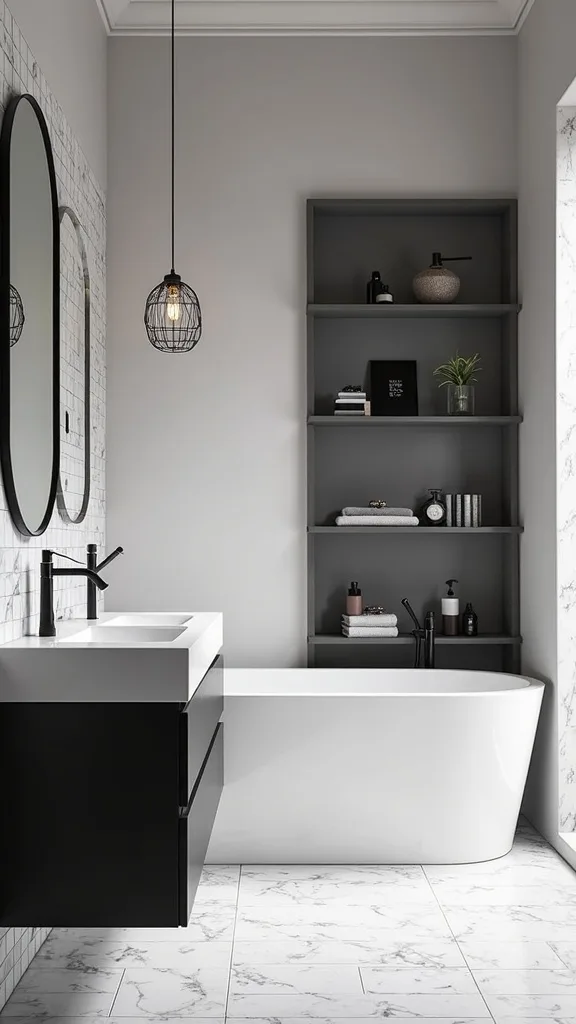
13. Use open shelving in black to add storage without heaviness
I find that open shelving is a smart move in a black and white bathroom when you need storage but don’t want bulky cabinets. It works because slim black shelves read like lines, not blocks, so they add function while keeping the room visually light.
When I design this look, I install two shelves above the toilet or beside the mirror, and I keep the spacing generous so it doesn’t feel crowded. I style them with mostly white items—rolled towels, white jars, and a clear bottle or two—so the shelf becomes a frame for the white objects. If your fixtures are matte black, matching the shelf brackets makes everything feel cohesive.
Materials I like: black metal brackets with wood shelves for warmth, or all-black metal for a more modern monochrome bathroom. Chrome accessories can still work here if you keep them minimal.
Pro tip: I always recommend editing what you display—open shelves look best when you treat them like decor, not a dumping ground, and that restraint feels luxurious.
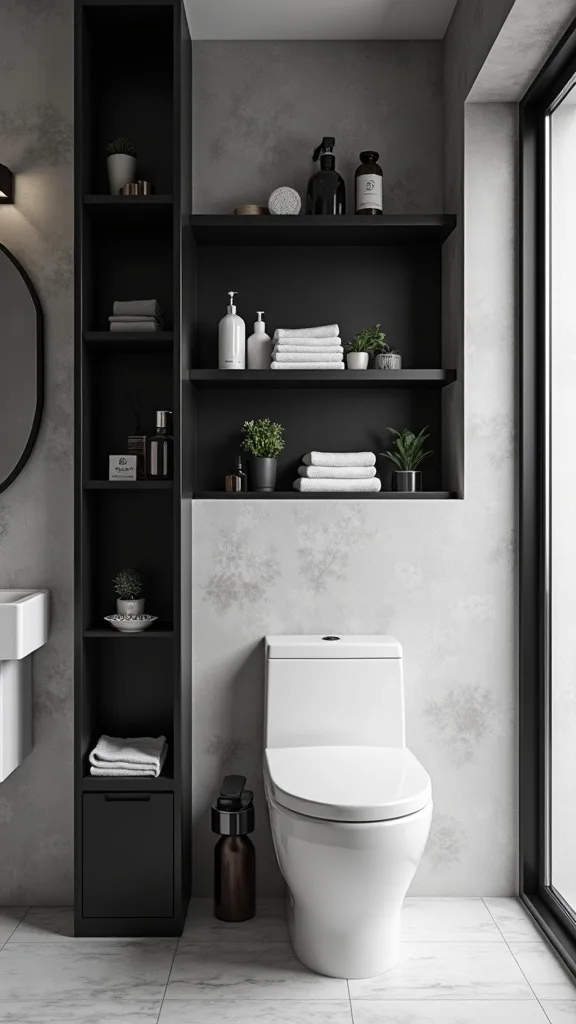
14. Try a black shower frame (or black-trimmed door) for a modern edge
In my opinion, a black-trimmed shower door is one of the most impactful upgrades if you want a modern black and white bathroom. It works because it outlines the shower like a picture frame, making even simple white tile look architectural and intentional.
To implement it, I keep the shower interior bright—white subway tile, light niche tile, and simple lines—so the black frame feels crisp rather than heavy. If a full door replacement isn’t in the cards, I look for ways to echo that “frame” effect with a black shower rod and a clean white curtain. Then I repeat black in the faucet and towel bars to create a consistent story.
Materials and finishes: matte black reads contemporary; a slightly softer black can feel more transitional. Chrome accessories nearby help bounce light and prevent the frame from feeling too stark.
Pro tip: I always recommend keeping the glass as clear as possible—clean, transparent glass lets the white tile shine and keeps the whole room feeling open and summer-light.
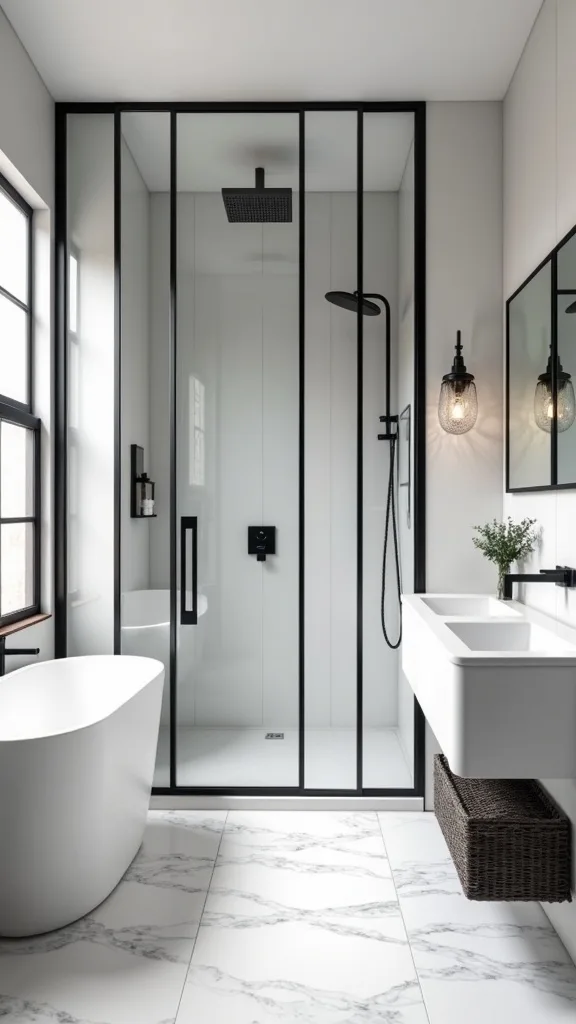
15. Design a niche moment with black-and-white contrast
I always start by looking for one small “feature” area, and a shower niche is perfect for adding contrast in a monochrome bathroom. It works because it’s a contained rectangle—small enough to be bold, but not so big that it overwhelms the room.
When I design this look, I either tile the niche in a darker tone (like black or charcoal) while keeping the shower walls white, or I keep the niche white and outline it with a dark trim. If you’re using white subway tile with dark grout, I like continuing that grout into the niche so it feels seamless. Then I style it with matching bottles or decant into simple black-and-white containers for a tidy look.
Materials I like: black hex mosaic, black penny tile, or a simple dark slab shelf. Matte black fixtures nearby tie the niche into the overall palette.
Pro tip: I always recommend adding a small niche light only if it’s easy—otherwise, a clean, high-contrast tile choice already gives you that “designed” feeling.
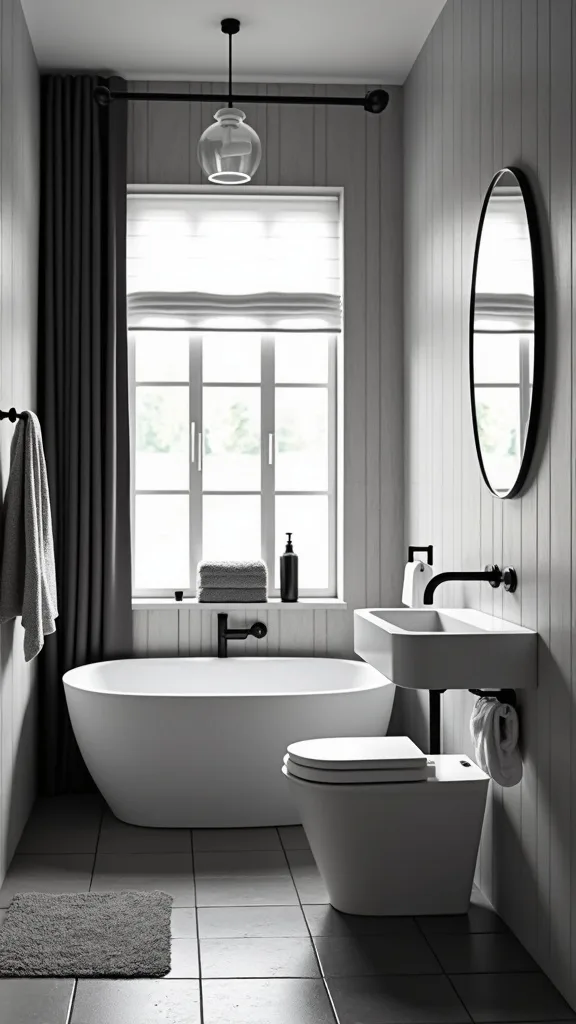
16. Use black towels strategically (and keep most textiles white)
From my experience, textiles are where a black and white bathroom can either feel crisp or chaotic. It works best when black towels are used like accents—small hits of contrast—while the majority of linens stay white to keep the space feeling fresh for summer.
I implement this by choosing white bath towels and adding one black hand towel, or a black-and-white striped set for the vanity area. If you have a black vanity, I like white towels on display to keep the room bright. If your room is mostly white, a couple of black towels can add depth without any renovation.
For materials, I look for towels with a plush feel and a simple border (no loud logos). I also like a white waffle weave bath mat because it reads spa-like and dries quickly.
Pro tip: I always recommend sticking to one pattern at a time—if your floor is hex and your grout lines are bold, keep towels mostly solid so the room feels calm and pulled together.
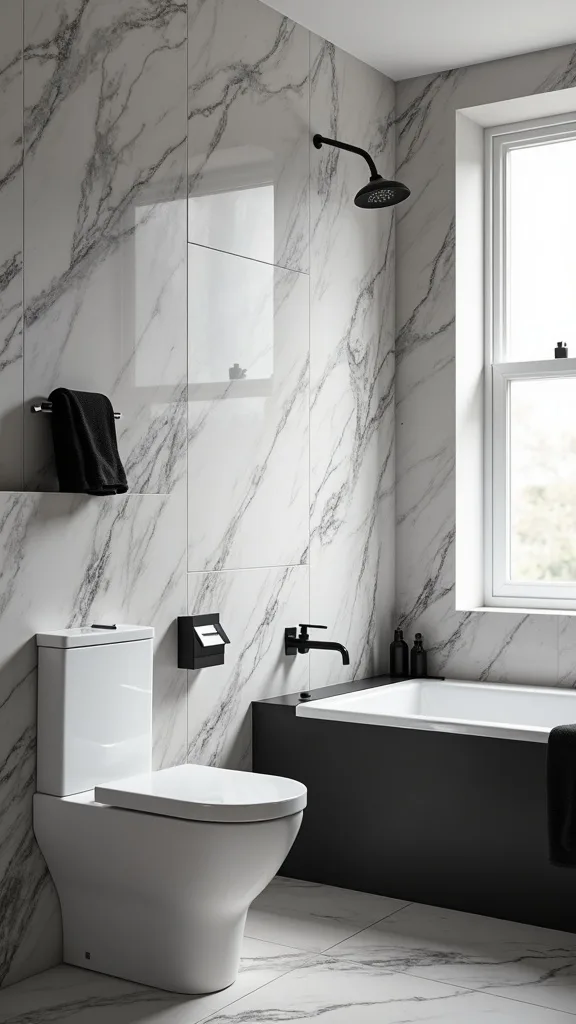
17. Bring in a tiny touch of greenery for a summer lift
I find that even in a strict monochrome bathroom, a small plant makes the whole space feel alive—especially for a summer refresh. It works because green is a natural contrast to black and white, and it softens all the straight lines from tile and fixtures.
To implement it, I add one easy plant on the vanity (if there’s light) or a small one on a shelf. If your bathroom has low natural light, I choose something that tolerates it well and keep it near the brightest spot. I also like using a simple white ceramic pot or a black matte pot so it doesn’t introduce a new colour story.
Materials that pair well: white subway tile, dark grout, and matte black hardware look amazing with a little organic shape. Chrome accessories nearby help reflect light onto the plant and keep the corner feeling bright.
Pro tip: I always recommend keeping it minimal—one plant done well looks intentional, and that small “summer” cue makes the bathroom feel like a cared-for retreat.
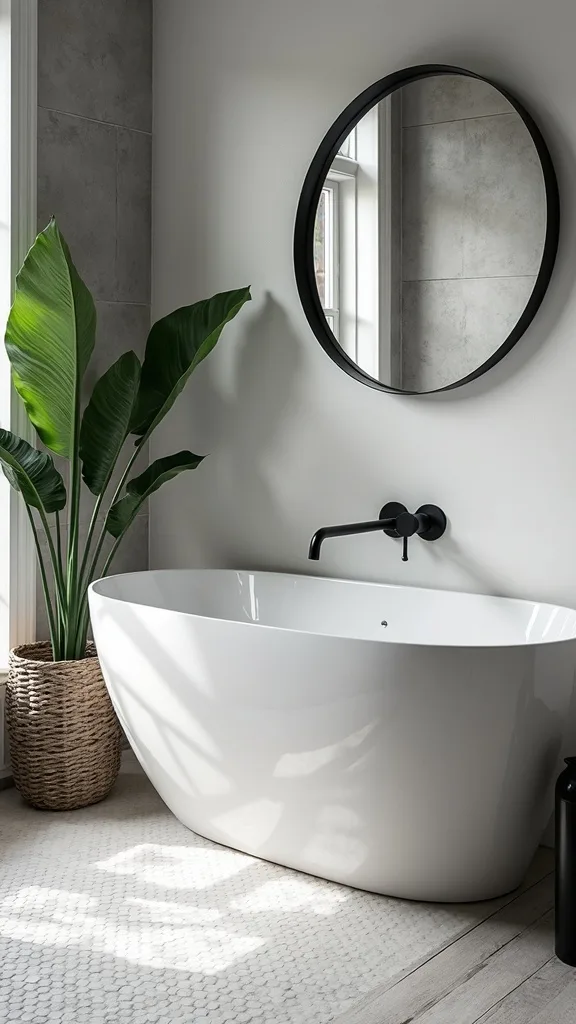
18. Choose a black-and-white art print to personalize the walls
One of my favourite approaches is adding black-and-white artwork to make a classic bathroom design feel personal. It works because art introduces mood and style without changing any permanent finishes, which is perfect when you want a quick seasonal update.
I implement this by choosing one larger print (instead of several tiny ones) and placing it where it won’t get splashed—often above the toilet or on a wall across from the shower. I like simple photography, line drawings, or typography that feels calm. If you already have matte black fixtures, a black frame ties in beautifully; if you’re mixing in chrome, a thin silver frame can echo that shine.
For materials, I prefer frames that can handle humidity, and I keep the matting white so the artwork feels crisp against white walls.
Pro tip: I always recommend repeating one shape from the room—like a rounded mirror—by choosing art with a similar softness, and that subtle echo makes everything feel designed.
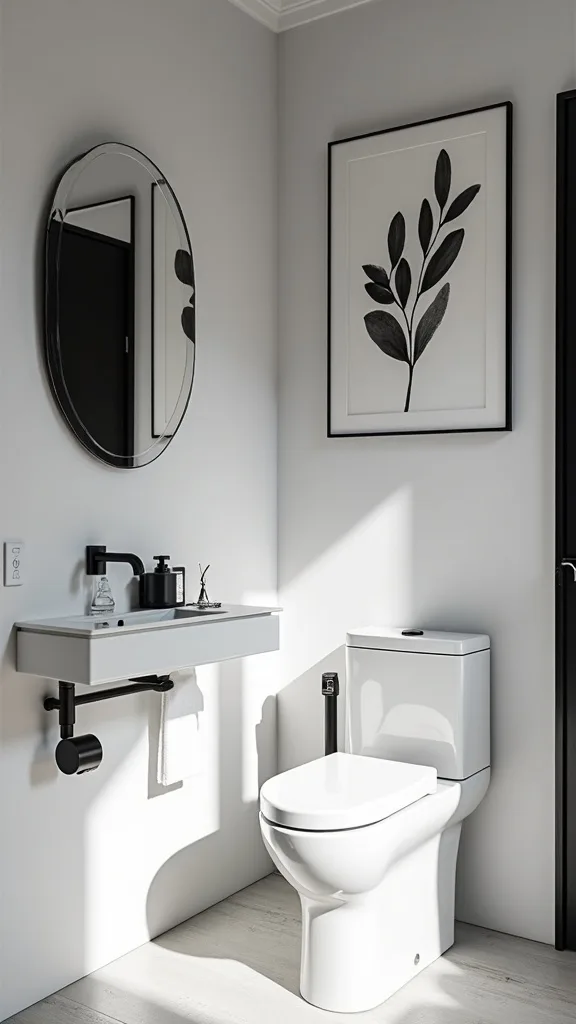
19. Use a black bath mat to ground an all-white floor (or vice versa)
I always start by looking at the floor-to-textile relationship because it’s what you feel underfoot every day. A black bath mat can ground a white hex floor, while a white mat can brighten a darker floor—either way, it works because it creates a clear, intentional contrast zone.
To implement it, I choose a mat that’s large enough to feel like a “landing pad” when you step out of the shower. In small bathrooms, I like a runner-style mat that visually elongates the space. If your tile already has dark grout lines, I’ll usually pick a solid mat so the patterns don’t fight.
Materials I like: quick-drying cotton or a low-pile washable mat. If you’re leaning into black bathroom ideas, a black mat with a subtle texture (like ribbing) adds depth without adding colour.
Pro tip: I always recommend having two mats to rotate in summer—fresh textiles are the easiest way to keep the room feeling clean, bright, and guest-ready.
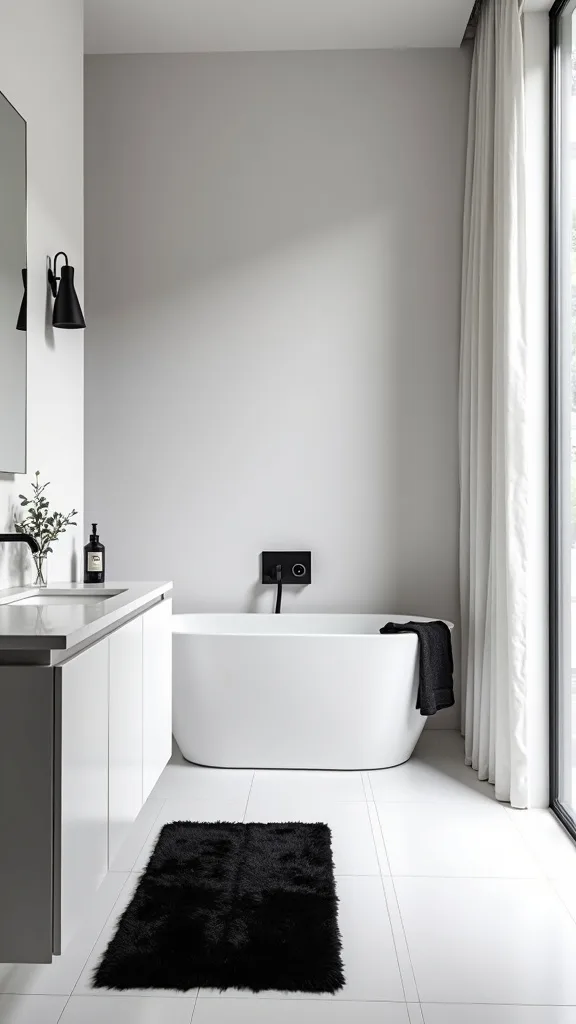
20. Swap in matte black towel bars and hooks for an instant refresh
From my experience, swapping towel bars and hooks is one of the most satisfying “one afternoon” upgrades for a black fixtures bathroom. It works because these pieces sit at eye level and get used constantly, so the new finish feels like a whole-room change.
I implement this by choosing a matching set—towel bar, hand towel ring, and at least one hook—so the look is consistent. I place hooks where towels actually land (behind the door, near the shower) so the room stays tidy. If you’re pairing with white subway tile and dark grout, matte black hardware looks especially crisp and intentional.
Materials: I prefer metal pieces with a true matte finish for a softer look. If you already have chrome accessories you love, keep them small and repeat black in the fixed hardware for balance.
Pro tip: I always recommend measuring twice before drilling—getting the height right makes the bathroom feel “custom,” and that little detail is what elevates a simple monochrome refresh.
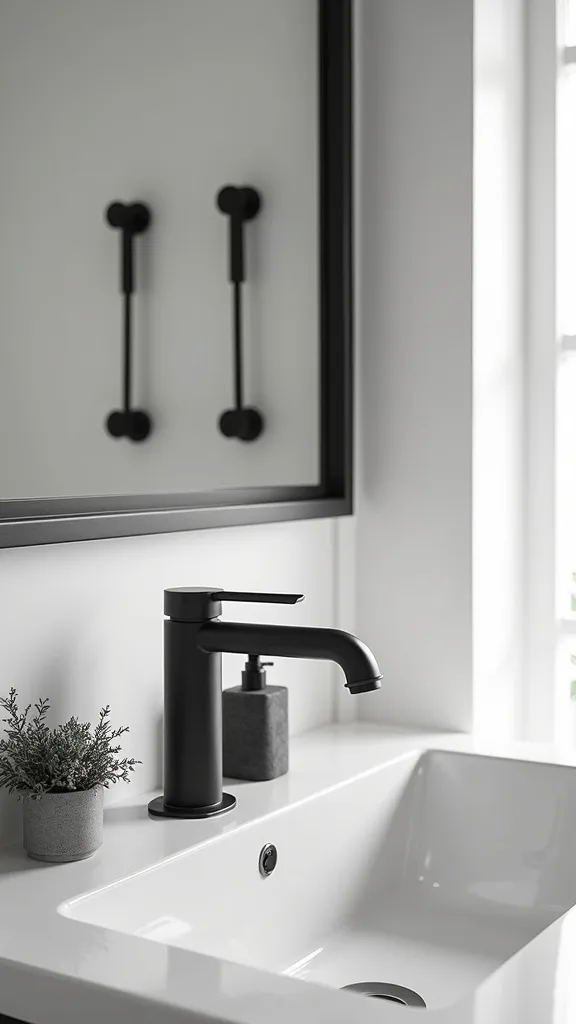
21. Introduce a small chrome tray to organize the vanity like a pro
I find that clutter is the fastest way to make a black and white bathroom feel messy, and a simple chrome tray fixes that instantly. It works because it groups your daily items into one intentional “zone,” and the reflective chrome adds a clean sparkle that complements matte black fixtures.
To implement it, I place a tray on one side of the sink and limit it to a few essentials: soap, moisturizer, and maybe a candle or small vase. If you share the bathroom, I like using two smaller trays—one per person—so things don’t sprawl. The key is leaving some countertop visible so the room feels airy.
For materials, I like chrome, stainless steel, or mirrored trays with simple edges. Against white countertops and subway tile, that shine feels crisp; next to black hardware, it adds contrast in a subtle way.
Pro tip: I always recommend decanting into matching bottles—when the labels disappear, the whole bathroom instantly feels calmer and more elevated.
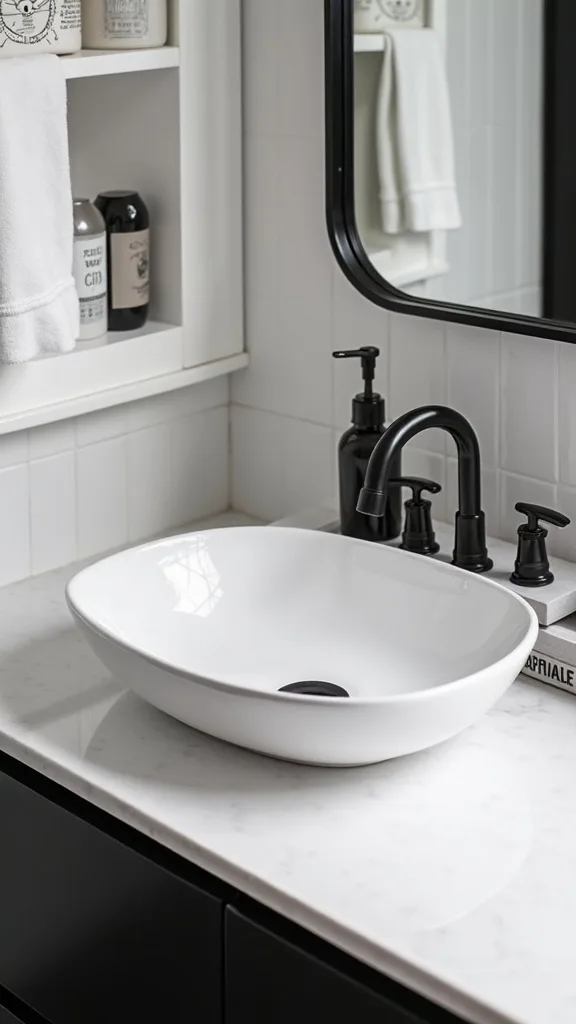
22. Try a black toilet brush and waste bin set (the unglamorous upgrade)
I’ll be honest: the least glamorous items can make the biggest difference in a monochrome bathroom. It works because mismatched plastic bins and bright packaging break the visual calm, while a simple black set blends in and makes the room feel intentionally styled.
I implement this by choosing a matte black toilet brush holder and a coordinating waste bin with clean lines. I tuck them where they’re accessible but not front-and-center—usually beside the toilet or under a small shelf. If you’re doing a summer bathroom refresh for guests, this is one of those changes that quietly makes everything feel cleaner and more considered.
Materials: matte black metal or durable resin looks sleek and wipes down easily. If you’re mixing in chrome accessories, I keep these “utility” pieces black so the shine stays reserved for decor moments.
Pro tip: I always recommend choosing lidded options when possible—less visual clutter, fewer odors, and a bathroom that feels like a calm little retreat.
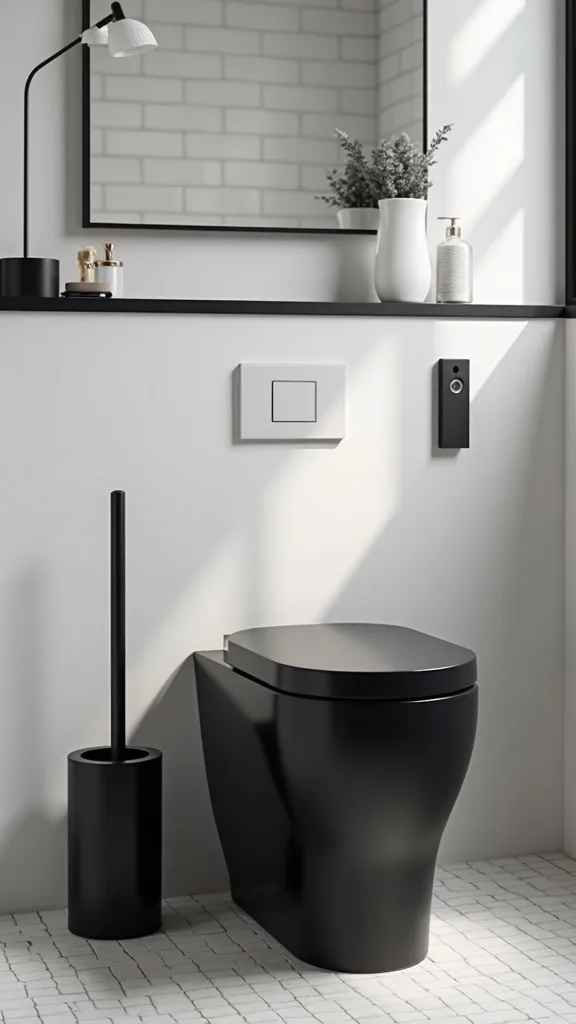
23. Use a black-and-white striped runner to elongate a small bathroom
When I design a small bathroom, I love using a striped runner to visually stretch the space. It works because stripes guide the eye, and in a black and white bathroom they reinforce the palette while adding softness underfoot.
I implement this by choosing a washable runner with medium-width stripes (not too thin, not too bold) and placing it from the vanity toward the shower. If your floor is hex tile, I keep the runner pattern simple so the two textures complement each other rather than compete. I also choose a runner length that leaves a border of tile visible—seeing that edge helps the room feel larger.
Materials: I like low-pile, washable cotton or indoor/outdoor style rugs that handle humidity. Black-and-ivory feels softer than pure black-and-white if you want a more relaxed summer vibe.
Pro tip: I always recommend adding a non-slip pad underneath—comfort and safety matter, and a stable runner makes the whole room feel more polished and intentional.
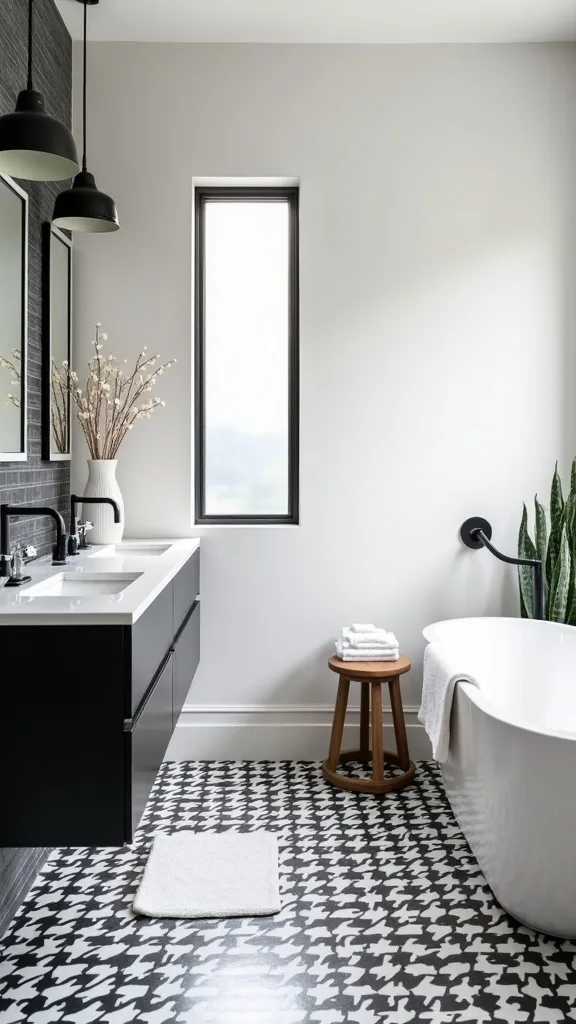
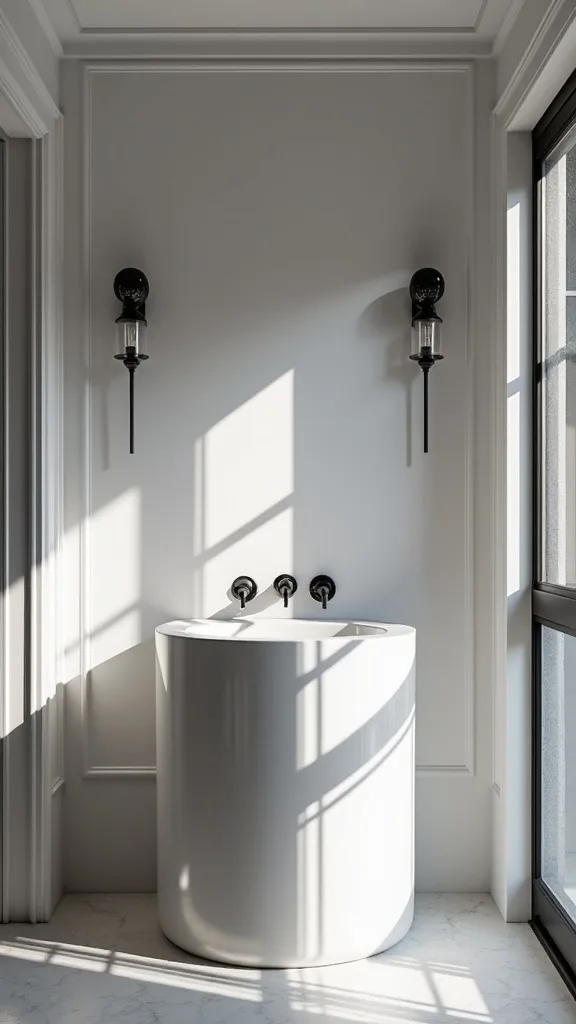
24. Add a small black sconce (or two) for boutique-hotel energy
I find that sconces are the quickest way to get that boutique-hotel feeling in a classic bathroom design. It works because side lighting reduces harsh shadows and makes the vanity area feel more elevated than a single overhead light.
To implement it, I place one sconce on each side of the mirror if space allows, or a single sconce on the open side in a tight layout. I choose bulbs that give warm white light (2700K–3000K — the cosy, yellowish tone you see in most homes) so the black-and-white palette feels inviting. If you’re keeping chrome accessories, you can still choose a black sconce to tie into matte black fixtures and create that layered metal mix.
Materials: matte black metal with simple shades looks clean; opal glass shades soften the light beautifully against white tile.
Pro tip: I always recommend putting sconces on a dimmer—bright for morning routines, soft for evening baths—and that flexibility makes the whole monochrome look feel truly luxurious.
25. Finish with a “three-repeat rule” so the palette looks intentional
I always recommend my simple “three-repeat rule” to make a black and white bathroom feel cohesive: repeat your key finish at least three times. It works because repetition turns individual choices—like a black faucet or dark grout—into a clear design language.
I implement this by listing my black elements (faucet, mirror frame, towel bar) and making sure they’re spread around the room, not clustered in one spot. Then I do the same for chrome accents (tray, canister, light fixture details) so the shine feels balanced. If something feels off, I’ll swap one small item—like a soap pump—rather than rethinking the whole room.
Materials and colours stay simple: white subway tile, dark grout, matte black hardware, and a few chrome pieces for brightness. This structure also helps if you’re trying out black bathroom ideas cautiously—repetition makes even bold choices feel calm.
Pro tip: I like taking a quick photo of the room—if your eye jumps around, you need more repetition; if it glides, you’ve nailed that effortless, summer-fresh monochrome balance.
Final Thoughts
I love how a black-and-white palette can feel both timeless and current, especially when I lean on practical choices like dark grout, easy-care textiles, and a few well-placed matte black upgrades. For a summer bathroom refresh, I find that keeping the big surfaces bright and using black as a repeated accent gives me that crisp, clean feeling without making the room feel heavy.
If you’re deciding where to start, I always recommend picking one anchor change—like a matte black faucet, a black-framed mirror, or a new light in warm white light (2700K–3000K — the cosy, yellowish tone you see in most homes)—and then building outward with small repeats. Once the finishes feel consistent, the whole bathroom naturally looks more “done,” even if you haven’t renovated a thing.
And if you try any of these ideas, I’d keep it simple: edit the countertop, add one texture (like a woven basket or plush mat), and let the contrast do the work. That’s the kind of refresh that feels good every single day.
Products I Recommend for This Project
Here are some of my favourite products to help you bring these ideas to life:
- Delta Faucet Trinsic Single-Handle Bathroom Sink Faucet (Matte Black) — I use it to instantly anchor the vanity with a clean, modern black finish.
- Moen Genta 24-Inch Bathroom Towel Bar (Matte Black) — I like it for repeating matte black in a simple, streamlined way.
- Gatco Latitude II Frameless Rectangular Mirror (Matte Black) — I rely on a black-framed mirror like this to sharpen the vanity wall and tie the palette together.
- OXO Good Grips Stainless Steel Easy-Clean Shower Squeegee — I keep one handy so clear glass and white tile stay bright with minimal effort.
- mDesign Metal Vanity Tray (Chrome) — I use a chrome tray to corral daily essentials and add a little light-bouncing shine.