
This post contains affiliate links. As an Amazon Associate, I earn from qualifying purchases at no extra cost to you.
The other day I tried to “quickly” hose pollen off my patio cushions and accidentally created a slip-n-slide that launched a citronella candle into my basil. Peak summer tropical, but make it chaos. And look: that tiny disaster was a gift, because it reminded me that a tropical-feeling yard isn’t about perfection—it’s about bold plants, forgiving materials, and a layout that still works when it’s 96°F and you’re sweaty in places you didn’t know could sweat.
Here is the thing: a tropical garden design is mostly proportions and repetition. Big leaves + layered heights + one dramatic focal point + a place to sit that doesn’t feel like it’s baking you alive. I’m going to walk you through plant combos, furniture choices, lighting, and a few “don’t do this unless you enjoy regret” warnings.
This is perfect for anyone who wants a lush backyard vibe without turning into a full-time groundskeeper (or spending resort money on day one).
Inside you’ll get the exact plant quartet that screams “vacation,” the container sizes that stop top-heavy plants from face-planting in wind, and the outdoor-furniture picks that can handle sun, storms, and the occasional spilled margarita. We’ll also talk tropical plants outdoor options for different climates, because not everyone lives in Florida (lucky you—less humidity hair).
Below are 25 Tropical Garden Design & Lush Backyard Ideas that make your space feel like a summer tropical landscape—even if your “backyard” is technically a patio with ambition.
1. Start with the “Vacation Quartet” (Bird of Paradise + Elephant Ears + Cannas + Banana)
This idea is exactly what it sounds like: build your whole look around bird of paradise, giant elephant ears, cannas, and banana plants. It works because those four give you instant scale—upright, broad, glossy, and colorful—so your yard reads as “tropical oasis” from 20 feet away (not “random plant yard sale”).
Implement it by placing the tallest plant (banana or bird of paradise) at the back of your main view, then stepping down with cannas and elephant ears in front. In containers, use at least a 20–24″ wide pot for bananas and elephant ears so they don’t tip when summer storms roll through. Group pots in threes and tuck a low spiller (sweet potato vine) at the base.
For colors, stick to leafy greens + one hot accent (coral canna blooms or orange bird-of-paradise tones). Pair with matte black, teak, or natural rattan furniture so the plants stay the star.
Pro tip: repeat the quartet in two spots—front and back corners—so the whole yard feels intentional, like a resort that has a staff (you are the staff, sorry).
2. Where should you place the “wow plant” so it looks intentional, not lonely?
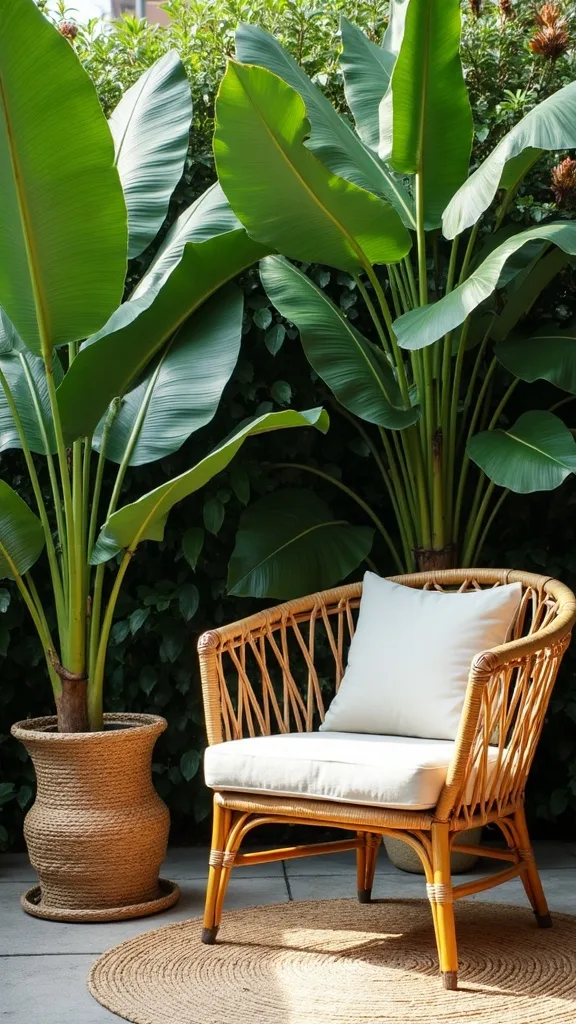
The wow plant is your bird of paradise or banana—something tall and dramatic. It works when it’s placed like a sculpture: anchored to architecture (a fence corner, pergola post, or the edge of a patio), not stranded in the middle of grass like it got lost.
Put it where your eye naturally lands from inside the house—usually straight out from the sliding door. Leave about 24–36″ of breathing room around it so the shape reads, then cluster two medium plants at its base to make it feel grounded. If you’re doing a seating area, place the wow plant slightly behind and to the side of the chairs; it creates enclosure without blocking conversation.
Materials-wise, choose a pot that looks heavier than it is: faux-concrete resin is budget-friendly and won’t crack as easily as cheap terracotta. Keep finishes consistent—one pot color repeated 3+ times is the secret sauce.
Upgrade idea: add a low uplight aimed at the trunk for warm white light (2700K–3000K — the cosy, yellowish tone you see in most homes) so the leaves glow at night like a boutique hotel patio.
3. How do you make a small patio feel like a lush backyard without planting a jungle?
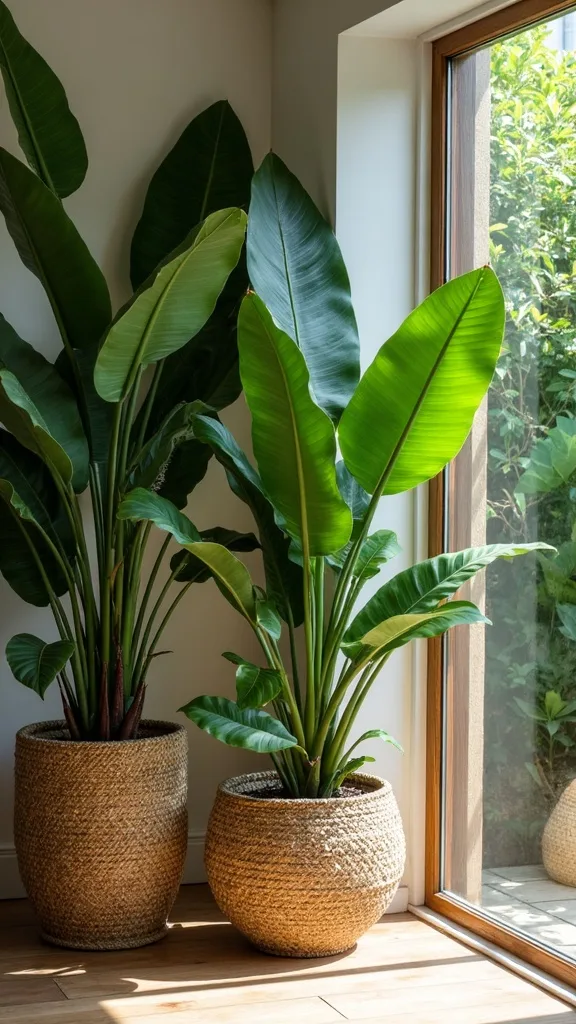
Small spaces go tropical faster because you’re close to everything—so a few big leaves feel immersive. The trick is to go vertical and tight: fewer plants, bigger impact, and zero clutter.
Start with two large containers (18–24″ wide) flanking your door or seating area. Add one tall plant (banana or bird of paradise) and one wide plant (elephant ear) so you get both height and “wraparound” leaf coverage. Then add a narrow console or plant stand behind the sofa with three smaller pots—instant layered canopy without stealing floor space.
Choose furniture with open legs (metal or teak) so you can see the ground plane; bulky wicker bases can make a tiny patio feel like a storage unit. Colors: cream cushions + green leaves + one punchy print pillow (palm, stripe, or ikat).
Pro tip: avoid more than two patterns in a small patio. Tropical already has visual noise; you’re creating a vibe, not a visual pop quiz.
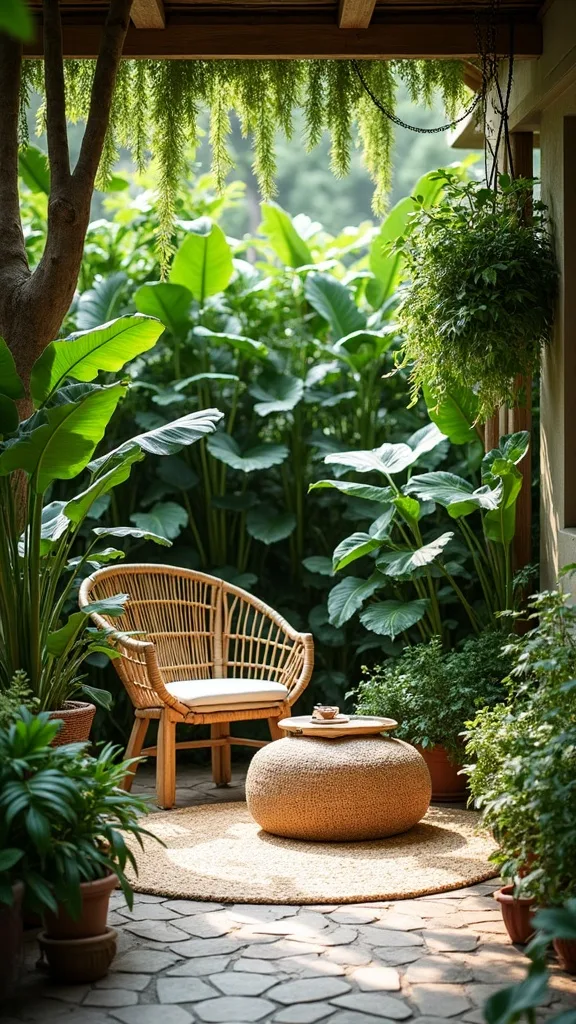
4. What’s the easiest tropical garden design layout for beginners?
Do the “U-shape lounge.” It works because it creates a room outdoors: plants are your walls, and your seating becomes the destination (instead of chairs floating awkwardly like they’re waiting for a meeting).
Place a loveseat or outdoor sofa facing your house, then add two chairs opposite it to form a U. Behind the seating, line up tall planters—three is the magic number—using bananas or bird of paradise in the middle and cannas on the sides. Leave a clear 36″ walkway so you’re not shimmying past leaves with a plate of food.
For materials, pick one furniture finish: black aluminum for modern, eucalyptus wood for budget-friendly warmth, or teak if you’re feeling fancy. Add a 5×7 outdoor rug to visually “lock” the lounge into place.
Upgrade suggestion: hang outdoor curtains on a pergola or tension wire to create shade and motion—suddenly it’s a cabana, and you didn’t even have to fly anywhere.
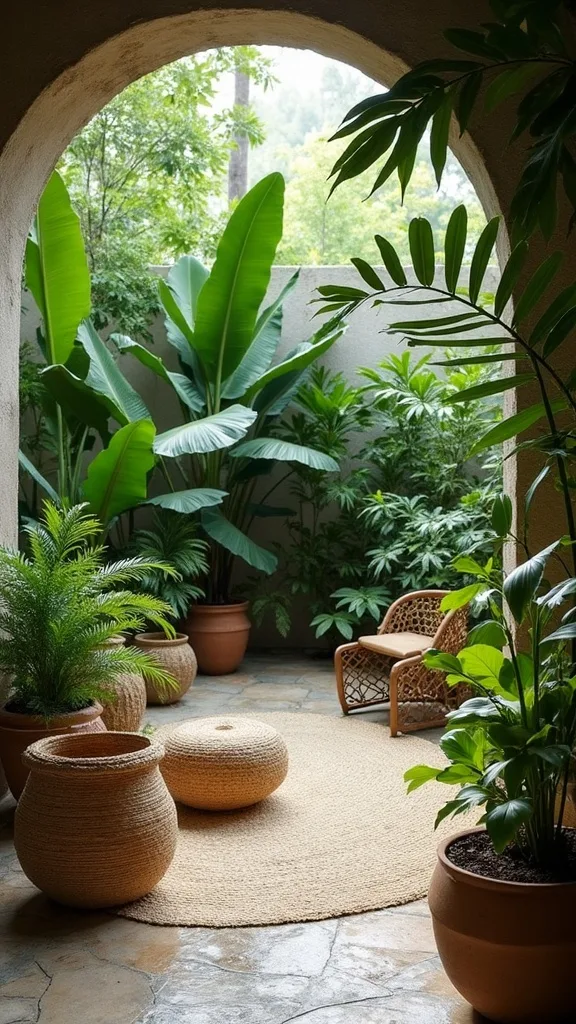
5. Which tropical plants outdoor actually survive full sun (without constant drama)?
Some tropical-looking plants are secretly divas. The ones that reliably handle sun are bananas (with water), cannas, many hibiscus varieties, and certain elephant ears if kept moist. This works because you’re choosing plants that don’t scorch into crispy sadness by mid-July.
Implement by checking your sun hours first: if you get 6+ hours of direct sun, prioritize cannas and bananas, then place elephant ears where they get morning sun and afternoon shade. Water deeply early in the day and mulch container tops to slow evaporation. If you travel, use simple drip irrigation on a timer—your future self will thank you.
Color palette: go heavy on green, then add one flowering color (red canna or yellow hibiscus) so it feels curated, not carnival.
Avoid: planting a shade-loving tropical under full sun and calling it “character” when it burns. That’s not patina; that’s plant suffering. Upgrade: add a shade sail over the hottest zone and your whole summer tropical landscape gets easier.
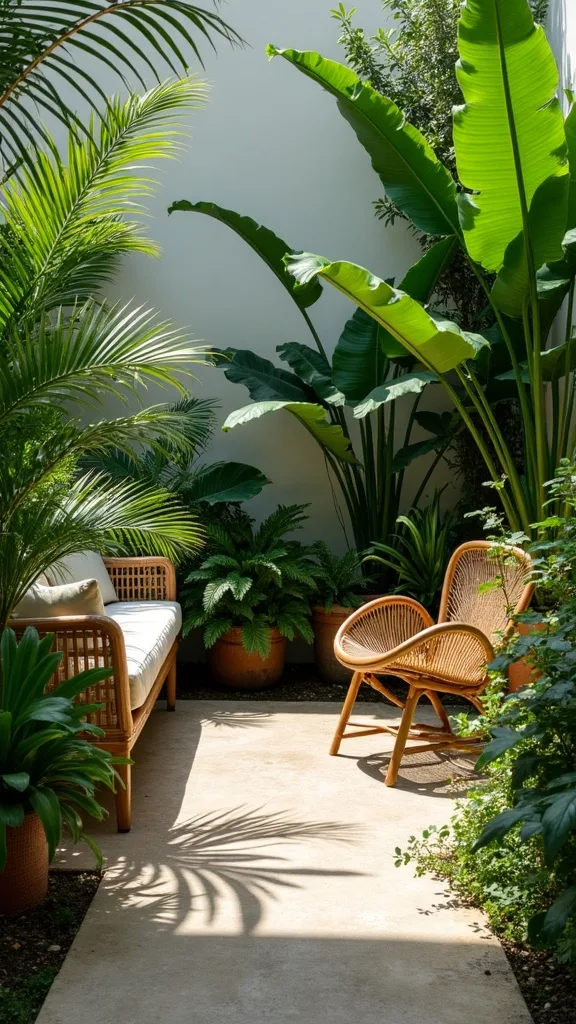
6. How do you layer plants so it feels lush, not messy?
Lush is controlled chaos. Messy is just chaos. Layering works when you repeat shapes and keep heights in a predictable rhythm: tall in back, medium in middle, low in front.
Start with a backbone row (bananas/bird of paradise) spaced so leaves can expand—think 3–4 feet apart in-ground, or one plant per large pot. In front, add cannas for color and upright blades. Then use elephant ears as the “sofa cushions” of the garden—big, soft, wide leaves that visually connect everything.
For products, a simple edging (steel or black plastic) creates a clean line between bed and lawn, which makes the wild foliage look intentional. Use dark mulch to make the green pop.
Pro tip: repeat the same plant in at least two clusters. Your brain reads repetition as design. Upgrade with one contrasting texture—like a spiky cordyline—so the whole thing looks styled, not just planted.
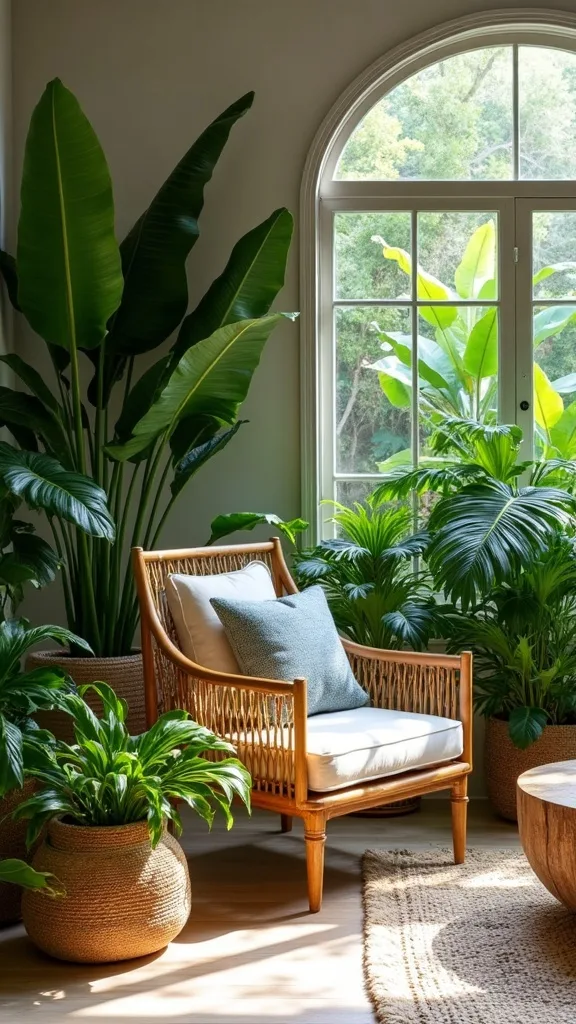
7. What’s the best outdoor furniture for a tropical lounge (that won’t melt in the sun)?
If your furniture feels sticky in summer, you won’t sit outside. The best tropical lounge setup uses breathable materials and finishes that don’t punish you for existing in daylight.
Choose a powder-coated aluminum frame (modern, light, and rust-resistant) or teak/eucalyptus (warm and naturally weather-tough). Skip cheap plastic that warps and turns chalky. For cushions, look for solution-dyed acrylic covers (like Sunbrella-style) because they resist fading when your patio becomes a solar oven.
Color-wise: keep large pieces neutral—sand, cream, or charcoal—then go bold with accessories: banana-leaf pillows, a striped outdoor rug, and one bright ceramic side table.
Avoid: dark metal seats with no cushions. That’s not minimalist; that’s a thigh-branding device. Upgrade: add a cantilever umbrella so shade covers the seating area, not the table you never use.
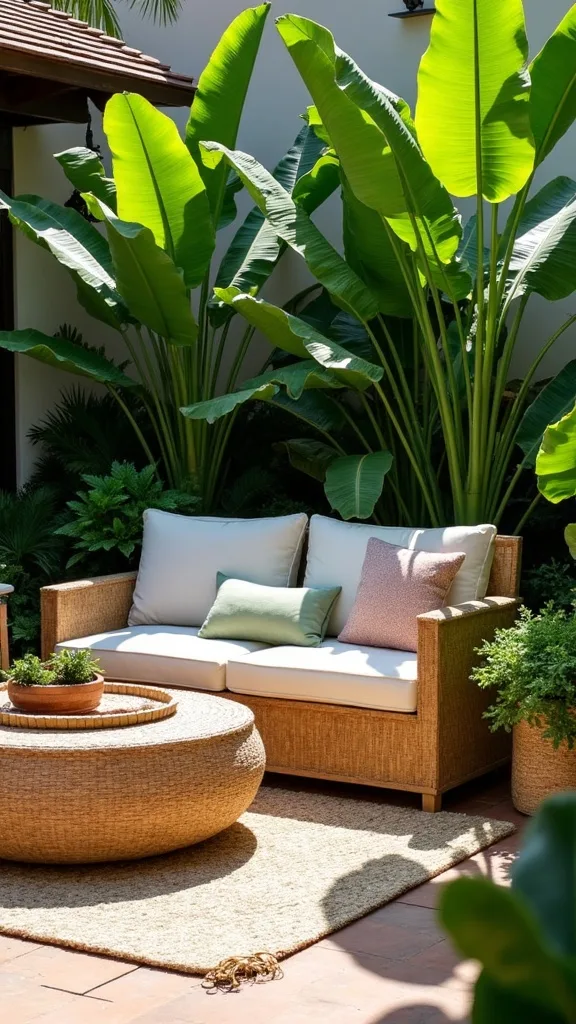
8. How do you create shade that still feels “tropical resort” (not campsite)?
Shade is the difference between “oasis” and “why am I doing this to myself.” It works best when it’s layered: overhead shade plus plant shade.
Start with one primary shade piece: a cantilever umbrella or pergola. Position it to block late-afternoon sun—usually the hottest, most annoying light. Then add living shade with tall plants behind seating so the space feels tucked in. If you have a fence, train a vine on a trellis panel to soften the hard line.
Materials: choose a canopy in off-white or sand so it reflects heat. Add outdoor curtains in a light linen-look fabric (poly blend) for movement and privacy.
Pro tip: avoid placing shade directly over a grill area; smoke + fabric is not the vibe. Upgrade: string lights under the shade structure using warm white light (2700K–3000K — the cosy, yellowish tone you see in most homes) so evenings feel like vacation even on a Tuesday.
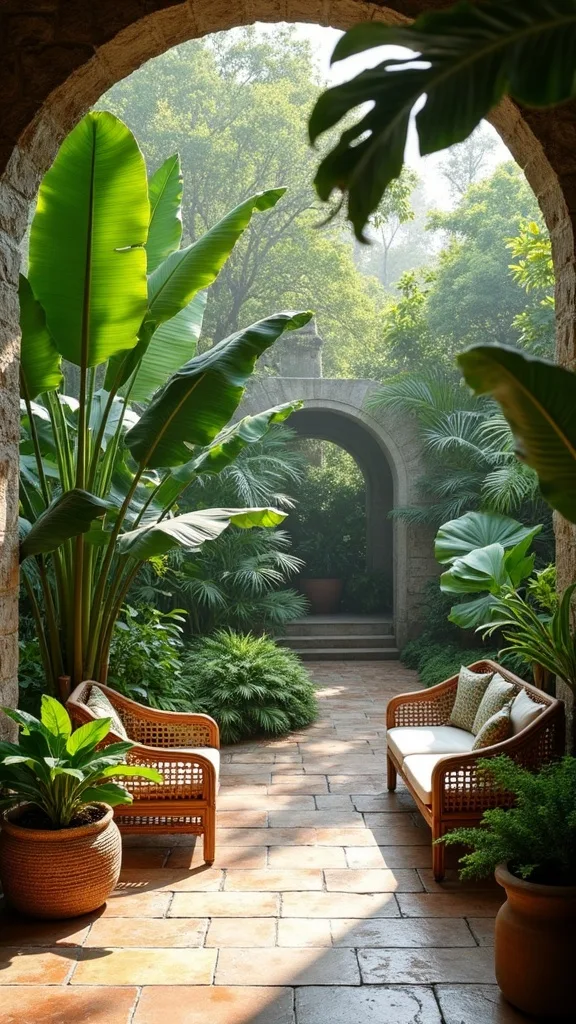
Cost & Materials Estimate
A starter tropical setup for a patio or small yard typically lands between $250 and $1,500 depending on plant size and whether you add shade and lighting.
| Item | Estimated Cost | Where to Buy |
|---|---|---|
| Bird of Paradise plant (5–7 gal) | $55–$120 | Home Depot |
| Banana plant (6–10″ pot or 3–5 gal) | $25–$75 | Lowe’s |
| Large resin/faux-concrete planter (20–24″) | $45–$110 | Wayfair |
| Premium potting mix (2 cu ft bag) | $14–$22 | Home Depot |
| 10×10 ft shade sail or cantilever umbrella (budget models) | $55–$220 | Amazon |
| Outdoor rug (5×7) | $35–$120 | IKEA |
Total estimated cost: $250–$1,500 Save money by starting with smaller plants in big pots (they’ll grow); splurge on shade and quality cushions because that’s what makes you actually use the space.
9. What’s a budget-friendly way to get big tropical impact fast?
Go big with containers before you go big with landscaping. It works because pots give you instant height and leaf mass, and you can move them when you realize your “full sun” spot is actually “full sun until the neighbor’s tree judges you.”
Buy one large statement plant and surround it with cheaper fillers. A banana plant plus two cannas can look like a full design moment for under $120–$200 depending on your local nursery. Use a thrifted basket as a cachepot (with a plastic liner) for that resort texture without resort pricing.
Colors: mix matte black pots with one natural woven texture to keep it from looking like a parking lot planter situation. Add a budget outdoor rug to visually enlarge the space.
Pro tip: avoid buying five tiny tropicals. They’ll disappear. Upgrade: spend on quality potting mix and a slow-release fertilizer—your plants will actually grow, which is the whole point of tropical drama.
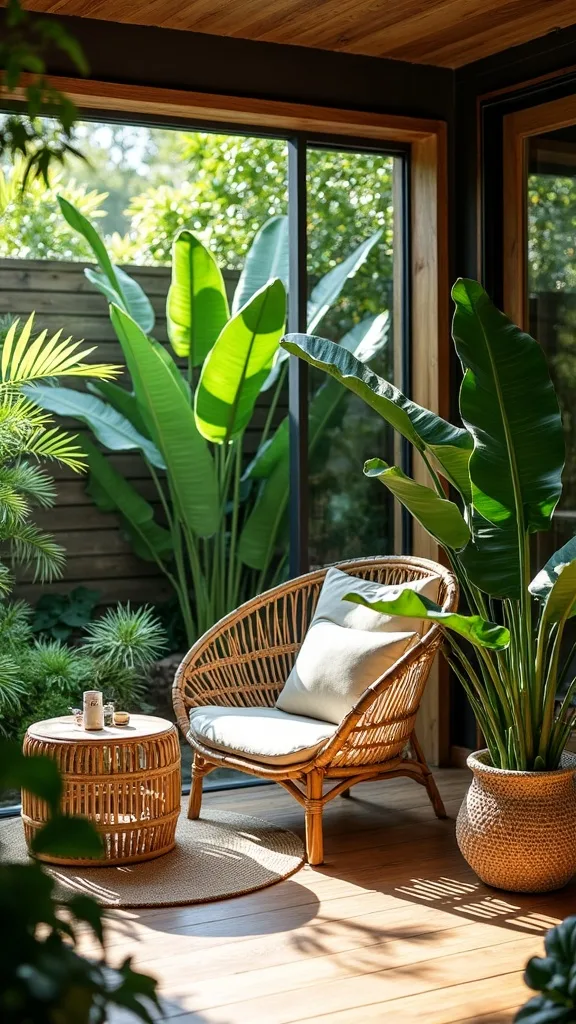
10. How do you design a tropical walkway that doesn’t feel like a narrow jungle tunnel?
A tropical path should feel like discovery, not like you’re being slapped by leaves on the way to take out the trash. The key is clearance and a clean edge.
Set a path width of at least 36″ (48″ if two people walk side-by-side). Place big-leaf plants on the outside of the curve, not the inside, so they frame the view without intruding. If you’re using stepping stones, space them comfortably—about a natural walking stride—so people don’t do that awkward hop.
Materials: decomposed granite or pea gravel is budget-friendly and drains well; large concrete pavers feel modern and resort-like. Edge the path with metal or stone to keep gravel from migrating.
Avoid: planting elephant ears right at the edge of the path. They’ll flop into the walkway after watering and you’ll resent them. Upgrade: add low landscape lights for safety and sparkle—just keep them subtle so your plants stay the main character.
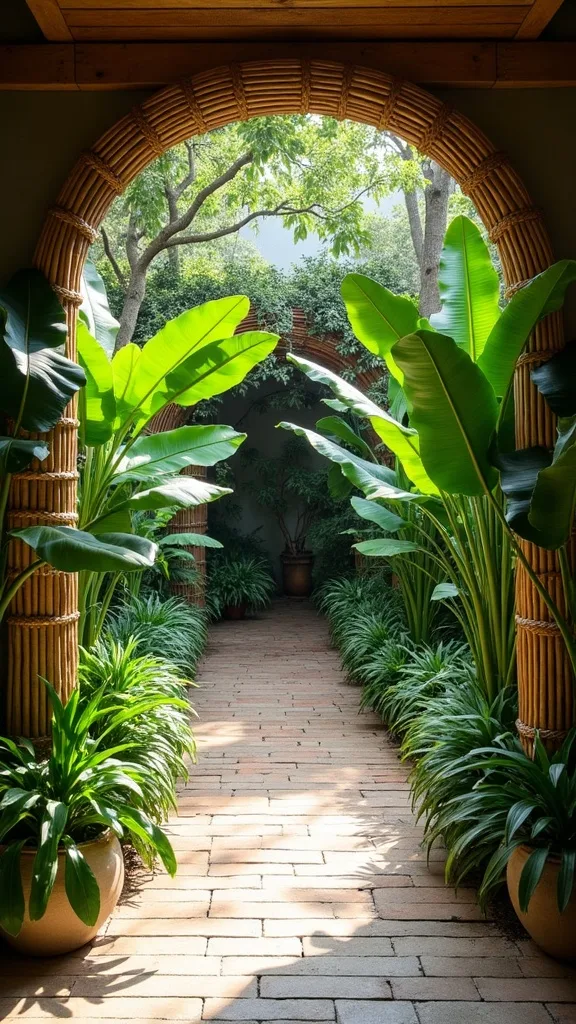
11. Which colors make a summer tropical landscape feel expensive (even on a budget)?
Expensive tropical isn’t neon everything. It’s restrained: layered greens with a few deliberate punches. This works because the foliage already brings complexity; too many colors reads as theme park.
Choose a base of three greens: deep glossy (bird of paradise), matte broad (elephant ear), and grassy upright (canna). Then add one accent color repeated 2–3 times—coral pillows, terracotta pots, or a turquoise side table. Repeat the accent in flowers if you can.
Materials: pair the greens with warm woods (teak/eucalyptus) or black metal for contrast. Add brass-toned lanterns for a little “hotel bar” energy.
Pro tip: avoid bright blue cushions if your plants have orange blooms—unless you’re intentionally doing a Miami palette. Upgrade: swap standard white string lights for globe bulbs and keep the light warm; harsh cool lighting makes everything feel like a parking lot at midnight.
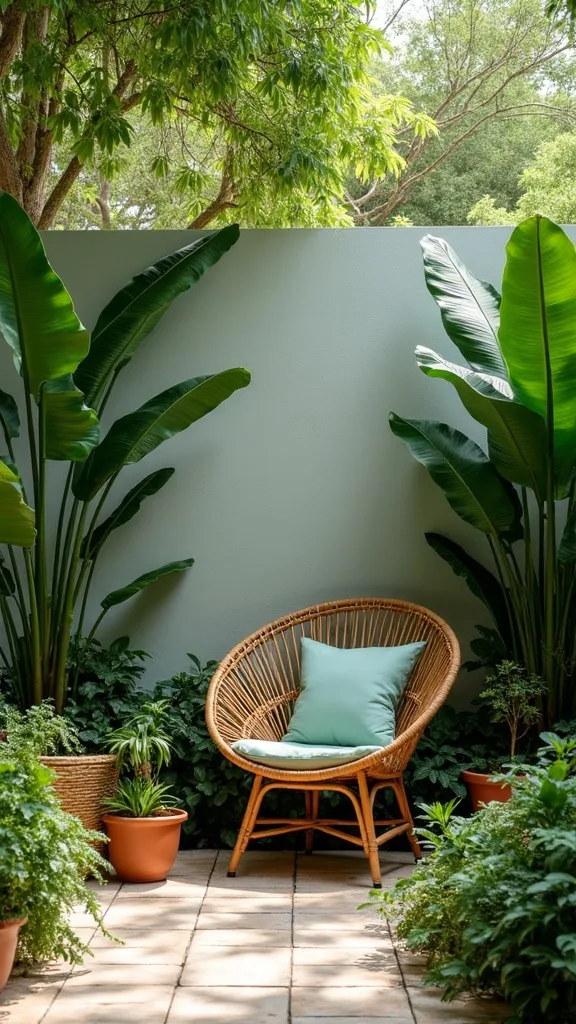
12. How do you keep tropical plants from looking sad in containers?
Container tropicals fail for two reasons: not enough soil volume, and inconsistent water. Big leaves need big roots. This works when you size up your pots and build in moisture control.
Use a pot at least 18″ wide for cannas and 20–24″ for bananas/elephant ears. Add pot feet or a riser so drainage holes actually drain (roots hate sitting in swampy water). Water until it runs out the bottom, then water again a minute later—containers can get dry pockets.
Products: use a moisture-retentive potting mix, and top with 1–2″ of mulch or coconut coir to slow evaporation. Pair with a simple watering wand so you’re not blasting soil everywhere.
Avoid: tiny decorative pots with no drainage holes. That’s a plant coffin. Upgrade: add a self-watering insert for the thirstiest plants—suddenly you can skip a day without everything collapsing like me when I forget lunch.
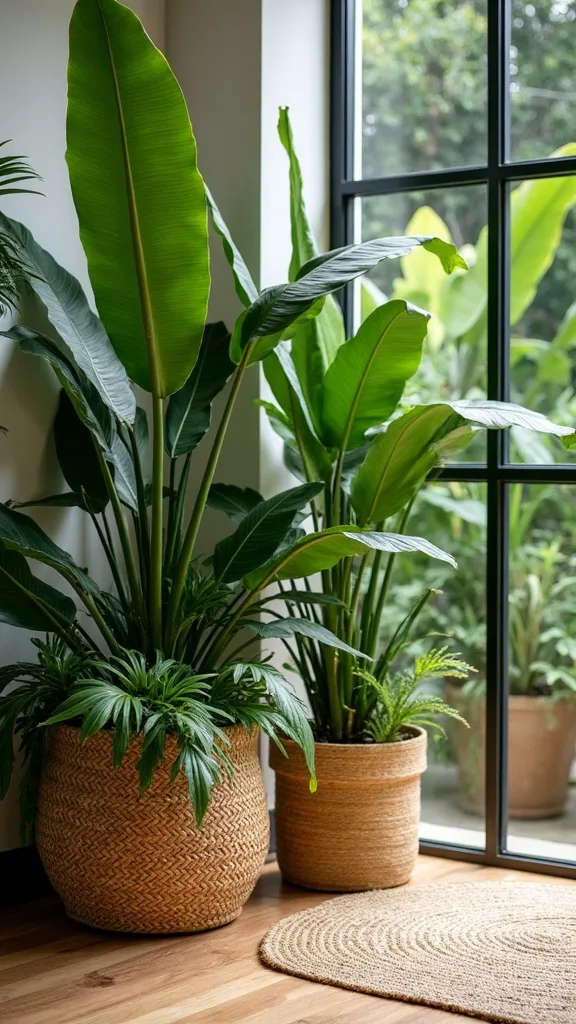
13. What’s the best way to add tropical privacy on a fence line?
Tropical privacy should feel soft and layered, not like a hedge wall. It works when you combine tall plants with a mid-height screen so you get coverage at eye level.
Place tall containers (bananas or bird of paradise) every 6–8 feet along the fence, then fill between with cannas or tall grasses. Add a trellis panel in one section and train a vine for texture. If you want instant coverage, use outdoor reed/bamboo fencing as a backdrop—cheap, fast, and very “beach club.”
Colors/materials: keep screens natural (bamboo, wood) and let the plants bring the drama. Add black planters for a modern edge.
Pro tip: avoid planting everything in a straight line. Stagger the pots by 12–18″ so it feels natural. Upgrade: tuck a narrow bench into the privacy zone—it becomes a secret garden moment, which is basically what we all want.
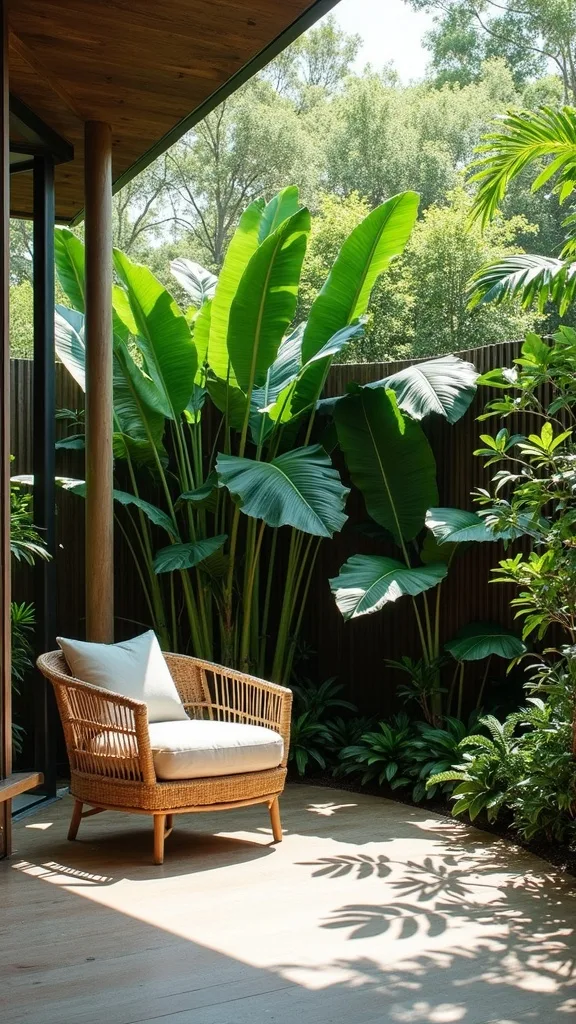
14. How do you use lighting to make a tropical garden feel magical at night?
Nighttime is where tropical design earns its keep. Lighting works when it’s layered: a little overhead glow, a little path safety, and a little plant drama.
Start with string lights under a pergola or along a fence for ambient light. Add two uplights aimed at your biggest leaves—banana trunks, bird of paradise stems—so shadows dance on the wall. Then add one lantern or candle cluster on the table for a warm focal point.
Choose warm white light (2700K–3000K — the cosy, yellowish tone you see in most homes) so greens look rich, not sickly. For brightness (measured in lumens), you don’t need stadium lighting—subtle is more expensive-looking.
Avoid: cool white solar spotlights that turn your yard into a crime scene reenactment. Upgrade: use a smart outdoor plug so your lights come on automatically at dusk—because you have better things to do than remember switches.
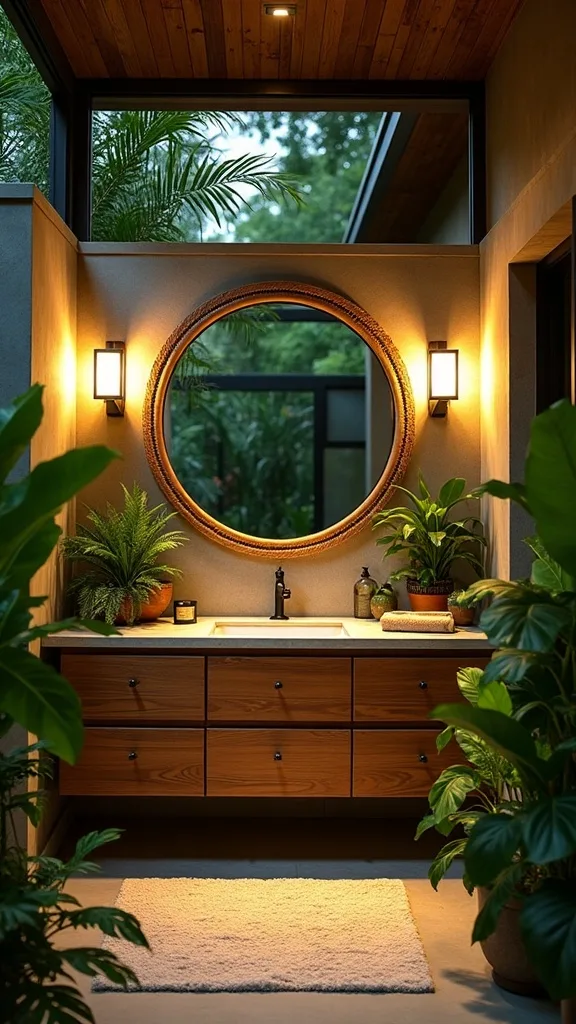
15. What’s the simplest water feature that won’t become a mosquito spa?
A small recirculating fountain is the sweet spot. It works because moving water sounds tropical and hides neighborhood noise, but it doesn’t require plumbing or a new personality called “pond maintenance.”
Pick a compact fountain and place it within 6–10 feet of your seating area so you can actually hear it. Keep it on a stable paver base and plug it into a GFCI outdoor outlet (the safety kind). Refill weekly in peak heat—evaporation is real.
Materials: faux-stone resin looks high-end without the weight; glazed ceramic adds a pop of color. Surround it with elephant ears or ferns for that “hidden grotto” vibe.
Avoid: open standing water bowls. Mosquitoes will RSVP immediately. Upgrade: add a few smooth river rocks around the base and a low uplight—suddenly it’s a resort courtyard, not a birdbath with ambition.
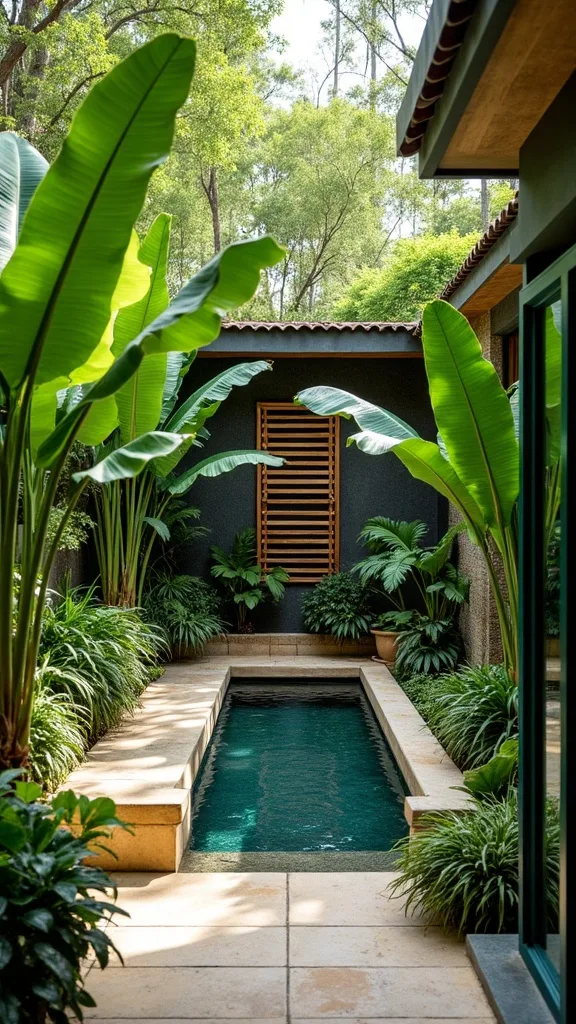
16. How do you mix tropical with modern design without it feeling themed?
Modern tropical is about restraint: clean lines + big leaves. It works because the plants provide the organic shapes while the furniture keeps it polished.
Choose streamlined seating (black aluminum or simple teak) and keep cushions solid—cream, charcoal, or olive. Then let the plants go oversized: one banana, one bird of paradise, and a cluster of elephant ears. Add one graphic element like a black-and-white outdoor rug to ground the greenery.
Materials: concrete planters (or faux-concrete) look modern and make the foliage feel intentional. Use matte finishes to avoid glare.
Pro tip: avoid novelty tiki décor. Unless you truly love it (no judgment), it reads as costume. Upgrade: use one piece of sculptural decor—like a large ceramic stool—so the space feels curated, not crowded.
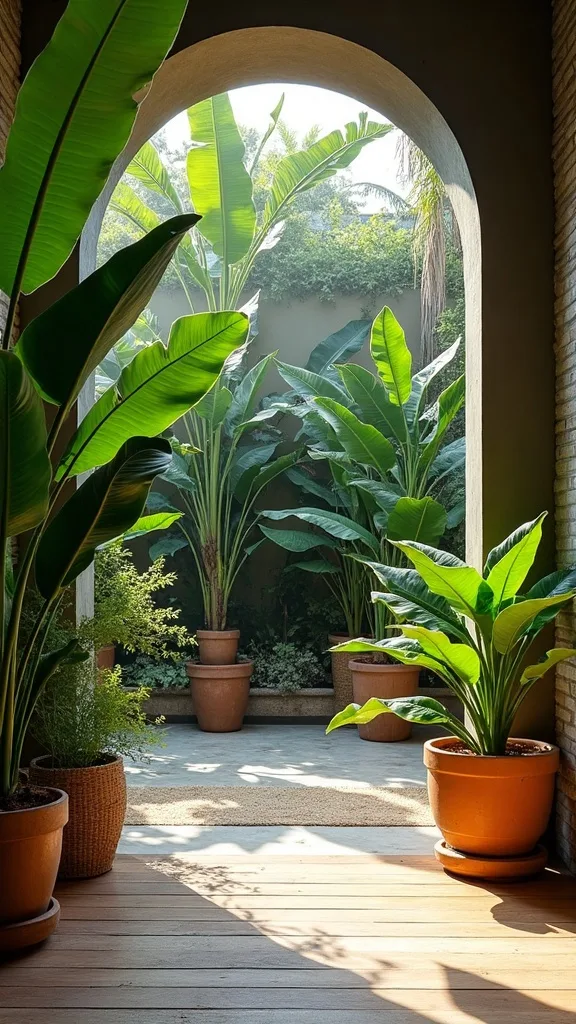
17. What should you avoid planting together (so you don’t create a maintenance nightmare)?
Some plant pairings are a trap because their water needs fight each other. This matters in a tropical garden design because you’re already watering more than usual—don’t add extra conflict.
Avoid mixing drought-tolerant plants (like many succulents) in the same pot with thirsty tropicals (banana, elephant ears). The succulent will rot or the tropical will sulk—either way, you lose. Group plants by water appetite: a “thirsty zone” near a hose and a “medium zone” farther out.
Materials: use pot labels (yes, I know) or a simple notes app list so you remember what’s where. Choose consistent pot sizes per zone so your watering routine stays predictable.
Pro tip: avoid planting aggressive spreaders in-ground unless you’re ready to manage them. Upgrade: if you love the look of something pushy, keep it in a container—containers are boundaries with benefits.
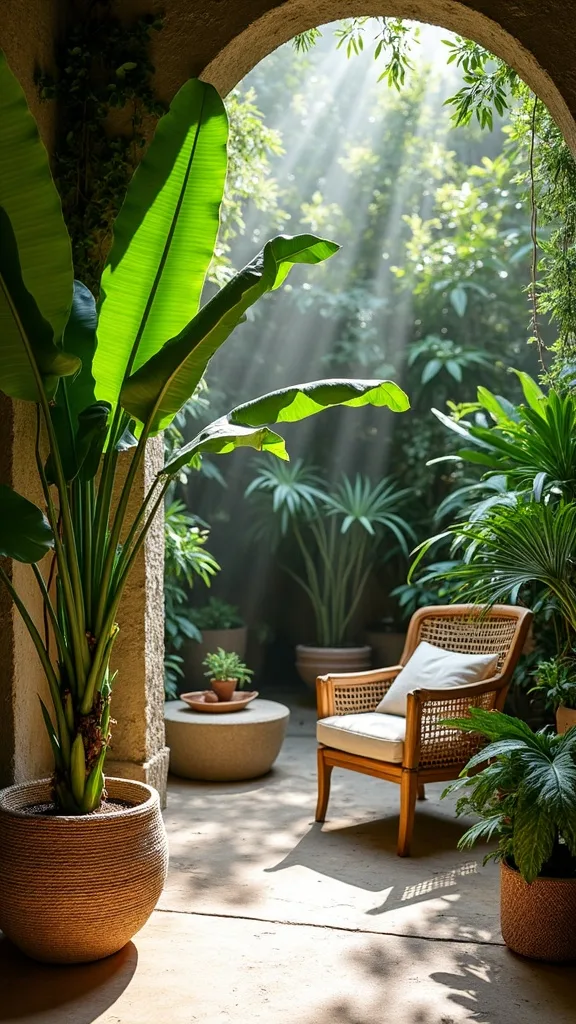
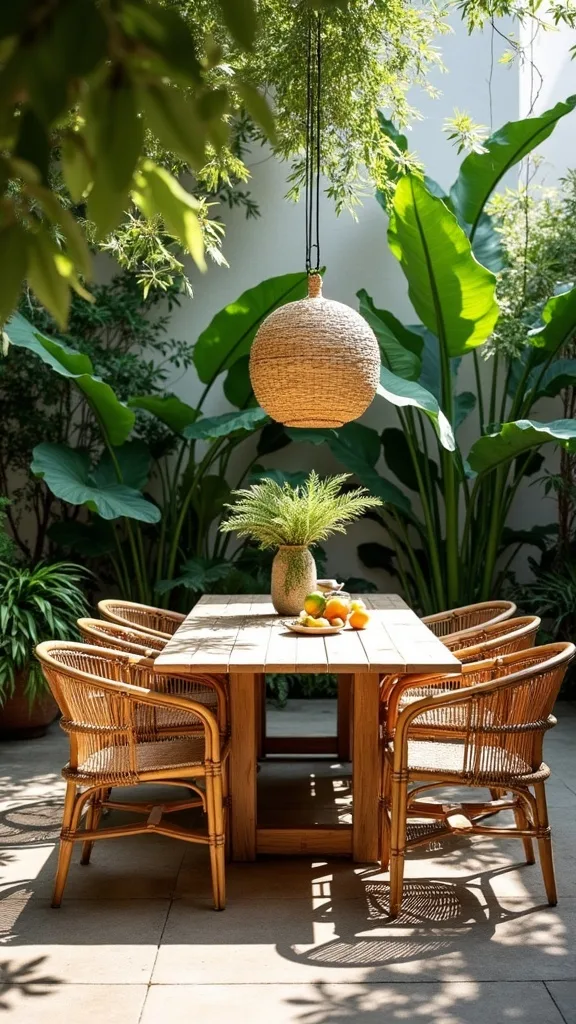
18. How can you make a tropical dining area that stays comfortable in heat?
Dining outside in summer is romantic until everyone is sweating into the salsa. Comfort works when you control shade and airflow and pick materials that don’t trap heat.
Place the dining table under a pergola, umbrella, or tree canopy. Choose chairs with breathable backs (sling, rope, or open weave) and add seat cushions you can hose off. Keep the table surface easy-clean—metal, teak, or composite—because tropical dining involves fruit and sticky drinks.
Colors: go with natural wood + white and add a single tropical runner or woven placemats for texture. Centerpiece: one low bowl of greenery, not a towering arrangement that blocks sightlines.
Avoid: glass-top tables in full sun. Glare city, plus it gets hot. Upgrade: add an outdoor fan to the pergola—suddenly you can linger, and your patio becomes the place everyone magically ends up.
19. What’s a smart way to use cannas for color without overdoing it?
Cannas are color machines, which is both their charm and their danger. This works when you treat them like accent lighting: strategic, repeated, and not everywhere.
Pick one canna color—red, coral, or yellow—and use it in two clusters. Plant them behind lower greenery so blooms pop above leaves. In containers, pair cannas with a calmer leaf plant (like elephant ear) so the composition isn’t all fireworks.
Materials: choose pots in a neutral tone (charcoal, concrete, terracotta) so the flowers look intentional. Add a matching pillow or outdoor candle in the same color to echo the bloom.
Pro tip: avoid mixing three different canna colors in a small space; it looks busy fast. Upgrade: deadhead spent flowers weekly—five minutes of effort for a month of extra bloom is a trade I will take every time.
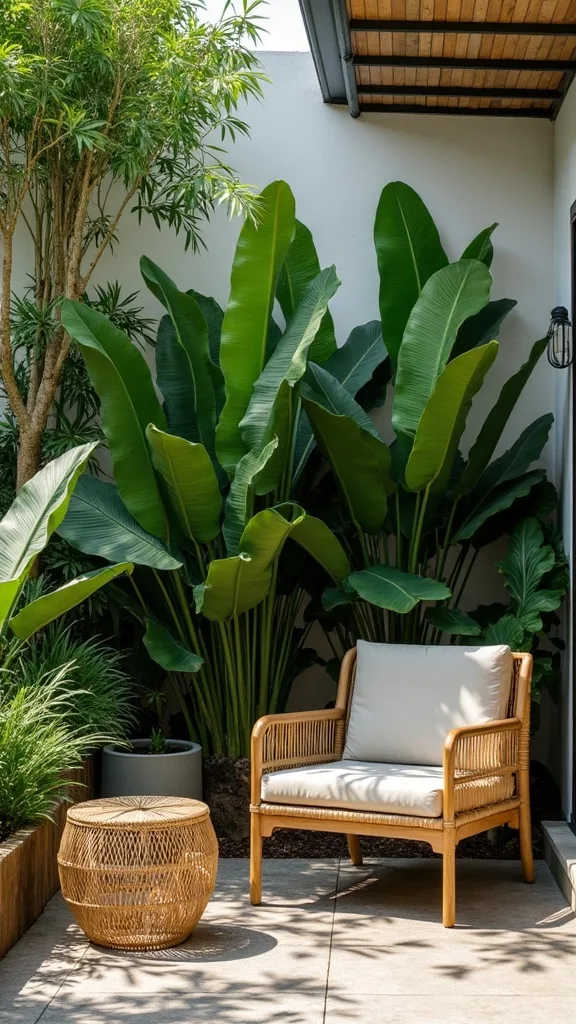
20. How do you create a tropical “entry moment” from the back door?
Your back door is your resort lobby. An entry moment works because it sets the tone immediately—before you even reach the seating area.
Flank the door with two matching planters (symmetry reads expensive). Use bird of paradise or banana for height, and underplant with a trailing vine. Add a durable doormat and a narrow outdoor runner to guide the eye outward.
Materials/colors: black planters + green foliage is crisp and modern; woven baskets + green foliage is relaxed and coastal. Add one wall-mounted hook rail for hats and towels (because summer).
Avoid: cluttering the doorway with too many small pots. It becomes an obstacle course. Upgrade: add a slim outdoor console table for drinks and sunscreen—functional, yes, but also it signals “this space is meant to be used,” which is the whole point.
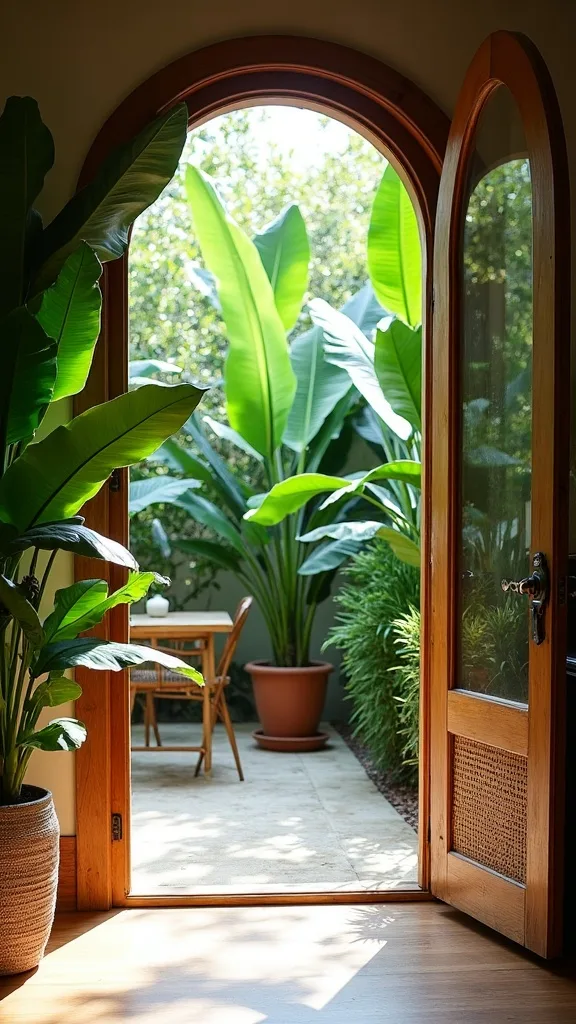
21. What’s the easiest way to pull off a tropical look in a rental backyard?
Renters need reversible magic. This works because containers, screens, and rugs create the entire vibe without digging up anything your landlord claims is “historic grass.”
Use a trio of large pots as a living wall, plus a freestanding bamboo screen for privacy. Add an outdoor rug and two lounge chairs—instant room. If the fence is ugly, hang outdoor-safe fabric panels with grommets on tension wire (no drilling required) and place plants in front.
Materials: choose lightweight resin planters so you can move them. Opt for foldable or stackable furniture so storage is easy.
Avoid: attaching anything permanent without permission. Upgrade: add a portable fire pit bowl (check local rules) for evening ambiance—tropical nights feel better with a little flicker and a drink that has fruit in it.
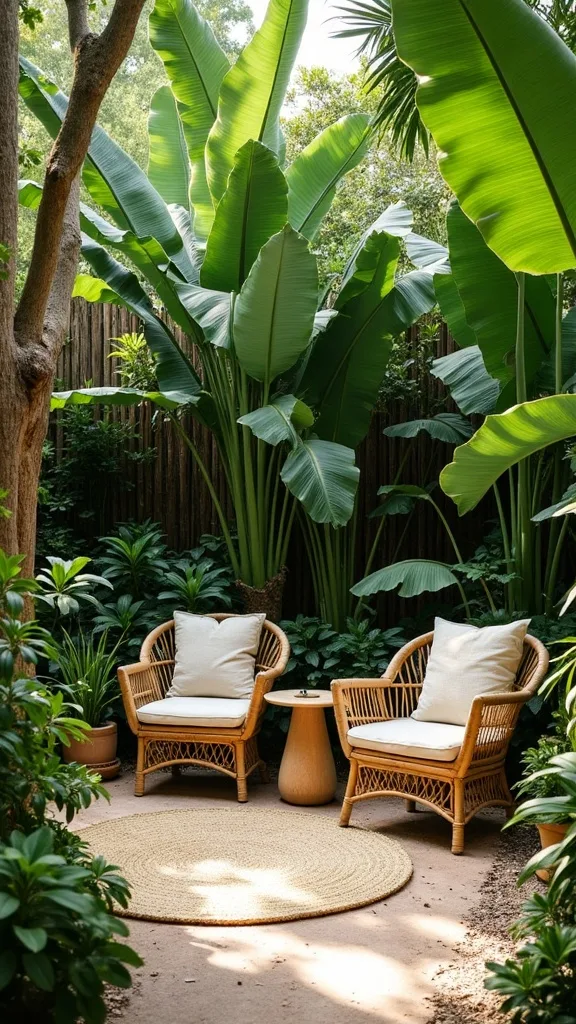
22. How do you keep the look cohesive when you’re mixing cheap pots with fancy furniture?
Mixing budget and luxury is my favorite sport, but cohesion matters. This works when you unify with color and repetition, not price tags.
Pick one pot color family (black, white, or terracotta) and stick to it for 70% of containers. Then sprinkle in one “special” pot—glazed ceramic or textured stone—near the seating area where it’ll be noticed. Keep furniture finishes consistent: if you have teak, echo it with a small wood side table or tray.
Colors: limit yourself to two neutrals + one accent. Plants are already a statement. Add texture with woven baskets, jute-look rugs, and linen-look pillows.
Avoid: buying five different pot styles because they were on sale. (I have done this. My patio looked like a yard sale with chlorophyll.) Upgrade: use plant stands to vary height—cheap pots look intentional when they’re elevated and grouped thoughtfully.
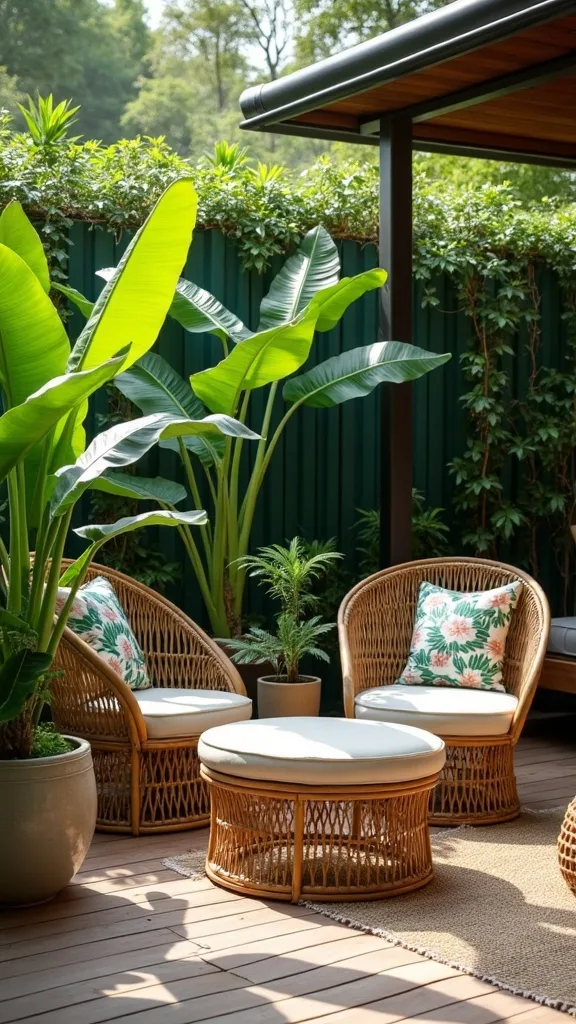
23. How can you make your tropical garden feel good for kids and pets too?
A lush backyard should be usable, not just photogenic. This works when you plan clear play paths and choose placements that reduce pokes, trips, and broken pots.
Create an open zone—at least 6×8 feet—for play, then frame it with plants in heavier containers that won’t tip. Keep spiky or irritating plants away from high-traffic areas, and avoid placing delicate leaves at kid-eye level near doors.
Materials: choose rounded-edge furniture and washable outdoor cushions. Use a storage bench for toys so the space can switch from “kid mode” to “cocktail mode” quickly.
Avoid: gravel in the main play zone. It migrates everywhere and becomes an indoor souvenir. Upgrade: add a low hammock chair under shade—kids love it, adults steal it, everyone wins.
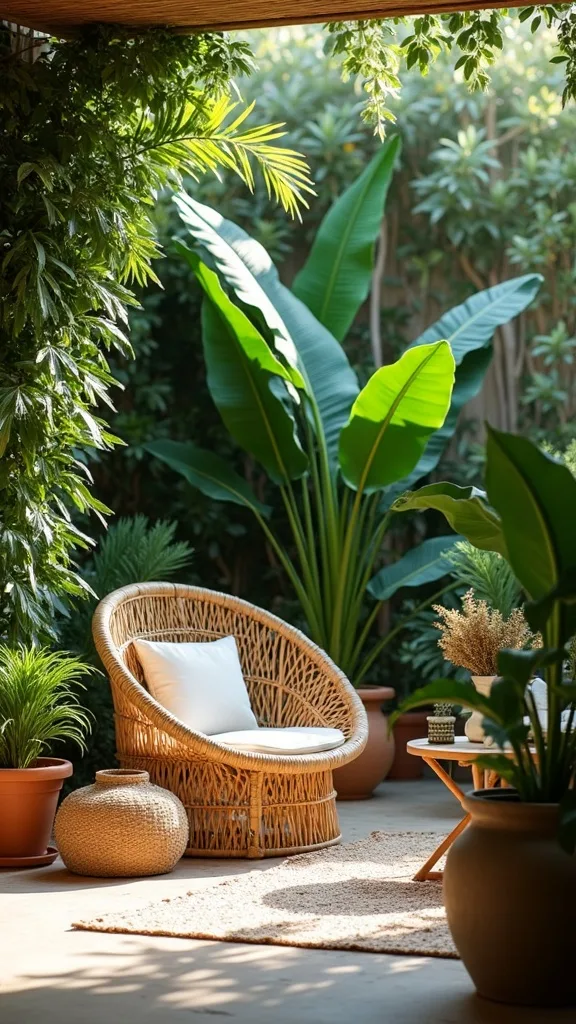
24. What’s a low-effort maintenance routine that keeps it looking tropical all summer?
Tropical looks high-maintenance, but it doesn’t have to be. It works when you do small, predictable tasks instead of occasional panic gardening.
Once a week: water deeply, deadhead cannas, and remove any torn leaves (plants look instantly tidier). Every two weeks: feed container plants with a slow-release or liquid fertilizer per label directions. Daily in peak heat: do a quick moisture check on your thirstiest pots—bananas and elephant ears will tell you when they’re thirsty by drooping like dramatic Victorian poets.
Products: keep a watering wand, pruners, and a small bucket nearby so you don’t turn maintenance into an expedition. Mulch container tops to reduce watering frequency.
Avoid: overhead watering at night—hello fungus, my old friend. Upgrade: add a simple drip line kit; it’s the closest thing to hiring staff without actually hiring staff.
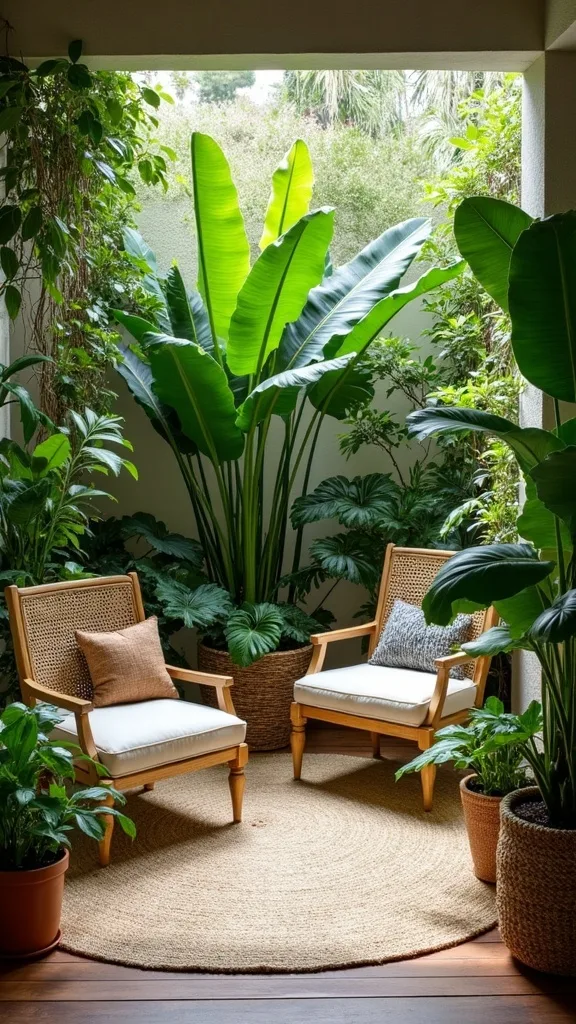
25. How do you “finish” the space so it feels like a real outdoor room?
The finishing layer is what turns plants into a place. This works because humans relax when a space has boundaries, comfort, and a little personality.
Add three anchors: an outdoor rug, a side table, and a lighting source. Then add two “softeners”: pillows and a throw (yes, outdoors—use a washable one). Finally, add one decorative object that can live outside: a lantern, a ceramic stool, or a big tray for drinks.
Colors/materials: repeat one metal finish (black or brass tone) and one natural texture (woven or wood) so everything feels connected. Keep accessories minimal—tropical plants already bring the drama.
Avoid: filling every surface with decor. Outside, clutter looks messy faster because wind exists. Upgrade: set up a small bar cart or beverage tub station—because the fastest way to use your tropical oasis is to make it easy to sit down and stay awhile.
Final Thoughts
You don’t need a botanical garden budget to get a tropical-feeling yard. You need big leaves, a clear layout, and materials that forgive real life—sun, storms, muddy feet, and that one friend who always sets their drink on the arm of the chair like it’s a coaster (it is not).
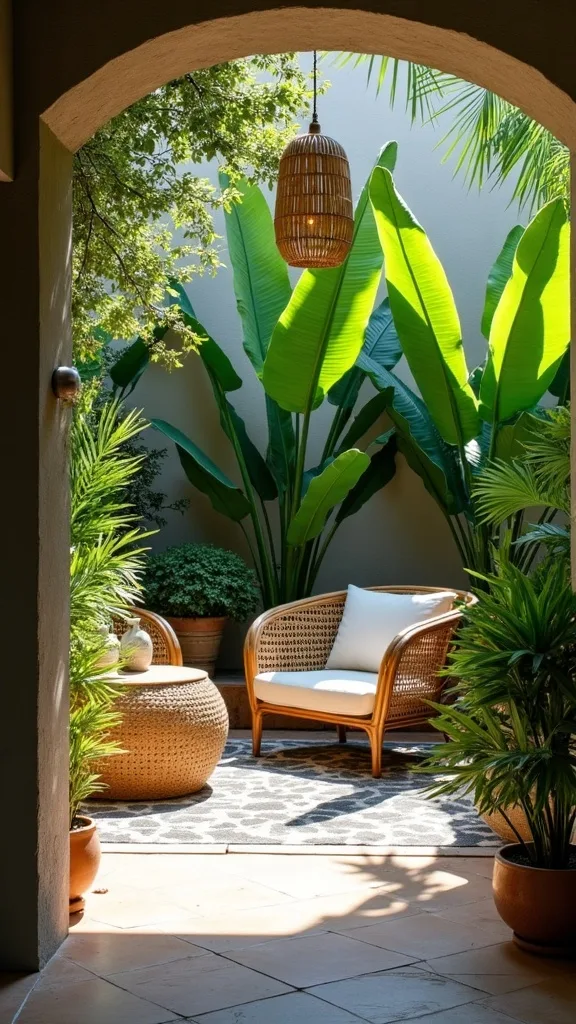
Here is the thing: the most convincing tropical spaces are edited. They repeat a few plant shapes, they keep circulation paths clear, and they give you shade so you actually want to be out there. And look, if you only do one upgrade, make it the seating zone—because a garden you don’t sit in is basically just yard work with better PR.
This weekend, pick one view from inside your house and stage it: place your tallest plant slightly off-center, cluster two medium pots at the base, roll out an outdoor rug, and add one warm lantern. Do that today, then tomorrow you can pretend you’re “going out” when you’re really just walking to your own backyard.
What I’d Do Differently
When I first tried this, I made the classic mistake: I bought a bunch of cute little “tropical” 6-inch pots and scattered them everywhere like I was sprinkling vacation dust. Two weeks later, the patio looked busy but not lush, and the plants were drying out at different speeds—so I was either overwatering half of them or watching the other half crisp up. The correct approach is boring-but-true: fewer plants, bigger containers, and grouping by water needs. The moment I upgraded to two 20″ planters and put one banana and one elephant ear in them (with cannas clustered nearby), the whole space finally read as intentional.
I also wish I’d known how much shade matters. I kept blaming the plants for looking tired, when really they were just cooking in late-afternoon sun. If I could rewind, I’d buy the umbrella first, then place plants based on that shade pattern. Pick one focal view, commit to two large pots, and start—your tropical corner will come together faster than you think.
Products I Recommend for This Project
Here are some of my favourite products to help you bring these ideas to life:
- Purived 10×10 ft Sun Shade Sail (Beige) — Easy way to add breathable shade so your seating area is usable in peak heat.
- Brightech Ambience Pro Waterproof LED Outdoor String Lights — Creates that warm, resort glow and holds up to real weather.
- Gorilla Carts Poly Garden Dump Cart — Moving 24-inch planters full of wet soil is not a personality trait; this makes it painless.
- Flexzilla Garden Hose (5/8 in.) — Lightweight and kink-resistant for frequent summer watering without the wrestling match.
- Miracle-Gro Performance Organics All Purpose Plant Nutrition Granules — Simple feeding that keeps big-leaf plants growing fast in containers.