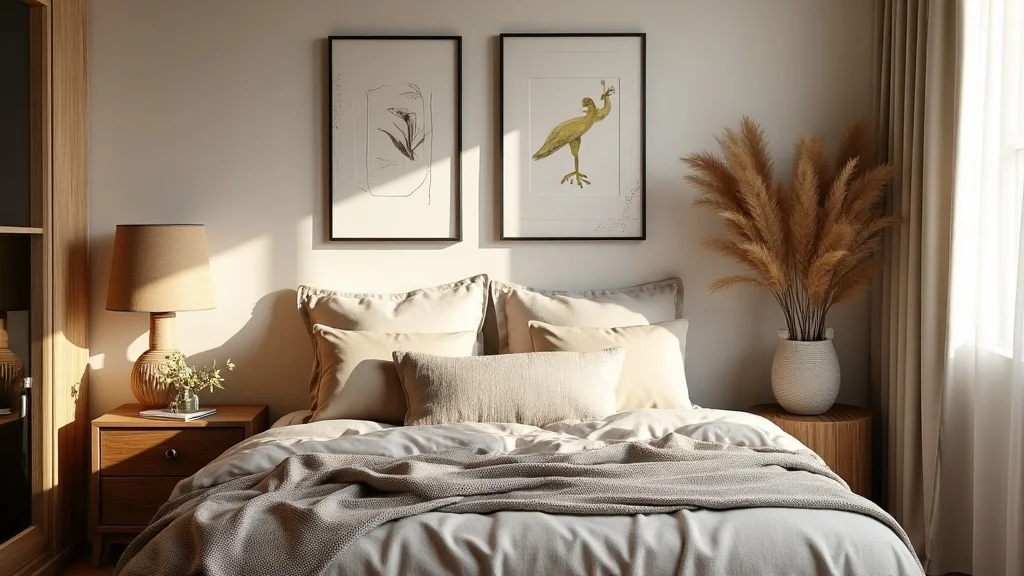

This post contains affiliate links. As an Amazon Associate, I earn from qualifying purchases at no extra cost to you.
The best cozy bedroom I’ve done lately looked like a boutique stay—layered bedding, warm lamps, a rug that actually reaches the nightstands, and art that feels collected. Total spent: $187.34. The “before” was not cute: a sad overhead light, mismatched plastic hangers peeking out of an open closet, and a comforter so thin it looked like it apologized every time you walked in.
This article covers 25 budget moves that work in real bedrooms, not showroom ones—DIY upgrades, thrifted finds, upcycled fixes, and a few affordable Amazon picks that earn their keep. Every idea includes a cheaper alternative (thrift/discount/DIY) so you can choose based on time, not just money.
This is perfect for anyone who loves the hunt: Goodwill aisles, Target clearance endcaps, Facebook Marketplace, and the “wait…that could be cute” moment in a curbside pile.
You’ll get the exact cozy levers Pinterest is pushing in 2026—warm white light (2700K–3000K — the cosy, yellowish tone you see in most homes), texture-on-texture bedding, thrifted wood frames, and low-effort wall treatments that photograph like a full renovation.
Below are 25 How to Create a Cozy Bedroom on a Budget in 2026: DIY Decor, Thrifted Finds, Upcycled & Affordable Amazon Picks that make a cozy bedroom feel intentional, layered, and calm—without the “I spent my rent at a home store” vibe.
Products I Recommend for This Project
Here are some of my favourite products to help you bring these ideas to life:
- Philips LED Warm Glow A19 Bulbs (warm white light 2700K–3000K) — Makes overhead and lamp lighting instantly softer and more bedroom-friendly.
- Kasa Smart Plug Mini by TP-Link — Automates lamps so the room feels cozy at the same time every evening.
- NICETOWN Blackout Curtain Panels (linen-look) — Adds softness and better sleep, and the fabric reads higher-end than the price.
- Bedsure Duvet Cover Set (queen) — Budget-friendly way to make the bed look layered and “hotel” without buying a new comforter.
- Govee LED Strip Lights (warm white capable) — Great for a soft back-glow behind a headboard or under a floating shelf when used gently.
1. Start with the goal: affordable, creative cozy without breaking the bank
This idea is your filter: every purchase has to add softness, warmth, or function—otherwise it’s clutter wearing a price tag. It works because cozy reads as layers, not expensive labels, and layers can be thrifted, DIYed, or swapped in slowly.
Pick one photo you love (Pinterest Trending is heavy on rumpled linens + warm lamps right now), then list the “ingredients”: two light sources, one textured throw, one rug/curtain moment, and one personal detail. Shop your house first (an extra blanket becomes a foot-of-bed layer), then hit a thrift store with a tape measure—mine is 25 feet long and lives in my bag. If you’re buying online, set a hard cap per category (ex: $25 max for lighting).
Stick to a calm palette: warm whites, oatmeal, soft gray, and one deeper accent like rust or olive. Choose natural-looking textures (cotton, linen-look, knit) over shiny polyester when you can.
Pro tip: take a “before” photo even if it’s brutal—progress feels addictive when you can actually see it, and that’s how you finish the room.
2. What’s the cheapest change that instantly makes a bedroom feel cozy?
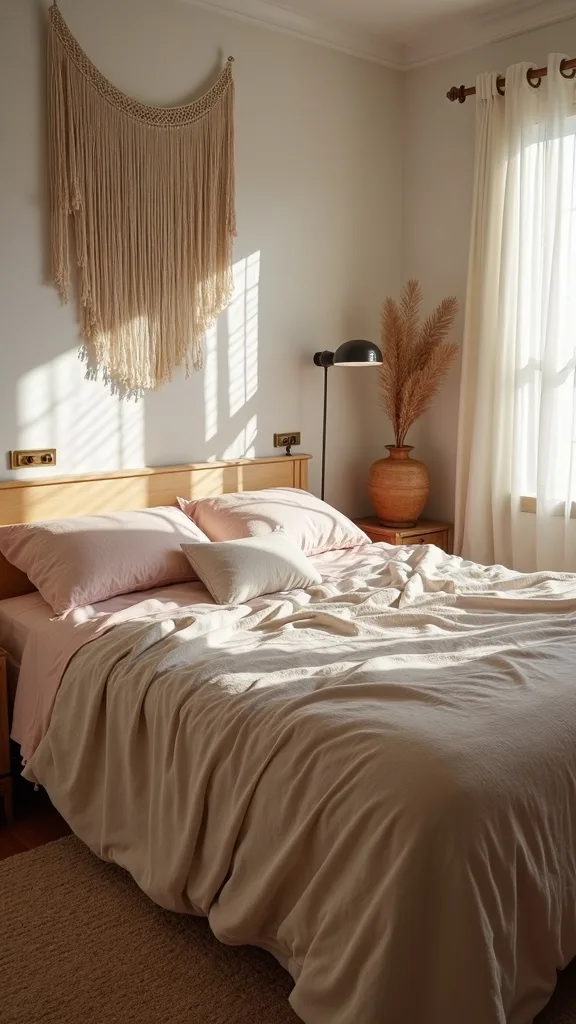
Swap the bulb temperature and suddenly the whole room stops looking like a waiting room. This works because lighting sets the mood faster than any blanket ever could, and it’s one of the lowest-cost upgrades in budget cozy bedroom decor.
Replace harsh bulbs with warm white light (2700K–3000K — the cosy, yellowish tone you see in most homes). If you only have an overhead light, add one bedside lamp or a plug-in wall sconce so light comes from the sides, not straight down. Thrift-store alternative: I’ve paid $7.99 for a solid brass lamp and $3.49 for a shade that just needed a wipe-down. Discount store alternative: Walmart and Target clearance often have basic lamps for $12–$18.
Look for fabric or paper shades, not clear glass, to soften glare. If you need a quick fix, a $9 clip-on shade can rescue an awkward bulb situation.
Pro tip: put lamps on a $7 smart plug or a $6 timer—cozy is easier to maintain when it’s automatic.
3. How do you make a bed look expensive with cheap bedding?
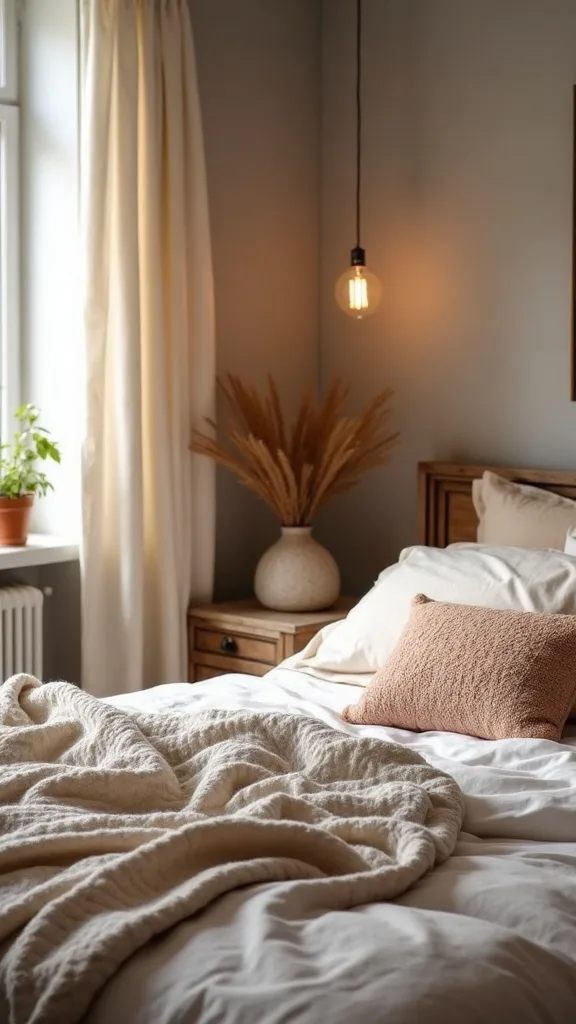
Make the bed look “done” by layering, not by buying a whole matching set. It works because the eye reads height + texture as luxury, even when the pieces are basic.
Start with what you have: smooth your current comforter, then add one thrifted quilt or blanket folded at the foot (I found a heavy cotton quilt for $14.99). Add two sleeping pillows plus two “sitting up” pillows behind them—use whatever inserts you already own and upgrade covers later. Discount alternative: IKEA pillow inserts are usually a better deal than buying new pillows. DIY alternative: sew envelope pillow covers from a $6 flat sheet from the thrift store.
Colors that fake high-end fast: white + oatmeal + one darker accent (charcoal, forest, or terracotta). A wrinkly linen-look cover is forgiving; a shiny microfiber set shows every cheap decision.
Pro tip: iron just the pillowcases and the top 12 inches of the duvet—maximum polish, minimum effort.
4. What size rug actually makes a bedroom feel warmer (without buying a giant one)?
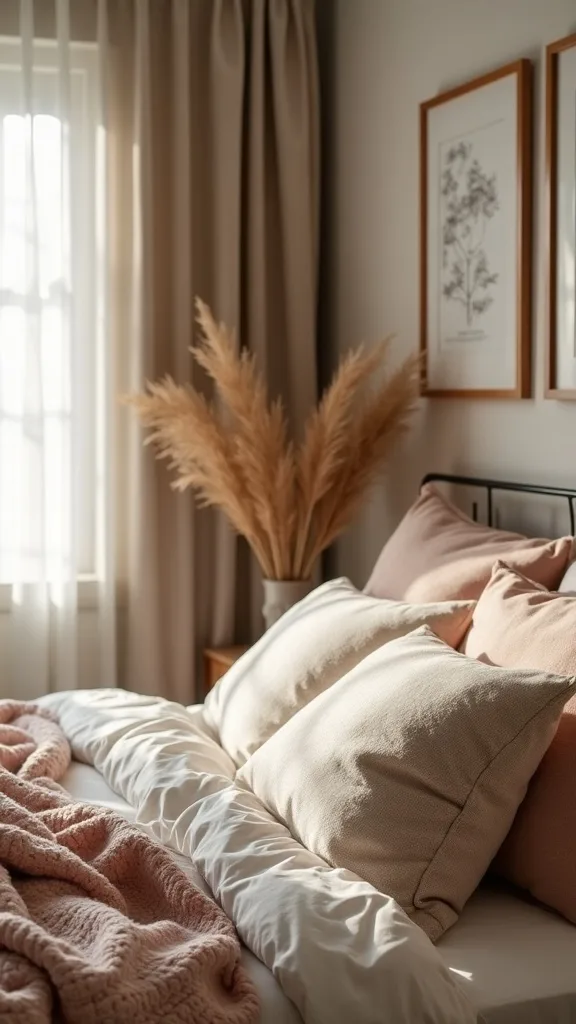
A rug feels cozy when your feet land on it naturally—first step out of bed, not three steps later. This works because a correctly placed rug visually “anchors” the bed and reduces that echo-y, bare-floor feeling.
If you can’t afford an 8′ x 10′, cheat with placement. A 5′ x 7′ can still work if you slide it under the bottom two-thirds of the bed so it shows on both sides. Thrift alternative: check Habitat ReStore or local estate sales—older rugs often have better texture. I once scored a 6′ x 9′ wool-blend for $45 (needed a weekend outside to air out). Discount alternative: HomeGoods-style stores often have 5′ x 7′ rugs in the $60–$99 range. DIY alternative: layer two smaller cotton rugs side by side under the bed for a “custom” look.
Choose low-pile for easy vacuuming, or a washable rug if you’re dealing with pets. Go for muted patterns that hide life.
Pro tip: add a $12 rug pad—cozy is partly the squish.
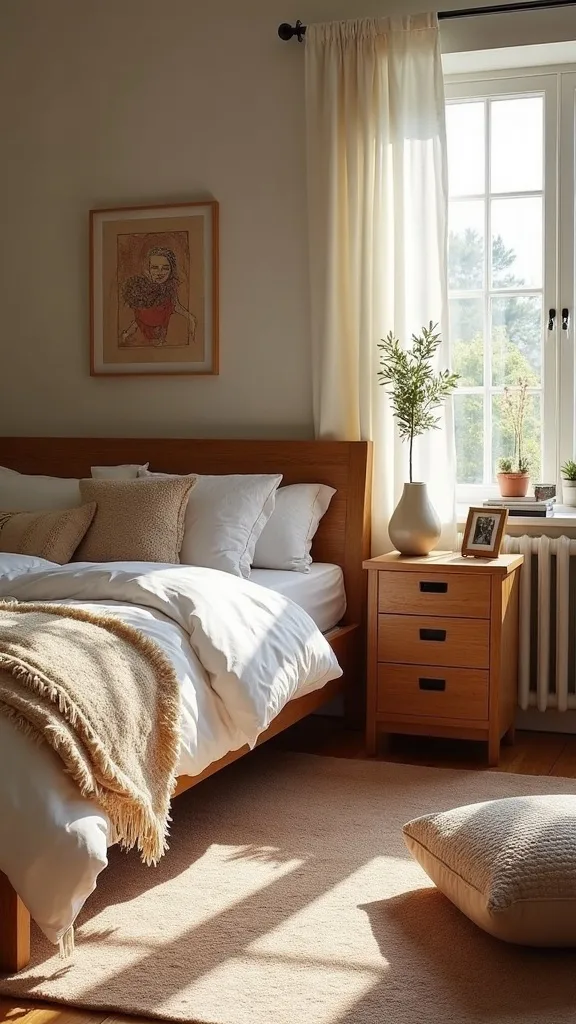
5. How can curtains make a bedroom cozy even if the windows are small?
Hang curtains higher and wider than the window and the whole room looks calmer and taller. It works because fabric adds softness and makes the wall feel finished, even in a small space.
Mount the rod 4–6 inches above the frame (or closer to the ceiling if you can) and extend it 6–10 inches past each side so the panels stack off the glass. Thrift alternative: I buy curtain panels at Goodwill for $6–$12 each, then hem with iron-on tape. Discount alternative: Target and Walmart often have linen-look panels for $18–$25 a pair. DIY alternative: use flat sheets as curtains—two twin sheets can become full-length panels with clip rings.
Pick warm neutrals (ivory, oatmeal, soft gray) or a washed pattern. Avoid stark bright white if your walls are creamy; it can look accidental.
Pro tip: if you can only buy one set now, do the window behind the bed first—it photographs like a full makeover.
6. What should you avoid if you want a cozy bedroom on a tight budget?
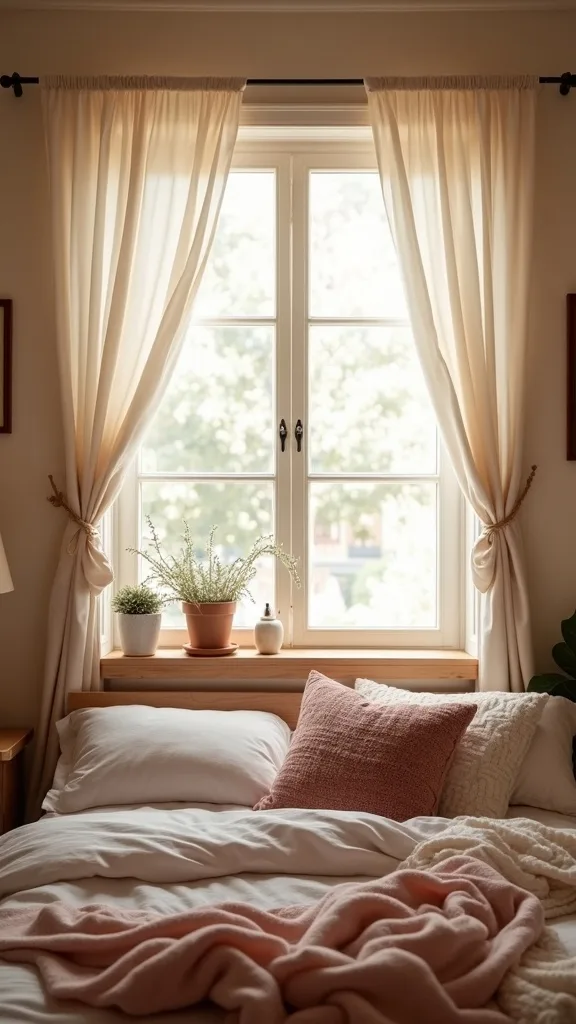
Avoid buying a pile of tiny decor because it’s “on sale.” It works against you because scattered mini-items read as clutter, and clutter is the sworn enemy of cozy.
Instead, pick one “hero” per surface: one lamp on the nightstand, one tray or dish, one book stack or plant. Thrift alternative: a single substantial object—like a $4.99 stoneware bowl for catch-all duty—looks more intentional than five $2 trinkets. Discount alternative: Dollar Tree has decent trays, but upgrade them with spray paint or contact paper so they don’t scream “dollar store.” DIY alternative: make a catch-all from an old saucer + candle holder glued together (instant pedestal dish).
Also avoid cool-toned bulbs and super glossy bedding—both make a bedroom feel colder than it is. Stick to warm light + matte textures.
Pro tip: when you’re tempted by a cheap knickknack, buy a second pillow cover instead. Cozy lives in textiles.
7. How do you style nightstands when yours don’t match (and you can’t replace them)?
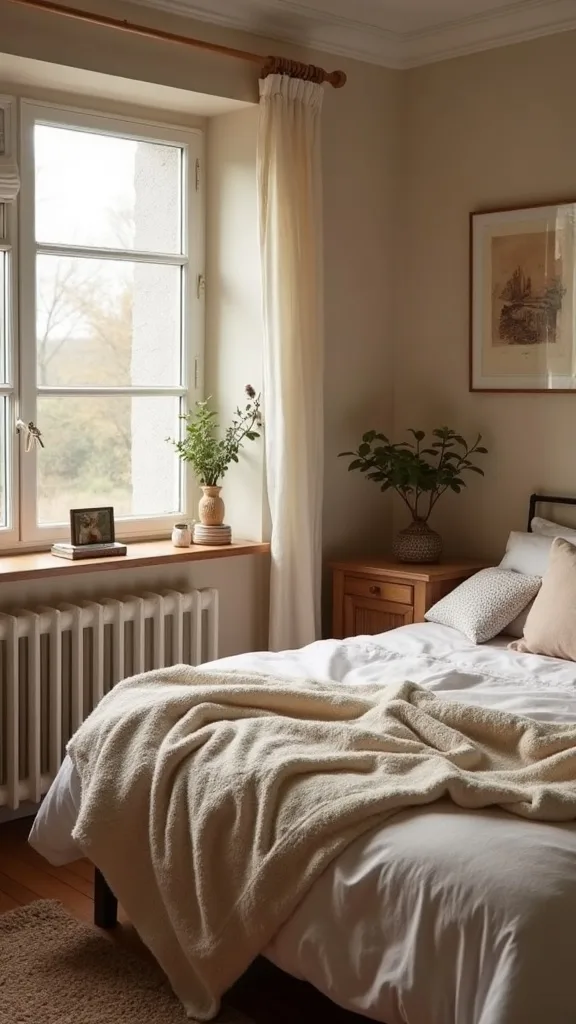
Mismatched nightstands can look collected, not chaotic, if you repeat one element. This works because your brain loves patterns—match the lamps, the hardware color, or the height, and everything calms down.
Keep the tops within 2 inches of each other if possible (stack a couple hardback books under a lamp to cheat). Thrift alternative: hunt for one matching pair of lamps instead of matching furniture—I paid $19.98 for two similar ceramic lamps at a local thrift. Discount alternative: buy two identical lamp shades ($10–$15 each) and suddenly the bases don’t matter as much. DIY alternative: paint both nightstands the same color and swap knobs; a $6 set of black pulls from a salvage bin can do miracles.
Use one tray per nightstand to corral small items. Add a small plant or a candle for softness.
Pro tip: if one nightstand is a dresser and the other is a stool, lean into it—just repeat texture and light to make it feel intentional.
8. How can you create a cozy reading corner in a bedroom without buying a chair?
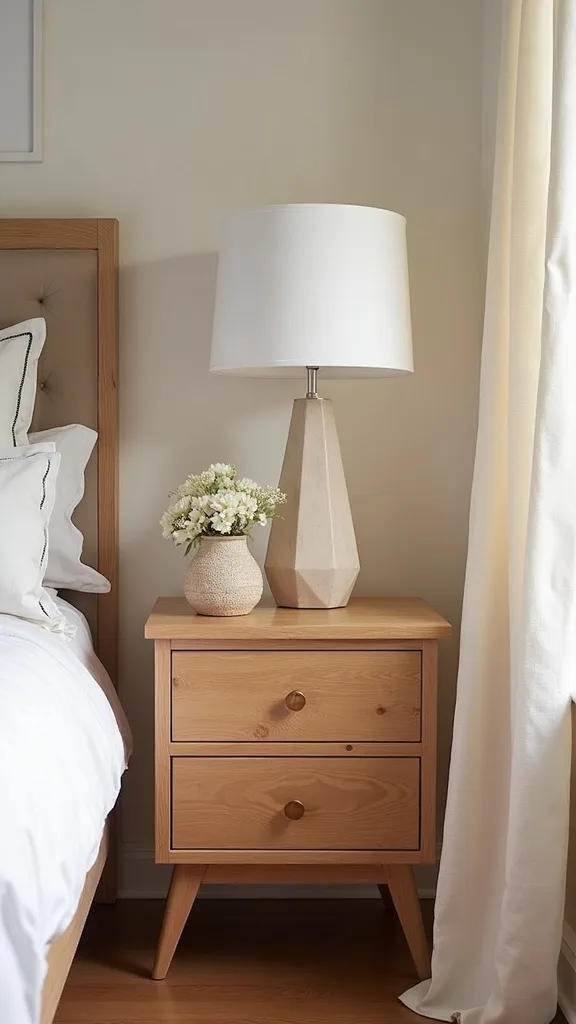
A reading corner doesn’t require a new chair—it requires a defined spot and a light source. This works because “cozy” is often just permission to slow down, and a corner tells your brain where to do that.
Use what you have: pull a dining chair into the bedroom, add a folded throw, and place a small table (or stacked crates) beside it. Thrift alternative: I’ve bought sturdy side tables for $8–$15 that only needed tightening. Discount alternative: a small end table from IKEA is often under $20. DIY alternative: make a side table from an upside-down basket with a round tray on top.
Add a warm lamp or a plug-in sconce so you’re not relying on overhead lighting. Keep a small basket for books and chargers to prevent the corner from becoming a laundry zone.
Pro tip: hang one piece of art at eye level in the corner—one anchoring detail makes it feel like a destination.
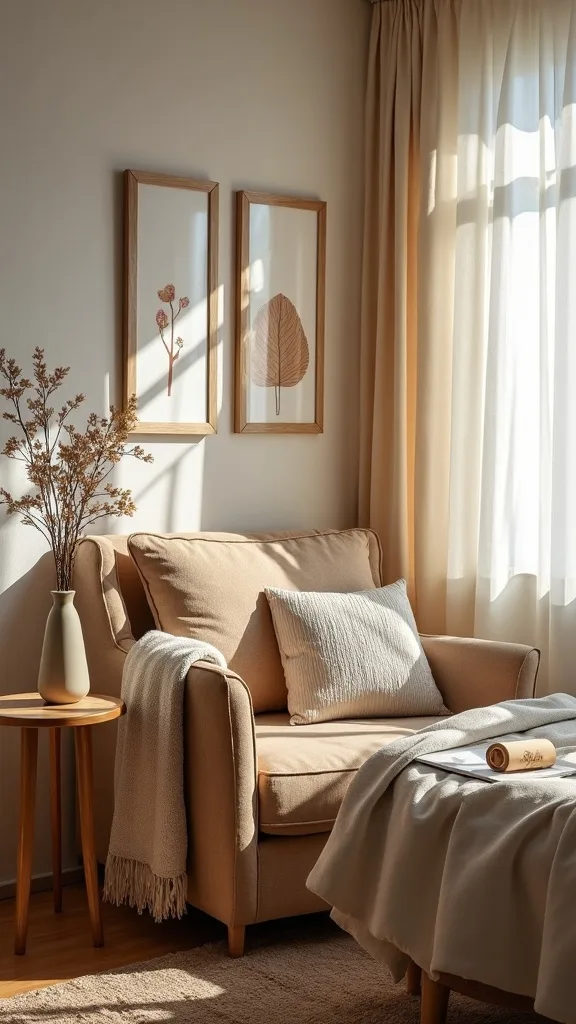
Cost & Materials Estimate
A realistic cozy-bedroom refresh using thrift + DIY + a few Amazon staples typically lands between $120 and $320 depending on what you already own.
| Item | Estimated Cost | Where to Buy |
|---|---|---|
| Warm white LED bulbs (2700K–3000K) | $12–$28 | Amazon |
| Linen-look curtain panels + rod | $35–$75 | IKEA |
| Area rug (5′ x 7′ or similar) | $60–$140 | Wayfair |
| Duvet cover set (queen) | $28–$65 | Amazon |
| Peel-and-stick wallpaper (accent area) | $18–$45 | Home Depot |
Total estimated cost: $153–$353 Save money by thrifting lamps and frames first, then splurge (a little) on the duvet cover because it dominates the room.
9. How do you make thrift-store art look curated instead of random?
Curated art is mostly about framing and repetition, not the price tag. This works because frames create a visual “collection,” even when the prints are wildly different.
Choose a frame color (black, warm wood, or brass) and stick to it for most pieces. Thrift alternative: buy ugly art for the frame—$3–$8 is common—and swap in free printable art or your own photos. Discount alternative: Walmart frames are cheap, but spraying them matte black makes them look less flimsy. DIY alternative: cut mat boards from poster board to make mismatched prints feel intentional.
Keep the palette consistent: landscapes, botanicals, line drawings, or vintage-looking photos. Hang them 6–8 inches above the headboard or dresser for that “designed” spacing.
Pro tip: one oversized piece beats five tiny ones. If you find a big frame, grab it—scale is expensive-looking even when it’s thrifted.
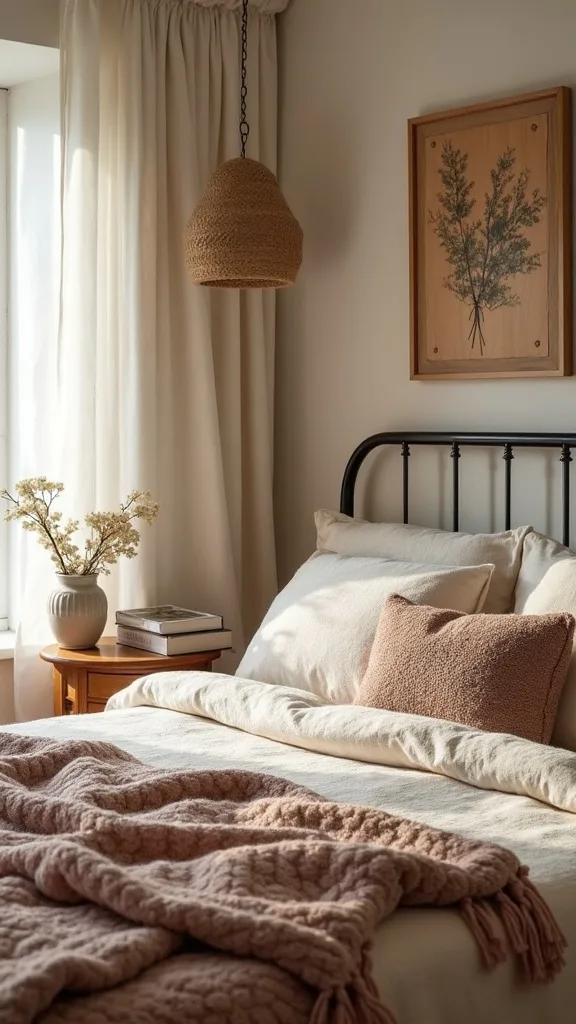
10. What’s the best DIY headboard look if you can’t build anything?
A “soft” headboard effect can be faked with fabric and a curtain rod. This works because it adds a plush vertical plane behind the bed, which instantly reads cozy and finished.
Hang a simple rod above the bed and drape two curtain panels so they puddle slightly behind the pillows. Thrift alternative: use a $10 thrifted rod and $12 panels; I’ve done this in rentals where drilling into studs wasn’t an option (toggle bolts are your friend). Discount alternative: a tension rod can work if the space allows, especially for a nook. DIY alternative: staple a quilt to a thin board and lean it behind the bed—no power tools required if the store cuts wood for you.
Choose textured fabric: linen-look, cotton, or even a woven blanket. Keep colors soft so it feels like a backdrop.
Pro tip: add two wall-mounted reading lights above the “headboard” area for a hotel vibe—cozy can be practical.
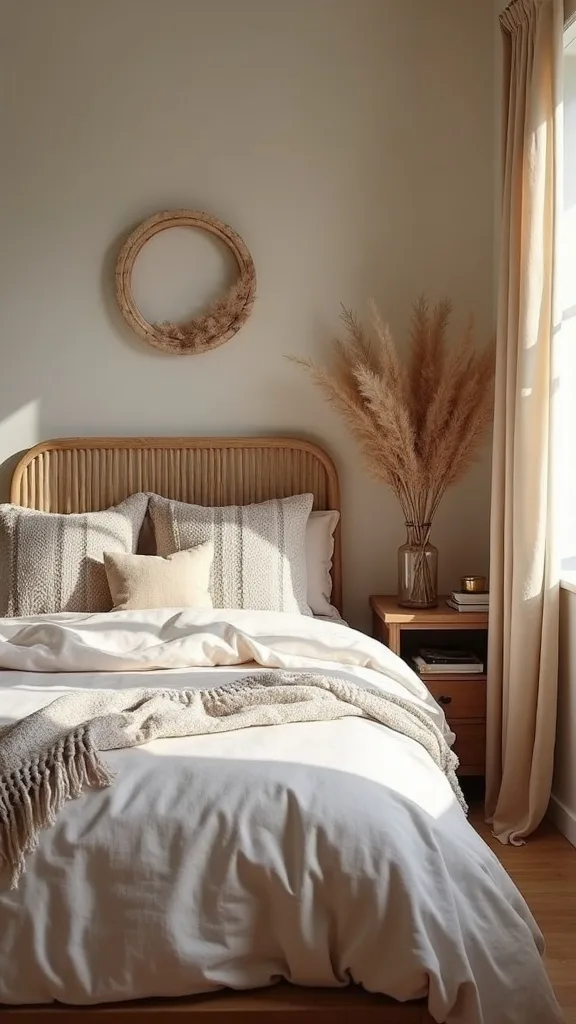
11. How do you make a bedroom smell cozy without expensive candles?
Cozy isn’t just visual—scent is a shortcut to comfort. This works because your brain links smell to memory faster than decor ever will.
Skip the $38 candle habit and go for a simple routine: wash bedding with a lightly scented detergent, then add a budget reed diffuser or essential oil diffuser. Thrift alternative: look for unused candle warmers (I found one for $5) and use inexpensive wax melts. Discount alternative: Aldi candles are often $4–$6 and genuinely strong. DIY alternative: simmer a pot of water with orange peel, cinnamon sticks, and vanilla for 20 minutes before guests—cheap and immediate.
Stick to one scent family (clean linen, vanilla, cedar) so the room feels consistent. Avoid mixing three strong fragrances; it turns into a mall.
Pro tip: store off-season clothes in a bin with a sachet—closets can ruin cozy if they smell stale.
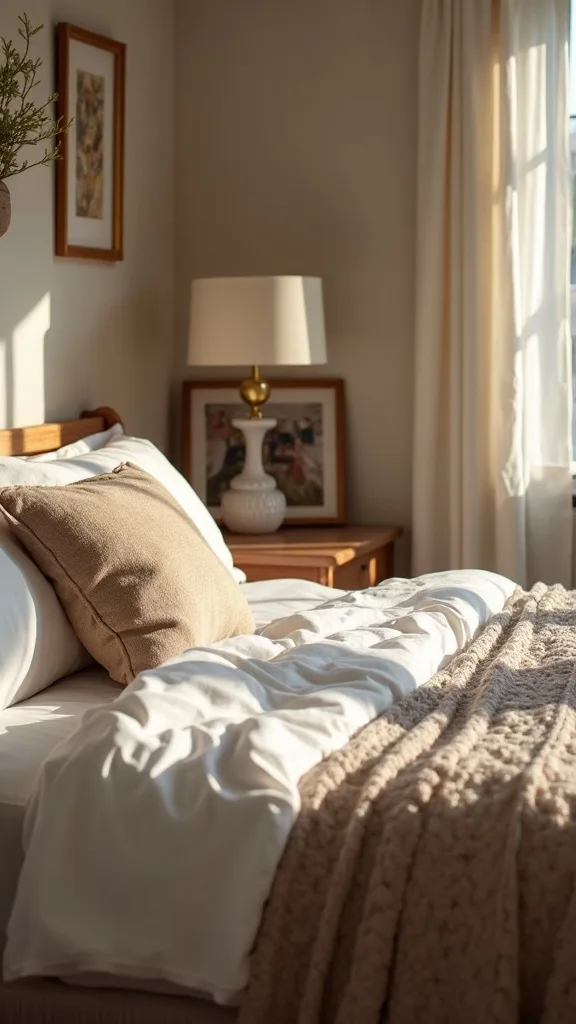
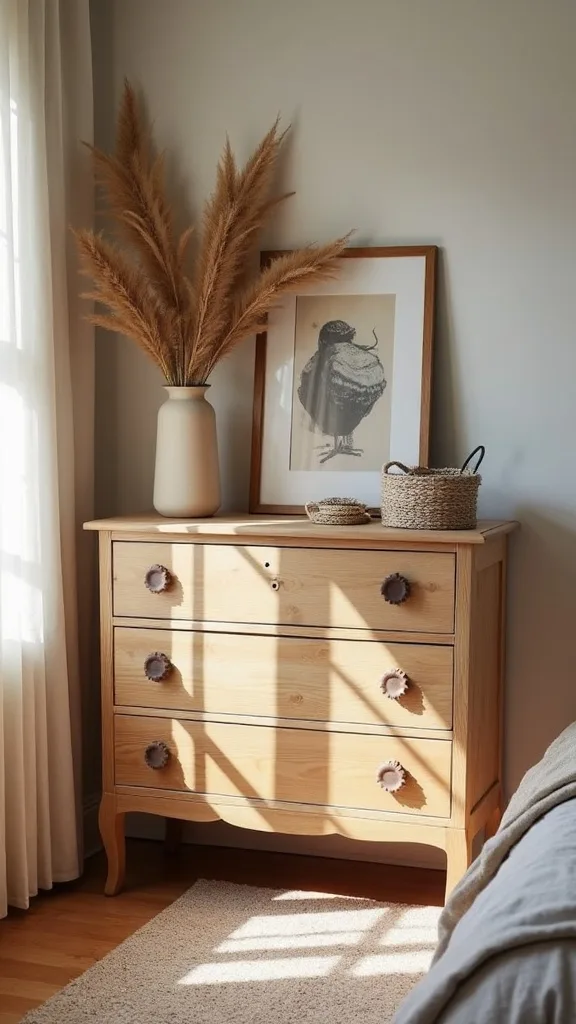
12. How can you upcycle a dresser to look modern-cozy without stripping it?
You don’t need to strip furniture to make it look updated—you need clean lines and fresh hardware. This works because hardware is “jewelry,” and your eye goes there first.
Clean the dresser well, lightly scuff sand glossy spots, then paint with a durable all-in-one furniture paint. Thrift alternative: buy a solid wood dresser on Marketplace (I paid $40 for one with ugly knobs but great bones). Discount alternative: if you’re painting, even a scratched piece is fine as long as drawers glide. DIY alternative: swap knobs for simple black pulls and add peel-and-stick wallpaper inside the drawers for a surprise detail.
Colors that feel cozy-modern: warm white, mushroom taupe, muted green. Keep the top styled with one lamp, one tray, and one personal item.
Pro tip: label your hardware in baggies as you remove it—saving time is part of being budget-smart.
13. What’s the easiest way to make a bedroom feel less cluttered (fast)?
Hide the small stuff. This works because visual noise makes a room feel busy, and busy never reads cozy.
Start with a 10-minute sweep: chargers, lotions, mail, random socks—everything goes into one bin. Then create three “homes”: a catch-all dish on the nightstand, a basket for blankets, and a lidded box for cords. Thrift alternative: I buy baskets for $3–$8 and spray paint them matte black or warm white if they clash. Discount alternative: TJ Maxx/HomeGoods bins can be a bargain, especially in January clearance. DIY alternative: cover shoe boxes in leftover wallpaper or brown craft paper for matching storage.
Keep surfaces at 70% empty. That’s the secret number. Your room will breathe.
Pro tip: if you can’t find a hamper you like, use a tall basket with a washable liner—pretty storage is still storage.
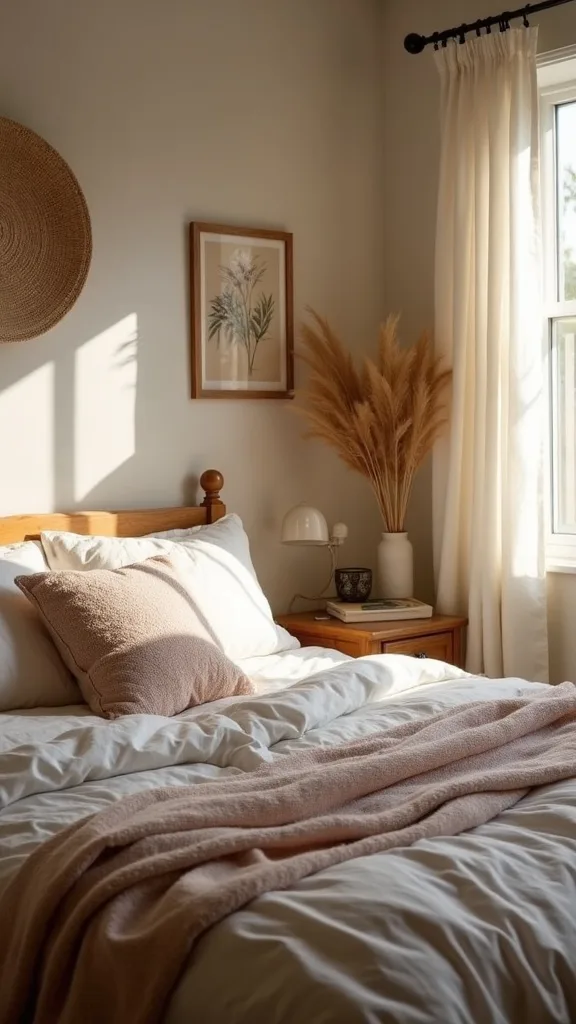
14. How do you add cozy texture to walls without painting the whole room?
One textured wall moment can change the entire bedroom. This works because it adds depth—something flat builder walls don’t have.
Try peel-and-stick wallpaper behind the bed or on the inside of a closet nook. Thrift alternative: look for leftover wallpaper rolls at Habitat ReStore (often $5–$20). Discount alternative: some Dollar Tree patterns are surprisingly usable in small doses—use them inside drawers or on the back of shelves. DIY alternative: create a board-and-batten illusion with thin trim and paint; Home Depot will cut trim to length, and you can attach with adhesive + nails.
Choose subtle patterns: grasscloth look, tiny florals, or thin stripes. Avoid loud high-contrast prints if your goal is calm.
Pro tip: do the wall you see first when you walk in—first impressions are where cozy starts.
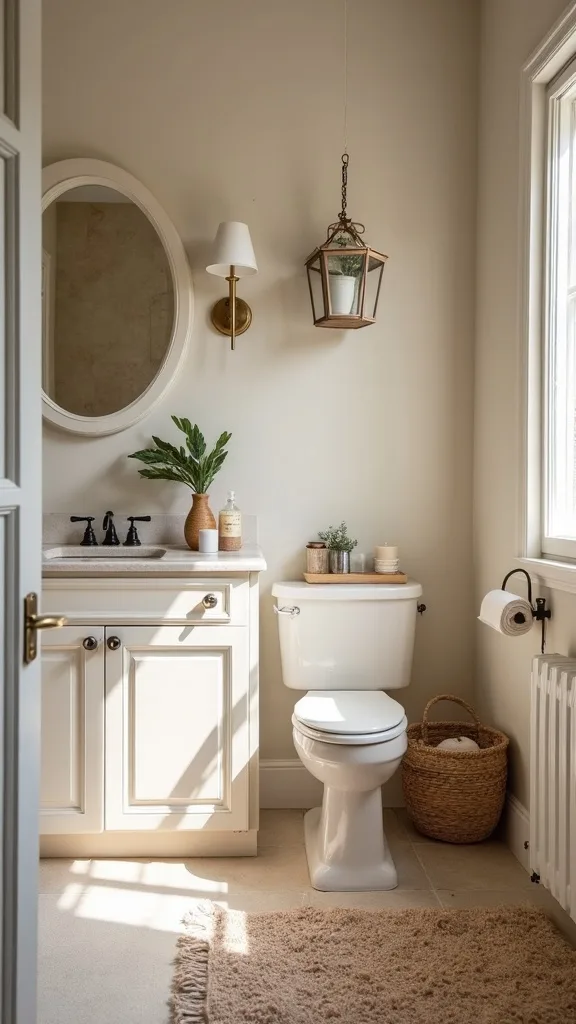
15. How can you make a small bedroom feel cozy, not cramped?
Cozy and cramped are separated by one thing: clear pathways. This works because a small room feels calming when you can move easily, even if it’s packed with personality.
Pull the bed 2–4 inches off the wall so bedding drapes naturally and doesn’t look smashed. Use wall-mounted shelves as nightstands if floor space is tight. Thrift alternative: a small stool or a stack of vintage suitcases can become a nightstand for under $15. Discount alternative: IKEA picture ledges make great slim bedside shelves. DIY alternative: mount two wood brackets and a stained board for a floating nightstand.
Keep your palette tight and your textures varied. Light walls + warm textiles = cozy without shrinking the room.
Pro tip: go vertical—hang curtains high, add a tall mirror, and use soft lighting at different heights.
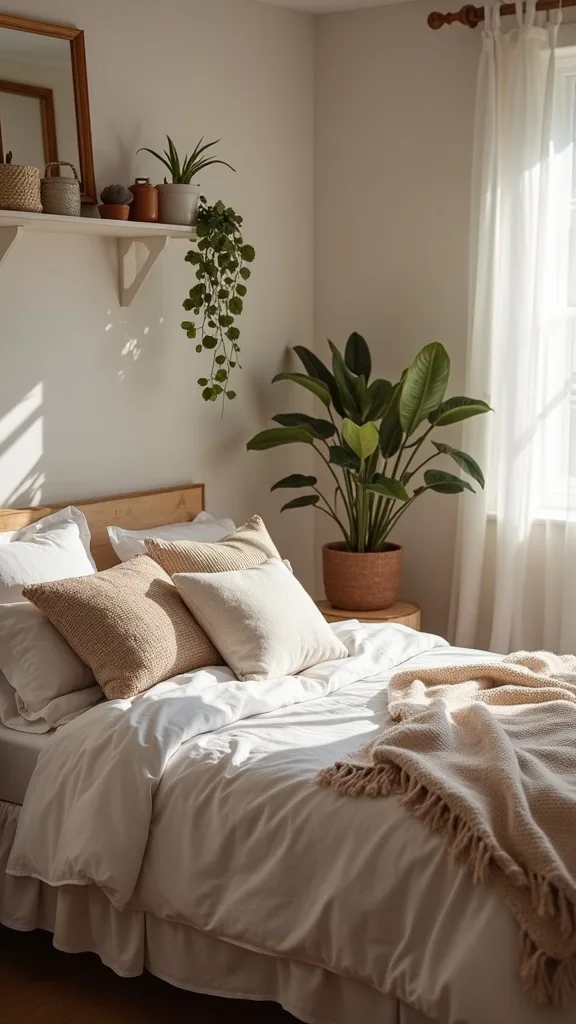
16. How do you make cheap throw pillows look intentional?
Throw pillows look intentional when they’re sized right and not fighting each other. This works because proportion is what makes “budget” disappear.
Use two Euro shams (26″ x 26″) or two 24″ x 24″ pillows behind your sleeping pillows if you like that plush look. Thrift alternative: buy pillow inserts at thrift stores (washable covers only, please) and replace the covers. Discount alternative: buy inserts at IKEA and covers wherever you find a deal. DIY alternative: make covers from a $5 thrifted linen tablecloth—envelope closure, no zipper required.
Stick to three textures: one solid, one subtle pattern, one nubby knit. Keep colors in the same family so it looks calm, not chaotic.
Pro tip: overstuff your covers (one size bigger insert) for that full, cozy look that photographs well.
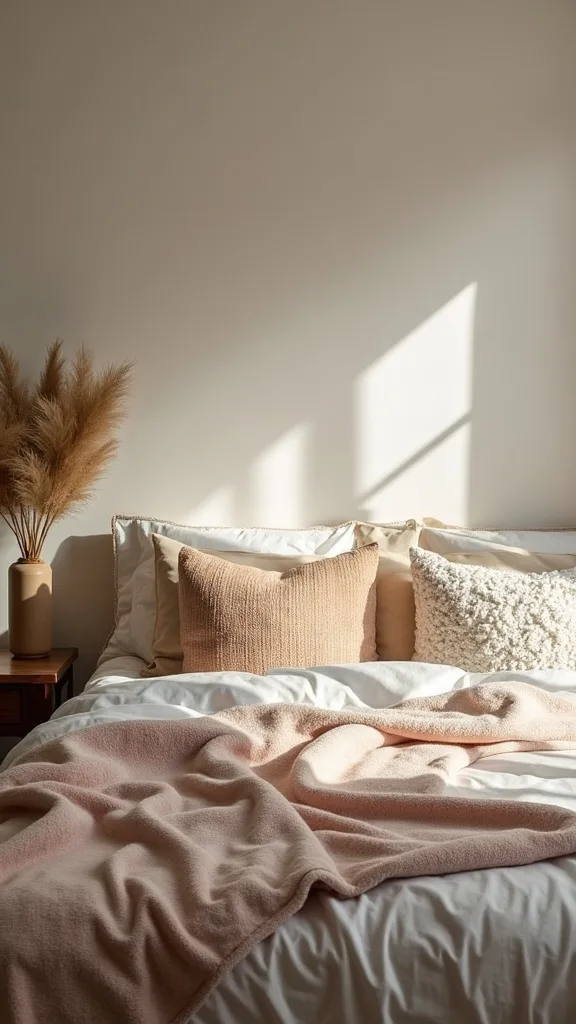
17. How can you DIY a canopy look without buying a canopy bed?
A canopy effect adds softness overhead, which instantly makes a bedroom feel like a retreat. This works because it frames the bed and creates that “nest” feeling without changing furniture.
Use ceiling hooks and sheer curtains, or mount a simple rod above the bed and drape fabric across. Thrift alternative: I’ve used a $9 pair of sheer panels and a thrifted rod—total under $25. Discount alternative: IKEA curtain panels are often the cheapest way to get long lengths. DIY alternative: use muslin yardage (it’s inexpensive) and dye it a warm oatmeal tone for custom color.
Keep the fabric light so the room doesn’t feel heavy. If you hate sheers, try a linen-look panel that still moves softly.
Pro tip: add tiny clip string lights behind the fabric for gentle glow—soft layers make the space feel cared for.
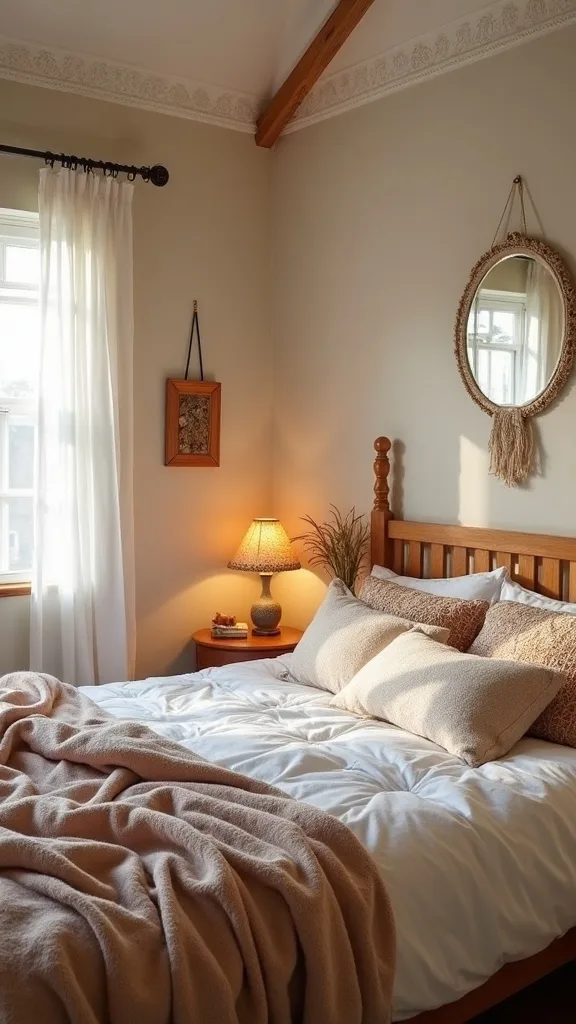
18. How do you use mirrors to make a bedroom feel bigger and cozier?
Mirrors can add light without making the room feel cold—if you place them thoughtfully. This works because they bounce lamp light around and visually expand the space.
Put a mirror opposite a window or near a lamp so it reflects warm light, not the clutter corner. Thrift alternative: look for solid wood or metal frames; I’ve paid $12–$20 for large mirrors with minor scuffs. Discount alternative: Walmart and IKEA have basic mirrors that look better once framed with simple trim. DIY alternative: add peel-and-stick trim to a plain mirror and paint it matte black for a custom look.
Avoid mirrors that reflect the bed head-on if you find it distracting—angle them to catch light instead. Choose warm-toned frames to keep things cozy.
Pro tip: one oversized mirror leaned against a wall looks high-end—just secure it for safety and enjoy the extra glow.
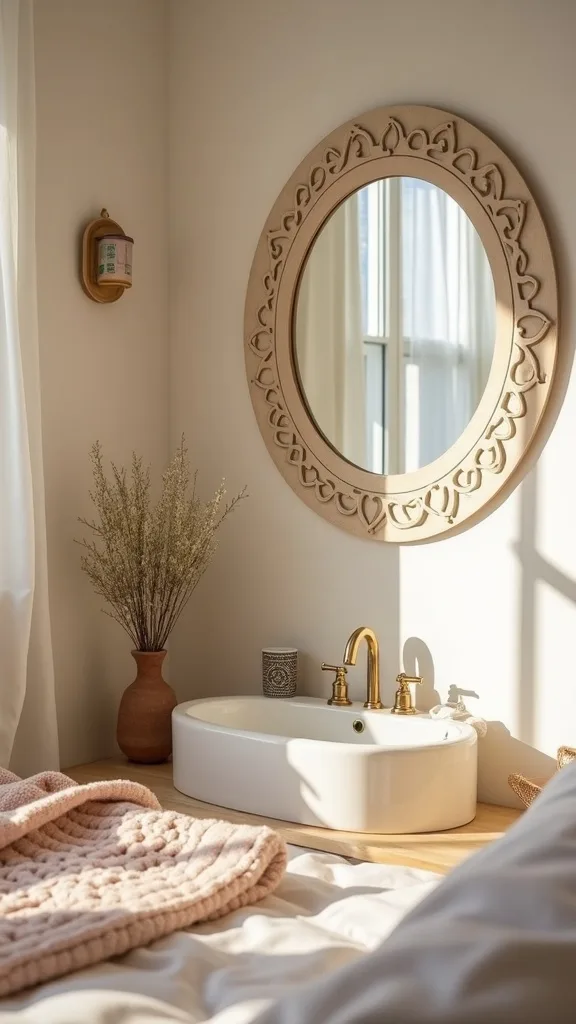
19. How do you make a bedroom look cohesive when everything is secondhand?
Cohesion is a repeat game: repeat colors, shapes, and materials. This works because secondhand pieces feel intentional when they share a “thread.”
Pick two materials to repeat (warm wood + black metal, or oak + brass). Then repeat one color three times: in a pillow, a piece of art, and a small accessory. Thrift alternative: buy mismatched frames and paint them all the same color for $6 worth of paint. Discount alternative: grab matching baskets in one tone to corral chaos. DIY alternative: swap different lamp shades to the same neutral linen-look shade so your lighting matches even if bases don’t.
Keep patterns small and layered—one big pattern plus a few solids is calmer than three loud prints fighting.
Pro tip: take a quick photo in black-and-white; if it still looks balanced, your secondhand mix is working.
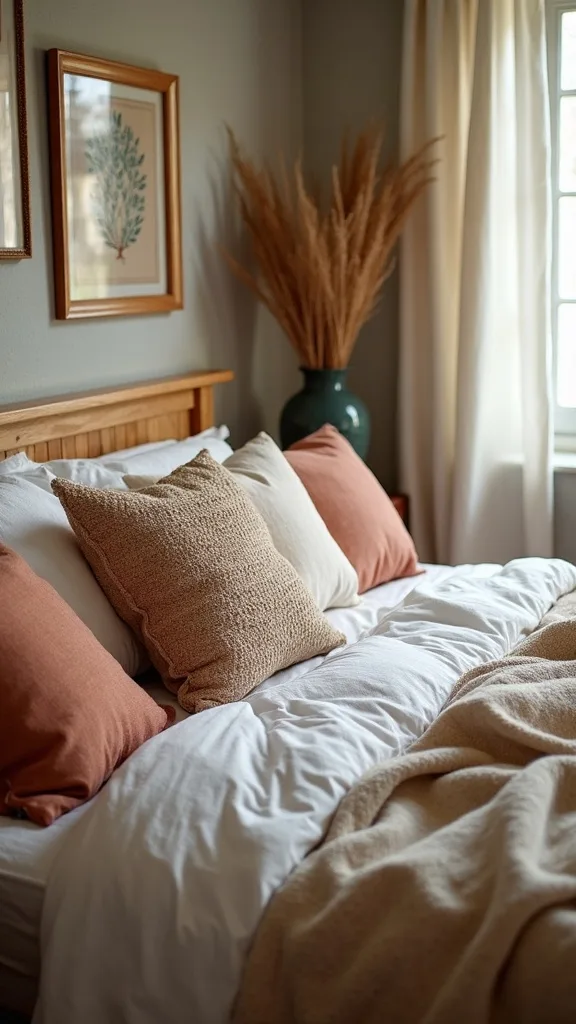
20. How can you add “hotel cozy” with only one Amazon purchase?
If you buy only one thing, buy a duvet cover that looks and feels substantial. This works because the bed is the largest visual object in the room—upgrade that, and everything levels up.
Choose a linen-look or washed microfiber duvet cover in a warm neutral, then stuff it with your existing comforter if you don’t have a duvet insert. Thrift alternative: use a thrifted cotton duvet cover (wash hot, line dry if possible) and add new ties inside. Discount alternative: IKEA duvet covers are often reliable and simple. DIY alternative: sew duvet ties into the corners of your current comforter to stop shifting.
Look for hidden button closures and a matte finish. Skip anything shiny—it reads cheap under warm light.
Pro tip: add a second pillowcase set in a slightly different tone for that layered hotel look without buying more pillows.
21. How do you create a cozy color palette without repainting the whole room?
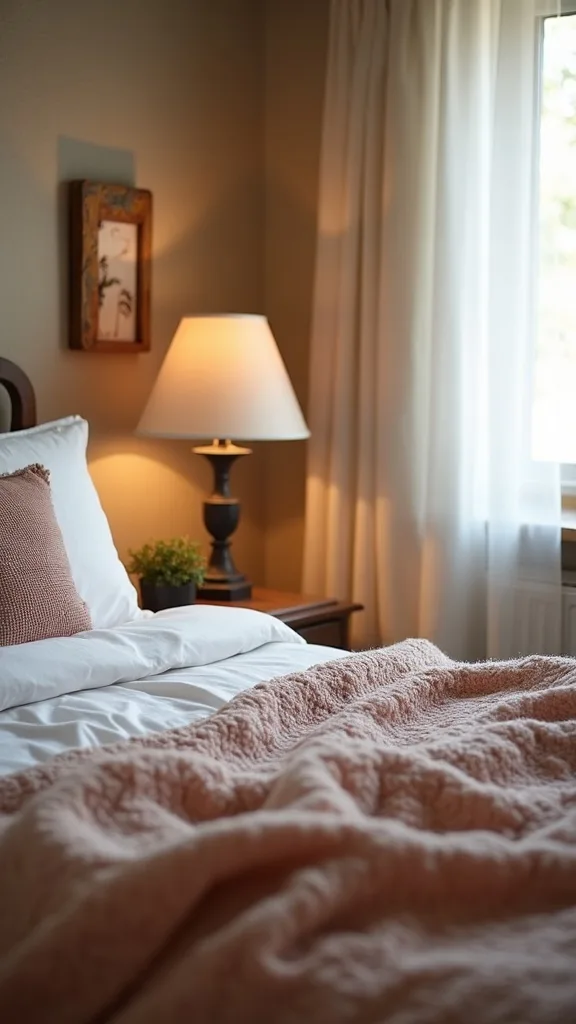
You can “repaint” a room with textiles and art. This works because your eye reads the dominant surfaces (bed + windows + rug) as the room’s color, even if the walls stay the same.
Pick one anchor neutral (oatmeal, warm gray, cream) and one accent (rust, olive, navy). Bring the neutral in through curtains and bedding, then sprinkle the accent in a throw and one art piece. Thrift alternative: scarves and table runners make great layered throws. Discount alternative: grab pillow covers in your accent shade during seasonal clearance. DIY alternative: dye an old cotton blanket with a warm-toned fabric dye for a custom accent.
Avoid icy grays with warm lighting—they can turn muddy. If your walls are cool, balance with warm wood frames and brass accents.
Pro tip: keep your palette to 3–4 colors total; cozy is edited.
22. How can you make cheap furniture feel softer and more ‘bedroom’?
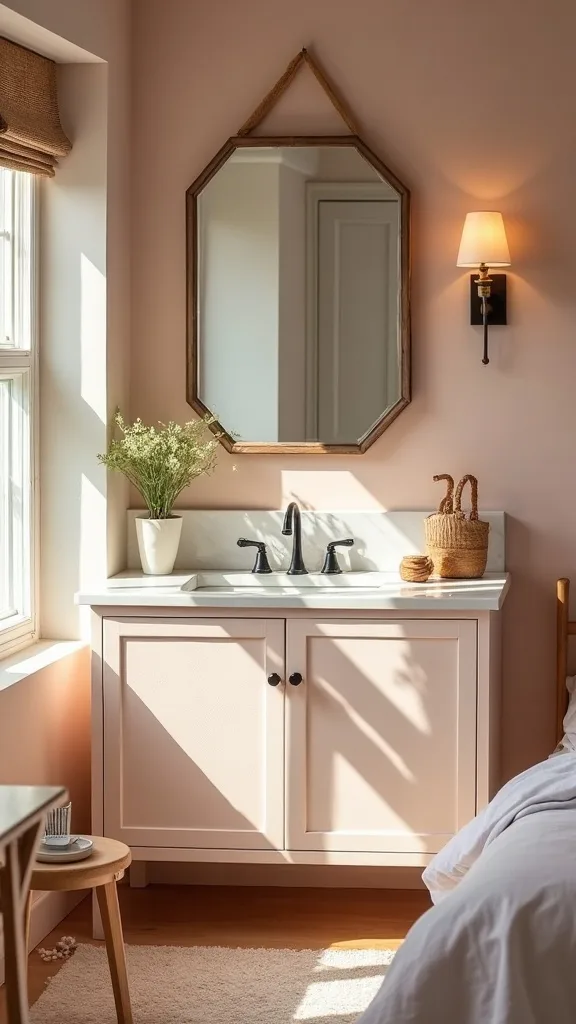
Bedrooms feel cozy when the hard edges are balanced with soft forms. This works because too much flat-pack geometry can feel harsh, even if it’s practical.
Add softness where it counts: a table lamp with a fabric shade, a runner on top of a dresser, a basket beside the bed, and a throw draped (not folded perfectly). Thrift alternative: I’ve found thick woven runners for $4–$9 that instantly warm up a dresser. Discount alternative: look for boucle or knit throws on clearance—texture matters more than brand. DIY alternative: wrap a plain lampshade with linen fabric using spray adhesive for a custom look.
Stick to rounded accessories: a round tray, a curved vase, a soft-edged mirror. It counteracts boxy furniture.
Pro tip: one nubby texture (boucle, knit, woven) changes the entire vibe—add it and the room relaxes.
23. How do you hide an ugly closet area in a bedroom makeover?
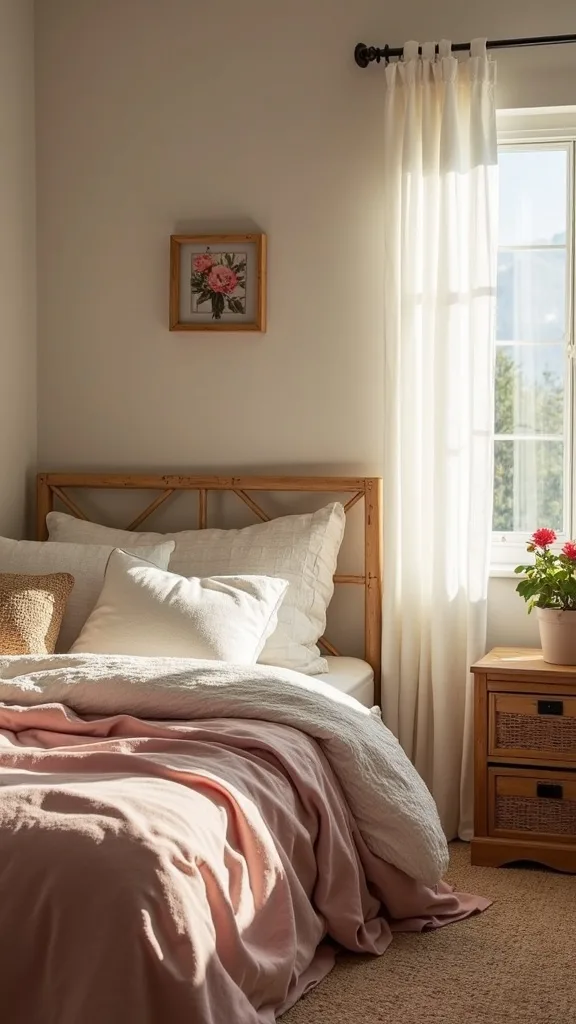
An ugly closet can sabotage the whole room because it’s visual chaos on demand. This works because “cozy” relies on what you don’t see as much as what you do.
If you have no door, hang a curtain on a tension rod or ceiling track. Thrift alternative: use a heavy curtain panel for $10–$15; it looks more intentional than a thin sheet. Discount alternative: Walmart blackout curtains are budget-friendly and hide mess well. DIY alternative: install a simple curtain wire and clip on fabric panels—easy and renter-friendly.
Inside the closet, switch to matching hangers (even cheap black velvet ones) and add one top shelf bin for random items. Avoid clear bins if you’re hiding chaos; opaque is kinder.
Pro tip: put a small stick-on light inside the closet—seeing what you own prevents the “pile on the chair” problem.
24. What’s a realistic one-day bedroom refresh plan (with a budget cap)?
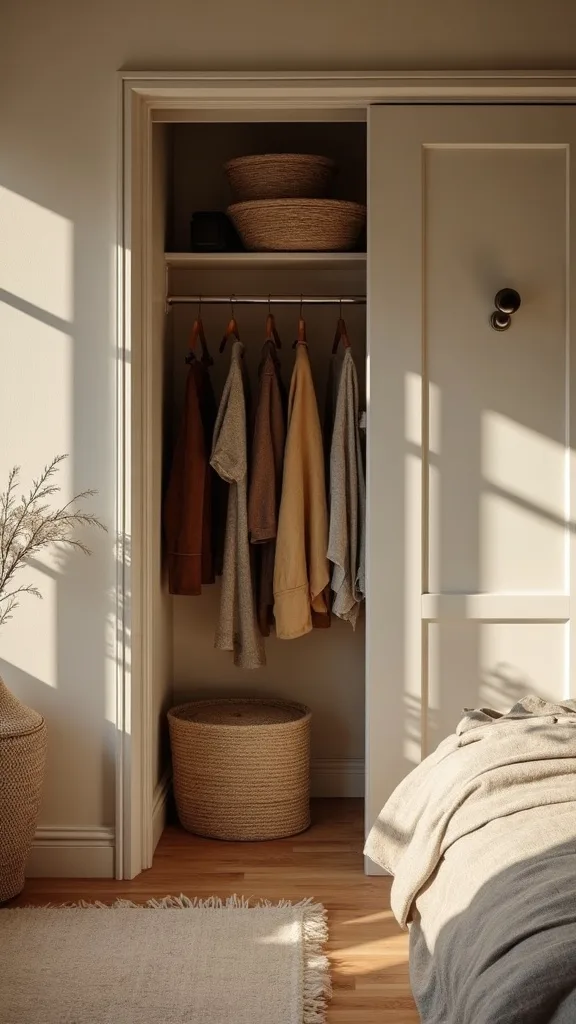
One-day refreshes work when you limit the scope to impact zones. This works because finishing beats perfect—especially when you’re working with a real life schedule.
Morning: declutter surfaces and floors (30 minutes), then swap bulbs to warm white light (2700K–3000K — the cosy, yellowish tone you see in most homes). Midday: make the bed like a display—add one throw and two extra pillows. Afternoon: hang curtains higher, then style nightstands with one lamp + one catch-all. Thrift alternative: do a quick Goodwill run for a lamp and a basket (I’ve done this for under $20). Discount alternative: grab curtain panels and a rod from Target/Walmart clearance. DIY alternative: paint one frame color and swap art into it.
Cap it at $75 for the day and write it down before you start. Spending without a plan is how budget projects get weird.
Pro tip: end by taking an after photo from the same angle—proof of progress keeps you going.
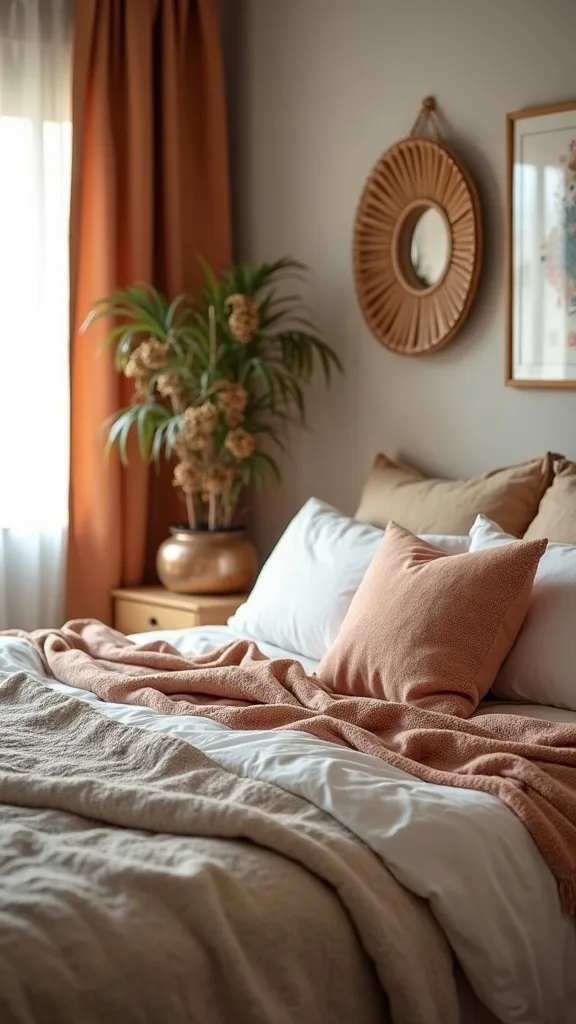
25. How do you make it Pinterest-worthy in 2026 without buying trendy junk?
Pinterest-worthy in 2026 is less “new stuff,” more “collected calm.” This works because trends are leaning toward warm minimalism: texture, soft contrast, and personal objects with a story.
Choose one trend to nod to: a boucle pillow, a wavy mirror, a vintage landscape print, or a warm wood frame gallery. Thrift alternative: shop estate sales for real wood frames and brass lamps—those pieces outlive trends. Discount alternative: buy one trendy item (like a wavy mirror) and keep everything else classic. DIY alternative: paint a thrift frame, print a public-domain artwork, and suddenly you have the look for under $10.
Avoid buying five trend items at once; that’s how a room dates itself fast. Let one piece be the “now” and let the rest be timeless.
Pro tip: the most Pinterest thing you can do is edit ruthlessly—cozy isn’t crowded, it’s intentional.
Final Thoughts
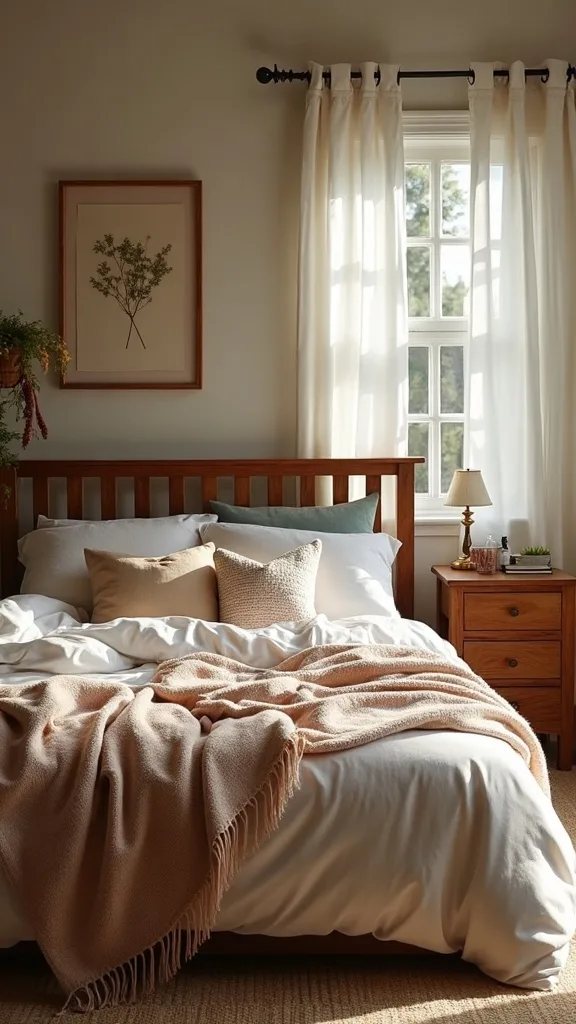
A cozy bedroom on a budget isn’t about settling. It’s about choosing the upgrades that do the heavy lifting—warm light, soft layers, and one or two big “anchors” like curtains or a rug—then letting thrifted character fill in the rest.
If you only remember one rule, make it this: fix lighting before you buy more decor. The moment the room glows instead of glares, your secondhand finds start looking curated instead of random.
My last real-world refresh (lamp $7.99, shade $3.49, thrift quilt $14.99, curtain panels $24, hardware $6, warm bulbs $16, rug $45, odds-and-ends storage $18.87) landed at $187.34 total. Today, set a $25 cap and do one thing: swap to warm white bulbs and add one bedside lamp—then take the same “before” photo angle tonight to see how fast cozy shows up.
What I’d Do Differently
When I first tried this, I made the classic mistake: I spent my whole budget on “cute” little decor before I fixed the lighting. I had a basket, a candle, two throw pillows, and a tiny mirror… and the room still felt weirdly cold because the overhead bulb was a harsh bluish white. The worst part? Every photo looked gray and flat, like the room was tired. The correct approach is boring but powerful: change the bulbs to warm white light (2700K–3000K — the cosy, yellowish tone you see in most homes), then add one lamp so the light comes from the side. Once the light was right, even my thrifted $14 quilt looked intentional.
I also wish I’d measured before thrifting. I once dragged home a gorgeous 5′ x 7′ rug… for a room that needed an 8′ x 10′ to reach past the nightstands, so it looked like a bath mat under the bed. Now I keep a tape measure in my bag and a note on my phone with the bed size, ideal rug size, and curtain length. Pick your lighting upgrade and one textile today, and you’ll feel the room shift immediately—start small and finish strong.