

This post contains affiliate links. As an Amazon Associate, I earn from qualifying purchases at no extra cost to you.
Early fall always sneaks in through the living room first—the afternoon light tilts honey-gold, the air feels cleaner, and suddenly your sofa looks a little too “summer.” That’s when a window seat starts to feel less like décor and more like a lifestyle choice: a place to disappear for 20 minutes that somehow resets the whole day.
This guide covers a living-room-friendly window seat nook setup (including a bay window bench with lift-lid storage), plus styling moves that make it look collected rather than “installed.” You’ll get layout cues, material notes, and the kind of small decisions—shade style, shelf spacing, lamp height—that turn a corner into a destination.
It’s perfect for anyone who wants a cozy reading room vibe without sacrificing the living room’s grown-up feel (or its storage).
Inside, you’ll find built-ins that feel architectural, renter-friendly workarounds, and a few quiet-luxury touches—like Roman shades that drape just right and shelves that frame the view like art. There’s also what to avoid, because the wrong cushion or lighting can flatten the mood fast.
Below are 25 Cozy Reading Room & Window Seat Nook Ideas that bring reading nook ideas to life with texture, light, and the kind of comfort you actually use.
Products I Recommend for This Project
Here are some of my favourite products to help you bring these ideas to life:
- LEVOIT Classic 300S Ultrasonic Smart Humidifier — Adds that quiet, breathable comfort that makes a cozy reading room feel extra luxe in early fall.
- Philips LED A19 Soft White Dimmable Bulbs (60W Equivalent) — The easiest upgrade for warm white light (2700K–3000K — the cosy, yellowish tone you see in most homes) without changing fixtures.
- Lutron Caseta Wireless Smart Lighting Dimmer Switch Starter Kit — Lets you soften the nook lighting instantly so evenings feel calm instead of harsh.
- VASAGLE Ladder Shelf Bookcase — A space-saving way to add vertical book storage when you can’t do full built-ins.
- MIULEE Linen Textured Throw Pillow Covers (20×20) — Brings that relaxed, slightly rumpled texture that looks collected, not overly styled.
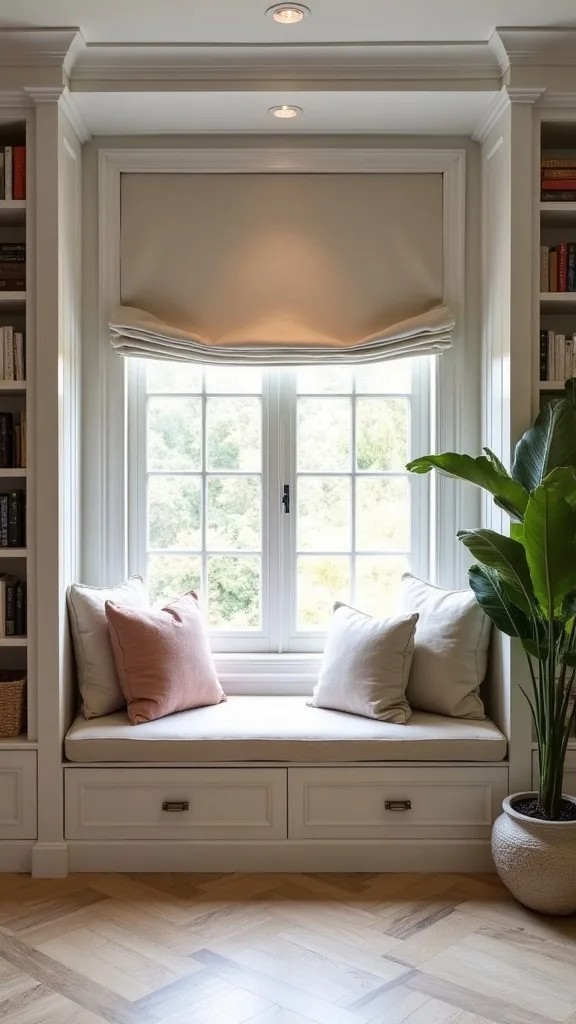
1. Bay Window Bench + Lift-Lid Storage + Roman Shade + Bookcase Flanks
This is the classic that never looks try-hard: a bay window bench with hidden storage, a Roman shade that softens the light, and floor-to-ceiling bookshelves on both sides that make the whole wall feel intentional. It works because it reads like architecture, not furniture—your living room instantly gets a “library” moment without losing its warmth.
Implement it by building (or buying) a bench base that’s 18–20 inches deep so it’s loungeable, then add lift-lid hinges for blankets and board games. Keep the shelves 10–12 inches deep for standard books, and leave a 2–3 inch reveal between bench and shelf for breathing room. Install a linen or linen-blend Roman shade that stacks neatly—no bulky folds.
Go for oak veneer or painted cabinetry in a soft warm white, with a cushion in performance bouclé that feels plush but doesn’t pill. Add aged brass hardware for that quiet glow.
Pro tip: run a tiny picture light over one shelf bay—suddenly the whole nook feels curated, like a room inside a room.
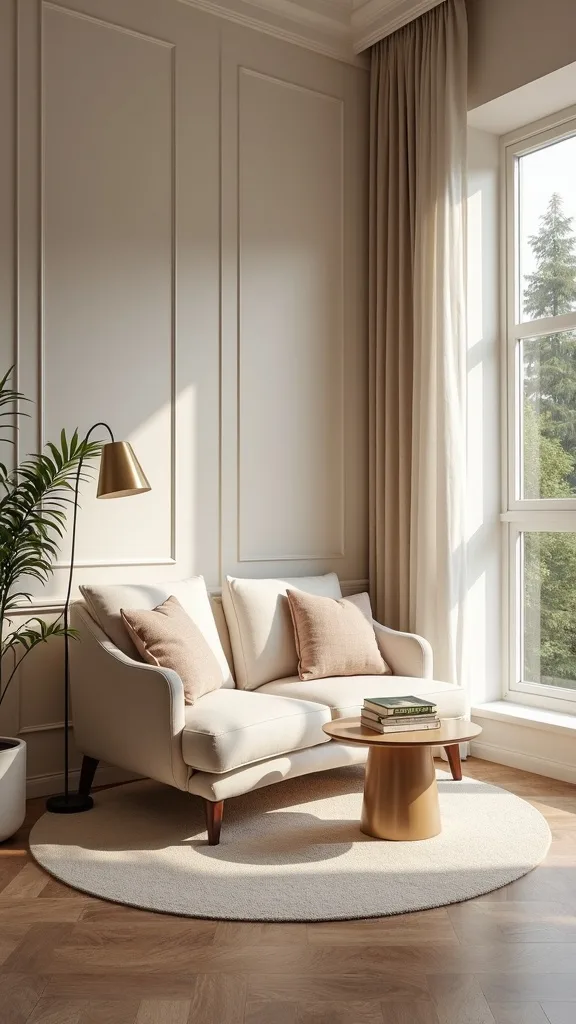
2. The “One Perfect Lamp” Rule for a Softer Book Nook Living Room
If your living room lighting is all overhead, your nook will always feel like a waiting area. One dedicated lamp fixes that. It works because the pool of light creates a boundary—your brain registers it as a place to settle.
Place a floor lamp just behind the bench corner or beside an accent chair, with the shade bottom around eye level when seated so the light lands on pages, not your face. Choose a bulb in warm white light (2700K–3000K — the cosy, yellowish tone you see in most homes) and aim for enough brightness (measured in lumens) that you’re not squinting—800–1100 lumens is a sweet spot for reading.
Look for a linen drum shade, a patinated brass stem, or a matte black arc that feels slightly sculptural. This is where vintage shines—mid-century lamps from estate sales often have the best proportions.
Upgrade move: add a dimmer plug so the nook shifts from “read” to “linger” without changing a thing.
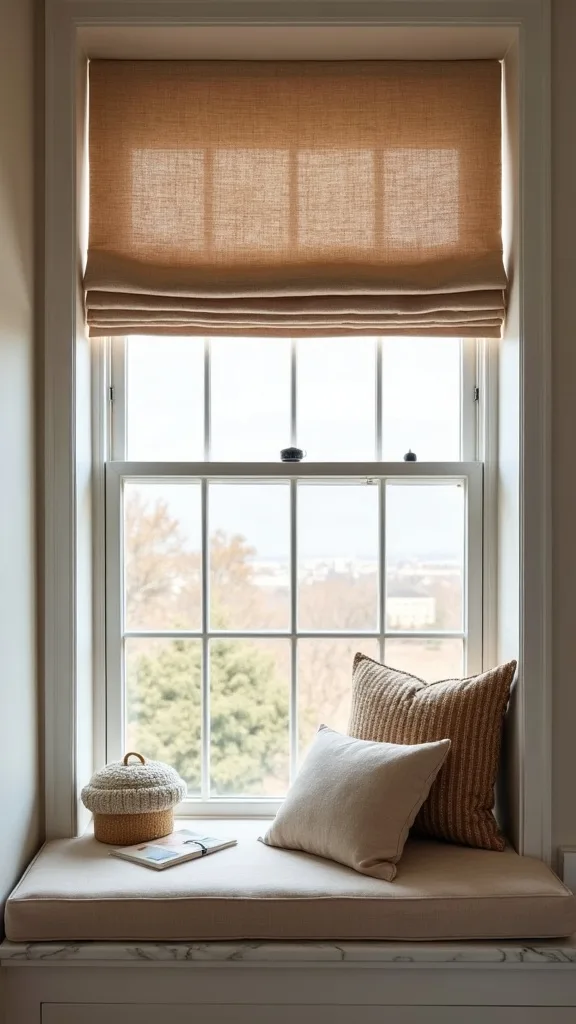
3. Roman Shade Styling That Doesn’t Fight the View
A Roman shade is the most grown-up window treatment for a nook because it drapes like tailored clothing—soft, but controlled. It works especially well in early fall when you want the light filtered, not blocked.
Mount it high and wide so the shade clears the glass when raised; inside-mount looks clean, but an outside-mount can make a small window feel taller. Choose a cordless style for a smoother front and a calmer look. If you’re doing a bay, consider separate shades for each panel so they stack evenly.
Materials matter: washed linen looks relaxed and ages beautifully, while a linen-cotton blend holds its folds more crisply. In a book nook living room, a warm oat, foggy flax, or soft clay reads sophisticated without going beige.
Pro tip: avoid high-contrast patterns right at eye level—your books and textiles already bring texture, and the view deserves to stay the star.
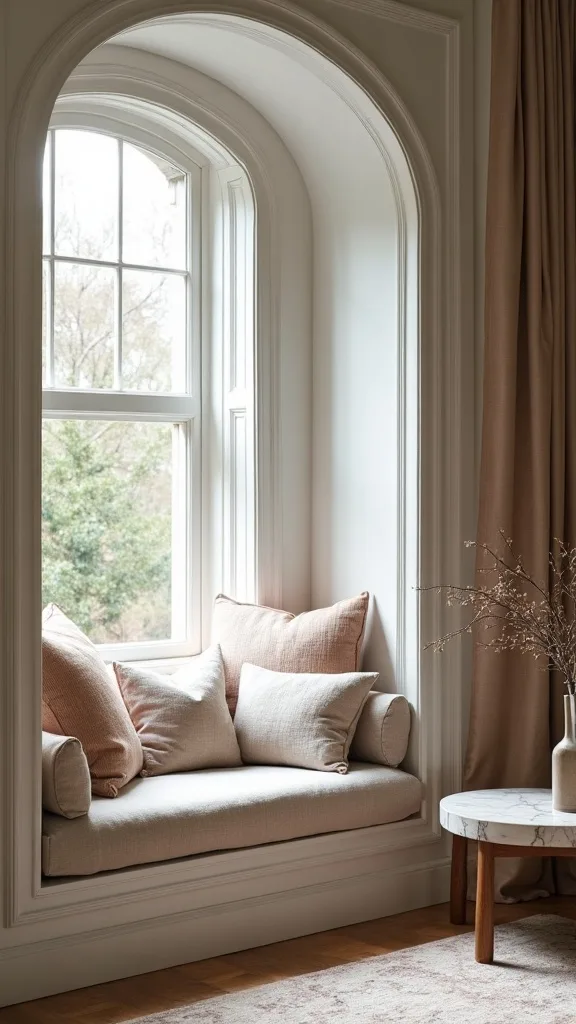
4. How Deep Should a Window Seat Nook Be to Actually Feel Comfortable?
The difference between a “cute bench” and a window seat you actually use is depth. Comfort wins every time. A window seat nook works when you can tuck a leg under you, lean back, and not feel perched.
Aim for 18–20 inches deep for the seat, then add a back cushion or a couple of oversized pillows to make it feel like a daybed moment. If your bay is shallow, cheat it by adding a 2–3 inch thick cushion with a slight overhang—visually it reads deeper, and physically it helps.
Upholstery should feel touchable: brushed cotton canvas, performance velvet that looks matte, or a nubby bouclé that invites a sweater. Keep the cushion in one solid color so the books and wood grain can do their layered thing.
Upgrade suggestion: add a slim brass rail or a ledge behind the cushion for a hidden charging spot—modern life, quietly handled.
5. Built-In Reading Nook Shelves That Don’t Look Like a Storage Unit
A built in reading nook can go from “custom” to “cluttered” fast if the shelves are overstuffed. The secret is negative space—breathing room that makes everything feel more expensive.
Keep shelf spacing flexible if you can, but plan for a mix: a few tall bays for art books, some medium shelves for novels, and one lower shelf for baskets. Style in loose groups and leave at least 20–30% of each shelf open. Anchor with a couple of horizontal stacks, then add one object with a different sheen—ceramic, brass, or smoked glass.
Choose shelves in painted wood or white oak for that California-clean look, and add soft backlighting if you want a nighttime glow.
Pro tip: avoid tiny knickknacks everywhere. One larger vintage bowl from a flea market reads intentional; ten small things read like dusting.
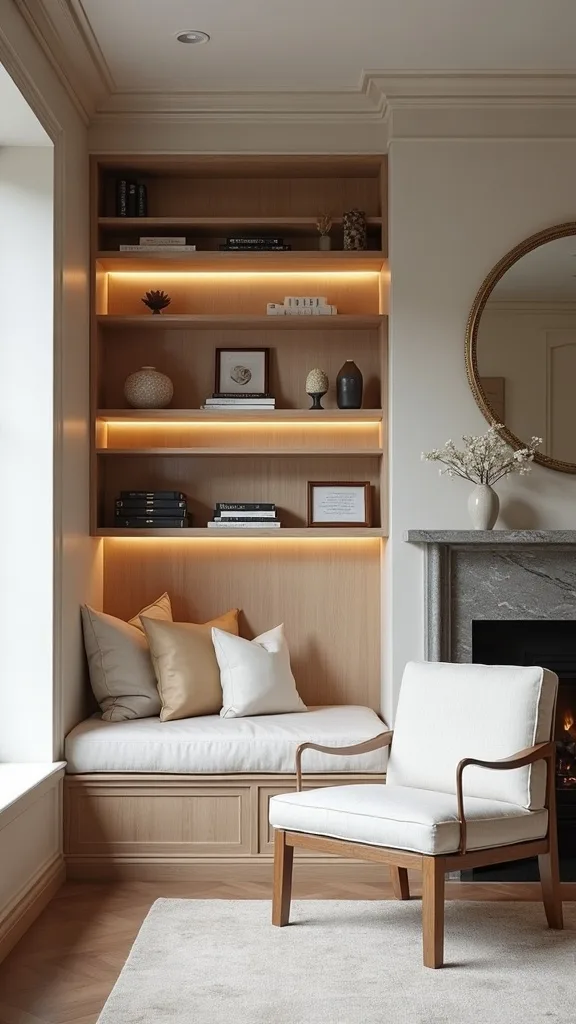
6. Renter-Friendly “Built-In” Look Using IKEA Cabinets + Trim
You can fake a built in reading nook without touching studs, and it still feels elevated. The trick is making the pieces look like they belong to the house, not the store.
Use two low cabinet bases (like 30–36 inch wide units) under the window to create a bench line, then add a thick wood top or painted MDF for a seamless surface. Flank the window with tall bookcases, then use simple trim to close gaps to the wall and ceiling. Paint everything the same color so it reads monolithic.
Go for matte paint in a warm white or soft mushroom; it hides imperfections and feels calmer than glossy finishes. Add a tailored cushion and a Roman shade to finish the illusion.
Upgrade move: swap in aged brass pulls. Hardware is jewelry—quiet, but it changes the whole outfit.
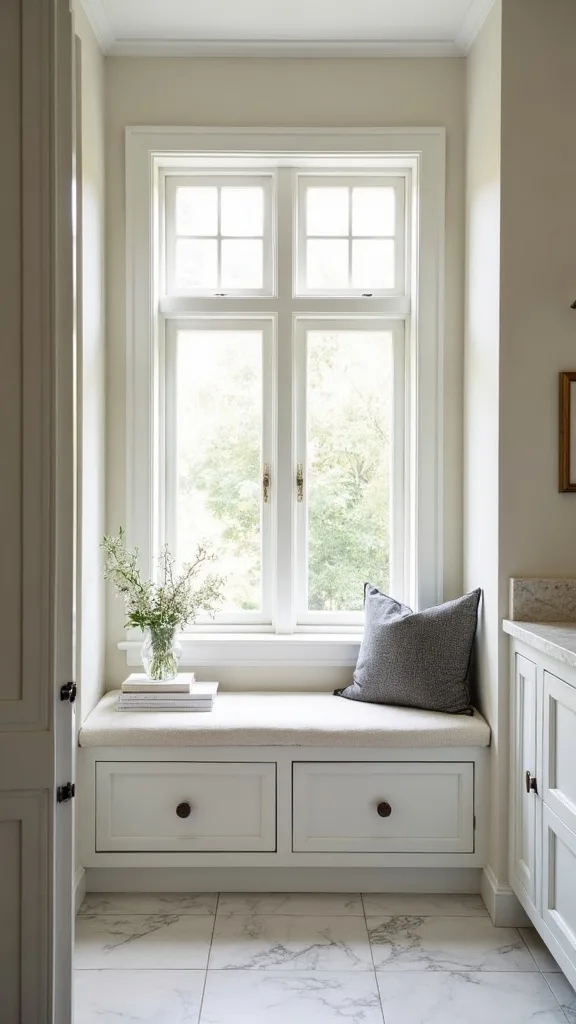
7. A Daybed-Feel Cushion: One Long Bench Pad Instead of Many Pillows
Multiple little cushions can make a nook feel fussy. One long bench pad feels modern, clean, and unexpectedly hotel-like. It works because it creates a single visual plane—your eye relaxes.
Order a custom foam insert (3–4 inches thick) cut to your bench size, then cover it with a zippered slipcover so you can wash it. Add two back pillows in a slightly different texture for comfort without visual noise.
Fabrics that wear well: performance linen, cotton-linen blends, or a low-pile velvet that doesn’t show every handprint. Keep the color slightly warmer than your wall so it feels inviting when the light shifts in fall.
Pro tip: add a thin wool throw folded at one end—like a subtle invitation. The nook looks ready, even when no one’s in it.
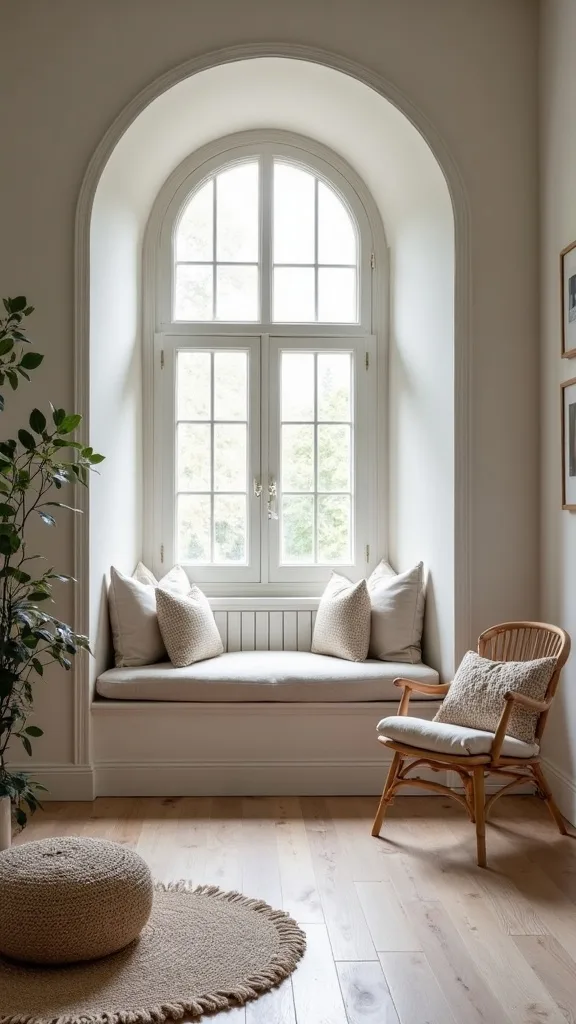
8. The Side Table Swap: A Slim Ledge That Fits a Mug and a Book
A side table can crowd a window seat nook, especially in a living room where circulation matters. A slim ledge solves it. It works because you get function without bulk.
Install a 4–6 inch deep picture ledge along one side of the bench or on the wall beside it—just high enough to reach while seated. If you’re not drilling, use a narrow C-table that slides under the bench edge.
Materials should feel tactile: white oak for warmth, honed travertine for a soft stone moment, or blackened metal if your space leans modern. Keep the surface matte so it doesn’t glare in afternoon light.
Upgrade suggestion: tuck a coaster that’s actually pretty—stone, leather, or ceramic. Tiny rituals make the nook feel like a habit you’ll keep.
Cost & Materials Estimate
A living-room window seat nook with a bench, shade, lighting, and shelf styling typically lands between a simple weekend refresh and a light built-in project.
| Item | Estimated Cost | Where to Buy |
|---|---|---|
| Storage bench base (60–72 in) or 2 base cabinets | $180–$650 | IKEA / Home Depot |
| Custom bench cushion + covers | $140–$420 | Wayfair / Amazon |
| Roman shade (linen or linen-blend) | $60–$220 | Home Depot / Lowe’s |
| Bookcases or shelving units (pair) | $160–$700 | IKEA / Wayfair |
| Reading light (floor lamp or plug-in sconce) + bulbs | $45–$220 | Amazon / Lowe’s |
Total estimated cost: $585–$2,210 Save by using ready-made cabinets and standard-size cushions; splurge on the Roman shade fabric and one great lamp.
9. Early Fall Color Palette: Oat, Ink, Olive, and Aged Brass
Early fall doesn’t need pumpkins to feel seasonal. It needs depth. This palette works because it’s grounded and quiet—like your favorite sweater, but for the room.
Start with oat or warm white on the built-ins or walls, then bring in ink (navy-black) through a pillow stripe or a vintage lamp base. Add olive with a throw or a single large ceramic vase. Finish with aged brass in hardware or a picture light.
Textures matter more than pattern here: nubby wool, soft linen, and worn wood grain do the heavy lifting. If you want a print, keep it small-scale and blurred—think ticking stripe, not bold geometrics.
Pro tip: avoid matching everything. Let one element feel vintage—an old brass candlestick, a thrifted framed sketch—so the palette feels collected, not staged.
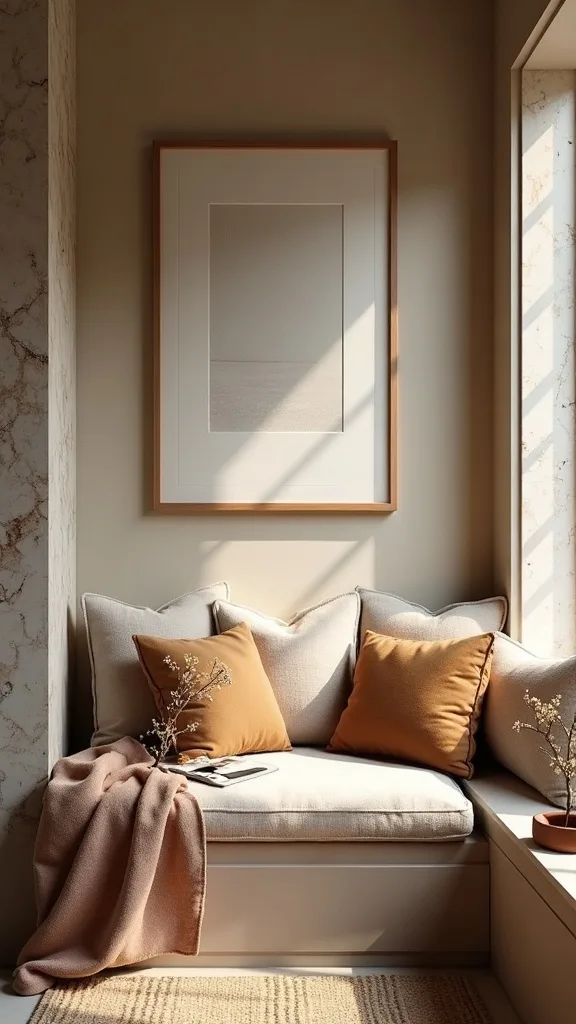
10. How to Style Floor-to-Ceiling Bookshelves Without Making Them Heavy
Floor-to-ceiling shelves can feel like they’re closing in if everything is the same height and color. The fix is rhythm. It works because your eye moves—up, across, and back to the seat.
Break up rows with horizontal stacks, then add a few vertical “breathers” where you leave space above the books. Place larger objects low and lighter objects higher. Keep the heaviest colors near the bottom so the shelves feel grounded.
Use paperback spines for color, but mix in some jackets-off hardcovers for a calmer look. Add one natural element—driftwood, a branch in a vase, a woven basket—so it doesn’t feel too polished.
Upgrade suggestion: paint the back of the shelves one shade deeper than the fronts. It adds depth like a shadow line, and the books look instantly more intentional.
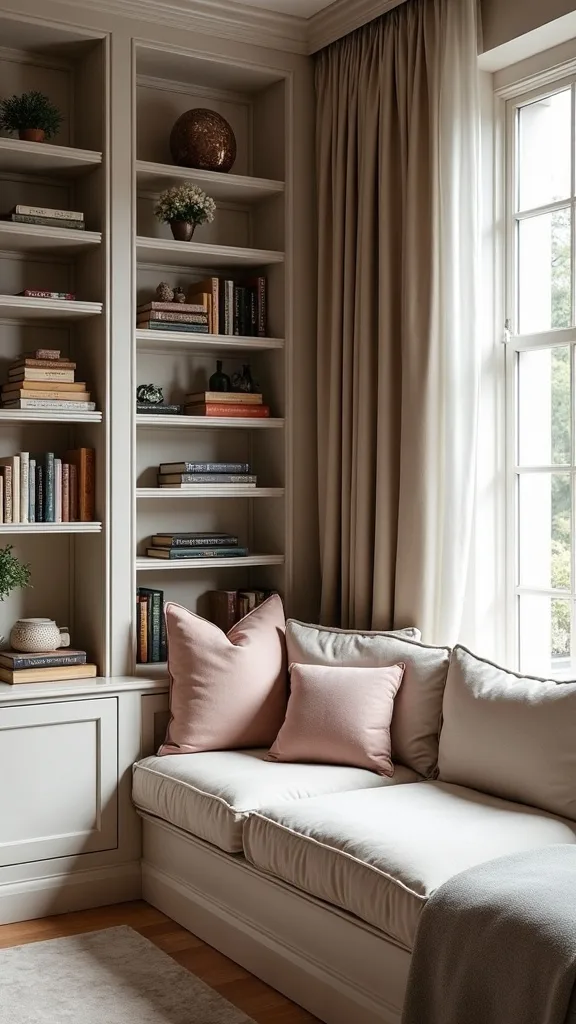
11. A Curtain-Free Window Seat Nook (Yes, It Can Still Feel Soft)
Not every window needs curtains. In a living room, skipping them can feel clean and architectural—especially around a bay. It works when you replace the softness with other layers.
Choose a Roman shade in a textured linen, then bring in softness through the cushion, a throw, and one plush pillow. Add a plant with draping leaves nearby to echo the idea of fabric without actually hanging it.
Stick with tone-on-tone neutrals so the window trim and built-ins feel crisp. If privacy is an issue, use a light-filtering shade instead of sheer curtains; it keeps the glow without the fishbowl effect.
Avoid: shiny roller shades that look office-y. If the window is the mood, don’t dress it like a conference room.
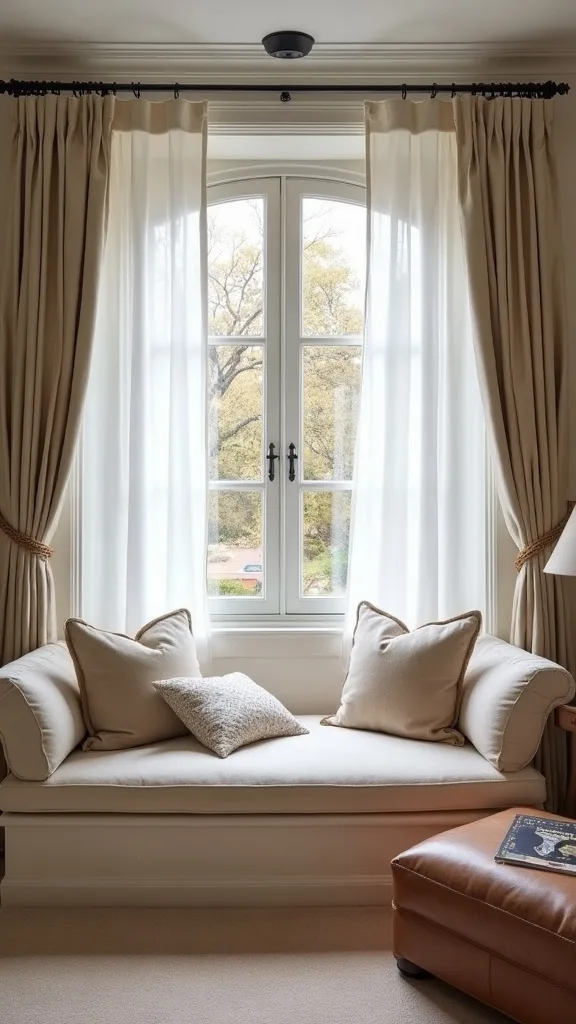
12. Turn the Bay Into a Mini Gallery: Art That Frames the Nook
A nook can feel like a set piece unless you give it a point of view. Art does that. It works because it makes the space feel lived-in and personal, not just “designed.”
Hang one medium piece on the wall adjacent to the bench, or lean a larger frame on a shelf ledge so it feels casual. Keep the art palette in conversation with your textiles—soft charcoal, warm cream, muted ochre.
Look for vintage sketches, old maps, or photographic prints with negative space. Frames in light oak or thin brass feel effortless.
Upgrade move: add a tiny clip-on library light above the art. It’s subtle, but it makes the nook feel like a destination after dark.
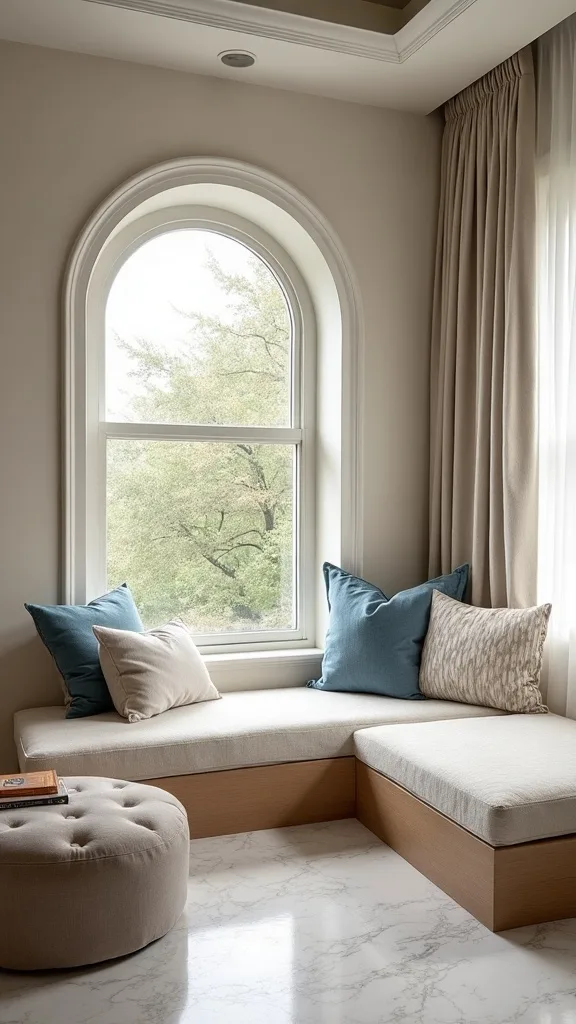
13. The Cozy Reading Room Trick: Add One “Sound Softener”
A cozy reading room isn’t just visuals—it’s acoustics. If the living room echoes, you’ll never fully exhale. One sound-softening element changes the entire feel.
Add a thick area rug that reaches under the bench edge, or hang a textile (like a vintage kilim) in a nearby spot. Even a pair of upholstered chairs across from the nook can help absorb sound.
Choose wool pile or a flatweave with texture; it should feel substantial underfoot, like it’s anchoring the room. Keep tones warm so the space reads inviting when the light turns earlier.
Pro tip: avoid tiny rugs that float. If it doesn’t connect to at least one front leg of nearby seating, it won’t do the cozy work you’re paying for.
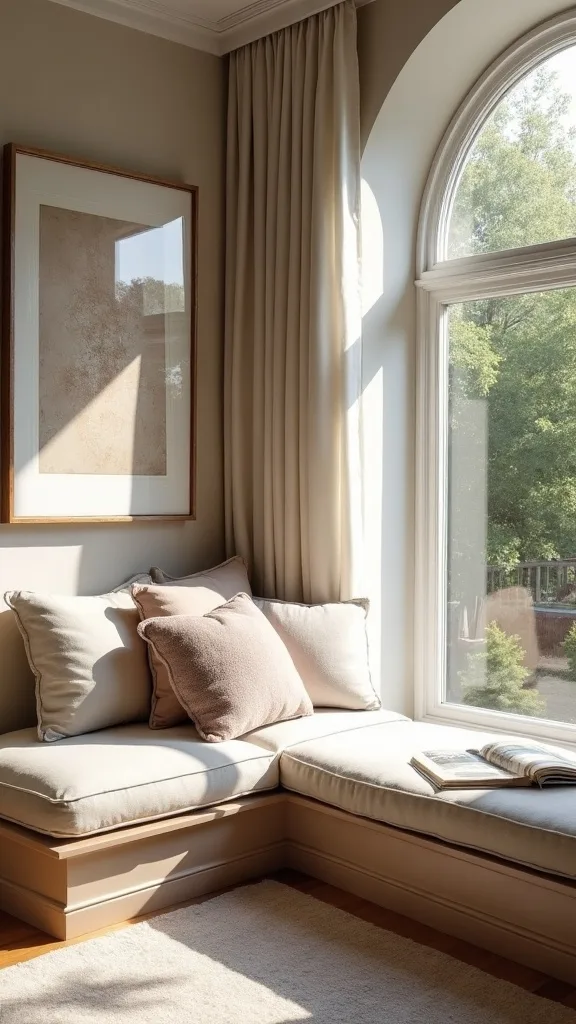
14. A Blanket Strategy That Looks Styled (Not Like Laundry)
Throws are the fastest way to signal “stay awhile,” but they can also look messy in a high-traffic living room. The strategy is containment. It works because you’re styling a habit.
Keep one throw folded at the bench corner and store the rest in the lift-lid storage or a basket on the bottom shelf. Choose one hero blanket—something with weight—then keep the others neutral so the nook doesn’t turn into a textile pile.
Materials to love: brushed wool that feels lofty, cotton waffle for casual texture, or a cashmere blend if you want that quiet luxury.
Upgrade suggestion: add a cedar sachet inside the storage compartment. Every time you open it, the nook smells like clean wood and calm.
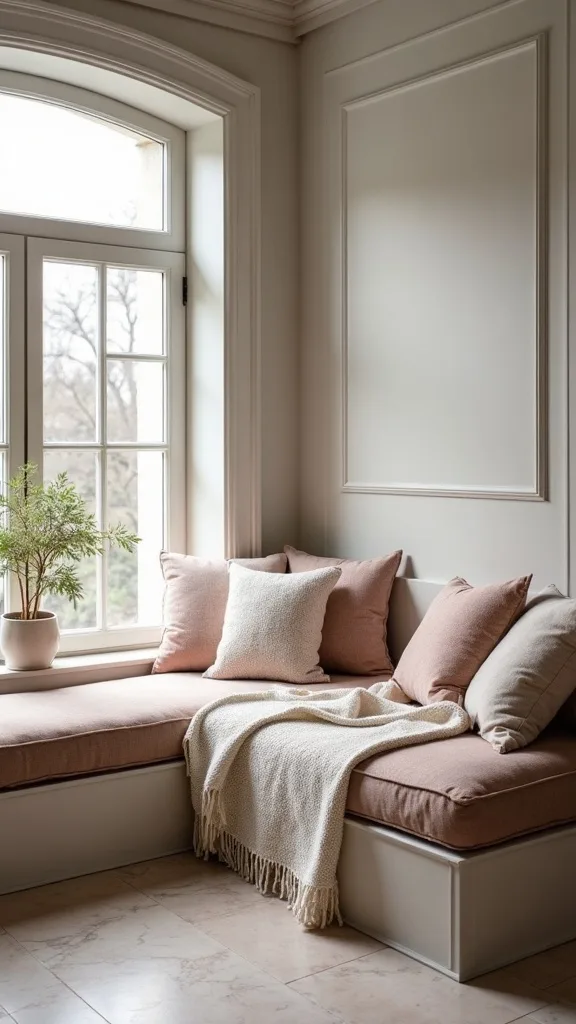
15. Make the Bench Storage Actually Useful (Zones, Not Chaos)
Lift-lid storage is only magical if you can find what you need. Otherwise it becomes the place where things go to disappear. Zones fix that.
Inside the bench, use two or three lidded bins: one for throws, one for kids’ books or games, one for candles and matches. Label discreetly on the inside of the lid if you share the space with family. Keep frequently used items closest to the hinge side so you’re not digging.
Choose woven seagrass or canvas bins that feel soft to the touch and don’t snag textiles. Neutral colors keep the inside from feeling visually loud.
Pro tip: avoid storing anything scented like old potpourri in there. It will cling to fabrics and ruin the fresh, clean vibe you’re building.
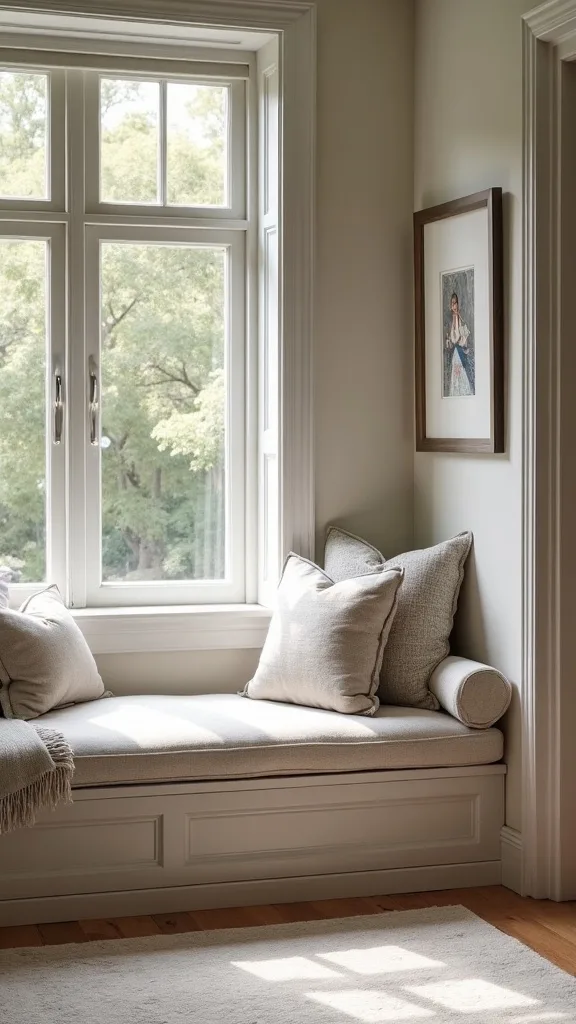
16. How to Create a Book Nook Living Room Moment Without a Bay Window
No bay, no problem. The feeling is what matters: a defined perch near light, with books close enough to reach. It works because you’re designing a ritual, not a floor plan.
Use a slim accent chair near a window and add a small ottoman that can double as a “bench.” Place a low bookcase behind the chair like a spine, then hang a Roman shade to soften the window.
Choose supple upholstery—a textured weave that doesn’t feel precious—and bring in a vintage side table for that collected look. Add a floor lamp to carve out the glow.
Upgrade suggestion: place a narrow console under the window as your “bench line.” Even without built-ins, the room will read more architectural.
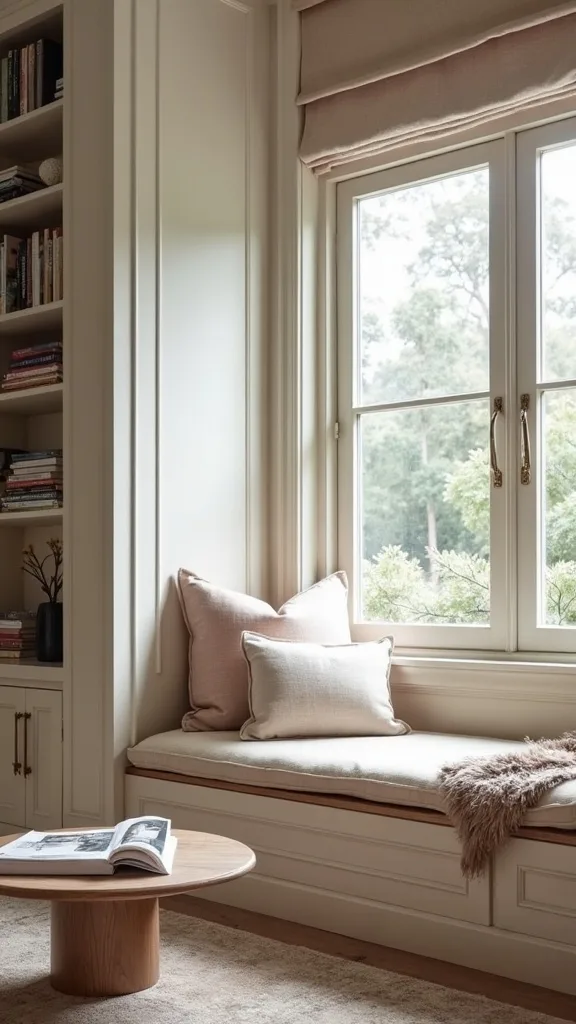
17. A Minimalist Nook That Still Feels Warm
Minimal doesn’t have to mean sterile. A pared-back nook can feel like a breath of air in a busy living room. It works when you choose fewer things with better texture.
Keep the bench cushion in one solid, tactile fabric and limit pillows to two. Style shelves with mostly books and one ceramic piece per section. Use one lamp, one candle, one throw—then stop.
Lean into natural textures: linen, oak, wool, clay. In early fall, this reads serene rather than sparse.
Avoid: glossy white everything. If the palette is light, you need warmth from wood grain or a slightly creamy paint, or it’ll feel like a showroom.
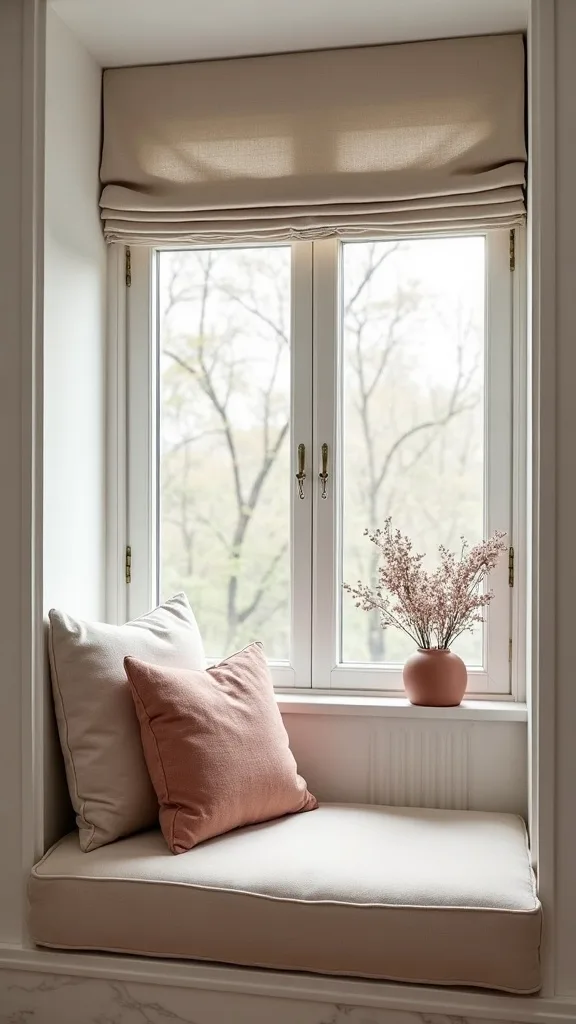
18. Vintage Finds That Instantly Elevate a Cozy Reading Room
Vintage is the shortcut to soul. One or two pieces keep your nook from feeling like it was ordered in a single cart. It works because patina tells a story.
Look for an old brass pharmacy lamp, a worn leather footstool, or a small antique side table with imperfect edges. Estate sales and local flea markets are gold for these—go early, and don’t be afraid of a little wear.
Pair vintage with new upholstery so the space stays comfortable and clean. A fresh bench cushion next to an aged lamp is a perfect tension.
Upgrade suggestion: rewire vintage lamps for safety, then use a warm bulb. The first night you read by that glow, you’ll understand why people chase patina.
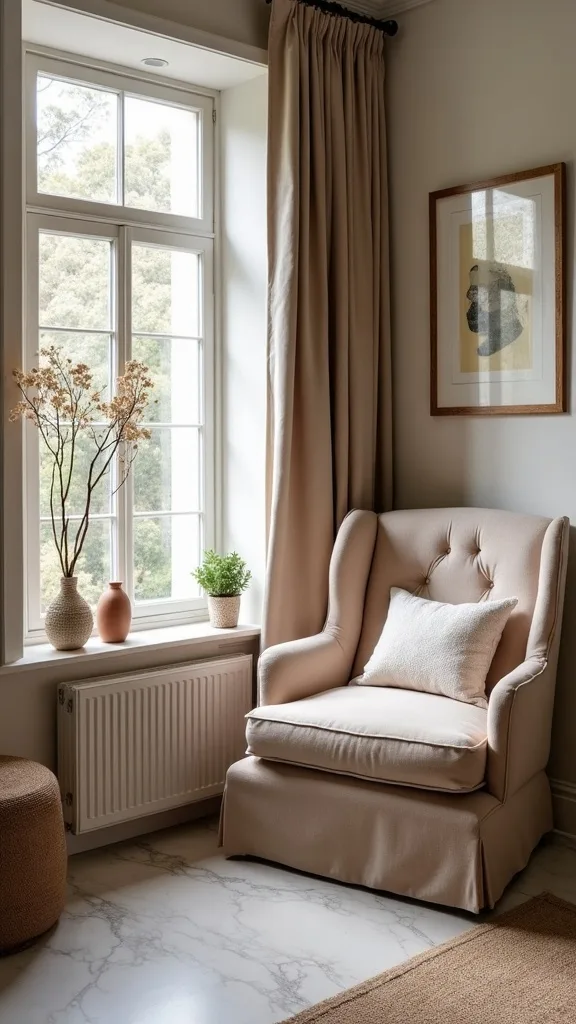
19. Lighting Layers: Sconce + Floor Lamp Combo for Real Reading Comfort
If you want the nook to function from afternoon into night, you need layers. A single lamp can work, but a sconce plus floor lamp feels like a real room. It works because you can adjust the mood without thinking.
Install a plug-in sconce above the bench for focused light, then place a floor lamp nearby for ambient glow. Keep both on dimmers if possible. Use warm white light (2700K–3000K — the cosy, yellowish tone you see in most homes) so the shelves and textiles look rich, not harsh.
Finishes to consider: aged brass, oil-rubbed bronze, or matte black. Linen shades keep the light soft.
Pro tip: avoid cool, blue-toned bulbs. They make pages look stark and skin look tired—exactly the opposite of cozy season energy.
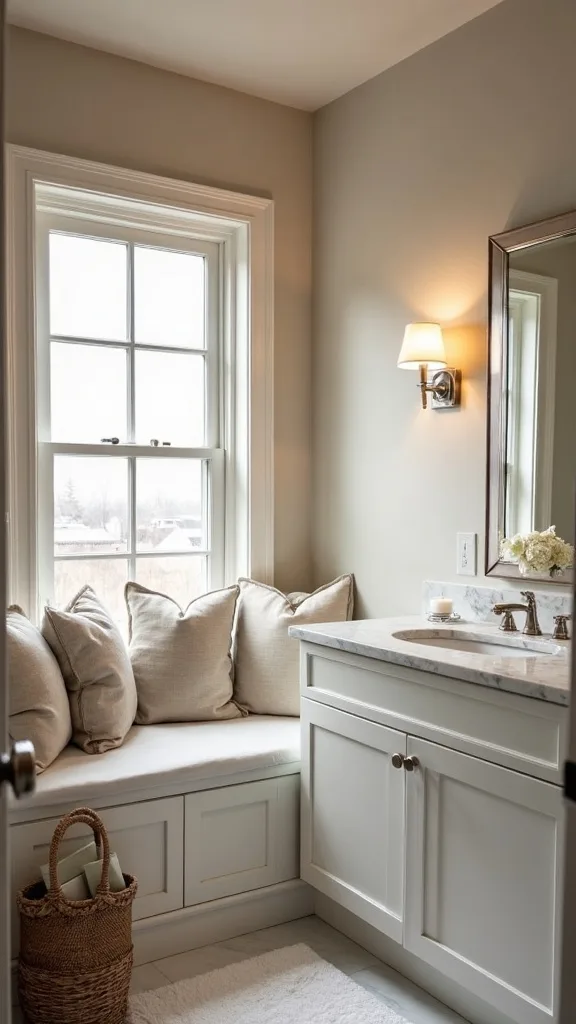
20. The “Two-Pillow Rule” for a Window Seat Nook That Looks Tailored
Too many pillows turn a window seat into a staging zone. Two pillows look intentional and still feel comfortable. It works because it’s restrained—editorial, not chaotic.
Choose one larger pillow (22×22 inches) and one lumbar (about 12×20 inches). Keep them in the same color family but different textures: think linen plus bouclé, or velvet plus wool. Store extras in the bench.
Go for muted solids or a subtle stripe. If your shelves are busy with colorful spines, keep the pillows calm.
Upgrade suggestion: use feather inserts for that relaxed “sink” and a slightly oversized cover so the corners round softly. It’s the difference between showroom and lived-in.
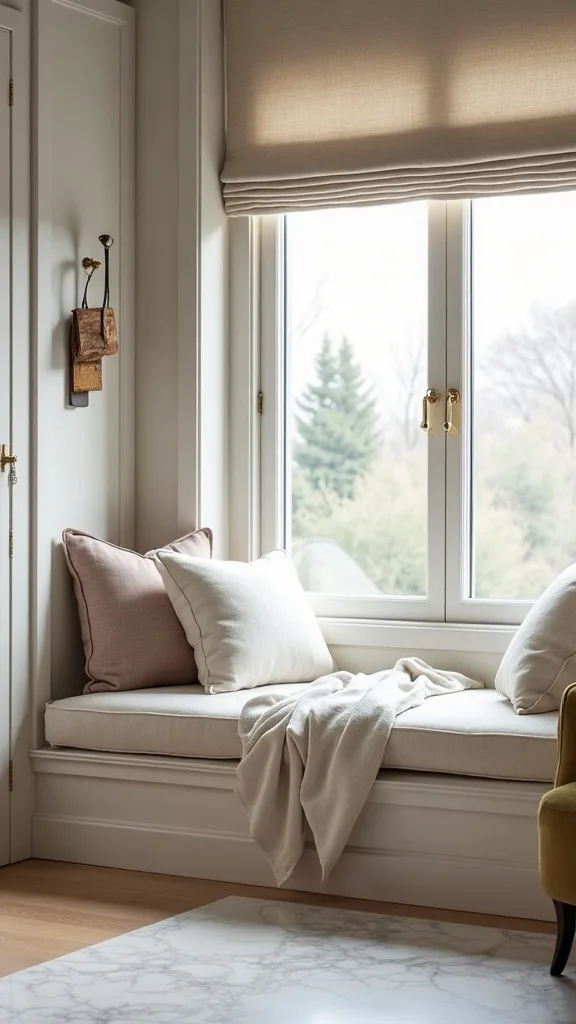
21. A Small Space Reading Corner That Doesn’t Steal Floor Area
In a tighter living room, the nook has to earn its footprint. The best move is going vertical and slim. It works because you keep circulation clear while still creating a destination.
Use a narrow bench (or storage ottoman) under the window, then add tall shelves on one side only. Keep the other side open for air. Choose a wall-mounted reading light instead of a floor lamp.
Materials that help visually: light wood, warm white paint, and a cushion that matches the wall color closely. The nook blends, but still feels special.
Avoid: chunky recliners. Comfort matters, but oversized seating will make the corner feel like it’s swallowing the room.
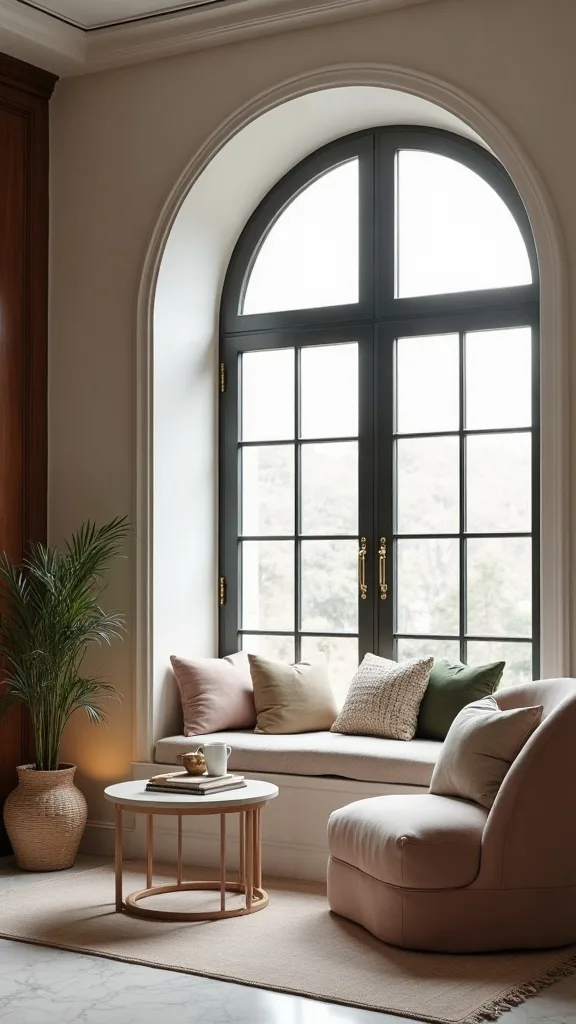
22. Hidden Charging That Doesn’t Look Like a Tech Zone
You’ll use your nook more if it quietly supports real life—phone, e-reader, maybe a laptop on a rainy Saturday. It works when the tech disappears.
Run a slim power strip inside the bench storage and drill a small grommet hole at the back corner for cords. Or use a cord cover painted to match the wall so it blends. Keep chargers in one small tray so they don’t migrate.
Choose neutral cables and a simple charging dock that looks like an object, not a gadget. The goal is calm.
Upgrade suggestion: add a tiny shelf edge or tray for your current read and glasses. When everything has a place, the nook stays ready.
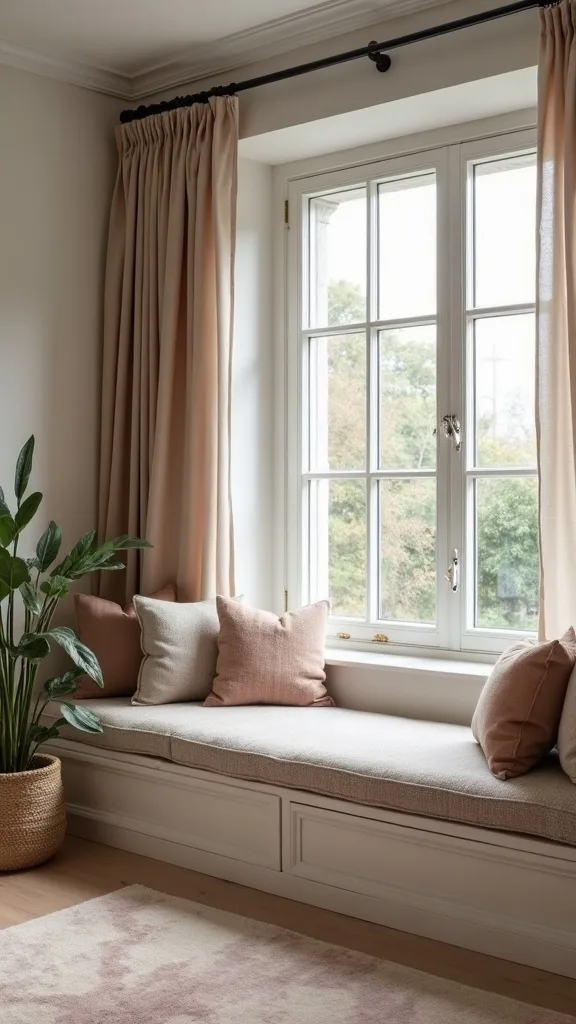
23. Scent and Ritual: The Subtle Layer People Forget
The most memorable cozy reading room moments aren’t just visual—they’re sensory. Scent is the invisible layer that makes the space feel like a retreat. It works because it ties the ritual together.
Choose one scent family for the season: cedar, fig, smoky tea, or soft amber. Keep it subtle—one candle or a low-key diffuser on a shelf, not a fragrance cloud.
Use wood matches in a small ceramic dish and a candle snuffer that looks sculptural. These tiny tools make the ritual feel intentional.
Avoid: overly sweet scents near books. They cling to paper and can feel cloying fast. Keep it dry, woody, and clean—like open windows and a worn paperback.
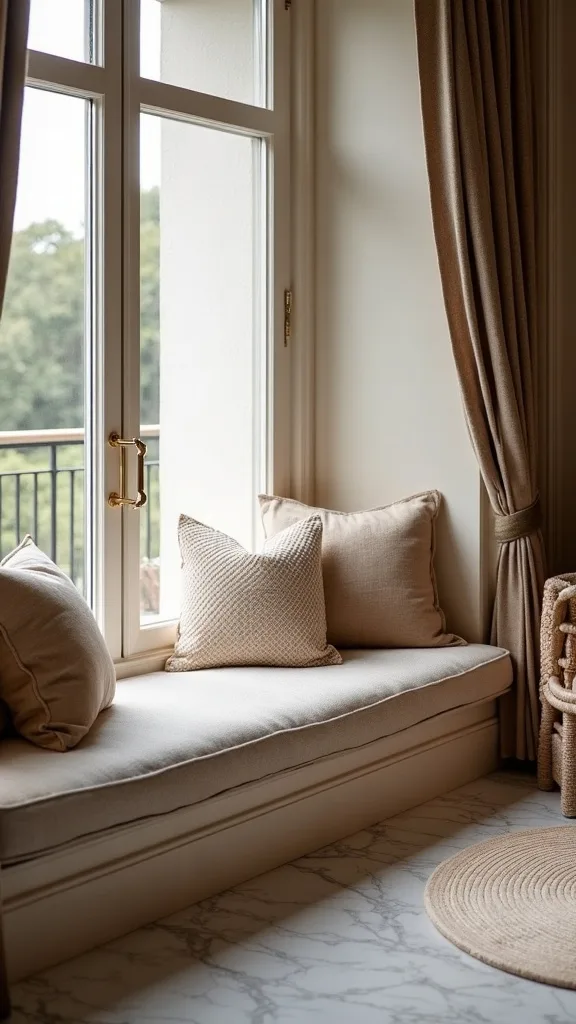
24. What to Avoid: The #1 Nook Mistake That Makes It Feel Like a Waiting Room
The fastest way to ruin a nook is to make it too matchy and too bright. A perfectly coordinated set with overhead lighting feels like a staged corner in a furniture store. It works against you because there’s no mood.
Instead, turn off the ceiling light and build the nook around one warm lamp, one tactile cushion, and a shelf moment that feels personal. Mix one vintage piece with one new one. Let the books be slightly imperfect.
Choose matte finishes and softer textiles that drape and wrinkle a little—linen that relaxes, wool that pills just enough to feel real.
Pro tip: if you’re unsure, remove one item. The nook should feel like a pause, not a display. When it’s right, you’ll sit down without thinking.
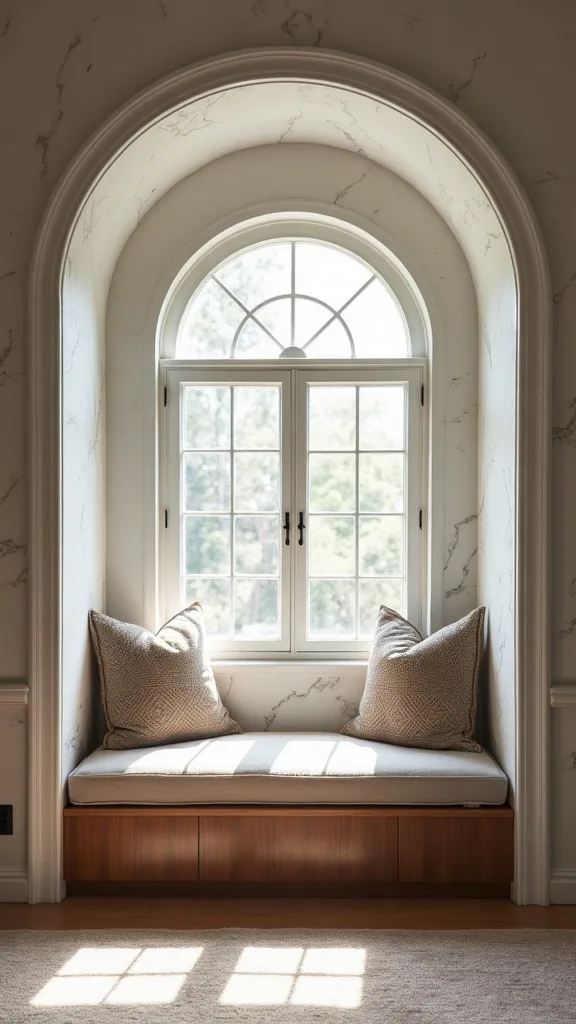
25. The Five-Minute Styling Reset That Keeps the Nook Looking Effortless
The best reading nook ideas aren’t the ones you style once and never touch—they’re the ones that stay easy. A five-minute reset keeps it editorial even when life is loud. It works because you’re maintaining a mood, not perfection.
Do this: fold the throw, return stray books to one shelf, fluff two pillows, wipe the ledge, and light the lamp. If the bench storage is getting chaotic, toss everything into one bin and sort later—future you will thank you.
Keep a small tray on the ledge for the daily essentials: lip balm, glasses, a pencil. Choose materials that feel good in hand—ceramic, wood, leather.
Upgrade suggestion: add one fresh element weekly—a clipped branch, a new magazine, a bowl of citrus. The nook stays alive, like it’s evolving with the season.
Final Thoughts
The living room is where life happens, which is exactly why a nook matters. It’s a small act of refusal—refusing the constant scroll, the always-on brightness, the feeling that every corner has to perform. A window seat nook, done with texture and restraint, makes the whole room feel more composed.
Keep it simple: a comfortable perch, a warm pool of light, and storage that doesn’t announce itself. Let the shelves hold both books and air. Mix one vintage piece in so the space has a little history, even if the built-ins are brand new.
Do one thing today: pick a corner by a window, add a lamp with warm white light (2700K–3000K — the cosy, yellowish tone you see in most homes), and clear a single shelf for the books you actually want to read this fall. When you walk in tonight, it will feel like the room is finally exhaling with you.
What I’d Do Differently
When I first tried this, I treated my living room nook like a photo corner instead of a place I’d actually sit. I bought a bench cushion that was only about 2 inches thick because it looked “sleek,” and I relied on the overhead light because I didn’t want to deal with cords. The result: it photographed fine, but I never used it—my back got tired, the light felt flat, and the whole spot read weirdly public, like a lobby. The fix was unglamorous and immediate: I swapped to a 3–4 inch cushion with a softer fabric and added one dedicated floor lamp with warm white light (2700K–3000K — the cosy, yellowish tone you see in most homes). The nook became a habit, not a prop.
I also wish I’d planned storage from day one. Lift-lid benches are amazing until they’re a single messy cavern. Two lidded bins inside changed everything, and it took ten minutes. If you’re on the fence, start with the lamp and the cushion—those two choices make the space feel real enough to keep going.