
This post contains affiliate links. As an Amazon Associate, I earn from qualifying purchases at no extra cost to you.
The day I know summer is over isn’t when the weather app says so—it’s when my kitchen starts looking… loud. The neon citrus bowl, the sticky honey jar I keep forgetting to wipe, the random mail pile camping next to the coffee maker. It’s not “messy,” it’s worse: it’s visually annoying.
This is a practical fall swap that makes your kitchen feel intentional without buying a brand-new “seasonal set.” We’re doing countertop fall styling that still leaves room to cook, plus a few quick touches that make a seasonal kitchen feel warm, not cluttered.
This is perfect for budget-smart decorators who’d rather hunt a thrift aisle than pay $49 for something labeled “harvest.”
The hero move is simple: trade the summer fruit moment for a wooden bowl filled with texture (gourds, pinecones, dried wheat), then repeat that cozy vibe in tiny doses—towels, a candle, a cutting board, a mini vignette by the sink.
Below are 25 Fall Kitchen Styling & Seasonal Decor Swap that keep your kitchen fall refresh realistic, your counters usable, and your autumn kitchen vibe high.
Products I Recommend for This Project
Here are some of my favourite products to help you bring these ideas to life:
- Hanobe Wooden Dough Bowl (Farmhouse Style) — An easy, reusable base for a fall centerpiece that instantly warms up counters.
- LED Under Cabinet Puck Lights (Battery Operated, Warm White) — Adds cozy evening glow without rewiring or tools.
- Mrs. Meyer’s Clean Day Multi-Surface Cleaner (Apple Cider) — Makes the “before” reset feel satisfying and leaves a subtle fall scent.
- Amber Glass Soap Dispenser Set (16 oz) — A simple sink-area swap that looks intentional and hides mismatched plastic bottles.
- Artificial Wheat Stems Bundle (Neutral/Tan) — Gives you that dried-wheat texture all season without shedding or molding.
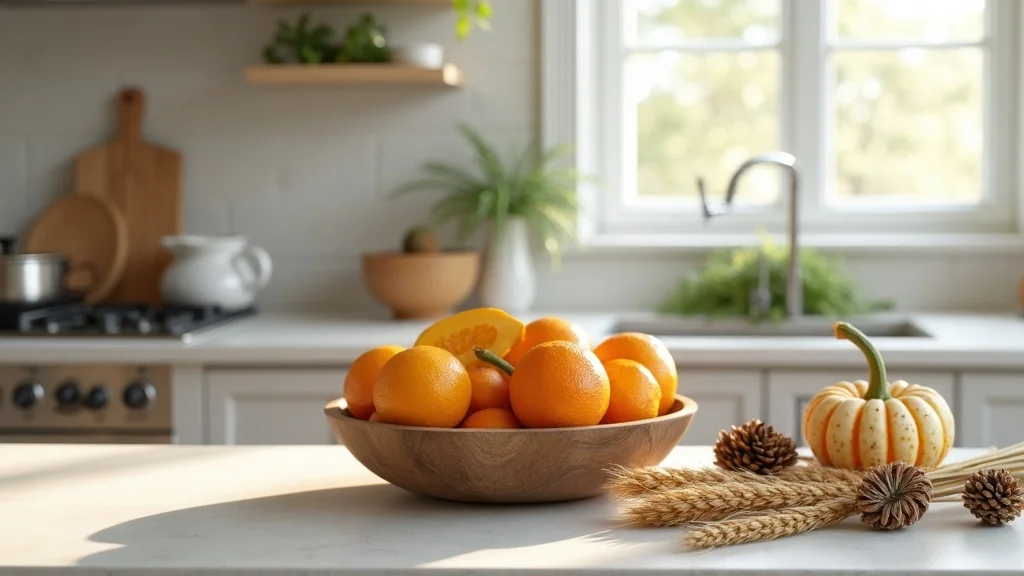
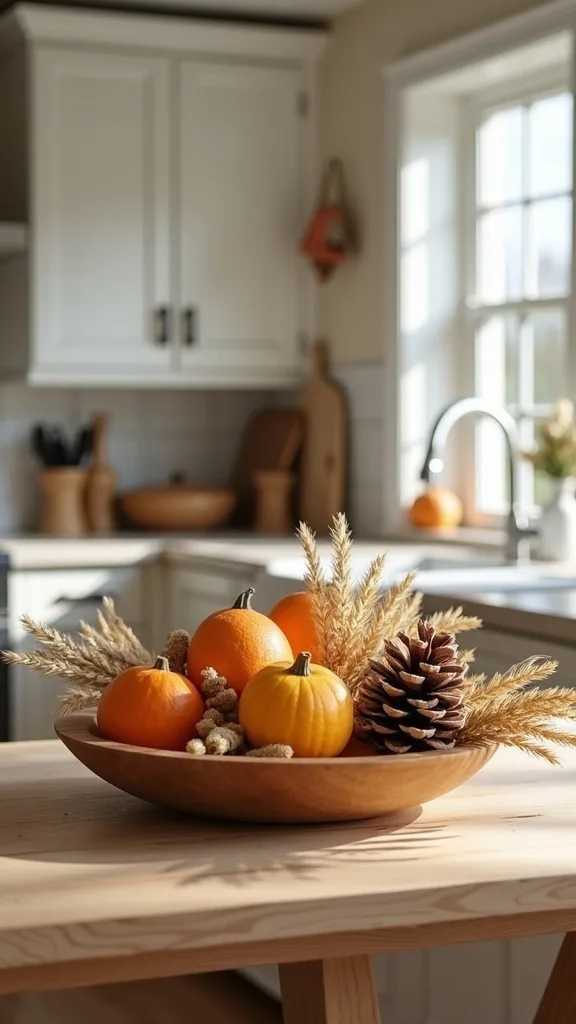
1. Swap summer citrus for a wooden dough bowl with gourds, pinecones, and dried wheat
This swap is the whole mood shift: you replace one bright, glossy focal point with something matte, textured, and autumny. It works because the bowl becomes a “centerpiece” without taking over your entire counter.
Grab a wooden dough bowl (mine was $6.99 at Goodwill—cracked, but charming) and line it with a folded kraft paper grocery bag so sap or glitter doesn’t touch the wood. Add 5–7 mixed mini gourds, a handful of pinecones, and 3–5 stems of dried wheat; keep the tallest pieces toward the back so it reads tidy from the room.
Look for warm neutrals: tan wheat, deep green gourds, and one pop like a muted orange. Thrift alternative: a long wooden salad bowl or even a $4.98 acacia serving tray from Walmart turned “bowl” with fillers.
Pro tip: tuck in one real item (a rosemary sprig or cinnamon sticks) so it smells like fall when you walk by—resourcefulness is a styling skill, not a compromise.
2. How do you make countertop fall styling look curated (not like a pumpkin pile)?
Curated counters come from restraint and repetition, not more stuff. The trick is to style in “groups of three” and leave breathing room so your kitchen still feels like a kitchen.
Pick one zone—usually the corner by the stove or the empty spot beside the fridge—and build a triangle: something tall, something medium, something low. Example: a $2.49 thrifted amber bottle (tall), a small cutting board (medium), and a candle tin (low). Keep the palette tight: wood + amber + cream reads instantly fall.
Discount options: Dollar Tree has plain glass bottles you can tint with a drop of brown craft paint; Target Bullseye often has small faux stems for $3–$5. DIY option: wrap a spaghetti jar with jute and hot glue for a textured “vase.”
Pro tip: avoid mixing more than two patterns on the counter—too many prints is the fastest way to make countertop fall styling look like clutter.
3. What’s the fastest kitchen fall refresh if you have zero time?
The fastest refresh is a towel swap plus one scent—done. You get color, texture, and that “it’s fall now” signal in under five minutes.
Switch to two coordinating towels: one solid (oatmeal, rust, or olive) and one subtle stripe. I grabbed a set of two at Marshalls for $7.99; the thrift version is usually $1.50–$3 each if you hunt the linen bin. Add one simmer pot on the stove: water + orange peel + cinnamon (pantry win) and let it warm while you clean one surface.
Color picks: rust + cream, olive + tan, or charcoal + wheat. Discount store alternative: IKEA dish towels are cheap and wash well; DIY alternative is tea-dyeing white towels with black tea for a vintage look.
Pro tip: skip towels with glittery “Harvest” text—after two washes they look tired, and your seasonal kitchen deserves better.
4. How can you decorate a kitchen for fall without losing prep space?
Fall styling only works if you can still chop an onion without moving a parade of decor. The solution is to “decorate vertically” and keep one counter zone completely clear.
Choose a single landing pad—like a 12″ x 18″ tray beside your coffee maker—and confine your decor to that footprint. Then use vertical spots: a command hook for a wreath on the pantry door, a small framed print on a ledge, or a hanging towel ladder. Thrift a small tray for $3–$6 or use a baking sheet you already own and cover it with a neutral placemat.
Materials that behave: wood, glass, and ceramic wipe clean. Avoid fuzzy runners right next to the stove (they collect grease).
Pro tip: measure your “working counter” and protect it—aim for at least 18 inches of clear space so your autumn kitchen doesn’t become a daily hassle.
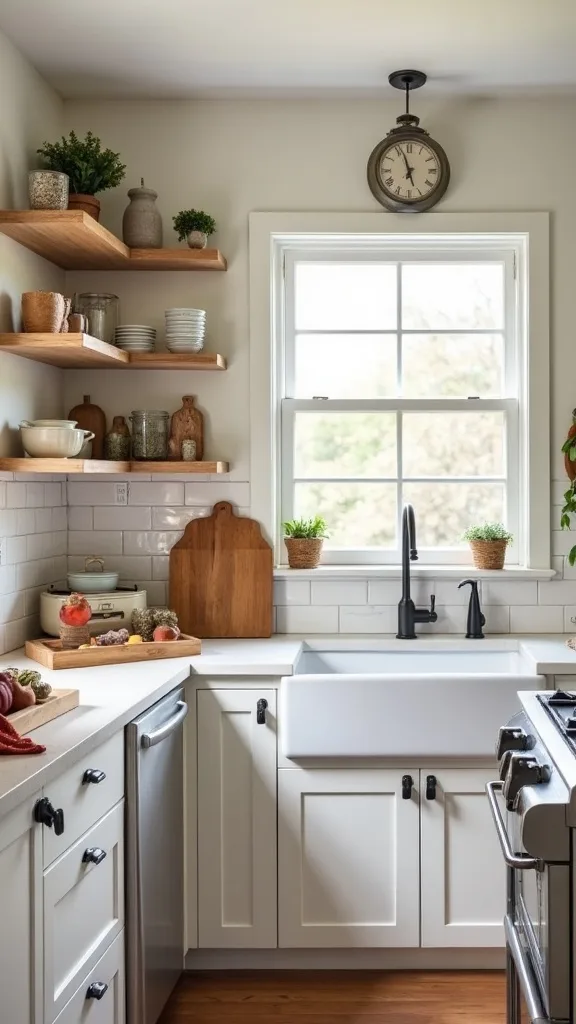
5. What colors make fall kitchen decor feel cozy (not dark and heavy)?
Cozy fall color is about warmth, not darkness. You want tones that play nicely with stainless steel, white cabinets, or whatever you’ve got—without making the room feel smaller.
Start with one anchor neutral (cream, warm white, or tan), then add one “spice” color (rust, terracotta, or mustard), and one deep accent (olive or charcoal). Use the spice color in textiles—towels, a small runner, pot holders—because they’re cheap to swap. I found a rust table runner at a thrift store for $4.25 and cut it into two counter mats.
Discount options: Walmart’s seasonal textiles are often $3–$10; Dollar General has surprisingly decent solids. DIY option: paint a thrifted frame matte black and pop in a printable botanical.
Pro tip: avoid bright pumpkin orange everywhere—use it like seasoning, not the whole meal, and your fall kitchen decor will look grown-up.
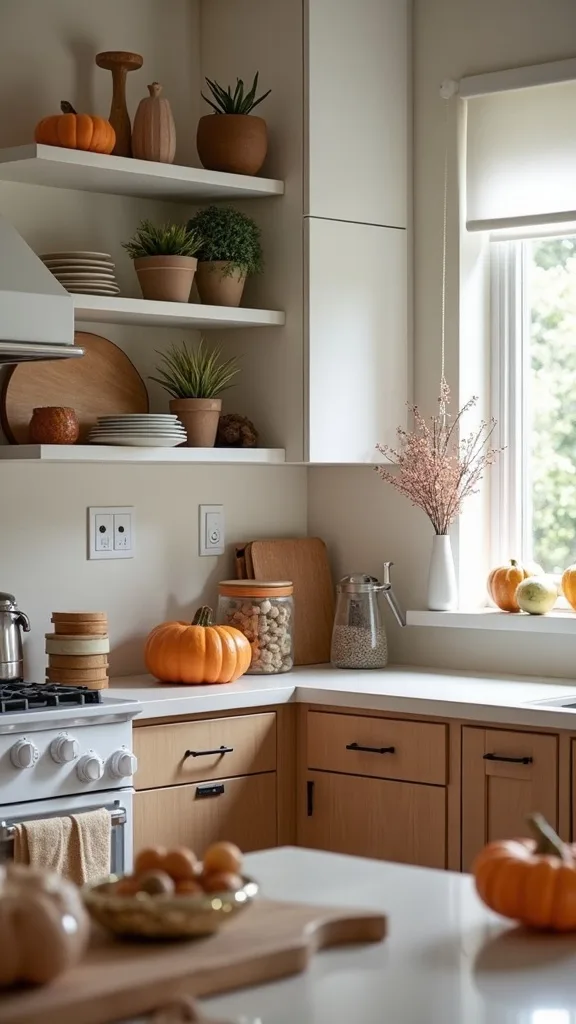
6. How do you style a coffee station for fall on a budget?
A fall coffee corner feels special because it’s a daily ritual zone, not because you bought a matching set. Small changes read big here—especially texture and scent.
Put everything on a tray so it looks intentional: thrift a tray ($2–$5), then corral sugar, mugs, and spoons. Add one fall element: a small amber jar candle or a tiny vase with dried wheat. If you want a “sign,” skip the pricey wooden plaques—print a 5″x7″ fall quote and frame it in a thrifted frame for $1.99.
Colors: cream mugs, wood tray, amber glass. Discount alternative: Target Bullseye mini frames; DIY: wrap a plain candle in kraft paper and tie with twine.
Pro tip: avoid stuffing the station with seasonal syrups you won’t use—display one and store the rest, and your countertop fall styling stays clean.
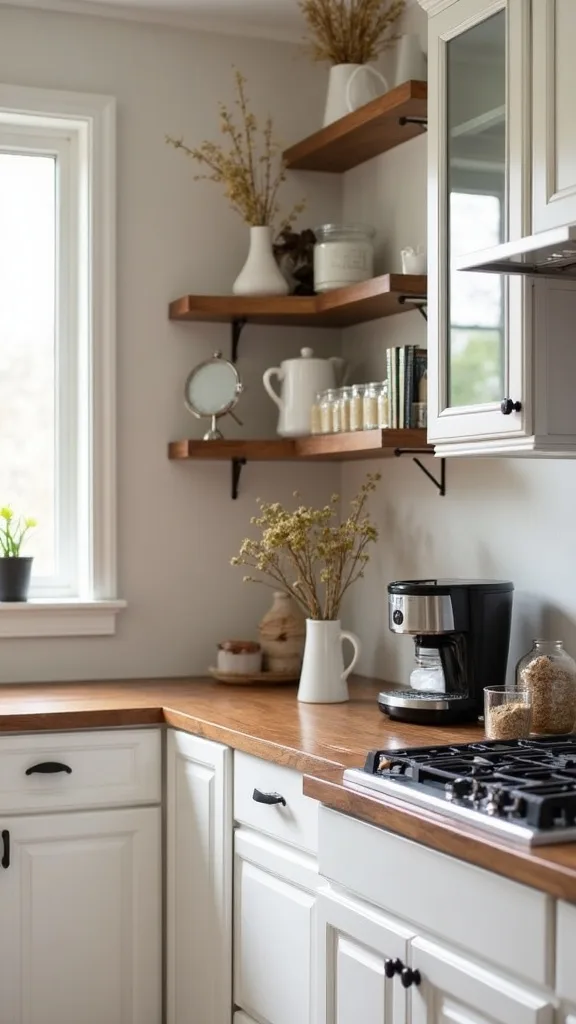
7. What’s the best thrift-store list for an autumn kitchen swap?
Thrifting for fall is easier when you know what actually reads “seasonal” without being labeled seasonal. The win is finding timeless textures you can reuse every year.
My go-to thrift list: wooden bowls, small cutting boards, amber glass, brass candlesticks, neutral baskets, and stoneware mugs. I also scan the fabric section for table runners that can become shelf liners or tray mats. Set a budget before you walk in—I cap myself at $20 and force creativity to do the heavy lifting.
Discount store backup: HomeGoods/Marshalls for wood and glass; Dollar Tree for filler (pinecones, faux leaves) if your thrift store is picked over. DIY alternative: “antique” a too-shiny wood piece with brewed coffee wiped on and sealed with a little mineral oil.
Pro tip: avoid anything with chipped glaze on mugs or bowls you’ll eat from—display-only is fine, but your seasonal kitchen should stay safe.
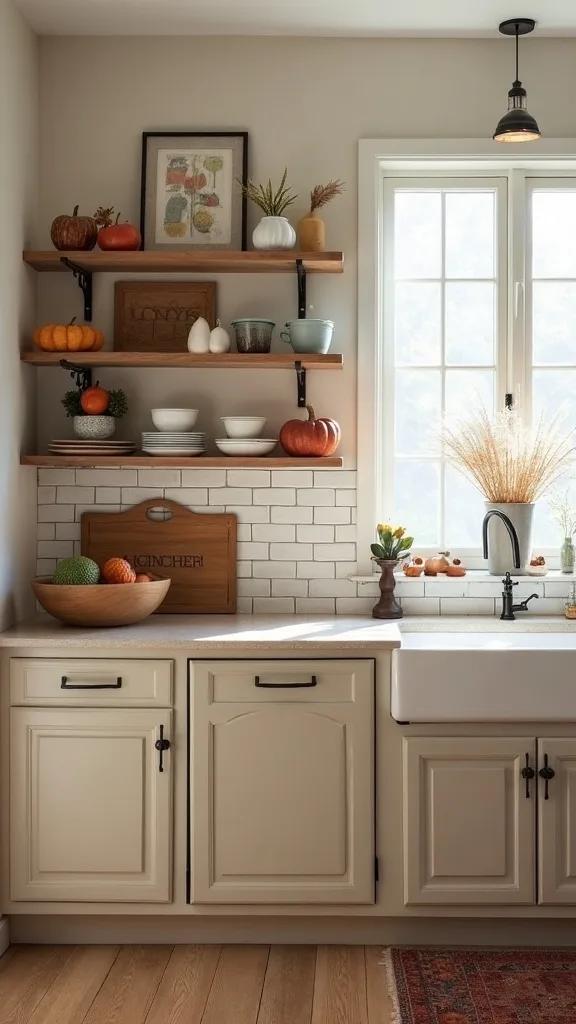
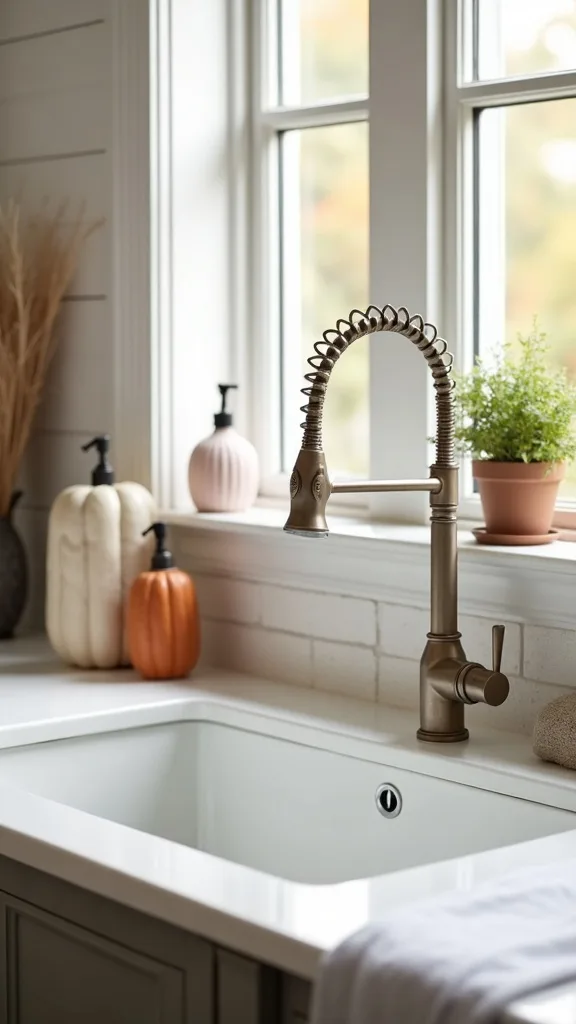
8. How do you make a fall sink area look cute without blocking soap and sponges?
The sink area is where decor goes to die—because it gets wet, messy, and handled constantly. The key is using pieces that can be wiped down and moved with one hand.
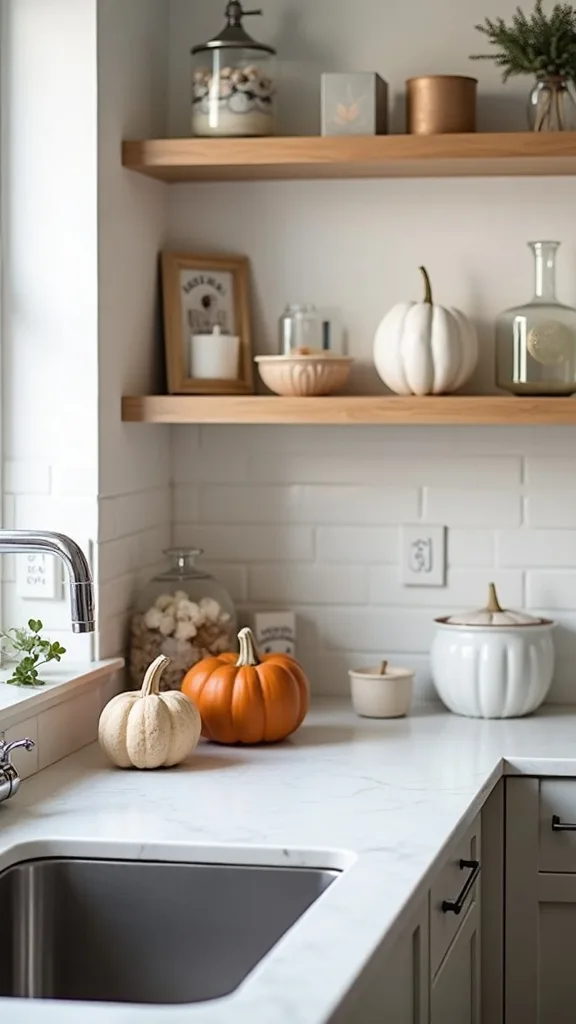
Swap your soap dispenser to amber (I found one for $3.99 at TJ Maxx) and add a small wood riser or coaster under it to prevent rings. Then place a tiny bud vase with one dried stem on the windowsill or back corner—one stem, not a bouquet. Thrift option: a $1.25 glass bottle; DIY option: reuse a hot sauce bottle and remove the label with warm soapy water.
Stick to practical textures: glass, ceramic, sealed wood. Avoid fabric near the faucet—it gets gross fast.
Pro tip: keep one micro vignette only; the sink is a work zone, and your kitchen fall refresh should make life easier, not fussier.
Cost & Materials Estimate
A simple fall kitchen styling swap usually lands between $25 and $85 depending on whether you thrift the bowl/tray and use natural fillers.
| Item | Estimated Cost | Where to Buy |
|---|---|---|
| Wood dough bowl (12″–20″) | $18–$45 | Amazon |
| Mini gourds/pumpkins (mix, 6–10 pieces) | $6–$18 | Home Depot |
| Dried wheat bundle (or faux wheat stems) | $8–$16 | Amazon |
| Amber soap dispenser | $9–$14 | Amazon |
| Kitchen towel set (2-pack) | $6–$12 | IKEA |
| Battery under-cabinet puck lights (warm tone) | $14–$28 | Amazon |
Total estimated cost: $61–$133 Save money by thrifting the bowl/tray and collecting pinecones for free; splurge only on the piece you’ll reuse every year.
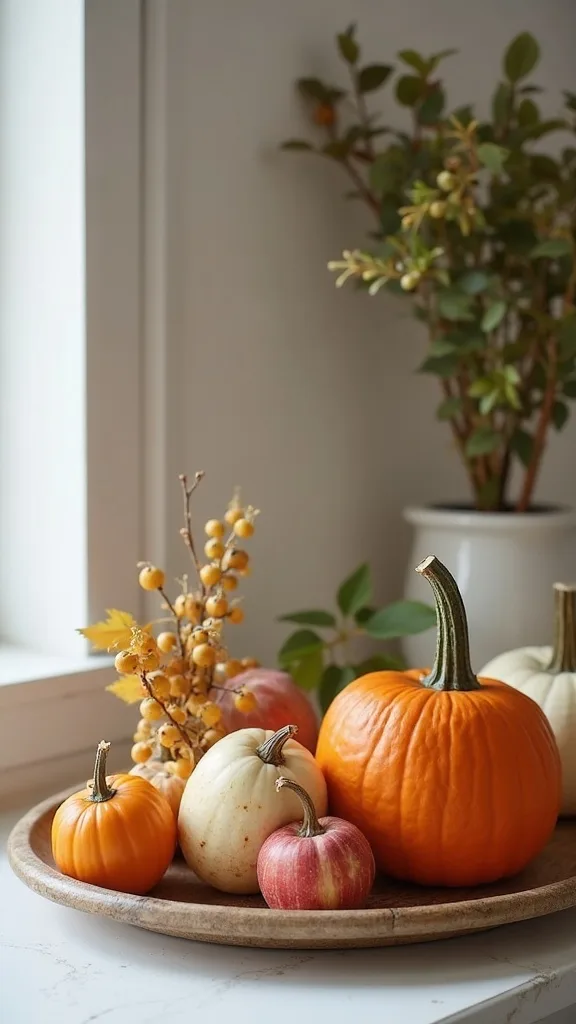
9. Can you use real produce as decor without wasting food?
Yes—if you pick produce you’ll actually cook with, and you store it correctly. Real ingredients look better than plastic and feel more “home” than store-bought filler.
Use a shallow bowl for apples, onions, or small squash and commit to eating it. I like a “cook-first” rule: when the bowl gets low, it’s a reminder to make soup or roast veggies. If you want the gourd look without waste, mix in a few mini pumpkins but keep them separate from heat so they last.
Thrift alternative: a stoneware colander ($4–$8) looks amazing filled with apples. Discount: Aldi often has mini pumpkins cheap in season. DIY: make “dried orange slices” in the oven on low heat and store them in a jar for weeks.
Pro tip: avoid stacking produce too high—bruises happen, and then your autumn kitchen centerpiece turns into compost.
10. How do you decorate open shelves for fall without making them look crowded?
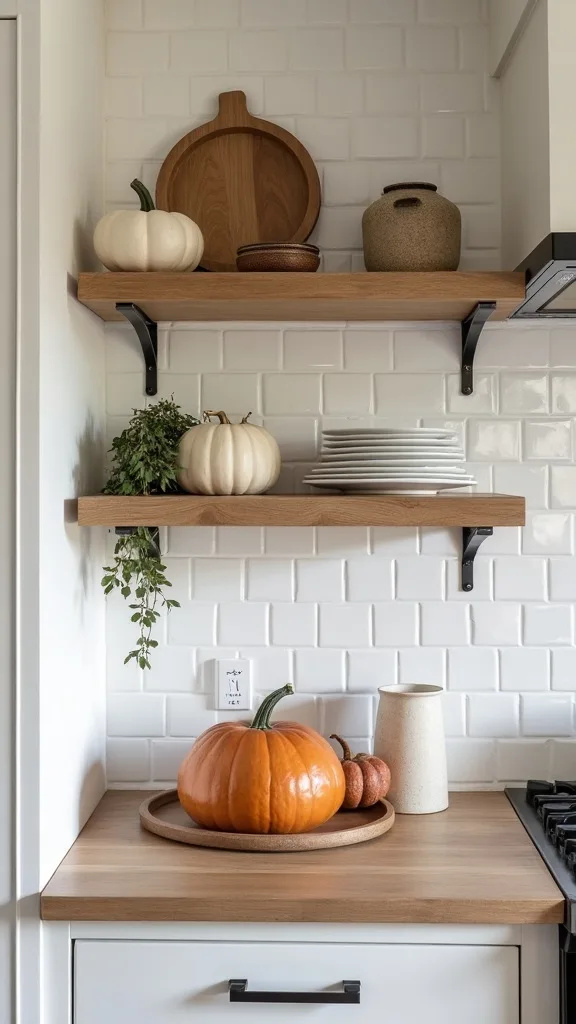
Open shelves already hold your real life, so fall decor has to blend in—not compete. The goal is to swap, not add, so the shelves stay breathable.
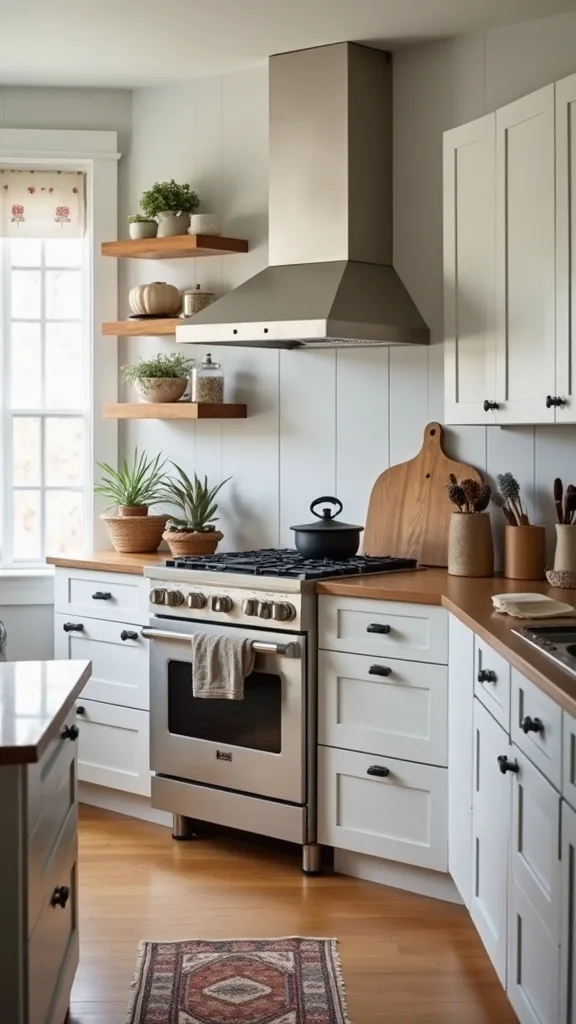
Remove one summer item (bright canister, colorful bowl) and replace it with one fall-texture piece: a small copper pot, a stack of neutral plates, or a tiny framed botanical. Add a single dried wheat bundle in a short vase. If you have books, turn two spine-inward for calmer color without buying anything.
Thrift picks: brass mini frames, ironstone-looking plates, and baskets. Discount store: IKEA has simple white dishes that read cozy. DIY: print a vintage fruit/vegetable illustration and slide it into a frame.
Pro tip: avoid faux leaf garlands draped across dishes—they collect grease and dust, and they scream “store aisle,” not seasonal kitchen styling.
11. What’s one fall centerpiece idea that won’t get in the way of serving food?
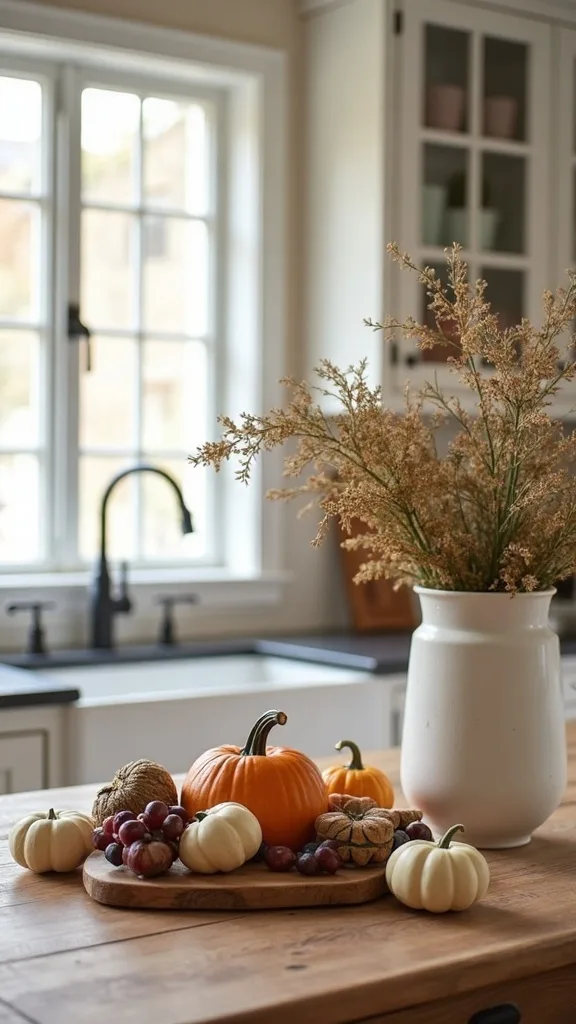
A low, movable centerpiece wins every time—especially if you actually use your table or island. You want something that slides aside without a full reset.
Try a long, narrow tray (around 24″–30″ if you have the space) with three items: a squat candle, a small bowl of pinecones, and a mini vase with dried wheat. I used a thrifted breadboard as my “tray” for $5.50, and it looks better than anything seasonal from a big box store.
Materials: wood + metal + glass keeps it classic. Discount: Walmart has long serving boards; Dollar Tree has glass hurricanes you can flip over candles as a cloche.
Pro tip: avoid tall arrangements at eye level on an island—nobody wants to talk around a centerpiece, and your kitchen fall refresh should feel welcoming.
12. How do you make a builder-grade kitchen feel like fall without remodeling?
Builder-grade kitchens often feel flat because everything is the same finish: same cabinet color, same counters, same hardware. Fall is your excuse to add contrast with temporary layers.
Bring in one warm wood tone (cutting board, dough bowl, or tray) and one soft textile (runner or towels). Then add a warm white light (2700K–3000K — the cosy, yellowish tone you see in most homes) bulb in a lamp if you have a corner outlet; that single change makes the room feel like evening all day. Thrift a small lamp for $8–$15 and put it on a counter safe from splashes.
Discount alternative: IKEA lamps are inexpensive; Home Depot sells warm bulbs in multipacks. DIY: shade a too-bright bulb with a warmer lampshade liner or swap the shade for a thrifted linen one.
Pro tip: avoid “cool white” bulbs—nothing kills an autumn kitchen faster than lighting that looks like a parking lot.
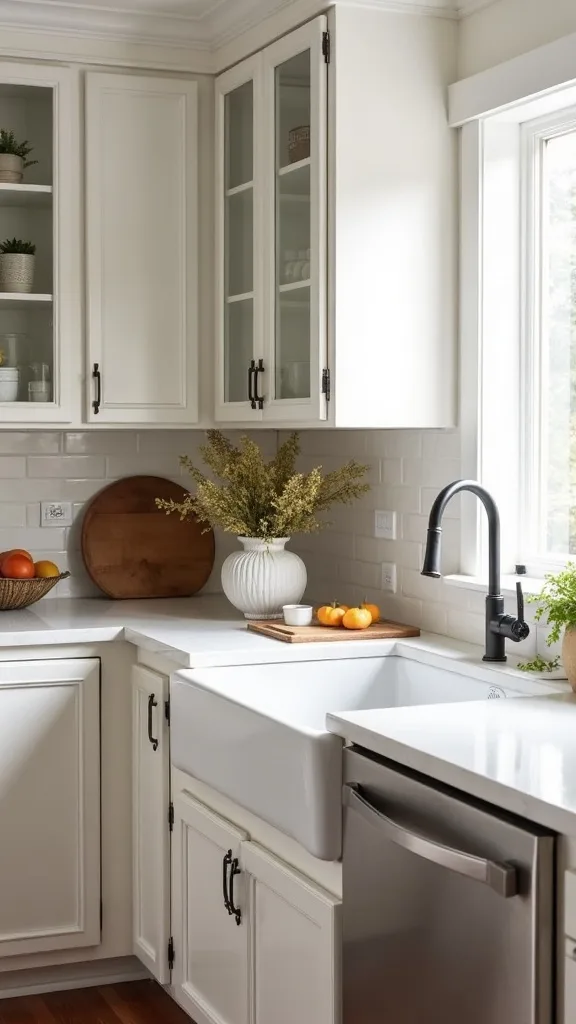
13. How do you style a kitchen window for fall without blocking light?
Window styling should frame the view, not cover it. In fall, that means light textures and small accents that don’t compete with daylight.
Add a thin garland on the top edge of the window trim or a small wreath hung with a suction cup hook on the glass (so you don’t damage paint). Keep it simple: a wheat wreath or eucalyptus works for September through Thanksgiving. If you want fabric, choose a café curtain in a neutral stripe, not a heavy seasonal print.
Thrift options: look for scarf-style curtains you can hem with iron-on tape. Discount: Target and Walmart often have simple café curtains under $15. DIY: make a mini garland from grocery-store faux stems and floral wire.
Pro tip: avoid glittery window clings—they look cute for five minutes and then read like classroom decor, not a homey seasonal kitchen.
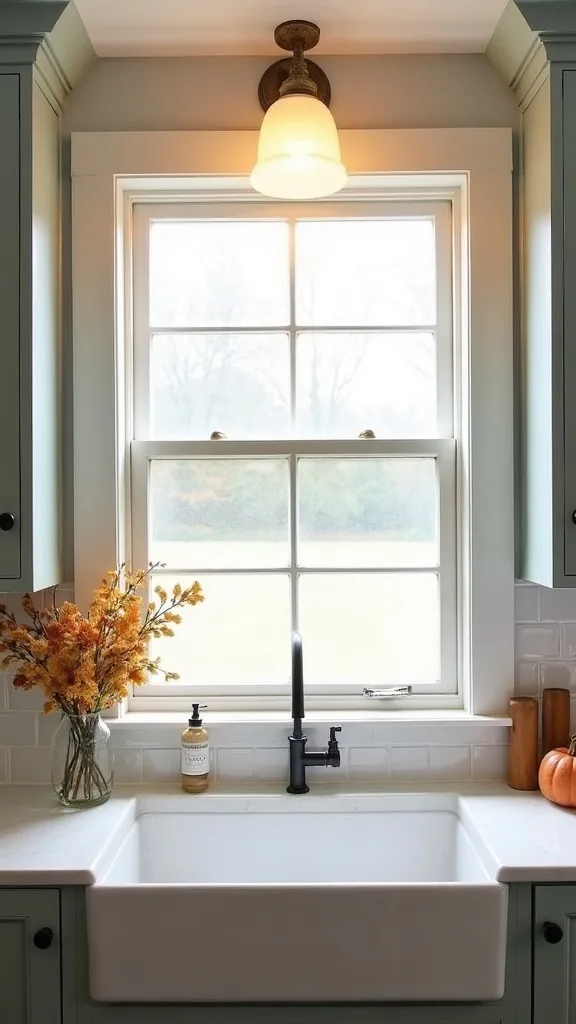
14. What’s a no-fail way to add fall texture near the stove safely?
Near the stove, decor has to be heat-safe and wipeable. Texture here should come from wood and metal, not fluffy fabrics.
Lean a cutting board against the backsplash (or two, layered) and add a small crock for utensils. I found a stoneware utensil crock for $4.75 at a local thrift store; the discount alternative is a plain ceramic pitcher from HomeGoods. Keep oils and spices on a small tray so splatters are contained.
Colors: natural wood, cream crock, black or brass accents. DIY: wrap an old can in kraft paper and tape it inside for a quick utensil holder (temporary, but works).
Pro tip: avoid placing dried wheat right next to an open flame—yes, it’s pretty, but safety is part of good countertop fall styling.
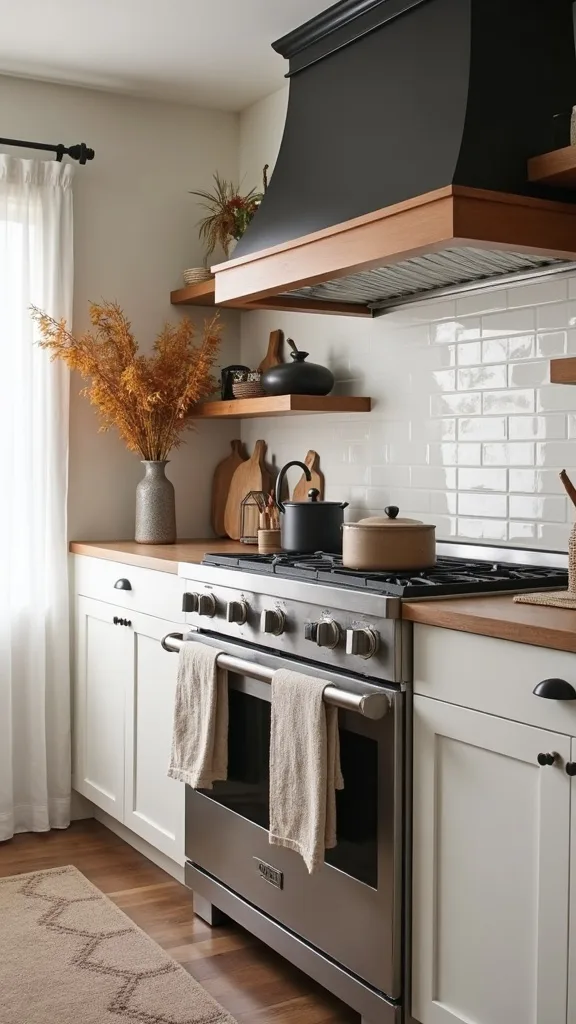
15. How do you create a fall “baking corner” even if you barely bake?
You don’t have to bake pies to borrow the cozy baking vibe. A small styling cue—rolling pin, wood board, crock—signals “fall” instantly.
Set out one wood board and a rolling pin (thrift stores are full of them for $2–$6). Add a small jar of cinnamon sticks or whole cloves. If you don’t want food out, use faux cinnamon sticks (Dollar Tree) but keep them in a sealed jar so they don’t look dusty. Bonus: tuck your measuring spoons into a crock so the vignette is functional, not fake.
Materials: wood + glass + warm spice tones. Discount: Walmart has affordable jars; IKEA has simple canisters. DIY: print a vintage recipe card and frame it.
Pro tip: avoid flour sacks and open jars of ingredients on the counter—pantry moths are not part of the autumn kitchen aesthetic.
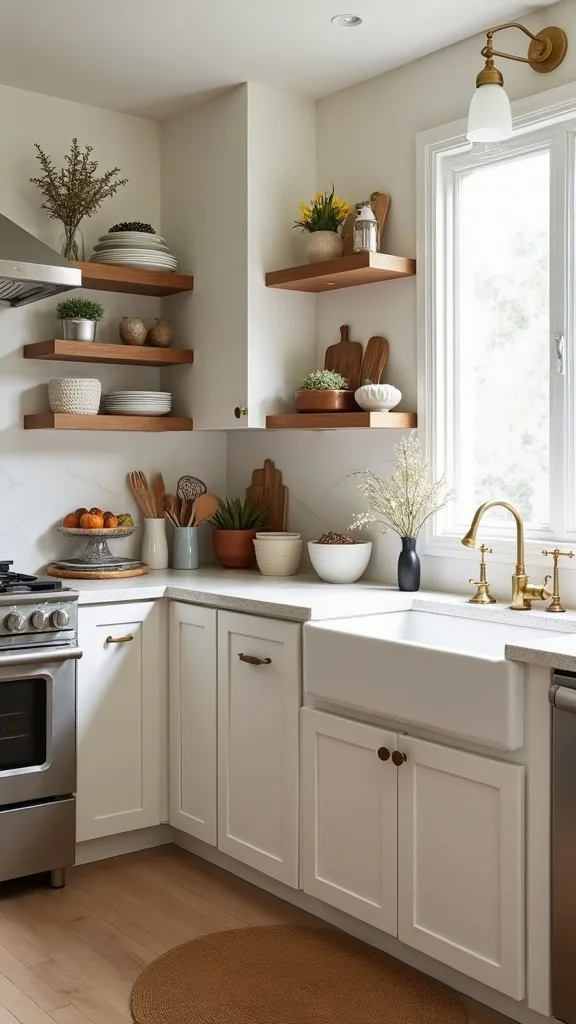
16. What should you avoid when swapping summer decor for fall in the kitchen?
The biggest mistake is swapping in decor that fights your kitchen’s fixed finishes. If your counters are busy (granite, strong veining), adding more pattern and color will look chaotic fast.
Avoid these common “fall aisle” traps: tiny signs with loud phrases, glitter pumpkins, and anything fuzzy near food prep. Instead, choose quiet textures—wood, wheat, stoneware—and let the fall elements be natural shapes. If you love pumpkins, pick two in the same finish (matte ceramic, for example) rather than five different styles battling it out.
Budget alternative: thrift one solid, heavy piece (like a dough bowl) and use free/natural filler (pinecones from your yard, dried grasses from a walk—check local rules). Discount alternative: plain ceramic pumpkins from Target or Walmart, not the glitter ones.
Pro tip: when in doubt, remove one item before adding one—your seasonal kitchen should feel calmer, not louder.
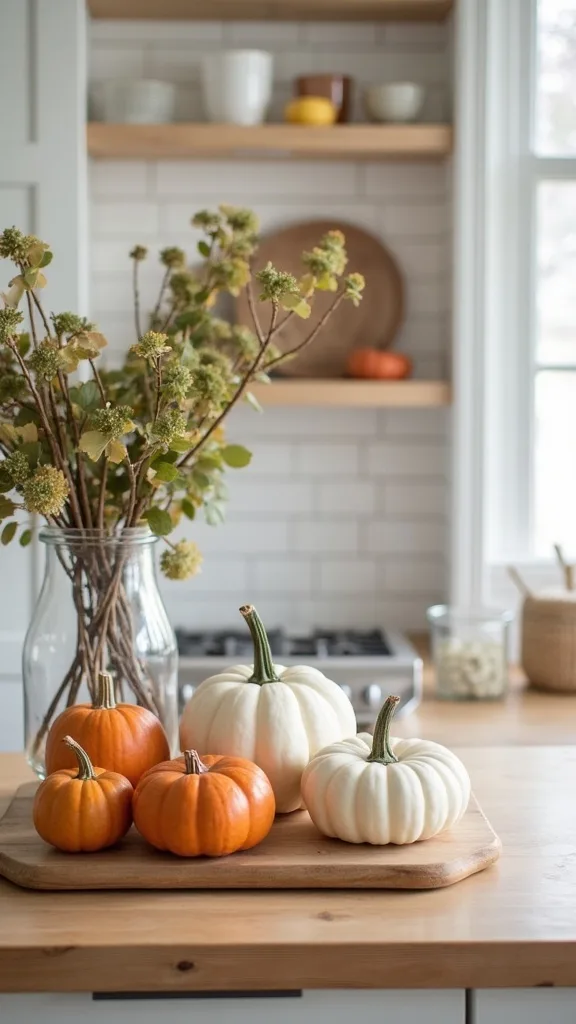
17. How do you make cheap faux stems look expensive on kitchen counters?
Cheap faux stems look cheap when they’re too bright, too plastic, or too perfectly arranged. The fix is to “break” the perfection and add a real texture around them.
Trim stems shorter than you think—kitchen vases should be low and squat so they don’t block sight lines. Mix faux wheat with one real twig or a rosemary sprig for believability. Put them in a heavier vessel: a thrifted stoneware pitcher ($5–$9) instantly upgrades even a $3 stem bundle.
Colors: dusty greens, muted rust, tan. Discount store: Michaels and Joann have great sales; Dollar Tree works if you edit hard. DIY: spray a too-bright stem with a light mist of matte tan spray paint (outside) to tone it down.
Pro tip: avoid shiny leaves—matte finishes read more natural, and your fall kitchen decor will look collected, not packaged.
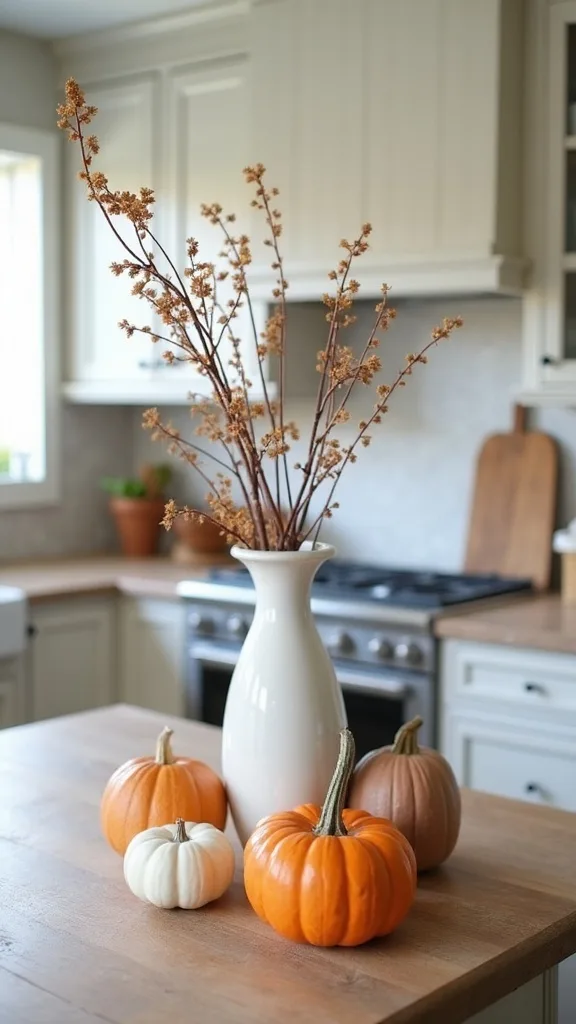
18. How can you decorate a small kitchen for fall without it feeling cramped?
Small kitchens don’t need less fall—they need smaller scale. One oversized piece can swallow your only counter and make the whole room feel tighter.
Go mini: a 6″–8″ bowl with two gourds, one tiny candle, and one small vase stem is enough. Use the fridge side or pantry door for vertical decor (a small wreath) so your counters stay open. If you have a narrow ledge, line up three small items instead of one big one.
Thrift options: small bowls, bud vases, and mini frames are usually $0.99–$3. Discount: Target Bullseye has tiny vases and candles. DIY: fold a bandana into a mini “runner” for a tray.
Pro tip: avoid large lanterns on counters in small spaces—they’re bulky and rarely practical, and a tight autumn kitchen needs air.
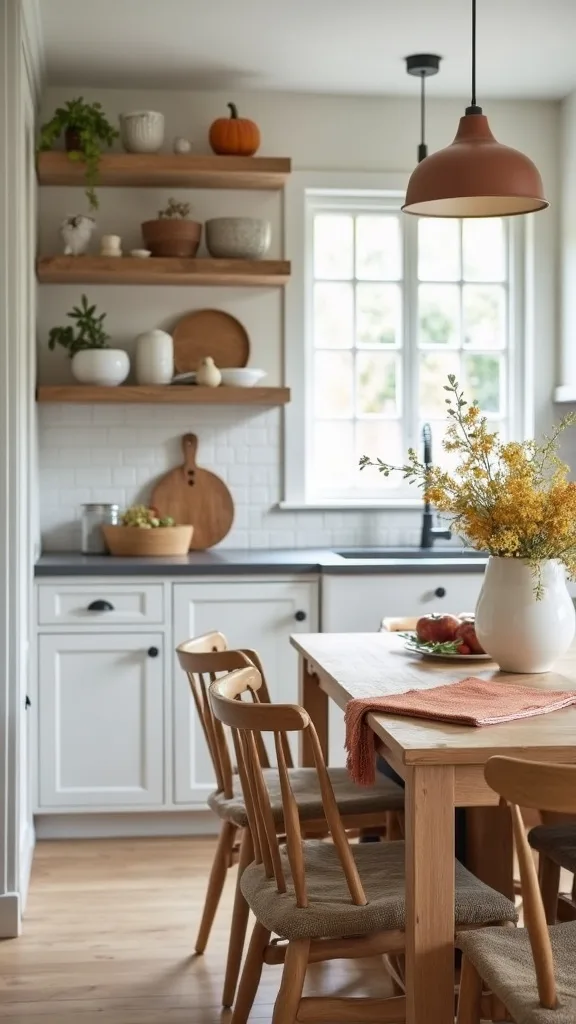
19. What’s an easy fall swap for bar stools or seating in the kitchen?
Textiles on seating are a high-impact, low-commitment change—especially if your stools are basic wood or metal. It reads cozy immediately and costs less than new furniture.
Add seat cushions or simple chair pads in a warm neutral. I found two chair pads at a discount store for $12.99 total; thrift stores sometimes have brand-new ones with tags for $3–$6 each. If your stools already have cushions, add tied-on slipcovers made from a thrifted table runner cut in half and hemmed with iron-on tape.
Colors: oatmeal, camel, rust, or plaid (keep plaid small-scale). Discount: IKEA cushions; Amazon has affordable sets. DIY: add ribbon ties so they don’t slide around.
Pro tip: avoid super fluffy cushions in the kitchen—they trap crumbs, and nothing ruins a kitchen fall refresh like seat pads you can’t wipe clean.
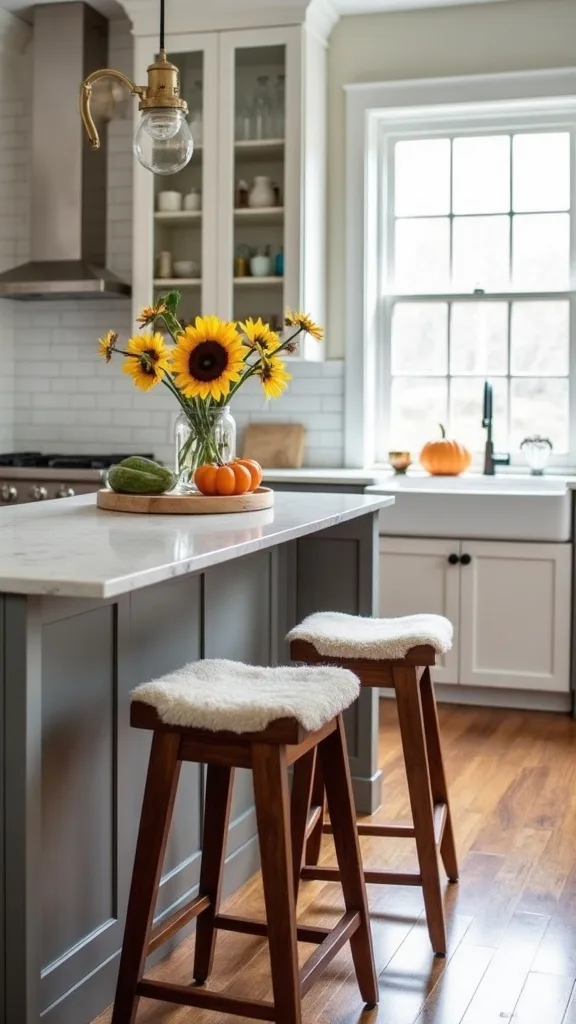
20. How do you style a kitchen counter corner that always becomes a mail pile?
That corner becomes a mail pile because it has no job. Give it a job, and suddenly it behaves. Styling is not just pretty—it’s problem-solving.
Place a small basket or lidded box for papers and a simple “drop zone” tray for keys. Then add one fall touch on top: a mini pumpkin or a tiny vase. I thrifted a lidded basket for $4.00 and it instantly stopped the paper spread. If you don’t want to thrift, a $5 plastic bin from Walmart wrapped in contact paper works shockingly well.
Materials: lidded storage + one seasonal accent. Discount: IKEA has small boxes; Home Depot has command hooks for key hanging.
Pro tip: avoid open trays for mail unless you commit to emptying them weekly—closed storage keeps your seasonal kitchen looking intentional.
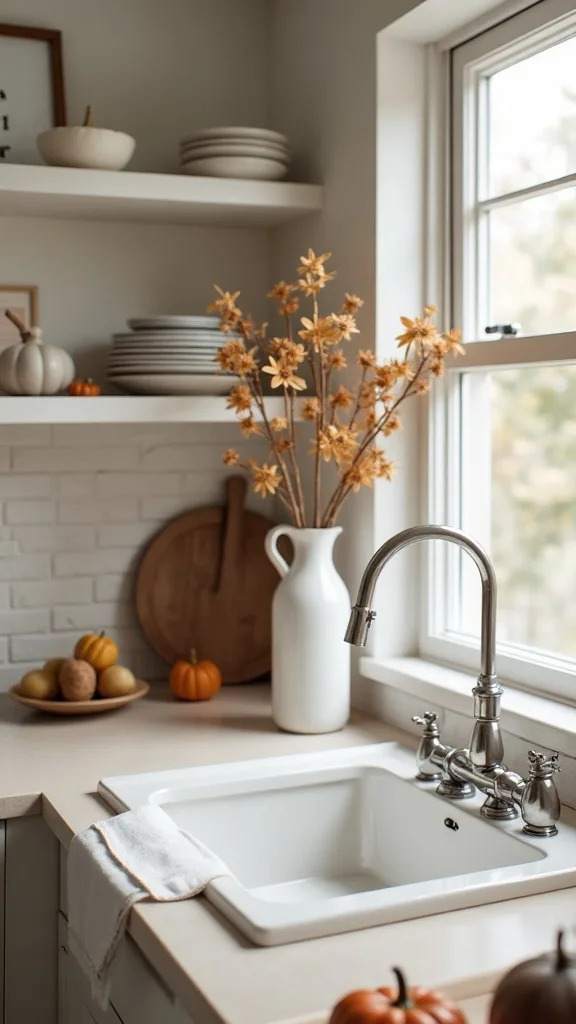
21. What’s the best fall decor swap for a kitchen island (without losing function)?
An island is prime real estate, so the decor needs to earn its keep. The best swap is a functional “base layer” plus one seasonal moment.
Set a large cutting board or butcher block-style board as the base (it can move when you need it). Add a bowl (dough bowl or ceramic) with your fall fillers, but keep it off-center so you still have a workspace. If you entertain, keep a stack of napkins in a basket right there—pretty and useful.
Thrift: oversized boards and bowls show up often, especially in summer when people donate kitchenware. Discount: HomeGoods for boards; Amazon for neutral napkins. DIY: sand and oil a scratched thrifted board with food-safe mineral oil for a fresh look.
Pro tip: avoid anything fragile on the island—if it has to be moved daily, it will break eventually, and resourcefulness means planning for real life.
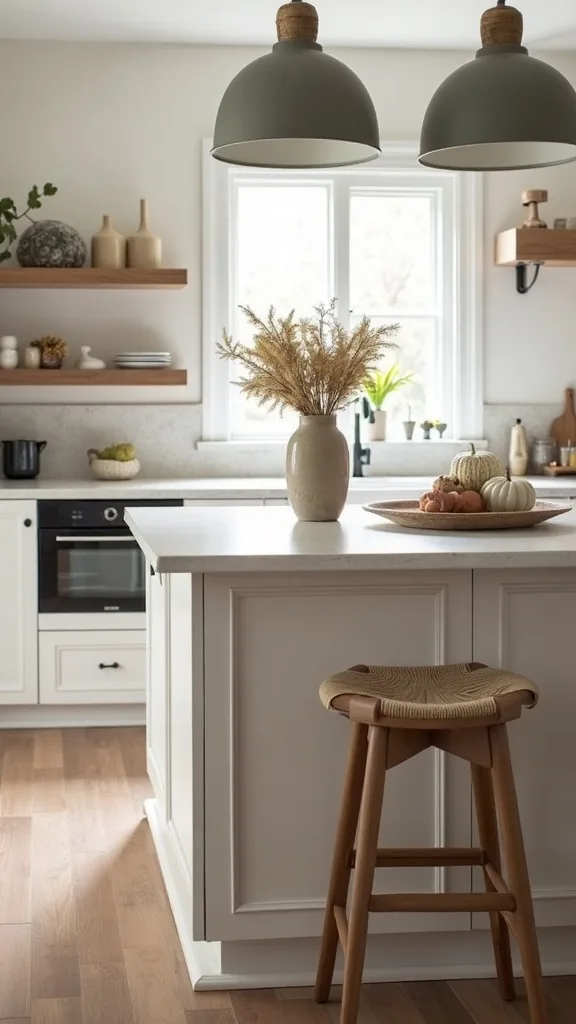
22. How do you add fall decor to kitchen cabinets without damaging them?
Cabinet decor is underrated because it’s visible from across the room and doesn’t steal counter space. The key is using removable methods so you don’t regret it later.
Use removable hooks (Command-style) inside cabinet doors to hang a small wreath, or tie a simple ribbon around a handle. Keep it minimal: one wreath on the pantry door is enough. I made a mini wheat bundle and tied it with twine—cost was basically free because the twine was leftover from a package.
Materials: twine, ribbon, small wreath forms. Discount: Dollar Tree wreath forms; Target seasonal ribbon. DIY: twist faux stems into a mini ring and secure with floral wire.
Pro tip: avoid taping directly to painted cabinets—adhesive can pull paint, and your kitchen fall refresh shouldn’t create a repair project.
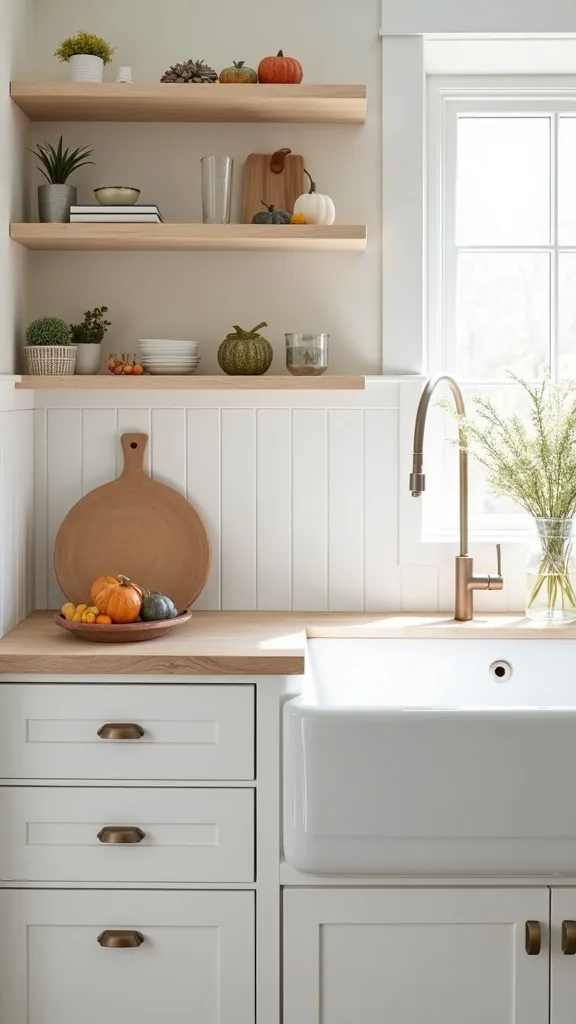
23. What’s a budget-friendly way to bring fall into kitchen lighting?
Fall lighting is less about fancy fixtures and more about warmth and glow. If your kitchen feels harsh at night, seasonal decor won’t save it.
Add one small lamp on a safe corner of the counter or a nearby console, and use a warm white light (2700K–3000K — the cosy, yellowish tone you see in most homes). I thrifted a small lamp for $9.99 and swapped in a warm bulb I already had. If you can’t do a lamp, add under-cabinet puck lights (battery) in warm tone for a gentle evening vibe.
Discount: IKEA lamps; Home Depot bulbs; Amazon puck lights. DIY: wrap a plain shade with a thrifted linen napkin using fabric-safe tape for a softer look.
Pro tip: avoid super bright daylight bulbs in the evening—your autumn kitchen should feel like a landing spot, not a workspace at noon.
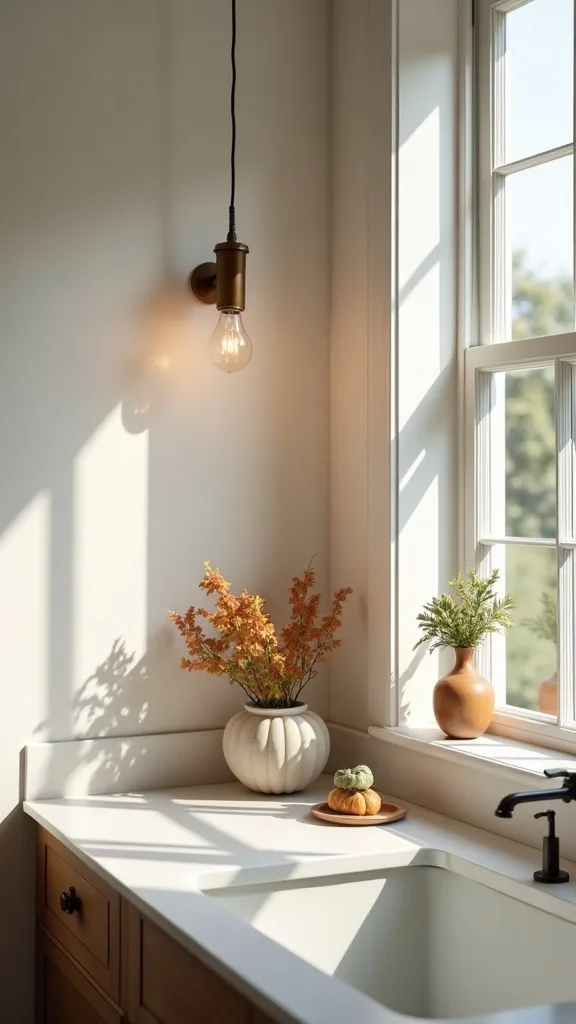
24. How do you create a fall moment with cookbooks and everyday kitchen items?
The cheapest decor is what you already own—if you style it like you meant to. Cookbooks and everyday tools are perfect because they’re authentic and functional.
Stack two cookbooks with warm covers (or wrap them in kraft paper if the covers clash). Top with a small wooden spoon bundle tied with twine or a tiny pumpkin. Add a mug with cinnamon sticks as “tools,” not clutter. Thrift stores are full of cookbooks for $1–$3; look for neutral spines or classic titles.
Colors: kraft paper, black, cream, wood. Discount: Dollar Tree twine; Walmart mugs. DIY: print a cookbook cover and slide it into a clear binder as a fake “book” if you want height without cost.
Pro tip: avoid stacking books where they’ll get splattered (next to the stove)—put them near the coffee station or breakfast nook so they stay clean.
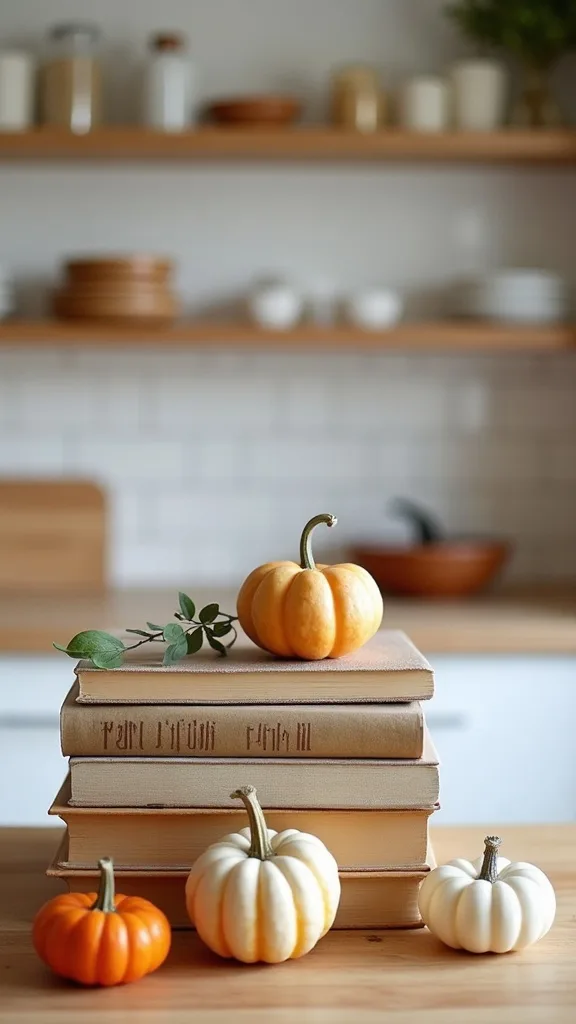
25. How do you make the ‘before’ kitchen look better fast (without pretending it was fine)?
The honest “before” is usually a mix of leftovers: summer color, random paper, and counters that never got reset at the end of the day. Fixing that is part of the decor swap, not separate from it.
Do a 10-minute reset: clear everything off one counter, wipe it, and only put back what you use daily. Then place your fall focal point (dough bowl vignette or tray) and stop. My real before was ugly: a neon citrus bowl, an empty Amazon box, and three unmatched water bottles living by the sink. The swap worked because I removed more than I added.
Tools: one all-purpose cleaner, a basket for papers, and a donation bag for “why is this here?” items. Thrift a basket for $3–$5 or use a cardboard box wrapped in paper as a temporary bin.
Pro tip: avoid buying new decor before you edit—resourcefulness starts with seeing what you already have, and that’s how a kitchen fall refresh actually sticks.
Final Thoughts
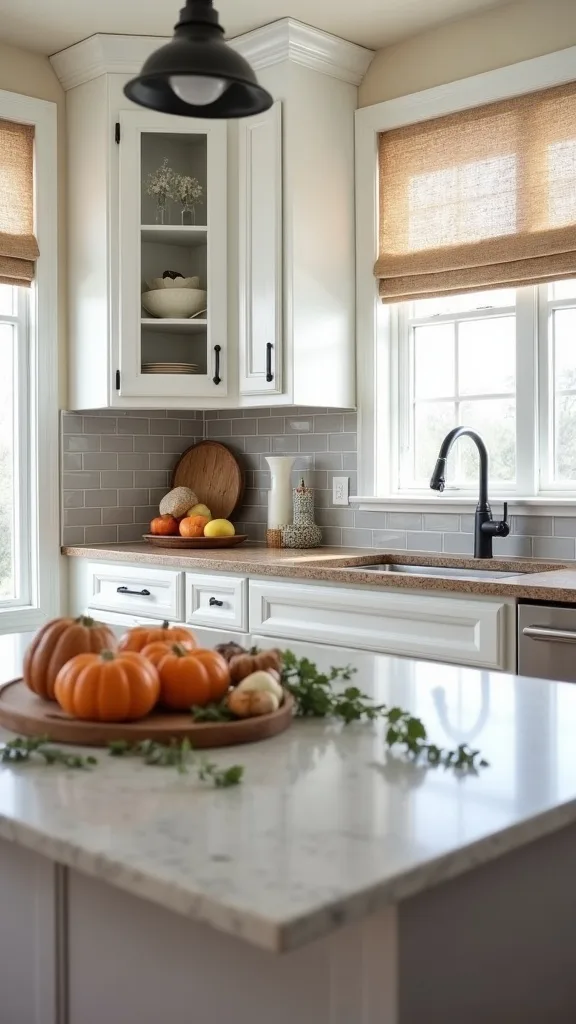
The best part of a fall swap in the kitchen is that it pays you back every single day. You see it while the coffee brews. You feel it when you wipe the counters and everything has a “home.” That’s not extra—it’s the difference between a room that nags at you and one that helps you.
If you only do one thing, do the bowl swap and the towel swap. That tiny combo carries the whole season, and it doesn’t require storage bins full of decor you’ll resent in January.
Today’s action: set a timer for 15 minutes, clear one counter completely, then build one small fall vignette (tray or bowl) and donate the one summer item you replaced so the clutter doesn’t boomerang back.
What I’d Do Differently
When I first tried this, I treated my kitchen like a fall craft fair booth. True story: I lined up three different “Harvest” signs, shoved a leaf garland across the backsplash, and parked a lantern on the only counter spot where I actually prep dinner. It looked busy in photos and felt irritating in real life—every time I cooked, I had to move decor like it was a chore list. The mistake wasn’t the decor, it was ignoring function. The correct approach is to pick one hero moment (like the dough bowl swap) and then repeat that vibe in tiny, wipeable ways—towels, one amber bottle, one board—so the room reads fall without stealing your workflow.
I also wish I’d known how much lighting matters. My first “autumn kitchen” still felt cold because the bulbs were harsh. One warm white light (2700K–3000K — the cosy, yellowish tone you see in most homes) in a little lamp changed everything more than another pumpkin ever could. Start with one clear counter, one focal bowl, and one warm light, and you’ll be shocked how fast it comes together.