
This post contains affiliate links. As an Amazon Associate, I earn from qualifying purchases at no extra cost to you.
That photo-perfect fall living room? The one with the untouched cushions and the throw draped like it’s never met a toddler, a dog, or a Tuesday night pizza box? Real life lives here—crumbs, backpacks, remote controls, and all. The good news: the feeling of those inspiration images isn’t about perfection. It’s about texture.
This guide is a practical, editorial approach to building a textured living room for early fall—using velvet, wool, and warm light to create a space that looks pulled-together and feels genuinely comforting. You’ll get specific placements, easy swaps, and a few “don’t do this” pitfalls that keep the room from tipping into heavy or dated.
This is perfect for families who want their living room to feel calmer at the end of the day—without buying a new sofa or treating decor like it’s museum property.
Inside, you’ll find cozy living room textures that hold up to real use, knit throw ideas that don’t slide off the armrest, and lighting moves that make evenings feel softer and slower.
Below are 25 Velvet & Textured Fall Living Room Styling that…
Products I Recommend for This Project
Here are some of my favourite products to help you bring these ideas to life:
- MIULEE Velvet Throw Pillow Covers (Set of 2, 22×22) — A reliable way to add that rich velvet sheen without committing to new pillows.
- Utopia Bedding Throw Pillow Inserts (24×24, Set of 2) — Slightly larger inserts give velvet covers a fuller, more tailored look.
- POVETIRE Chunky Knit Throw Blanket (50×60) — Adds instant loft and warmth; great for practical, grab-and-go coziness.
- IKEA TOFTBO Bath Mat (used as a faux-sheepskin look layer) — A budget-friendly way to mimic that soft footstool moment in a family home.
- Philips LED Vintage Edison Bulbs, Soft White — Creates a warm glow that makes velvet and wool look deeper and more inviting.
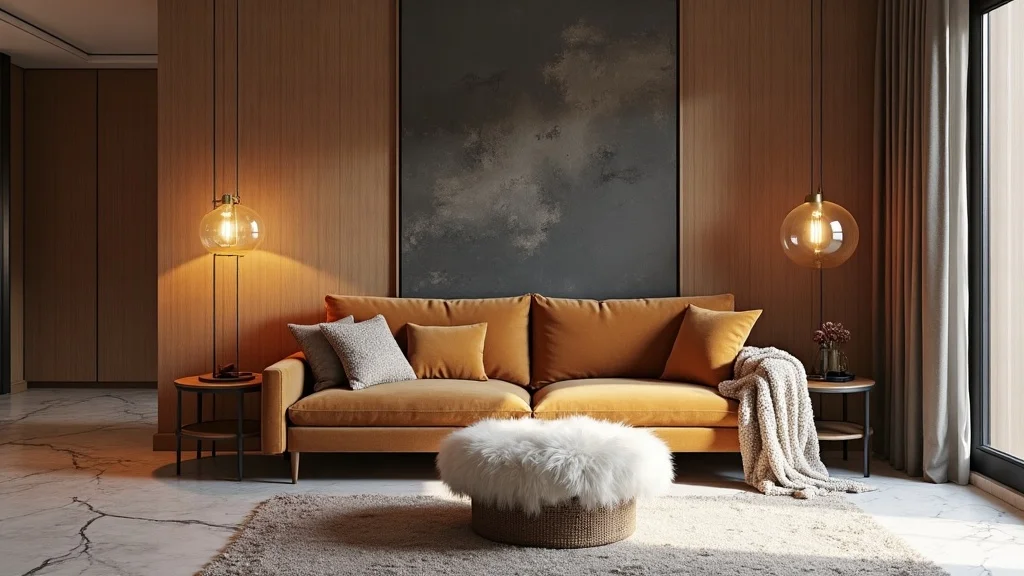
1. Start with the “hero quartet”: cognac velvet, chunky wool, sheepskin, and Edison glow
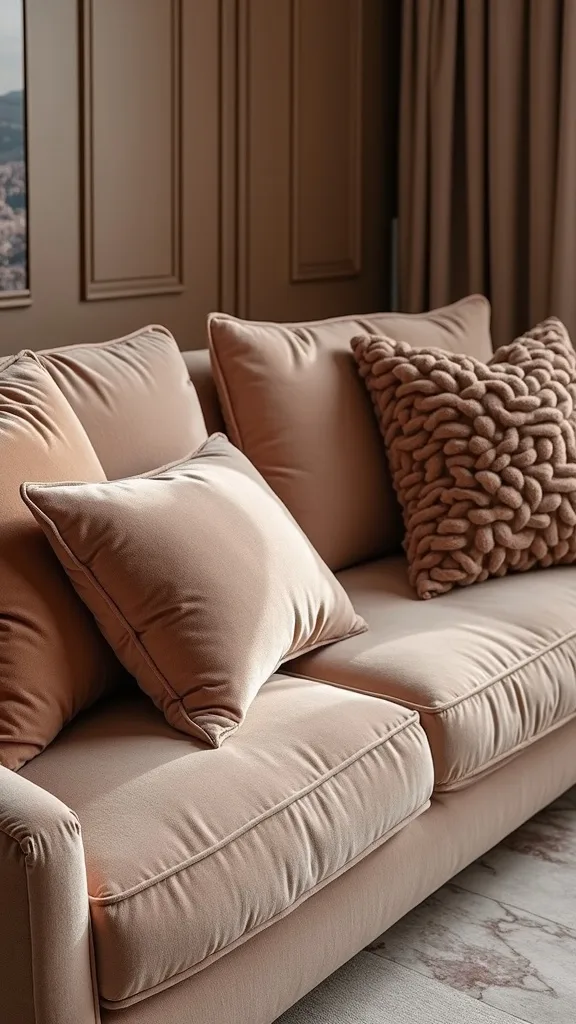
This idea is a ready-made mood: cognac velvet cushions, a chunky wool throw, a sheepskin footstool, and warm Edison bulb lamps. It works because you’re mixing shine, loft, and softness—so the room feels layered without looking busy. Place two cognac velvet pillows on the sofa corners, then fold a chunky wool throw into a clean rectangle and drape it where hands actually reach (usually the seat’s left side if you’re right-handed). Add a sheepskin over a small footstool or ottoman to create a tactile “landing pad” for feet, books, or a sleepy cat. Finish with a table lamp using warm white light (2700K–3000K — the cosy, yellowish tone you see in most homes) to make evenings feel kinder. Consider cognac, warm camel, oatmeal, and creamy ivory so the textures do the talking. Pro tip: keep the velvet pieces to 2–3 items so the look reads intentional, not themed—your living room should feel lived-in, and still a little luxe.
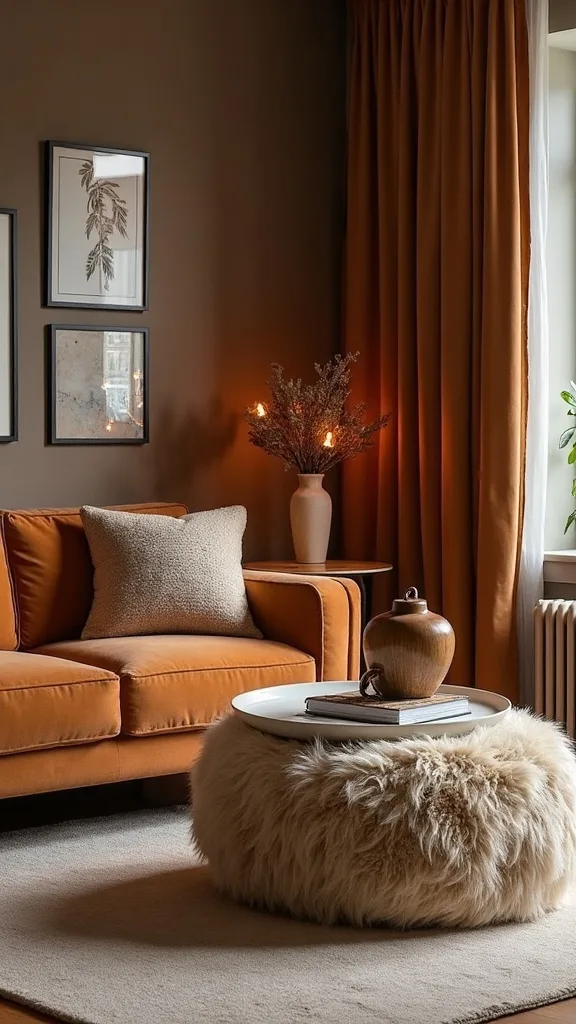
2. How do you style velvet pillows so they look elevated (not slippery or overstuffed)?
Velvet pillows look expensive when they’re structured, not puffy. The trick is choosing the right size and giving them a crisp “karate chop” moment without overdoing it. Use 22-inch covers with 24-inch inserts for a tailored, full look, then place them behind smaller pillows so the arrangement feels layered rather than crowded. Keep the front pillows in a nubby fabric—bouclé, slub linen, or a tight weave—so the velvet reads as a highlight. If your cushions slide, add a thin non-slip rug pad strip between pillow and upholstery (cut a 6-inch square). Colors that work beautifully for early fall: cognac, deep olive, warm taupe, or ink. Avoid shiny, thin velvet that looks like costume fabric under daylight. Pro tip: steam velvet lightly from a distance to refresh crush marks, then brush it with your hand in one direction for that smooth, directional sheen that feels quietly luxury.
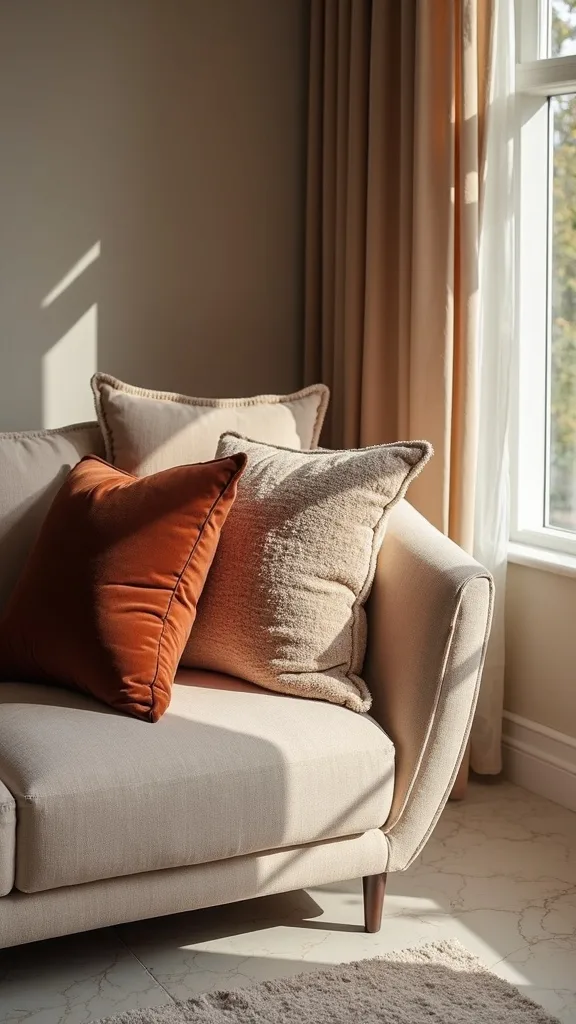
3. What’s the easiest way to create a textured living room without buying new furniture?
The fastest route to a textured living room is swapping what touches your body: pillows, throws, and one soft underfoot layer. It works because texture is emotional—you feel it before you “notice” it. Start with three textures: one plush (velvet), one chunky (knit or wool), and one matte (linen or cotton). Replace pillow covers first, then add a throw that’s actually warm, not just decorative. If your floors feel bare, tuck a 2′ x 3′ wool-blend rug by the sofa where feet land; even a small piece changes the experience. Choose a palette of warm neutrals plus one grounded color (cognac + cream + olive is a classic). Avoid buying five new items in the same texture—too much of one note flattens the room. Pro tip: repeat each texture twice (two velvet accents, two nubby accents) so it looks designed but still relaxed—progress over perfection, always.
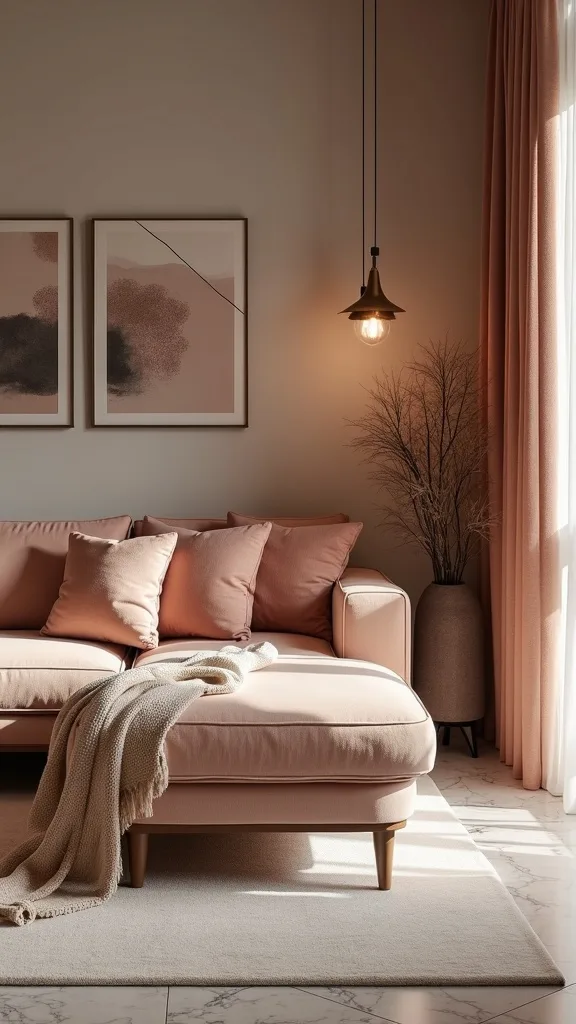
4. How many velvet pieces are “enough” for fall cozy decor?
For fall cozy decor, velvet works best as an accent—enough to catch light, not so much that it feels formal. In most living rooms, 2–4 velvet pieces is the sweet spot. Try two velvet pillow covers and one velvet ottoman tray liner, or add velvet curtains if your room feels echo-y and bright. Keep the rest of the room grounded in matte textures like cotton canvas, wool, and wood so the velvet feels like jewelry, not a costume. If you already have a velvet chair, treat that as your anchor and keep pillow velvet minimal. Colors that read early fall (not holiday): cognac, rust, tobacco, olive, and warm charcoal. Avoid matching every velvet item exactly—perfect matches can look like a set. Pro tip: vary velvet tones within the same family (cognac + caramel) for a rich, layered look that feels collected over time.
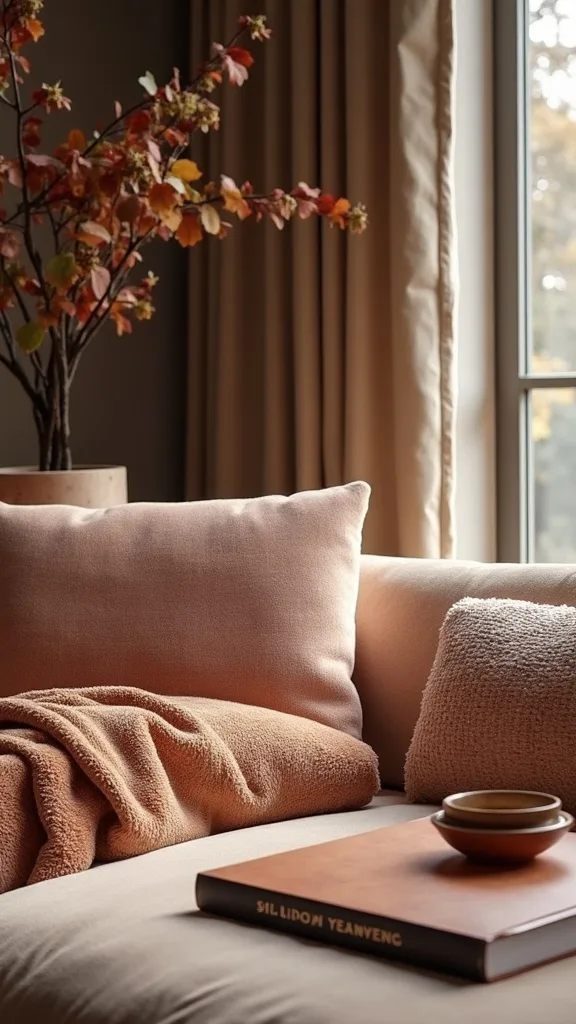
5. Where should you place a chunky knit throw so it stays put and gets used?
A chunky knit throw only looks cozy if it’s also convenient. The best placement is where someone naturally reaches when the temperature dips—typically the sofa arm closest to the hallway or TV. Fold it in thirds lengthwise, then drape it so one end lands on the seat cushion (friction helps) and the other falls toward the floor without pooling. If you have kids, consider a lidded basket beside the sofa: the throw lives there during the day, then comes out for movie nights. Great knit throw ideas include cable knit, fisherman rib, or a wool-blend that won’t pill instantly. Avoid super-loose, “open weave” knits if you have pets—the snagging heartbreak is real. Pro tip: choose a throw that’s at least 50″ x 60″ so it can wrap shoulders, not just decorate an armrest—comfort is the point.
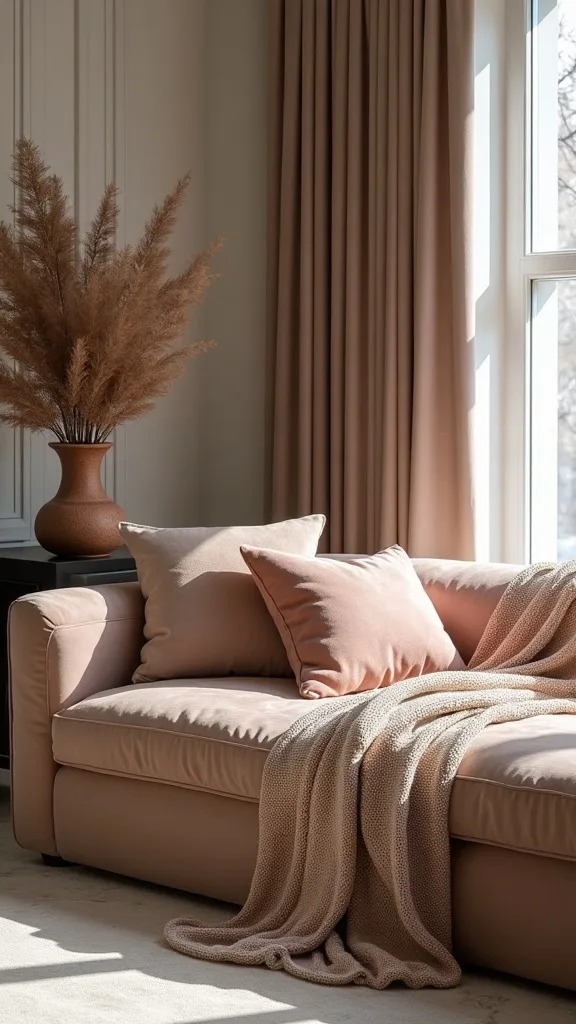
6. How do you mix cozy living room textures without making the room feel cluttered?
Texture can read as clutter when every surface competes for attention. The fix is editing: choose a few big texture moments and let the rest breathe. Aim for one plush (velvet pillows), one lofty (wool throw), one fuzzy (sheepskin), and one hard (wood, leather, or metal) to keep the room visually crisp. Limit patterns to one or two small areas—like a subtle stripe pillow or a vintage-style rug—so the textures remain the star. Use negative space on the coffee table: one tray, one book stack, one candle. Avoid scattering tiny decor across every shelf; it breaks the calm. Pro tip: repeat colors more than textures—cognac appearing in two places, cream appearing in three—so the room feels cohesive even when life is happening all over it.
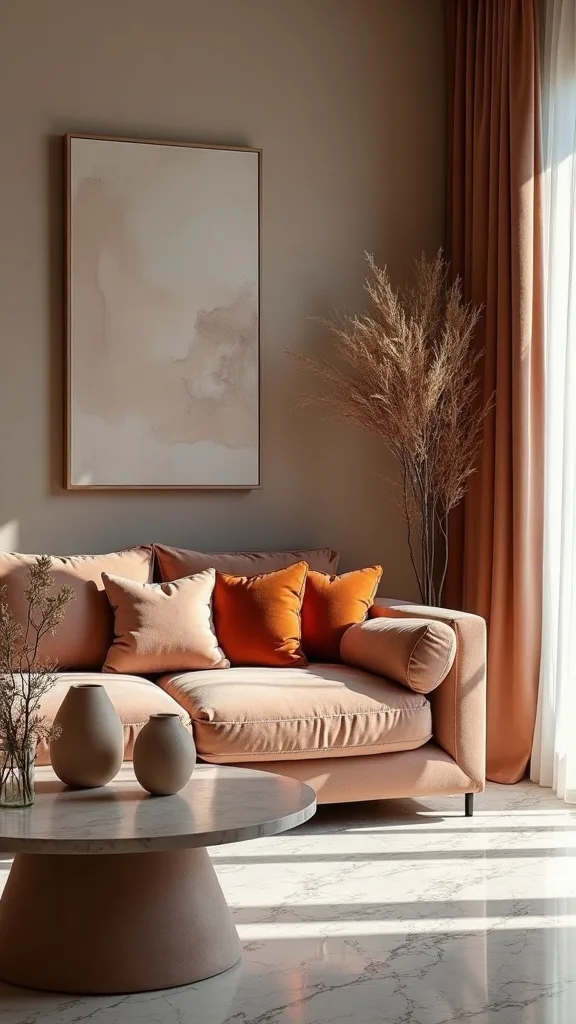
7. What colors make velvet look expensive in early fall light?
Velvet looks most elevated in colors that echo natural materials—leather, wood, dried grasses, and warm stone. Cognac is the headline, but caramel, cinnamon, olive, and deep umber all play beautifully with early fall daylight. Pair those with creamy ivory and soft taupe to keep the room airy. If your living room is north-facing (cooler light), lean warmer: tobacco, rust, and camel. If it’s south-facing (lots of sun), add a grounding shade like moss or warm charcoal to prevent the velvet from looking too bright. Avoid icy grays with warm velvet—they can make the room feel split in two. Pro tip: bring home paint chips or fabric swatches and view them at 9am and 7pm; velvet shifts dramatically, and choosing with real-life lighting is a quiet form of confidence.
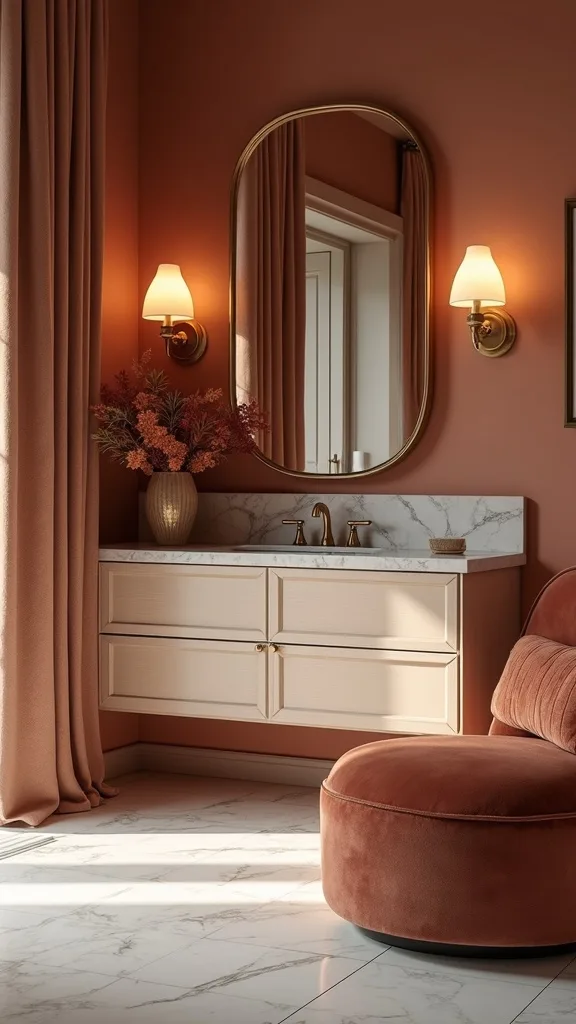
8. How can lighting make velvet and texture feel cozier at night?
Velvet comes alive under warm light—it catches glow on the high points and goes moody in the shadows. To make the room feel cozier, use at least two light sources at different heights: a table lamp and a floor lamp, or two table lamps across the room. Choose warm white light (2700K–3000K — the cosy, yellowish tone you see in most homes) so the space looks like a gentle evening, not a showroom. Edison-style bulbs can be beautiful, but make sure the lamp shade diffuses glare; exposed bulbs can feel harsh in real life. Add a dimmer plug if you can—this is a $12–$20 upgrade that changes everything. Avoid relying on one bright overhead light (brightness measured in lumens) for the whole room; it flattens texture. Pro tip: light a corner near the sofa—when one corner glows, the whole room feels welcoming.
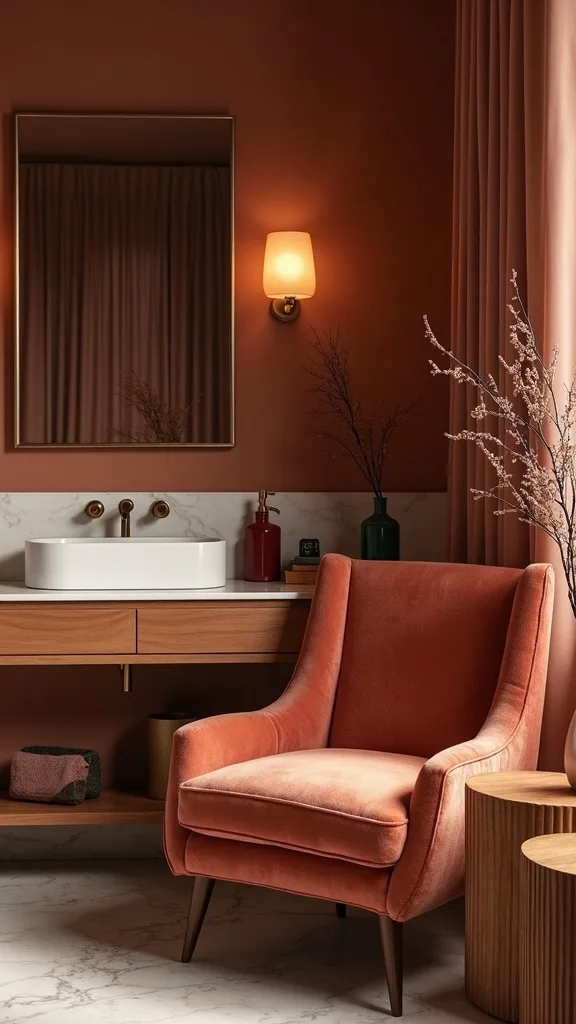
Cost & Materials Estimate
A realistic early-fall texture refresh (pillows, throw, and warmer lighting) typically lands between $90 and $260 depending on what you already own.
| Item | Estimated Cost | Where to Buy |
|---|---|---|
| 2 velvet pillow covers (22″ x 22″) | $18–$35 | Amazon |
| 2 down-alternative pillow inserts (24″ x 24″) | $28–$48 | Amazon |
| Chunky knit or wool-blend throw (50″ x 60″ or larger) | $35–$90 | Wayfair |
| Faux sheepskin (for footstool/ottoman) | $25–$60 | IKEA |
| Warm white LED Edison-style bulbs (pack of 4) | $14–$28 | Home Depot |
Total estimated cost: $120–$261 Save by buying covers (not new pillows) and splurge on the throw—comfort is what you’ll feel every night.
9. What’s the best way to style a sheepskin footstool without it looking messy?
A sheepskin footstool should look inviting, not like a stray rug. It works when it has a clear job: feet-up comfort, extra seating, or a soft perch for a tray. Choose a footstool with a defined shape (round pouf or small square ottoman), then drape the sheepskin so it covers the top and falls 1–2 inches over the edge—enough to look intentional. Keep the surrounding area clean: one small side table, one lamp, one basket nearby. Colors that feel sophisticated: ivory, warm sand, or a slightly speckled cream. Avoid placing sheepskin directly on high-traffic floor spots where it will collect crumbs and flatten fast. Pro tip: shake it outside weekly and brush it with a pet slicker brush; it stays fluffy and becomes your living room’s softest ritual.
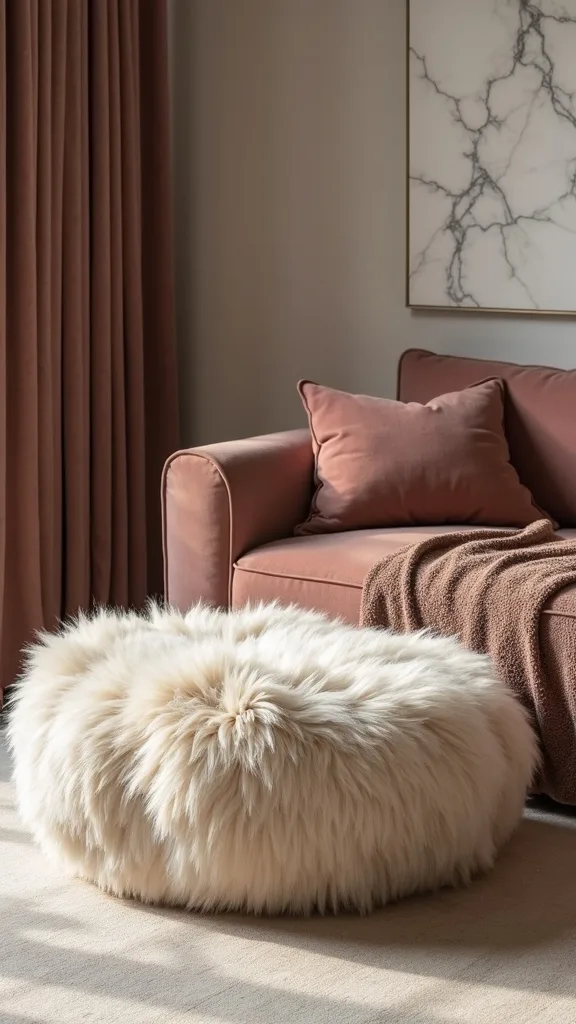
10. How do you create “fall cozy decor” when your sofa is a basic neutral?
A neutral sofa is not a limitation—it’s a runway. Fall cozy decor lands beautifully on beige, gray, or cream upholstery because the textures get to take center stage. Start with two velvet accents in a warm tone (cognac or olive), then add a chunky throw in an oatmeal or heathered cream. Bring in one darker anchor—like a walnut tray or black metal lamp—to keep the look from floating away. If the sofa feels flat, add one lumbar pillow in a nubby weave for depth. Avoid matching everything to the sofa color; tonal is chic, but too much “same” can look tired. Pro tip: add one small, unexpected texture—like a leather catchall on the coffee table—so the room feels styled yet still like a place where people actually live.
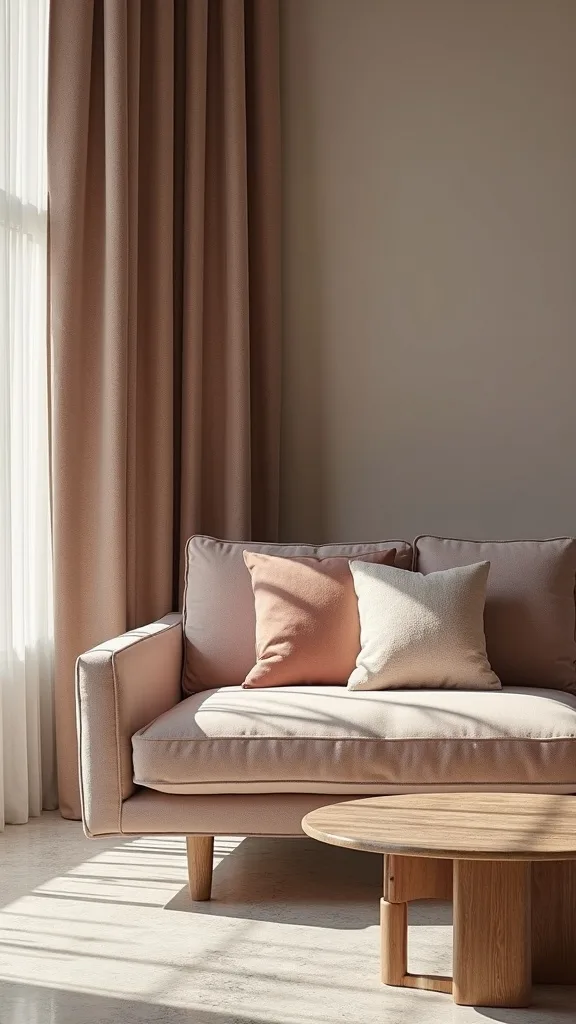
11. What’s a simple pillow formula that works for families (and doesn’t require constant fluffing)?
The family-friendly pillow formula is fewer, better pillows. It works because you’re not fighting a mountain of decor every time someone sits down. Try this: two 22-inch velvet pillows in back, two 20-inch textured pillows in front, and one lumbar in the center if you want polish. That’s five pillows—enough to feel designed, not so many that you’re relocating them to the floor nightly. Choose removable covers with hidden zippers so spills don’t become tragedies. Stick to a tight palette: cognac + cream + a hint of olive or black. Avoid fragile trims (tassels, beads) if you have kids or pets; they won’t survive snack time. Pro tip: keep a pretty basket nearby for the “extra” pillows during movie night—your room can be beautiful and functional.
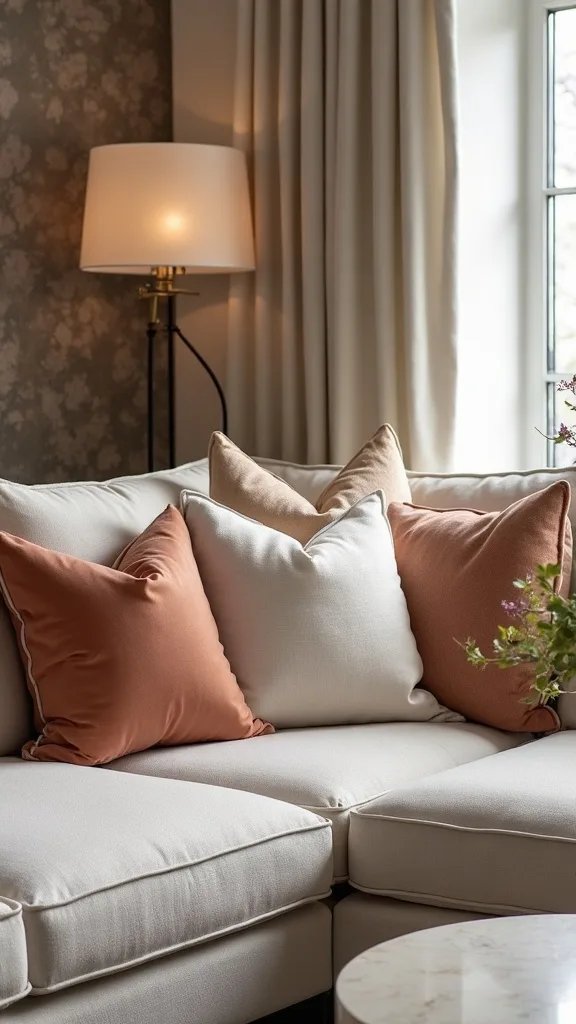
12. How do you style a coffee table with texture without losing everyday function?
A textured coffee table moment should still leave space for real life—mugs, homework, the occasional board game. The easiest approach is a tray that corrals the pretty things. Choose a wood, leather, or matte metal tray, then add three items: a candle, a small stack of books, and one organic object (a ceramic bowl or a vase with dried stems). If you want more softness, tuck a small folded linen napkin under the candle to add a subtle layer. Keep the rest of the table clear. Avoid covering the whole surface with decor; it makes the room feel precious instead of welcoming. Pro tip: pick one scent for early fall (cedar, fig, or cardamom) so the room has a signature—coziness isn’t only visual, it’s sensory.
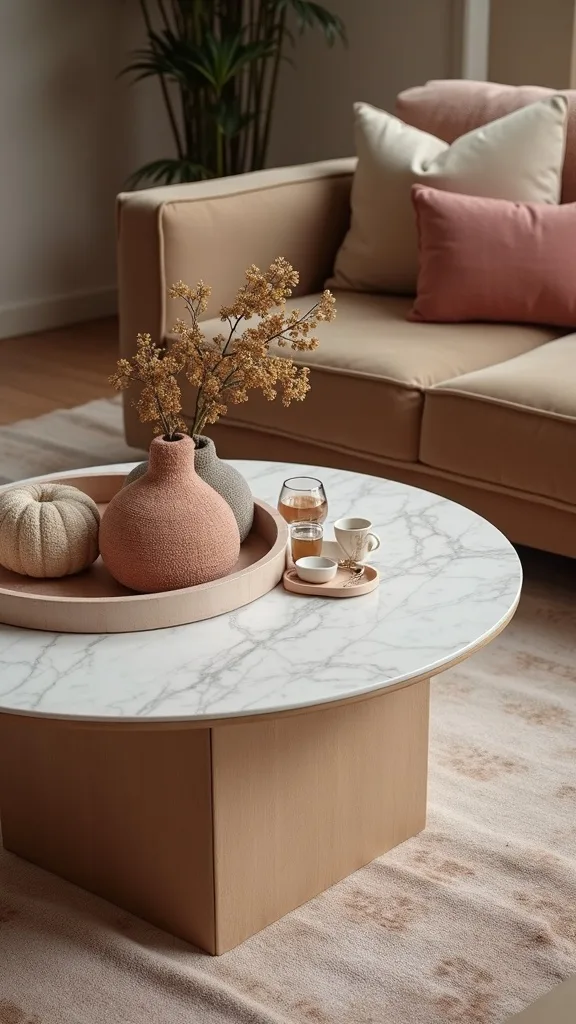
13. Which rug textures pair best with velvet and wool for early fall?
When you already have velvet and wool, the rug should ground the room—not compete. Low-pile wool, wool-jute blends, or vintage-style rugs with a slightly worn pattern are ideal because they add warmth without adding fluff. If your living room is busy, choose a rug with a quiet pattern (soft geometrics or a faded medallion) so the furniture and textiles shine. For smaller budgets, a washable rug can still feel elevated if the colors are right—warm neutrals and muted spice tones. Avoid super-shag rugs if you’re already using a chunky throw and sheepskin; too much loft can feel heavy and harder to keep clean. Pro tip: make sure the front legs of the sofa sit on the rug; that simple placement makes the whole room feel anchored and intentional.
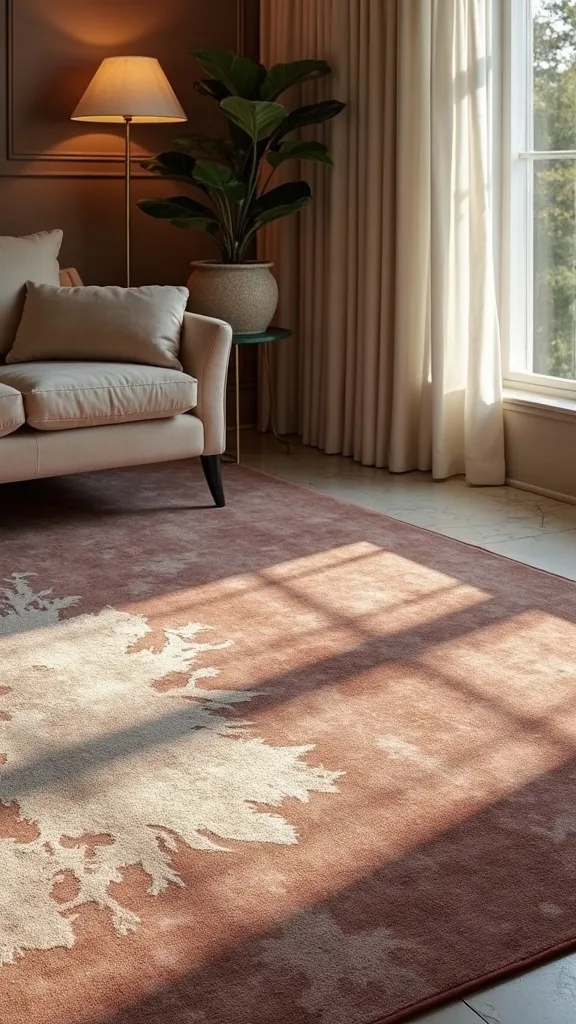
14. How do you use curtains to add texture without darkening the room?
Curtains can add instant softness, but early fall still wants light. The key is choosing texture with a breathable weave. Think linen-blend panels, cotton slub, or a subtle herringbone—materials that diffuse sunlight rather than blocking it. Hang curtains high (close to the ceiling) and wide (6–10 inches past the window frame) to make the room feel taller and calmer. If you love velvet, use it strategically: velvet curtain panels in a warm neutral can be stunning, but keep them unlined or lightly lined if the room already feels dim. Avoid short curtains that stop at the sill; they can make the space feel chopped. Pro tip: add simple matte black or antique brass hardware—one small upgrade that makes everything feel finished.
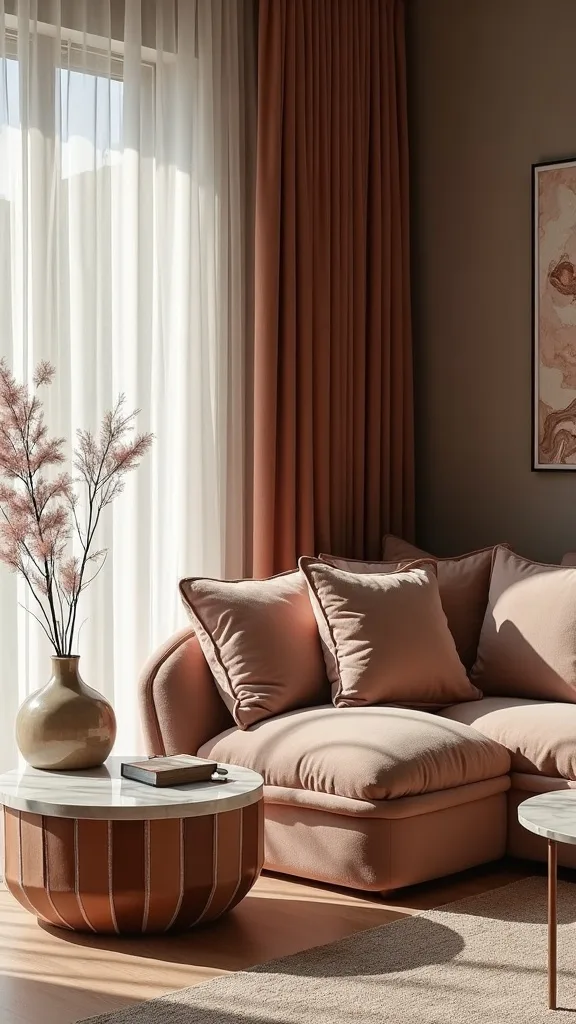
15. What throw blanket materials actually feel cozy (not scratchy) for movie nights?
Cozy is physical. If it doesn’t feel good on bare arms, it won’t get used—no matter how pretty it looks on the sofa. For movie nights, choose wool blends that are softened, cotton knits with weight, or faux mohair that feels plush without itching. If you love the look of wool but worry about scratchiness, layer it: place a soft cotton throw closest to skin and drape the wool throw on top for texture. Keep at least one “utility” blanket that’s washable for kids and pets. Avoid thin acrylic throws that look fluffy but trap static and pill quickly. Pro tip: store the best throw in a lidded basket with a sachet (lavender or cedar) so pulling it out feels like a tiny ritual at the end of the day.
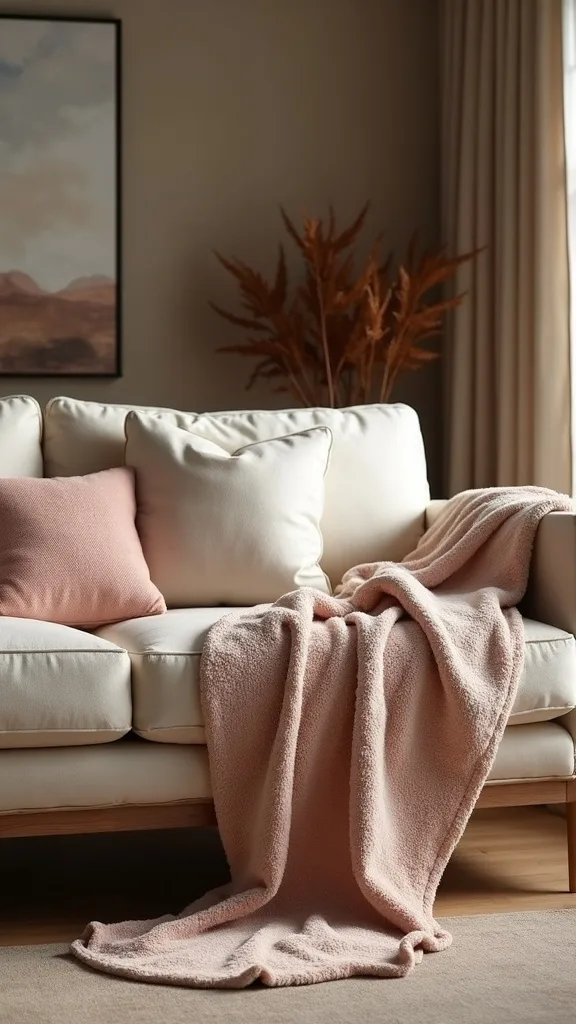
16. How do you decorate with velvet if you have pets or sticky-finger realities?
Velvet can absolutely live in a family home—you just need the right kind and the right placement. Performance velvet (or microfiber velvet) is more forgiving and often wipes clean with a damp cloth. Use velvet on removable pillow covers instead of a full sofa if you’re nervous; that way, life happens and you can wash or replace a cover without drama. Choose medium-to-dark tones like cognac, olive, or charcoal to hide everyday lint. Keep a small lint roller in a side table drawer—easy, not shame-y. Avoid delicate silk velvet or anything labeled “dry clean only” for high-touch areas; it’s stress you don’t need. Pro tip: accept a little rumple as part of the charm—cozy texture is meant to look touched.
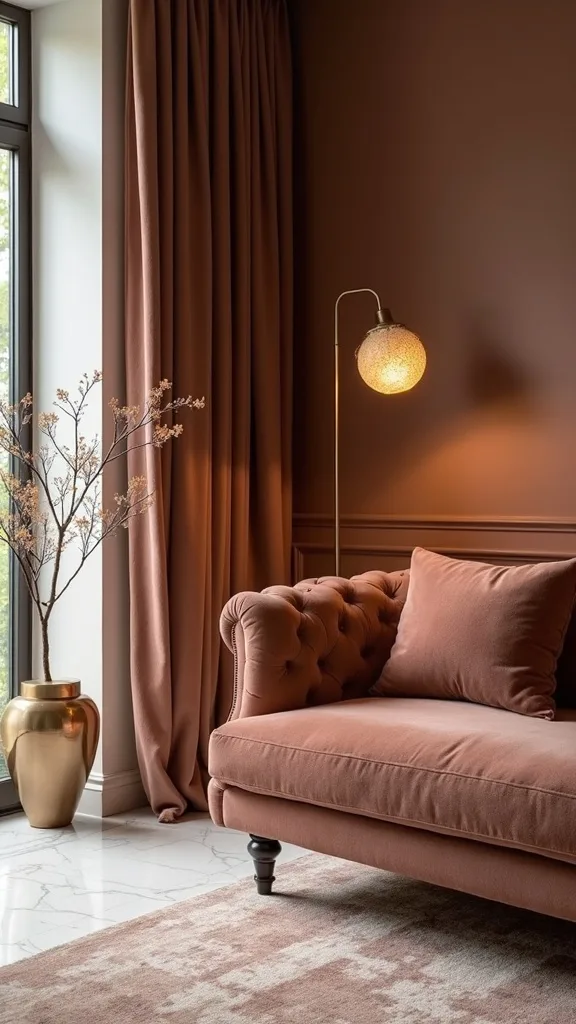
17. What’s one thing to avoid when styling velvet home decor for fall?
Avoid making everything the same temperature and finish. When all your fall pieces are warm-toned and shiny, the room can start to feel heavy—like it’s wearing too much makeup in daylight. Velvet home decor needs contrast to look sophisticated: pair velvet with matte ceramics, raw wood, or a nubby woven pillow. Add one cool note (like aged brass, black metal, or stone) to sharpen the palette. If you’re using cognac velvet, avoid pairing it with overly orange pumpkins or bright red accents; it can veer “theme” fast. Instead, choose dried botanicals, deep olive, or warm ivory. Pro tip: set one rule—no more than two “statement” items per surface—so your room feels edited and calm, not styled to the point of exhaustion.
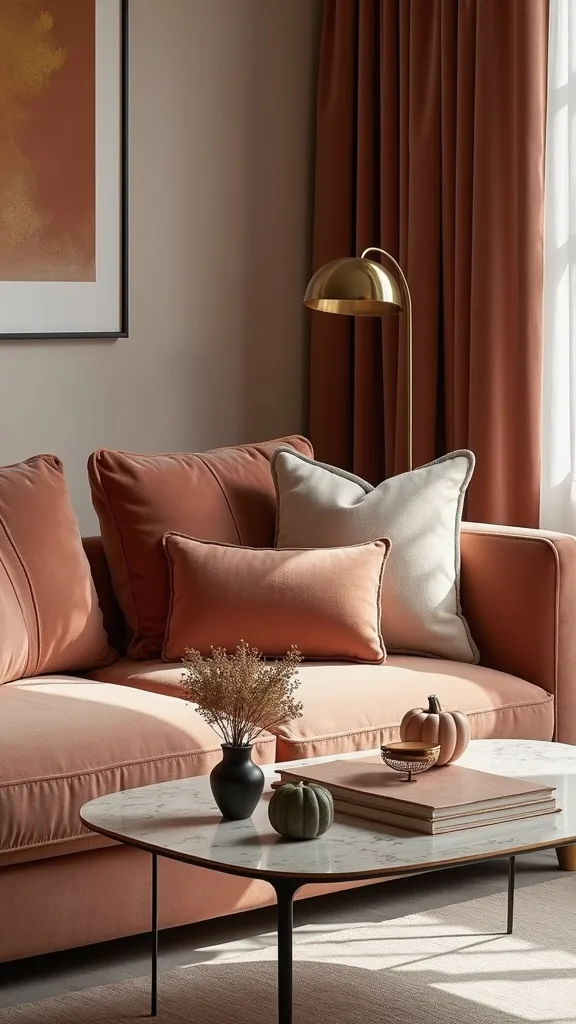
18. How can you use books and baskets to add texture and keep clutter contained?
Texture isn’t only fabric—storage can be beautiful too. A woven basket beside the sofa adds warmth and becomes the designated home for throws, kids’ headphones, or the stack of mail you’ll deal with later. Coffee-table books add a smooth, structured layer that balances plush textiles. Keep it simple: one medium basket, one small basket, and a two-book stack on the coffee table. Choose basket tones that echo your palette (honey, tan, or warm brown) so they blend rather than shout. Avoid using lots of tiny baskets on open shelves; it can look fussy and still not solve the mess. Pro tip: label one basket “Tonight” (mentally, at least) for the things you need to put away later—your living room can feel serene without being sterile.
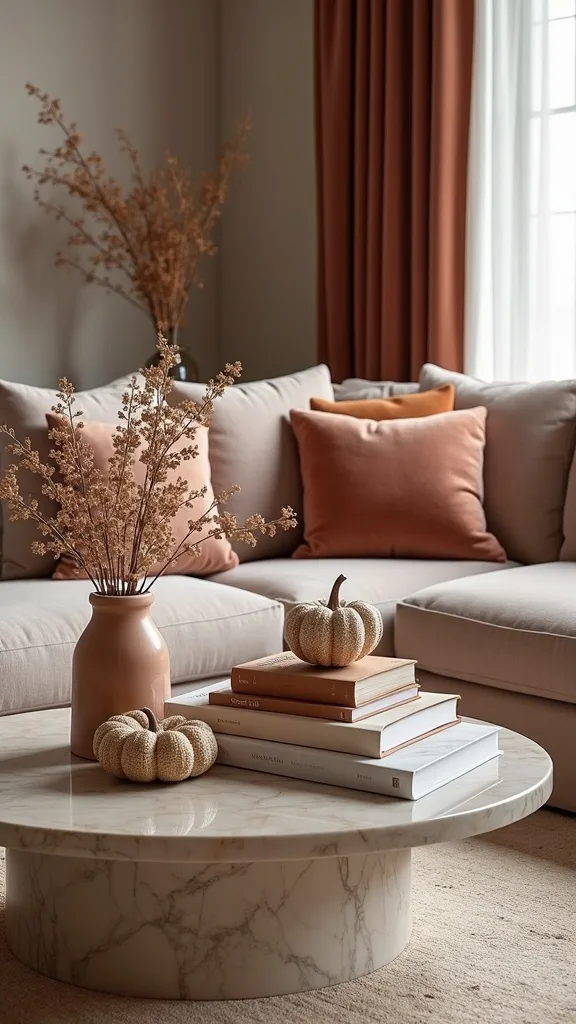
19. How do you style an accent chair to echo the sofa without matching exactly?
An accent chair looks best when it feels related to the sofa, not cloned. If your sofa is neutral, choose an accent chair in a different texture—leather, boucle, or a tight weave—then tie it back with a velvet pillow in the same family as your sofa pillows. Add a small side table and a lamp so the chair becomes a real “spot,” not a lonely piece. If you already have a patterned chair, keep the velvet solid and rich (cognac, olive, or warm charcoal). Avoid matching the pillow fabric and color exactly across every seat; it reads like a set. Pro tip: place a small footstool nearby—comfort makes the chair feel irresistible, and the room starts working harder for your daily life.
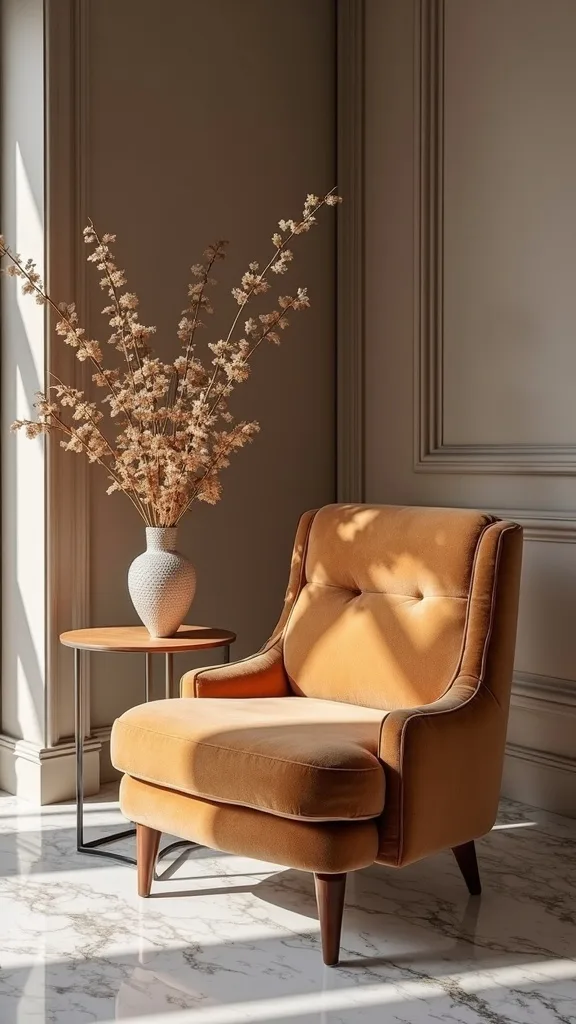
20. What are smart ways to bring in early-fall color without repainting?
You don’t need paint to change the season—you need accents that shift the mood. Swap in one warm-toned textile (cognac velvet), one natural element (dried stems, branches, or grasses), and one warm metal (antique brass or aged gold). Add a pillow in muted spice (cinnamon, paprika, or terracotta) if your room can handle one more note. Keep walls and big furniture steady; let accessories do the seasonal work. Avoid buying trendy decor that only looks right for six weeks—choose pieces you can keep through winter by leaning into neutrals and texture. Pro tip: use a “capsule palette” of three colors for the season; it makes your updates feel intentional and surprisingly restful.
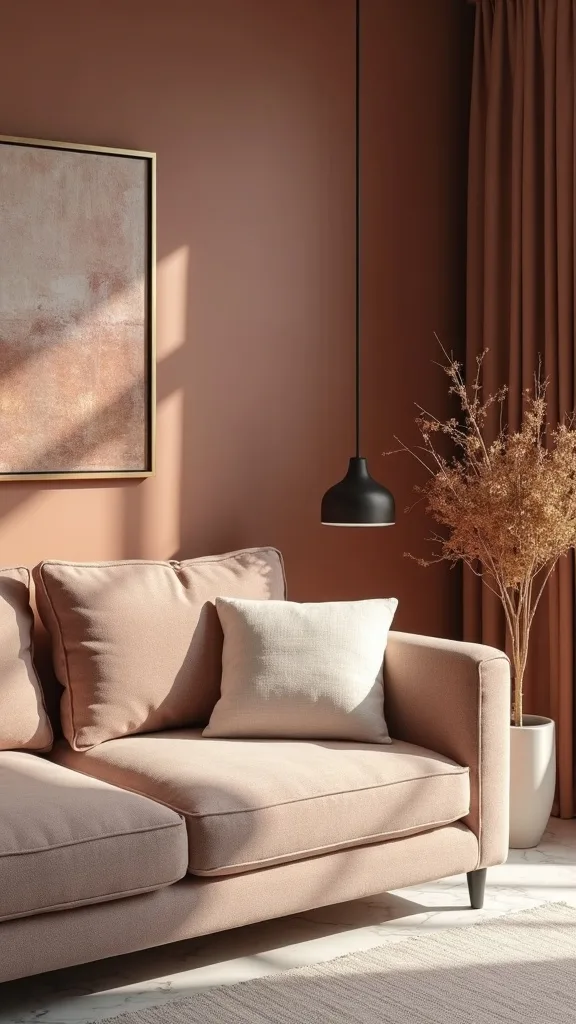
21. How do you make open shelving feel warmer with texture (and not overstyled)?
Open shelves can feel chilly if they’re all glossy frames and hard objects. Warm them up with a mix of matte and soft touches: a woven box, a ceramic vase, and one small stack of books. Add a folded textile—like a linen runner or a small knit—on one shelf for unexpected softness. Keep the color story tight so the shelf reads calm. If you want a fall nod, add dried eucalyptus or preserved stems in a neutral vase. Avoid filling every inch; blank space is part of what makes a shelf look elevated. Pro tip: style in thirds—one tall item, one medium, one small—then step back and remove one thing; that final edit is where sophistication lives.
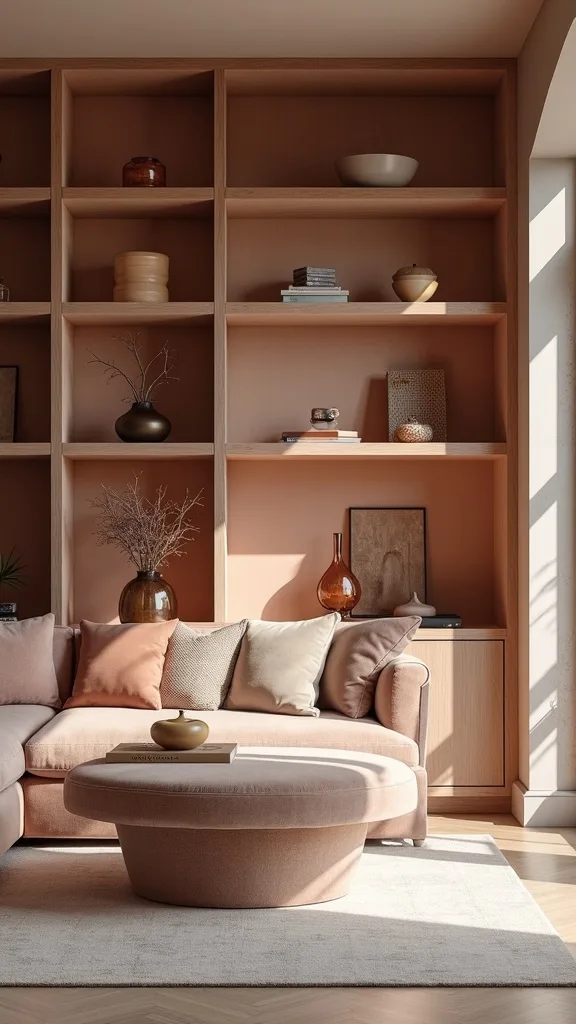
22. How can you use scent and sound to deepen the cozy texture story?
Cozy isn’t just what you see—it’s what your body registers. Scent adds an invisible layer that makes a textured living room feel complete. Choose one candle or diffuser note that fits early fall: cedar, amber, fig, or cardamom. Pair it with a softer soundscape—low music, a crackling-fire playlist, or simply turning off harsh TV volume during dinner cleanup. Keep the candle on a tray to protect surfaces and make it feel styled. Avoid overpowering “pumpkin spice” scents if you want a more editorial vibe; they can take over the room fast. Pro tip: light the candle 20 minutes before guests arrive or before your own evening wind-down—your home will feel prepared for comfort.
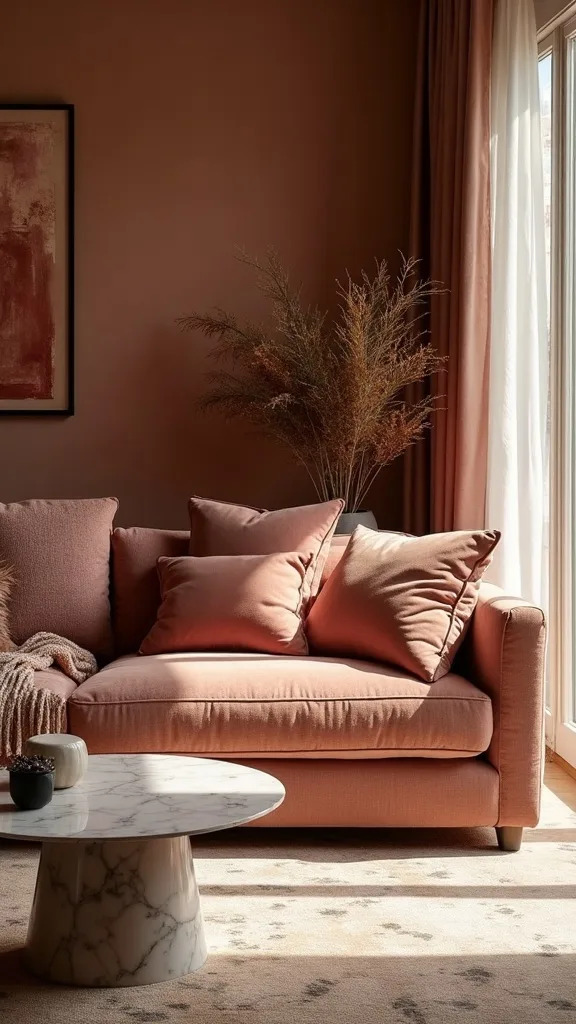
23. What’s a quick weekend refresh for velvet and textured pieces you already own?
A refresh can be maintenance, not shopping. Velvet and wool look their best when they’re cared for just a little—like you would a favorite coat. Vacuum pillow covers with a soft brush attachment, then steam them lightly to lift crush marks. Fluff inserts and rotate pillows so one side doesn’t get permanently flattened. For wool throws, shake them outside and fold them neatly; even that small reset changes the room. If your sheepskin looks tired, brush it and spot-clean gently, then let it air-dry away from heat. Avoid throwing everything in the dryer “to fluff”—heat can ruin texture fast. Pro tip: do a 15-minute reset before Sunday evening; it’s a small act that makes Monday feel a little more manageable.
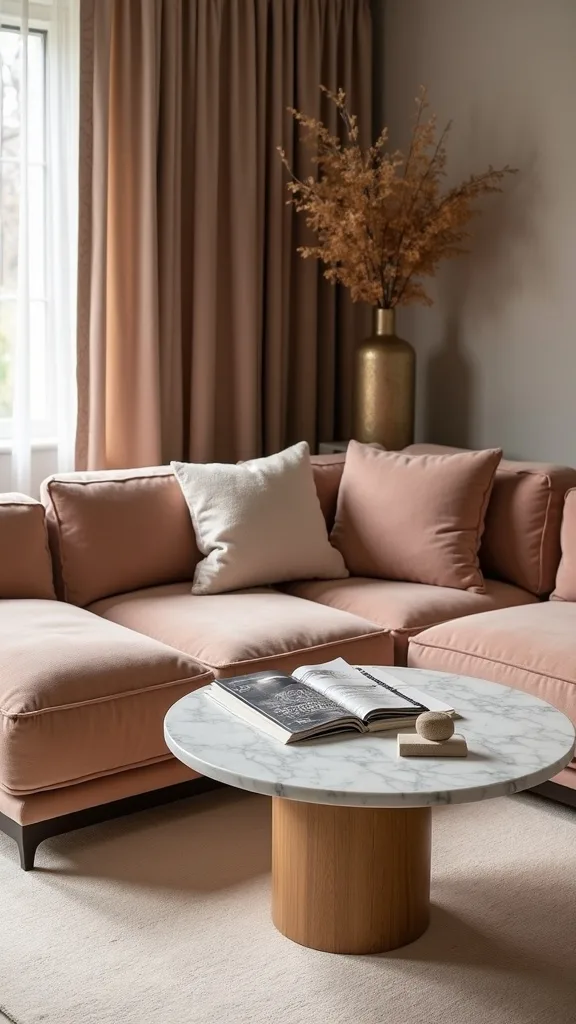
24. How do you build a cohesive look when you’re mixing old favorites with new finds?
The most sophisticated rooms aren’t brand-new—they’re layered with time. Mixing old and new works when you create a “bridge” through color and texture. If you have an older patterned rug, pull one color from it (like warm brown or muted rust) and repeat it in velvet pillows. If your coffee table is a hand-me-down, elevate it with a tray and one refined object (a ceramic vessel, a brass candle snuffer). Keep your new purchases focused on touchable upgrades: pillows, throws, lighting. Avoid replacing everything at once; it can feel sterile and expensive without feeling personal. Pro tip: take a quick photo of the room and view it in black-and-white—if the light/dark balance looks good, the mix will feel cohesive in real life too.
25. How do you make the living room feel cozy by 7pm on a regular weeknight?
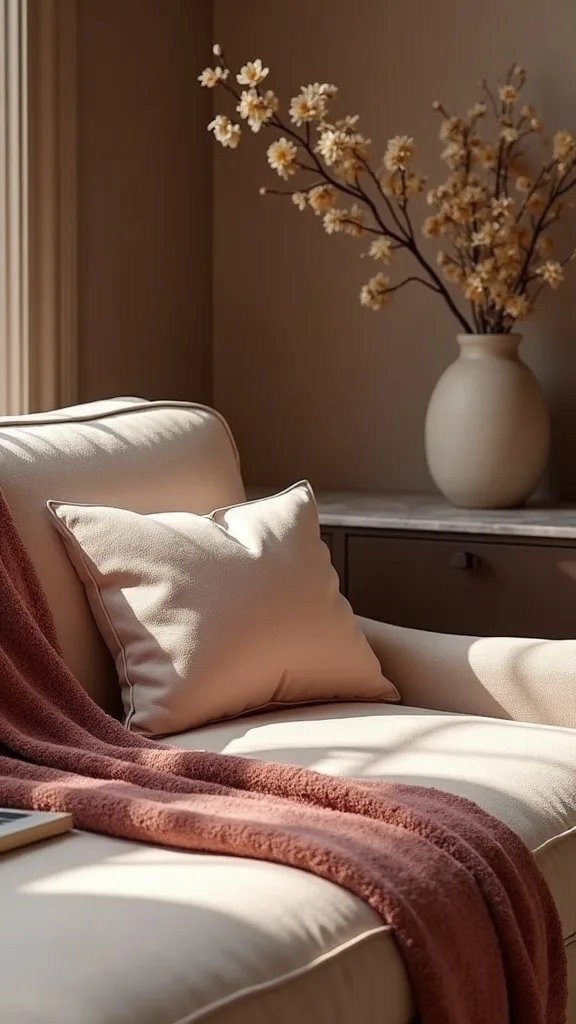
Weeknight cozy has to be fast, or it won’t happen. The goal is a room that supports your evenings—homework, decompressing, talking, resting—without requiring a full reset. Create a simple “7pm routine”: turn on two lamps, put the throw within reach, and clear only one surface (the coffee table or one sofa cushion). Add velvet where hands land—one pillow behind your back, one under your elbow—so comfort is immediate. Keep a basket for clutter so you can tidy in 60 seconds without perfection pressure. Avoid saving coziness for weekends; you deserve it on ordinary nights too. Pro tip: choose one small ritual—lamp on, candle lit, throw out—and let that be your signal that the day is shifting into something softer.
Final Thoughts
Those polished fall rooms online can be inspiring—and also a little exhausting. Your living room doesn’t need to be “finished” to feel good; it needs a few touchpoints that welcome you back into your own life: something plush, something warm, something softly lit.
If you try one idea and it’s not perfect, that’s not failure—it’s feedback. Swap the pillow size, move the lamp, trade the scratchy throw for the one everyone fights over. Progress over perfection is how a home becomes yours.
Do one thing today: replace your two most-used sofa pillows with cognac (or warm neutral) velvet covers, then turn on a lamp with warm white light (2700K–3000K — the cosy, yellowish tone you see in most homes) before dinner. Let the room feel a little softer on purpose—imperfect is not just acceptable, it’s the point.
What I’d Do Differently
When I first tried this, I bought velvet everything because I wanted that glossy, editorial look—velvet pillows, a velvet throw (yes, really), and even a velvet pumpkin on the coffee table. In daylight it looked fine, but at night it felt strangely “heavy,” like the room was dressed up with nowhere to go. The bigger issue? Nothing balanced the shine, so the space didn’t read cozy—just styled. The fix was simple: I kept two velvet pillows in a warm cognac tone, then swapped the rest for matte, chunky textures—a wool throw and a nubby pillow cover. Suddenly the velvet looked richer because it had something rougher and softer to play against.
I also wish I’d known to start with lighting before shopping. One lamp with warm white light (2700K–3000K — the cosy, yellowish tone you see in most homes) made every texture look better, including the things I already owned. If you’re unsure where to begin, pick one velvet accent and one chunky layer, then let the room tell you what it needs next—start tonight.