
This post contains affiliate links. As an Amazon Associate, I earn from qualifying purchases at no extra cost to you.
There’s a specific kind of luxury in a bedroom that stays calm even when life gets loud: backpacks dropped at the door, laundry waiting, a laptop open, and still—everything looks composed. The secret isn’t having more space. It’s making every square foot feel like it has a job and a reason to look good doing it.
This guide breaks down how to build a loft bedroom that feels elevated (literally) without the “dorm room” vibe. You’ll see the underlying formula—symmetry, layering, scale, and contrast—applied to real layouts, including desk zones, shelves, and lighting that make back-to-school mornings smoother.
It’s perfect for small bedrooms, shared rooms, teen rooms, and any home where you need one space to multitask—sleep, study, store, and reset.
Inside, you’ll find a visual-theme favorite (built-in ladder + full desk + pegboard), plus practical upgrades like LED strips in warm white light (2700K–3000K — the cosy, yellowish tone you see in most homes), cord control that actually stays put, and storage that doesn’t eat your floor.
Below are 25 Loft Bedroom Ideas & Space-Saving Beds that turn tight square footage into a loft room design that feels intentional, comfortable, and ready for summer back-to-school prep.
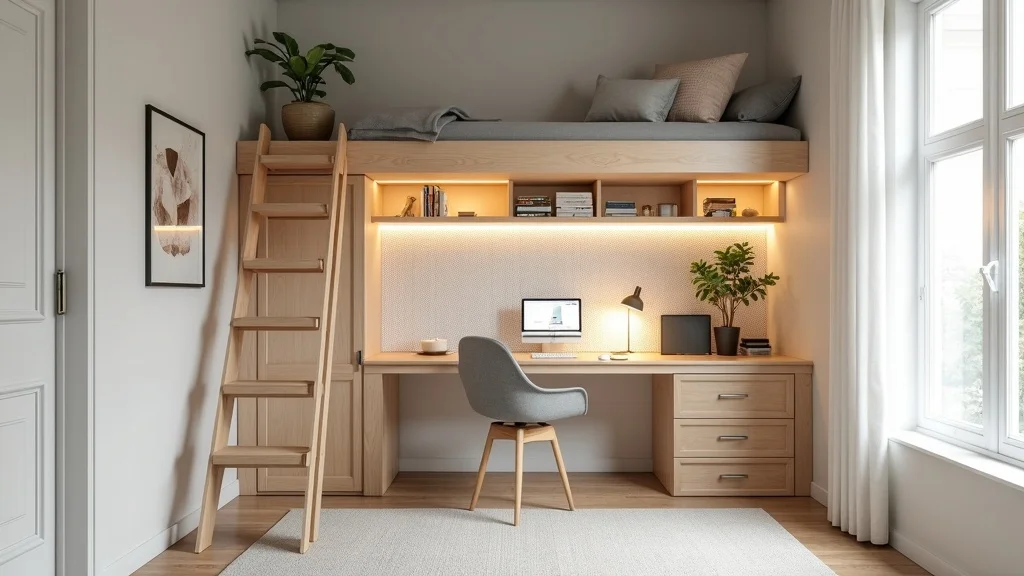
1. Built-in ladder loft with full desk, shelving, LED strip lighting, and pegboard underneath
This is the “everything has a home” layout, and it works because it turns the under-bed zone into a complete workstation instead of leftover space. The ladder and shelving create built-in symmetry, while the lighting and pegboard add the layered finish that makes it feel designed.
Implement it by centering a full-width desk under the loft (aim for 48–60 inches wide), then framing it with two vertical shelving towers or one tower + a tall cabinet for balance. Run LED strip lighting along the underside of the bed frame, tucked behind a small lip so you see the glow, not the dots. Mount a pegboard above the desk for scissors, chargers, and school supplies—keep it to one color family so it reads calm.
Choose a warm wood top, matte black brackets, and a crisp white pegboard for clean contrast. Add a slim tray on the desk for earbuds and keys to prevent daily clutter.
Pro tip: finish with LED strip lighting in warm white and one matching set of pegboard containers—that single repeat is what makes the whole corner feel quietly luxurious.
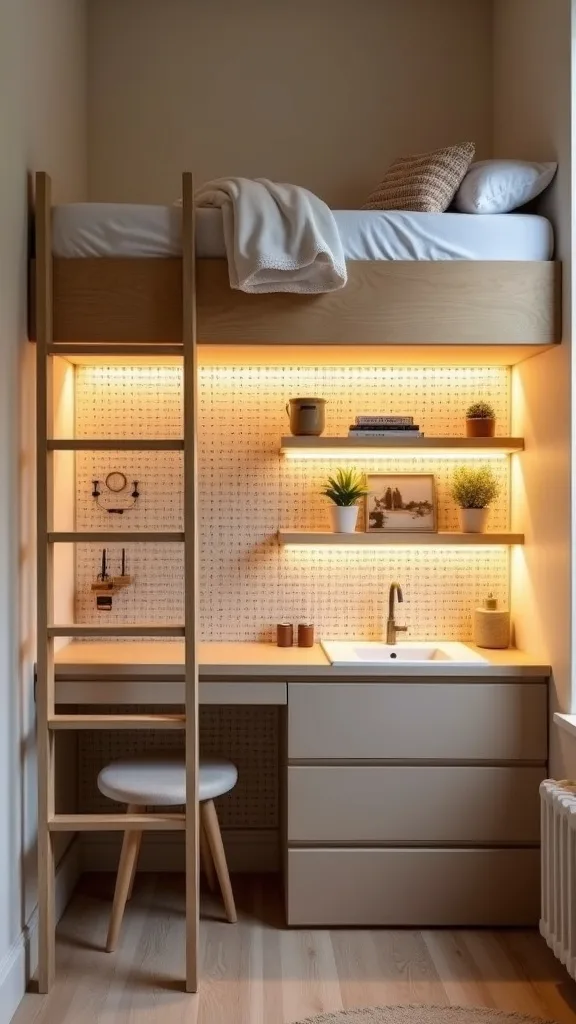
2. Loft bed with desk: the “full-length work zone” that doesn’t feel cramped
A loft bed with desk works when the desk looks like furniture, not a folding table shoved underneath. The win is scale: a longer desk visually anchors the room and makes homework feel less temporary.
To implement, use a desk that spans at least 47 inches and place it parallel to the bed edge so your chair pulls out cleanly. If the loft is freestanding, add a clamp-on task light and route the cord up the bedpost using adhesive cord clips. Keep the desk surface at “three items max”: laptop, lamp, and one catchall tray.
Luxury version: a built-in butcher-block top with two drawer units. Accessible version: an IKEA-style tabletop with two slim file cabinets.
Style in soft contrast—oak + white + a single black accent (frame, lamp, or pegboard hooks). Place a small candle grouping (two short, one tall) on a shelf, not the desktop.
Pro tip: hang one pinboard or art print centered over the desk to create a focal point—your brain reads that as “this is the zone,” and the room instantly feels intentional.
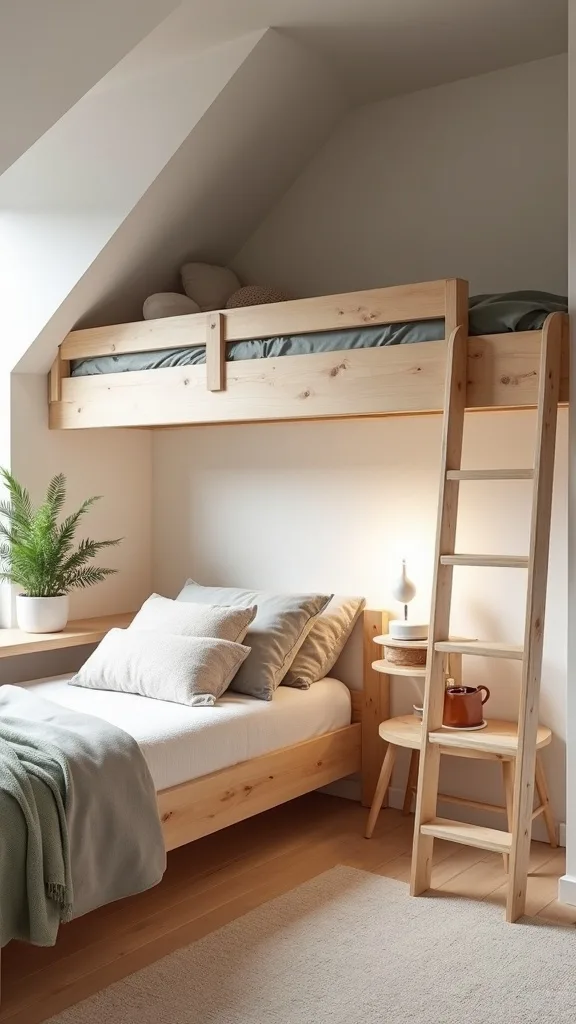
3. How do you make a loft bedroom feel grown-up (not like a dorm)?
A loft bedroom feels grown-up when you treat it like a boutique hotel: controlled color, layered textiles, and lighting that flatters. The idea works because luxury is less about size and more about restraint.
Start with a tight palette—two neutrals plus one accent (think warm white, light oak, and deep navy). Make the bed look finished by adding a proper duvet insert (not just a thin comforter) and two pillows that match, even if they’re inexpensive. Under the loft, hide visual noise: use matching bins or doors on storage cubes so you don’t see every notebook spine.
Luxury version: upholstered headboard panel and wall sconces. Accessible version: a peel-and-stick fabric panel behind the pillows and plug-in sconces.
Add a throw folded lengthwise at the foot, slightly off-center—intentional, not fussy. Use warm white light (2700K–3000K — the cosy, yellowish tone you see in most homes) so skin tones don’t look harsh.
Avoid: mixing four different wood tones; it reads accidental fast. Pro tip: repeat one metal finish (all black or all brass) across hooks, lamp, and drawer pulls for a polished, adult look.
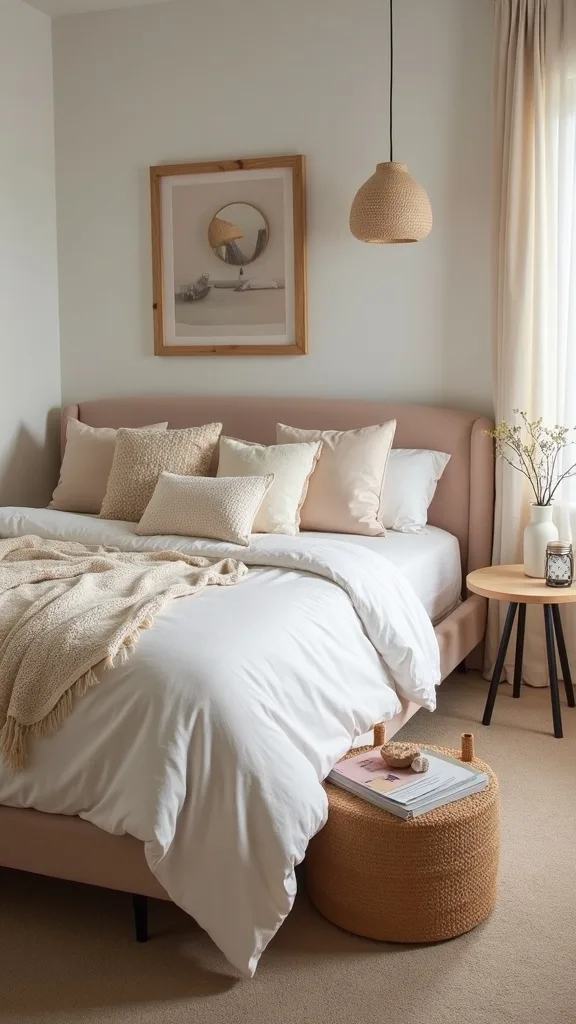
4. What ceiling height do you need for a comfortable loft bed setup?
Comfort comes from headroom and breathing space—no one sleeps well when they feel like the ceiling is inches from their face. This works because a loft bed is only “space-saving” if it’s also livable.
As a practical baseline, aim for a room with at least an 8-foot ceiling, then choose a loft height that leaves enough clearance above the mattress to sit up without bumping your head. If you’re unsure, measure from the floor to the ceiling, subtract the loft platform height and mattress thickness, and make sure the remaining space feels generous.
Luxury version: custom-built loft set slightly lower with a thicker, hotel-style mattress. Accessible version: a standard metal or wood loft with a thinner, supportive mattress to buy back headroom.
Keep the area above the bed visually light—no heavy shelves overhead. Use a single small picture ledge on the side wall if you want decor.
Avoid: extra-thick pillow-top mattresses on high lofts; they steal precious inches. Pro tip: add clip-on reading lights rather than table lamps up top—the surface stays clean, and the whole loft feels calmer.
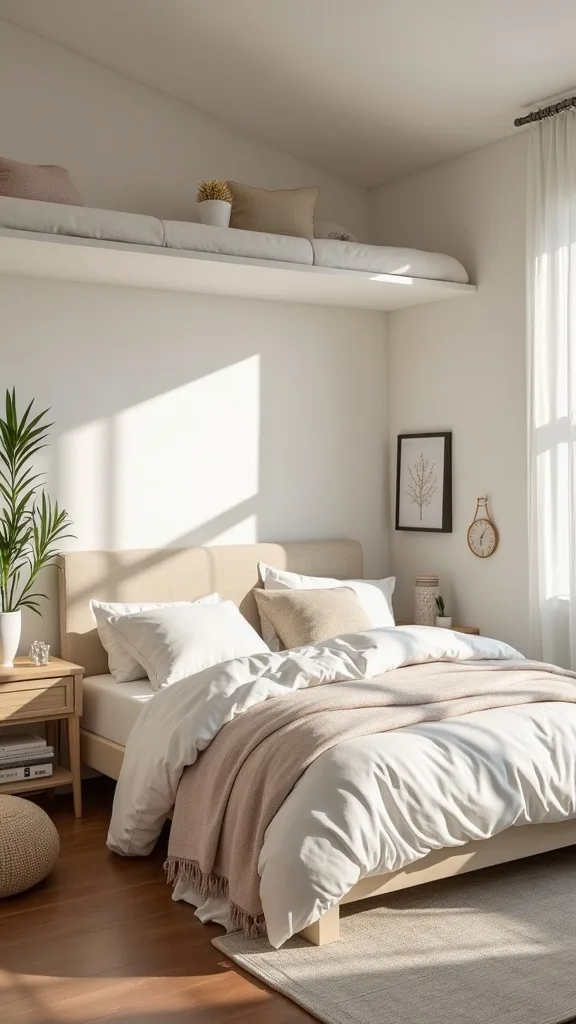
5. Space-saving beds for shared rooms: how do you keep it fair and functional?
Shared rooms work when each person gets equal “real estate”—not just floor space, but storage and light. Space saving beds shine here because they can carve out two distinct zones without building walls.
Implement fairness with symmetry: matching wall shelves, matching baskets, and two defined task lights (one per person). If one bed is lofted, give the other bed the “luxury” upgrade—like a nicer headboard look or better bedside storage—so the room doesn’t feel like one kid won. Under the loft, create a study nook with a curtain or sliding panel for privacy during homework.
Luxury version: built-in wardrobes split down the middle. Accessible version: two identical dressers and labeled bins on a shared shelf.
Choose one repeating color for textiles (two matching throws draped the same way) and let each person pick one accent color in art.
Avoid: one giant shared desk; it becomes a battleground by week two. Pro tip: add two small trays—one per side—for daily items so clutter doesn’t migrate across the room.
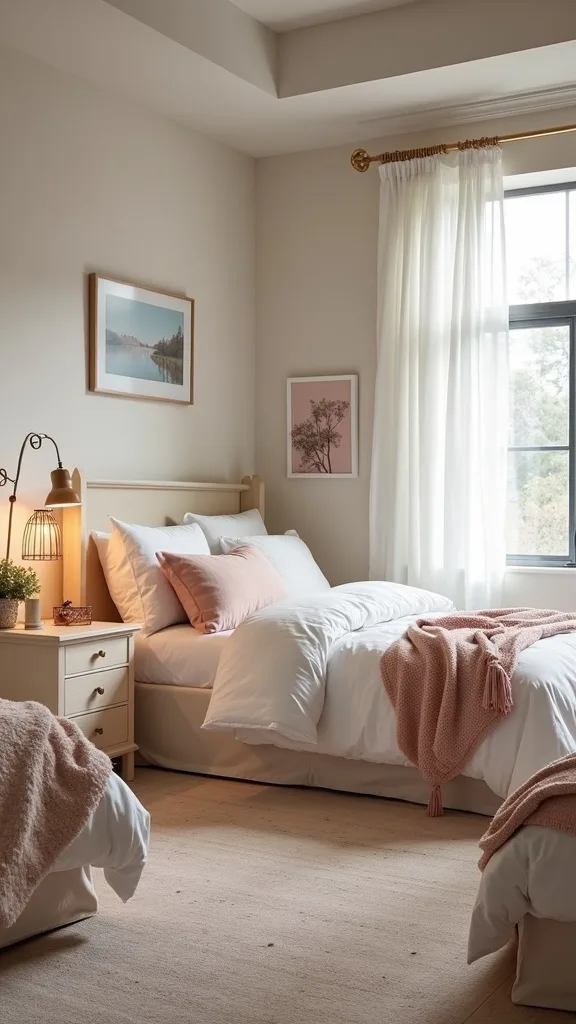
6. How can you add storage under a loft bed without making it feel heavy?
The best under-loft storage feels like a built-in wall, not a pile of plastic bins. It works because visual quiet reads as luxury—even if the pieces are budget-friendly.
Start with one “anchor” piece: a low dresser or cube organizer that sits flush to the wall. Then add two matching baskets per row so the pattern looks intentional. Leave one open cubby for a pretty stack—two books and a small lidded box—so the storage wall doesn’t feel purely utilitarian.
Luxury version: floor-to-ceiling cabinetry with push-latch doors. Accessible version: a cube shelf with fabric bins and one set of matching labels.
Stick to light neutrals under the bed (cream, soft gray) and add contrast with black label holders or pulls. Keep the floor visible where possible; even 6 inches of open floor line makes the room feel bigger.
Avoid: stuffing every cubby full—negative space is part of the design. Pro tip: choose one lidded storage box for “drop zone” mess; it’s the fastest way to make the whole room look reset.
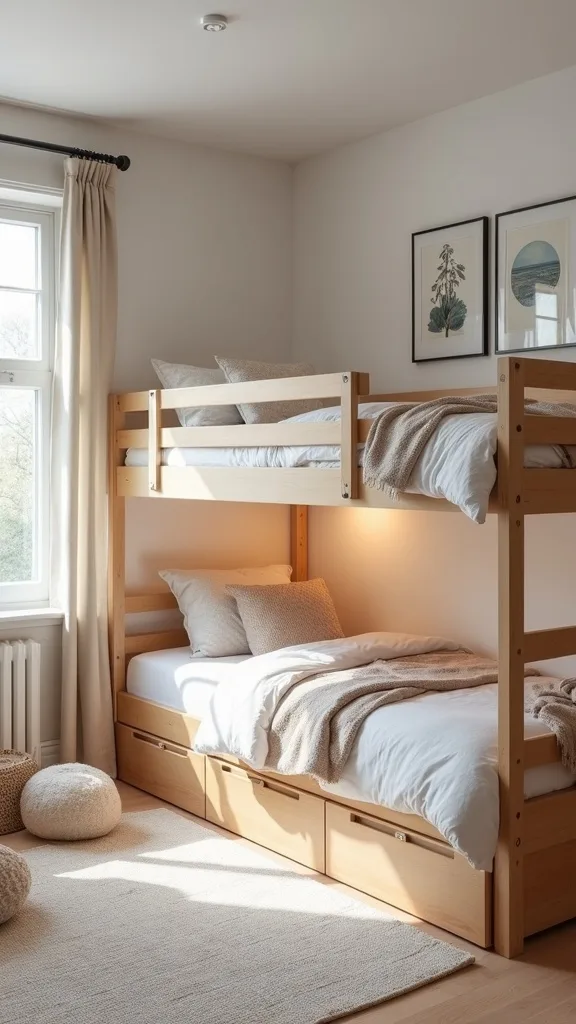
7. What’s the cleanest ladder placement for a loft room design?
Ladder placement is both safety and style: it controls traffic flow and where your eye lands. The cleanest layouts place the ladder where it doesn’t cut through the main walkway.
Implement by measuring your door swing and the path from door to closet. Keep at least 36 inches clear for that route, then place the ladder on the “quiet” side—usually the wall side, not the open side. If the ladder is angled, give it a landing zone with a small rug so feet don’t slip.
Luxury version: a built-in ladder with hidden hardware and matching wood stain. Accessible version: a bolt-on ladder painted the same color as the bed frame so it visually disappears.
Add a slim wall hook near the ladder for a robe or backpack—one hook, not five. That single point keeps clutter from creeping up the rungs.
Avoid: placing the ladder directly in front of drawers; you’ll hate it daily. Pro tip: add non-slip stair tread strips in a tone that matches the ladder so function doesn’t break the look.
8. How do you style the under-loft desk area like a real office?
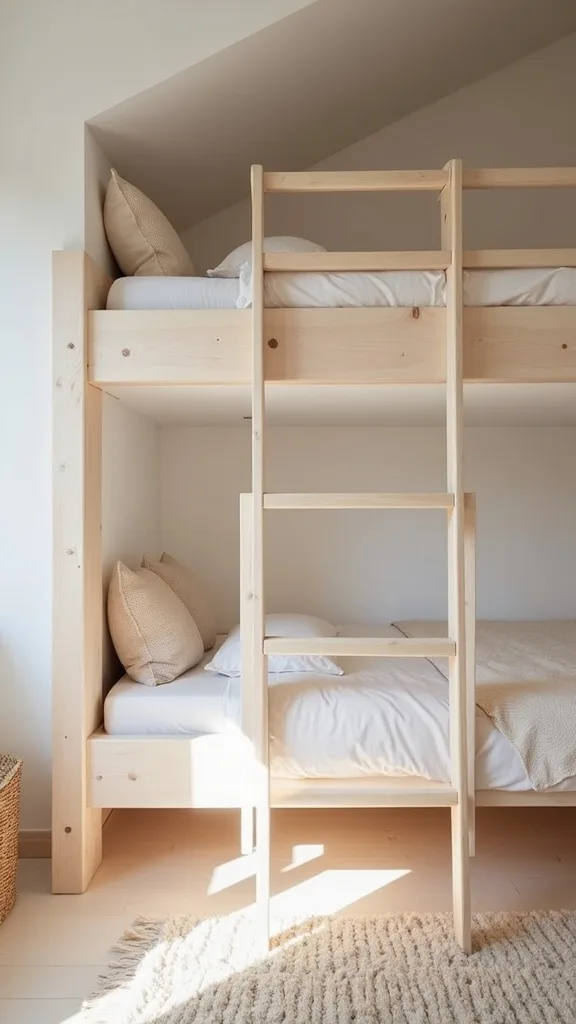
A desk looks expensive when it’s edited: one work light, one organizer system, and one decorative moment. This works because the eye needs a focal point and a place to rest.
Start with a desk lamp on the same side as the dominant hand (right side for most people) so shadows don’t fall across paper. Add a vertical file sorter for notebooks and a shallow tray for small items. Then choose one “office decor” piece: a framed print, a small plant, or a sculptural pencil cup.
Luxury version: leather desk pad and matching catchall. Accessible version: a faux-leather desk mat and a simple acrylic tray.
Color palette matters: keep supplies in two tones (black + clear, or white + wood) so the visual noise stays low.
Avoid: open cups overflowing with random pens; it reads messy even when it’s functional. Pro tip: mount a power strip under the desk with adhesive strips—cords vanish, and suddenly the whole setup feels intentional.
Cost & Materials Estimate
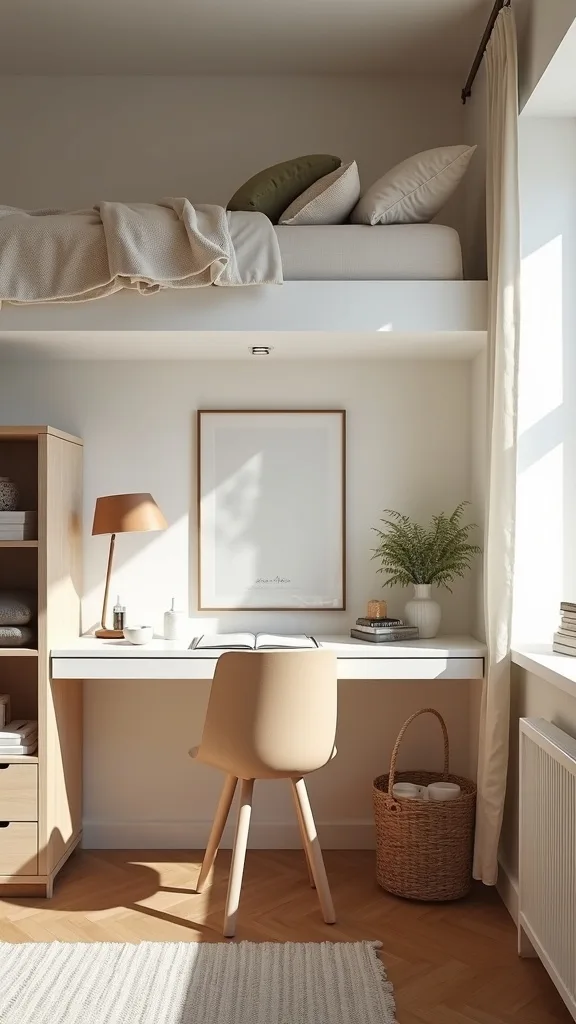
A practical loft bedroom setup typically lands between $250 and $900 depending on whether you buy a new loft frame and how built-in you go with shelving and lighting.
| Item | Estimated Cost | Where to Buy |
|---|---|---|
| Twin loft bed frame (wood or metal) | $180–$450 | Wayfair / Amazon |
| Desk (47–60 inch) | $60–$180 | IKEA / Amazon |
| Cube organizer + 6 fabric bins | $55–$120 | Target (via Amazon) / IKEA |
| LED strip lights (warm white) + clips | $18–$45 | Amazon |
| Pegboard + hooks/containers | $25–$85 | Home Depot / Amazon |
| Cord management kit (clips + box) | $12–$28 | Amazon |
Total estimated cost: $350–$908 Save money by choosing a simple frame and upgrading with lighting + matching bins; splurge on the chair or mattress comfort where it affects daily life.
9. Can a loft bed work in a rental apartment without drilling into walls?
Yes—rental-friendly loft setups work when stability comes from the bed frame and storage pieces, not anchors in drywall. The payoff is a high-function bedroom you can take with you.
Choose a sturdy freestanding loft frame, then create “built-in energy” using tall bookcases placed snugly beside it (secured to the bookcase itself with anti-tip hardware if allowed). Use removable adhesive hooks for headphones, backpacks, and a lightweight mirror. For lighting, go plug-in: LED strips with removable backing and clamp lights.
Luxury version: custom closet system fitted under the loft. Accessible version: a modular cube organizer plus matching bins.
Use peel-and-stick wallpaper only on a single panel (behind the desk) to create a focal point without overwhelming the room.
Avoid: relying on flimsy rolling carts as your main storage—they drift and clutter the walkway. Pro tip: choose one removable wall sconce on a dimmer so evenings feel calm without permanent changes.
10. How do you make a loft bed feel safe and sturdy for kids or teens?
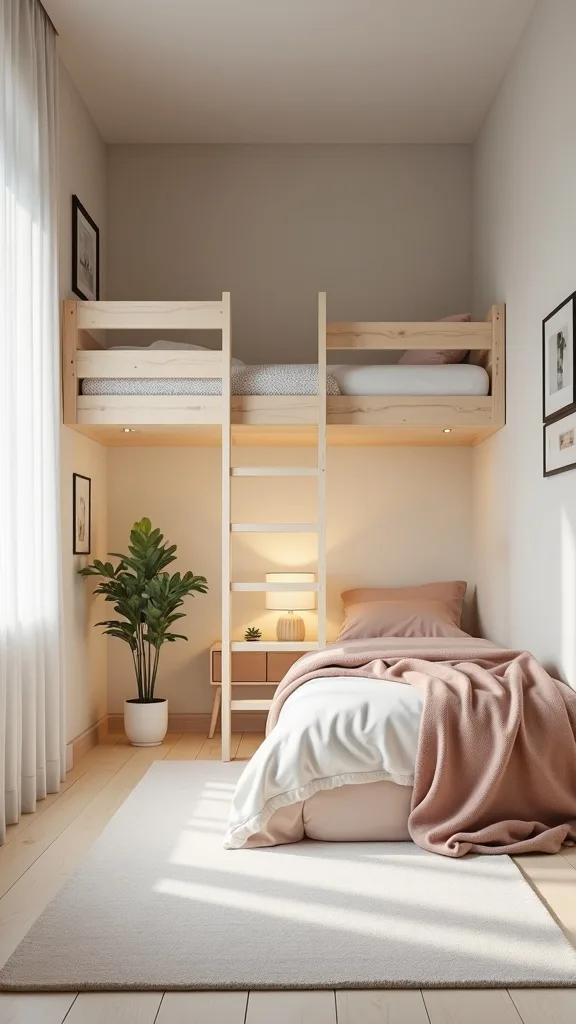
Safety is the foundation of comfort—if the bed wobbles, the whole room feels stressful. A secure loft works because it lets you fully use the space below without worry.
Start by checking guardrails (full-length is ideal) and tightening hardware every few months, especially during back-to-school when routines get busy. Add a nightlight near the ladder and keep the first step clear of floor clutter. If the ladder rungs feel narrow, add tread covers for grip.
Luxury version: a built-in loft with integrated stairs and handrail. Accessible version: a solid wood or metal frame with upgraded anti-slip rungs.
Keep bedding low-profile so it doesn’t push against the guardrail. Choose a fitted sheet that actually fits—sloppy corners become a nightly annoyance.
Avoid: placing the loft next to a ceiling fan; clearance matters more than aesthetics. Pro tip: add a motion-activated night light at floor level—safer late-night trips, and it feels like a thoughtful hotel detail.
11. What are the best lighting layers for a loft bedroom?
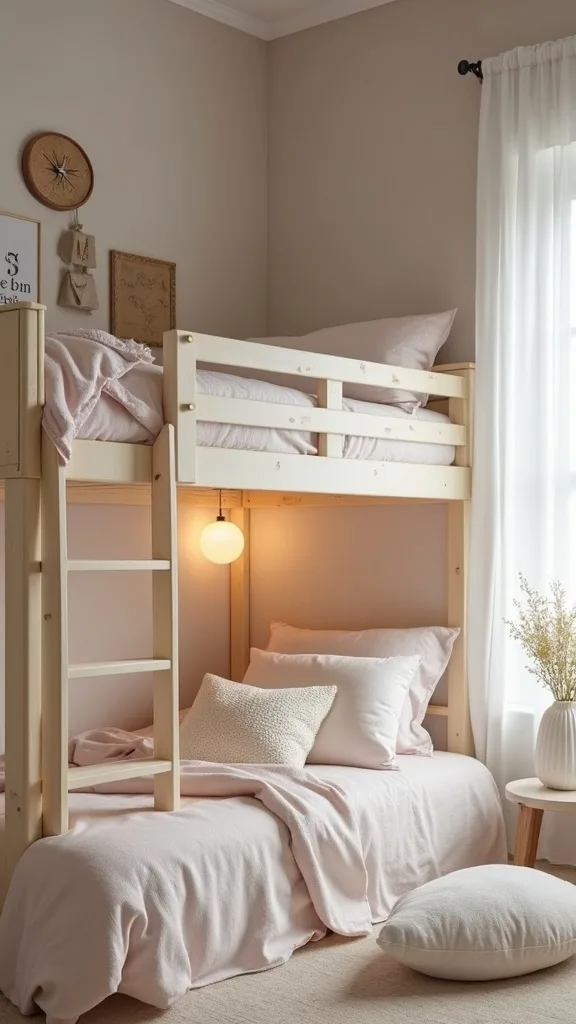
Lighting is what turns “functional” into “finished.” The best loft bedroom lighting uses three layers: ambient glow, task light, and a soft accent.
Implement with a ceiling light for general brightness (measured in lumens), a focused desk lamp under the loft, and an LED strip or small lamp for the bed area. Choose warm white light (2700K–3000K — the cosy, yellowish tone you see in most homes) so evenings feel restful. Add a dimmer where possible—if not, use smart bulbs.
Luxury version: hardwired sconces and hidden cove lighting. Accessible version: plug-in sconces and adhesive LED strips.
Keep fixtures consistent: all black or all white, so nothing fights visually. Place the accent light so it washes a wall, not your face.
Avoid: mixing cool white and warm bulbs in the same room; it looks mismatched instantly. Pro tip: hide LED strips behind a lip so you see the glow, not the dots—that’s the difference between “teen room” and “designed room.”
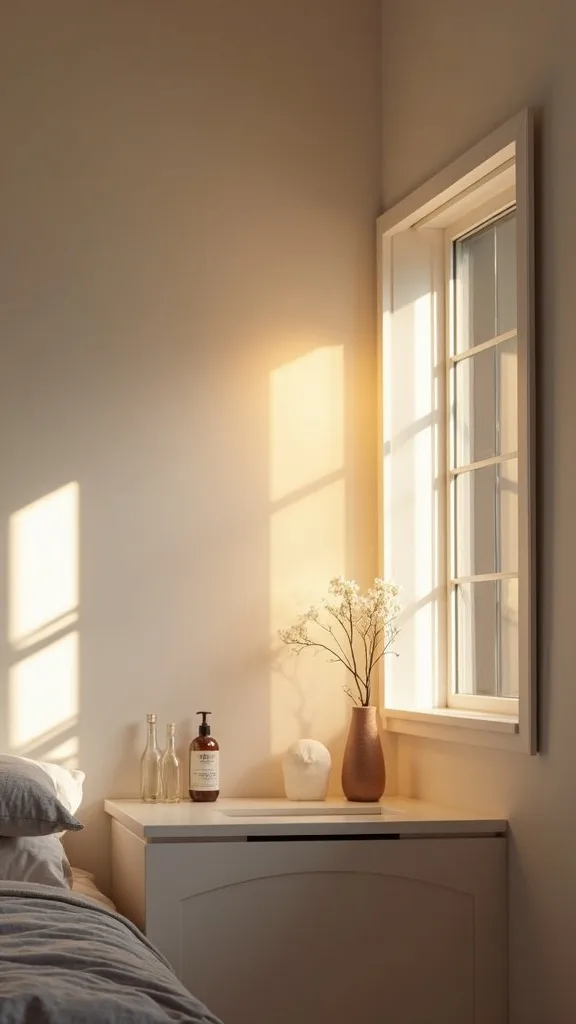
12. How do you add privacy under a loft bed (without making it dark)?
Privacy under a loft bed feels luxurious because it creates a little retreat—perfect for studying or decompressing. It works when the boundary is light-filtering, not heavy.
Use a ceiling-mounted tension rod or a simple track to hang curtains that skim the floor. Choose linen-look panels or a soft cotton in a pale neutral so daylight still bounces around. If curtains feel too “camp,” try a sliding panel made from a lightweight screen or even two tall bookcases forming a partial wall.
Luxury version: custom sliding wood slats. Accessible version: neutral curtains with clip rings.
Add a small mirror inside the nook to reflect light back out. Keep one warm lamp under the loft so the space doesn’t feel cave-like.
Avoid: blackout curtains under the loft—they swallow light and make the room feel smaller. Pro tip: hem curtains so they hover 1/2 inch above the floor; that tiny gap reads tailored and intentional.
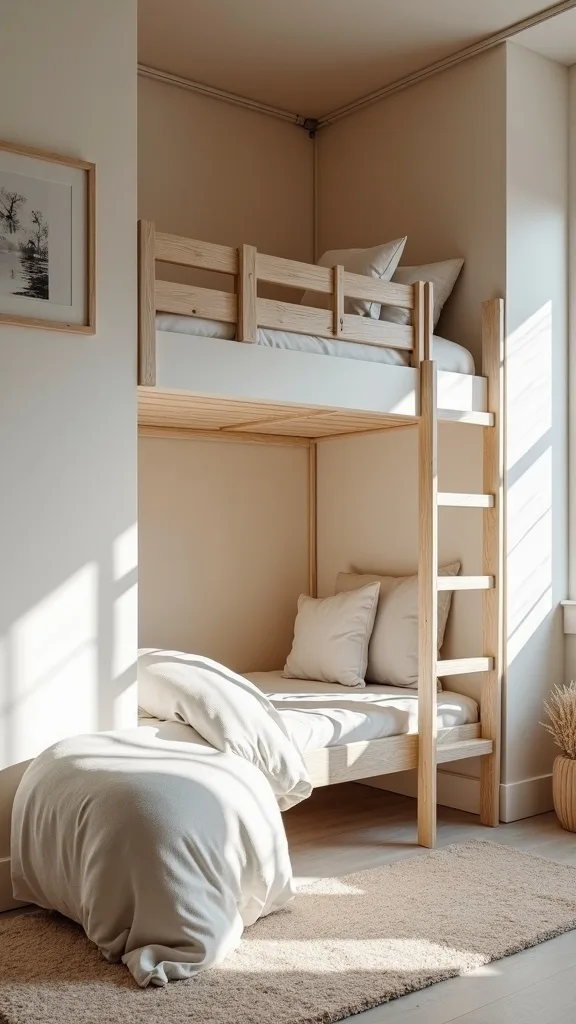
13. What’s the best way to handle backpacks, sports gear, and daily drop-zone clutter?
Back-to-school clutter isn’t a “mess problem”—it’s a landing problem. This idea works because it gives every daily item a predictable home within two steps of the door.
Install a short row of hooks under the loft or near the ladder: one for a backpack, one for a jacket, one spare. Add a narrow bench (or storage ottoman) below for shoes and sports gear. If the room is tight, swap the bench for a wall-mounted shelf with baskets underneath.
Luxury version: built-in mudroom-style cubbies. Accessible version: a hook rail and two labeled bins.
Keep it visually quiet: matching hooks, matching bins, one color label. Place a small tray on the shelf for pocket items—keys, lip balm, chargers.
Avoid: over-hooking the wall with ten pegs “just in case.” It invites clutter. Pro tip: create one weekly reset bin; every Friday, dump stray items in there and sort in 10 minutes.
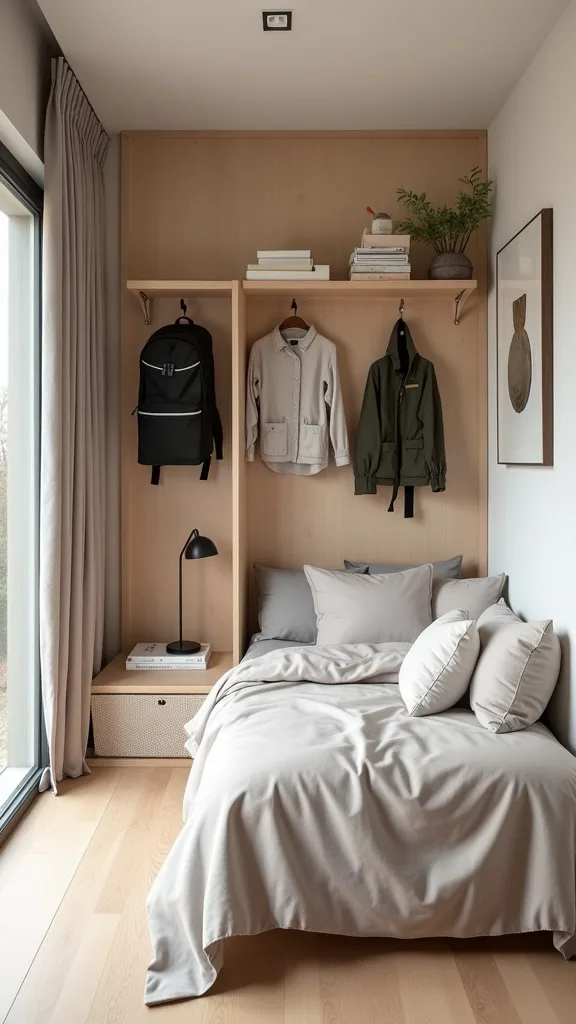
14. How do you choose a rug for a loft bedroom without chopping up the room?
A rug can make a small room feel larger—if it’s the right scale. The idea works because a single generous rug visually unifies the loft bed, desk, and walkway.
Choose one rug that reaches under the lower furniture line (desk chair area or dresser edge) so it doesn’t look like a floating mat. If you can’t do one large rug, use two coordinated rugs: one runner for the ladder/walkway and one low-pile rug under the desk chair.
Luxury version: a wool-blend rug in a subtle pattern. Accessible version: a washable flatweave that handles snack spills and sneaker traffic.
Stick to light-to-medium tones with a bit of pattern—it hides wear while still feeling airy. Place the rug so it’s parallel to the bed frame for clean geometry.
Avoid: shag rugs under a desk chair; rolling becomes a daily irritation. Pro tip: use a rug pad so the room feels quieter and the rug stays perfectly aligned—straight lines read expensive.
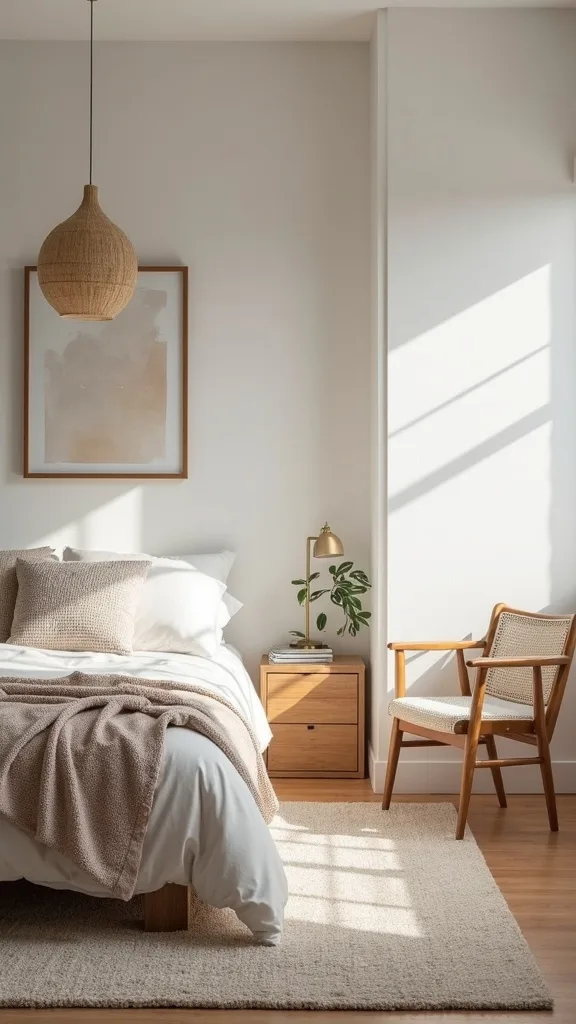
15. Can you fit a reading nook under a loft bed instead of a desk?
Absolutely, and it can feel like the most luxurious choice—especially in summer when you want a cool, shaded corner. This works because it creates contrast: an open, relaxed zone beneath a structured bed frame.
Implement with a compact lounge chair or floor cushion, a small side table, and a wall-mounted sconce or clip light. Add one slim bookshelf or picture ledge for two stacks of books and a candle grouping (two small, one medium) to keep it styled, not cluttered. If you still need study space, use a fold-down wall desk nearby.
Luxury version: a built-in bench with drawers and tailored cushions. Accessible version: a large floor pillow, a thrifted side table, and a plug-in sconce.
Choose textiles that layer: one textured throw, one lumbar pillow, one woven basket for extra blankets.
Avoid: oversized beanbags that swallow the whole footprint. Pro tip: angle the chair slightly—perfect 90-degree alignment looks stiff; a gentle turn makes the nook feel inviting and intentional.
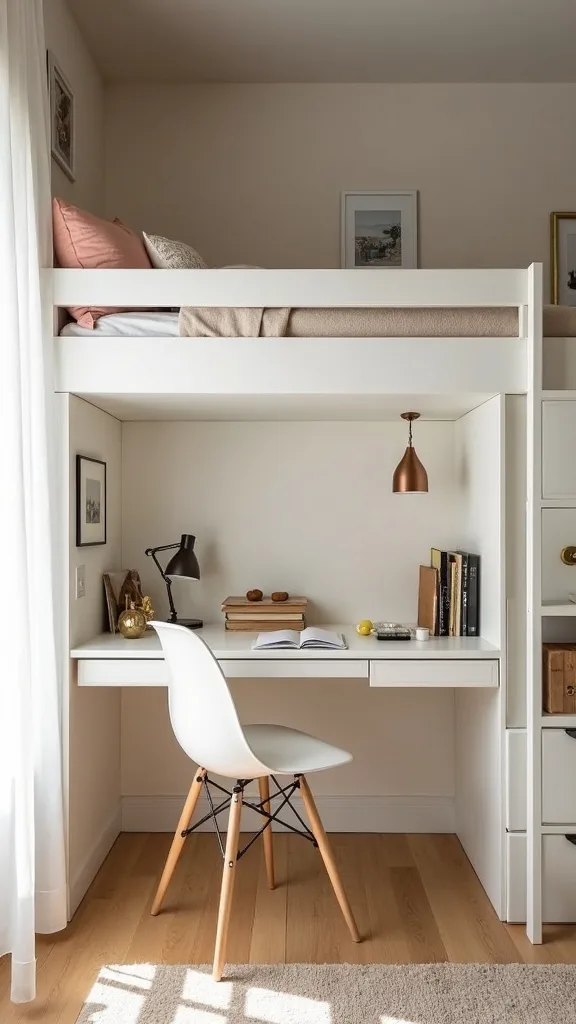
16. How do you make a loft bed look built-in when it’s not?
The built-in look comes from continuity—matching finishes, tight spacing, and repeated lines. It works because the eye reads a “wall of furniture” as architecture.
Push the loft bed tight to one wall, then flank it with a bookcase or tall cabinet that reaches close to the loft rail height. Add a filler panel (even a painted piece of MDF) to close any awkward gaps between units. Finally, run one continuous LED strip or a single shelf line across the under-loft zone to visually connect pieces.
Luxury version: custom trim and integrated cabinetry. Accessible version: two matching tall shelves and a paint-matched filler strip.
Paint is your friend: if you paint the bed frame and adjacent shelving the same color, everything merges. Choose a soft white or a muted greige for a calm backdrop.
Avoid: leaving uneven gaps that become dust zones and visual clutter. Pro tip: add simple crown molding on the top of tall shelves (even peel-and-stick trim) to fake that custom finish.
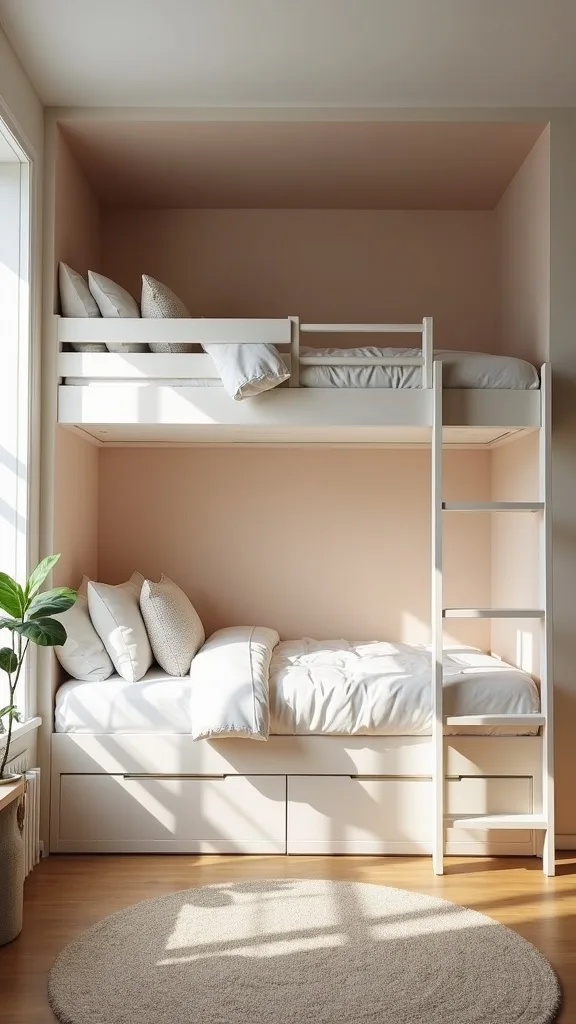
17. What’s a smart layout for a long, narrow bedroom with a loft bed?
In a narrow room, the goal is a clean runway—one uninterrupted path that doesn’t zigzag. This works because your body feels relaxed when movement is easy.
Place the loft bed along the long wall, not at the end, so the ladder doesn’t block the doorway. Put the desk under the loft and keep storage tall and shallow across from it (think 12–16 inches deep) so you don’t pinch the walkway. Use a mirror on the opposite wall to bounce light and visually widen the space.
Luxury version: built-in wardrobe with sliding doors. Accessible version: a tall dresser and a wall-mounted shelf above it.
Keep bedding and curtains in similar tones to reduce visual breaks. Add one bold contrast element—like a black-framed print—to keep the room from feeling washed out.
Avoid: deep nightstands in narrow rooms; they steal the path. Pro tip: use a wall-mounted bedside ledge instead—tiny footprint, big “designed” energy.
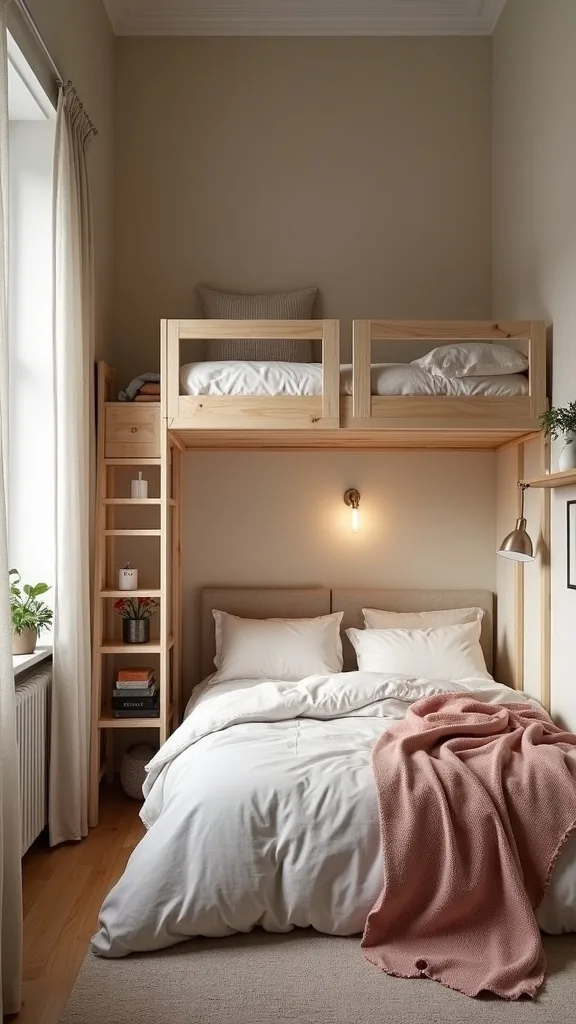
18. How do you keep the top bunk/loft from feeling hot in summer?
Heat rises, and loft beds feel it first—especially during sticky summer nights. This idea works because comfort is a design feature; if sleep is bad, the room doesn’t function.
Use breathable bedding: cotton percale sheets and a lighter quilt instead of a heavy comforter. Add a small clip-on fan to the rail (aim it across the bed, not directly at the face). Keep the wall near the loft clear so air can move; avoid heavy curtains bunched around the bed.
Luxury version: a quiet tower fan and linen bedding. Accessible version: a clip fan and lightweight cotton layers.
Choose light colors up top—white, sand, pale blue—because they visually feel cooler. Add a single throw folded at the foot for texture without heat.
Avoid: foam toppers that trap warmth on a loft. Pro tip: set up a bedside water station—a lidded bottle on a wall ledge—so nights feel cared for, like a small hotel ritual.
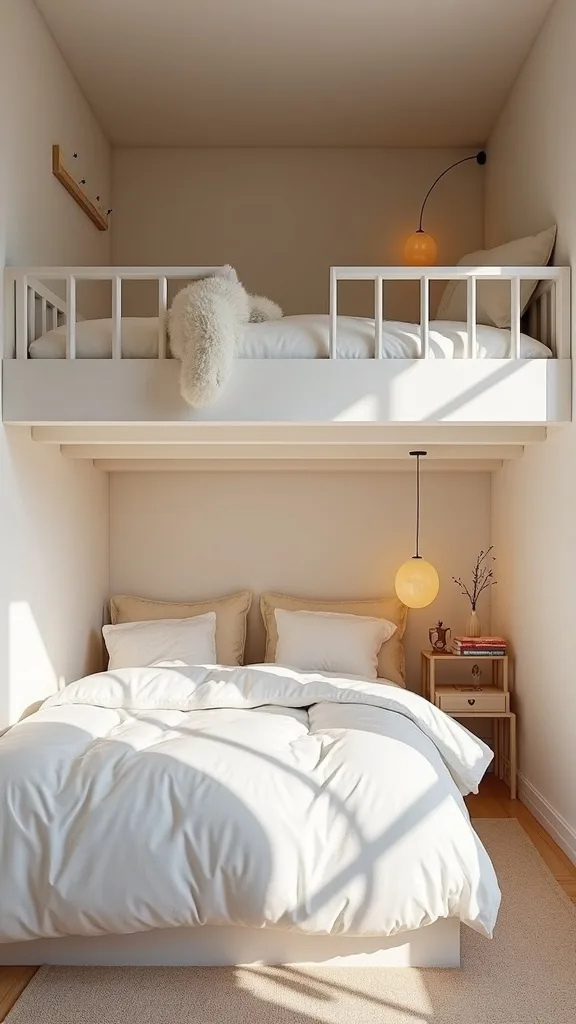
19. What wall decor works best around a loft bed (and what should you skip)?
Wall decor around a loft bed should be calm and scaled—too many small pieces look busy fast. The idea works because large shapes create visual order.
Pick one main art piece or a pair of matching frames and center them to the “zone” (desk or bed), not to the entire wall. If you’re adding shelves, use one long shelf rather than three tiny ones; it reads cleaner and holds a curated mix: a framed photo, a small plant, and a candle.
Luxury version: oversized framed art with a picture light. Accessible version: a downloadable print in a large, inexpensive frame.
Keep frames consistent—black, white, or light wood. Repeat that finish in one other spot (lamp base, hooks, or drawer pulls).
Avoid: hanging decor on the ladder wall where it can get bumped and crooked. Pro tip: leave one section of wall intentionally blank; that negative space is what makes the styled area look deliberate.
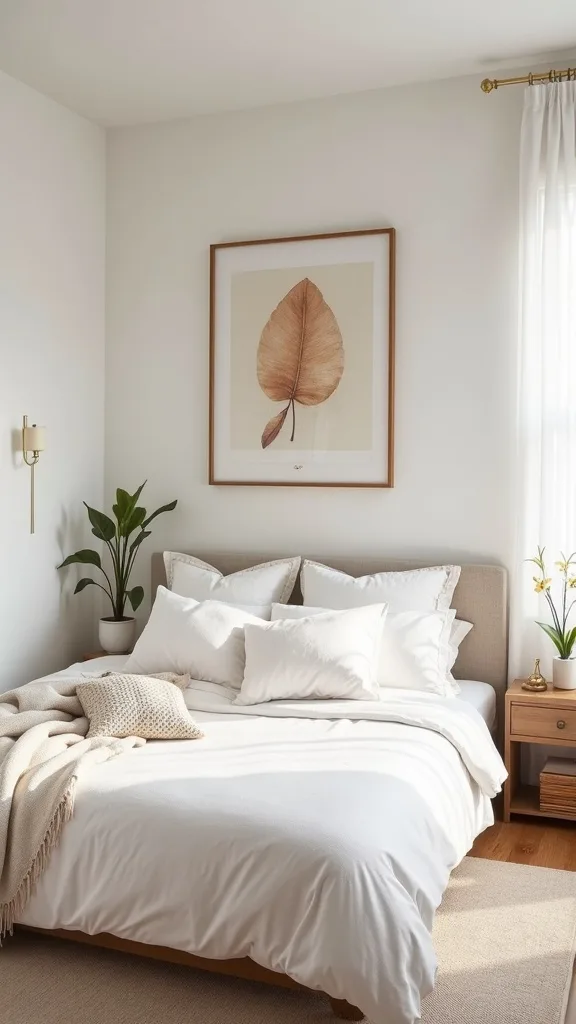
20. How do you organize cords and chargers so the room stays photo-ready?
Cords are the fastest way to make a room feel messy, even when everything else is perfect. This works because hiding cables restores clean lines—the quiet luxury of “nothing shouting.”
Mount a power strip under the desk with adhesive strips or screws (if allowed), then run one cord to the outlet. Use cord clips along the bedpost or desk underside to guide charging cables exactly where hands reach. Add a small lidded box on a shelf for bulky adapters.
Luxury version: integrated outlets and cable channels. Accessible version: a cable management box and adhesive clips.
Choose black cords and black clips if your furniture is dark; choose white if your walls are white. Matching is what keeps it invisible.
Avoid: letting cords drape across the desk surface; it kills the whole look. Pro tip: create a charging station tray—one shallow tray with a multi-cable—so every device lands in the same spot, every night.
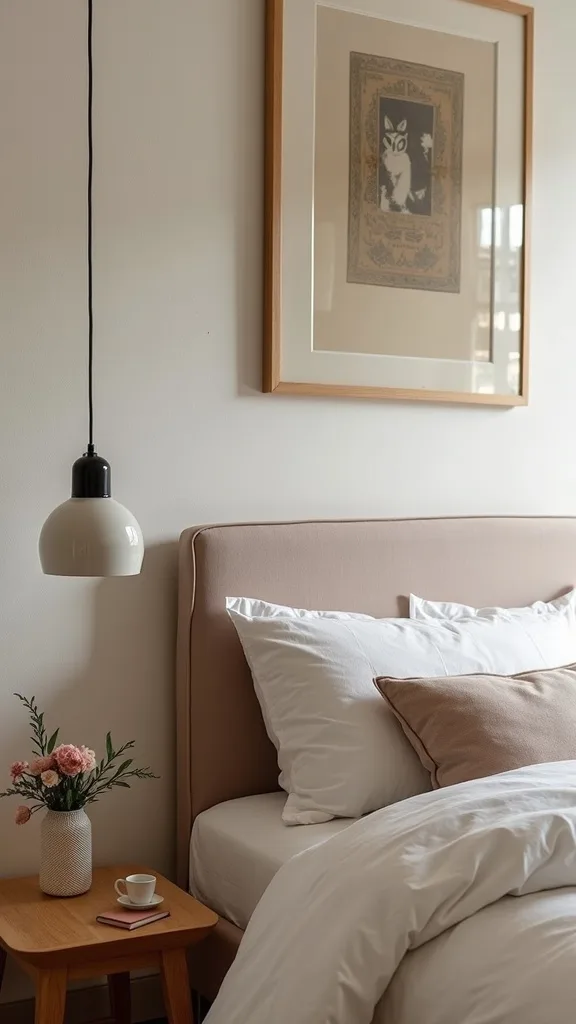
21. Can you do a minimalist loft bedroom without losing storage?
Minimalism isn’t fewer things; it’s fewer things on display. This idea works because closed storage lets the room feel airy while still holding real life.
Choose one primary storage unit under the loft (dresser or cabinet) and commit to it—no extra random bins. Use matching hangers in the closet and one set of baskets for small items. Keep surfaces clear: one lamp, one tray, one book stack.
Luxury version: flush cabinetry with hidden pulls. Accessible version: a dresser with simple knobs and two identical storage boxes on top.
Stick to a quiet palette: soft white walls, light wood, and a single black accent. Add texture through bedding—waffle weave throw, crisp sheets, and one linen pillow.
Avoid: open shelving for everything; it forces you to “style” your mess. Pro tip: label the inside of drawers (not the outside) so the room stays sleek but you still find everything fast.
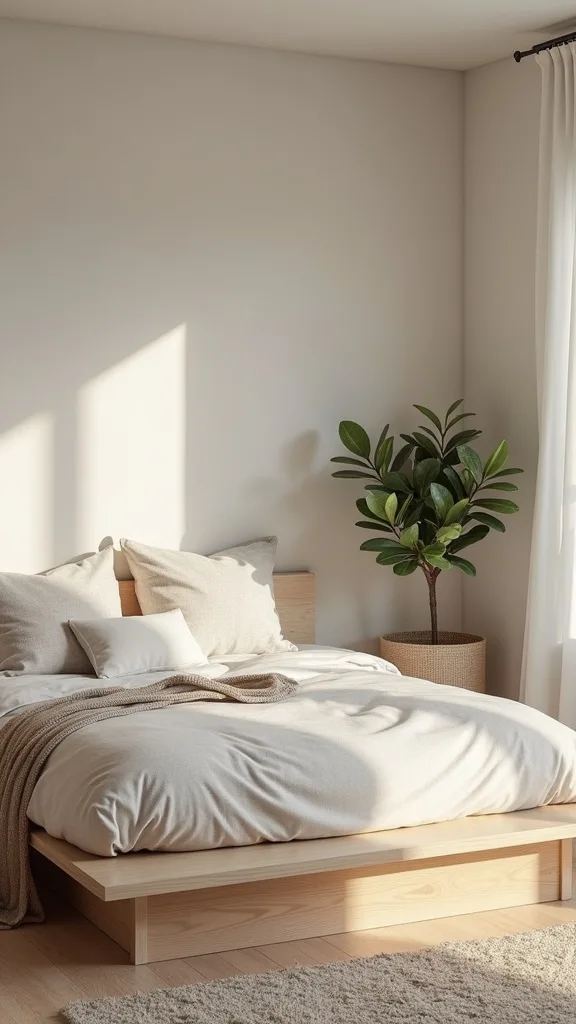
22. How do you add character with color in a loft room design?
Color feels upscale when it’s intentional: one saturated note, surrounded by calm. This works because contrast creates depth without clutter.
Pick a single accent color—forest green, navy, or terracotta—and use it in three places: bedding accent pillow, desk chair, and one art element. Keep the bed frame and large furniture neutral so the color reads like a design choice, not a mismatch.
Luxury version: painted accent wall with matching upholstered chair. Accessible version: peel-and-stick wallpaper panel behind the desk and a slipcovered chair.
Use warm metals (brass) or matte black as your consistent hardware finish. Keep patterns minimal: one stripe or one small-scale print is enough.
Avoid: using five different “fun” colors under the loft; it turns chaotic quickly. Pro tip: repeat the accent color in a small object like a candle set or book spine—those tiny echoes make the whole room feel curated.
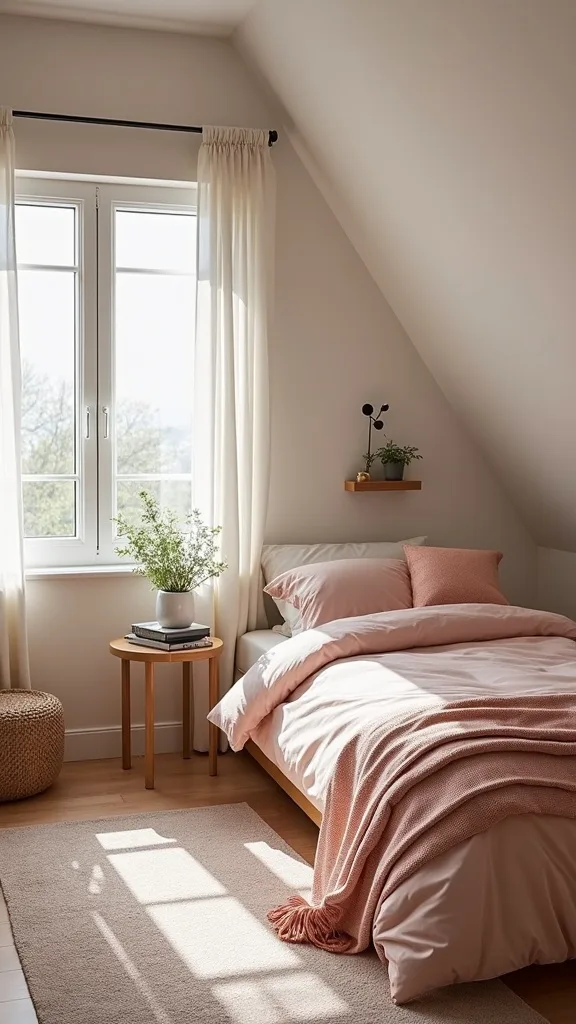
23. What’s the best way to add shelves without hitting your head or crowding the desk?
Shelving under a loft bed should feel like a backdrop, not an obstacle course. The idea works because shelves placed high and shallow give storage while keeping the workspace open.
Install one long shelf 16–20 inches above the desk surface so monitors and notebooks still fit comfortably. Keep shelves shallow (around 6–8 inches) so you don’t bump into corners. Use bookends and two baskets to corral smaller items.
Luxury version: built-in floating shelves with hidden brackets. Accessible version: simple wall shelves with matching brackets painted the wall color.
Style with a rule of thirds: one tall item (vase), one medium (frame), one low (stack). Leave a little breathing room between groups.
Avoid: placing heavy items directly above where you sit; it’s visually stressful. Pro tip: add a thin LED light bar under the shelf for gentle task light—your desk looks instantly upgraded.
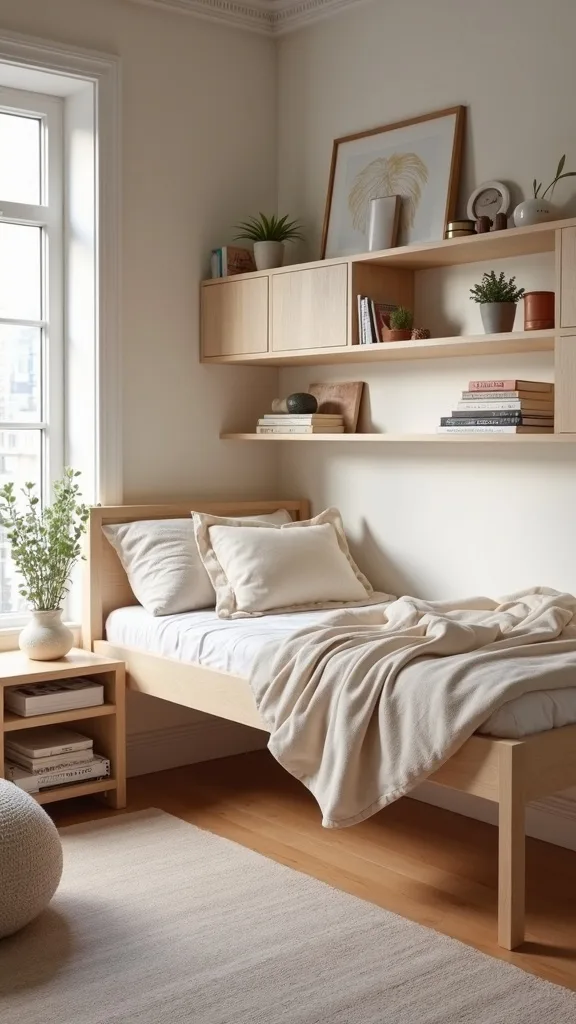
24. How do you create a calm bedtime routine in a loft bedroom?
A calm routine is easier when the room supports it—soft light, a place for everything, and no last-minute scavenger hunts. This works because design can reduce decision fatigue.
Set up two “night zones”: upstairs for sleep, downstairs for prep. Upstairs, keep only essentials on a bedside ledge: water, book, lip balm. Downstairs, use a tray on the desk or dresser for tomorrow’s items—ID, chargers, hair ties—so mornings don’t explode.
Luxury version: matching bedside sconces and linen bedding. Accessible version: clip-on reading light and a crisp cotton quilt.
Use warm white light (2700K–3000K — the cosy, yellowish tone you see in most homes) after 8 p.m. and avoid bright overhead lighting.
Avoid: storing random school papers on the bed; it turns sleep space into stress space. Pro tip: light one candle (real or flameless) on the desk shelf—not the bed—and let that be the “room is done” signal.
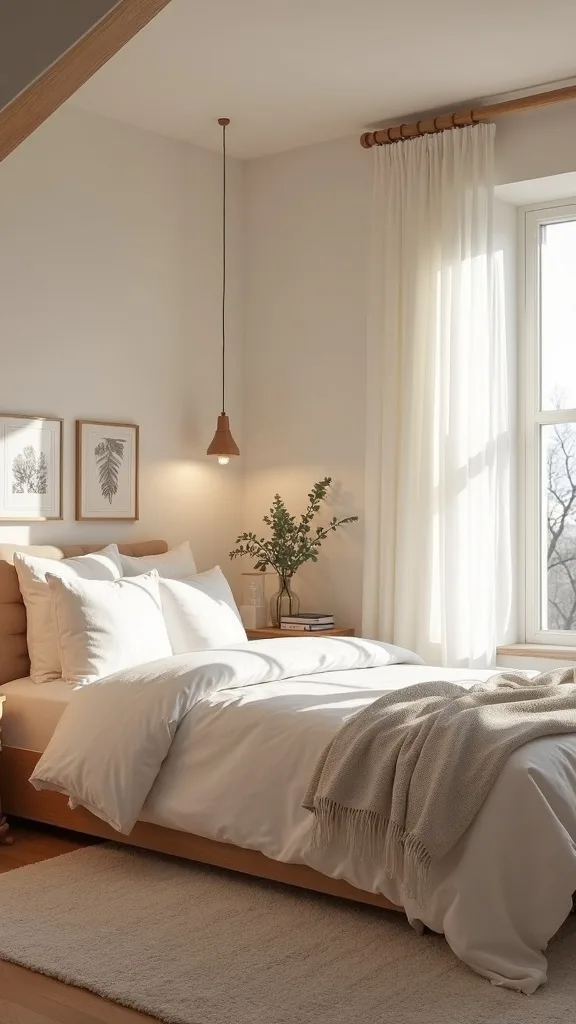
25. The finishing touch that makes any loft bed setup look intentional: a styled micro-vignette
The difference between “we made it work” and “this looks designed” is one small vignette that repeats your finishes. It works because it gives the eye a deliberate endpoint.
Choose one surface—desk corner, shelf, or dresser top—and style it the same way every time: a small tray, a candle grouping, and one vertical element (frame or bud vase). Keep it tight and symmetrical: tray centered, candle set clustered, frame aligned to the back edge. Then commit to keeping that surface clear of daily clutter.
Luxury version: stone tray, match cloche, and framed art. Accessible version: a thrifted dish, a simple candle set, and a printable in a basic frame.
Use the same metal finish as your hardware so it feels cohesive. Fold the throw at the foot of the bed and angle it slightly—never perfectly squared.
Avoid: turning the vignette into storage; it should stay decorative. Pro tip: pick one “signature” detail—like matte black accents—and repeat it three times; that repetition is what makes the whole loft bedroom read as intentional.
Final Thoughts
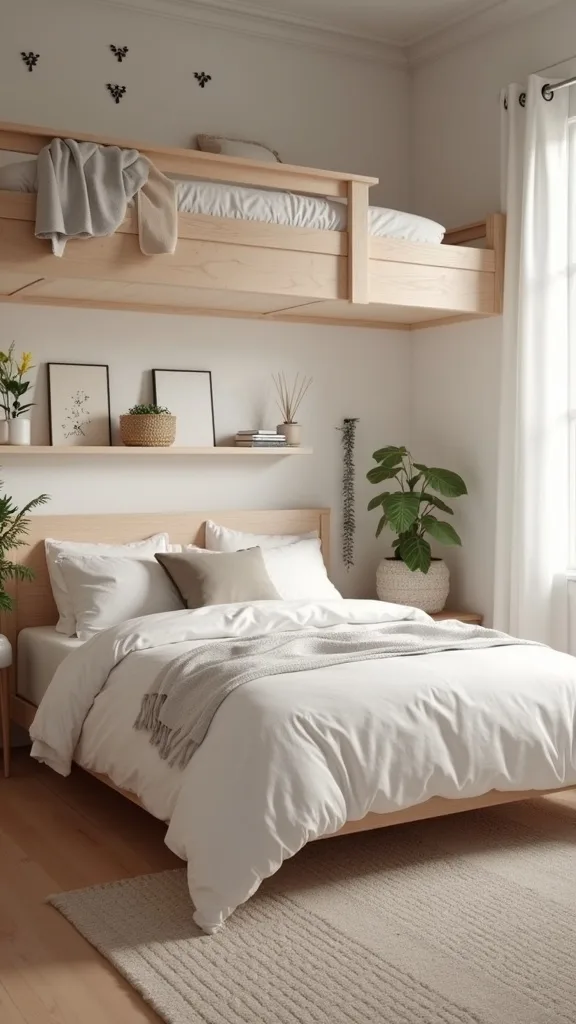
A loft bedroom looks luxurious when it behaves like a well-run little studio: sleep above, life below, and nothing drifting without a home. Keep coming back to the formula—symmetry for calm, layering for comfort, scale for function, and contrast for polish—and the room will feel bigger than its square footage.
If you only change one thing for back-to-school season, make it the “under-loft zone.” A real desk surface, one vertical organizer system, and warm white lighting will impact homework, mornings, and mood more than a new throw ever could. And remember what to avoid: mismatched finishes and exposed cord chaos undo good design fast.
Do this today: measure 36 inches of clear walkway with a tape measure, then use painter’s tape to outline your ladder placement and desk width on the floor—once you see the layout, every next decision gets easier, and the whole room starts to look intentional.
What I’d Do Differently
When I first tried this in a small bedroom, I made one mistake that haunted me every single morning: I centered the loft bed where it looked “balanced,” but I didn’t account for the door swing and the drawer pull-outs. The ladder ended up right in the traffic path, and every time someone opened the closet, the whole room turned into a shuffle. It wasn’t a design failure—it was a layout failure. The correct approach is to design the walkway first (a clean 36-inch path from door to closet), then place the ladder on the quiet side, and only then build the desk and shelves underneath. Once I flipped the layout, the room immediately felt calmer, even before I changed a single decor item.
I also wish I’d known how much difference lighting makes under the loft. One overhead light plus a desk lamp wasn’t enough; adding a warm white LED strip (2700K–3000K — the cosy, yellowish tone you see in most homes) made the nook feel like a real room instead of a shadow. If you do nothing else, measure your walkway today and mark the ladder placement with painter’s tape—then start building from that win.
Products I Recommend for This Project
Here are some of my favourite products to help you bring these ideas to life:
- LEDMO LED Strip Lights (Warm White) — Easy way to add under-loft glow so the desk area feels finished, not shadowy.
- Command Medium and Large Utility Hooks — Rental-friendly hooks for backpacks, headphones, and cords without turning the wall into a hole-filled project.
- IKEA SKÅDIS Pegboard (white) with accessories — Keeps school supplies vertical and tidy so the desktop stays clear.
- JIALILI Cable Management Box — Hides power strips and bulky adapters so the room stays visually calm.
- Globe Electric Plug-In Wall Sconce — Adds layered lighting beside the bed or desk without hardwiring, instantly making the loft bedroom feel more intentional.