
This post contains affiliate links. As an Amazon Associate, I earn from qualifying purchases at no extra cost to you.
Summer light makes everything feel louder. Dust shows faster. Clutter looks messier. That’s why woven pieces win this season: they read calm even when life is busy, and they make a room feel finished without feeling heavy.
This guide covers living-room ideas that use wicker furniture and woven decor with intention. You’ll build the bones first, then layer textiles, then lock in lighting, then finish with greenery and objects that look collected, not staged.
This is perfect for anyone who wants a natural fiber home that feels timeless, especially if your space swings between family hangouts and last-minute guests.
Inside you’ll find a defined “four-piece” starting point, smart ways to mix wood tones, and basket-wall layouts that look curated instead of crafty. You’ll also get one clear thing to avoid so your room never slips into beach-shop territory.
Below are 25 Rattan & Wicker Decor Trend Ideas that sharpen your layout, simplify your styling decisions, and make rattan decor feel like it belongs in your living room year-round.
1. Build the room around the four-piece woven set
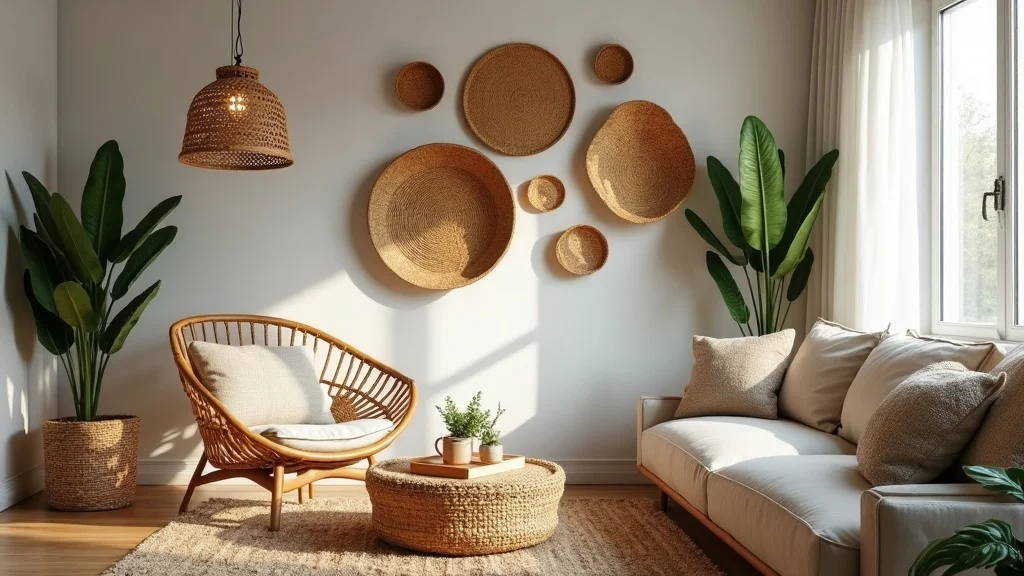
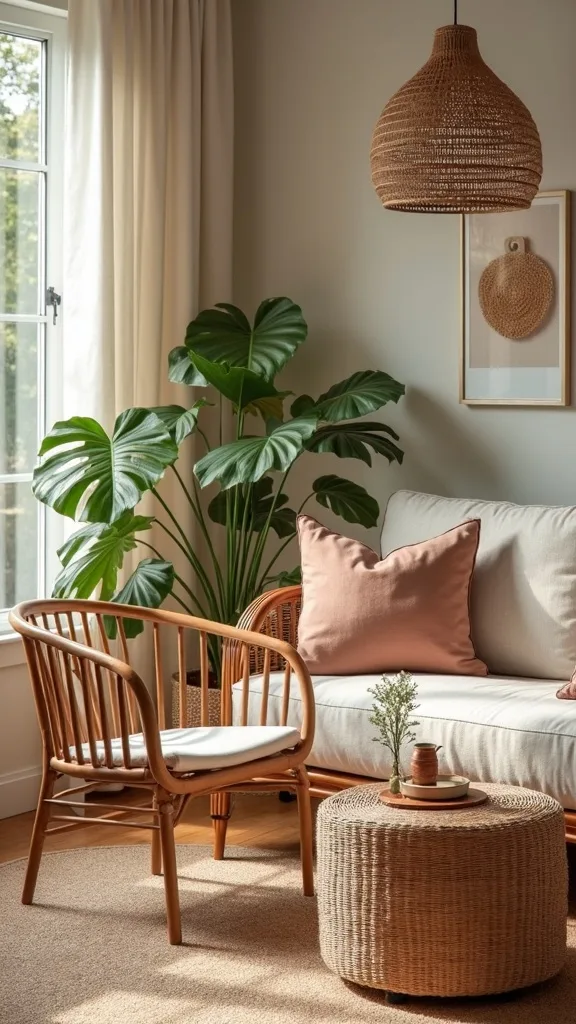
This idea is a complete visual sentence: a woven pendant light overhead, a rattan armchair as the hero seat, a wicker tray table that moves where you need it, and a handmade basket wall display that reads like art. It works because each piece hits a different height, so the texture feels intentional instead of scattered.
Implement it by placing the rattan chair at a front corner of the sofa, angled 10–15 degrees toward the coffee table for conversation. Park the wicker tray table beside it as a flexible drink spot, then hang the pendant centered over the seating zone so the weave pattern lands where you actually sit. Finish with a basket wall cluster on the wall you see first when you enter.
Stick to a tight palette: honey rattan, soft white walls, and one grounding tone like tobacco leather or matte black. Choose wicker furniture with clean lines, not frilly scallops.
Pro tip: repeat one weave scale twice—large weave in the pendant and again in one basket—so the room feels edited and quietly confident.
2. Anchor rattan with a solid, low-profile sofa
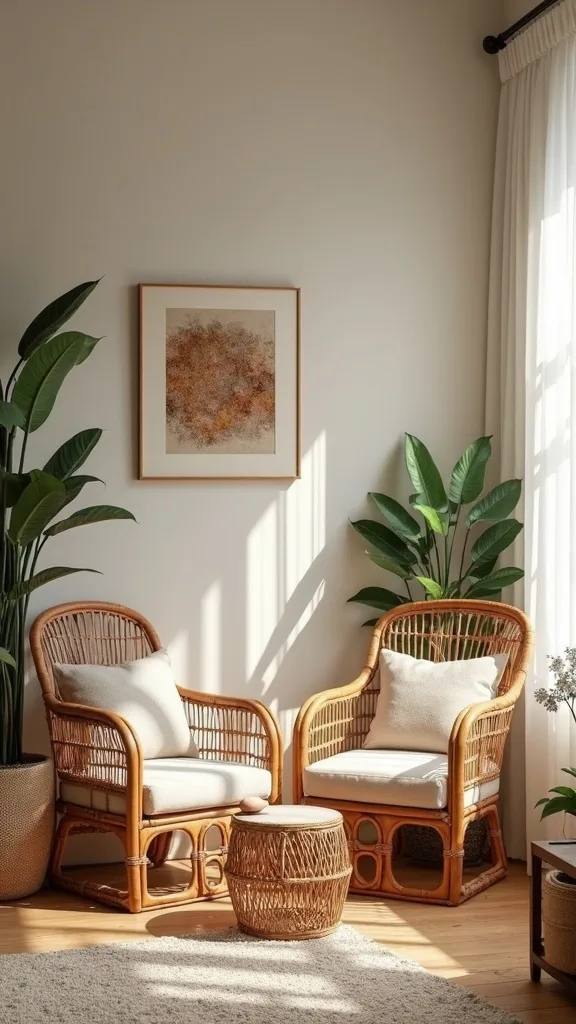
A living room needs weight before it needs texture. A solid, low-profile sofa gives your woven pieces something to play against, which keeps the look timeless instead of theme-y.
Choose a sofa with simple arms and a tailored skirt or exposed legs, then let the rattan chair and tray table bring the pattern. Keep the sofa fabric matte—cotton-linen, performance weave, or brushed canvas—so the rattan reads crisp. Position the sofa first, centered on the rug, with 18 inches between the coffee table and the seat edge for easy movement.
Use colors that calm the weave: warm white, sand, stone, or a muted olive. Add one woven decor accent on the sofa—like a single textured lumbar—to echo the natural material without piling it on.
Pro tip: if your sofa is dark, choose lighter rattan tones so the contrast feels graphic and modern, not muddy.
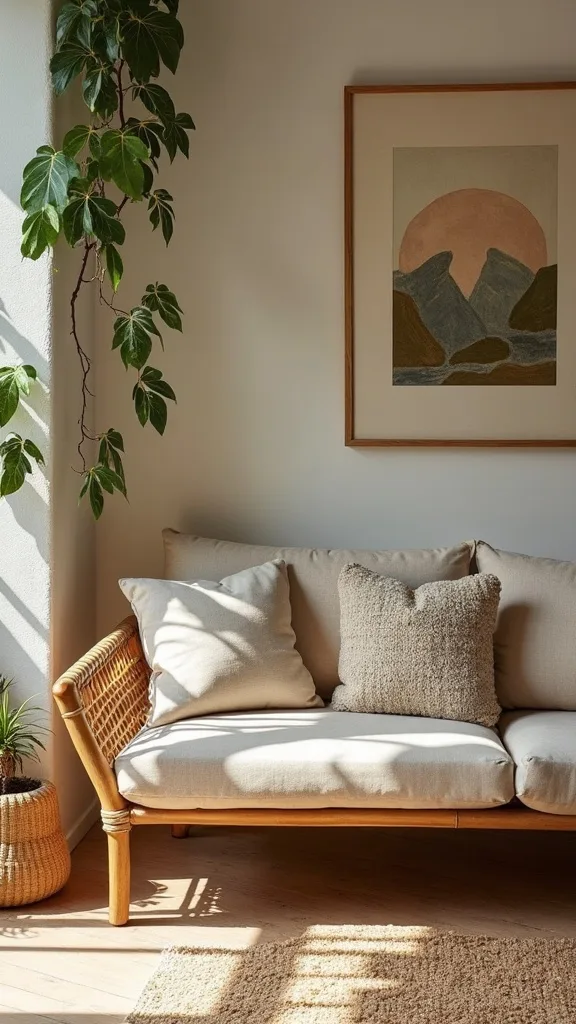
3. Choose a rug that makes wicker look expensive
Rattan and wicker can look casual fast. The right rug raises the whole room by adding scale and softness under the weave.
Go big: an 8′ x 10′ rug for most living rooms, or at least large enough for the front legs of every seat to sit on it. A flatweave wool, a soft jute blend, or a subtle stripe gives you texture without competing with the basket wall. Place it so it frames the seating zone like a platform.
If you love jute, pick a tightly woven version with a bound edge so it doesn’t shed all summer. Pair it with a rug pad so chairs slide without snagging.
Pro tip: avoid a chunky braided rug directly under a wicker tray table—too much texture-on-texture makes the table feel flimsy instead of intentional.
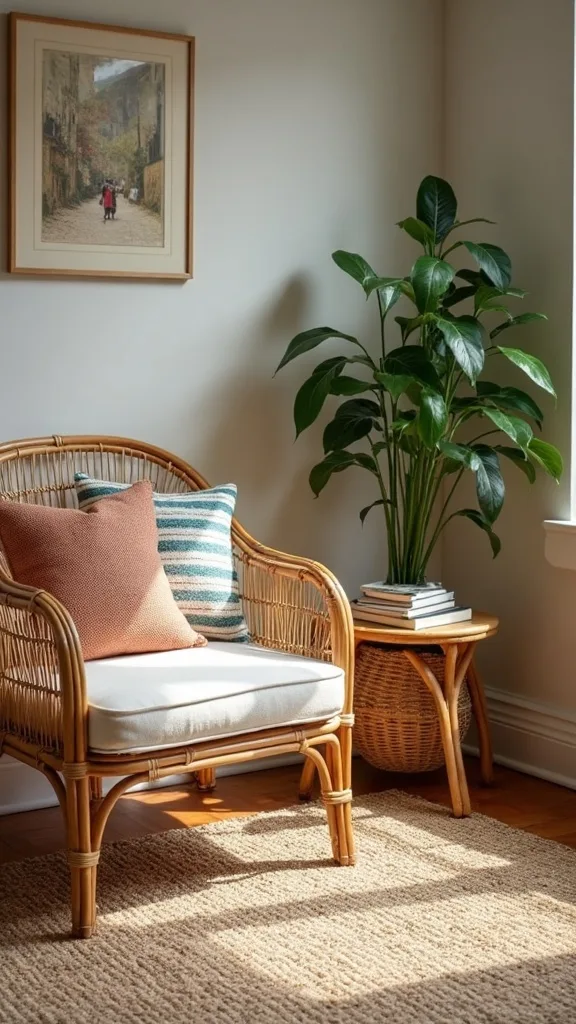
4. How do you mix rattan with wood tones without clashing?
Mixing rattan with wood tones works when you commit to one “main” wood temperature and treat the rest like accents. Rattan sits naturally in the warm family, so you’re building harmony, not contrast for contrast’s sake.
Start by identifying your biggest wood surface—flooring, coffee table, or media console. Match your rattan pieces to that warmth, then introduce one secondary wood tone in a smaller item like a picture frame or side table. Keep the rattan chair and basket wall within the same honey-to-caramel range.
Use black metal sparingly to outline shapes: a slim floor lamp base or curtain rod is enough. That thin black line makes the weave look sharper.
Pro tip: if you have cool gray floors, don’t fight them with orange rattan. Choose washed rattan or pale cane so the mix feels coastal-clean, not conflicted.
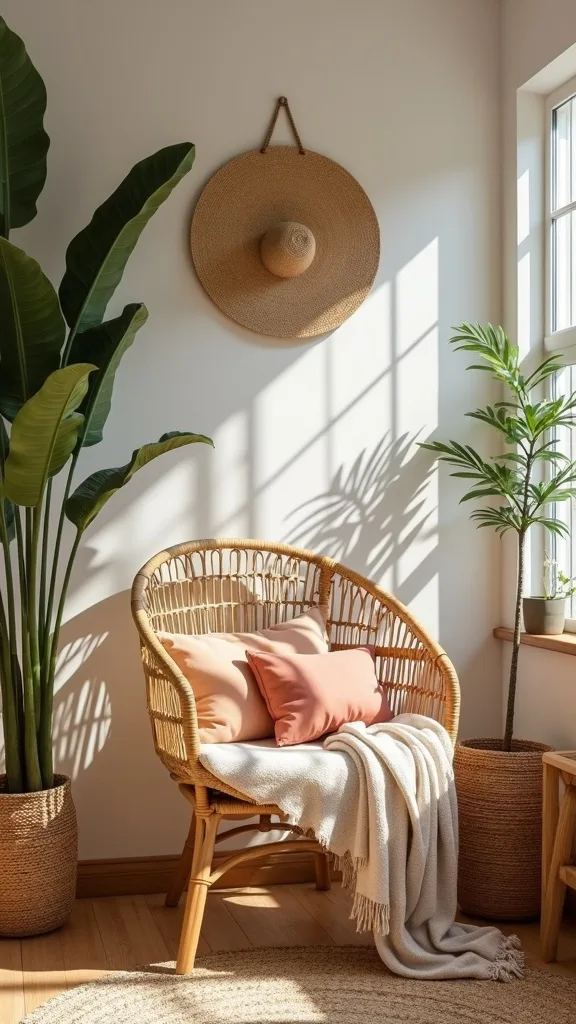
5. What’s the best way to use a wicker tray table in a living room?
A wicker tray table is the summer MVP because it’s furniture and serving piece in one. It works because it adds function without the visual bulk of another heavy side table.
Use it beside the rattan chair as a landing pad for a drink, a paperback, and a small dish for keys. When guests arrive, lift the tray and carry drinks to the sofa, then return the base to its spot so the room stays tidy. Keep the tray styled with only three items when not in use: a coaster stack, a candle, and one small bud vase.
Choose a tray with a tight weave and a solid rim so it doesn’t sag. A natural fiber home still needs structure.
Pro tip: avoid overloading it with tall decor—wicker looks best when it supports low, useful objects that invite real life.
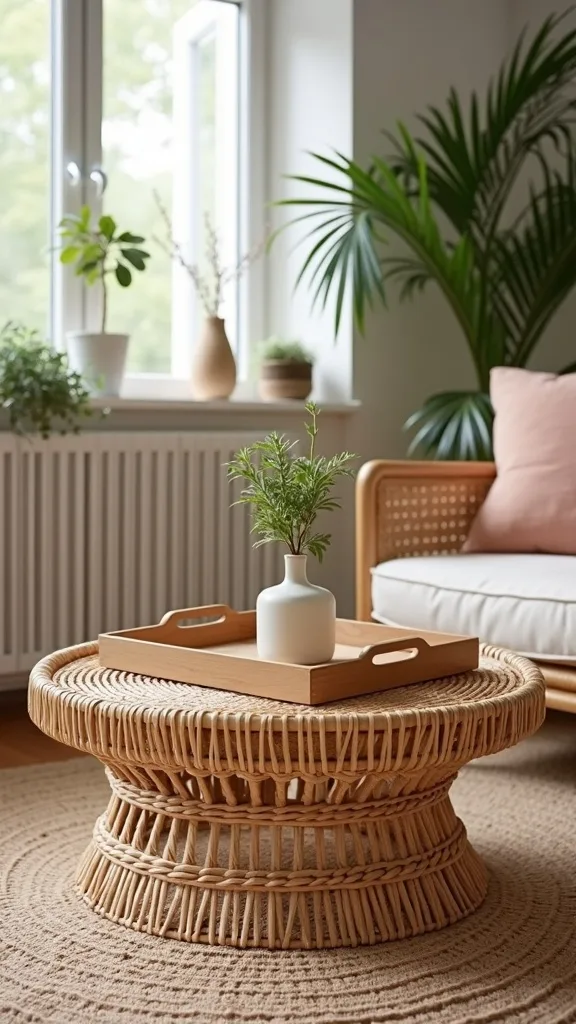
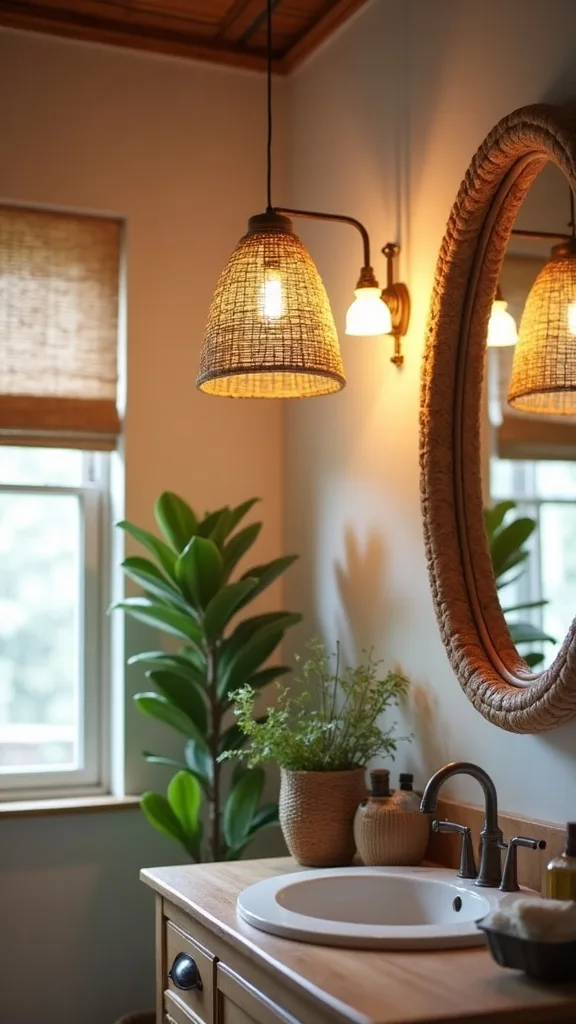
6. How do you hang a woven pendant light at the right height?
A woven pendant light should feel like a warm canopy over the seating area. Hang it wrong and the room feels chopped; hang it right and everything below looks composed.
In most living rooms, aim for the bottom of the pendant around 7 ft above the floor, or higher if people walk under it. Center it over the coffee table or the middle of the seating arrangement, not the ceiling’s midpoint. Use a dimmable bulb in warm white light (2700K–3000K — the cosy, yellowish tone you see in most homes) so the weave casts soft pattern without harsh glare.
Pick a shade with visible texture, but a clean silhouette—dome, drum, or bell. That shape keeps the rattan furniture trend feeling classic.
Pro tip: if the pendant throws busy shadows, add a frosted bulb to soften the pattern while keeping the texture.
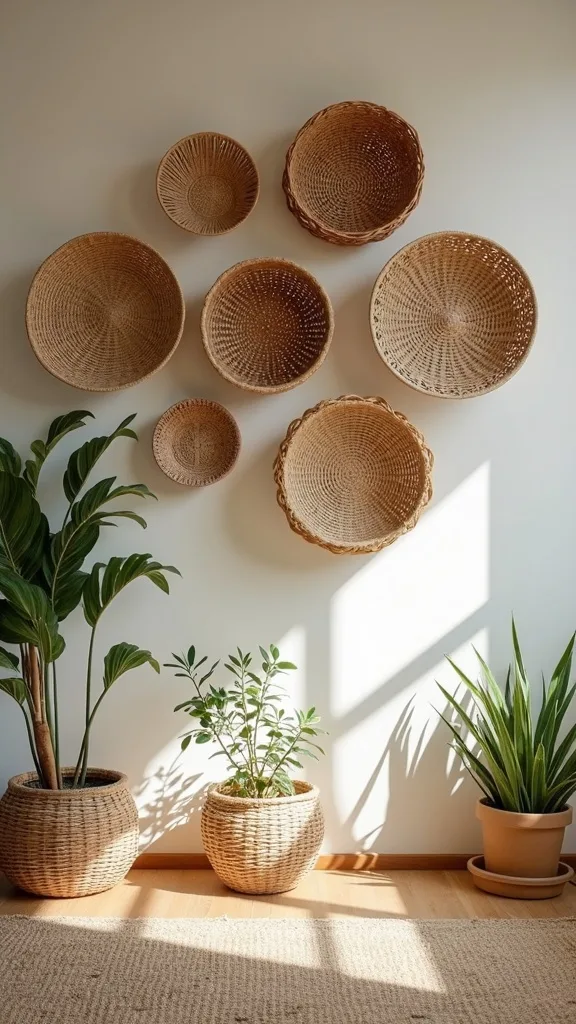
7. Create a basket wall display that looks curated, not crafty
A basket wall display can read like gallery art when the layout is deliberate. It works because the woven surfaces catch light differently throughout the day, giving your wall movement without color chaos.
Start with five to seven baskets in two sizes. Lay them on the floor first and build a loose oval shape, mixing flat trays with deeper bowls for depth. Hang them 6–8 inches apart, centered at eye level, and keep the cluster’s overall width similar to your sofa’s width so the wall feels balanced.
Choose baskets with a shared detail: a similar rim color, a repeated spiral pattern, or matching natural tones. Add one darker piece to act like a punctuation mark.
Pro tip: avoid tiny baskets scattered across a big wall. Small pieces read like clutter; a single confident cluster reads like art.
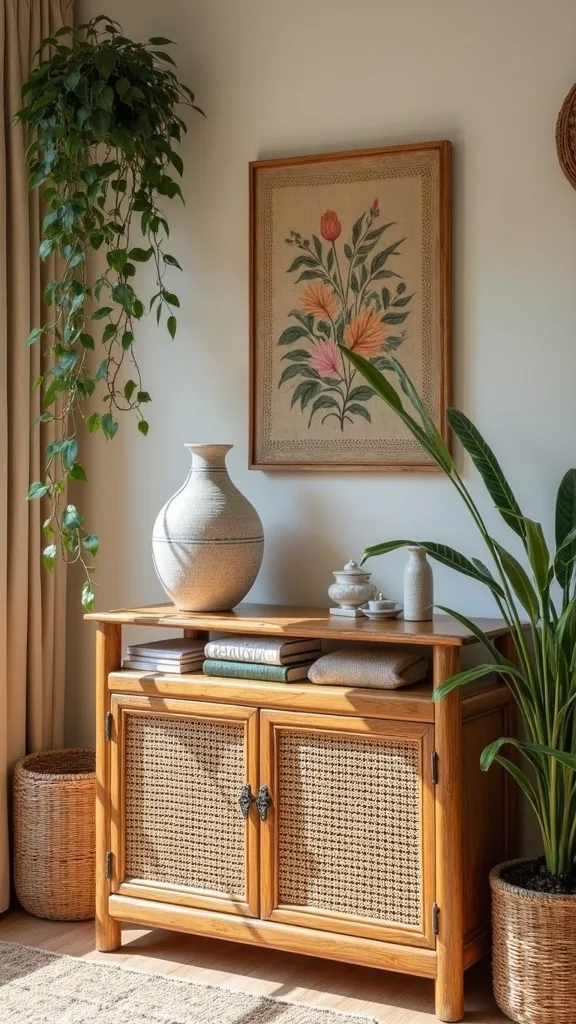
8. Use cane-front storage to hide the messy stuff
Texture looks best when the room is calm. Cane-front cabinets and baskets give you breathable storage that still feels light in summer.
Swap one open shelf for a cane-front console or a cabinet with woven doors. Store remotes, chargers, and board games behind the weave so the room reads clean from the doorway. If you rent, add cane webbing to an existing cabinet door insert for a fast upgrade.
Keep the cabinet top simple: one lamp, one stack of books, one bowl. Let the weave be the detail.
Pro tip: avoid mixing too many different woven door styles in one room—one cane-front piece is enough to signal intention.
Cost & Materials Estimate
A cohesive rattan-and-wicker living room refresh typically lands between a small accessory swap and a full seating upgrade, depending on what you already own.
| Item | Estimated Cost | Where to Buy |
|---|---|---|
| Woven pendant light (rattan/bamboo shade) | $45–$160 | Amazon |
| Rattan armchair (with cushion) | $180–$650 | Wayfair |
| Wicker tray table / tray-top side table | $35–$120 | IKEA |
| Wall basket set (5–7 pieces) | $40–$140 | Amazon |
| Warm white LED bulbs + plug-in dimmer | $18–$55 | Home Depot |
| Neutral throw pillow covers (set of 2–4) | $22–$70 | Amazon |
Total estimated cost: $340–$1,195 Save money by thrifting the chair or baskets; splurge on the pendant and one well-made seat you’ll use daily.
9. How can you make rattan feel modern instead of beachy?
Modern rattan comes from contrast and restraint. The weave becomes a texture note, not the whole story.
Pair rattan with crisp geometry: a square coffee table, straight-leg sofa, and simple-lined curtains. Keep your wall color clean—warm white or soft clay—and use one bold accent in matte black or aged brass. Choose pieces with tight, even weaving and minimal ornamentation.
Limit yourself to three woven elements in the main seating zone: pendant, chair, and tray table is a complete set. Anything beyond that should be subtle, like a single lidded basket.
Pro tip: avoid seashell art, rope details, and obvious nautical stripes. Those cues push the room into theme, not design.
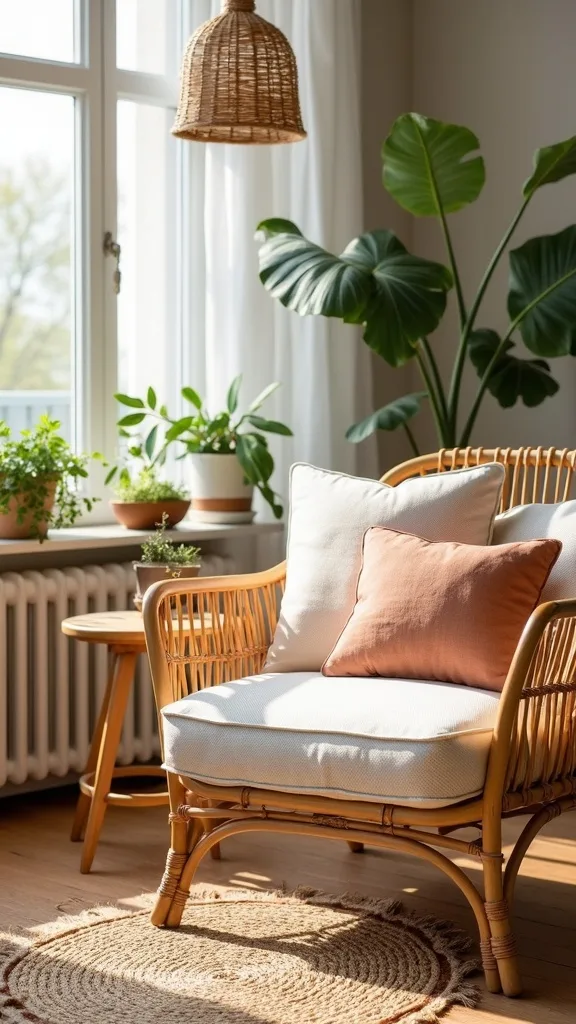
10. Layer linen and cotton textiles that flatter the weave
Woven materials need soft textiles to keep them from feeling scratchy or spare. Linen and cotton add a clean drape that makes rattan look tailored.
Use two throw pillows in a solid linen and one in a small-scale stripe. Add a lightweight cotton throw folded into a neat rectangle over the sofa arm, not tossed like laundry. Choose curtains that filter light—linen-look panels that kiss the floor by a half inch keep the room calm.
Stick to sun-washed colors: oat, fog, pale terracotta, and soft olive. These tones make rattan decor feel grounded.
Pro tip: keep patterns tight and quiet. Big tropical prints fight the basket wall and make the room feel louder than summer already is.
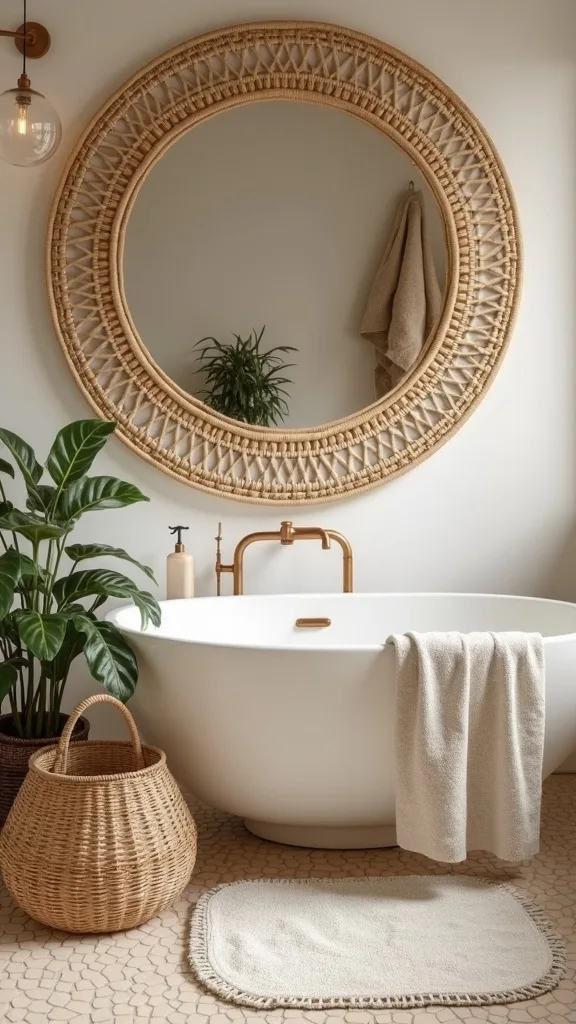
11. Add one leather touch to sharpen natural fiber texture
Leather gives rattan a backbone. That small hit of smooth, dense material keeps woven pieces from feeling too airy.
Add a leather lumbar pillow, a leather-handled tray, or a single saddle-toned ottoman. Place it near the rattan chair so the textures speak to each other. Keep the leather matte, not shiny, so it reads relaxed.
Color matters: tobacco, caramel, or deep tan complements honey rattan. Avoid bright orange leather, which can make the weave look yellow.
Pro tip: choose one leather item, not five. One strong material contrast is more sophisticated than a pile of “natural” cues competing for attention.
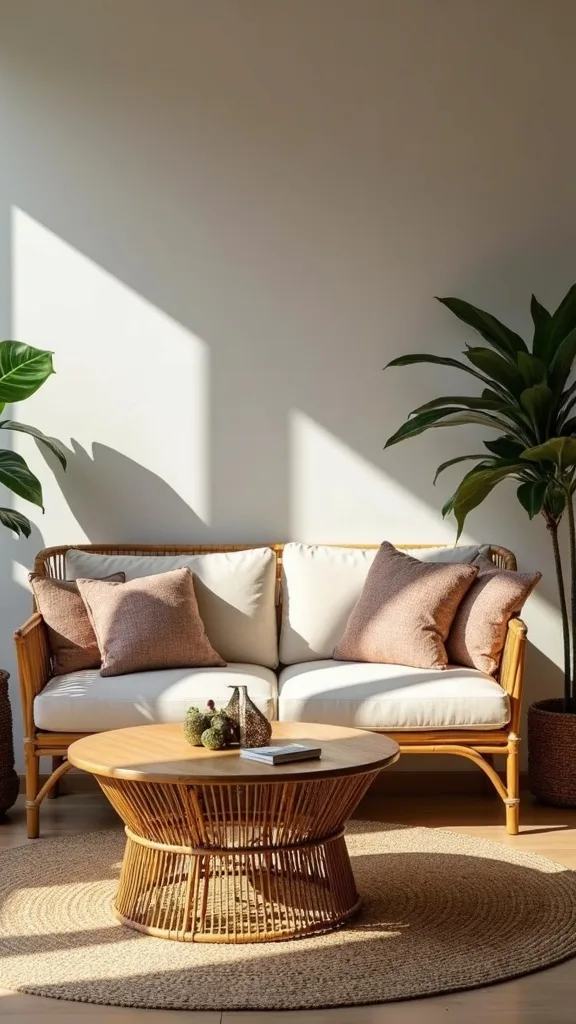
12. What coffee table shape works best with wicker and rattan seating?
The best coffee table shape is the one that makes the room easy to move through. With rattan and wicker seating, you want a shape that feels solid and simple.
If your seating is boxy, choose a round or oval table to soften the layout. If your seating is already curved, pick a rectangular table with slim legs for structure. Keep at least 18 inches of clearance from table edge to seating so the tray table can slide in when needed.
Materials that pair well: light oak, travertine-look, or black-stained wood. Let the table be the anchor while the weave adds texture around it.
Pro tip: avoid glass coffee tables with lots of woven pieces. The reflections can make the room feel busy, and fingerprints show instantly in summer light.
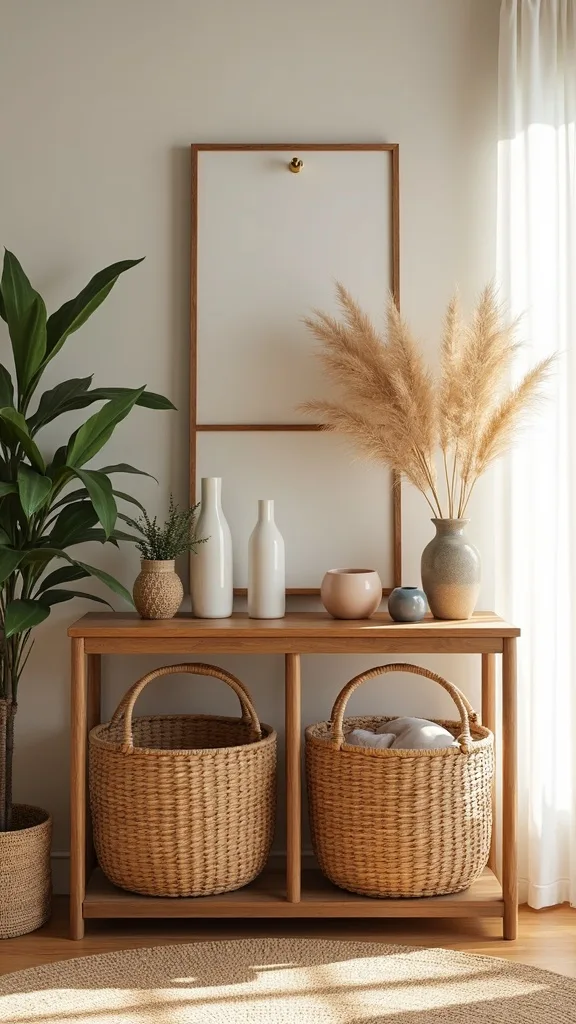
13. Use a pair of matching baskets as a “soft” sideboard
Big baskets can replace bulky furniture. They work because they store throws and toys while still reading like decor.
Place two matching floor baskets under a console table or beside the sofa, spaced evenly like bookends. Keep one for textiles and one for kid-friendly items so cleanup takes two minutes. Choose baskets with sturdy handles so you can move them when vacuuming.
Pick a warm natural tone that matches your basket wall display, then line them with a simple cotton bag if you store small items.
Pro tip: avoid baskets that collapse when empty. Floppy shapes look messy; structured baskets look intentional even on a quiet day.
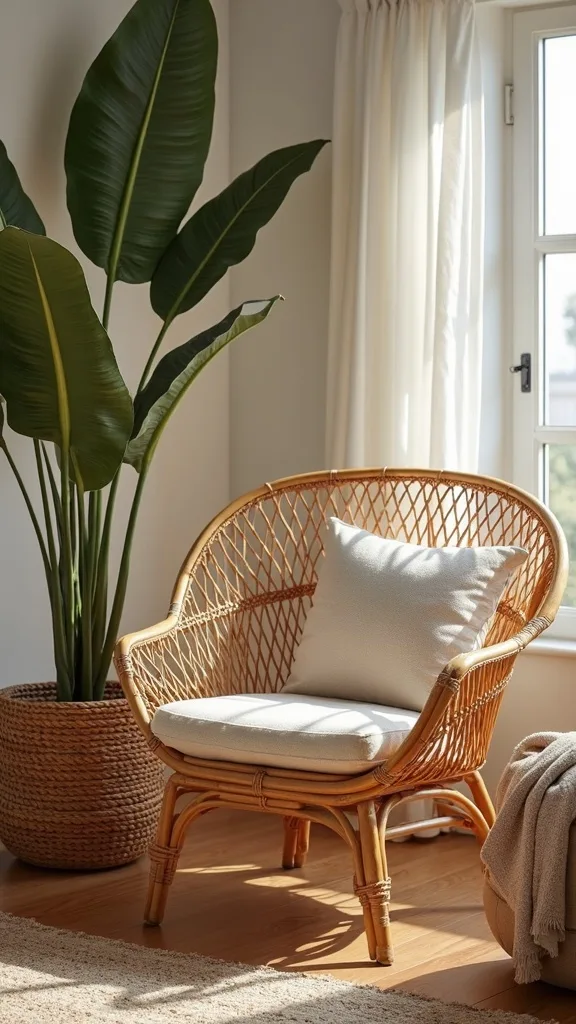
14. Make the rattan armchair the best seat in the room
A rattan armchair should feel like an invitation. The chair works because it adds sculptural lines and a breathable texture that suits summer.
Place it where it gets natural light, ideally near a window but not blocking the walkway. Add a seat cushion in a tailored neutral fabric, then layer one small pillow with a subtle stripe. Set the wicker tray table within easy reach so the chair becomes a real reading spot.
Look for a chair with a slightly reclined back and solid joints. If it creaks in the store, it will creak louder at home.
Pro tip: avoid pushing the chair flat against the wall. Give it 6–10 inches of breathing room so it reads like furniture, not overflow seating.
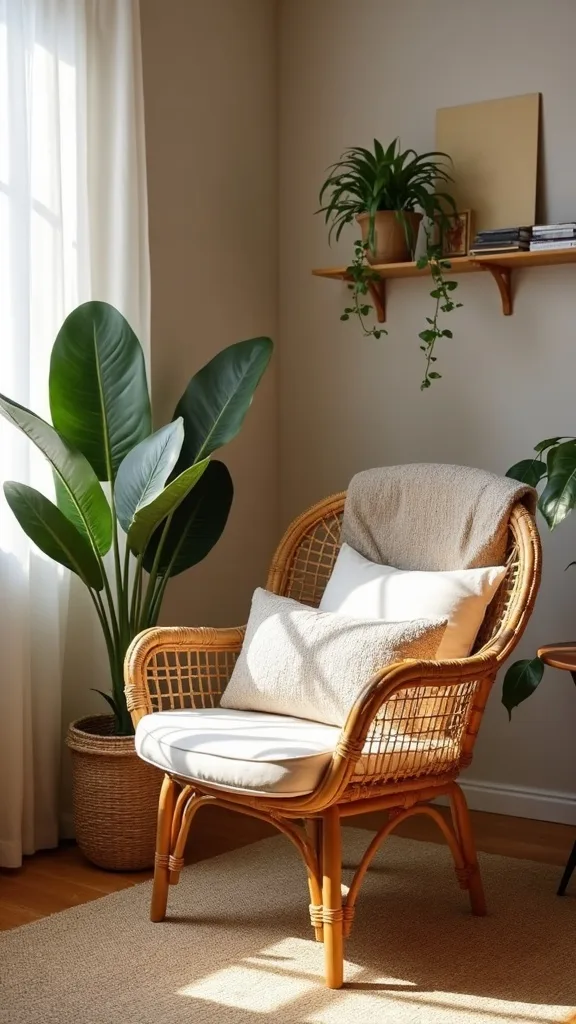
15. How do you style a woven pendant so it doesn’t feel too casual?
A woven pendant feels elevated when the rest of the room is edited. The texture should be the accent, not the excuse to add more stuff.
Balance it with one refined element nearby: a clean-lined console, a framed print with a wide mat, or a simple plaster vase. Keep your ceiling line crisp with a plain white ceiling and minimal crown details. Use a dimmer so the pendant shifts from functional to ambient at night.
Choose a pendant with a defined edge—trim, rim, or structured frame—so it looks designed. Pair it with warm white light (2700K–3000K — the cosy, yellowish tone you see in most homes) for a flattering glow.
Pro tip: avoid exposed “Edison” bulbs inside busy weave. The visible filament can look harsh and distract from the texture.
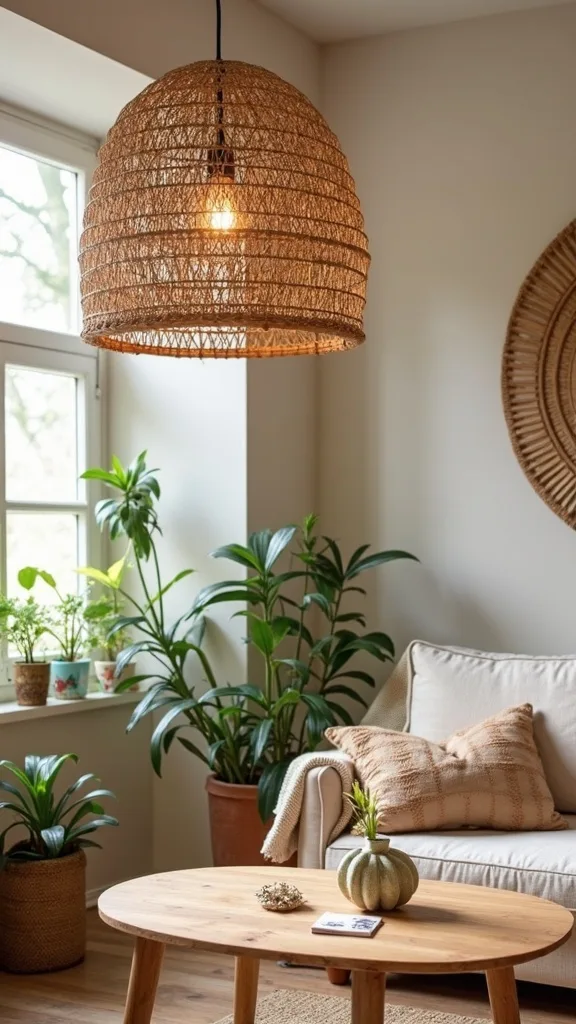
16. Create a calm color story: sand, bone, and one green
Woven materials already bring visual pattern. A calm color story keeps the room from feeling cluttered.
Use sand or oat on the rug and textiles, bone or warm white on the walls, and then choose one green for life—olive, sage, or deep leaf. Repeat that green twice: once in a pillow or throw, and once in a plant. This gives the room a quiet rhythm.
Let wood and rattan stay in their natural range. Avoid staining everything to “match.” Variation looks collected.
Pro tip: skip bright teal with rattan unless you’re fully committing to coastal. Muted greens keep the look timeless and flexible through every season.
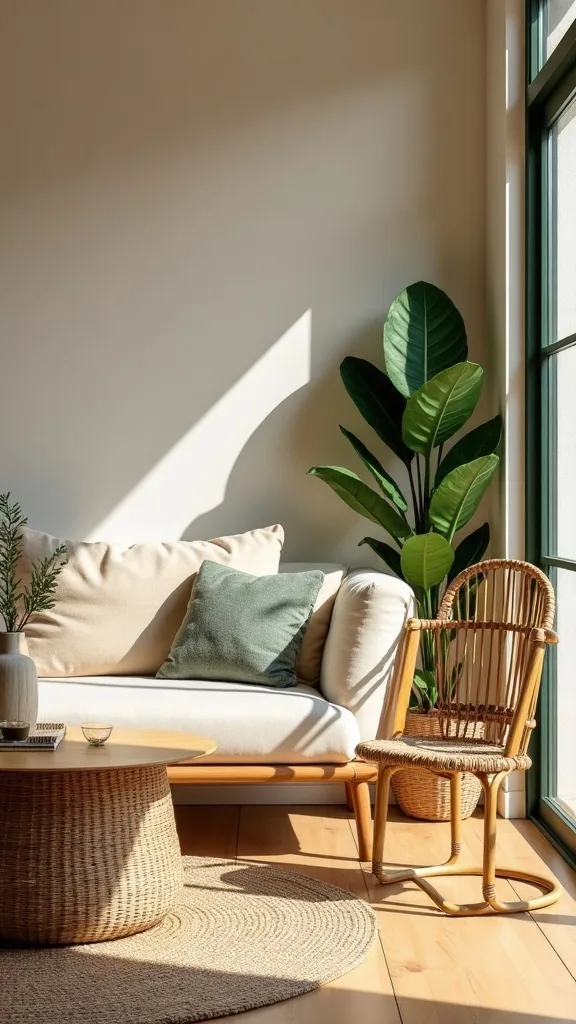
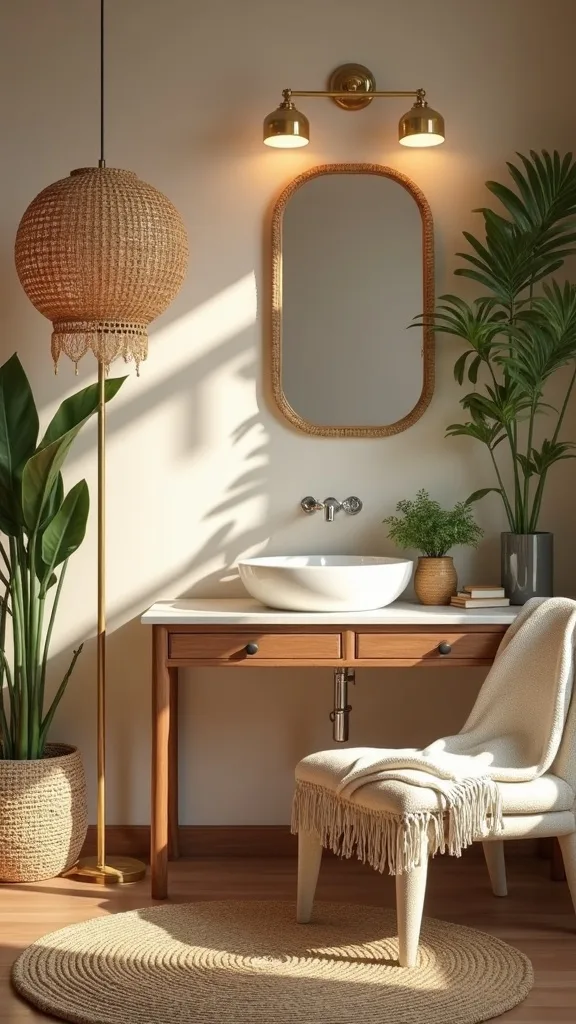
17. Add a floor lamp with a woven shade for layered light
Overhead light alone flattens texture. A floor lamp with a woven shade adds a second glow point that makes the weave feel warm and dimensional.
Place the lamp behind or beside the rattan chair so it becomes a reading corner. Choose a lamp that throws light downward and outward, not straight into your eyes. Use a bulb in warm white light (2700K–3000K — the cosy, yellowish tone you see in most homes) to keep skin tones flattering.
A slim black or brass base gives structure under the weave. Keep the shade shape simple so it doesn’t compete with the pendant.
Pro tip: put the lamp on a plug-in dimmer. One small control turns “day room” into “evening room” in seconds.
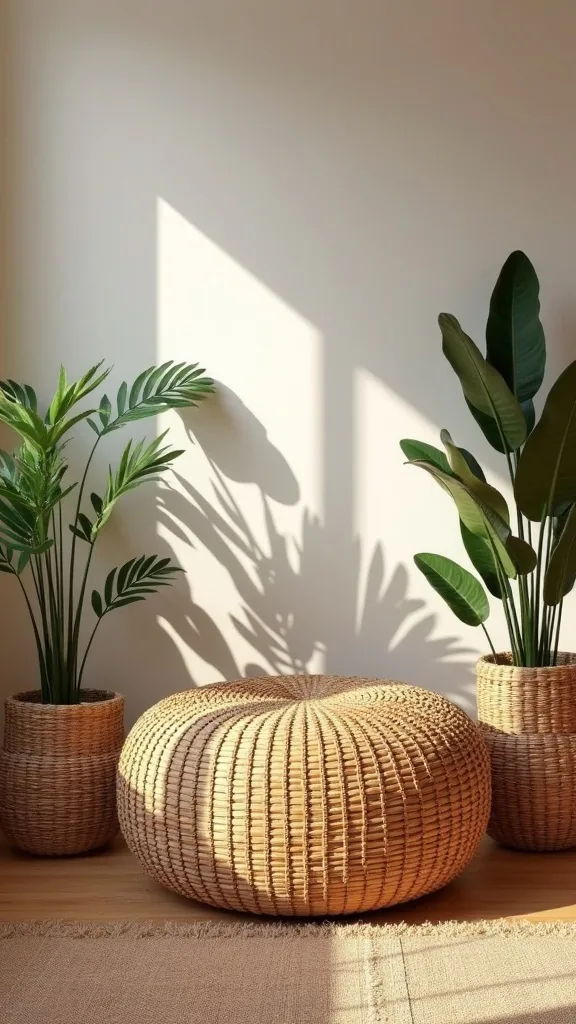
18. Use a woven pouf as flexible extra seating
A woven pouf adds texture at floor level, which makes the room feel layered. It works because it’s seating, footrest, and side perch without taking up visual space.
Tuck it near the coffee table, then pull it out when you need an extra spot. Choose a pouf with a firm fill so it doesn’t collapse. If you have kids, pick a darker natural tone or a patterned weave that hides scuffs.
Keep it within the same material family as the basket wall—natural fibers that feel honest. This is where woven decor shines.
Pro tip: avoid tiny poufs that look like decor-only. A pouf should be big enough to actually sit on, or it reads like clutter.
19. How do you keep wicker furniture from looking dated?
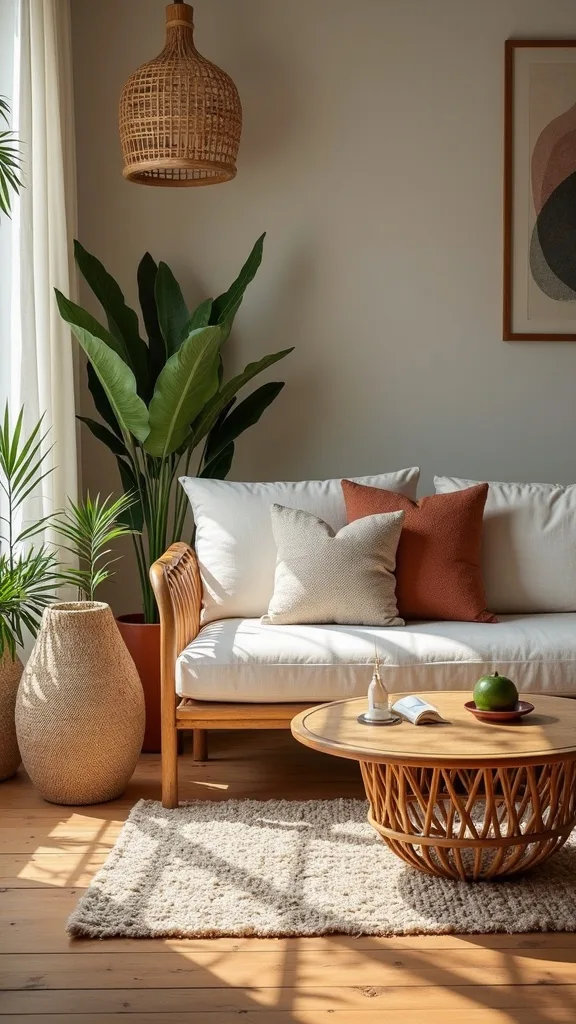
Wicker furniture looks current when it’s paired with modern silhouettes and clean styling. The goal is texture with restraint, not nostalgia.
Choose pieces with straight legs, simple arms, and tight weaving. Skip overly ornate scrollwork unless you’re committing to a vintage room. Keep the surrounding decor minimal: one large art piece, one sculptural vase, and a tight stack of books.
Refresh older wicker with new cushions in a solid performance fabric. White, sand, and soft gray-green modernize instantly.
Pro tip: avoid matching wicker sets across the whole room. One or two wicker pieces feel curated; a full suite can feel like a sunroom showroom.
20. Add one ceramic statement to balance all the weave
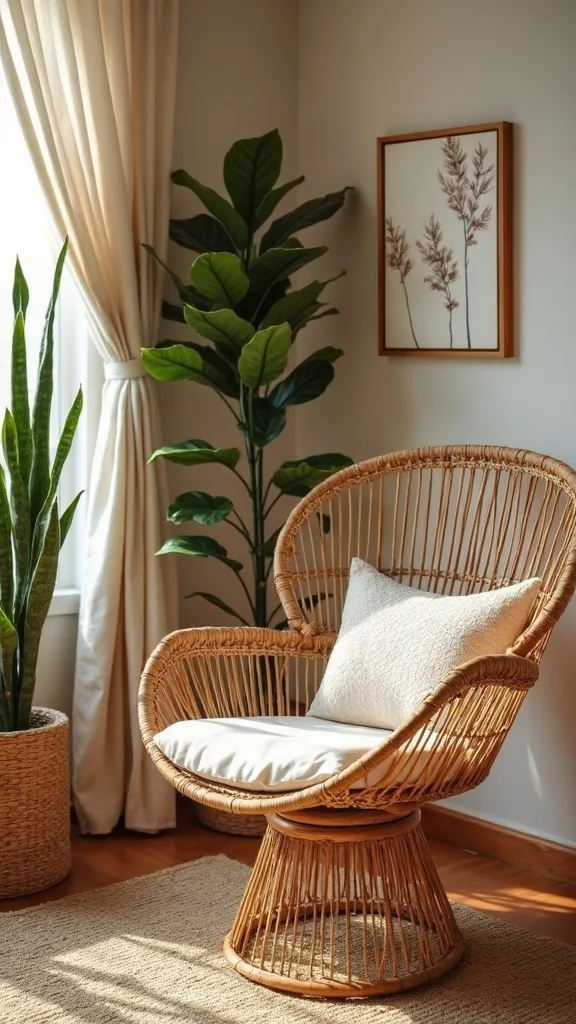
Too much weave can feel dry. Ceramic adds a cool, smooth counterpoint that makes the natural textures look richer.
Place a large ceramic vase on the coffee table or console, then keep the rest of the surface low and simple. Choose a shape with presence—rounded, slightly imperfect, and matte. If you add branches, keep them airy so they don’t block sightlines.
Colors that work: chalk white, sandy beige, or a deep olive glaze. The ceramic becomes the quiet “heavy” element.
Pro tip: avoid shiny metallic vases next to basket walls. The reflection steals attention and makes the weave feel less special.
21. Bring in greenery that matches the scale of your basket wall
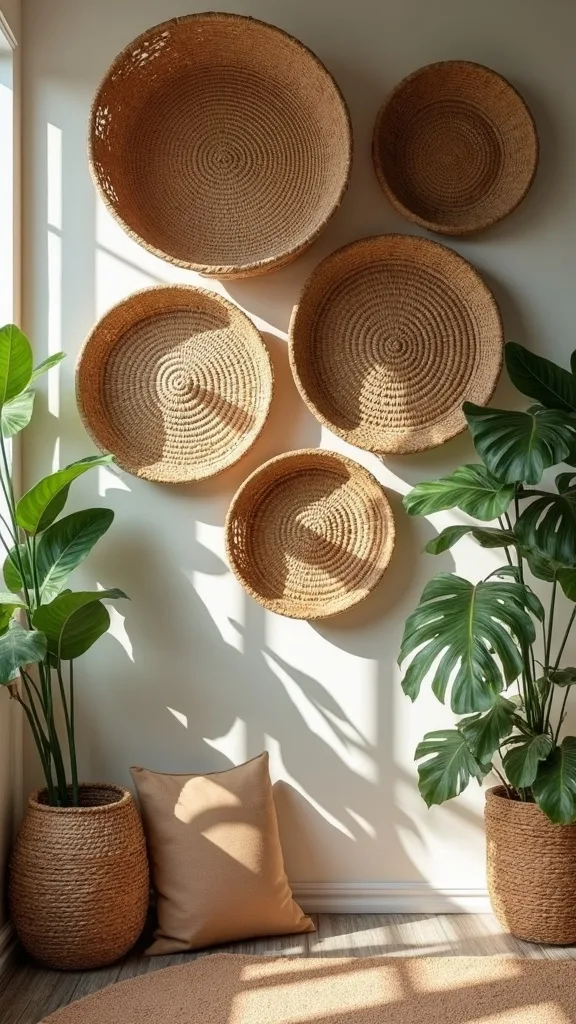
Greenery completes the natural fiber story, but scale matters. A big basket wall needs a plant with presence so the room feels balanced.
Choose one tall plant—like a rubber plant or olive tree—and place it near the basket display to create a vertical partnership. Use a simple pot, then set it in a woven planter basket for texture. Keep leaves clean; wipe them once a week so they catch light.
Limit yourself to one large plant and one small tabletop plant. More than that starts to feel like a greenhouse.
Pro tip: avoid faux greenery with shiny leaves. Matte foliage looks believable and keeps the room feeling grounded.
22. How do you style shelves with baskets without visual clutter?
Baskets on shelves work when they follow a clear rule. The rule is repetition with breathing room.
Use matching baskets for the bottom shelf to create a quiet base, then keep the upper shelves lighter with books and one sculptural object. Leave at least 30% of each shelf empty so the eye can rest. Choose baskets with lids if you’re hiding small items like cords and game pieces.
Keep materials consistent: light wood shelves, natural baskets, and simple ceramics. This supports a natural fiber home without turning the shelf into a craft display.
Pro tip: avoid mixing basket shapes on every shelf level. One shape repeated reads polished; five shapes read chaotic.
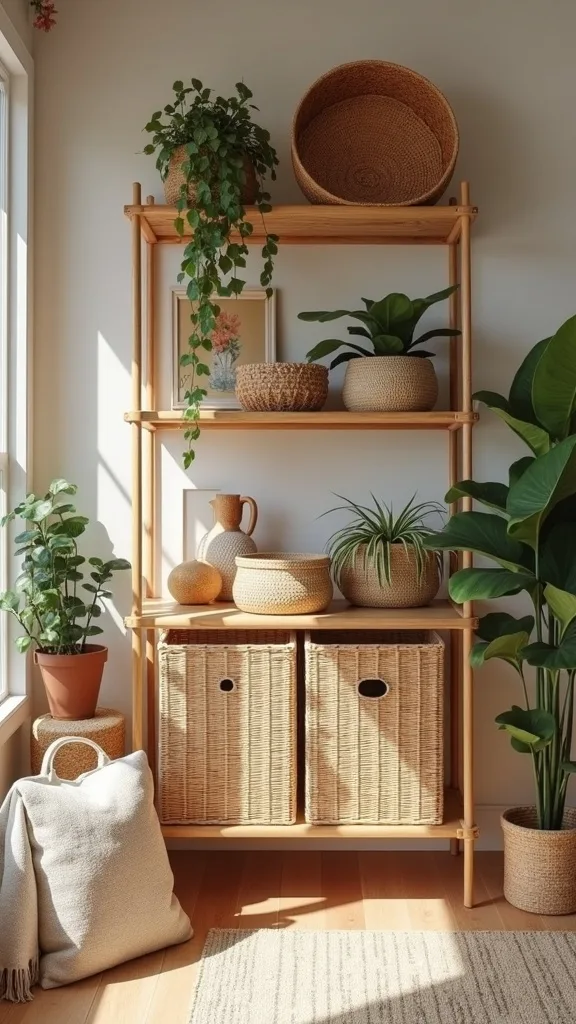
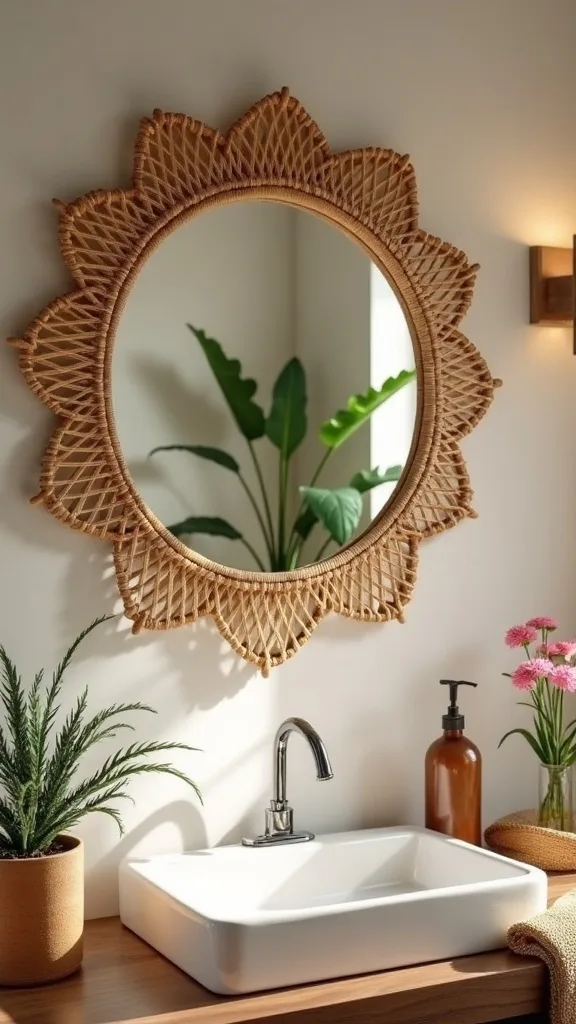
23. Use a woven mirror to bounce summer light
A woven-frame mirror brings rattan texture without adding another piece of furniture. It works because it doubles the light and adds a soft halo shape on the wall.
Hang it opposite a window to reflect daylight into the seating area. If your room is narrow, place it above a console to widen the feel. Keep the mirror shape simple—round or gentle arch—so it doesn’t compete with the basket wall.
Choose a frame tone that matches your main rattan pieces. Keep nearby wall decor minimal so the mirror can breathe.
Pro tip: avoid placing a woven mirror in the same visual zone as a busy basket cluster. Give each wall feature its own stage.
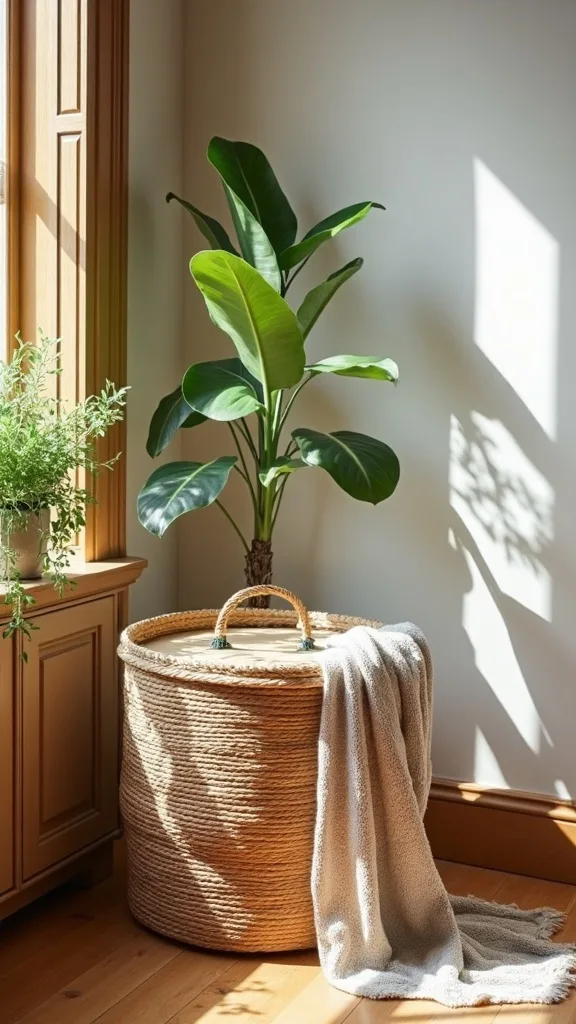
24. Create a “summer reset” corner with a lidded hamper basket
Summer living rooms collect towels, swim goggles, and random outdoor gear. A lidded hamper basket turns that reality into something that still looks styled.
Place a tall lidded basket near the entry to the living room or beside the sofa. Drop in throws, pool towels, or kid clutter, then close the lid when company comes. Choose a basket with a structured lid and sturdy handles so it stays neat.
Keep it in the same weave family as your tray table and wall baskets for continuity. This is a practical way to support the rattan furniture trend without adding more furniture.
Pro tip: avoid open bins for this job. Open storage invites visual noise, and summer already brings enough of it.
25. Lock the look with one intentional “edit” rule
This idea is the difference between styled and stuffed. The room works when every woven piece has a role—seat, light, storage, or art—and nothing is there just because it matches.
Do a quick scan from the doorway and count your woven items. Keep the main zone to five or fewer: pendant, chair, tray table, basket wall cluster, and one storage basket. If you have more, remove the smallest piece first; tiny woven knickknacks read like clutter.
Maintain one repeating tone across all weaves, then let textiles and ceramics do the rest. That discipline makes rattan decor feel designed.
Pro tip: finish by clearing one surface completely—usually the coffee table—then add back only three objects. The empty space is what makes the texture look expensive.
Final Thoughts
Wicker and rattan belong in the living room when they’re treated like architecture, not accessories. Start with the seating plan and one anchored focal point, then let the weave show up at different heights so the texture feels composed.
Keep the palette quiet. Keep the silhouettes clean. Avoid the urge to add “one more basket” just because it’s on sale. A few strong pieces will always look more intentional than a room full of small matching finds.
Today, pick one wall and commit: lay out five baskets on the floor in a loose oval, then hang them with 6–8 inches of space between each—finish by centering the cluster at eye level for an instant living-room upgrade.
What I’d Do Differently
When I first tried this, I treated rattan like a “sprinkle it everywhere” material. I brought home a rattan chair, then added a woven mirror, then a basket set, then two small wicker boxes for the shelves. The room didn’t look layered. It looked busy, like every surface was competing to prove the same point. The specific mistake was scale: I had too many small woven items and not enough negative space. The fix was simple but decisive. I kept the chair and the pendant as the anchors, grouped the baskets into one confident wall moment, and removed the tiny woven accessories entirely.
I also wish I’d chosen my main weave tone from the start. My first mix included one very orange rattan and one pale washed piece, and they never looked like they belonged in the same room. Pick one direction—honey warm or pale coastal—then repeat it. Choose your anchor piece today, and the rest of the room gets easier immediately.
Products I Recommend for This Project
Here are some of my favourite products to help you bring these ideas to life:
- SOLEILLO Rattan Pendant Light Shade (boho woven hanging lamp shade) — An easy way to add overhead texture without a full lighting overhaul.
- Christopher Knight Home Peoria Rattan Armchair — A structured rattan seat that reads tailored in a living room, not patio-only.
- Casafield Seagrass Baskets with Handles (set) — Sturdy, stackable storage that keeps blankets and clutter contained.
- MyGift Round Wicker Serving Tray with Handles — Makes a wicker tray table setup feel intentional and functional for everyday use.
- Lutron Credenza Plug-In Dimmer Switch — The fastest upgrade for woven lighting so the room shifts from bright to ambient on command.