
This post contains affiliate links. As an Amazon Associate, I earn from qualifying purchases at no extra cost to you.
Are you looking for sunroom ideas that actually work in your home — not just beautiful photos you can never recreate? Do you want a space that feels bright, welcoming and useful every single day, not just when the sun is out?
I always start by treating a sunroom like any other room in the house — it needs a clear purpose, proper furniture and a color palette that works with the light it gets. In this post I’m walking you through 30 of the best sunroom ideas for 2026, organized by style and function so you can find exactly what fits your space.
From my experience designing and styling sunrooms, the biggest mistake people make is buying furniture that looks great in a showroom but fights with natural light. I’ll show you what actually works — from cozy reading corners and coastal dining rooms to plant-filled garden retreats and all-season family spaces.
Minimalist & Modern Sunroom Ideas
1. Minimalist Glass Sunroom for Modern Homes
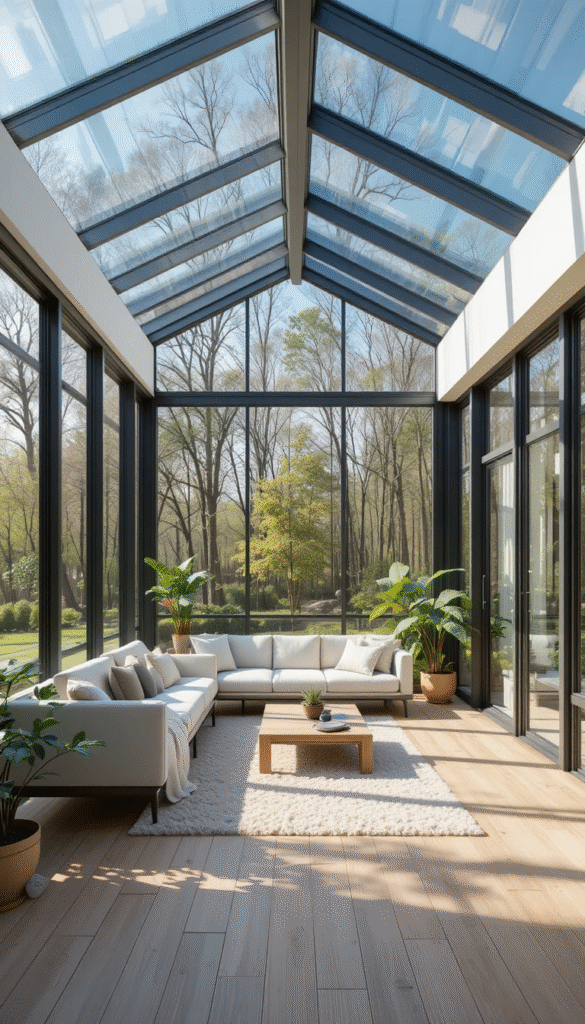
I always recommend starting with a minimalist approach if you’re unsure of your style — it’s the easiest to get right and the hardest to overdo. Floor-to-ceiling windows, neutral furniture in light wood or white, and zero clutter let the natural light do all the decorating. From my experience, this style works best in homes with open floor plans because the sunroom reads as a natural extension rather than a separate room.
For furniture, I find that a simple light gray linen sofa and a light wood coffee table are all you need to anchor the space. Keep accessories to three items maximum — a plant, a throw and one decorative object.
Pro tip: Choose furniture with legs rather than low-profile pieces — raised legs let light pass underneath and make the room feel twice as spacious.
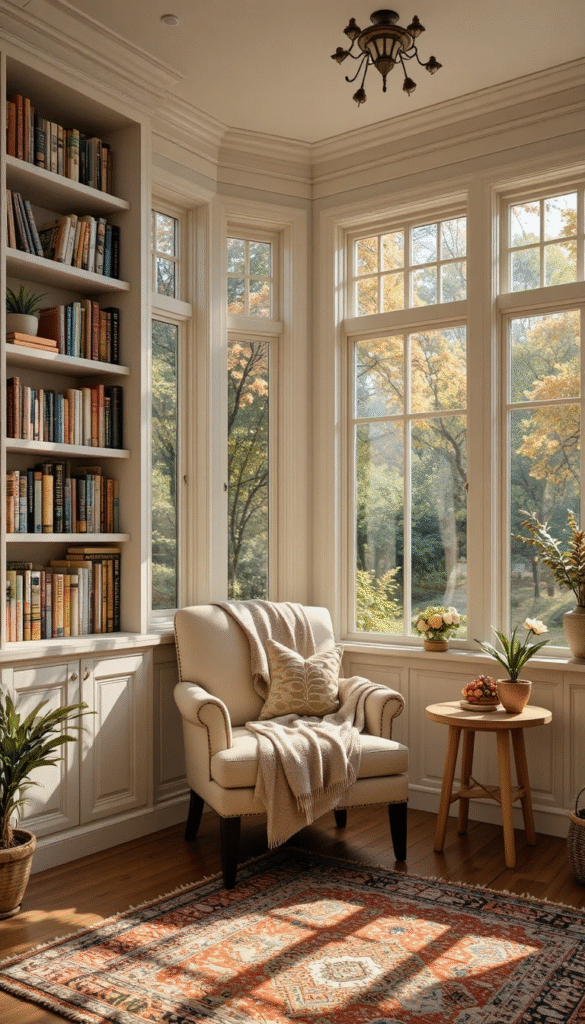
2. Cozy Reading Sunroom with Built-In Bookshelves
In my opinion, a reading sunroom is the most personally rewarding project you can take on — once you have it, you’ll use it every single day. Built-in bookshelves along one wall, a deep armchair facing the windows and a small side table for your coffee creates a complete reading retreat. I find that adding a chunky knit throw blanket and a warm reading floor lamp makes the space feel genuinely cozy rather than staged.
Pro tip: Face your reading chair at a 45-degree angle to the window rather than directly at it — you get the light without the glare on your book or screen.
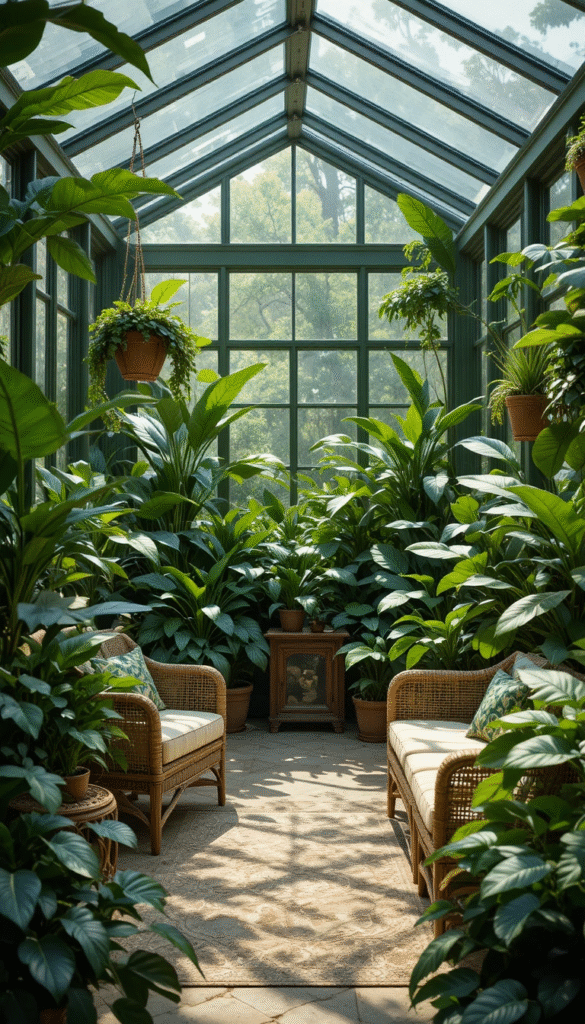
3. Indoor Garden Sunroom Filled with Plants
From my experience, plants transform a sunroom faster than any other single element. I always recommend starting with three easy-care plants that genuinely love bright indirect light — fiddle-leaf fig, monstera and snake plant — because they’re forgiving and grow visibly in a sunroom environment. Use a mix of heights: one tall floor plant, one medium shelf plant and one trailing plant in a hanging ceramic pot.
I find that natural wood furniture and woven baskets make the plants look intentional rather than random. A vertical wall planter is a great way to add greenery without using floor space.
Pro tip: Group plants together in clusters of three rather than spreading them around the room — grouped plants retain humidity better and look more designed.
Coastal & Farmhouse Sunroom Ideas
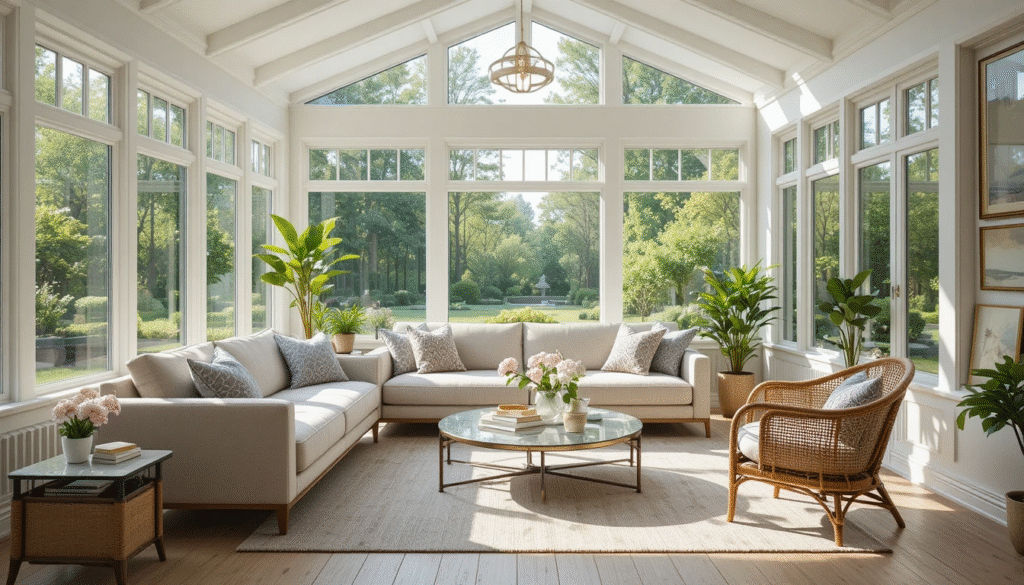
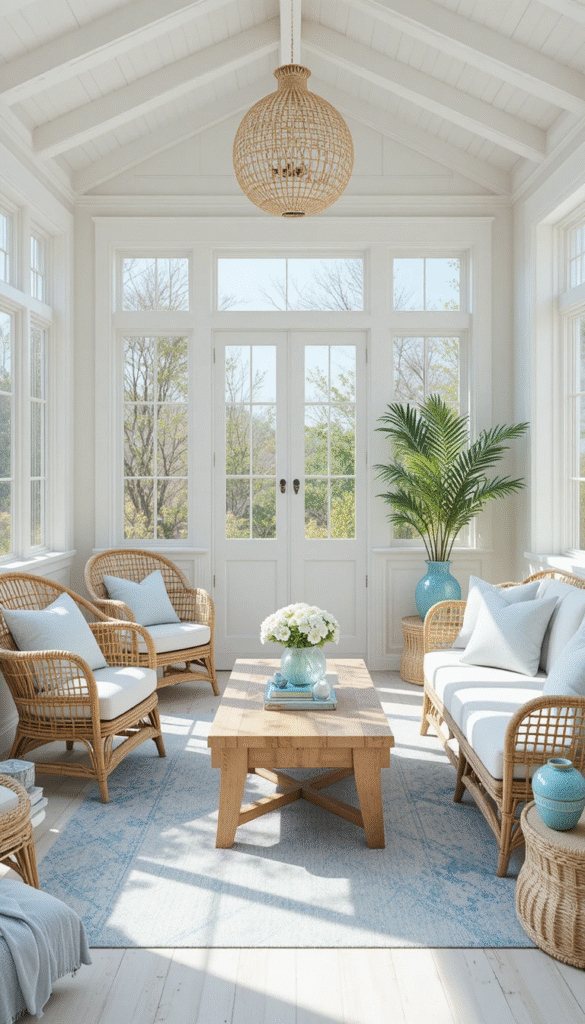
4. Coastal-Inspired Sunroom with Light Colors
When I design a coastal sunroom, I start with the palette: soft blues, warm whites and sandy beige. These colors reflect sunlight beautifully and create that breezy, vacation feeling even in a landlocked home. I always recommend rattan furniture for this style — it’s lightweight, durable and looks genuinely coastal rather than costume-y.
Linen cushions, a woven area rug and a few pieces of natural driftwood or shell décor complete the look without making it feel like a beach gift shop.
Pro tip: Use white linen sheer curtains instead of blinds — they filter light beautifully and move gently in the breeze when windows are open, adding movement to the room.
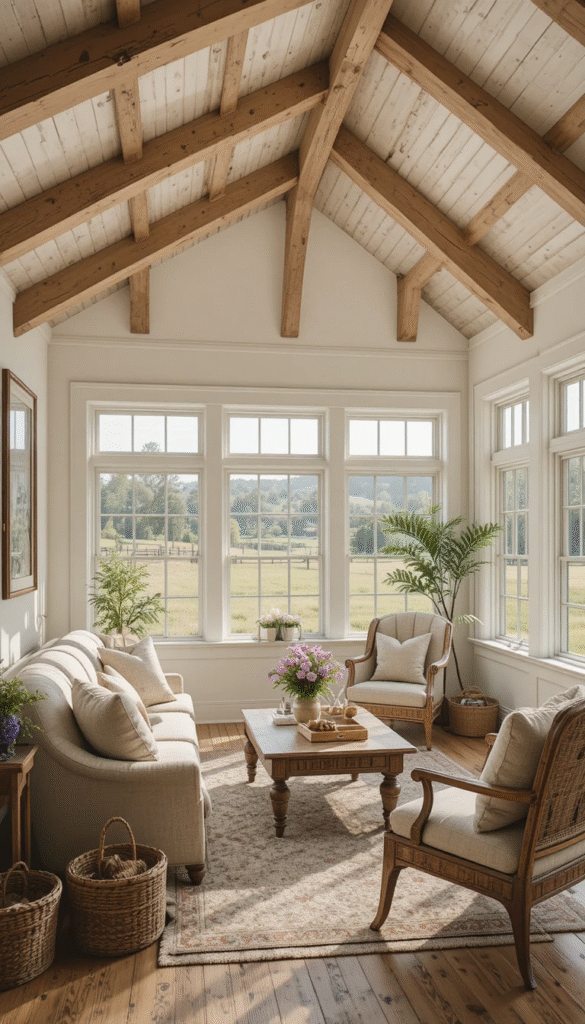
5. Rustic Farmhouse Sunroom with Wooden Beams
I find that farmhouse sunrooms are one of the most forgiving styles to pull off because the aesthetic actively embraces imperfection. Exposed wooden beams, reclaimed wood furniture and vintage-style accessories create a warm countryside charm that feels lived-in and genuine. From my experience, the key is balancing the rustic textures with plenty of light — large windows and white or cream walls stop the room from feeling dark or heavy.
A reclaimed wood coffee table and a simple cotton cream throw blanket are the two items that tie a farmhouse sunroom together instantly.
Pro tip: Add a vintage lantern or two with LED candles — they add atmosphere without the fire risk and work beautifully in farmhouse spaces.
Sunroom Dining & Breakfast Ideas
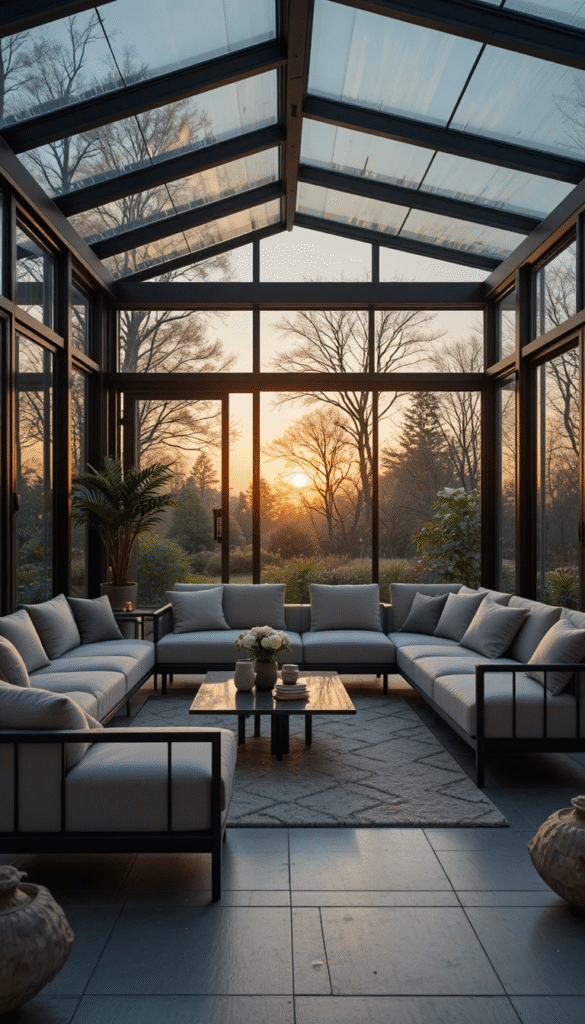
6. Modern Sunroom Lounge for Relaxing Evenings
When I think about a sunroom lounge, I think about the experience of being in it at 7pm — when the light is golden, the day is winding down and you want somewhere comfortable to sit. Plush sofas in soft neutral tones, a low coffee table and warm ambient lighting create exactly that feeling. I always recommend adding a floor lamp with a warm bulb for evening use — sunrooms without dedicated evening lighting feel abandoned after dark.
Pro tip: Black metal accents on furniture legs or light fixtures create sophisticated contrast against neutral upholstery without requiring a full redesign.
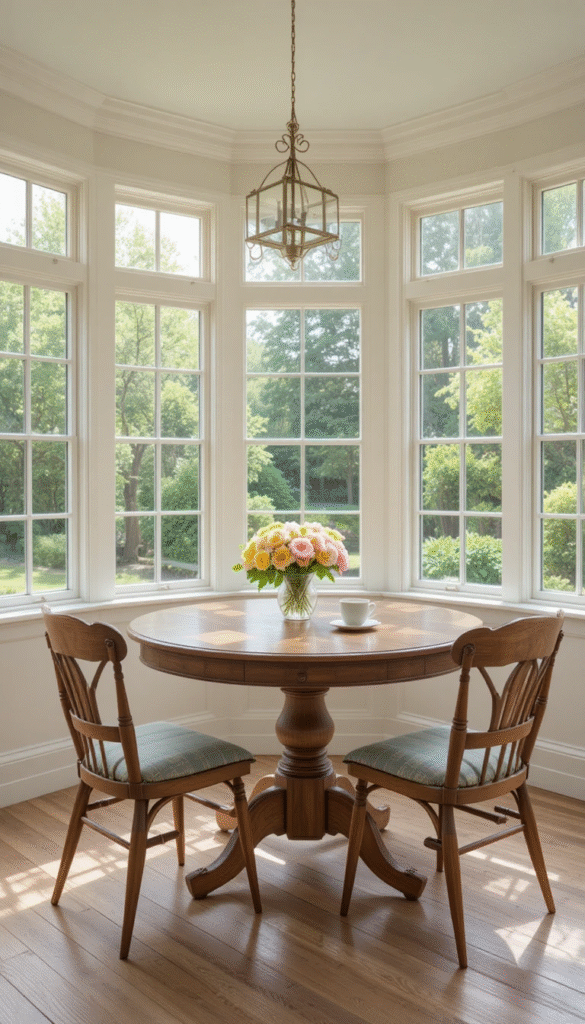
7. Bright Breakfast Sunroom for Morning Coffee
In my opinion, a breakfast sunroom is one of the most joyful investments you can make in your home. A round table for two or four near the windows, surrounded by light wood chairs and fresh flowers, makes every morning feel like a slow weekend even on busy weekdays. I find that round tables work better than rectangular ones in sunrooms because they don’t fight with the angles of the windows.
A small vase of fresh flowers, a simple bamboo tray for your coffee essentials and lightweight linen placemats are all you need to complete the look.
Pro tip: East-facing sunrooms are ideal for breakfast nooks — morning sun is softer and more beautiful than afternoon sun, and you’ll want to be in the space every morning.
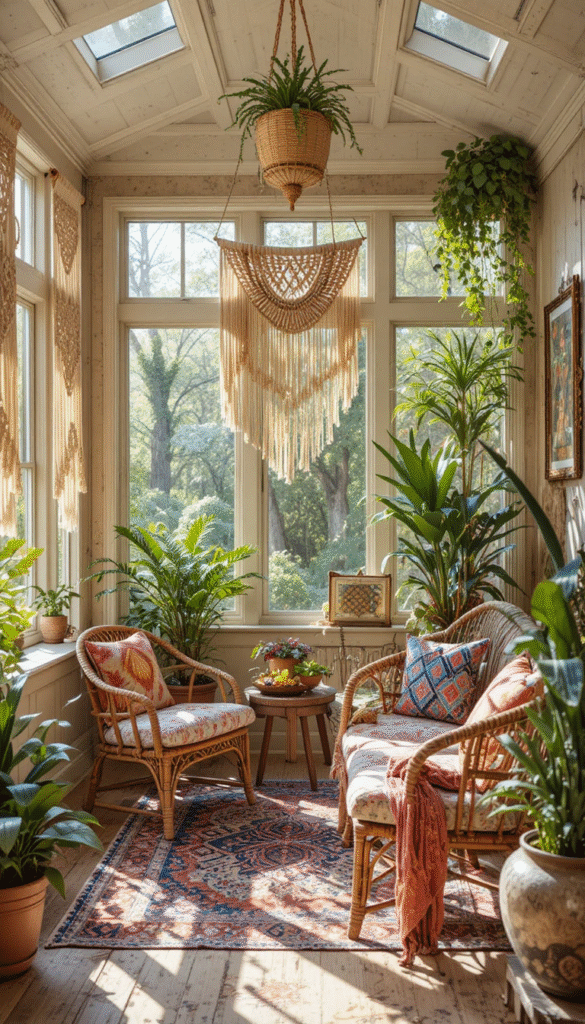
8. Boho-Style Sunroom with Layered Textures
From my experience, boho sunrooms are the most forgiving to style because there are no rules — only principles. Layer colorful rugs, woven baskets, a macramé wall hanging and patterned cushions to build texture gradually. I always recommend starting with the rug first — it sets the color palette for everything else. Natural materials like bamboo and rattan create warmth while plants add the freshness that stops boho from feeling cluttered.
Pro tip: Limit your color palette to three colors maximum even in a boho space — it keeps the layered look intentional rather than chaotic.
Functional Sunroom Ideas
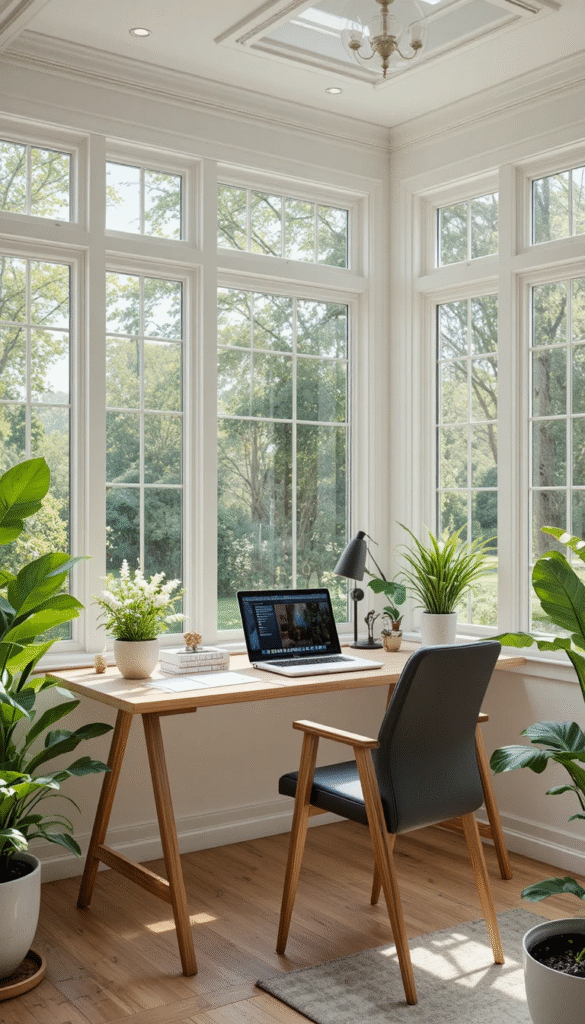
9. Sunroom Home Office with Inspiring Views
I always recommend sunrooms as home office spaces to anyone who asks — natural light genuinely improves focus, mood and productivity in a way that artificial lighting simply cannot replicate. A simple desk facing or angled toward the windows, a comfortable ergonomic chair and minimal décor create a workspace that feels calm and motivating. I find that a monitor arm and cable management are essential in a sunroom office — visible cables break the calm of the space.
Pro tip: Position your desk so the window is to your side rather than directly behind your screen — this prevents glare on your monitor while still giving you the light and views.
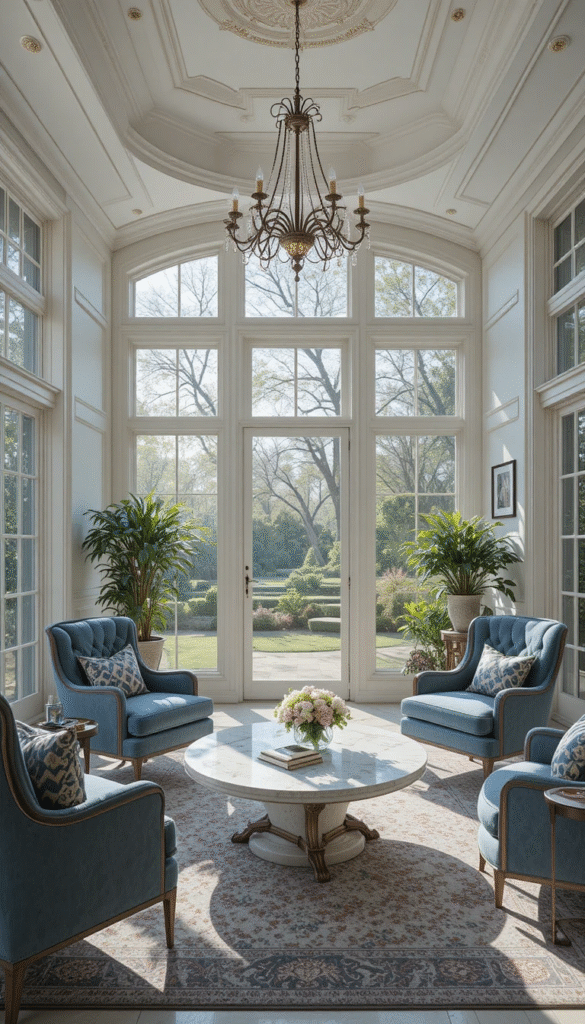
10. Luxury Sunroom with Elegant Furniture
When I design a luxury sunroom, I focus on three things: quality fabrics, statement lighting and carefully chosen accessories. Velvet chairs, a marble decorative tray and a chandelier-style pendant light create a sophisticated environment that feels genuinely high-end without requiring a designer budget. Soft curtains at the windows add a graceful finishing touch that elevates the whole room.
Pro tip: Invest in one genuinely high-quality piece — a real velvet chair or marble side table — and pair it with more affordable pieces. One luxury anchor makes everything around it look more expensive.
Cost & Materials Estimate
| Item | Estimated Cost | Where to Buy |
|---|---|---|
| Indoor-outdoor area rug (8×10) | $80–$200 | Amazon, Wayfair |
| Rattan or wicker furniture set (2 chairs + table) | $300–$800 | Wayfair, IKEA |
| Sheer curtains (2 panels) | $30–$80 | Amazon, IKEA |
| Floor lamp with warm bulb | $60–$150 | Amazon, Home Depot |
| Potted plants (3 medium) | $40–$120 | Local nursery, Amazon |
| Throw pillows and blanket set | $40–$100 | Amazon, Target |
Total estimated refresh cost: $550–$1,450. Save money by shopping IKEA for furniture frames and upgrading cushion covers separately — you get the look for 40% less than buying complete sets.
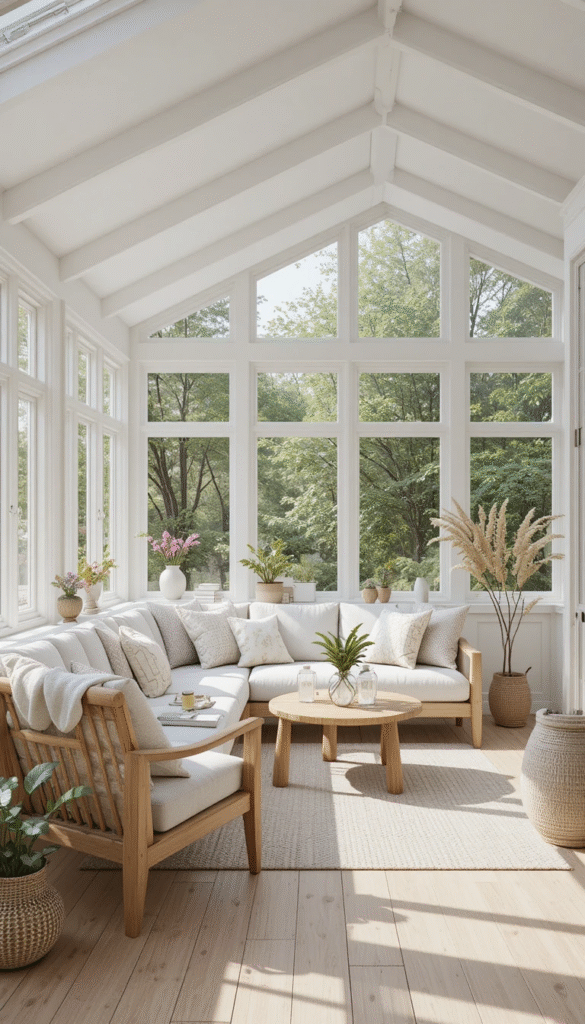
11. Scandinavian Sunroom with Light Wood Accents
I find that Scandinavian sunroom design is the easiest style to get consistently right — the principles are simple: white or light gray walls, light wood furniture, cozy textiles and zero clutter. From my experience, the secret to making Scandinavian design feel warm rather than cold is the textures — a chunky wool throw, a woven rug and cushions in natural linen stop the minimalism from feeling sterile.
Pro tip: Add a single monstera plant in a white ceramic pot — it’s the one decorative element that appears in virtually every successful Scandinavian interior and works every single time.
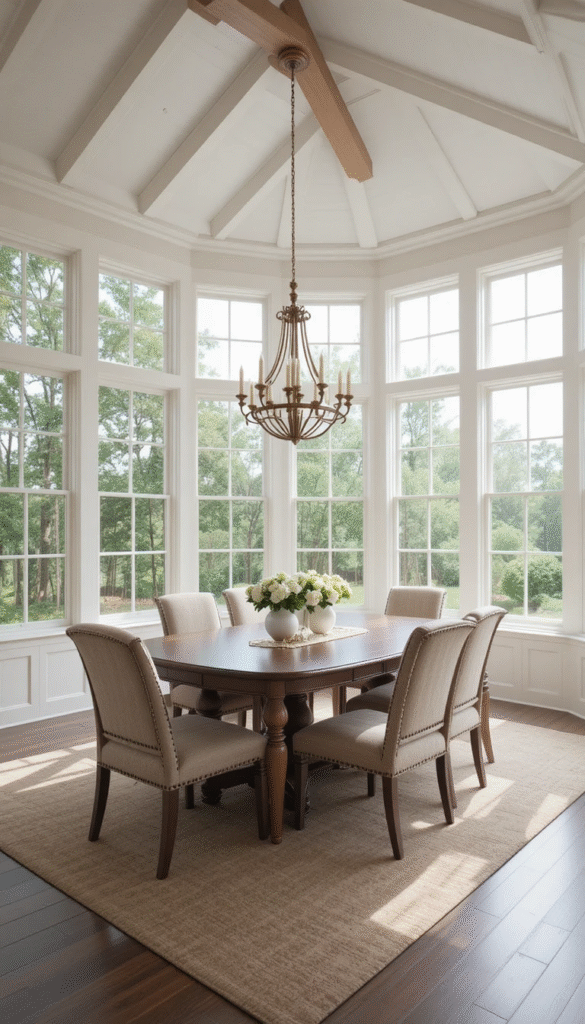
12. Sunroom Dining Area for Family Gatherings
When I design a sunroom dining area, I always prioritize the table size first — it should seat your typical gathering comfortably without touching the walls. A long wooden dining table surrounded by upholstered chairs creates a space that works for everyday family meals and special occasions. Large windows bring daylight during lunch and create a warm amber glow during evening dinners that no chandelier can replicate.
Pro tip: Use a pendant light over the dining table even in a sunroom — it defines the dining zone and adds warmth once the sun sets.
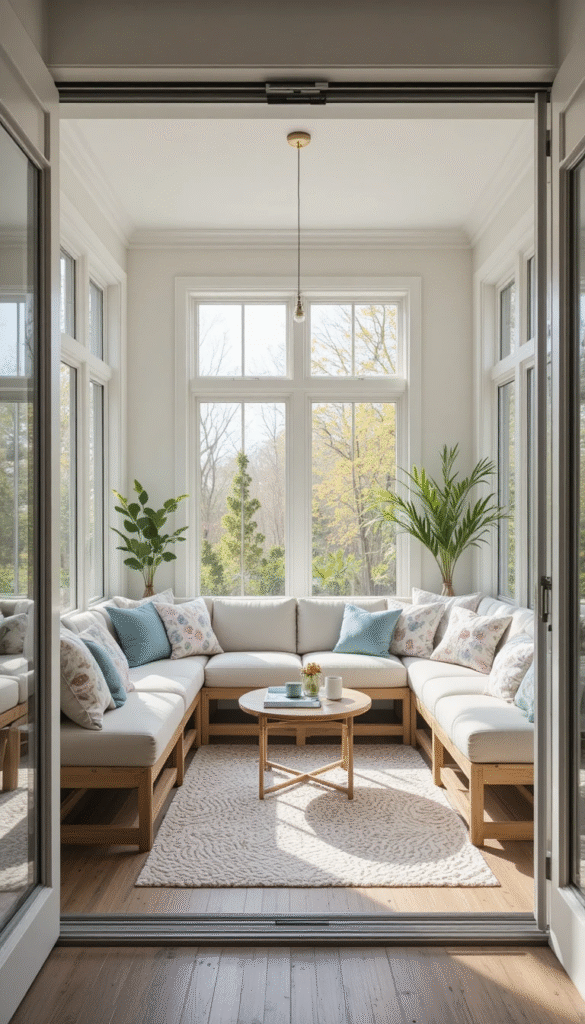
13. Small Sunroom with Smart Space-Saving Furniture
In my opinion, small sunrooms are actually easier to style than large ones — you just need to be intentional about every piece you bring in. I always recommend compact furniture with legs, foldable tables and built-in seating with storage underneath. Light colors on walls and ceilings reflect light and make the room feel genuinely larger. A well-placed wall sconce replaces a floor lamp and frees up critical floor space.
Pro tip: Use a storage ottoman instead of a coffee table — it works as a table, extra seating and hidden storage all in one piece.
14. Vintage-Inspired Sunroom with Classic Charm
From my experience, vintage sunroom design works best when you mix one or two genuine vintage pieces with modern reproductions — it gives the room character without the maintenance headaches of a fully antique space. An antique armchair or vintage mirror as a focal point, paired with soft neutral walls and fresh flowers, creates a nostalgic warmth that feels genuinely inviting.
Pro tip: Thrift stores and estate sales are the best sources for vintage sunroom pieces — look specifically for cane chairs, brass side tables and botanical prints which are all widely available and age-appropriate for the style.
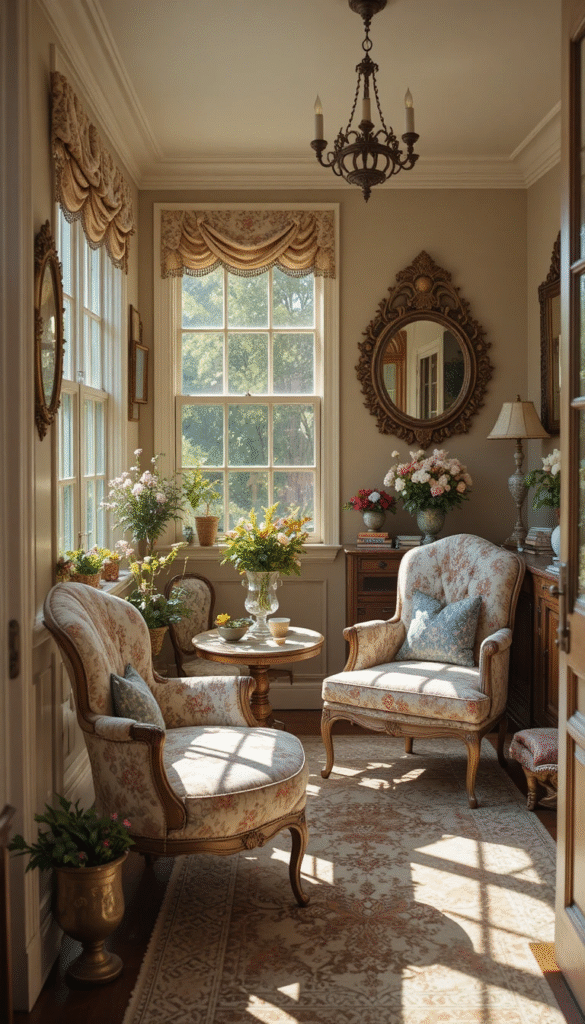
15. Sunroom with Large Skylights
I always recommend skylights to homeowners who want more light but have limited wall space for windows. Adding skylights increases natural light dramatically and enhances the open, airy feeling of a sunroom. From my experience, skylights work particularly well in rooms with furniture that benefits from overhead light — a reading chair, a dining table or a meditation corner all feel completely transformed when lit from above.
Pro tip: Install operable skylights rather than fixed ones — the ability to open them for ventilation makes a sunroom usable year-round even without air conditioning.
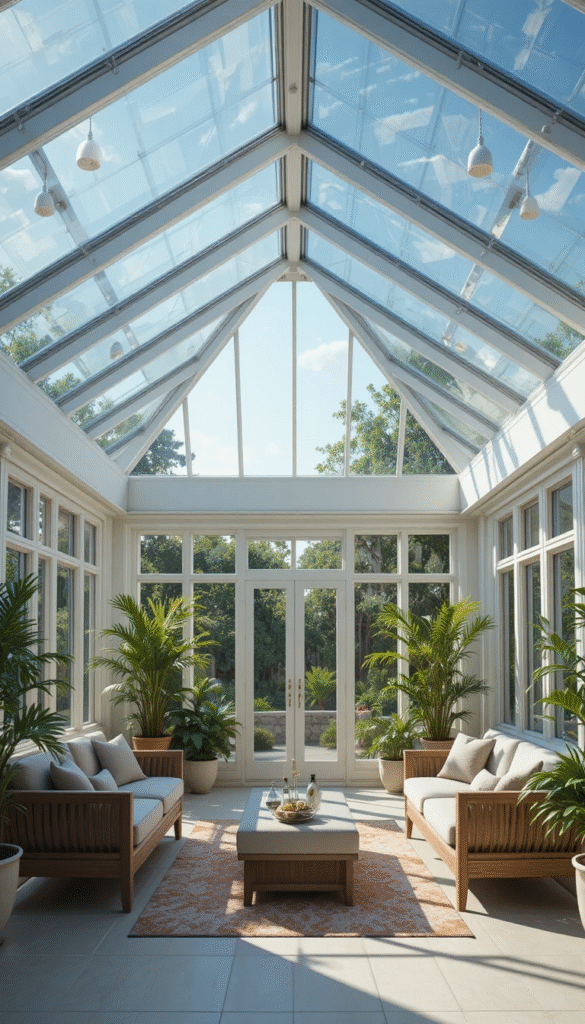
16. Indoor-Outdoor Sunroom with Sliding Glass Doors
When I want a sunroom to feel genuinely connected to the outdoors, I always recommend large sliding or folding glass doors that open to a patio or garden. This design makes entertaining effortless — guests move naturally between the sunroom and the outdoor space without any awkward transitions. I find that using the same flooring material inside and outside, or choosing complementary tones, makes the connection feel seamless rather than abrupt.
Pro tip: Add an outdoor rug just outside the glass doors — it visually extends the sunroom space outward and signals that the outdoor area is part of the designed space.
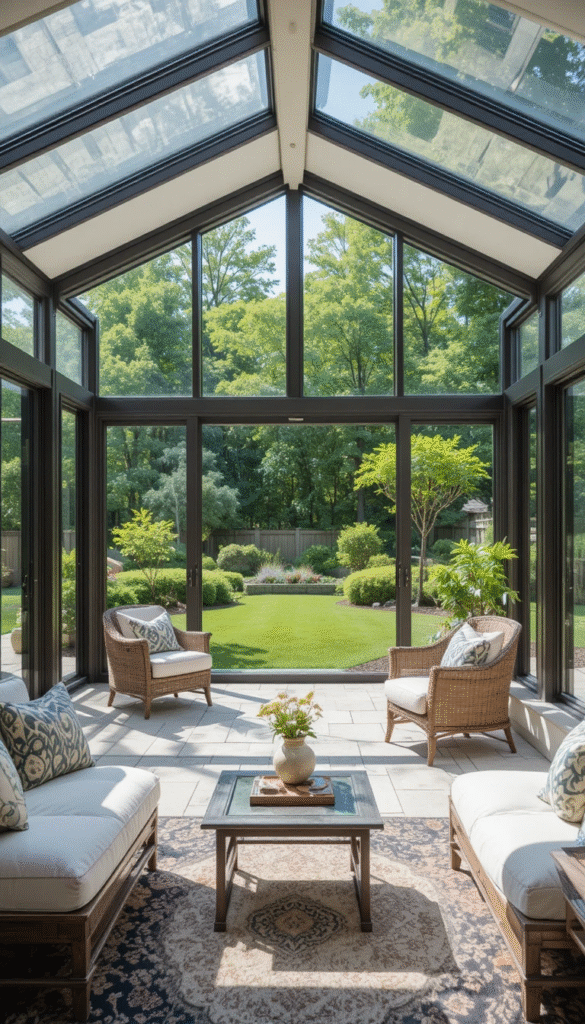
17. Neutral-Tone Sunroom for Calm Relaxation
In my opinion, neutral sunrooms are the most timeless and the easiest to live with long-term. Soft beige, warm cream and light gray create a soothing atmosphere that changes subtly throughout the day as the light shifts — which is something bolder colors can never offer. I find that the key to making neutrals feel interesting rather than bland is texture: linen, boucle, jute and cotton all read as different tones even within the same color family.
Pro tip: Choose your neutral furniture in slightly warm tones rather than cool gray — warm neutrals work with morning and afternoon light, while cool grays can feel washed out and flat on overcast days.
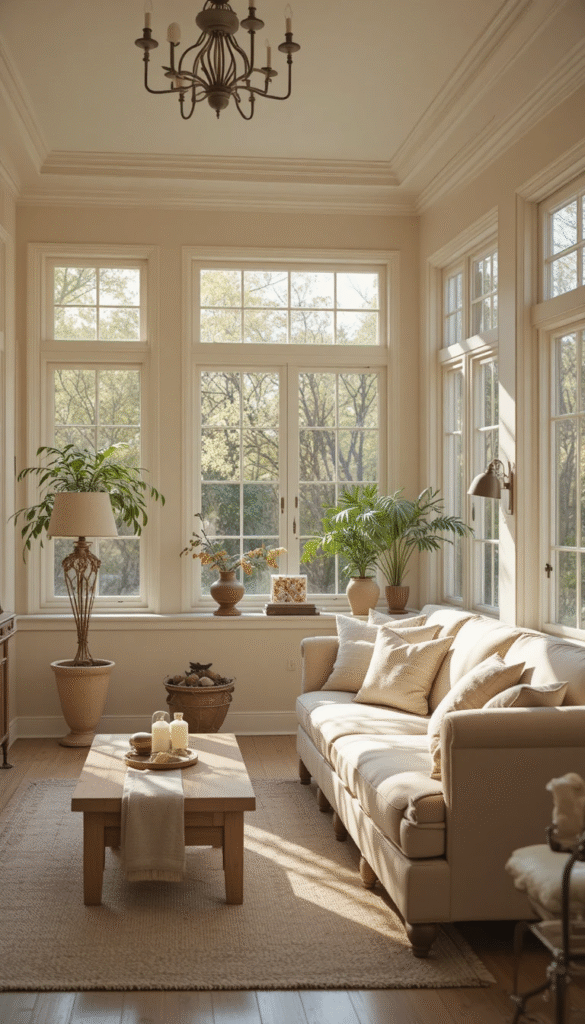
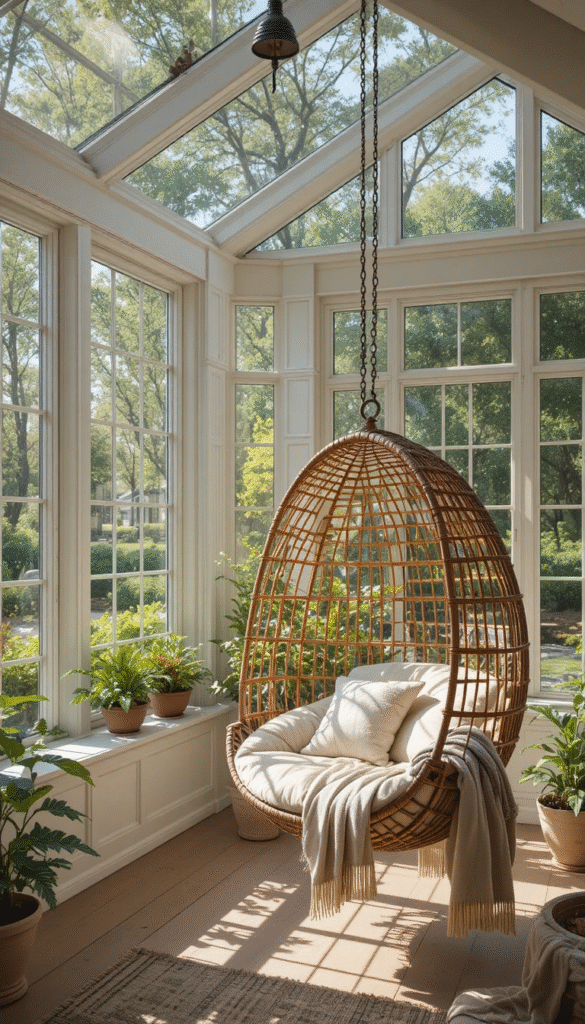
18. Sunroom with Hanging Chairs
From my experience, a hanging chair is the single most talked-about piece of furniture you can add to a sunroom — every guest immediately wants to sit in it. I always recommend the egg-style hanging chair for sunrooms because it’s self-contained, comfortable for reading and creates a visual focal point without taking up much floor space. A quality indoor hanging chair with a thick cushion and a lightweight throw blanket creates the most covetable spot in any home.
Pro tip: Make sure the ceiling beam or joist can support at least 250 lbs before installation — always use a proper swing hook with a safety rating, not a standard ceiling hook.
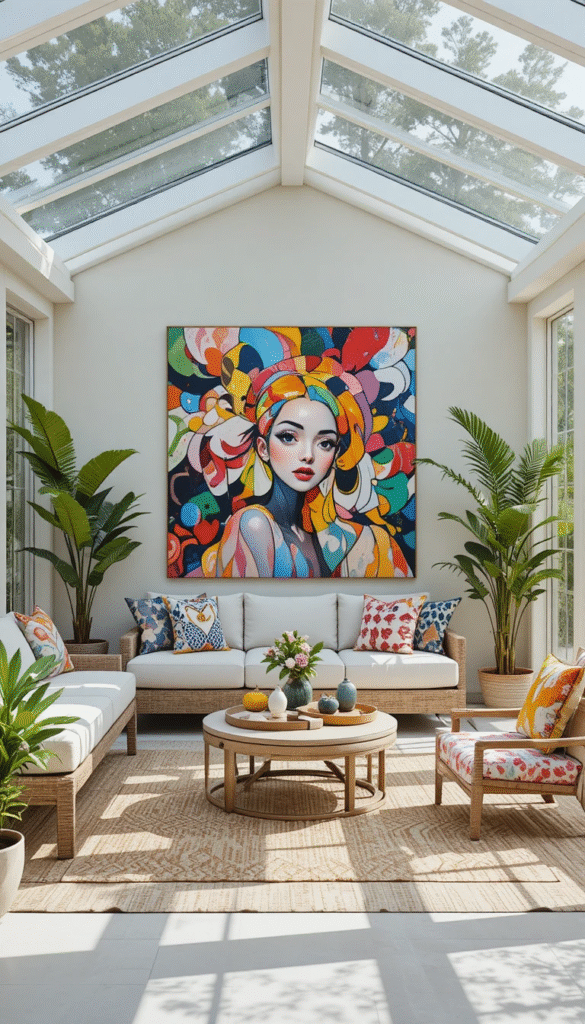
19. Artistic Sunroom with Statement Wall Art
I find that wall art transforms a sunroom faster than almost any other change — a single large piece can define the entire room’s personality. I always recommend choosing art before furniture if you’re starting from scratch, because it’s much easier to build a room around art than to find art that fits around existing furniture. Large botanical prints, abstract landscape paintings or oversized framed photographs all work beautifully with the natural light in a sunroom.
Pro tip: In a sunroom, hang art on the wall that gets the least direct sunlight — UV light fades artwork over time, and indirect light actually shows colors more accurately than harsh direct sun.
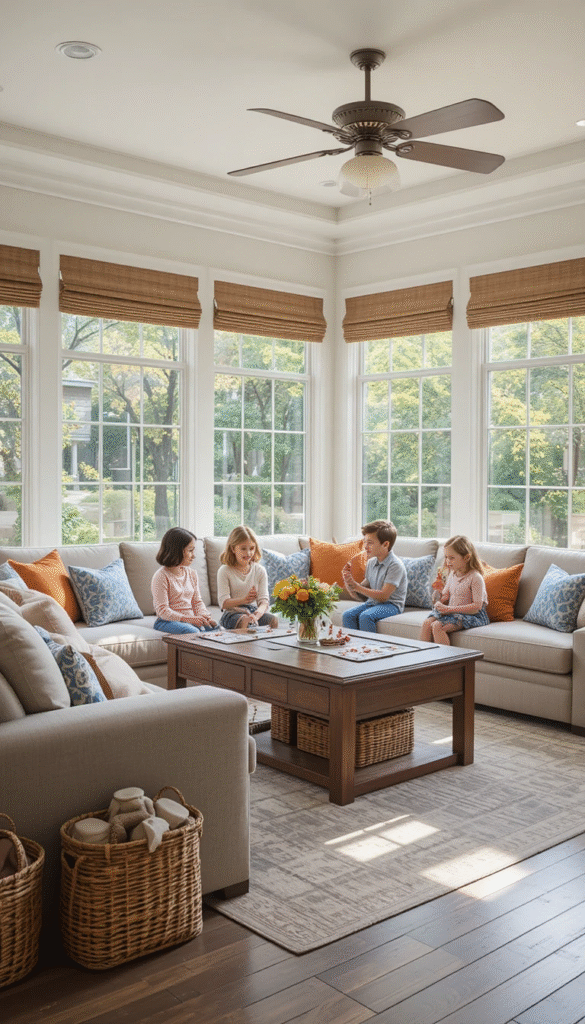
20. Multi-Purpose Family Sunroom
When I design a family sunroom, I plan for flexibility first. A space that works for morning coffee, afternoon homework, evening board games and weekend entertaining needs furniture that moves easily and storage that actually gets used. I always recommend modular seating that can be rearranged, a large storage ottoman for games and blankets and a side table on wheels that can move anywhere in the room.
Pro tip: Use a large washable rug rather than a delicate one in a family sunroom — it will get spilled on, and you want to enjoy the space rather than protect it.
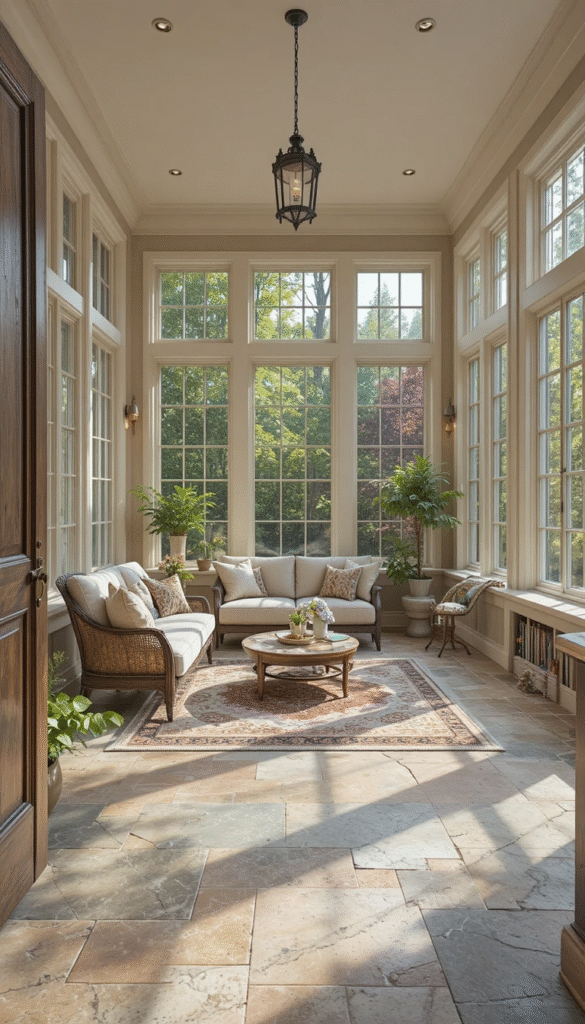
21. Sunroom with Natural Stone Flooring
From my experience, natural stone flooring is the most durable and most beautiful choice for a sunroom floor — it handles moisture, temperature changes and heavy foot traffic better than wood or laminate. Slate, limestone and travertine all create a sophisticated look while staying genuinely cool during summer months. I always recommend pairing stone floors with a large area rug — it adds warmth underfoot and defines the seating zone within the room.
Pro tip: Choose a honed finish rather than polished for sunroom stone floors — polished stone gets slippery when wet and shows every footprint, while honed stone is safer and more forgiving.
22. Tropical Sunroom with Lush Green Decor
I always love a tropical sunroom because it creates the most dramatic transformation of any style — you walk through the door and genuinely feel transported. The key is committing to the greenery: palm plants, bird of paradise, pothos and trailing philodendron clustered together create genuine lushness rather than a few isolated pots. Bamboo furniture, light rattan and soft natural fabrics complete the look without competing with the plants.
Pro tip: Mist your tropical plants once a week and group them together — clustered plants create their own microclimate of humidity which helps all of them thrive, especially in air-conditioned spaces.
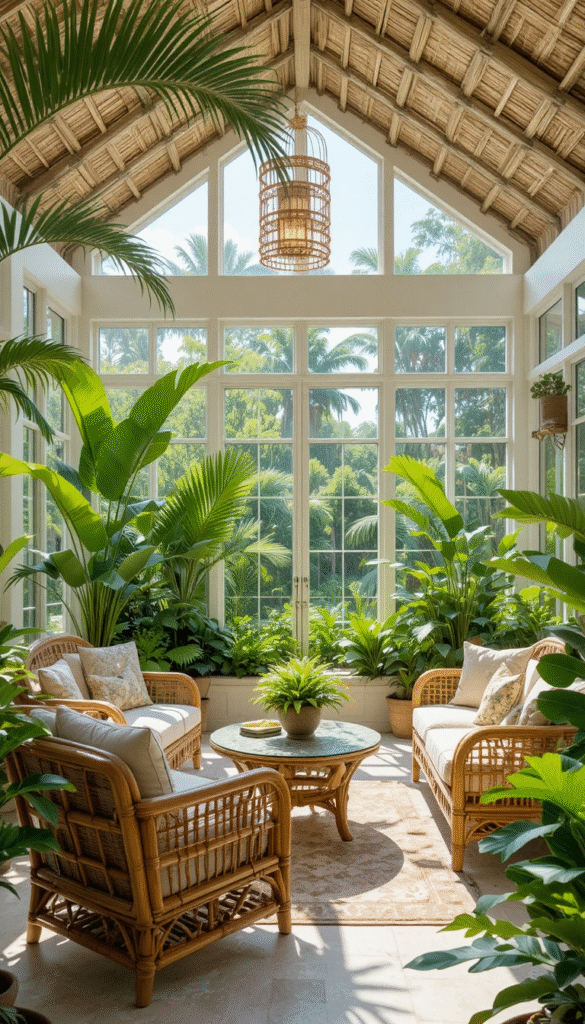
23. Sunroom Meditation and Wellness Space
In my opinion, converting a sunroom into a meditation or wellness space is one of the most valuable investments you can make — the natural light and connection to the outdoors create conditions that genuinely support mental and physical health better than any interior room. A quality non-slip yoga mat, floor cushions, a small speaker for ambient sound and minimal décor are all you need to create a genuinely effective wellness space.
Pro tip: Remove everything from the room that isn’t purposeful for wellness — a meditation sunroom should feel empty in the best possible way, with space to breathe and move freely.
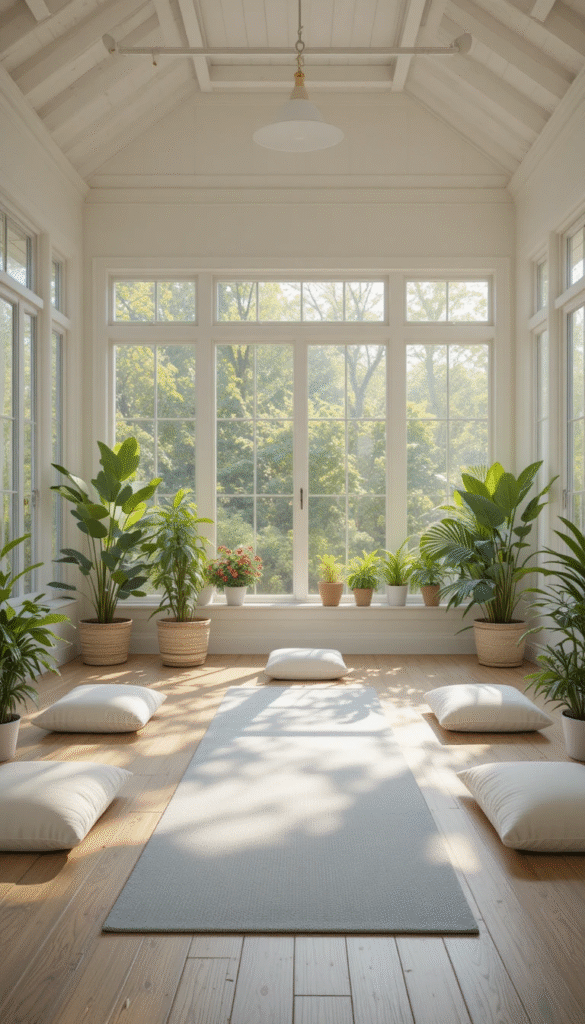
24. Elegant Sunroom with Sheer Curtains
From my experience, sheer curtains are one of the most underrated elements in sunroom design. They soften harsh midday light, add movement and texture to the room and make the windows themselves more beautiful. I always choose floor-length sheers that pool slightly on the floor — it creates a romantic, elegant look that makes any sunroom feel more finished and intentional. White linen sheer curtains work in virtually every sunroom style from coastal to farmhouse to minimalist.
Pro tip: Hang curtain rods 4–6 inches above the window frame and extend them 6 inches wider on each side — this makes windows look larger and lets more light in when curtains are open.

25. Sunroom with Built-In Window Seating
I always recommend built-in window seating to homeowners who are doing a sunroom renovation — it’s one of the most space-efficient investments you can make. The bench itself provides comfortable seating, the space underneath becomes storage for cushions, blankets or gardening supplies and the design looks custom and intentional rather than assembled from separate pieces. Add a thick cushion in a durable fabric and pile on throw pillows for a finished look.
Pro tip: Build window seats at 18 inches deep rather than the standard 16 — the extra 2 inches is the difference between a seat you perch on and one you can curl up in for hours.
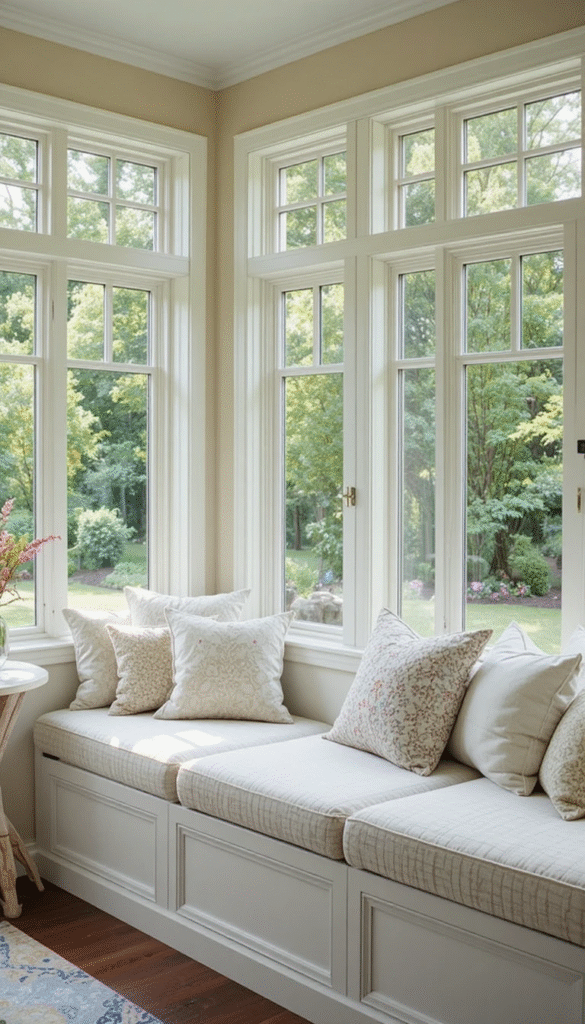
26. Sunroom Entertainment Area
When I design a sunroom for entertaining, I think about flow first — how people move through the space, where they naturally congregate and where drinks and food can be placed within reach of every seat. Comfortable modular sofas, a solid coffee table and subtle ambient lighting create a space that works for two people or twenty. I find that a small gold bar cart in the corner is the most practical entertaining addition — it keeps drinks organized and adds a stylish focal point.
Pro tip: Add a smart power strip hidden behind the sofa — guests always need to charge phones and having accessible outlets makes the space genuinely hospitable.
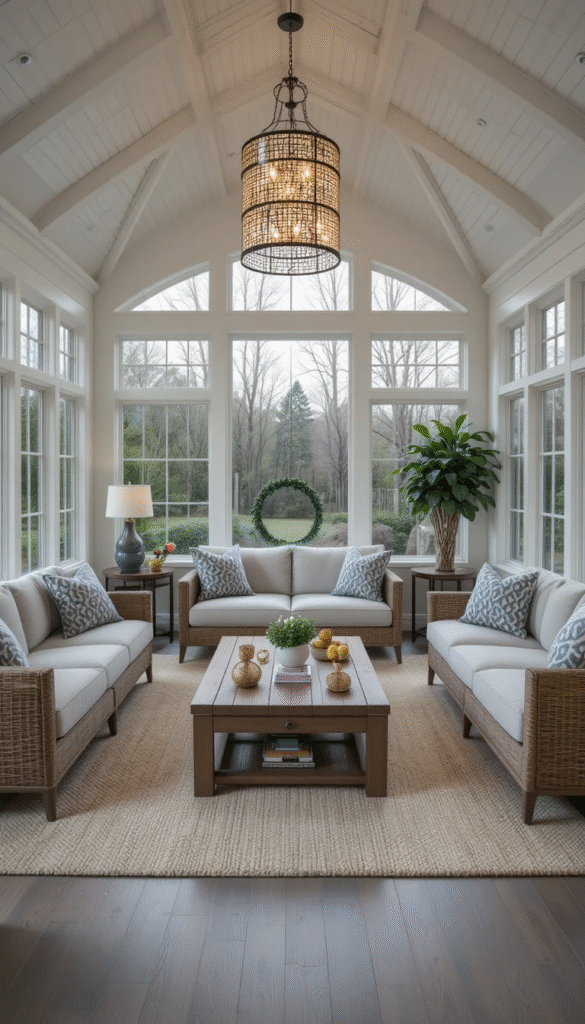
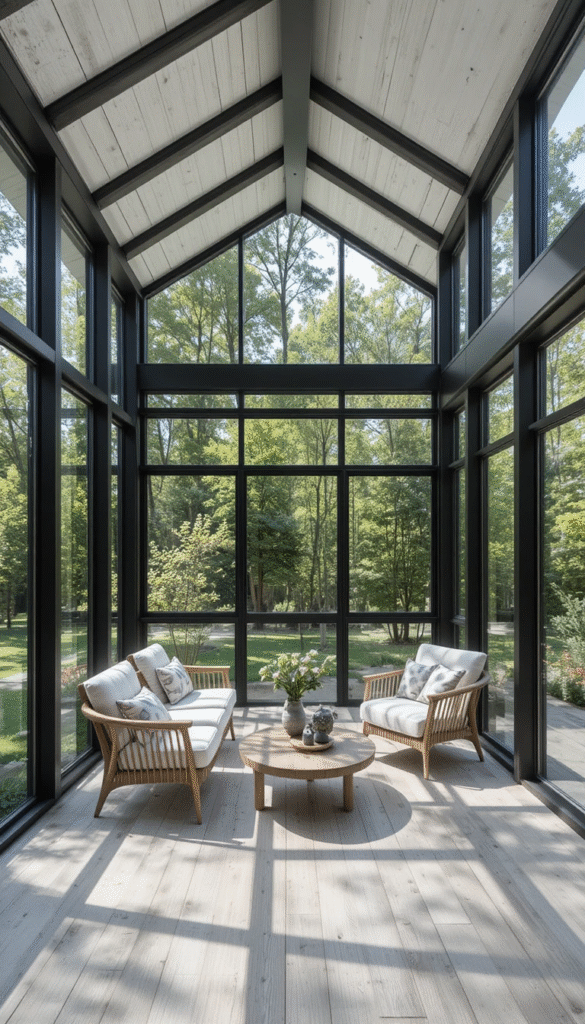
27. Modern Sunroom with Black Frame Windows
From my experience, black-framed windows are the single most impactful architectural upgrade you can make to a sunroom — they create bold, graphic contrast that makes any style of furniture look more deliberate and intentional. Against white or cream walls and natural wood furniture, black frames feel sleek and modern without requiring any other changes to the room. I find this look particularly effective in homes that feel dated — the black frames modernize the entire space immediately.
Pro tip: If you can’t replace the windows, paint existing frames with a satin-finish black paint — a $30 can of paint creates the same effect for a fraction of the cost of new windows.
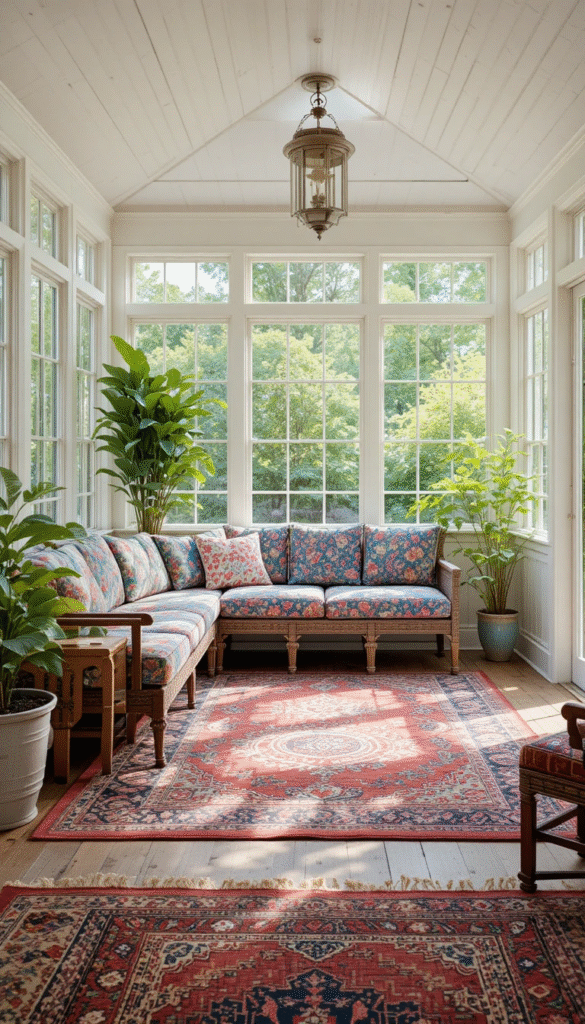
28. Sunroom with Patterned Rugs and Textiles
I find that layered rugs and patterned textiles are the fastest way to add personality and warmth to a sunroom that currently feels empty or generic. The key to making layering work is choosing patterns at different scales — a large geometric rug as the base, medium-scale patterned cushions and small-scale textured throws create visual interest without chaos. I always recommend sticking to two or three colors across all the patterns so they read as a cohesive collection rather than a jumble.
Pro tip: Place a smaller patterned rug on top of a larger solid one — it adds depth, protects the base rug from wear and creates a layered look that feels curated rather than accidental.
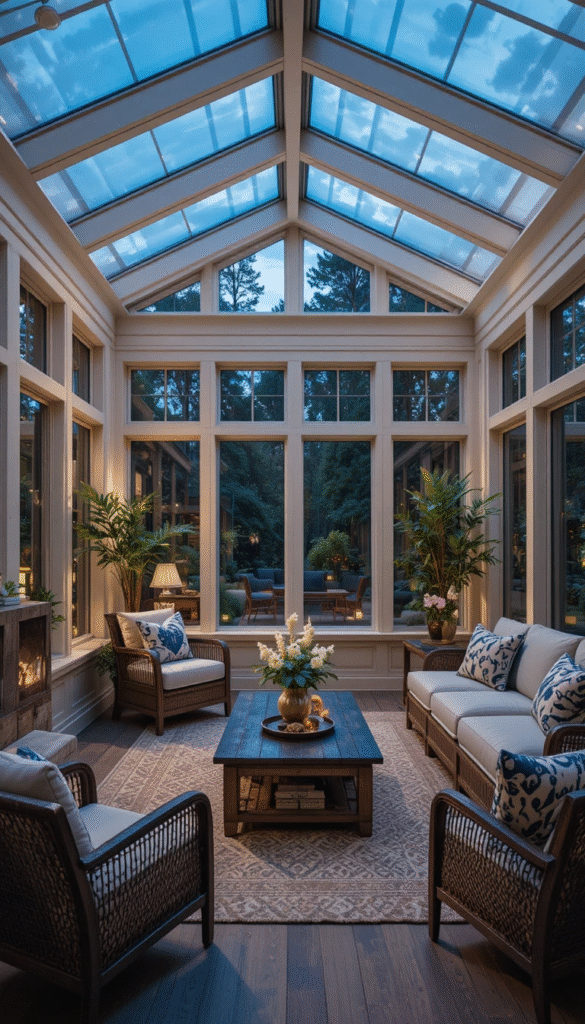
29. Sunroom with Smart Lighting Features
In my opinion, smart lighting is the most underinvested element in most sunrooms — people spend money on furniture and rugs but leave the lighting as an afterthought. A smart dimmer switch that controls overhead lights, a floor lamp on a smart plug and LED strip lighting along shelves or under furniture creates complete lighting control for every time of day. From my experience, this transforms a sunroom from a one-note daytime space into a genuinely versatile room that works beautifully morning through evening.
Pro tip: Set a warm white scene (2700K) for evenings and a cool daylight scene (4000K) for working — smart lighting that adjusts to what you’re doing makes the sunroom feel like it’s working with you rather than against you.
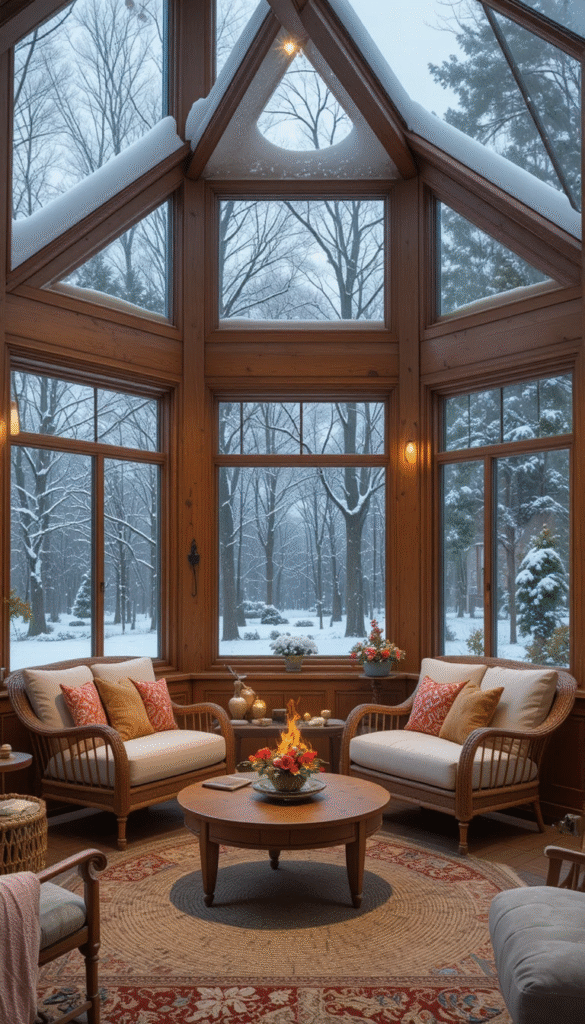
30. All-Season Sunroom with Comfortable Insulation
From my experience, an all-season sunroom is the most valuable home addition you can make in terms of daily usability — when properly insulated, it adds a full room to your home that works in every weather condition. Energy-efficient double or triple-pane windows, proper insulation in the walls and ceiling and a mini-split heating and cooling system make the space comfortable year-round without significantly impacting your energy bills. The furniture choices matter too — I always recommend upholstery that handles temperature fluctuations well, like performance fabric or leather.
Pro tip: Install a ceiling fan rather than relying solely on a mini-split — in mild weather, a fan creates comfort without running the full HVAC system, saving money and extending the seasons when the room is naturally pleasant.
What I’d Do Differently
When I first styled my own sunroom, I made the most common mistake: I bought furniture that looked beautiful in the store and completely wrong in the actual space. The pieces were too large, too dark and too formal for a room that gets six hours of direct afternoon sun. I spent three months living with furniture that made me want to avoid the room rather than use it — all because I didn’t account for how dramatically natural light changes the way colors and scale read in a sunroom compared to a regular interior room.
What I’d do differently: bring fabric swatches and paint chips into the actual sunroom at different times of day before buying anything. A color that looks warm and inviting at 10am can look washed out and flat at 2pm in full sun. I’d also choose furniture that’s slightly smaller than I think I need — sunrooms feel more spacious and relaxing when there’s breathing room around each piece. Start with less, live with it for a few weeks and add rather than edit. That approach saves money, frustration and the particular sadness of a beautiful room you don’t actually want to spend time in.
Products I Recommend for This Project
Here are some of my favourite products to help you bring these sunroom ideas to life:
- Rattan Furniture Set — the most versatile choice for any sunroom style, works with coastal, boho, farmhouse and modern aesthetics equally well.
- Indoor-Outdoor Area Rug — handles sunlight, moisture and heavy use better than standard rugs and is easy to clean.
- White Linen Sheer Curtains — the single easiest upgrade for any sunroom, softens harsh light and adds elegance immediately.
- Indoor Hanging Egg Chair — the most talked-about furniture piece you can add, creates an instant focal point and is genuinely comfortable for reading.
- Warm Floor Lamp — essential for evening use in any sunroom, transforms the space from a daytime-only room into an all-day retreat.
Final Thoughts
Sunrooms are becoming one of the most desirable spaces in American homes in 2026 — and for good reason. A well-designed sunroom gives you the beauty of the outdoors with the comfort of indoor living, year-round. Whether you’re drawn to a cozy reading corner, a plant-filled garden retreat or a sleek modern lounge, the key is starting with a clear purpose and choosing furniture and materials that work with your specific light conditions.
From my experience, the best sunrooms are the ones that get genuinely used every day — not the ones that look most impressive in photos. Start with what you need, add what makes you happy and let the natural light do the rest. Your sunroom should feel like the best room in your house — because with the right approach, it absolutely can be.