
This post contains affiliate links. As an Amazon Associate, I earn from qualifying purchases at no extra cost to you.
The problem with a garage office in fall isn’t style—it’s friction. The light is harsh, the floor is cold, and every “quick project” pile creeps toward your keyboard until you’re answering emails like you’re perched on the edge of a workbench.
The fix is a specific technique: build a “warm core” around your chair—light, touch, and sound—then push everything else to the perimeter on purpose. It works because your brain settles faster when the immediate field of view is calm and consistent, even if the rest of the garage is still doing garage things.
This is perfect for homeowners who want a cozy home office that looks intentional but can still share space with tools, storage, or a second fridge.
Inside, you’ll get practical swaps for office decor autumn (without turning your desk into a craft store display), plus layout moves that support a productive workspace fall routine—especially when daylight drops earlier.
Below are 25 Cozy Fall Home Office & Productive Workspace that…
Products I Recommend for This Project
Here are some of my favourite products to help you bring these ideas to life:
- Philips Hue White Ambiance Smart Bulb (A19) — Lets you set warm white light (2700K–3000K — the cosy, yellowish tone you see in most homes) and automate a “Work Mode” routine.
- Globe Electric Architect Swing-Arm Desk Lamp — A classic adjustable lamp shape that gives targeted light without taking over the desk.
- Grovemade Wool Felt Desk Pad — Adds warm texture under your hands and instantly makes a garage desk feel finished.
- Amazon Echo Dot (latest generation) — Easy voice timers, focus playlists, and routines so your productive blocks start on cue.
- LEVOIT Core 300 Air Purifier — Helps reduce dust and fall allergens in a garage office so the space feels cleaner and easier to breathe in.
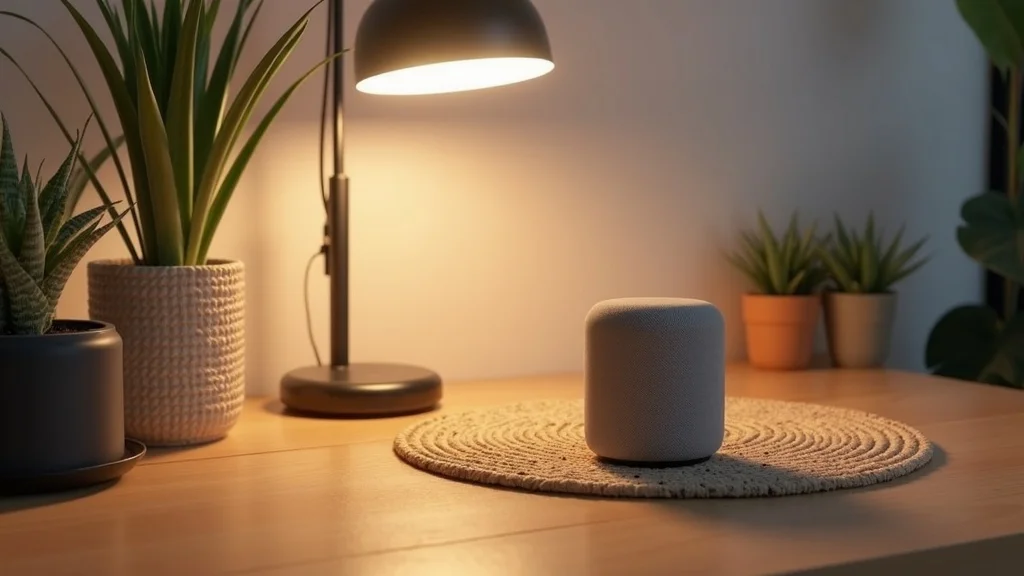
1. Build a “warm core” with a desk lamp, wool mat, plant shelf, and smart speaker
This idea is a four-piece anchor: a warm desk lamp, wool desk mat, small plant shelf, and a smart speaker set to focused work mode. It works because your senses read “this is a workspace” instantly—soft light, warmer touch points, and fewer visual interruptions.
How to do it: place the lamp on your non-dominant side to cut shadows, slide a wool mat under your keyboard and mouse, and mount a slim plant shelf at eye level (not above your head) to avoid cluttering the desk. Add a smart speaker routine that starts a playlist and a 50-minute timer with one phrase.
Go for warm white light (2700K–3000K — the cosy, yellowish tone you see in most homes), a charcoal or oatmeal mat, and one easy plant like pothos. Keep the shelf depth around 6 inches so it reads airy.
Pro tip: label the routine “Work Mode” and include a reminder to silence notifications—focused work mode is a ritual, not a mood.
2. Where should a garage home office go for the least distraction?
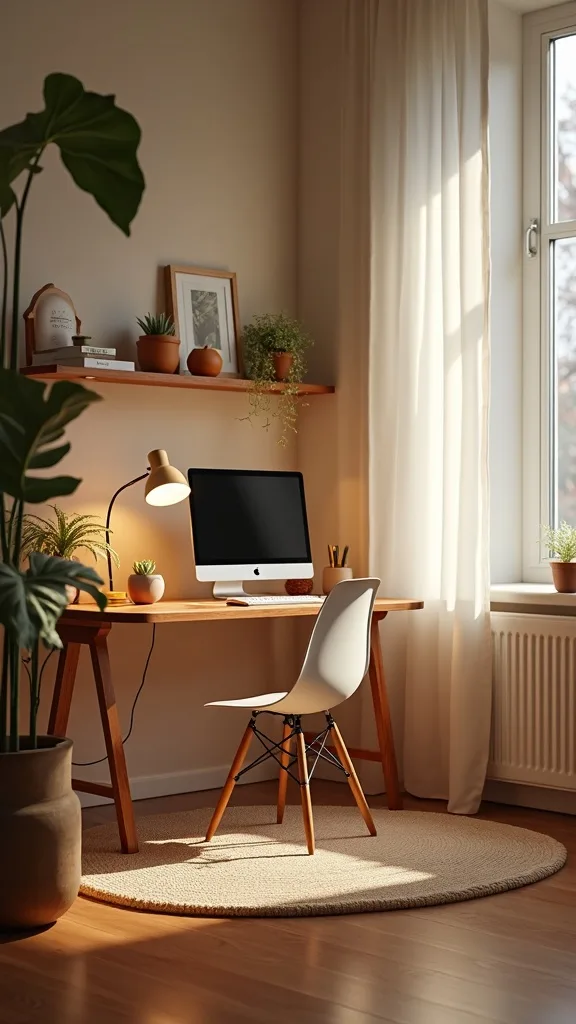
Put the desk where your eyes land on something calm, not on storage chaos. This works because attention is leaky; if your sightline hits a messy shelf, your brain keeps “checking” it while you work.
Start by standing in your garage and finding the quietest corner: farthest from the garage door, away from the main walkway, and not directly facing the tool wall. Aim for a 36-inch clear zone behind your chair so you’re not constantly scooting in and out. If possible, orient the desk so you face a wall, not the open bay.
Paint or cover that wall in a soft neutral (warm white or greige), then add one framed print or a pegboard arranged like a grid. That’s your visual boundary.
Pro tip: if you must face the garage, hang a simple curtain track to create an instant “office backdrop”—out of sight becomes out of mind.
3. How do you make a garage office feel cozy without making it dusty?
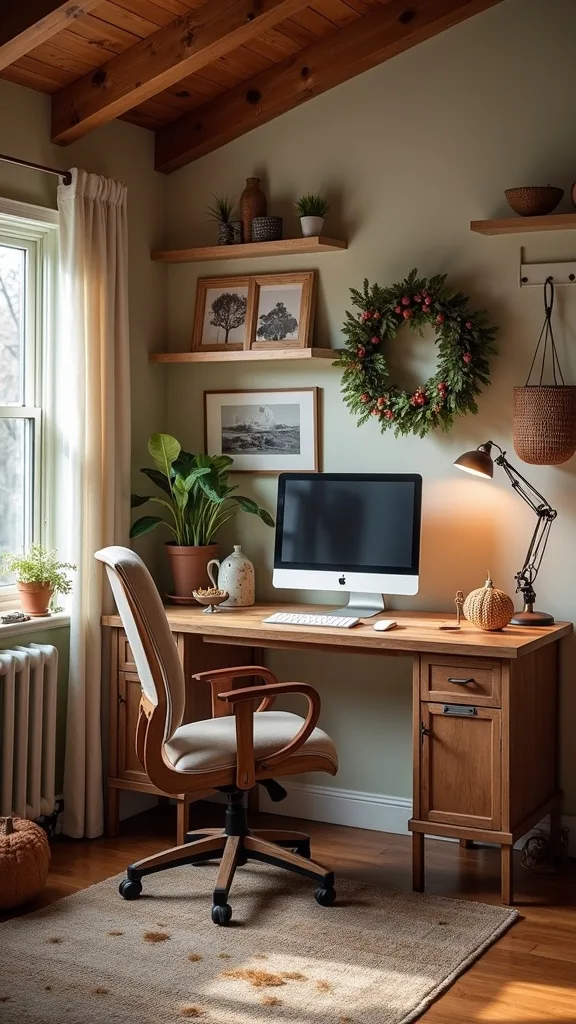
Cozy doesn’t mean plush everywhere; it means a few tactile surfaces in the right places. It works because you’re only touching a handful of areas while you work—desk edge, chair arms, mat, and foot zone.
Add one wool desk mat (easy to shake out), one washable throw over the chair back, and one small low-pile rug under the desk. Skip fuzzy textiles that grab sawdust. If the floor is concrete, use an anti-fatigue mat under the rug for warmth and comfort.
Choose autumn-leaning colors like rust, camel, and deep olive in small doses. Keep patterns tight (herringbone, small checks) so they read tailored, not busy.
Pro tip: avoid open baskets on the floor in a garage; they become dust collectors fast. Use lidded bins and you’ll keep the cozy home office feeling intentional.
4. What lighting makes a fall workspace feel warm but still functional?
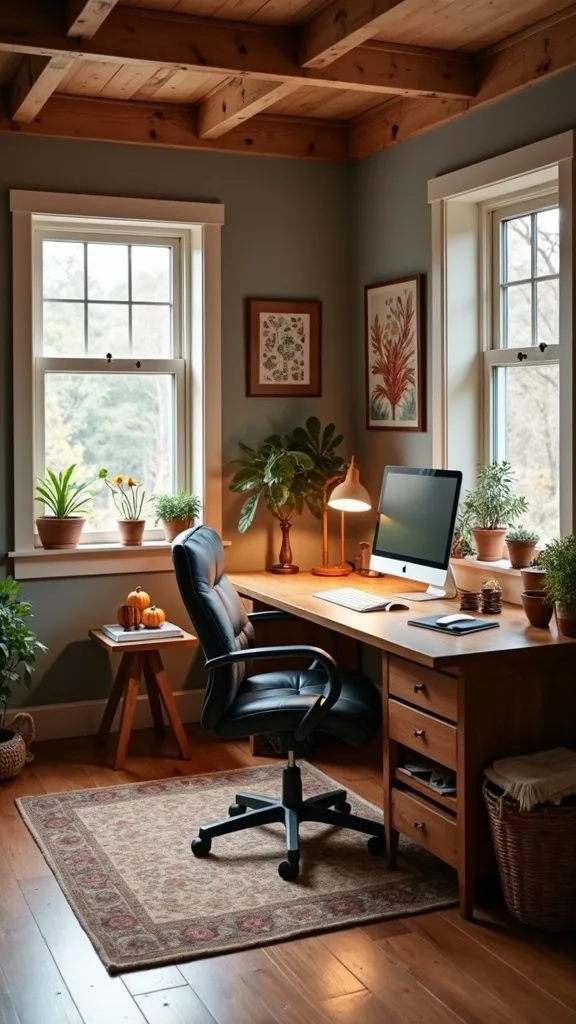
Layered lighting is the whole game: one warm lamp for mood and one brighter task source for accuracy. It works because your eyes relax in warm ambient light, but you still need clear illumination for reading and video calls.
Use a desk lamp with warm white light (2700K–3000K — the cosy, yellowish tone you see in most homes) plus an overhead LED shop light on a separate switch for when you’re filing, sorting, or scanning. Aim the desk lamp at your work surface, not your face, and keep it slightly forward of your monitor.
Look for a lamp with adjustable brightness (measured in lumens) so you can dial it down at 4 p.m. when the day feels shorter. Brass, matte black, or dark bronze reads fall without trying.
Pro tip: avoid cool white overhead-only lighting; it turns your garage into a clinic and makes work from home fall feel longer than it is.
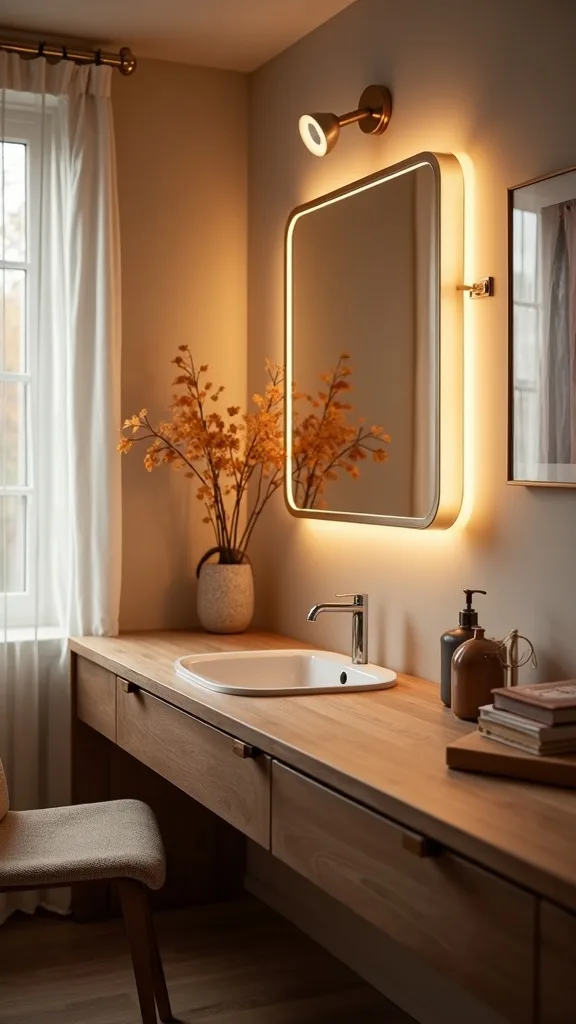
5. How can you add office decor autumn without cluttering your desk?
Autumn decor works best when it’s vertical and edited. It works because a clear desk is a faster desk—your brain doesn’t waste energy negotiating around objects.
Swap two things, not ten: change your desktop art and your “soft good” (mat, throw, or cushion). Add a small framed print in muted fall tones and a single branch in a narrow vase on a shelf behind the monitor. If you want seasonal scent, use a candle on a side shelf, not next to papers.
Stick to a tight palette: warm wood, black, and one accent like burnt orange. This reads office decor autumn instead of “holiday corner.”
Pro tip: avoid mini pumpkins on the desk. They photograph well and work poorly—one more thing to knock over during a call.
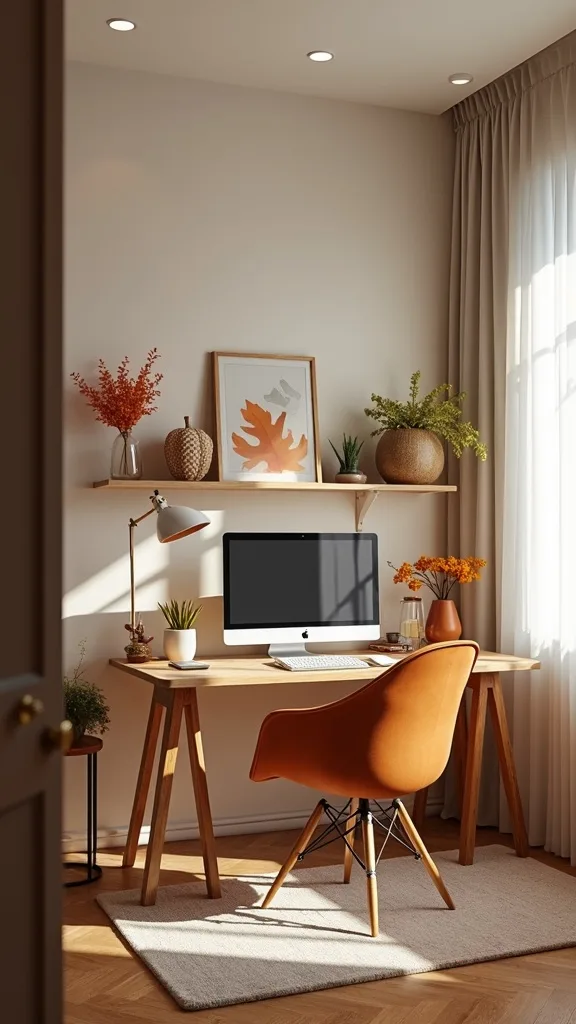
6. What’s the fastest way to make a garage desk look built-in?
A continuous surface plus matching storage makes almost anything feel custom. It works because repetition and alignment look expensive, even when the pieces are basic.
Use a 60-inch butcher block or laminate countertop across two drawer units. Add a simple backsplash strip (even painted hardboard) to hide wall scuffs and cords. Keep the drawer units the same height so the top reads seamless.
Choose a medium walnut tone or a warm oak to bring fall warmth into a garage setting. Matte black hardware keeps it crisp and not farmhouse-cute.
Pro tip: run a slim LED strip under the back edge for a soft glow—your desk will feel like a destination, which is half of a productive workspace fall.
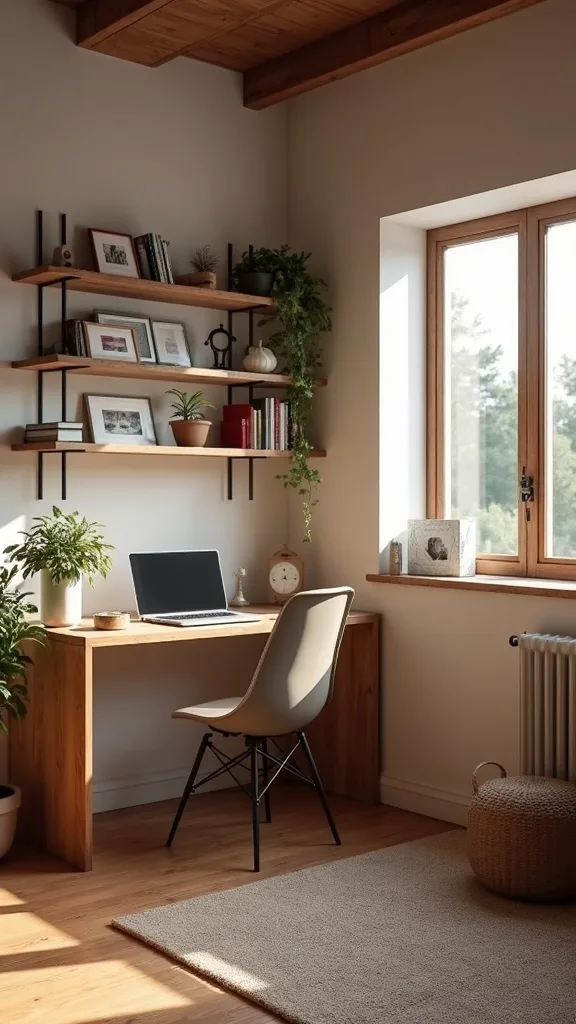
7. How do you control cords so the space stays calming?
Cord control is not fussy; it’s visual hygiene. It works because loose cables create “micro-mess,” and micro-mess is distracting all day.
Mount a power strip under the desk with screws or heavy-duty tape, then route cords through a simple cable tray. Use two Velcro ties per device: one near the plug, one near the device. Label the power strip ports with a paint pen so you’re not unplugging the wrong thing.
Pick black or charcoal cord covers so they disappear against shadows. Keep one spare charging cable in a drawer so you don’t snake one across the desk.
Pro tip: avoid running cords across the floor in a garage. It’s a trip hazard and turns your cozy home office into an obstacle course.
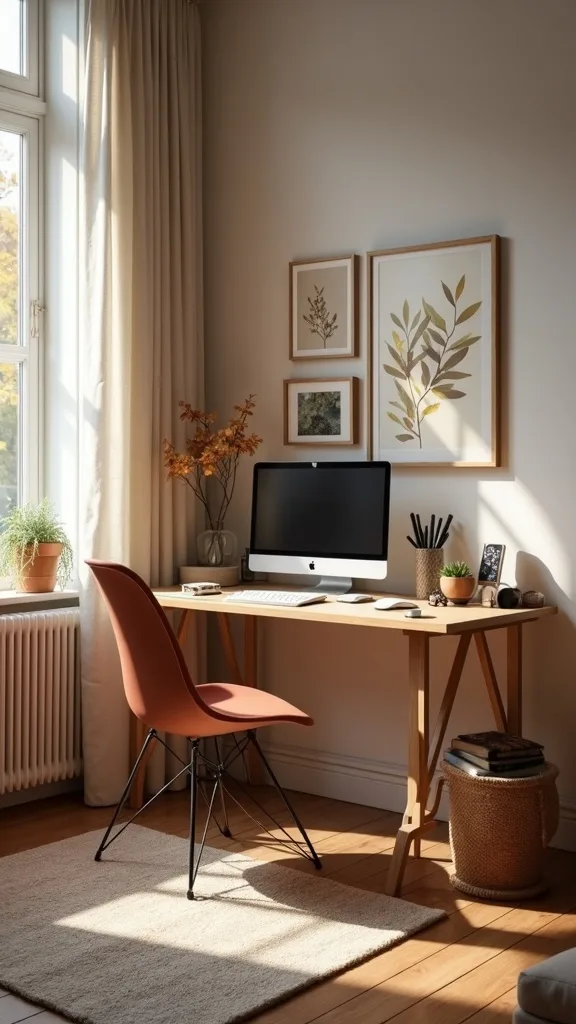
8. What storage works best for a shared garage office zone?
The best storage is sealed, labeled, and boring. It works because you’re trying to reduce decision-making, not create a display.
Use one tall cabinet with doors for office supplies and a second zone for garage overflow. Inside, add clear bins with simple labels: “paper,” “cables,” “shipping,” “tools—small.” Keep frequently used items between waist and eye level.
Choose neutral bins (black, clear, or white) so the color story stays calm. If you want warmth, bring it in with wood handles or a single oak shelf.
Pro tip: avoid open shelving for paperwork in a garage; dust and humidity don’t care about your filing system. Closed storage is the upgrade.
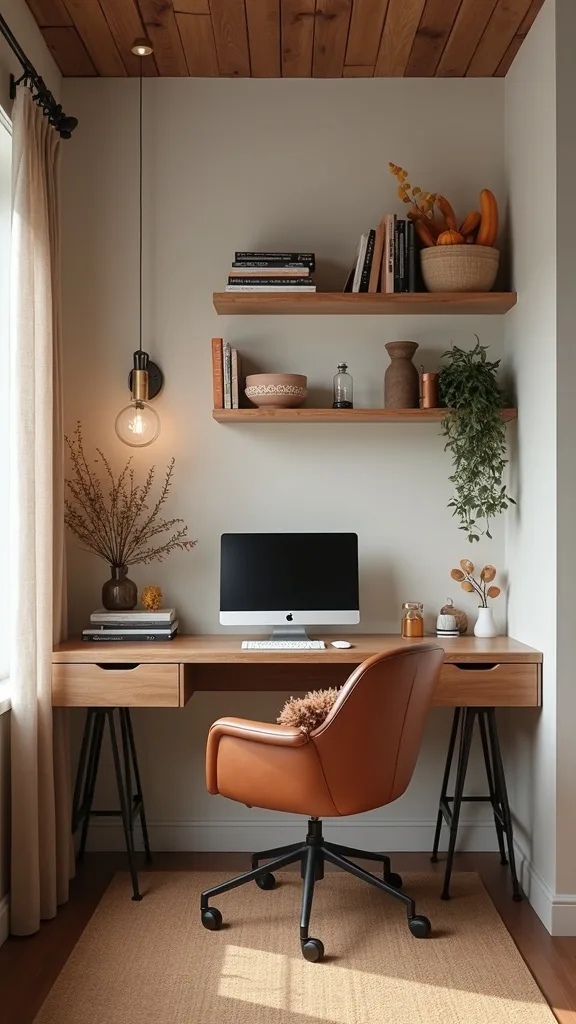
Cost & Materials Estimate
For a garage-based cozy fall office refresh, most homeowners spend enough to upgrade comfort and focus without committing to a full remodel.
| Item | Estimated Cost | Where to Buy |
|---|---|---|
| Warm desk lamp (adjustable) | $25–$70 | Amazon |
| Wool or felt desk mat | $18–$55 | Amazon |
| Small floating shelf (about 24″ wide) | $20–$60 | Home Depot |
| Smart speaker | $25–$100 | Amazon |
| Closed storage cabinet or locking wall cabinet | $90–$240 | Lowe’s |
Total estimated cost: $178–$525 Save money by thrifting the cabinet and splurge on the lamp and chair-zone comfort where you feel it daily.
9. How can you make the chair zone warmer on cold fall mornings?
Warmth at your feet changes everything. It works because your body stops “complaining” when the floor isn’t pulling heat from you.
Start with a low-pile rug sized to fit under the desk and chair movement—roughly 4′ x 6′ works for most setups. Add an anti-fatigue mat on top of the rug where your feet land, or use a compact footrest if you prefer a lighter look. If drafts are an issue, place a door draft stopper at the garage entry door.
Colors that feel fall-ready: heathered charcoal, camel, and muted plaid. Keep texture tight so it’s easy to vacuum.
Pro tip: avoid thick shag rugs in a rolling chair zone. They grab wheels and turn a productive workspace fall into a wrestling match.
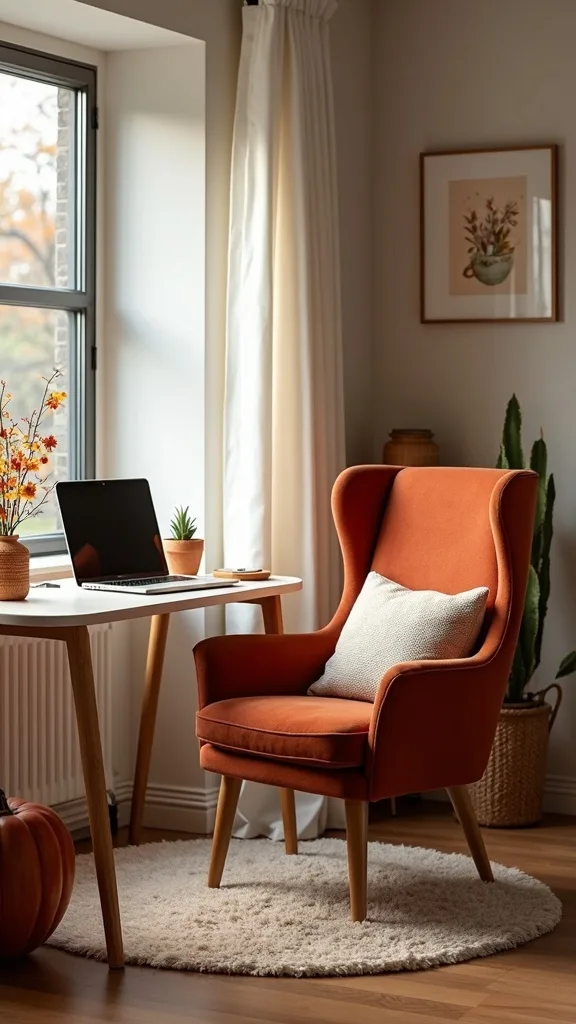
10. What’s the best paint approach for a garage office wall in fall?
One painted “office wall” is a boundary your brain respects. It works because it visually separates work from storage, even when the room is shared.
Pick one wall behind or beside the desk and paint it a warm neutral—think soft mushroom, warm gray, or creamy white. Keep the sheen eggshell so it wipes clean. If painting feels like too much, use a large peel-and-stick wallpaper panel only in the desk zone.
Add one wood-toned floating shelf to echo fall warmth and give your eyes a resting point. Keep decor minimal: a plant, a frame, a pen cup.
Pro tip: avoid painting the entire garage “for coziness.” It’s expensive, time-consuming, and unnecessary—one intentional wall does the job.
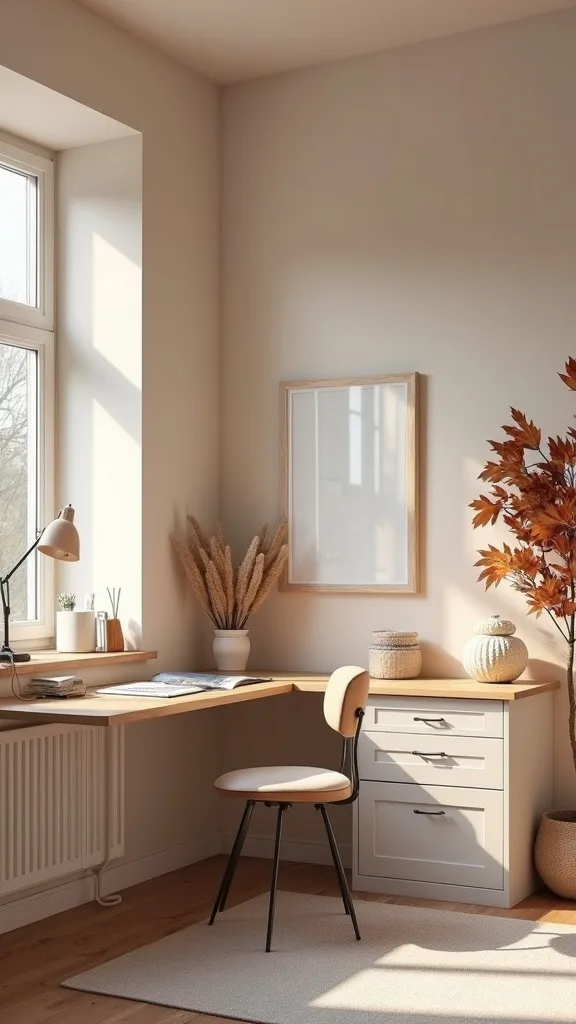
11. How do you reduce echo and make calls sound better in a garage?
Hard surfaces bounce sound, and garages are full of them. It works to soften just a few planes because echo comes from wide, flat areas—not from your tiny accessories.
Hang a thick curtain panel on a tension rod or wall track near the desk, especially if you have a metal garage door nearby. Add a rug and a fabric chair, and you’ve already changed the acoustics. If you do video calls, place the curtain behind your camera so it doubles as a clean background.
Choose a solid color in a fall tone like cinnamon or deep taupe. Avoid busy prints that moiré on camera.
Pro tip: don’t rely on foam “studio squares.” They look out of place in a home and rarely solve the real issue. Textiles in normal forms work better.
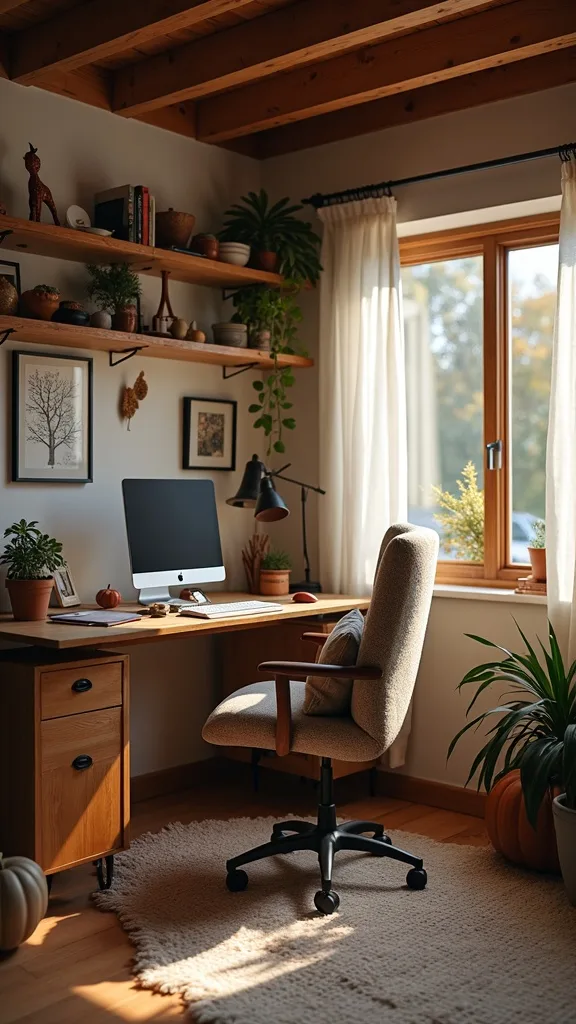
12. What desk accessories actually help productivity (and which don’t)?
The best accessories reduce steps. That’s the whole test. It works because productivity is often just fewer transitions between tasks.
Keep three items on the desk: a pen cup, a notebook, and one catch-all tray for today’s papers. Everything else goes in drawers. Add a monitor riser only if it creates storage underneath for a keyboard or charger.
Choose materials that feel grounded: wood, felt, and matte metal. That’s how you get a warm look without seasonal clutter.
Pro tip: avoid novelty organizers with lots of tiny compartments. They feel “organized” while actually creating more categories to maintain—simple containers win every week.

13. How do you create a productive workspace fall routine with a smart speaker?
A smart speaker is most useful when it removes friction at the start of work. It works because your brain loves a consistent cue: sound + timer = focus.
Create a routine that turns on your desk lamp (smart plug), starts a low-lyric playlist, and runs a 50/10 timer cycle. Keep the command short so you’ll actually use it. If you’re in a garage, set the volume limit so it doesn’t echo.
Choose “coffeehouse jazz,” “brown noise,” or nature sounds—whatever keeps your brain steady. Pair it with a small analog clock as a backup.
Pro tip: avoid hopping playlists every 20 minutes. Consistency is what makes focused work mode feel effortless.
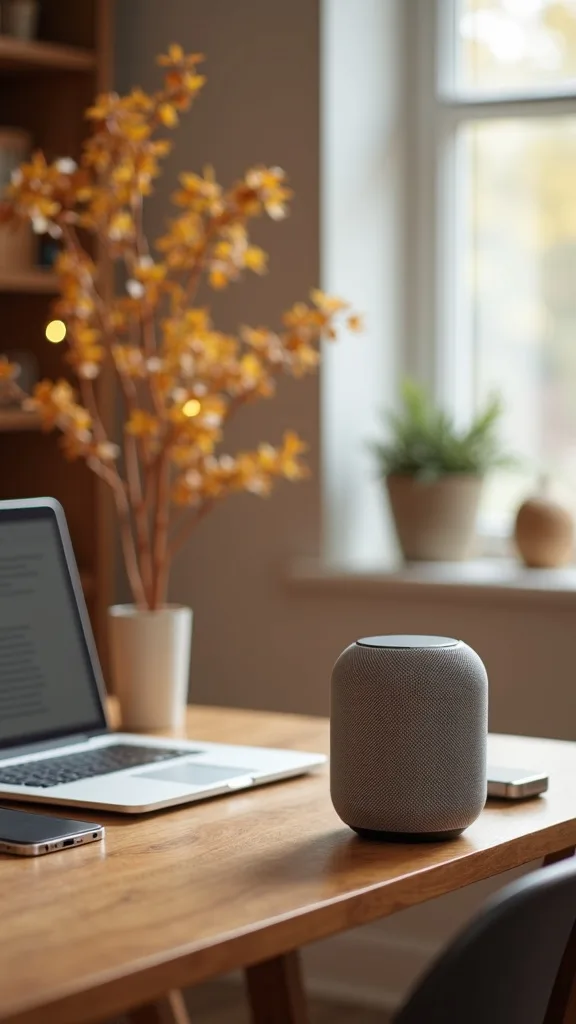
14. What’s the cleanest way to add plants in a garage office?
Plants make a garage office feel like part of the house, but they need the right placement. It works because greenery softens hard edges and gives your eyes a non-screen focal point.
Use a small plant shelf with a lip so pots can’t slide. Place it near a window if you have one; if not, choose low-light tolerant plants and rotate them to brighter rooms weekly. Keep a tray under pots to protect shelves from water.
Pick two plants max: pothos and snake plant are forgiving. Use simple ceramic pots in cream or matte black.
Pro tip: avoid soil bags and watering cans stored in the office zone. Keep them in a closed bin elsewhere so the cozy home office stays clean.
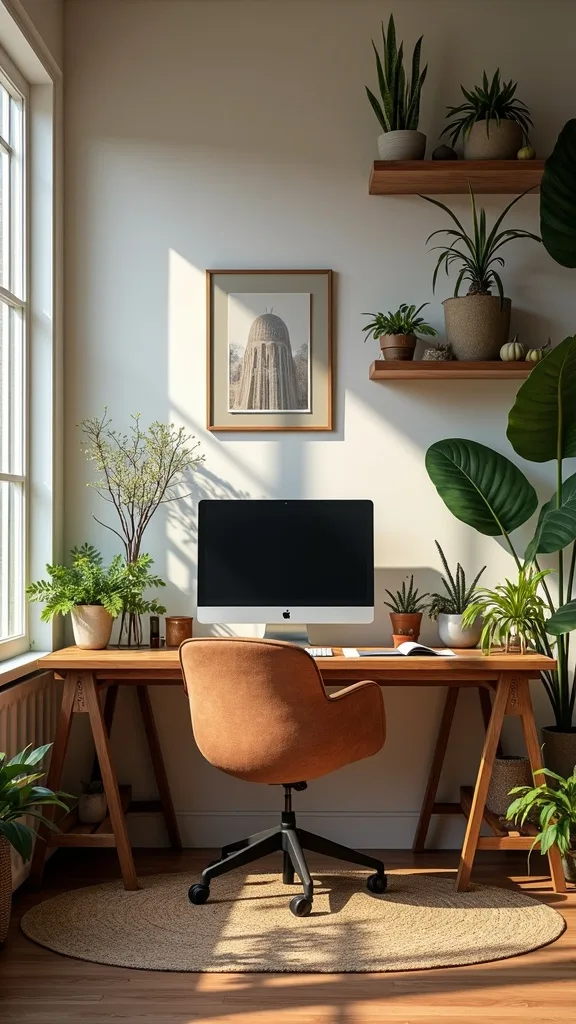
15. How can you make a small garage office feel less cramped?
Cramped happens when everything is at the same visual height. It works to create “breathing room” by keeping the desk surface clear and moving storage upward.
Mount a pegboard or rail system above the desk for headphones, scissors, and a small basket. Use one vertical file holder on the side, not a stack of trays. If you can, choose a desk with slim legs instead of bulky panels.
Stick to light-to-medium tones on the wall and darker tones on the floor. That contrast makes the space feel taller.
Pro tip: avoid placing the printer on the desk. Put it on a rolling cart that tucks under a shelf—clear surface, clearer thinking.
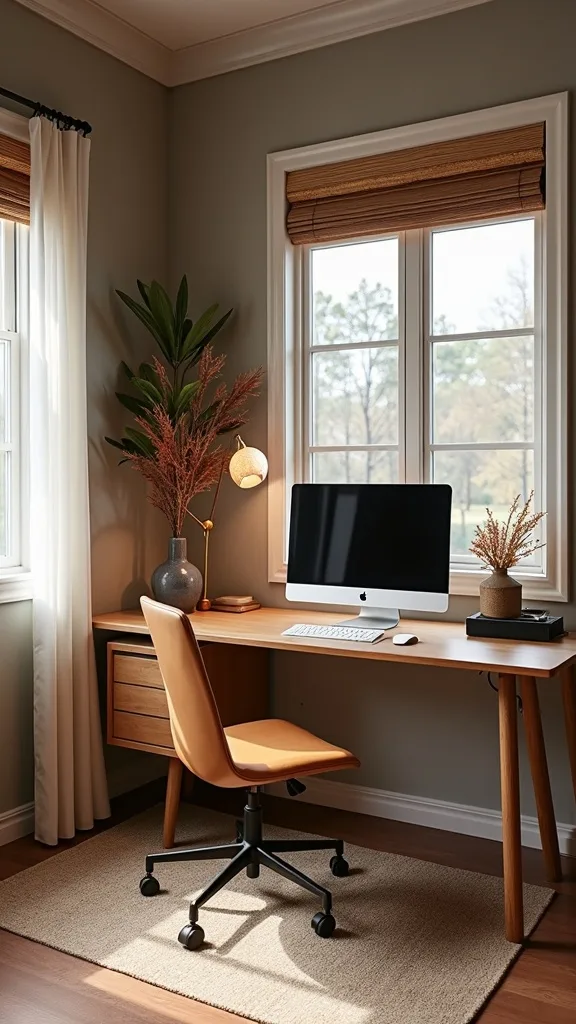
16. What’s the best way to handle packages, returns, and shipping supplies?
Shipping clutter is a productivity killer because it spreads fast. It works to give it one contained station so it doesn’t colonize your desk.
Use a lidded bin for mailers, tape, and labels. Mount a small paper roll holder under a shelf if you ship often. Keep a dedicated “outgoing” tray on a side cabinet so it’s visible but not in your work zone.
Colors: stick to neutral bins and one warm wood accent. The function is what makes it feel sophisticated.
Pro tip: avoid keeping empty boxes “just in case.” Break them down the same day—your productive workspace fall depends on fast resets.
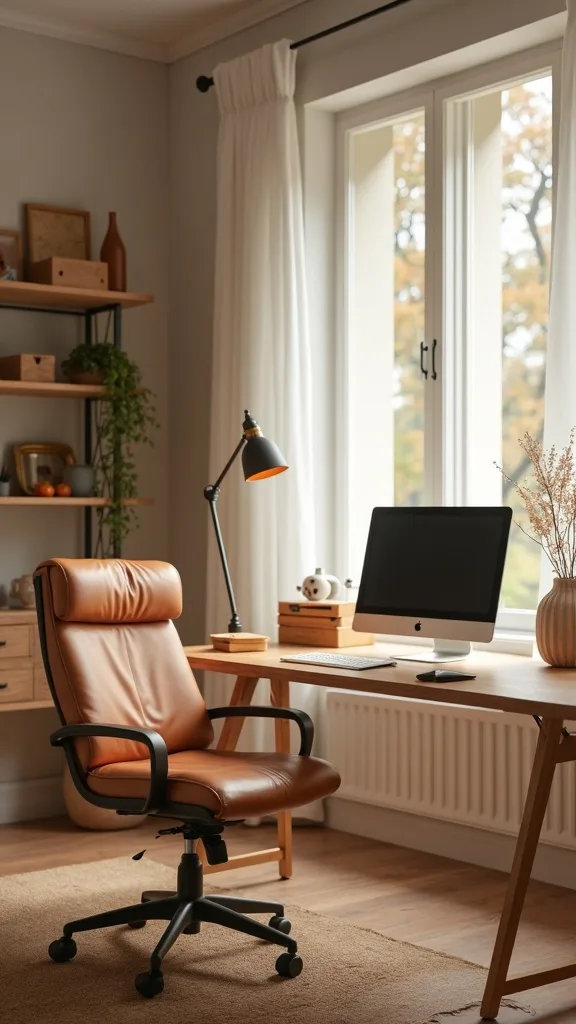
17. How do you keep fall allergens and garage dust off your work setup?
Dust control is comfort control. It works because less dust means fewer sniffles, fewer screen smudges, and fewer reasons to abandon the space.
Add a small air purifier near the desk (not directly on the floor where it sucks in debris), and wipe surfaces weekly with a microfiber cloth. Use a desk mat you can lift and shake outside. If you store paint or chemicals in the garage, keep them in a sealed cabinet away from airflow.
Choose finishes that wipe clean: matte laminate, sealed wood, powder-coated metal. Skip raw, unfinished wood in a garage environment.
Pro tip: avoid open-top pen cups if you’re sensitive—use a cup with a lid or keep pens in a drawer organizer. Clean air is a design upgrade.
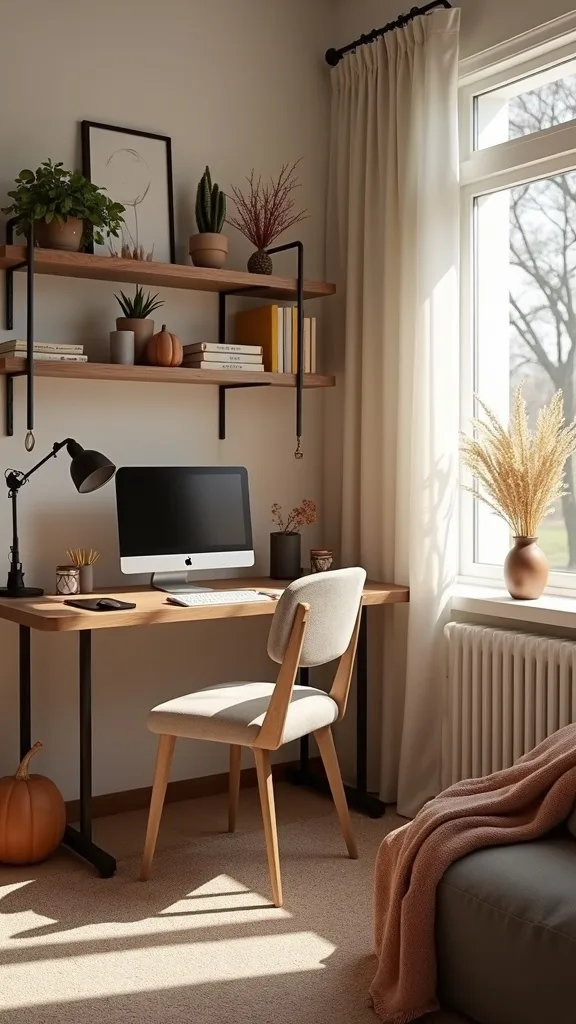
18. What wall storage looks intentional instead of like a workshop?
The difference is symmetry and spacing. It works because a workshop wall is optimized for speed; an office wall is optimized for calm.
Choose one system—pegboard, slatwall, or rails—and keep it to a rectangular zone above the desk. Arrange tools and office items in a grid with empty space between groups. Add two matching containers instead of five mismatched ones.
Use black hooks, clear bins, and one wood shelf to warm it up. That mix reads modern-industrial, not utility room.
Pro tip: avoid hanging everything you own. Leave 30% empty space so your wall can breathe—negative space is part of the storage plan.
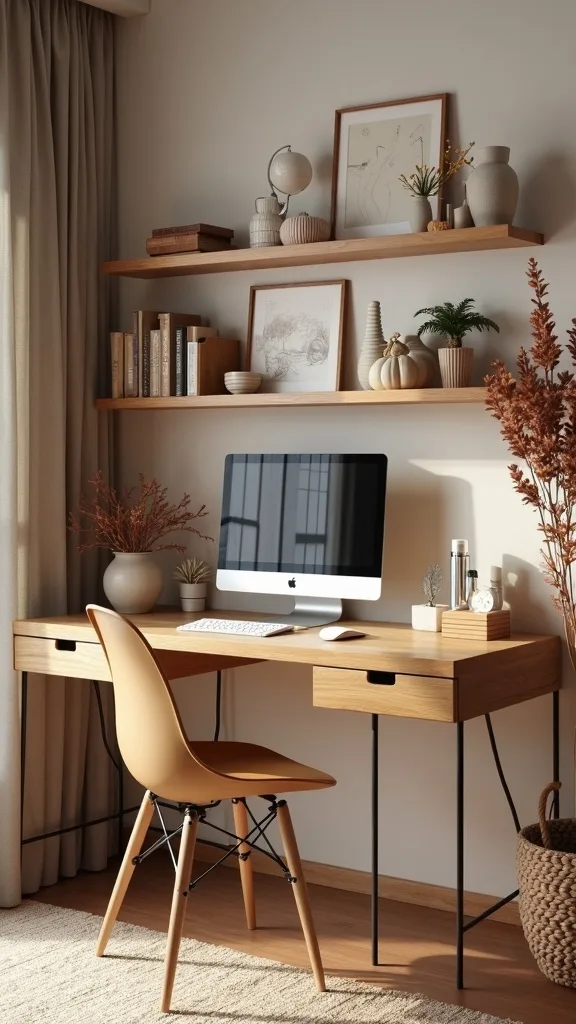
19. How can you make video calls look good in a garage office?
Calls look better when the background is simple and the light is flattering. It works because cameras exaggerate clutter and flatten depth.
Set your desk so the camera faces a painted wall, curtain, or neatly arranged shelf. Place your warm desk lamp off to the side for ambiance, and add a second light source aimed at the wall behind your monitor for gentle bounce. Keep one plant and one frame behind you—no more.
Stick to warm neutrals and deep greens; they read rich on camera. Avoid high-contrast stripes.
Pro tip: avoid sitting with the garage door behind you. Backlight turns you into a silhouette and makes work from home fall feel like a cave.
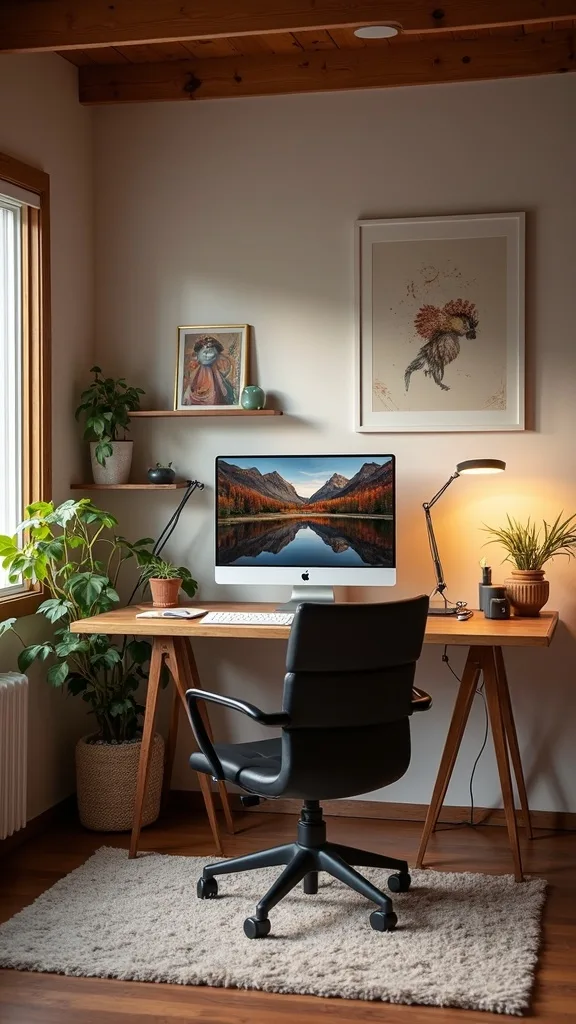
20. What’s a smart way to add fall color without repainting or re-buying everything?
Fall color is best as a removable layer. It works because you can update the mood seasonally while keeping your core pieces timeless.
Swap in a rust-toned desk mat or a camel throw, then add one piece of art with warm undertones. If you want more, change your mug, notebook cover, or mouse pad—small items that you touch daily feel like a bigger change than they are.
Keep the base palette neutral: black, wood, cream. Then rotate one accent color each season.
Pro tip: avoid buying sets of seasonal knickknacks. Spend that money on one high-quality textile—texture reads expensive.
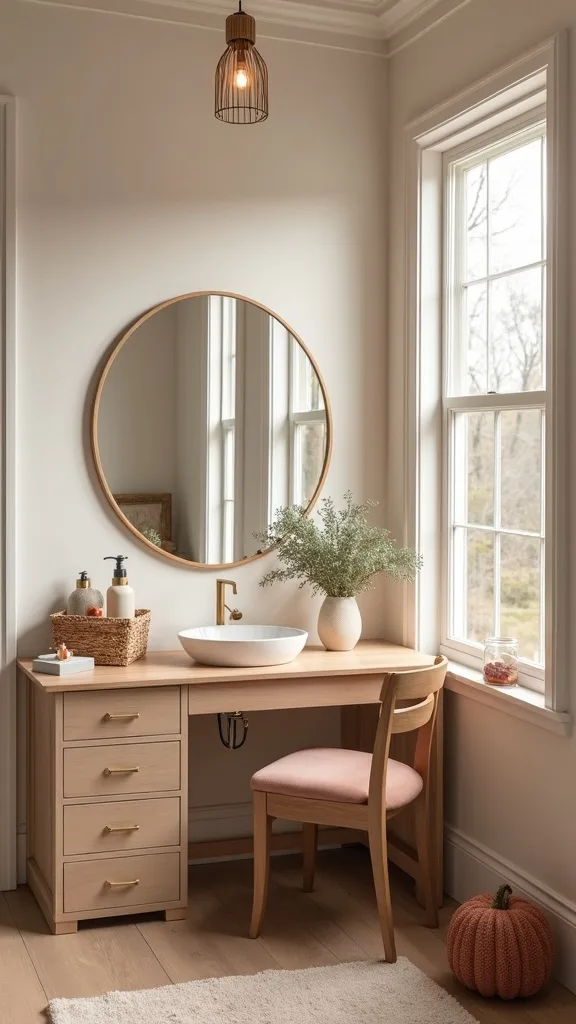
21. How do you keep the garage office from taking over the whole garage?
Boundaries prevent creep. It works because shared spaces need rules you can see—lines, zones, and storage limits.
Mark the office footprint with a rug or floor tape and commit to keeping everything office-related inside that boundary. Add a rolling cart that can tuck under the desk when not in use. Set one “inbox” bin and one “outbox” bin; when they’re full, you process them.
Use matching containers so the zone reads like a room, not a pile. A simple curtain can also signal “office closed.”
Pro tip: avoid storing random garage items under the desk. That space is prime real estate for legroom and calm—protect the footprint.
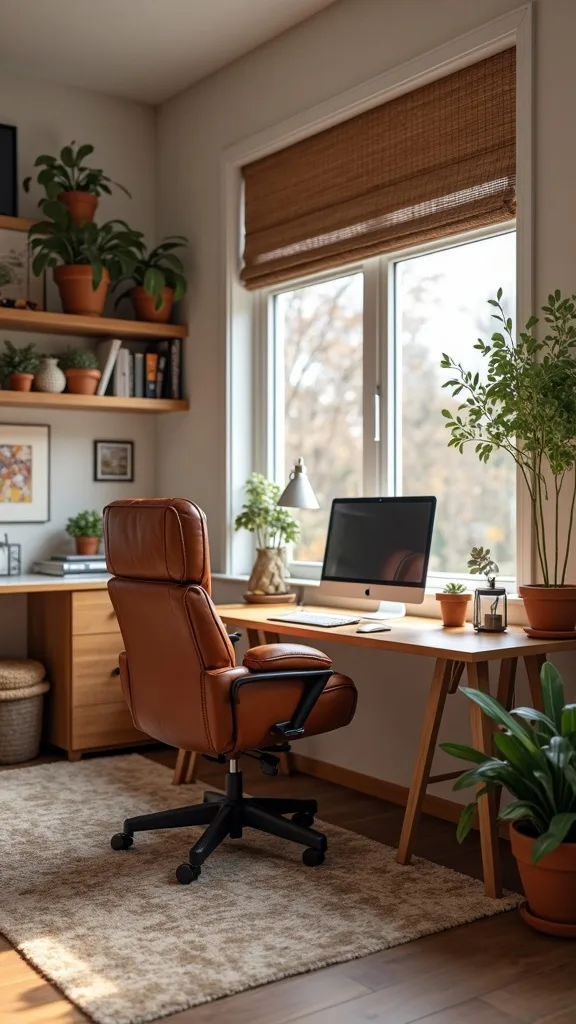
22. What’s the best desk setup for chilly mornings and late-afternoon slumps?
Comfort is productivity in disguise. It works because you won’t focus if you’re cold, squinting, or constantly shifting in your chair.
Keep a small footrest, a throw within arm’s reach, and a warm lamp you turn on before you open your laptop. If you drink coffee or tea, set up a tray on a side cabinet so the desk stays dry and clean. Consider a compact space heater only if your garage wiring and safety allow—place it away from paper and never under the desk.
Choose materials that feel warm: wool, wood, and brushed metal. That’s the fall formula.
Pro tip: avoid working under one harsh overhead light late in the day. Switch to your lamp and you’ll feel the productive workspace fall shift immediately.
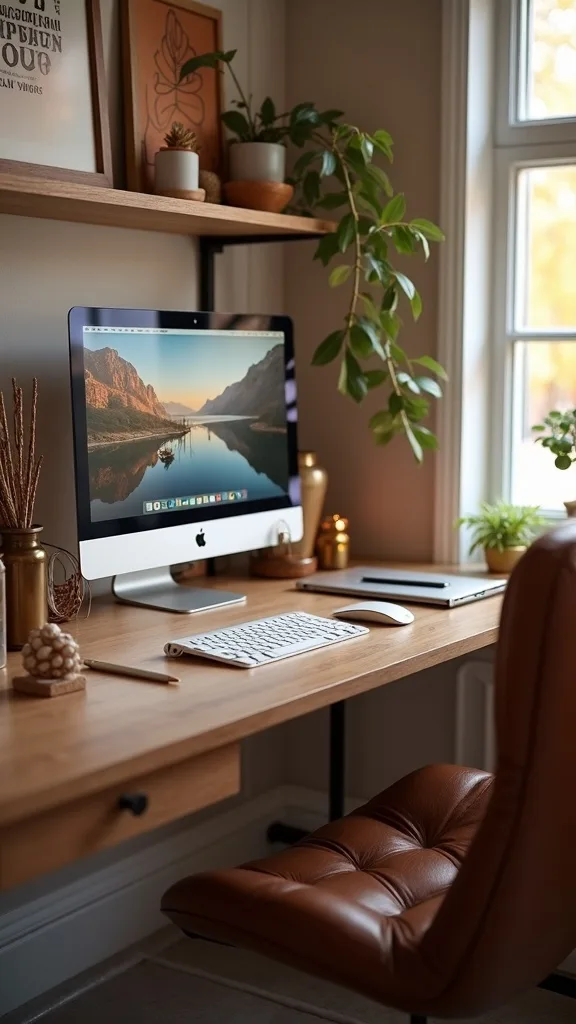
23. How do you create a daily reset that keeps the space from spiraling?
A reset routine is the difference between “I’ll deal with it later” and a space that stays usable. It works because clutter compounds; five minutes daily beats an hour on Sunday.
Set a timer for 6 minutes at the end of the day. Clear the desk, file or toss papers, return tools to the wall system, and wipe the mat. Put tomorrow’s top task on a sticky note and place it on your keyboard so you start clean.
Keep a small trash can and recycling bin within arm’s reach. That alone reduces drift.
Pro tip: avoid leaving chargers and headphones on the desktop overnight. A clear start makes a cozy home office feel like a privilege, not a chore.
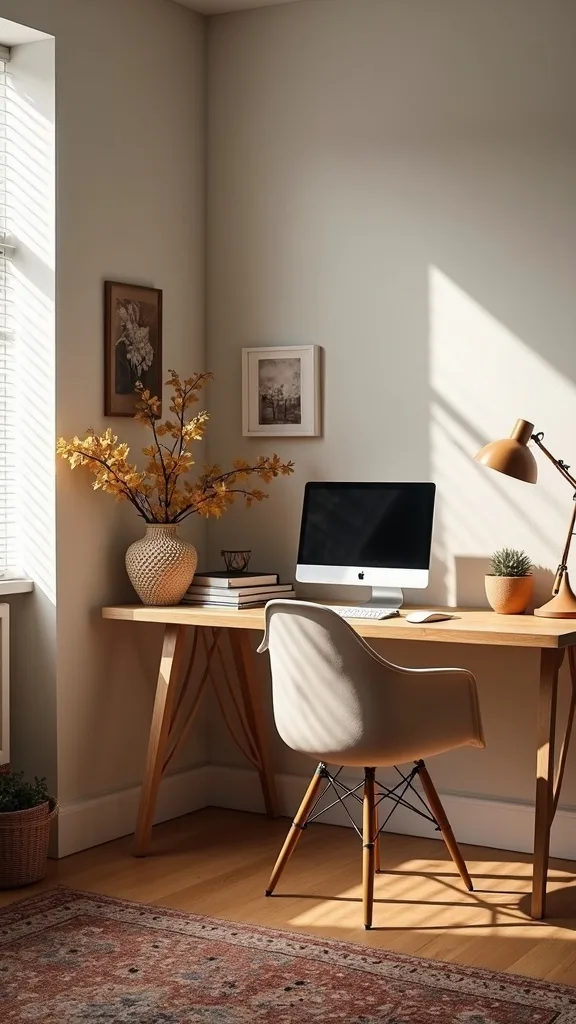
24. What’s one thing to avoid when styling a fall home office in the garage?
Avoid turning “cozy” into clutter. It works against you because visual noise steals attention, and garages already come with built-in noise: tools, bins, shelves, and odd shapes.
Before you add anything, remove one category of items from the office zone—old cords, unused pens, random hardware, or half-finished projects. Then add only two cozy layers: lighting and one textile. If you want seasonal charm, put it on the wall or shelf behind you, not on the work surface.
Choose quality over quantity: one solid lamp, one wool mat, one plant. That’s enough to signal fall.
Pro tip: if an item doesn’t help you work or help you recover after work, it doesn’t belong here. Edit first, then decorate.
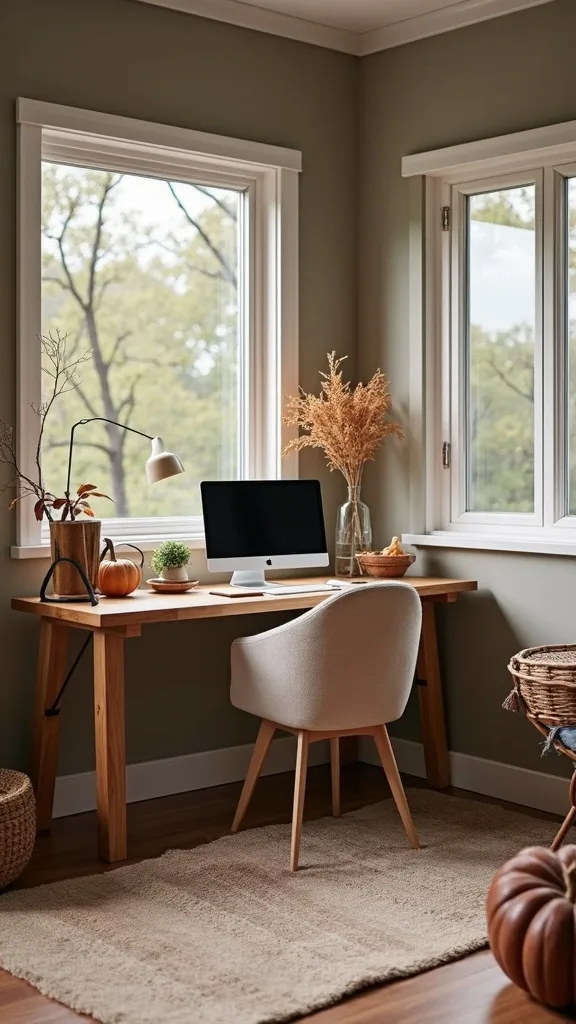
25. How do you make the space feel like “home,” not a temporary setup?
Permanent feeling comes from repeatable details: matching finishes, consistent lighting, and one signature element. It works because your brain trusts spaces that look resolved.
Pick a finish story—black metal + warm wood, for example—and repeat it three times (lamp, shelf brackets, drawer pulls). Add one framed piece of art that you’d hang inside the house. Keep a small bowl for keys or a coaster you love; tiny rituals matter.
Use a scent only if it’s subtle: cedar, bergamot, or unsweetened spice. Keep it off the desk and away from paper.
Pro tip: name the zone. A label on the cabinet that says “Office” is surprisingly powerful—this space has a job, and so do you.
Final Thoughts
The “before” version of a garage office usually feels like borrowed space: cold light, scattered storage, and a desk that becomes a landing pad for everything. The “after” version isn’t more decorated—it’s more decided. Warm light where you sit, closed storage where you don’t, and a few tactile materials that make fall workdays feel steadier.
If you only do one thing, do the warm core: lamp + mat + small plant shelf + focus routine. That combo carries the room even if the rest of the garage is still a work in progress, and it supports the kind of calm that makes work feel shorter.
Rule of thumb: design the first 3 feet around your chair like a boutique hotel desk, and treat everything beyond that like storage. Today, clear a 36-inch zone behind your chair, plug in a warm desk lamp, and set your smart speaker to a 50-minute Work Mode timer.
What I’d Do Differently
When I first tried this, I treated my garage desk like a “temporary” spot and kept adding little fixes—another bin here, another hook there—until the area felt busy and oddly stressful. My specific mistake was putting open storage at eye level because it looked organized for about 48 hours. After that, every random item (batteries, spare screws, mail, tape) ended up visible, and I could feel my attention snagging on it during calls. The correct approach was the opposite: close the visual field with doors and drawers, then keep only one small, curated shelf for a plant and a frame.
I also wish I’d started with lighting instead of trying to “decorate” my way into comfort. A warm desk lamp changed my mood in one evening, while seasonal decor didn’t fix the harsh overhead glare. If you’re on the fence, start with the warm core and one closed cabinet—then build outward once the space feels calm enough to work.