
This post contains affiliate links. As an Amazon Associate, I earn from qualifying purchases at no extra cost to you.
I learned the hard way that “one quick fall swap” is a lie. Last September I tossed an orange throw on my sofa, stepped back, and realized my living room looked like a sports bar had hosted a harvest festival (and look, I love a theme night, but not in my decor).
Here is the thing: early fall decor is not about screaming pumpkins; it’s about nudging the room from breezy to grounded. This guide walks you through specific, low-commitment swaps—pillows, throws, lighting, coffee table styling, and a few color moves—so your space feels intentional, not accidental.
This is perfect for you if you want a cozy living room fall vibe but you’re not ready to fully commit to deep winter layers or full-on Halloween energy.
You’ll see exactly how to trade summer blues for rust velvet, how to use amber home accents without making everything look orange, and which warm living room colors make your existing furniture look more expensive (yes, even the “temporary” couch).
Below are 25 Fall Transition Living Room Decor Ideas that bring transitional fall warmth into your living room without a full redecorating spiral.
Products I Recommend for This Project
Here are some of my favourite products to help you bring these ideas to life:
- MIULEE Velvet Throw Pillow Covers (Rust, 20×20, Set of 2) — An easy way to add that rich early-fall rust without buying new pillows.
- Utopia Bedding Throw Pillow Inserts (20×20, Set of 2) — Affordable, nicely filled inserts that make budget covers look more high-end.
- DEWENWILS Flameless LED Candles with Timer (Set of 3) — Gives you the candle-cluster glow with zero “did I leave that burning?” stress.
- Stonebriar Wooden Dough Bowl — The quickest way to corral candles and decor so your coffee table looks styled, not cluttered.
- Philips LED A19 Bulbs, Soft White (2700K) — The simplest lighting swap to make warm colors and amber accents look truly cozy.
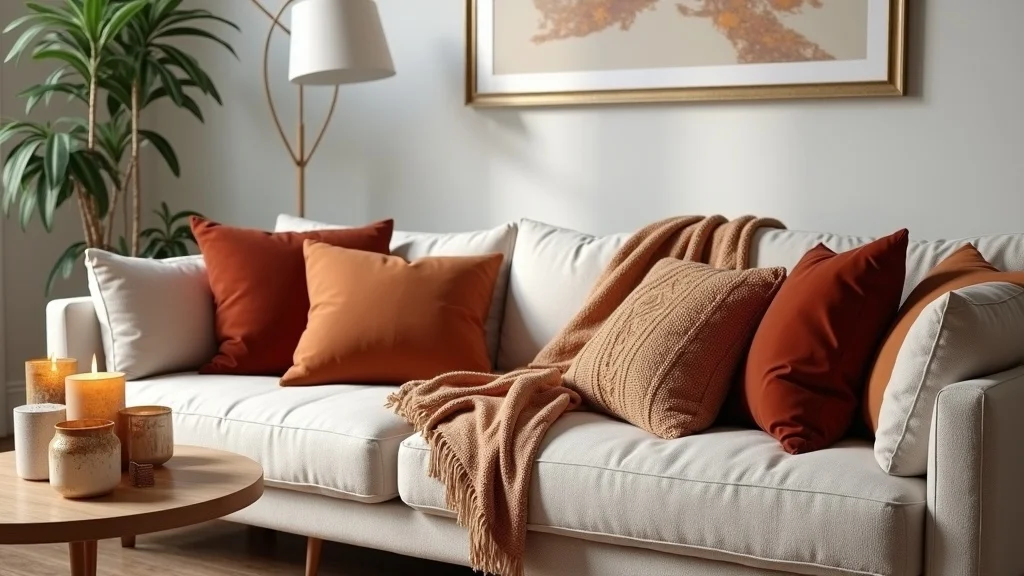
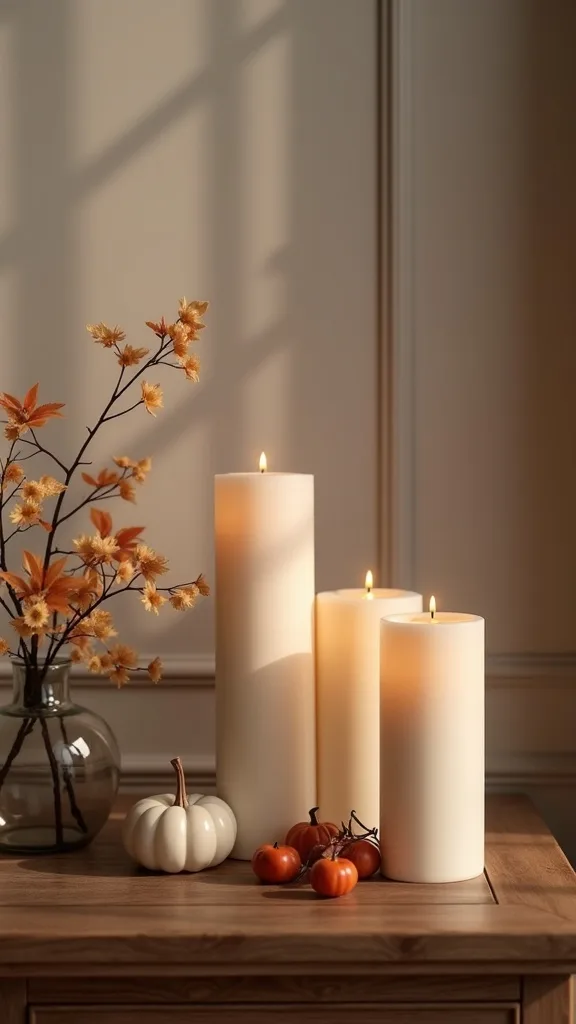
1. Swap summer blues for rust velvet cushions, an amber knit throw, and a wooden candle cluster
This is the cleanest early-fall pivot because it changes the room’s “temperature” instantly—cool blues read airy, while rust + amber reads grounded and intimate. And look: you don’t need a new sofa; you need a new story on top of the sofa.
Do it like this: pull the two bluest items off your seating (pillows, throw, even one vase) and replace them with two rust velvet pillow covers (20×20 is the sweet spot) plus an amber knit throw draped diagonally so it looks relaxed, not folded like a department store. Then build a wooden candle cluster on a tray—3 candles at different heights (think 4″, 6″, 8″) so the eye moves.
Choose rust velvet, amber knit, and warm wood (oak, walnut, or even bamboo) to keep it transitional, not Halloween.
Pro tip: use unscented tapers or a subtle “woodsmoke” candle—your decor should whisper, not yell, and the room will feel like it’s exhaling.
2. What warm living room colors actually look expensive in early fall?
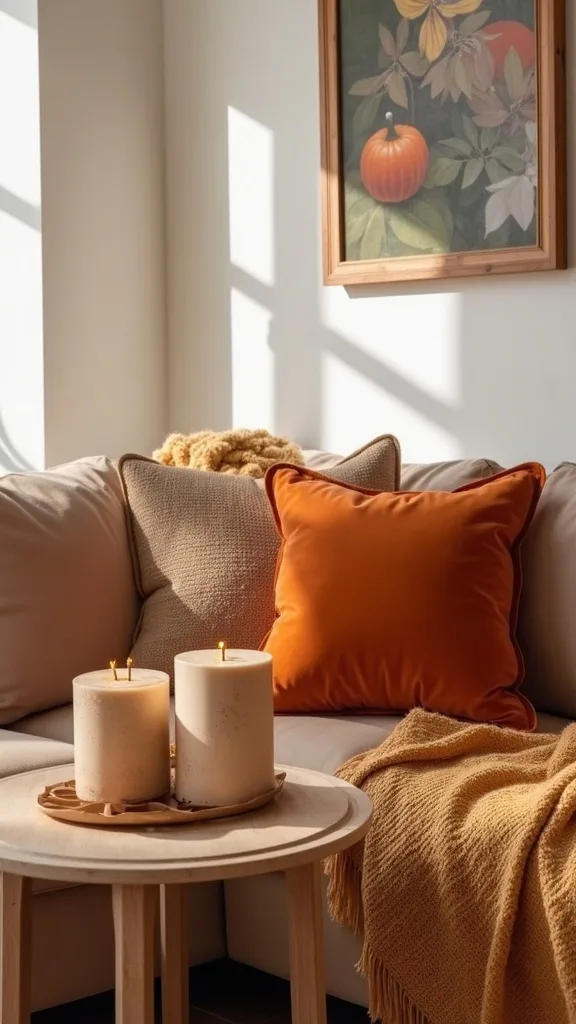
Warm colors look expensive when they’re slightly muted—think cinnamon, tobacco, clay, and caramel instead of straight orange. The reason is simple: saturated brights fight your furniture, while earthy warms blend and make everything look curated.
Start with one “anchor” warm tone (clay/rust) and one “creamy” neutral (oat, ivory, warm beige). Add a third accent in dark brown or near-black for structure—because without contrast, warm palettes can turn into visual oatmeal (delicious, but not the goal).
Materials that sell the look: burnt sienna textiles, camel faux leather, warm oak frames, and a tiny hit of brass. Budget move: swap pillow covers; splurge move: a wool-blend throw that doesn’t pill after two weeks.
Pro tip: avoid icy white with warm palettes—it can look clinical. Choose creamy whites so the whole room feels like candlelight, even at noon.
3. How do you decorate for transitional fall without going full pumpkin?
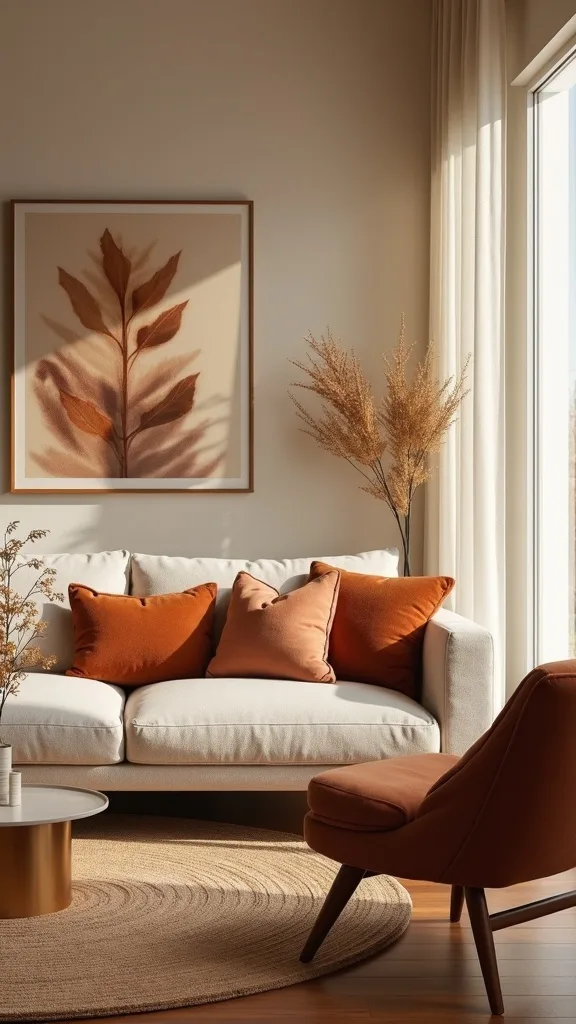
Transitional fall works because it’s about texture and tone—not novelty objects. The why: novelty decor dates fast, but texture reads like “real design” year-round.
Implementation: pick two autumn textures (knit + velvet, boucle + leather, or wool + wood) and repeat them in three places: sofa, coffee table, and one vertical surface (shelf or mantel). Keep any seasonal motif to one item max—one tiny pumpkin, one leaf stem, that’s it.
For colors, stick to warm living room colors like rust, amber, cognac, and cream, then keep your summer neutrals (white walls, jute rug) as the backdrop.
Pro tip: avoid word-sign decor (“Hello Fall”) unless it’s your actual handwriting on a chalkboard. A room can be cozy without narrating itself, and that restraint is what makes it feel grown-up.
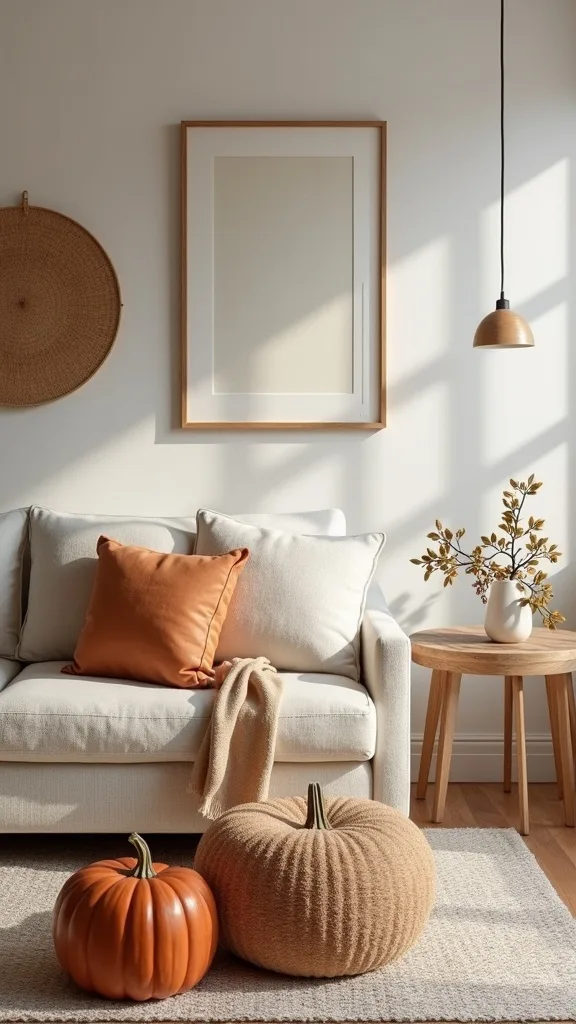
4. Which pillow combo makes a cozy living room fall vibe fast?
The fastest cozy switch is a 5-pillow formula that mixes shine, matte, and pattern—because depth reads cozy. The why: flat, matching pillows feel like a waiting room; mixed textures feel like a home where someone owns a blanket on purpose.
Try this set: two 22×22 solids in rust or tobacco, two 20×20 in a small-scale plaid or herringbone (cream + tan), and one lumbar in a darker grounding color (espresso or charcoal). Keep inserts plump—down alternative is fine, just size up inserts (21″ insert in a 20″ cover) for that “designer karate-chop” look without trying too hard.
Materials to look for: velvet, woven plaid, and a touch of faux leather piping if you want polish.
Pro tip: avoid tiny prints on every pillow; one pattern is enough. Let texture do the heavy lifting so the room feels calm, not busy.
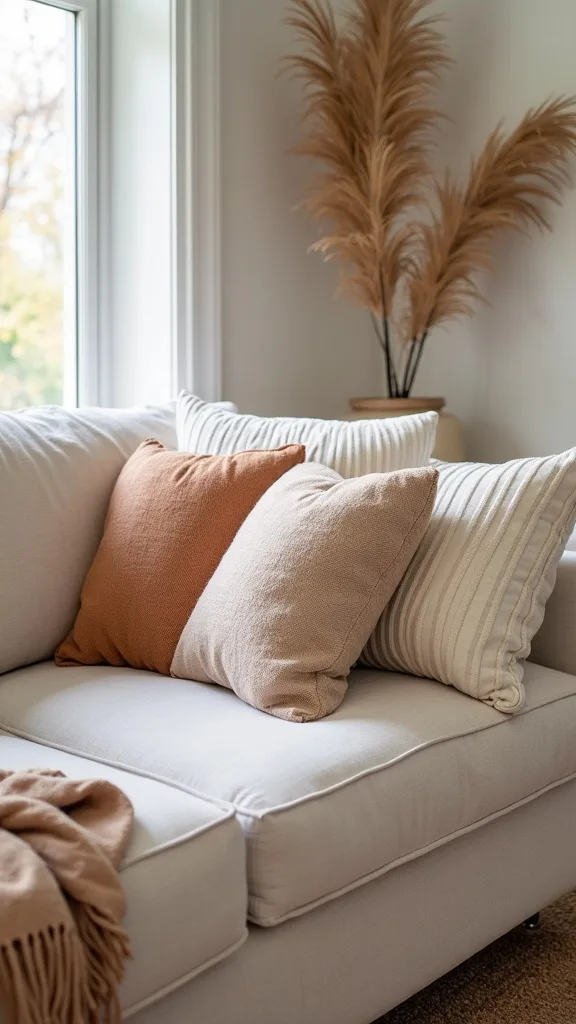
5. How do amber home accents change a living room without repainting?
Amber works like instant golden-hour lighting—everything looks warmer, friendlier, and slightly more expensive. The why is color science, but also vibes: amber tones flatter wood, leather, and warm neutrals.
Place amber in “sparkle zones”: coffee table, side table, and shelf. Add one amber glass vase, one small amber lamp (or amber shade), and one amber candle holder—three hits, max. More than that and you’re living inside a butterscotch candy (ask me how I know).
Pair with materials that keep it grounded: amber glass + matte black metal, or amber + walnut. If your room is cool-toned, balance with cream textiles so it doesn’t feel muddy.
Pro tip: avoid neon-orange “amber.” True amber is honeyed and slightly brown; it plays nice with everything and makes early fall decor feel intentional.
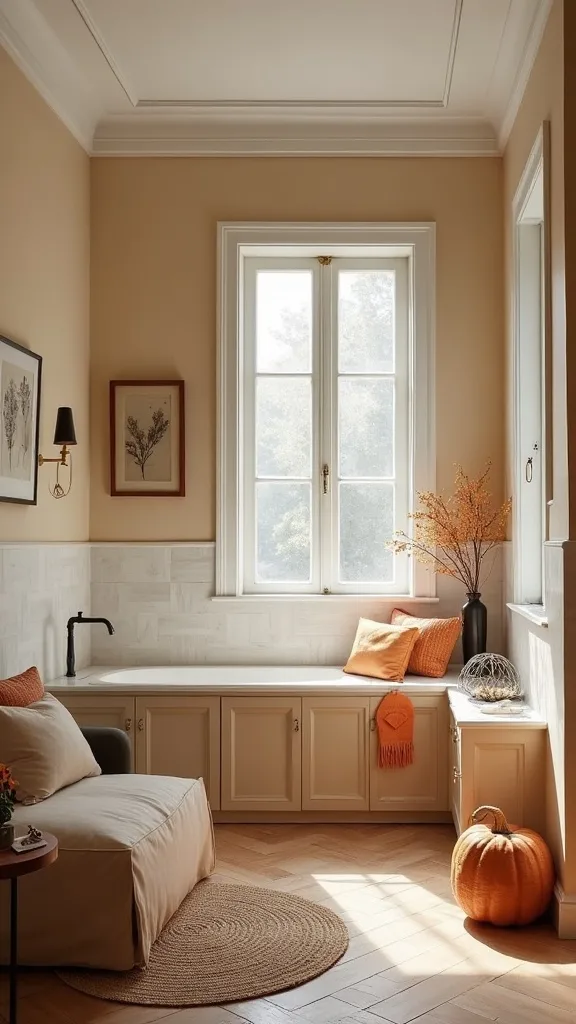
6. What’s the easiest coffee table setup for early fall that isn’t clutter?
The easiest fall coffee table is a three-part stack: tray + height + life. The why: your eye needs structure (tray), variation (height), and something organic (life) to feel styled, not messy.
Start with a 14″–18″ tray (wood or black metal). Add a short stack of 2 books (neutral covers), then top with a small object like a brass match striker or wooden bead strand. For height, add one candle in a glass hurricane or a small vase with dried stems.
Color picks: warm wood, cream books, and one amber accent to tie into the season. Keep the stems airy—think eucalyptus, wheat, or faux branches that don’t shed all over your rug.
Pro tip: avoid tiny items scattered everywhere. One contained moment beats fifteen little “things,” and your future self will thank you when it’s time to actually use the table.
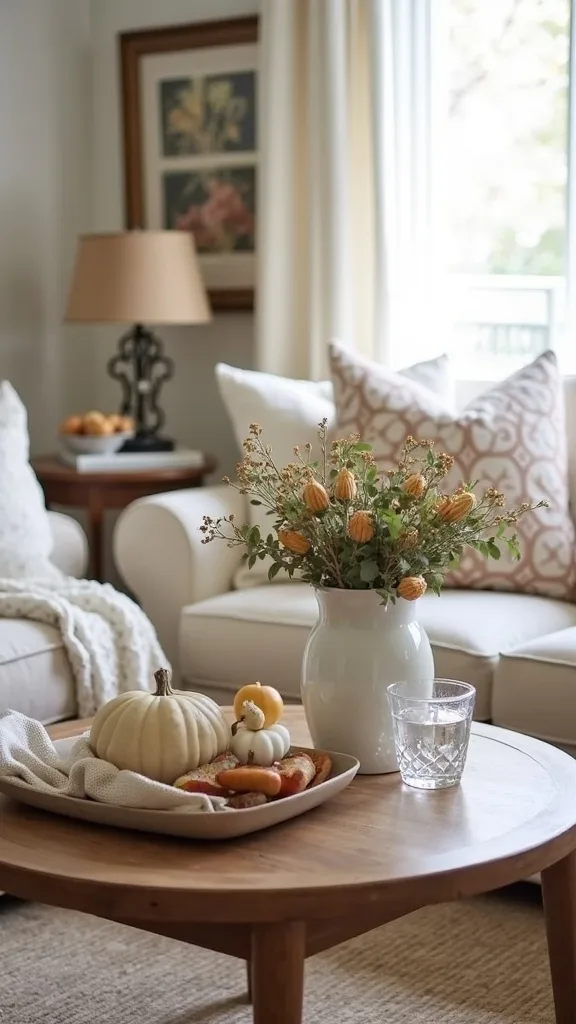
7. How do you make candles feel like decor (not just a fire hazard)?
Candles look like decor when they’re grouped and framed—otherwise they look like you forgot to put them away. The why: repetition and containment are what turn objects into a “moment.”
Create a wooden candle cluster: choose 3–5 candles in the same color family (ivory, warm white, or soft taupe) and vary height. Place them on a low wooden board or shallow bowl. If you have kids/pets, use flameless candles set to a timer—still glowy, less chaos.
For early fall, pair warm white light (2700K–3000K — the cosy, yellowish tone you see in most homes) from nearby lamps so the candlelight doesn’t look lonely.
Pro tip: avoid heavily scented candles in a small living room. One “cozy” scent is nice; three competing scents is a fragrance fistfight, and nobody relaxes in a fragrance fistfight.
8. What throw blanket styling looks effortless (and not like you tried)?
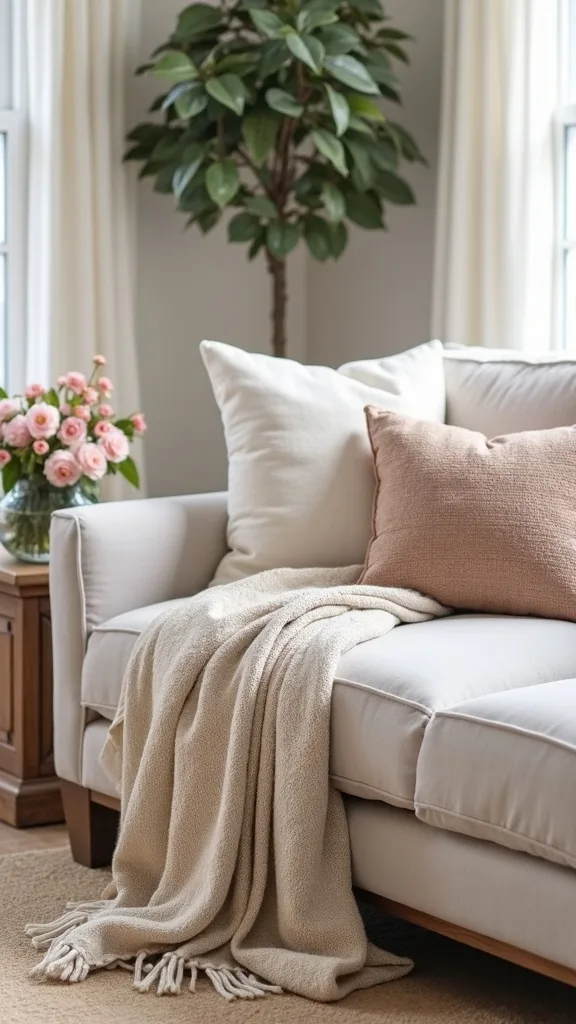
Effortless throw styling is about asymmetry—neat folds read formal, while a casual drape reads lived-in. The why: cozy is a little undone, like a sweater you actually wear.
Drape your throw from the back corner of the sofa toward the seat, letting one end puddle slightly (2″–6″ on the cushion is plenty). If you have a sectional, toss it over the inside corner where people actually sit; styling the “pretty” corner no one uses is pure self-delusion.
Pick materials: chunky knit for early fall, brushed cotton for budget, or a wool blend if you want that heirloom feel. Amber, camel, or oatmeal tones layer best with warm palettes.
Pro tip: avoid throws that shed. If it leaves fuzz on black leggings, it’s not decor—it’s a lifestyle problem.
Cost & Materials Estimate
A transitional early-fall living room refresh typically lands between a quick textile swap and a small lighting upgrade, depending on what you already own.
| Item | Estimated Cost | Where to Buy |
|---|---|---|
| Rust velvet pillow covers (set of 2) | $18–$35 | Amazon |
| Pillow inserts (20×20, set of 2) | $22–$45 | Amazon |
| Amber knit throw blanket | $28–$70 | Wayfair |
| Wood tray or dough bowl for candle cluster | $18–$55 | Home Depot |
| Flameless candles with timer (set of 3) | $22–$45 | Amazon |
| LED bulbs, warm white light (2700K–3000K) | $10–$22 | Lowe’s |
Total estimated cost: $118–$272 Save by buying pillow covers (not new pillows), and splurge on one great throw you’ll use for years.
9. How can you update living room lighting for fall in under an hour?
Fall lighting is less about brightness and more about glow. The why: as evenings get earlier, harsh overhead light makes your room feel like a dentist office with pillows.
Swap bulbs in your two most-used lamps to warm white light (2700K–3000K — the cosy, yellowish tone you see in most homes) and add one extra light source near seating—table lamp, plug-in sconce, or a small floor lamp. Aim for layered light: one lamp by the sofa, one across the room, and optional candles on the coffee table.
Choose shades in linen or parchment to soften the light. Add amber glass bases or warm brass hardware if you want a subtle seasonal shift.
Pro tip: avoid cool “daylight” bulbs in the living room. They make warm living room colors look gray and sad, like your decor got bad news.
10. What’s a no-paint way to make walls feel warmer for fall?
If your walls feel cold, it’s usually because there’s not enough warm-toned vertical material. The why: big blank walls reflect whatever’s in the room—so if your summer palette was blue/white, the wall stays in summer mode.
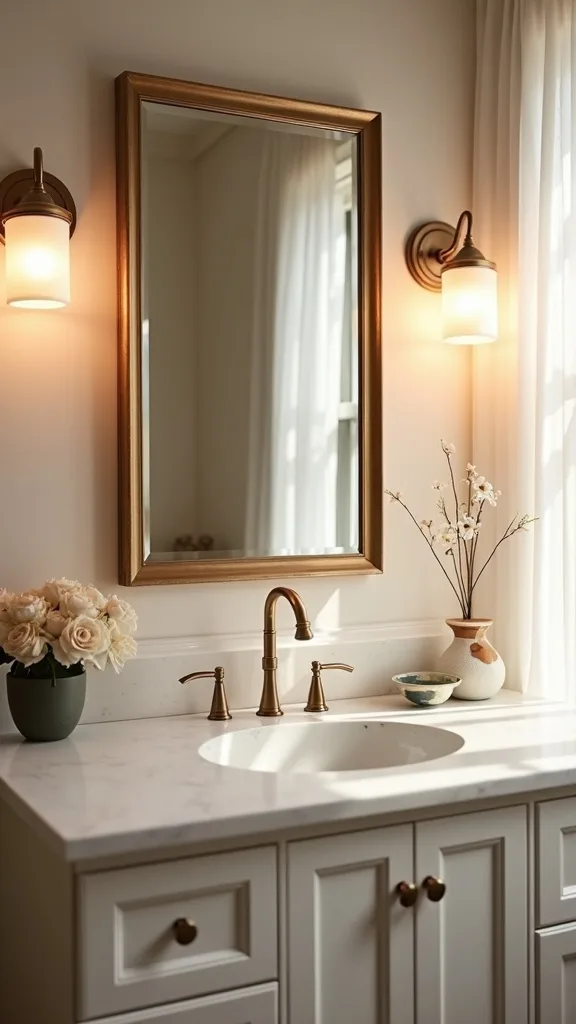
Add one large warm element: a 24×36 print with earthy tones, a vintage-style landscape, or a wood-framed mirror. If you already have art, swap the frame to light oak or walnut. Even easier: add a textile wall hanging with rust and cream.
Look for wood frames, earthy art, and touches of amber in the image (sunset, fields, autumn trees). Budget option: printable art + a thrifted frame; splurge option: one oversized canvas.
Pro tip: avoid tiny art floating alone. One properly sized piece makes the room feel designed—small pieces make it feel like you’re still deciding.
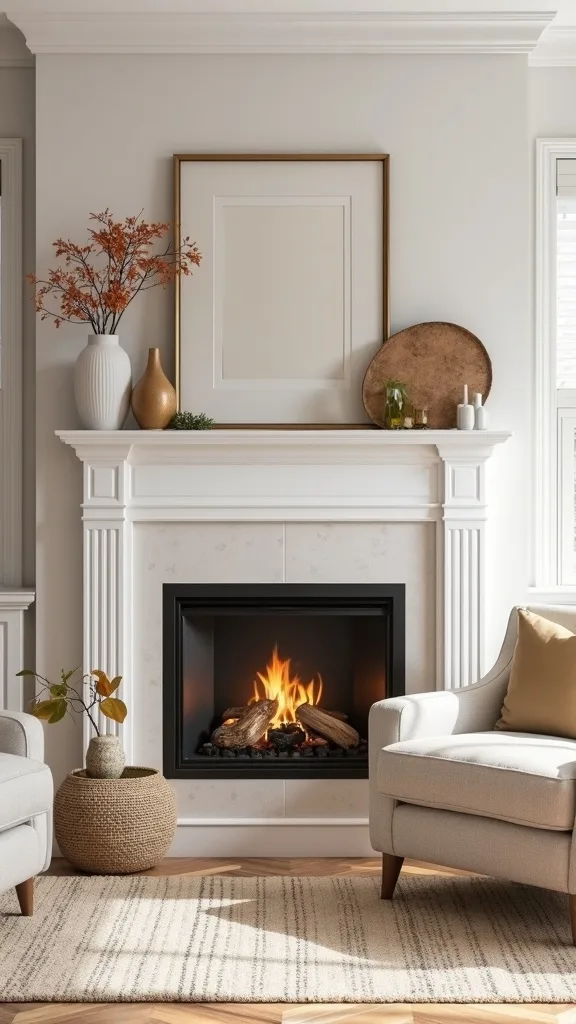
11. How do you style a mantel for early fall without it looking crowded?
A fall mantel should read “collected,” not “craft store aisle.” The why: mantels are eye-level, so clutter hits harder there than on a coffee table.
Use the rule of three: one tall anchor (mirror or art), one medium element (vase with branches), and one low element (candle holders or a small stack of books). Leave 30–40% empty space so it can breathe.
Choose materials: ceramic vases in cream, dried branches (faux is fine), and one amber accent for glow. Keep greenery muted—olive, eucalyptus, or brown-tinted stems look more transitional than bright orange leaves.
Pro tip: avoid garlands that are too thick. If it looks like your mantel grew a beard, scale it back and let the architecture show.
12. What’s the best way to add fall texture if you have a neutral sofa?
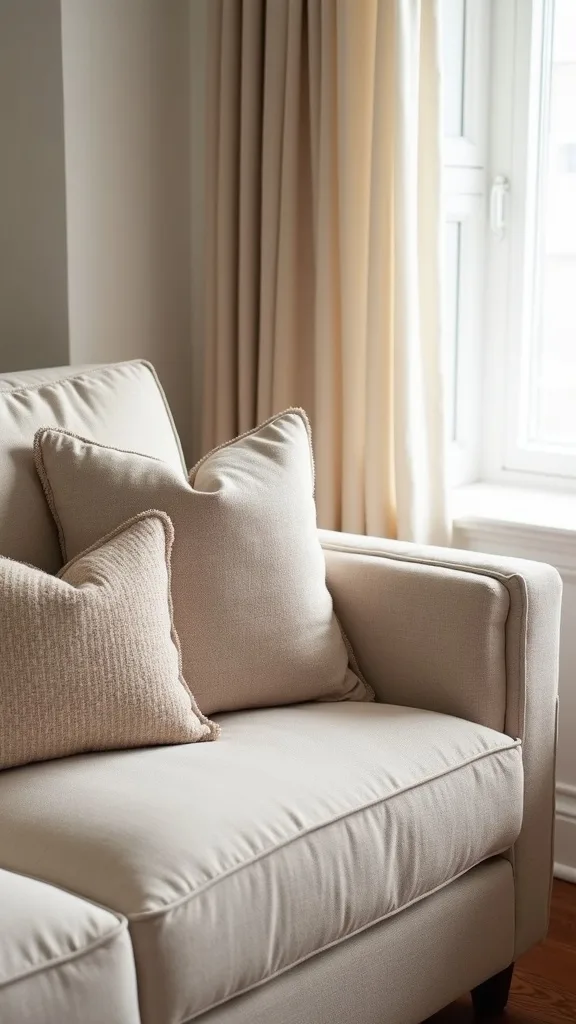
A neutral sofa is basically a blank canvas begging for texture. The why: neutrals can feel flat in early fall unless you add tactile layers that catch light and shadow.
Go for a texture trio: velvet pillow, nubby boucle pillow, and a knit throw. Then add one structured element like a leather tray or wood bowl on the coffee table. You’re building contrast: soft + rough + smooth.
Color-wise, pick camel, rust, and warm cream. This is where amber home accents shine—one amber vase on a side table makes neutrals feel golden instead of bland.
Pro tip: avoid matching textures. If everything is knit, it reads like a sweater store. Mix finishes so your cozy living room fall setup looks layered, not themed.
13. How do you decorate with dried stems without making a mess?
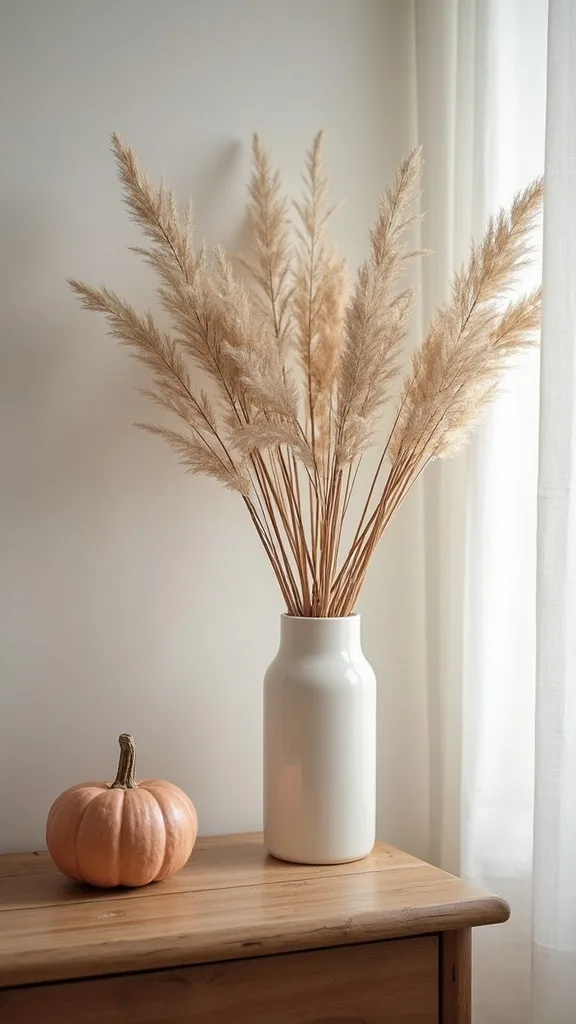
Dried stems are the ultimate early fall cheat code—instant season, zero watering. The why: they add height and movement, which makes a room feel styled even if everything else stays the same.
Choose low-shed options like faux eucalyptus, preserved ruscus, or high-quality faux pampas (the cheap stuff explodes). Use a narrow-neck vase so the stems stand up and don’t splay like they’re trying to escape. Place them where they won’t get brushed constantly—behind the sofa, on a console, or in a corner.
Colors to look for: wheat, muted olive, and soft brown. Pair with amber glass for a warm glow.
Pro tip: avoid putting dried stems directly under an air vent. You’ll create an unintentional “fall confetti” situation, and yes, I have vacuumed that regret.
14. What rug swap makes a living room feel warmer without going dark?
A rug feels warmer when it has warm undertones and a bit of pattern—without being a black hole. The why: pattern hides life (crumbs, dog hair, existence) and warm undertones make everything above it look cozier.
If you can swap rugs, choose a vintage-style printed rug in terracotta, taupe, and cream. If you can’t, layer a 2×3 or 3×5 accent rug near the coffee table or in front of the sofa. Layering adds depth and reads designer without requiring a full-size purchase.
Look for terracotta accents, cream base, and a hint of charcoal for contrast.
Pro tip: avoid super shaggy rugs in early fall if you have pets. They trap everything, and your cozy living room fall dream becomes a lint-management hobby.
15. How can you make a small living room feel cozy for fall (not cramped)?
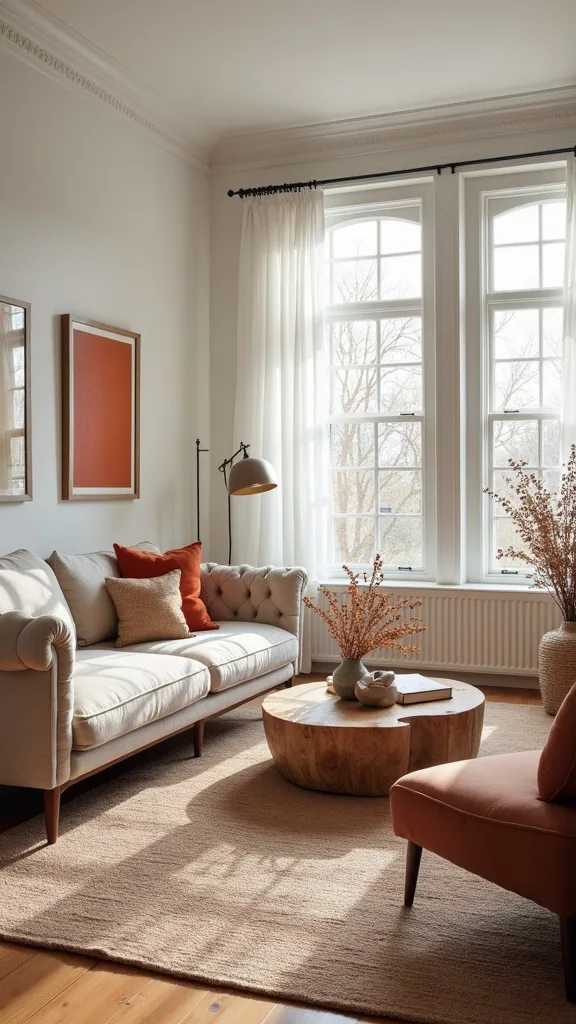
Small rooms get cozy through lighting and vertical styling—not by adding more stuff. The why: clutter steals floor space and makes “cozy” feel like “storage unit.”
Use two smaller lamps instead of one big floor lamp if space is tight. Add one tall, slim element like a branch arrangement or a narrow bookcase styling moment. Keep your color palette tight: two warms + one neutral, repeated.
Best materials: linen shades, slim wood frames, and a single amber accent that bounces light. For textiles, choose thinner knits rather than heavy faux fur so the space doesn’t visually thicken.
Pro tip: avoid oversized pillows that eat your seating. In a small living room, comfort means you can still sit down without negotiating with a pillow mountain.
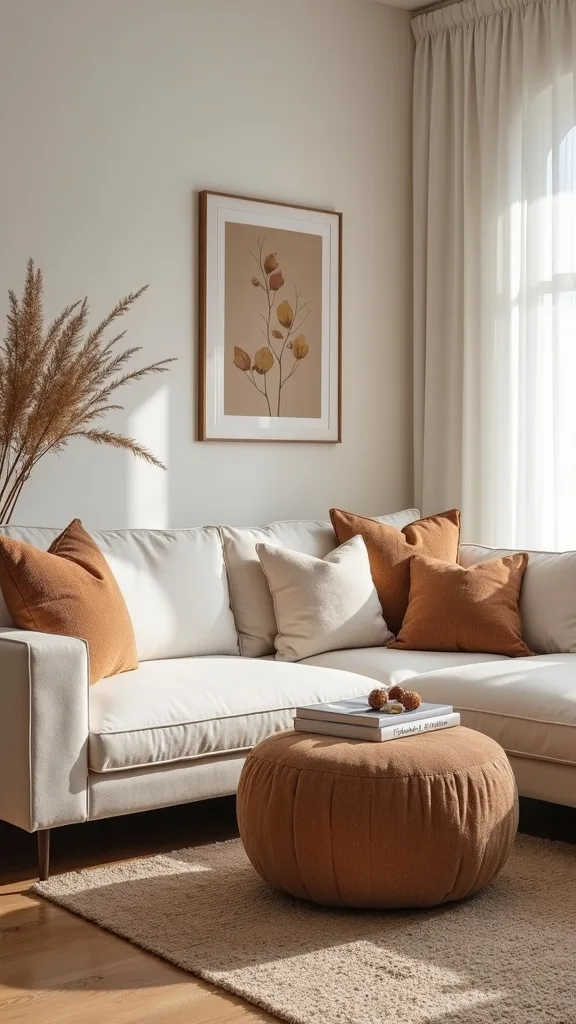
16. What should you do with summer decor you’re not using right now?
Put summer decor away like you actually want to find it next year. The why: messy seasonal storage makes you buy duplicates, and then your house becomes a seasonal decor museum.
Create one labeled bin: “Summer Living Room.” Wrap breakables in dish towels (free padding), and store blue/white ceramics together so you’re not hunting later. Keep one or two summer pieces out if they’re neutral—white vases and natural baskets work year-round and help transitional fall feel balanced.
Store items you’ll reuse: glass vases, neutral trays, and anything in white/wood. Retire anything that feels too theme-y unless you truly love it.
Pro tip: avoid storing candles in hot garages—they sweat, warp, and then burn weird. Keep them indoors so your fall glow doesn’t come with a side of disappointment.
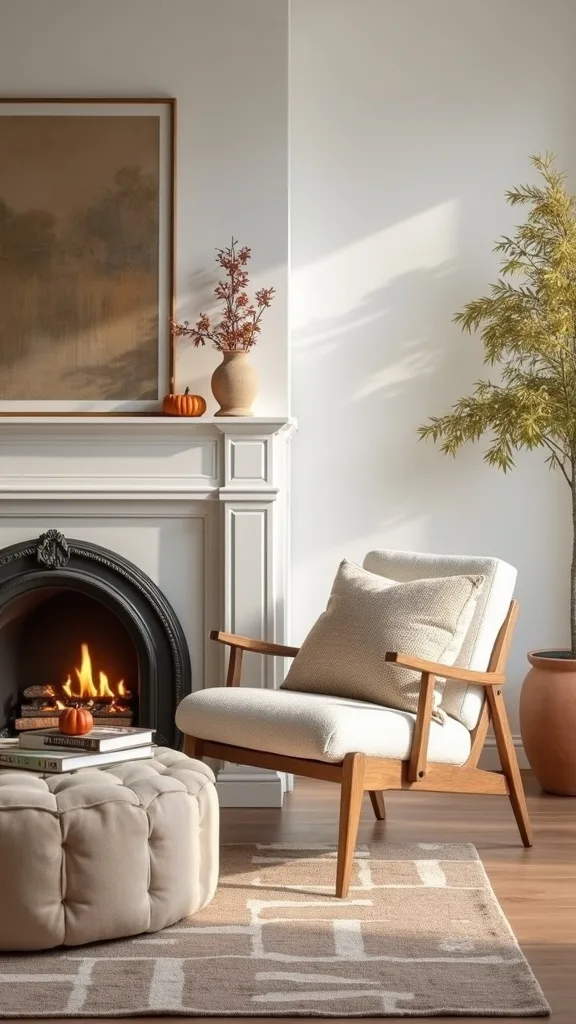
17. How do you style a console table for fall without losing function?
A console table should still work—keys, mail, dog leash—while looking like you have your life together. The why: pretty-but-useless surfaces become stress zones fast.
Use a “landing strip” tray on one end for daily clutter, then style the other end with height and warmth: a lamp, an amber vase, and a small bowl for matches. Add one woven basket underneath for blankets or shoes. Keep the center open so you can actually set something down.
Materials: wood tray, amber accent, and a warm-toned lamp shade. If your table is dark, lighten it with cream ceramics so it doesn’t feel heavy.
Pro tip: avoid tiny decor lined up like soldiers. Group items in odd numbers so it feels organic—and still lets you live.
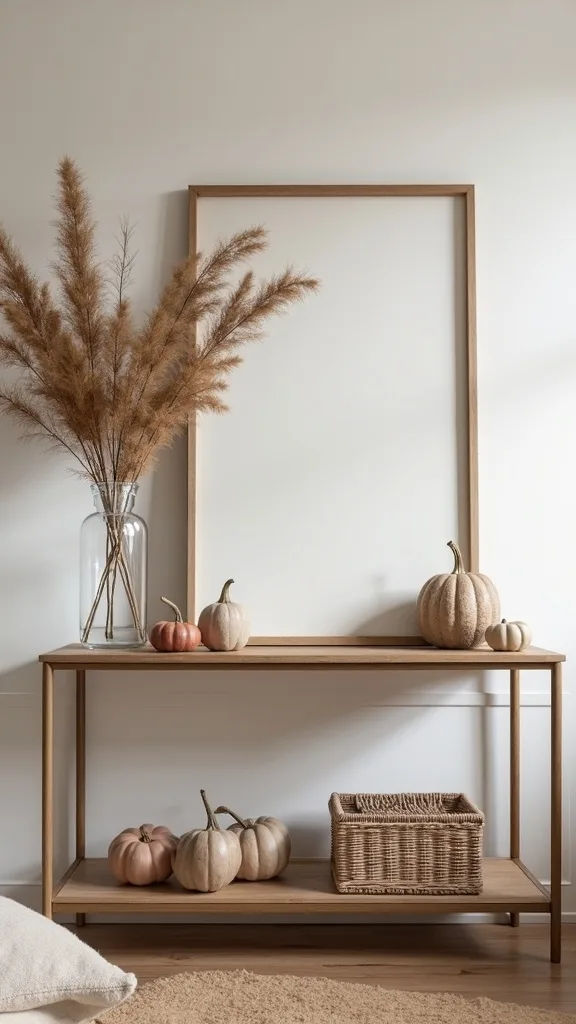
18. What’s the best way to use plaid in a living room without going cabin?
Plaid is fantastic in fall—until it turns your living room into a lumberjack cosplay. The why: big, high-contrast plaid dominates fast and can fight modern furniture.
Use plaid as a supporting actor: one pillow, one throw, or one small ottoman fabric—never all three in the same sightline. Choose small-scale plaid in cream, tan, and muted black or brown. Pair it with solids in velvet or knit so it feels layered, not themed.
Look for micro-plaid or herringbone rather than giant buffalo check. Add amber home accents to warm it up and keep it from feeling stark.
Pro tip: avoid mixing multiple plaids. One plaid + one stripe is already brave; more than that and the room starts arguing with itself.
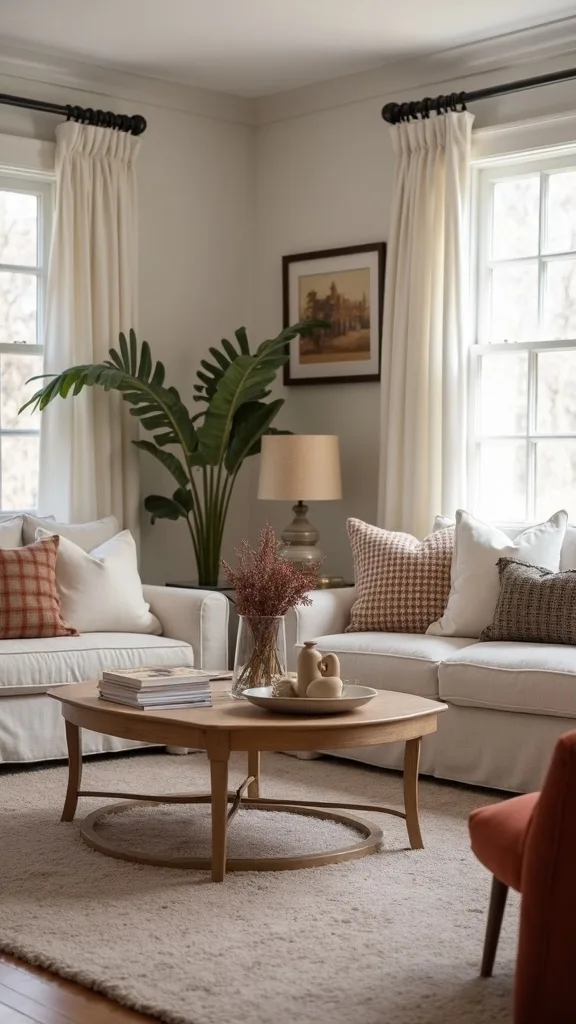
19. How do you make your TV area feel less cold in early fall?
TV walls get cold because they’re big, black rectangles surrounded by blank space. The why: black absorbs light, so the area can feel visually “dead” unless you add warmth around it.
Balance the TV with two warm elements: a wood-toned media console (or wood doors on an existing unit) and soft lighting on either side—sconces, lamps, or even two matching lanterns with flameless candles. Add a low bowl or amber vase to the console to reflect light and soften the tech vibe.
Materials: warm wood, linen lampshades, and one amber glass object. Keep cords hidden; nothing kills cozy faster than cable spaghetti.
Pro tip: avoid decorating the TV with tiny trinkets. Go larger and fewer—your eyes should rest, not scan.
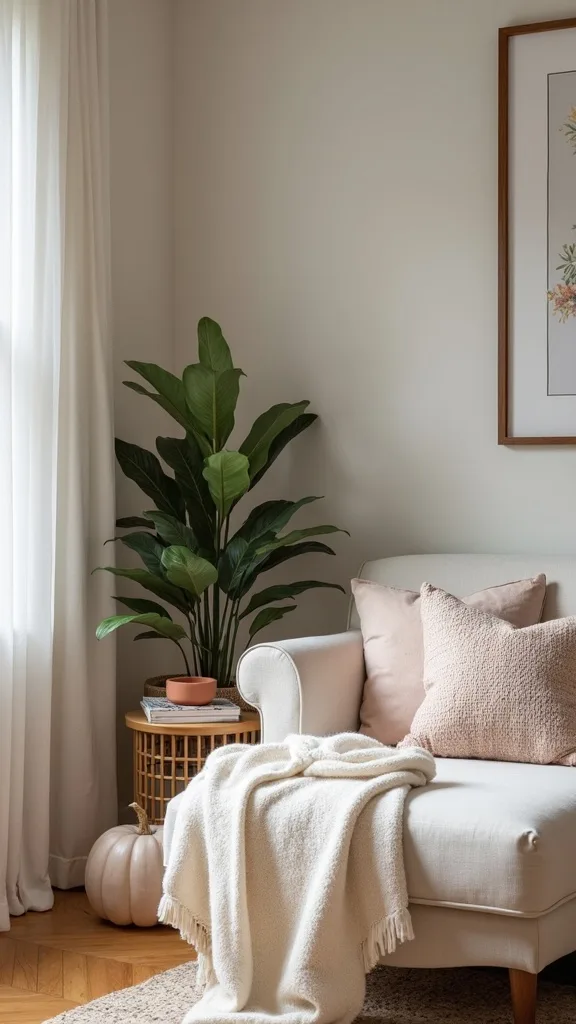
20. What’s a simple way to make a sectional feel ‘fall-ready’?
Sectionals can feel like big gray islands unless you break up the mass. The why: one huge upholstery block needs contrast to look inviting.
Add a throw on the inside corner, not the outer arm. Then place two pillows on one side and three on the other (yes, asymmetry again). If you have a chaise, add a small lumbar pillow at the bend so it looks styled and supports your back.
Best colors: rust, camel, and cream. Add one darker pillow (espresso) to ground the whole thing.
Pro tip: avoid pushing every pillow into a perfect line. A cozy living room fall setup should look like you actually sit there—because ideally, you do.
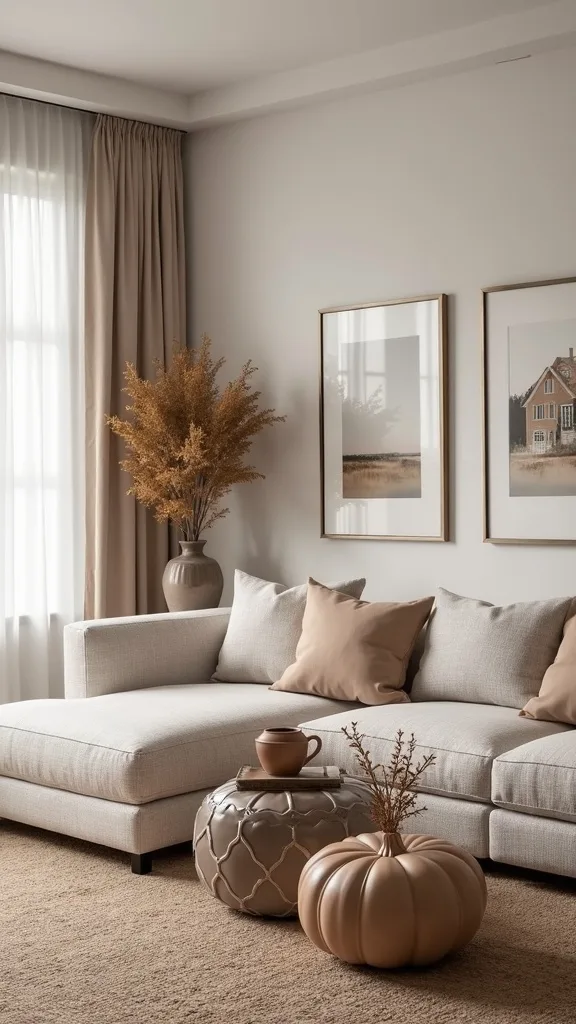
21. How do you decorate with baskets in fall without looking like storage overflow?
Baskets read cozy because they signal texture and practicality—until there are 17 of them and you’re living in a wicker maze. The why: repetition without purpose looks like clutter.
Use baskets strategically: one large lidded basket for blankets, one medium basket under a console for shoes or toys, and one small basket on a shelf for remotes. Keep them in the same tone family (warm natural, honey, or dark seagrass) so they feel cohesive.
Pair baskets with knit throws and wood accents for that early fall warmth. If your room has cool grays, pick baskets with a golden undertone to shift the palette gently.
Pro tip: avoid overfilling open baskets. A basket stuffed to the brim looks like laundry day, not decor day.
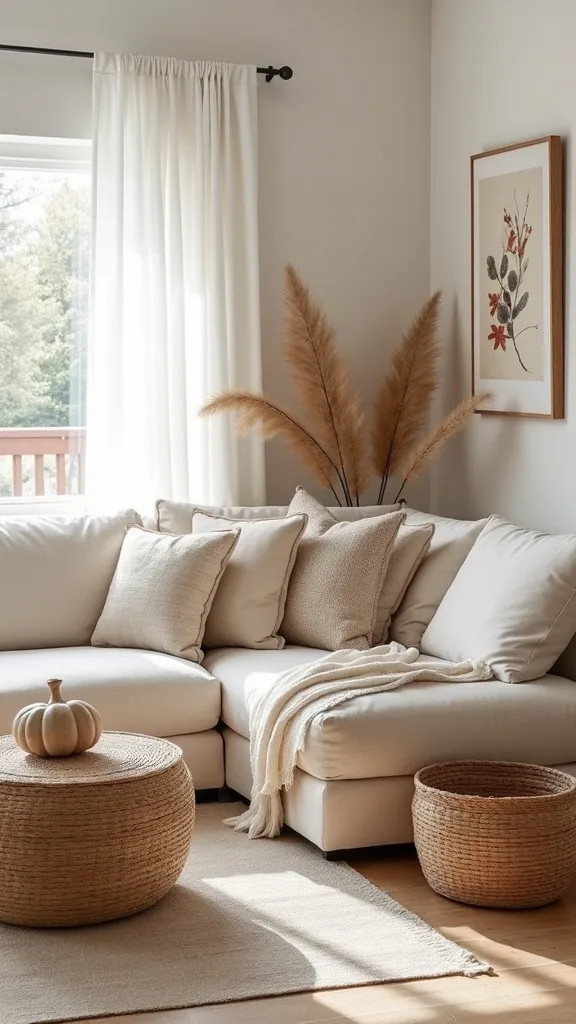
22. What’s one fall scent strategy that won’t overpower your living room?
A living room should smell inviting, not like a candle store exploded. The why: strong scent can trigger headaches and makes guests feel trapped.
Pick one scent lane and stick to it: “woods” (cedar, sandalwood), “spice” (clove, cinnamon), or “fresh fall” (apple + fir). Use one main candle and one supporting scent source max (like a diffuser) on the opposite side of the room. Keep windows cracked for 10 minutes before guests arrive—fresh air is the secret ingredient nobody talks about.
Pair your scent moment with candle clusters and amber accents so it feels like part of the styling, not an afterthought.
Pro tip: avoid mixing pumpkin + cinnamon + vanilla at once. That’s not cozy; that’s dessert panic.
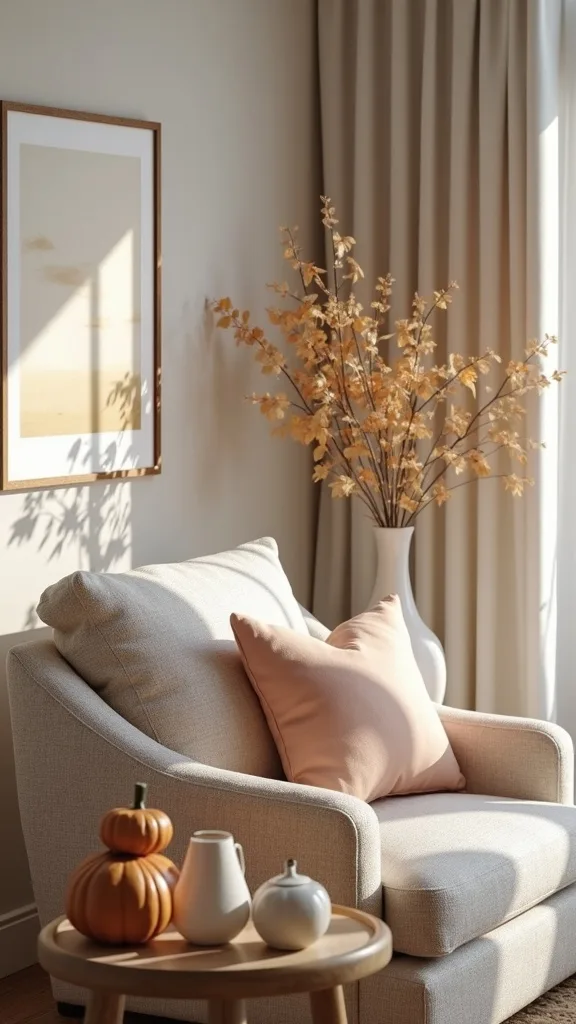
23. How do you add fall decor if your living room is modern and minimal?
Minimal rooms can do fall beautifully—just with fewer, better pieces. The why: modern spaces already have strong lines; too many seasonal items create visual noise.
Choose one statement textile (rust velvet pillow set or an amber throw) and one sculptural object (wood bowl, ceramic vase, or simple branch arrangement). Keep your palette tight: warm neutral + one autumn accent. Add a single candle cluster for glow, and stop there. Seriously.
Materials: matte ceramic, rust velvet, and warm wood. Skip busy patterns; use texture to create interest without adding clutter.
Pro tip: avoid novelty shapes (tiny pumpkins everywhere) in minimal rooms. One high-quality object beats a dozen mini props, and your space will still feel like you.
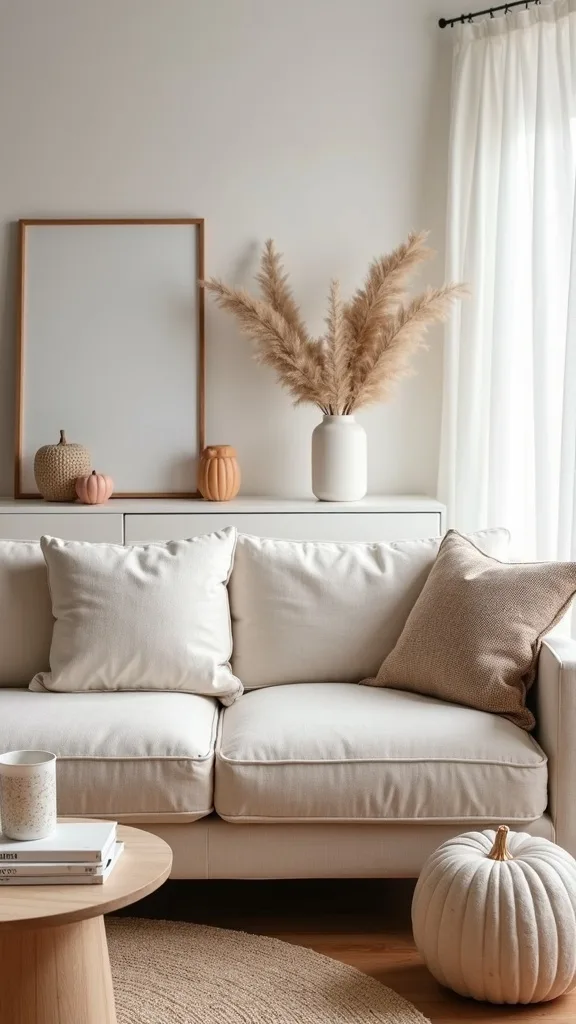
24. What should you avoid when styling fall living room decor in early fall?
Avoid going too dark too fast. The why: early fall still has plenty of daylight, and a room that’s suddenly all deep brown and burgundy can feel heavy and oddly gloomy at 3 p.m.
Instead, keep your base light (cream, warm beige, natural fibers) and add warmth through accents: rust pillows, amber home accents, and wood. If you want mood, do it with lighting—lamps and candles—not by replacing every light tone with a dark one.
Also avoid fake leaves that look plastic from five feet away. If you’re doing faux, choose higher-quality stems with varied color and a matte finish.
Pro tip: do a “one-week test.” Put the new items out, live with them, then edit. Great fall living room decor is usually the result of removing one thing, not adding five.
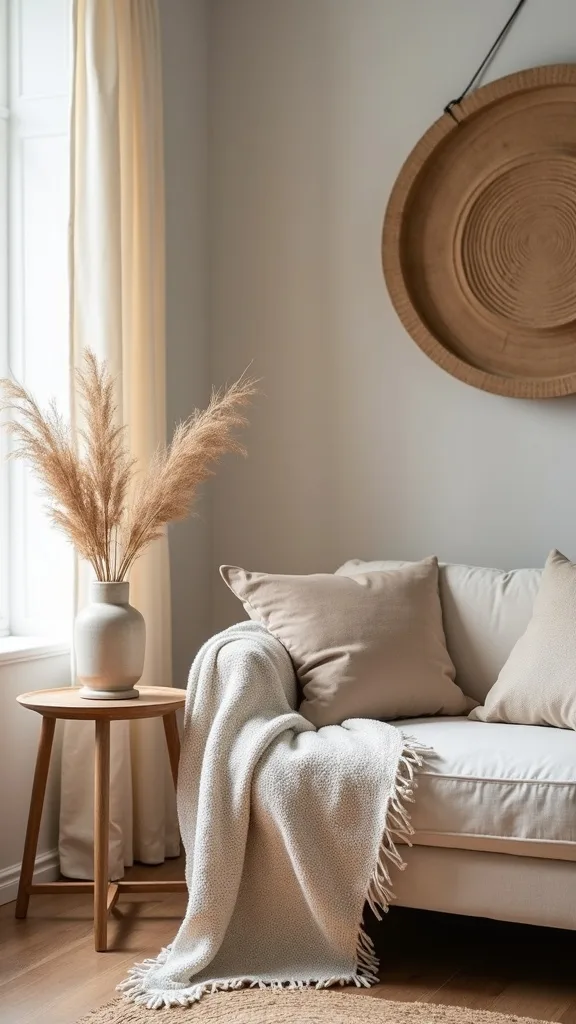
25. How do you pull the whole living room together in one weekend?
The weekend win is a simple sequence: textiles, lighting, then surfaces. The why: textiles set the palette, lighting sets the mood, and surfaces are the finishing touch that makes it look styled.
Saturday: swap pillow covers and throws first, then change bulbs to warm white light (2700K–3000K — the cosy, yellowish tone you see in most homes) and add one extra lamp if needed. Sunday: restyle the coffee table with a tray + candle cluster + one amber accent, then do one vertical moment (art swap or mantel styling).
Stick to warm living room colors like rust, camel, cream, and wood. Keep a small “edit box” nearby and toss anything that doesn’t earn its spot.
Pro tip: take a photo before and after. Your camera is brutally honest—in the best way—and you’ll feel ridiculously proud when it all clicks.
Final Thoughts
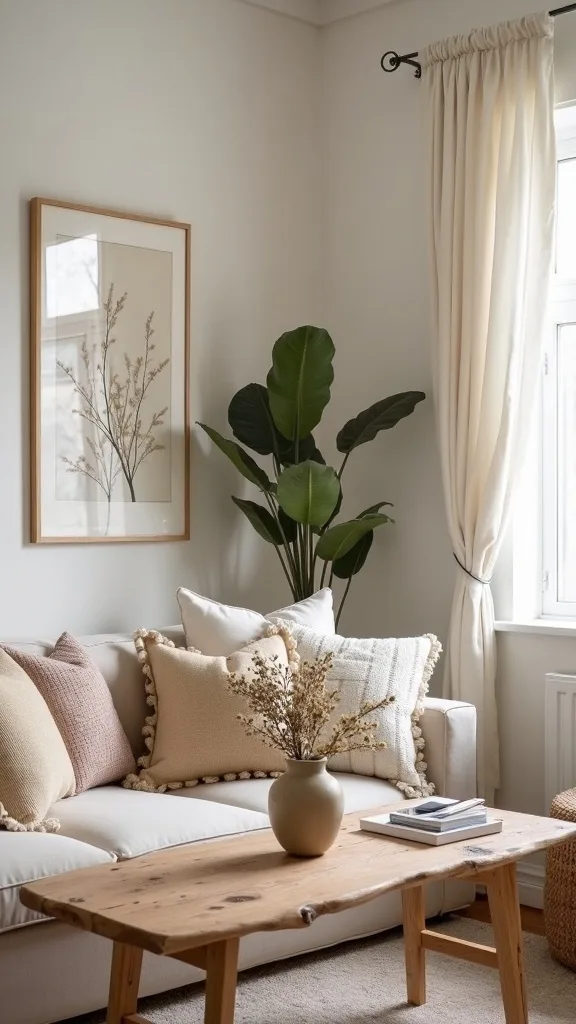
Early fall is the sweet spot: you get the cozy payoff without the heavy winter commitment. A few smart swaps—rust velvet, an amber knit, warm wood, better lighting—can make your living room feel like it’s giving you a hug while still letting September be… September.
And here is the thing: the best rooms aren’t the ones with the most seasonal stuff. They’re the ones with the clearest point of view. If you nail your textures and your warm-toned accents, nobody will miss the twenty decorative pumpkins you didn’t buy (your wallet certainly won’t).
Today, pick one surface—your coffee table or mantel—clear it completely, then rebuild it with a tray, a wooden candle cluster, and one amber accent. Set a 30-minute timer and stop when it goes off.
What I’d Do Differently
When I first tried this, I made one specific mistake: I went all-in on color before I fixed the lighting. I bought the rust pillows, added amber glass, even styled a cute little candle moment—then turned on my overhead light and everything looked weirdly harsh and slightly… dirty? (Love that for me.) The real issue wasn’t the decor; it was that my bulbs were cool-toned, so every warm shade looked off. Once I swapped to warm white light (2700K–3000K — the cosy, yellowish tone you see in most homes) the exact same pillows and amber accents suddenly looked rich and intentional.
I also wish I’d known to cap my seasonal “objects” at three. A couple of tactile swaps plus one styled surface beats a dozen tiny fall things sprinkled everywhere. Start with lighting, then textiles, then one coffee-table vignette—and you’ll get the cozy payoff without the clutter spiral.