
This post contains affiliate links. As an Amazon Associate, I earn from qualifying purchases at no extra cost to you.
Pinterest makes autumn cooking look like you have unlimited counters, a silent house, and a helper who washes every measuring spoon the moment it hits the sink. Real life is more like: backpacks on chairs, a soccer practice countdown, and you stirring chili with whatever utensil you can find.
This post covers how to carve out a fall cooking station that feels cozy and grounded, but also solves the annoying stuff—cords, splatters, missing ladles, and the “where did that recipe go?” spiral. You’ll get layout ideas, organization moves, and a few decor touches that don’t get in the way.
This is perfect for families who lean on a slow cooker in the fall, anyone doing fall meal prep kitchen routines on Sundays, or renters who can’t remodel but still want a smoother weeknight flow.
Inside you’ll find a designated corner plan (with a meal board and recipe binder), smart crockpot kitchen organization hacks, and small upgrades that make your kitchen smell like dinner is handled—even when everything else isn’t.
Below are 25 Fall Cooking Station & Slow Cooker Setup that…
Products I Recommend for This Project
Here are some of my favourite products to help you bring these ideas to life:
- Hamilton Beach Stay or Go Portable Slow Cooker (6-Quart) — A dependable family-size cooker with a locking lid that’s easier for potlucks and busy fall weeks.
- OXO Good Grips Stainless Steel Ladle — Comfortable to hold and easy to clean, so it earns its spot on a dedicated ladle hook.
- 3M Command Large Utility Hooks — Rental-friendly hooks that make it simple to add a ladle/utensil hang zone without drilling.
- Gorilla Grip Large Silicone Trivet Mat (12×18) — A heat-safe base that protects counters and visually “anchors” your slow cooker corner.
- Meori Foldable Storage Box (Small) — A sturdy, cute bin for liners, measuring tools, and packets that keeps the station from spreading.
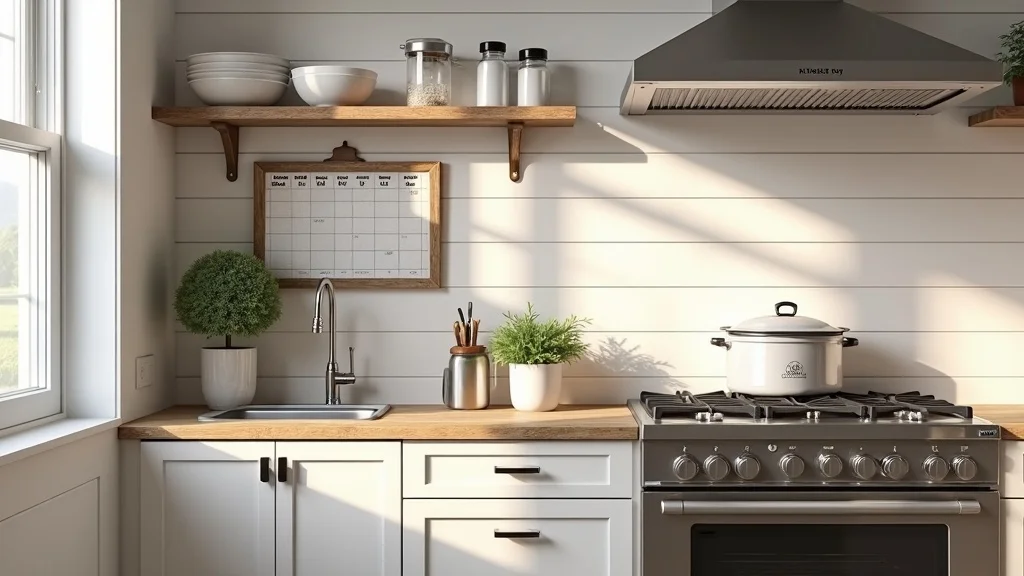
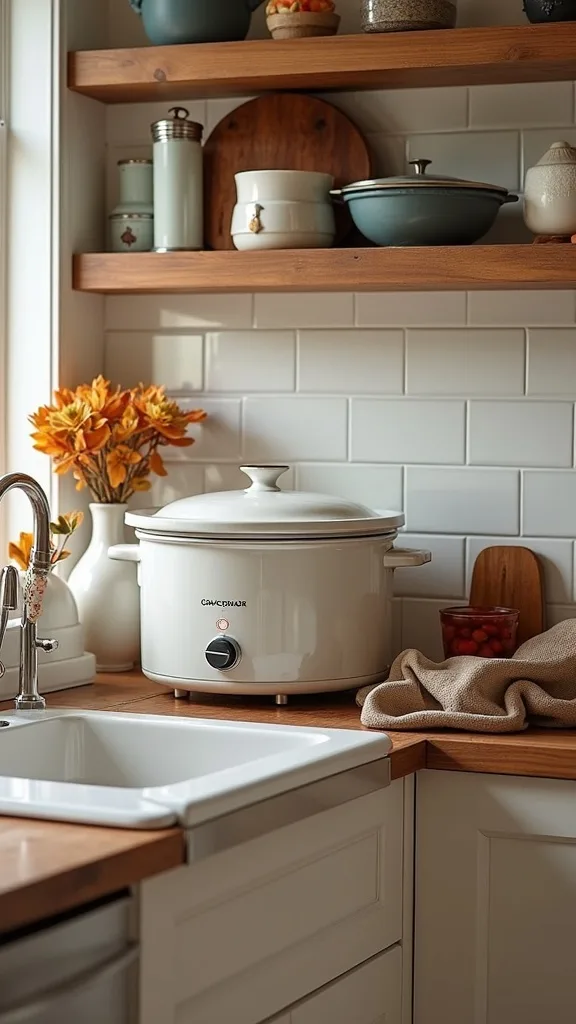
1. Build the designated slow cooker corner (spice rack, ladle hook, recipe holder, meal board)
This idea is simply claiming one small, reliable spot so your slow cooker isn’t a “where can I fit this today?” decision. It works because the tools for dinner live together, which makes autumn cooking feel steadier on busy nights.
Start with a 24–30 inch counter zone near an outlet. Add a small vertical spice rack at the back, a stick-on hook or mini rail for a ladle, a recipe binder holder (or tablet stand), and a slim meal plan board above or beside the counter. Keep one basket underneath for liners, measuring cups, and a can opener.
Go for warm woods, matte black hooks, or creamy whites so it reads like decor—not clutter. A compact bamboo rack and a whiteboard with a wood frame look intentional without trying too hard.
Pro tip: label the meal board with just 5 dinner slots (Mon–Fri) so it stays realistic—progress over perfection still counts as a win.
2. Choose the best counter spot so cords and traffic don’t fight you
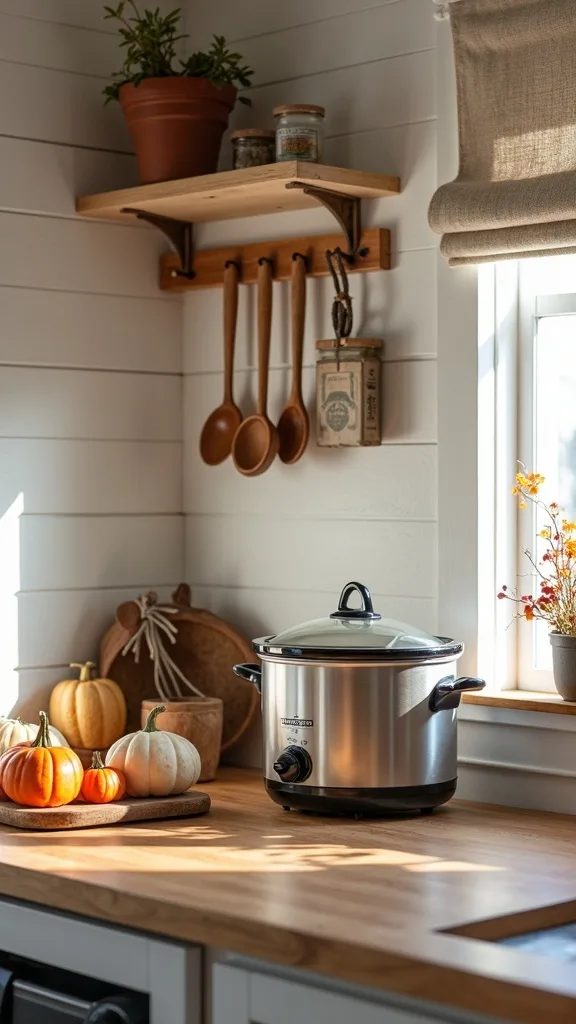
The “right” location is the one that doesn’t create a daily obstacle course. This works because a calm path through the kitchen keeps dinner from feeling like a chore before you even start.
Pick a spot within arm’s reach of an outlet, away from the edge where kids or bags brush past. If your counters are tight, use a corner or the short run beside the fridge—just make sure the lid can lift fully without bumping cabinets. Keep at least 6 inches of breathing room behind the cooker for easier wiping and safer cord placement.
A neutral silicone mat under the cooker helps define the zone, and a small tray can corral salt, pepper, and oil without spreading out.
Avoid running the cord across the sink or stove area—one tug can turn a cozy fall dinner into a stressful cleanup. A tucked-away station is a kinder station.
3. Protect your countertop with a heat-safe base that still looks like decor
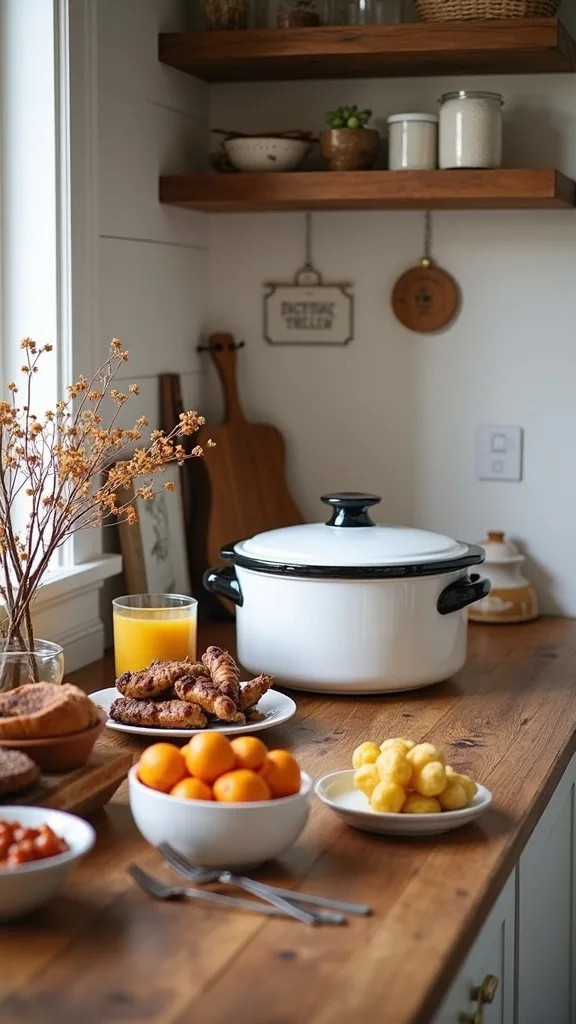
A heat-safe base is the quiet hero of a fall cooking station. It works because it prevents heat marks and catches little drips, so cleanup doesn’t pile onto an already-long day.
Use a large silicone heat mat, a thick wood board, or a stone trivet that’s bigger than your slow cooker footprint. Aim for at least a 12×18 inch surface so the whole appliance sits securely. If you do fall meal prep kitchen sessions, keep a second smaller trivet nearby for hot lids and serving spoons.
Look for earthy tones—olive, oatmeal, or charcoal—so the station feels grounded. A wood board adds that “fall cabin” vibe without adding clutter.
Pro tip: avoid thin fabric placemats under the cooker; they can trap moisture and stain. A sturdy base lets you relax into the smell of dinner instead of watching for damage.
4. Add a ladle hook so you stop sacrificing your good wooden spoons
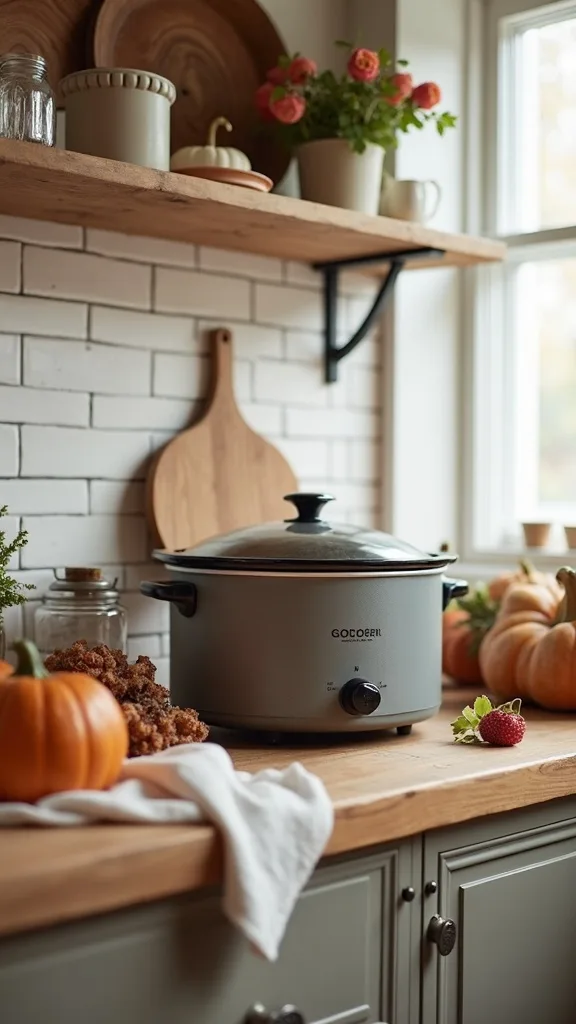
This idea is exactly what it sounds like: give the ladle a home. It works because you’ll stop stirring soup with random utensils and then hunting for the “real” ladle when it’s time to serve.
Install a small adhesive hook on the backsplash, the side of a cabinet, or the underside of an upper shelf near the slow cooker. If you rent, choose damage-free strips and test the weight first. Keep one ladle and one sturdy spoon here—only these two—so the station doesn’t multiply.
Matte black or brushed nickel hooks blend in with most kitchens, and a simple stainless ladle looks clean even in a busy corner.
Pro tip: avoid hanging the ladle where it drips onto the counter. Put a tiny saucer under the hook or hang it over your silicone mat so the mess stays contained—and your evenings stay softer.
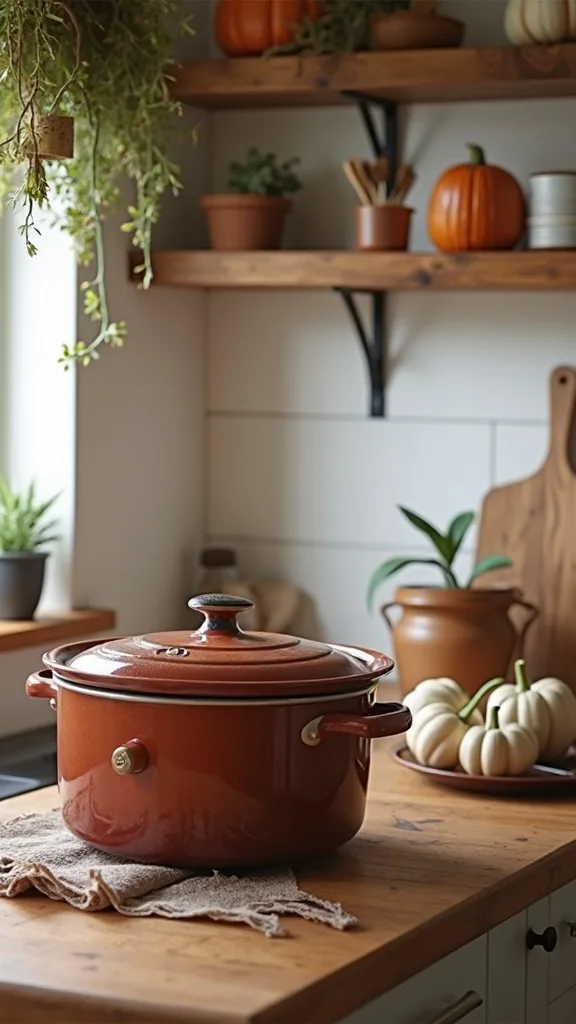
5. Use a slim spice rack for “fall flavors” instead of the whole spice cabinet
A mini spice rack keeps your most-used seasonings right where you cook. It works because opening the spice cabinet ten times during dinner is a sneaky kind of stress.
Choose 8–12 spices that match autumn cooking: chili powder, cumin, smoked paprika, oregano, thyme, cinnamon, garlic powder, and bay leaves. Place the rack at the back of the station or mount it on the inside of a cabinet door near the cooker. Refill from bulk bags or bigger jars you store elsewhere.
Uniform labels in black-and-white (or warm tan) make it feel tidy without being precious. A bamboo rack adds warmth and reads like decor.
Avoid keeping every spice you own in this zone; it turns into clutter fast. A curated rack makes weeknight soup feel like you know what you’re doing—even when you’re just doing your best.
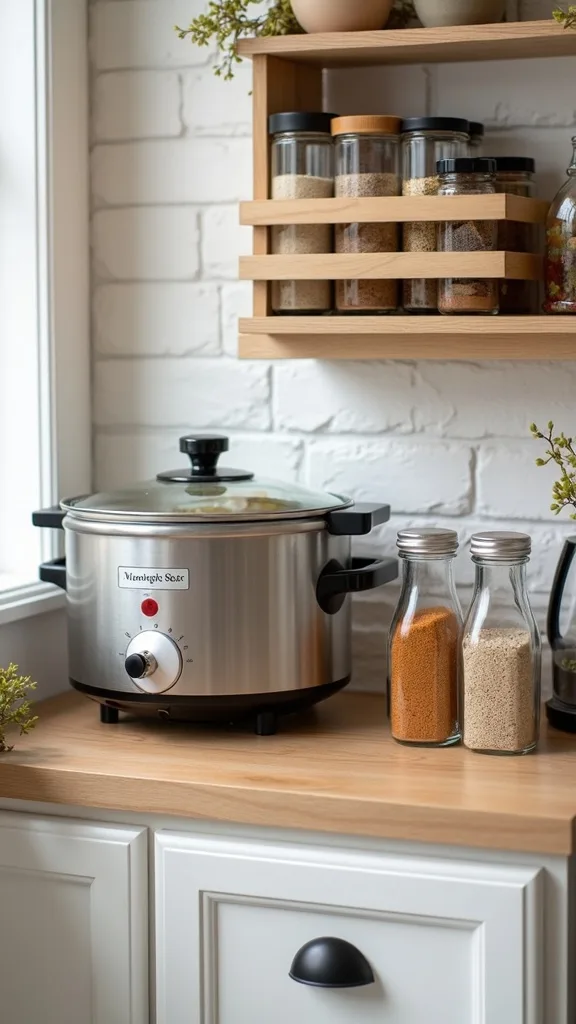
6. Keep a recipe binder holder so dinner plans don’t live in your phone screenshots
A recipe binder holder is for the real-life version of “I saved it somewhere.” It works because you’ll actually repeat meals when the instructions are easy to grab.
Use a cookbook stand, a binder display stand, or a tablet holder at the station. Slide in a 1-inch binder with sheet protectors and print your go-to slow cooker recipes—especially the ones that always work. Put a dry-erase marker in the binder pocket for quick notes like “add extra broth next time.”
Choose a stand in wood, white metal, or clear acrylic so it blends into your kitchen. A binder with a fall-toned cover (rust, plaid, or kraft paper) adds seasonal character.
Pro tip: avoid loose recipe pages. When papers slide around, they get sauce splatters and disappear—your future self deserves better.
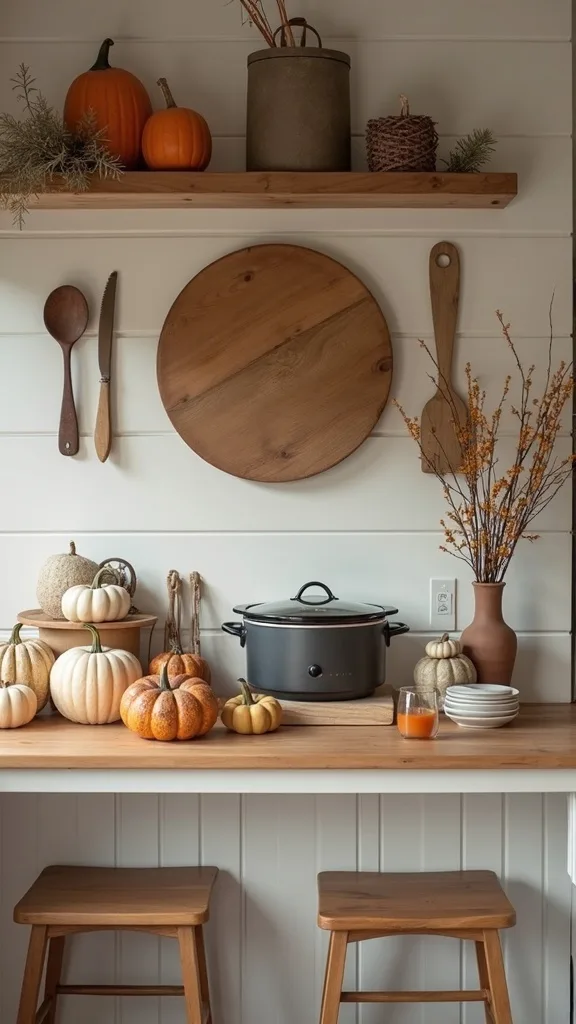
7. Set up a meal plan board that’s realistic for your actual week
A meal plan board is less about perfection and more about reducing the 4 p.m. mental load. It works because you stop re-deciding dinner every day.
Mount a small board near the slow cooker corner—something like 12×16 inches is plenty. Write five dinners and leave two “flex” nights for leftovers, frozen pizza, or breakfast-for-dinner. If you batch cook, add a tiny section labeled “Freezer” so you remember what you already made.
Wood-framed boards feel cozy for fall, while a simple whiteboard looks clean and bright. Use a black marker and one accent color so it stays readable.
Avoid planning seven brand-new meals. That’s a fast track to burnout. A gentle plan is still a plan—and it makes the kitchen feel kinder.
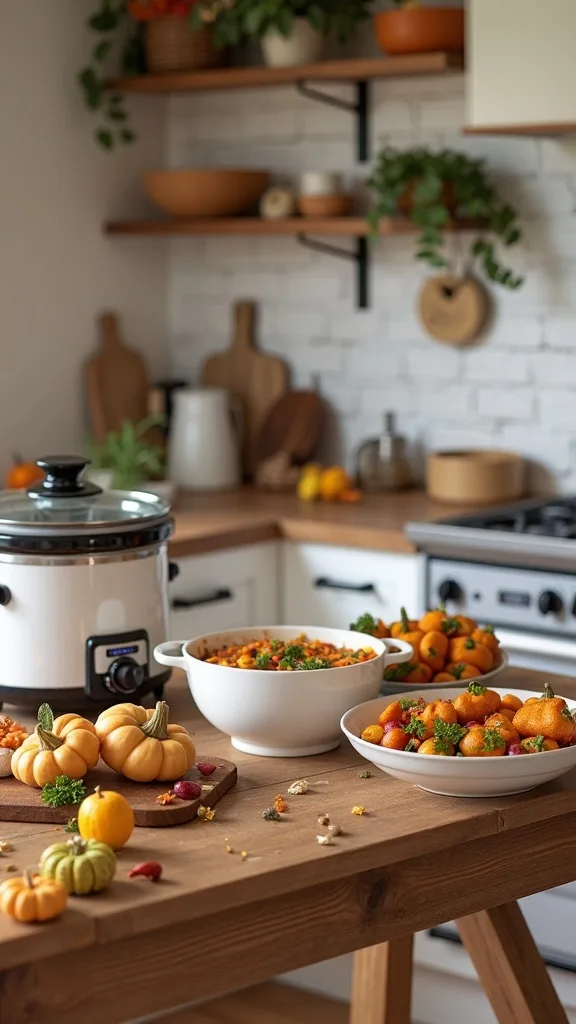
8. Create a ‘dump-and-go’ bin for packets, liners, and measuring tools
This is a small bin that holds the things you reach for every time. It works because you won’t start dinner by opening six drawers.
Use a handled basket or clear bin and keep it under the station or on a nearby shelf. Stock it with slow cooker liners, a can opener, measuring cups, measuring spoons, a small whisk, and your favorite spice blends. If your family likes toppings, add mini bag clips for shredded cheese and tortilla strips.
A woven seagrass basket adds fall texture; a clear bin makes it easy to see when you’re low on liners.
Pro tip: avoid overfilling the bin “just in case.” When it’s too full, you stop using it. A simple, breathable system is what keeps weeknights moving.
Cost & Materials Estimate
Most families can pull together a functional fall cooking station and slow cooker corner for about $35–$180, depending on how many organizers you already own.
| Item | Estimated Cost | Where to Buy |
|---|---|---|
| Silicone heat mat (large, 12×18 in) | $12–$22 | Amazon |
| Countertop spice rack (8–12 jars capacity) | $18–$35 | IKEA |
| Adhesive hooks or mini rail for ladle + spoon | $6–$14 | Home Depot |
| Recipe binder + sheet protectors + binder stand | $16–$32 | Amazon |
| Small meal plan board (approx. 12×16 in) | $14–$28 | Wayfair |
| Handled bin or basket for liners + tools | $9–$22 | Target (via Amazon alternatives available) |
Total estimated cost: $75–$153 Save money by reusing a tray and basket you already own; splurge on the heat mat and a sturdy recipe stand because they get used constantly.
9. Use a cord-control clip so your station looks calm (and stays safer)
Cords are visual clutter and a real tripping/tugging risk. This works because one tiny clip makes the whole corner feel more intentional.
Add an adhesive cord clip to the backsplash or the side of the cabinet so the plug routes neatly to the outlet. If the cord is long, coil the extra length and secure it with a Velcro tie—leave enough slack so the cooker can sit flat. Keep the cord away from the sink and from spots where little hands grab.
Clear or white clips disappear; black clips blend into darker outlets and appliances.
Avoid draping the cord across your prep zone. It’s one of those small irritations that quietly drains you all season. A tidy cord is a tiny exhale every time you walk by.
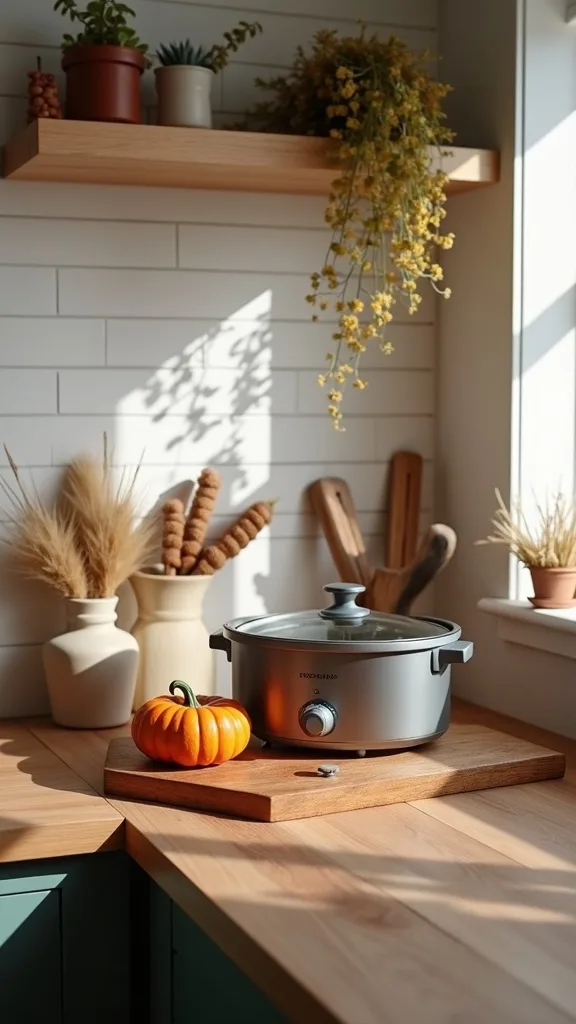
10. Add warm white under-cabinet light so the corner feels inviting at dusk
Fall afternoons get dark early, and a dim corner makes cooking feel harder than it needs to be. This works because a small light turns your station into a cozy, usable spot.
Stick on a battery puck light or LED strip under the cabinet above the slow cooker. Choose warm white light (2700K–3000K — the cosy, yellowish tone you see in most homes) so it doesn’t feel harsh. Position it toward the front edge so you can read recipes and see seasoning amounts.
A low-profile light disappears visually, letting your spice rack and board be the “decor.”
Pro tip: avoid cool blue-toned lighting; it can make food look unappetizing and the kitchen feel sterile. A warm glow makes the whole room feel like dinner is under control.
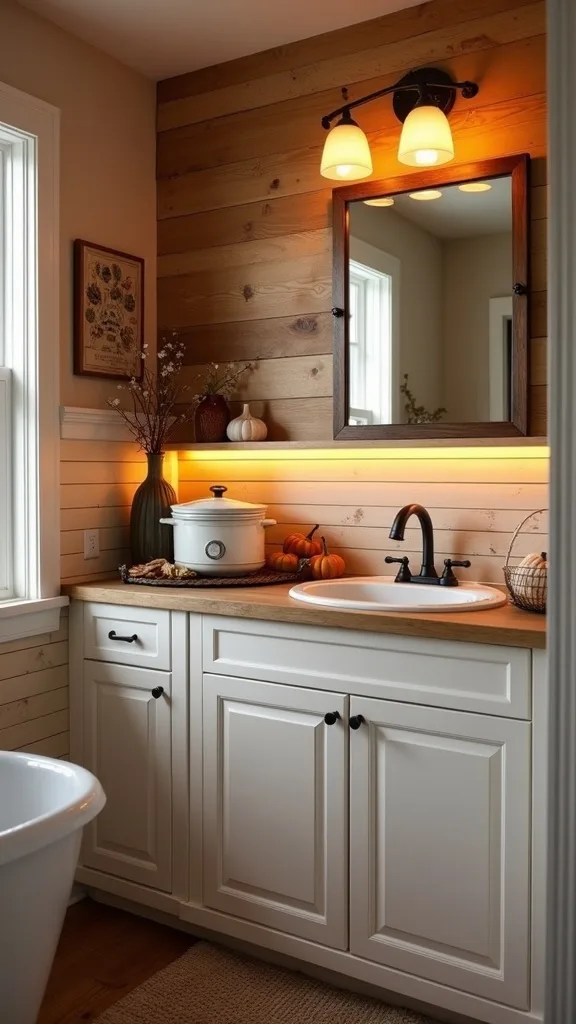
11. Keep a ‘lid landing zone’ so you’re not dripping on everything
A lid landing zone is a spot for the hot lid when you stir or serve. It works because it prevents puddles, burns, and that frantic “where do I put this?” moment.
Place a shallow tray, a large spoon rest, or a quarter sheet pan beside the cooker. If you’re tight on space, slide it behind the cooker and pull it forward when needed. Wipe it after dinner and put it right back—this is one of those habits that keeps the station feeling clean.
Choose a tray in enamel, stainless steel, or stoneware in fall tones like cream, rust, or deep green.
Avoid setting the lid directly on your counter or on a dish towel. Steam and condensation can soak surfaces fast. A simple landing zone keeps your kitchen calm and your hands free.
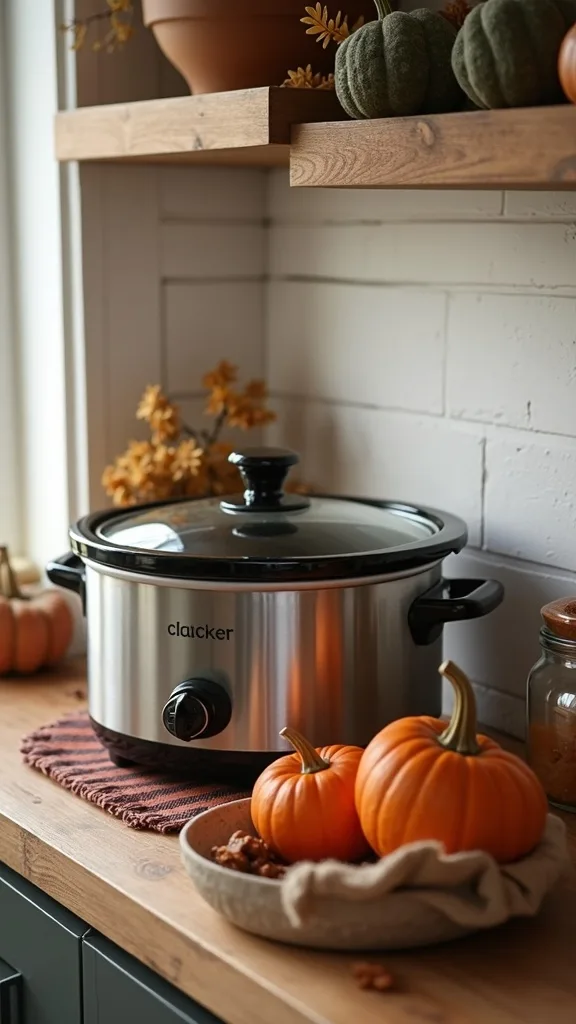
12. Store your slow cooker insert accessibly (so you actually use it on weekdays)
If the insert is buried, the slow cooker becomes a weekend-only idea. This works because friction is the enemy of weeknight cooking.
Store the insert inside the base on the counter station if you have room, or keep it on the lowest easy-to-reach shelf in a nearby cabinet. Put the lid upright in a lid organizer or vertical file rack so it doesn’t hog space. If you have multiple appliances, consider giving the slow cooker the “prime” shelf for fall.
Neutral shelf bins make it feel tidy, and a simple label like “Slow Cooker” helps everyone in the house put it back.
Avoid stacking heavy pots on top of the lid. One crack and your whole system falls apart. Easy access is what makes your fall meal prep kitchen routines actually happen.
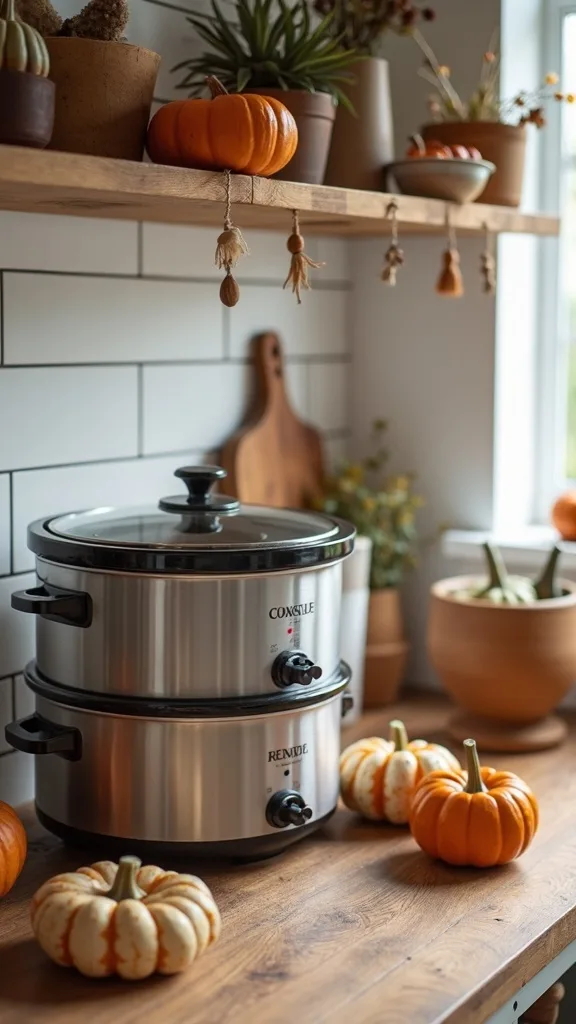
13. Make room for a cutting board and knife—without turning the station into a prep mess
This idea is about pairing your cooker with a small prep surface. It works because you can chop an onion or slice carrots without roaming the kitchen.
Slide a slim cutting board (around 8×12 inches) into a vertical holder near the station. Keep one reliable knife in a nearby drawer divider, or add a blade guard if you store it in a bin. The goal is “prep enough” for soups and stews, not a full chef setup.
A wood board adds fall warmth; a dishwasher-safe composite board is practical for messy days.
Avoid keeping a big, heavy board permanently on the counter—it crowds the corner and collects clutter. A small board you can grab and put away keeps the station functional and still pretty.
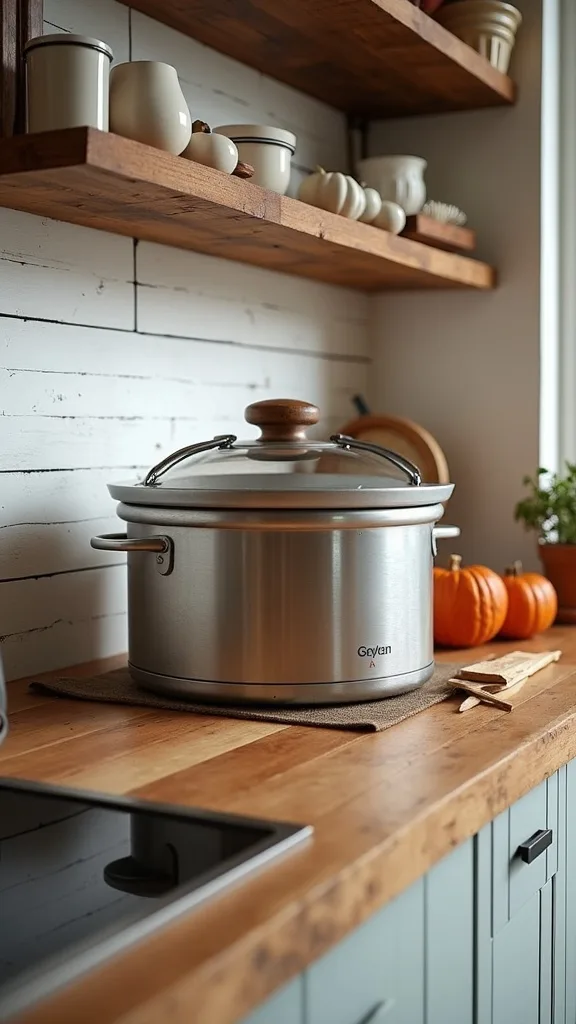
14. Use a tray to corral oils, salt, and pepper so the corner looks styled
A tray turns everyday items into a contained vignette. It works because the station reads as intentional—even if the rest of the kitchen is doing its best.
Choose a tray that’s easy to wipe (metal, sealed wood, or melamine). Keep it simple: olive oil, salt, pepper, and one “fall” blend like poultry seasoning. Place the tray to the side of the cooker so you can still open the lid fully.
Black metal trays look modern; warm wood trays lean rustic. Add a small jar for measuring spoons if you use them often.
Avoid adding decorative filler that steals space, like extra candles or little signs that have to be moved to cook. Let function be the decor—it’s calmer that way.
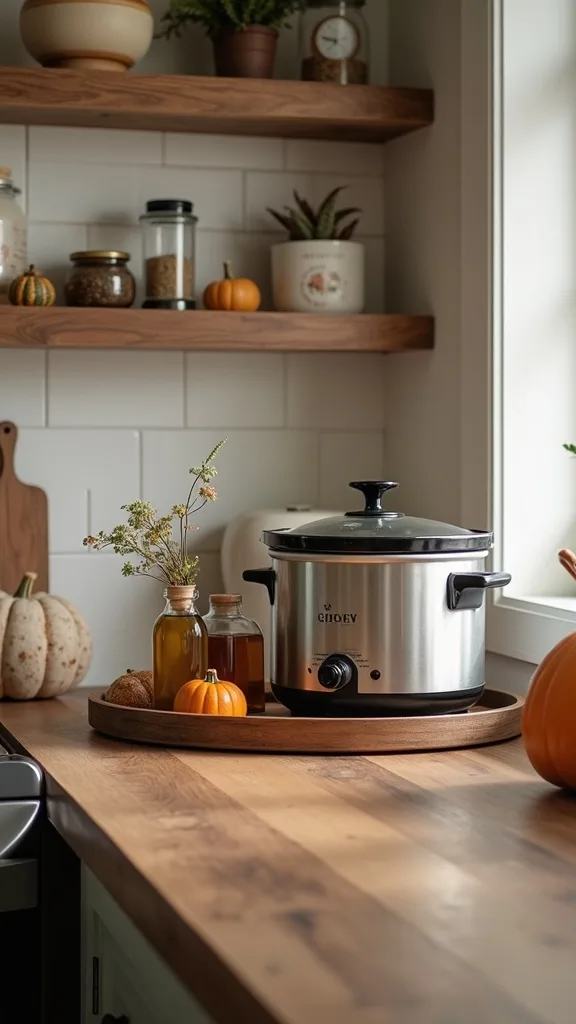
15. Create a ‘toppings jar’ zone for chili nights and soup bars
Fall dinners get more fun when everyone can customize. This works because a simple toppings setup turns soup into an experience, not another rushed meal.
Keep two to four lidded jars or small containers in a basket near the station: tortilla strips, oyster crackers, shredded cheese (in the fridge until serving), and chopped scallions (prep ahead). On serving night, pull out the basket and set it on the table or island.
Clear jars look tidy and help you see when you’re running low. A small wood caddy makes it feel like cozy hosting without extra effort.
Avoid leaving perishable toppings out “for later.” It invites mess and waste. A quick toppings ritual can make an ordinary Tuesday feel like a small family tradition.
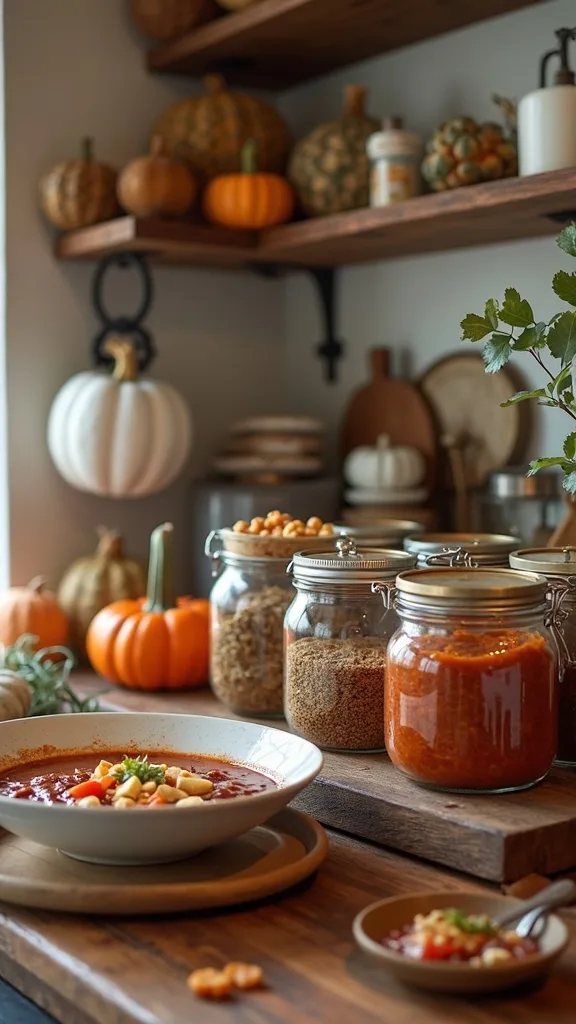
16. Set up a ‘leftovers first’ shelf in the fridge for slow cooker meals
This idea isn’t on the counter—it’s in the fridge. It works because slow cooker meals often make leftovers, and leftovers are the secret to a peaceful week.
Designate one fridge shelf as the “eat this next” zone. Store soup containers, cooked chicken, or chili there with painter’s tape labels (meal + date). Keep your most-used containers stacked nearby so packing lunches is easy.
Clear containers look cleaner and reduce forgotten food. Neutral labels keep it from feeling chaotic.
Avoid stuffing leftovers behind condiments. That’s how good food becomes mystery science. A simple shelf makes your fall meal prep kitchen plan feel like it’s actually paying you back in time.
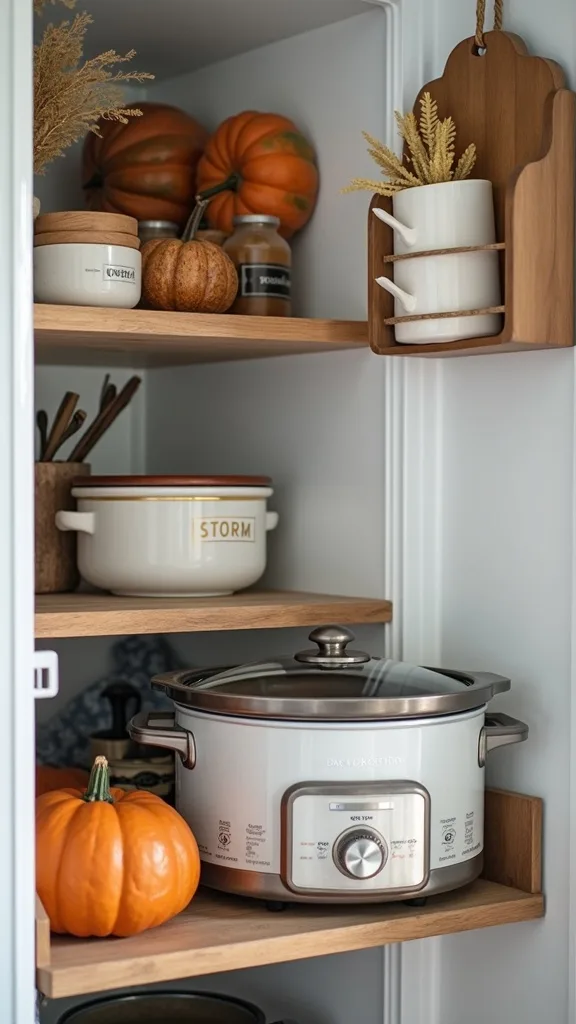
17. Add a timer reminder system if your slow cooker doesn’t beep loudly
Not every slow cooker has a loud, helpful alert. This works because a backup reminder prevents overcooked meals and that sinking feeling when you forgot to switch to warm.
Keep a small magnetic timer on the fridge near the station, or use a smart speaker reminder that’s tied to your routine (“remind me at 4:30 to check the stew”). If you’re out of the house, set a phone alarm labeled with the recipe name so it’s not just “ALARM” with no context.
A simple white timer blends in; a small wood-look clock fits the fall vibe.
Avoid relying on memory on busy days. A reminder isn’t a failure—it’s a support. The point is dinner that feels handled, not heroic.
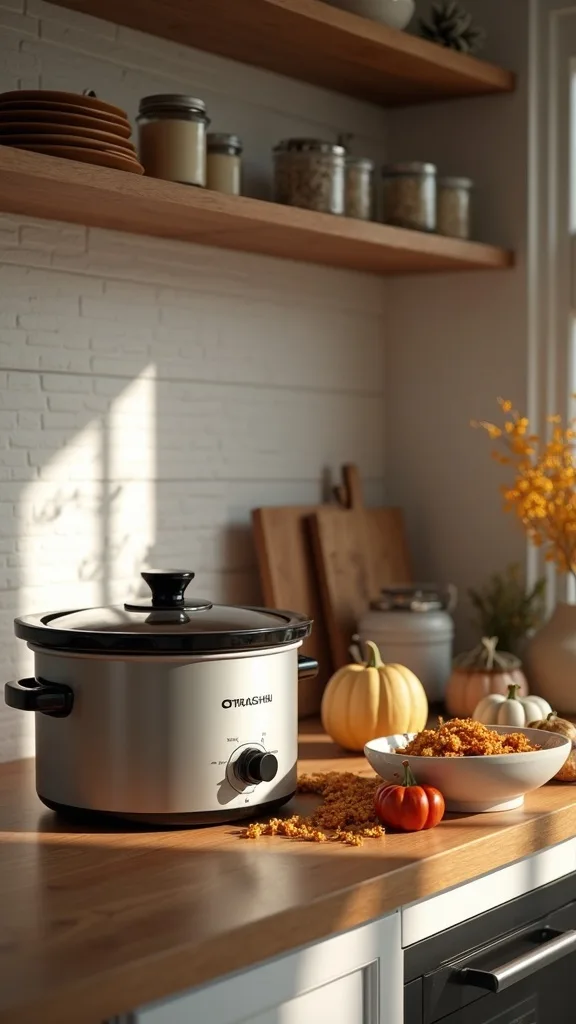
18. Use a washable runner or mat underfoot to make the station feel cozy
Cozy isn’t only candles—it’s comfort while you work. This works because standing at the counter becomes less tiring, especially during longer autumn cooking sessions.
Place a washable kitchen runner in front of the slow cooker corner, ideally one with a low profile so it doesn’t trip anyone. If spills happen (they will), you can toss it in the wash. Choose a length that fits your space—2×6 feet works well in many kitchens.
Fall-friendly patterns like subtle plaid, vintage-style florals, or warm neutrals add seasonal character without screaming “theme.”
Avoid thick shaggy rugs in the kitchen. They trap crumbs and are harder to clean. A practical runner makes the corner feel like a place you want to be.
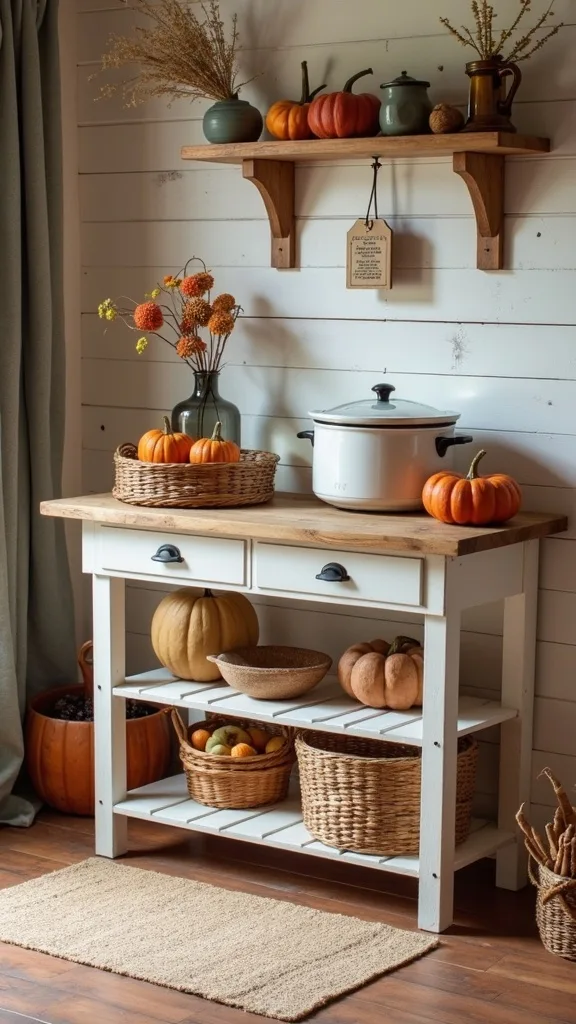
19. Set up a small ‘serving kit’ so you’re not scrambling at dinnertime
This idea is a mini kit that makes serving feel easy. It works because the hardest part of slow cooker meals is often the last five minutes.
Keep a trivet, large serving spoon, ladle, and a set of bowls or plates in a nearby cabinet or bin. If you do soup often, store soup bowls together so you’re not hunting. Add a stack of cloth napkins if you like the cozy look—paper is fine too.
Choose neutral ceramics that mix with what you already own, so it doesn’t feel like a whole new collection.
Avoid storing the serving pieces across the kitchen from the cooker. Those extra steps add stress fast. A serving kit turns “dinner’s ready” into an actual moment of relief.
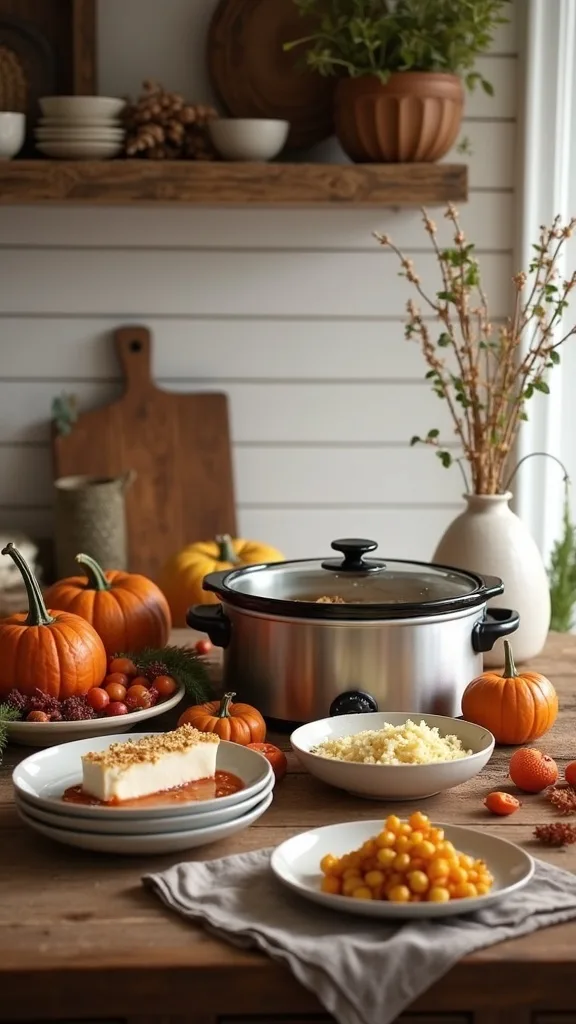
20. Make space for a cooling rack so hot inserts don’t wreck your counters
A cooling rack is a simple safety and cleanup upgrade. It works because you can set down hot inserts or lids without panicking.
Store a metal cooling rack vertically beside your baking sheets. When you’re done cooking, place it on the counter and set the hot insert on top while you portion leftovers. If you wash the insert separately, the rack also helps it air-dry faster.
Stainless steel looks clean and disappears visually; black racks feel modern.
Avoid placing the hot insert directly into the sink if your sink is already full of dishes. It splashes, it stresses you out, and it’s harder to clean. A cooling rack is one of those $10-ish helpers that makes the whole station feel more grown-up.
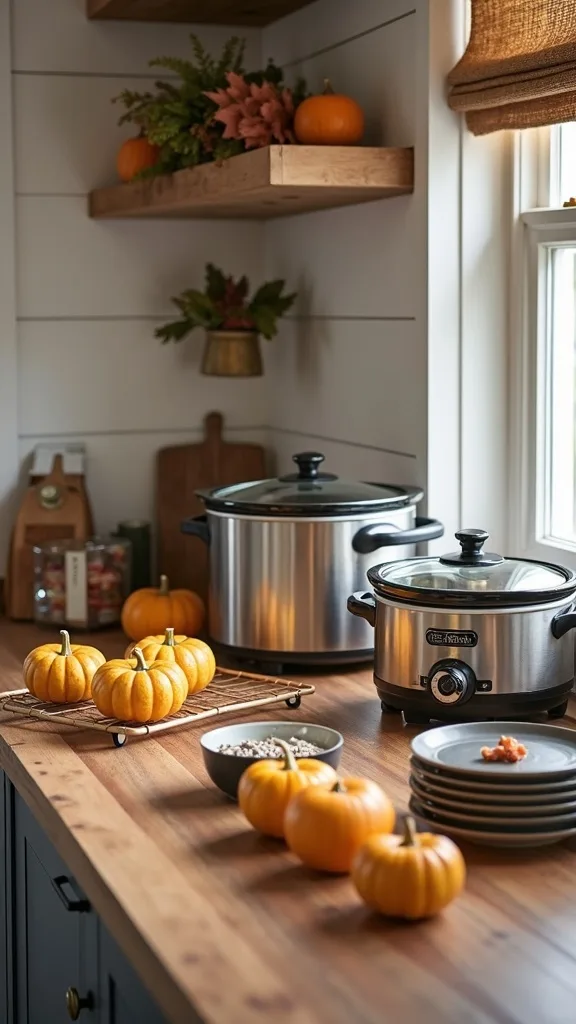
21. Use labels and zones so the station stays shared-family friendly
Stations fall apart when only one person knows the system. This works because simple labels help everyone participate—kids included.
Label three zones: “Cook,” “Serve,” and “Store.” The cook zone is the spice rack and utensils, serve is the ladle and trivets, and store is liners and containers. Use small adhesive labels on bins or inside cabinet doors so they’re helpful but not visually loud.
Black-on-white labels look clean; kraft paper labels feel warm and fall-appropriate.
Avoid over-labeling every single item. Too many labels become visual noise and nobody reads them. A few clear zones keep the station functional and keep the peace when someone else is trying to help.
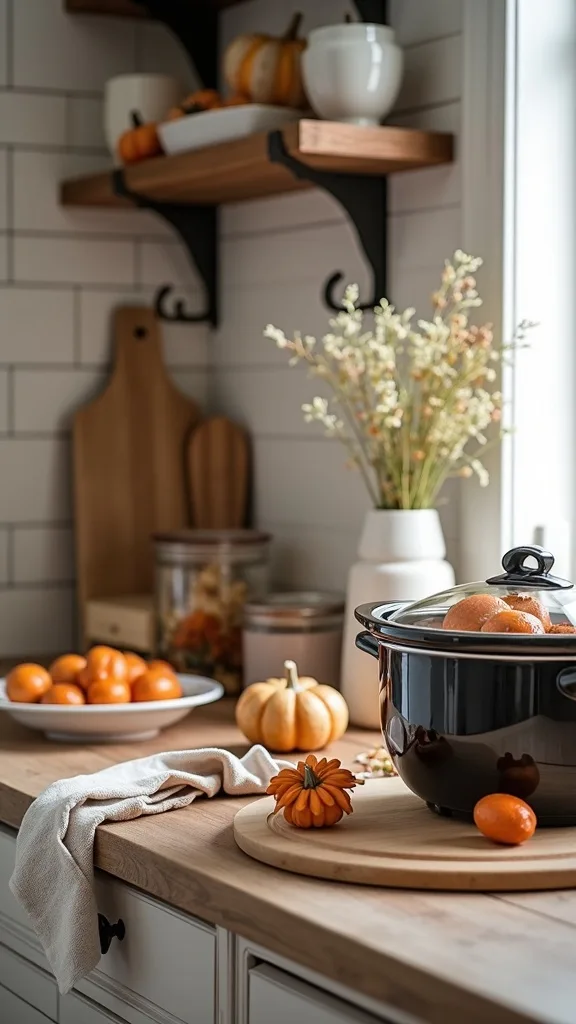
22. Add one seasonal touch that won’t get greasy (and won’t steal space)
Decor matters, but kitchens are working rooms. This works because one small fall element can make the corner feel special without creating extra cleaning.
Choose one: a small framed printable with a fall recipe, a mini vase with dried wheat, or a compact faux stem in a narrow jar placed away from splatter zones. Keep it behind the spice rack or on the wall shelf above the station.
Stick to muted fall colors—rust, amber, olive, and cream—so it complements your everyday kitchen. A wood frame adds warmth.
Avoid fabric garlands or anything fluffy near the cooker. They collect grease and dust fast. One thoughtful touch is enough to make the station feel like autumn, even if the rest of the house is in “real life mode.”
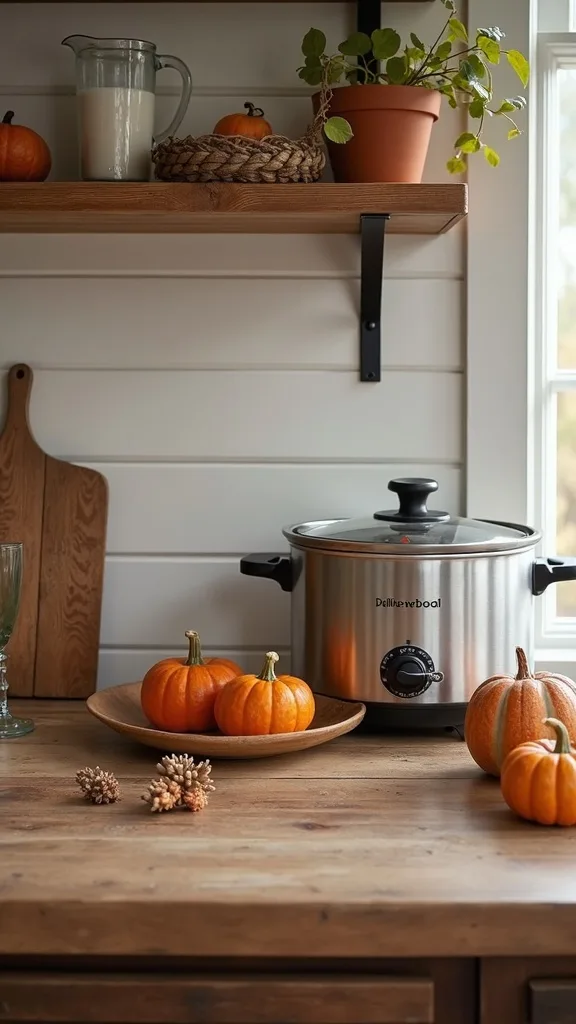
23. Create a ‘prep day’ flow for Sundays (or any day) without taking over the kitchen
This idea is a simple routine for fall meal prep kitchen days. It works because you can do a little prep without turning your whole weekend into a project.
Pick two recipes and prep the ingredients into labeled gallon bags: “Beef Stew” and “Chicken Taco Soup,” for example. Store them flat in the freezer so they stack. Keep your recipe binder open at the station while you work, and write the cook time on the bag with a marker.
Use freezer-safe bags and a small sheet pan to keep the bags stable while filling. Neutral labels keep it tidy.
Avoid prepping five meals at once if you’re already tired. Two is plenty. Small prep wins add up, and they make weeknights feel like you gave yourself a gift.
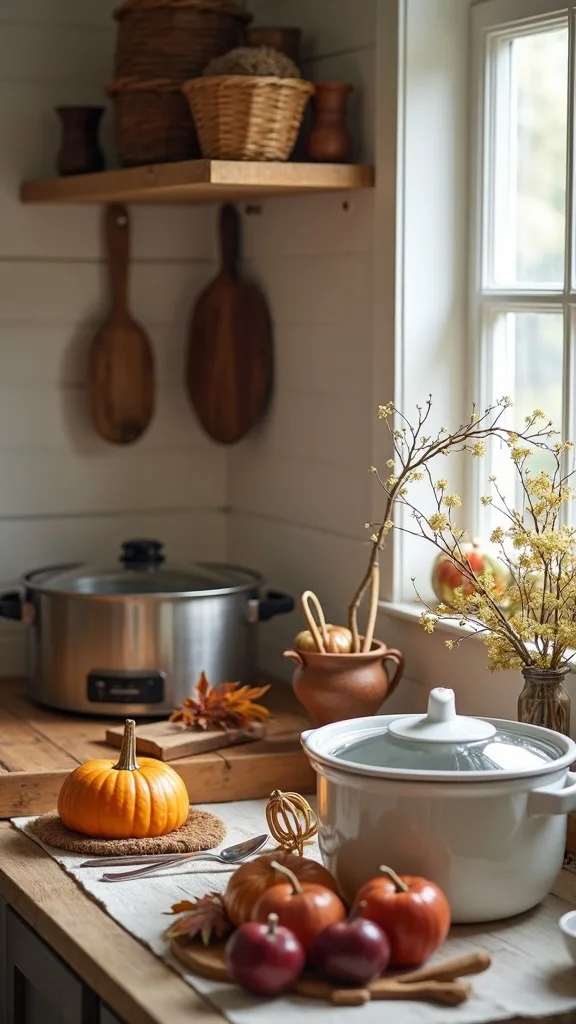
24. Plan for cleanup: a tiny ‘wipe kit’ right at the station
Cleanup is where good systems prove themselves. This works because a wipe kit keeps the corner from becoming a sticky, splattered spot you dread.
Tuck a small caddy under the counter with a microfiber cloth, a gentle all-purpose spray, and a small scrub brush. After serving, do a 60-second wipe of the mat, the counter edge, and the hook area. If you’re short on time, wipe only the “touch points” you’ll feel tomorrow.
Choose a caddy that’s easy to pull out with one hand. Neutral bottles look calmer if they’re visible.
Avoid using harsh cleaners on silicone mats or painted boards—it can leave residue or dull the finish. A simple wipe routine keeps your station ready for the next meal, which is the whole point.
25. Keep the station flexible for holidays and big-batch cooking
Fall brings potlucks, school events, and family weekends. This works because your station can expand for big cooking days without permanently taking over your kitchen.
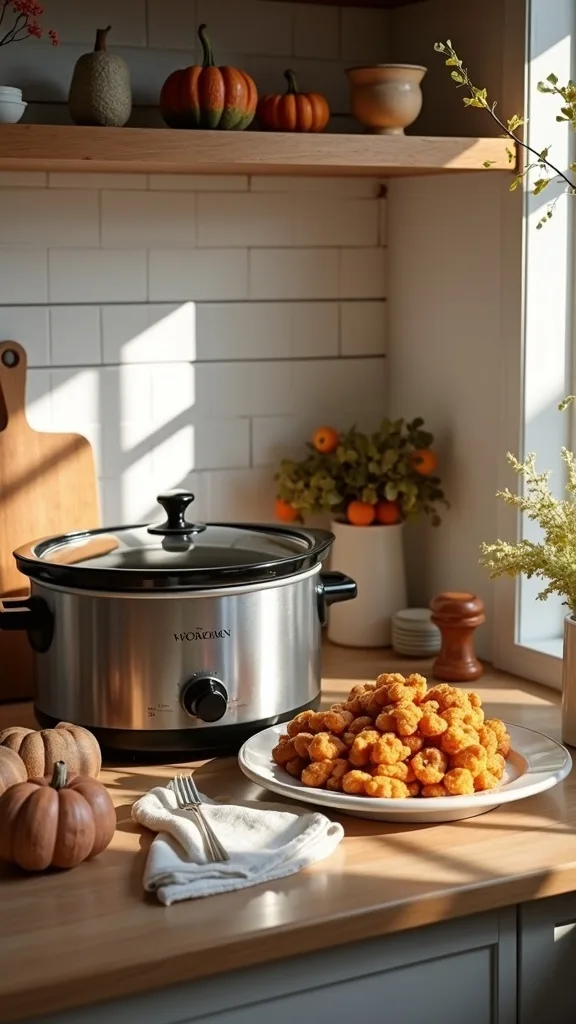
Store a foldable cart or an extra tray that can become “overflow space” when you’re cooking apple butter, mulled cider, or doubled chili. On normal days, it tucks away. On big days, it holds ingredients, serving bowls, and a second appliance.
A slim rolling cart in white or black looks clean; a wood-top cart leans rustic and warm.
Avoid building a setup that only works for one appliance size or one season. A flexible station supports real life—busy weeks, cozy weekends, and everything in between. That’s what makes it worth doing.
Final Thoughts
The best fall cooking station isn’t the one that looks like a catalog. It’s the one that makes a regular weeknight feel a little less sharp around the edges—where you can walk into the kitchen, see the plan, and start dinner without a scavenger hunt.
If you take nothing else from this, take the permission to keep it small. A corner, a hook, a mat, and a short list of spices can be enough to make autumn cooking feel like comfort instead of pressure. Celebrate progress over perfection, because the “finished” version of a home is a myth anyway.
Do one thing today: clear a 24-inch spot near an outlet, lay down a heat-safe mat, and hang a single hook for your ladle. That tiny start is how the whole system becomes real—messy, loved, and absolutely good enough.
What I’d Do Differently
When I first tried this, I made the classic mistake: I treated my slow cooker like a “special occasion” appliance and stored it in the back of a lower cabinet with the roasting pan. Every time I wanted to use it, I had to pull out three things, drag the base to the counter, then realize the ladle was in the dishwasher and the recipe was a screenshot buried under 200 photos. One Tuesday, I started chili late, couldn’t find the right spices, and ended up adding cinnamon by accident because the jars weren’t labeled. It wasn’t a disaster, but it was frustrating in a way that stuck with me. The correct approach is to give the slow cooker a small, boring, consistent home—close to an outlet—with only the tools you truly use.
I also wish I’d known how much a simple “lid landing zone” matters. I used to set the lid on a towel and then wonder why the counter always felt damp and messy. Now I keep a tray there, and it’s one less thing to think about. If you’re hesitating, pick one corner and set up just the mat + hook today—then build the rest slowly.