
This post contains affiliate links. As an Amazon Associate, I earn from qualifying purchases at no extra cost to you.
The fastest way to make a living room feel expensive isn’t a bigger sofa or a trendier rug—it’s removing visual noise. When summer light hits a cluttered space, every stray cord, shiny surface, and extra pattern feels louder. A calmer room reads cooler, even when the thermostat hasn’t changed.
This article is built around one principle: reduce contrast and increase intention. That’s the psychology behind why a minimalist japandi room feels restful—your brain stops scanning for “what doesn’t belong” and starts settling into the rhythm of repeated shapes, soft textures, and open floor space.
This is perfect for anyone who wants a japandi living room that’s functional for real life—kids, pets, work-from-couch days—without tipping into cold or bare.
You’ll see how the same idea flexes across modern, traditional, and transitional directions, with beginner versions for every step. Expect specifics: what furniture profile to buy, which textiles read right, and what to avoid so the room doesn’t turn into a bland showroom.
Below are 25 Japandi Living Room Style & Design Ideas that balance japandi home decor, natural materials, and summer-ready breathing room.
1. Build the room around a low-profile oak sofa + shoji divider moment
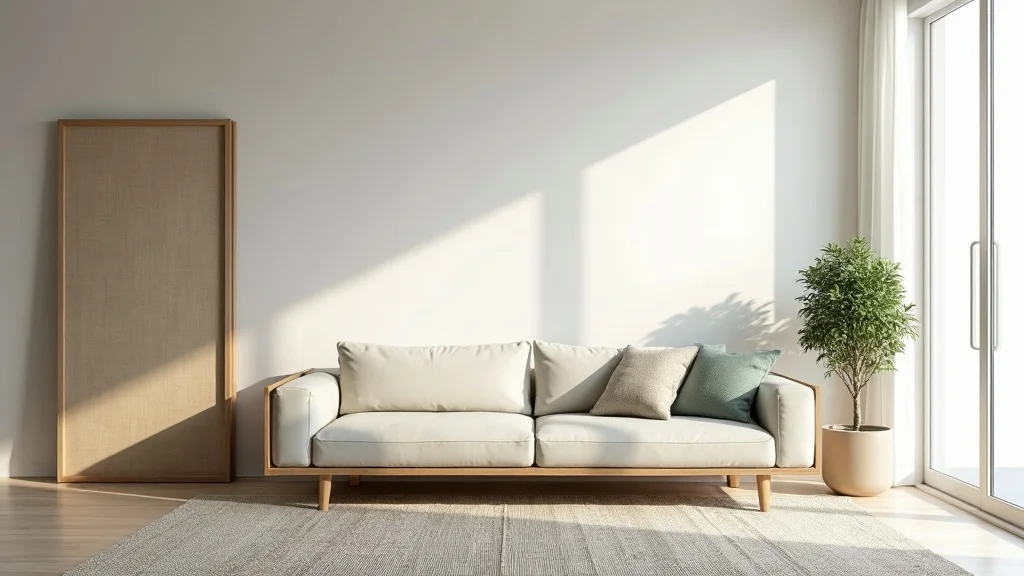
This idea is a single calm “scene”: a low-profile oak sofa in front of white walls, anchored by a shoji screen room divider and a muted sage bonsai accent. It works because your eye lands on one quiet composition instead of bouncing around the room hunting for a focal point.
Implement it by placing the sofa low and long (84″–96″ reads right) and keeping the wall behind it mostly empty. Set the shoji screen slightly off-center to create depth, then place a small side table with a bonsai or sculptural branch so the greenery feels deliberate, not random.
Choose matte oak, cotton-linen upholstery, and a soft off-white rug with minimal pattern. Add one black detail—like a thin metal floor lamp—to give the palette a crisp outline.
Pro tip: leave 6″–10″ of breathing space behind the screen so light can slip through; the shadow play will make the whole room feel like a quiet summer morning.
2. What colors make a Japandi living room feel cool in summer?
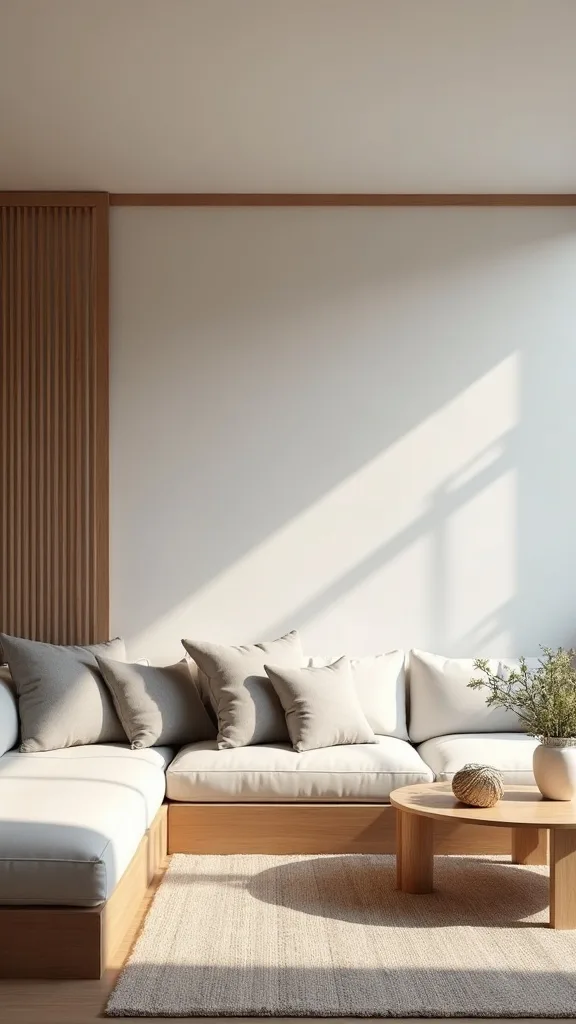
The best summer palette is low-contrast: warm whites, oat, pale oak, and a single muted green. It works because the brain reads similar tones as “safe” and stops scanning for sharp edges—your room feels cooler and calmer even on bright afternoons.
Implement it by choosing one wall color (a soft white, not icy blue-white), then repeating two wood tones max across the room. Add muted sage in small doses—pillow cover, bonsai pot, or a ceramic vase—so the green feels like a breath, not a theme.
Look for matte finishes and textiles with visible weave: cotton-linen curtains, a wool-blend rug, and paper or linen lamp shades. Avoid high-gloss white furniture; it bounces light and can feel harsh.
Beginner version: change only three things—two pillow covers and one throw in oat/sage—and remove the brightest, most saturated item in the room. Pro tip: if you want contrast, use black in thin lines (frames, lamp stems) so it stays quiet but defined.
3. How do you arrange furniture for a Japandi living room layout?
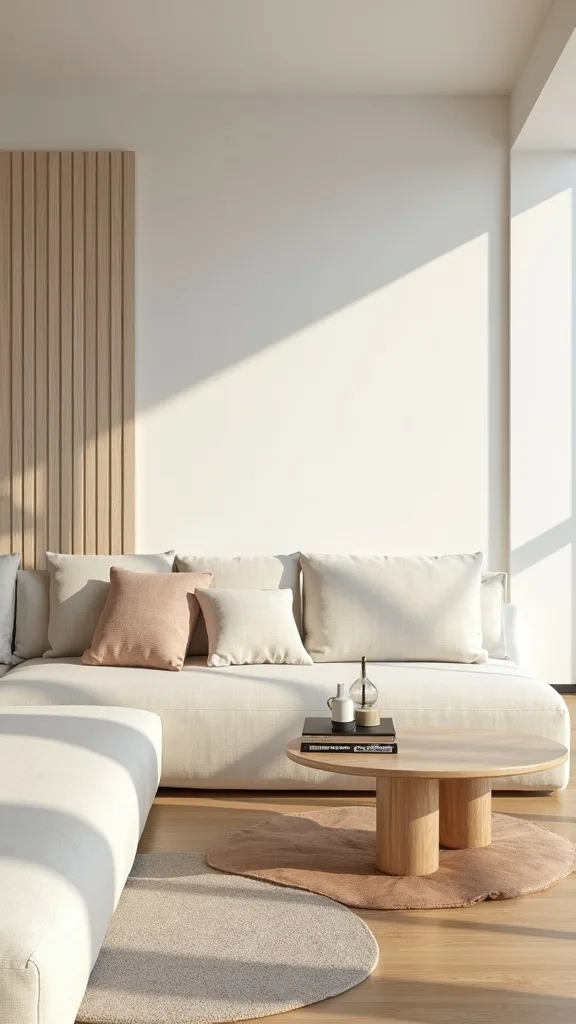
A Japandi layout prioritizes clear paths and low visual weight. It works because open circulation lowers stress—your body can move without micro-decisions, and the room feels bigger than it is.
Implement it by floating your sofa 6″–18″ off the wall when possible and centering it on the rug. Keep one “runway” path at least 30″ wide from the entry to the main seating area. If you need extra seating, choose a single armless accent chair rather than two bulky recliners.
Product types that help: a low coffee table (oval or rectangle with rounded corners), a slim media console, and nesting side tables that can tuck away. Colors should stay in the same family—oak, black, and off-white.
Beginner version: remove one piece of furniture, then re-place the remaining pieces so nothing blocks a doorway. Pro tip: angle one chair slightly toward the sofa; that small gesture makes the room feel intentionally “hosted.”
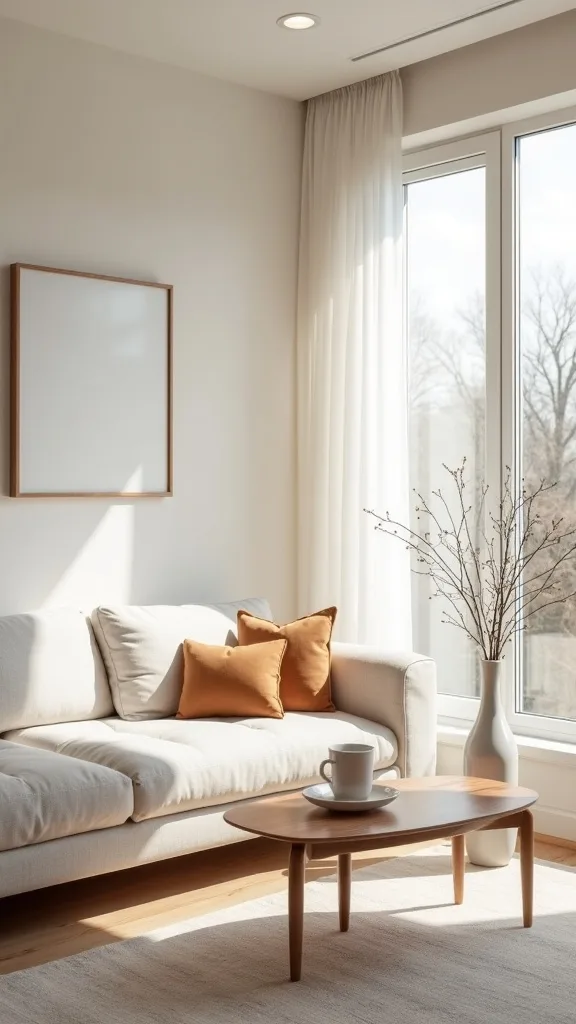
4. What’s the easiest way to get Japandi lighting right?
Japandi lighting is soft, layered, and warm—never glaring. It works because warm light signals safety and rest, and multiple light sources prevent the harsh “ceiling spotlight” effect that makes minimal rooms feel sterile.
Implement it with three layers: one ambient source (paper lantern pendant or flush mount), one task light (reading lamp by the sofa), and one accent light (small table lamp near the divider or plant). Use warm white light (2700K–3000K — the cosy, yellowish tone you see in most homes) so wood and textiles look rich, not gray.
Choose rice-paper shades, linen drum shades, and slim black or bronze stems. Avoid exposed cool-white bulbs; they flatten texture and make white walls look clinical.
Beginner version: swap just one bulb to warm white and add a plug-in paper lantern lamp in a corner. Pro tip: put your lamps on a simple timer so the room “settles” automatically at sunset.
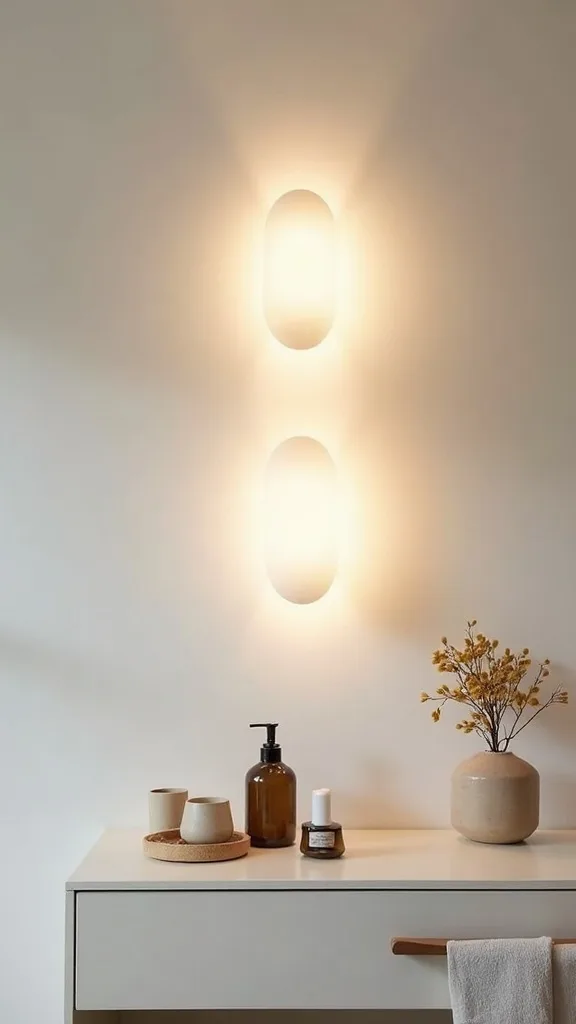
5. How do you mix Japanese Scandinavian without making it feel themed?
The trick is to mix principles, not souvenirs. It works because a room built on shared values—simplicity, craft, and natural materials—feels authentic, while a room built on motifs can feel like a set.
Implement it by choosing Scandinavian comfort (a cushy sofa, wool throw, cozy rug) and pairing it with Japanese restraint (fewer objects, lower profiles, negative space). Use one or two handmade-looking pieces—like a ceramic bowl or textured vase—instead of multiple “Japanese-inspired” prints.
Stick to oak, ash, paper, linen, stone, and black metal. For art, choose abstract ink-style lines or calm landscape photography rather than obvious symbols.
Beginner version: keep your current sofa, but switch your coffee table to a lower wood option and reduce shelf decor to three items max per surface. Pro tip: if you’re unsure, remove one decorative item for every one you add—your room will stay calm by default.
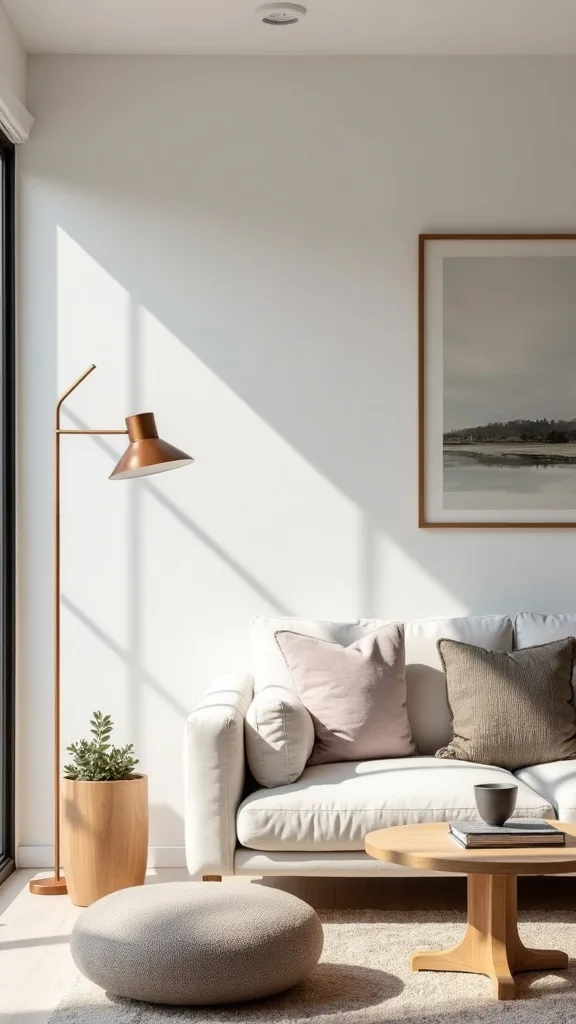
6. Modern direction: How do you make Japandi feel crisp, not cold?
Modern Japandi is crisp lines softened by touchable texture. It works because the eye gets structure (clean silhouettes) while the body gets comfort (warm textiles), so the room feels both designed and livable.
Implement it with a straight-arm sofa, a low black metal coffee table, and a minimal media console with flat fronts. Keep decor sparse: one large art piece, one sculptural vase, one plant. Let the shoji screen act as architecture rather than decoration.
Choose a tight palette: white, oak, black, and one muted green. Add texture through boucle, slub linen, or a wool rug with a subtle grid.
Beginner version: keep your layout, but swap in two modern elements—thin black frames and a simple black floor lamp. Pro tip: hide all cords with paintable cord covers; in a modern room, visible wires read like clutter instantly.
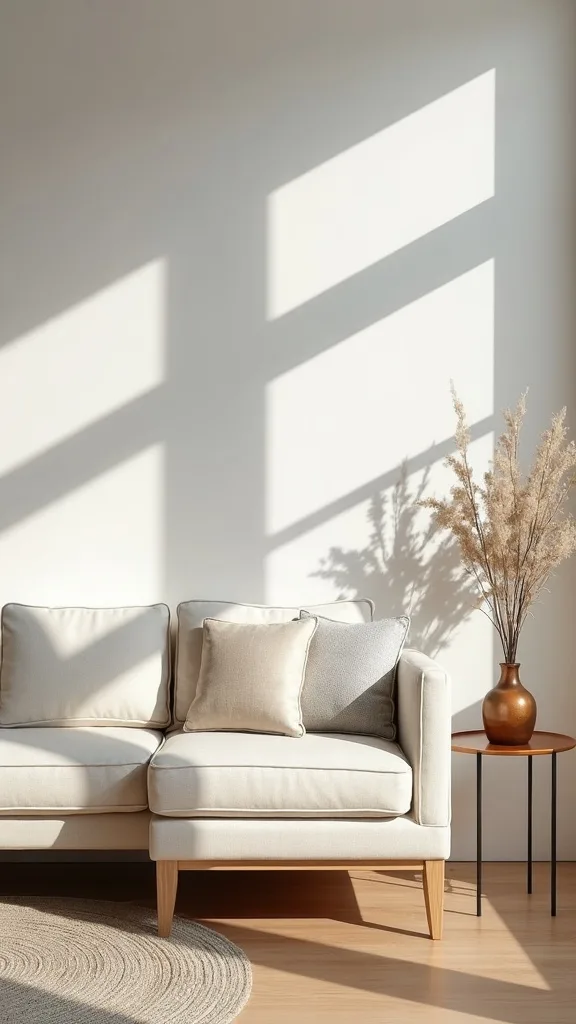
7. Traditional direction: How can Japandi work with classic homes?
Traditional Japandi respects architecture and simplifies the layers. It works because classic homes already have richness—trim, fireplaces, built-ins—and Japandi edits the “extras” so those features feel intentional instead of busy.
Implement it by keeping one traditional anchor (a mantel, a vintage rug, or a classic armchair) and calming everything around it. Use the shoji screen to soften a corner or hide a TV area without fighting your existing millwork.
Choose warm whites that flatter wood trim, plus natural oak or walnut accents. Product types that bridge the gap: linen drapery with simple pleats, a classic ceramic lamp with a linen shade, and a low wood coffee table.
Beginner version: clear your mantel completely, then put back only three items—one tall, one medium, one small. Pro tip: let your traditional piece be the “story,” and keep the rest quiet so it can breathe.
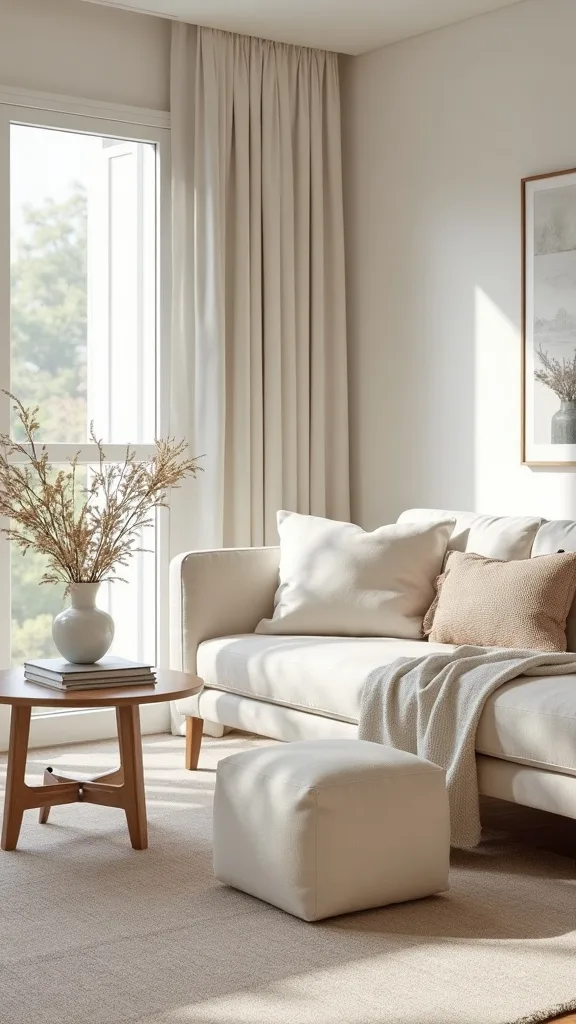
8. Transitional direction: What if your furniture isn’t all one style?
Transitional Japandi is the most forgiving: it’s about harmony, not matching. It works because the room is unified by repeated materials and calm spacing, even if the pieces come from different decades.
Implement it by choosing one common thread—light wood or black accents—and repeating it 3–5 times across the room. Pair a slightly curvy chair with a straight sofa, but keep both low-profile. Use a shoji screen to create a clean visual “reset” behind mixed pieces.
Pick neutral upholstery, a simple rug, and one textured statement (like a chunky knit throw). Keep decor minimal and grounded: trays, books, ceramics.
Beginner version: group your decor by material (all ceramics together, all wood together) and remove anything shiny or overly ornate. Pro tip: if a piece feels too loud, quiet it with a neutral slipcover or a throw—transitional rooms thrive on soft edits.
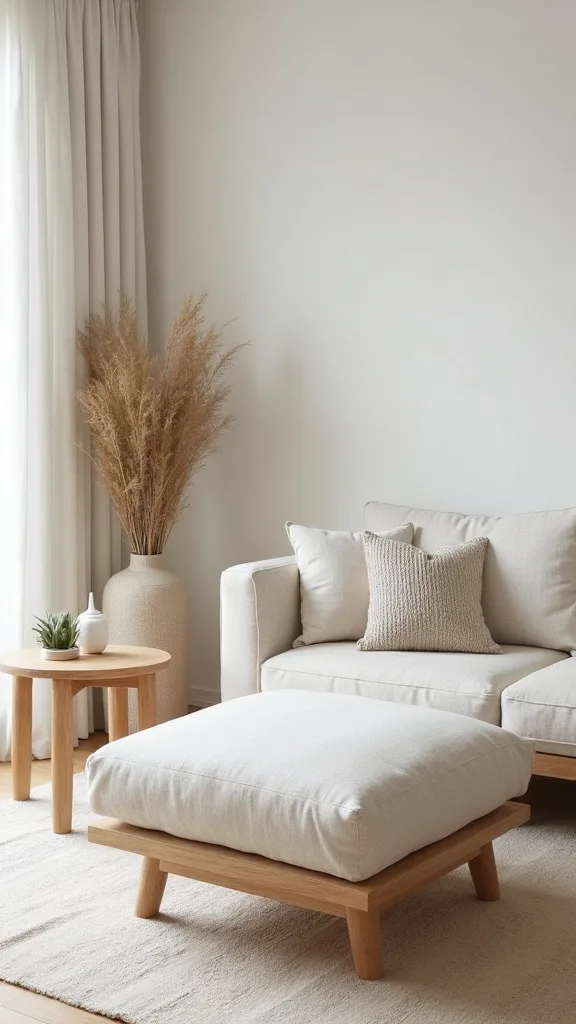
Cost & Materials Estimate
A Japandi living room refresh typically lands between a small styling swap and a full furniture reset, depending on whether you’re replacing the sofa and lighting.
| Item | Estimated Cost | Where to Buy |
|---|---|---|
| Shoji screen room divider (3–4 panel) | $90–$220 | Wayfair |
| Low-profile oak-tone coffee table | $120–$320 | IKEA |
| Neutral textured rug (8′ x 10′) | $180–$450 | Home Depot |
| Paper/linen shade floor lamp + warm white bulb | $55–$160 | Amazon |
| Muted sage bonsai (live or realistic) + matte pot | $35–$110 | Lowe’s |
Total estimated cost: $480–$1,260 Save money by keeping your current sofa and swapping lighting + textiles first; splurge on the rug if you want the biggest day-to-day upgrade.
9. What should you avoid so Japandi doesn’t become bland?
The biggest risk is stripping the room down to “nothing” instead of “enough.” It doesn’t work because empty space without texture feels unfinished, and your brain reads it as a problem to solve.
Avoid an all-white-on-white setup with no tactile contrast. Also avoid matching sets—matching sofa, loveseat, chair in the same fabric can look like a showroom, not a home.
Implement the fix by adding three textures: a nubby throw, a woven shade or basket, and a rug with subtle depth. Then add one imperfect element—a handmade ceramic, a branch in a vase, a slightly irregular side table—so the room feels human.
Beginner version: keep your neutral palette, but add one black line (frame or lamp) and one natural woven piece. Pro tip: if you can’t describe how a surface feels (soft, rough, cool), you probably need more texture.
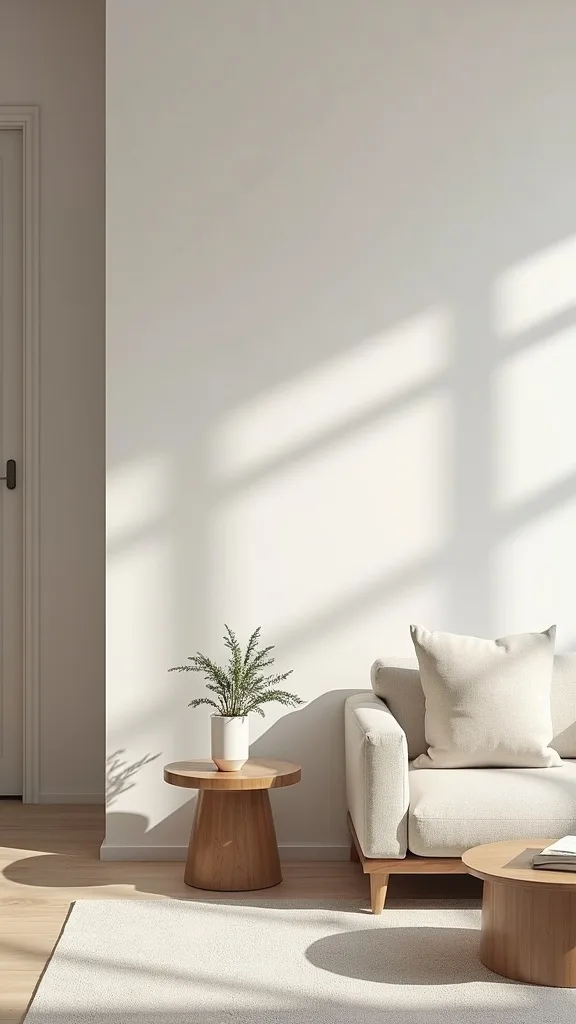
10. How do you choose a rug for a Japandi living room?
A Japandi rug should ground the room without shouting. It works because a calm rug reduces visual “static,” letting furniture shapes and light do the heavy lifting.
Implement it by sizing up: aim for at least the front legs of all seating on the rug. In many US living rooms, 8′ x 10′ is the sweet spot for a sofa + chair layout. Choose low pattern, high texture—think subtle grids, heathered neutrals, or tone-on-tone stripes.
Materials to consider: wool or wool-blend for softness and durability, jute-blend for a crisp summer feel (but add a soft throw if you go scratchier). Avoid busy Persian-style patterns if you’re going minimalist.
Beginner version: if replacing the rug isn’t in the budget, layer a neutral flatweave on top of your existing rug to calm it down. Pro tip: a slightly imperfect, woven texture reads more “crafted” than a perfectly printed design.
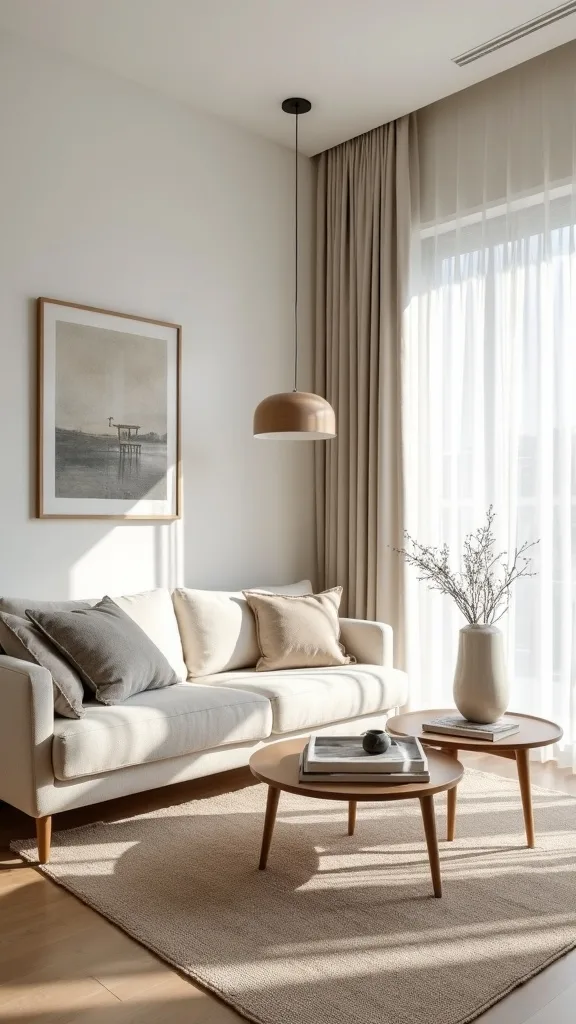
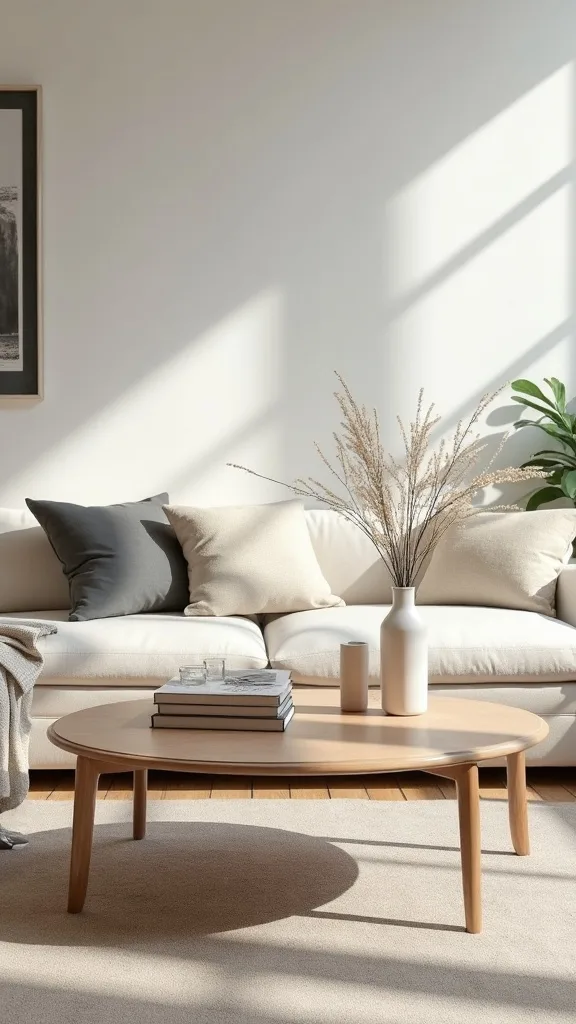
11. What coffee table shape looks most Japandi?
Low, simple, and friendly to bare feet. It works because rounded corners and low profiles feel safer and more relaxed—exactly the mood Japandi aims for.
Implement it by choosing an oval table for tight walkways or a rectangle with softened edges for larger rooms. Keep the height near the sofa seat height or slightly lower (about 14″–16″ is common) so the room feels grounded.
Look for light oak, ash, or black-stained wood with visible grain. If you need storage, choose a table with one open shelf rather than multiple drawers—too many seams add visual noise.
Beginner version: style your current table with a single tray, one small stack of books, and one ceramic bowl; remove everything else. Pro tip: leave 50% of the tabletop empty—negative space is the most underrated decor “item” in the room.
12. How do you style shelves in Japandi home decor without clutter?
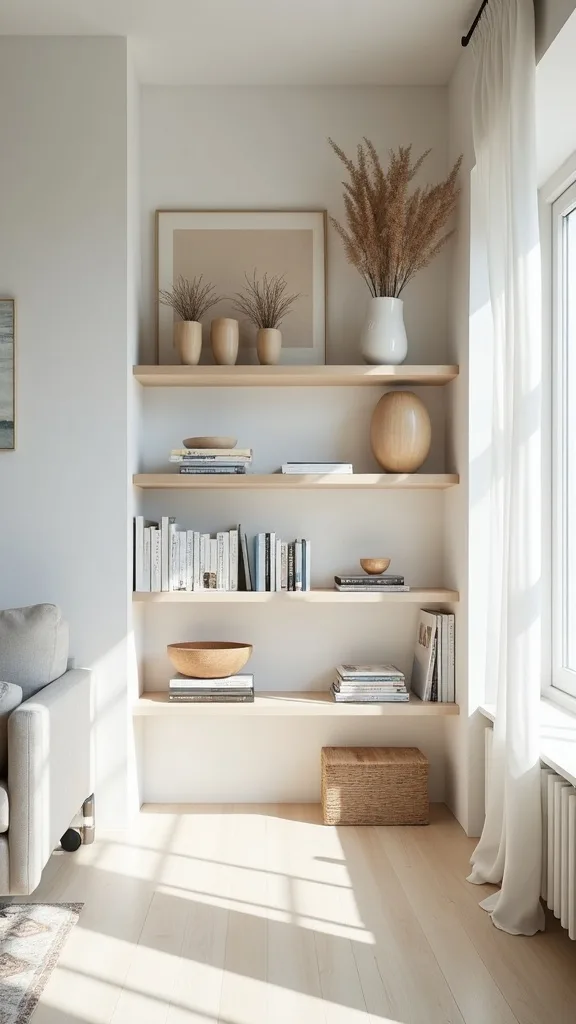
Japandi shelving is curated, not filled. It works because your brain can process a few well-spaced objects quickly, which lowers the sense of mental load.
Implement it by using the rule of threes: group items in sets of three with varied heights, and leave clear gaps between groups. Place heavier items low and lighter items higher. If you have built-ins, keep at least one shelf completely empty as a “pause.”
Choose objects with quiet character: matte ceramics, a small woven basket, a linen-bound book stack, and one piece of natural wood. Avoid tiny figurines or lots of framed photos in different frame styles.
Beginner version: remove everything from one shelf, then put back only five items total. Pro tip: repeat one material (like black metal or ceramic) across shelves to create rhythm—your eye will relax into the pattern.
13. How can a shoji screen act as a room divider in an open layout?
A shoji divider creates privacy without heaviness. It works because it filters light instead of blocking it, giving you definition while keeping the room airy for summer.
Implement it by placing the screen behind the sofa to define a seating zone, or near an entry to create a soft landing strip for shoes and bags. Keep it a few inches off the wall so it reads like a layer, not a barrier. If you rent, it’s a no-drill way to add architecture.
Choose a natural wood frame or black frame depending on your direction (traditional vs modern). Pair it with a low console or plant so the divider feels integrated.
Beginner version: use the screen to hide just one visual mess—like a desk corner. Pro tip: add a small uplight behind it; the glow turns the divider into a calming feature at night.
14. What window treatments match Japandi style best?
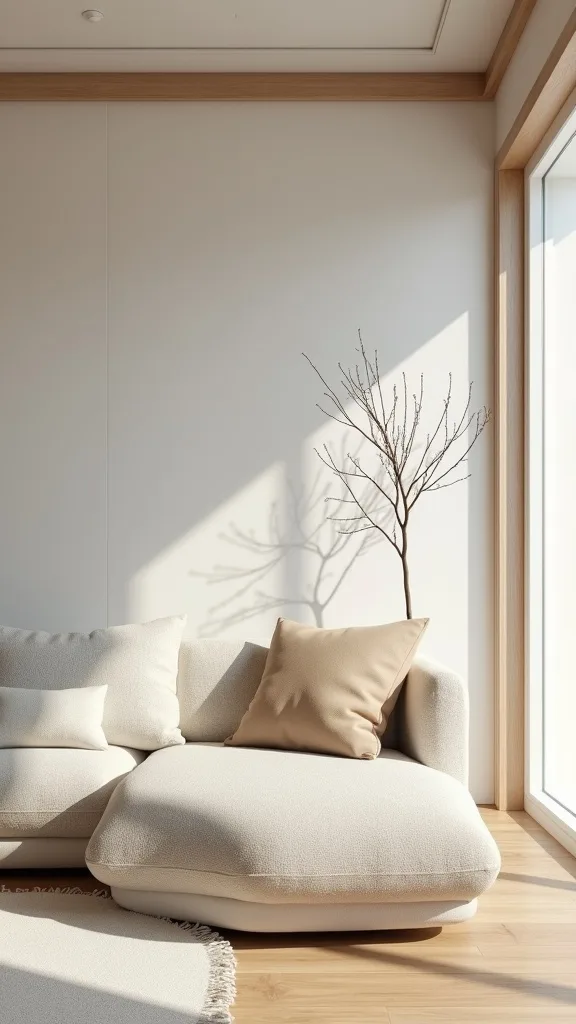
Japandi window treatments should soften light, not dominate it. It works because filtered daylight reduces harsh contrast and makes neutral palettes feel rich instead of flat.
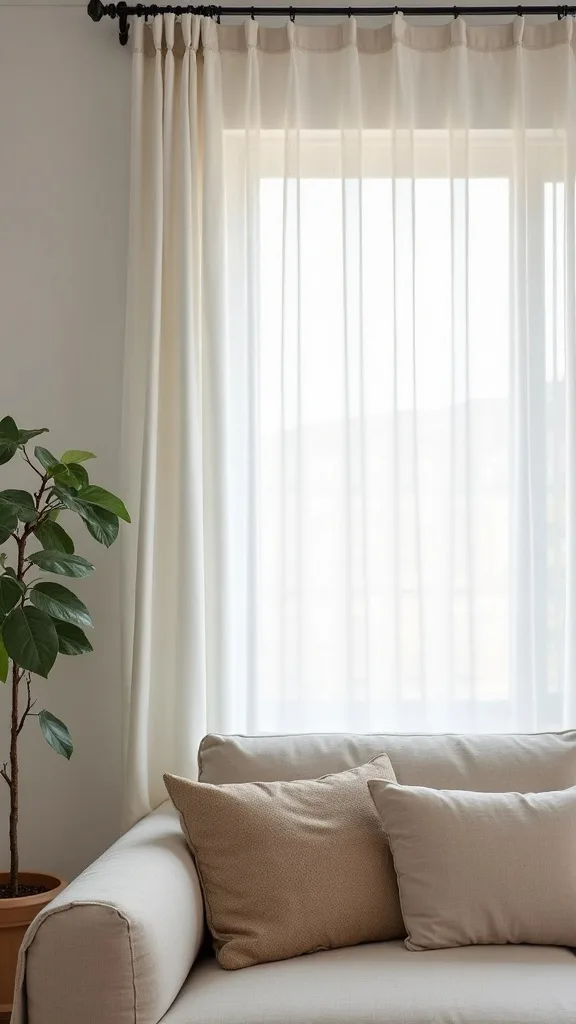
Implement it with linen curtains in off-white or oatmeal, hung high and wide so the window looks larger. If you prefer shades, woven wood shades add texture while keeping clean lines. For privacy without heaviness, layer sheers with a simple blackout panel for nights.
Avoid grommet-top curtains and shiny fabrics; they read casual or overly modern in a way that clashes with the crafted feel. Keep hardware simple—black or brushed metal.
Beginner version: replace only the curtain panels and keep your rod. Pro tip: steam your curtains the day you hang them—crisp, vertical folds instantly make the room feel more intentional.
15. How do you add greenery without turning the room into a jungle?
Japandi greenery is sculptural, not abundant. It works because one strong plant shape creates a focal point while keeping the overall room quiet.
Implement it with one medium floor plant (like a ficus or rubber plant) and one tabletop accent—your muted sage bonsai is perfect here. Use simple pots: matte ceramic, concrete, or textured stone in neutral tones.
Avoid too many small plants scattered everywhere; that creates visual “speckling” that looks like clutter. If you love plants, group them in one zone so they read as a single statement.
Beginner version: keep one plant you already own, but upgrade the pot and place it on a small wood stand. Pro tip: place greenery near the shoji screen or a window so the silhouette becomes part of the room’s calm geometry.
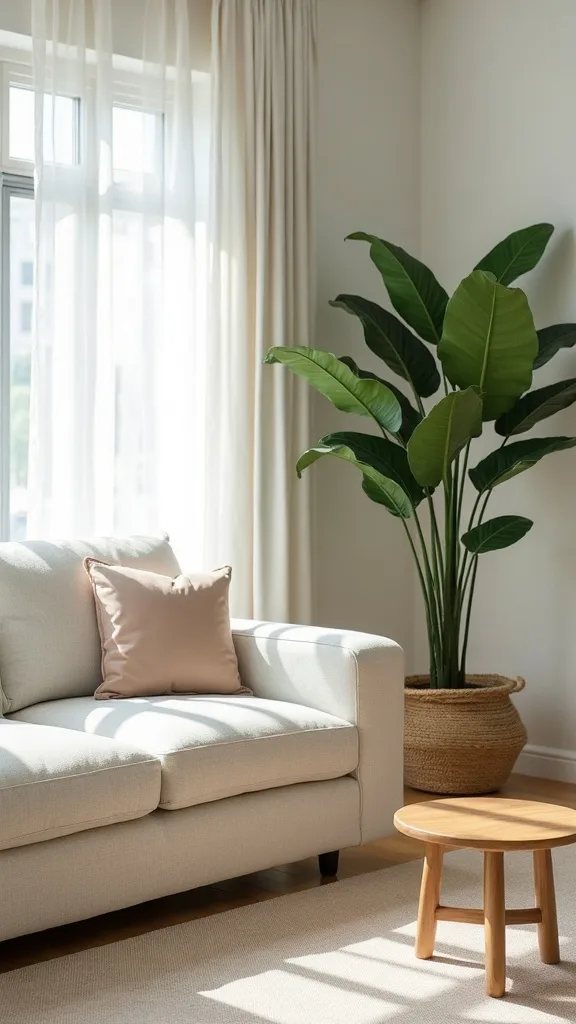
16. What wall art fits a Japandi living room?
Wall art should feel like a breath, not a billboard. It works because quiet art supports the room’s calm baseline while still giving you personality.
Implement it by going larger, fewer: one oversized piece above the sofa or two medium pieces with generous spacing. Choose simple frames—thin black, light oak, or natural wood. Keep the subject matter minimal: abstract ink forms, soft landscapes, or textured fiber art.
Avoid gallery walls with lots of different frame finishes; they add high-frequency detail that fights the minimalist approach. If you have family photos, unify them in matching frames and keep them in a hallway instead.
Beginner version: print one black-and-white photo you love and put it in a thin black frame. Pro tip: hang art so the center is around 57″ from the floor; that museum-like placement makes everything feel more considered.
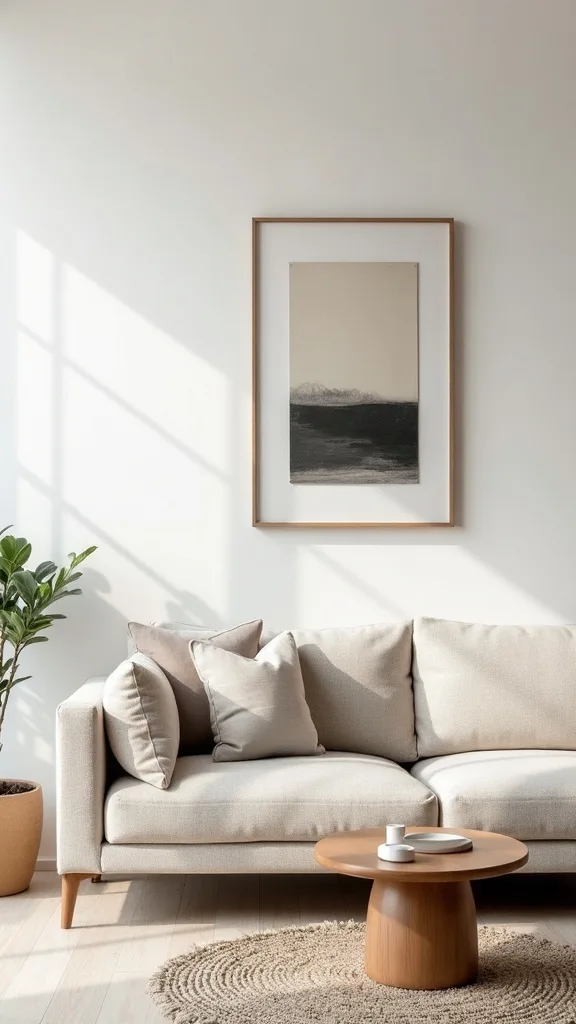
17. How do you pick throw pillows for Japandi without overdoing it?
Japandi pillows are about texture and restraint. It works because a few well-chosen textiles add comfort cues without cluttering the sofa.
Implement it with 2–4 pillows total on a standard sofa, in a tight palette: off-white, oatmeal, muted sage, and maybe one charcoal. Mix textures—linen, cotton, and one nubby or woven cover—while keeping patterns subtle.
Avoid trendy sayings, loud geometrics, and shiny velvet (unless you’re doing a modern direction and keeping everything else very calm). Use feather-down alternative inserts for a relaxed, slightly imperfect shape.
Beginner version: keep your current inserts and just swap covers to linen-look neutrals. Pro tip: one pillow should be slightly larger (like 22″) so the arrangement feels layered, not flat.
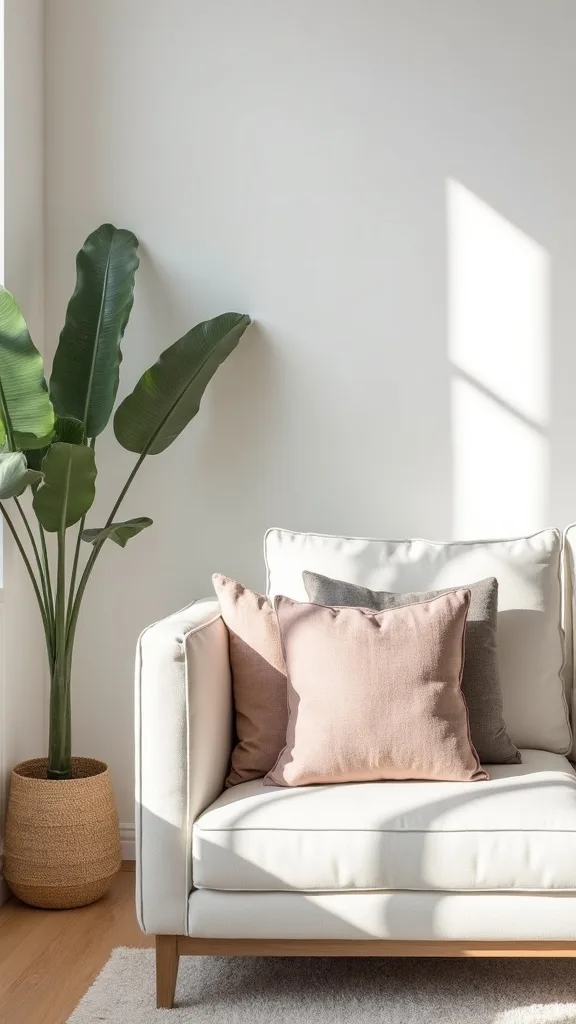
18. What textiles make a minimalist Japandi room feel cozy?
Cozy in Japandi comes from touch, not excess. It works because tactile materials signal comfort to the nervous system—your body relaxes before you even sit down.
Implement it by adding one throw with visible weave, one rug with texture, and curtains that move softly. Keep the textile colors close to your wall and sofa so the room stays low-contrast.
Good product types: a cotton waffle throw for summer, a wool-blend throw for year-round, and a linen cushion on an accent chair. Avoid faux-fur throws in warm months; they can fight the airy summer vibe.
Beginner version: add one textured throw and fold it neatly over the sofa arm instead of draping it messily. Pro tip: when everything is neutral, texture becomes your pattern—choose materials you actually want to touch.
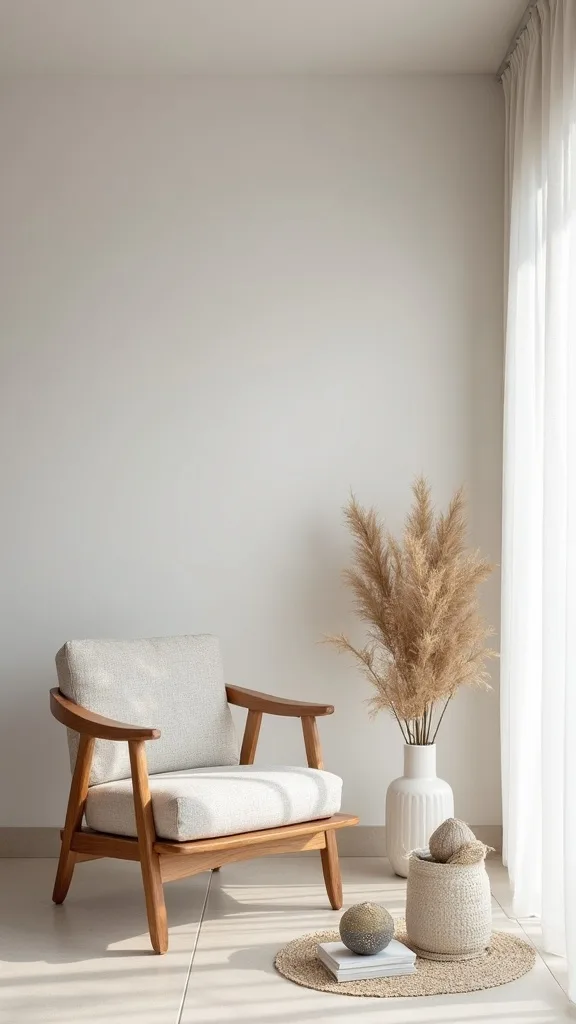
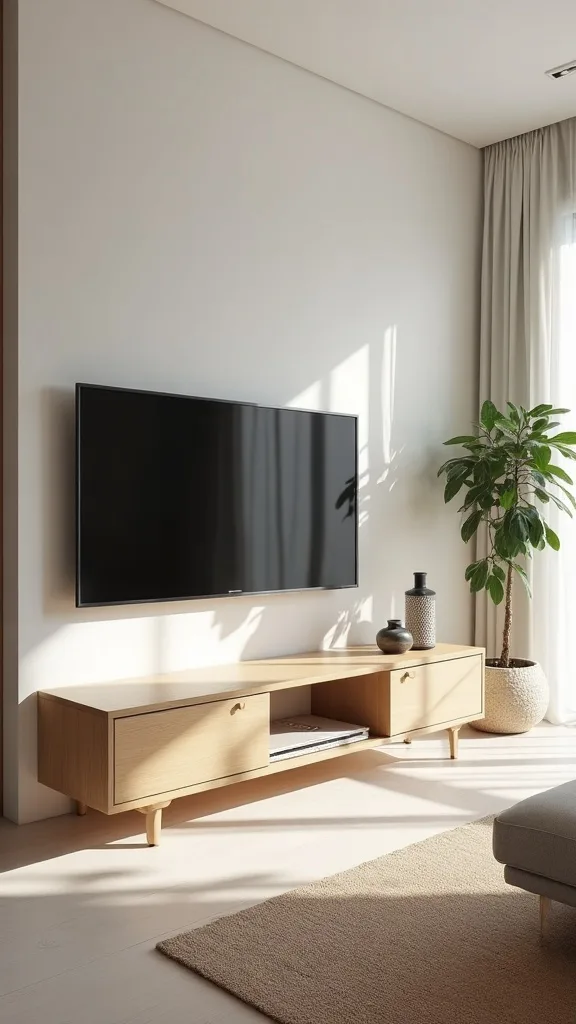
19. How do you make a TV area look Japandi?
A Japandi TV setup should disappear when it’s off. It works because reducing the “black rectangle” dominance keeps the room feeling like a living space, not an electronics bay.
Implement it with a low, long media console in oak or matte black and hide devices in baskets or behind doors. If wall-mounting, keep the TV centered and avoid extra floating shelves. A shoji screen can soften the TV zone from an angle if the layout allows.
Choose cable management tools (cord covers, cable boxes) and keep decor minimal: one ceramic vase or a shallow tray, not a lineup of gadgets.
Beginner version: bundle cords and place a simple lidded basket on the console for remotes. Pro tip: add a small lamp near the TV; a warm glow reduces screen contrast at night and makes the whole corner feel calmer.
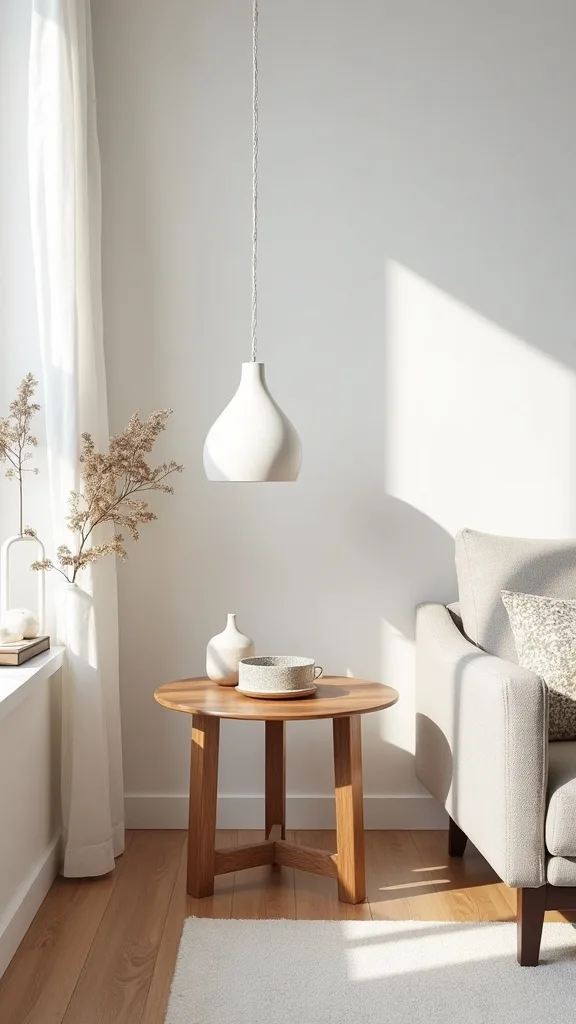
20. What side tables work best with low-profile seating?
Side tables should feel like quiet helpers, not extra furniture. It works because low-profile seating needs proportional companions—too-tall tables make the room feel awkward and top-heavy.
Implement it by choosing tables close to the sofa arm height, with simple silhouettes: drum tables, C-tables, or nesting tables. Keep at least one surface open for daily life—water glass, book, phone—so clutter doesn’t migrate to the coffee table.
Materials that read Japandi: light wood, black metal, stone-look tops, or woven bases. Avoid ornate legs and shiny chrome.
Beginner version: use one slim C-table that can slide under the sofa. Pro tip: pick one table with a small lip or tray top; it prevents spills and keeps the calm intact when real life happens.
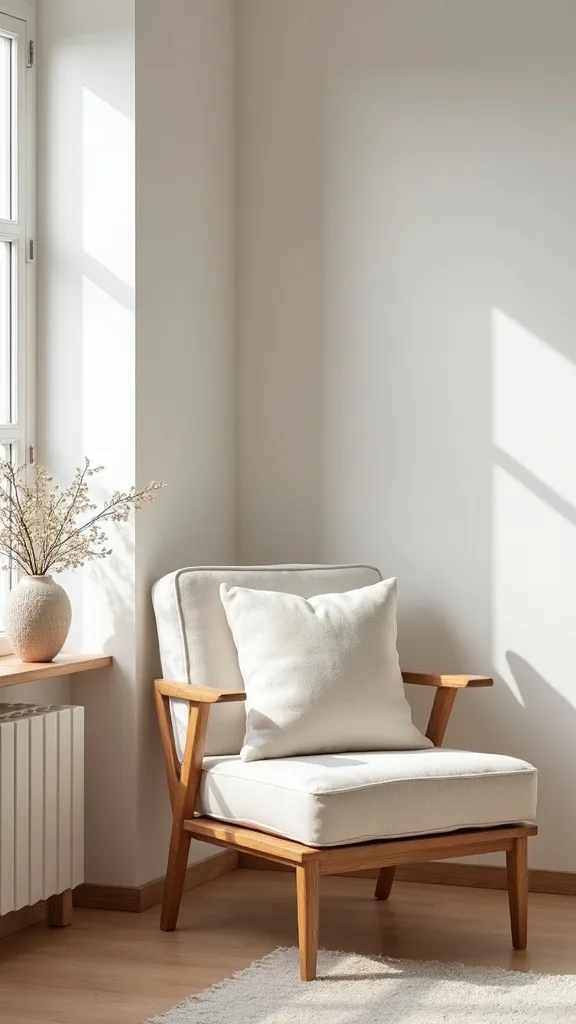
21. How do you create a Japandi reading corner in the living room?
A reading corner is a micro-version of the whole style: low, calm, and intentional. It works because a dedicated nook reduces the urge to spread “activities” across the entire room.
Implement it with one comfortable chair, one small side table, and one focused light. Place it near a window or beside the shoji screen so the corner feels slightly tucked in. Add one soft footrest or floor cushion if you want that grounded Japandi posture.
Choose a chair in neutral upholstery, a wood or black side table, and a paper or linen shade lamp with warm white light (2700K–3000K — the cosy, yellowish tone you see in most homes).
Beginner version: claim one corner with a pillow on an existing chair and add a clip-on reading light. Pro tip: keep one basket for books only—containment is what keeps “cozy” from turning into clutter.
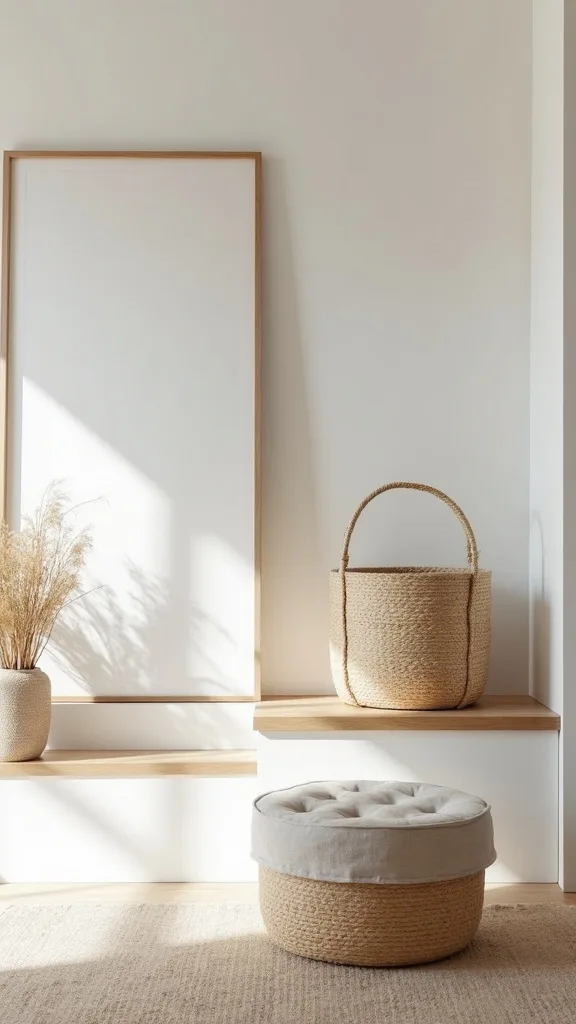
22. How can you use baskets and storage without breaking the minimalist look?
Japandi storage is visible, but composed. It works because you’re not pretending you don’t have stuff—you’re giving it a calm container so the room stays mentally quiet.
Implement it with two to three matching or coordinated baskets: one for throws, one for kids’ items, one for cords/remotes. Place them where clutter naturally accumulates, not where they look cute in photos. Keep labels off; the texture should be the design.
Choose seagrass, water hyacinth, or fabric bins in oatmeal and gray. Avoid plastic and bright colors that pop against a neutral room.
Beginner version: corral everything on the coffee table into a single tray, then add one basket beside the sofa. Pro tip: pick baskets with lids for the messiest categories—instant calm, even on busy days.
23. How do you make Japandi work in a small living room?
Small spaces benefit the most from Japandi’s restraint. It works because fewer, better-scaled pieces reduce visual crowding, making the room feel larger without changing a single wall.
Implement it by choosing one main seating piece (avoid a loveseat + sofa combo) and using armless or open-leg furniture so you can see more floor. A shoji screen can replace bulky shelving by creating a “soft wall” for hiding storage behind.
Go for light wood, slim legs, and a rug that extends under the front legs of seating to unify the footprint. Avoid oversized sectionals and thick, dark curtains that block light.
Beginner version: remove one side chair and replace it with a floor cushion you can tuck away. Pro tip: mount your curtain rod close to the ceiling; that vertical line makes the room feel taller immediately.
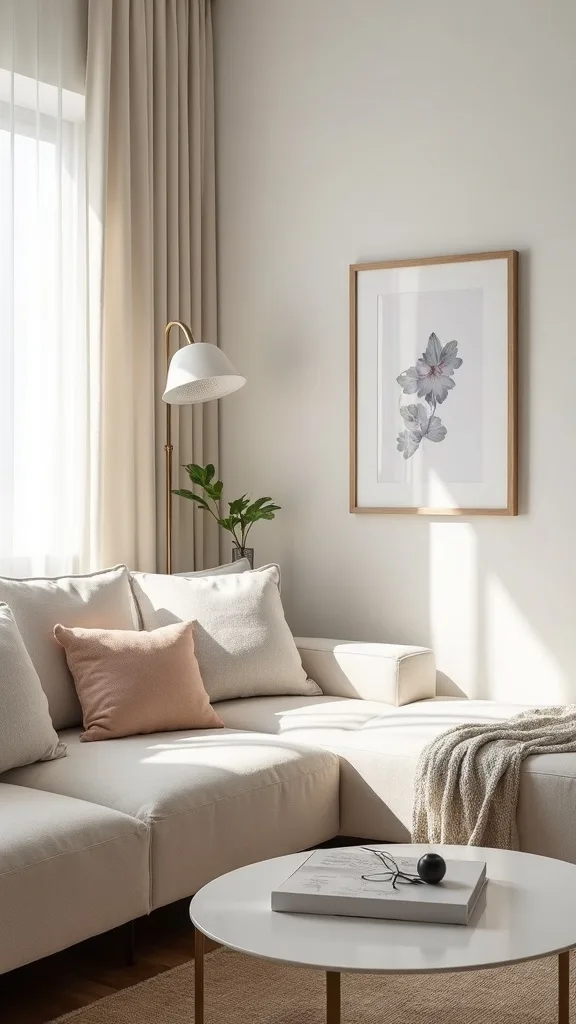
24. How do you add one statement piece while keeping the room calm?
Japandi doesn’t mean “no personality”—it means one clear voice at a time. It works because a single statement gives your eye a destination, which makes everything else feel quieter by comparison.
Implement it by choosing one hero: a sculptural floor lamp, a large ceramic vessel, a bold-grain coffee table, or a dramatic branch arrangement. Place it where it can be seen from the entry so it reads as intentional design, not an afterthought.
Keep the statement within your palette—black, oak, off-white, or muted sage—so it’s strong in form, not loud in color. Avoid multiple statement items competing across the room.
Beginner version: make your bonsai the statement by elevating it on a small stand and clearing everything else nearby. Pro tip: when the statement is quiet but confident, the whole room feels like it has a point of view.
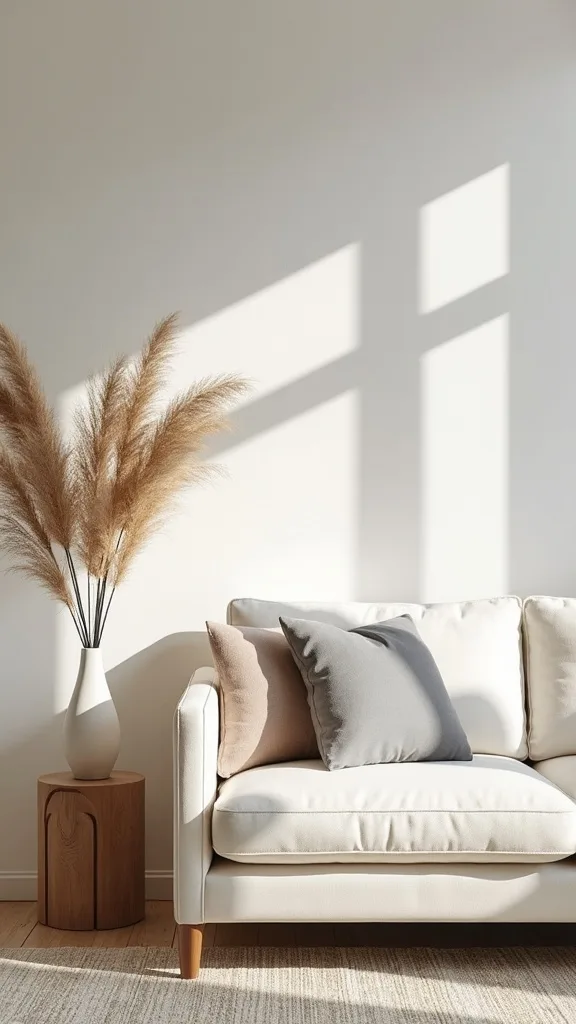
25. What’s the one layout move that instantly signals Japandi?
Lower the visual horizon. It works because when furniture sits lower—sofas, tables, decor—the room feels grounded, spacious, and calm, which is the emotional core of the aesthetic.
Implement it by choosing low-profile seating, a lower coffee table, and keeping tall items (bookcases, cabinets) to the edges of the room. Use the shoji screen as a mid-height layer so the room has depth without towering bulk.
Stick to light woods and matte finishes. Add one vertical element—like a tall plant or a slim floor lamp—so the room doesn’t feel squashed.
Beginner version: remove tall clutter from surfaces and place decor lower (a bowl on the coffee table instead of a tall centerpiece). Pro tip: once the horizon drops, your room feels like a retreat—quiet, breathable, and ready for summer afternoons.
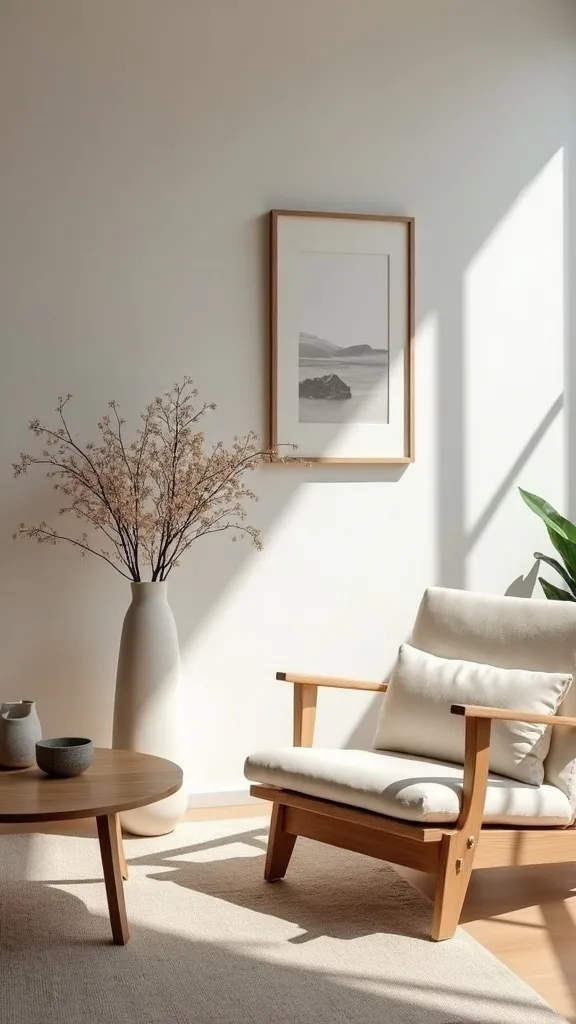
Final Thoughts
Japandi works because it gives your brain fewer decisions to make inside the room. The payoff isn’t just a prettier space—it’s a space that feels easier to live in during bright, busy summer days, when every extra object can feel like heat.
If you try only one thing from this list, make it a low-contrast “scene” you can see from the doorway: sofa, rug, lamp, and one living accent like a bonsai. Once that scene feels settled, the rest of the room falls into line naturally—because you’ll have a standard for what belongs.
The single most important thing to get right is the negative space. Today, clear one surface completely (coffee table or media console), then put back only three items—a tray, one book stack, and one ceramic or plant—so the room finally has room to breathe.
What I’d Do Differently
When I first tried this, I thought Japandi meant “remove everything until it looks like a hotel.” I cleared my shelves, bought two beige pillow covers, and called it done—then wondered why the room felt flat and oddly uncomfortable. The specific mistake was skipping texture and scale: my coffee table was too tall, my lighting was a single overhead fixture, and the few decor pieces I kept were all the same small size. The fix was almost embarrassingly simple: I lowered the visual horizon with a lower table, added one paper-shade lamp with warm white light (2700K–3000K — the cosy, yellowish tone you see in most homes), and introduced one handmade-looking ceramic bowl that didn’t match anything perfectly.
I also wish I’d known to pick one “scene” and protect it—mine became the sofa + divider corner. Once that area looked calm, it guided every decision after. Start by choosing your one anchor vignette today, then remove anything within it that doesn’t earn its space.
Products I Recommend for This Project
Here are some of my favourite products to help you bring these ideas to life:
- Roundhill Furniture Japanese Shoji Screen Room Divider (4-Panel) — Creates instant architectural calm and hides visual clutter without blocking light.
- QPLO Modern Rice Paper Floor Lamp with Lantern Shade — Adds soft ambient glow that flatters white walls and warm wood tones.
- Govee Smart Light Bulbs (Warm White + Dimmable) — Lets you set warm white light (2700K–3000K — the cosy, yellowish tone you see in most homes) and dim it for evening calm.
- nuLOOM Wynn Braided Indoor Area Rug (Neutral) — Brings in texture with a low-key pattern that won’t compete with minimalist styling.
- Winlyn Artificial Bonsai Tree in Ceramic Pot — Delivers the muted sage bonsai look with zero maintenance for a consistent, sculptural accent.