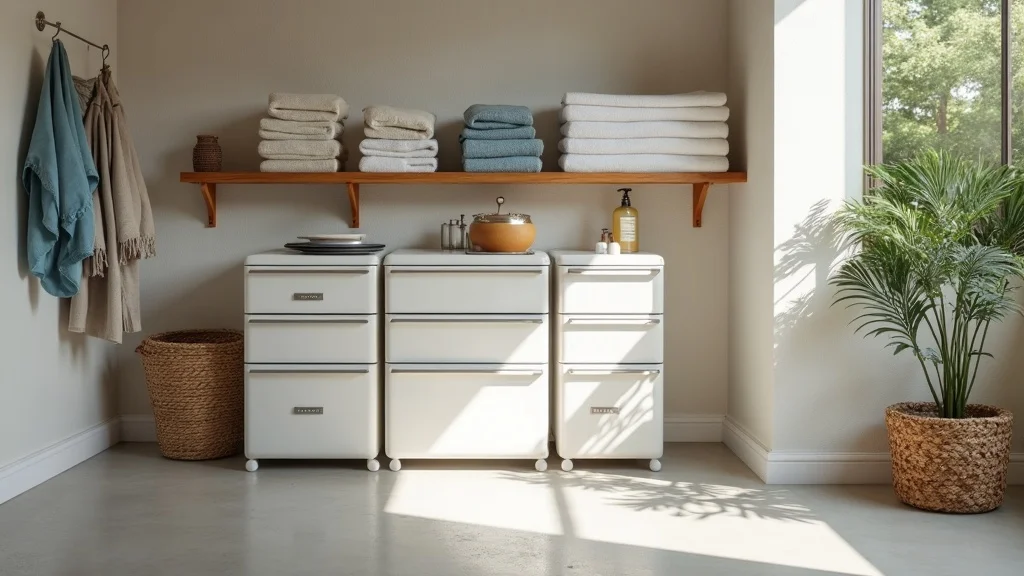

This post contains affiliate links. As an Amazon Associate, I earn from qualifying purchases at no extra cost to you.
The fastest way to hate your linen closet is to treat it like a soft-stuff junk drawer. One minute you’re “just tossing in” beach towels, and the next you’re digging for a washcloth while a tower of sheets avalanches onto your feet.
The central principle that fixes this is simple: make retrieval the goal, not storage. When you organize for the moment you’re tired, in a hurry, and holding a dripping kid’s towel, your closet becomes a tool instead of a puzzle.
This is perfect for anyone doing a summer organization reset—especially if your linens live in a hallway closet, a bathroom closet, or even a utility area off the garage where things tend to become “temporary.”
Inside you’ll see towel folding ideas that don’t collapse, linen closet ideas that work in modern, traditional, and transitional homes, and a few small upgrades—matching bins, color-sorted stacks, and a label system—that make a bigger impact than new shelves.
Below are 25 Linen Closet Organization Ideas that turn closet organization into a calm, repeatable routine—so you can find what you need in seconds and put it back just as easily.
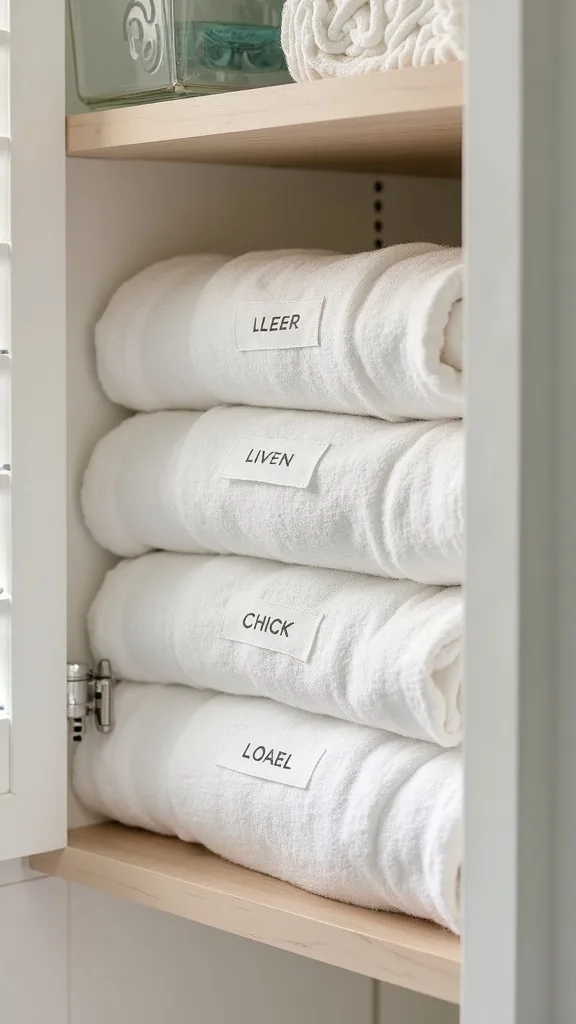
1. Start with the KonMari towel fold + matching bins + color-sorted linens + label maker refresh
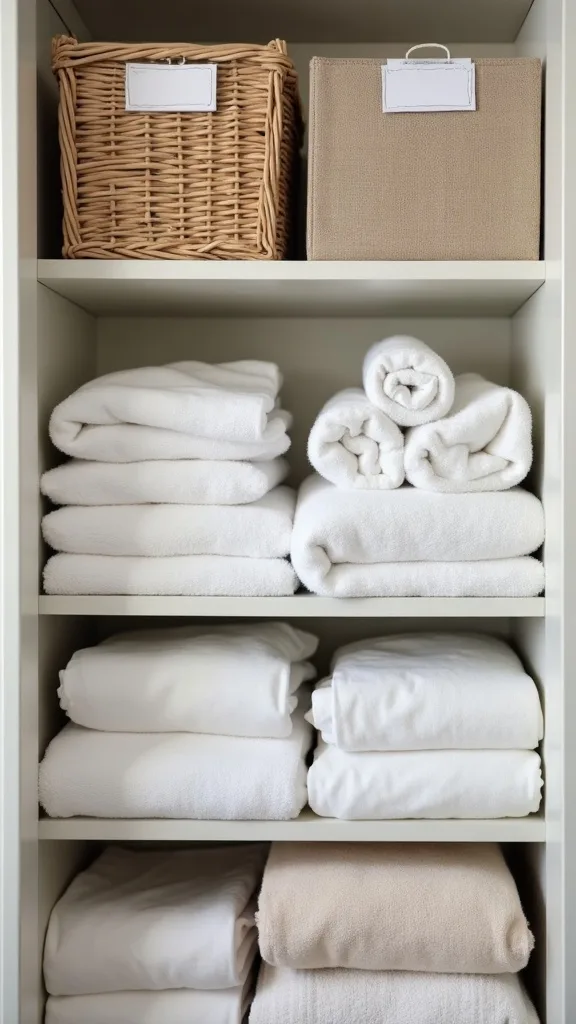
This idea is a full reset built on one psychology win: visual clarity reduces decision fatigue. When towels stand upright, bins match, colors are grouped, and labels tell the truth, your brain stops “searching” and starts “grabbing.”
Implement it in one pass: pull everything out, sort by category (bath towels, hand towels, washcloths, sheets), then fold towels using the KonMari towel fold method so they stand like files. Place each category into matching bins or shelf zones, then label the front edge so it’s readable at a glance.
Choose neutral bins for modern spaces, woven-look bins for traditional homes, or clear bins for transitional practicality. For colors, go by family (whites, blues, neutrals) rather than perfect gradients.
Pro tip: print two labels per category—one for the bin and one for the shelf lip—so items land correctly even when someone else “helps.” A closet that resets itself feels like a tiny daily luxury.
2. How do you declutter a linen closet fast without overthinking it?
This works because limits create instant decisions. If you try to evaluate every towel emotionally, you’ll stall; if you set a cap per category, you’ll move.
Implement it with a simple rule: keep only what fits the shelf when folded neatly, plus one backup set per bathroom or guest bed. Put all extras in a laundry basket, then do a 10-minute reality check: stained, scratchy, or mismatched items become cleaning rags or donation.
For modern style, keep a tight neutral palette and donate loud one-offs. For traditional, keep heirloom quilts but store them in breathable cotton bags. For transitional, keep function-first solids that mix easily.
Beginner version: set a timer for 20 minutes and remove just the “obvious no’s.” Pro tip: avoid keeping “almost good” towels—those are the ones that clog your bathroom closet storage and never get chosen. Less inventory makes every fold feel easier.
3. What’s the best way to divide shelves into zones that stay organized?
Zoning works because it creates predictable homes for items, which is what makes a system stick. If one shelf holds “linens,” everything becomes everything.
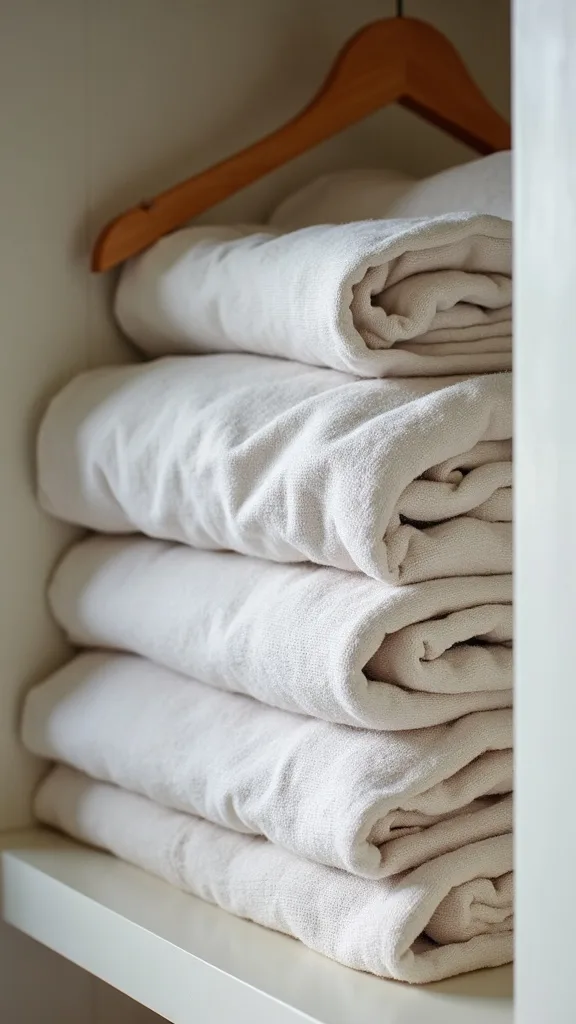
Assign each shelf one job: top shelf for guest bedding, eye-level for daily towels, lower shelf for washcloths and toiletries, and a backstock shelf for paper goods if you must. Use shelf dividers or bins so stacks can’t drift sideways.
Modern: straight acrylic dividers and identical bins. Traditional: wood or wire dividers with cotton-linen labels. Transitional: a mix—clean bins with softer label fonts.
Beginner version: use painter’s tape to mark temporary shelf zones for one week before buying anything. Pro tip: keep the most-used items between chest and eye level—your body will “vote” for the easier shelf every time, and that’s how good closet organization becomes automatic.
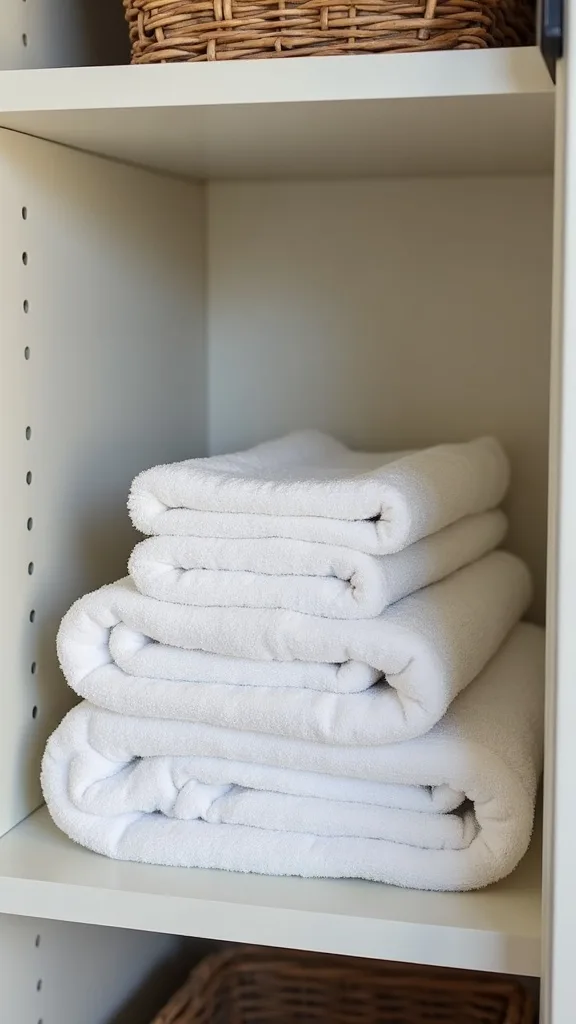
4. How should towels be folded so stacks don’t topple over?
Stable folding works because it reduces micro-messes—the tiny collapses that eventually turn into chaos. A neat stack that falls once becomes a messy stack forever.
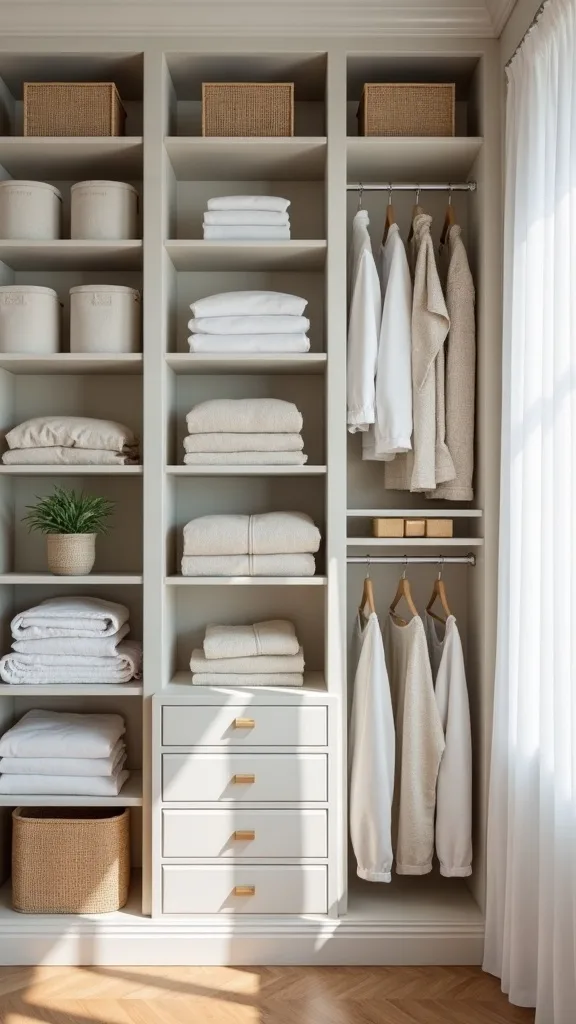
Use towel folding ideas that prioritize structure: fold into thirds lengthwise, then in half, and store upright (file-style) or in short stacks no taller than 10–12 inches. If you prefer stacks, place the largest bath towels on bottom, hand towels in the middle, washcloths in a small bin.
Modern: crisp white stacks with one accent color row. Traditional: rolled towels in a basket for a spa look. Transitional: file-folded towels in labeled bins.
Beginner version: pick one folding style and commit—mixed folding is a hidden clutter creator. Pro tip: avoid overstuffing shelves; leave a 1–2 inch “breathing gap” so you can pull one towel without dragging the whole pile with it.
5. How do you organize sheets so you can find the right set instantly?
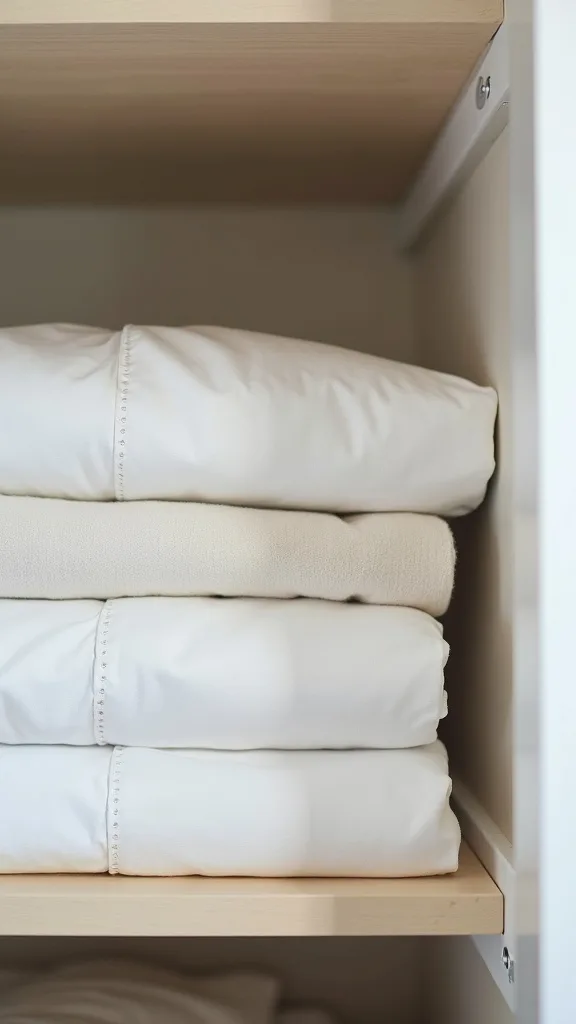
Sheet organization works because it removes the worst closet behavior: the frantic sheet dig. When sets are paired, your closet stops punishing you for laundry day.
Fold each sheet set together—fitted sheet, flat sheet, and pillowcases—and store them as one unit. Use a fabric zip bag, a clear zipper pouch, or the “pillowcase wrap” method where everything goes inside one matching pillowcase.
Modern: store sets vertically in clear bins, labeled by size (Queen, Twin). Traditional: keep seasonal flannel sets in breathable cotton bags. Transitional: neutral sets grouped by bed/room name.
Beginner version: just label stacks by size with a sticky note until you’re consistent. Pro tip: avoid mixing sizes on one shelf; it guarantees re-folding later. A closet that lets you grab a full set in one motion is the definition of calm.
6. Where should guest towels and guest bedding live in a small closet?
This works because it separates daily friction from occasional needs. If guest items sit in the prime spot, you’ll disrupt your system every week.
Put guest bedding and “nice towels” on the top shelf or in the back, ideally in a lidded bin labeled “Guest.” Add a second label inside the bin listing what’s included (1 queen set, 2 bath towels, etc.) so you know when it’s incomplete.
Modern: a single matte bin with a clean label. Traditional: a canvas bin with stitched tag. Transitional: clear bin with a simple label strip.
Beginner version: use one large pillowcase as a temporary guest towel bag. Pro tip: avoid storing guest items loose; loose items migrate and become “mystery towels.” When guests arrive, you’ll feel prepared instead of scrambling.
7. How can you use matching bins without wasting space?
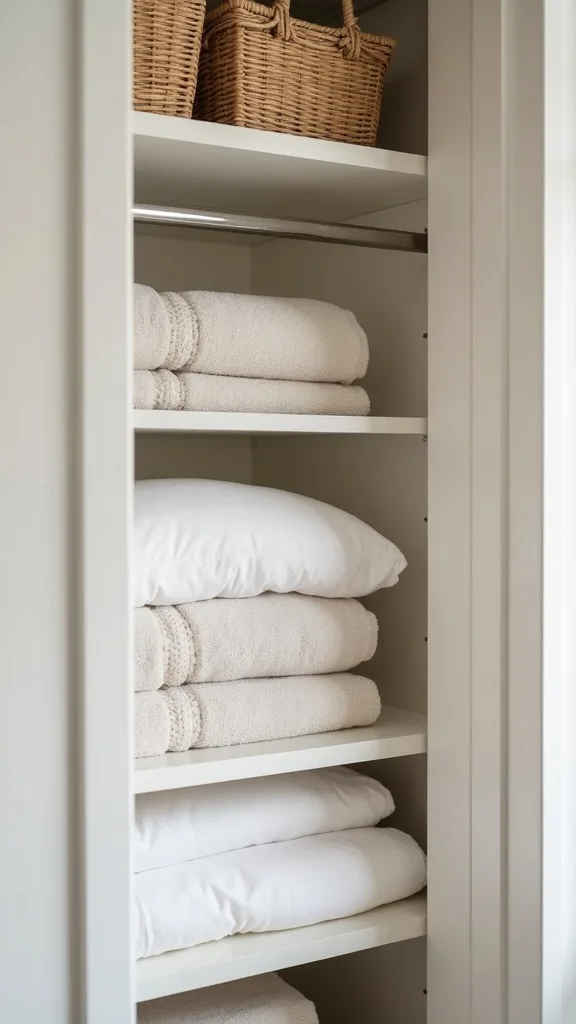
Matching bins work because they create visual boundaries, which keeps categories from blending. The trick is choosing bins that fit your shelves, not your feed.
Measure shelf depth and height before buying—many linen shelves are 10–12 inches deep, so 10-inch-deep bins prevent dead space. Use two small bins instead of one large one for washcloths and travel items so you can pull a category out like a drawer.
Modern: solid plastic bins with squared edges. Traditional: woven-look resin bins that wipe clean. Transitional: clear bins with white handles.
Beginner version: repurpose shoeboxes for a week to test sizes. Pro tip: avoid over-tall bins on high shelves; you’ll forget what’s inside. A bin system should make your closet feel simpler, not more sealed-up.
8. What labels actually hold up in humid bathroom closets?
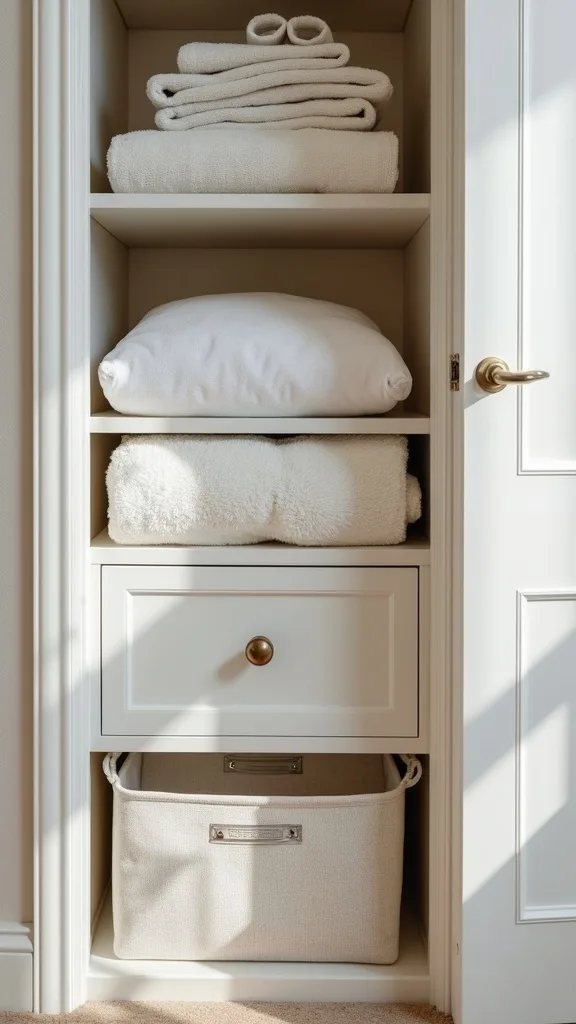
Labels work because they eliminate the moment of “where does this go?”—the moment that creates piles. In humidity, though, the wrong label turns into a curled sticker mess.
Use a label maker with laminated tape, or choose waterproof vinyl labels. Place labels on the front lip of shelves and the front of bins—where you can read them without pulling items out.
Modern: black-on-white tape for high contrast. Traditional: cream labels with serif fonts. Transitional: simple all-caps labels on clear bins.
Beginner version: write on painter’s tape with a marker and replace later. Pro tip: avoid labeling by brand (“Costco towels”)—label by function (“Bath Towels”). Function-based labels survive changing products, which is the secret to long-term closet organization.
Cost & Materials Estimate
A practical linen closet refresh typically costs $35–$140 depending on whether you add bins, dividers, and a label maker.
| Item | Estimated Cost | Where to Buy |
|---|---|---|
| Set of 4–6 shelf bins (10–12 in deep) | $24–$60 | IKEA / Amazon |
| Clip-on shelf dividers (set of 4) | $18–$35 | Amazon / Wayfair |
| Label maker + 1 tape refill | $25–$55 | Amazon / Home Depot |
| Over-the-door hook rack or pocket organizer | $12–$28 | Amazon / Lowe’s |
| Moisture absorber (2-pack) | $10–$18 | Home Depot / Amazon |
Total estimated cost: $89–$196 Save money by reusing shoeboxes first, then splurge on a label maker because it’s the part that keeps the system consistent.
9. How do you store extra toiletries without turning the closet into a stockroom?
This works because it uses container limits to control backstock. Without a limit, extra shampoo becomes a permanent second store.
Pick one bin for “Backstock Toiletries” and one for “First Aid.” Keep them on a lower shelf for safety and weight. Refill daily items from the bin, and when the bin is full, you’re at capacity—no more buying until you use some.
Modern: clear bins so you see duplicates. Traditional: lidded bins to hide visual noise. Transitional: handled bins that pull out easily.
Beginner version: use a reusable grocery bag as a temporary backstock container. Pro tip: avoid storing aerosols near heat (like a garage-adjacent closet); keep temperature-sensitive items inside the home. A controlled bin beats a cluttered shelf every time.
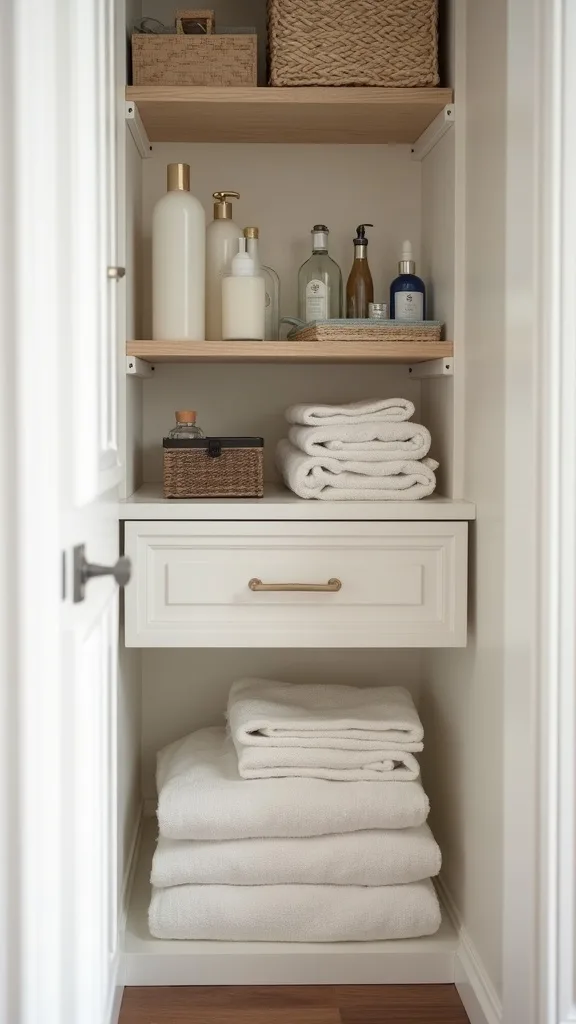
10. What’s the smartest way to organize washcloths and hand towels?
Small linens cause big messes because they slip between stacks. Containing them works because it creates easy repetition—the same motion every time.
Store washcloths in a small open bin at eye level or in a shallow drawer-like bin. Hand towels can be file-folded upright or stacked in short piles by color or bathroom.
Modern: monochrome washcloths in a crisp bin. Traditional: rolled hand towels in a basket for a guest-ready look. Transitional: neutral stacks with one accent color row.
Beginner version: dedicate one shoebox-size bin to washcloths and stop there. Pro tip: avoid mixing kitchen rags with bath washcloths; it creates confusion and laundry friction. Clear categories are the foundation of reliable bathroom closet storage.
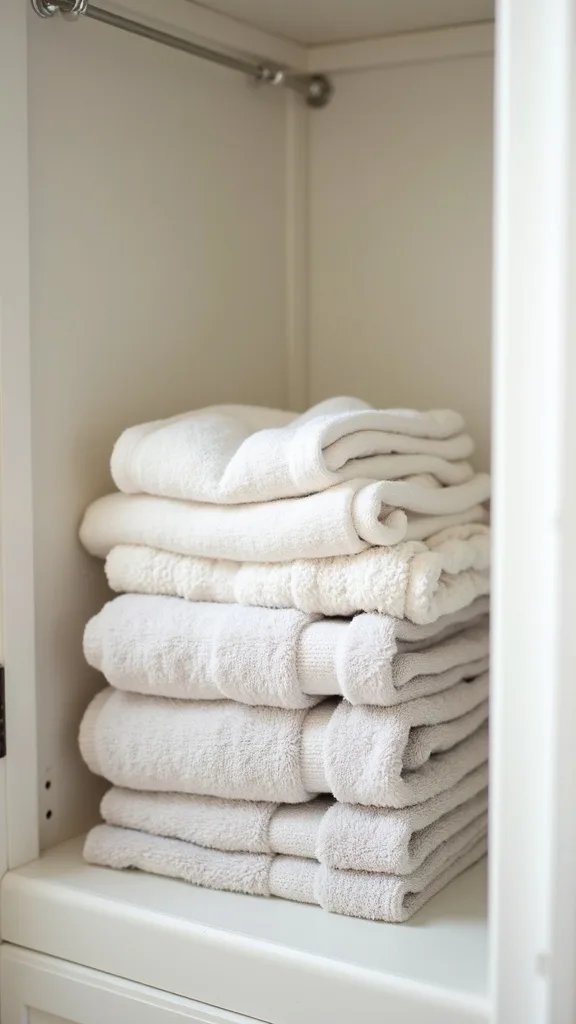
11. How do you organize beach towels and pool towels for summer?
Summer towels are bulky and high-turnover, so they need a system built for speed. This works because it creates a seasonal lane—a temporary zone that prevents overflow.
Give beach/pool towels their own bin or shelf during summer. Store them rolled or file-folded so damp-ish towels don’t compress everything; if towels are truly wet, they shouldn’t go in the closet at all—hang them first.
Modern: a tall bin with a simple “POOL” label. Traditional: a canvas tote stored on the bottom shelf. Transitional: a lidded bin to keep the rest of the closet looking calm.
Beginner version: place a laundry basket near the closet for “used but reusable” towels for the week. Pro tip: avoid stuffing sandy towels in with bath towels—sand spreads, and suddenly every towel feels gritty. A seasonal system keeps your daily towels feeling fresh.
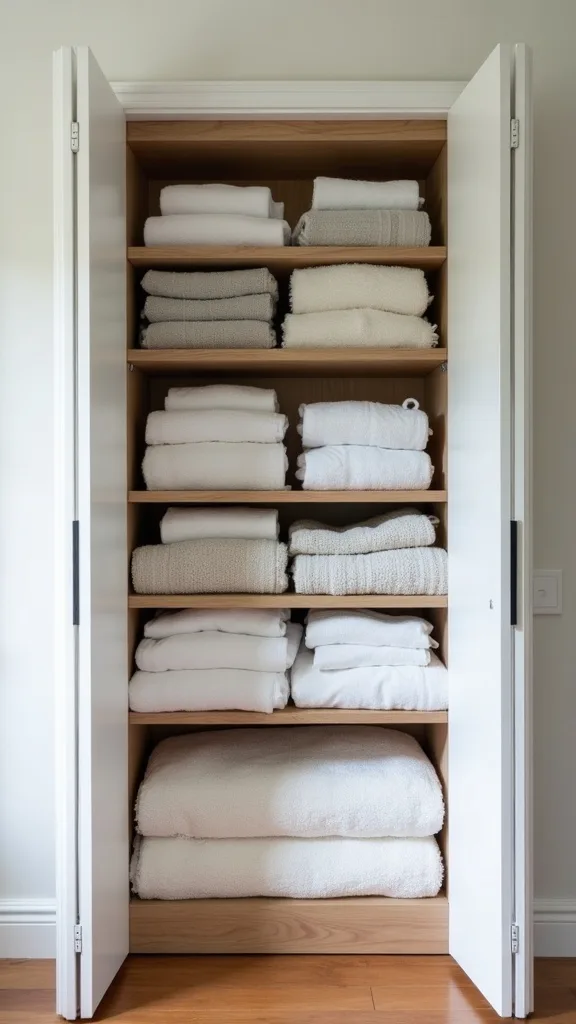
12. Where should cleaning rags and ‘not nice’ towels go?
This works because it honors reality: some linens are not for faces anymore. Separating them reduces gross-out moments and keeps good towels from being sacrificed.
Create a clearly labeled “Cleaning” bin on the lowest shelf or in a nearby utility area. Cut truly worn towels into rags and store them folded in a small bin so you can grab one without unfolding a mess.
Modern: a black bin to visually separate utility items. Traditional: a labeled galvanized bucket (lined) or sturdy basket. Transitional: clear bin with bold label.
Beginner version: one paper grocery bag labeled “RAGS” works today. Pro tip: avoid storing cleaning rags next to guest towels—people will grab wrong in a hurry. A little separation protects your everyday comfort.
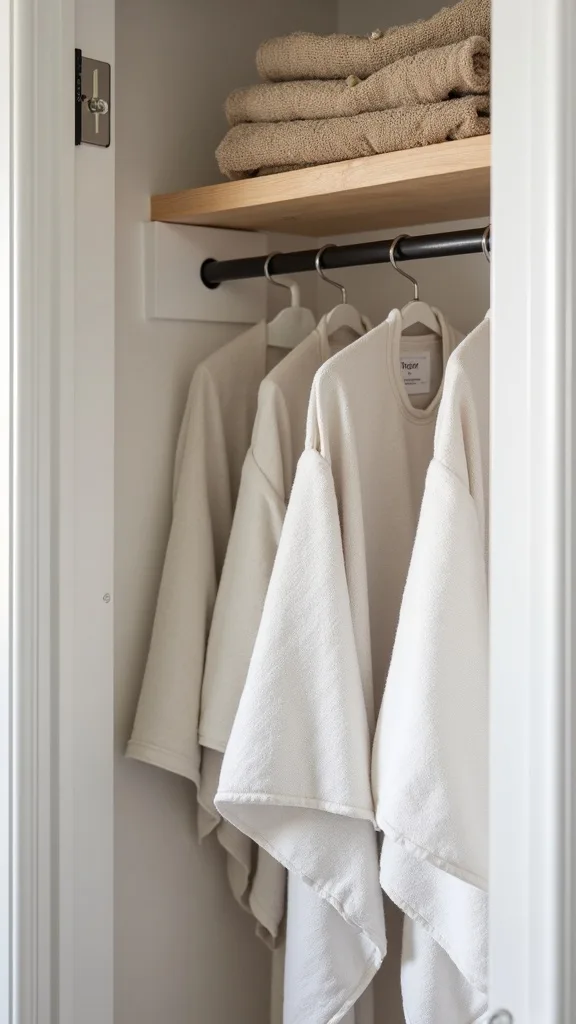
13. How can shelf dividers upgrade a linen closet without a remodel?
Shelf dividers work because they prevent sideways drift. Stacks don’t just fall forward—they slowly slouch into each other until everything becomes one lumpy pile.
Clip-on dividers are the easiest: place one between towel stacks and one between sheet stacks. If your shelves are thick, choose freestanding dividers or use bins as “walls.”
Modern: clear acrylic for a barely-there look. Traditional: white-coated metal for a classic linen-closet vibe. Transitional: a mix—dividers for towels, bins for small items.
Beginner version: use two bookends as temporary dividers. Pro tip: avoid making stacks wider than your forearm; wide stacks are hard to pull from and guarantee re-folding. A divider turns a “nice for a day” closet into a system that lasts.
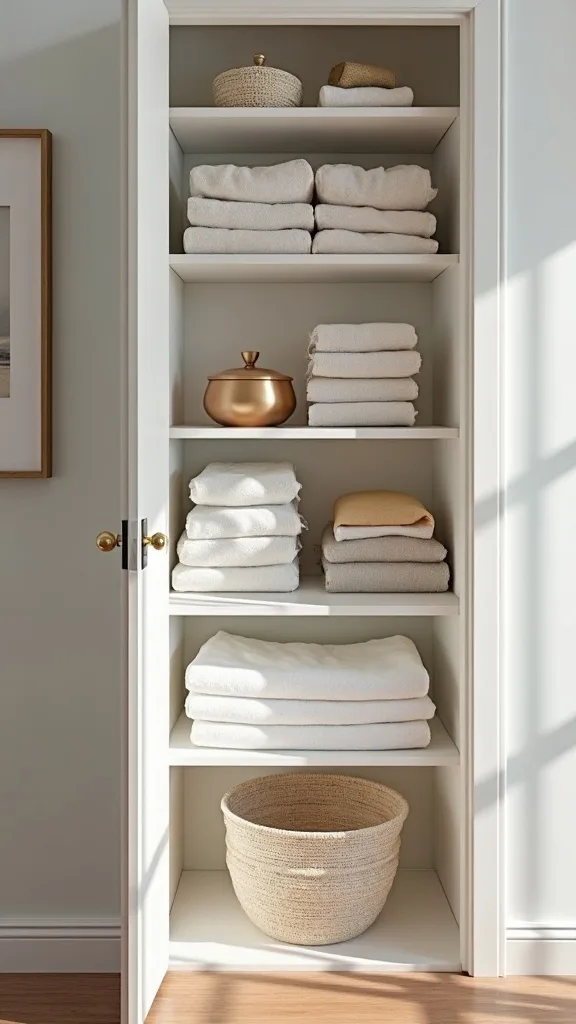
14. What’s the best way to use the back of the linen closet door?
The back of the door is valuable because it’s prime vertical real estate. This works by creating micro-storage for light items without stealing shelf space.
Add an over-the-door rack with hooks for hair towels, shower caps, or a small caddy for travel-size items. Keep it lightweight—doors aren’t meant to hold heavy bulk.
Modern: slim metal rack in black or white. Traditional: brushed nickel hooks that match your bathroom hardware. Transitional: a clear pocket organizer for easy visibility.
Beginner version: install two adhesive hooks for hair towels. Pro tip: avoid hanging anything that snags (like loofahs) where it rubs shelves; it creates visual clutter and wear. Door storage should feel like a helper, not a junk magnet.
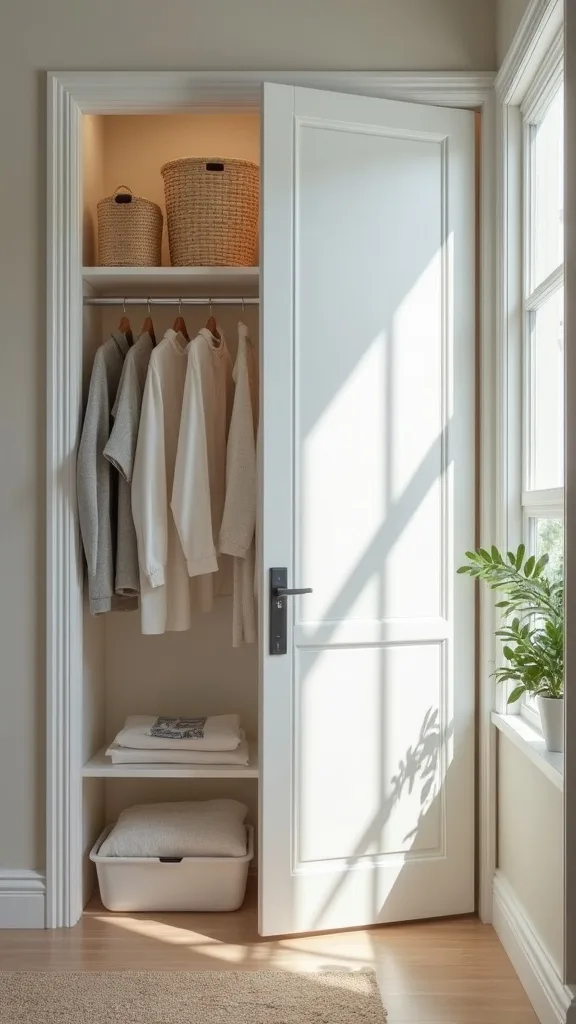
15. How do you organize a linen closet that’s near the garage or mudroom?
Garage-adjacent closets collect “in-between” items—sports towels, picnic blankets, cleaning supplies. This works because it sets hard boundaries between indoor linens and utility gear.
Use two zones: “Indoor Bath & Bedding” and “Utility & Outdoor.” Keep utility items in lidded, wipeable bins on the bottom shelf, and store indoor linens higher and cleaner.
Modern: sealed bins with minimal labels. Traditional: sturdy handled bins that can travel to the car. Transitional: clear bins for utility, soft bins for indoor.
Beginner version: put a single bin labeled “OUTDOOR” on the lowest shelf and stop mixing. Pro tip: avoid storing anything damp or dirty in the closet “for later”—later becomes mildew. A boundary system keeps your linens smelling like laundry, not the garage.
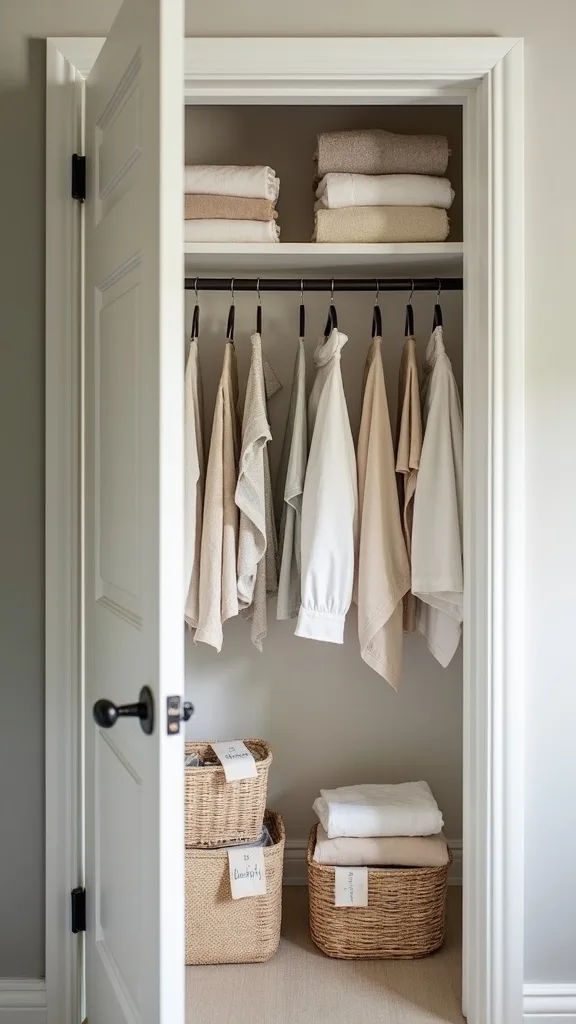
16. What linen closet ideas work best for modern homes?
Modern style thrives on clean lines and low visual noise, which reduces stress. This works because uniformity makes mess look smaller—and makes tidying faster.
Choose one bin style, one label style, and a tight color palette (white, gray, sand, or black accents). Store towels file-folded, group sheets in matching zip bags, and keep one “misc” bin only if it’s labeled and capped.
Product types to consider: matte bins, clear dividers, slim over-door racks, and laminated labels. Choose towels in two colors max—one main, one accent.
Beginner version: start by making just one shelf monochrome (all white towels together). Pro tip: avoid mixing patterns in a modern closet; it instantly reads as clutter. A modern linen closet should feel like opening a calm drawer, not a crowded cabinet.
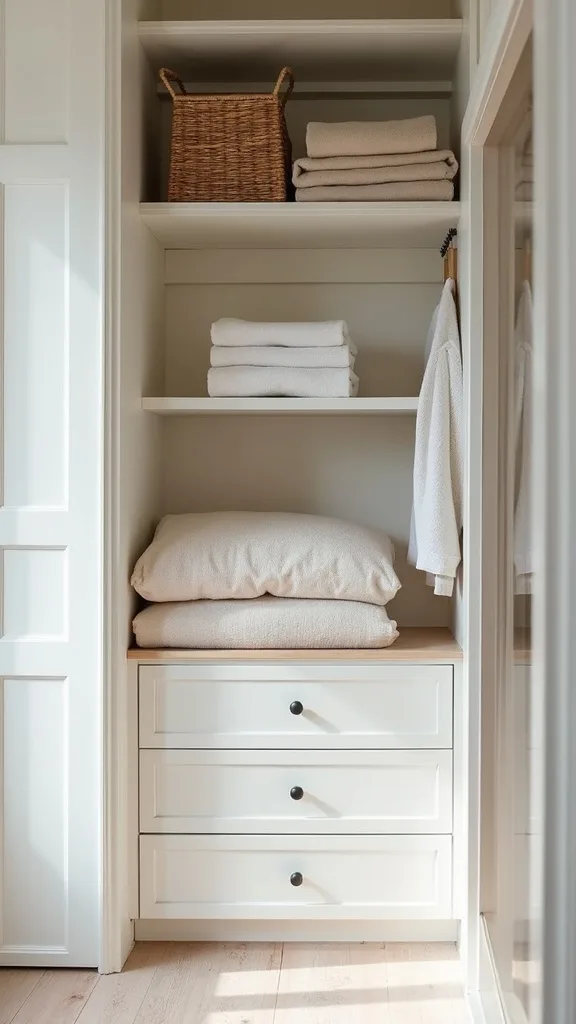
17. What linen closet ideas work best for traditional homes?
Traditional homes often have layered textiles—quilts, extra blankets, guest linens. This works because it uses display-like order while still being practical.
Stack blankets by weight (light to heavy) and store heirloom pieces in breathable cotton bags. Add woven baskets for washcloths and sachets if you like a subtle linen scent.
Choose warm neutrals, soft whites, and classic stripes. Product types: woven baskets, cotton storage bags, wood-tone shelf risers, and simple tag-style labels.
Beginner version: dedicate one basket to “guest-ready” hand towels so you can set them out fast. Pro tip: avoid vacuum bags for delicate natural fibers long-term; compression can create stubborn creases and musty smells. Traditional organization is about care as much as order.
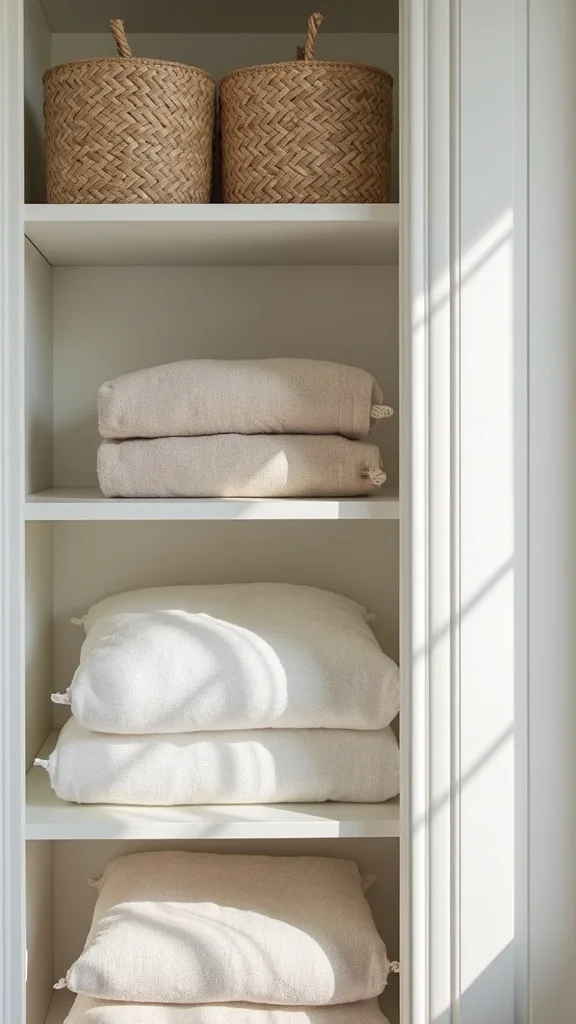
18. What linen closet ideas work best for transitional homes?
Transitional style sits between clean and cozy. This works because it balances visibility and softness—you can see what you need, but the closet doesn’t look clinical.
Use clear bins for backstock and soft-sided bins for towels. Keep labels consistent and use color-sorted linens (neutrals together, colors together) without forcing a perfect rainbow.
Product types: clear handled bins, fabric cubes, a compact label maker, and shelf dividers. Colors: white + oatmeal + one muted accent (sage, navy, or charcoal).
Beginner version: switch just one category (like washcloths) into a labeled bin and see how quickly it stays tidy. Pro tip: avoid buying containers before you purge; transitional systems fail when bins become storage for “extra” everything. Balance is the whole point.
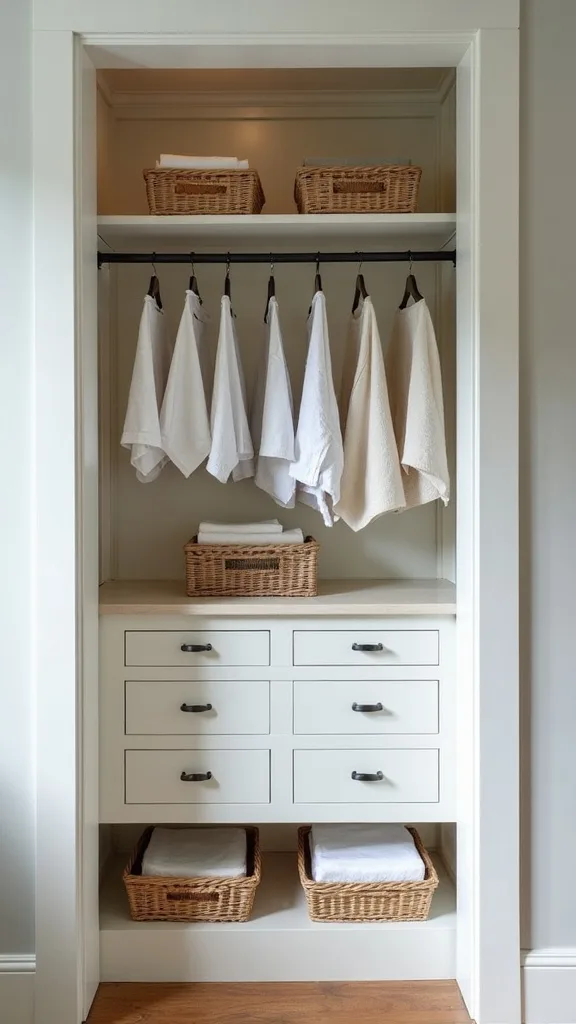
19. How do you keep a linen closet from getting messy again?
Maintenance works when it’s built into your habits. This works because it creates tiny resets instead of big cleanouts.
Do a 2-minute reset after laundry: put items back by label, not by “where it fits.” Once a month, pull one bin and do a quick check for empties, duplicates, or items that migrated.
Modern: keep a minimalist “one-in, one-out” towel rule. Traditional: rotate seasonal blankets twice a year. Transitional: keep a small donation bag nearby.
Beginner version: pick one non-negotiable—like always returning towels to the correct bin. Pro tip: avoid the “misc shelf.” If you need one, make it a bin with a lid and a limit. A closet stays organized when it’s easier to do it right than to do it fast.
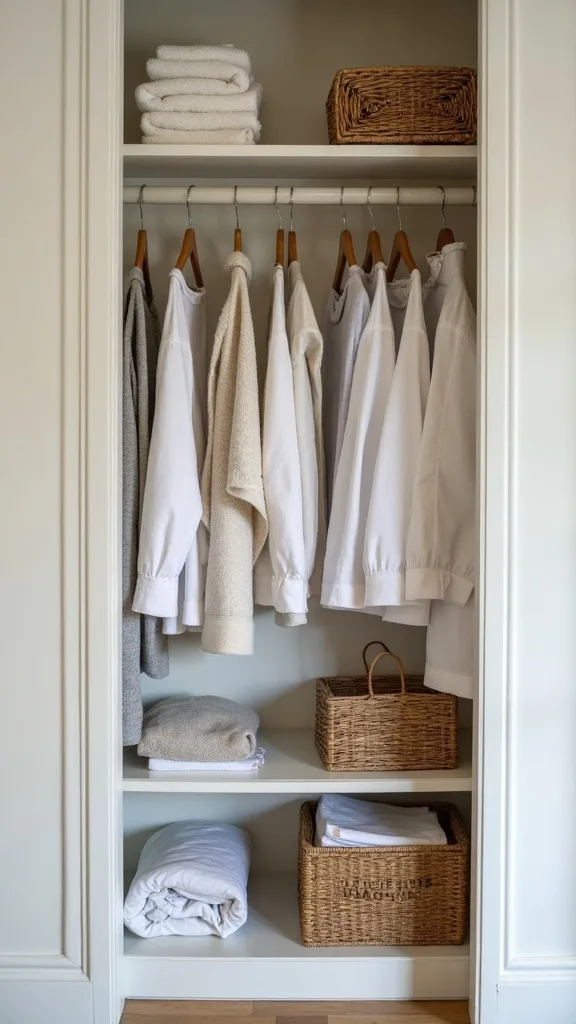
20. How can you add storage height with shelf risers (without drilling)?
Risers work because they capture wasted vertical space, turning one shelf into two zones. This works by creating instant layers for small stacks.
Add a shelf riser to separate hand towels from washcloth bins, or to store pillowcases on top with sheet sets below. Choose a riser that’s stable and leaves enough clearance to pull items out smoothly.
Modern: white or clear risers. Traditional: wood-tone risers that feel furniture-like. Transitional: metal risers with clean lines.
Beginner version: use a sturdy wire cooling rack as a temporary riser. Pro tip: avoid risers on overstuffed shelves; they only amplify chaos. A riser is best when your categories are already defined—then it feels like you gained a shelf for free.
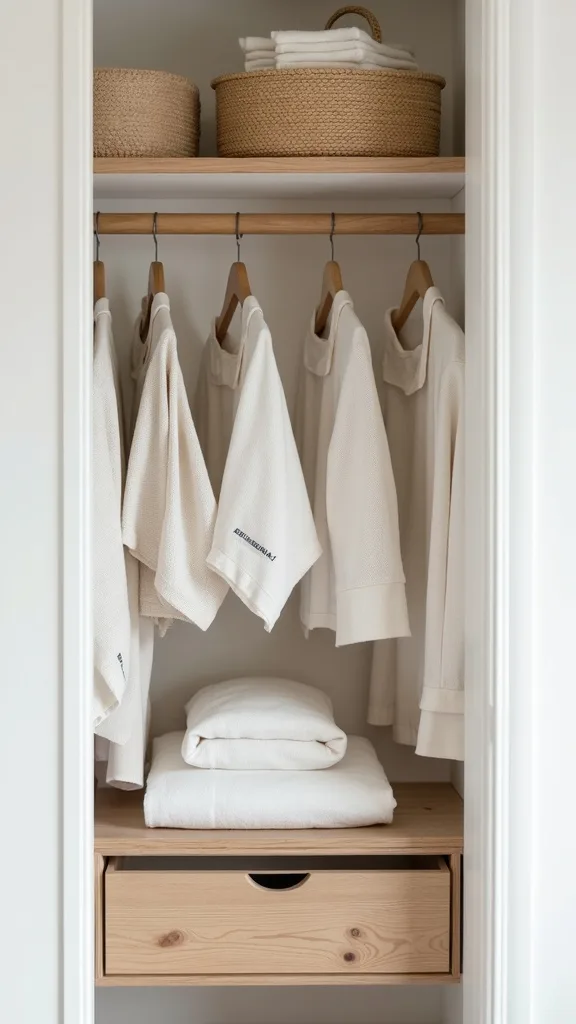
21. What’s the best way to store bulky blankets and comforters?
Bulky items cause closets to bulge and shelves to bow. This works because it uses containment and compression thoughtfully.
Store one comforter per bed in a breathable zip bag or a fabric storage bag with a handle. If you need compression, use a vacuum bag for short-term seasonal storage, then air items out before use.
Modern: uniform zip bags labeled by bed size. Traditional: canvas blanket bags with tag labels. Transitional: clear bags with soft handles.
Beginner version: fold bulky blankets into a large pillowcase as a temporary cover. Pro tip: avoid cramming comforters onto the top shelf without a bag—edges catch, stacks slide, and everything looks messy. Contained bulk makes the whole closet feel more spacious.
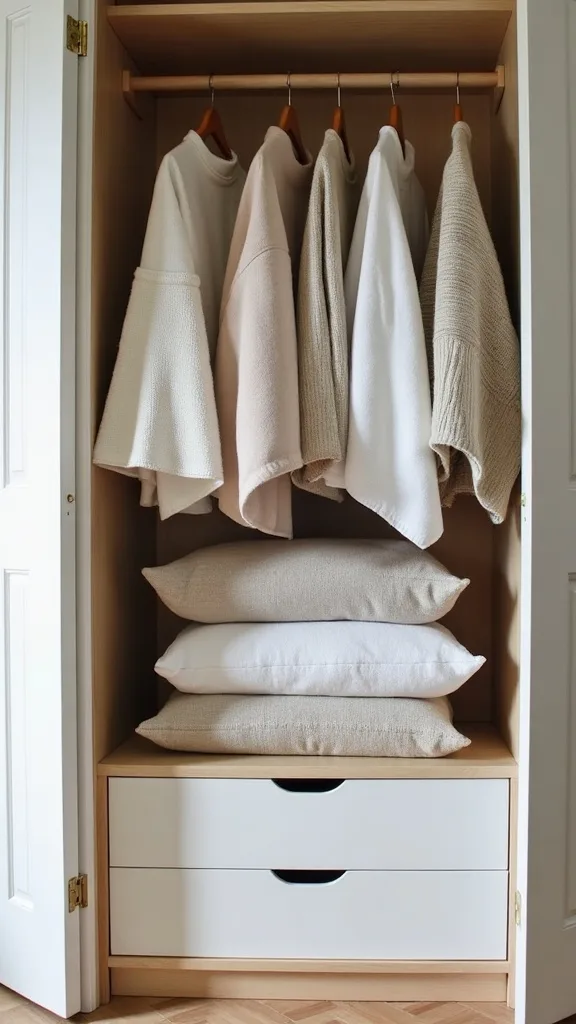
22. How do you organize a shared linen closet so everyone follows the system?
Shared spaces fail when the system depends on one person’s memory. This works because labels and layouts teach without nagging.
Make categories obvious: “Bath Towels,” “Hand Towels,” “Washcloths,” “Sheets—Queen,” “Guest.” Place the most-used bins at the easiest height, and keep a small “To Put Away” basket for items that need refolding.
Modern: high-contrast labels and uniform bins. Traditional: larger tag-style labels that are readable. Transitional: clear bins so the category is self-evident.
Beginner version: label only the top three categories people touch weekly. Pro tip: avoid complicated folding rules for everyone; choose one method that’s forgiving. A shared closet succeeds when it works for the least-interested person in the house.
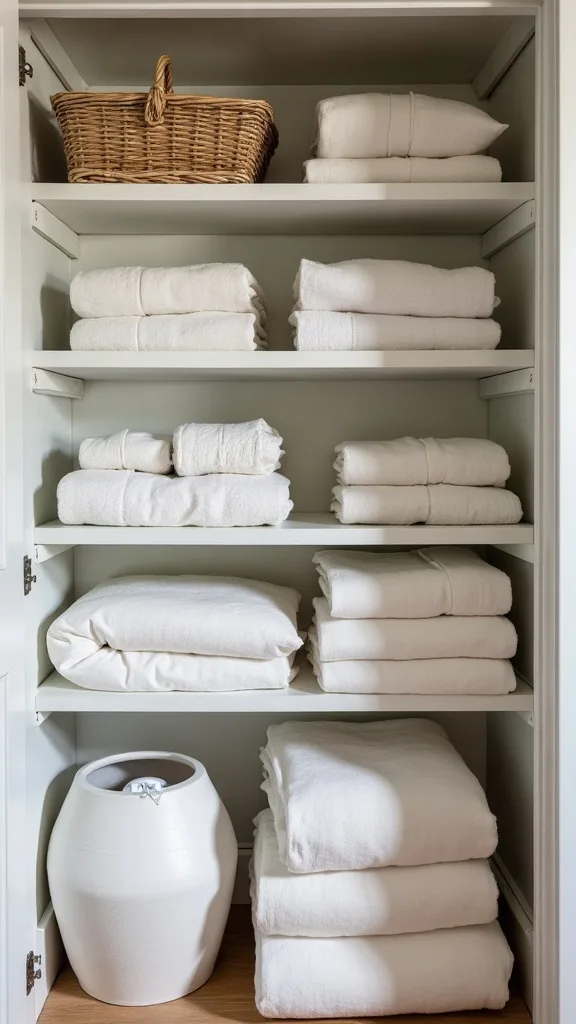
23. How can you make a linen closet smell fresh without covering odors?
Freshness is about dryness and airflow, not perfume. This works because clean scent follows clean storage—and musty smells usually mean trapped moisture.
Only store fully dry linens. Add a moisture absorber on the floor of the closet if humidity is an issue, and use a small sachet for a light linen scent (not a strong air freshener).
Modern: unscented moisture absorbers and clean cotton bags. Traditional: lavender sachets in breathable pouches. Transitional: subtle cedar or linen-scented liners.
Beginner version: leave the closet door open for 30 minutes after a hot shower to vent humidity. Pro tip: avoid scented dryer sheets tucked into stacks—they can leave residue and overpower sensitive noses. A truly fresh closet smells like nothing… in the best way.
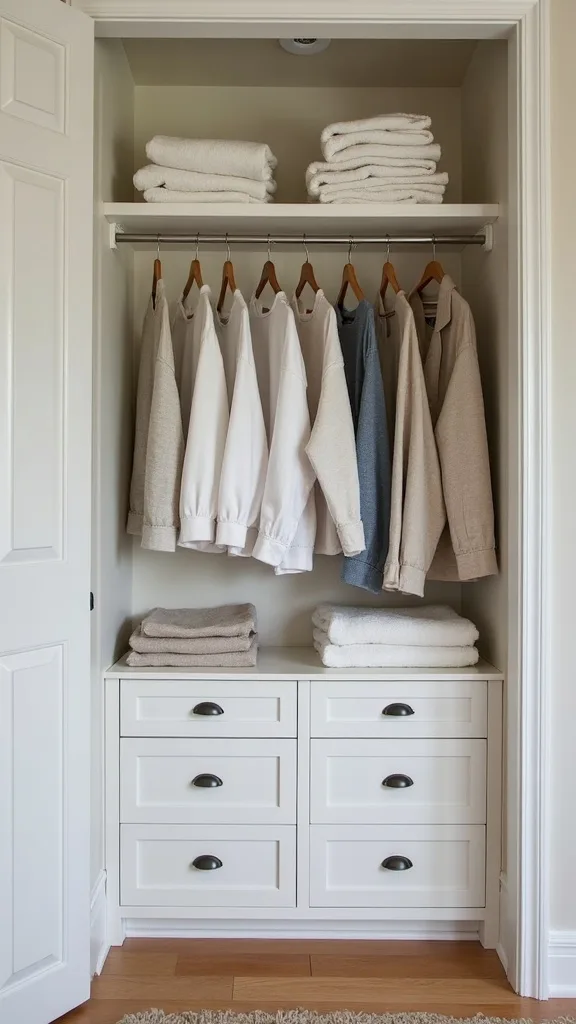
24. What should you avoid storing in a linen closet?
The easiest way to protect your system is knowing what doesn’t belong. This works because it prevents category creep—the slow slide from linens to random household storage.
Avoid storing paint, harsh chemicals, and anything leaking or greasy near fabrics. Don’t keep half-used candles, random tools, or “I’ll deal with it later” bags on linen shelves—those items steal space and add visual stress.
Modern: keep the closet strictly textiles + labeled toiletries. Traditional: store sentimental linens properly, but keep household odds and ends elsewhere. Transitional: allow one small utility bin only if it’s truly needed.
Beginner version: remove one non-linen category today (like tools) and relocate it near the garage. Pro tip: avoid using your linen closet as overflow pantry storage; scents transfer. Protect the closet’s purpose and it will stay easy.
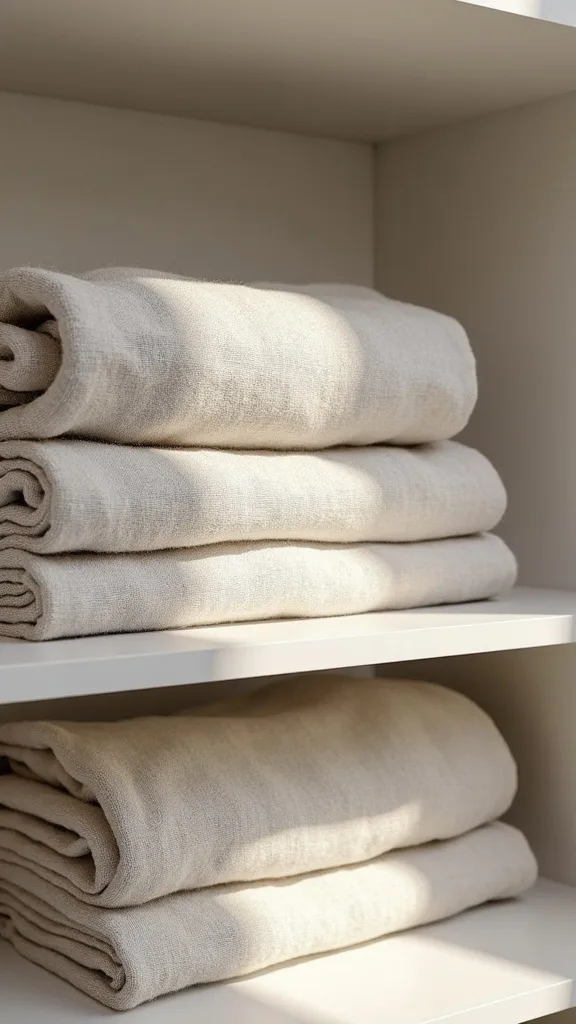
25. How do you set up a ‘restock station’ so you never run out of towels?
A restock station works because it turns “running out” into a simple signal, not a surprise. This works by creating minimums you can see.
Pick a small bin labeled “Restock: Towels” and keep 2 bath towels, 2 hand towels, and a stack of washcloths inside. When the bin is empty, laundry becomes the priority—or you add towels to your shopping list.
Modern: one crisp bin with a bold label. Traditional: a basket with a tag label. Transitional: clear bin so you can see the level.
Beginner version: start with washcloths only—those run out fastest. Pro tip: avoid storing every towel you own in the daily zone; it hides the fact you’re low until it’s too late. A visible restock cue is the quiet backbone of a closet that supports your day.
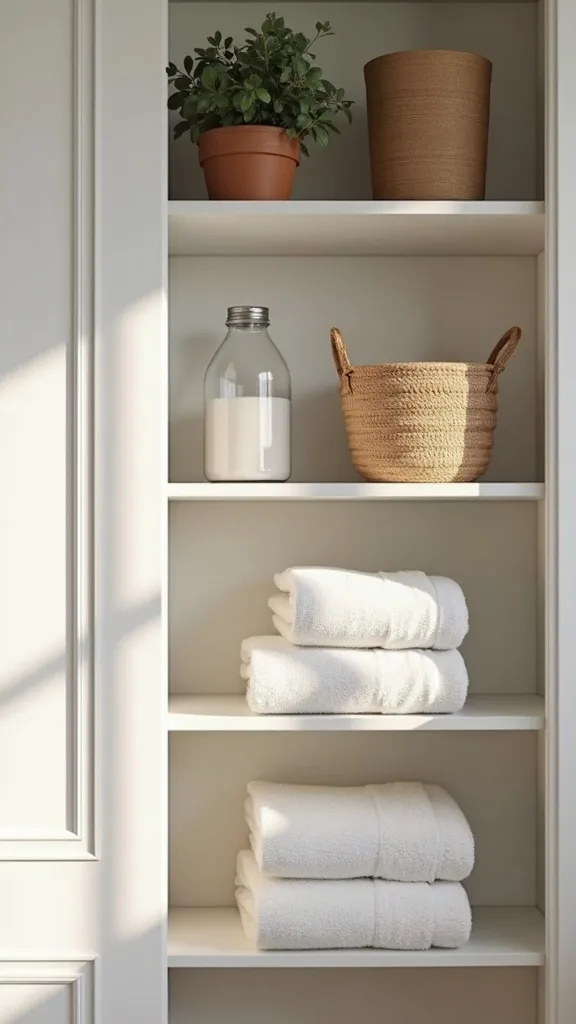
Final Thoughts
The reason these systems feel so good isn’t perfection—it’s predictability. When your closet is organized for retrieval, you stop bracing for a mess every time you open the door, and that calm spills into the rest of the house.
If you only copy one move, copy the combination of upright folding plus clear categories. Whether your style leans modern, traditional, or transitional, the same rule applies: one shelf, one job, with a visible boundary.
Do this today: set a 30-minute timer, empty one shelf, file-fold the towels back in, and label that shelf with one honest word (like Bath Towels). The single most important thing to get right is the categories—because once the categories are clear, everything else becomes easy to maintain.
What I’d Do Differently
When I first tried this, I bought bins before I finished purging. I had a cart full of pretty containers, but I hadn’t decided what my categories were—so I ended up with a “bin of mixed towels,” a “bin of random sheets,” and somehow a half-bin of travel toiletries that didn’t belong anywhere. The closet looked better for about two days, then it turned into the same mess, just with lids. The correct approach is the opposite: decide your shelf jobs first (daily towels, guest bedding, backstock), set limits, and only then buy containers that match the space you actually have.
I also wish I’d measured my shelves from the start. My closet shelves are right around 11 inches deep, and the first bins I tried stuck out and made the door scrape—instant regret. If you do one thing before shopping, measure depth and pick one label style so the system reads clearly. Pick a single shelf today, define its job, and make it the easiest shelf in the house to use.
Products I Recommend for This Project
Here are some of my favourite products to help you bring these ideas to life:
- Brother P-touch PTD210 Label Maker — Simple, affordable labels that make shelf zones stick for the long haul.
- DYMO LetraTag LT-100H Label Maker — Great starter option for quick, readable labels without a learning curve.
- mDesign Plastic Storage Bins with Handles — Pull-out bins that act like drawers for washcloths, toiletries, and backstock.
- SpaceAid Acrylic Shelf Dividers — Keeps towel and sheet stacks from sliding into each other.
- Simple Houseware Over Door Hanging Organizer (clear pockets) — Adds door storage for travel sizes and small bathroom items without taking shelf space.