
This post contains affiliate links. As an Amazon Associate, I earn from qualifying purchases at no extra cost to you.
Somehow the inspiration photos always show 12 matching spices, perfectly spaced, with not a single taco packet in sight. Meanwhile, real kitchens have three half-full cinnamon jars, a mystery bag of cloves, and that one giant garlic salt that refuses to fit anywhere.
This post is about closing that gap without turning your kitchen into a project that steals your whole weekend. You’ll find practical kitchen spice organization setups—fridge-side magnetic tins, pull-out drawers, cabinet risers, and countertop options—plus the little habits that keep them from sliding back into chaos when life gets busy.
It’s especially great for families who cook more at home in fall and want weeknight dinners to feel smoother (even when homework is happening at the counter).
I’ll share my favorite spice drawer ideas, smart spice jar labels that don’t smudge, and a few “don’t do this” warnings that save money and frustration.
Below are 25 Spice Rack Organization & Storage Ideas that make your everyday cooking feel lighter, quicker, and more you.
Products I Recommend for This Project
Here are some of my favourite products to help you bring these ideas to life:
- Talented Kitchen Spice Jars (24 Pack) with Labels & Funnel — A solid starter set for uniform glass jars plus label options that work for drawers and racks.
- Gneiss Spice Magnetic Spice Jars (Set) — Strong magnets and clear lids make fridge-side storage feel secure and easy to scan.
- SpaceAid Bamboo Expandable Spice Drawer Organizer — Angled rows keep lid labels readable so you can find what you need fast.
- Avery Waterproof Clear Labels (Printable) — Helpful if you want custom printed spice jar labels that hold up to splatters and wiping.
- iDesign Linus Clear Pantry Bins — Great for a simple “backup bin” system that prevents duplicate buying.
1. Build the “fridge-side + drawer + jars + labels” system (the easy visual win)
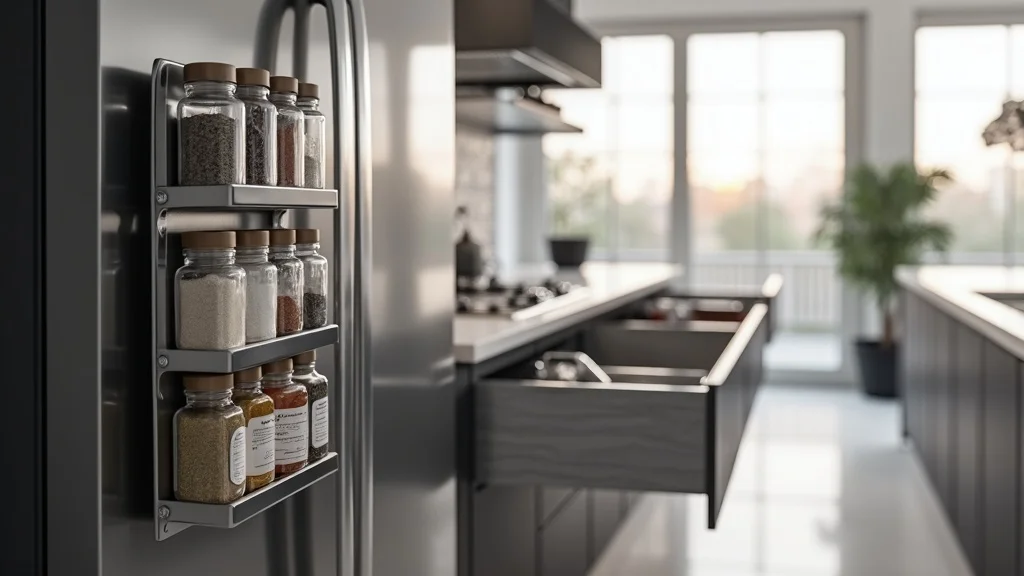
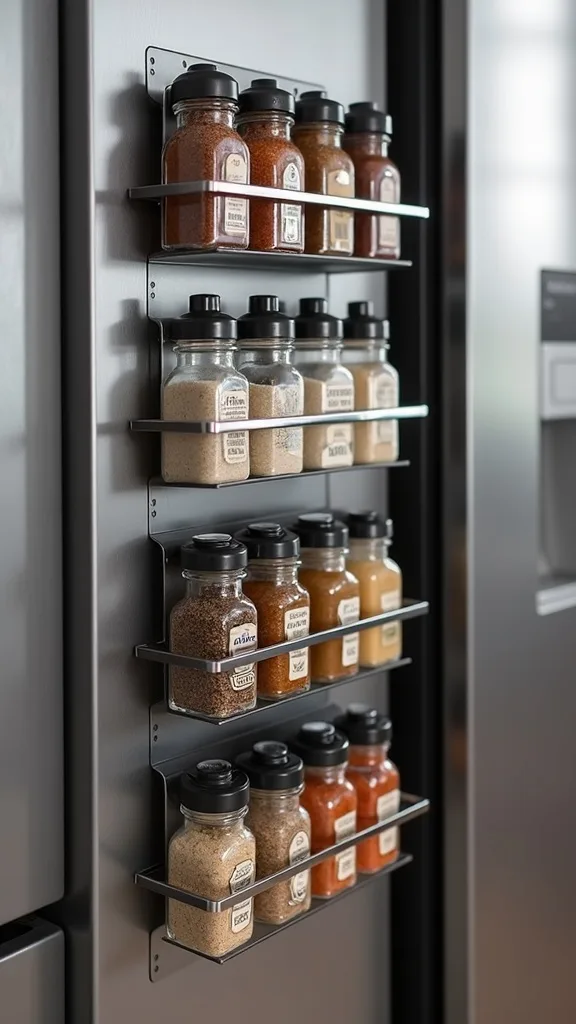
This idea is the whole visual theme in one: a magnetic tin rack on the side of the fridge, a pull-out spice drawer for daily staples, and uniform glass jars with printed labels. It works because it gives your spices a “home” based on how often you reach for them—no more digging while the onions burn.
Start by choosing 10–15 everyday seasonings (salt, pepper, garlic powder, chili powder, cinnamon) for the drawer, then put the “extras” (pumpkin pie spice, smoked paprika, dried dill) into magnetic spice storage on the fridge side. Pour into matching jars or tins as you run out—no need to do it all in one day. Add spice jar labels that match your handwriting style (printed is fastest) so everyone in the house can put things back correctly.
Look for clear glass jars in the 4-oz range and tins with strong magnets; black-and-white labels read cleanly against warm wood cabinets. Pro tip: keep one “overflow” bin in the pantry for backups, and you’ll feel that calm, finished feeling without chasing perfection.
2. How do I decide between a spice drawer, cabinet rack, or countertop organizer?
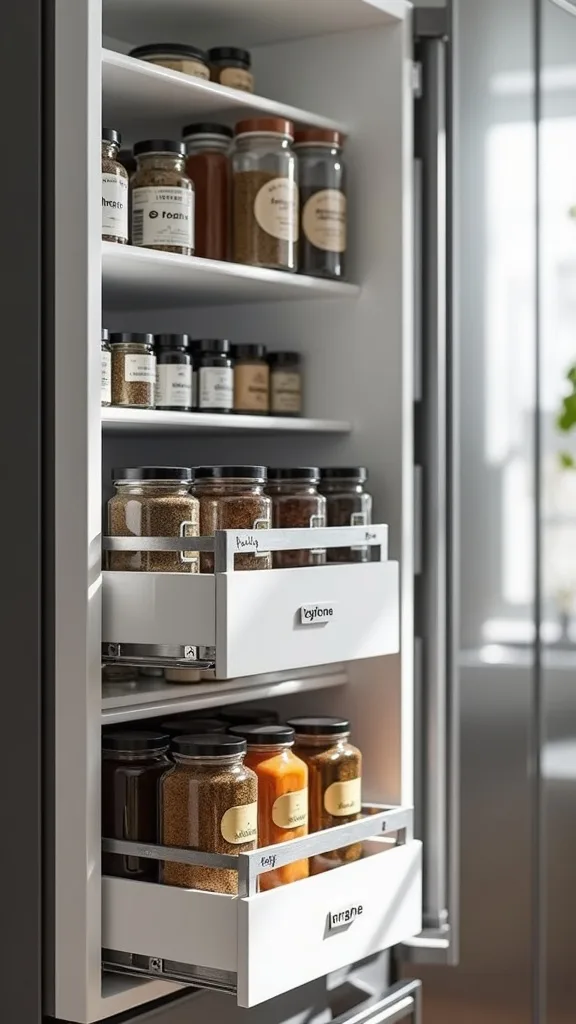
The best storage choice is the one that matches your real cooking rhythm, not the one that looks best on a pin. A drawer is fastest for busy weeknights, a cabinet rack saves counter space, and a countertop caddy is great if you cook in one tight zone.
To decide, do a tiny test: for two days, notice where you naturally set spices while cooking. If they land near the stove, a drawer or wall/cabinet solution will feel smooth; if they land on the counter by the cutting board, a small caddy may be your sweet spot. Measure before you buy: a typical spice jar is about 4″ tall, so shallow drawers need angled inserts to keep labels readable.
Choose materials that fit your kitchen: bamboo inserts for warm, cozy fall vibes; metal racks for a clean, modern look. Pro tip: pick one primary zone and one backup zone—two homes, max—so kitchen spice organization stays simple and forgiving.
3. What’s the fastest way to declutter spices without making a mess?
The fastest method is a “two-bowl sort” that keeps you moving and avoids the all-day countertop explosion. It works because it reduces decisions to just a few categories, so you don’t stall out reading every label.
Grab two mixing bowls or shoebox bins: one for “keep” and one for “toss/replace.” Pull every spice out, check dates only on the ones you actually use, and immediately combine duplicates (keep the fresher one). Anything you haven’t touched since last fall goes into a “maybe” bag—set a reminder for 30 days, and if you don’t reach for it, let it go.
Keep paper towels nearby for sticky jars, and a small trash bag for torn packets. Pro tip: avoid dumping everything into new jars on day one; start with spice rack organization placement first, then re-jar slowly as containers empty. Progress over perfection feels so much better.
4. How do I set up magnetic spice storage on the side of the fridge safely?
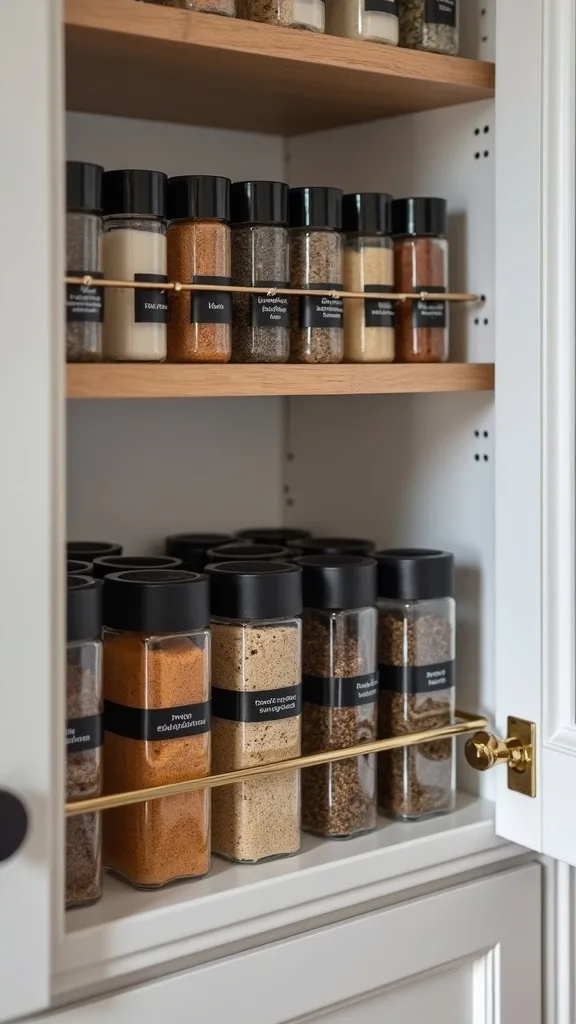
Fridge-side storage is a lifesaver in small kitchens because it uses “dead space” you already walk past. It works best when the magnets are strong and the jars are light enough that they don’t slide every time the kids grab ice.
Choose tins or jars designed for magnets (not DIY glued magnets unless you love redoing things). Wipe the fridge side with rubbing alcohol first so nothing scratches or drags grit. Arrange by frequency: everyday blends at eye level, baking spices a little higher, and rarely-used items toward the back edge.
Matte black tins look sharp against stainless steel; clear-lid tins make it easy to see when you’re low. Pro tip: avoid placing magnetic tins on the fridge door itself—opening and closing can shake them loose. A steady side panel keeps the system calm, reliable, and quietly satisfying.
5. What are the best spice drawer ideas for busy weeknight cooking?
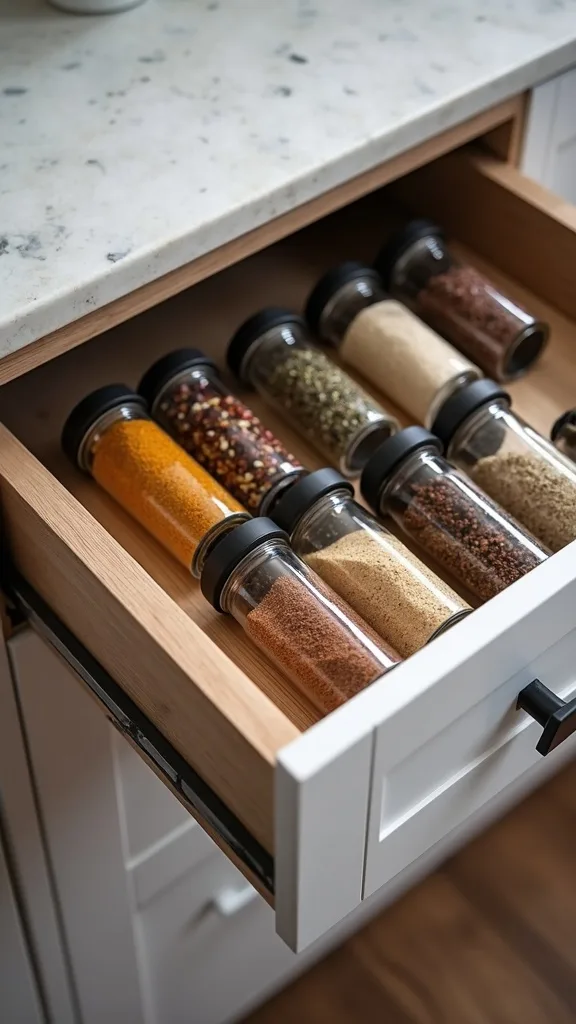
A spice drawer works because you can see everything at once—no stacking, no hiding, no forgotten paprika. The best versions keep labels readable from above and prevent jars from rolling when the drawer closes hard.
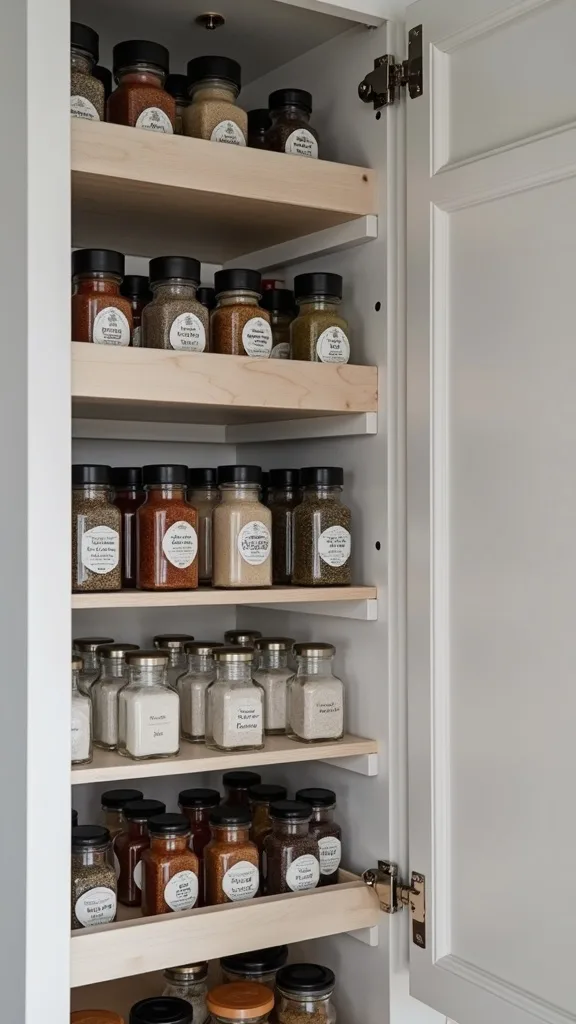
Use an angled drawer insert or a tiered in-drawer riser so each row sits slightly higher than the one in front. Place your top 12 spices in the front two rows, and store baking spices together (cinnamon, nutmeg, ginger) so fall recipes feel effortless. If you have multiple cooks, alphabetize; if you’re the main cook, group by “goes together” (taco night, Italian night, baking).
Bamboo inserts add warmth; clear acrylic looks clean and modern. Pro tip: avoid overfilling the drawer—leave one open slot so new spices don’t become a pile. A little breathing room is the secret to staying organized.
6. How do I organize spices if I have very little cabinet space?
When cabinets are tight, the goal isn’t to fit everything—it’s to make the spices you actually use easy to grab. This works because you stop treating every spice like it deserves prime real estate.
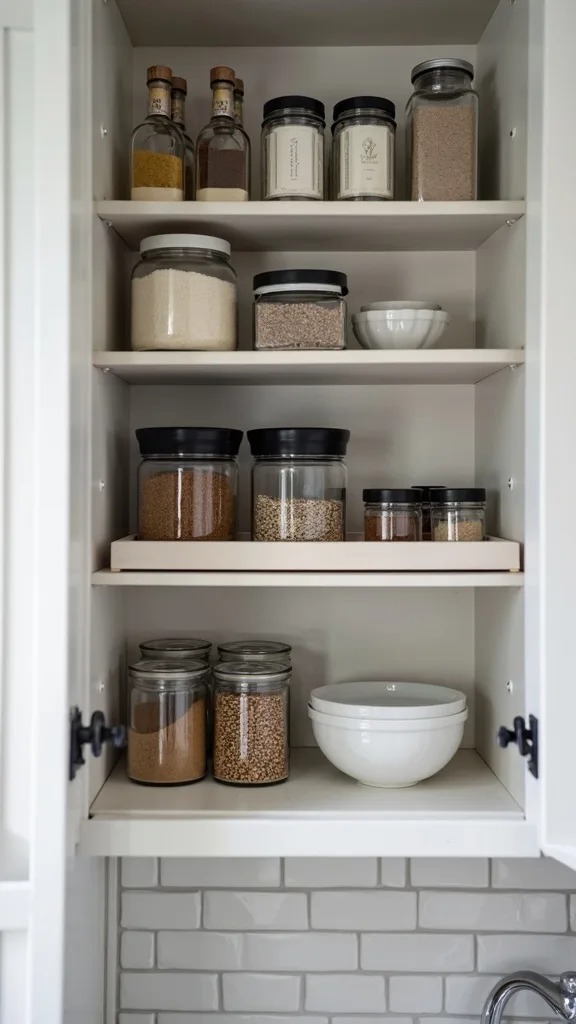
Create a “core set” of 15–20 spices that live in your main cooking zone (drawer, fridge side, or one cabinet shelf). Everything else goes into a labeled bin in the pantry or a higher cabinet. If you don’t have a pantry, use a lidded box on the top shelf to prevent tiny jars from tipping over.
Consider a narrow over-the-door rack inside a cabinet for packets and tall grinders. Pro tip: avoid buying a huge countertop carousel “just to hold everything”—it often becomes clutter you clean around. A smaller, intentional setup makes your kitchen feel bigger and calmer.
7. Do uniform glass jars actually help, or are they just for looks?
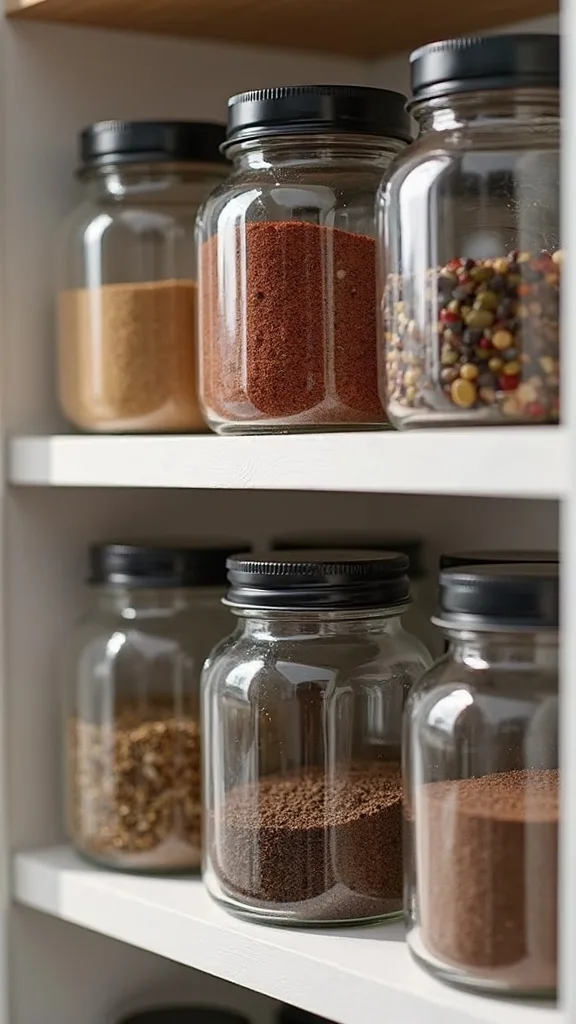
Uniform jars aren’t required, but they do help in a real, practical way: they stack and line up predictably, so you can see what you have and stop buying duplicates. The visual calm is a bonus—especially in fall when cooking ramps up and counters get busy.
Start with only your most-used spices and refill as you finish old containers. Choose jars that fit your storage: 4-oz jars for drawers and racks, and a few 8-oz jars for workhorses like kosher salt or cinnamon if you bake a lot. Use a small funnel to avoid the “cumin dust cloud” moment.
Clear glass makes levels visible; metal lids feel classic and sturdy. Pro tip: avoid switching to jars that need you to scoop with a spoon—shaker tops or dual sifter lids keep weeknight cooking fast. The goal is ease, not a museum display.
8. Which spice jar labels hold up to steam, splatters, and messy hands?
Labels work when they’re readable, consistent, and durable enough for real cooking. The best ones survive steam from pasta water and the occasional oily thumbprint without peeling or smearing.
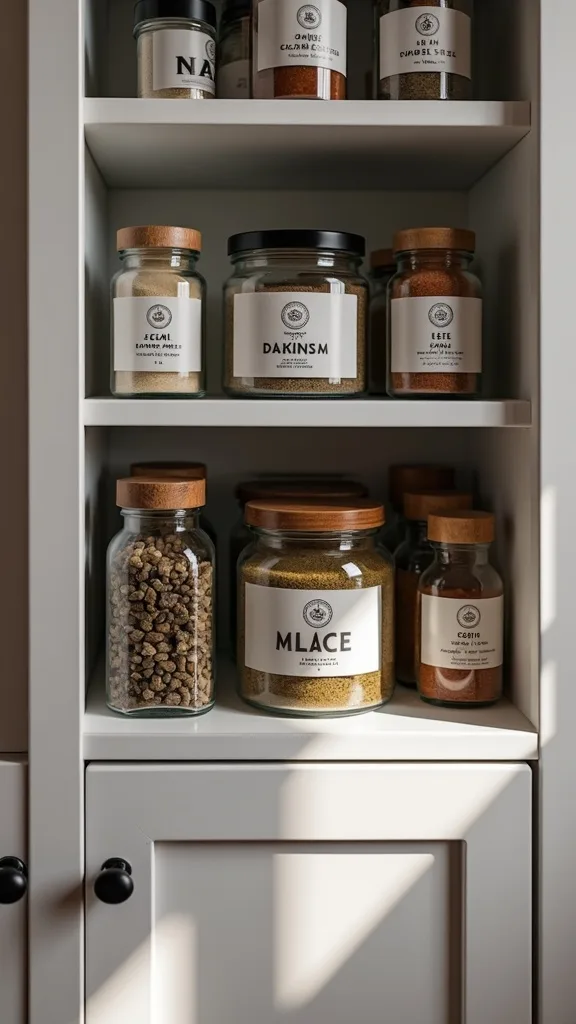
If you print labels at home, use waterproof label paper or cover each label with clear tape for a quick seal. Place labels on the lid for drawer storage (so you can read from above) and on the front for racks. Keep the naming simple: “Chili Powder” instead of “Chili Powder (Hot)” unless you truly stock multiples.
Black text on white labels is easy for kids and guests to read; clear labels look sleek on glass. Pro tip: avoid handwritten labels in marker if you know you’ll redo them later—it can look messy fast and make you feel behind. Clean, readable labels are a small change that feels like a big reset.
Cost & Materials Estimate
A practical spice setup can be done on a small budget with one organizer upgrade and a label refresh, or you can invest in matching jars for a more uniform look.
| Item | Estimated Cost | Where to Buy |
|---|---|---|
| Magnetic spice tins set (12–24 tins) | $18–$35 | Amazon |
| Angled in-drawer spice organizer | $14–$28 | IKEA |
| Uniform glass spice jars set (24–36 jars, 4 oz) | $22–$45 | Amazon |
| Waterproof label sheets or pre-printed label set | $8–$16 | Amazon |
| Clear pantry bins for backups (set of 2) | $16–$30 | Home Depot |
Total estimated cost: $56–$154 Save money by labeling existing containers first; splurge on stronger magnets and a drawer insert because those are the pieces you touch every day.
9. How should I group spices for fall cooking (soups, stews, baking)?
Grouping spices by fall cooking “jobs” makes dinner faster because your brain doesn’t have to search. It works especially well when schedules get full and you want cozy food without extra fuss.
Create three zones: “Savory Base” (garlic powder, onion powder, oregano, thyme), “Heat & Smoke” (cumin, chili powder, smoked paprika, cayenne), and “Baking & Sweet” (cinnamon, nutmeg, ginger, cloves). In a drawer, keep zones in blocks; in a cabinet rack, assign each shelf to a zone. Add one label strip on the drawer insert edge if it helps everyone remember where things go.
Warm-toned labels (cream paper) can feel seasonal without being theme-y. Pro tip: avoid mixing blends and single spices randomly—when everything is scattered, you buy duplicates and cooking feels harder than it should. Let fall flavors have their own little home.
10. What should I avoid when organizing spices (so it doesn’t fall apart in a week)?
The biggest thing to avoid is choosing a system that requires you to be a different person. If the setup demands decanting every refill immediately and aligning labels perfectly, it won’t survive a busy October week.
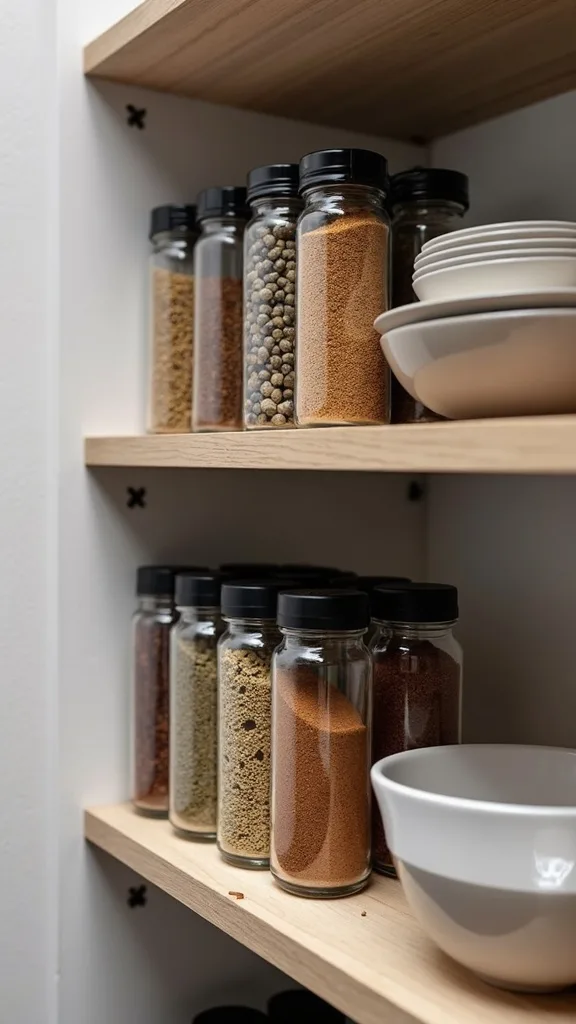
Avoid storing spices right above the stove if you can—heat and steam shorten shelf life and make jars sticky. Also avoid deep baskets where jars pile on top of each other; it feels tidy for one day, then turns into a digging project. Instead, choose shallow bins, risers, or drawer inserts that keep everything visible.
Pick one “drop zone” for new spices (a small tray in the pantry) so they don’t land on the counter. Pro tip: don’t buy storage before you count what you’re keeping. When you build around your real collection, the system feels effortless—and that’s what keeps it going.
11. How do I organize spices in a rental kitchen without drilling holes?
Rental-friendly spice storage is all about using removable solutions that still feel solid. It works because you get the function of a custom kitchen without risking your deposit.
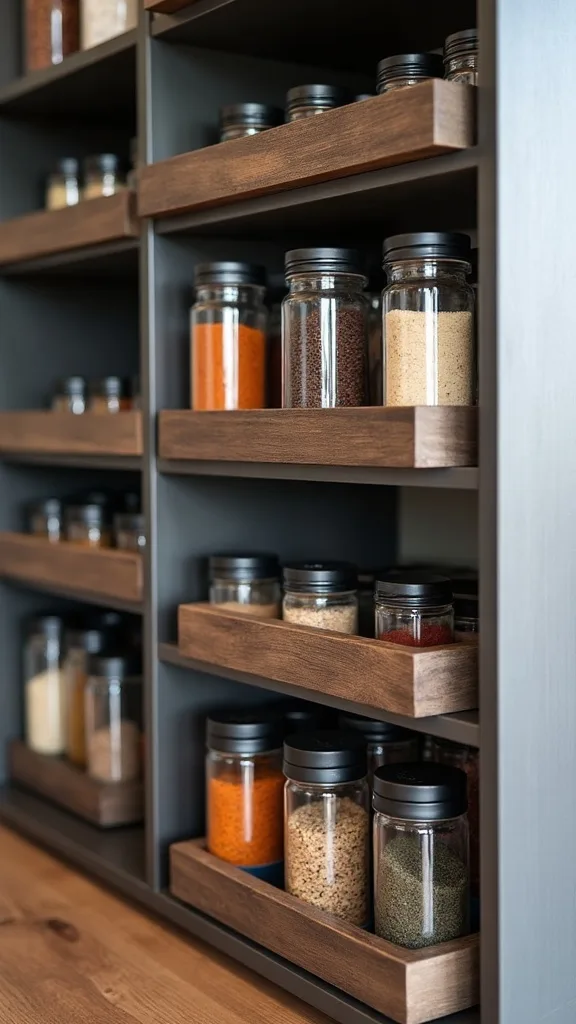
Try a tension rod inside a cabinet to create a “packet rail” for seasoning mixes, or use removable adhesive hooks to hang a lightweight rack on the inside of a pantry door (check weight limits on the package). A pull-out spice drawer insert is also renter-safe and instantly upgrades the everyday cooking experience with zero tools.
Acrylic organizers keep the look light and clean; bamboo adds warmth if your cabinets feel cold. Pro tip: avoid super-strong permanent adhesives on painted cabinet doors—they can peel finish when removed. A gentle setup that still works hard is exactly the kind of win renters deserve.
12. How can I make spices easy for kids and partners to put back correctly?
The secret is making the “right” spot obvious at a glance. This works because it removes the need for anyone to guess where cumin goes when they’re already juggling dinner and homework questions.
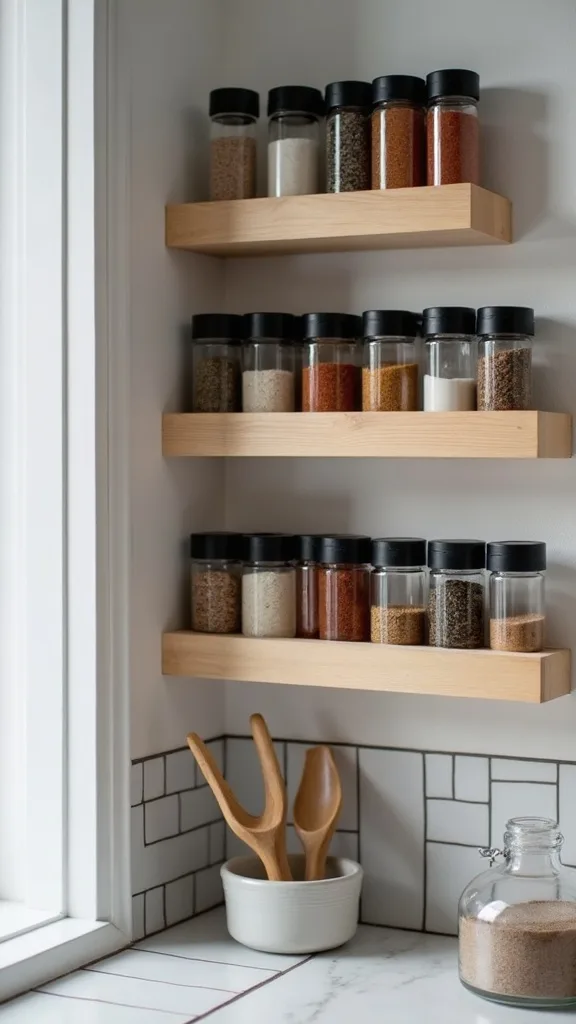
Use big, clear labels and keep the system consistent: all baking spices together, all savory together, or alphabetized—just pick one. Add a small “Return Here” label on the inside of the cabinet or drawer front as a gentle reminder. If you use a drawer, put labels on the lids so anyone can scan quickly.
Consider using the same jar style for the main set so nothing looks like an outlier. Pro tip: avoid complicated categories (“Mediterranean herbs,” “Tex-Mex spices”) unless your whole household speaks that language. Simple and obvious is what makes the kitchen feel cooperative.
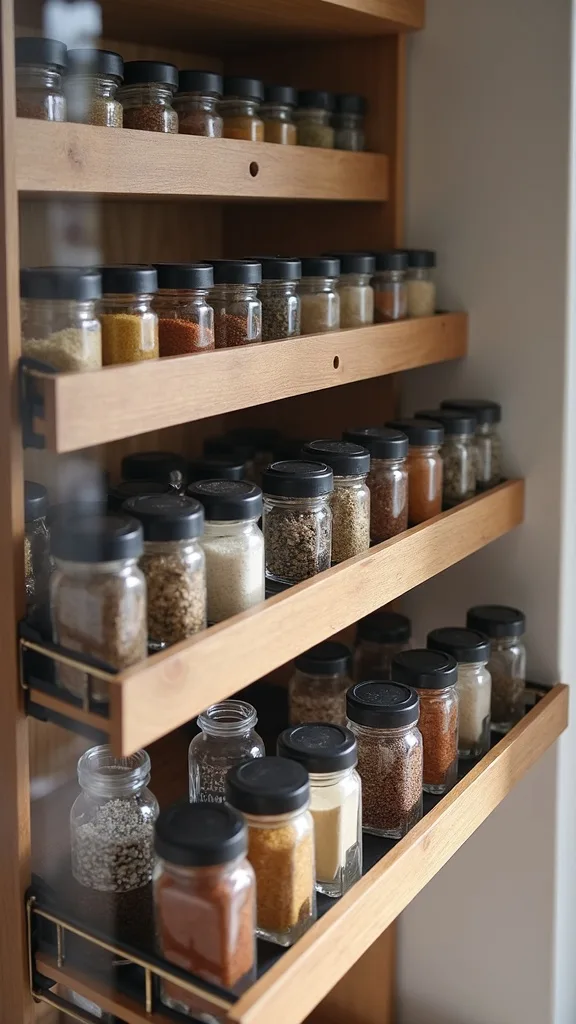
13. What’s a smart way to store bulky spice grinders and tall bottles?
Tall items get messy fast because they don’t fit with standard jars, so they end up shoved in the back. A dedicated spot works because it stops the “leaning tower” effect every time you open the cabinet.
Use a narrow bin or a small turntable just for tall bottles like pepper grinders, sea salt, vanilla extract, and cooking wines you use often. Place it on the lowest shelf for easy access and stability. If you have a pull-out pantry, assign one vertical section to tall spices so they don’t tip when you slide it out.
White or clear bins keep the look clean; wire bins feel airy. Pro tip: avoid mixing tall bottles with short jars in the same row—short jars disappear behind them. Give tall items their own lane and your whole setup will feel calmer.
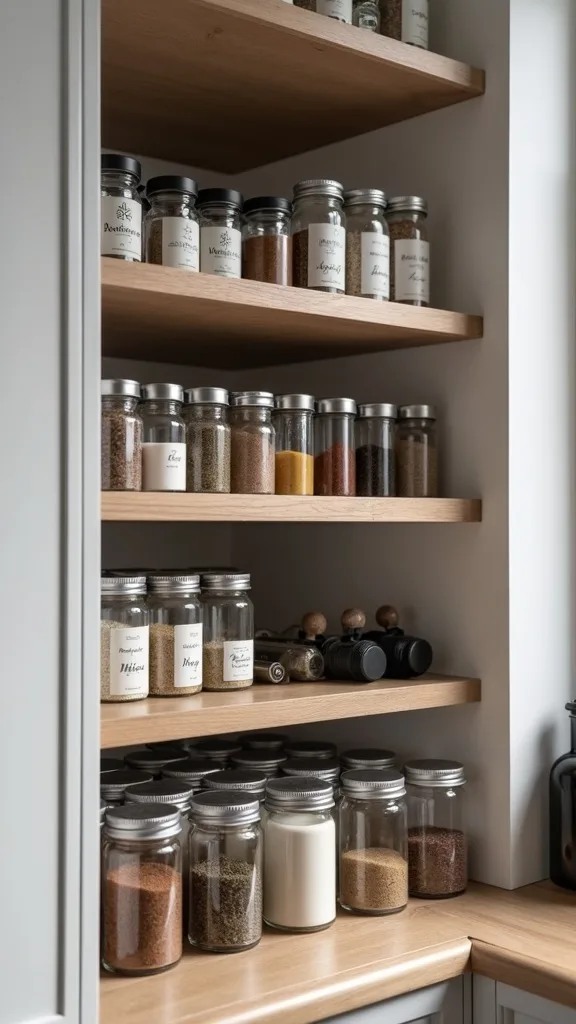
14. How do I organize spices in a deep pantry so nothing gets lost?
Deep pantries are great until spices vanish into the back like they’re on a mission. The fix is creating “pull-forward” storage so you can see everything without unloading a shelf.
Use two shallow bins: one for everyday spices and one for backups. Place them at chest height so you can slide them out like drawers. If you have lots of jars, add a tiered riser behind the front row so labels stay visible. Keep packets in a small file-style holder so they don’t crumple into a corner.
Clear bins make it easy to spot what you’re low on; labeled fabric bins look softer if your pantry is open. Pro tip: avoid stacking jars two-deep without a riser—out of sight becomes out of mind, and out of mind becomes duplicate purchases.
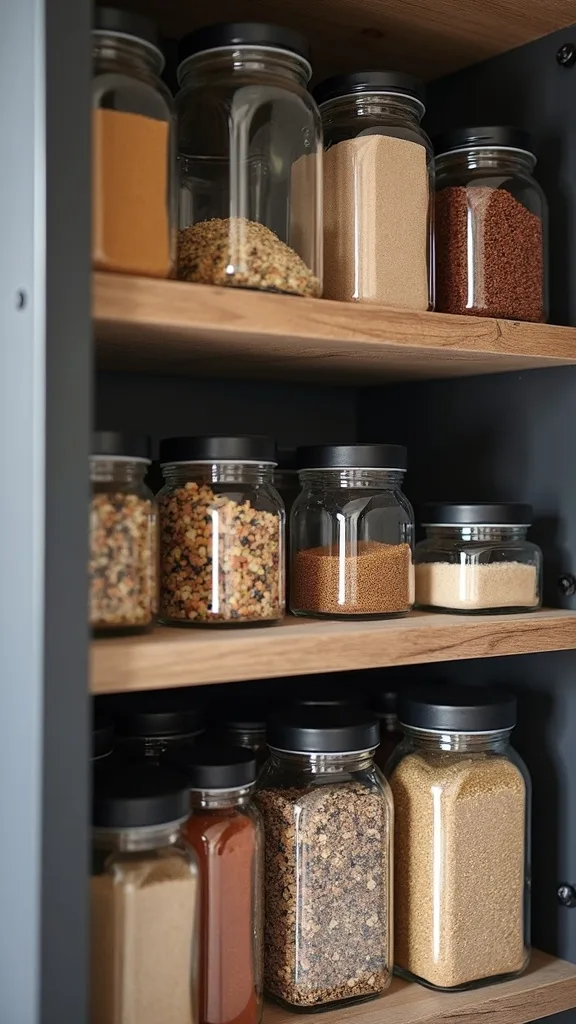
15. Can I organize spices by cuisine without making it confusing?
Yes—if you keep the categories broad and tied to nights you actually cook. It works because it turns spices into “meal helpers,” which is exactly what you need during busy fall weeks.
Try three cuisine bins or zones: “Taco & Chili,” “Italian,” and “Baking.” Put the blends and key spices together (for taco: cumin, chili powder, oregano; for Italian: basil, oregano, garlic; for baking: cinnamon, nutmeg, pumpkin spice). Keep universal basics (salt, pepper, garlic powder) in the main zone so they’re always within reach.
Use small bin labels on the shelf edge and keep jar labels consistent. Pro tip: avoid making a bin for a cuisine you cook twice a year—those spices will expire quietly. Build around your real life, and the system will feel supportive instead of fussy.
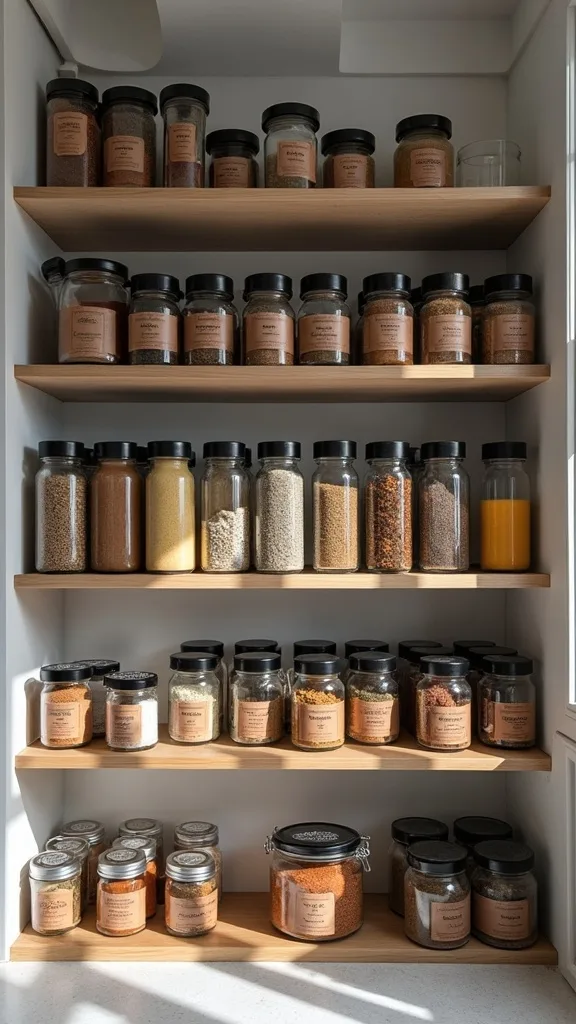
16. How do I keep spices fresh longer (without overthinking it)?
Spices last longer when they’re stored cool, dry, and away from direct heat and light. This works because it protects flavor—so your fall chili tastes bold instead of flat.
Move spices away from the stove if possible, even just one cabinet over. Keep lids tightened and avoid shaking spices directly over steaming pots (steam sneaks into jars and causes clumping). If you buy in bulk, store refills in airtight bags or jars in a darker pantry spot and refill your main jars as needed.
Amber glass jars help with light exposure, but clear jars are fine in a drawer. Pro tip: avoid storing spices in open racks that sit in sunny windows. A simple shift in location can make your spices taste better without adding one more chore.
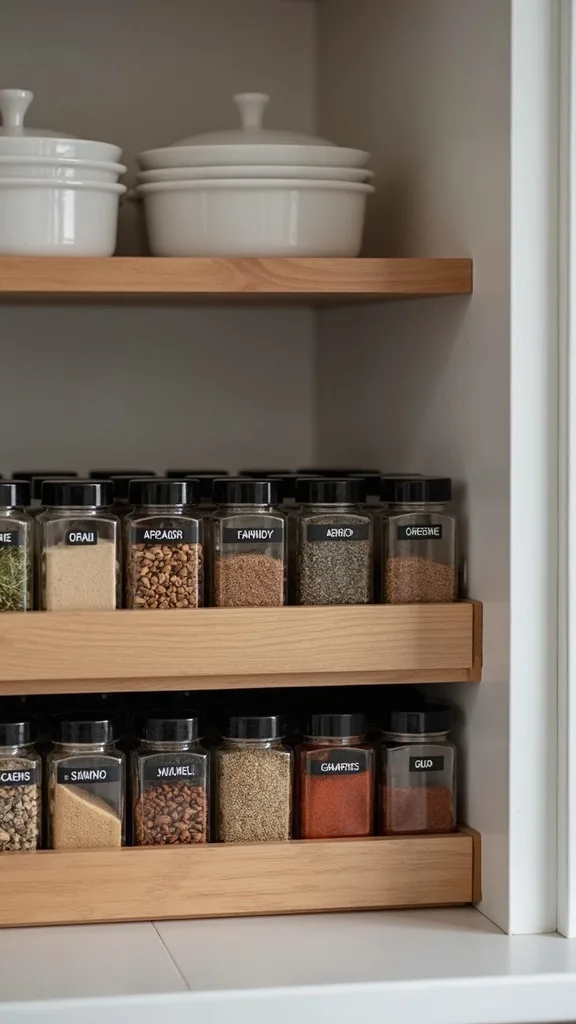
17. What’s the best way to handle seasoning packets and messy sachets?
Packets are the sneaky clutter that ruins an otherwise tidy spice setup. A dedicated packet system works because it keeps flat things flat and prevents the dreaded “packet avalanche.”
Use a small photo storage case, recipe card box, or a slim bin with dividers. Sort by category: gravy/au jus, taco/seasoning mixes, ranch/dip mixes, and backups. Stand packets upright like files so you can flip through them in seconds. Keep the container near your main spice zone so it’s not a separate scavenger hunt.
Neutral bins (white, clear, or light gray) blend into most kitchens. Pro tip: avoid keeping half-used packets loose—clip them shut and put them in a “Use First” slot. It’s a tiny habit that saves money and makes weeknights smoother.
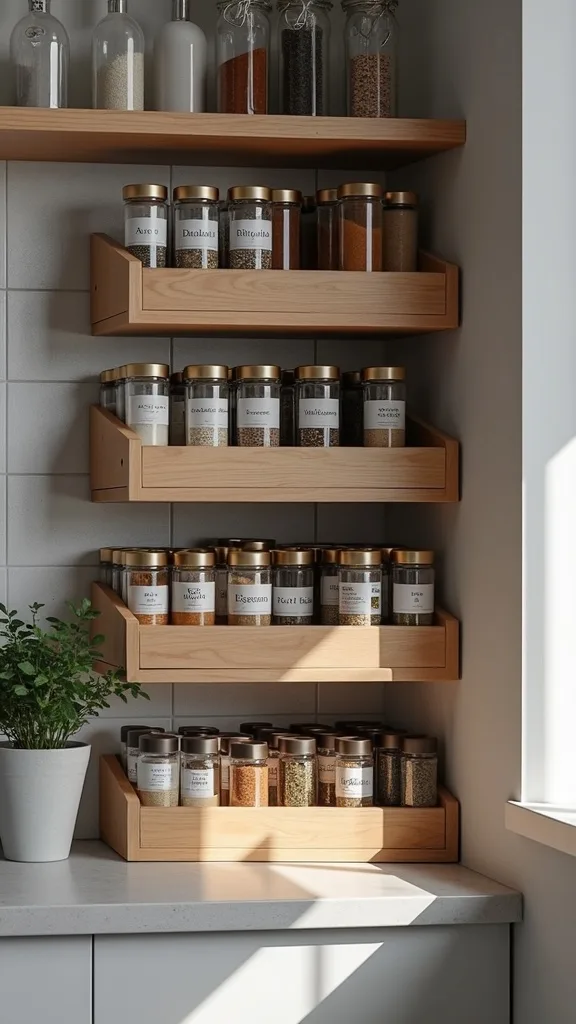
18. How do I create a spice station near the prep area for fall batch cooking?
A spice station is just a small, intentional setup that keeps your most-used seasonings where you prep. It works because batch cooking—soups, roasted veggies, sheet-pan meals—moves fast, and you shouldn’t have to crisscross the kitchen for paprika.
Choose a tray, shallow bin, or small caddy and keep 8–10 batch-cooking staples inside. In fall, that might be garlic powder, onion powder, smoked paprika, chili powder, cumin, oregano, cinnamon, and red pepper flakes. Set it near your cutting board zone, then return it to a cabinet or pantry shelf when done if you don’t want it out all the time.
Wood trays feel cozy; metal trays wipe clean easily. Pro tip: avoid making the station too big—when it holds 25 items, it becomes counter clutter. Keep it tight, useful, and easy to reset.
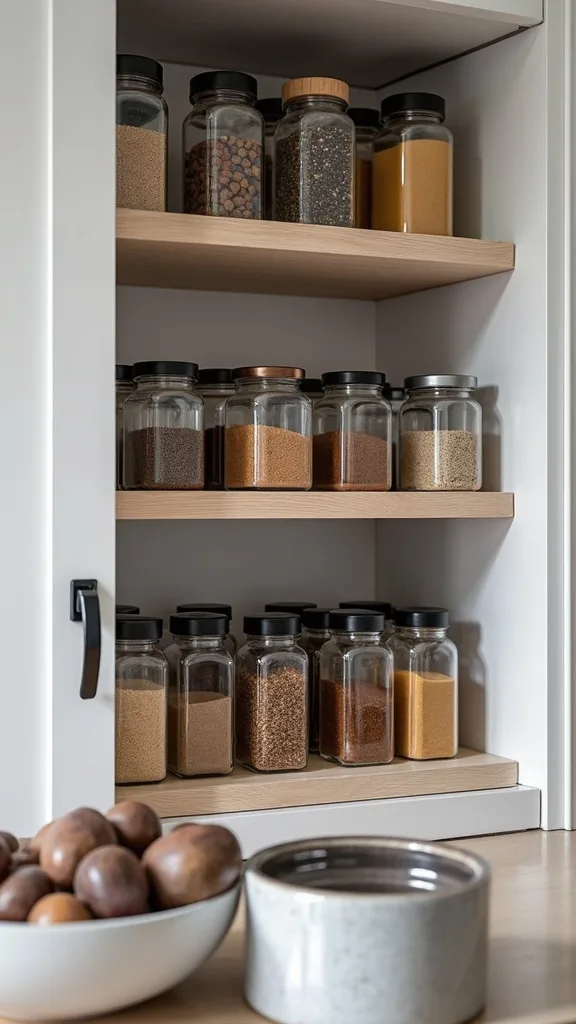
19. How do I organize spices if I cook with a lot of fresh herbs too?
When fresh herbs are part of your routine, dried spices can feel less important—until you need them quickly. A blended system works because it respects both: fresh for brightness, dried for weeknight reliability.
Keep dried herbs (basil, oregano, thyme) together and place them near where you store olive oil and vinegars, since they often get used together. Store fresh herbs in the fridge in a designated drawer bin, and keep a short list on a small note inside the spice cabinet (like “Fresh: cilantro, parsley”). This makes it easier to decide what to grab without opening three doors mid-recipe.
Consider green-accent labels for herbs if you like visual cues. Pro tip: avoid buying large dried herb containers if you mostly use fresh—smaller jars stay fresher and take up less space. The goal is a kitchen that matches how you really cook.
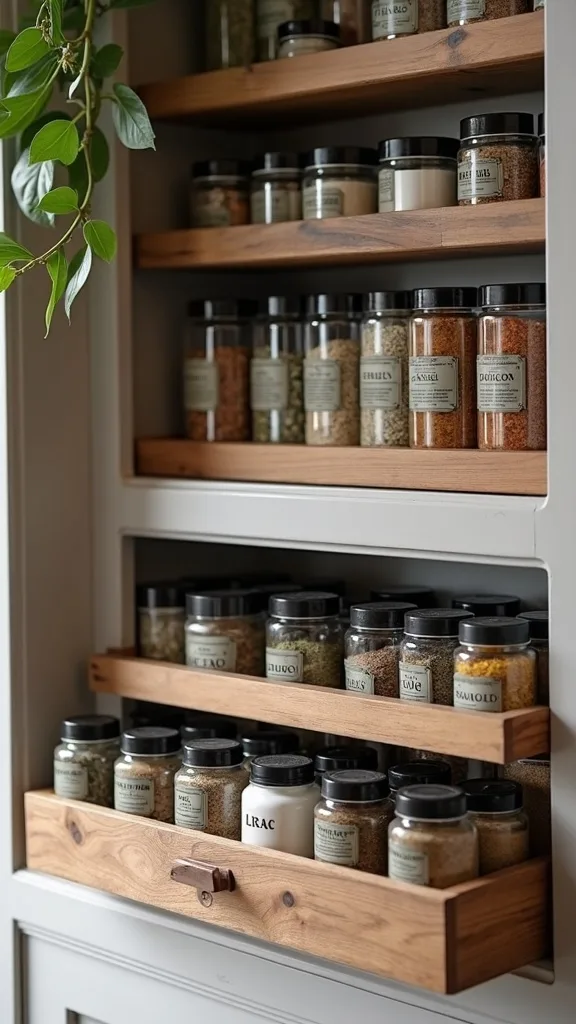
20. What’s a simple system for backups so I stop buying duplicates?
Duplicate buying happens when backups hide in the back of a cabinet. A backup system works because it gives refills one clear, visible home—so you can check before you shop.
Use a small lidded bin labeled “Spice Backups” and keep it on the pantry shelf at eye level. When you buy a refill, it goes in the bin immediately, not “somewhere.” When a main jar runs out, you shop your backup bin first. If you use uniform jars, keep one empty jar in the bin so you’re always ready to refill without hunting for containers.
Clear bins make it easy to see what’s inside in one glance. Pro tip: avoid storing backups in multiple places (some in pantry, some above fridge). One bin is boring in the best way—and boring is what keeps systems running.
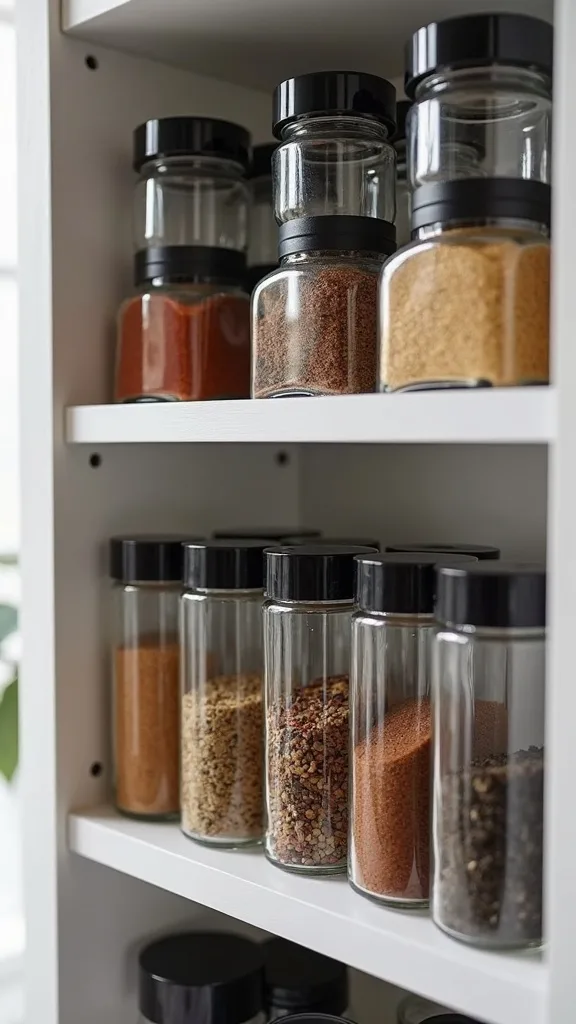
21. How can I make my spice rack look cohesive without buying all new jars?
Cohesion doesn’t require a full replacement—just a few consistent details. This works because the eye reads “order” when labels and spacing feel intentional, even if jar shapes vary.
Choose one label style and apply it to what you already own. If the jars are mismatched, put labels in the same spot on each container (front center), and use a consistent font size. Group jars by height on the rack so the line looks calmer. If some jars are ugly but functional, tuck them in the back row or a bin and keep the prettiest ones visible.
Neutral labels (white, cream, or light gray) unify different packaging. Pro tip: avoid chasing a perfectly matched set if it strains the budget—your kitchen deserves to feel good now. Small visual consistency is a big emotional upgrade.
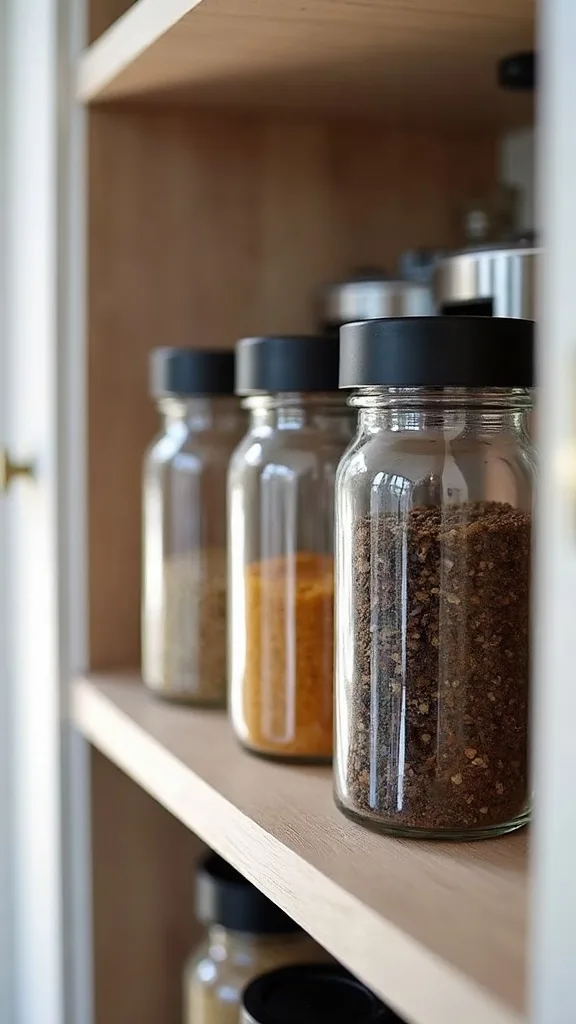
22. How do I label spices so I can read them quickly in a drawer?
Drawer labeling is its own thing because you’re reading from above, not from the front. The best approach works because it turns the drawer into a “menu”—one glance, done.
Put the main label on the lid, centered and large enough to read without leaning in. If you use round lids, choose labels sized to fit (about 1.5″–2″ circles work well for many jars). Add a tiny side label only if you sometimes take jars out and set them on the counter while cooking.
High-contrast labels (black on white) are easiest to scan quickly. Pro tip: avoid fancy script fonts for drawers—they look pretty but slow you down when dinner needs to happen. Clear, readable labels are a kindness to your future self.
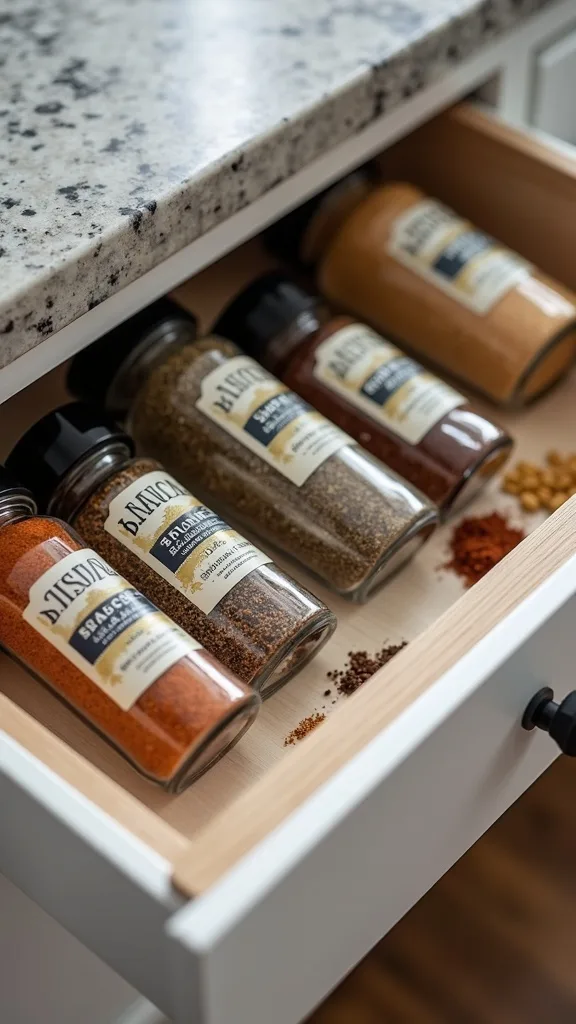
23. What’s a good solution for tiny apartments: one rack, one drawer, no clutter?
In a small apartment, the win is a compact setup that doesn’t sprawl across counters. This works because it keeps your kitchen feeling open while still making cooking feel capable and cozy.
Pick one primary storage: either a slim in-drawer insert or a fridge-side magnetic set. Limit your active collection to what fits there—usually 15–25 spices—and store the rest as refills only. If you love baking, reserve 5 slots just for fall baking spices so you’re not constantly swapping things around.
Choose uniform jars to maximize space efficiency, and keep labels simple and bold. Pro tip: avoid buying oversized organizers “for later.” Small kitchens reward right-sized solutions, and it’s okay if your collection is curated. That’s not less-than—it’s smart.
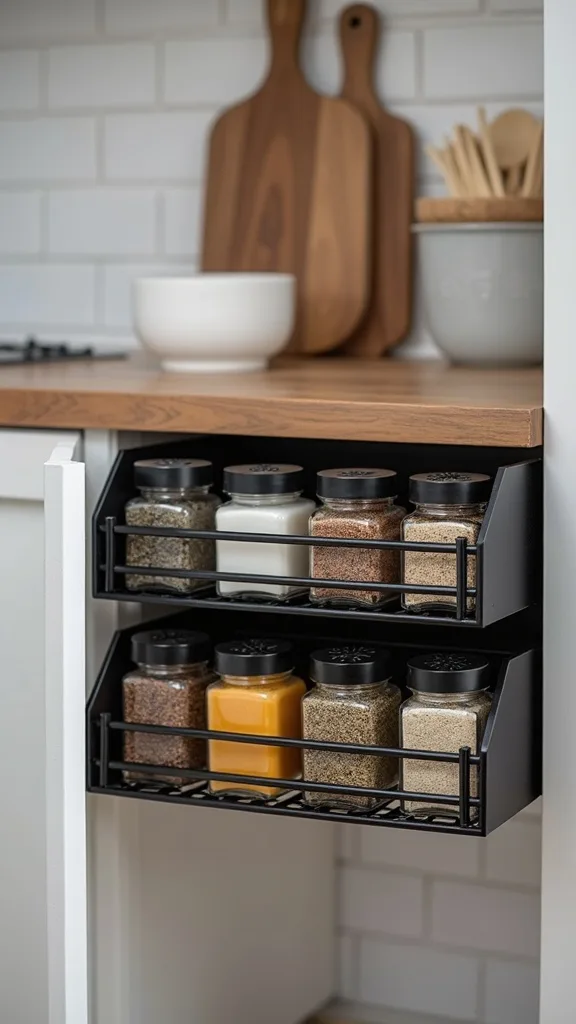
24. How do I reset my spice organization in under 30 minutes before fall hits?
A quick reset works because it’s doable on a Tuesday night—no all-or-nothing energy required. The goal is not to become perfectly organized; it’s to make tomorrow’s dinner easier.
Set a timer for 30 minutes. Toss expired basics you know taste stale (old cinnamon is a common culprit), combine duplicates, and wipe sticky lids. Then pick one improvement: add an angled drawer insert, switch to a small magnetic set, or print fresh labels. Put your top 10 spices closest to where you cook and call it a win.
Keep a damp cloth and a small trash bag right there so you don’t lose momentum. Pro tip: avoid starting with decanting everything—start with placement and access. When spices are easy to grab, you’ll naturally maintain the system with almost no effort.
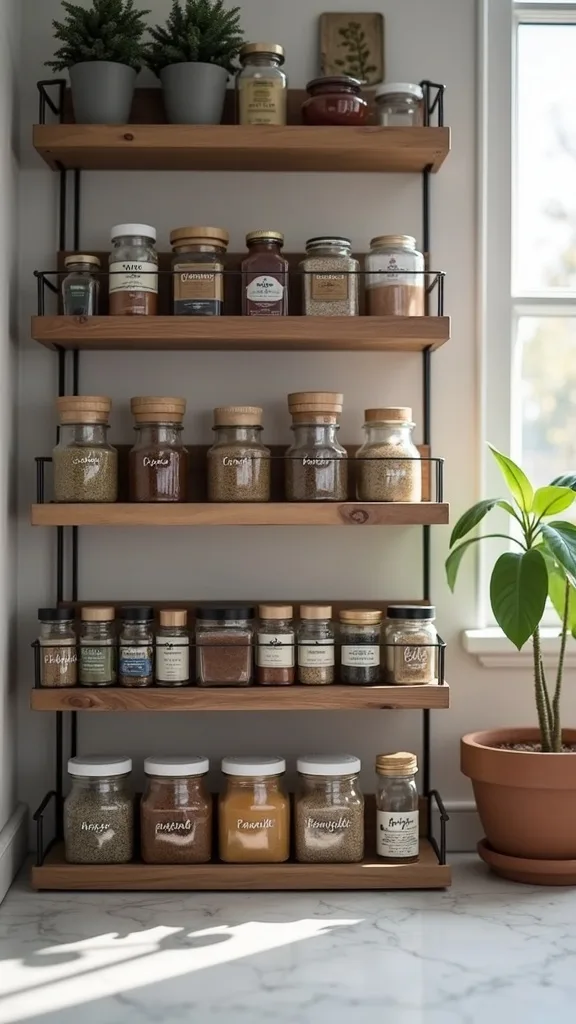
25. How do I keep the system working when life gets busy (the maintenance plan)?
The only spice system that lasts is the one that forgives real life. This works because it builds in easy “reset points” instead of relying on constant neatness.
Create two habits: a 60-second put-back after cooking, and a 5-minute check before grocery day. The put-back is simply returning spices to their home zone (drawer, fridge side, or rack). The grocery check is scanning for low jars and checking your backup bin so you don’t buy doubles. If something keeps landing on the counter, that’s data—move its home closer to where you use it.
Use sturdy labels and containers that wipe clean quickly. Pro tip: avoid punishing yourself for drift. Systems drift because people live in kitchens. A gentle reset is still a reset, and every small step makes your home feel more supportive.
Final Thoughts
The most comforting kitchens aren’t the ones that look untouched—they’re the ones that help you feed your people without extra stress. A calmer spice setup won’t solve everything, but it does change the feeling of the room in a surprisingly real way: fewer little frustrations, fewer repeat purchases, and more “I’ve got this” energy when fall dinners stack up.
If your spices are still a mix of jars, packets, and one mystery container with no lid, you’re not behind. You’re normal. Celebrate progress over perfection on purpose: one drawer insert, one magnetic strip, one set of readable labels—those are real wins that support daily life.
Do one thing today: set a 10-minute timer, pull out every spice you used in the last week, and give those 10 a clear home (drawer row, fridge-side tins, or one cabinet shelf). Imperfect is not just acceptable here—it’s the point.
What I’d Do Differently
When I first tried this, I made the classic mistake: I bought a big set of matching jars before I decided where the spices would actually live. I spent a whole evening decanting everything, feeling very productive… and then realized my drawer was too shallow for the jars to sit upright. So I stacked them in a basket “for now,” which lasted about a week before it turned into a noisy pile of rolling glass every time someone looked for cinnamon. The correct approach is the boring one: pick the location first (drawer, cabinet, fridge side), measure it, and only then choose containers that fit that exact space.
I also wish I’d known that you don’t have to convert everything at once. Now I do it gradually—when a spice runs out, that’s when it earns a uniform jar and a clean label. It’s cheaper, it’s less messy, and it actually sticks. If you’re feeling stuck, choose one zone today (just the drawer or just the fridge side) and set it up for your top 10 spices—momentum will do the rest.