
This post contains affiliate links. As an Amazon Associate, I earn from qualifying purchases at no extra cost to you.
Are you looking for front porch decorating ideas that feel intentional the moment someone steps onto your walkway? Do you want potted flowers for patio styling that reads editorial—layered, seasonal, and effortlessly pulled together?
I always start by treating the porch like a small outdoor room, then I build my front porch decor around proportion, repetition, and one strong focal point. In this post, I’m sharing my go-to front porch planter ideas—from tall urn moments to trailing cascades—so your front porch design feels curated rather than crowded.
I find that this is perfect for anyone decorating for spring who wants quick curb appeal without committing to a full front porch flower bed or major construction.
From my experience, the most transformative looks come from a few strategic moves: matching finishes across 2–3 patio flower pots, using 1–2 trailing plants to soften edges, and repeating a signature bloom in multiple front porch flower pots. I’ll also weave in front porch landscaping ideas that make containers look “built-in,” even when you’re renting.
Below are 25 Front Porch Flower Pots & Planter Ideas that bring front porch styling to life with front porch planters, layered texture, and front porch decorating that feels fresh for spring.
1. Layered Entry Cluster for a Styled, Coordinated Porch Moment
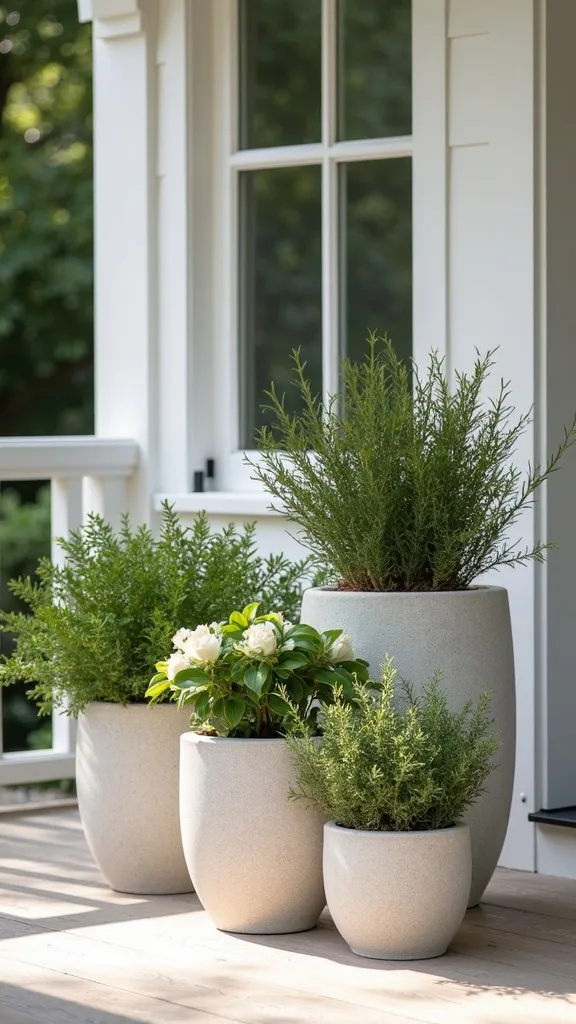
I always start by recreating that “Styled front porch with layered flower pots, seasonal planters, trailing plants and coordinated decor creating stunning curb appeal” look right at the door, because it instantly reads like thoughtful front porch styling. In my opinion, a tight cluster feels more sophisticated than scattering single pots across the porch.
I set 3 containers in a triangle: a 20-inch resin urn, a 16-inch terracotta pot, and a 12-inch ceramic cachepot, keeping 6–8 inches between rims so everything breathes. Then I plant 1 upright “thriller” (like a 3-gallon cordyline), 2 “fillers” (4-inch calibrachoa), and 1 “spiller” (a 6-inch ivy) so the silhouette looks intentional from 20 feet away.
For a polished palette, I find that matte black planters + white alyssum + soft lavender petunias make front porch decor feel elevated without being loud. I always recommend adding 1 weatherproof coir doormat in a 18×30-inch size to anchor the grouping.
Pro Tip: From my experience, if you rotate the tallest pot so its “best side” faces the street and tuck the nursery tag side toward the wall, the whole cluster photographs cleaner—and your curb appeal looks curated, not like a garden center display.
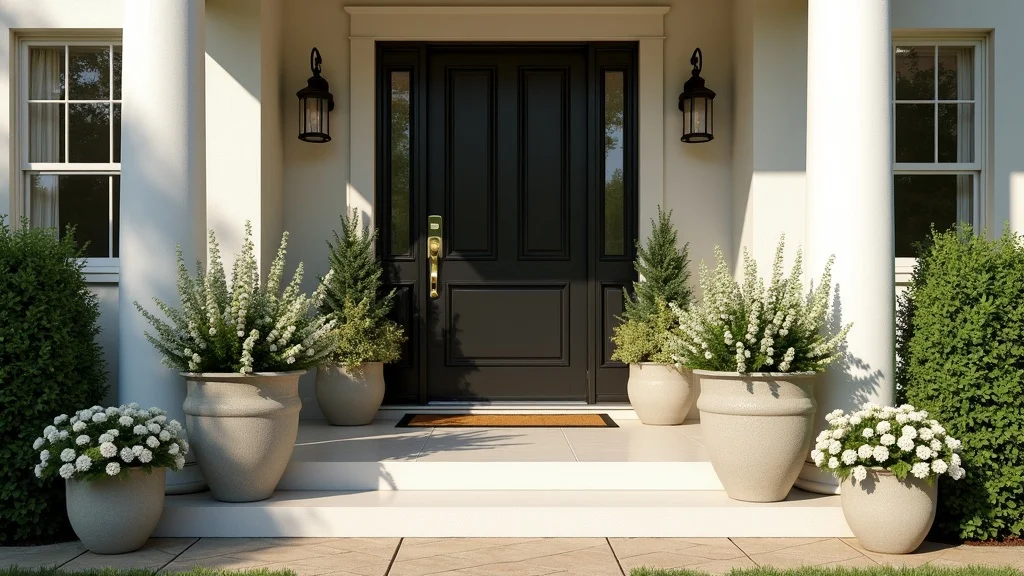
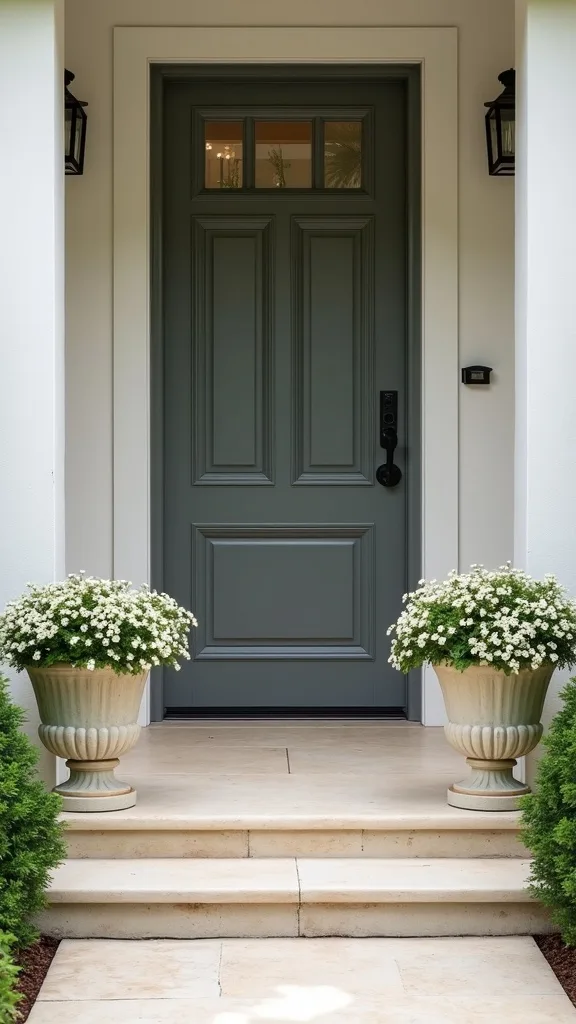
2. Twin Urns Framing the Door for Instant Symmetry
I find that nothing makes a porch feel more “designed” faster than symmetry, especially when I’m working with a narrow stoop. In my opinion, a matched pair of front porch planters creates a calm, upscale entry even with simple flowers.
I always start by choosing two identical 22–24 inch tall urns (fiberglass is lighter than concrete, but costs more upfront). Then I plant each with 1 centerpiece plant (a 10-inch topiary rosemary or boxwood), 3 fillers (4-inch pansies), and 2 spillers (6-inch creeping jenny) so both sides read equally full within 1 week of growth.
For materials, I like Charcoal-gray Kante 19.7-inch planters or classic cast-stone-look urns paired with black mulch or cocoa hull mulch for a finished surface. When I design this look, I repeat one bloom color—like deep violet—so the door feels framed, not busy.
Pro Tip: I’ve found that adding a 1-inch riser (even a hidden paver) under the shadier urn helps both planters dry at a similar rate, which keeps your pair looking matched instead of one side lagging behind.
3. A Tall Thriller + Trailing Spiller Combo for Vertical Drama
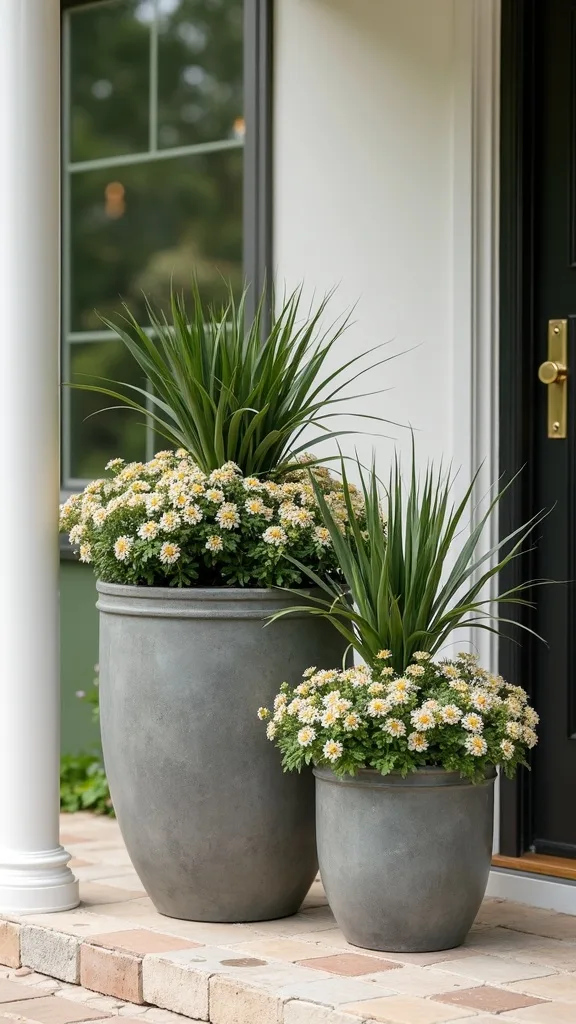
From my experience, the easiest way to make patio flower pots feel high-end is to push vertical contrast—tall, then soft, then cascading. I find that this approach also makes small porches feel taller and more architectural.
I always start with a 18-inch diameter pot that’s at least 16 inches deep, because shallow containers dry out too fast in spring wind. Then I plant 1 “thriller” like a 2–3 foot dracaena spike or purple fountain grass, add 3 fillers (4-inch petunias), and finish with 2 spillers (6-inch sweet potato vine) that can drape 10–14 inches over the rim within 3–4 weeks.
For a sophisticated color story, I like chartreuse vine + white petunia + a near-black spike, especially against a light siding. In my opinion, this is one of the most reliable potted flowers for patio formulas when you want impact without complicated plant knowledge.
Pro Tip: I’ve found that if you pin the first 6 inches of sweet potato vine to the soil with a U-shaped landscape staple, it roots in place and cascades more evenly instead of “balding” at the crown.
4. Cottage-Style Mixed Terracotta for Warm, Collected Charm
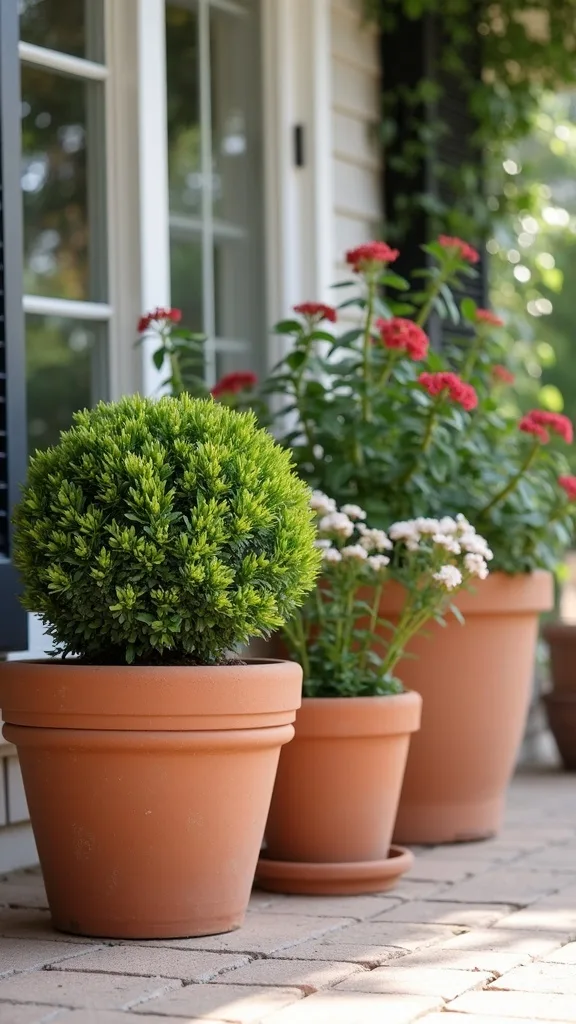
I always love a cottage look in spring because terracotta makes blooms feel romantic and timeless, even on a modern porch. From my experience, a “collected” mix looks more authentic than perfectly matched sets.
I gather 5–7 terracotta pots in 6-inch, 10-inch, and 14-inch sizes and group them near a bench or railing, keeping the tallest at the back. I find that planting 2 pots with herbs (like 1-gallon thyme and chives) and 3 pots with flowers (4-inch dianthus and violas) gives you fragrance and color for at least 6–8 weeks.
To keep it cohesive, I always recommend repeating one element: either all unglazed terracotta or all with the same whitewash finish. When I design this look, I add a 36-inch galvanized watering can nearby as decor that also earns its place.
Pro Tip: I’ve found that sealing only the outside of terracotta with a breathable masonry sealer (leaving the inside unsealed) reduces chalky efflorescence on the visible rim while still letting roots “breathe” in most climates.
5. Modern Monochrome Planters for a Clean, Editorial Porch
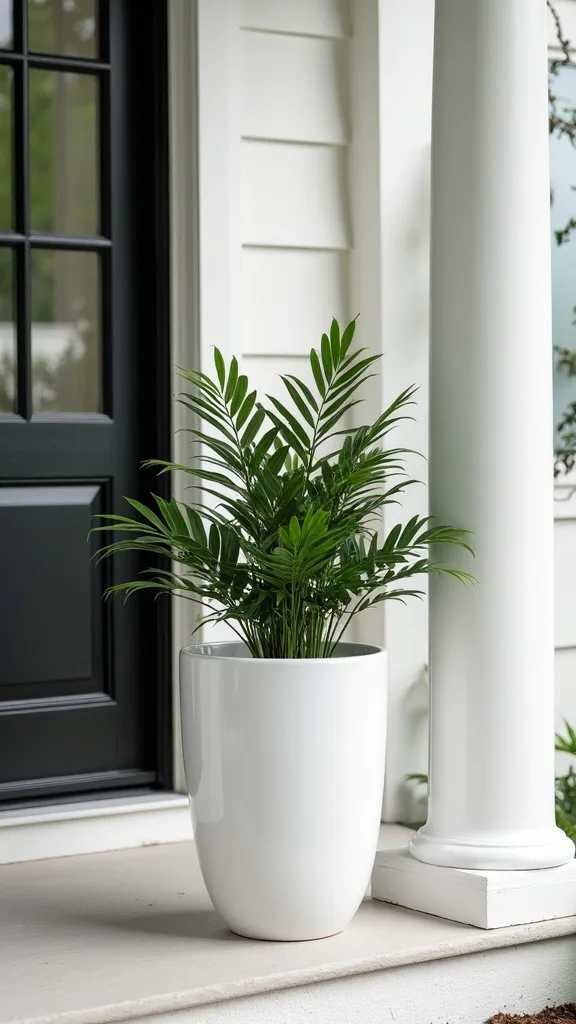
In my opinion, monochrome front porch flower pots are the shortcut to a modern, gallery-like entry—especially if your door color is bold. I find that limiting finishes makes the plants look more intentional and less like an afterthought.
I always start by choosing 3 planters in the same finish—matte black, warm white, or concrete gray—at 12-inch, 16-inch, and 20-inch heights. Then I plant a restrained palette: 1 gallon of white bacopa, 6 packs of white alyssum, and 2 trailing plants like variegated vinca that can spill 8–12 inches by late spring.
For products, I like lightweight resin planters with a 1-inch drainage hole and a matching saucer to protect painted porch floors. When I design this look, I add one textural accent—like a 24-inch black lantern—so the composition feels styled, not sterile.
Pro Tip: I’ve found that using black-brown mulch (not red) in monochrome pots keeps the “editorial” effect; red mulch reflects warm tones that can make crisp white blooms look slightly dingy in photos.
6. Front Porch Planter Box on the Railing for a Soft Edge
I find that railing planters are a graceful way to add flowers without sacrificing walking space, which matters on porches under 4 feet deep. From my experience, they also create that layered “garden” feeling even if you don’t have a front porch flower bed.
I always start with two 24-inch coco-lined railing baskets or a 30-inch metal railing planter, then I secure them with adjustable brackets rated for at least 20 lb. I plant 6–8 plugs of calibrachoa and 2 trailing bacopa per box, spacing plants about 4 inches apart so they knit together within 2–3 weeks.
For a refined palette, I like blush + cream blooms with a touch of silver dusty miller. When I design this look, I coordinate the planter metal (black or bronze) with the house numbers or light fixture for cohesive front porch design.
Pro Tip: I’ve found that lining coco baskets with a single layer of plastic (poke 6–8 drainage holes) cuts watering frequency from daily to every 2–3 days in most spring weather, without turning the roots soggy.
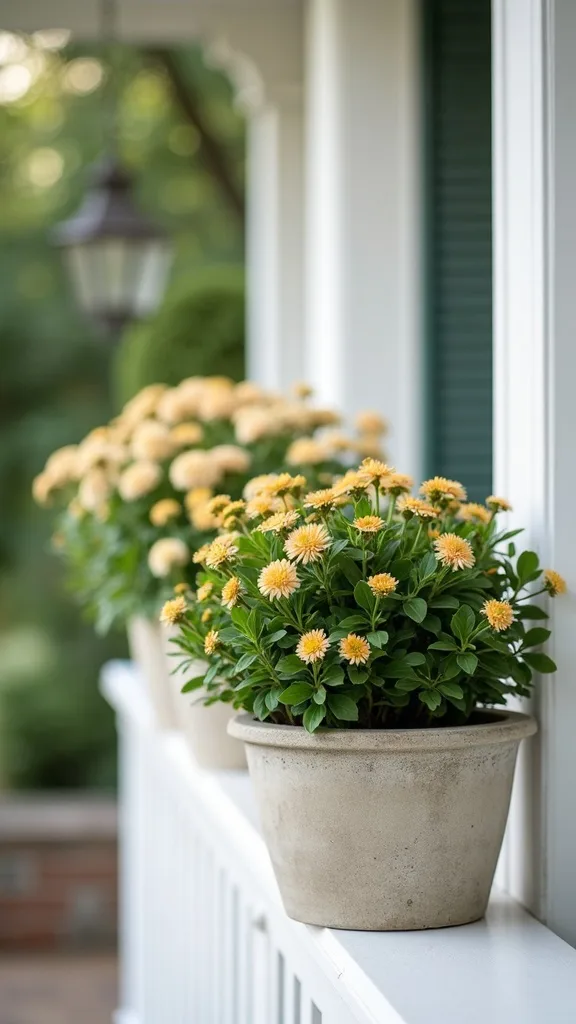
7. A Statement Oversized Planter as the One ‘Anchor’ Piece
I always recommend one oversized planter because it anchors the whole porch the way a sofa anchors a living room. In my opinion, this is the most effective move for front porch landscaping ideas when you want impact with fewer items.
I choose a 24–28 inch diameter planter that’s 20 inches tall, then I “false fill” the bottom with an upside-down 5-gallon nursery pot so I only need about 2 cubic feet of potting mix instead of 4. I plant 1 small ornamental tree (like a 3–4 foot dwarf olive in warmer zones) or a 2–3 foot topiary, plus 6 fillers (4-inch lobelia) around the edge.
Material-wise, I find that fiberglass or resin composite looks like stone but is manageable to move. When I design this look, I keep the blooms in a single color family so the scale feels intentional, not chaotic.
Pro Tip: I’ve found that placing the anchor planter 8–10 inches off the corner (not tight to it) prevents the “blocked doorway” feeling and makes the entry look wider from the curb.
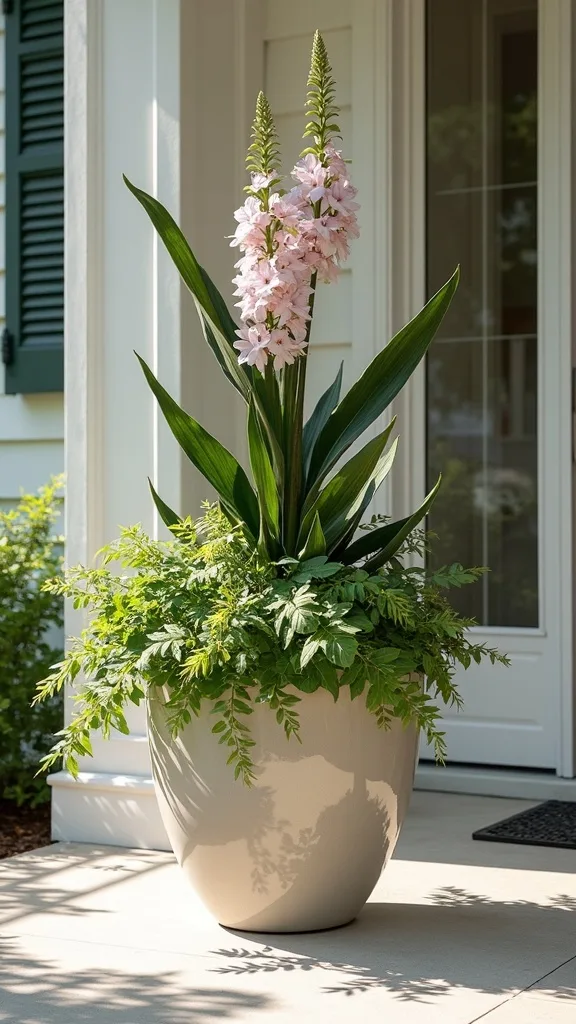
8. Tiered Plant Stand Styling for Small-Space Porches
I find that a tiered stand is my favourite approach when I need more flowers but I can’t add more floor clutter. From my experience, it’s also one of the easiest front porch decorating ideas to refresh weekly by swapping just 1 pot.
I always start with a 3-tier metal plant stand around 28–34 inches tall, then I place 6-inch pots on the top tier and 8–10 inch pots on the lower tiers. I like to keep at least 2 inches of clearance between pot edges so leaves don’t mash together, and I water with a 1-liter watering can to avoid splashing soil onto the porch paint.
For potted flowers for patio color, I rotate 3-inch primroses, 4-inch pansies, and a 6-inch fern for texture. In my opinion, black metal + terracotta pots is an elegant contrast that reads curated.
Pro Tip: I’ve found that adding a thin silicone mat (cut to 10×14 inches) under each pot on the stand prevents rust rings and keeps the stand stable when you water—especially on slightly sloped porches.
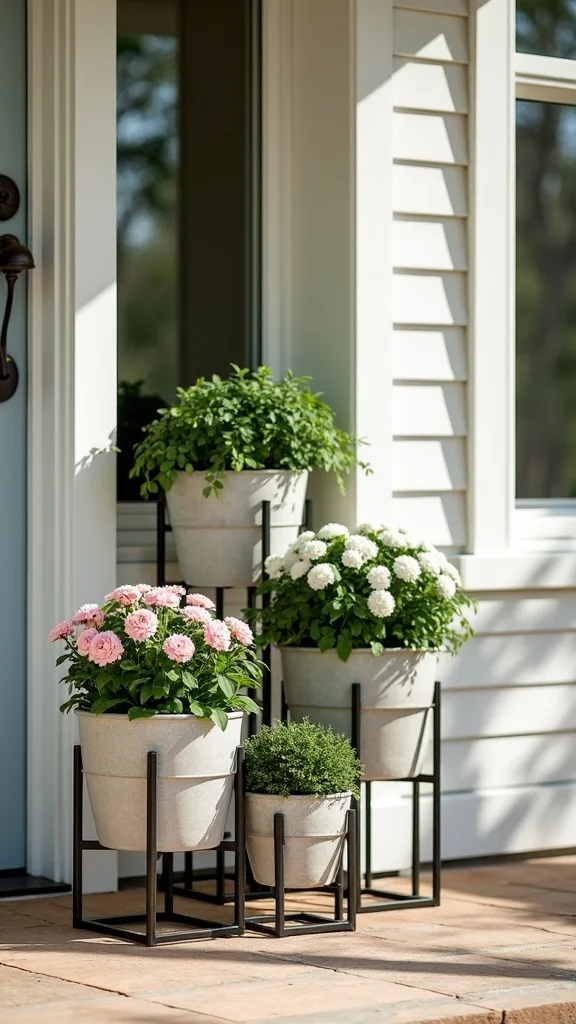
Cost & Materials Estimate
For the majority of porches, I typically spend $120–$520 to refresh patio flower pots and front porch planters with spring plants, soil, and a few coordinating accents.
| Item | Estimated Cost | Where to Buy |
|---|---|---|
| 2 matching 20–24 in entry urn planters (resin/fiberglass) | $90–$220 | Home Depot |
| Assorted 12–16 in patio flower pots (3–4 pieces) | $45–$140 | Lowe’s |
| Potting mix (2–4 bags, 2 cu ft each) | $36–$80 | Home Depot |
| Spring annuals + trailing plants (10–18 plants) | $40–$140 | Lowe’s |
| Outdoor lanterns + LED timer candles (set of 2) | $28–$85 | Amazon |
Total estimated cost: $120–$520 I find that you can save money by reusing last year’s pots and splurge on one oversized “anchor” planter because it elevates the whole front porch design.
9. Hanging Baskets to Add Height Without Visual Bulk
I always love using hanging baskets because they give me height and movement without taking up any precious porch square footage. In my opinion, they’re the quickest way to make front porch flower pots feel layered and lush.
I always start by installing a heavy-duty ceiling hook rated for 30–50 lb, and I hang baskets so the bottom sits about 6 feet 6 inches from the porch floor (high enough to walk under). I fill a 14-inch coco basket with 1 trailing ivy geranium, 2 bacopa, and 3 calibrachoa plants, spacing them 3–4 inches apart so they fill in within 2–4 weeks.
For a sophisticated spring palette, I find that white + soft coral reads fresh and timeless. When I design this look, I match the basket chain finish (black or bronze) to the porch light for cohesive front porch decor.
Pro Tip: I’ve found that adding a slow-release fertilizer (like 1 tablespoon per plant) at planting time reduces mid-season “hanger fade,” especially because baskets dry out faster than patio flower pots on the ground.
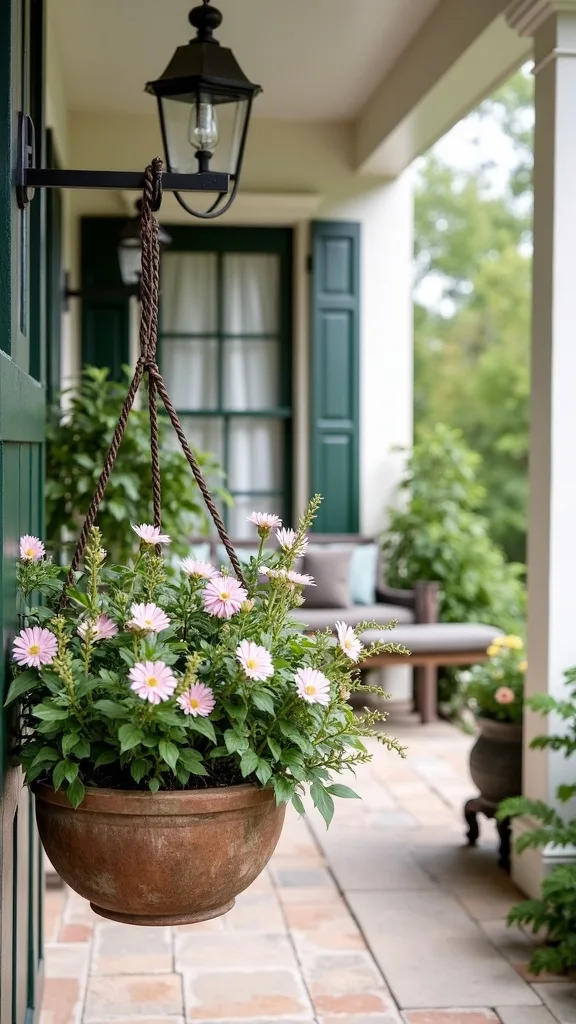
10. Window Box Echo: Repeat the Same Blooms in Pots Below
From my experience, repeating the same flowers in multiple places is what makes a porch look professionally styled. I find that when I echo window box blooms in front porch planters below, the whole facade reads cohesive.
I always start by choosing 1–2 signature plants—say, white bacopa and lavender petunias—then I use them in both a 36-inch window box and two 16-inch pots by the steps. I keep the ratio consistent: roughly 60% filler flowers, 20% greenery, and 20% spillers, and I aim for the same bloom color to appear at least 3 times across the front.
For materials, I like cedar window boxes lined with plastic and black resin pots on the ground for contrast. In my opinion, this is one of the most reliable front porch decorating ideas for instant curb appeal.
Pro Tip: I’ve found that if your window boxes get more sun than your porch pots, choosing the same flower in two cultivars (like sun-tough petunia above and shade-tolerant impatiens below in the same color) preserves the “matched” look without fighting your light conditions.
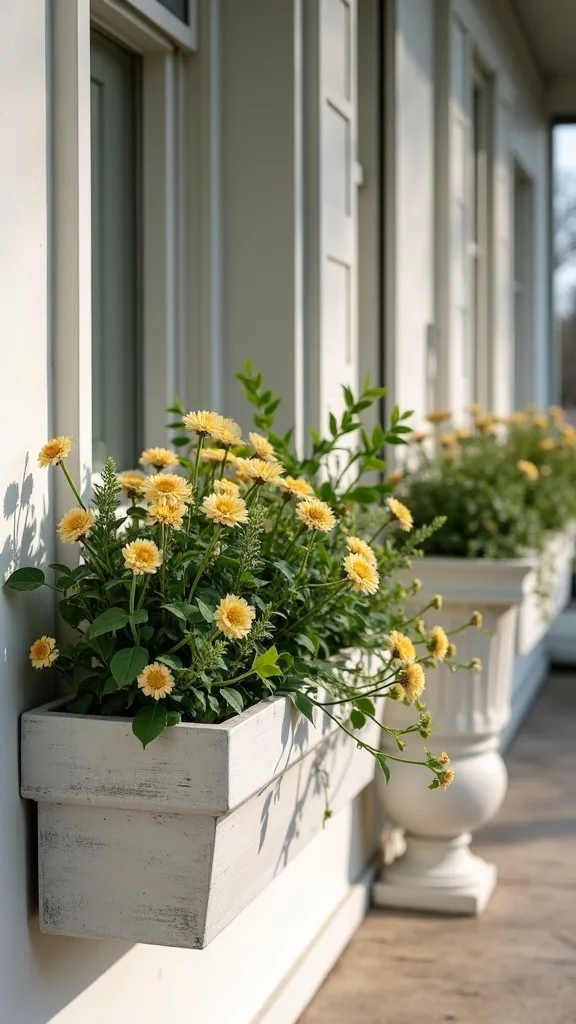
11. A Mini Front Porch Flower Bed Look Using Ground-Level Planters
I find that you can fake a front porch flower bed with low, wide planters, and it’s a lifesaver when you have concrete instead of soil. From my experience, the trick is making the edge feel continuous, like landscaping rather than containers.
I always start with two 36-inch long, 12-inch tall trough planters and set them parallel to the porch edge, leaving a 3–4 inch gap from the step line for safety. I plant 9–12 flowers per trough (4-inch marigolds, alyssum, and salvia), spacing them about 5 inches apart so the surface knits together in 2–3 weeks.
For a refined look, I like black troughs with white blooms and a touch of blue lobelia. When I design this look, I add 1 bag (2 cu ft) of dark mulch on top so the planters read like a real bed.
Pro Tip: I’ve found that using a thin strip of outdoor faux boxwood mat (cut to 3 inches wide) tucked along the back edge hides irrigation tubing or drip lines if you add them later, keeping the “bed” illusion intact.
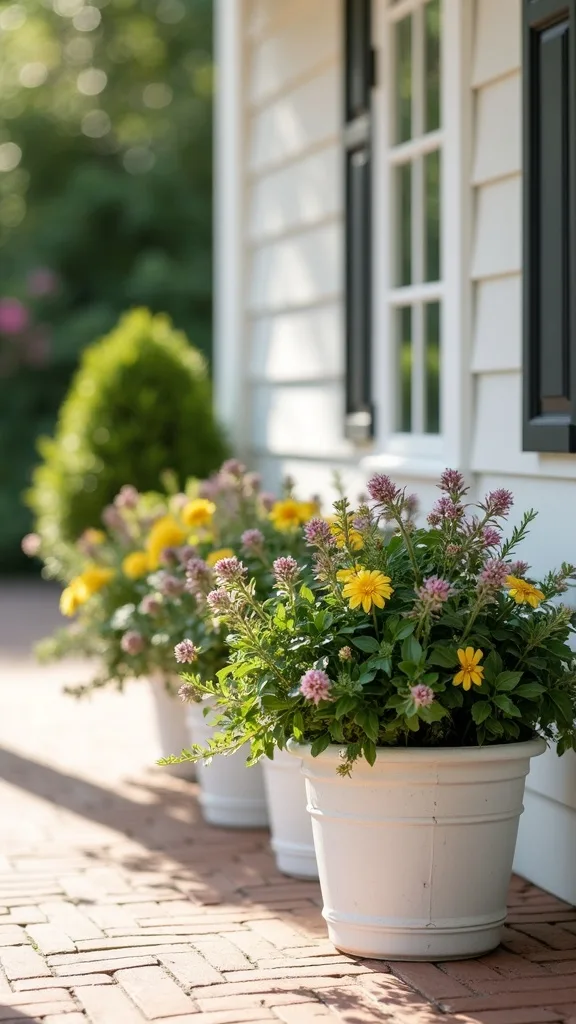
12. Coastal-Inspired Planters with White, Blue, and Natural Texture
I always reach for coastal styling when I want the porch to feel airy and relaxed without losing polish. In my opinion, blue-and-white flowers paired with natural fibers read sophisticated in spring porch decorating.
I start with 2 white ceramic planters (about 14 inches) and 1 natural seagrass basket (12 inches) with a hidden plastic liner. Then I plant 1 gallon of blue lobelia, 6 white impatiens, and 2 trailing plants like bacopa, making sure the spillers have 8–10 inches of room to drape over the rim.
For coordinated front porch decor, I add a 20×20-inch striped outdoor pillow on a bench and a natural coir rug. I find that repeating the natural texture in at least 2 places (basket + doormat) keeps the look from feeling themed.
Pro Tip: I’ve found that seagrass baskets can trap moisture against the pot; elevating the inner nursery pot on 3 wine corks improves airflow and prevents mildew smell during rainy spring weeks.
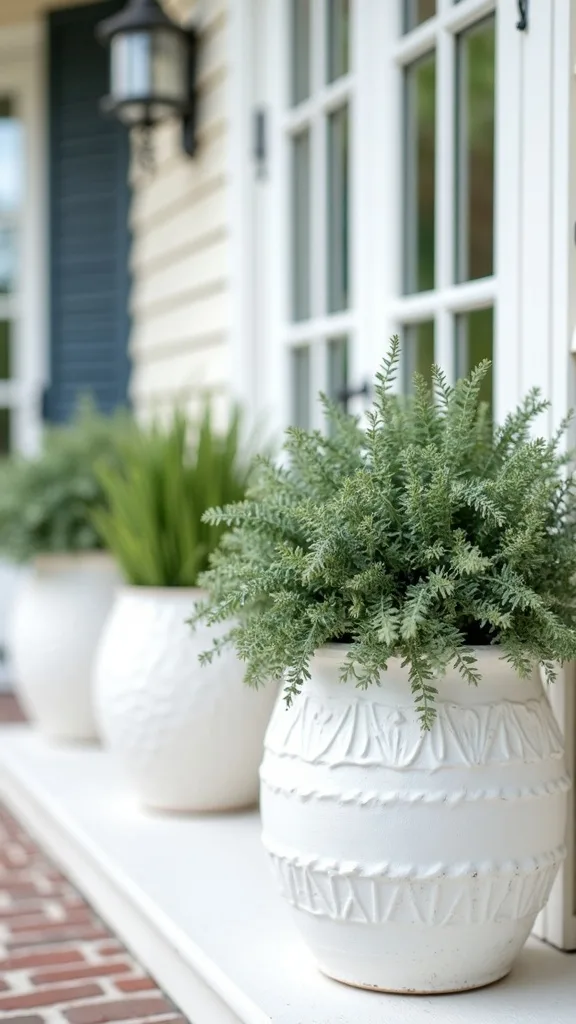
13. Rustic Wood Crate Risers for Height and Layering
From my experience, risers are the secret to that layered, editorial porch—because height variation makes even simple patio flower pots look styled. I find that rustic wood crates add warmth without needing more plants.
I always start with 2 wooden milk crates (roughly 13x13x11 inches) and seal them with an exterior clear coat that dries in about 2 hours between coats. Then I place a 12-inch pot on the crate and a 16-inch pot on the ground beside it, keeping a 6-inch gap so the leaves can spill naturally.
For plants, I like 4-inch geraniums (classic and upright) paired with a 6-inch trailing ivy, plus Spanish moss on top for texture. When I design this look, I keep crate wood tones consistent with any porch bench or house trim.
Pro Tip: I’ve found that drilling four 3/8-inch drainage holes in the crate base prevents water from pooling under pots after a storm, which otherwise can create a hidden mosquito nursery right by your front door.
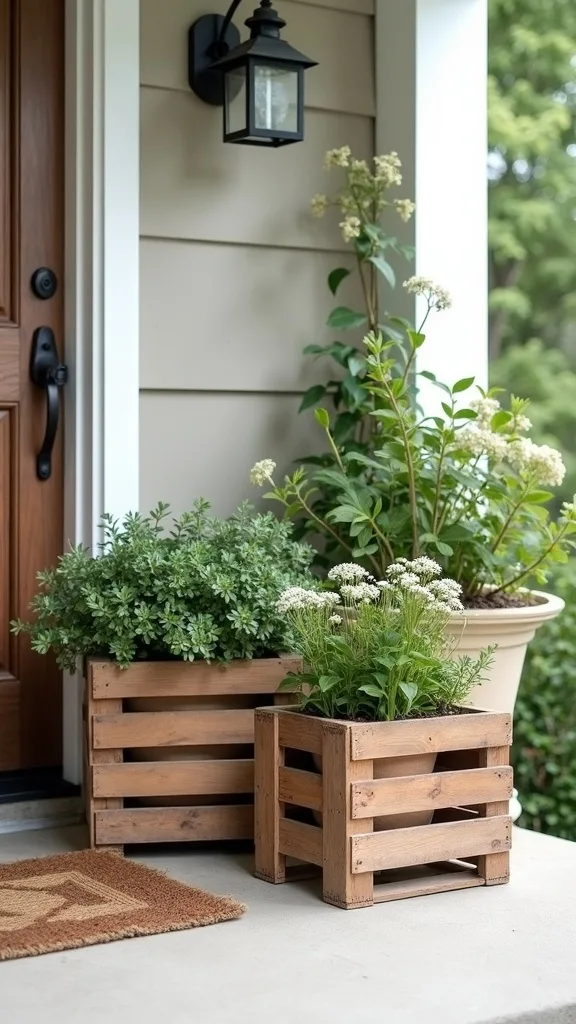
14. Minimalist Greenery-First Planters for a Calm, Modern Porch
I find that a greenery-forward approach feels quietly luxurious, especially if your home exterior already has strong lines. In my opinion, not every spring porch needs a riot of color to feel welcoming.
I always start with 3 matching planters—two 18-inch cylinders and one 14-inch—then I plant mostly foliage: 1 gallon fern, 1 gallon hosta (if shaded), and 2 trailing ivy plants. I leave about 2 inches of space at the top for a clean soil line and top with 1 inch of pea gravel for a tailored finish.
For materials, I like concrete-look resin planters and a simple black metal bench. When I design this look, I add one tiny bloom accent—like a 4-inch white begonia—so it feels intentional rather than unfinished.
Pro Tip: I’ve found that pea gravel works better than bark in minimalist pots because it doesn’t float during heavy rain; bark tends to shift and expose soil, which breaks the clean, calm look.
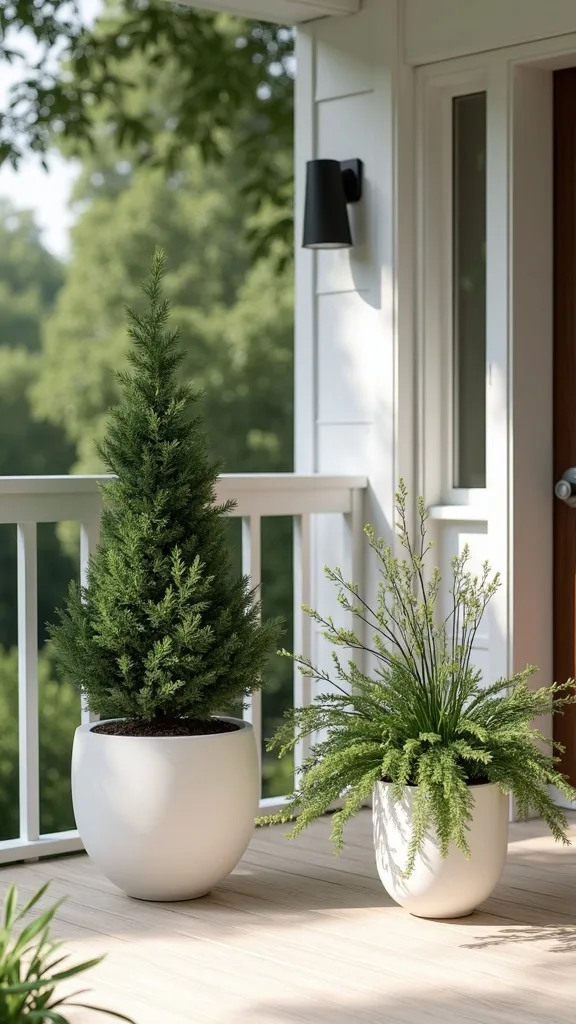
15. Boho Mix of Baskets and Patterned Ceramic for Texture
I always have fun with a boho porch because texture does the heavy lifting, and the flowers can be simple. From my experience, mixing baskets and patterned ceramic looks eclectic only when I limit the color palette.
I start with 1 patterned 12-inch ceramic pot, 2 woven baskets (10-inch and 14-inch) with plastic liners, and 1 hammered metal pot (about 11 inches). I plant 6–8 plants total—like 4-inch nasturtiums, 4-inch marigolds, and 2 trailing vines—spacing them 4–5 inches apart so the arrangement fills in within 2–3 weeks.
For front porch styling, I repeat one warm tone—terracotta, mustard, or clay pink—in at least 2 pots. I find that adding a 24-inch macramé plant hanger for one basket ties the look together without adding clutter.
Pro Tip: I’ve found that baskets can fade in direct sun; spraying them with UV-resistant clear coat once each spring (about 15 minutes) keeps the weave from turning brittle by midsummer.
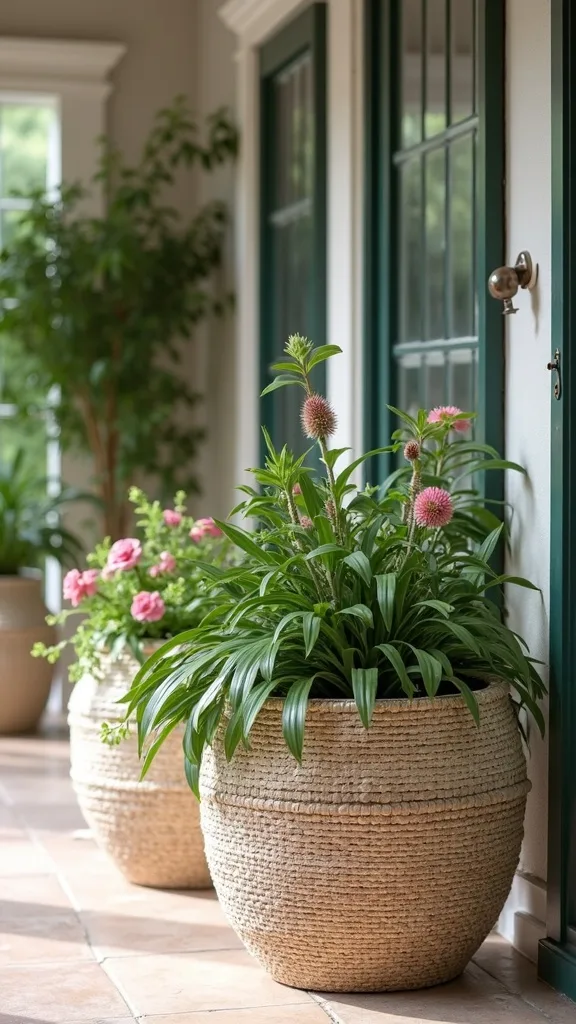
16. Transitional Black-and-Brass Accents with Soft Pastel Blooms
In my opinion, transitional porch styling—classic shapes with modern finishes—feels the most “forever” for curb appeal. I find that black planters with brass accents make pastel blooms look refined rather than sweet.
I always start with two 18-inch matte black planters and add 1 brass lantern (around 14 inches tall) between them. Then I plant 1 gallon of blush petunias, 6 white alyssum, and 2 trailing bacopa plants, aiming for about 12–14 inches of bloom height so the lantern still reads as an accent.
For cohesion, I match the brass to a door knocker or house numbers if I have them. When I design this look, I keep greenery slightly glossy—like ivy or boxwood—because it plays beautifully with metal finishes.
Pro Tip: I’ve found that brass-look lanterns can spot-rust if watered frequently; placing them on a 6×6-inch slate coaster keeps the base dry and prevents ring marks on painted porch floors.
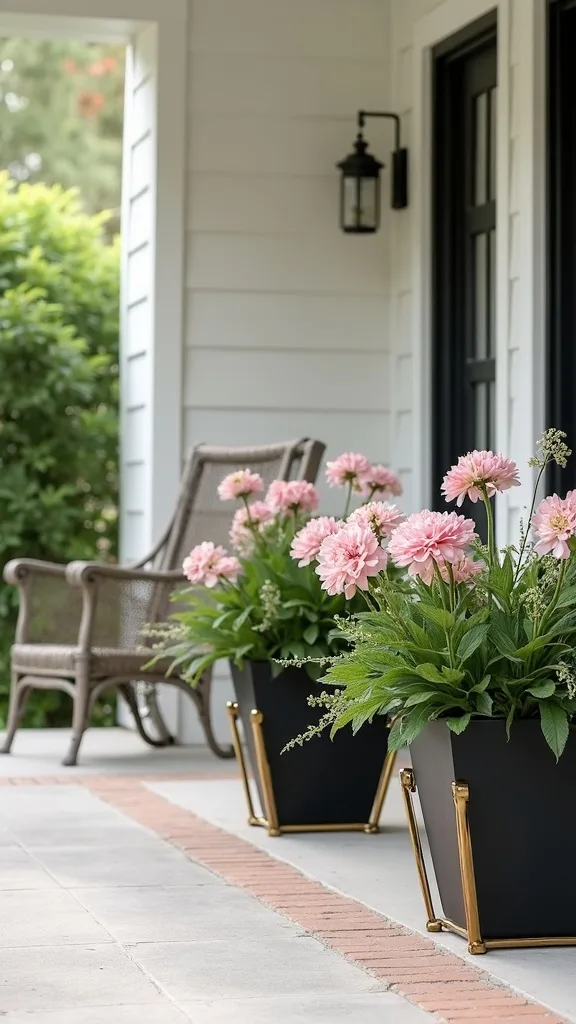
17. Color-Blocked Pots for a Designer ‘Palette’ Effect
I find that color-blocking is a designer trick that looks intentional even with inexpensive patio flower pots. From my experience, it works best when I choose 2–3 colors and repeat each color at least twice.
I always start with 6 pots in two sizes—three 12-inch and three 16-inch—and paint them with exterior satin paint in a tight palette (like warm white, sage, and charcoal). I let them cure for 24 hours, then I plant each color group with matching blooms: 6 white impatiens, 6 lavender pansies, and 6 deep pink dianthus, spacing plants 4 inches apart.
For front porch decorating, I keep the shapes consistent (all cylinders or all bowls) so the painted color reads as the feature. I find that this makes potted flowers for patio arrangements look custom without custom pricing.
Pro Tip: I’ve found that adding a 1-inch band of clear marine varnish just around the rim prevents the most common failure point—chipped paint from watering cans and hose spray—so your color blocks stay crisp longer.
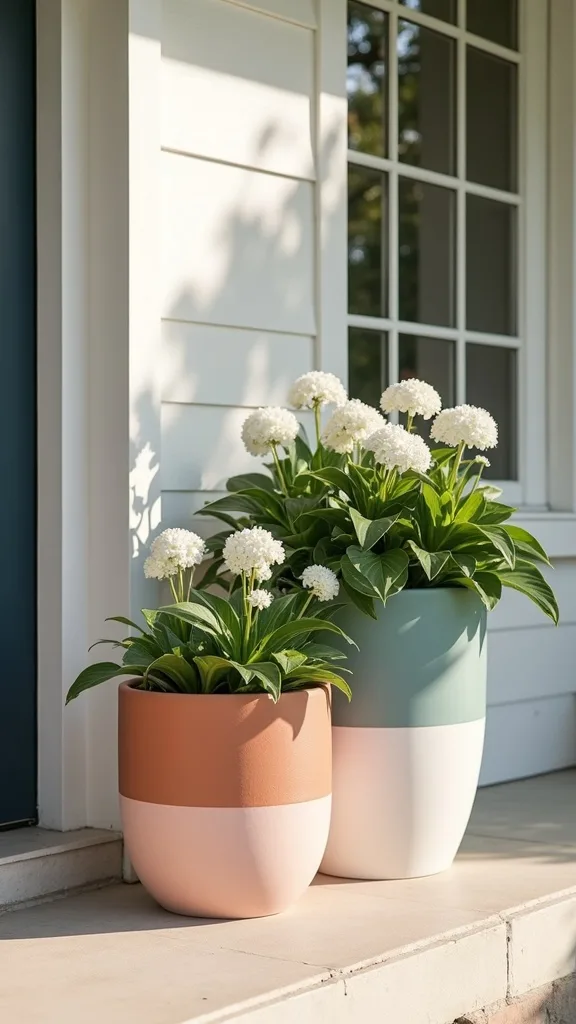
18. Edible + Ornamental Mix for a Porch That Feels Alive
I always recommend mixing edible plants with flowers because it makes the porch feel abundant and purposeful. In my opinion, a little rosemary or lettuce instantly elevates front porch planters beyond pure decoration.
I start with a 20-inch bowl planter and plant 1 rosemary (1-gallon), 3 flowering companions (4-inch marigolds), and 2 spillers (nasturtium or trailing thyme). I keep rosemary centered and give it at least 8 inches of breathing room, because it hates being smothered as the season warms.
For materials, I like food-safe potting mix and a slow-release fertilizer formulated for edibles, used at the label rate. When I design this look, I tuck a small pair of garden snips in a 6-inch terra-cotta pot nearby so harvesting feels effortless.
Pro Tip: I’ve found that rosemary in mixed containers does best when I water around the outer ring (where the flowers are) and keep the center slightly drier—otherwise the rosemary can sulk and drop needles in wet spring spells.
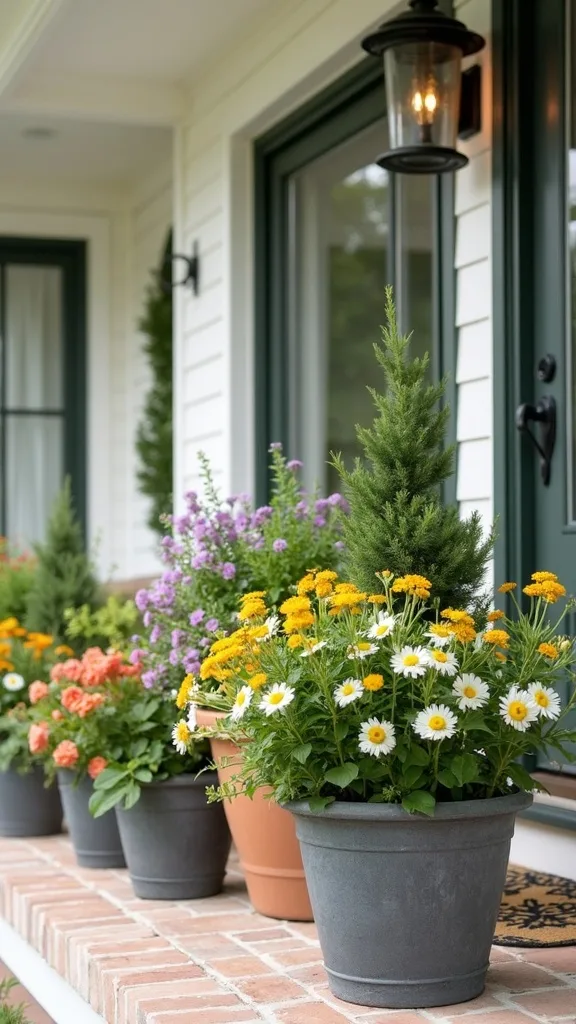
19. Step-by-Step Stair Pots for a Grand, Layered Ascent
From my experience, styling the steps is one of the most dramatic front porch decorating ideas, because it guides the eye upward like a red-carpet moment. I find that the key is keeping the walking path safe and generous.
I always start by placing pots on every other step, not every step, and I leave at least 24 inches of clear walking width. I use 3 pot sizes—10-inch, 12-inch, and 14-inch—and repeat them in a pattern, planting 3–5 flowers per pot (4-inch pansies and violas) so the scale fits the stair depth.
For stability, I like heavier terracotta or concrete-look resin, and I add rubber shelf liner under each pot to prevent sliding. When I design this look, I keep blooms in one family—like purple + white—so the steps feel composed.
Pro Tip: I’ve found that steps create microclimates: the top step is typically warmer and drier; placing drought-tolerant blooms (like dianthus) on the top and thirstier blooms (like impatiens) lower down keeps the whole staircase looking evenly lush.
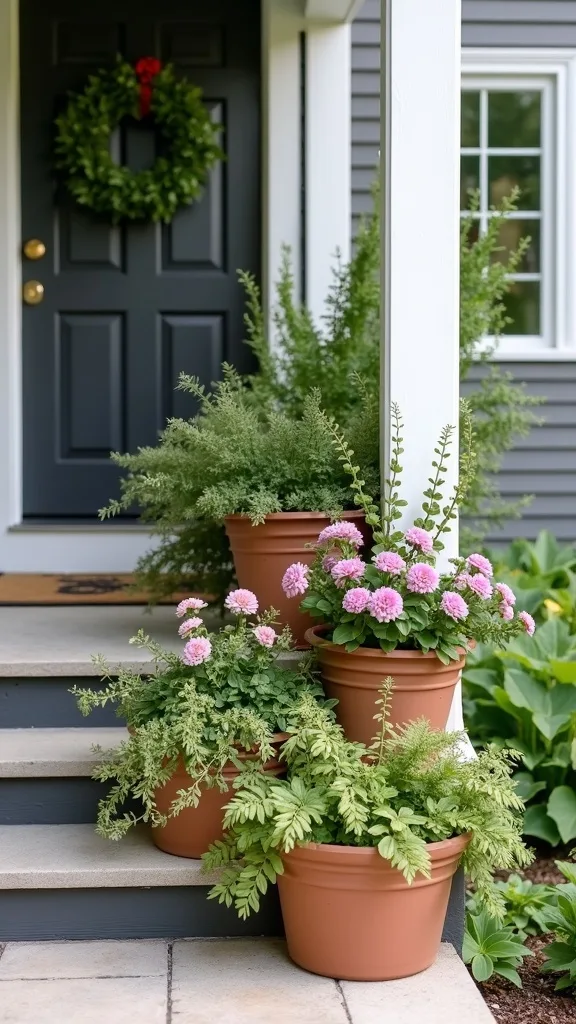
20. Front Porch Flower Pots Paired with Lanterns for Evening Glamour
I find that adding lanterns beside flowers makes the porch feel styled after sunset, not just during the day. In my opinion, this is the most elegant way to extend spring porch decorating into the evening.
I always start with two lanterns—one about 18 inches tall and one about 12 inches—then I place them next to a 16-inch planter so the heights stagger. I use LED candles set to a 6-hour timer, and I choose warm white light (2700K–3000K — the cosy, yellowish tone you see in most homes) so the blooms look flattering rather than harsh.
For plants, I like white bacopa and pale pink petunias because they glow softly at night. When I design this look, I keep lantern finishes consistent with door hardware (black or aged bronze) for cohesive front porch design.
Pro Tip: I’ve found that placing lanterns on the “windward” side of the planter reduces soot-like dust buildup on the glass, because the plant mass acts as a subtle windbreak in most porch exposures.
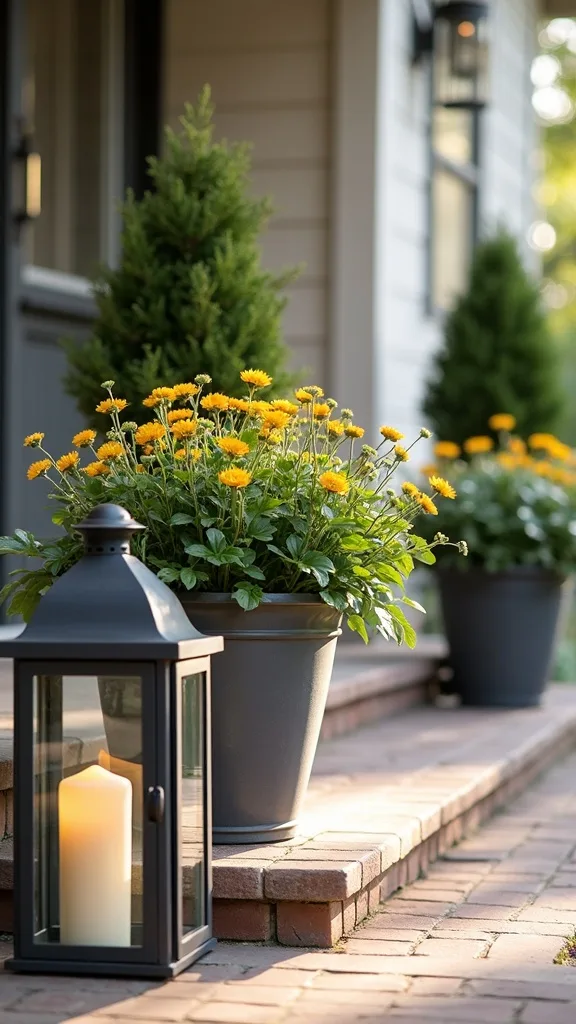
21. A Single Color ‘Runway’ Using Repeated Pots Along the Porch Line
I always love a runway effect because repetition feels designer and calm, even with budget-friendly materials. From my experience, it’s one of the cleanest ways to do front porch landscaping ideas with containers.
I start with 5 identical 12-inch pots and space them 18–24 inches apart along the porch edge. Then I plant the same flower in each pot—like 3 white geraniums per container—so the line reads intentional from the street within 1 day, not weeks later.
For materials, I like lightweight polypropylene planters in a stone finish, plus matching saucers to protect decking. When I design this look, I add one “break” at the door—a taller 20-inch pot—so the runway has a focal point.
Pro Tip: I’ve found that if you angle the first and last pot slightly inward (just 5–10 degrees), the line looks more welcoming and less like a boundary, which matters on porches that feel visually “closed off.”
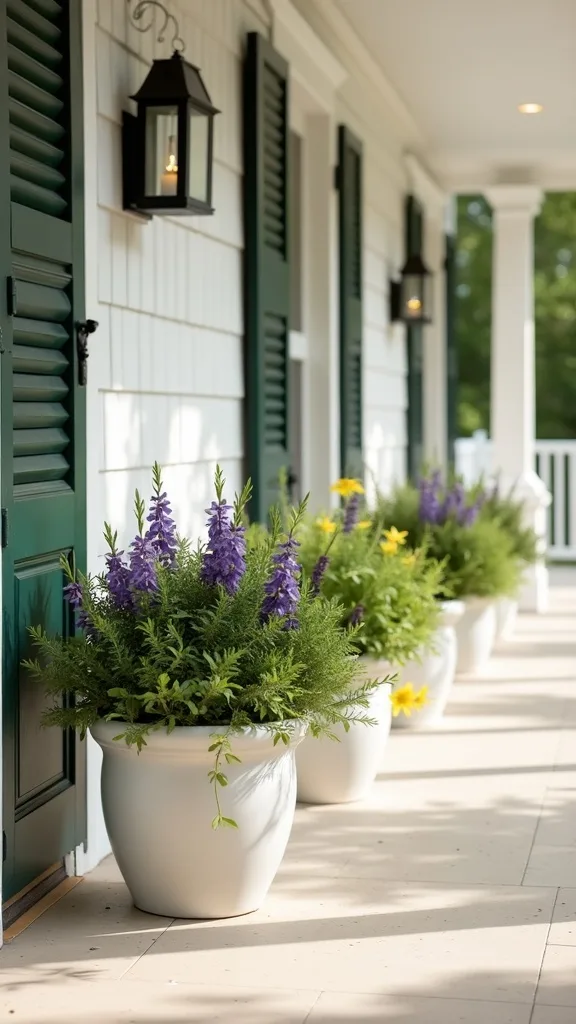
22. Shade-Friendly Porch Pots That Still Feel Luxurious
I find that shaded porches can look even more refined than sunny ones because the greens stay velvety and fresh. From my experience, the mistake is forcing sun-loving blooms and ending up with sparse, unhappy containers.
I always start by choosing a 16-inch pot with excellent drainage, then I plant 1 gallon fern, 6 impatiens, and 2 trailing bacopa or creeping jenny, giving each impatiens about 4 inches of space. I water deeply 2 times per week in most spring weather, adjusting if the pot feels light when I lift it slightly.
For a sophisticated palette, I like white impatiens + deep green fern + chartreuse trailing foliage. When I design this look, I top-dress with fine pine bark to keep splashes off the porch and make the surface look finished.
Pro Tip: I’ve found that shaded pots benefit from a smaller saucer gap—using 1/4-inch pot feet—so air circulates under the container; without that airflow, spring dampness can encourage algae on the porch where the pot sits.
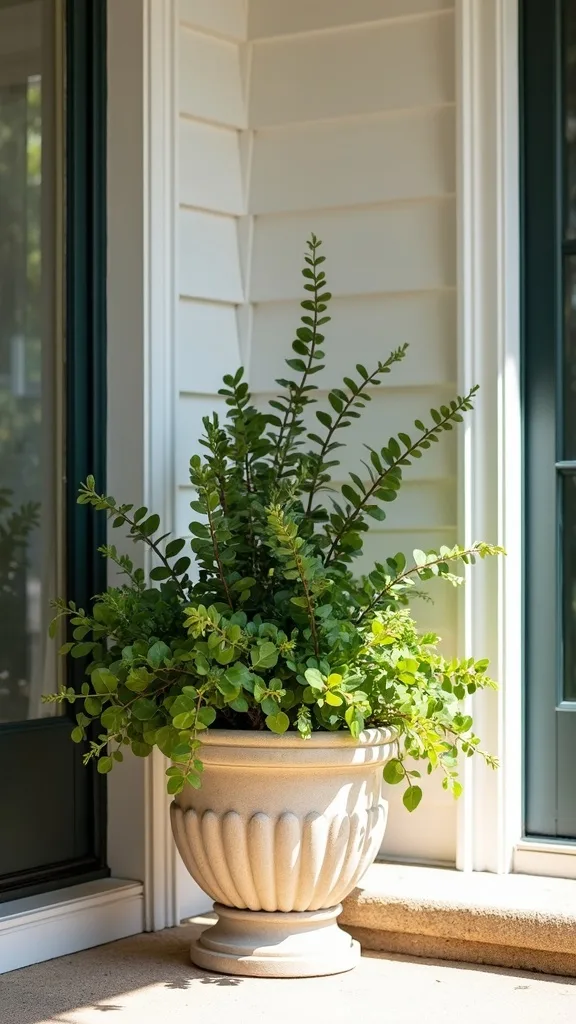
23. DIY Painted Terra-Cotta Rim for a Subtle Custom Detail
I always love a small DIY detail that whispers “custom,” and a painted rim is one of my favourite approaches. In my opinion, it’s the easiest way to elevate basic front porch flower pots without repainting everything.
I start with 4 terracotta pots in 10-inch size and tape a 1-inch band around the rim using painter’s tape. Then I paint the band with exterior enamel (2 thin coats, about 30 minutes apart), and I let it cure for 24 hours before planting 3–4 blooms per pot.
For colors, I find that soft black, warm white, or deep navy feels editorial and timeless. When I design this look, I repeat the rim color in one other item—like a doormat border or a lantern—to tie the whole porch together.
Pro Tip: I’ve found that painting the rim on the inside lip too (about 1/2 inch down) hides mineral staining from hard water, so the pots keep that crisp “just styled” look longer.
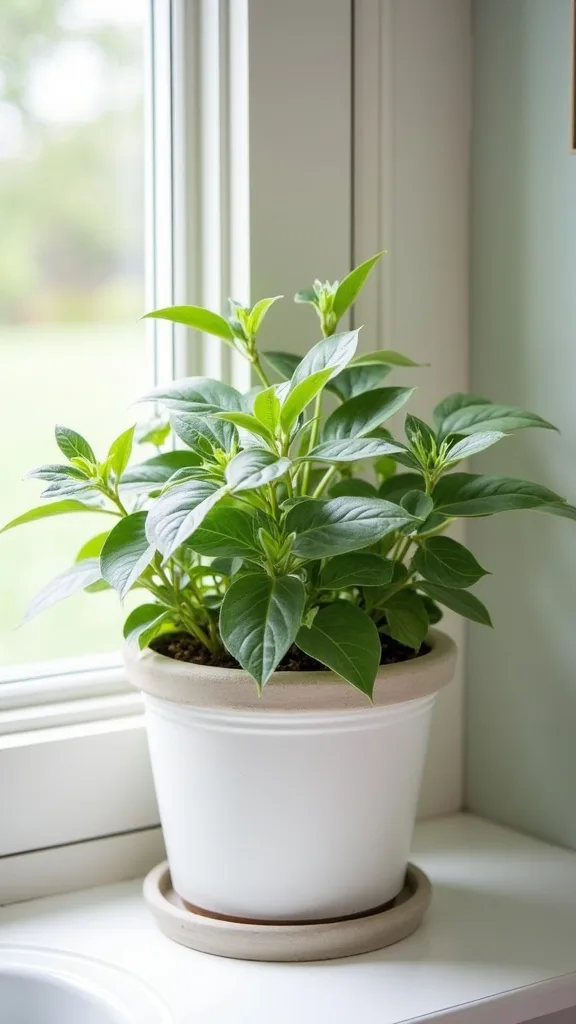
24. Front Porch Planters with River Rock Top-Dressing for a Clean Finish
From my experience, top-dressing is what separates “nice plants” from truly styled front porch planters. I find that river rock gives a tailored finish and keeps soil from splashing during spring rain.
I always start by adding plants to a 14–18 inch pot, then I top with a 1-inch layer of 1/2-inch smooth river rock (about 8–12 lb per pot). I keep rocks 1 inch away from the plant stems, and I water slowly for 30–45 seconds so the moisture penetrates rather than running off.
For plants, I like white geraniums, lavender, and rosemary because the rock reads Mediterranean and elevated. When I design this look, I choose rocks in a tone that relates to the home—warm beige for brick, cool gray for stone.
Pro Tip: I’ve found that river rock can trap heat in full sun; using it on only the top half of the porch (where pots get morning sun) keeps roots cooler than placing rock-topped pots in the harshest afternoon exposure.
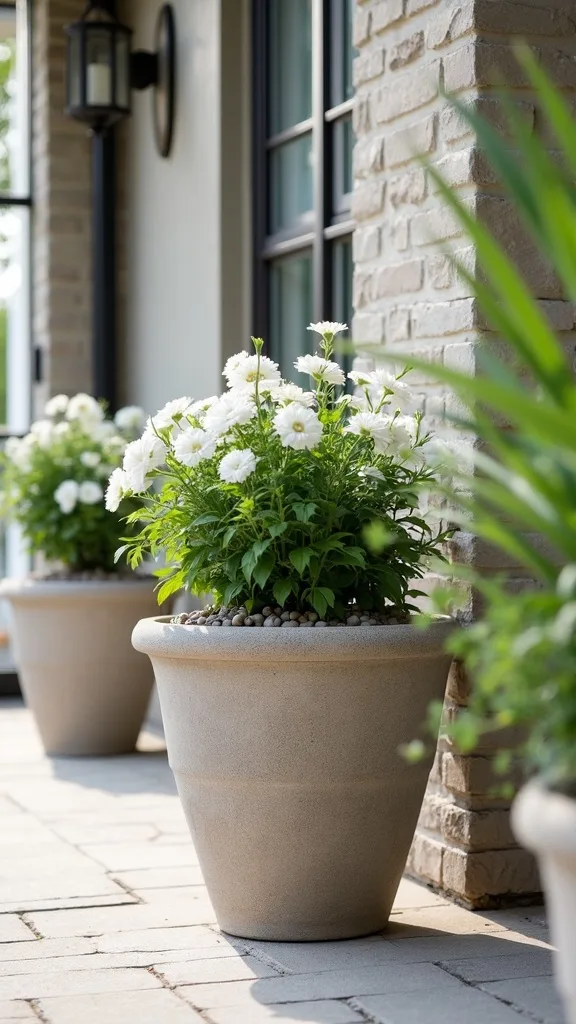
25. Seasonal Swap System: Keep the Same Pots, Change the Plants
I always recommend building a seasonal swap system because it saves money long-term and keeps front porch decorating feeling fresh. In my opinion, the most elegant porches look consistent in vessel style but seasonal in planting.
I choose 3–5 high-quality patio flower pots (like 16-inch and 20-inch sizes) and keep them year-round, then I swap plants every 10–12 weeks: pansies in early spring, petunias in summer, mums in fall. I keep a simple planting map in my notes app with quantities—like “6 impatiens + 2 spillers per 16-inch pot”—so I can shop fast and replant in about 45–60 minutes.
For materials, I always keep 1 bag of potting mix (2 cu ft) and a small container of slow-release fertilizer on hand. When I design this look, I refresh the top 2 inches of soil each swap to keep containers performing.
Pro Tip: I’ve found that leaving the root ball of the previous season in place (and planting around it) is what causes mid-season slump; fully removing old roots and loosening the bottom 4 inches of soil restores drainage and keeps the new potted flowers for patio thriving.
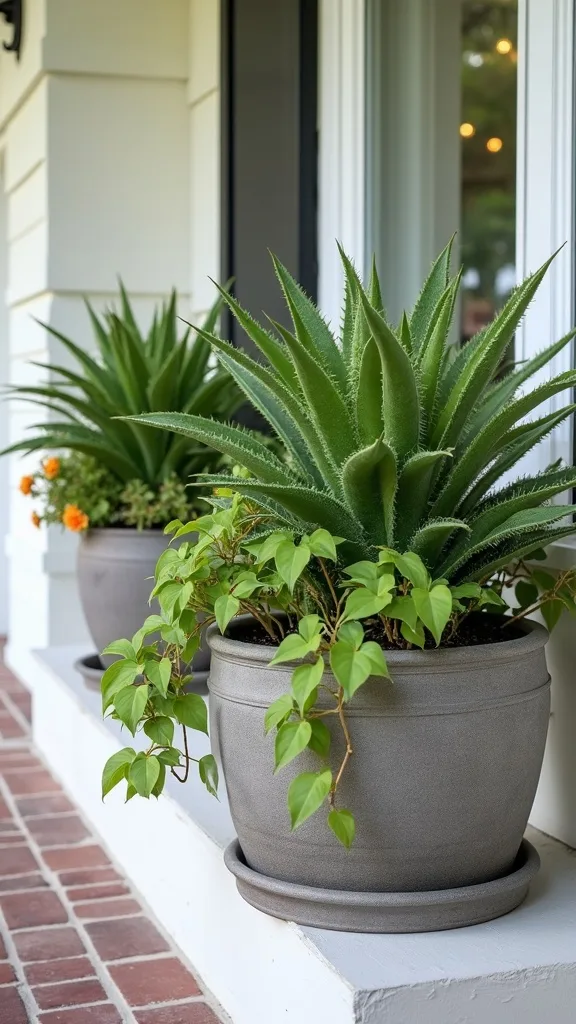
Final Thoughts
I find that the most memorable porches aren’t the ones with the most flowers—they’re the ones with the clearest intention. When I design front porch flower pots, I’m always chasing that layered, composed feeling: a few strong shapes, a repeated color, and just enough trailing softness to make the hard edges feel gracious.
From my experience, it’s worth choosing fewer, better containers and committing to a simple formula you can repeat. This costs more upfront if you invest in 2–3 quality planters, but it saves time later because your porch stays cohesive through every seasonal swap.
If you take one step today, I recommend picking your palette (2 colors + 1 greenery) and building one beautiful cluster by the front door. Once that focal point feels right, the rest of your front porch decorating becomes surprisingly easy.
What I’d Do Differently
When I first tried this, I made one very specific mistake: I bought gorgeous front porch flower pots first, then tried to “make plants work” in them—especially shallow bowls that were only about 8 inches deep. Within 10 days, my petunias started looking stressed because the soil heated up fast and dried out unevenly, and I was stuck watering twice a day to keep things presentable. The correct approach, in my experience, is to match the container depth to your lifestyle and exposure: for most spring porches, I now choose pots that are at least 14–16 inches deep for my main potted flowers for patio, then I reserve shallow bowls for hardy greenery that doesn’t punish me if I miss a watering.
I also wish I’d known how much front porch styling improves when I commit to repetition. Now I pick one “signature” bloom color and repeat it in at least 3 containers, then I add only 1 trailing plant type so the edges look cohesive. If you’re on the fence, I recommend starting with one layered cluster by the door this weekend and letting that success guide the rest.
Products I Recommend for This Project
Here are some of my favourite products to help you bring these ideas to life:
- Kante 19.7″ Round Tall Planter (Weathered Concrete) — I find that the tall profile instantly elevates front porch planters without the weight of real concrete.
- Bloem Ariana Self Watering Planter 16″ — I recommend this when you want potted flowers for patio that stay hydrated longer between waterings.
- Miracle-Gro Performance Organics All Purpose Container Mix — I’ve found it drains well in pots while still holding enough moisture for spring annuals.
- Osmocote Smart-Release Plant Food Flower & Vegetable (2 lb) — I always use slow-release fertilizer so hanging baskets and patio flower pots don’t fade mid-season.
- Homemory Flameless LED Candles with Timer (Warm White) — I love these inside lanterns to make front porch decor feel welcoming after sunset with zero fuss.