
This post contains affiliate links. As an Amazon Associate, I earn from qualifying purchases at no extra cost to you.
Are you looking for a summer-ready living room that feels breezy, grounded, and a little sun-kissed without turning into a themed set? Do you want to bring mediterranean decor home in a way that still works with your current sofa, rug, and layout?
I’m walking you through the exact choices I make to get that Mediterranean interior feeling: warm plaster-like walls, terracotta home decor moments, relaxed textiles, and a few architectural details that do the heavy lifting. I’ll also share the measurements I rely on (like curtain height and spacing) so you can copy the vibe with confidence.
In my opinion, this is perfect for anyone who wants a warm tones living room that feels calm in summer but still cozy when the weather cools down.
I always start with one “anchor scene” (like an arch doorway interior moment) and then I repeat a tight palette—creamy whites, clay, olive, and weathered wood—at least 3 times around the room. Along the way, I’ll show you how I layer lighting, art, and greenery so it reads collected, not cluttered.
Below are 25 Mediterranean Living Room Decor & Style that mediterranean decor lovers can use to capture summer Mediterranean vibes with practical steps and realistic materials.
1. Build the Anchor Scene: Arch + Terracotta + Linen + Olive
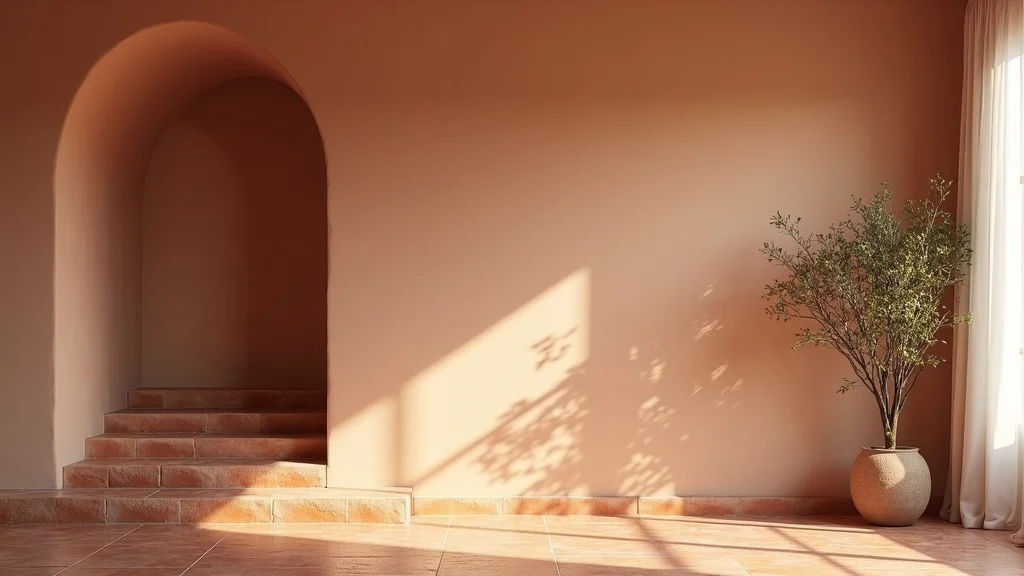
I always start by designing one “hero view” that sets the tone the second you walk in: an arched plaster doorway, terracotta floor tiles, white linen curtains, and an olive branch arrangement. From my experience, when those 4 elements show up together, the whole room reads Mediterranean interior even if everything else is simple.
To implement it, I like an arch opening that’s about 36–48 inches wide and at least 84 inches tall so it feels architectural, not decorative. If I’m faking the look, I’ll use 1/2-inch flexible drywall or an MDF arch kit and finish with 2 thin coats of limewash-style paint over a weekend (including drying time). For the floor, I typically lean into 12×12-inch terracotta-look porcelain tiles if real clay is out of budget.
I find that white linen curtain panels (96–108 inches) on a black iron rod instantly soften the hard surfaces, and I’ll place olive branches in a 10–12 inch matte clay amphora vase.
Pro Tip: I’ve found the arch looks most believable when I extend the plaster texture 6–10 inches past the curve onto the flat wall—otherwise the curve can read like a sticker instead of real masonry, and that tiny overlap makes the whole scene feel sun-baked and authentic.
2. Choose a Sun-Washed Wall Color (Without Going Stark White)
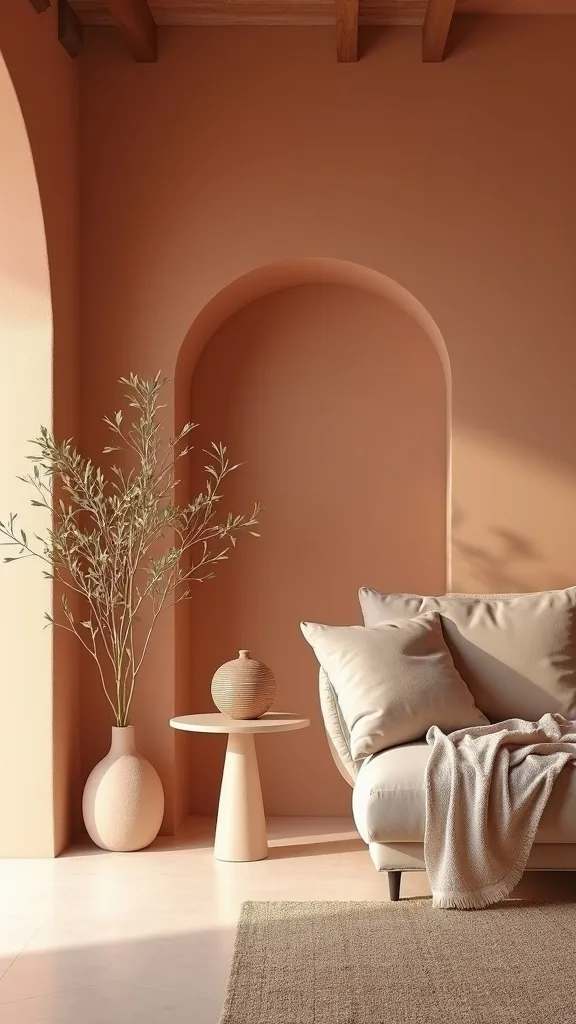
From my experience, Mediterranean decor falls flat when the walls are too bright or too gray, so I always aim for a creamy, sun-washed white that still feels warm at night. When I design this look, I want the walls to act like a reflector for terracotta and wood, not a cold backdrop.
I typically test 3 paint samples in 12×12-inch swatches and watch them for 24–48 hours in morning and evening light. In most cases, I’ll choose a warm white with a hint of beige and then paint the ceiling 10–15% lighter to keep the room airy. If you’re using limewash paint, I plan on 2 coats plus a light burnish pass after about 30 minutes per section.
I find that a matte finish hides wall imperfections better than eggshell, especially if you’re mimicking plaster. For supplies, I rely on a 9-inch microfiber roller, angled sash brush, and high-quality painter’s tape that’s 1.41 inches wide for crisp edges.
Pro Tip: I always recommend painting one “shadow line” in a slightly deeper warm white around the arch (a 1–2 inch band) because it fakes depth the way real plaster does, and it keeps the arch doorway interior from disappearing in bright daylight.
3. Layer Terracotta Home Decor Without Overdoing Orange
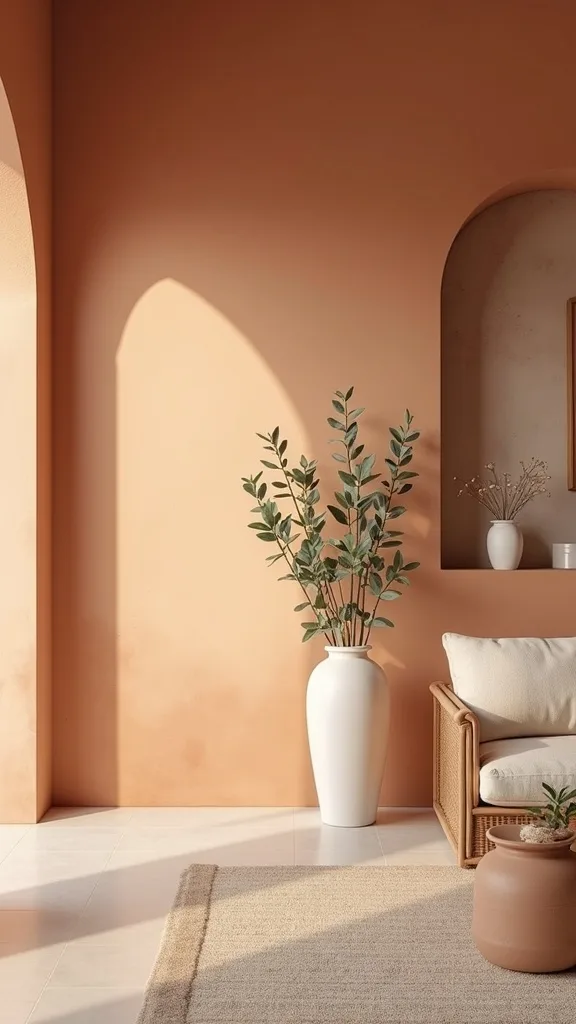
I find that terracotta home decor works best when it shows up in a few intentional hits rather than everywhere at once. In my opinion, the goal is clay warmth, not a room that looks like it’s been dipped in orange.
I always start by picking 2–3 terracotta pieces in different heights—like a 12-inch vase, an 8-inch bowl, and a 4-inch candleholder—then spacing them at least 18–24 inches apart so each one reads as a moment. If I’m styling a coffee table, I’ll keep the terracotta to about 20–30% of the visible objects and balance it with pale wood or stone.
From my experience, matte terracotta, sealed terracotta, and terracotta-look ceramic all read differently, so I like mixing finishes on purpose. I’ll pair clay with travertine coasters, a bleached oak tray, and one linen-covered book stack (2–3 books, not 10).
Pro Tip: I’ve found the quickest way to “Mediterranean-ify” a modern room is to repeat terracotta at eye level and knee level—one piece around 48–60 inches high (shelf/console) and one around 16–20 inches high (table/floor)—because that vertical echo feels like architecture, not decor.
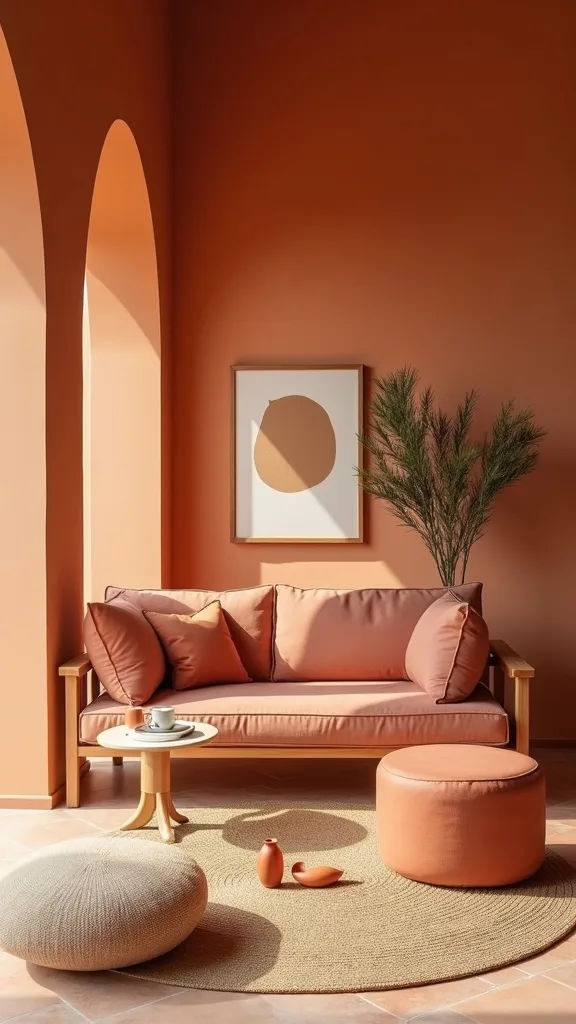
4. Use White Linen Curtains for Movement and Soft Shade
I always recommend white linen curtains because they create that breezy summer Mediterranean vibe even when the windows are closed. From my experience, linen’s slight texture keeps a warm tones living room from feeling flat the way thin polyester sheers sometimes do.
I always start by hanging the rod 4–6 inches above the window frame (or 2 inches below the ceiling if the room is under 9 feet) to make the walls feel taller. For most living rooms, I use 96-inch panels for standard 8-foot ceilings and 108-inch panels for 9-foot ceilings, and I aim for 2 to 2.5 times the window width in total fabric for a relaxed fold.
I find that a black iron or aged brass 1-inch diameter curtain rod reads Mediterranean interior more than shiny chrome. If privacy is an issue, I’ll layer a second track with light-filtering liners so the linen can stay airy.
Pro Tip: When I tried steaming linen in place, I learned it relaxes best if I mist it lightly first and steam from the top 12 inches down—starting lower can leave a “water line” that shows in afternoon sun, especially on bright white panels.
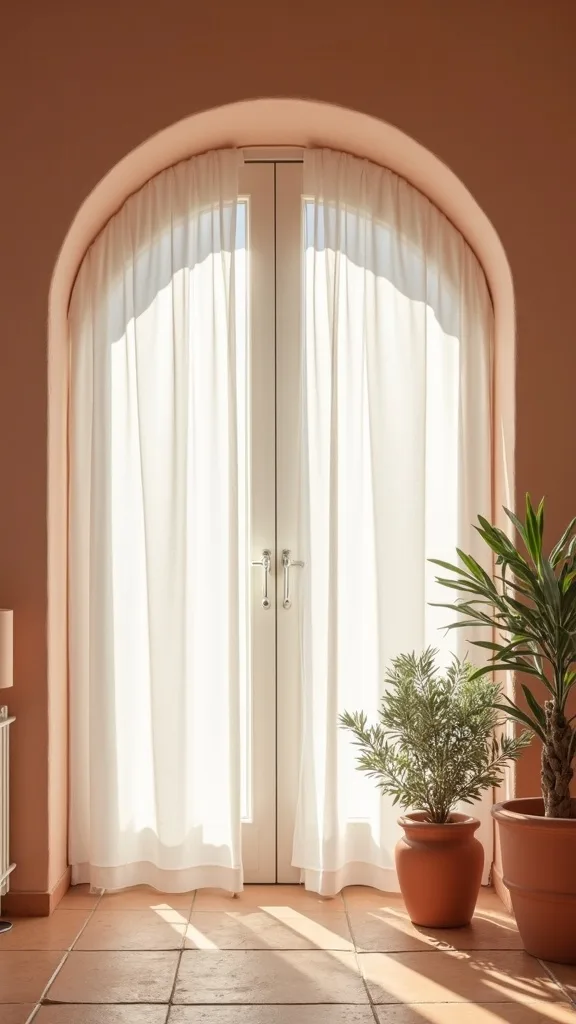
5. Bring in Olive Branches the Realistic Way
I find that olive branches instantly signal mediterranean decor, but they can look fake fast if the scale is off. From my experience, the right vessel and the right stem length matter more than buying the most expensive faux stems.
I always start with the vase: a 10–14 inch tall clay amphora or a 12-inch stoneware jug with a narrow neck so the stems stand naturally. For height, I aim for branches that reach 24–36 inches above the vase rim, and I usually use 5–9 stems so it looks full but still airy. If I’m using fresh branches, I re-cut 1 inch off the ends and change the water every 3 days to reduce leaf drop.
I recommend mixing 1–2 eucalyptus stems or dried bunny tails if you want more softness without losing the Mediterranean interior vibe. In my opinion, muted olive-green reads best against creamy walls and terracotta accents.
Pro Tip: I’ve found faux olive looks most convincing when I “break” the symmetry—before arranging, I gently bend each wire stem at 2–3 points so no two branches mirror each other, which mimics how real olive grows in uneven sunlight.
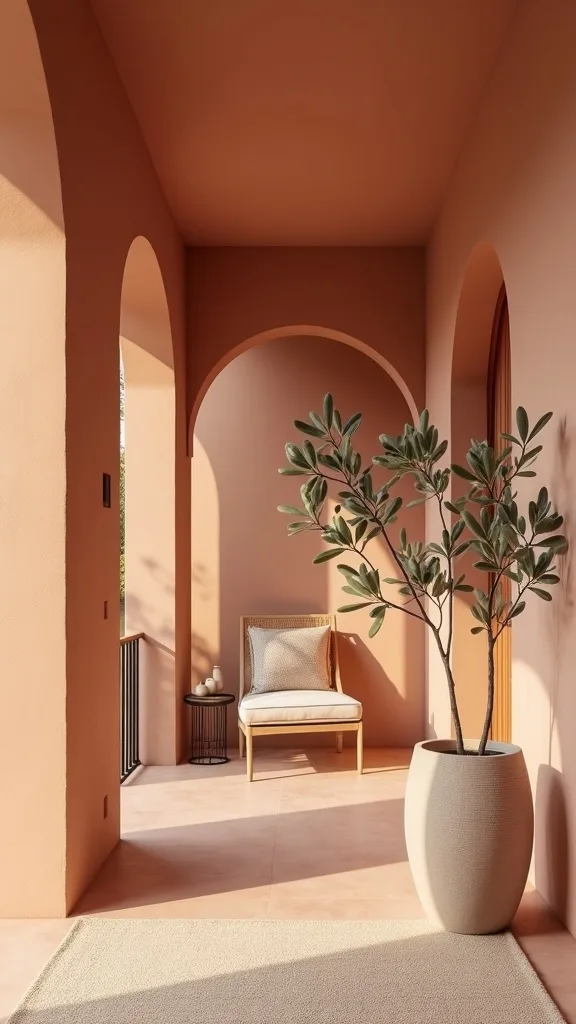
6. Pick a Warm-Tone Rug That Can Handle Summer Living
From my experience, the rug is where a warm tones living room either feels grounded or starts to float. When I design mediterranean decor, I look for rugs that read sun-faded rather than high-contrast.
I always start by sizing correctly: for most living rooms, I choose an 8×10 foot rug so the front 6–10 inches of the sofa and chairs sit on it. If the room is larger, I’ll move up to 9×12 feet so walkways stay at least 30–36 inches clear. For materials, I find that wool-blend or low-pile polypropylene works well if you’re in and out during summer, because it cleans easier than a shag.
I recommend a palette of sand, clay, and soft olive, and I’ll avoid bright blue unless it’s repeated at least 2 times elsewhere (like pillows and art). In my opinion, a subtle diamond or faded stripe pattern reads more authentic than crisp geometrics.
Pro Tip: I always recommend a 1/4-inch felt rug pad under flatweaves on tile—without it, terracotta-look floors can make the rug “creep” a few inches per week, and that slow shift is what causes the corners to curl and catch toes.
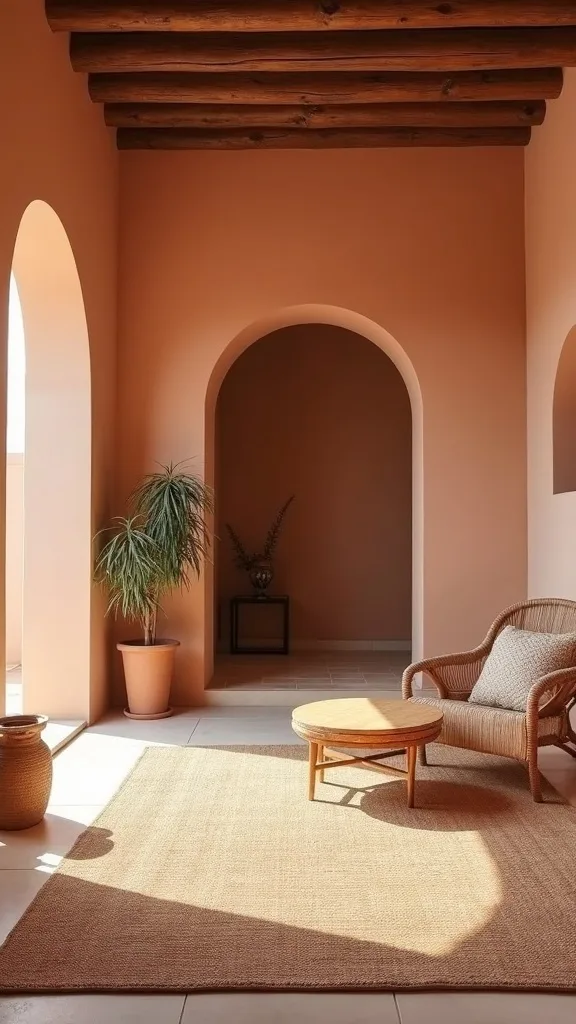
7. Swap in a Slipcovered Sofa Look (Even If You Can’t Buy One)
I find that relaxed upholstery is a shortcut to Mediterranean interior comfort, especially in summer when you want breathable fabrics. From my experience, a slipcovered look also hides daily life better than tight, tailored upholstery.
If you can buy new, I always recommend a sofa around 84–96 inches long in a washable cotton-linen blend. If you’re working with what you have, I’ve found a 2-piece stretch slipcover plus separate arm covers can mimic the vibe for about $60–$120, and it usually takes 45–90 minutes to install and tuck neatly. I like to add 2 oversized 22×22-inch linen pillows and one 14×20-inch lumbar in a clay stripe.
In my opinion, warm white, oatmeal, or light sand works better than pure bright white because it feels sun-worn, not clinical. I’ll pair it with a natural jute or seagrass basket for throws to keep the look casual.
Pro Tip: When I tried slipcovers on a leather sofa, I learned they slide unless I add 2-inch wide gripper strips under the seat cushions—those little strips keep the cover from “walking” forward every time someone stands up.
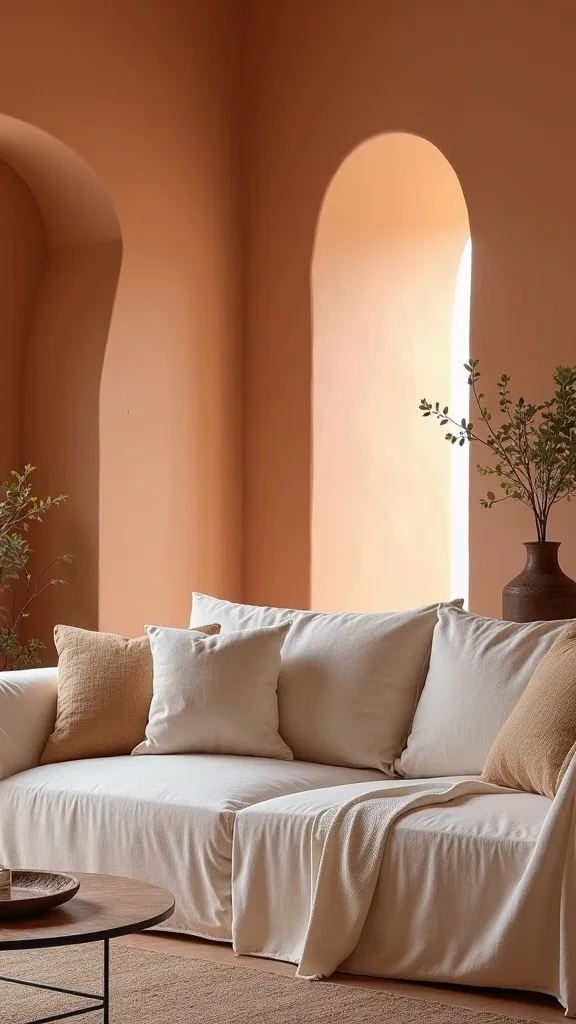
8. Create an Arch Doorway Interior Moment With Paint (No Construction)
I always love a true arch, but I find that a painted arch can deliver 70% of the Mediterranean decor impact with 30% of the effort. From my experience, it’s especially helpful in rentals or when you’re not ready to commit to drywall work.
I always start by measuring the opening and sketching a half-circle or soft arch that’s 6–10 inches wider than the door trim on each side. For a standard 80-inch tall doorway, I’ll place the arch peak around 90–96 inches high so it feels intentional. I use a pencil, a thumbtack, and a string (about 36–48 inches long) to draw a clean curve, then paint with a 2-inch angled brush and a small 4-inch roller for control.
I recommend a warm clay, sand, or muted terracotta shade in matte paint to echo terracotta home decor without overwhelming the room. In my opinion, the arch looks best when it frames something—like a console or plant.
Pro Tip: I’ve found the secret is painting the arch color 1–2 inches onto the inside return of the doorway; that tiny wrap makes it read like depth and plaster thickness instead of a flat graphic.
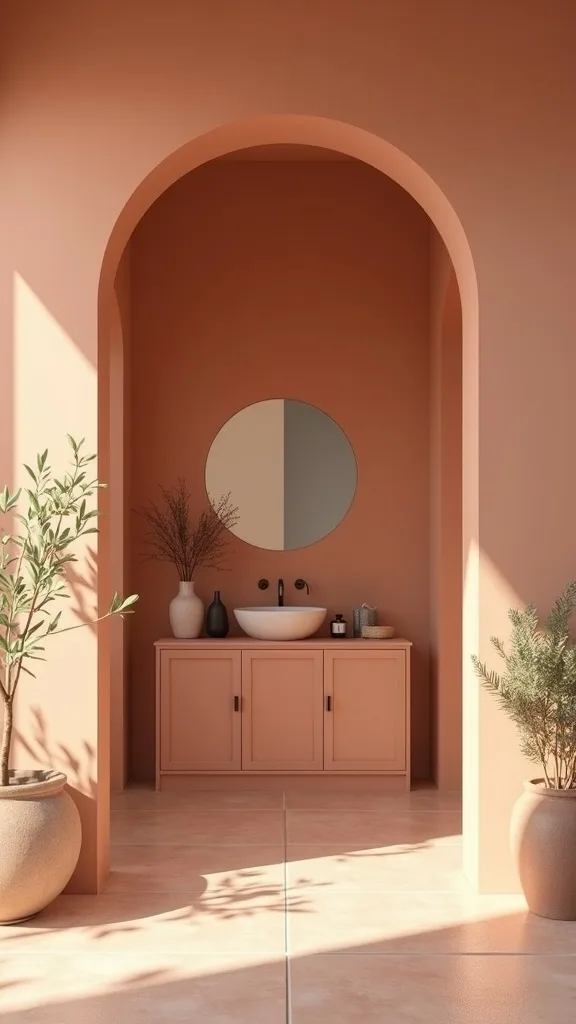
Cost & Materials Estimate
For most living rooms, I find a Mediterranean refresh typically lands between $250 and $2,500 depending on whether I’m changing textiles only or adding an arch/plaster and larger furniture.
| Item | Estimated Cost | Where to Buy |
|---|---|---|
| White linen curtain set (2 panels, 96–108 in) | $55–$160 | IKEA / Amazon |
| Black iron curtain rod (48–88 in) + rings | $35–$95 | Home Depot / Amazon |
| Terracotta decor bundle (2–4 pieces) | $45–$180 | Wayfair / Amazon |
| 8×10 warm-tone rug (wool-blend or washable) | $160–$650 | Wayfair / Lowe’s |
| Limewash-style paint + tools (roller, brush, tape) | $90–$260 | Home Depot / Lowe’s |
| Faux olive stems (5–9) + clay amphora vase | $45–$170 | Amazon / Wayfair |
Total estimated cost: $250–$2,500 I always recommend splurging on the rug and curtains for the biggest visual payoff, then saving by DIY-ing the arch paint effect instead of building a permanent structure.
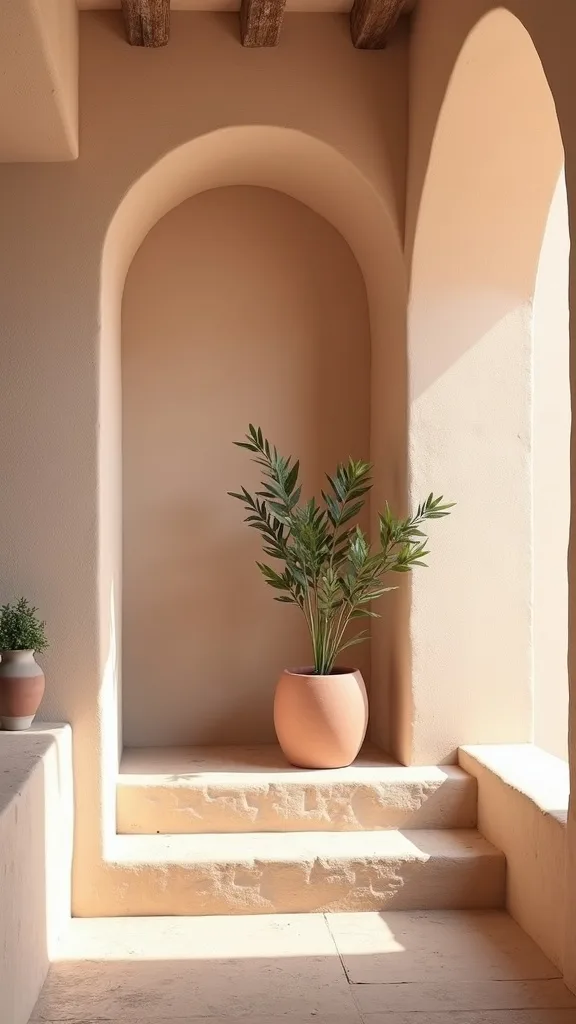
9. Use Plaster Texture (Safely) With a Limewash-Style Finish
From my experience, plaster texture is what makes mediterranean decor feel architectural instead of purely decorative. I find that you don’t need real Venetian plaster to get the vibe, but you do need a finish with movement.
I always start with a smooth-ish wall and patch any dents, then I apply a limewash-style paint using a 4-inch masonry brush in X strokes. Typically, I plan for 2 coats and let each coat dry 2–4 hours depending on humidity. If you want a more pronounced look, I’ve found adding a third coat only on the upper 2/3 of the wall creates that sun-faded variation without making the room feel busy.
I recommend keeping the color in the warm white family so it plays nicely with terracotta floor tiles and natural wood. In my opinion, matte is worth the trade-off of being slightly harder to wipe clean because it looks far more authentic.
Pro Tip: When I tried limewash in a high-traffic living room, I learned to seal only the lower 36 inches with a breathable matte sealer—sealing the whole wall can reduce the chalky depth that makes limewash look like real plaster.
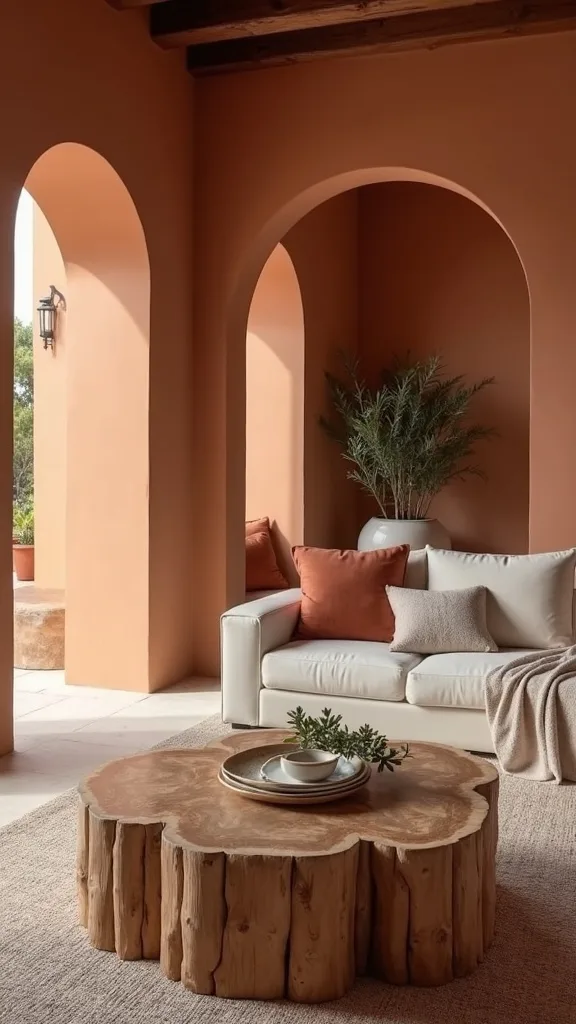
10. Add a Chunky Wood Coffee Table With Softened Edges
I find that Mediterranean interior spaces feel inviting when the main table looks timeworn and substantial. From my experience, a chunky wood coffee table balances terracotta and linen by adding a grounded, earthy center.
I always start by sizing for function: I aim for a table that’s about 2/3 the sofa length (so 48–54 inches for a typical 84-inch sofa) and 16–18 inches tall for comfortable reach. I keep 14–18 inches of clearance between the table and seating so it’s easy to move around in summer when people are in and out. If you’re DIY-ing, I recommend a 1.5-inch thick pine top with rounded corners sanded to a 1/4-inch radius.
In my opinion, finishes like matte clear wax, whitewashed oak stain, or a light walnut oil look most natural with terracotta home decor. I’ll style it with a 12-inch terracotta bowl and a small stack of 2 books.
Pro Tip: I’ve found that adding a 1/8-inch chamfer (a tiny angled edge) around the tabletop makes even inexpensive wood look more artisan—straight factory edges are what usually give budget tables away.
11. Choose Lighting That Mimics Golden-Hour Warmth
I always recommend lighting that feels like late afternoon sun, because it’s the easiest way to make mediterranean decor feel cozy after dark. From my experience, cool bulbs make terracotta look dull and make creamy walls feel gray.
I always start by swapping bulbs to warm white light (2700K–3000K — the cosy, yellowish tone you see in most homes). For a living room, I aim for a total brightness (measured in lumens) around 2,000–3,000 lumens across multiple lamps rather than one harsh overhead. Typically, that looks like 2 table lamps at 800 lumens each plus a floor lamp at 1,000–1,500 lumens on a dimmer.
I find that woven rattan shades, linen drum shades (14–16 inches), and aged brass bases fit a Mediterranean interior better than shiny chrome. In my opinion, dimmers are worth the extra $15–$30 because they let you shift from daytime to evening mood.
Pro Tip: When I tried rattan shades, I learned they cast stronger patterns if the bulb sits too high—keeping the bulb base at least 2 inches below the shade’s bottom ring reduces “striped shadows” on faces during conversation.
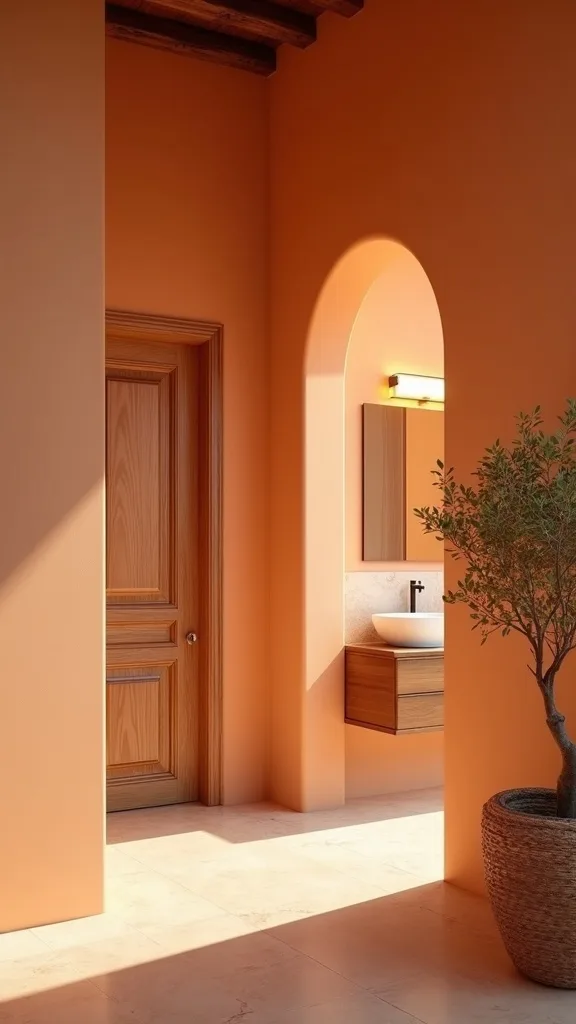
12. Style a Console With Pottery, Not Tiny Trinkets
From my experience, Mediterranean decor looks most believable when decor pieces are fewer, larger, and more tactile. I find that tiny trinkets read cluttered against plaster textures and warm tones.
I always start with a console that’s 48–72 inches long and about 14–16 inches deep so it doesn’t crowd a walkway. Then I use the “3-object rule”: one tall piece (18–24 inches), one medium (10–14 inches), and one low (4–6 inches). I keep at least 6–8 inches of breathing room between groupings so the pottery shapes stand out.
I recommend materials like terracotta, stoneware, travertine, and aged wood, plus one black iron element to sharpen the palette. In my opinion, a shallow 16-inch terracotta bowl for keys looks intentional and still practical.
Pro Tip: I’ve found pottery looks more expensive when you repeat the same finish twice—like 2 matte clay pieces on opposite ends of the console—because the eye reads it as a curated collection rather than random finds.
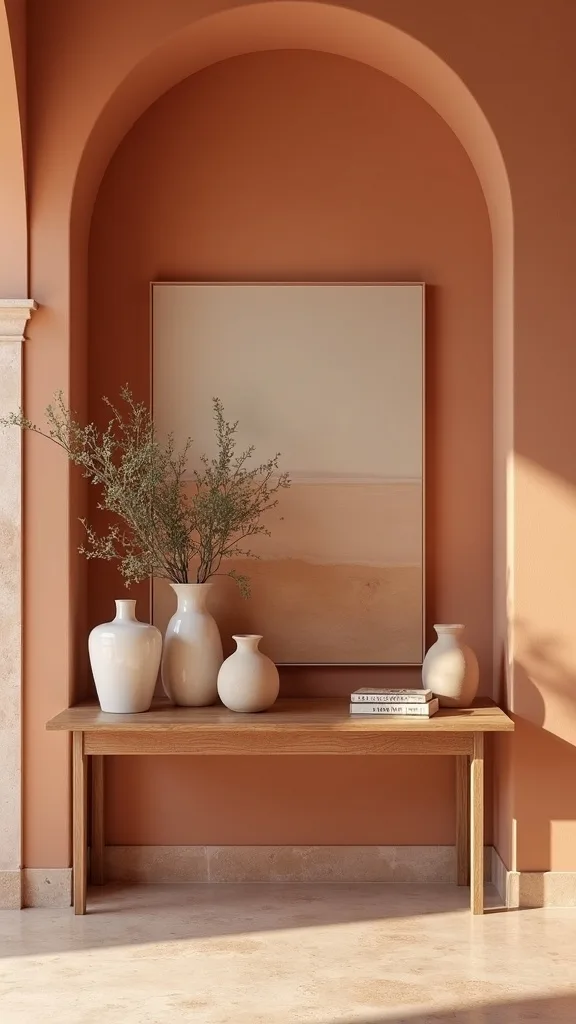
13. Hang Art Low and Lean Into Imperfect Frames
I find that Mediterranean interior art looks best when it feels collected over time, not perfectly matched. From my experience, hanging art too high is the fastest way to lose that grounded, villa-like feeling.
I always start by placing the center of the main piece around 57–60 inches from the floor, then I adjust 1–2 inches based on the sofa back height. For a large wall, I like one oversized piece around 30×40 inches or a pair of 24×36-inch prints with 2–3 inches between frames. If you’re leaning art on a console, I’ll use a 24–30 inch tall frame and keep at least 6 inches of clearance from any lamp shade.
I recommend textured prints, landscape photography, or simple charcoal sketches, and I love thin oak frames or distressed white frames. In my opinion, glass-free frames can look more relaxed, but they do collect dust faster.
Pro Tip: When I tried mixing frames, I learned the trick is matching the mat color (warm white) across pieces—even if the frames differ—because consistent mats keep the wall from looking chaotic.
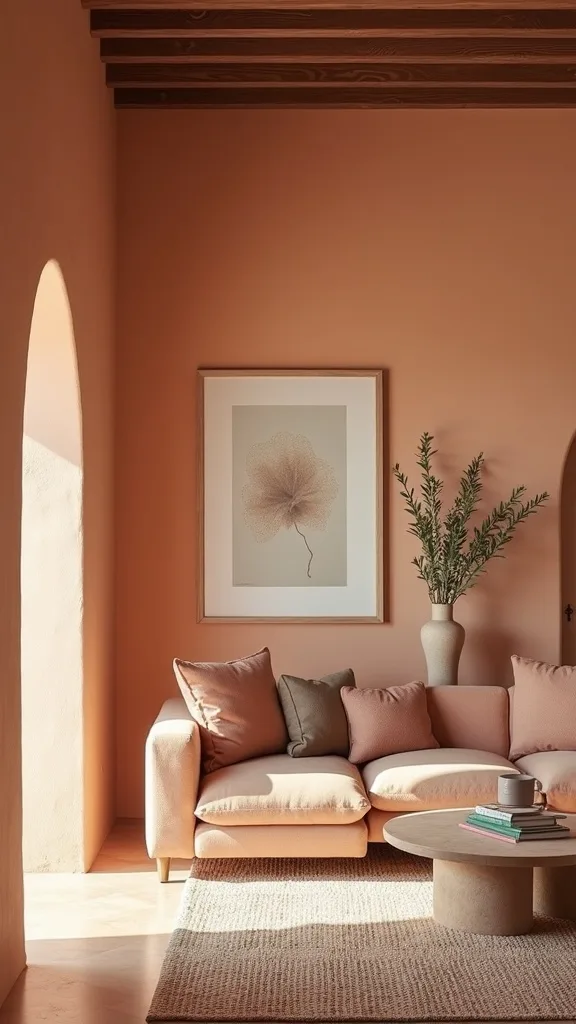
14. Add a Woven Basket Zone for Summer Throws
I always recommend baskets in mediterranean decor because they add texture while keeping the room functional. From my experience, a warm tones living room stays calmer when throws and pillows have a dedicated home.
I always start with one oversized basket that’s 18–22 inches wide and 16–20 inches tall so it can hold 2 lightweight throws and 1 lumbar pillow. I place it within 12–18 inches of the sofa arm so people actually use it. If you have tile floors, I like adding a thin felt pad underneath to prevent scratching and reduce the scraping sound.
I find that seagrass, water hyacinth, and rattan read most Mediterranean interior, especially next to terracotta and linen. In my opinion, lidded baskets look tidy but can be annoying for daily use—open is usually better in a living room.
Pro Tip: I’ve found baskets hold their shape longer if you store throws rolled (not folded) because folds create pressure points that push the basket wall outward over a few months, making it look slouchy faster.
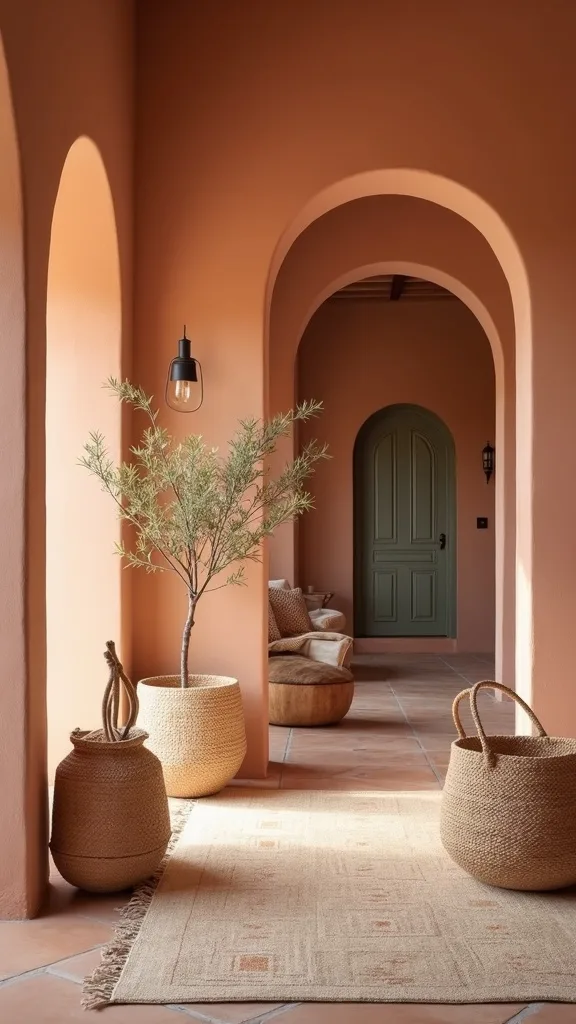
15. Use Black Iron Accents to Sharpen Soft Neutrals
From my experience, mediterranean decor needs one darker note to keep all the creams and clays from looking washed out. I find that black iron is the easiest way to add contrast without changing the whole palette.
I always start small: a 1-inch diameter black curtain rod, a pair of 12-inch iron candlesticks, or a 24×36-inch iron-framed mirror. Typically, I repeat black in 2–3 places so it feels intentional—like rod, mirror, and a small table lamp base. If you’re swapping hardware on a console, I like 5-inch matte black pulls because they’re comfortable to grip.
I recommend a true matte finish rather than glossy, because matte looks more like forged metal. In my opinion, black iron costs a bit more upfront than painted plastic, but it holds up better to scratches and reads more authentic.
Pro Tip: I’ve found black accents look “Mediterranean” (not modern farmhouse) when they’re thin and simple—avoid chunky industrial brackets, and instead choose pieces with 1/4–3/8 inch slender lines that echo old window grilles.
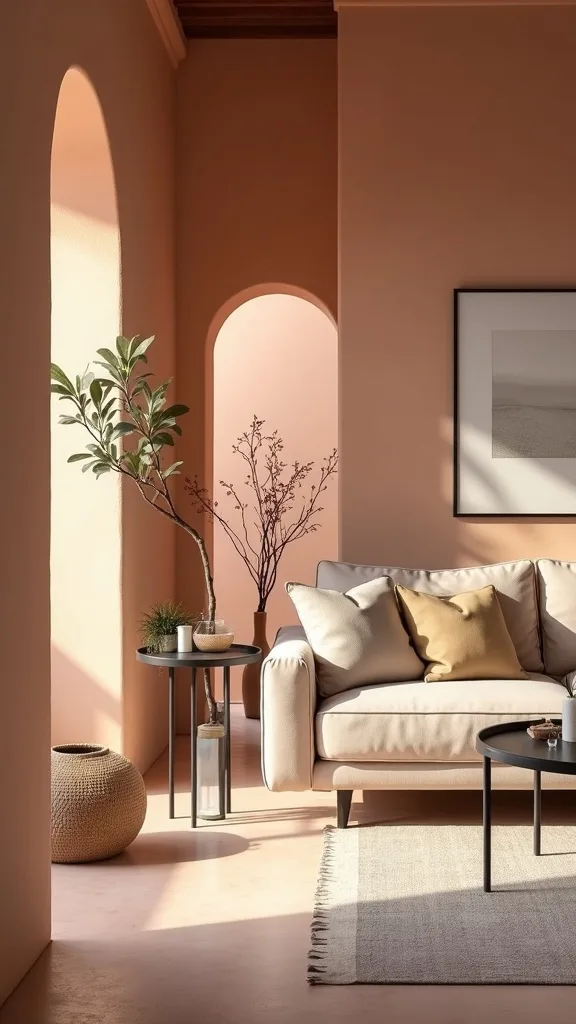
16. Create a Warm Tones Living Room Palette You Can Repeat
I always start by locking a palette before I buy anything, because mediterranean decor can drift into random oranges and yellows. From my experience, repeating a tight set of tones makes even budget pieces look cohesive.
I use a simple ratio: about 60% warm white (walls, curtains), 30% sand/wood (rug, furniture), and 10% terracotta/olive (accents). Typically, I’ll choose 3 “repeatables” and commit to them: terracotta, olive green, and black iron. Then I make sure each one shows up at least 3 times around the room—like terracotta vase, terracotta pillow stripe, and terracotta bowl.
I find that adding one cool note (like a dusty blue pillow) can work, but only if it’s small—think 18×18 inches—and repeated once more in art. In my opinion, too many colors dilute the Mediterranean interior mood.
Pro Tip: I’ve found the easiest way to shop consistently is to take one photo of your terracotta piece in daylight and use it as your “color compass” in stores—terracotta shifts wildly under warm retail lighting, and the photo keeps you from buying pieces that clash at home.
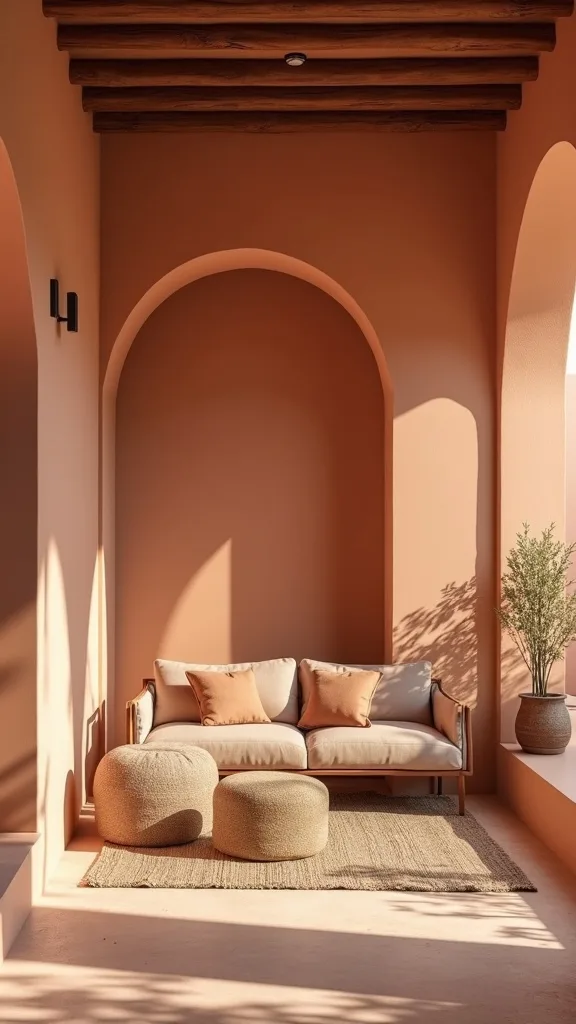
17. Use Natural Stone (or Lookalikes) in Small, High-Impact Spots
From my experience, a touch of stone makes mediterranean decor feel grounded and expensive-looking without a full remodel. I find that even small stone surfaces add that coastal-villa weight.
I always start with a single stone moment: a 12×18-inch travertine tray on the coffee table or a pair of 4-inch stone coasters. If you want a bigger move, I recommend a 24-inch round side table with a faux-travertine top, which usually assembles in 20–30 minutes. Typically, I keep stone pieces in warm beige tones so they blend with terracotta floor tiles and creamy walls.
In my opinion, real travertine costs more upfront but ages beautifully if you accept a little patina. I find that sealed faux-stone is easier with kids and drinks, but it can look flat if it’s too uniform.
Pro Tip: When I tried travertine trays, I learned to add tiny clear silicone bumpers underneath—without them, stone-on-wood can leave faint circular rub marks over time, especially if you slide the tray during weekly cleaning.
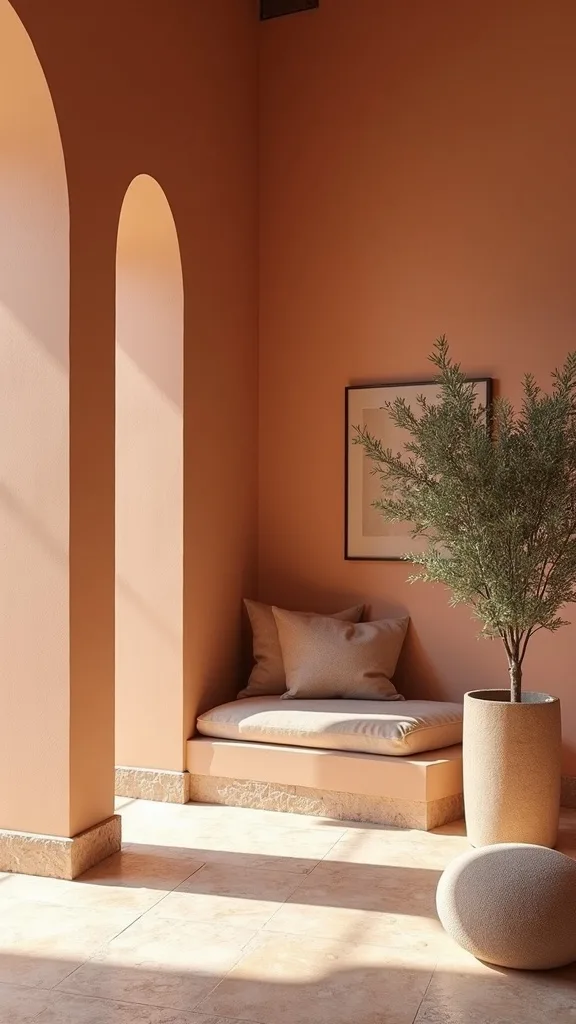
18. Mix Linen, Cotton, and Bouclé for Texture Without Visual Noise
I find that texture is what makes a Mediterranean interior feel rich even with a neutral palette. From my experience, you can keep the room calm if you vary textures instead of adding more colors.
I always start by choosing 3 textiles: linen (curtains or pillows), cotton (sofa cover or throw), and one nubby fabric like bouclé (an accent pillow). Typically, I’ll do 2 pillows at 22×22 inches in linen, 1 bouclé pillow at 20×20 inches, and a lightweight cotton throw around 50×60 inches. I keep patterns subtle—thin stripes or small checks—so the terracotta home decor remains the star.
I recommend sticking to warm whites, oatmeal, and sand, then adding olive in one small piece like a 14×20 lumbar. In my opinion, heavy velvet can feel too wintery for summer Mediterranean vibes, even though it’s cozy.
Pro Tip: I’ve found pillows look more tailored (and less lumpy) when you size inserts 2 inches larger than the cover—like a 24×24 insert inside a 22×22 cover—especially with linen that relaxes over a few weeks.
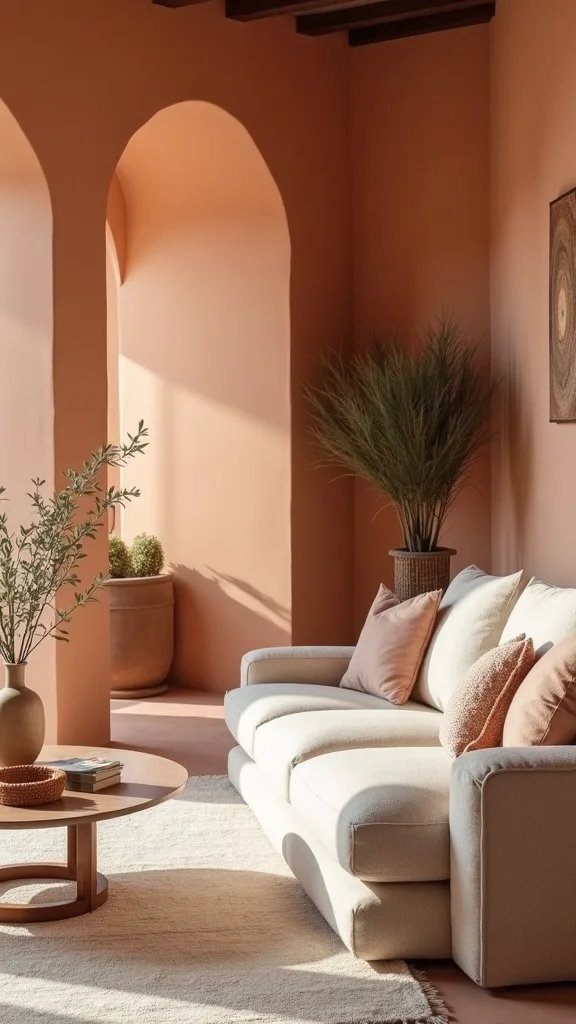
19. Use Scent as Decor: Citrus, Fig, and Rosemary Notes
I always recommend adding scent because mediterranean decor is as much a feeling as a look. From my experience, the right fragrance makes the room feel like summer even when the weather doesn’t cooperate.
I always start with one primary scent source and one backup: a candle plus a reed diffuser. Typically, I’ll use an 8–10 oz candle for the coffee table and a 100–200 ml diffuser on a console, and I replace reeds every 4–6 weeks for consistent throw. I find that citrus, fig, rosemary, and neroli feel Mediterranean without being overly sweet.
In my opinion, natural wax candles cost more, but they often burn cleaner and smell less “synthetic” in smaller rooms. I also recommend a simple terracotta or stoneware candle holder to tie into terracotta home decor.
Pro Tip: When I tried reed diffusers in warm rooms, I learned to place them at least 3 feet away from sunny windows—heat makes them evaporate faster, and you’ll burn through a bottle in 2 weeks instead of a month.
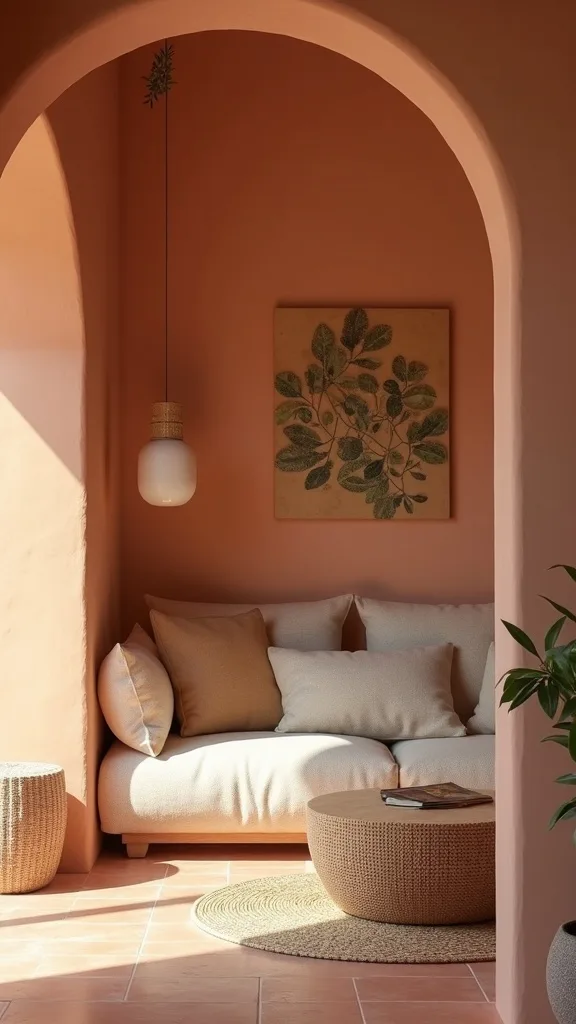
20. Style Open Shelving With Negative Space (Not Maximalism)
From my experience, Mediterranean interior styling looks calm because it leaves room for the eye to rest. I find that open shelves only work if I treat empty space as part of the design.
I always start by limiting myself to 60–70% “filled” shelf space. On a 72-inch floating shelf, I’ll group items into 3 clusters and leave at least 8–10 inches of blank space between them. Typically, each cluster gets 1 vertical piece (like a 14-inch vase), 1 horizontal piece (like a 10-inch bowl), and 1 softener (like a small framed print).
I recommend materials like terracotta, stoneware, aged wood, and one glossy element (a glass carafe) to reflect light. In my opinion, too many small items make the shelf look like a souvenir display rather than mediterranean decor.
Pro Tip: I’ve found shelves look more “villa” when the tallest object isn’t centered—placing the tallest vase about 6–8 inches off-center creates the casual imbalance you see in real homes, not staged showrooms.
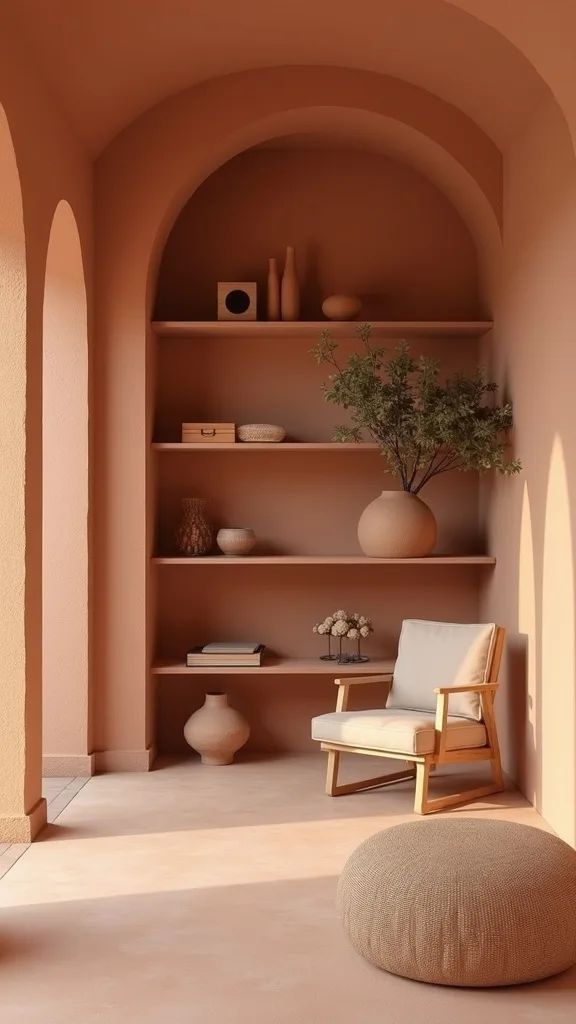
21. Add a Low Lounge Chair for That Resort-Living Feel
I find that one low lounge chair can change the whole rhythm of a warm tones living room. From my experience, Mediterranean decor feels more like a retreat when seating looks relaxed and slightly varied in height.
I always start by checking scale: I like chairs around 28–32 inches wide with a seat height of 15–17 inches so they feel loungy, not formal. I place the chair about 24–30 inches from the coffee table edge to keep a comfortable path. If you’re tight on space, I recommend an armless slipper chair that’s closer to 24–26 inches wide.
In my opinion, materials like light oak, rope, cane, or linen upholstery read Mediterranean interior better than shiny leather. I’ll add a 20×20 pillow in a subtle terracotta stripe to connect it to terracotta home decor.
Pro Tip: When I tried rope-and-wood chairs on tile, I learned they slide surprisingly easily—adding felt pads plus a small 18×24 inch flatweave “chair mat” keeps the chair stable and protects grout lines from chair-leg abrasion.
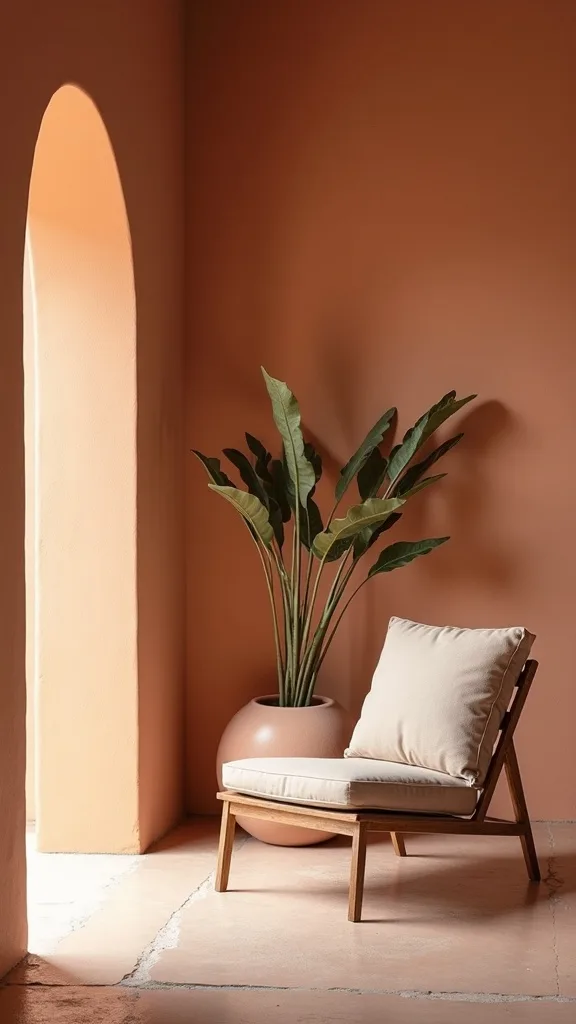
22. Use Mirrors to Multiply Light Like a Whitewashed Courtyard
I always recommend mirrors for Mediterranean decor because they amplify daylight and make plaster textures glow. From my experience, the right mirror placement can make a room feel 2x airier without changing furniture.
I always start by choosing a mirror that’s at least 24×36 inches (or a 30–36 inch round) so it actually reflects the room, not just a sliver. Typically, I hang it 4–6 inches above a console, or I lean it if it’s 60–70 inches tall for a casual look. I aim to place it opposite or adjacent to a window so it catches the brightest angle.
I find that thin black iron frames or warm wood frames work best with terracotta floor tiles and linen curtains. In my opinion, ornate gold can work, but it needs to be aged and muted to avoid feeling glam.
Pro Tip: I’ve found mirrors look more Mediterranean when they reflect something natural—like your olive branch arrangement—so I intentionally position the vase within the mirror’s “cone of view” before I commit to hanging height.
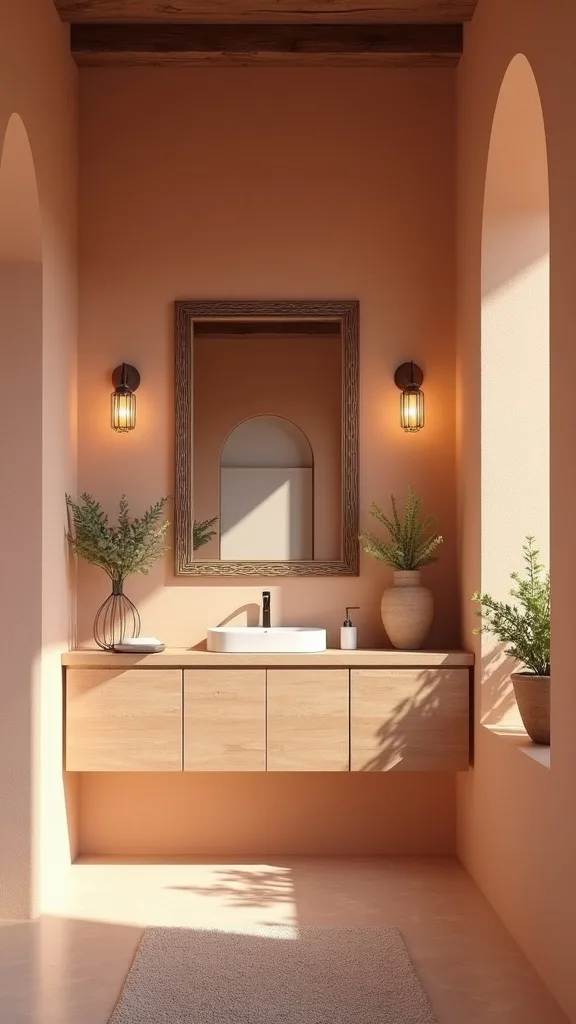
23. Keep the Coffee Table Styling Practical for Summer Hosting
From my experience, Mediterranean interior style is meant to be lived in—especially in summer when drinks, snacks, and guests show up. I find that coffee tables look better long-term when the styling plan includes real-life use.
I always start with a tray that’s 12–18 inches wide to corral items, then I leave at least 50% of the tabletop clear for glasses. Typically, I style with 3 items: a 10–12 inch terracotta bowl, a 6-inch candle, and a small bud vase that’s 5–7 inches tall. If you host often, I recommend coasters in a set of 4–6 so you’re not scrambling.
In my opinion, one natural element—like a tiny olive clipping—keeps the scene fresh. I find that stacking more than 2 books starts to look cluttered on smaller tables under 42 inches long.
Pro Tip: When I tried styling with tall florals, I learned they block sightlines during conversation—keeping centerpieces under 10 inches tall makes the table feel welcoming, and it prevents guests from constantly moving things around.
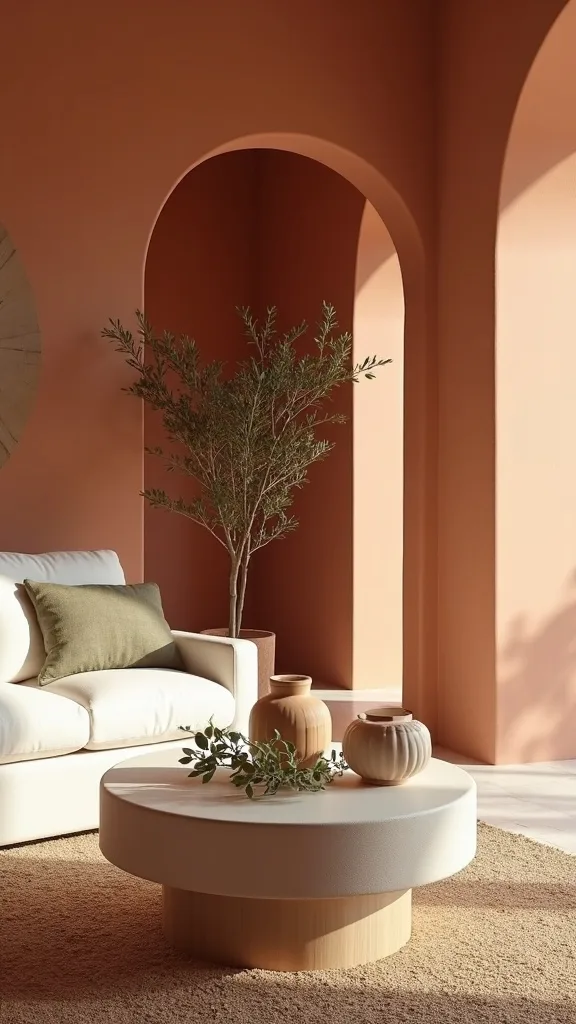
24. Balance Terracotta Tiles With Soft, Quiet Upholstery
I find that terracotta floor tiles can dominate a room if the upholstery fights them. From my experience, the most calming Mediterranean decor happens when the floor is warm and the seating is soft and quiet.
I always start by choosing upholstery in warm white, oatmeal, or light taupe, then I add terracotta in smaller doses like a 14×20 lumbar and a 50×60 throw. Typically, I keep the sofa fabric solid and let the rug carry the pattern, because patterned sofas can compete with tile grout lines. If your tiles are real clay, I recommend using felt pads under every chair leg and replacing them every 3–6 months.
In my opinion, boucle and linen blends look great, but they can snag with pets—cotton-linen canvas is often a smarter trade-off for busy homes. I find that adding one olive-green accent chair ties in the olive branch arrangement without turning the room green.
Pro Tip: I’ve found terracotta floors look richer when you repeat their undertone in fabric—if your tile leans red, choose pillows with a red-clay stripe; if it leans brown, choose cinnamon or caramel accents so the room feels intentionally matched.
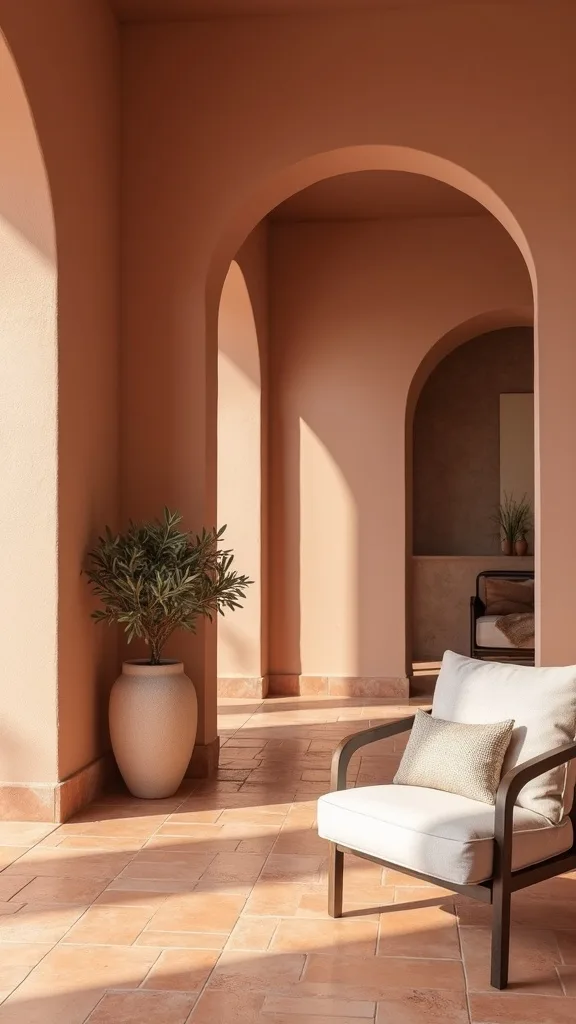
25. Finish With a Summer Mediterranean Vibes “Edit” in 20 Minutes
I always end by doing a quick edit, because mediterranean decor looks effortless only after I remove the extras. From my experience, the final 20 minutes of editing is what makes the room feel like a calm Mediterranean interior instead of a shopping haul.
I always start by clearing every surface and putting back only what earns its spot: 3 objects on the coffee table, 3 on the console, and 1 statement piece on a side table. Typically, I keep one basket for throws, one olive arrangement, and no more than 5 total decor items visible from the main seating view. Then I adjust textiles: I’ll straighten the 96–108 inch curtains, fluff 3 pillows, and fold one throw into a clean rectangle.
I find that turning on only lamps (not overhead) with warm white light (2700K–3000K — the cosy, yellowish tone you see in most homes) instantly makes the palette feel golden. In my opinion, this edit costs nothing but makes everything look more expensive.
Pro Tip: I’ve found the best “effortless” trick is leaving one intentional empty corner—about 24×24 inches of open floor by the window—because that negative space reads like airy architecture and makes the rest of the room feel curated.
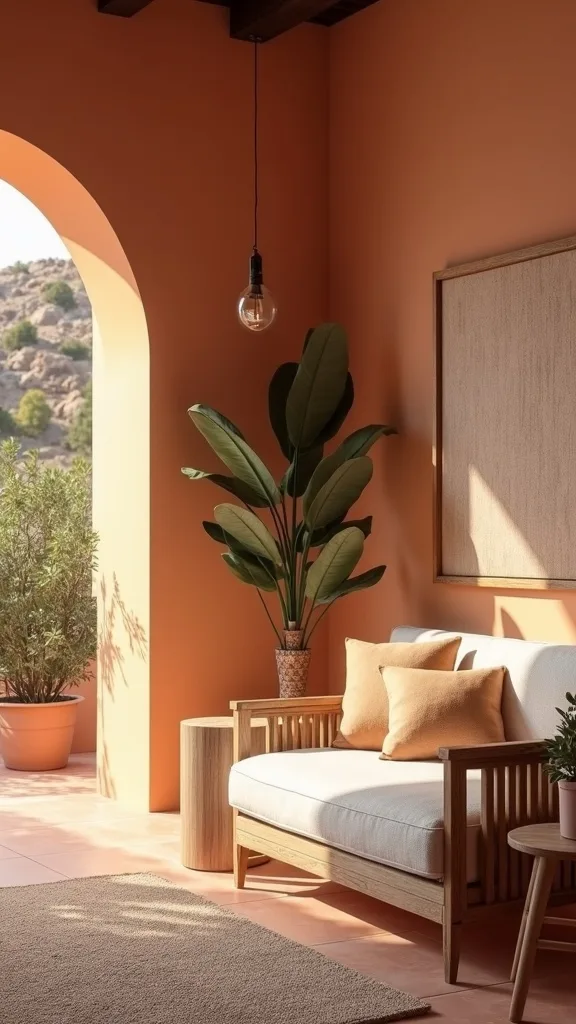
Final Thoughts
I find that Mediterranean living room style works when I treat it like a recipe: I choose a warm base, I add terracotta and olive in measured doses, and I let texture do the talking. From my experience, the most successful spaces aren’t the ones with the most decor—they’re the ones where the light, the curves, and the natural materials get to breathe.
I always recommend starting with the easiest wins first: white linen curtains, a few terracotta home decor pieces, and warmer lighting, then deciding if you want to commit to an arch doorway interior feature later. In most cases, that phased approach costs less upfront and helps you avoid buying items that don’t fit your room’s undertones.
When I design this look for summer, I keep asking myself one question: “Does this feel like it belongs in a sun-warmed home?” If you follow the ideas above and repeat your palette intentionally, I’m confident you’ll end up with a warm tones living room that feels relaxed, practical, and genuinely you.
What I’d Do Differently
When I first tried this in my own living room, I made one very specific mistake: I bought terracotta home decor pieces in three different undertones (one red-orange, one pink-clay, and one brown-cinnamon) because they all looked “close enough” under store lighting. Within 24 hours at home, I could see the clash—especially next to my warm white walls—and instead of feeling like mediterranean decor, it felt messy and accidental. The correct approach, from my experience, is to choose one “reference terracotta” first (usually a vase or bowl around 10–12 inches tall) and then match everything else to that piece in daylight, even if it means returning one or two items.
I also wish I’d known how much the arch doorway interior moment depends on depth cues: a painted arch can look amazing, but only if I wrap the color 1–2 inches into the doorway return and keep the edges slightly softened. In my opinion, those tiny details are what makes the room feel like a Mediterranean interior instead of a graphic trend—so pick your anchor piece, test it in daylight, and start with one small corner this weekend.
Products I Recommend for This Project
Here are some of my favourite products to help you bring these ideas to life:
- NICETOWN Linen Textured Curtains (White, 96-inch, 2 Panels) — I find these give that airy linen look with enough weight to drape nicely and filter summer light.
- Kenney 1-Inch Matte Black Curtain Rod (Adjustable) — I always recommend a simple black iron-style rod like this to sharpen warm neutrals without going shiny.
- Philips LED Warm White Bulbs (2700K) — From my experience, switching to warm white light (2700K—the cosy, yellowish tone) is the fastest way to make terracotta and cream tones glow.
- Nearly Natural Olive Branch Arrangement (Faux) — I’ve found these stems look convincing once I bend them at a few points and pair them with a narrow-neck vase.
- Rust-Oleum Chalked Matte Clear Protective Topcoat — When I want a soft, plaster-like finish on painted decor pieces, I find a matte topcoat like this helps reduce shine and unify textures.