
This post contains affiliate links. As an Amazon Associate, I earn from qualifying purchases at no extra cost to you.
Are you looking for a minimalist bedroom that feels airy for summer but still cozy at night? Do you want a clean bedroom design that’s easy to maintain even when life gets busy?
I’m sharing the exact approach I use when I want a Summer Minimalist Refresh: fewer, better pieces; calmer color; and a layout that makes my mornings smoother. I’ll walk you through furniture spacing, linen choices, lighting, and the small edits that create a truly simple bedroom decor vibe without feeling sterile.
In my opinion, this is perfect for anyone who loves a minimalist home look, lives in a small space, or simply wants their bedroom to feel more restful within a weekend.
I’ll show you how I build the whole mood around a platform bed (no headboard), one nightstand, neutral linen, and a single sculptural lamp—plus the little “rules” I use, like keeping decor in groups of 1 or 3 and sticking to 2–3 finishes max. I’ll also share the trade-offs (like where minimalism can feel bare) and how I soften it with texture for a neutral bedroom that still feels personal.
Below are 25 Minimalist Bedroom Design & Clean Aesthetic that…
1. Start with the Core Summer Setup: Platform Bed, One Nightstand, Neutral Linen, One Sculptural Lamp
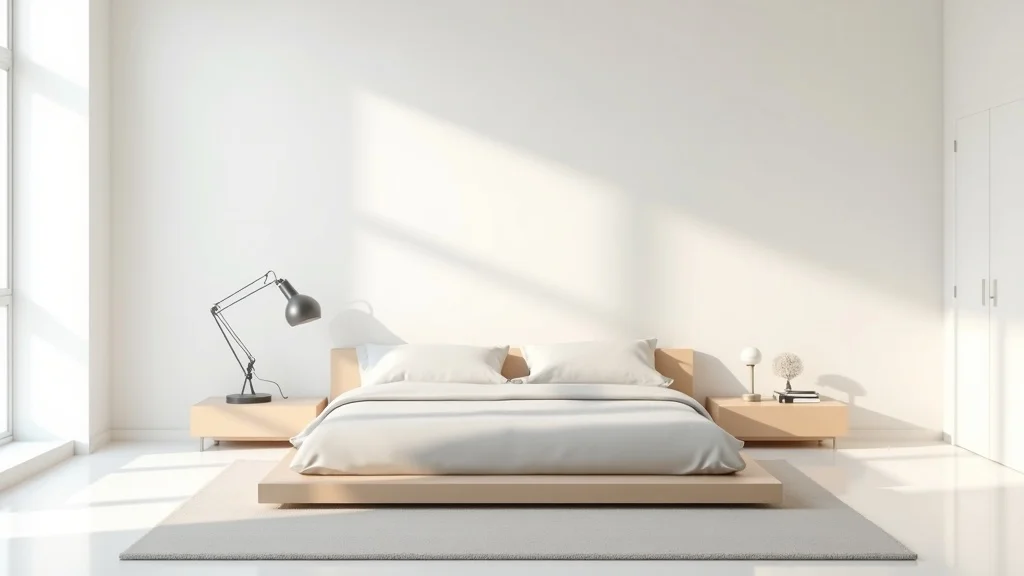
I always start by committing to the visual theme—platform bed with no headboard, a single nightstand, neutral linen, and one sculptural lamp—because it forces my minimalist bedroom to feel intentional instead of “unfinished.” From my experience, this setup works in most rooms as long as I keep at least 24–30 inches of clear walkway on each side and choose a bed height around 12–16 inches so the room reads calm and grounded.
When I design this look, I center a Queen (60″ x 80″) or King (76″ x 80″) platform bed on the longest wall, then place one 18–22 inch-wide nightstand on the side closest to the door for easy access. I keep the lamp’s footprint under 8–10 inches wide so it doesn’t crowd the surface, and I aim for a bedside bulb in warm white light (2700K–3000K — the cosy, yellowish tone you see in most homes).
I find that washed flax or oat-colored linen duvet covers and a matte ceramic or paper-mâché sculptural lamp create a clean bedroom design without looking icy. For the nightstand, I like light oak veneer or powder-coated steel in soft white.
Pro Tip: I’ve found the “no headboard” look feels most polished when I hang one piece of art so its bottom edge sits 6–8 inches above the mattress line—high enough to breathe, low enough to visually replace a headboard.
2. Edit the Layout First: Clear Walkways and a Calm Sightline
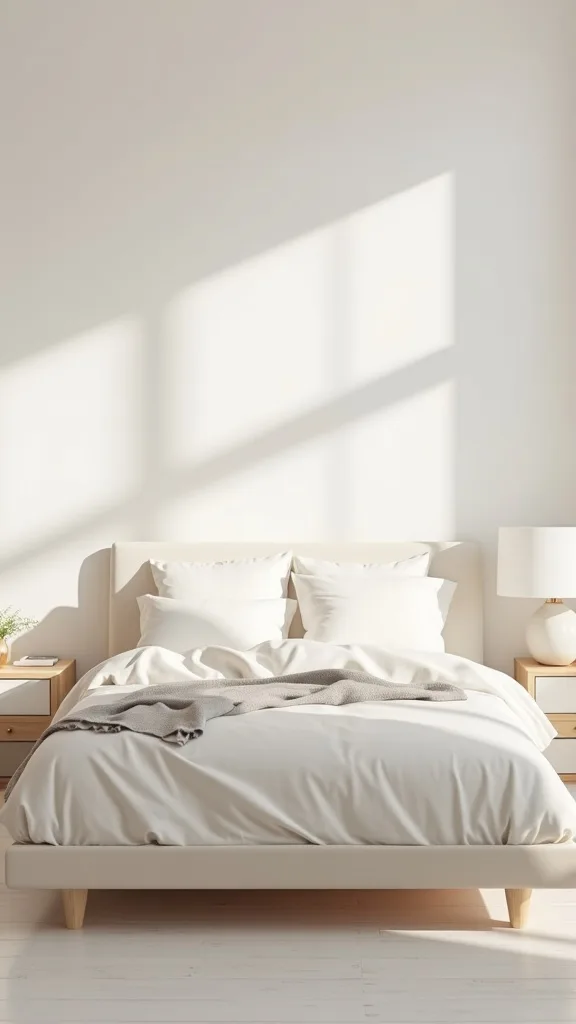
From my experience, a minimalist bedroom succeeds or fails based on layout, not decor, because cluttery traffic patterns make even expensive pieces feel chaotic. I always start by standing in the doorway and checking whether I can see a clean, simple focal point within 2–3 seconds—usually the bed and one lamp.
I find that keeping a minimum of 30 inches of walkway from the door to the bed makes the room feel instantly more “hotel calm,” even in smaller spaces. If I’m working with a tight room, I’ll accept 24 inches on one side, but I try to keep the “main path” at 30. I also pull the bed off the wall by 2–4 inches if possible; that tiny gap prevents rumpled bedding from scraping the wall and looking messy.
For tools, I use a 25-foot tape measure, painter’s tape to mark footprints, and furniture sliders to test placements in under 20 minutes. If the room needs a rug, I typically choose an 8′ x 10′ flatweave in ivory or sand so it doesn’t add visual noise.
Pro Tip: I recommend taping a rectangle on the floor for your nightstand and leaving a deliberate 3–5 inch “negative space border” around it—this tiny halo of empty floor is what makes the single-nightstand choice look designed, not accidental.
3. Pick a Tight Neutral Palette (and Repeat It on Purpose)
In my opinion, the fastest way to get a neutral bedroom that still feels rich is to limit myself to 2–3 neutrals and repeat them at least 5 times across the room. I find that this repetition is what creates that clean, cohesive minimalist home feel without needing lots of decor.
When I design this look, I choose one “base” neutral (like warm white), one “mid” neutral (like oatmeal), and one “anchor” neutral (like soft black or walnut). For example, I’ll echo oatmeal in a linen duvet, a 20″ x 20″ pillow cover, and a woven basket; then I’ll use the anchor tone in the lamp base, a thin frame, and hardware. Typically, I avoid more than 2 metal finishes (like matte black + brushed nickel), because mixed metals can read busy in a minimalist bedroom.
I always recommend paint samples in peel-and-stick form (I test 3 swatches for 48 hours) because warm neutrals shift dramatically from morning to evening light. For textiles, I like linen, cotton percale, and a single wool throw for summer-to-fall flexibility.
Pro Tip: I’ve found that if your walls are warm white, choosing bedding that’s 1–2 shades darker (not the same white) prevents the “everything blends into a blank sheet” effect that can make minimalism look flat in photos and in real life.

4. Choose Linen Bedding That Looks Relaxed, Not Rumpled
I find that linen is the secret weapon for a clean bedroom design in summer because it breathes well and looks intentionally lived-in instead of perfectly pressed. From my experience, the trade-off is that low-quality linen can wrinkle in a way that reads messy, so I focus on weight and weave.
I always start by choosing a 160–200 gsm (grams per square meter) linen duvet cover if the brand lists it, because it typically drapes better than ultra-light linen. For a queen bed, I like a duvet insert around 90″ x 94″ with a cover that has corner ties—those ties save me 10 minutes of re-fluffing each week. I also keep the bed styling simple: one duvet, one thin coverlet folded at the foot to about 18–20 inches deep, and 2 sleeping pillows plus 1 lumbar if I want a softer look.
Material-wise, I pair linen with a crisp cotton percale sheet set (around 300–400 thread count) so the bed feels cool against the skin. Color-wise, I stick to flax, oat, fog, or soft white for that simple bedroom decor vibe.
Pro Tip: I recommend washing linen on cold and doing a 10-minute low tumble to soften, then air-drying the rest—this keeps the relaxed texture while avoiding the “crumpled paper” look that happens when linen overdrys.
5. Use One Sculptural Lamp as the “Art Piece”
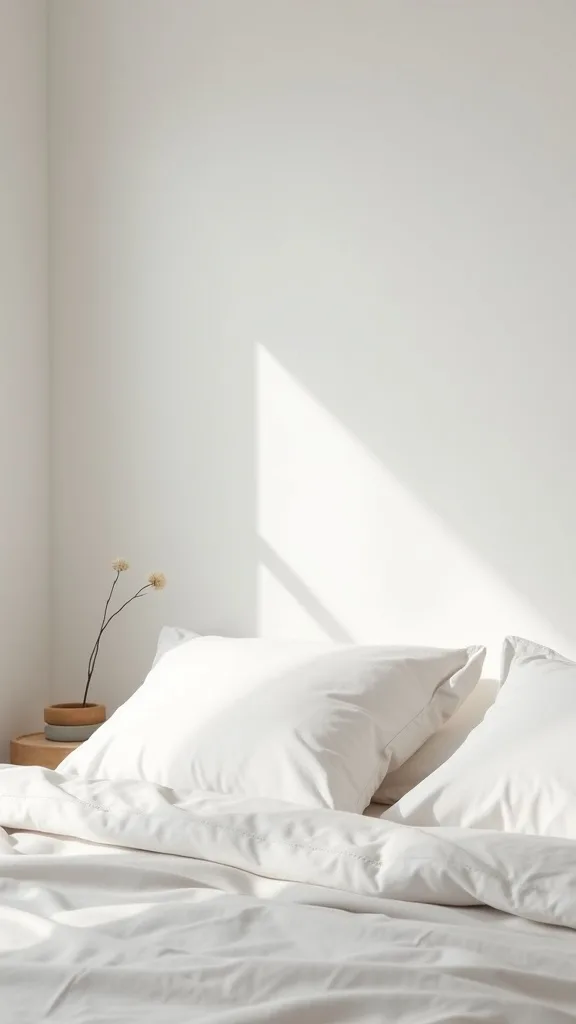
When I design a minimalist bedroom, I treat lighting like decor, and I find that one sculptural lamp can replace three small accessories. From my experience, this is especially effective in a summer refresh because it adds personality without adding clutter.
I always start by sizing the lamp to the nightstand: I aim for a lamp height of 18–24 inches on a 20–24 inch tall nightstand so the shade sits near eye level when I’m sitting up in bed. For the bulb, I recommend warm white light (2700K–3000K — the cosy, yellowish tone you see in most homes) with brightness (measured in lumens) around 450–800 lumens, depending on whether you read in bed. If I’m sensitive to glare, I choose an opal glass globe or a linen shade with a diffuser.
Materials I love here are matte ceramic, travertine, rice paper, or powder-coated metal in soft black. I keep cords tidy with a 6-foot fabric-wrapped extension cord and a discreet cord clip set.
Pro Tip: I’ve found that placing the lamp 2–3 inches in from the nightstand’s outer edge (not centered) makes the styling feel editorial, and it leaves a functional “drop zone” for a phone and a 4″ x 6″ book.
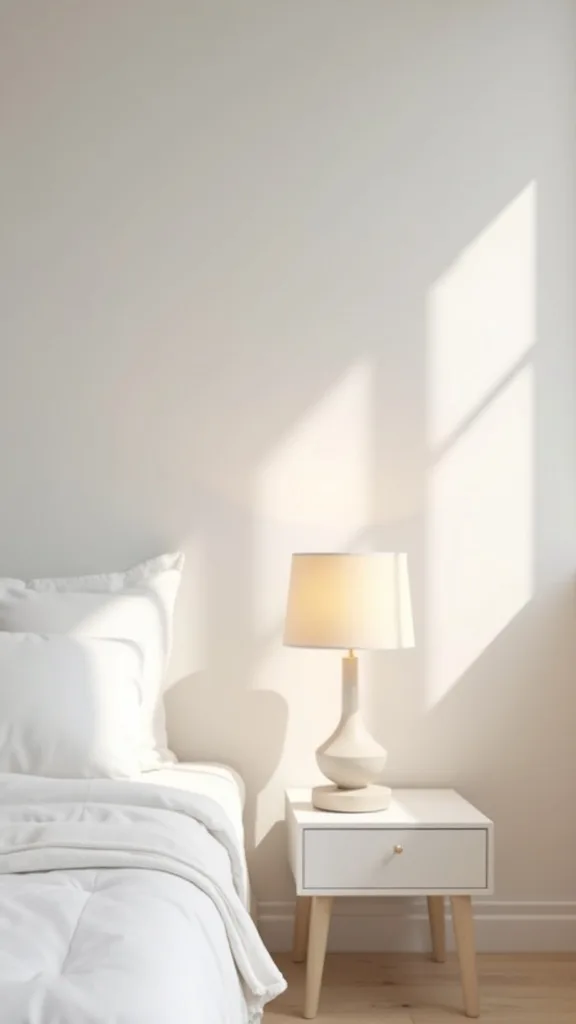
6. Commit to One Nightstand (and Make It Work Harder)
I find that using a single nightstand instantly pushes a room toward minimalist home territory, but it only feels good if the storage is smart. From my experience, the trade-off is convenience—two people may miss having two surfaces—so I plan a workaround.
I always start by choosing a nightstand that’s 18–22 inches wide with either 1 drawer or a door, because open shelves tend to turn into visual clutter. If I’m styling for two sleepers, I’ll add a slim bedside caddy that hangs between the mattress and frame (about 14″ x 8″) on the “no-nightstand” side for glasses and a phone. I also keep the top surface to just 3 items: lamp, a small tray, and one book.
For materials, I like light oak veneer, ash, or matte white lacquer paired with a small travertine or walnut tray (around 6–8 inches wide). For hardware, I stick to one finish—usually matte black—to keep the clean bedroom design consistent.
Pro Tip: I recommend adding felt pads under the nightstand and pulling it 1 inch away from the wall—this tiny gap prevents cord bulges from pushing it crooked, which is one of those small details that quietly ruins a minimalist look.
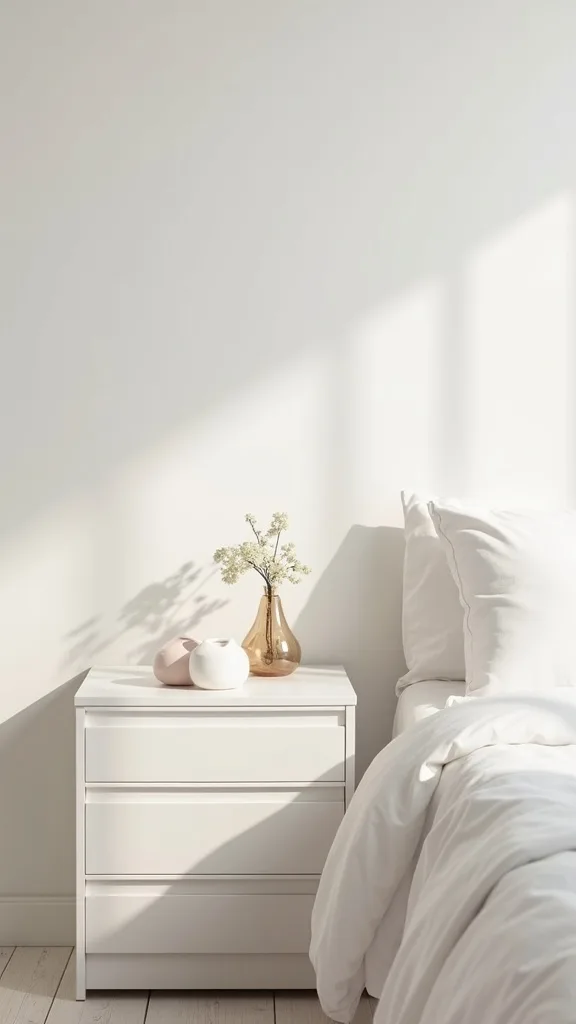
7. Create a “Reset Basket” for Summer Clutter
From my experience, the biggest threat to a minimalist bedroom is the random summer stuff—sunscreen, hats, water bottles—migrating onto every surface. I always recommend a single “reset basket” so I can tidy in 90 seconds without thinking.
I find that a lidded basket around 16″–18″ in diameter (or a rectangular one about 18″ x 12″) works for most bedrooms and still looks intentional. I place it either under the nightstand or beside a dresser, and I give it two simple categories: “wear again” and “put away.” Typically, I do a quick reset once per day and a deeper empty-out once per week, which keeps the room aligned with a clean bedroom design without becoming a lifestyle project.
Material-wise, I like seagrass, water hyacinth, or a cotton rope basket in natural beige, because they add texture to a neutral bedroom. If you prefer a sharper look, a matte white metal bin with a lid works too, but it can feel colder.
Pro Tip: I’ve found that labeling the inside rim with a small piece of masking tape (“reset only”) prevents the basket from turning into long-term storage—the label is hidden, but it changes your habit.

8. Use a Low-Pile Rug to Quiet the Room Visually
I find that a rug is what makes a minimalist bedroom feel finished, especially when I’m skipping a headboard and extra furniture. From my experience, the trade-off is maintenance—high-pile rugs look cozy but trap lint and make the room feel heavier in summer.
I always start by sizing the rug so it extends at least 18–24 inches beyond the sides of the bed and about 12–18 inches past the foot. In most queen setups, an 8′ x 10′ works well; for a king, I often use a 9′ x 12′ if the room allows. If the budget is tight, I’ll do two runners at 2’6″ x 7′ on either side, but I accept that it looks a bit less seamless.
For a clean bedroom design, I like flatweave wool, cotton dhurries, or a washable low-pile rug in ivory, sand, or greige. I always use a rug pad about 1/8″ thick to prevent slipping and to soften the step.
Pro Tip: I recommend pulling the rug forward so the bed’s head area sits closer to the rug’s edge (leaving 6–10 inches behind the bed) because it visually lengthens the room and keeps the foot area feeling more open.
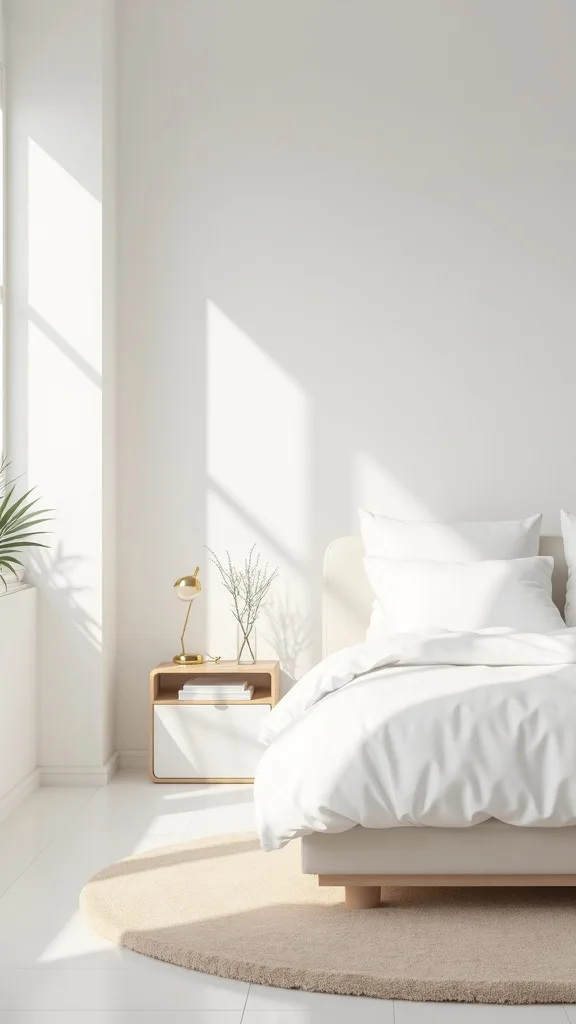
Cost & Materials Estimate
For most spaces, I find a Summer Minimalist Refresh for a minimalist bedroom lands between $250 and $1,600 depending on whether you’re replacing the bed and lighting or just upgrading linens and storage.
| Item | Estimated Cost | Where to Buy |
|---|---|---|
| Platform bed frame (queen, no headboard) | $180–$650 | IKEA / Wayfair |
| Linen duvet cover set (queen) | $90–$260 | Amazon / Wayfair |
| Sculptural table lamp + LED bulb | $55–$220 | Amazon / IKEA |
| Single nightstand (18–22 inches wide) | $60–$220 | IKEA / Home Depot |
| Low-pile rug (8′ x 10′) + rug pad | $120–$420 | Wayfair / Lowe’s |
Total estimated cost: $250–$1,600 I find you can save the most by keeping your existing bed and investing instead in linen + lighting, but I’d splurge on the lamp if you want the room to feel designed with fewer items.
9. Keep Wall Art Minimal: One Oversized Piece Instead of a Gallery
In my opinion, a single oversized artwork is the easiest way to make a minimalist bedroom feel curated without adding visual chatter. I find that galleries can look amazing, but they’re harder to keep “clean” because every frame edge becomes another line to process.
I always start by choosing art that’s roughly 2/3 the width of the bed—so for a 60-inch queen, I look for art around 40 inches wide. I hang it so the center sits about 57–60 inches from the floor, adjusting slightly if the ceiling is low. If I’m leaning into a neutral bedroom, I choose abstract line art, tonal photography, or textured canvas in cream, taupe, and soft charcoal.
For materials, I like thin matte black aluminum frames, natural oak frames, or a simple canvas wrap. I typically use 2 D-rings and a wire for anything over 24″ x 36″ so it hangs flat and doesn’t tilt.
Pro Tip: I’ve found that swapping standard glass for acrylic glazing on larger frames reduces glare from bedside lamps—this matters most when your one sculptural lamp is the focal light source at night.
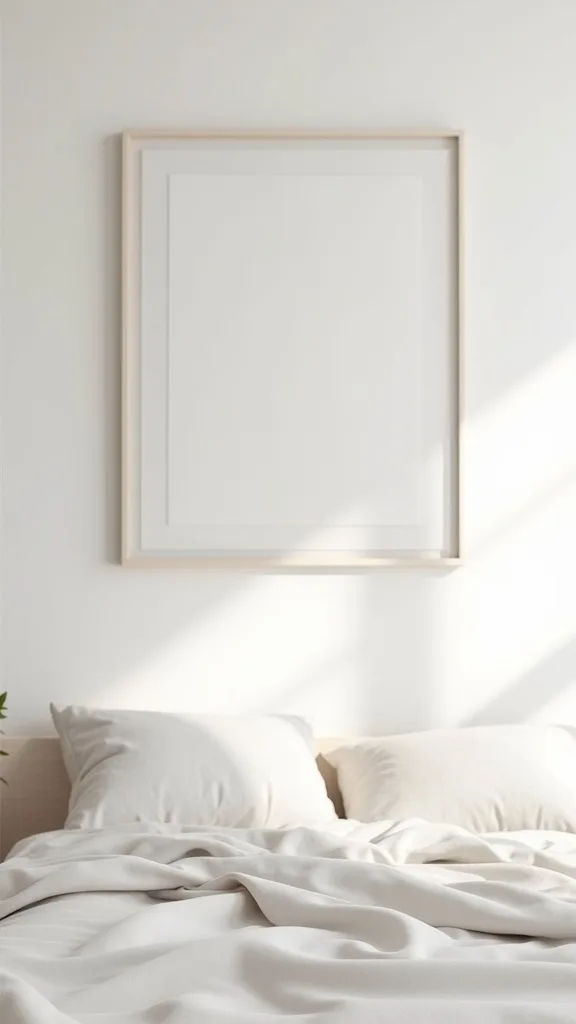
10. Swap Busy Curtains for Linen or Solar Shades
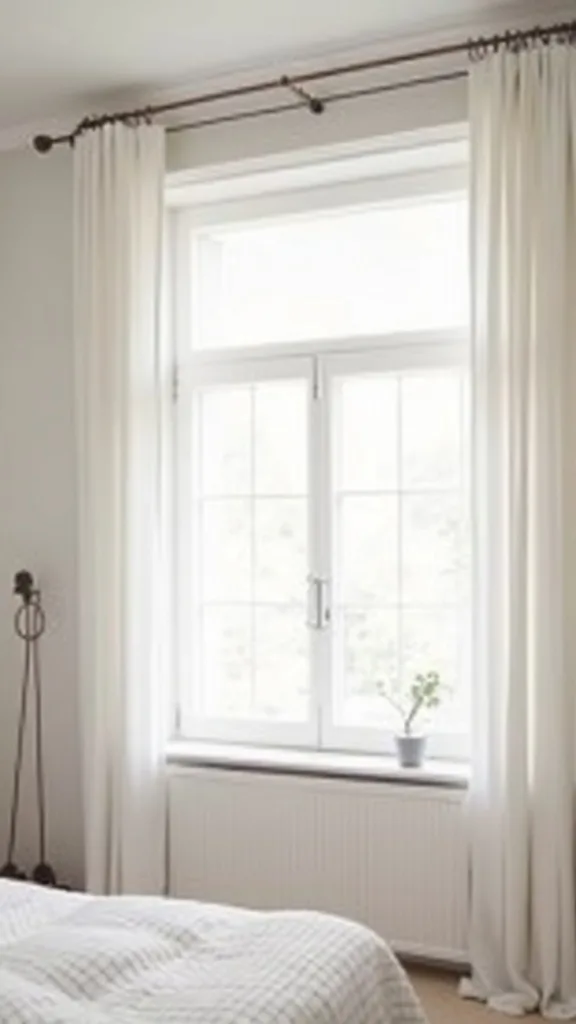
I always recommend simplifying window treatments because they take up a huge visual footprint in a clean bedroom design. From my experience, the trade-off is privacy vs. softness—solar shades look sleek, while linen panels feel warmer.
I find that hanging curtain rods 4–6 inches above the window frame (or about 2 inches below the ceiling) makes the room feel taller. I also extend the rod 6–10 inches past each side of the window so the panels stack off the glass and let in more light. If I choose shades, I like light-filtering solar shades with a 3% openness for daytime privacy; if I choose curtains, I pick linen panels around 96 inches long for most 8-foot ceilings.
Material-wise, I go for natural flax linen, cotton-linen blends, or matte white roller shades with a clean hem bar. I keep hardware simple: a slim black rod or brushed nickel, not ornate finials.
Pro Tip: I’ve found that adding stick-on blackout liners only to the lower 2/3 of linen curtains (instead of full length) keeps the top portion drapey and natural while still blocking early summer sunrise where it matters most—at pillow height.
11. Use Matching Hangers and One Closet Color Story
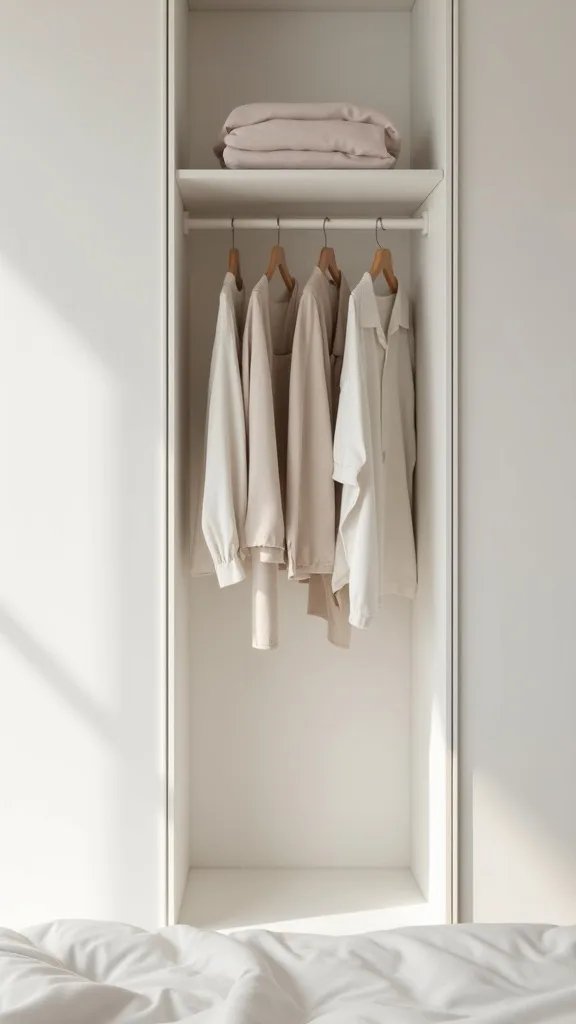
From my experience, you can style the prettiest minimalist bedroom and still feel stressed if the closet is chaotic, because it spills into your morning routine. I always start by making the closet visually quiet with matching hangers and a simple color order.
I find that 40–60 velvet hangers cover most wardrobes, and swapping them in takes about 30–45 minutes. I group clothing by type (tops, pants, dresses) and then by color from light to dark; typically, this reduces decision fatigue because I can spot what I need in 5–10 seconds. If space is tight, I add a 12-inch wide shelf divider or a hanging organizer with 6 cubes for tees and workout gear.
For products, I like slim velvet hangers in beige or black, clear acrylic shelf dividers, and a single lidded bin for accessories. This keeps the closet aligned with a clean bedroom design even if the door is open.
Pro Tip: I recommend turning all hangers backward at the start of summer and flipping them as you wear items; after 30 days, you’ll see what you didn’t touch and can remove it—this is the fastest “minimalist edit” I’ve found that doesn’t require emotional decisions upfront.
12. Choose One Scent and One Tray for a Calm Nightstand
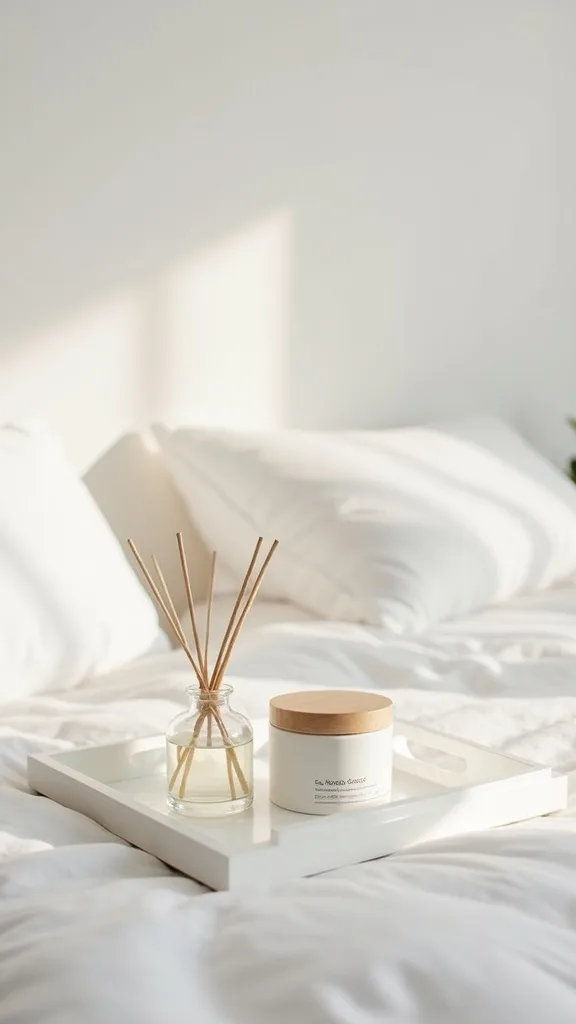
I find that scent is part of simple bedroom decor, and it can make a neutral space feel personal without adding more objects. In my opinion, the key is to contain it—one tray, one scent—so the nightstand stays clean.
I always start with a tray around 6″ x 9″ (or a round one about 8 inches wide) and limit myself to 3 items: a small dish for rings, a hand cream, and either a candle or reed diffuser. Typically, I choose a candle that burns for 40–60 hours so I’m not constantly replacing it, and I keep the label facing away to reduce visual noise. If I use a diffuser, I trim reeds to about 8–10 inches so they don’t look spiky.
Materials I like are travertine, walnut, or matte ceramic trays paired with a soft, clean scent (think linen, cedar, or unscented if you’re sensitive). I avoid overly sweet fragrances because they can feel heavy in summer.
Pro Tip: I’ve found that placing the tray at the back corner of the nightstand (not centered) creates a “landing strip” in front—about 4 inches deep—that keeps clutter from creeping in because you still have a functional empty spot.
13. Hide Cords and Chargers Without Buying New Furniture
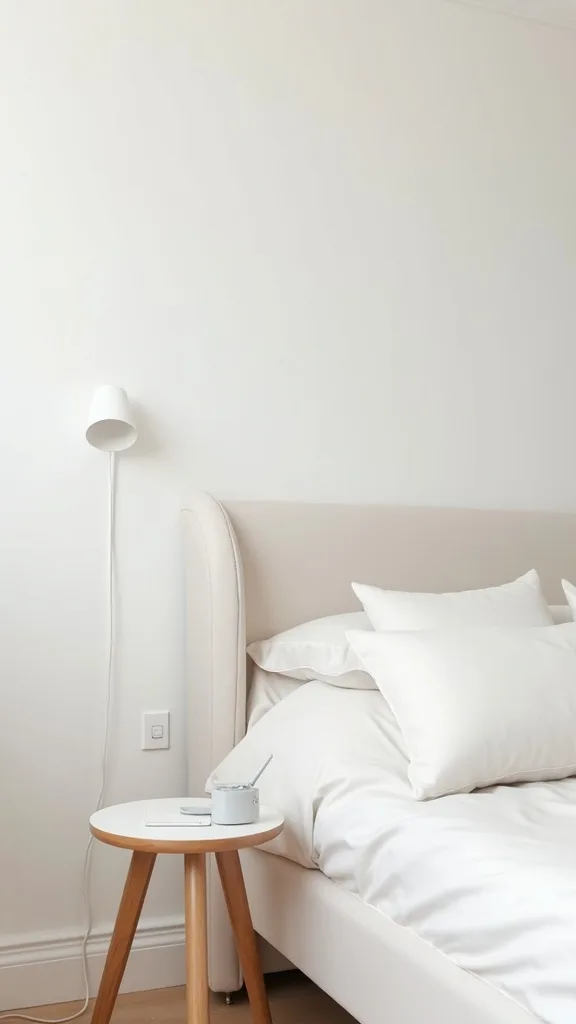
I always notice cords first in a minimalist bedroom, because they create jagged lines that fight the clean aesthetic. From my experience, you don’t need built-in charging furniture—you just need a simple cord plan.
I find that a 6-foot extension cord with a flat plug plus a set of 20 adhesive cord clips solves most setups in under 25 minutes. I run the cord down the back leg of the nightstand, clip it every 8–10 inches, and tuck the power strip behind the nightstand (not under it, where it collects dust). If I’m charging a phone, I use a 3-foot braided cable so there isn’t a loop of extra cord on the surface.
For materials, I like fabric-wrapped cords in ivory or tan, low-profile USB-C chargers, and a small cable box in matte white if the outlet area is exposed. This keeps the clean bedroom design intact without a remodel.
Pro Tip: I recommend placing a small felt pad between the cord and the wall where it rubs—over 2–3 weeks, that friction can leave a faint scuff line on light paint, and it’s one of those details that makes minimal spaces look dingy fast.
14. Use One Bench or None—Avoid the Clothing Pile Trap
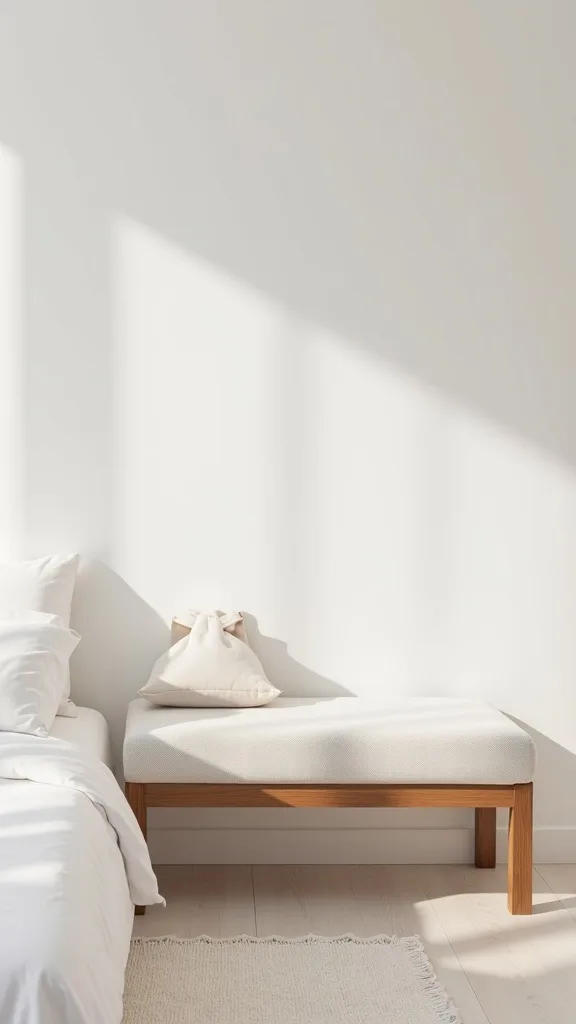
In my opinion, a bench at the foot of the bed is either a minimalist dream or a clutter magnet, and I decide based on my habits. From my experience, if I’m already prone to “chair piles,” skipping the bench keeps the minimalist bedroom honest.
I always start by testing the rule: if I add a bench, it must be no deeper than 14–16 inches and at least 6 inches shorter than the bed width so it doesn’t feel bulky. I also keep 30 inches of walkway between the bench and any dresser drawers so the room stays functional. If I skip the bench, I add a single wall hook near the closet (installed at about 60–66 inches high) for “wear again” items.
Material-wise, I like a simple oak bench, a black metal frame with a linen cushion, or a woven leather seat in tan. For a neutral bedroom, I avoid patterned upholstery because it can dominate the room.
Pro Tip: I’ve found that if you do use a bench, adding one shallow basket underneath (about 24″ x 12″ x 8″) gives clothes a hidden home—without that basket, the bench top becomes the default dumping zone within 7–10 days.
15. Keep Decor in Odd Numbers (But Cap It at Three)
I find that styling rules matter more in a clean bedroom design because you have fewer items to “average out” mistakes. From my experience, the simplest rule that consistently works is odd numbers—then I cap it so it doesn’t become clutter.
I always start with a maximum of 3 objects per surface: for example, on a dresser I’ll do a 12″ x 16″ tray, a small vase, and one framed photo. If the surface is small (like a 18-inch nightstand), I keep it to 2–3 items total including the lamp. Typically, I also leave at least 50% of the surface empty, which is the real “minimalist” move.
Materials I reach for are matte ceramic, clear glass, and natural stone, because they reflect light softly and suit a neutral bedroom. I avoid shiny chrome or overly detailed figurines because they read busy.
Pro Tip: I recommend choosing objects with different heights—roughly 4 inches, 8 inches, and 12 inches—because in minimal styling, height variation replaces the visual interest you’d normally get from color or pattern.

16. Add Texture, Not Pattern, for a Calm Summer Layered Look
When I design a minimalist bedroom for summer, I lean on texture because it keeps the room from feeling flat without introducing busy prints. I find that pattern can work, but from my experience it’s harder to keep a truly clean bedroom design when you add multiple motifs.
I always start with 3 textures: linen (bedding), something nubby (a wool or cotton throw), and something structured (a woven basket or a ribbed ceramic lamp). For a queen bed, I like a throw around 50″ x 60″ folded into thirds, and I add one textured pillow cover at 20″ x 20″ in the same color family. Typically, I keep any pattern to a subtle stripe that’s under 1/4 inch wide so it reads like texture from a distance.
Materials I love are slubby linen, bouclé (in small doses), cotton waffle, and jute. I avoid chunky knits in hot months because they can feel heavy and collect lint.
Pro Tip: I’ve found that using two textures in the same color but different finishes—like matte linen plus a slightly lustrous cotton sateen—creates depth in a neutral bedroom without adding a single new color.
17. Replace a Bulky Dresser with Two Streamlined Storage Moves
From my experience, a huge dresser can dominate a minimalist bedroom, especially when I’m aiming for that platform-bed simplicity. I always recommend checking whether you can reduce visual mass with smarter storage, but I’ll admit the trade-off: it can cost more upfront if you need organizers.
I find that two changes usually do it: first, add drawer dividers (I like sets that create 6–12 compartments) so drawers stay neat without constant refolding. Second, use under-bed storage bins that are about 6–7 inches tall so they slide under most platform frames; I aim for 2–4 bins total so I don’t overstore. Typically, I can reclaim a full dresser drawer within 1–2 hours by moving off-season items into labeled under-bed bins.
Materials I trust are clear lidded bins, canvas zip boxes in sand, and cedar blocks for freshness. For labels, I use simple black-on-white tags to match a clean bedroom design.
Pro Tip: I recommend leaving one under-bed bin intentionally empty—about 25% of your under-bed capacity—because that buffer is what keeps “temporary” clutter from migrating onto the floor when life gets busy.
18. Use a Mirror to Double Light Without Adding More Decor
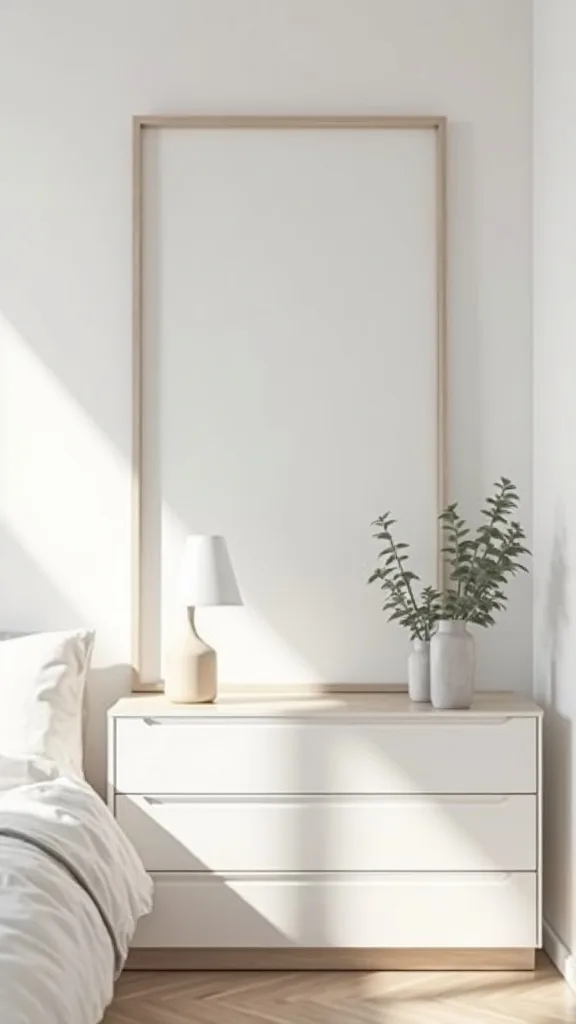
I find that mirrors are one of the most minimalist-friendly upgrades because they add brightness without adding “stuff.” From my experience, the trade-off is placement—if you reflect clutter, you’ll feel twice as messy.
I always start by choosing a mirror that’s either full-length (about 65″ x 22″) or a simple round mirror around 30–36 inches wide. I place it so it reflects a calm area—usually the bed or a blank wall—and I keep it at least 8–12 inches away from the corner so it doesn’t feel cramped. If I’m leaning it, I secure it with anti-tip hardware and add felt pads so it doesn’t scuff the wall over 2–4 weeks.
For frames, I like thin black metal, light oak, or frameless edges for a neutral bedroom. I avoid ornate frames because they can fight the simplicity of a platform bed setup.
Pro Tip: I’ve found that angling a leaning mirror just 2–3 degrees (a tiny shim under the front edge) reduces ceiling glare from your lamp at night and makes the reflection feel softer and more intentional.
19. Make Your Bed the Only “Statement” (and Keep Everything Else Quiet)
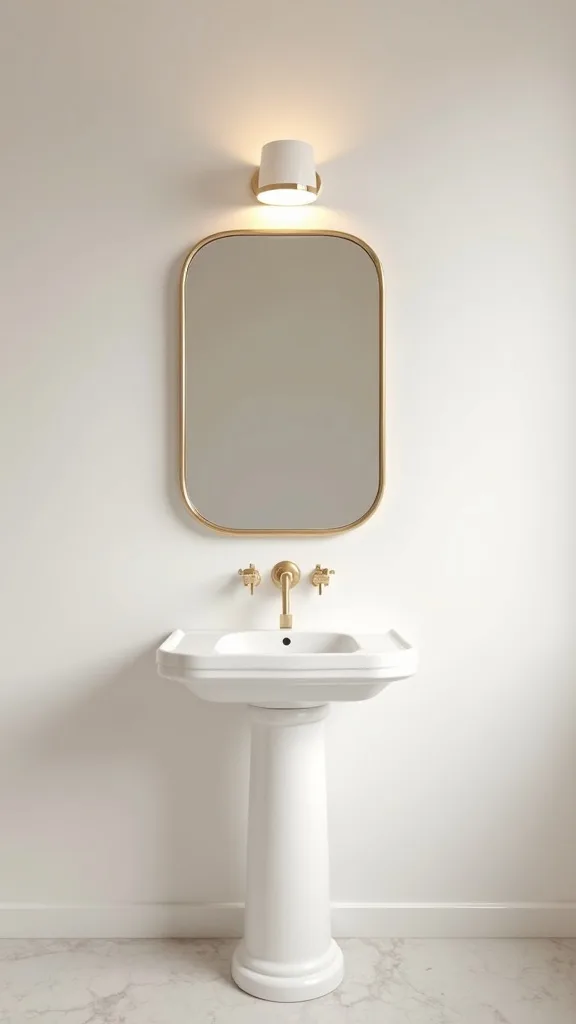
In my opinion, the cleanest minimalist bedroom is the one where the bed is the statement and everything else supports it. I find that when multiple items compete—bold art, bold rug, bold lamp—the room stops feeling restful.
I always start by choosing one standout element on the bed: either a tonal oversized duvet, a textured coverlet, or a single lumbar pillow. For a queen, I like a duvet that drapes 12–16 inches on each side, and I keep pillows to a practical set: 2 standard plus 1 lumbar (around 14″ x 36″). Typically, I skip decorative shams in summer because they add laundry and visual bulk.
Materials I use are linen, cotton percale, and a light wool or cotton throw. Color-wise, I keep it within a 2–3 neutral palette so the room reads like a calm minimalist home.
Pro Tip: I’ve found that using one “anchor” color only on the bed—like a soft charcoal throw—creates a focal point that photographs well, and it prevents you from sprinkling that dark tone all over the room where it can start to feel busy.
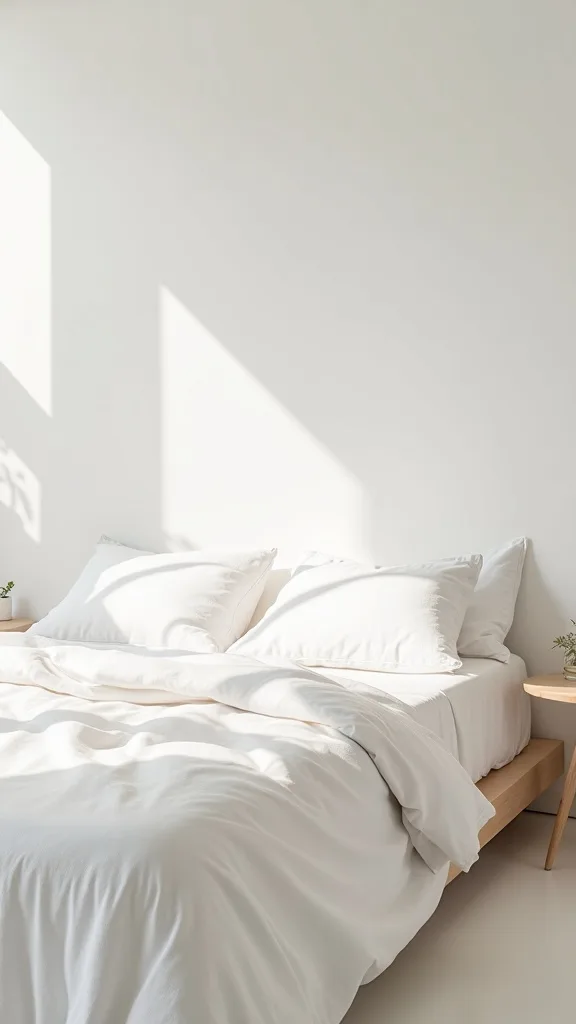
20. Keep Surfaces Bare by Creating Hidden Homes for Daily Items
I always notice that people try to “decorate” their way into a clean bedroom design, but from my experience, the real trick is giving everyday items a hidden home. I find that once the practical stuff is contained, the minimalist styling almost does itself.
I always start by listing the top 10 daily items that land in the bedroom—like lip balm, chargers, hair ties—and assigning each a container within 2 steps of where it’s used. I like a drawer organizer with compartments around 3″ x 3″ for small items, plus a slim catchall tray (about 6 inches wide) inside the drawer for jewelry. Typically, this takes 45–60 minutes once, and then maintenance drops to a 5-minute weekly reset.
Materials I prefer are bamboo drawer dividers, felt-lined trays, and lidded ceramic jars (used inside drawers, not on top). This supports a simple bedroom decor look without sacrificing convenience.
Pro Tip: I recommend choosing organizers that are the same color as the drawer interior (white in white drawers, black in dark drawers) because when you open the drawer, the visual calm reinforces the habit—and you’re less likely to toss things in randomly.
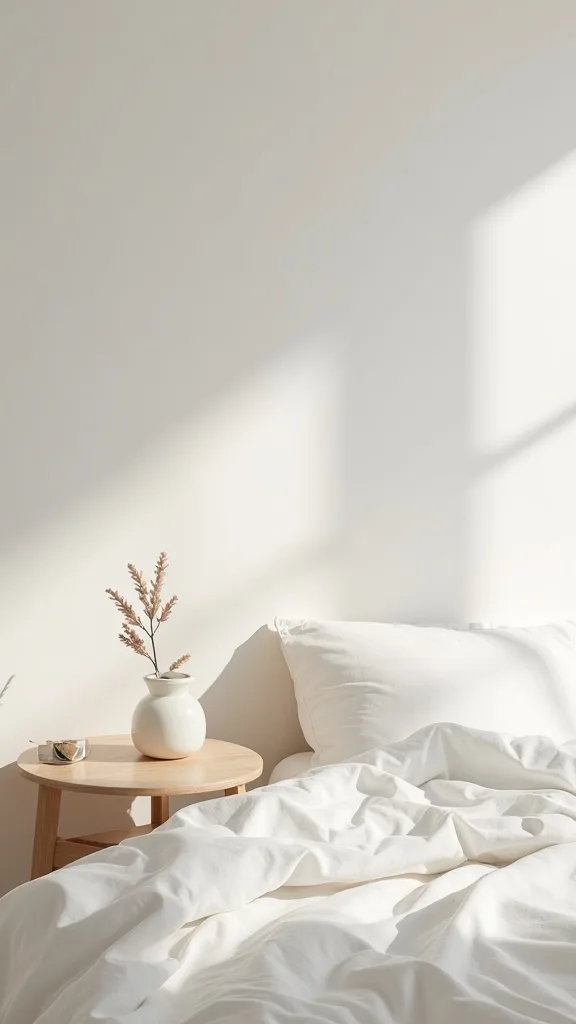
21. Use Summer-Weight Layers: One Duvet, One Coverlet, One Throw
From my experience, layering is where minimalism can go wrong—too many layers look fussy, but too few can feel bare. I find that for a Summer Minimalist Refresh, a tight trio of layers keeps the bed looking complete and feeling breathable.
I always start with a lightweight duvet insert (often labeled “summer” or “all-season light”) and pair it with a linen duvet cover. Then I add one coverlet folded at the foot to about 18 inches deep, and one throw around 50″ x 60″ draped casually. Typically, I keep everything within 2 tones (like warm white + flax) and add just one slightly darker accent (like stone) so the neutral bedroom doesn’t look washed out.
Materials I like are linen, cotton matelassé, and a thin wool blend throw for cool nights. I avoid heavy quilts in summer because they can trap heat and make the bed look bulky.
Pro Tip: I’ve found that folding the coverlet into thirds lengthwise before placing it at the foot creates a crisp edge that mimics a hotel fold—without needing to iron anything or fuss for more than 30 seconds.
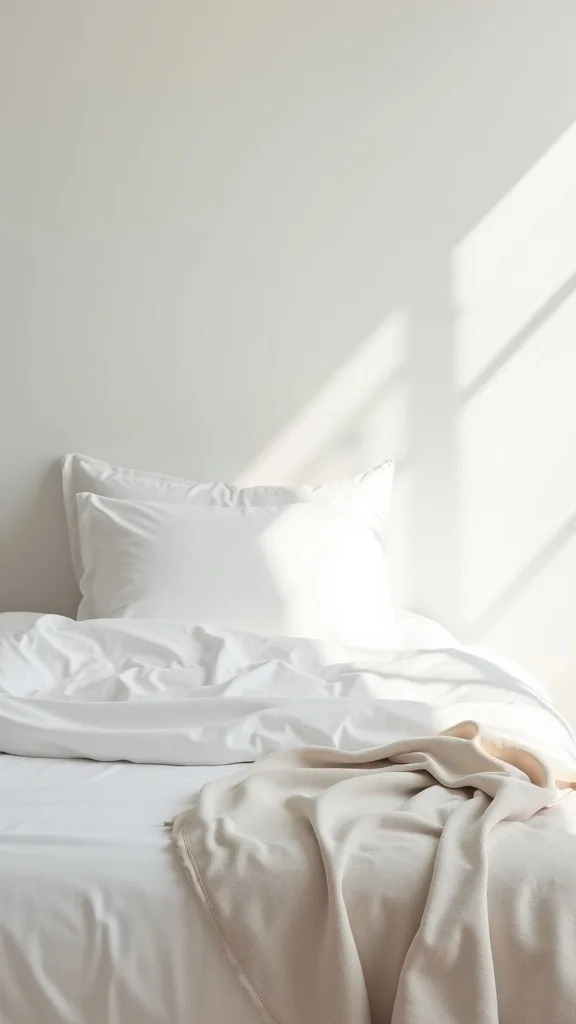
22. Choose Nightstand Decor That’s Functional: Book, Water, One Dish
I find that the most convincing minimalist bedroom isn’t the one with zero items—it’s the one where every item earns its spot. In my opinion, a functional trio on the nightstand keeps the look real and livable.
I always start with the lamp as item #1, then I add a book (or Kindle) and a small dish for rings. If I like water by the bed, I choose a carafe and glass set that stays under 10 inches tall so it doesn’t block light. Typically, I keep the dish around 4–5 inches wide and limit the entire surface to 3–4 items total, depending on lamp size. This keeps the clean bedroom design intact while supporting daily routines.
Materials I love are clear glass, matte ceramic, and a thin wood coaster. Color-wise, I stick to soft neutrals with one dark accent if the lamp is light.
Pro Tip: I recommend using a coaster with a raised lip (about 1/8″) under the water glass—on minimalist nightstands, a single condensation ring is surprisingly noticeable and can make the whole setup look less cared for within 1 night.
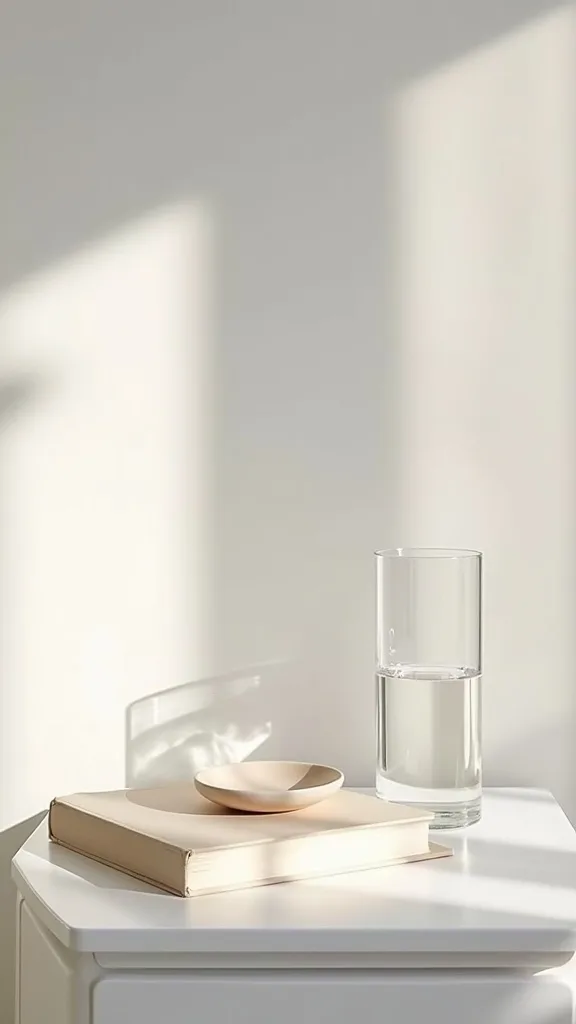
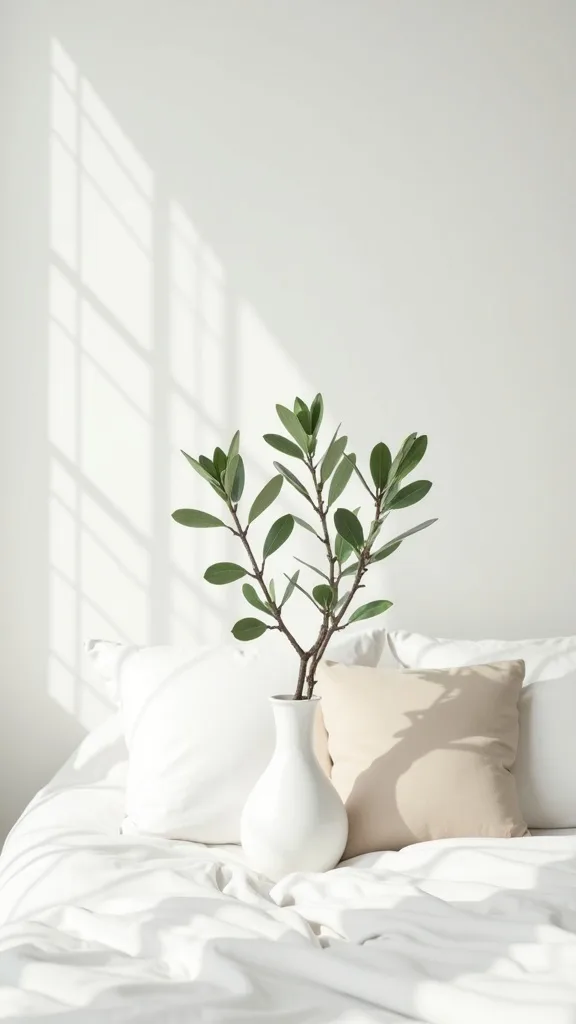
23. Use One Plant (or One Branch) Instead of Multiple Small Greenery Pieces
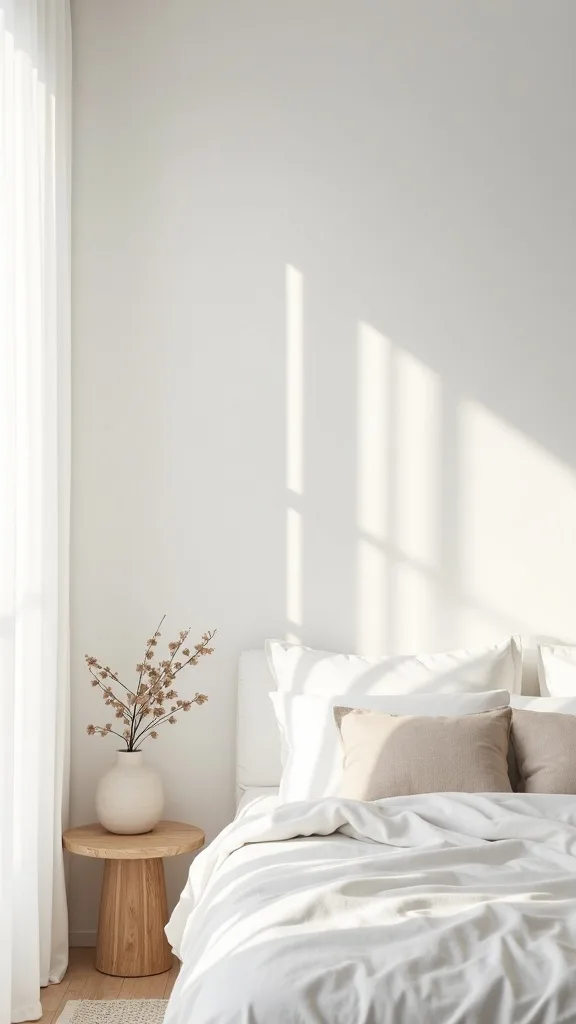
When I design a neutral bedroom, I like adding life with greenery, but I find that multiple tiny plants can read like clutter. From my experience, one larger plant—or even one sculptural branch—feels more aligned with simple bedroom decor.
I always start by choosing either a 10″–12″ pot for a floor plant (like a snake plant) or a tall vase around 12–16 inches for branches. I place it where it won’t get knocked—usually 12 inches away from the bed edge or in a corner with at least 18 inches of breathing room. Typically, I water a snake plant every 2–3 weeks, which is realistic for most people and keeps the minimalist vibe low-maintenance.
For materials, I like matte ceramic planters in sand or white, and a simple saucer to protect floors. If you’re plant-shy, dried eucalyptus or a single olive branch works beautifully in summer.
Pro Tip: I’ve found that wiping plant leaves with a damp microfiber cloth for 2 minutes every couple weeks matters more in minimalist rooms—dusty leaves stand out against light walls and can make the whole room feel less clean.
24. Do a 15-Minute Weekly “Clean Aesthetic” Reset Routine
I always recommend a reset routine because minimalism isn’t just a look—it’s a maintenance plan. From my experience, a clean bedroom design stays calm when I spend 15 minutes once a week doing a consistent checklist.
I find that my most effective routine is: make the bed (about 2 minutes), clear surfaces into the reset basket (about 3 minutes), wipe the nightstand and lamp with a microfiber cloth (about 3 minutes), and do a quick floor pass with a cordless vacuum (about 5 minutes). Then I finish with one sensory cue—either opening windows for 10 minutes or lighting a candle for 20 minutes while I fold laundry. Typically, this routine prevents the “big clean” spiral that makes a minimalist bedroom feel hard to keep up.
Tools I use are a microfiber cloth pack, a gentle multi-surface spray, and a small handheld vacuum attachment for baseboards. I keep them in a single under-sink caddy so I don’t waste time hunting.
Pro Tip: I’ve found that doing the reset on the same day you change sheets (every 7–10 days for most households) stacks habits—your room feels brand new with no extra mental load.

25. Add One Personal Object (Only One) to Keep Minimalism from Feeling Cold
In my opinion, the most livable minimalist bedroom includes one personal object, because a perfectly neutral room can feel more like a showroom than a home. I find that choosing just one meaningful piece keeps the clean aesthetic while still telling your story.
I always start by picking an object with a clear “container” or boundary: a framed photo, a small sculpture, or a keepsake placed on a tray. I keep it under 8–10 inches tall so it doesn’t compete with the lamp, and I place it at least 4 inches away from the edge so it doesn’t look precarious. Typically, I avoid multiple sentimental items on display; instead, I rotate one piece seasonally—about every 3 months—so the room stays fresh.
Materials that work beautifully here are a thin black frame, a small piece of natural stone, or a ceramic object in a warm neutral glaze. I keep colors within the same palette so it supports the neutral bedroom mood.
Pro Tip: I’ve found that the most “minimalist” way to display something sentimental is to pair it with one empty space—leave a deliberate 6-inch gap beside it—because that breathing room makes the object feel honored rather than cluttered.

Final Thoughts
I find that a minimalist bedroom only feels effortless when I build it around a few repeatable decisions: a tight neutral palette, clear walkways, and one strong lighting moment. If your room feels “too empty” at first, I always remind myself that minimalism is a process of editing and refining over 1–2 weeks, not a one-hour makeover that magically stays perfect.
From my experience, the sweet spot is a space that looks calm but still supports real life—water by the bed, a book you’re actually reading, and storage that hides the messy bits. The trade-off is you’ll need a tiny maintenance habit, but I find that a 5-minute daily reset is far easier than living with constant visual noise.
If you want to start today, I always recommend doing just two things: clear one surface completely and commit to the platform bed + single nightstand + linen + sculptural lamp formula. Once those anchors are in place, the rest of your clean bedroom design choices get surprisingly simple.
What I’d Do Differently
When I first tried this minimalist bedroom approach, I made one very specific mistake: I went “too white” too fast—white walls, white bedding, white rug—and within 3 days the room felt flat and oddly stressful, not calm. From my experience, it wasn’t that white was wrong; it was that I didn’t build in enough contrast and texture to signal intention. The correct approach (what I do now) is to choose a warm white wall, then go 1–2 shades deeper on the bedding (like flax or oatmeal), and add one anchor tone (soft black, walnut, or charcoal) through the lamp or frame. That small amount of contrast is what makes the “clean aesthetic” read as designed rather than unfinished.
I also wish I’d known earlier that maintenance is part of the plan: if I don’t have a reset basket and a 15-minute weekly routine, surfaces slowly collect random items and the minimalist look disappears. If you’re starting today, I recommend picking your palette and your lamp first, then doing one surface reset—those two moves create momentum you can actually keep.
Products I Recommend for This Project
Here are some of my favourite products to help you bring these ideas to life:
- Philips LED A19 Soft White Bulb (2700K) — I use this to get warm white light (2700K — the cosy, yellowish tone you see in most homes) that keeps a minimalist bedroom feeling inviting at night.
- DECOMOMO Velvet Suit Hangers (50 Pack) — I’ve found matching slim hangers instantly quiet the closet visually and free up space on a standard closet rod.
- mDesign Drawer Organizer Tray Set — I like these trays for creating small “homes” for chargers, lip balm, and jewelry so surfaces stay clean.
- Command Clear Decorating Clips — I use these to route lamp and charger cords neatly down the back of a nightstand without drilling into walls.
- Utopia Bedding Zippered Underbed Storage Bags (2 Pack) — I rely on these for off-season linens and clothing; they’re low-profile and help me avoid adding a bulky dresser.